Tag: buy

  • Google Acquires Content Sharing App Bump

    Google Acquires Content Sharing App Bump

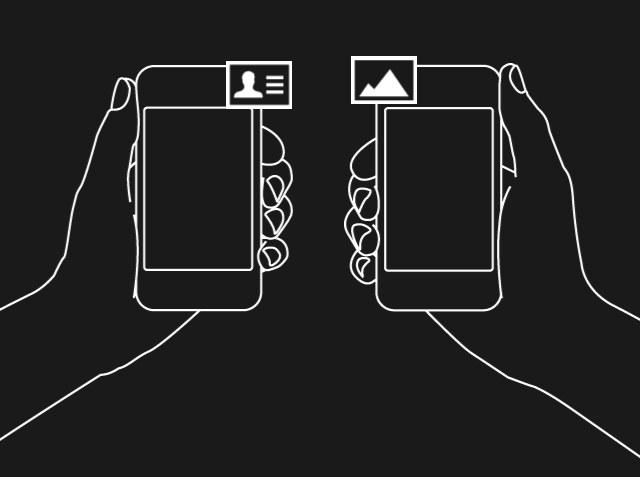
    Bump, the contact and media sharing app for Android and iOS, has been acquired by Google.

    Bump co-founder and chief executive David Lieb said the company was “thrilled” to join Google, citing similar passions for sharing information between people and devices. 

    In September 2011, the company announced it had 50 million downloaders and 10 million active “bumpers.” Just less than a year later, more than 600 million photos were shared by “bumping” phones. Later it released an iPhone-only version photo-sharing app dubbed Flock (not to be confused with the social browser of the same name).

    It’s worth adding here that Bump doesn’t use NFC, merely “whatever Internet connection is available on your device”, be that WiFi or cellular. The mobile app uses the phone’s sensors to “feel” the bump, thus actioning the actual transfer.

    “The Bump team has demonstrated a strong ability to quickly build and develop products that users love, and we think they’ll be a great fit at Google,” said a Google spokesperson. Google declined to comment on what team Bump will be joining.

    The full announcement on the Bump blog is as follows.

    [toggle title=”Announcement”]“We’re excited to announce that the Bump team is joining Google!
    Our mission at Bump has always been to build the simplest tools for sharing the information you care about with other people and devices. We strive to create experiences that feel like magic, enabled behind the scene with innovations in math, data processing, and algorithms. So we couldn’t be more thrilled to join Google, a company that shares our belief that the application of computing to difficult problems can fundamentally change the way that we interact with one another and the world.
    Bump and Flock will continue to work as they always have for now; stay tuned for future updates.
    We’d like to extend a special thank you to all of you who have used our products so far. It continues to be a pleasure to serve you, and your feedback and evangelism inspire us every day.
    David Lieb
    CEO and cofounder
    Bump
    We also want to thank our investors, advisors, and supporters — Marc Andreessen and all of a16z; Greg McAdoo, Tim Lee and all of Sequoia; Paul Graham, Jessica Livingston, and everyone at Y Combinator; Ron Conway and SV Angel; Ram Shriram of Sherpalo; Aydin Senkut of Felicis — and our friends and family who have encouraged us to dream big and push the world forward.”[/toggle]

    [Via]

  • Micromax Canvas 4 Pre-Orders Begin

    Micromax Canvas 4 Pre-Orders Begin

    The next big thing from Micromax, the Micromax Canvas 4, is now up for pre-order on their official website.

    To pre-order the Micromax Canvas 4, you will have to pay an initial amount of Rs. 5,000. When the device is officially released, on July 8, customers will have 7 days to pay the rest of the amount (If the consumer fails to pay the remaining amount by 15 July, the order gets automatically cancelled), which is rumoured to be around the Rs. 15,500 price mark.

    The official specifications and other details of the phone, including the price, will be revealed on July 8th. Micromax has also said that consumers will also have the option of cancelling their orders, but only between 8 – 15 July. 

    The Micromax Canvas 4 will start shipping on July 10, and Micromax is promising to deliver your unit within 7 business days thereafter. You can check out the rest of the terms of pre-booking on Micromax’s website.

    micromax canvas 4

    While there is no real news on the Micromax Canvas 4 we expect the following specs :

    • 5 inch Full HD 1920 x 1080p Display
    • The Mediatek 6589 chipset (Quad core)
    • 8 – 16 GB inbuilt storage
    • 2 GB RAM
    • 13 MP camera
    • 2-5 MP front camera
    • Dual Sim capability 
    • Android 4.2.2

    micromax canvas 4

    Micromax has also teased a new feature of the Canvas 4 and people suspect that users can blow to unlock the screen and need not have to come in contact with the smartphone. 

  • Woman Orders One iPad From Best Buy, Gets Five! Told To Keep The Rest!

    Woman Orders One iPad From Best Buy, Gets Five! Told To Keep The Rest!

    best buy

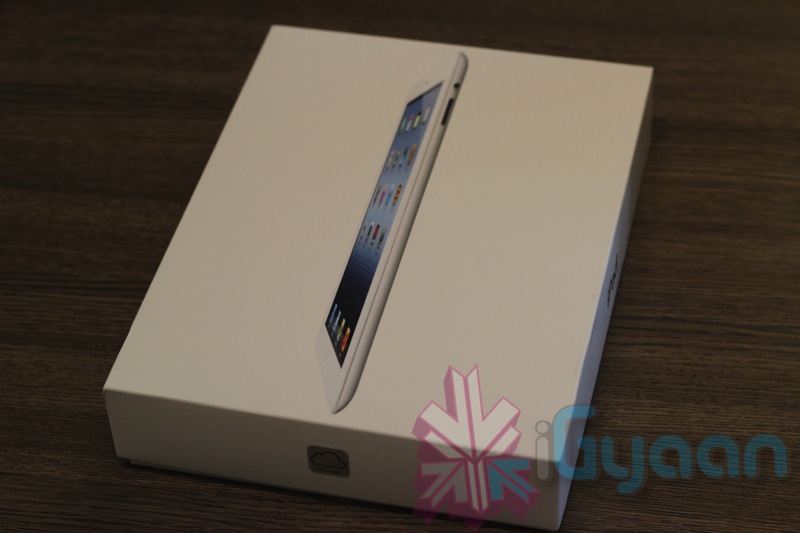
    A Best Buy customer was pleasantly surprised after she opened a package from the store. The woman ordered one iPad from Best Buy but instead of getting one iPad tablet she got five of them. She wondered what to do and after a while she called the Best Buy hotline to report the mistake to the company.

    A store rep from Best Buy’s 1-800 number acknowledged their mistake. Again, to the woman’s surprised she was told to keep the extra iPads. 

    [quote]”We, here at Best Buy, acknowledge that we obviously made a mistake, but in the spirit of the holidays, we encourage you to keep the additional iPads and give them to people in need – friends, family, a local school or charity,” Best Buy responded.[/quote]

    Another customer reported a similar situation that happened to him. He ordered an iPad and received a package with five iPad tablets from Best Buy

    [quote]”I called Best Buy’s 1-800 number and the rep told me there was nothing he could really do because the system only reported one as being sent to me,” the customer wrote to the Consumerist. “He told me I could try and drop them off at the Best Buy store, but I had reservations about how traceable this return would be.”[/quote]

    That customer said he was keeping the iPads in his closet “until Best Buy comes knocking at my door or a reasonable amount of time goes by.”

    Looks like Christmas came early for these customers. Next time I want to buy an iPad, I’ll keep Best Buy in mind!

  • Oracle to Buy Cloud Infrastructure Technology Provider Xsigo

    Oracle to Buy Cloud Infrastructure Technology Provider Xsigo

    Oracle Corp. on Monday agreed to acquire network-technology provider Xsigo Systems Inc. for an undisclosed sum, broadening the software giant’s already growing footprint in the data center.

    Based in San Jose, Calif., Xsigo provides appliances that more efficiently manage the tangle of connections needed to access stored data. The technology cuts electricity costs and boosts performance for companies that manage large data centers.

    Privately held Xsigo has more than 300 enterprise customers, according to its website, including Verizon Communications Inc. (VZ) and BT Group PLC (BT).

    Oracle’s latest acquisition, expected to close this fall, comes as more companies opt to run their computer systems in the cloud–a catch-all term for software and data accessed online rather than through an onsite machine.

    Managing the software and servers that support such systems has become a multibillion-dollar business, prompting Oracle Chief Executive Larry Ellison, who once dismissed the “cloud” term as “complete gibberish,” to actively pursue the model along with his Silicon Valley peers.

    Cloud computing relies on virtualization, a process that allows users to run the operations of several computers on a single machine. The process puts an enormous burden on networks.

    Now, cloud-computing companies are taking a growing interest in controlling the routers and switches of networks by using a similar virtualization model in order to manage data-center hardware and cut down on bottlenecks and inefficiencies.

    VMware Inc. (VMW), which pioneered the virtualization model with software, last week agreed to pay up to $1.26 billion for networking-software provider Nicira Inc.

    Xsigo’s technology differs from Nicira’s, which uses software to virtually manage an entire network. Xsigo’s hardware addresses a narrower part of the cloud.

    “Most people think of software-defined networking as something that creates a new network…on top of the existing physical network,” ISI Group analyst Brian Marshall said.

    Oracle also has remained active in the software sector. Just this month, the technology giant agreed to buy the social-marketing company Involver and said it would acquire privately held Skire, a provider of capital program management and facilities management applications.

    Oracle has also bought the cloud-based customer service company RightNow Technologies Inc. for $1.43 billion and the human-resources software maker Taleo Corp. for $1.9 billion.

    “They are already racing ahead on the software side,” said Global Equities Research analyst Trip Chowdhry. “Now they are strengthening their cloud infrastructure.”

    Xsigo, founded in 2004, was funded by Kleiner Perkins, Khosla Ventures, Greylock Partners and North Bridge Venture Partners.

  • Facebook acquires Mac, iOS app developer Acrylic

    Facebook acquires Mac, iOS app developer Acrylic


    Facebook has acquired Acrylic Software, a Vancouver-based developer of Mac and iOS apps.

    The small firm is known for the RSS app Pulp (a personalized newspaper) and the secure database app Wallet (for securely storing passwords, credit-card numbers, etc.).

    The company has decided to cease development of the two apps, which Facebook itself has not acquired. This means that the apps will continue to be available for download and purchase, but will no longer be updated.

    Acrylic has two employees and both are moving to work on the social-networking giant’s design team in San Francisco. Additional details of the acquisition were not disclosed, but this appears to be mainly a talent acquisition; Facebook will not be getting the technology behind the service, or its user data.

    [toggle_box title=”Statement” width=”Width of toggle box”]

    Facebook is an invaluable service that we all use daily, and a company I believe is one of the most innovative and important around today. After visiting late last year, I discovered that we shared many of the same core product design goals and principles, and it soon became obvious that it was a natural fit. Simply put, there’s an opportunity at Facebook to have a big impact in many people’s lives. More importantly, Facebook is full of extremely talented people who will be able to help realize its full potential in the years to come.

    Our products and services have not been acquired by Facebook, and while there are no plans for further development on them, Wallet and Pulp will continue to remain available for download and purchase in their current form. We’ll certainly be the first to let you know of any updates or changes here in the future.

    A special thanks to all of our customers and supporters who have helped us grow and build the best products possible throughout the last four years. We wouldn’t have been able to do it without you.

    Dustin MacDonald
    Acrylic Software

    [/toggle_box]

  • Facebook will buy Instagram (PR)

    Facebook will buy Instagram (PR)

    Talk about big acquisitions! Social networking giant Facebook will buy popular imaging app Instagram for $1 billion in cash and shares. This comes soon after the app was developed for Android. 

    We think the fact that Instagram is connected to other services beyond Facebook is an important part of the experience. We plan on keeping features like the ability to post to other social networks, the ability to not share your Instagrams on Facebook if you want, and the ability to have followers and follow people separately from your friends on Facebook.

    -Instagram CEO Kevin Systrom

    [toggle title_open=”Press Release” title_closed=”Press Release” hide=”yes” border=”yes” style=”default” excerpt_length=”0″ read_more_text=”Read More” read_less_text=”Read Less” include_excerpt_html=”no”]


    Facebook to Acquire Instagram

    MENLO PARK, CALIF.-April 9, 2012-Facebook announced today that it has reached an agreement to acquire Instagram, a fun, popular photo-sharing app for mobile devices.

    The total consideration for San Francisco-based Instagram is approximately $1 billion in a combination of cash and shares of Facebook. The transaction, which is subject to customary closing conditions, is expected to close later this quarter.

    Mark Zuckerberg, founder and CEO of Facebook, posted about the transaction on his Timeline:

    I’m excited to share the news that we’ve agreed to acquire Instagram and that their talented team will be joining Facebook.

    For years, we’ve focused on building the best experience for sharing photos with your friends and family. Now, we’ll be able to work even more closely with the Instagram team to also offer the best experiences for sharing beautiful mobile photos with people based on your interests.

    We believe these are different experiences that complement each other. But in order to do this well, we need to be mindful about keeping and building on Instagram’s strengths and features rather than just trying to integrate everything into Facebook.

    That’s why we’re committed to building and growing Instagram independently. Millions of people around the world love the Instagram app and the brand associated with it, and our goal is to help spread this app and brand to even more people.

    We think the fact that Instagram is connected to other services beyond Facebook is an important part of the experience. We plan on keeping features like the ability to post to other social networks, the ability to not share your Instagrams on Facebook if you want, and the ability to have followers and follow people separately from your friends on Facebook.

    These and many other features are important parts of the Instagram experience and we understand that. We will try to learn from Instagram’s experience to build similar features into our other products. At the same time, we will try to help Instagram continue to grow by using Facebook’s strong engineering team and infrastructure.

    This is an important milestone for Facebook because it’s the first time we’ve ever acquired a product and company with so many users. We don’t plan on doing many more of these, if any at all. But providing the best photo sharing experience is one reason why so many people love Facebook and we knew it would be worth bringing these two companies together.

    We’re looking forward to working with the Instagram team and to all of the great new experiences we’re going to be able to build together.

    [/toggle]

  • Google Acquires Restaurant Rating company Zagat

    Google Acquires Restaurant Rating company Zagat

    Google announced yesterday that it has acquired restaurant rating company ZAGAT.

    “ZAGAT will be a cornerstone of our local offering — delighting people with their impressive array of reviews, ratings and insights, while enabling people everywhere to find extraordinary (and ordinary) experiences around the corner and around the world, I’m incredibly excited to collaborate with ZAGAT to bring the power of Google search and Google Maps to their products and users, and to bring their innovation, trust and wealth of experience to our users”

    -Marissa Mayer, vice president of local, maps and location services at Google

    ZAGAT was started more than 32 years ago by a couple, Tim and Nina Zagat, and the company’s ratings are now embedded in pocket guides and plastered on restaurant windows in more than 100 cities around the world and across 13 different categories.

    [Google Blog]

  • Samsung CEO : We will never buy WebOS

    Samsung CEO : We will never buy WebOS

    Samsung CEO during the IFA trade show in Berlin on Friday said Samsung would “never” make the purchase.

     It’s not right that acquiring an operating system is becoming a fashion”

    Samsung already owns a proprietary OS – BADA , and also manufactures mobile phones on various other platforms including Android, Widows Phone 7, Brew etc. Although CEO  Choi Gee Sung has said that the company will not buy WebOS, sources claim that Samsung is in talks about licensing WebOS from HP for their upcoming smartphones. 

  • Edit : The iPhone 5, What to Expect?

    Edit : The iPhone 5, What to Expect?

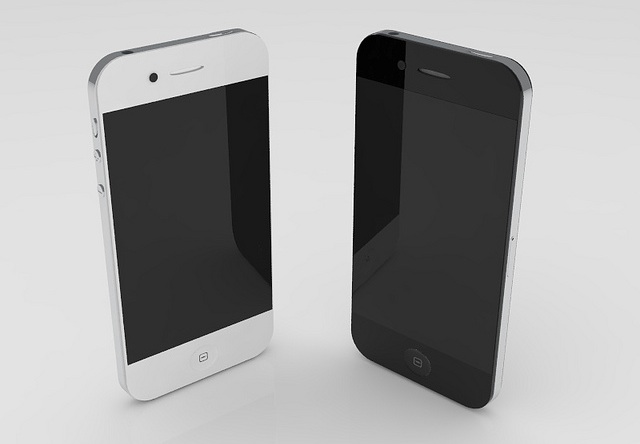
    The Anticipation clock of most humans starts to ring with the sight of an Apple Product Launch. This time around people are expecting 3 new launches. The iPod refresh, the iPad with some minor changes and most importantly the iPhone 5 (or iPhone 4s). 

    The iPhone is the most successful smartphone ever made, with in excess of 18.5 million devices sold this year the iPhone has set records that are yet to be matched. Why everyone loves the iPhone? There could be several answers:

    • The User Interface
    • The OS
    • The Hardware
    • The Looks
    • The Company Name / Brand Value
    • Pricing
    It could be any or all of the factors from above, we really don’t know.  The iPhone has always been marketed as a magical device, with the right amount of hype. Keeping price at a point where it was just above the competition and just low enough to be an approachable target (for those looking for a smart phone) . This strategy has also led people into believing that Apple Devices are super premium and most people in India still hold them at gold value (sometimes more value that those useless super value phones).
    Whatever the reason behind the iPhones popularity, we know a new one is coming and following rumors and yearly cycles , here is what we think the iPhone 5 is going to be like.

    Name

    The most obvious guess for a name of the upcoming iPhone would be the iPhone 5 , but unless Apple is planning some major changes the new iPhone may just as well be called the iPhone 4s. Whatever said and done the word “iPhone” will be there and a 5 would sound much better than an iPhone 4s. Some people suggest that the new device will be called iPhone 4 HD,  but that seems like an unlikely name for a device from Cupertino.

    Hardware

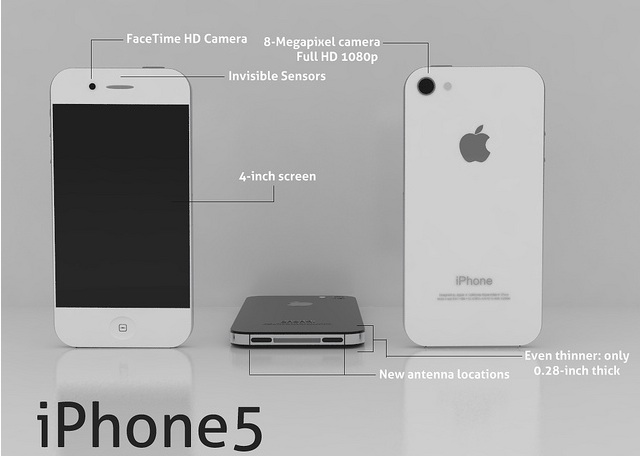
    There is no guessing the obvious, Apple has already shown off their A5 chipset in the iPad 2 , and just like the iPhone 4 had the iPads chip, the next iPhone will have the new Apple dual core A5 chip. This will boost the speed and performance of the iPhone 5 (we are just going to stick to that name for now)  upto four times. Also, in tow will be RAM upgrades and a bigger 8 megapixel camera sensor, which has been talked about

    Various rumors and speculation points to a larger Edge to Edge display on the front of the device. A possible 3.8 inch or even 4 inch capacitive display can do no harm to Apple’s Jesus phone, giving it a larger screen – real estate would require pumping in more pixels per inch to retain the “Retina Display” badge.

    Design 

    Now this is where the controversy starts. The iPhone 4 had a impressively new design which was loved by everyone when it was launched. Mostly everyone appreciated the new stainless steel design, although there were some who said that it was not as nice looking as the original iPhone. The new design brought a lot of possibilities for Apple especially in the components department. A machined design meant that they could stuff their components into the phone and still have room for a large battery. The frame of the iPhone was the most impressively designed structure to be ever used in a SmartPhone, leaving only the glass front and back in question, which did end up weakening the whole device and making it prone to damage.

    The Antenna design, dubbed Antennagate put Apple in the wrong kind of limelight and has ever since been know as the “break all or make all” theory for last years Jesus phone. Everyone thought the antenna problem would diminish the sales of the iPhone 4, but it actually gave them so much publicity that the device did better than expectations from the company HQ.

    Using a similar antenna on the next iPhone would be a not-so-smart move from Apple, although there are those who would still buy the device, a large chunk of the audience would think that Apple ignores the consumer, and  move onto alternatives.

    The tear drop design has had many references in rumors of the upcoming iPhone 5, a device machined out of Aluminum (unibody is Apple’s forté) which is really slim for the most part but thicker in arears that will  hold the antenna and battery. A device of such design will do fantastically well with the young consumer base of Apple’s baby.


    Operating System

    We all know the iPhone 5 will have the iOS 5, which will radically enhance the usability of the phone. With dedicated notifications, iMessage, iCloud, Newsstand, Twitter integration, Wireless Device syncing, new photo editing, and the use of volume button as a dedicated camera shutter release. The iOS 5 is ready to give stiff competition to its competitors, still remaining the most secure and bug free mobile OS below the stratosphere . There are still basic features missing from the iOS, bluetooth file transfer being one of them.

    One More Thing!

    Apple may introduce a new cheaper iPhone this year, to target the Android buying generation. A similar strategy already kind of exists with the iPhone 4 being the pedigree and the iPhone 3Gs being sold for Rs. 19,990 (USD 400). 

    But these rumors point to a completely new and cheaper device id, possibly a US $ 200 iPhone ( they could relaunch the 3GS at 200 $/ or drop in a sim card in the iPod touch). Nobody really knows till Steve walks up on stage ( hopefully) with the next “Magical” device and amazes the audience watching the event worldwide. 

    No matter how many expectations are met, the iPhone 5 is coming and its coming soon. So hold on to your monies and wait for its arrival, for you never know what technologies might make you drop loyalties and compel you to make the switch.

    Here is a list-up of all the expectations we have

    • A Completely new design
    • An 8 Megapixel  camera possibly on the opposite side of the back panel.
    • Separate Camera Flash for better allumination
    • Larger screen with the same Retina resolution
    • The new A5 chip with 1 GB RAM
    • 32/64 Gb capacities
    • HD Facetime Camera
    • Slimmer profile
    • Back panel made out of tougher glass/ Aluminum / Steel
    Expectations can run wild, leave a comment below if you have any other expectations!

    [polldaddy poll=5223743]

  • Edit : Should You Buy The iPhone 3Gs?

    Edit : Should You Buy The iPhone 3Gs?

    The iPhone 3Gs was a hardware revision device for the iPhone 3G, bringing more CPU power and Ram to the equation. The iPhone 3GS also brought about a better 3.2mp camera with tap to focus.


    We got information of the impending re-launch of the iPhone 3Gs on 24th June. Without fail the 3Gs reappeared at the new price point of 20k. Now the question remains does the iPhone 3Gs qualify as a good option? Does is present a value for money deal?

    Here is what we think.

    The iPhone 3GS was originally launched in 2009 in the US and 2010 in India. The Device  features a 600 MHz ARM Cortex A8 processor, PowerVR SGX535 GPU, 256 MB RAM, and upto 32GB of storage. The device also currently features iOS 4 and works brilliantly with iOS 5 (we’ve tested it and can verify, that till beta 2 iOS 5 works great on 3GS).

    Reading a whole bunch of articles written by Tech – Bloggers , I was shocked at how blatantly the iPhone 3GS was being shot down. Though in a personal opinion the 3GS is an old hardware based device and has specs which would disgruntle almost anyone looking for souped up smartphone. The iPhone 3Gs bring a lot more, than any device at the price point can.

    Lets look at it point by point.

    1. OS

    iOS by far is the simplest of operating systems, designed to be used by a finger. The UI is fluid and begs you to interact with it.  Currently multitasking between apps is great on iOS where most Android handsets in that price range don’t support true multitasking, the iPhone 3GS has it and it works great. Using the right setup you can do a lot of things on your device. Wireless sharing of emails, pictures and music, streaming internet radio and movies, home automation, wifi printing and even controlling a quadro-copter  the hundreds of thousands of apps from the App Store let you make your imagination run wild, and then, there is an app for that. The Apps are designed to run perfects in harmony with the iOS infrastructure.

    The best part (according to me) of iOS for someone who does not understand or have the time to understand the intricate details of technology, is that the system is safe and bug free. Because third party apps go through a strict verification process, seldom do you find an App which would slow your device down. So no matter what you install or how many you install, Apps will not slow down the OS. That makes perfect sense for someone who is not a techie.

    On the other hand Android brings the ability to customize the OS, and play around with it, the more you edit and tweak the OS, the more your chances  of a system restore appear. Now there is no need to throw a banter, you can be extremely safe with Android, you just have to know what you are installing and what all does it access. But in Android, third party apps can have a built in snooper sending all your information back to the designer of the app.


    2. BUILD

    While it isn’t an iPhone 4, the 3Gs is pretty solid when it comes to construction. One of the most beautiful phones available today the 3Gs is available in black and white and millions of customization options are available, from skins, decals to plain covers, flip covers, leather covers, plastic covers, branded covers and hard cases. The most number of accessories ever made for a phone? the iPhone stands at number one in that record.


    3. Conclusion

    When we first heard rumors of the iPhone 3Gs being relaunched, we heard a price point of about 16,500/-. But, when the actual price came to be 20,000/- we lost confidence that Apple would do well selling its last year legend. Sure there are those who would love to buy the 3GS for its “Brand” and its simplicity, there are also those who will buy it for the sheer number of apps and usability features that these apps will give.

    There are better options in terms of hardware specs, the rugged motorola defy is much cheaper and its water proof, the Galaxy S, the Nexus S, The Galaxy Sl, Wave 2, Blackberry Bold 3, Nokia  N8. Sure these devices have better hardware, But we can promise one thing No operating system in our opinion comes close to the smooth and lag free experience of the iOS running on the iPhone 3GS (Of-course we mean at that price point)


    So if you don’t have time to mess with your device / Smartphone get the iPhone 3GS because it doesn’t get any better than this. But if you are more of a tech friendly person get an Android device you will be much happier with the open-ness of Android infrastructure.

    [polldaddy poll=5183813]

  • Microsoft Acquires Skype for US $8.5 billion (PR)

    Microsoft Acquires Skype for US $8.5 billion (PR)

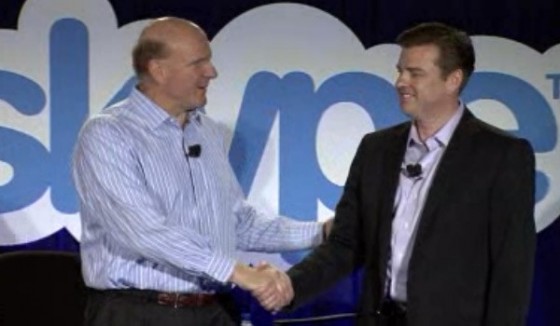
    Microsoft and Skype have made it official , The Mega Software/Hardware giant has acquired the Video Chat mega-enterprise for a whopping 8.5 Billion (Yes BILLION) US dollars. There is also a mention of XBOX and Kinect Support.

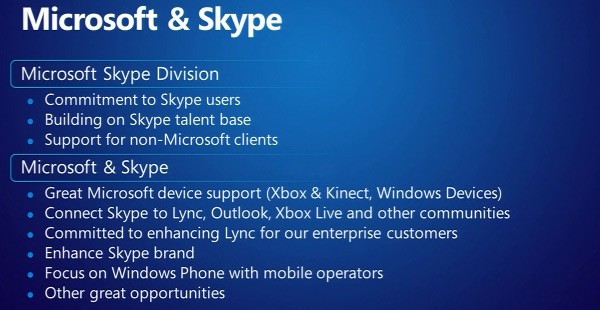
    The other important aspect of the acquisition is that non-MS users (existing Skype users) will not be affected in any way with the acquisition.

    According to data: Skype was first sold to eBay in 2005 for 2.5$ Billion US who in turn sold it for 2.75 Billion US $ to Silver Lake. The deal is expected to close by the end of this year and you can read Microsofts and Skype’s full announcement below.


    PRESS RELEASE

    Microsoft to Acquire Skype

    Combined companies will benefit consumers, businesses and increase market opportunity.

    REDMOND, Wash., and LUXEMBOURG – May 10, 2011 – Microsoft Corp. (Nasdaq: “MSFT”) and Skype Global S.à r.l today announced that they have entered into a definitive agreement under which Microsoft will acquire Skype, the leading Internet communications company, for $8.5 billion in cash from the investor group led by Silver Lake. The agreement has been approved by the boards of directors of both Microsoft and Skype.

    The acquisition will increase the accessibility of real-time video and voice communications, bringing benefits to both consumers and enterprise users and generating significant new business and revenue opportunities. The combination will extend Skype’s world-class brand and the reach of its networked platform, while enhancing Microsoft’s existing portfolio of real-time communications products and services.

    With 170 million connected users and over 207 billion minutes of voice and video conversations in 2010, Skype has been a pioneer in creating rich, meaningful connections among friends, families and business colleagues globally. Microsoft has a long-standing focus and investment in real-time communications across its various platforms, including Lync (which saw 30 percent revenue growth in Q3), Outlook, Messenger, Hotmail and Xbox LIVE.

    Skype will support Microsoft devices like Xbox and Kinect, Windows Phone and a wide array of Windows devices, and Microsoft will connect Skype users with Lync, Outlook, Xbox Live and other communities. Microsoft will continue to invest in and support Skype clients on non-Microsoft platforms.

    “Skype is a phenomenal service that is loved by millions of people around the world,” said Microsoft CEO Steve Ballmer. “Together we will create the future of real-time communications so people can easily stay connected to family, friends, clients and colleagues anywhere in the world.”

    Skype will become a new business division within Microsoft, and Skype CEO Tony Bates will assume the title of president of the Microsoft Skype Division, reporting directly to Ballmer.

    “Microsoft and Skype share the vision of bringing software innovation and products to our customers,” said Tony Bates. “Together, we will be able to accelerate Skype’s plans to extend our global community and introduce new ways for everyone to communicate and collaborate,” Bates said.

    “Tony Bates has a great track record as a leader and will strengthen the Microsoft management team. I’m looking forward to Skype’s talented global workforce bringing its insights, ideas and experience to Microsoft,” Ballmer said.

    Speaking on behalf of the investor group that sold Skype to Microsoft, Egon Durban, managing director of Silver Lake, said: “We are thrilled with Skype’s transformation during the period of our ownership and grateful for the extraordinary commitment of its management team and employees. We are excited about Skype’s long-term future with Microsoft, as it is poised to become one of the world’s most dynamic and comprehensive communications platforms.”

    Founded in 2003, Skype was acquired by eBay in September 2005, and then acquired by an investment group led by Silver Lake in November 2009. Skype has made impressive progress over the past 18 months under Silver Lake’s leadership, increasing monthly calling minutes by 150 percent, developing new revenue streams and strategic partnerships, acquiring the intellectual property powering its peer-to-peer network, and recruiting an outstanding senior management team.

    Other members of the selling investor group led by Silver Lake include eBay International AG, CPP Investment Board, Joltid Limited in partnership with Europlay Capital Advisors; and Andreessen Horowitz.

    The acquisition is subject to regulatory approvals and other customary closing conditions. The parties hope to obtain all required regulatory clearances during the course of this calendar year.

    About Skype
    Skype is communications software whose purpose is to break down barriers to communication. With an Internet-connected device, families, friends and colleagues can get together for free with messaging, voice and video. At low cost, they can also call landlines or mobiles virtually anywhere in the world. Skype has recently introduced group video, allowing groups of more than two people to do things together whenever they’re apart.

    Founded in 2003 and based in Luxembourg. Skype can be downloaded onto computers, mobile phones and other connected devices for free.

  • US Telecom Giant AT&T to buy T-mobile in a $39 Billion Deal

    US Telecom Giant AT&T to buy T-mobile in a $39 Billion Deal

    US Telecom giant At&T will buy rival company T-mobile from Deutsche Telekom for a whopping $39 Billion. At the end of this deal, AT&T will have a total of 130 million Subscribers making it the largest company in the United States. In the Deal the German company will be getting $25 billion in cash and $14 billion in stock, giving it an 8 percent stake in AT&T .


    Read the full PR

    AT&T to Acquire T-Mobile USA from Deutsche Telekom

    Provides Fast, Efficient and Certain Solution to Impending Spectrum Exhaust Challenges Facing AT&T and T-Mobile USA in Key Markets Due to Explosive Demand for Mobile Broadband

    Enhances Network Capacity, Output and Quality in Near Term for Both Companies’ Customers

    AT&T Commits to Expand 4G LTE Deployment to an Additional 46.5 Million Americans, Including in Rural, Smaller Communities, for a Total of 294 Million or 95% of the U.S. Population

    Provides 4G LTE Service for T-Mobile USA’s 34 Million Subscribers

    More Than $8 Billion in Incremental Infrastructure Spend by a U.S. Company over Seven Years, Enabling Nation’s High-Tech Industry, Innovation and Economic Growth

    Creates Substantial Value for AT&T Shareholders Through Large, Straightforward Synergies

    DALLAS & BONN, Germany–(BUSINESS WIRE)–AT&T Inc. (NYSE: T) and Deutsche Telekom AG (FWB: DTE) today announced that they have entered into a definitive agreement under which AT&T will acquire T-Mobile USA from Deutsche Telekom in a cash-and-stock transaction currently valued at approximately $39 billion. The agreement has been approved by the Boards of Directors of both companies.

    “This transaction represents a major commitment to strengthen and expand critical infrastructure for our nation’s future.”

    AT&T’s acquisition of T-Mobile USA provides an optimal combination of network assets to add capacity sooner than any alternative, and it provides an opportunity to improve network quality in the near term for both companies’ customers. In addition, it provides a fast, efficient and certain solution to the impending exhaustion of wireless spectrum in some markets, which limits both companies’ ability to meet the ongoing explosive demand for mobile broadband.

    With this transaction, AT&T commits to a significant expansion of robust 4G LTE (Long Term Evolution) deployment to 95 percent of the U.S. population to reach an additional 46.5 million Americans beyond current plans – including rural communities and small towns. This helps achieve the Federal Communications Commission (FCC) and President Obama’s goals to connect “every part of America to the digital age.” T-Mobile USA does not have a clear path to delivering LTE.

    “This transaction represents a major commitment to strengthen and expand critical infrastructure for our nation’s future,” said Randall Stephenson, AT&T Chairman and CEO. “It will improve network quality, and it will bring advanced LTE capabilities to more than 294 million people. Mobile broadband networks drive economic opportunity everywhere, and they enable the expanding high-tech ecosystem that includes device makers, cloud and content providers, app developers, customers, and more. During the past few years, America’s high-tech industry has delivered innovation at unprecedented speed, and this combination will accelerate its continued growth.”

    Stephenson continued, “This transaction delivers significant customer, shareowner and public benefits that are available at this level only from the combination of these two companies with complementary network technologies, spectrum positions and operations. We are confident in our ability to execute a seamless integration, and with additional spectrum and network capabilities, we can better meet our customers’ current demands, build for the future and help achieve the President’s goals for a high-speed, wirelessly connected America.”

    Deutsche Telekom Chairman and CEO René Obermann said, “After evaluating strategic options for T-Mobile USA, I am confident that AT&T is the best partner for our customers, shareholders and the mobile broadband ecosystem. Our common network technology makes this a logical combination and provides an efficient path to gaining the spectrum and network assets needed to provide T-Mobile customers with 4G LTE and the best devices. Also, the transaction returns significant value to Deutsche Telekom shareholders and allows us to retain exposure to the U.S. market.”

    As part of the transaction, Deutsche Telekom will receive an equity stake in AT&T that, based on the terms of the agreement, would give Deutsche Telekom an ownership interest in AT&T of approximately 8 percent. A Deutsche Telekom representative will join the AT&T Board of Directors.

    Competition and Pricing

    The U.S. wireless industry is one of the most fiercely competitive markets in the world and will remain so after this deal. The U.S. is one of the few countries in the world where a large majority of consumers can choose from five or more wireless providers in their local market. For example, in 18 of the top 20 U.S. local markets, there are five or more providers. Local market competition is escalating among larger carriers, low-cost carriers and several regional wireless players with nationwide service plans. This intense competition is only increasing with the build-out of new 4G networks and the emergence of new market entrants.

    The competitiveness of the market has directly benefited consumers. A 2010 report from the U.S. General Accounting Office (GAO) states the overall average price (adjusted for inflation) for wireless services declined 50 percent from 1999 to 2009, during a period which saw five major wireless mergers.

    Addresses wireless spectrum challenges facing AT&T, T-Mobile USA, their customers, and U.S. policymakers

    This transaction quickly provides the spectrum and network efficiencies necessary for AT&T to address impending spectrum exhaust in key markets driven by the exponential growth in mobile broadband traffic on its network. AT&T’s mobile data traffic grew 8,000 percent over the past four years and by 2015 it is expected to be eight to 10 times what it was in 2010. Put another way, all of the mobile traffic volume AT&T carried during 2010 is estimated to be carried in just the first six to seven weeks of 2015. Because AT&T has led the U.S. in smartphones, tablets and e-readers – and as a result, mobile broadband – it requires additional spectrum before new spectrum will become available. In the long term, the entire industry will need additional spectrum to address the explosive growth in demand for mobile broadband.

    Improves service quality for U.S. wireless customers

    AT&T and T-Mobile USA customers will see service improvements – including improved voice quality – as a result of additional spectrum, increased cell tower density and broader network infrastructure. At closing, AT&T will immediately gain cell sites equivalent to what would have taken on average five years to build without the transaction, and double that in some markets. The combination will increase AT&T’s network density by approximately 30 percent in some of its most populated areas, while avoiding the need to construct additional cell towers. This transaction will increase spectrum efficiency to increase capacity and output, which not only improves service, but is also the best way to ensure competitive prices and services in a market where demand is extremely high and spectrum is in short supply.

    Expands 4G LTE deployment to 95 percent of U.S. population – urban and rural areas

    This transaction will directly benefit an additional 46.5 million Americans – equivalent to the combined populations of the states of New York and Texas – who will, as a result of this combination, have access to AT&T’s latest 4G LTE technology. In terms of area covered, the transaction enables 4G LTE deployment to an additional 1.2 million square miles, equivalent to 4.5 times the size of the state of Texas. Rural and smaller communities will substantially benefit from the expansion of 4G LTE deployment, increasing the competitiveness of the businesses and entrepreneurs in these areas.

    Increases AT&T’s investment in the U.S.

    The acquisition will increase AT&T’s infrastructure investment in the U.S. by more than $8 billion over seven years. Expansion of AT&T’s 4G LTE network is an important foundation for the next wave of innovation and growth in mobile broadband, ensuring the U.S. continues to lead the world in wireless technology and availability. It makes T-Mobile USA, currently a German-owned U.S. telecom network, part of a U.S.-based company.

    An impressive, combined workforce

    Bringing AT&T and T-Mobile USA together will create an impressive workforce that is best positioned to compete in today’s global economy. Post-closing, AT&T intends to tap into the significant knowledge and expertise held by employees of both AT&T and T-Mobile USA to succeed. AT&T is the only major U.S. wireless company with a union workforce, offering leading wages, benefits, training and development for employees. The combined company will continue to have a strong employee and operations base in the Seattle area.

    Consistent with AT&T’s track record of value-enhancing acquisitions

    AT&T has a strong track record of executing value-enhancing acquisitions and expects to create substantial value for shareholders through large, straightforward synergies with a run rate of more than $3 billion, three years after closing onward (excluding integration costs). The value of the synergies is expected to exceed the purchase price of $39 billion. Revenue synergies come from opportunities to increase smartphone penetration and data average revenue per user, with cost savings coming from network efficiencies, subscriber and support savings, reduced churn and avoided capital and spectrum expenditures.

    The transaction will enhance margin potential and improve the company’s long-term revenue growth potential as it benefits from a more robust mobile broadband platform for new services.

    Additional financial information

    The $39 billion purchase price will include a cash payment of $25 billion with the balance to be paid using AT&T common stock, subject to adjustment. AT&T has the right to increase the cash portion of the purchase price by up to $4.2 billion with a corresponding reduction in the stock component, so long as Deutsche Telekom receives at least a 5 percent equity ownership interest in AT&T.

    The number of AT&T shares issued will be based on the AT&T share price during the 30-day period prior to closing, subject to a 7.5 percent collar; there is a one-year lock-up period during which Deutsche Telekom cannot sell shares.

    The cash portion of the purchase price will be financed with new debt and cash on AT&T’s balance sheet. AT&T has an 18-month commitment for a one-year unsecured bridge term facility underwritten by J.P. Morgan for $20 billion. AT&T assumes no debt from T-Mobile USA or Deutsche Telekom and continues to have a strong balance sheet.

    The transaction is expected to be earnings (excluding non-cash amortization and integration costs) accretive in the third year after closing. Pro-forma for 2010, this transaction increases AT&T’s total wireless revenues from $58.5 billion to nearly $80 billion, and increases the percentage of AT&T’s total revenues from wireless, wireline data and managed services to approximately 80 percent.

    This transaction will allow for sufficient cash flow to support AT&T’s dividend. AT&T has increased its dividend for 27 consecutive years, a matter decided by AT&T’s Board of Directors.

    Conditions

    The acquisition is subject to regulatory approvals, a reverse breakup fee in certain circumstances, and other customary regulatory and other closing conditions. The transaction is expected to close in approximately 12 months.

    Advisors

    Greenhill & Co., J.P. Morgan and Evercore Partners acted as financial advisors and Sullivan & Cromwell LLP, Arnold & Porter, and Crowell & Moring provided legal advice to AT&T.

    Conference Call/Webcast

    On Monday, March 21, 2011, at 8 a.m. ET, AT&T Inc. will host a live video and audio webcast presentation regarding its announcement to acquire T-Mobile USA. Links to the webcast and accompanying documents will be available on AT&T’s Investor Relations website. Please log in 15 minutes ahead of time to test your browser and register for the call.

    For dial-in access, please dial +1 (888) 517-2464 within the U.S. or +1 (630) 827-6816 outside the U.S. after 7:30 a.m. ET. Enter passcode 8442095# to join or ask the conference call operator for the AT&T Investor Relations event.

    The webcast will be available for replay on AT&T’s Investor Relations website on March 21, 2011, starting at 12:30 p.m. ET through April 21, 2011. An archive of the conference call will also be available during this time period. To access the recording, please dial +1 (877) 870-5176 within the U.S. or +1 (858) 384-5517 outside the U.S. and enter reservation code 29362481#.

    Transaction Website

    For more information on the transaction, including background information and factsheets, visit www.MobilizeEverything.com.
iGyaan Network
Privacy Overview

This website uses cookies so that we can provide you with the best user experience possible. Cookie information is stored in your browser and performs functions such as recognising you when you return to our website and helping our team to understand which sections of the website you find most interesting and useful.