Tag: Dislike

  • Facebook Testing A ‘Downvote’ Button

    Facebook Testing A ‘Downvote’ Button

    Ever since Facebook gained the kind of popularity it possesses right now, the call for a ‘dislike’ button was the loudest. Initially, Facebook said that it would steer clear of a ‘dislike’ button as it could add negativity. However, the company went ahead and added various reactions. One of them is an “angry” reaction which could be substituted as ‘dislike’ button.

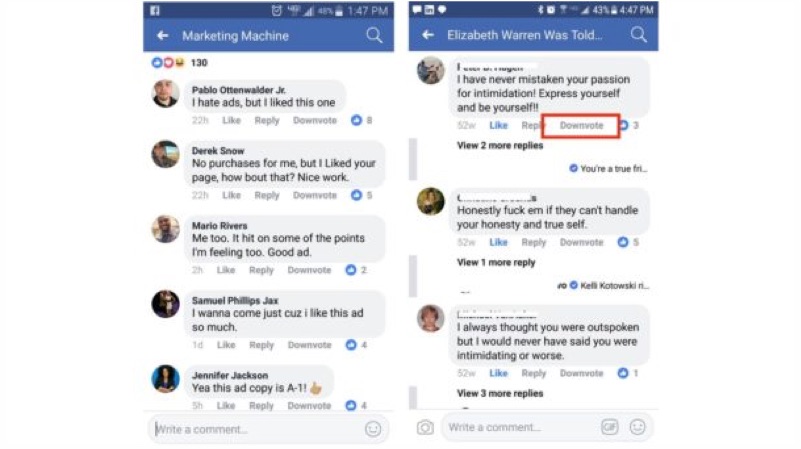
    The social networking site is now testing a downvote button that would work similarly to how downvotes are on Reddit and other sites. So far, only a few users in the United States can use this feature. And right now it is in a testing phase for now. However, the downvote button works differently than the dislike button.
    Facebook

    While a dislike button is used to express displeasure or anger towards a post or comment, the downvote button will be different. The downvote button won’t be available for every post, it is designed for comments on posts from public pages. The downvote button would help hide offensive, abusive, or inappropriate comments. Using the downvote button won’t affect the entire post.

    On a lot of websites, a number of downvotes make that particular comment hidden or deleted. Something similar will be implemented on Facebook.

    A Facebook spokesperson has stated that the social network is simply testing this downvote feature so that users can provide feedback about comments on various posts from public pages.

  • Like, Unlike and Now a Dislike Button For Facebook

    Like, Unlike and Now a Dislike Button For Facebook

    Our favourite social networking site, Facebook is now expected to come out with a new ‘dislike’ button. Why? Well, you know all those sad posts about bad things happening to someone, or a world crisis that is so appalling and you can’t really do much to help, but you still have an opinion about it? This button is for that. So, now when your friend posts a status about losing a dear one, you don’t have to ‘like’ the status and later feel awkward that you didn’t feel the need to comment but yet wanted to express support, so you went ahead and ‘liked’ the fact that your friend just lost a loved one. These kind of situations can hopefully be avoided in the future.

    The unique element about Facebook that seems to keep it running, is its ability to stay updated with all the current trends, and today the world seems to have moved on from merely ‘liking’ things or ignoring things that they’re not comfortable with. Today, if you don’t like something you’re expected to give an opinion about it, ignoring things is apparently cowardly, escapist and spineless etc. nowadays. So therefore, ‘dislike’ and let the world know.

    However, Facebook’s reason for introducing the ‘dislike’ button is more constructive than merely voicing an opinion for the heck of it. This button is expected to help Facebook build their NewsFeed better. As of now the content for each person’s NewsFeed is basically constructed by an algorithm that takes into account many actions of the user, but is mostly guesswork. This algorithm can’t tell what exactly the user dislikes and does not want to see. So, the introduction of the ‘dislike’ button will now help Facebook to not only show us things we like, but will also make a conscious attempt to hide the things we dislike.

    In conclusion, we would just like to say that you have nothing to worry about, Facebook should not become a hateful and sad place for people with complex issues. But yes, you may see a lot of Taylor Swift haters and Miley Cyrus lovers being more vocal as ever. So, if you’re not a celebrity you should be fine. No one is going to hate on your new Facebook display picture more than they already do. The solution: Take it all with a pinch of salt!

    What do you think about your new right to dislike on social media?

iGyaan Network
Privacy Overview

This website uses cookies so that we can provide you with the best user experience possible. Cookie information is stored in your browser and performs functions such as recognising you when you return to our website and helping our team to understand which sections of the website you find most interesting and useful.