Something happened today. There was a sudden burst of virtual reality news all at once that has people everywhere believing that technology has indeed taken the next step. Today, The New York Times has taken a step towards VR by introducing Google Cardboard with their magazine, YouTube updated their Android app to support virtual reality videos, and finally Samsung plans on launching its Gear VR this month. Take a moment to soak all that in.
So, talking about The New York Times, the American daily newspaper that started in 1851 has now taken a step into the future. It launched the NYT VR app that gives a virtual reality experience of news along with headphones and (optionally) a cardboard viewing device. According to a blog on the NYT website, the goal is “to simulate richly immersive scenes from across the globe.”
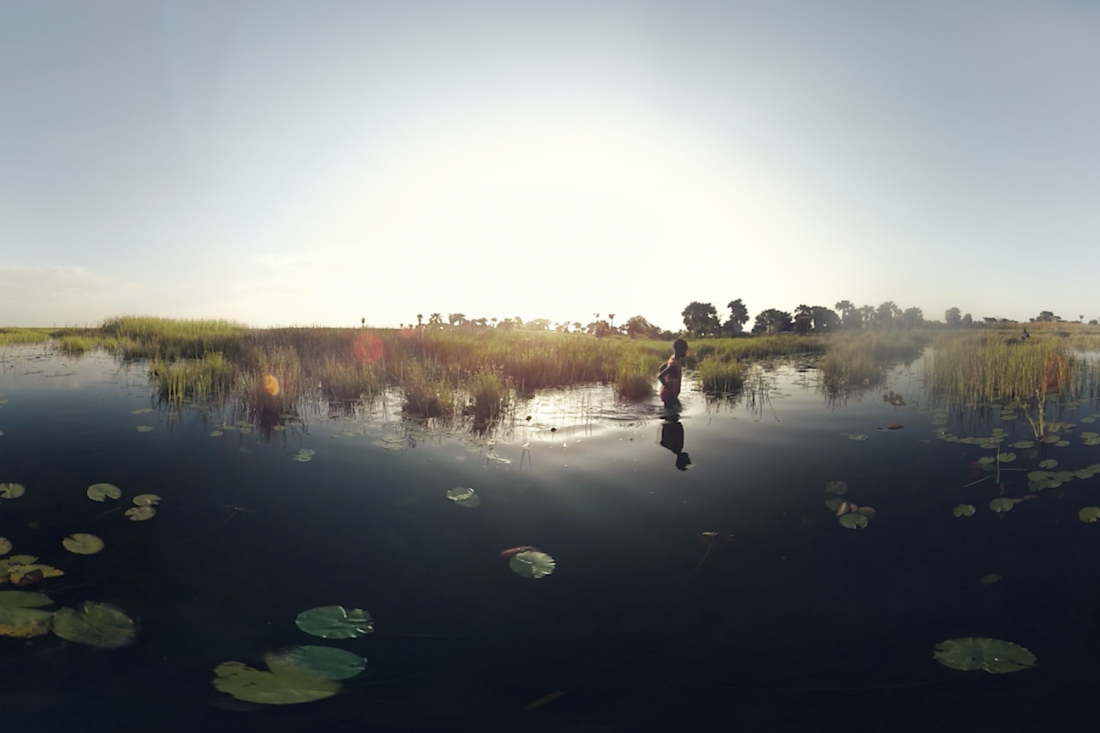
The app started with three portraits of children “driven from their homes from war and persecution.” The first is of an 11-year old boy named Oleg from eastern Ukraine, an 12-year old Syrian girl named Hana and a 9-year old South Sudanese boy named Chuol. To watch the 10-minute short film, you’ll have to download the app and thereafter the film can be downloaded. Though the films are promoted for VR headcount, they can still be viewed normally.
Some 30 million children are displaced. Chuol, 9, escaped into a vast swamp in South Sudan when fighters swept into his village.
“This new filmmaking technology enables an uncanny feeling of connection with people whose lives are far from our own,” writes Jake Silverstein, editor of the magazine.
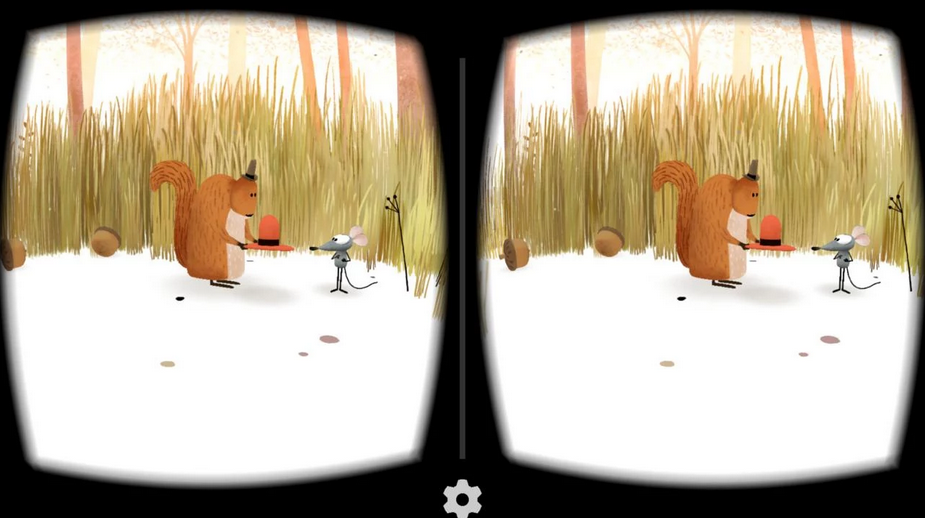
The New York Times has been at the forefront of journalism for 119 years. The NYT VR app is the future of journalism. The stories will provide you an immersive 360-degree video experience. NYT promises to post new stories told in virtual reality every month. The app is available for download on iOS and Android.
After rolling out 360 degree videos on YouTube in March, Google has now extended the same to video ads from today. No one prefers to sit through advertisements, but Google’s latest move should lead to some interesting ad campaigns, like this one:
Google says that these 360 degree videos are best enjoyed on Cardboard, its VR platform for Android. The VR does give an added advantage to 360 degree videos as it increases the presence of interactive elements in the video. Google says that for every one of these videos run as ads, the results have been impressive. For instance, Google says that Coca-Cola’s 360 video celebrating the 100th anniversary of their iconic bottle design outperformed standard in-stream video ad view-through rates by 36%.
The 360 degree videos can only be viewed on Google Chrome and YouTube apps for iOS and Android. If you want to create your own 360 degree video, you have to use one of these cameras as described by Google: Ricoh Theta,Kodak SP360, Giroptic 360cam, or IC Real Tech Allie.
At a time when Virtual Reality has taken centre stage in the tech industry, there is a lot to be done to make this revolutionary innovation reach to every corner of the world. The advanced technology that can recreate sensory experiences, designs an environment and sends users to the virtual world making them feel as if they are physically present there.
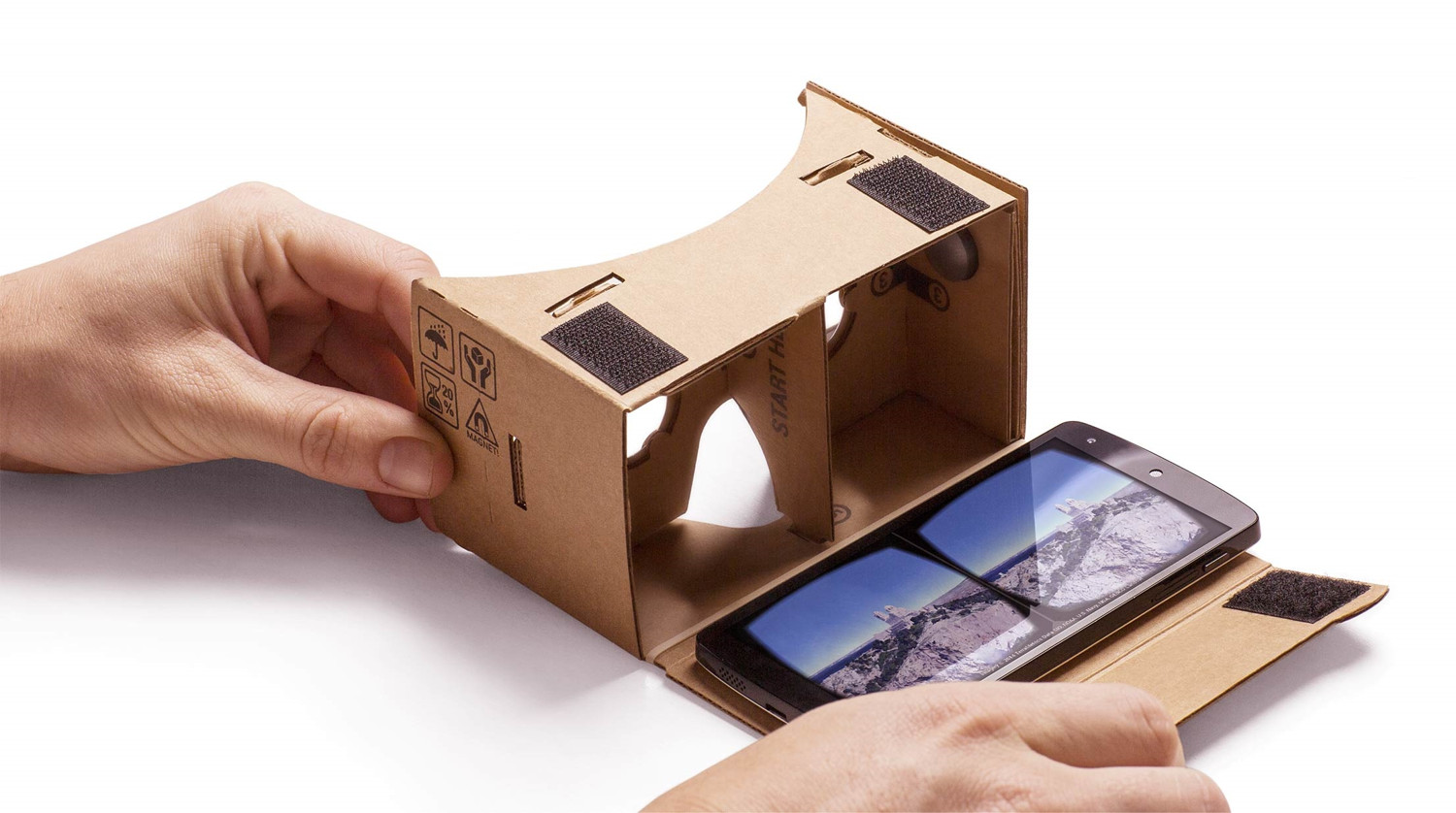
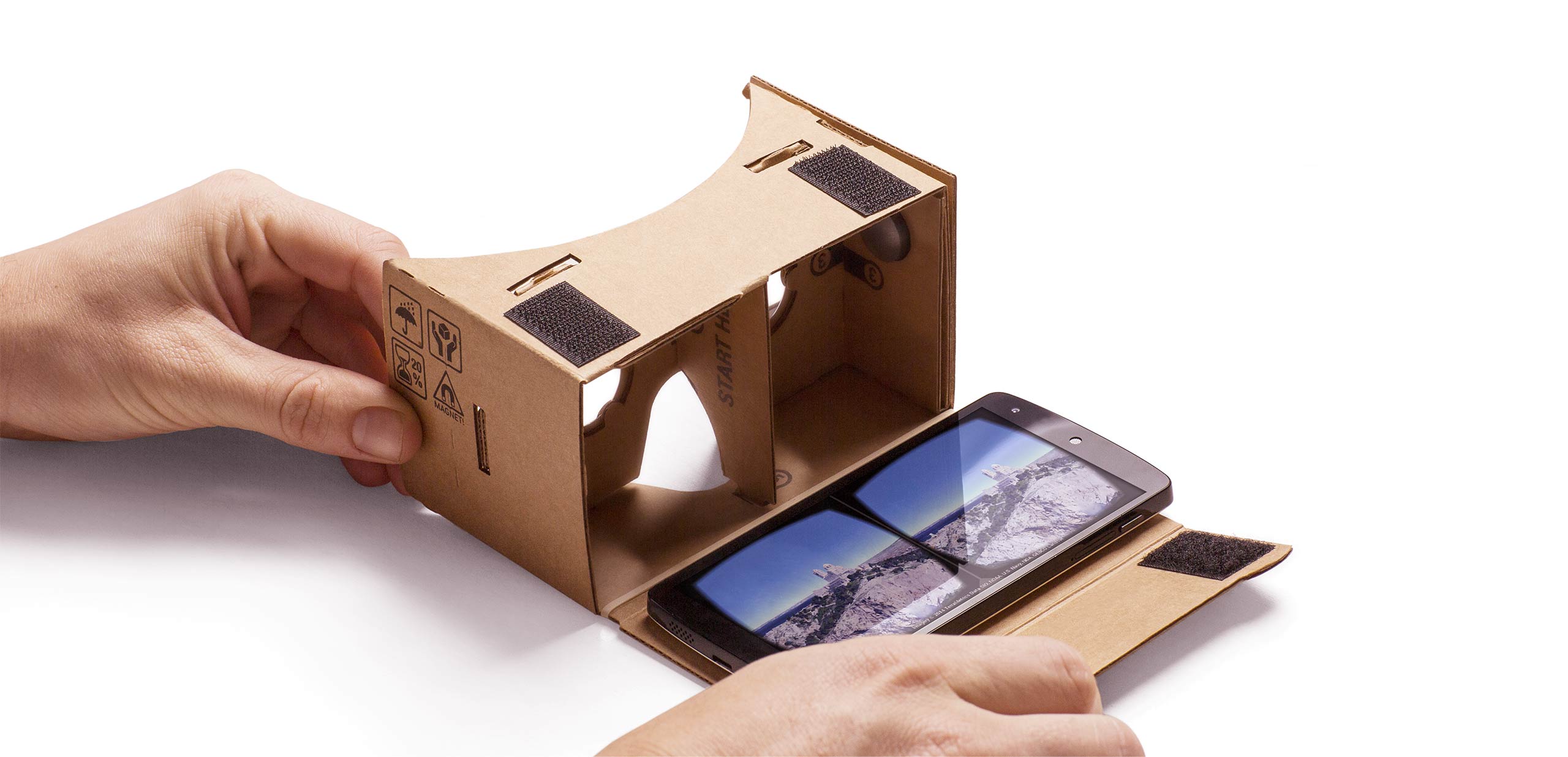
Many smartphone companies are pushing the unexplored division, by offering Virtual Reality (VR) headsets at special prices along with the smartphone. Some of these handsets include Samsung Galaxy Note, Galaxy S6 and Galaxy S6 Edge. More choices in VR headsets include Galaxy Gear VR, HTC Vive, Oculus Rift, Microsoft HoloLens and few more, but their market is limited to developed nations. This is where Google Cardboard comes into action. The low-cost, hand-made Google Cardboard requires only a bunch of things for its construction, and your smartphone is then ready to mount on the fold-out cardboard.
Follow the below-given steps and make one now:
List of Things Required
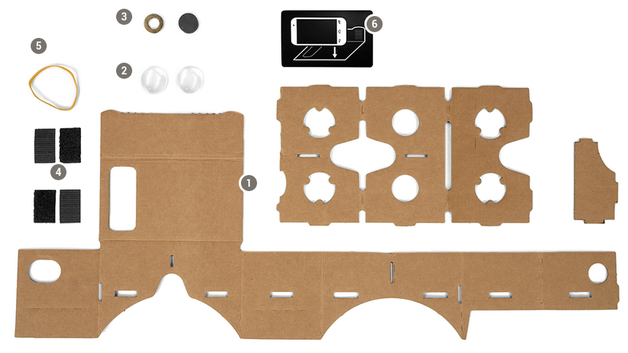
First of all, collect all the articles necessary for its preparation. You will need:
Cardboard: You will need a corrugated cardboard that is 9-inches by 22-inches. A pizza box, shoe box or any thin, rigid sheet would do.
Lens: The second thing is the lens. The lenses to affix the cardboard need to be 25mm in diameter with 40mm focal length. In case you don’t find lenses of these measures, 50mm focal length will do, but then you have to increase the length of your cardboard. You can also go for a plano-convex lens or biconvex lens, Google recommends the latter. So, first find out the lens available and accordingly start the project. [tw-button size=”medium” background=”#07ABE2″ color=”” target=”_blank” link=”http://www.amazon.in/Alian-Biconvex-Lens-Google-Cardboard/dp/B00UYG3G5G/ref=sr_1_10?ie=UTF8&qid=1434185814&sr=8-10&keywords=google+cardboard&tag=igyaan-21″]Buy Now[/tw-button]
Magnet: Two small ring-shaped magnets.
Velcro strips: Two velcro strips with adhesive on the plane surface. [tw-button size=”medium” background=”#07ABE2″ color=”” target=”_self” link=”http://www.ebay.in/itm/10-METRE-Sew-on-type-Polyster-Velcro-Hook-Loop-Tape-1000-CM-BLACK-COLOR-/111678681852?pt=LH_DefaultDomain_203&hash=item1a009172fc”]Buy Now[/tw-button]
Other things are a rubber band, glue, a pair of scissors, and a cutter.
Steps to Make Google Cardboard
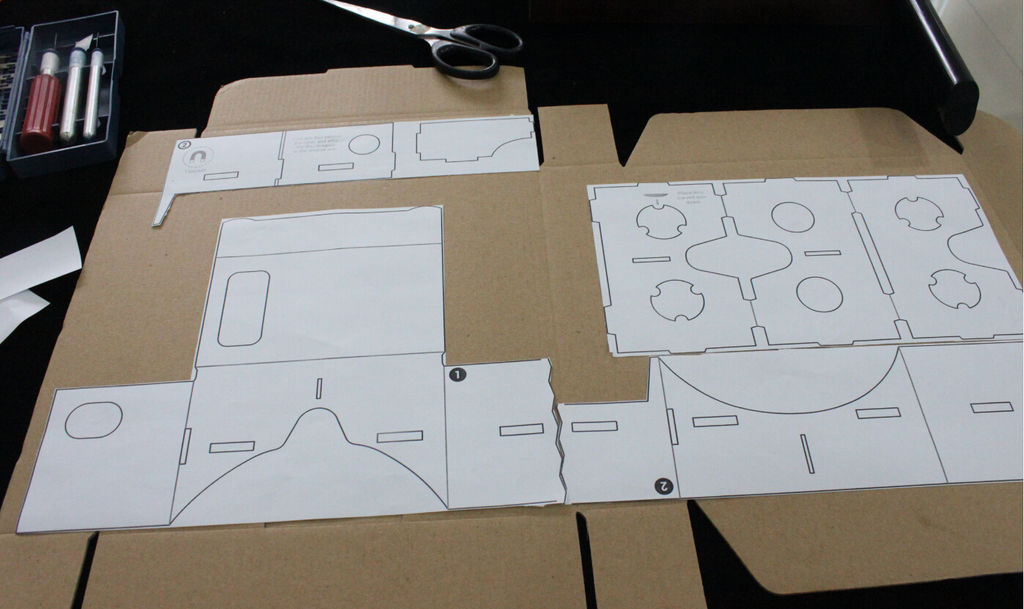
1. Print out the cardboard template by clicking on “Download the Kit” on the provided link. Apply some glue on the back of the template and paste it onto the cardboard with light numbers on top of the darker ones.
2. Now start cutting along the edges and fold the area marked by the red line.
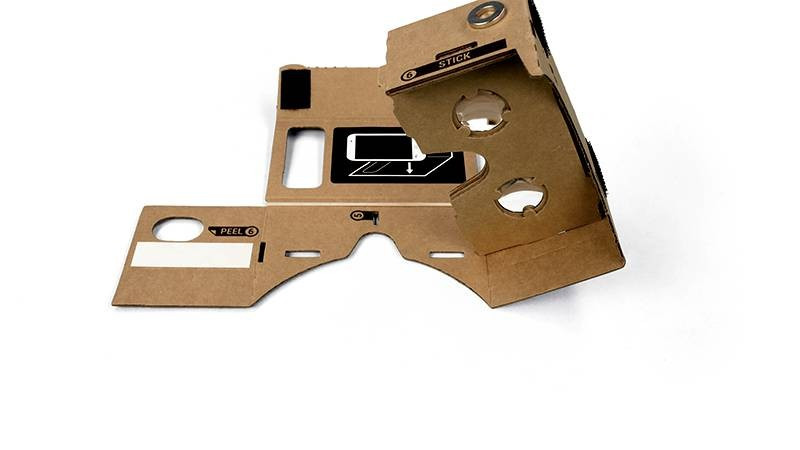
3. Once you are through with cutting the cardboard, place the lens in the curved area and magnet at the other side of the cardboard mentioned on the template. Glue the area that’s done and affix the Velcro strips where you’ll be slipping your phone.
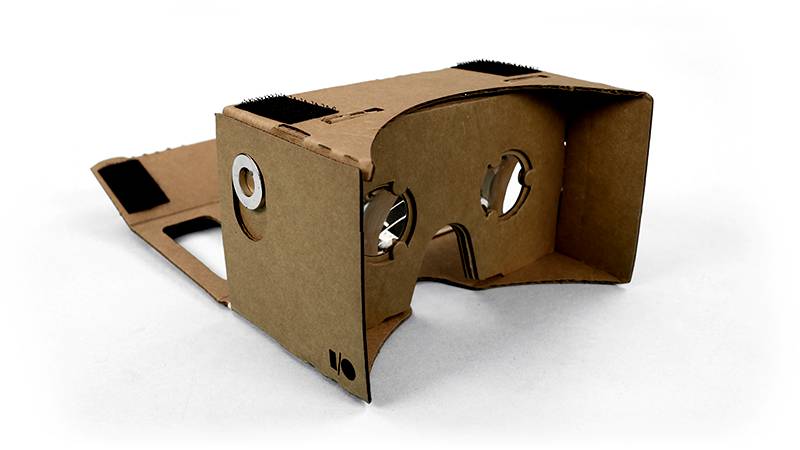
4. If you have followed the steps mentioned above, your cardboard is almost ready.
5. Put your smartphone in the cardboard and tie a rubber band so that your phone doesn’t slip through.
6. One more thing left is the installation of Cardboard app from Google Play Store that provides you content to see through the hand-made Google Cardboard. Launch the app and click the desired category by sliding down the magnet, placed on the side. You can get back to the main menu just by holding your VR headset upright.
In case everything fails, you could order one online:
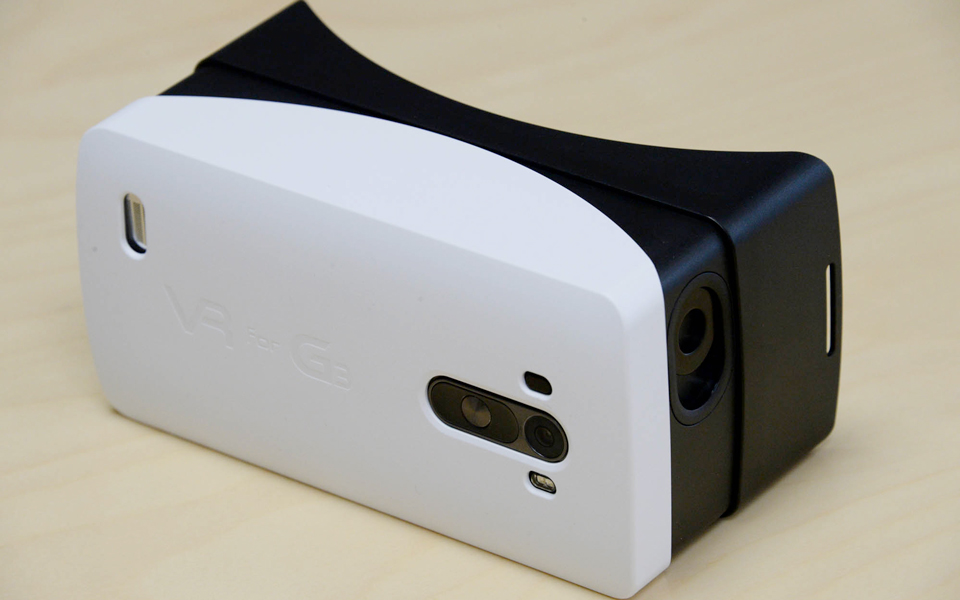
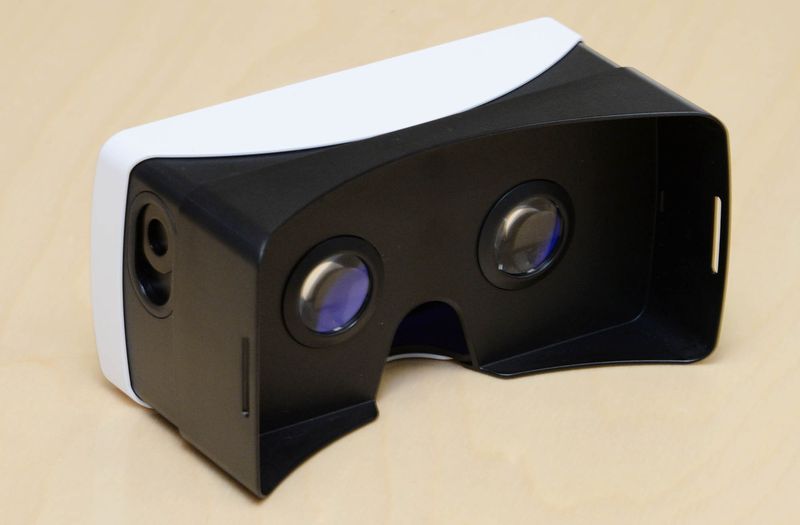
Virtual Reality headsets are the new tech every firm is betting on. But as it tuns out, none of them are available at a budget price – except one. At a mere $20, Google VR is super economical but it’s made out of cardboard. Quality would be no issue with the new VR headset by LG. The South Korean company has made a plastic version of the Google Cardboard that would be low in price. Called VR for G3, the headset will give virtual reality experience using the phone’s internal hardware.
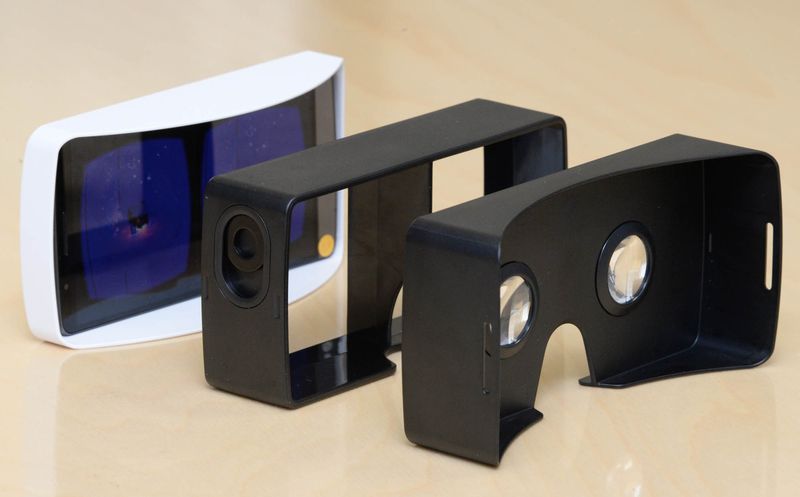
Based on Google Cardboard VR, the VR for G3 is a mere shell with lenses. The LG VR headset has three pieces which come assembled. A ring magnet like in the Cardboard VR headset sits on the left to select menu. A cutout on the back of the device reaches the volume rockers. Also, there are small cutouts for flash, laser autofocus, and speaker. The two slots are seen at the either ends, which can be used for a head strap.
Just strap your phone in the headset and it will send you right in the virtual world. As its plastic, it will cost low, but it is speculated that it may be available for free. Meanwhile, there is no word about its availability and price, and users have to wait till the next announcement.
Samsung released a Gear VR headset last year, but it costs $199. Not only this, one need to buy a Galaxy Note 4 as it is compatible with the Note 4 only.
The VR for G3 is definitely a good step to encourage the virtual reality concept to come into the mainstream.
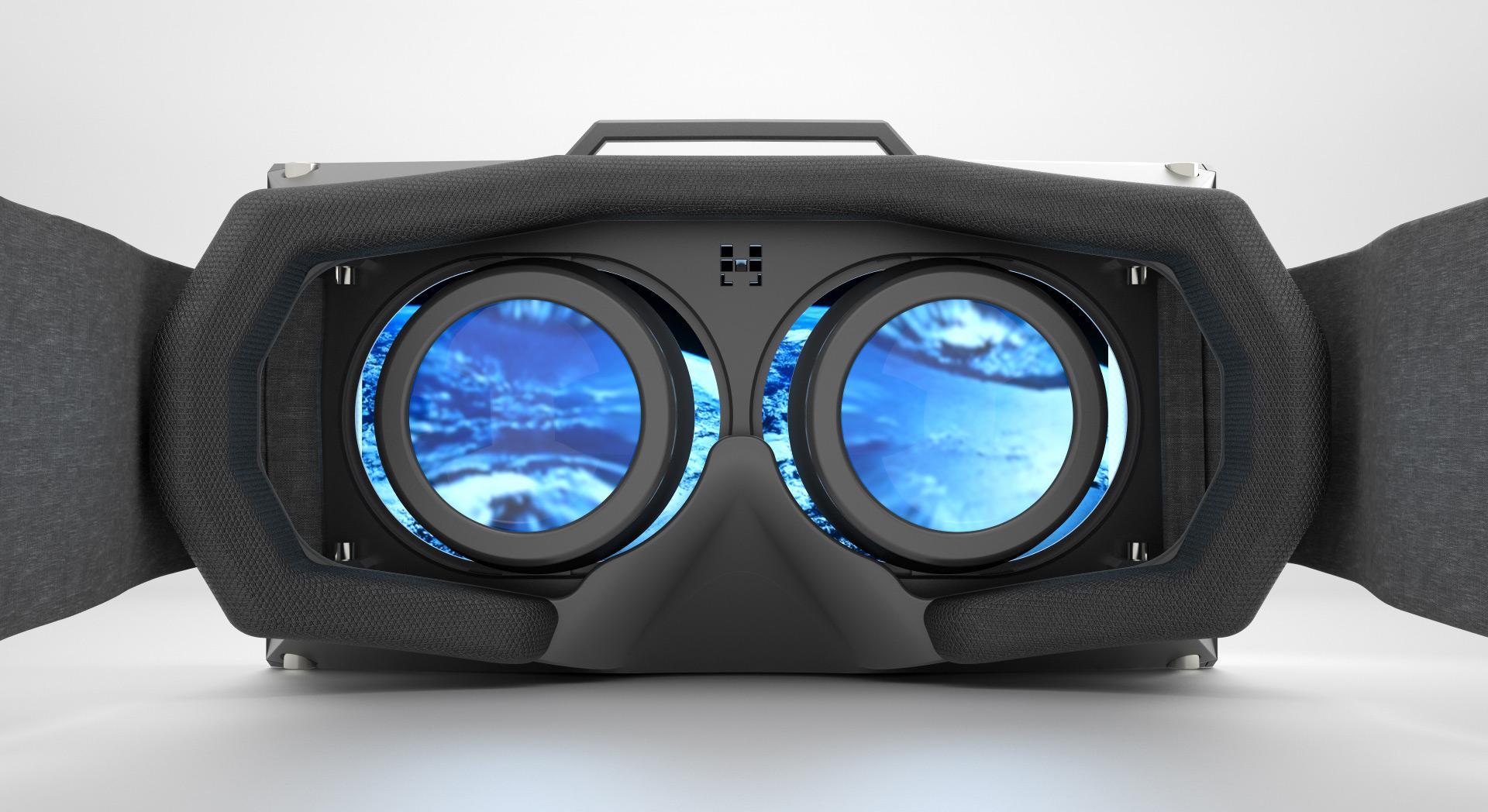
In the year 2014 Virtual Reality(VR) took a giant leap. From the hands of a limited few, the technology has now seeped into the consumer market. Oculus can be credited for bringing the technology to the mainstream. Taking cues from Oculus, several new devices have arrived in the market. Sony got its Project Morpheus and Samsung got the Gear VR headsets. There were also some independent attempts into making VR headsets including Google’s Cardboard project. The question remains – is this just a mere fad or is this technology here to stay? We delve into the past, present and future of VR Headsets today.
What is Virtual Reality?
According to a popular online encyclopedia, virtual reality is a computer simulated environment that can simulate physical presence in places in the real world or imagined worlds. It, in essence, creates a world that creates the perception of being in a whole new place. Using various other techniques, VR can create sensory perceptions of touch, smell, sounds and even taste.
The Journey to Now…
It’s not really a recent phenomenon in any sense of the word. There have been efforts to create an artificial environment for manipulating the senses since the 1800s. In 1860’s there were art installations that used a 360-degree panoramic mural to create an artificial reality. One of the most prominent examples of this is Sala delle Prospettive by Baldassare Peruzzi.
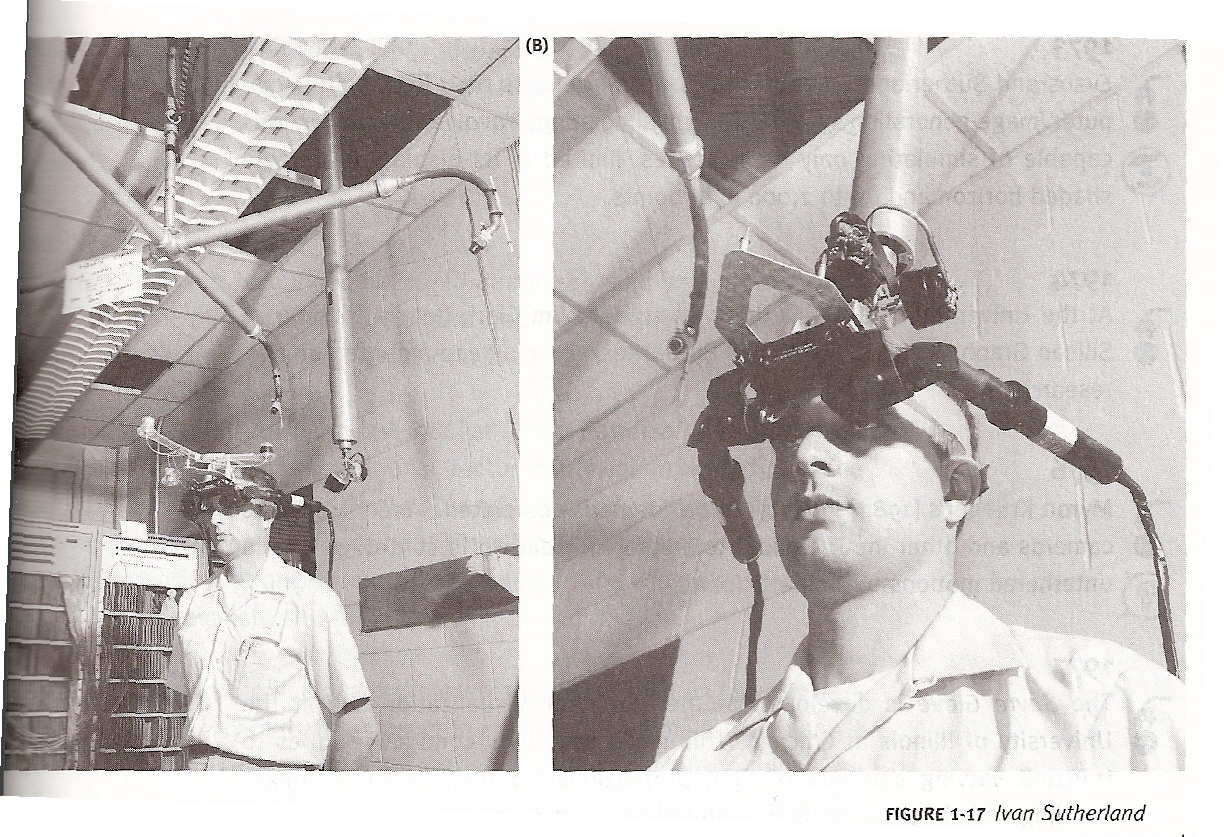
Since then, there have been multiple efforts to artistically take the audience into a perceived reality. But in 1968 the first computer artificial reality headsets came to become a reality. Dubbed the Sword of Damocles that was created by computer scientists Ivan Sutherland. It was archaic in every sense of the word. It only displayed wire-frame models and was so heavy that it needed to be suspended from the ceiling, thus getting its name.
Sword of Damocles was the first computer aided VR headset.
In 1991, Sega arrived with the first VR headsets for the consumers. Though it got a tepid response from the press, and there were fears that they could spoil the eyesight of children, this prevented it from getting to the shelves.
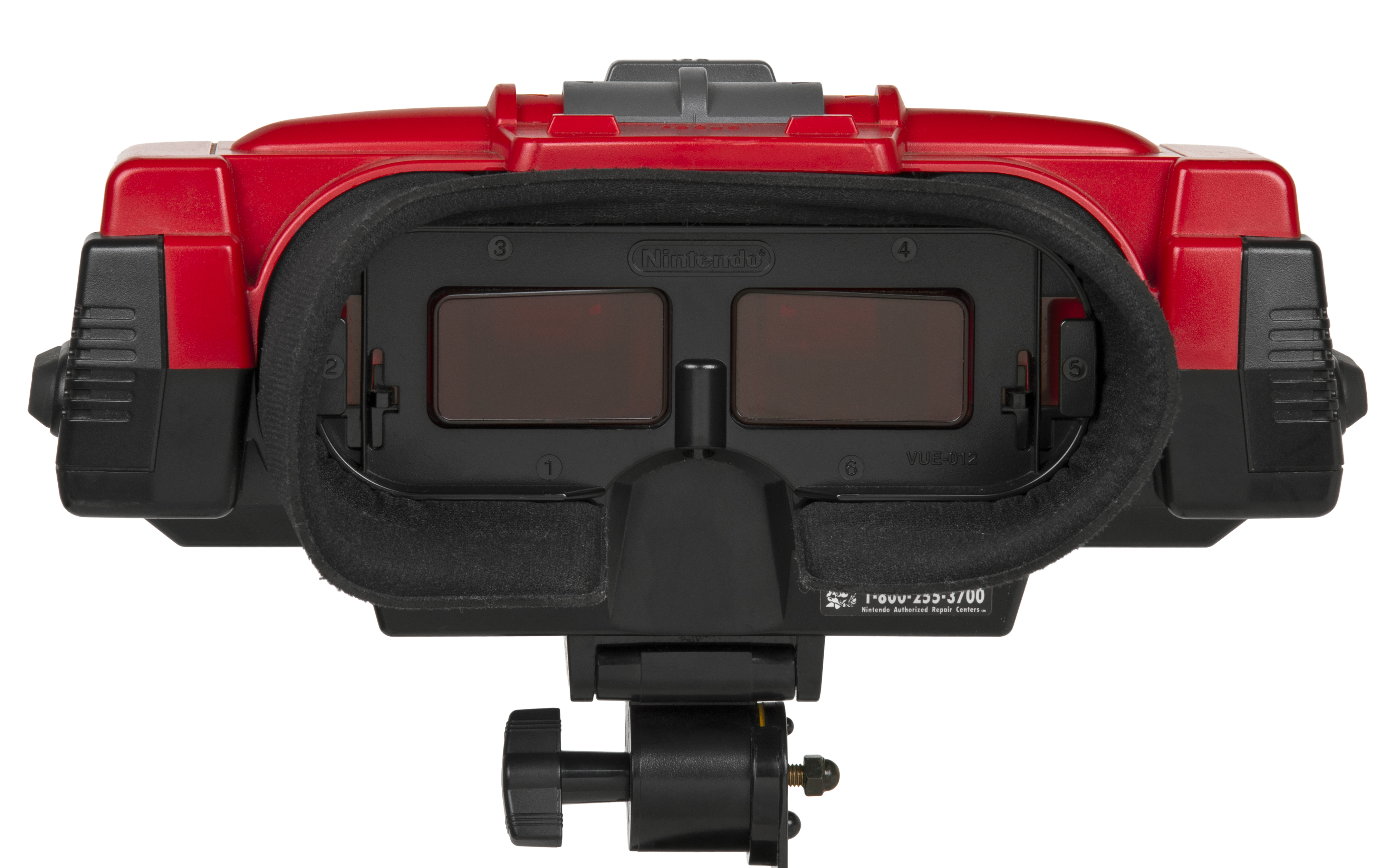
Nintendo tried its hand at VR headsets when it came out with the Virtual Boy in 1995. This device too was a commercial failure, and the users faced discomforts like dizziness, nausea, and headaches after extended use. The device was also lamented for the lack of a head tracking feature and color graphics.
Virtual Boy by Nintendo released in 1995
Fast forward to 2014, and we see a return with a vengeance of the VR technology. Aided by high processing power of modern day devices and the phenomenal breakthroughs in the mobile technology, it seems like VR has finally found its moment in time. The race was intensified with the purchase of Oculus VR by Facebook. Sony and Samsung soon followed with their own designs. Google tried to bring the technology in the grasps of everyone with the cardboard project, a DIY project through which you can create a stereoscopic VR headsets using cheap ingredients which costs just about $20.
How do VR Headsets work?
VR headsets pretty much use the concept of 3D glasses. On the displays, there are two images, one for each eye. These images, when viewed through a stereoscopic lens system, gives a perception of depth in the images. The brain brings together the two images as one and that creates the depth that immerses the user into the artificial world. Advanced VR systems like the Oculus have motion tracking system that responds to the user’s movement. Using hardware like the Omni treadmill, you feel like you are really moving around in the virtual environment.
The emergence of mobile-based portable headsets has made it a lot easier to access the technology. Devices like the Gear VR, Google cardboard, and ANTVR make it a lot easier to use. These even allow you to look at your movies with a perception of watching them on a big screen. This could possibly mean the end of movie theaters and the expensive popcorn that comes with it.
The other potential uses of the technology
There are a wide range of uses of VR technology.
Virtual Reality is not just limited to providing quality entertainment and gaming, it has many real world applications too. It can come in handy in multiple fields such as:
Virtual field Trips
The best way to learn about a new place is to go there and travel around. It can often be educational to travel. But if you cannot afford the trip, you have virtual reality to your rescue. The virtual tour can show you around the place and using complementary technologies like haptic mediums; you can get to touch and smell your new environment too. It can be a complete immersive experience that you wouldn’t want to come out of.
Education
Learning by doing is the best way to acquire knowledge. Using the tools provided by gaming advancements in VR, students can learn to interact with their future workplace. For example, an architect can learn to create buildings and manipulate it in real time, almost like Ariadne in Inception. It can even come handy to school children to bring lessons to them in a more interactive immersive fashion.
Training
Several military professionals are trained on VR surfaces. It is a lot more economical than creating real world environments and also decreases the chance of injury while training. It gives the chance to practice their lessons as many times as needed. Pilots are also trained on simulators that actively recreate the flying environment. VR can come handy to train drivers who work in specialized environments such as high terrains or ice roads.
Medicine
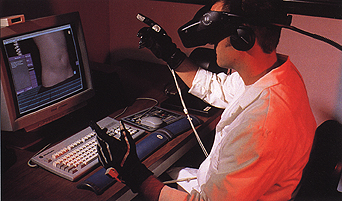
The technology can be used to train doctors.
Doctors can benefit from some virtual simulations too. Specialized surgeries that require immense precision require constant practice. In an artificially created environment, the surgeon can constantly train on the simulated body to perfect his/her skills that could someday come handy to save real lives.
Challenges with VR Devices
VR though has been in development for quite a while, but there are some limitations to the technology to make it more palatable to a mass audience. The confines of graphics and the tracking systems even in the best headsets results in various discomfort for the users. The industry needs to really work on the VR tracking systems.
The audio too is an important element of an immersive experience. The disconnect between the audio and visuals or low quality audio can also lead to motion sickness and other discomforts. The audio industry is being encouraged to fix the gap to create a more natural environment for the users.
There are also some issues with the content that can be created for consumption in the virtual world. Some psychologists say that the VR can create a generation of sociopaths who have gotten so used to first person violence that they are desensitized to it. To counter this, there is a need for regulation and codification of content meant for VR headsets. There should also be instruction and education on how to use the technology right so that it benefits all.
Virtual Reality has come a long way, but there still is long way ahead for the technology to grow.
A Long journey begins now.
With the processing power up to the mark and graphical interfaces replicating reality better than ever, this is the right time for VR to come out of its cocoon. The smartphone revolution has brought the VR technology in the grasps of everyone. Google’s cardboard project literally makes this technology universal. There is a long way to go with the potential applications of the technology, but its mainstream visibility will speed up its adoption in various fields. There is a lot the technology can offer us, and it’s just the beginning of the access to the virtual world. The immense potential of the technology is still up for unlocking. We’re excited about the prospects of VR, are you?
Virtual reality (VR) headsets have gained considerable buzz in the recent past. Oculus brought VR into mainstream, and several others followed soon after. Samsung’s Gear VR was the most prominent of all but to use it, you have to buy a Note 4. This is the reason it’s out of the reach of most enthusiasts. A Kickstarter project called ANTVR showed some promise with its innovative features and controllers. However, it’s Google who might bring the VR experience to everyone with the Google Cardboard project.
As the name suggests, the entire gadget is made up of just cardboard and some other small bits that you can find in your homes itself. You will have the support of Google; that will assist you in making the headset as well as provide software support for it. You can consider this as a gift from Google for all the big data you provide them.
Google has released new SDK for Android and Unity to create apps for the VR headsets. The Google Cardboard project can be considered the heights of jugaad device by a prominent company. The company already provides instructions to assist you in making your own DIY VR headsets. On a page dedicated to the Cardboard project, the company also featured several apps and games for the headsets.
The headsets work with any device and thus is accessible to all.
You can download the Cardboard app to start your VR experience. There are several demos already available in the app including a Google Earth flyby, a tour of Versailles and lets you watch Youtube videos on a virtual massive screen. Apart from this, you can download apps like Paul McCartney’s live performance, The Hobbit VR experience and several other fantastic visuals for your eyes only.
You can also buy the headsets, and they cost you somewhere between $20-$45. This is way cheaper than every other alternative in the market, and you can make it yourself for even less. The company says that it will be uploading instructions to make the device with extreme specifics such as how to cut using a blade, die-cutting or a laser cutter.
It’s great to see Google interested in an open source project for VR technology. The affordability of this technology is really encouraging. As it works with any phone, you don’t even have to buy an expensive new device to make it work. Of course, you might end up with nausea, headache and vertigo but it’s worth the effort to watch Sir Paul McCartney live, isn’t it?