Tag: google

  • Google Launches an Initiative to Promote Indian Languages

    Google Launches an Initiative to Promote Indian Languages

    India has a vast and diverse population. This population exists with multiple languages, customs and cultures, under one roof. In such a country, internet can be a great tool for the development of people from different languages to come and share their ideas. But for this to happen, it is essential that there is a language support system to assist people with the use of this information superhighway. Google has now formed an alliance that will work towards promoting Indian regional languages.

    The alliance will work towards providing support to Indian language users to create and receive content in their languages with ease. Google intends to involve over 300 million users from India using the language initiative by 2017.

    It is estimated that India will have about 500 million internet users by the end of 2017, up from 200 million users at present. It will surpass the whole internet population of the US. Creating content and accessibility options for regional language speakers will create a healthy future market for the internet giant. India also has a robust smartphone market, and Google can make heavy gains by providing language assistance to the people of India.

    The company did a demonstration of its Hindi voice search capabilities on an Android phone. They also launched an aggregation website called hindiweb.com where people can find access to most sites that provide content in Hindi.

    This alliance is, in fact, an appreciable initiative from the Silicon Valley giant. It is of course going to benefit Google by bringing in new users for its services, but it will be greatly beneficial to a whole new population of the country that has still not gained access to this essential utility. Google’s alliance will include companies like Times Internet, C-Dac, Reverie Language Technologies, LinguaNext Technologies, and Amar Ujala Publications and some others.
  • Google to Take on Apple’s AirDrop with ‘Copresence’

    Google to Take on Apple’s AirDrop with ‘Copresence’

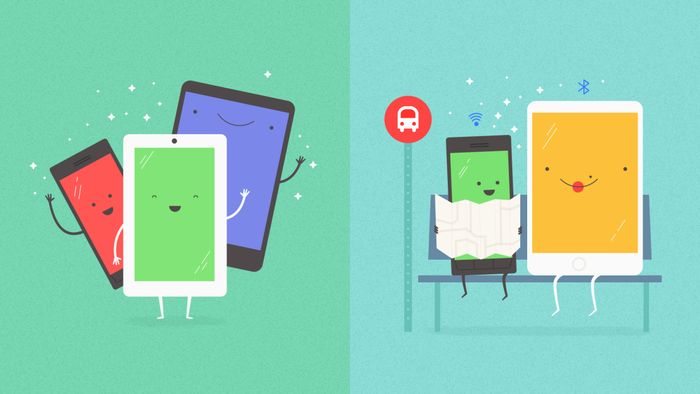
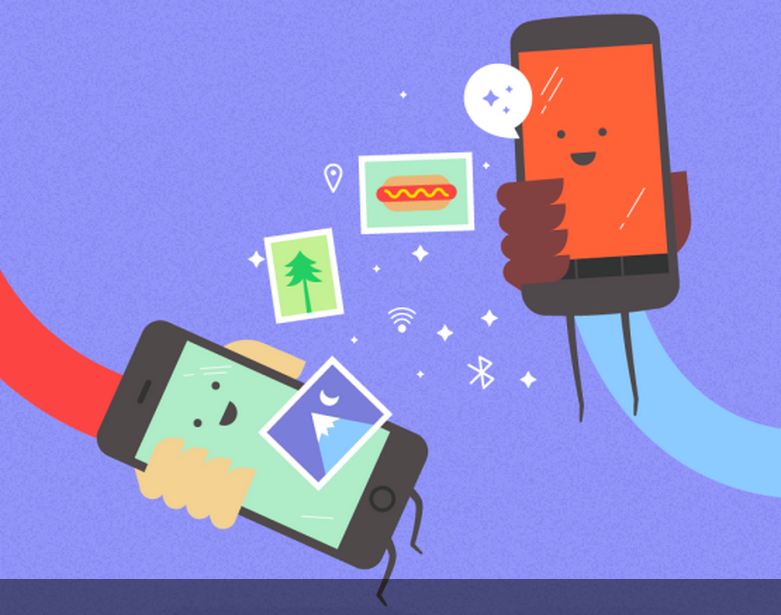
    Recent reports have hinted that Google has been working on a new service that would allow Android users to share media with other nearby devices, even with the iOS devices like iPhones and iPads instead of gadgets running Google’s mobile OS only.

    That means, this feature will allow us to exchange photos, music, contacts, directions, messages and other data between cross-platform devices easily. It is said that Google is planning to optimize this service with location information, Bluetooth and Wi-Fi, which is rumored to be based around the same kind of technology on which Chromecast works.

    copresence

    A tipster leaked the information saying that the service is codenamed as “Copresence”. Code buried in the Google Play Services’ latest version, an app on Android responsible for keeping much of Google’s core functionality working, reportedly revealed the upcoming feature, along with a few images that go with the service.

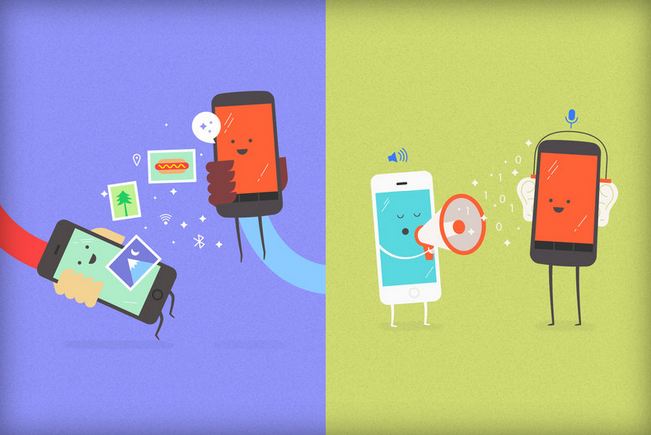
    The illustrations that you see below are possibly for the Google Play Services. These are presumably designed to inform users about the service, and they suggest that “Copresence” will work with both Android and iOS devices.

    Untitled-1.0

    Along with this, GigaOM has pointed out a number of references to the feature in bug reports for a developer version of Google Chrome, suggesting that the service could work with the popular browsers and computers as well. The new service sounds a lot like Apple’s AirDrop on iOS, which allows for sharing between iOS devices that are close to one another, across networks and with the option of sharing beyond your address book.

    The fact that the new data sharing service by Google will be cross-platform has already created a stir. If Copresence is a real deal, we might see it first with a limited number of Google’s products, most notably Google Drive.

  • It’s Done! Lenovo Now Officially Owns Motorola

    It’s Done! Lenovo Now Officially Owns Motorola

    Today, Motorola officially announced that Lenovo has completed the acquisition of Motorola Mobility and the company is now a part of the Lenovo family.

    Lenovo Group Ltd has finally closed its $2.91 billion acquisition of the Motorola handset unit from Google Inc and is preparing itself for a fresh attack on the U.S smartphone market. The purchase comes as Lenovo, the world’s leading PC maker, is trying to integrate its business into various segments and establish itself as a smartphone maker with global appeal.

    Back in 2012, Google acquired Motorola Mobility and its patent for $12.5 billion but was unable to revive the company to its old glory.

    “The iconic Motorola brand will continue, as will the Moto and DROID franchises that have propelled our growth over the past year,” explains Rick Osterloh, Motorola President, “We will continue to focus on pure Android and fast upgrades, and remain committed to developing technology to solve real consumer problems.”

    “Google will maintain ownership of a majority of the Motorola Mobility patent portfolio, while Motorola will receive a license to this rich portfolio of patents and other intellectual property,” says Lenovo. Google’s CEO Larry Page said, “Motorola is in great hands with Lenovo, a company that’s all-in on making great devices.”

  • Here’s the First Look at the Working Prototype of Google’s Project Ara

    Here’s the First Look at the Working Prototype of Google’s Project Ara

    Remember Phonebloks, the folks who came up with a revolutionary concept of a phone that can be easily updated and save the environment with the massive e-waste generated each year? The project was taken up by Motorola and named project Ara. The project got passed on to Google after Motorola’s departure from the company, and it seems that they have been working hard to get the concept to reality.

    Dave Hakkens, the Dutch designer who was the brains behind Phonebloks paid a visit to one of the contractors working on Project Ara. NK Labs is one of the dozen contract partners who are assisting Google in bringing out this new generation product.

    In the video, the engineer assembled various modules onto the device, and it worked. The device is operational and is running an Android operating system. The modules included the LED, battery, application processor, loudspeaker and USB charging bits. The camera and other complex features may be added later, but this is a great start for the project.

    Google had announced last week that it will be establishing independent stores where users can go and buy their choice of swappable modules. Paul Eremenko from Google had said that they will be creating a free and open platform on the lines of the Android project. The devices are expected to run Android Lollipop, and the “Spiral 2? prototype will be introduced on January 14th, 2015 at the next developers conference. Now this is one technology we can’t wait to get our hands on, not only is it economically viable, it has an environmentally conscious approach towards technology.

  • Google Challenges Apple’s HealthKit with New Google Fit

    Google Challenges Apple’s HealthKit with New Google Fit

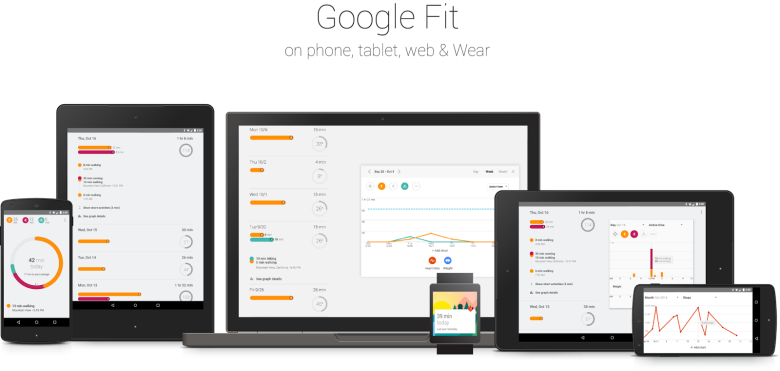
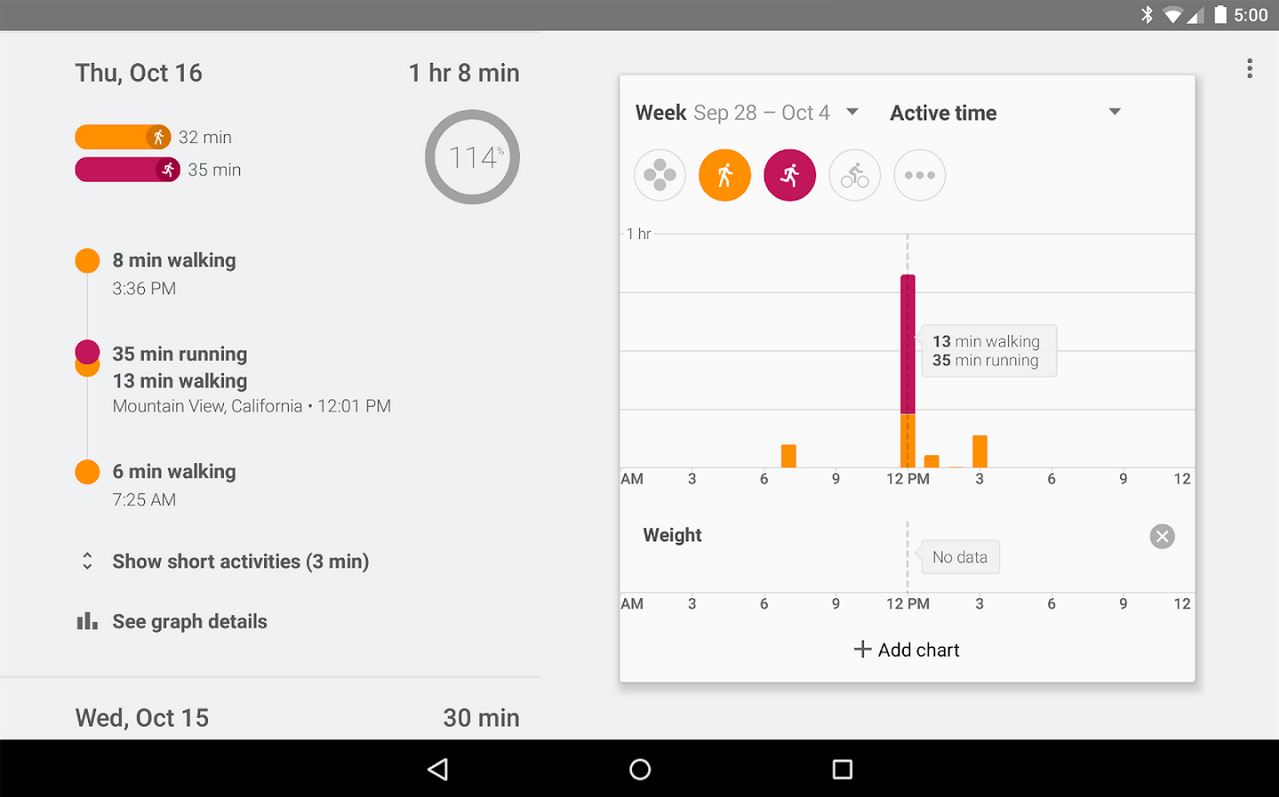
    After overcoming a few hurdles along the way, Apple’s HealthKit is making its way into mainstream slowly. However, Apple is not the only one to tap on potential market of health related applications and hardware. Yesterday, Google released Google Fit, a standalone app and fitness platform designed to compete with Apple’s HealthKit, in the Google Play store.

    The app, which connects to your existing Google account, functions as a central dashboard for tracking fitness and health goals. Like HealthKit, Google Fit taps into the sensors in your smartphone to keep tabs on daily activities like steps and active minutes. Users can also manually add exercise and other activities like biking and walking.

    google-fit

    According to Google, the newly launched app includes your run-of-the-mill activity tracking features, supports third-party integrations and Android wear devices, and enables users to “set goals based on either duration or steps.”

    To help enable third-party app integration, the company also rolled out full versions of its Google Fit APIs for developers. Google released a preview version of its software development kit for Google Fit earlier this year, and announced a series of early partners, including Nike, Runtastic, RunKeeper, who will be among the first developers to make their apps Google Fit-compatible.

    google fit

    Google Fit also has a web-based destination at Google.com/fit which doesn’t appear to be live just yet, and it’s likely we’ll see more features introduced to the app as developers begin to explore and work with the platform.

    Although this fitness app follows Google’s new Material Design guidelines and was announced alongside Android L (now known as Lollipop), Google Fit is available to all users running Android 4.0 and newer. This is also another reminder that Android 5.0 Lollipop’s release is just around the corner, with the first consumer devices sporting the OS coming next week.

  • Sundar Pichai to Now Oversee Crucial Strategic Operations at Google

    Sundar Pichai to Now Oversee Crucial Strategic Operations at Google

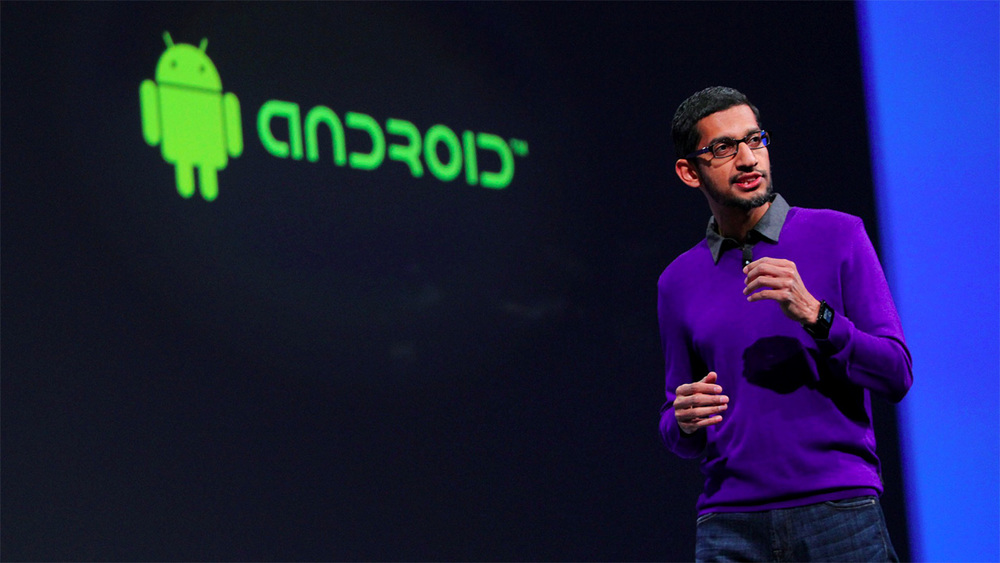
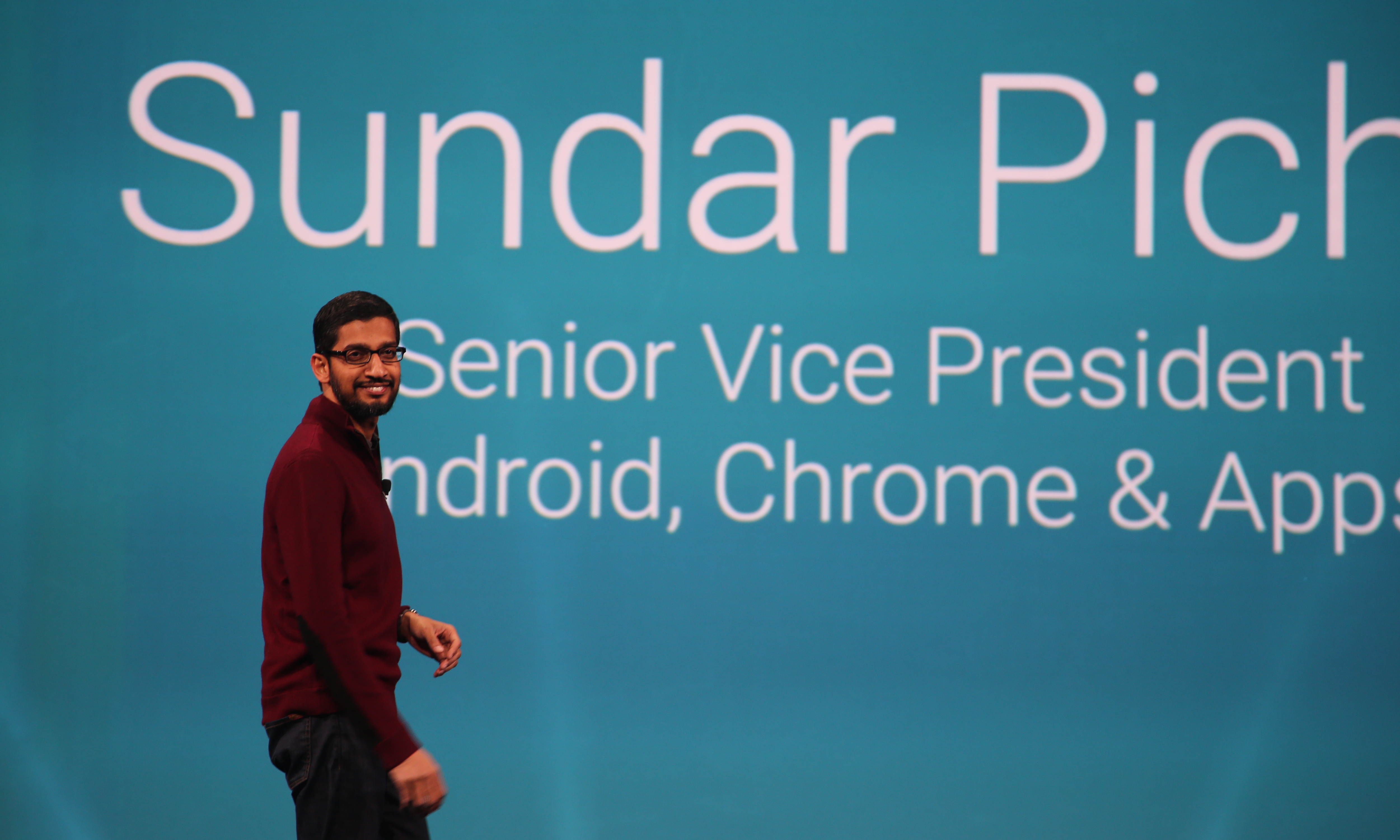
    A few days ago we reported about Satya Nadella becoming one of the highest paid tech execs, now it seems like another Indian is  speedily climbing the ladder of success. Google’s Sundar Pichai, who already heads some of the company’s most strategic businesses, has been given more responsibility. CEO Larry Page wants to focus more on overall business strategy, off loading some of his responsibilities to Pichai.

    Pichai, who already heads the most widely used OS in the world – Android, along with that he’s incharge of Google Chrome, and oversees the company’s suite of apps including Gmail and Docs. Under the organization reshuffle, he will be heading research, search, maps, Google+ social network, ads and infrastructure.

    sundar-pinchai

    With Google coming under pressure from investors as their profits and revenue did not meet their targets in the third quarter, Page decided to off load some of his reponsibilities to focus more on the overall business growth. Some financial analysts fear that Google’s business is slowing down, despite its search and advertising business still generating a revenue of $50 billion a year. Page can now have direct supervision over a number of divisions including YouTube, along with business and operations.

    Chennai-born Pichai, has become a well known figure inside the company after he took over Android. He has been working for the company since 2004 and has a master’s degree in engineering from Stanford University. His early works included being a part of the team that developed Google’s search toolbar.

  • According to Survey, India Has Second Highest Number of Google Glass Owners Globally

    According to Survey, India Has Second Highest Number of Google Glass Owners Globally

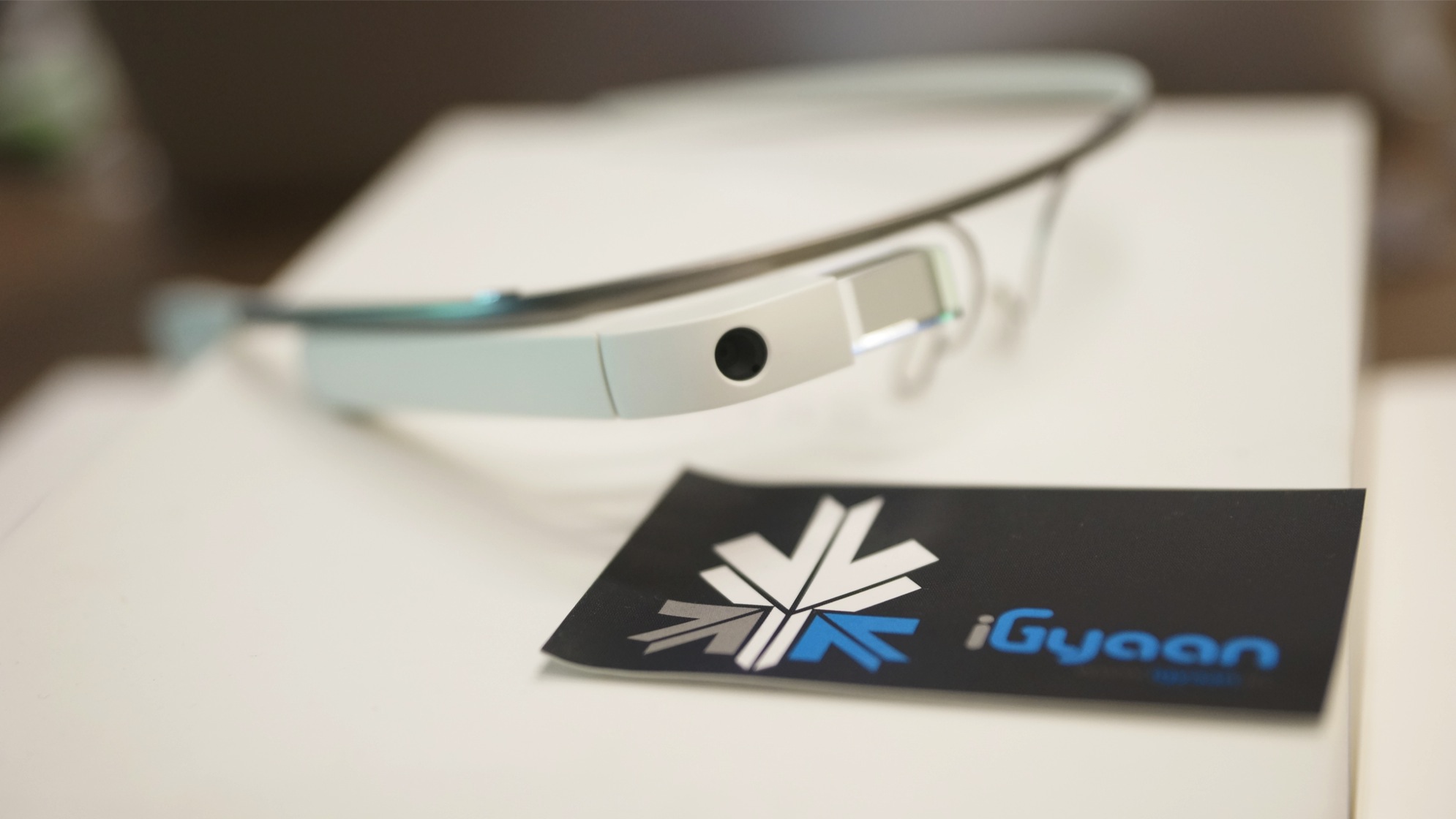
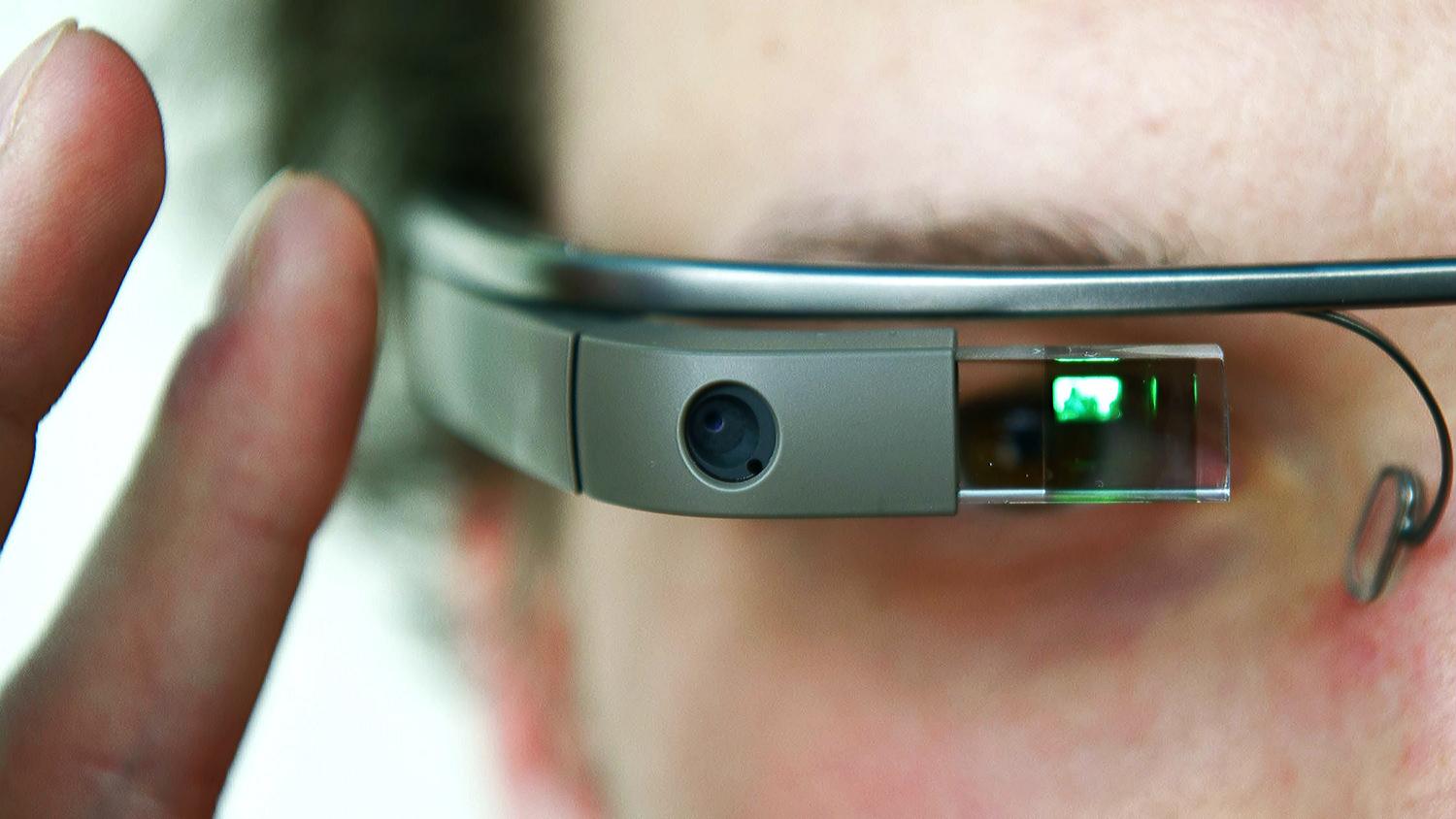
    According to a recently conducted research, India has the second highest number of Google Glass owners at six percent, South Korea being the number one with eight per cent. Google Glass is a type of wearable technology with an optical head-mounted display (OHMD). It displays information in a smartphone-like hands-free format.

    That’s not all. India is also said to have emerged as one of the most tech-savvy nation with 95 per cent of Indians find smartphones critically important, while 75 percent use their smartphone or tablet for online bookings, according to a survey by Expedia.

    google-glass-macro

    “The findings clearly suggest an increasing dependency on the mobile platform. Ninety five per cent Indian respondents feel that their smartphone is very or of critical importance to their daily life,” said Vikram Malhi, MD, Asia, Expedia . Further adding that Indians lead in app booking and data roaming plans globally.

    And that’s not it, the survey also revealed that India has the highest number of smartwatch owners globally, with 18 per cent owning and using the device. It was also reported that 85 percent of Indians own a laptop, ranking fourth in the world after Denmark (89 per cent), Austria (86 per cent) and Norway (86 per cent).

  • Nexus 9 Listed on Google Play Store in India for Rs. 28,900

    Nexus 9 Listed on Google Play Store in India for Rs. 28,900

    Google on Wednesday announced three new devices, all attempting to enter a space which competitior Apple has enjoyed monopoly over the past years. Now, Google’s Nexus 9, the HTC-made tablet  is “coming soon” to India.

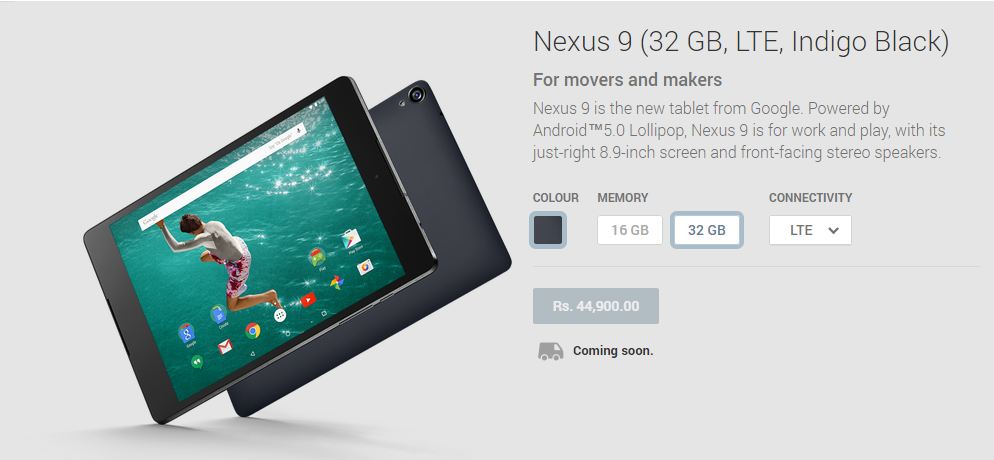
    The tablet has been listed on Google India’s Play store. It is not yet available but once it does, it will cost Rs.28,900 for the 16GB Wi-Fi model and Rs. 44,900 for the 3G version with 32GB memory. Three official origami-inspired leather covers for the tablet have also been listed. They  will be available in three color variants, Black, Mint Intiqo and Lime stone.

    nexus 9 google play

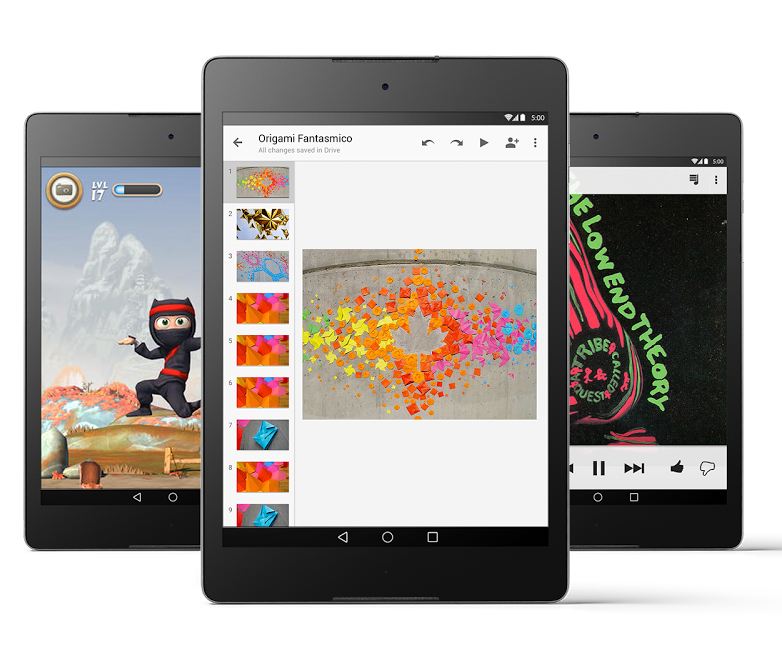
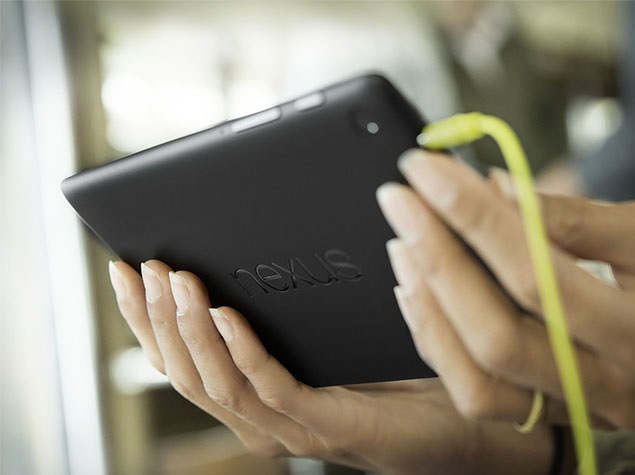
    Google describes Nexus 9 as a tablet that “is for work and play, with its just-right 8.9-inch screen and front-facing stereo speakers”. Now according to insider sources, the company will be bringing the Nexus 9 to India by the 2nd week of December, which come in line with this listing.

    Nexus 9 is a slim, sleek and sexy looking tablet. Its processing might is taken care by a 64-bit NVIDIA Tegra K1 Dual Denver processor clocked at 2.3GHz. It comes with 2GB RAM and is available in 16GB and 32GB storage variants. The device has an 8.9 inch IPS LCD display with 4:3 aspect ratio. It has a resolution of 2048×1536 and is covered in Gorrila Glass 3.

    Capture4

    The camera at the rear will not do 4K video because it is just an 8 MP snapper, but its a wide lens and a great module. The aperture is f 2.4 and the sensor is a BSI sensor. For power you get a 6700 mAh battery, that should last you through the day and then some.

    It weighs only 425 gm for the Wifi only and 436gm for the LTE variant, keeping it light and extremely portable. The tablet is easily held with one hand and the back panel feels great as well. The device is one of the first devices to run the latest Android 5.0 Lollipop OS along with the Nexus 6.

  • Google Finds Web Security Flaw Which Makes Browsers Prone to Hacking

    Google Finds Web Security Flaw Which Makes Browsers Prone to Hacking

    Engineers at Google have unearthed a major flaw named POODLE in Web encryption standard SSL 3.0. POODLE is a new security hole in Secure Socket Layer (SSL) 3.0 that makes the 15-year-old protocol nearly impossible to use safely, said Google security engineers Bodo Möller, Krzysztof Kotowicz and Thai Duong in a new report published on Tuesday.

    This flaw allows encrypted information to be exposed by a hacker with access to the network. POODLE (Padding Oracle On Downgraded Legacy Encryption) has become an issue for experts because it’s used by websites as well as web browsers, so POODLE remains a problem as long as SSL 3.0 is supported.

    However, the good news is that not much of the internet is entirely dependent on SSL 3.0 anymore, the reason it remains a problem is that hackers can force the browser to downgrade to SSL 3.0.

    Experts have advised business and computer users to stop using SSL 3.0 technology on their servers and browsers. Google security experts Adam Langley has advised Chrome users to disable SSL 3.0 right away, and has advised to add this command to the browser: ssl-version-min=tls1

    Mozilla security engineer Richard Barnes has advised Firefox users to install a Mozilla security add-on to disable SSL 3.0. There’s also an option if users do not want to use an add on, they can go to about: config and set security.tls.version.min to 1. Firefox 34 will include the fix when it launches in about six weeks.

    Meanwhile, in Internet Explorer 7, users need to go to Internet options, click Advanced tab, uncheck SSLv3 and then click on the OK button.

    Rumors of this new bug in OpenSSL software have been making rounds on Twitter and tech websites in the past few days. Google security expert Adam Langley states that the POODLE issue relies on a common exploit design in SSL and TLS. “SSL got encryption and authentication the wrong way around,” he said, “it authenticates before encrypting.”

    If you don’t have the technological skillsets to do the above mentioned steps yourself, you can wait around for the next browser updates and be sure to update them.

  • Nexus 9 to Reportedly Feature Expandable Memory

    Nexus 9 to Reportedly Feature Expandable Memory

    According to Forbes, both the LTE  as well as the Wi-Fi version of the Nexus 9 will have expandable storage. It is one feature that Nexus fans have repeatedly requested for and Google has not delivered in the past. It will also be the first device to run on Android L.

    Forbes has revealed some of the key features of the HTC built Nexus 9, and it would be nice to see the Taiwanese manufacturer bring this feature in this widely popular device. Sources have revealed that the Nexus 9 sports an an 8.9-inch 2048×1440 display, weigh 480 gm, have a 64-bit dual-core processor, an Nvidia Kepler GPU and a 8MP rear-facing camera and 3MP front-facing camera. The 16GB version is said to cost $399 and the 32GB LTE version will retail for $499. Both devices will have expandable memory.

    There are also reports of HTC’s trademark BOOM sound to be featured on Google’s next tablet including the dual front facing features, something we saw on the One M8 and Desire EYE.  Along with that, there are also reports of an an origami magnetic stand case that will be available with the tablet, that can bend in any shape and fold in multiple directions.

    Since the original HTC built Nexus One, no devices of the Nexus product range came with expandable storage, we’ll find out more of this long awaited feature today. So stay tuned for more updates of this highly anticipated device.

  • Today Google Bids Farewell to its First Social Networking Site Orkut

    Today Google Bids Farewell to its First Social Networking Site Orkut

    Internet giant Google confirmed it be will shutting down Orkut. Ten years ago, Orkut helped start conversations and forge connections. Well, it started what we call social networking today.

    Even though Orkut is still very popular in India and Brazil, it lost to rivals like Facebook and Twitter. In a blog post, Google commented, “Over the past decade, YouTube, Blogger and Google+ have taken off, with communities springing up in every corner of the world. Because the growth of these communities has outpaced Orkut’s growth, we’ve decided to bid Orkut farewell (or, tchau). We’ll be focusing our energy and resources on making these other social platforms as amazing as possible for everyone who uses them.”

    “We will shut down Orkut on September 30, 2014. Until then, there will be no impact on current Orkut users, to give the community time to manage the transition. People can export their profile data, community posts and photos using Google Takeout (available until September 2016). Starting today, it will not be possible to create a new Orkut account.”

    Orkut was launched in 2004, the same year when Facebook was founded. Facebook is now the world`s largest social network with 1.28 billion users. Google, of course, switched its attention to Google+ in 2011, leaving Orkut to largely fend for itself, and in June decided to pull the plug on September 30.

    Here’s a highlight reel infographic to remember it by, created by One Productions:

    Bye-Bye-Orkut-Infographic

  • Google’s Play Newsstand App Comes to iOS

    Google’s Play Newsstand App Comes to iOS

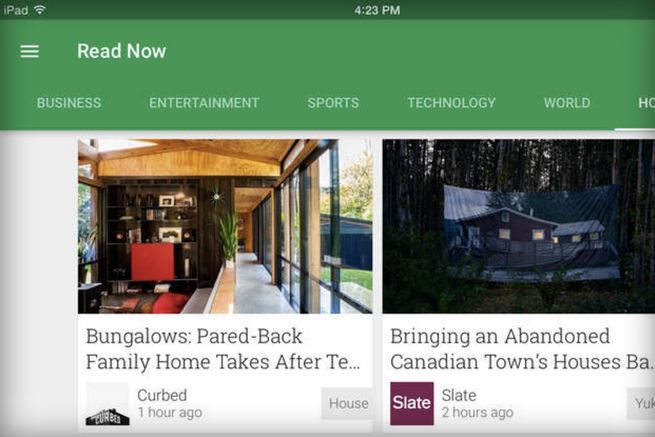
    Today the Google Play Newsstand replaced the iOS app ‘Current’ on the Apple Play Store. If you use the Current app on your iOS device, you’ll be prompted to update to Newsstand.

    The app offers a central place for reading articles from select newspapers, magazines, and websites. The offering includes support from hundreds of publishers covering news, sports, business, entertainment, and other topics, and you can also add in RSS feeds for any blogs or sites that don’t yet have a dedicated Newsstand page.

    newsstand ios

    The app also supports video and audio content from some publishers, and you can bookmark it to read later if you don’t have time to finish them on the spot. Essentially Google Play Newsstand is an integrated app that combines the features of Flipboard and Pocket.

    The app is amazingly user friendly, running on iPhones as well as iPads with equal efficiency and ease. The Google Play Newsstand is available on iOS App store for free.

  • HTC to Return to Tablets With a New Nexus Device

    HTC to Return to Tablets With a New Nexus Device

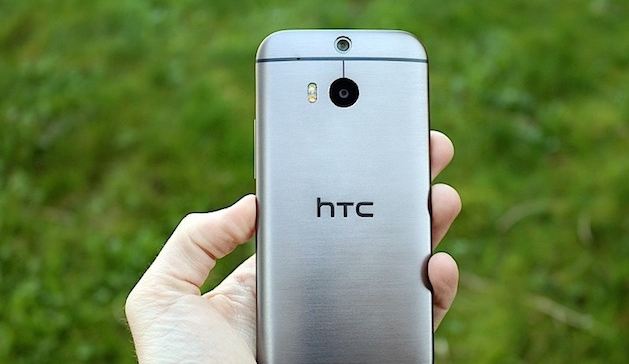
    Rumours about HTC-made Nexus tablet has been around since past few months. However, details about this new device were scarce until now. Recently, NVIDIA inadvertently leaked that the Taiwanese company is linking up with Google to launch the Nexus 9.

    And now, Wall Street Journal  has added more credibility to the report. According to the report,  HTC engineers have been flying to the Googleplex in Mountain View in recent months to work on the project. The reports added that Google has choose HTC over  more experienced tablet makers like Samsung to make its upcoming 9-inch Nexus tablet to avoid one single manufacturer gaining monopoly.

    nexus_7_

    However, it is also pointed out that HTC has a bad tablet track-record and focuses almost exclusively on smartphones. The company have not come up with any tablet since 2011 when they launched Flyer tablet which failed miserably in the market.

    Google and HTC both declined to comment on this matter, however, Google said, “Android is a vibrant ecosystem, and many of the industry players are doing very well. There’s room for many partners to do well and to innovate with Android.”

    htc-nexus-9-nvidia-teaser

    As for HTC, the Taiwanese company has been eager to gain a footing in new sectors as it loses ground in the smartphone market. The company’s executives have promised this year that they are working on fresh areas such as wearable devices. HTC had made Google’s first Nexus smartphone, the Nexus One, in 2010, but hasn’t made a device for the line since.

  • Soon You Can Watch Your Favorite YouTube Videos Offline, Officially!

    Soon You Can Watch Your Favorite YouTube Videos Offline, Officially!

    YouTube is huge. It’s practically impossible for a single human being to watch all that there is on this massive website. Most importantly, the state of the internet in India is well known. The poor connectivity and the pricey access to internet lead many to stay away from watching multimedia-heavy content like videos. Watching videos on mobile data connection is a big no-no as they can incur massive costs.

    The folks, who do have regular access to a decent internet connection, still prefer to save the videos through some semi-illegal means to avoid buffering. Now Google is going to officially allow Indian YouTube users to watch their favorite videos offline for as many times they want.

    Ceasar Sengupta, Google Vice President Product Management said “YouTube is popular here. You watch some videos again and again. How awesome would it be if you could keep watching them again and again without having to pay for data, and take the videos with you wherever you go?”

    India still is a massive video subscriber as a whole. According to comscore, the total online video audience in India saw growth of over 70 per cent in 2013 with the average viewer watching 18 per cent more videos and spending 28 per cent more time viewing them. YouTube alone gets over 60 million unique users a month and about one-third of the traffic coming from mobile phones. The country as a whole watches about 3.7 billion videos per month.

    This will be the second gift to India from Google after the launch of the Android One devices. India has no shortage of amazing YouTube talent. Sure iGyaan is awesome, but there are folks who are doing some amazing stuff too. This move by Google will help take these talents even further as people can just save the videos offline and take them to areas with no internet and propagate the video. Though that won’t increase the view count on YouTube, it will still bring the awesomeness of Indian YouTubers to a new, wider audience.

    It appears that Google is seeing India as a major market. India is the first country where Google has introduced the Android One line-up of phones. It can also be the case that the huge Indian diaspora at Google is helping to develop their homeland. Whatever the case may be, the Indian population can only benefit from the inflow of innovative resources from this gigantic corporation. Let’s hope to see this partnership grow and hopefully someday soon, India will become testing grounds for the Google Fibre. That day will be celebrated as a second Diwali.

  • Google Play Store Increases its Return Window to a Fair 2 hours

    Google Play Store Increases its Return Window to a Fair 2 hours

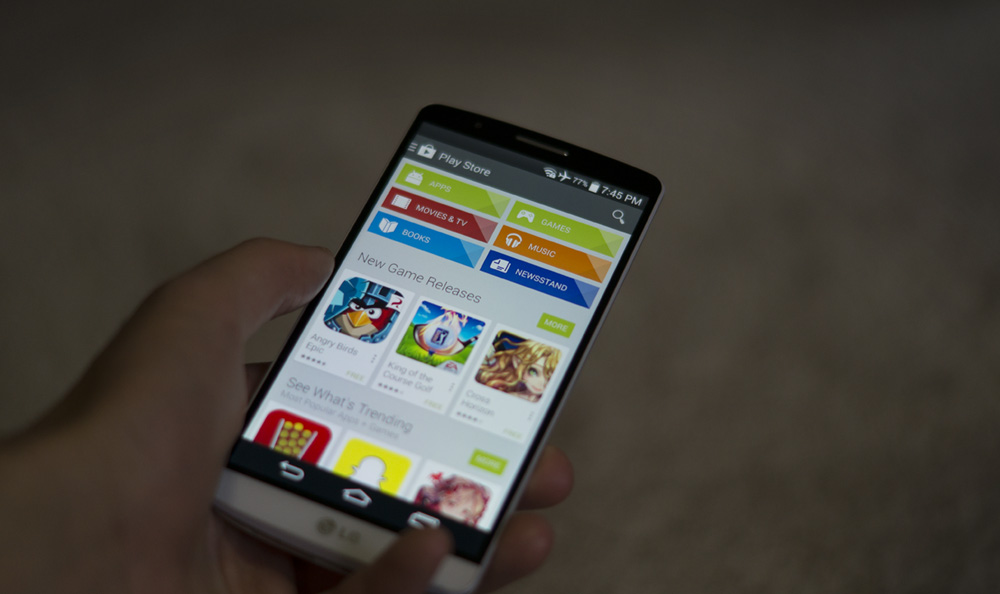
    Google’s Play Store return policy is one of the best feature the company provides. It has been appreciated by Android community a great deal. The service offers you the option of returning an app you’ve just paid for and downloaded. You can do this by simply heading back into the Google’s store, hit the refund tab, and you’re done.

    Obviously, there is a time limit for the refund policy which has been fluctuating since it started because of the reluctant developers who were worried about the loss. Earlier, when the service started Google offered 24 hours to initiate a refund which was bit extreme according to the developers. Then the company pulled down the timeframe to 15 mins where it stood until now.

    playstore

    Google has once again changed its refund policy and increased the return window to a fair 2 hours timeframe. The new 2-hour window strikes a happy medium between the old 24 hours options, giving you a decent length of time to try out an app but not so much that you’d be able to fully utilize an app or finish a game and then return it.

    Windows Phone lets willing developers give users a trial period for apps before purchase but mostly you don’t get to play with all the features of the app which defeats the point all together.  Apple’s App store in comparison, offers no refund or trial options for the apps and games. Guess it’s time to get apps from Google directly instead of looking for APK files from untrustworthy websites.

iGyaan Network
Privacy Overview

This website uses cookies so that we can provide you with the best user experience possible. Cookie information is stored in your browser and performs functions such as recognising you when you return to our website and helping our team to understand which sections of the website you find most interesting and useful.