Tag: google

  • Revamped Google Maps Show up on Signup Page, Ahead of Google I/O

    Revamped Google Maps Show up on Signup Page, Ahead of Google I/O

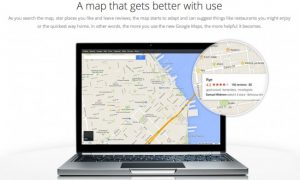
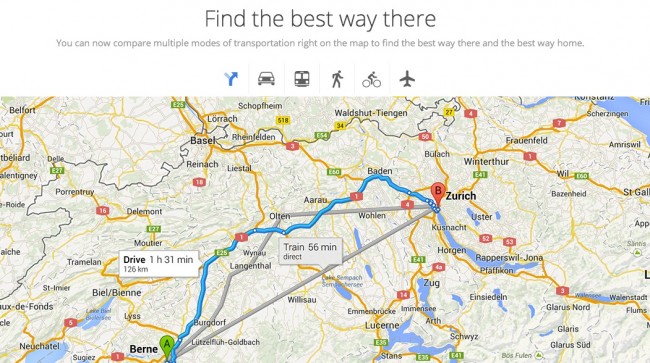
    Just before the Google I/O event the sign-up page for “the new Google Maps” briefly went live showing off atleast one of the things Google has planned for the mega yearly event. Droid-Life managed to grab some screenshots, indicating that the company is working on a smarter Google Maps, which will show the cartography based on the information you are looking for. Users will use a “smarter search box” to highlight just the “things that matter most”.

    Ground Transportation, Flights and even Google Earth has been integrated directly into the main Google Maps, making for a more seamless approach towards the mapping use. 

  • Google Unifies Cloud storage b/w GMail, Drive and Google + also For Enterprise

    Google Unifies Cloud storage b/w GMail, Drive and Google + also For Enterprise

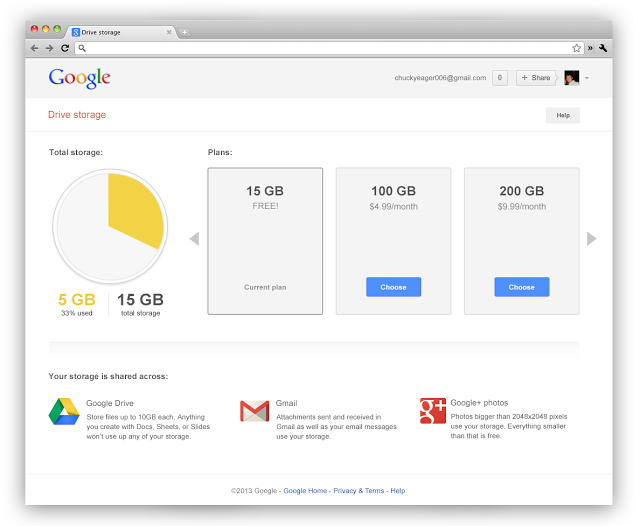
    Google has unified its cloud services starting yesterday offering a total of 15GB of storage to people using multiple Google services. With the same ID now you get 15GB of total storage across the three services, giving a boost to those who use drive more vs email or vice-versa. 

    Businesses using Google Apps will see their storage increase from 25 Gb to 30 GB across the services. 

    This move from Google comes as no surprise, as the company aligns with their storage model and frees up a lot of space from those people who were not using services on either side of Drive. 

    Shared storage

    This bigger number also makes the Google Service a lot more appealing than the lower free storage from say Dropbox.

    What’s more Google’ has added significantly cheaper upgrade plans to Drive, starting $4.99/month for 100GB which would get shared across the services, removing the previous 25 GB Gmail upgrade limit.

    These changes to Google Drive storage will roll out over the next couple of weeks.

    [VIA]

  • Google Patents Touch Sensitive Wristband For Smartwatch

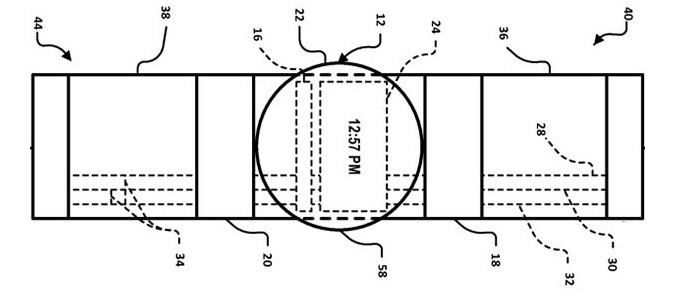
    Engadget has posted an image of a new watch-based device, patented by Google, which would perform many of the same functions.

    While the drawing does not necessarily mean such a product is in the works for commercial release, it does hint at an intriguing new direction for the company’s move into wearable computing.

    smartwatch

    The device itself is explicitly titled “Smart-watch with user interface features” by the USPTO patent so there’s no beating around the bush, but it’s the extra little bits we’re interested in.

    For example, the watch, displayed in the accompanying illustration, also has two touchpads on either side of the display face. The patent says that you’ll be able to use these to “pinch, stretch and scroll on a platform with limited space available for user input.”

    Given what we’ve previously heard about Google’s foray into the smartwatch domain, it sounded like Mountain View was separating its smartwatch and Google Glass development teams. But this new discovery makes a crossover seem more likely than ever.

    This actually isn’t the first time we stumble upon a smartwatch patent application granted to Google. Last year, the company received a patent for such a device with augmented reality features.

    It’s all pretty vague at the moment – understandably. But with Google I/O coming up you might just be able to get into the wearable tech game before too long.

    [Engadget, TechRadar]

  • Google Joins FIDO Alliance To Find An Alternative To Passwords

    Google has joined a consortium of tech companies including PayPal and Lenovo attempting to stop passwords being the sole protector of personal accounts.

    The group, the FIDO Alliance, is working on technology that would give the device a person was using a role in authenticating them so that a password alone is not enough to unlock an account. That approach can make it impossible to compromise accounts just by stealing passwords, as hackers did in order to break into Twitter this year and LinkedIn last year.

    google

    There have been some rumors about Google working on an authentication device, something like a USB stick for example, and this is what FIDO, which stands for Fast IDentity Online, specializes in.

    FIDO is working on a standard way of providing authentication online. It doesn’t necessarily have to do with the device or method used for the authentication, but with the way in which websites can request authentication and in which users can provide it.

    “Joining the FIDO Alliance is a great way to increase industry momentum around open standards for strong authentication,” Sam Srinivas, who leads information security at Google, said. “We look forward to continuing our current development work on strong, universal second-factor tokens as part of a new FIDO Alliance working group,” he added.

    In practice, users would have an authentication device, which could be a USB device with a key or a fingerprint scanner or anything else of the sort. 

    The unique key provided by the device would be used by websites to provide access. This key would be hard to spoof and harder to obtain.

    Certainly a step in the right direction.

    [Softpedia]

  • Google Fined In Germany Over Street View Data Collection

    Google Fined In Germany Over Street View Data Collection

    A German privacy regulator fined Google €145,000 on Monday for its systematic, illegal collection of personal data while it was creating its Street View mapping service, and it called on European lawmakers to significantly raise fines for violations of data protection laws.

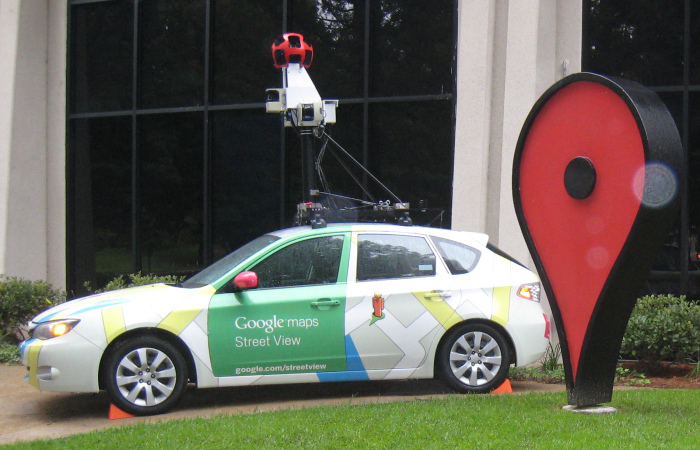
    It found that while specially equipped Google vehicles took city snapshots between 2008 and 2010 for its Street View function, which supplements its standard map service, they had also picked up data from unsecured wireless networks.

    “Among the information gathered in the drive-bys were significant amounts of personal data of varying quality. For example emails, passwords, photos and chat protocols were collected,” the Hamburg authorities said in a statement.

    Hamburg data regulator Johannes Caspar explained: In my view, this is one of the biggest data protection rules violations known,” said Caspar. Google’s “internal control mechanisms must have severely failed.

    It not the first time Google as been fined for such a breach of data protection, with the French privacy regulator levying a €100,000 penalty on Google in 2011. However Google has now tightened up its policy with using the Google Street View car systems to address issues raised in the latest data protection violation, Peter Fleischer, Google’s global privacy counsel, said in a statement.

    The commissioner also ordered Google to delete all the data it had gathered. A third party verified that Google indeed deleted the data.

    Google said it would not appeal the fine.

    [The Guardian]

  • Bing Answers Critics, Says It Blocks “94% Of Clicks To Malicious Sites”

    Bing Answers Critics, Says It Blocks “94% Of Clicks To Malicious Sites”

    Bing has responded to the malware study conducted by AV-TEST earlier this week, claiming that Bing search results led to five times more malware than Google.

    To that Bing said, “the conclusions many have drawn from the study are wrong.”

    A blog post by Bing said : 

    AV-TEST didn’t actually do any searching on bing.com.  Rather they used a Bing API to execute a number of queries and downloaded the result to their system for further analysis.  By using the API instead of the user interface, AV-TEST bypassed our warning system designed to keep customers from being harmed by malware. Bing actually does prevent customers from clicking on malware infected sites by disabling the link on the results page and showing the below message to stop people from going to the site. 

    Overall, Bing says it shows results with malware warnings for about 0.04 percent of searches. Microsoft’s senior program manager for Bing David Felstead also claims that Bing’s warning system blocks “94% of clicks to malicious sites.”

    We show results with warnings for about 0.04% of all searches, meaning about 1 in 2,500 search result pages will have a result with a malware warning on it. Of those, only a small proportion of malicious links ever get clicked and the warning therefore triggered, so a user will see the warning only 1 in every 10,000 searches. In any case, the overall scale of the problem is very small.

     Felstead later points out a search term that can be entered into Google that results in malicious results.

    [SearchEngineLand, TechCrunch, Bing]

  • Google Reveals $14 Billion Revenue In Q1 Earnings

    Google presented its Q1 2013 earnings today and, overall, the company looks to be in good shape. Revenues of $13.97 billion were down slightly from the always-hot previous quarter, but that number was in line with analysts’ expectations. More impressive was the $3.35 billion net income, which was up over 30% from the same period a year ago.

    Motorola Mobility continued to shed money, gross revenue of $1.02 billion and a net loss of $271 million. Patrick Pichette, Google’s CFO, said, ”We’re pleased with the velocity of change at Motorola Mobility. We’re excited about the future, but results will continue to be variable.” The amounts of lower, both in revenue and money lost, than the previous quarter, which means internal money-saving measures, in addition to the substantial number of jobs shed, are making a difference.

    The company hasn’t released a product since September of last year, but 2013 promises to be one of big changes in the company. Now fully integrated into Google, we’re hearing rumours that the X-Phone will be “phenomenal” and come in up to 20 colours (don’t hold your breath), in addition to being much more manageably-sized. Motorola has also promised to stick fairly close to the stock Android experience, though whether that, along with Google’s help, will be enough to regain much of its lost brand recognition and market share remains to be seen.

    Last year was Google’s first $50 billion revenue year, and CEO Larry Page said that the three pillars of the business — Chrome, Android and Ads — would continue to be the focus in 2013. The company is activating 1.5 million Android devices every day and with the release of Google Glass to developers this week, there’s yet another platform on which users can expect to see Google dominate.

  • Facebook Home Available On The Google Play Store, US Only For Now

    Facebook Home Available On The Google Play Store, US Only For Now

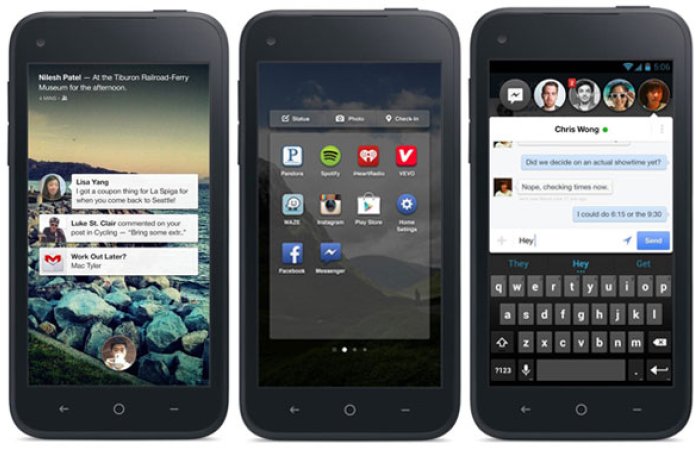
    Facebook Home has officially launched on the Google Play Store. After some leaks and the update of the Messenger app which included the Chatheads feature, Facebook Home is now available for download, for the US only for now.

    Facebook Home currently supports installation on the HTC One X, HTC One X+, Samsung Galaxy S3, and Samsung Galaxy Note II. Once you’re able to get your hands on an HTC One or Samsung Galaxy S4, those models will support Home, as well.

    In case you missed it, Facebook Home is essentially a launcher that turns your phone into an all-encompassing Facebook device. Cover feed is a feature that places your friends status and posts in the center of your screen, and Chat Heads is essentially a redesigned Messenger that displays a floating chat window when using other apps.

    Facebook’s Messenger app for Android was updated this morning with the Chat Head feature, which is available for any device that can run the Facebook Messenger app.

    People have raised concerns about privacy and security with Facebook Home, questioning the company about data collection and the decision to create a default setting where a Home-loaded phone provides access to a Facebook account on the lockscreen.

    For what it’s worth, Facebook’s chief privacy officer of policy Erin Egan and chief privacy officer of products Michael Richter responded to some of those queries in a joint blog post, stating that Facebook Home does not compromise privacy.

    [PCMag]

  • Reuters : Google Nexus 7 Successor Coming This July

    Internet giant Google is reportedly gearing up for the launch of a successor for last year’s Nexus 7 tablet PC, and might release it on shelves as soon as July, a new report from Reuters on the matter suggests. 

    We have already reported on a possible new 7-inch Nexus tablet coming from Google and ASUS, with no official confirmation on the matter available as of now, but it seems that we might indeed be nearing a formal unveiling of the device.

    The latest version will have a higher screen resolution, a thinner bezel design and adopt Qualcomm’s chip in place of Nvidia Corp’s Tegra 3, which was used in the first Nexus 7s released last year, the sources said, declining to be identified because they are not authorised to speak to the media.

    In a blow to Nvidia, Google weighed both U.S. chipmakers’ processors but finally decided on Qualcomm’s for power reasons, one of the sources added.

    Qualcomm and Nvidia are competing aggressively in the tablet market as they seek to expand from their traditional strongholds of cellphones and PCs respectively.

    Google will maintain an aggressive pricing strategy, however the two sources are split on exactly how that will be achieved: the new Nexus could come in at $199, with the older model seeing a discount, or $149, obviating the elder Nexus 7 entirely.

    The tablet would likely be equipped with Google’s next Android version, Key Lime Pie, so there’s plenty to look forward to.

    [Reuters]

  • Google Unified Privacy Policy To Lead To Fines

    Google’s privacy policies are to be investigated by Information Commissioner’s Office (ICO) to see if they are illegal under UK law.

    The move comes after French data protection regulatory CNIL confirmed that Google had made no attempt to meets it concerns over its renewed privacy policies, first unveiled in March 2012, despite its numerous complaints that the changes were illegal.

    In a statement on its website, the CNIL confirmed that despite meeting with Google, the firm had refused to take any action to appease its concerns.

    “On 19 March 2013, representatives of Google were invited at their request to meet with the taskforce led by the CNIL and composed of data protection authorities of France, Germany, Italy, the Netherlands, Spain, and the UK. Following this meeting, no change has been seen,” it said.

    Google did not implement the recommendations within the allotted four months, even after a meeting in March with CNIL and data protection authorities (DPAs) from Germany, the UK, the Netherlands, Spain and Italy. And now we see the result. According to a CNIL statement on Tuesday:

    “It is now up to each national data protection authority to carry out further investigations according to the provisions of its national law transposing European legislation. Consequently, all the authorities composing the taskforce have launched actions on 2 April 2013 on the basis of the provisions laid down in their respective national legislation (investigations, inspections, etc.)

    “In particular, the CNIL notified Google of the initiation of an inspection procedure and that it had set up an international administrative cooperation procedure with its counterparts in the taskforce.”

    This latest brush with Europe’s data protection watchdogs was triggered by Google’s action last year to consolidate more than 60 separate product privacy notices into one unified policy. After an investigation, European privacy regulators published a list of privacy recommendations for Google, including suggesting the company should make it clearer to users how their personal information may be used, and how it is collected and collated from different services. They also wanted Google to offer users an opt-out. It is these recommendations that Google has apparently failed to comply with, resulting in today’s actions.

    [V3, TechCrunch]

  • Google+ Now Supports Animated GIF Profile Pictures

    Google+ Now Supports Animated GIF Profile Pictures

    Google is taking a page out of Facebook’s book and is pushing images as a main part of Google+. As part of this initiative, it has added support for Gifs to be used as Google+ profile pictures.

    [pullquote_left] “Our gif to you. You can now use animated gifs for your profile photo,” the official Google+ account announced on Monday. [/pullquote_left]

    Some users are happy about the new feature, taking advantage of it to post animated snippets of themselves in various states as an avatar 2.0 kind of deal. Others, however, are expressing displeasure at the change, stating that animated profile pictures are distracting and ugly, and detract from the Google+ experience.

    According to the announcement, animated Gifs are now supported on both desktop and mobile devices. However, TNW reports that this feature does not apply to iOS devices as of now.

    As Matt Steiner, the person who first posted that Gifs are now supported, said, “[it is] like newspapers in Harry Potter.” We imagine some creative people will make use of this to do some funny and interesting things, much like people did with Facebook cover photos when they were first introduced.

    Google also provides a link directing users to a search on “How to make a GIF” in an attempt to encourage users to have one such animated image of their own.

    [Via Google+, Slashgear]

  • YouTube counts more than 1 Billion Unique Users each month

    YouTube counts more than 1 Billion Unique Users each month

    Chances are you probably first met with iGyaan on Youtube, and there is good reason for that. Since the 8 years Youtube has been live it has been the most popular video streaming and sharing service in the world. Now YouTube rakes in over 1 billion unique visitors every month globally. Even though that is considerably less than the population in India, it is still massive in comparison to the online world stats.

    Funnily enough, if most of China was not blocked, this number would have been at least double.

    [toggle title=”YouTube Statement”]In the last eight years you’ve come to YouTube to watch, share and fall in love with videos from all over the world. Tens of thousands of partners have created channels that have found and built businesses for passionate, engaged audiences. Advertisers have taken notice: all of the Ad Age Top 100 brands are now running campaigns on YouTube. And today, we’re announcing a new milestone: YouTube now has more than a billion unique users every single month.

    What does a billion people tuning into YouTube look like?
    Nearly one out of every two people on the Internet visits YouTube.
    Our monthly viewership is the equivalent of roughly ten Super Bowl audiences.
    If YouTube were a country, we’d be the third largest in the world after China and India.
    PSY and Madonna would have to repeat their Madison Square Garden performance in front of a packed house 200,000 more times. That’s a lot of Gangnam Style!
    From the aspiring filmmaker in his basement and the next great pop musician, to the fans all around the world who tune in, subscribe and share their favorite videos with the planet, thank you for making YouTube what it is today. You have truly created something special.

    The YouTube Team[/toggle]

  • Google Reader RSS Aggregator To Be Retired Due To Declined Usage

    Google Reader RSS Aggregator To Be Retired Due To Declined Usage

    Google is shutting down its Google Reader service due to a declining number of users – and fans of the service have been given three months to find an alternative.

    Google Reader, which was launched in 2005, is a content aggregator of web feeds, meaning users can go to just one place to view content from their favourite sites.

    But the company said Google Reader would be retired on July 1 due to a dwindling number of users.

    [pullquote_left] “There are two simple reasons for this: usage of Google Reader has declined, and as a company we are pouring all of our energy into fewer products,” Google said in its official blog. [/pullquote_left]

    Despite a near-obsessive following among journalists – who have few options as comprehensive as RSS feeds from news sites – updates through Twitter, Flipboard and other networks have largely replaced it.

    Since the announcement on Wednesday night, a petition on Change.org has already amassed more than 15,000 signatures. User Daniel Lewis started the petition because he says that despite using it less, he still relies on it several times a week.

    At least one dedicated website has been set up asking Google to reconsider.

    Bringgooglereaderback.com opens with “Dear Google” then displays an animation of Mad Men actress and Comic Con favourite Alison Brie looking at first shocked, then upset on apparently hearing the news.

    The website then displays the words: “You should bring back Google Reader.”

    google reader

    In addition to killing off Reader, from next week Google is ending support for the Google Voice app for BlackBerrys, instead pointing users toward the HTML5 webapp.

  • Google Removes Ad-Blocking Apps From Google Play for Violation Of Terms

    Google Removes Ad-Blocking Apps From Google Play for Violation Of Terms

    Usually when Google removes apps from the Play Store it’s because they’re malicious, stealing your data, or otherwise messing with your phone in a way you don’t actually want. Today we’ve learned of Google’s most recent wave of culling apps from the Play Store, only this time the apps themselves weren’t doing anything naughty, and instead Google decided to interpret its Android Developer Distribution Agreement to prohibit all ad-blockers.

    Google has decided that all these apps are in violation of Section 4.4 of the Android Developer Distribution Agreement, and has removed all of them from the official storefront.

    Even open source software such as AdAway has been removed from the app portal, and is expected to never appear there again.

    4.4 Prohibited Actions. You agree that you will not engage in any activity with the Market, including the development or distribution of Products, that interferes with, disrupts, damages, or accesses in an unauthorized manner the devices, servers, networks, or other properties or services of any third party including, but not limited to, Android users, Google or any mobile network operator. You may not use customer information obtained from the Market to sell or distribute Products outside of the Market.

    Basically, Google seems to be saying don’t mess with advertising — which is the Web giant’s central source of revenue.

    Jared Rummler, the developer for the Ad Blocker Root app, announced on Twitter that his app was yanked from Google Play today.

    Some of these apps are still available as cache on the Play Store, but all have been removed the affected developers’ app listings. We’ll update this story as we learn more.

  • Google To Pay $7 Million To U.S States As Street View Data Capturing Case Settlement

    Google To Pay $7 Million To U.S States As Street View Data Capturing Case Settlement

    Google has agreed to pay a $7 million fine to settle claims from 37 states and the District of Columbia that the search giant improperly collected data from unsecured wireless networks across the United States using its “Street View” vehicles.

    The announcement of the settlement is expected to be made by the states early next week, according to the person, though some of the final details of the deal were still being hammered out on Friday. Google has said the incident was a mistake.

    A group of states, led by then-Connecticut Attorney General Richard Blumenthal, began the investigation into Google in 2010 after the company revealed that its fleet of Street View cars had inadvertently collected the data from unsecured wireless networks.

    “While the 7 million dollars is significant, the importance of this agreement goes beyond financial terms,” Connecticut Attorney General George Jespen said after the settlement.

    “Consumers have a reasonable expectation of privacy. This agreement recognizes those rights and ensures that Google will not use similar tactics in the future.”

    As part of the settlement, Google said it would destroy the personal data it collected.

    It has also removed the equipment and software used to collect the data from its Street View vehicles and will not collect additional information without prior notice and consent, the Attorney General of New York said in a statement.

    It’s a relatively small sum for a company of Google’s size. To put the settlement in context, it’s a little more than the $6 million bonus that Google will pay Executive Chairman Eric Schmidt for his work at the company in 2012, according to a regulatory filing Tuesday.

    Google will also provide a training program to its employees for 10 years about privacy and the confidentiality of user data, and will launch a public-service advertising campaign to educate consumers about keeping their personal information secure on Wi-Fi networks.

iGyaan Network
Privacy Overview

This website uses cookies so that we can provide you with the best user experience possible. Cookie information is stored in your browser and performs functions such as recognising you when you return to our website and helping our team to understand which sections of the website you find most interesting and useful.