Tag: government

  • BlackBerry Will Continue to Operate in Pakistan

    BlackBerry Will Continue to Operate in Pakistan

    Last month, we heard that BlackBerry was planning to leave Pakistan due to privacy concerns. BlackBerry refused to accept the Pakistan Telecommunication Authority’s plea for “unfettered access” to use users’ information that included emails and BBM conversations.

    The request made by the PTA would directly infringe on users’ privacy. And BlackBerry is not one to jeopardise the privacy of its customers. Earlier in July, the PTA sent out notifications to the country’s mobile phone operators stating that BlackBerry’s BES servers won’t be allowed to operate in the country starting December due to “security reasons”. It was then that the Canadian phone company decided to leave Pakistan for good.

    blackberry-q10-heins

    However, after some “productive discussions”, the government is willing to let go of its order.This means that BlackBerry is staying put in Pakistan and will not be risking its privacy. Marty Beard, chief operating officer of BlackBerry, wrote on the company’s blog: “We are grateful to the Pakistan Telecommunication Authority and the Pakistani government for accepting BlackBerry’s position that we cannot provide the content of our customers’ BES traffic, nor will we provide access to our BES servers.”


  • Government Reprimands Telecom Companies for Providing Terrible Service

    Government Reprimands Telecom Companies for Providing Terrible Service

    As users complain of call drops and call lags, the government has asked Telecom companies to improve their standards by ‘focusing on improving capital expenditure and optimising resource utilisation to curb call drops,’ as stated by Business Standard.

    “The projected acute shortage of towers due to non-cooperation of state government and local bodies can’t be accepted as a reason for the call drops in last four to six months as this problem has assumed severe proportion during this period,” it said.

    A meeting was held on Tuesday with the Telecom Secretary Rakesh Garg and the CEOs of telecom service providers (TSP) and the main issue of call drops was discussed at length. Garg concluded the meeting by saying that the government was lending as much support as possible regarding ‘the issue of dispelling of unfounded fears from EMF radiation and other issues raised by TSPs.’

    He also asked the TSPs to look into areas such as deployment of additional sites to ensure optimum coverage, use of geo-spatial tool for micro-analyzing time-spatial performance, real time network optimization and load balancing etc, which will all lead to the betterment of the QoS (Quality of service.)

    In response, the operators have claimed an investment of Rs.134,000 crore, out of which Rs.24,000 crore is for capital equipment with a capital expenditure revenue ratio of 73% against global coverage of 12-18%.

    The government issued another statement saying:

    “There is an immediate requirement of rigorous optimisation exercise to be taken up by all service providers.”

    Now that the operators have been picked up for not being able to deliver good service quality,  they have assured the government that they will take action for optimisation of networks and do it on a regular basis, thereby improving the overall performance.

    Let’s hope these aren’t false promises.

  • Indian Government Blocks Over 800 Porn Websites

    Indian Government Blocks Over 800 Porn Websites

    A directive had been passed, late Friday evening, blocking around 800 porn websites. Although, the effect of this legislation may not have taken place all over the country, it is said to become active in a couple of days.

    So now when one tries to access a particular porn website, an error message will show, suggesting that the Indian government had asked the Internet Service Provider (ISP) to block the site. This is the result of a PIL that is being held in the Supreme Court asking the government to block citizens from accessing pornography  on the internet. In November, the government asked the Internet And Mobile Association of India to curate a list of pornography websites that could be passed on to ISPs.

    The list is reported to contain over 800 websites and has been handed over to ISPs by the government under Section 79 of Information Technology Act. The act is in relation to intermediaries and cases where they are involved in its transmission. Chief Justice HL Dattu, had said “Such interim orders cannot be passed by this court. Somebody may come to the court and say look I am above 18 and how can you stop me from watching it within the four walls of my room. It is a violation of Article 21 [right to personal liberty],” while asking the government to come up with a reply within four weeks.

    While this move might seem slightly controversial, and dare we say, bordering on interference from the government in personal matters, it is said that one could still access the websites using VPN or proxies. Moreover, the blockade is on the URLs, so the websites could themselves resurface under a different URL.

    Let us know what you think about this legislation.

    Source: [tw-button size=”medium” background=”#07ABE2″ color=”” target=”_blank” link=”http://www.hindustantimes.com/india-news/ban-on-porn-govt-blocks-800-adult-websites-more-under-review/article1-1375794.aspx”]Hindustan Times[/tw-button]

  • Indian Government Comes Out in Support of Net Neutrality

    Indian Government Comes Out in Support of Net Neutrality

    The much heated issue of Net Neutrality now has the Centre’s support. The government hasn’t come out with a final verdict on the same, but is committed to keeping the Intenet open and evenly accessible to everyone. Standing up in support of free internet, Telecom and IT minister Ravi Shankar Prasad in a firm voice said that the practices of blocking and deliberately slowing down or speeding up of lawful content on web should not be allowed.

    While responding to a discussion on Net Neutrality in Rajya Sabha, Prasad commented –

    Government stands for ensuring non-discriminatory access to Internet for all citizens of the country. The government agrees with the viewpoint that blocking and deliberately slowing down/speeding up of lawful content on the Internet should not be allowed, and customers should have unrestricted access to all lawful content on the Internet.

    Prasad stressed on the fact that the Government has all powers to direct Telecom Regulatory Authority of India (TRAI) on public policy. “However, TRAI’s powers to regulate tariff and quality of service are subject to overall public policy of the government and the government has sufficient powers under the Trai Act to invoke its national policy objectives to give directions to Trai,” stated Prasad.

    ravi shankar prasad
    Telecom and IT minister Ravi Shankar Prasad spoke up about keeping the Internet an open platform.

    He further mentioned that a detailed examination on topics like traffic management, national security, integrity of network and infrastructure investment is needed by experts on Net Neutrality.

    It should be kept in mind that government hasn’t laid down the structured guidelines on net neutrality principles. Once the government frame rules for the content flow on web, telecom operators wouldn’t be able to adopt illegitimate pratices to earn more money.

    A while back, TRAI’s consultation paper on its official website gathered millions of emails in support of Net Neutrality.  From the comments of the Telecom minister, it seems like the final verdict would slay the Airtel Zero plan, once and for all.

  • Expert Believes ‘Digital India’ Plan Flawed, Needs a Practical Cyber Security Policy

    Expert Believes ‘Digital India’ Plan Flawed, Needs a Practical Cyber Security Policy

    The present Indian government has put particular focus on the communication infrastructure of the country. The focus is especially on making India a powerful force in the digital era. It envisions mobile connectivity for every Indian and developing the nation through an e-governance system. The Digital India program is the most visible action plan by the government. But experts are asking the Indian authorities to take a breather and first work out a clear strategy for cyber security.

    Cyber Security is an important element of a communication infrastructure. It is not just necessary to establish these protocols but to enforce them as well. Currently, according to the Director of the cyber warfare program at the Tel Aviv University’s Institute for National Security Studies, Mr Gabi Siboni, the strategy arena is where India is lacking. This was reported by Economic Times.

    According to Mr. Siboni, the paper published by the Indian government released last year on the subject lacked clear direction. The paper envisions a huge infrastructure that would employ over 5 lakh professionals trained in cyber security to protect the national interests in 5 years. But the paper doesn’t mention how these professionals will be acquired or trained.

    The report points out that there has been a heavy increase in the number of cyber security attacks on this country’s institutions. According to data gained from the Indian Computer Emergency Response Team (CERTIn), the attacks have increased to a massive 62,189 until May this year from a meagre 23 reported incidents in 2004. This has also increased the costs to businesses whose infrastructure is targeted through such attacks.

    Mr. Siboni has pointed out that currently the attackers are way ahead of the defenders. So it’s absolutely necessary to define the minimal defence strategy for civilian, business and government security. There is no fool-proof way of securing the cyber arena but if you have a clear strategy to deal with them, you can repel these attacks to a certain extent. We hope the Indian authorities are taking notice.

  • Microsoft, Facebook & Google Says ‘Current Laws and Practices Need to be Reformed’

    Microsoft, Facebook & Google Says ‘Current Laws and Practices Need to be Reformed’

    Microsoft, Facebook, Google, LinkedIn, Yahoo and AOL have together asked the world’s governments to reform its current laws and practices. 

    All of these companies have issued a letter to the government directly and also posted it in various publications to spread it worldwide. This is what the letter says:

    The undersigned companies believe that it is time for the world’s governments to address the practices and laws regulating government surveillance of individuals and access to their information.

    While the undersigned companies understand that governments need to take action to protect their citizens’ safety and security, we strongly believe that current laws and practices need to be reformed.

    Consistent with established global norms of free expression and privacy and with the goals of ensuring that government law enforcement and intelligence efforts are rule-bound, narrowly tailored, transparent, and subject to oversight, we hereby call on governments to endorse the following principles and enact reforms that would put these principles into action.

    google

     All of this will work on five principles as per these companies:

    1. Limiting Governments’ Authority to Collect Users’ Information

    2. Oversight and Accountability

    3. Transparency About Government Demands

    4. Respecting the Free Flow of Information

    5. Avoiding Conflicts Among Governments

    All these companies have openly acknowledged the government’s need to take actions for the public good. Here is what the CEO’s of these company have to say:

    Reports about government surveillance have shown there is a real need for greater disclosure and new limits on how governments collect information. The US government should take this opportunity to lead this reform effort and make things right.”

    —Mark Zuckerberg, CEO, Facebook

    People won’t use technology they don’t trust. Governments have put this trust at risk, and governments need to help restore it.”—Brad Smith, General Counsel and Executive Vice President, Legal and Corporate Affairs, Microsoft

    The security of users’ data is critical, which is why we’ve invested so much in encryption and fight for transparency around government requests for information. This is undermined by the apparent wholesale collection of data, in secret and without independent oversight, by many governments around the world. It’s time for reform and we urge the US government to lead the way.”

    —Larry Page, CEO, Google

    [Reform Government Surveillance]

  • Yahoo Reports 29,000 Data Requests From Government

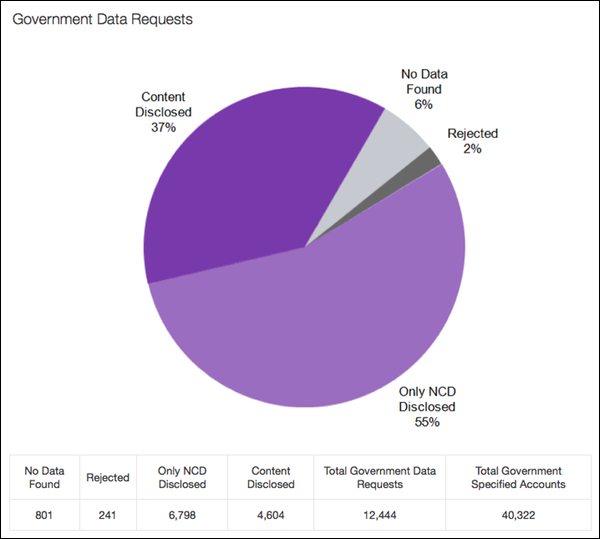
    Yahoo received 29,000 government data requests on its users this year, with almost half coming from the United States, according to the company’s global transparency report released Friday.

    Yahoo said in the report, covering the first six months of 2013, that 12,444 of the requests from worldwide governments came from the United States.

    At Yahoo, we take the privacy of our users seriously,” general counsel (Yahoo) Ron Bell said in a blog post. We also recognize our role as a global company in promoting freedom of expression wherever we do business. That’s why we’re issuing our first global law enforcement transparency report.”

    He added that the report includes US “national security requests” which have become a major issue in light of reports on secret government surveillance programs run by the United States. “Our legal department demands that government data requests be made through lawful means and for lawful purposes,” Bell said.

    “We regularly push back against improper requests for user data, including fighting requests that are unclear, improper, overbroad or unlawful. In addition, we mounted a two-year legal challenge to the 2008 amendments to the Foreign Intelligence Surveillance Act and recently won a motion requiring the US government to consider further declassifying court documents from that case.”

    The US data requests:

    Data requests

    Yahoo said the numbers reported “include all types of government data requests such as criminal law enforcement requests and those under US national security authorities, including the Foreign Intelligence Surveillance Act (FISA) and National Security Letters (NSLs), if any were received.”

    In addition to the United States, Yahoo listed requests from 16 other countries or territories including Australia, Hong Kong, India, New Zealand, Singapore, Taiwan, France, Germany, Ireland, Italy, Spain, Britain, Argentina, Brazil and Mexico.


  • Government Blocks Facebook, YouTube in Kashmir

    Government Blocks Facebook, YouTube in Kashmir

    There are reports that the Indian government has blocked Facebook and YouTube in Kashmir. The story was first reported by GreaterKashmir which said that, ISP companies blocked social networking sites including Facebook and YouTube in Kashmir without any official directive the state government.

    The cellular companies have also blocked GPRS facilities on the mobile telephones causing immense inconvenience to the subscribers.  Greater Kashmir received over a dozen telephone calls from different areas of the Valley, complaining that the internet service has been blocked by companies including BSNL, Reliance, Aircel, Airtel and Vodafone.

    It was previously reported that the certain URLs with offensive content had been blocked, but it now seems that access to the entire websites have been restricted. Last month the Government of Jammu & Kashmir had directed service providers to ensure that the controversial YouTube video was not accessible from the state.

  • “Remove Hate Content” : Gov To ISPs

    “Remove Hate Content” : Gov To ISPs


    Government has issued directions to all Internet service providers to disable any inflammatory or hateful content that targets the community for north eastern states.

    “Based on complaints regarding content that’s inflammatory, hateful and inciting violence targeting North East Community, DIT has issued an advisory to all intermediaries,” Union Minister of State for Communications and Information Technology Sachin Pilot said.

    The advisory based on terms and provisions of IT Act and Rules asks them to take action for disabling all such content on priority, the minister said.

    [Economic Times]

  • TRAI to ask for import ban on phones with fake IMEI

    TRAI to ask for import ban on phones with fake IMEI

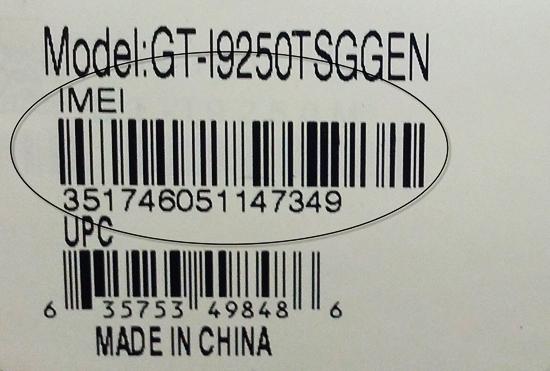
    Telecom regulator TRAI is planning to approach the Commerce and Industry Ministry to ban imports of mobile phones carrying inauthentic unique IMEI (International Mobile Equipment Identity) numbers, which help the authorities track users.

    [quote]“TRAI will soon write to the Commerce Ministry to ban such phones. Import of only those cell phones should be allowed which are certified by GSMA-and TIA-authorised bodies for GSM [Global System for Mobile] and CDMA handsets respectively,” an official told PTI.[/quote]

    The GSM Association and Telecommunications Industry Association are global bodies that provide unique numbers to mobile handset companies.

    The move aims to check proliferation of mobile handsets with duplicate or cloned IMEI numbers, which are dangerous for national security.

    An IMEI comprises 15-digit codes assigned to a handset and it appears on the operator’s network whenever a call is made. Concerns had been raised over their usage after terror attacks in India.

    Cloning issues in the case of CDMA handsets are negligible but rampant in the case of GSM handsets, the official said.

    The government has banned services on mobile handsets with fake IMEI numbers after November 30, 2009.

    However, according to informed sources, during a test conducted in a telecom service area, government officials were surprised to see over 18,000 mobile handsets using the same IMEI number.

    “The idea is to ask importers of handsets to provide a certificate issued by a GSMA or TIA authorised body for entry of his consignment in the country,” the official said.

    Mobile phones without the unique security code are making inroads into the grey market by cloning the IMEI numbers of genuine sets. Through cloning, the IMEIs of bona fide mobile sets can be used by antisocial elements.

  • Google+ Blocked in China

    Google+ Blocked in China

    China, as a country has banned Facebook, Twitter, Flickr and Foursquare. Its newest target has been the Google+ service, which promises to give a better social networking experience than Facebook. A Chinese Internet Analyst Sage Brennan had this to say:

    [quote]This was the quickest blockage I can remember … The speed with which they moved to block Google+ was surprising, but I couldn’t be less surprised to see it blocked.[/quote]


    China has discouraged the use of online forums with a political tinge and has been wary of all foreign social networks after growing fears of uprisings in Egypt, Syria, Tunisia and Libya which were fuelled by social networks. Instead of continuing under a Chinese censorship, Google opted to pull out its search engine from mainland China last year. A few weeks ago, there were allegations that Google’s email service, Gmail, was hacked by Chinese hackers.

    With the launch of Google+, Google wants to redefine social networking by fixing the alleged imperfections in the Facebook model. They say that the way we connect with people has to be re-worked. Right now, they say that the existing social network model has reduced friends to the status of fast food, where people wrap each other in friend paper. At the moment, we’re bombarded with updates from all of our ‘friends’. But in reality, you share something with your friends, another thing with your parents and a third thing with your boss.

    The core of Google+ lies in its ability to define ‘circles’. Circles are basically groups that allow you to define what you are sharing and with who. There are also a host of other services like +Sparks (Strike up a conversation, about pretty much anything), +Hangouts (stop by and say hello), +Mobile (share what’s around), +Location, +Instant Upload, +Huddle and +You.

    The service is going through a limited trial at the moment and is scheduled for release soon.

  • Apple’s iPhone sales in India under the scanner

    Apple’s iPhone sales in India under the scanner

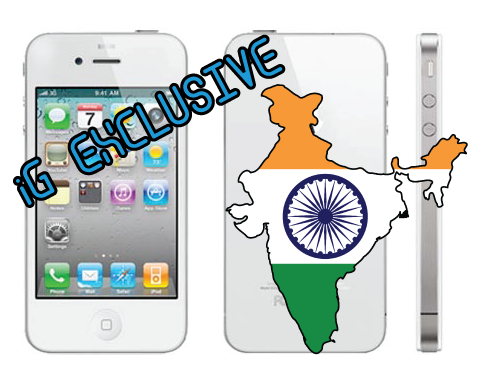
    The Apple iPhone sales in India are under the Indian Governments scanner for alleged anticompetitive behavior. The main reason for this probe is Apple’s ability to limit the sale of their handset via only two major carriers – Namely Airtel and Aircel.

    A Competition Commission of India official said on Wednesday that a case was filed against Apple about a month ago. The complaint alleges that the company violated competition law by selling the iPhone 4 through only two mobile operators, Bharti Airtel and Aircel. The official, speaking anonymously, said the Commission would look into the complaint’s merits. He did not disclose the complainant.

    Apple had this to say :

    Both carriers sell unlocked iPhone 4s with optional data plans. Some third-party retailers also carry the handset separate of any wireless contract, so there is no anticompetitive activity being carried out.


  • Indian Government Bans Nokia’s Push Email Service

    Indian Government Bans Nokia’s Push Email Service

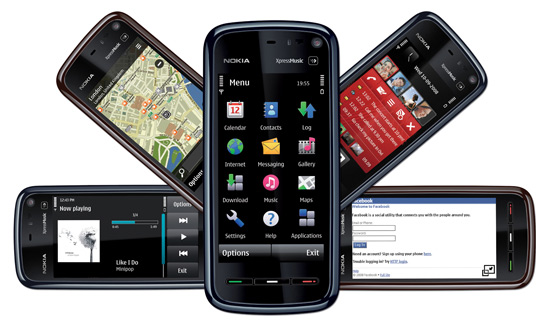
    Nokia’s upcoming push email service has been banned by the Indian Government. The Ministry of Home Affairs has relayed directives to the Department of Telecom stating that Nokia’s new push email product should not be permitted to launch in India until a system is put in place that will allow the government to monitor communications sent a received on devices.


    “In view of the Intelligence Bureau’s report, Department of Telecommunications is requested to advice the Telecom Service Providers not to launch Nokia’s proposed pushmail/powermail service without putting in place monitoring facilities to the satisfaction of the LEAs,” Said the Telecom Department.


    A similar thing had happened with RIM’s Blackberry servers, back in 2010.

iGyaan Network
Privacy Overview

This website uses cookies so that we can provide you with the best user experience possible. Cookie information is stored in your browser and performs functions such as recognising you when you return to our website and helping our team to understand which sections of the website you find most interesting and useful.