Tag: indian government

  • Indian Government Announces Nationwide Contest to Help Build an App for PMO

    Indian Government Announces Nationwide Contest to Help Build an App for PMO

    MyGov, in collaboration with Government of India have announced the launch of a nation wide contest to build a mobile app for the Prime Minister’s Office (PMO). The contest will be held across the country, at different institutions and colleges and will invite participation from people throughout India. Google will partner MyGov in this contest to build the PMO Mobile App. The contest will launch tomorrow at 5:00 pm on MyGov.in.

    Speaking at a NASSCOM event yesterday, Prime Minister Mr. Narendra Modi said, that he was planning to invite ideas from the public for developing a mobile app for his office. He added that the government would work with Google for selecting the best ideas to develop the app and its features.

    The contest has been divided into three phases: the first phase will seek ideas from the public on what they would like to see in the mobile app for the PMO, the second phase will involve building wireframes, and the final phase will include short listing, judging and building the app.

    Here’s how you can take part in the PMO mobile app contest:

    • If you have an idea on what you would like to see as a feature in the mobile app, share it on www.mygov.in.The features can be about the kind of information you want to see from the PMO. Submit your idea, or vote for an idea now on www.mygov.in. Last date for submitting ideas or voting is 12th March. The shortlisted features will be a part of the mobile app.
    • Once the idea is in, the next step is to build the app with the shortlisted features. Register your team and submit your wireframes and be the chosen one to develop a mobile app for the PMO. Ten wireframes will be shortlisted to compete for the development phase.
    • In the final stage, five finalists will be chosen by the jury, to compete for the ultimate prize of making the Prime Minister Office’s mobile app.

    These finalists will be mentored by Google, the technical partner of the contest. An external jury will judge the contest and choose the final app.
  • Indian Government Collaborates with Google to Launch an Internet Safety Program

    Indian Government Collaborates with Google to Launch an Internet Safety Program

    Google has been expanding its SafeBrowsing initiative. The search engine giant recently added a new feature to its Chrome browser, that pops up a red flag in case users accidentally visit a site that prompts them to download malicious malware.

    Now the Indian Government has joined hands with Google to launch an internet safety campaign, primarily aimed at young adults and children on sensitive issues like identity theft and online harassment. Government plans to involve various departments and ministries for consultation and dissemination of information on internet and data security as a part of this initiative.

    [quote text_size=”small” author=”Chetan Krishnaswamy” author_title=” Google’s Public Policy India Head “]

    To enable this and ensure that families and young people across India are safe, we’re working with CERT- In and MyGov to get the word out about good Internet practices and how to keep users safe online.

    [/quote]

    According to a PIB release, the campaign will be carried out by Department of Electronics and Information Technology, which comes under union ministry of Communications and Information Technology, in partnership with Google and the Indian Computer Emergency Resposne Team (CERT).

    Meanwhile, Department of Electronics and Information Technology (DEITY) Additional Secretary suggested an annual programme to raise awareness of key policy makers on matters concerning cyber safety. The initiative would include roundtables, workshops, Security Cafes, contests for young adults, policymakers and NGOs. However, an exact date of launch has not been specified yet.

  • Indian Government May Exempt Startups From Excise Duty and Service Tax

    Indian Government May Exempt Startups From Excise Duty and Service Tax

    Startups are the foundation of a developing nation and such businesses need to be encouraged. Indian Government has taken a praise-worthy step and is ready to extend support to the India-based startup companies. The Union Government is planning to exempt the budding firms from service tax and exercise duty for a specific period, so that they don’t fail because of money issues.

    As per a report by Economic Times, an inter-ministerial group is considering a one-stop registration scheme that will make them eligible for government grants. The group includes Ministry of Science and Technology, Corporate Affairs and the Department of Electronics and IT, and was chaired by Jayant Sinha, Minister of State for Finance. Meanwhile, the proposal is under consideration.

    Entering Startup

    Under this scheme, the startups that are registered under Department of Science and Technology and the ones certified as ‘bonafide’ will be exempted from the above said taxes. This tax waiver will be applicable until they reach certain revenue. Meanwhile, these tech startups pay service tax at the rate of 12.36% along with exercise duty and income tax. Also, if the proposal is enacted, the startups will become eligible for grants up to Rs. 10 crore from the government’s science and technology department.

    Nasscom has proposed a three-year moratorium on quarterly regulatory filings and taxes to the government. This will give a boost to the India’s young companies. “Service tax exemption is a much needed proposition. But sops should be more broad-based as majority of successful start-ups are not registered with DST affiliated incubators,” commented Nasscom Product Council Chairman Ravi Gururaj.

    The startups in India are burdened by bad regulations and the pattern needs to be altered. The new proposal will have flexible regulations for budding as well as failed start-ups. The failed ones can shut down in a day with just a single page submission. Moreover, it would be a big step in favour of low-budget budding firms to grow and flourish in their respective industries without any pressure.

  • Ban Imposed on Mobiles with Duplicate IMEI Numbers

    Ban Imposed on Mobiles with Duplicate IMEI Numbers

    The Indian Government has enforced a ban on the import of mobile handsets in India which don’t carry a unique identity number. This measure is taken citing security concerns as such handsets can be untraceable.

    GSM phones carry an IMEI (International Mobile Equipment Identity) number while CDMA handsets carry a ESN (Electronic Serial Number)/MEID (Mobile Equipment Identifier) which gives them a unique identity. This unique identity helps to keep a track of the device and can be used to retrieve the device following a theft.

    Mobile handsets with duplicate or fake IMEI numbers can be used for nefarious activities. There are already instructions to ban import of handsets with fake numbers or have no numbers or with ’00…00’ IMEIs. With this new order the government intends to add handsets with duplicate IMEI on that list too.

    Duplicate handsets are a menace for the security agencies who find it hard to keep track of the devices. It also creates issues for the consumers who use them as well as the service providers. This ban would help the government to crack down on the importers.

  • Industry Body says High Spectrum Costs Will Lead to Increased Mobile Tariffs

    Industry Body says High Spectrum Costs Will Lead to Increased Mobile Tariffs

    The Indian government will hold the auction of mobile spectrum in the month of February. The Indian Exchequer is expected to gain Rs. 80,000 crore(Rs 64,840 crore excluding 2100 MHz spectrum) from this auction. The bidding process is expected to start on February 23. But the industry association of GSM operators in India, COAI(Cellular Operators Association of India) are warning that the high spectrum costs would lead to higher mobile tariff for the consumers.

    COAI has written a letter to the Minister of Telecom, Mr. Ravi Shanker Prasad saying that the high prices would adversely impact the business viability for the telecom operators. They also added that the high spectrum costs would lead to tariff hike and will also effect government’s Digital India initiative and hinder rural penetration. The letter is also said to be forwarded to the Prime Minister.

    COAI claims that the high spectrum costs will lead to increased mobile tariff's which will hamper government Digital India plan.
    COAI claims that the high spectrum costs will lead to increased mobile tariff’s which will hamper government’s Digital India plan.

    The cabinet of ministers approved the following reserve pricing for the various spectrums:

    • Rs. 3,646 crores for pan-India license per MHz in the 800 MHz band
    • Rs. 3,980 crores for pan-India excluding Delhi, Mumbai, Kolkata, and J&K in the 900 MHz band
    • Rs. 2,191 crores pan-India (excluding Maharashtra and West Bengal) in the 1800 MHz band.

    COAI has also said that the government has priced the spectrum way above the pricing recommended by telecom regulator TRAI (Telecom Regulatory Authority of India). The pricing is said to be over 107% higher than the amount paid by the companies in the spectrum auction of 2010. TARI has also recommended a reduction of the license fee from 8% of adjusted gross revenue to 6%.

    The government plans to bring 5 Mhz for auction and will release an additional 15 Mhz on a later date. This low availability of spectrum will lead to even higher final prices as the companies would have to try to ferociously outbid each other to stay in business. The last auction also lead to heavy price wars which lead to the telecom companies borrowing huge amount of money from the banks. COAI claims that the combined debt of the industry now stands at a staggering Rs. 2.5 lakh crores.

    The present Indian government has some audacious plans to raise the standards of connectivity across India. For this a healthy cooperation with the telecom companies is essential. The issues raised by the telecom body seem valid, and the price is ultimately going to be borne by the consumers. We will await the government’s response for more updates on the story. Keep checking back on iGyaan.in.

  • Government of India Unblocks Most of the 32 Banned Websites

    Government of India Unblocks Most of the 32 Banned Websites

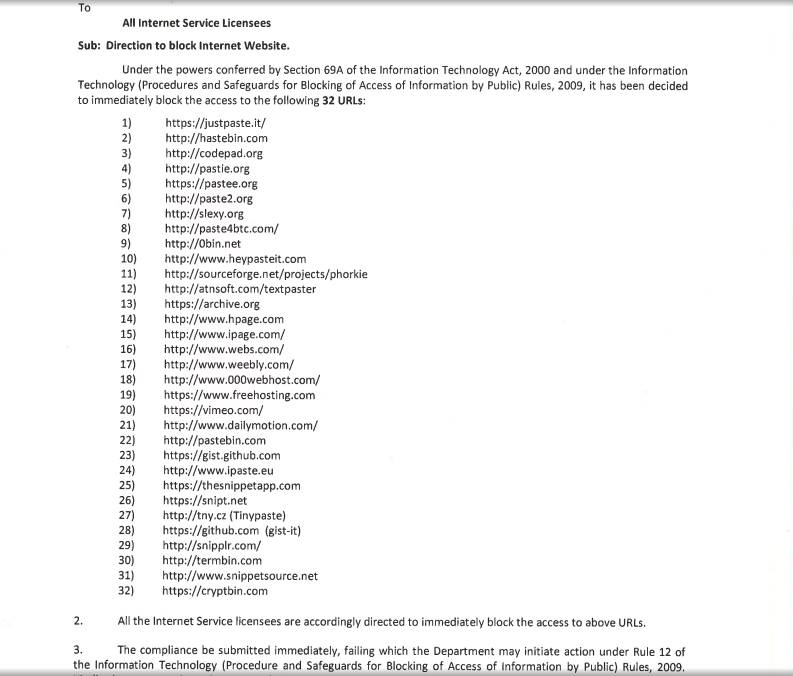
    The biggest news of 2014 was, of course, about the brutal group ISIS or ISIL or simply Islamic State. This group has been raising terror in Iraq and Syria. ISIS has proactively used internet and social media tools to spread their pernicious propaganda. It was also recently found that a young executive based in Bangalore was responsible for operating a pro-ISIS Twitter handle. The Indian Government has gone ahead and issued directives to internet providers to ban 32 websites citing national security concerns. Now it seems like most of the websites have been unblocked and are functional.

    There were some prominent names in the list including Vimeo, Dailymotion, Sourceforge and Github. A circular supposedly issued by the Department of Telecom (DoT)  also threatened actions against non-compliance of the order by the service providers. The circular came to prominence when it was shared on Twitter.

    Govt-blocking
    This circular supposedly from DOT was shared widely on Social media

    The head of ruling BJP’s IT cell, Arvind Gupta tweeted that the websites blocked were based on an advisory by Anti-Terrorism Squad, and were carrying Anti-India content from ISIS. To ban the websites the government used section 69A of the Information Technology Act (2000) and Information Technology (Procedure and Safeguards for Blocking for Access of Information by Public) Rules (“Blocking Rules”).

    This did cause a lot of furor especially amongst the developer community, which depends on websites like it Github for their projects. Hacktivist group Anonymous also said that they would start attacking Indian government websites if the websites weren’t unblocked. — AnonOpsIndia (@opindia_revenge) December 31, 2014

    As of now, it seems that most of the blocks have been lifted as we were able to access almost all of the websites listed in the circular. The block was said to have affected around 290 million Indian citizens.

  • Indian Government Gives Green Signal to Electronic Manufacturing Proposals Worth Rs. 6,000 Crore

    Indian Government Gives Green Signal to Electronic Manufacturing Proposals Worth Rs. 6,000 Crore

    Modern India has understood the importance of technology and the Indian government is eyeing on making India an electronic hub. The administration has quickly started working in the direction and says that it has given a green signal to investment proposals worth Rs. 6,000 crore in the short period of six months.

    In a statement by Department of Electronics and Information Technology, “In last six months, we received firm proposals of about Rs. 18,000 crore and most of them were with financial closures. Till date, proposals of about Rs 6,000 crore have been approved.” The fact should also be underlined that besides already established companies, new firms also took active part in expanding this list.

    An official from the department confirmed, “About 25-30 new companies across various segments have come with investment proposals. Now people across geographies are very sure about the electronics manufacturing push by the Indian government. Reimbursement of MSIPS benefit has further boosted confidence.” He further elaborated saying that most of the investment have come from various segments of electronic like telecom equipments, electronic parts, LED, consumer electronics, automotive and a few more. The list includes firms like Nidec, Continental, Motherson Sumi, Calsonic Kansei, Tissol, Tata SED, and many more renowned names.

    MSIPS, the Modified Special Incentive Package, is an initiative by the government to promote large-scale manufacturing. Under this scheme, government provides subsidy to the companies for investments in capital expenditure. The firms get a maximum of 20 percent subsidiary for investment in Special Economic Zone (SEZ) and 25 percent in non-SEZs.

  • Indian Government Plans Rs.10,000 Crore Innovation Fund for Tech Start-ups

    Indian Government Plans Rs.10,000 Crore Innovation Fund for Tech Start-ups

    In the Information Age, the winner of the game is the one who takes the lead in innovation. Countries and corporate investors are proactively looking to push talented individuals and companies to create the next revolutionary product. Never has been the pace of innovation this fast. In just the last decade, we have seen radical changes in technology especially in the consumer electronics field. Internet has not just connected the world together it has also allowed for the proliferation of knowledge and made the world a globally accessible marketplace. Luckily for India, it is already a part of the ground-level innovation game called start-ups. Now the Indian government is planning to give an adrenaline shot to the innovation process in the country.

    The Department of Electronics and Information Technology (DeitY) is planning to set up a Rs. 10,000 crore fund for innovation and development purposes in the fields of electronics and IT. The announcement was made by DeitY secretary R. S. Sharma at InfoComm 2014.

    The government will partner with the existing venture capitalists to select the start-up where it would invest the fund. The government is also looking towards strengthening Intellectual Property Rights (IPR) to promote the development of the sector.

    The present government is actively engaging with the industry to grow India’s technical might. The Digital India program is an audacious plan by the government to boost information interconnectivity across the nation. By investing in innovation, the government strengthens the nation’s ability to create its own technology as well as reduce dependency on technological import from other nations. India currently imports electronics worth $100 billion, which is expected to go up to $400 billion by 2020 which will be more than the bill for importing oil. If India forms an encouraging technological ecosystem that supports research and production of the products, it will lead to a considerable reduction in the import bill.

    If the government is serious about innovation then, it should also invest heavily in green energy technology as that will lead to severe cuts in the bill for fuel import. By aggressively pushing for a green energy, India can become a frontrunner in changing the future of the world. The government should heavily subsidise green car production and off-grid electricity solutions instead of giving billionaires like Adani a loan of $1 billion for a coal project. The government should rather invest in citizens of the country who pay for that money in taxes. The foundation of an innovation fund by the government is an encouraging and appreciable step, but it needs to do a lot more to make this country into a technology frontrunner.

  • Indian Prime Minister’s Office Has an Average Internet Speed of 34 Mbps

    Indian Prime Minister’s Office Has an Average Internet Speed of 34 Mbps

    If you live in India, you probably scream at your internet service at least once a week. A report on the ‘State of the Internet’ by AKAMAI has found the Indian internet lowest amongst its South Asian neighbors and also amongst its BRICS partners. A Right to Information (RTI) application filed by Vinoth Ranganathan who is also the co-founder of onlinerti.com has found something interesting about the Indian Prime Minister’s office.

    The RTI revealed that the National Informatics Centre (NIC) provides a healthy internet speed of 34 Mbps. This is rather slow for the office of the head of state as Gigabit connections are available in the market. The entire country is governed by the South Block (Prime Minister’s office), and it deserves to have a high-speed connectivity. In comparison according to AKAMAI report, only 1.2% of Indian internet users have access to a speed above 10 MBps.

    In the answers to the RTI, there was also a mention about the operating systems used at the PMO. Surprisingly even after severe privacy concern raised by Edward Snowden, the computers at the PMO still continue to use Window 7/8. In the response, it was also said the government was not spending any amount on the Prime Minister’s official twitter handle @PMOIndia. Though the PMO refused to answer how many computers have been hacked at the PMO in the past five years.

    The present Indian government has placed technological growth at its core with the Digital India Project. It is a massive effort to construct an information super-highway across India that will aid in the development of the nation. The project will be shaped with a massive investment of 1 lakh crore. An industrial economy grows on the back of its road system and in the present knowledge economy, the speed of access to the information superhighway, i.e., the internet will decide the speed of growth. So we hope the Digital India Project stands out as a government initiative that actually stands up to the promise and the present internet speed at the PMO becomes a standard across by the end of the project.

  • Indian Government Plans to Lead Internet of Things Race

    Indian Government Plans to Lead Internet of Things Race

    The Internet of Things (IoT) is where the tech world is employing immense resources. It is an ecosystem in which everyday devices can converse with each other and make human lives easier. It will be the next generation technology revolution. It seems like the present Indian government recognizes the massive benefits of raising this futuristic industry. It is planning to set up a $50 billion industry by 2020.

    The Internet of Things will make everyday devices which require human input into almost sentient interconnected objects. These devices will coordinate together and process the situation, and will provide solutions to human issues in an efficient manner. It will decrease human errors by using algorithmic capabilities to streamline human life. For example, your fridge will recognize that the milk will soon run out, and it will order a carton for you. There can be large scale application of this technology in the fields of medical, transportation, retail, industrial, communication and energy.

    Here is a video from intel that explains some city-wide benefits of connected devices:

    IoT will also bring immense safety and convenience in the daily lives of the public. The devices would still take human input. So you can imagine a thermostat in your house that recognizes that you are arriving home by tracking your GPS and will set a comfortable temperature inside. How cool does that sound?

    This is a great new field that will also bring in thousands of technology jobs. So if you are in the technology field or a budding engineer, you know which area of study to concentrate on. This new industry can easily give way to the next generation of Eric Schmidt’s and Mark Zuckerberg’s.

    There will be a lot of privacy concerns though, for which the government has to provide a clear privacy document that could be understood by all. In an age where data is power, it’s absolutely important to safeguard it. 2020 is six years away, and this is the right frontier to point towards.

  • Indian Government’s Own Secure Email Service to be Functional by March 2015

    Indian Government’s Own Secure Email Service to be Functional by March 2015

    The recent news of email hacking and unethical intrusion of personal accounts by foreign governments has spooked the Indian Government. The government has approved a proposal by Department of Electronics and Information Technology (DeitY) to establish a secure and encrypted email service for government officials.

    The government had previously instructed the officials to use the email service provided by NIC for official correspondence. It had also issued a directive to not forward official mail to personal email accounts. This was done to prevent leaks of sensitive government data to third parties.

    Now the government wants to bring the official secure email service to five million officials. The service is currently available to one million officials DeitY is in the process of expanding it. The budget for the project is Rs.100 crores, and it will be utilized to expand infrastructure and ramp up security of servers.

    The Budget
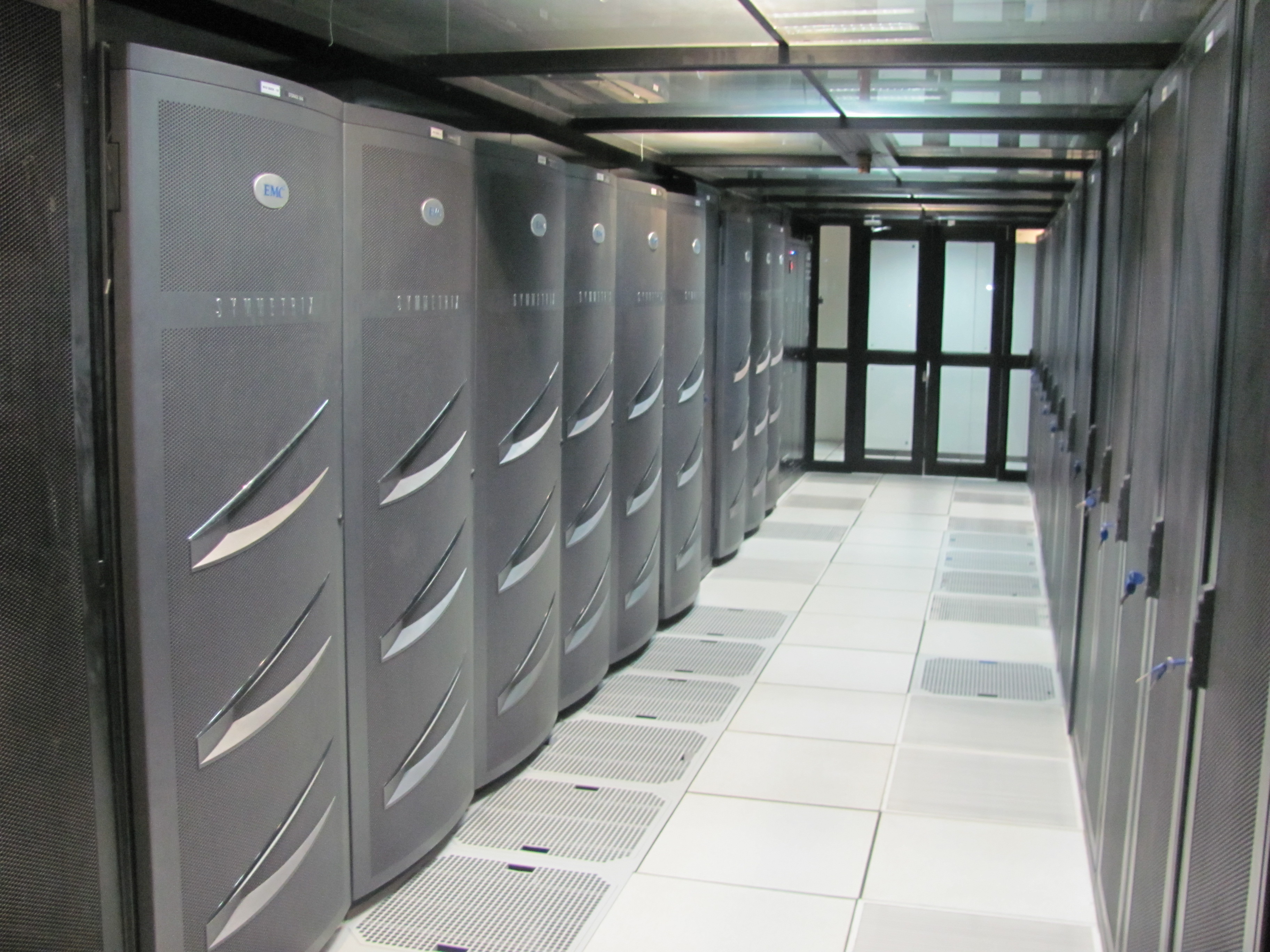
    The Budget will be utilized to expanding infrastructure and beefing up security of NIC servers

    The National Information Center (NIC) will be responsible for the delivering the service. It will handle email service for all departments except the Ministry of Defense which has its own secure email service. The External Affairs ministry too might get its own secure service as it deals with sensitive diplomatic correspondence.

    The Edward Snowden revelations last year about the secret data-mining program by US intelligence agency to monitor worldwide Internet data led to these developments. Governments around the world are looking for ways to secure official communication and preventing data theft. Recently a Russian gang leaked a massive password database of millions of email accounts and this also led the government to take these measures.

  • Government Blocks Facebook, YouTube in Kashmir

    Government Blocks Facebook, YouTube in Kashmir

    There are reports that the Indian government has blocked Facebook and YouTube in Kashmir. The story was first reported by GreaterKashmir which said that, ISP companies blocked social networking sites including Facebook and YouTube in Kashmir without any official directive the state government.

    The cellular companies have also blocked GPRS facilities on the mobile telephones causing immense inconvenience to the subscribers.  Greater Kashmir received over a dozen telephone calls from different areas of the Valley, complaining that the internet service has been blocked by companies including BSNL, Reliance, Aircel, Airtel and Vodafone.

    It was previously reported that the certain URLs with offensive content had been blocked, but it now seems that access to the entire websites have been restricted. Last month the Government of Jammu & Kashmir had directed service providers to ensure that the controversial YouTube video was not accessible from the state.

  • Governments enforces stringent mobile radiation standards

    Governments enforces stringent mobile radiation standards

    The government has imposed stringent mobile radiation standards which will come into effect from today.  

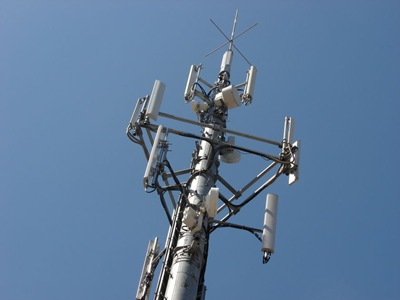
    With new guidelines coming into force, radiation emission from telecom towers will come down to 1/10th of the present level, a development that will address public health concerns. Also, the handsets to be rolled out from domestic manufacturing units or to be imported will have reduced absorption capacity, as per the new guidelines.

    [quote]”Now with more stringent rules, we want to make sure that there is no violation. We told them to make required changes in all areas to meet new emission norms immediately,” Kapil Sibal said.[/quote]

    Mobile phone companies would have to provide self-certification of compliance with the new norms and register with the telecom enforcement resource & monitoring (Term) cells. Term cells would conduct random audits and in case of complaints. The telecom department can impose a fine of 5 lakh per tower per telco if the rules are flouted.

  • Ban on bulk SMS, MMS lifted

    Ban on bulk SMS, MMS lifted

    The restrictions imposed on sending bulk SMSes and MMSes, imposed in the wake of nationwide rumours of attacks on persons of northeastern states, was has been lifted by the government.

    “The restrictions on SMSes and MMSes has been removed,” home ministry spokesperson K.S. Dhatwalia said here. The government issued a notification in this regard.

    The telecom ministry had, on direction of home ministry, imposed the ban for 15 days on August 17. Later, the restriction was reviewed on August 24 when the telecom ministry increased the limit from five SMSes to 20 SMSes.

  • SMS Curb May Lead to 7-8% Revenue Loss To Mobile Companies

    SMS Curb May Lead to 7-8% Revenue Loss To Mobile Companies

    Restriction on SMSes to five per day is not only causing problems for millions of mobile phone users but may also lead to loss of 7-8 percent revenue of telecom operators for the month.

    The government had banned bulk SMSes and MMSes for 15 days across the country from 18 August to check spread of
    rumours which has led to exodus of people from northeastern states from cities like Bangalore, Hyderabad and Pune.

    There were reports of widespread circulation of SMSes and MMSes containing misleading information about Assam violence, threats to people from northeast states living in other parts of the country and doctored videos.

    While pre-paid mobile users, who account for over 90 percent of the 930 million mobile subscriber base, are unable to send more than five messages per day, postpaid users do not seem to be facing any problem.

    People across the country wanting to wish their friends and relatives for Eid are feeling the pinch of the government order restricting the text messages.

    “A ban of 15 days means they could lose around seven to eight percent of revenue this month from this service alone,” Cellular Operators Association of India (COAI) Director General Rajan S Mathews said.

    Operators on an average get 15-18 per cent revenue from data services of which SMS is a part, he said.

    Mathews, however, added that “all the members will definitely make every effort to abide by the rules, as national security and human lives are at stake.”

    Youngsters are the largest users of SMS and many of them are upset by the restriction. “I wanted to SMS my Eid greetings to friends as it is not possible to call everyone. However, after five messages, I am unable to send anymore messages. As a subscriber, I feel cheated,” Pragya Gupta, a student at Delhi University said.

    The order, which limits the number of SMS’ a subscriber can send for the next 15 days, was given after bulk messages were circulated that provoked exodus of northeast people from various cities like Bangalore and Pune. “SMS has become a way of life. As a media professional, I need to stay in touch with industry peers and it is generally over messages. However, with this ban, we are finding it difficult and it is impacting our work,” Rakesh Kumar Jha, a PR professional said.

    He, however, added that “the situation is very sensitive and I can understand the government’s decision to ban bulk sms in order to prevent any untoward incident”.

    Subscribers trying to send their sixth SMS received messages like “As per the government’s order, your limit is 5 SMS a day”.

    The order however does not cover transactional messages related to banking, financial institutes and railways.

    [FirstPost]

iGyaan Network
Privacy Overview

This website uses cookies so that we can provide you with the best user experience possible. Cookie information is stored in your browser and performs functions such as recognising you when you return to our website and helping our team to understand which sections of the website you find most interesting and useful.