Tag: internet

  • Google to Bring High Speed Internet to Indian Railways

    Google to Bring High Speed Internet to Indian Railways

    As part of the Digital India campaign, Google is all set to bring high-speed wi-fi to 100 of India’s most crowded railway stations by the end of 2016. A country which has about 13 million people spread across 7000 stations would definitely do well with better internet connections serving about 10 million people every day.

    BELGIUM-EU-INTERNET-ANTITRUST-BUSINESS-GOOGLE

    Woes of bad internet while travelling is something all Indians are familiar with. This move to high-speed internet even on railway stations would be a big relief if materialised. These plans would be executed by Indian Railways and RailTel working together in collaboration. The announcement was made yesterday at Google’s Mountain View campus in the presence of Prime Minister Narendra Modi.

    Google promises to ensure a speed decent enough to stream HD videos. Additionally, the company plans to extend its services to 400 stations over time. Who knows if the reality of high speed internet for the entire country is just around the corner?


  • UN Broadband Penetration Report : Internet in India Sucks

    UN Broadband Penetration Report : Internet in India Sucks

    We can’t say we’re surprised to hear that according to a report by the Broadband Commission for Digital Development, India has fallen in ranking in broadband penetration. The nation has spiraled down to 131 in 2014 from 125 in 2013.  A total of 189 countries were part of the survey conducted by the UN.

    This news comes just days before the Sustainable Development Goals (SDG) Summit in New York and the meeting of the Broadband Commission for Sustainable Development on the 26th of this month.Net-Neutrality-Internet-Open

    There has been a 2.3 percent fall from a 15.3% in 2013 to a 13% in 2014 in broadband penetration in India. Further, the UN Broadband Commission report also pointed out that 57% of the world’s population stays out of the realm of internet, depriving themselves of umpteen opportunities of financial and intellectual development that the virtual world has to offer. International Telecommunication Union Secretary-General Houlin Zhao commented on the topic and said,

    “Our important challenge now is to find ways of getting the four billion people online who still lack the benefits of Internet connectivity, and this will be a primary focus of the Broadband Commission going forward.”

    A national broadband policy was adopted in India as late as 2011, alongside Middle Eastern countries like Iran and Lebanon. When it comes to the internet, India has some more interesting stats to offer. The UN survey provides a tabular representation of fixed broadband subscriptions per 100 capita. The country leading this table is Monaco at a 46.8, closely followed by Switzerland at a 46. India finds itself at a puny 1.2 in this table. Closer home, countries like Thailand and Singapore are way above at 8.2 and 27.8 respectively.

    The numbers are slightly better for the country in terms of fixed broadband for mobile phones per capita 100. India finds itself located at a 5.5. But before you give yourself a pat on the back for this, remember that Bangladesh is at a 6.4, and the country at the top is China with a 322.2. Looks like it’s only the size of the population where we can give China competition at the number game.Internet

    Lastly there is a table which shows the number of households with internet connections. India is at an 18%, once again behind unexpected countries like Yemen, Thailand and Bhutan! The country at the top of this table is Iceland with a 98.2%. Now that is something to think about.

     According to the survey, Europe is home to all the top ten cities with the maximum number of internet users. The other end of the spectrum is filled by sub-Saharan African countries which has the least percentage of internet usage and connectivity. For a more detailed approach, find the entire report here.

    Evidently, India continues to lag behind in the technology race. Despite all the developments in the tech world, the amount of capital being invested in the country and the rampant presence of technology in our lives, the figures on paper are discouraging. One can only hope for a better progress rate by the next UN survey.

  • Top 10 Countries With the World’s Fastest Internet

    Top 10 Countries With the World’s Fastest Internet

    The internet is an absolute necessity for our generation. Everything we do, today, is connected to the Internet somehow or the other. For most of us, it is impossible to go through the day without scrolling through our Facebook feed or YouTube. With only a keyboard and mouse, we can access limitless amount of information.

    But, with a slow Internet speed, there is nothing more irritating than waiting for a page to load. For the people living in the countries listed below, we’re guessing that they never have to use the word “buffer”.

    Let us look at some countries with the fastest Internet connections:

    #10 Finland

    This year, Finland had a tremendous growth with a 33% increase in its Internet speed. Undoubtedly, one of the wealthiest countries of Europe, Finland also boasts a high quality of life and education.

    Average Internet Speed: 12.1 Mbps

    #9 Czech Republic
    internet use
    One of the developing countries in Europe, many people would argue that Czech Republic isn’t quite there yet. It’s simply not true. Czech Republic is one of the fastest growing European countries in the terms of economy. Just like its growth rate, the Internet facilities have developed by leaps in the past few years.

    Average Internet Speed: 12.3 Mbps

    #8 Ireland
    internet_users

    Ireland has one of the fastest growing technology sectors in Europe. It has seen a growth of 24% in the last year.

    Average Internet Speed: 12.3 Mbps

    #7 Latvia

    Latvia is perhaps the only country in this list, that many would never have heard of. This region has a rather dark past since was under, both, Nazi Germany, and the Soviet Union rule. But, it has been showing spectacular growth in all sectors. In the terms of Internet speed, Latvia has taken most of the countries by surprise. Internet speeds have grown 25% over the last year.

    Average Internet Speed: 13 Mbps

    #6 Netherlands

    Netherlands is listed with Switzerland in holding the most broadband subscriptions per 100 subscriptions, has no bandwidth caps, and has the most homes passed in Europe in terms of connection speeds of 50 Mbps and higher. Government-mandated Internet censorship is non-existent due to the House of Representatives speaking out against filtering.

    Average Internet Speed: 14.2 Mbps

    #5 Switzerland

    Switzerland, along with its beautiful landscapes, is also known for having one of the fastest Internet connections in the world. This country also boasts one of the highest number of Internet users in the world, with 85.2% of the population accessing the Internet every day.

    Average Internet Speed: 14.5 Mbps

    #4 Sweden
    internet

    Moving up slowly, the Nordic nation of Sweden is also among the countries offering the highest internet speed. Sweden has best Internet speed in the whole of Europe, showing most year-over-year growth with 34 percent growth, 1 percent greater than next-door-neighbor, Finland. European countries surely have all the fun!

    Average Internet Speed: 14.6 Mbps

    #3 Japan
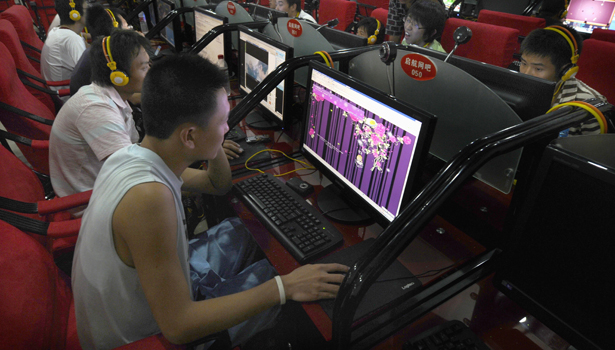
    A customer looks at a web page of Qzone, a Chinese social networking site at an internet cafe in Changzhi, Shanxi province August 28, 2009. From virtual clothes to e-pets, Asians spend an estimated $5 billion a year on virtual purchases via websites such as Qzone, Cyworld in South Korea and mobile-phone based network Gree in Japan, according to Plus Eight Star. That's about 80 percent of the global market for virtual products, it says. To match feature ASIA-SOCIALNETWORKING/   REUTERS/Stringer (CHINA BUSINESS SOCIETY SCI TECH) CHINA OUT. NO COMMERCIAL OR EDITORIAL SALES IN CHINA

    Known to the world as one of the leading digital giants, with companies like Sony, Toshiba, Nintendo, etc., fast Internet connections come naturally to this country. It maintains a reliable Internet speed that hardly seems to dwindle.

    Average Internet Speed: 15.2Mbps

    #2 Hong Kong

    Another Asian country on the list, Hong Kong is first and only country that broke the 60 Mbps barrier back in 2013. This is due to advances in FTTH (Fiber To The Home) infrastructure and aggressive high-speed pricing, which now seems to be paying off.

    Average Internet Speed: 16.8 Mbps

    #1 South Korea

    South Korea is the undisputed champion when it comes to Internet speed. The Internet connection here is so fast that the country is about to unveil its 10Gbps Internet service soon. The Internet has a higher standing for many Koreans than it does in the West, and the government actively encourages this. South Korea’s speed is roughly six times faster than the world average of 3.8 Mbps.

    Average Speed: 22.2 Mbps

    And the State Back Home..

    Sadly, India comes in at number 52nd rank according to AkamaiTechnology in 2014 listing with an average speed of 2Mbps. But as a country, we are progressing at a great speed in the terms of economy and technology. With new businesses sprouting each day, the need for a connected economy has increased considerably. It’s time India should get high speed unlimited data plans.

    Read more about it here.

     [tw-button size=”medium” background=”#07ABE2″ color=”” target=”_self” link=”https://www.change.org/p/telecom-regulatory-authority-of-india-airtel-india-tata-teleservices-remove-the-fair-usage-policy-and-enable-unlimited-internet-dat-plans-ae136b34-8dc4-4a78-a6d1-569f6e25c765″]SIGN OUR PETITION TO END FUP[/tw-button]

  • According to ITU, 5G Networks Will Provide Speeds of up to 20Gbps

    According to ITU, 5G Networks Will Provide Speeds of up to 20Gbps

    Faster 5G network, that will boost internet speed exceptionally, is going to be a reality much sooner than expected. Well, the 5G internet network speed that was anticipated to launch until 2020 will now arrive two years before, in 2018.

    The International Telecommunication Union (ITU), United Nations agency for Information and Communications Technologies, made public the speed to be offered with 5G. They also announced that the first demo of its blazing fast internet speed will be done at the 2018 Winter Olympics in Pyeongchang, South Korea.

    As reported by online daily The Korean Times, the transmit speed of 5G will be up to 20 GB per second, while is presently 150MB per second maximum with 4G speed. The purposed 5G enables users to download 20HD movies within seconds.

    The report reads –

    The 5G network will also have capacity to provide more than 100 megabits-per-second average data transmission to over one million Internet of Things devices within 1 square kilometer.

    The United Nations agency will start accepting technologies suitable for the 5G standard before its commercialization plan in 2020. There is still a lot of time for 5G network to become a reality, and to become a standard all around the world, it will take another couple of years.

  • Report : It’s Time India Should Get High Speed Unlimited Data Plans

    Report : It’s Time India Should Get High Speed Unlimited Data Plans

    India has been stuck in the internet revolution for many a years. And while the country is progressing at a rapid speed, infrastructure is not growing fast enough. With new businesses sprouting each day, the need for a connected economy has increased considerably.


    India’s Massive Market

    India is one of the largest consumers of mobile phones in the world. Enough so, that many manufacturers have put India in the first list of launch countries. According to the TRAI Performance Indicator Report, India has 414.18 million wireless GSM connected users as of March 2015. But this is just in the rural sector, the all India number is at 705.21 928 Million according to the COAI report of May 2015 and Others report of Dec 2014. This number also receives staggering growth of 2.5% month on month in the Rural sector and a growth of 0.90% month on month nationwide.

    What appears to be a small growth percentage, 2.5% growth means that the industry is adding approximately 10.2 million rural subscribers a month at the current trend. This additional user base earns the industry approximately Rs. 1200 crore each quarter. This large number is only a dip in an industry that moved around Rs. 26781 crore in revenue in Q4 2014.

    The large revenue for the telecom operators is driven largely by the large number of users and large user base additions each month. But how much has the industry progressed since the begining of the internet age.

    Data Traffic Growth

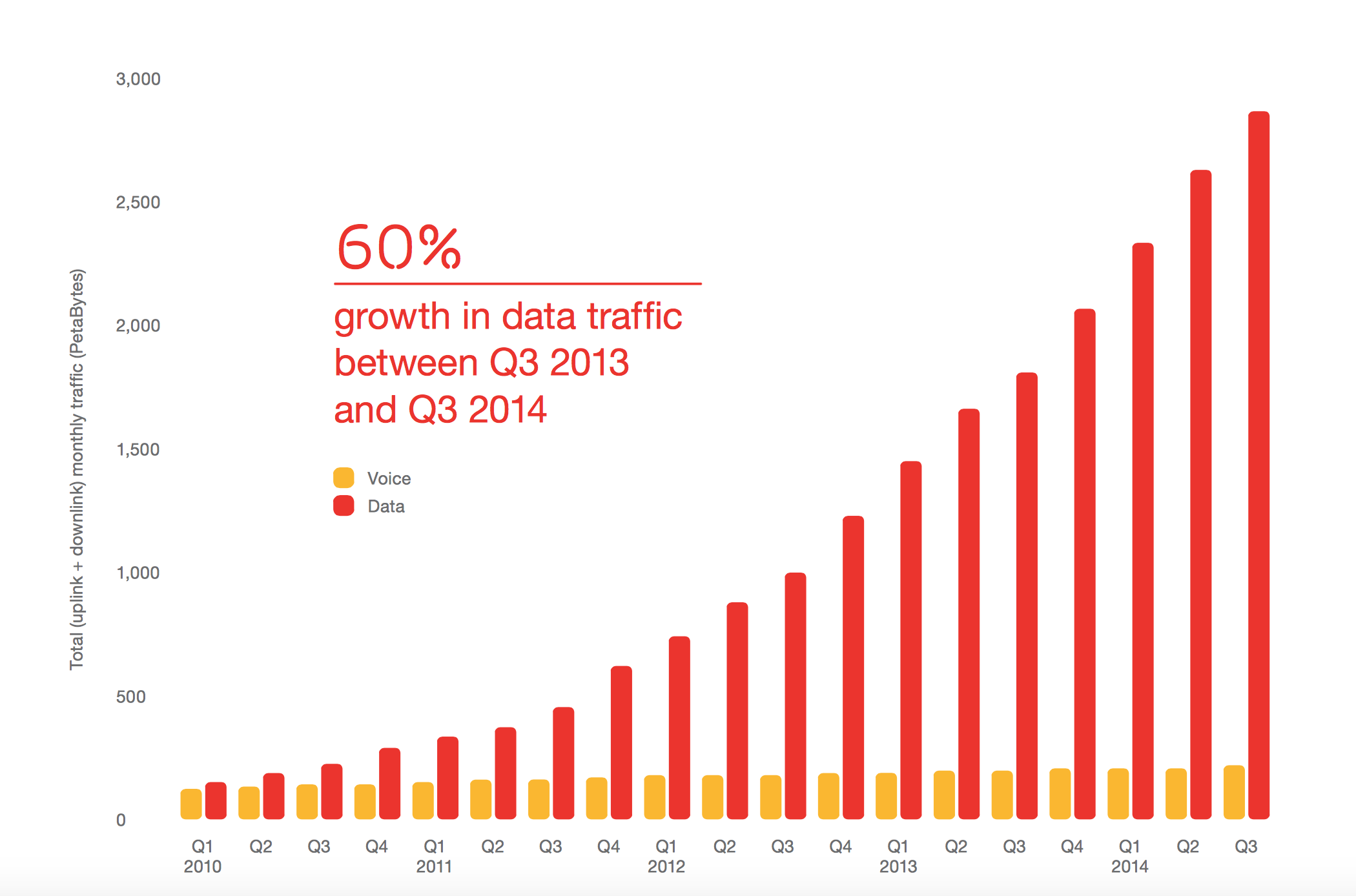
    [pullquote_left] By the End of 2014 the World was Consuming 3000 PetaBytes of Data [/pullquote_left]

    Global consumption of mobile data is through the roof. By Q4 2010 the world was only getting acquainted to mobile data and consumption of data on a portable phone was at 400 PetaBytes (mobile data traffic Up+Down). However, by the end of 2014 the world was consuming 3000 PetaBytes of Data. The industry estimates that the growth with continue by 60-70% each month.

    Global Launch Trends

    HSPA 42 Mbps networks have been commercially launched in 86 countries, while LTE networks have been commercially launched in 112 countries. So far, 40 LTE TDD networks have been made commercially available in 27 countries, with 27 operators launching LTE services using only the TDD mode, and 13 deploying both TDD and FDD modes together. 6 In a mixed LTE FDD/TDD network, the use of FDD for the uplink can improve the effective coverage area of the TDD band, and can also make TDD more efficient on the downlink.

    On the other side mobile operators in 75 countries have now launched HD voice commercially. VoLTE or “voice on LTE” provides users with telecom-grade HD voice, video calling and other new, richer communication services on LTE smartphones.

    State of Indian Networks

    Despite all the launches mentioned above, India remains as a part of none of them. While India contributes to a large percentage of global mobile data usage, it all somehow comes from poor data connections.

    Mobile Traffic vs PC Traffic

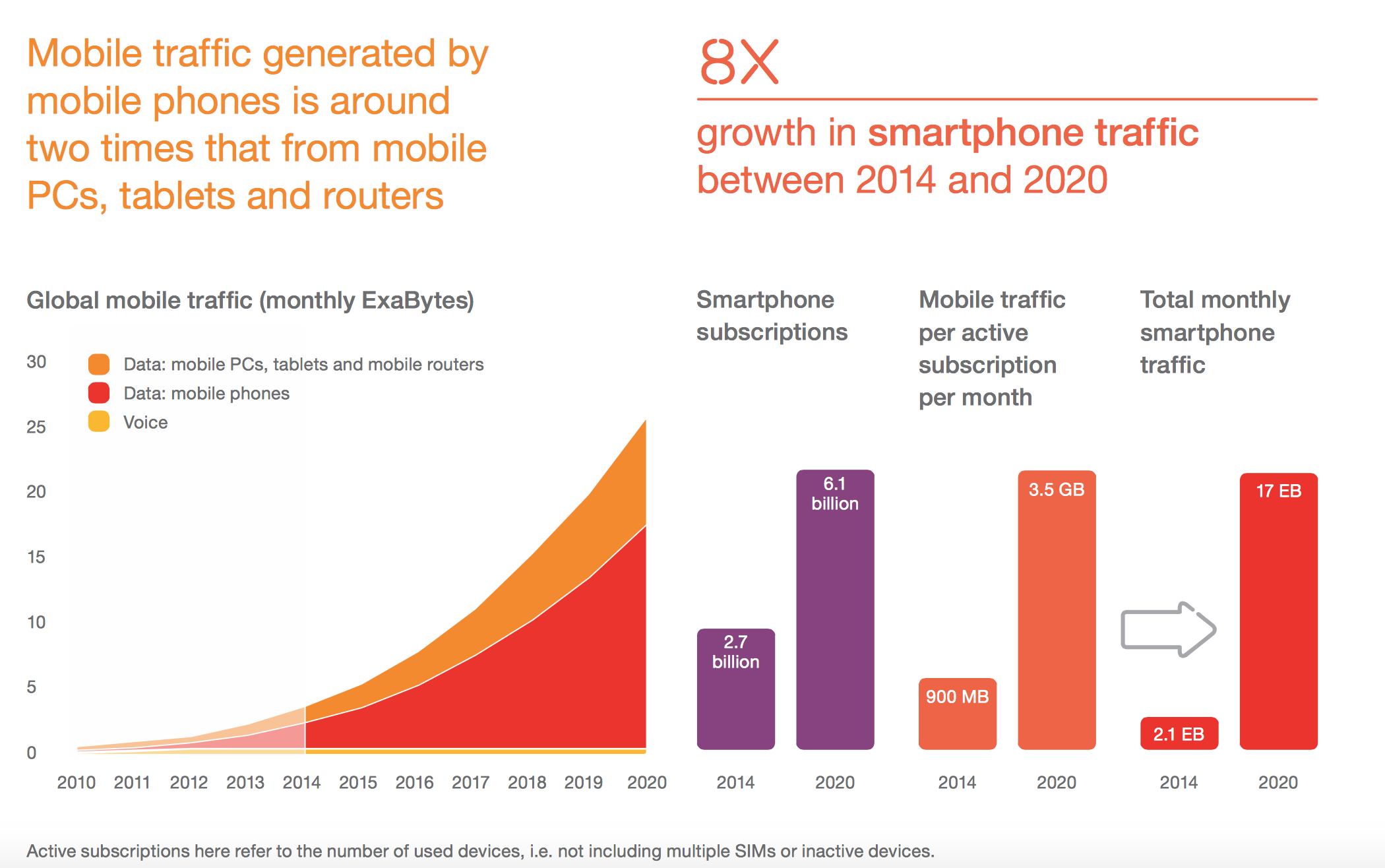
    It is estimated that if connection quality and speeds were to improve in India, the present data consumption would increase by 400%. A number that the industry should play close attention to. Over 60% of the data consumption in India was mobile data by the end of 2014.

    Mobile Data Drivers

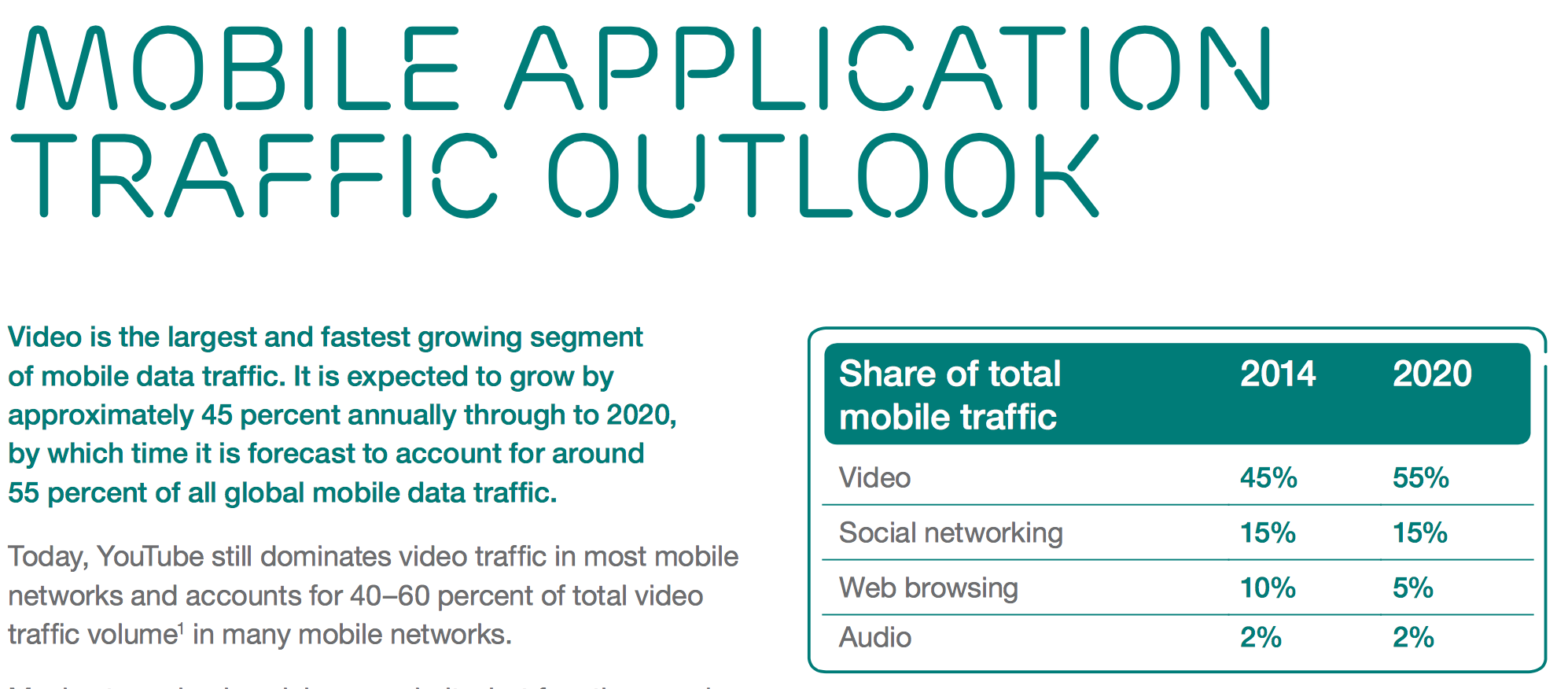
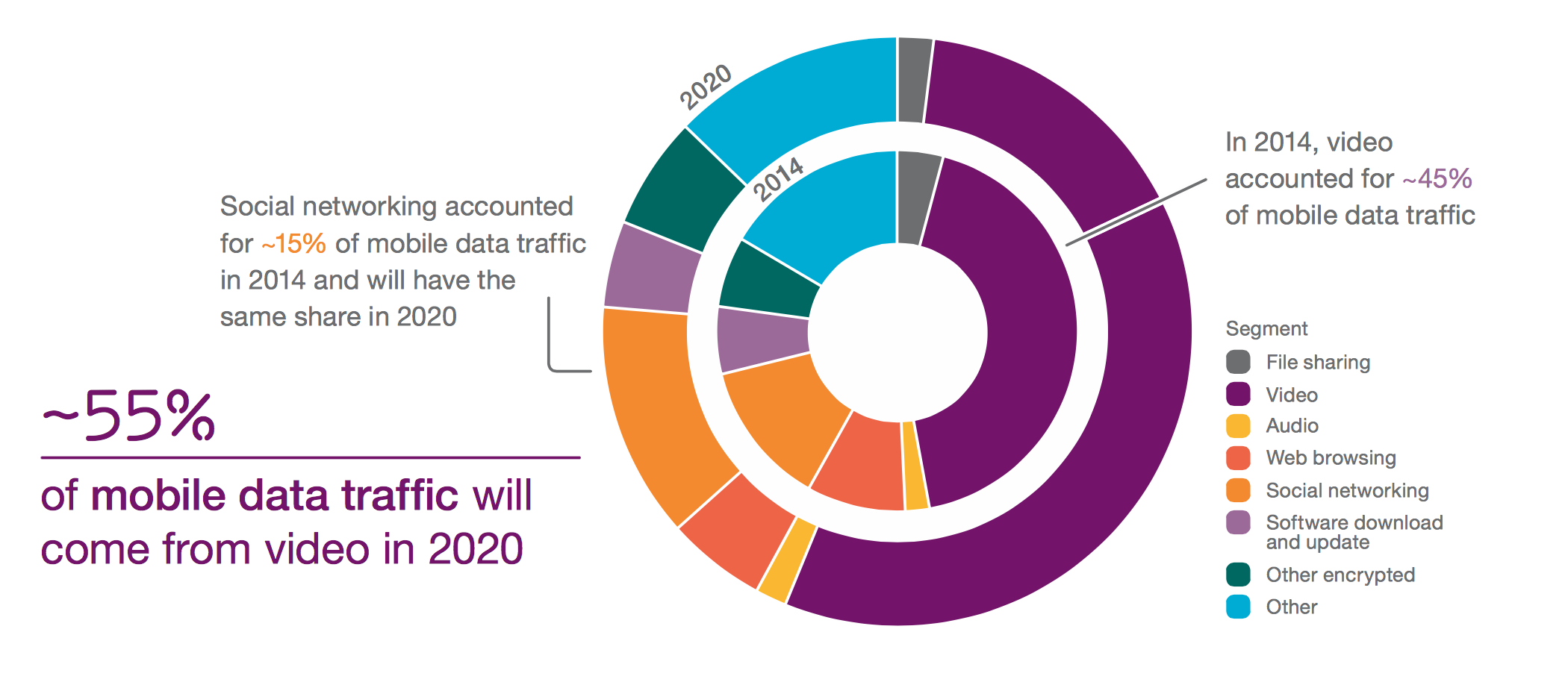
    Out of the total mobile data consumed in India, 45% comes from video playback from websites like YouTube. A large chunk of music streaming services are also responsible for driving mobile data in the country.

    Mobile data usage trend
    Mobile Data Usage

    [pullquote_left]55% of mobile data will be consumed for Video services[/pullquote_left]

    Globally, YouTube is responsible for consumption of 40-60% of mobile data, a number which is relatively lower at 17% in India due to mobile data connectivity and speed limitations.

    It is estimated that by the year 2020, 55% of mobile data will be consumed for Video services. Reaching this percentage will be possible by the implementation of 5G mobile data globally. 5G services are being tested in over 8 countries as we read this, while implementation for global markets is kept at 2019. India (and some other markets) are not a part of this implementation list.

    Mobile Data consumption

    India is about 5 years behind the 4G rollout targets (Dec 2010) and 2 years behind LTE 2.0. HD Voice and Video are not being talked about by the Indian industry leaders, despite the fact that India is one of the largest contributors to the overall revenue for the mobile industry.

    Data and Future

    India needs fast internet access, as a developing nation, its metropolitan cities need to be connected to the world. With a boom in startup culture and high paying jobs with international markets, most suffer due to lack of internet access. Video consumption and video calling with services like Skype, Google Hangouts and even FaceTime are at an all time high and consumers end up paying large sums of money just to say connected.

    [pullquote_right]FUP has slowed down growth[/pullquote_right]

    The biggest limiting factor in the whole telecom industry is the limited usage policies implemented by the companies. The limited usage policy or fair usage policy (FUP) was first implemented by Airtel and Tata Teleservices to prevent users for exploiting their internet connection speeds and downloading illegal materials from the internet.

    The FUP has since not been removed and with no pressure from TRAI (Telecom Regulatory Authority of India) this antiquated method continues to haunt each user.

    Airtel is one of the biggest users of this aged method of policing the usage of high speed data and is also one who exploits its use the most to benefit in the long run. Airtel has annoying auto redirects (Smart Bytes) that transfer you to a buy page insisting that you buy additional data packs to continue on the fast speed. These packs are usually 4-5 times the cost of the bundled data and tend to really hurt consumers financially.

    The world is getting connected, using a highway of data which is not only fast but also super efficient and budget friendly.

    Unlimited data is one of the perks of a liberated growing economy. The current government showed success by choosing the internet as a means of communications with its potential voters.  There are claims from our telecom ministers claiming that “India plays a crucial role in the future of the internet.

    However, we are no where near that future. Most operators globally offer the ability to choose a plan that suits the customers needs. The United States and countries like United Kingdom, Australia, South Korea, Japan, New Zealand, Spain, Canada and many others are not familiar with the term FUP. In fact, any form of throttling is against the law in many of these countries.  Terming the so called limiting plans as “marketing gimmicks” countries have ensured that the consumer gets what he pays for, no more and especially no less.

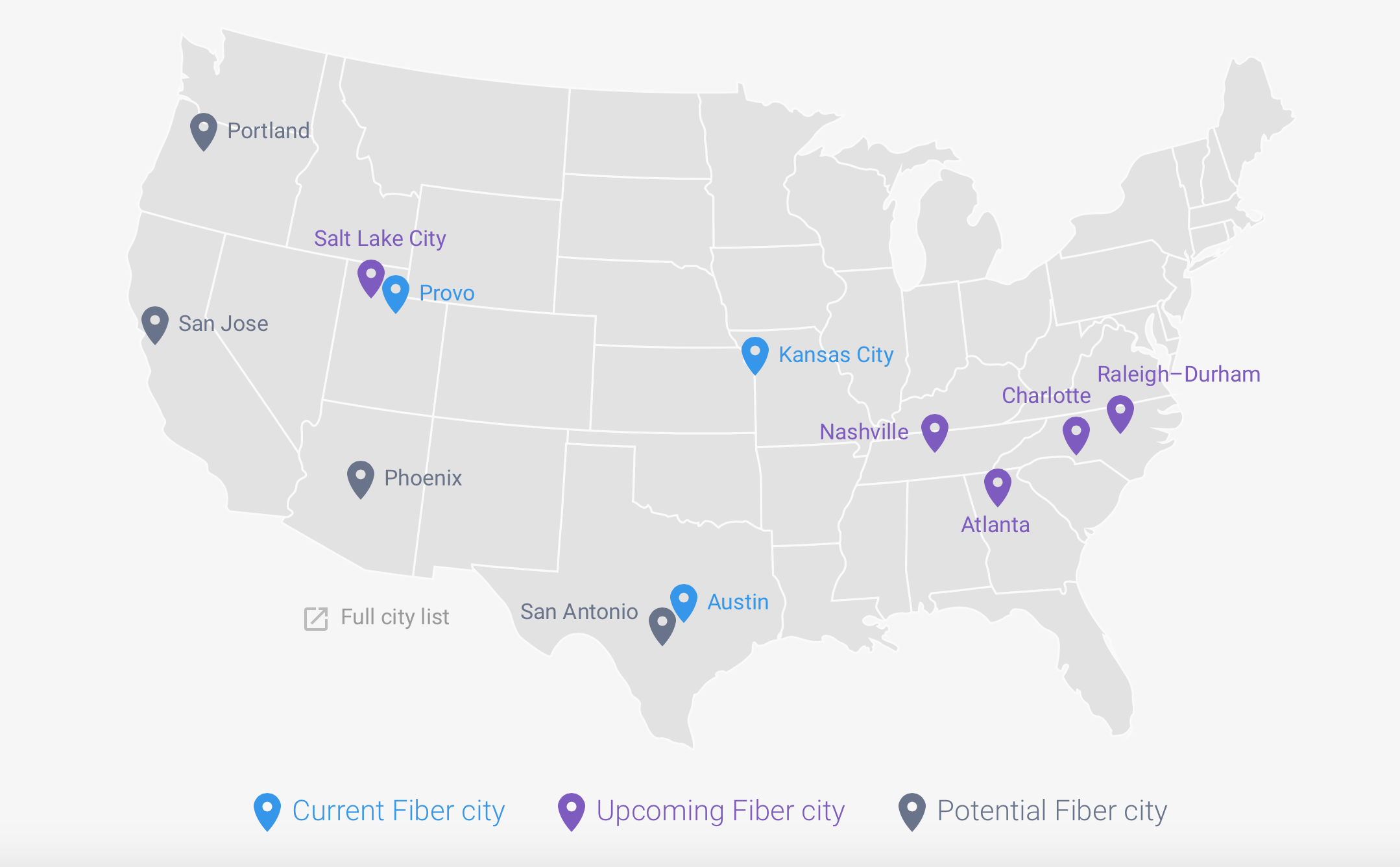
    Google Fibre Deployment Map
    Google Fibre Deployment Map

    Then there are packages from the likes of Google Fibre limited in reach and availability, Google has made possible speeds of upto 1000 Mbps for as little as US $ 70/month (chump change compared to what iGyaan spends for Internet) available at residences across the United States. They also offer a “Basic Plan” which is at 5 Mbps downloads and 1 Mbps uploads (unlimited) for a price of US $0 if you pay the installation fee. Free Internet! If that does not help the startup economy, then what else will?

     Something needs to change

    India and Indians deserve the ability to get unlimited internet, the users seem to be paying for it, but nobody seems to be getting it. Riddled by hidden corporate talk and contracts that fool the customers into believing that they are getting the best possible deal. Everybody has the right to stay connected, and a fast internet connection is more like a lifeline today.

    Many sectors in the country do offer high speed data connections for a higher price. However, these too are controlled by limits, and speed drops are often too high. A 100 Mbps connection from Airtel Fibrenet drops to a mere 512 Kbps post a 100GB download. A simple math calculation will tell you that it takes just 2 Hours, 23 Minutes and 9.93 Seconds to download 100 GB on such a connection. Post the download you either have to pay heavy sums of money to get data packs or live with a devastatingly slow 512 Kbps which would take 19 Days, 10 Hours, 2 Minutes and 1.6 Seconds to download the same 100 GB. Airtel charges INR 5,999 + tax for this plan , making it well over US $100. Now compare this to Google’s 1000 Mbps line with no limits whatsoever, which costs US $ 70 /month.

    Something needs to change and fast! Sign our petition below and be part of the voice of change. #StopFUP #EndFUP


  • With the Launch of Airtel Zero, Airtel Violates Net Neutrality Yet Again

    With the Launch of Airtel Zero, Airtel Violates Net Neutrality Yet Again

    A few months back, Airtel was on the receiving end of much public backlash following its decision to introduce differential charges for various online services. This was the first direct assault on Net Neutrality principle in India and the telecom major was forced to roll back the new policy. The company has introduced a new service called Airtel Zero which attempts to split services but with a friendlier face.

    Airtel Zero is a new platform that will let companies buy data to offer their apps to consumers for free. It will allow users to access these apps without incurring data charges. This can be seen as a direct violation of net neutrality as it will give priority access to some apps over others.

    Net neutrality principle states that all data on the internet should reach their destination with equal speeds and service providers cannot charge extra for priority access. Airtel will rope in extra revenues through Airtel Zero and companies with enough capital would be able to pay for this access while the budding apps will be left back to fend for themselves.

    E-commerce giant Flipkart is also receiving criticism for signing up for the service that violates net neutrality. Airtel has reportedly called the new service a “B2B platform that is open non-discriminatory and will be a win-win for customers and businesses.” They added that they intended to include as many vendors as possible. But they haven’t made public the agreement or the fees paid by the vendors to reach the consumers. This raises the question whether the platform will be inclusive of new apps or will give priority access to just a few apps.

    In the light of recent worldwide demand for tougher net neutrality laws, the Telecom Regulatory Authority of India(TRAI) has brought forward a consultancy paper in the public domain. It has asked stakeholders that include the general public to share their views on net neutrality.

    It is Airtel’s second attempt at undermining net neutrality, and it can be potentially dangerous for the growth of the information based economy that demands a free and fair internet. So if you want to get your voices heard at TRAI and want the Indian government to keep the internet open for all, you should send in your comments at [email protected]. You can find more information on the net neutrality consultation paper on TRAI’s website.

  • According to Study Only 20 Percent Indians Have Access to the Internet

    According to Study Only 20 Percent Indians Have Access to the Internet

    The present Indian government has put stress on connecting India to pave the path for the country to become a powerful force in the digital age. But there are major hindrances in that path. The backbone of the infrastructure, the cables that connect the country together are in poor shape. Along with that, 26 percent of India’s population is illiterate. A new study by The Pew Research Center says that only 20 percent of Indians have access to Internet. This report takes the government’s target of connecting all Indians even further away.

    The study says that 20 percent of Indians had occasional access to the internet while only 14 percent of folks own a smartphone. This comes a few days after the country’s telecom minister stated that the country has 95.5 crore mobile subscribers. He also said that there are over 30 crore internet subscribers in the country which means that there is still a mammoth task of connecting 90 crore Indians.

    The Pew study had some interesting insights about the internet usage by Indians. It found that 65 percent of respondents used internet for social media while 55 percent used it for job hunting.

    digital india

    There were some questions in the study related to internet’s influence on the lives of people. It reported that 64 percent found internet to be beneficial for education while 53 percent found it to be useful for personal relationships. The recent elections created a vitriolic atmosphere on the internet, but even then 36 percent Indians thought internet’s influence has been good for Indian politics while 30 percent said it had a bad influence. A 42 percent also said that internet had a bad influence on personal morality while 29 percent saw it as good for morality.

    The study was conducted in 32 developing nation and surveyed 36,619 people. It found that countries like India, Indonesia, Pakistan and Bangladesh who make up for a quarter of the global population have a dismal access to the internet. Only 24 percent of Indonesians, 11 percent of Bangladeshis and 8 percent of Pakistanis are connected to the internet.

    The study also indicated that internet use was more prominent amongst educated; English speaking population, which is a given considering the massive amount of content on the web is in English. There is now a movement towards local languages which will definitely enable more people to join the information revolution. But one thing is sure that if the Indian government wants to create a Digital India, it not only has to invest resources in developing infrastructure but also invest in creating a digitally literate population.

  • To Strengthen Connectivity Everywhere, Qualcomm To Set Up LTE-U Devices

    To Strengthen Connectivity Everywhere, Qualcomm To Set Up LTE-U Devices

    Qualcomm, the American chip maker, has expressed the desire of setting up new technology that would offer mobile phone users better connectivity in places like subways and shopping malls. The company said on Thursday that it will soon start to sell components which will feature LTE technology which can be adapted for a smaller scale.

    LTE, short for Long-Term Evolution and commonly marketed as 4G LTE, is a  wireless communication standard for high speed data for mobile phones or other wireless devices. The newer LTE Unlicensed, which will be introduced at the MWC 2015, adapts the technology to be used over short distances by sharing radio spectrum, like WiFi.

    Qualcomm said that adopting the LTE-U will provide much faster performance for phone users and save money that the operators would have had to pay on setting up cell phone towers. Thousands of LTE-U connectivity devices could be set up in different locations like building or places which has poor network connectivity.

    [quote text_size=”small” author=”Matt Grob” author_title=”Qualcomm Chief Technology Officer “]

    The performance is better. It’s not a large cost adder and it also provides a lot of advantages flexibility to the operators

    [/quote]

    Qualcomm claims that the problem of LTE-U signals disrupting WiFi signals has been overcome, which had drawn criticism of this technology in the past. This technology will be one of the first steps towards a departure from cell tower based connectivity. With the demand for all round access to internet increasing with each passing day, new innovations need to be brought into let people stay connected 24/7.

  • And the Award For the City With the Most Infected Internet Goes to New Delhi

    And the Award For the City With the Most Infected Internet Goes to New Delhi

    Internet in India is slow, we all know that. In fact, it’s the slowest amongst all its contemporaries. It’s a shame that even with an economy as big as India, internet, the basic necessity to compete in the 21st century market is available at dismal speeds. A new report from F-Secure states that New Delhi, the capital of India is the worst place to connect to the internet.

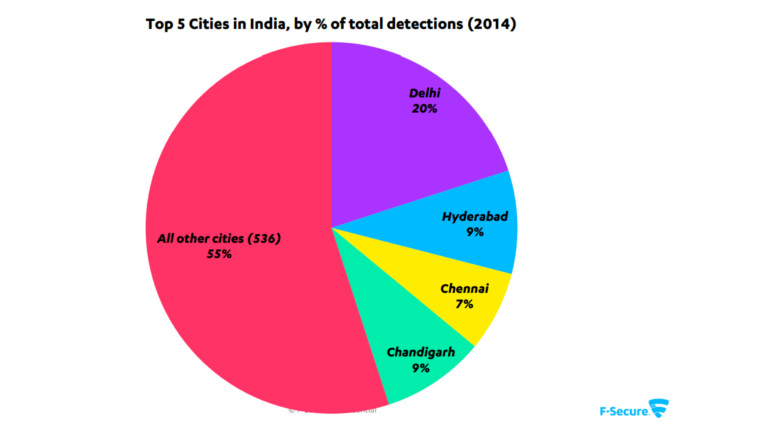
    F- secure, the Finnish computer security company has come out with its “The State of Internet in India” report. It states that the Indian capital ranks on the top of the ranks of most infected computers. The city has 20 percent of all the infected systems in India. Following Delhi, with 9 percent each is Chandigarh and Hyderabad and with 7 percent is Chennai.

    top5-cities

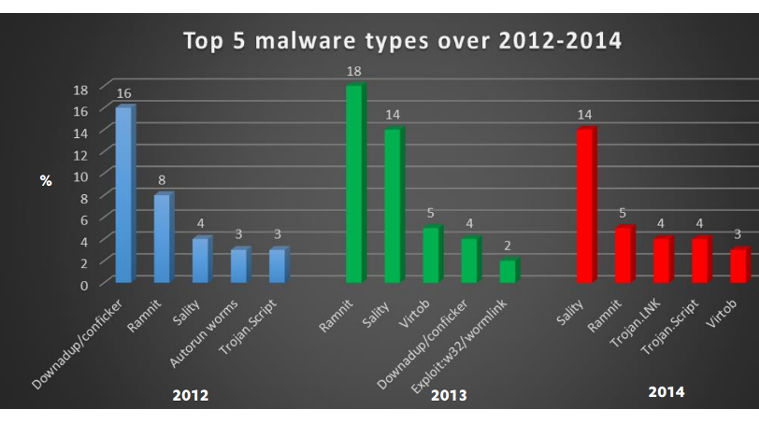
    One of the reasons cited for these high levels of infection is the use of pirated softwares that are often tainted. Botnets were found to be one of the major infections affecting the systems across the nation. Hackers use Botnet to take control of PCs and use them for their malicious intentions such as spams or DDoS attacks. The lack of computer awareness amongst users is also seen as a cause for the high levels of infections.

    Smartphones are also at risk of these attacks. Mumbai with 22 percent tops the chart in smartphone infections and following it, of course, is New Delhi. The major malwares in the Android ecosystem are Android/SMSSend and Android/FakeInst. These malwares send malicious SMS to the contacts of the user and thus multiply. Another malware called Android/SMSreg gets on the system when the user connects to free wi-fi. Hackers can gain access to all the personal information including GPS location, IMEI number, network operator, package name and SDK version.

    top-5-malware

    All of this point to the fact that Indians are in a desperate need of a safety and security lesson when dealing with the digital market. We need to get more serious in terms of cyber-security and tackling malware. In the digital economy, the threats will be digital too, so preparedness needs to be the biggest priority.

  • Move Over 4G, Finland is Building the First 5G Test Network

    Move Over 4G, Finland is Building the First 5G Test Network

    The communications age has gained rapid speed over the past decade. From a mere 2G GSM connectivity, we have reached the mobile broadband range of 4G. We now have the fastest wireless access to the internet ever, but the folks at Finland seem to think that it can be much faster. A Finnish research institute is building a 5G network for test purposes.

    5G or Fifth generation of mobile telecommunications technology will of course offer increased speeds, but it will also be less draining on resources. It is also known as ‘tactile internet’. 5G is expected to be 100 times faster than the fastest 4G. It would also require smaller antennae and its signals can be bounced off buildings and solid surfaces.

    The test network is being constructed in the Finnish city Oulu, which is situated in the Northwestern part of the country. It is being built by the University of Oulu in cooperation with the VTT Technical Research Centre of Finland. VTT will be working on a closed private network whereas the University will be setting up an open public network.

    With the closed network, VTT will test out and access the potentials and challenges of their technology. The public network, on the other hand, will test the network’s ability to handle heavy traffic. The work on the network construction will begin on February 18. The technology is expected to reach mainstream markets by 2020.

  • Facebook Brings Internet.org to India to Provide Free Basic Internet

    Facebook Brings Internet.org to India to Provide Free Basic Internet

    Facebook founder has been working on an audacious initiative to provide free internet to people who haven’t yet received the benefits of the information superhighway. Internet.org was launched on August 20, 2013 and has till now provided services more than 150 million people total across Africa and Latin America. Now the biggest social network has introduced the service in India.

    Internet.org is in partnership with Facebook and six mobile phone companies, namely Samsung, Ericsson, MediaTek, Microsoft, Opera Software, and Qualcomm. It is one of the initiatives along with Google’s Project Loon and Space-Internet plans by Tesla founder Elon Musk. They intend to reach the last 3 Billion people untouched by the internet.

    mark zuckerberg

    Mark Zuckerberg in a post on Facebook has announced the introduction of the initiative in India. The initiative will begin offering services on the Reliance network in the states of Tamil Nadu, Maharashtra, Andhra Pradesh, Gujarat, Kerala and Telangana. The users will now have free data access to more than three dozen services.

    Mr. Zuckerberg also hoped to one day connect everyone, and the power of the internet will serve every community across India and the world. He added that the day is coming soon. This initiative from Facebook is surely appreciable and will help empower the vulnerable communities in the world.

    Want to know more about Internet.org? Click here.

  • Elon Musk Plans to Connect Everyone with Space-Based Internet

    Elon Musk Plans to Connect Everyone with Space-Based Internet

    If you ever hear an audacious, game-changing technology initiative, there is a high possibility it’s the brainchild of Elon Musk. After taking on spaceships and electric cars, Elon plans to create a vast network of satellites which will provide high-speed internet, that will benefit the rural folks untouched by the internet.

    Elon spoke of his plans at a SpaceX conference in Seattle where the company is starting a new office. He said that he wants to establish his space internet system as a rival to fibre optics. Light waves travel 40% faster in the vacuum of space than through optical fibre cables. Musk will be opening a new office in Seattle and he plans to go on a hiring spree for space and aeronautics professionals to boost his efforts.

    Elon's Space X is the most successful private space enterprise.
    Elon’s Space X is the most successful private space enterprise.

    These internet beaming satellites will be placed in an orbit 750 miles (1207 km) above the Earth’s surface. The traditional communication satellites are placed in a geosynchronous orbit at an altitude of up to 22000 miles (35400 km). Elon says that by placing the satellites closer to the earth’s surface, the electromagnetic waves would have to travel a smaller distance and hence provide faster internet. He adds that with his technique, instead of sending data packets over long terrestrial networks like undersea cables, they can be bounced off various satellites. The data packets would be sent directly to satellites where they will bounce off multiple satellites before reaching the one closest to the destination.

    There are many efforts, currently being undertaken to connect the last three billion who are still oblivious to the internet. Facebook founder, Mark Zuckerberg’s Internet.org and Google’s Project Loon are some of those initiatives. The Internet is making us globally connected and will help boost global cooperation.

    The plan is to create a vast network of satellites which beam internet directly to the consumers
    The plan is to create a vast network of satellites which beam internet directly to the consumers

    As of now, this project sounds too audacious, even for Elon Musk. He says that this initiative will cost about $10 Billion, but once established, his company will use it as a revenue source to build a city on Mars. He also doesn’t have the rights to the spectrum to build the service as of yet. So it remains to be seen how he takes this plan forward.

    Elon’s bold connectivity plans doesn’t end at connecting everyone on Earth. He wants to set up a communications infrastructure on Mars too. His company is actively working on prospects of establishing a Martian colony in the coming future. You have to give credit to Elon Musk; he wants to make sure that even though people would be living in a settlement on Mars, they would not be devoid of their favorite websites.

  • Survey : Indian 4G User Base to Hit Close to 15 Million by December 2015

    Survey : Indian 4G User Base to Hit Close to 15 Million by December 2015

    Even though 3G is still taking its time to adjust in India, it seems like 4G might catch up soon and win the race. A recent report by PwC forecasted that the 4G subscriber base in the subcontinent will touch 10-15 million by December 2015.

    In a statement by PwC for Indian telecom sector, “We expect 4G LTE subscribers to reach 10-15 million by December 2015 driven by competitive pricing, superior network experience and affordable smartphones.”

    Arpita Pal, PwC Leader Telecom, added, “In 2015, we will witness multiple Indian players launching 4G on a more efficient 1800MHz spectrum and Indians subscribers will adopt 4G wholeheartedly to satiate their needs for mobile data.” Adding the fact that LTE will be accessible in India as well.

    Aircel and Bharti Airtel are the first to bring the 4G service in India, although it is present in select states only. Reliance Jio Infocomm, BSNL and Tikona are amongst others to launch the same in the coming year.

    The consultancy firm stated, “India will see a significant spurt in Wi-Fi hotspots driven by both government smart cities and ‘Digital India’ and private sector initiatives.”

    For us, the result of the survey seems far-fetched. Although network providers might give the service, it will take some time before users switch up and invest in 4G capable devices.

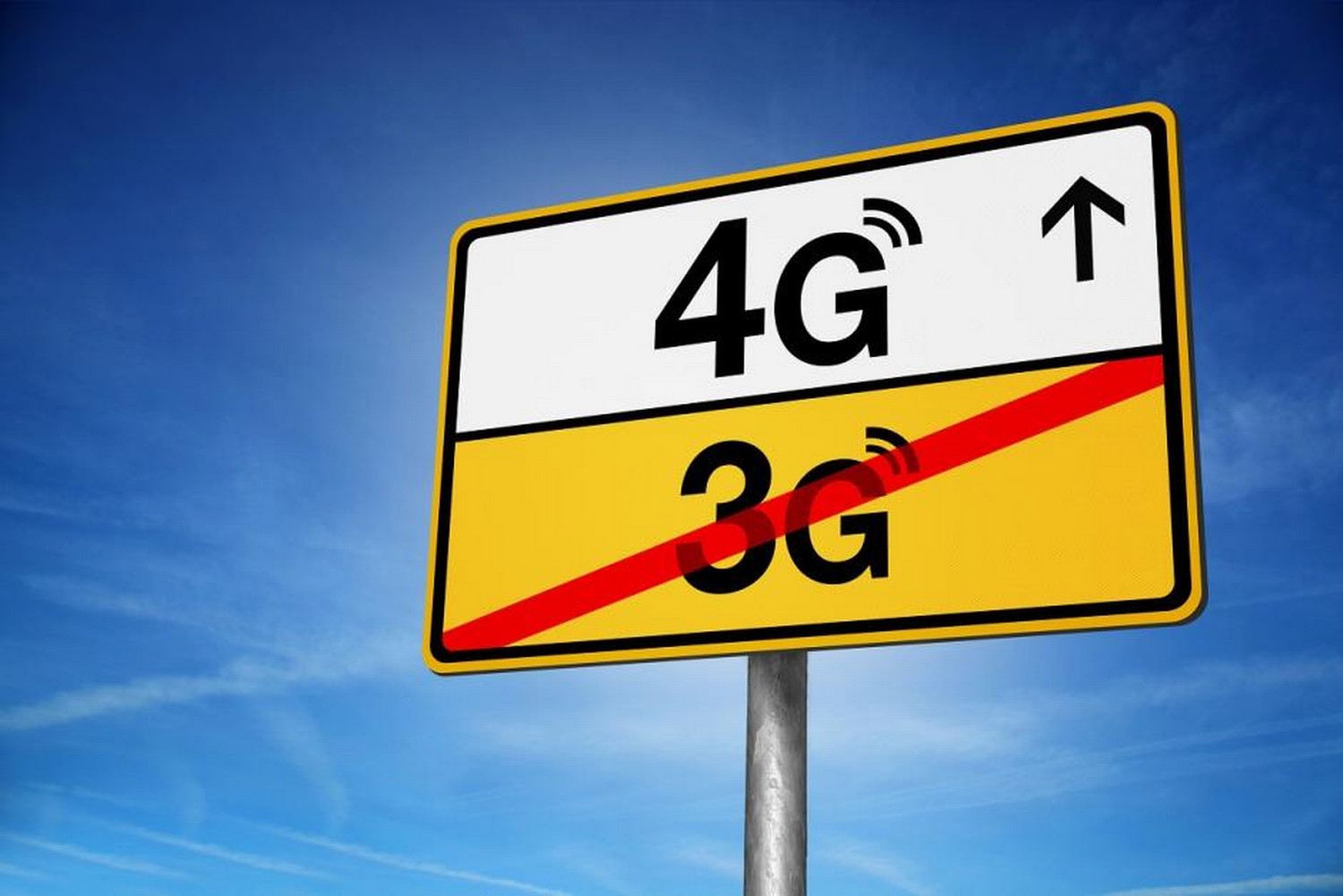
  • Verizon Phases Out 3G; Is it Already Time We Add it Amongst Obsolete Technology?

    Verizon Phases Out 3G; Is it Already Time We Add it Amongst Obsolete Technology?

    Just a couple of years back, 3G was all the rage in India. With massive investment in advertising, we were made to believe 3G would deliver lightning fast speed and make our life a lot easier. But even after a considerably long time, 3G is still catching up in this country. The connectivity is still pathetic and rarely do we get the speeds which are advertised. But while 3G is still in the process of finding itself, 4G LTE has come to the country and is fast setting up shop at various places in India. Meanwhile in the US, communication giant Verizon seems ready to phase out its 3G network as the 4G LTE services are fast picking up speeds.

    Wireless tracker Milan Milanovic is reports that Verizon is now providing LTE services off its 1900 MHz band which is usually reserved for 3G data. The company says that it is just a test, and they are not making any active transition. Testing is the right way forward as better technology slowly supersedes the previous generation by offering better services. And just like Cassettes, CD’s, 1G and 2G before it, 3G will also be shown the door someday. But not for now. Even with the high costs and low connectivity, 3G services are still showing growth.

    In the grand scheme of the mobile world, there have been four generations of service that provided connectivity between the portable devices. First there was the analog cellphones which came under 1G(the G stands for generation) followed by digital phones that came under 2G. Then came 3G, which was dubbed the mobile broadband. If provided right, 3G services are capable of speeds up to 400Kbps to almost ten times that speed.  Finally, we come to 4G which is also known as LTE(Long Term Evolution). Though LTE is one of the components of 4G technology along with HSPA+ 21/42, WiMAX but LTE is the most prominent of all, and it is considered true 4G because of its high mobile speeds.

    There has been a barrage of LTE capable devices around the world including India. All major network providers are fast setting up the network. LTE capable devices are also arriving at sub Rs. 10,000 price range, which not only makes them future ready but also future proof. In many nations, 4G networks are fast becoming the norm. By about 2016, the first LTE only phones will start arriving into the market. So 3G still has a considerably long time before its bags are packed and shelved.

    4G, like its predecessor, is fast arriving to replace the previous generation technology. As we move towards a purely data based communication system, where apps are fast replacing voice calling and SMS, we can expect a demise of 3G by the end of the decade. Instead, it might get replaced by 4G and public Wi-Fi’s with high speeds and all round coverage. By shifting to voice-over-LTE, networks can offer all mobile features in one service. Seems like there are only happy times ahead for the mobile world.

  • President Obama Stands by Net Neutrality; Asks for Stricter Protection

    President Obama Stands by Net Neutrality; Asks for Stricter Protection

    Net Neutrality is one of the most important issues being discussed in the United States. The path taken by FCC will set a precedence that can be used by all other service providers across the world. The future of the free internet stands is at stake and hence it’s important to save it. Luckily amongst the supporters of the Net Neutrality is an important figure; none other than the President of the United States.

    Net neutrality principle states that all data that is being transmitted on the internet is equal, and service providers cannot prioritize any data packets.

    President Barack Obama in a video address asked the Federal Communications Commission to formulate more stringent rules that protect the net neutrality principle. He expressly stated in the video address, “It is common sense that the same philosophy should guide any service that is based on the transmission of information — whether a phone call or a packet of data.”

    FCC had previously called on for public comment on the issue that attracted over four million comments from the public. The majority of these comments were in favor of stronger rules. Even the big internet companies like Google, Netflix, Kickstarter and Vimeo along with others joined hands in support of net neutrality.


    The biggest hindrance in the passing of the new rules is the heavy money might of the corporations who have lobbied proactively to gut the net neutrality principle. The telecom companies are not at all a fan of government regulation of the internet. Even the Republican Party, which won control of the two legislative bodies of the US Congress is in favor of diluting Net Neutrality. The stance of the party is evident from this tweet from one of the foremost voices of the Republican side of Congress.


    The internet is a phenomenal tool and an essential utility. By diluting net neutrality, companies will be able to charge a premium on specific content like certain sites or charge extra for video streaming. In countries like India, where the telecom providers are known for giving low-grade services at high prices, the issue of net neutrality should be of concern. Using the ignorance of laws, the telecom companies might try to gut the principle outrightly.

    If you like the way your internet feels, however slow or unsatisfactory it may feel in its present state, it is still a million times better than what the telecom companies are planning to do with it. So if you like the access to unlimited database of cute animals and babies and all the other awesome stuff in the world, then keep a vigilant eye for whenever you hear the term Net Neutrality.

iGyaan Network
Privacy Overview

This website uses cookies so that we can provide you with the best user experience possible. Cookie information is stored in your browser and performs functions such as recognising you when you return to our website and helping our team to understand which sections of the website you find most interesting and useful.