Tag: internet

  • Technology We Need in India

    Technology We Need in India

    India’s new government is putting proactive emphasis on the Digital India Project. The country is a high priority market for smartphone companies with major releases happening almost instantly with an international release. For more than a decade the country has been a tech hub and exports a mammoth number of tech-based workforce all over the world.

    But still the country lags behind in terms of inculcation of technology in everyday life. There are various causes for this ranging from red-tapism to lack of understanding of the issues.  Some of the major focus arenas are:

    Electric Cars

    electric-car

    The future of vehicle technology seriously lacks on Indian roads. The most prominent name is the Reva which came at the price of a regular car but doesn’t give acceptable range. India has great technical workforce from automobile engineers to talented designers. If encouraged through the administrative institutions can be a leader in this field. Moreover by subsidizing these cars and incentivizing them, you can have cars that are not just good for your monthly budget, but also for the environment. While its great to know that the present government is focusing attention on Solar energy, pushing for electric vehicles along with solar will be a symbiotic transaction to a clean fuel economy.

    Research

    For the growth of any civilization, corporation, country, new ideas are absolutely important. There is a lack of funding for research in the country. As mentioned earlier there is no shortage of talented, hardworking individual who can take charge for a change. Currently, India’s share in R&D spending to the total global R&D spending stands at just 2.1 percent while the share of China is 12.5 per cent. For the third biggest economy in the world, that is a puny figure. To bring real change, the government has to aggressively invest in R&D.

    Good Internet

    LibrarySymbolLaptop-WifiBl

    An important component of the 21st century economy, the information superhighway, or the internet. It is the economy making force of the 21st century but India is limited by its speed. TRAI classifies the broadband at 512 KBps, which is not an acceptable speed in the first place. AKAMAI’s study showed India lagging behind all Asian and BRICS countries in terms of broadband speeds. With 4K streaming becoming available in most countries, it’s high time India puts its investment in information infrastructure as the world is moving to a knowledge-based economy. An accessible, faster and trustworthy internet would not just bring us closer to the world; it will bring a whole new empowered consumer base for the economy. This should be a priority issue for the government.

    Agriculture

    India has long touted itself as an agricultural priority country, but its agricultural yield is amongst the lowest in the world. Seed technology also needs to be looked into to prevent ethically immoral MNC’s to dictate terms to Indian farmers. A second green revolution is the need of the hour and the pride of doing it ourselves will help the country raise its sense of self-respect. It is also an important field as people can live without all the gadgets and tech under the sun, but can’t live without food. Apart from raising the number of agricultural research institutions, agricultural knowledge should be effectively disseminated amongst the farmers; the Krishi Darshan on DD just doesn’t cut it anymore. The acute importance of agricultural revolution should also be understood by the general public as they are on the consumption end of the spectrum and it’s always good to know what’s on your plate and how it got there.

    There are certainly a lot more areas in need of a technology revolution but none greater than in our educational institutions. We are currently creating a knowledge platform that churns out over 10 lakh engineers every year with a sole goal of earning big pay packages. There is an immediate need for induction of an innovation and entrepreneurial spirit in the minds of the Indian youth. Instead of being cheap labour to international MNC’s, they should instead be able to tie their shoelaces and aim to create the next big thing. Only and only then can this country claim for greatness instead of just brandishing past glories. This country deserves a technology revolution to be an active member of the global decision makers. We got the talent, all we need is leadership.

  • Cosmos: a Browser That Lets You Browse the Internet Without the Internet

    Cosmos: a Browser That Lets You Browse the Internet Without the Internet

    Cosmos, till recently was a term, we used to describe the contents of the universe. Then Neil Degrasse Tyson came in this summer and gave us an epic new show by the same name. Now a team of four college and high school students from the U.S have created a browser that lets you connect to the internet without a data plan.

    Cosmos is a one of a kind browser. When the user enters a URL, the browser sends it through SMS to a web service. The web service is made using Twilio and Node.JS. The service then loads the website and takes out all the scripts, images, CSS and sends it back to the device in one or more text messages.

    The makers of the browser were able to get it on Play Store in less than a month. They have asked the users to be cautious while using the browser as it has some bugs since the app is still in its starting stages. The biggest hitch with the browser is that the pages take a while to load and when they do they are devoid of all the features, like images and scripts that makes web browsing interesting. Also, a user has to deal with many text notifications while using this browser.

    You might want to get a reliable text plan to get the best out of this browser as it sends data through SMS. The app is currently only available to U.S. users to prevent overloading the infrastructure. But as it gets better, and gains users, there might be an expansion.

    As the browser is just starting up, we’ll let the bugs slide as this sounds like a great way of bringing internet access to people who can’t afford it. At a time when major companies are planning drones and balloons to bring internet to the masses, a ground level effort like this is appreciated. We’d love to see where this Cosmos will lead us.

  • Hold On, The Internet Slowdown Day Is Here

    Hold On, The Internet Slowdown Day Is Here

    We told you sometime back that America’s communication regulator; the FCC is planning to allow broadband providers to create a fast lane for content providing companies that pay more for more access. This new regulation will deeply harm the independence of the internet and hamper the free exchange of ideas that it provides. It has the potential to pull back internet’s penchant for innovation. The broadband companies are pushing hard for the legislation by the internet companies are pushing back.

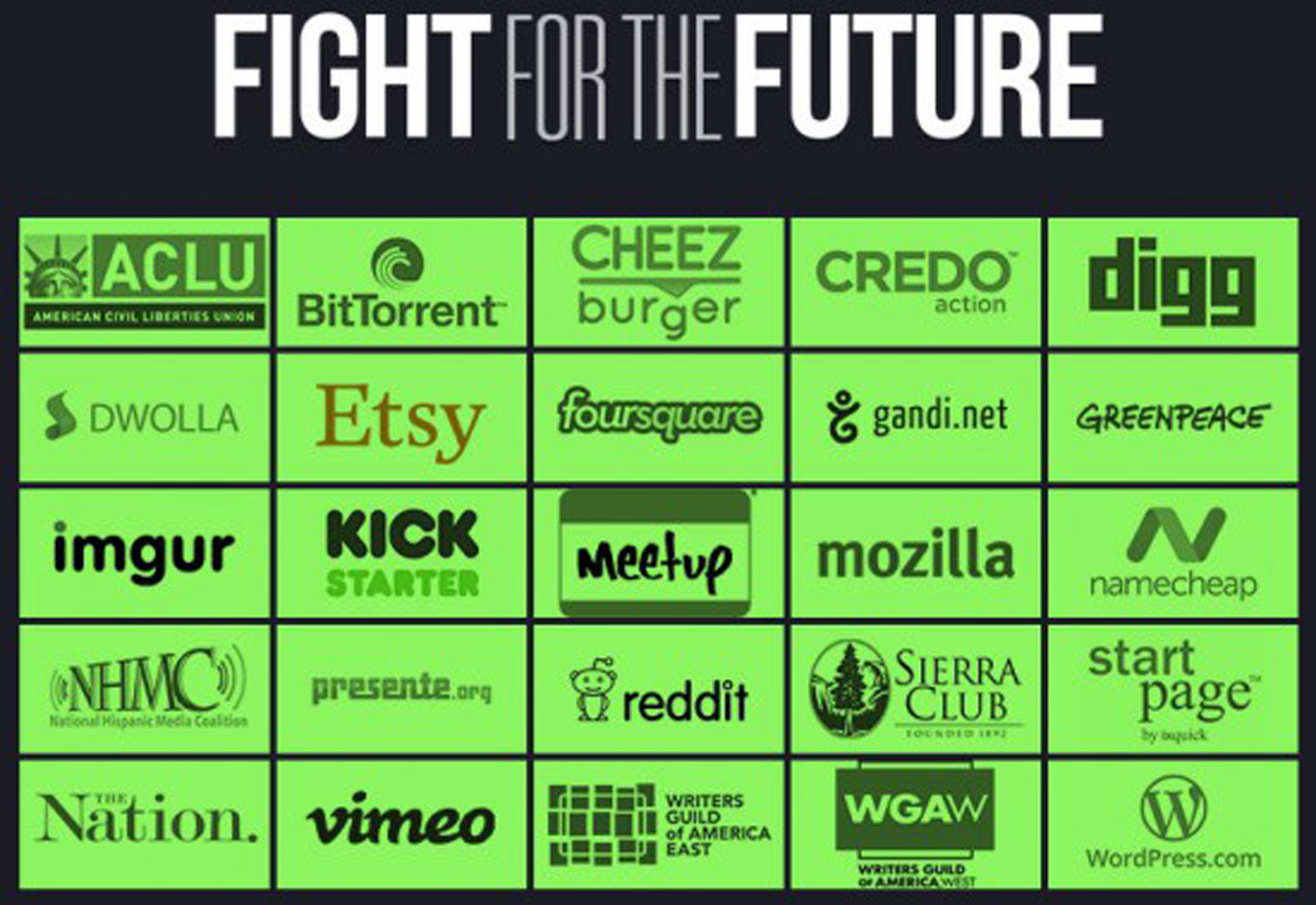
    To counter the money might of big broadband companies, top internet domains are going for a peculiar protest that will show the future of the internet if the internet provider get their way. Websites like Reddit, Bittorrent, Vimeo, Foursquare, WordPress and Netflix are joining in protest for what is being called the Internet Slowdown Day.

    Some of the prominent internet companies will be joining in protest.
    Some of the prominent internet companies will be joining in protest.

    The companies will be posing a constant loading symbol to show how by giving fast lane access to highest payers; the internet providers might slow the internet for the rest of us.

    Netflix had this to say on Reddit “Consumers, not broadband gatekeepers, should pick the winners and losers on the Internet. While we won’t actually slow down your streams during Internet Slowdown day, look for the symbolic buffering symbol on the Netflix site on Wednesday and join the day of action.”

    Net Neutrality has been one of the basic principles of the internet ever since its inception. It states that companies cannot discriminate with information; all information bits on the internet should get the same speed of access. The FCC proposal might change that and allow fast lanes for content providers who can pay more. It will also slow the speed of websites who cannot afford to pay the content delivery fees.

    FCC had previously taken into consideration the massive outburst against its proposed move and invited comments from people. This led to a massive inflow of comments that once even crashed the servers especially after John Oliver took on the case.

    This is an important issue for internet users everywhere. It’s a cause worth a fight as the level playing field of internet has led to success of giants like Google and Facebook and even helped iGyaan reach you guys without paying unruly fees. So if you like the internet the way it is, learn about Net Neutrality and spread the word and if you see a legislation that aims to scrap it, protest it proactively. It’s the only way of having access to unlimited cat videos without a slowdown.

  • Report: Internet Users In India Is Expected To Reach 243 Million By 2014

    The users of internet in India is expected to grow by 18.53 percent in the next few months, which will reach 24.3 crore by June 2014. With this, India is also expected to be the second largest Internet base in the world.

    “The report estimates that by June 2014, India will have 243 million Internet users, at which point of time, it is expected to overtake the US as the second largest Internet base in the world,” the I-Cube 2013 report, released by the Internet and Mobile Association of India (IAMAI) and IMRB International said.

    At present, China leads the report with more than 300 million Internet users while the US has an estimated 207 million Internet users. The report said the number of Internet users in India has reached 20.5 crore till October 2013, and after applying some maths India is expected to reach 24.3 crore by mid 2014.

    The Internet in India took more than a decade to move from 10 million to 100 million and only 3 years from 100 to 200 million. From here on, we can hope to develop a robust Internet ecosystem with a multitude of local and global players and a thriving Internet economy,” said IAMAI Chairman Rajan Anandan.

    The report showed, Internet access from mobile devices will see huge growth in the coming years. “Mobile Internet is going to be the next game changer for Internet in India.” it added. The report also included, that the number of mobile Internet users has witnessed a steady rise, with 11 crore users in October and is estimated to reach 13 crore by the end of December this year.

    “Mobile usage and hence, mobile Internet usage has seen huge jump from the 2012 penetration levels. Compared to the 0.4 percent mobile Internet users in 2012, the penetration has grown to 2.4 percent, indicating a substantial growth in the mobile Internet user penetration levels,” the report said.

    “Social Networking continues to be the rage with 75 percent of the users engaging in it actively while 69 percent use the Internet for entertainment,” it said. Every second active Internet user claims to have bought something or the other over the Internet,” it added. No doubt, this will further increase when we get good speeds in all part of India!

    [IAMAI]

  • Facebook will Use Artificial Intelligence to Understand and Predict Our Actions

    Facebook will Use Artificial Intelligence to Understand and Predict Our Actions

    Facebook is trying to get a better understanding of the 700 million people with help of AI which they call as ‘deep learning’, targeting people who share everything happening in their life through the social networking giant everyday.

    A new research group in Facebook (called “AI Team”) is working on this artificial intelligence, which will use the simulated networks of brain cells to process the data. With the help of this strategy, the social networking site might be able to predict our actions online and to show us content that is more relevant to our interests, and to better target advertisements as well.

    The new team hopes to use deep learning AI, to determine which posts are genuinely important. The technology could also be used to sort users photos, and it might even select the best shots. However, the AI work has only just started, the company shared with MIT Technology, that it should release some findings to the public.

    Facebook is not the first company to bring deep learning, last year Google and even IBM have also used this concept in the past. Deep learning uses a multi-layered approach to data, parsing information to build up a body of knowledge that can be used to figure out concepts or even understand what objects sound and look like. 

    [via]

  • Facebook, Ericsson, MediaTek, Nokia, Opera, Samsung and Qualcomm form Internet.org

    Facebook, Ericsson, MediaTek, Nokia, Opera, Samsung and Qualcomm form Internet.org

    The global social network, Facebook and a few major companies like Ericsson, MediaTek, Nokia, Opera, Samsung and Qualcomm have joined hands to form what may be the future of the Internet. Internet.org is an initiative to deliver internet access to two-thirds of the world that currently does not have access to it. 

    The collaborative effort plans to bring down costs for deployment of such large infrastructure, By reducing the cost and amount of data required for most apps and enabling new business models, Internet.org is focused on enabling the next 5 billion people to come online.

    Although, many still struggle with basic internet access, and where implementations can be a lifelong goal, its not one that cannot be achieved. 

    For more than 100 years, Ericsson has been enabling communications for all and today more than 6 billion people in the world have access to mobile communications,” said Hans Vestberg, President and CEO of Ericsson. “We are committed to shaping the Networked Society – where everyone and everything will be connected in real time; creating the freedom, empowerment and opportunity to transform society. We believe affordable connectivity and internet access improves people’s lives and helps build a more sustainable planet and therefore we are excited to participate in the internet.org initiative.”

    “As a world leader in mobile solutions for emerging markets having powered more than 300 million smart devices within 2 years, MediaTek whole heartedly supports the internet.org initiative.” said MK Tsai, Chairman of MediaTek. “Global Internet and social media access represent the biggest shift since the industrial revolution, and we want to make it all-inclusive.”

    “Nokia is deeply passionate about connecting people – to one another and the world around them,” said Nokia President and CEO Stephen Elop. “Over the years, Nokia has connected well over a billion people. Our industry is now at an exciting inflection point where Internet connectivity is becoming more affordable and efficient for consumers while still offering them great experiences. Universal internet access will be the next great industrial revolution.”

    “Today, more than 300 million people use Opera every month to access the Internet. Tomorrow, we have a chance to serve the next 5 billion people connecting on mobile devices in developing countries. It’s in Opera’s DNA to save people time, money and data, and through internet.org we think we can help advance these goals.” — Lars Boilesen, CEO Opera Software.

    “Mobile has helped to transform many people’s lives in the emerging regions where often a computing device will be the first and only mobile experience they’ll ever have” said Paul Jacobs, chairman of the board and CEO of Qualcomm Incorporated. “Having shipped more than 11 billion chips, Qualcomm is a market leader that is committed to the goal of bridging the digital divide. We’re pleased to be a part of internet.org and to be working with key ecosystem players to drive this initiative forward.”

    “This new initiative has big potential to help accelerate access to the Internet for everyone,” said JK Shin, CEO and President of the IT & Mobile Communications Division at Samsung Electronics. “We’re focused on delivering high quality mobile devices to ensure that the next five billion people have great mobile Internet experiences.”


    [toggle title=”Press Release”]Technology Leaders Launch Partnership to Make Internet Access Available to All

    August 20, 2013

    Facebook, Ericsson, MediaTek, Nokia, Opera, Qualcomm, Samsung to be founding partners

    MENLO PARK, CA, — Mark Zuckerberg, founder and CEO of Facebook, today announced the launch of internet.org, a global partnership with the goal of making internet access available to the next 5 billion people.

    “Everything Facebook has done has been about giving all people around the world the power to connect,” Zuckerberg said. “There are huge barriers in developing countries to connecting and joining the knowledge economy. Internet.org brings together a global partnership that will work to overcome these challenges, including making internet access available to those who cannot currently afford it.”

    Today, only 2.7 billion people – just over one-third of the world’s population — have access to the internet. Internet adoption is growing by less than 9% each year, which is slow considering how early we are in its development.

    The goal of Internet.org is to make internet access available to the two-thirds of the world who are not yet connected, and to bring the same opportunities to everyone that the connected third of the world has today.

    The founding members of internet.org — Facebook, Ericsson, MediaTek, Nokia, Opera, Qualcomm and Samsung — will develop joint projects, share knowledge, and mobilize industry and governments to bring the world online. These founding companies have a long history of working closely with mobile operators and expect them to play leading roles within the initiative, which over time will also include NGOs, academics and experts as well. Internet.org is influenced by the successful Open Compute Project, an industry-wide initiative that has lowered the costs of cloud computing by making hardware designs more efficient and innovative.

    In order to achieve its goal of connecting the two-thirds of the world who are not yet online, internet.org will focus on three key challenges in developing countries:

    Making access affordable: Partners will collaborate to develop and adopt technologies that make mobile connectivity more affordable and decrease the cost of delivering data to people worldwide. Potential projects include collaborations to develop lower-cost, higher-quality smartphones and partnerships to more broadly deploy internet access in underserved communities. Mobile operators will play a central role in this effort by driving initiatives that benefit the entire ecosystem.

    Using data more efficiently: Partners will invest in tools that dramatically reduce the amount of data required to use most apps and internet experiences. Potential projects include developing data compression tools, enhancing network capabilities to more efficiently handle data, building systems to cache data efficiently and creating frameworks for apps to reduce data usage.

    Helping businesses drive access: Partners will support development of sustainable new business models and services that make it easier for people to access the internet. This includes testing new models that align incentives for mobile operators, device manufacturers, developers and other businesses to provide more affordable access than has previously been possible. Other efforts will focus on localizing services – working with operating system providers and other partners to enable more languages on mobile devices.

    By reducing the cost and amount of data required for most apps and enabling new business models, Internet.org is focused on enabling the next 5 billion people to come online.

    Facebook, Ericsson, MediaTek, Nokia, Opera, Qualcomm, Samsung and other partners will build on existing partnerships while exploring new ways to collaborate to solve these problems.

    “For more than 100 years, Ericsson has been enabling communications for all and today more than 6 billion people in the world have access to mobile communications,” said Hans Vestberg, President and CEO of Ericsson. “We are committed to shaping the Networked Society – where everyone and everything will be connected in real time; creating the freedom, empowerment and opportunity to transform society. We believe affordable connectivity and internet access improves people’s lives and helps build a more sustainable planet and therefore we are excited to participate in the internet.org initiative.”

    “As a world leader in mobile solutions for emerging markets having powered more than 300 million smart devices within 2 years, MediaTek whole heartedly supports the internet.org initiative.” said MK Tsai, Chairman of MediaTek. “Global Internet and social media access represent the biggest shift since the industrial revolution, and we want to make it all-inclusive.”

    “Nokia is deeply passionate about connecting people – to one another and the world around them,” said Nokia President and CEO Stephen Elop. “Over the years, Nokia has connected well over a billion people. Our industry is now at an exciting inflection point where Internet connectivity is becoming more affordable and efficient for consumers while still offering them great experiences. Universal internet access will be the next great industrial revolution.”

    “Today, more than 300 million people use Opera every month to access the Internet. Tomorrow, we have a chance to serve the next 5 billion people connecting on mobile devices in developing countries. It’s in Opera’s DNA to save people time, money and data, and through internet.org we think we can help advance these goals.” — Lars Boilesen, CEO Opera Software.

    “Mobile has helped to transform many people’s lives in the emerging regions where often a computing device will be the first and only mobile experience they’ll ever have” said Paul Jacobs, chairman of the board and CEO of Qualcomm Incorporated. “Having shipped more than 11 billion chips, Qualcomm is a market leader that is committed to the goal of bridging the digital divide. We’re pleased to be a part of internet.org and to be working with key ecosystem players to drive this initiative forward.”

    “This new initiative has big potential to help accelerate access to the Internet for everyone,” said JK Shin, CEO and President of the IT & Mobile Communications Division at Samsung Electronics. “We’re focused on delivering high quality mobile devices to ensure that the next five billion people have great mobile Internet experiences.”

    The Internet.org website launches today and provides an overview of the mission and goals, as well as a full list of the partners. In the coming weeks, it will feature interviews with technology leaders and experts, along with the latest news on Internet.org activities.[/toggle]

  • Google Announces ‘Project Loon’, Giant Balloons For Affordable Internet

    Google has a truly sky-high idea for connecting billions of people to the internet – 19 kilometres in the air to be exact – through giant helium balloons circling the globe that are equipped to beam Wi-Fi signals down below.

    According to Google, two of every three individuals on Earth either do not have access to the Internet, or don’t have access to a connection that is both fast and within their financial means – in some areas, individuals are faced with prices equal to more than a month’s paycheck. This issue isn’t going to resolve itself without thinking outside of the box, according to the company, and that is where the balloons come in. It was the culmination of 18 months’ work on what Google calls Project Loon.

    Project Loon

    In addition to providing access to the two out of every three people on earth Google says don’t have access to affordable broadband, another goal of the Google[x] team behind Project Loon is to help with maintaining communications following natural disasters.

    The solar-powered, remote-controlled balloons would navigate stratospheric winds 20 kilometers above the surface of the earth, well above the altitude where most planes travel. Similar to the way satellite internet works, the balloons would communicate with special antennas and receiver stations on the ground.

    project loon

    The balloons also represent another of Google’s forays into the telecommunications business. The company has been setting up Google Fibre internet connections in Kansas City, Austin, Texas and elsewhere that offer speeds 100 times faster than what most consumers have today.

    [youtube id=”m96tYpEk1Ao” width=”100%” height=”300px”]

  • Pinterest Now lets you send pins directly to friends.

    Pinterest Now lets you send pins directly to friends.

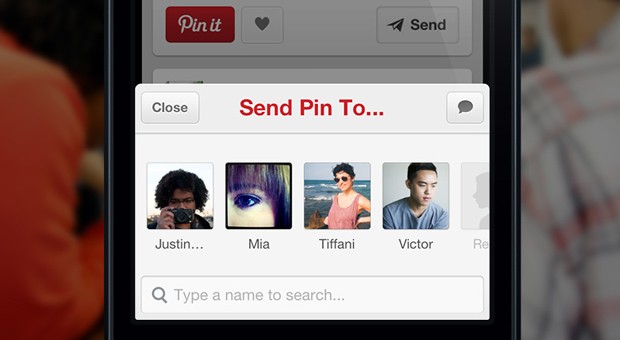
    The Pinterest app got updated, along with a tiny overhaul of the mainframe, now allowing users to send pins directly to their friends. On the web however you can only email the pins as of now, the send pin option  is currently only available to mobile app users. 

    2013051602


    Have you ever seen a pin you knew a certain friend or family member would love? Now you can send pins directly to your friends and fellow pinners from the web or your phone. You can even include a message to give it a more personal touch!

    Just tap Send from either web or mobile to send a pin. You can send pins to fellow pinners (if you both follow each other), Facebook friends, or email contacts. We’ll show you the most recent people you’ve sent pins to for easy access.


    [Pinterest]

  • Newly Discovered Code In Google Page Hints At Google Now For Web

    Newly Discovered Code In Google Page Hints At Google Now For Web

    Google Now is arguably the single best feature found in Android Jelly Bean, and soon, it seems, it will also be added to Google’s homepage. Some code from a page that’s tested by Google offers more information about this feature.

    Google Now

    Google Now brings you search results before you even go looking for them. Just swipe up, inside of Google’s search app, and Google Now activates. From there, the Google search app delivers today’s weather, your Google Calendar appointments, directions to home or work (depending on what time of day it is), a heads up to nearby events, the score from your favorite sports team’s latest game, boarding passes, package tracking, dinner reservations and a lot more.

    Source code for the page in testing encourages you to, “get started with Google Now,” because it provides, “just the right information at just the right time.” It has the option to change your home and work locations as, “Google Now uses your Home location to show relevant information like weather, traffic conditions, and nearby places.”

    As TechCrunch reports, previous discoveries have indicated that Google Now is probably being worked on for Chrome desktop browser integration, and for inclusion in Google’s iOS search app. But bringing it to the Google homepage means it’ll be broadly accessible. It also means Google will have an opportunity to deliver more via its homepage, sort of like an iGoogle, but hopefully better at its job of providing you with relevant, personalized content.

    There are also plenty of references to “now_card.”

    Google Now on the internet, yes please!

    [TechCrunch, Engadget]

  • Government Blocks Facebook, YouTube in Kashmir

    Government Blocks Facebook, YouTube in Kashmir

    There are reports that the Indian government has blocked Facebook and YouTube in Kashmir. The story was first reported by GreaterKashmir which said that, ISP companies blocked social networking sites including Facebook and YouTube in Kashmir without any official directive the state government.

    The cellular companies have also blocked GPRS facilities on the mobile telephones causing immense inconvenience to the subscribers.  Greater Kashmir received over a dozen telephone calls from different areas of the Valley, complaining that the internet service has been blocked by companies including BSNL, Reliance, Aircel, Airtel and Vodafone.

    It was previously reported that the certain URLs with offensive content had been blocked, but it now seems that access to the entire websites have been restricted. Last month the Government of Jammu & Kashmir had directed service providers to ensure that the controversial YouTube video was not accessible from the state.

  • Microsoft Releases Internet Explorer Security Bugfix

    Microsoft Releases Internet Explorer Security Bugfix

    Microsoft has released a temporary software fix for a bug in its Internet Explorer web browser. Cybercriminals used the flaw to install the Poison Ivy trojan on users’ computers. This piece of malware can steal data or take remote control of a PC.

    [quote]”Earlier this week, an issue impacting Internet Explorer affected a small number of customers. The potential exists, however, that more customers could be affected… On September 21, we will release a cumulative update for Internet Explorer through Windows Update and our other standard distribution channels,” Trustworthy Computing Director Yunsun Wee said on the Microsoft Security Response Centre website. [/quote]

    The solution will be automatically installed on PCs running on Microsoft’s Windows operating system if the machine is set up to receive important updates, Wee added. 

    Microsoft had began offering a temporary patch for the problem on September 19. 

    “We have released a Fix it (on September 19) that is available to address that issue. This is an easy, one-click solution that will help protect your computer right away. It will not affect your ability to browse the web, and it does not require a reboot of your computer,” Wee said. 

  • Pocket Sized Wireless Router To Use 4G!

    Pocket Sized Wireless Router To Use 4G!

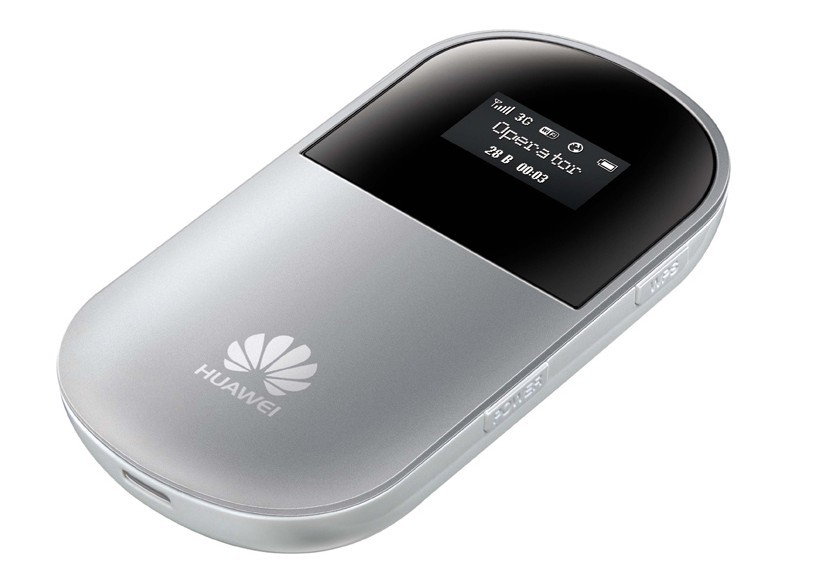
    In an attempt to make 4G (which is four to 10 times faster than 3G) entry affordable for customers, some Indian 4G operators are going to offer pocket-sized Wi-Fi routers which would enable the existing EDGE or 3G-enabled smartphones, which are available at one-fourth the price of a 4G device, to use high-speed internet. The only requirement: These phones have to be Wi-Fi-enabled. Vendors say the Wi-Fi routers are expected to be sold at around Rs 2,500 and when fully charged, the router can work for the entire day.

    As many as five people or an individual with multiple devices (for instance, a mobile phone and a tablet) can get connected at the back-end through the router to a 4G network. In simple terms, it means that an Apple enthusiast can save money by just buying a Wi-Fi-enabled iPad rather than a 3G or 4G enabled model which is much more expensive.

    Currently, the number of 4G devices is limited across the world and they are available at around Rs 20,000 and above — virtually unaffordable to most customers. But smartphone prices have dropped to as low as Rs 5,000 and as most of them are Wi-Fi-enabled, customers can continue to use them for making voice calls as well as surfing data on 4G.

    [quote]“We already have pocket-sized routers and surely offer them to Indian operators,” says an executive of China’s Huawei Technologies, which manufactures the Wi-Fi routers:[/quote]

    According to data available with the Indian Cellular Association (ICA), there are over 50 to 60 million Wi-Fi-enabled phones in the country, which constitute over 10 per cent of the total phone ownership base. With over three million smartphones being sold every month, this number will only grow. However, according to telecom operators, the number of phone owners using Wi-Fi as a service would not be more than five per cent — it is this market that 4G operators would tap.

    Attempts have been made to use the Wi-Fi router model in 3G, too. Tata Teleservices, for instance, offers a pocket sized device for Rs 5,000 which would create a hub and can be used for five devices. However, operators and telecom technology providers say a similar model in 3G has been constrained by the limited amount of spectrum available — GSM operators have only 5 MHz while CDMA players are asking for more spectrum.

    In comparison, 4G players have over 20 MHz of spectrum. Experts say they also have to create a robust backbone to support the strategy which would include building a large fibre optic backbone — an area where Ambani’s Reliance Industries Ltd is now investing in.

    [Business Standard]

  • Google, Facebook Working on India Request to Remove Content

    Google, Facebook Working on India Request to Remove Content


    According to the Wall Street Journal, Facebook and Google are working on requests from India to remove from their web sites “inflammatory and hateful content” that New Delhi blames for sparking a mass exodus of people from several cities.

    Tens of thousands of panic-stricken students and workers from northeast left for home last week, spurred by rumors they would be attacked in retaliation for communal violence in Assam that left at least 78 people dead.

    India on Monday blocked as many as 245 Web pages for hosting video clips and other content that the authorities said were distorted and were used for spreading the rumors.

    The government is wary of social networks being misused for inciting violence and has asked companies including Google, Facebook, Twiter Inc. and Microsoft Corp. to remove such content from their websites.

    Facebook, which has about 50 million users in India, acknowledged receiving the requests and said it is working through those requests and responding to the agencies.

    [quote]”Facebook will remove content which breaches our terms,” as defined in its agreement with its users, it said in a statement.[/quote]

    The U.S.-based company said it is encouraging its users to flag such content through its website “so that we can investigate and take action fast.”

    [quote]Search-engine giant Google, which provides services such as YouTube and Orkut said: “We understand the gravity of the situation… and continue to work closely with relevant authorities.”[/quote]

    Content intended to incite violence is prohibited on all Google products, the company said in a statement.

  • India ranks No.2 in Google search queries for education

    India ranks No.2 in Google search queries for education

    India ranked second in the number of education queries on Google, the search engine major said today.

    India was ranked 8th in 2008, and is now behind only to the US, reveals a study titled ‘Students on the web’ compiled by Google India. The study was compiled by combining Google search query patterns and an offline research conducted by TNS Australia on behalf of Google India

    [quote]“With over 60 million Internet user population in India being in age group of 18-35, educational related search queries are exploding on Google. Our core objective behind compiling this study was to understand the impact Internet is having on this young population with regard to education related decision making by the students,” Google India Vice President and Managing Director Rajan Anandan said.[/quote]

    Education related queries on Google in India are growing at over 46 per cent year on year that highlights strong demand for information on institutes and courses that are available in the country.

    Out of all education related search queries on Google, over 40 per cent of queries were for higher education courses and institutes.

    Search queries from mobile phones have considerably grown showing a growth of over 135 per cent and amounting to over 22 per cent of all education related search queries.

  • Google unveils world’s fastest Internet connection

    Google unveils world’s fastest Internet connection

    Internet giant Google has unveiled what it says is the world’s fastest internet connection through its ultra-high speed service, offering lightning-fast access of one gigabit per second.

    The service, which uses optical fibre to deliver speeds far in excess of traditional web services, offers speeds faster than almost anywhere else on Earth.

    After being chosen more than two years ago by Google as the place to unveil its fledgling Google Fiber gigabit-speed Internet and cable television services, residents of Kansas City are already signing up to be the first customers now that Google has started to take preregistrations.

    Google Fiber’s ultra high-speed connections and television offerings are aimed at surpassing those of current providers, allowing users to search live channels, Netflix, YouTube, recorded shows and tens of thousands of hours of on-demand programming.

    However, no phone service is available.

    “The phone is really a 1940s thing. Why have a landline? It’s sitting there, you use it once every two weeks,” Mr Pichette said.

    Google said it also intends to roll out product packages for businesses, but would not provide details.

    Google Fiber includes more than 100 networks and costs $120 a month for a package of TV, 1 gigabit per second Internet speeds and 1 terabyte of cloud storage.

    “People are going to have high expectations for this. The worst thing they can do is come out and disappoint.” said Mr Ben Schachter, an analyst with Macquarie Research.

    Google is also offering an Internet-only package priced at $70 a month. The download speeds would be around 1 gigabit a second, according to Google executives.

    Google is charging a $300 installation fee, saying consumers should treat it as a “home improvement” cost.

iGyaan Network
Privacy Overview

This website uses cookies so that we can provide you with the best user experience possible. Cookie information is stored in your browser and performs functions such as recognising you when you return to our website and helping our team to understand which sections of the website you find most interesting and useful.