Medical health has been undergoing a lot of advancements over recent times, with the technology spanning to newer areas every day. Researchers and Scientists are using DNA modification techniques to cure acute skin diseases, whereas a technique called immunotherapy is being implemented to treat leukaemia (blood cancer) and forms of lymphomas. As per recent news, Israeli Researchers fabricated the world’s first three dimensional, or 3D-Printed Heart.
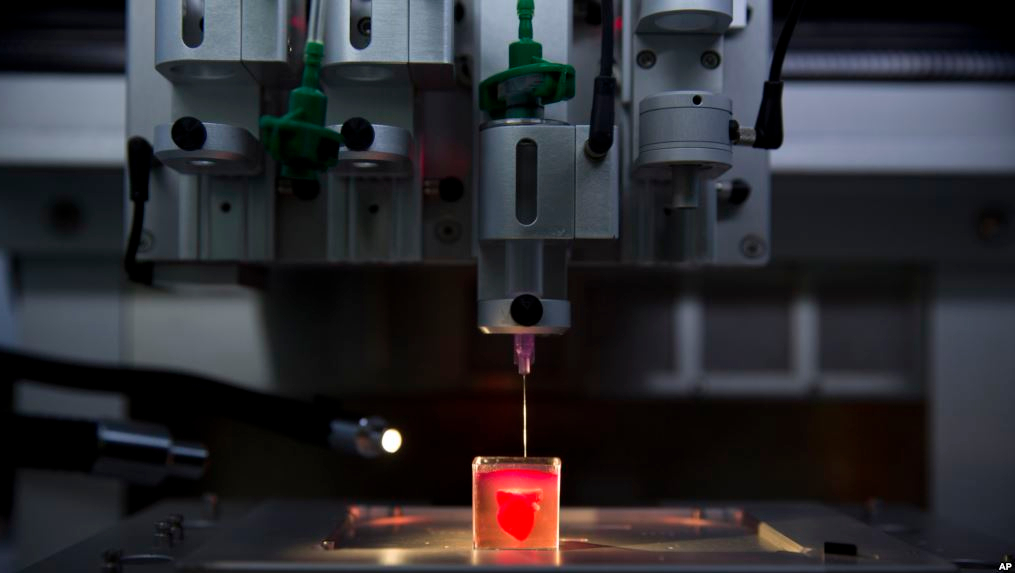 Using a patient’s own cells, the researchers from Tel Aviv University created the heart on a high resolution 3D printer. The university has announced their success story while showcasing the printed heart. The printing experiment was deduced as one of the most major medical breakthroughs to date. The research findings were published in the Journal of Advanced Science. The team involved in the experiment was led by university professor Tal Dvir.
Structure Of The 3D Printed Heart
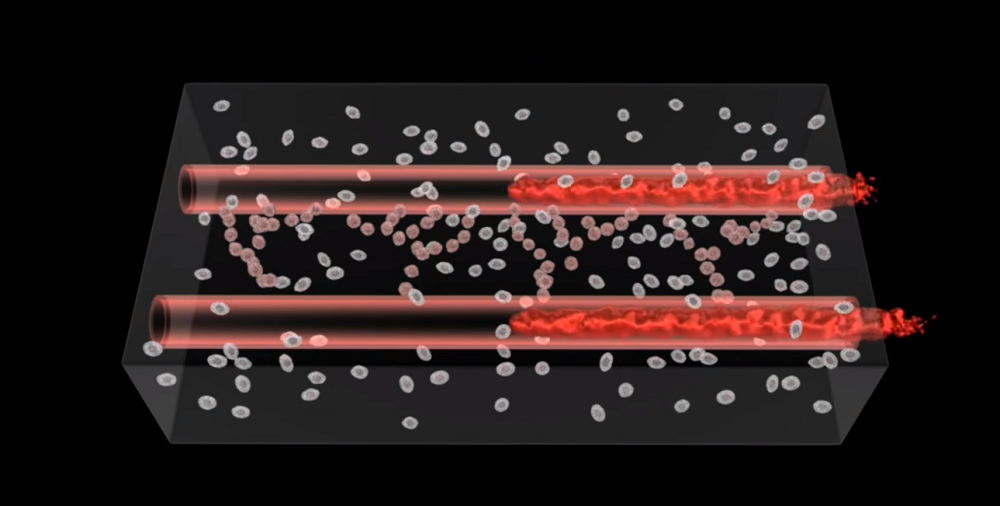
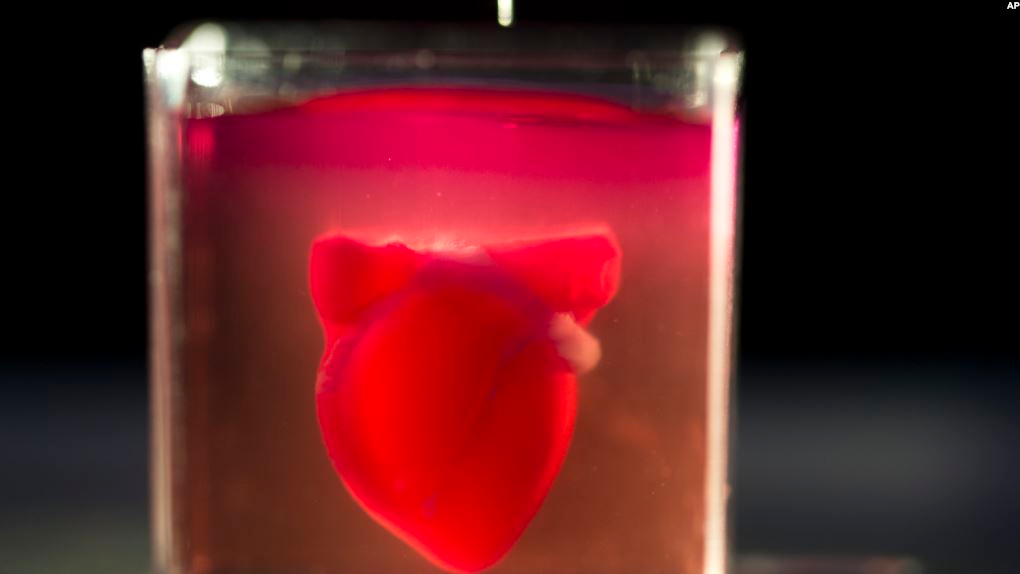 As per Tal Dvir, this was actually the first time that human cells were incorporated with 3D printing technology to formulate a complete replica of a heart. The 3D printed heart is design to perform in the real world, so it comprises of blood vessels which help the heart to pump blood. Previously, only non-vessel tissues could be printed using the combination of medical methods and technology, but a new technique adopted by the researchers made it possible to design a life-like 3D-printed heart. Fatty tissue from patients was used as the “fuel” or “ink” of the 3D printer.
Furthermore, the lead researcher added that the heart was the size of a rabbit’s heart, and therefore cannot be transplanted into a full-sized human body. However, a full-human-sized heart can be developed quite soon because the technology used to create differently-sized 3D-printed hearts is essentially similar. using the patient’s own cells will ensure that the body’s immune system will not reject a transplanted organ.
The Future Of Organ Transplants
Also Read: Everything We Know About The OnePlus 7 And 7 Pro
3D printing was previously tested with weapons, cars and even huge parts of commercial-level machines. Using the same technology for the advancement of medical health is a much better implication of the aforementioned technology. This will help to cure heart diseases worldwide, with heart transplants becoming fairy accessible and cheaper. Looking at the progress as of now, more research and development will ensure that more body organs can be 3D printed using the same method. The researchers say that within the next ten years, organ printers will be fairly accessible all across the world’s hospitals. The implications of this will allow to replace essentially any body organ, joint or valve. This could help terminally ill patients survive longer or even better still, be fully cured. The future where the human machine is repaired by spare parts may be nearer than we imagined.