Tag: memory

  • Google May have Forgotten to Announce One Big Android M Feature

    Google May have Forgotten to Announce One Big Android M Feature

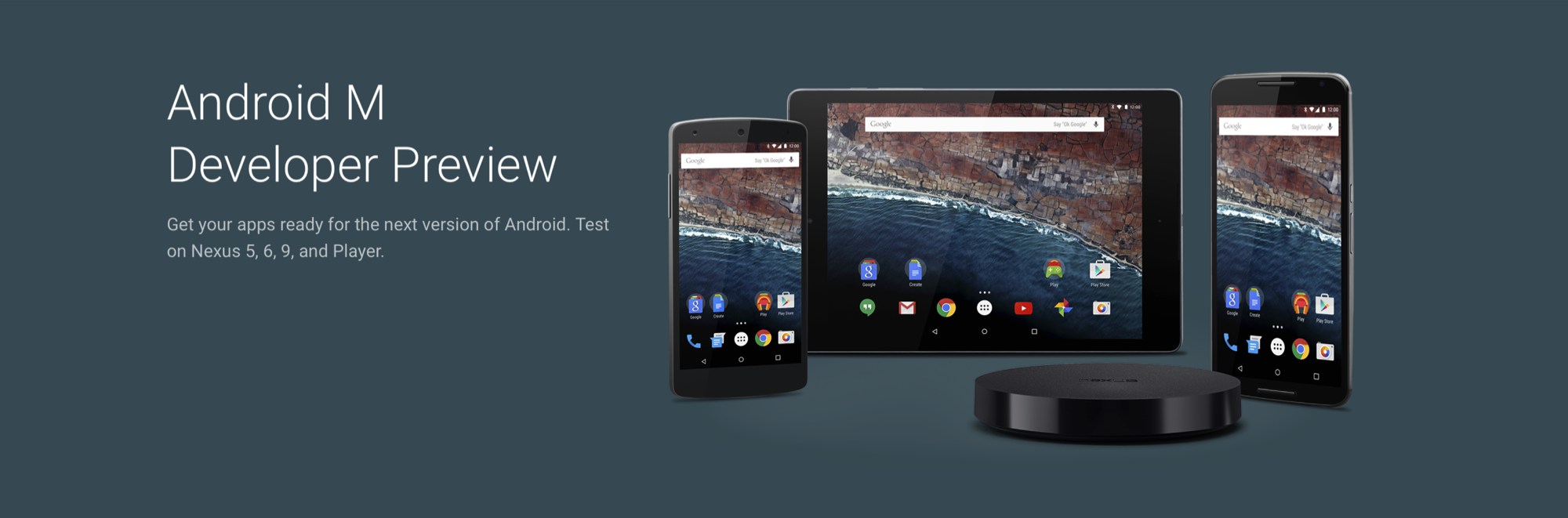
    Despite all the announcements made at Google I/O for the new Android M OS , Google left out a set of updates that may be slightly more crucial to some people. With the developer preview of Android M now available to those with Nexus devices, some of the new features we saw are interesting.

    However, one big thing that will affect every Android phone buyer in India is the new handling of microSD storage. With Android M, all new handsets will have the ability to turn microSD card storage into system memory. This is a very big deal, especially because it will make buying a larger capacity smartphone redundant. Companies often charge premiums for higher capacity variants of the same hardware, differentiating them only on the inbuilt storage.

    Google Now Launcher
    Google Now Launcher

    Sources tell us that Samsung intentionally left out microSD card storage from the Galaxy S6 and S6 Edge to earn premiums on higher capacities. They also did this because they were aware of this feature being launched in the next update of Google’s Android operating system. If Samsung had given the ability to install a microSD on the Galaxy S6 and S6 Edge, after the launch of Android M and Samsung’s update, it would have meant either lower earnings on the higher storage variants or a halt in sale all together as people would get the cheapest and then install a microSD.

    Android M Developer

    Here are the other hidden features of Android M:

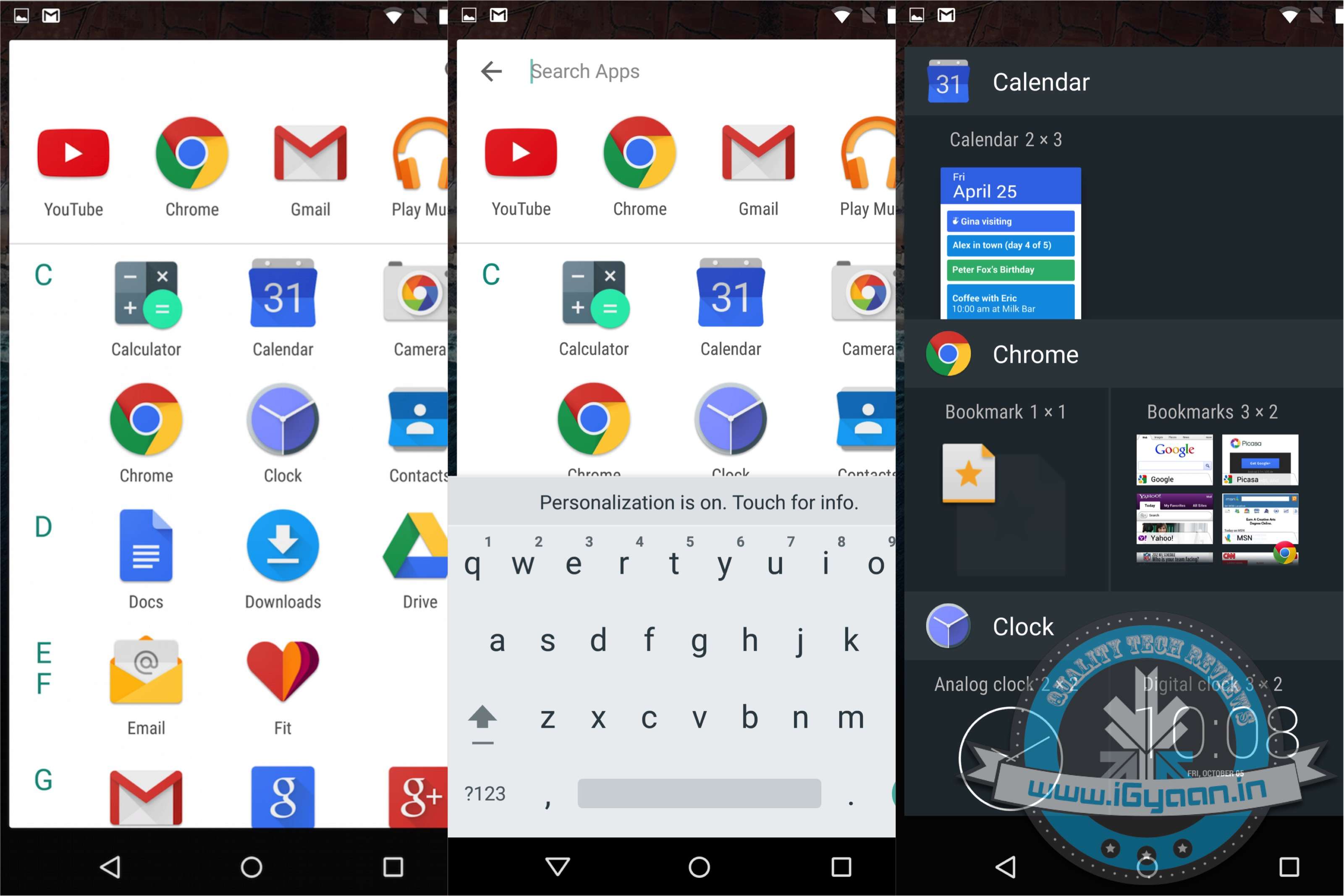
    1. Uninstall apps using the Google Now Launcher. Long tap any app and drag up and right.
    2. Head over to Settings > Device > Apps > Advanced > Memory  to visit the RAM Manager. This feature lets you seethe performance of each App on your device per the RAM available on the handset. This nifty feature also allows you to kill Apps that consume too much memory.Android M screens 0
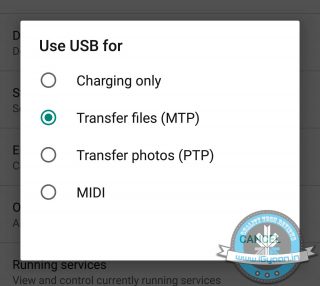
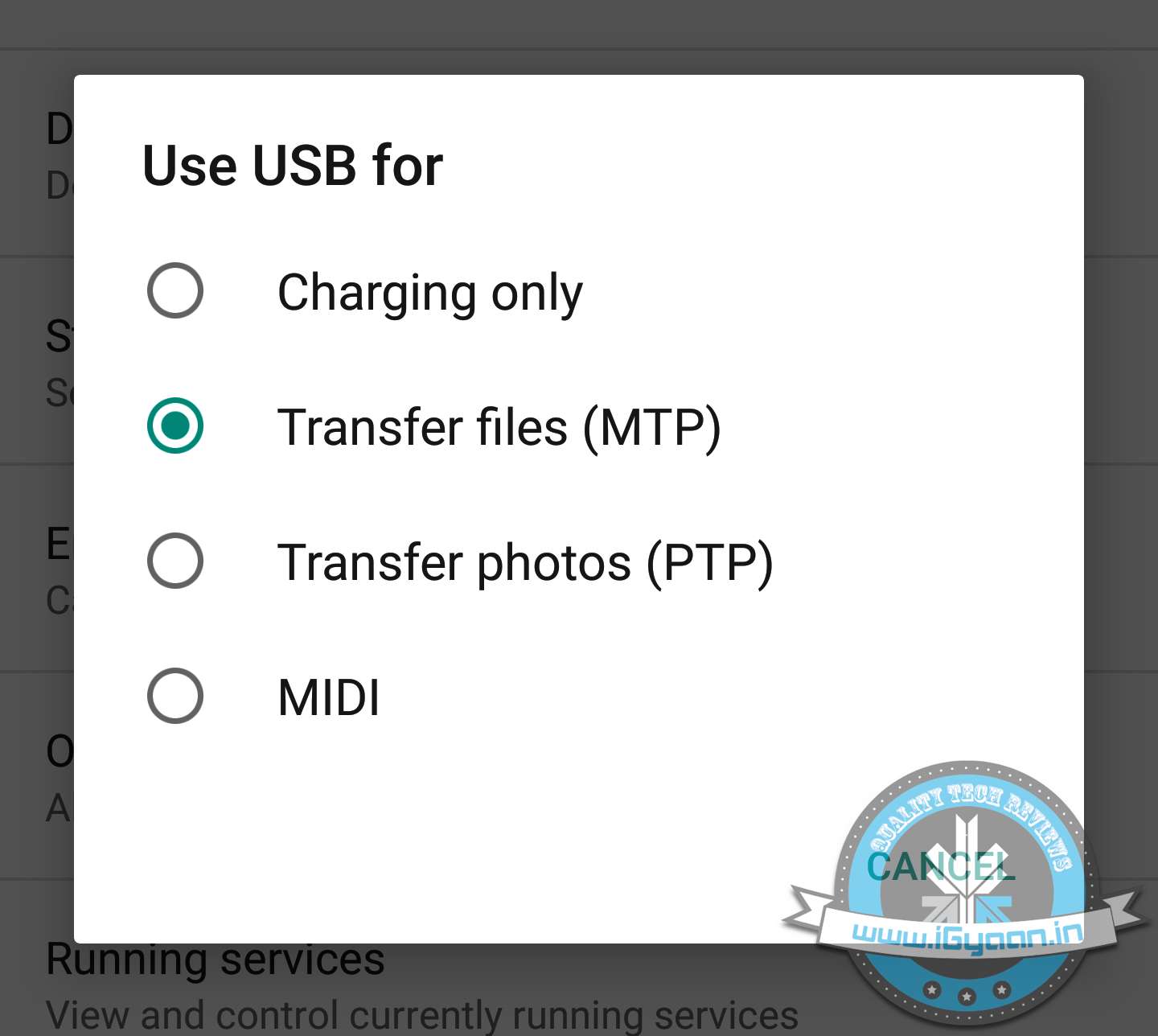
    3. Support for MIDI devices: a feature that budding musicians have had on the iOS devices for a while now comes to Android and will allow you to attach Keyboards and DJ decks that support MIDI connections.
    4. USB OTG is also standard, and all devices with Android M will support USB OTG. This mixed with the new microSD management will essentially end the high price variant devices.
      multi window
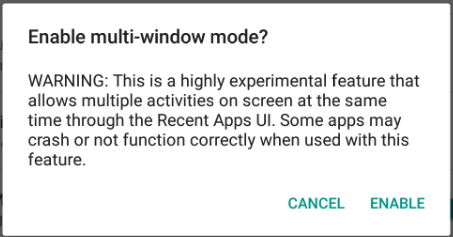
    5. Multi-window support can also be enabled by going through a slightly back end process.
    6. Hotspot 2.0 allows you to create Wireless Hotspots on both the 2.4 GHz and 5 GHz bands.
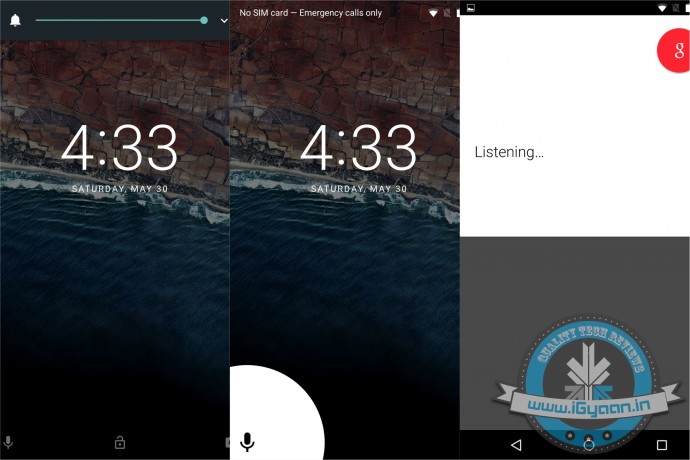
    7. Swiping from the bottom left to  right on the Lock Screen will now launch Google Now Voice search vs the dialer in Android Lollipop.
      Android M screens 1
    8. The new Doze feature is highly customisable and can be turned on or off on a per app basis. Allowing you to save battery on the usage of apps you do not need in the background.


  • Indian Government to set up cloud storage for storing critical data

    Indian Government to set up cloud storage for storing critical data

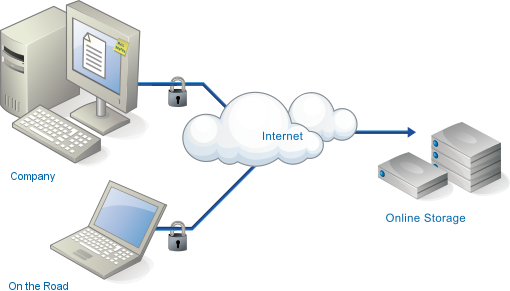
    While our cyber security experts fret over our below-par security standards, the Indian government is planning to set-up a cloud network storage to facilitate the storage of critical data. 

    According to the Economic Times : 

    Department of Information Technology is planning to set up a national cloud based network that connects all state data centers which would make that the backbone of national e-governance plan, which when completed would deliver many government to citizen and government business services via the internet. In effect, each of the 28 states and 7 union territories will now have a private cloud of their own. The Department of IT has invited proposals from IT companies like Hewlett Packard (HP), IBM, Cisco (CSCO) and Dell to set up and maintain private clouds in each state. The move may cost the government less than (around 100 million rupees), and will help the exchequer prevent waste of money on duplication of resources.

  • Apple acquires Anobit for $500 million, will set up R&D in Israel

    Apple acquires Anobit for $500 million, will set up R&D in Israel


    Apple has consumed yet another piece of the puzzle in a bid to have all in-house manufacturing. Apple uses all Nand Flash storage in their iDevices, including iPod, iPad and the iPhone, an acquisition of a company that manufacturers this storage was an obvious step from the self sustained giant.  Apple has bought Anobit for a straight sum of US $ 500 million, with aims to lower costs and improve efficiency in their manufacturing process.

    [threecol_one_last]

    “Welcome to Israel, Apple Inc. on your [first] acquisition here. I’m certain that you’ll benefit from the fruit of the Israeli knowledge.”

     [/threecol_one_last][threecol_two_last]

    Apple is also planning to set up its first off-US Research & Development lab in Israel, with no confirmations from either sides of the deal. Apple is expected to come clean in its next financial report, where it shall disclose billions of dollars in earnings and some million spending.

    [/threecol_two_last]

  • SanDisk releases Extreme Pro SDXC, Mobile Ultra microSDXC, new Cruzer USB sticks (PR)

    SanDisk releases Extreme Pro SDXC, Mobile Ultra microSDXC, new Cruzer USB sticks (PR)

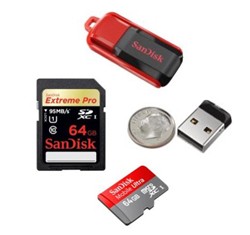
    SanDisk today announced its new SDXC and USB flash products, which should be available in stores from October.

    • The Extreme Pro SDXC with 95MB/s read  90MB/s write
      starting at $110(4500) for 8GB goes up to 64GB 
    • The Mobile Ultra range  microSDXC for  phones and tablets
      unto 64GB, with 30MB/s transfer rates and a starting price of $25(1100) for 4GB. 
    • Cruzer Fit and Cruzer Switch USB sticks
      $20 (1000) 


    [toggle title_open=”Press Release” title_closed=”Press Release” hide=”no” border=”yes” style=”default” excerpt_length=”0″ read_more_text=”Read More” read_less_text=”Read Less” include_excerpt_html=”no”]SANDISK ANNOUNCES SUITE OF RETAIL PRODUCTS THAT CAPTURE, SHARE AND PRESERVE DIGITAL CONTENT

    Introduces professional-grade imaging card with fastest write performance of any SDTM card to date

    Ships 64GB microSDXCTM card-can double phone and tablet storage

    Creates new SanDisk product category of devices that are designed for long-term data preservation
    MILPITAS, Calif., September 14, 2011-SanDisk Corporation (NASDAQ: SNDK), a global leader in flash memory storage solutions, today unveiled a broad lineup of new retail products and introduced a new preservation solutions category. SanDisk’s product portfolio addresses all market segments-from mobile phones and cameras to notebooks and tablets-and use cases ranging from entry level to professional.

    “Our flash storage solutions help consumers capture more photos, load their mobile apps faster, share exciting moments with friends and preserve their memories for generations to come,” said Bob O’Keefe, vice president, retail marketing, SanDisk.

    Preserve the Memories

    SanDisk® Memory Vault: SanDisk introduced a new product that is tested to preserve images in their original quality for up to 100 years1. The SanDisk Memory Vault provides consumers with a convenient, reliable way to pass down their images for generations to come-a photo album for the digital age.

    SanDisk released the results from an online survey conducted on its behalf by Harris Interactive from July 28-August 1, 2011 among 2,294 U.S. adults aged 18 and older2. The survey found that 79 percent of U.S. adults who have digital photos plan on passing them down to future generations. Photos are so precious that 64 percent of U.S. adults would not consider destroying their family photo collection for any amount of money, not even for one million dollars.

    Valuable photos deserve reliable storage solutions. SanDisk developed the SanDisk Memory Vault using ChronolockTM technology, which incorporates the key elements of advanced solid-state storage to create a proprietary memory management solution.This allows the device to provide consumers with peace of mind that their precious photos and videos will be preserved for up to 100 years. The SanDisk Memory Vault comes in 8 gigabyte3 (GB) and 16GB capacities carrying MSRPs of $49.99 and $89.99. To learn more about the online survey and the SanDisk Memory Vault, click here.

    Capture the Moments

    64GB SanDisk Extreme® ProTM SDXCTM UHS-I Card: SanDisk doubled the performance and capacity of its professional-grade imaging lineup to create a new SD card based on the latest SD 3.0 specification’s Ultra High Speed (UHS) bus architecture. The card offers the fastest write performance of any SD card in the world to date and is ideal for imaging enthusiasts using UHS-enabled cameras.

    The card’s up to 90 megabyte per second (MB/sec)4 write speeds let photographers capture a series of RAW images using burst mode, and its UHS Speed Class 1 rating can record Full HD videos5. The card features up to 95MB/sec read speeds capable of supporting transfer of photos to a computer in half the time. SanDisk Extreme Pro SDHCTM and SDXCTM UHS-I cards come in 8GB to 64GB capacities with MSRPs starting at $109.99.

    64GB SanDisk® Mobile UltraTM microSDXCTM Card: SanDisk’s new 64GB microSDXC card can double the capacity of even the most advanced smartphones and tablets. The UHS-based, high-capacity card features up to 30MB/sec4 transfer speeds and offers the Class 6 performance needed to capture Full HD videos. The card is compatible with any tablet or smartphone equipped with a microSDXC card slot.

    Mobile phone sales are expected to reach 1.7 billion in 2014, and the majority of these handsets will include microSDXC card slots, according to Strategy Analytics, Slotted Phone Shipments Forecast, 12/10. Mobile phones allow consumers to create and enjoy an increasing amount of digital content, ranging from user-generated Full HD videos to full-length feature films and videogames. High-capacity mobile memory cards provide the storage expansion consumers need to keep up with the explosion of digital content.

    SanDisk Mobile Ultra cards come in capacities ranging from 4GB to 64GB to meet a variety of needs, with MSRPs starting at $24.99.

    Share the Experiences

    Cruzer® FitTM and Cruzer® SwitchTM USB Flash Drives:

    SanDisk’s new Cruzer Fit USB flash drive is about the size of a
    dime, fitting easily into USB-compatible tablets and notebooks for convenient storage expansion. The drive comes in 4GB to 16GB capacities with MSRPs starting at $24.99.

    SanDisk’s new Cruzer Switch USB flash drive features a cap-less, slider-less, flip-top design for easy portability and comes in 2GB to 32GB capacities with MSRPs starting at $19.99.

    SanDisk® SecureAccessTM Software: SanDisk offers encryption and online backup features (up to 2GB optionally available*) on almost all of its retail USB drives. The software creates a password-protected** private vault on the drive that lets consumers share the files they want while protecting sensitive data.

    ImageMate® All-in-One USB 3.0 Reader/Writer: Based on USB 3.0 interface transfer performance of up to 500MB/s***, this card reader/writer reduces transfer time when downloading data from a card to a computer. Outfitted with four card slots, this compact solution supports all major card formats and is backwards compatible with USB 2.0-enabled devices. Its sleek vertical design and small footprint makes this a great choice for stylish and fast photo and video transfer. The reader/write carries an MSRP of $49.99.

    Availability
    The new products are available now at www.sandisk.com and will reach retailers next month.[/toggle]

  • AMD Launches Radeon-branded RAM for Gamers delight

    AMD Launches Radeon-branded RAM for Gamers delight

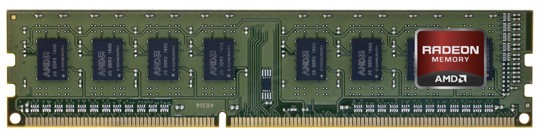
    AMD has revealed plans of selling Radeon branded Ram, aimed at the gaming community. The Ram will be available in three types, the entry-level “Entertainment” sticks (clocked at 1333MHz), followed by speedier “Ultra Pro Gaming” (1600MHz) and an “Enterprise” RAM of an unknown speed.

    AMD claims that the DDR3 module is tested to the highest industry standards. The price of a 2GB stick is about US$ 20 or INR 850/-.

    Although there is no news of India sales.


    Segments

    Entertainment

    ULTRAPRO Gaming

    Enterprise

    Density

    2GB

    Organization

    256M words x 64 bits, 1 rank

    Package

    240-pin socket type dual in line memory module (DIMM)

    PCB height:

    30.0mm

    Lead-free

    (RoHS compliant) and Halogen-free

    Power supply:

    VDD = 1.5V ± 0.075V

    Data rate MT/s

     1333Mbps

     1600Mbps

     TBD

    Timing (CL-tRCD-tRP)

     9-9-9

     11-11-11

     TBD


    [AMD]

  • Is Google Changing The Way We Remember Things?

    Is Google Changing The Way We Remember Things?

    We’ve all been in a situation where we needed to remember a certain factoid about our town/city, our cars, a new concert or movie in town but for the life of us, we just can’t remember. So what do all of us do? We take out our smart phones or goto a computer and open up Google. We search for what we want, supply that information to our peers and promptly forget it again. So what exactly is happening here?

    Researchers from Columbia University, in a study titled “Google Effects on Memory”, conducted a crucial experiment in which participants were asked to type in some trivia into the computer. Half the group was told that the data would be safe and stored in multiple folders, while the other half was told that the data would be erased. Surprisingly, the group that thought the data would be deleted had a better retention of the trivia they entered. Even more surprisingly, the other group did not remember the trivia as well as it remembered exactly where the trivia was stored. Does this resemble a Google keywordish effect to you?

    The study has come to the conclusion that the Internet is acting like a collective Super Long Term Memory for the entire human race. In ancient times, people used to memorize entire histories and texts aided by mnemonic codes like rhymes and metre. Once printing was invented, mankind was liberated from having to perform such tasks. Now that we have the Internet, the effect is much larger. All we have to do is search for what we want and we find it. It seems that our brains are being reprogrammed to remember keywords or tags that would provide the information that we should have remembered in the first place, resembling search engines in their own right. Touché Google, touché.

  • Sandisk launches new 128 GB CompactFlash Card

    Sandisk launches new 128 GB CompactFlash Card

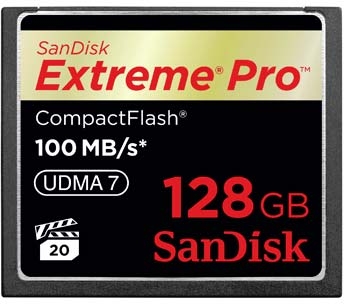
    Sandisk has announced the worlds largest CompactFlash Card. This card is called the SanDisk Extreme Pro CompactFlash card, and features 128 GB of storage and  up to 100 mbps write speeds.

    Features:

    • Up to 100MB/sec write speed enables shorter wait times and faster continuous burst shooting.
    • Video Performance Guarantee4 allows for superior Full HD videorecording at a sustained 20MB/sec write speed.
    • 128GB capacity offers more room for capturing RAW+JPEG photos, sequential bursts, even Full HD and 3D video content.
    • SanDisk’s proprietary Power Core™ controller distributes data across the card more rapidly and efficiently, and the UDMA-7 interface allows for maximum data transfer between card and camera.
    • Best-in-class quality assurance offers photographers peace of mind knowing that the card is backed by rigorous stress, shock, vibration, humidity and moisture testing procedures and a lifetime limited warranty5. The card features RTV silicone coating for added protection.


    The 128GB SanDisk Extreme Pro CompactFlash will be available in the first quarter of this year, and costs US$ 1,499.99 (Rs. 68294.4).

iGyaan Network
Privacy Overview

This website uses cookies so that we can provide you with the best user experience possible. Cookie information is stored in your browser and performs functions such as recognising you when you return to our website and helping our team to understand which sections of the website you find most interesting and useful.