Tag: nano

  • Tata Motors launches eight models including CNG Nano

    Tata Motors launches eight models including CNG Nano

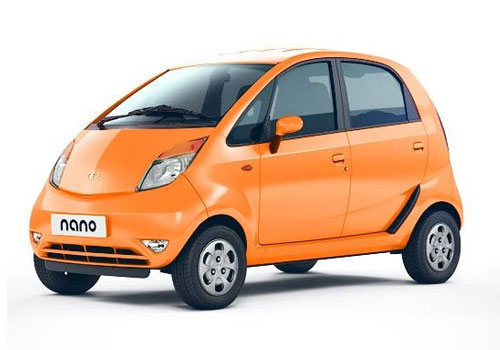
    Tata Motors has launched eight new products across five brands to mark ‘Horizonext’, its new passenger car business strategy, at its plant in Pune. While some models get additional kit and a choice of new colours, the company has also unveiled CNG variants for the Indica, Indigo and the Nano. Horizonext is all about evolution rather than revolution. Which is why all eight products showcased at the company’s plant in Pune encompassing cars and utility vehicles, are refreshes rather than all-new products.

    The Tata Indigo eCS now comes with a new powertrain, a new Feather-shift gearbox and an all new noise, vibration and harshness package. The Sumo Gold gets dual AC, bluetooth and USB connectivity. There is a new Nano with keyless entry, twin glove boxes, a four speaker music system with blutooth, USB and aux-in connectivity. The new nano also features a chrome strip on its hood and a new vent on its boot for better engine cooling. The Nano can now also be customised with personalisation kits.

    Tata

    The Indica is now available in a new range of colours and graphic designs. It also gets a refreshed exterior, dual path suspension set-up, multimedia entertainment options and Feather-shift gearbox with smart-shifter gear technology. Tata Motors also announced the launch of the Safari Storme Explorer edition, which is equipped with a double DIN touchsreen multimedia system, a nudge guard, door visors, explorer decals among other gear.

    The CNG lineup includes the Nano (called emax), the Indica and the Indigo.

    According to Tata Motors, these refreshes mark a new direction for Tata Motors. The company now wants to focus on improving existing technology and fine-tuning it to function better. Improvement in ergonomics, interior quality and features are other focus areas for Tata Motors as part of this strategy along with speed in bringing out new and improved products. The company added that it was its new mission to bring about desirable products that will make sense not just today but in the future as well.

    We expect to see all the updated models as well as the CNG variants in showrooms very soon.

  • 2013 Tata Nano coming this month

    2013 Tata Nano coming this month

    The 2013 Tata Nano is all set to hit the markets next week, however you will be hard pressed to tell the difference between itself and its predecessor. The 2013 Nano comes only with minor cosmetic changes and no significant upgrades.

    The 2013 Nano gets new bumpers and strips of chrome both on the front and rear on what is otherwise a largely unchanged exterior. The rear bumper does get bigger air vents though for better cooling of the engine.

    The noticeable change on the inside is the addition of a glove box, with the rest of the interior staying largely the same except for some colour, trim and fabric changes. The top-end model however will come with an integrated music system (with both speakers placed on the dashboard) with CD, MP3, Aux-in, USB and Bluetooth capabilities. Such additions may make the Nano more appealing to its customer base.

    Other upgrades are largely focused on improving the quality and reliability of the car including a new clutch to replace the highly criticized one on the outgoing model. A few mechanical and electrical upgrades have also been done. The proven 623cc, twin-cylinder engine is carried over from the 2012 model and continues to deliver acceptable performance and impressive fuel economy.

    The 2013 Nano is something of a stepping stone for the much awaited power steering and CNG equipped variants, both of which are expected by the end of the year. The power steering would surely help Tata’s sales as the effort required to park this car due to its heavy steering is well accounted in the automotive world. The new Nano is expected to come with a marginal increase in price.

    [Autocar India]

  • Apple updates iPod nano with multitouch display starting US$ 129 (PR)

    Apple updates iPod nano with multitouch display starting US$ 129 (PR)

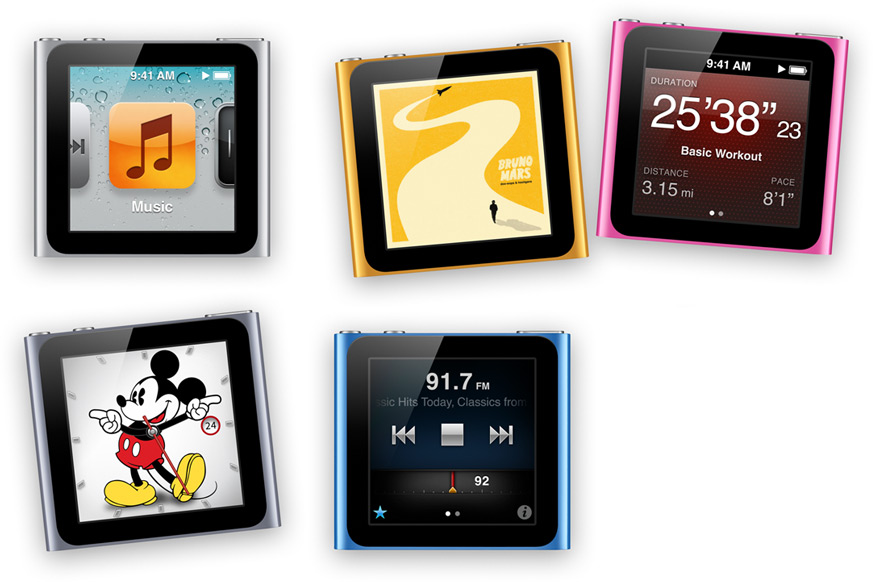
     Apple has updated the iPod nano with a new touchscreen display.

    With tons of watchband accessories that were made available for the last-generation nano.

    Apple has also created 16 new clock faces on the media player.

    The new Nano will automatically begin tracking your walk or run.thanks to the new fitness trainer.

    The new nano is available now and Apple is stocking 7 different colors. The 8GB model is priced at $129 and the 16GB mode is priced at $149.


    [toggle title_open=”Press Release” title_closed=”Press Release” hide=”yes” border=”yes” style=”default” excerpt_length=”0″ read_more_text=”Read More” read_less_text=”Read Less” include_excerpt_html=”no”]Apple Brings Great New Features & More Affordable Pricing to iPod touch & iPod nano

    CUPERTINO, Calif.–(BUSINESS WIRE)–Apple® today announced great new features and more affordable pricing for both iPod touch® and iPod nano®. iPod touch will be available in new black and white models starting at just $199, including Apple’s new iOS 5 and iCloud® services. The new iPod nano is available today starting at just $129 and features a redesigned user interface, 16 new digital clock faces and improved built-in fitness features.

    “iPod has revolutionized the way we listen to music and with over 320 million sold is the world’s most popular music player,” said Philip Schiller, Apple’s senior vice president of Worldwide Product Marketing. “iPod touch, now available in both black and white, is the best selling iPod ever, and with iOS 5 and iCloud it is better than ever.”

    The new iPod touch includes iOS 5, the world’s most advanced mobile operating system, which includes over 200 new features including iMessage™, Game Center, Notifications and Wi-Fi Syncing to iTunes®. iMessage brings the functionality of iPhone® messaging to your iPod touch, so you can easily send text messages, photos, videos and contact information to an individual or group on other iOS 5 devices. It also allows you to easily maintain one conversation across all your iOS devices-for free-with notifications, read receipts and typing indication.* Game Center enhancements include the ability to add photos to your profile, purchase new games from within the Game Center app, and even easier ways to find friends and new games.

    iPod touch also works with iCloud, Apple’s breakthrough set of free cloud services, including iTunes in the Cloud, Photo Stream and Documents in the Cloud, that work seamlessly with your iPhone, iPad®, iPod touch, Mac® or PC to automatically and wirelessly store your content and push it to your devices. When content changes on one device, all your other devices are updated automatically and wirelessly.

    iPod nano now features larger icons for even easier navigation of its intuitive Multi-Touch™ user interface, and you can choose from 16 new digital clock faces, ranging from classic analog looks to your favorite Disney characters including Mickey Mouse and Minnie Mouse. iPod nano now tracks your runs and walks right out of the box with no accessory required, making it even easier to get your fitness program up and running. iPod nano can track the time, pace and distance of your run, the calories you burn, and the number of steps you walk. iPod nano encourages you with motivational real-time voice feedback during your run, available in seven languages, while listening to your favorite music or FM radio station. You can also easily upload workouts to the Nike+ website to set goals, track your progress and challenge friends. The ultra portable iPod nano is available in seven colors including silver, graphite, blue, green, orange, pink and (PRODUCT) RED.

    With the App Store™ on iPod touch, users have access to the world’s largest and best collection of over 500,000 apps, including over 100,000 game and entertainment titles. Customers also have the iTunes Store® at their fingertips, giving them instant access to the world’s largest catalog of over 20 million songs, 85,000 TV shows and 14,000 movies to purchase and download directly to their iPod touch.

    iPod is the world’s most popular family of music players. Apple’s holiday lineup includes iPod shuffle® for just $49; iPod nano with Multi-Touch starting at just $129; iPod touch available in black or white, including iOS 5 and iCloud, starting at just $199; and iPod classic® in a 160GB model for $249.

    Pricing & Availability

    iPod nano is available today for a suggested price of $129 (US) for the 8GB model and $149 (US) for the 16GB model. Both models are available in silver, graphite, blue, green, orange and pink through the Apple Store® (www.apple.com), Apple’s retail stores and Apple Authorized Resellers. The 8GB and 16GB iPod nano (PRODUCT) RED is available through the Apple Store (www.apple.com) and Apple’s retail stores. iPod nano requires a Mac with a USB 2.0 port, Mac OS® X v10.5.8 or later and iTunes 10 or later; or a Windows PC with a USB 2.0 port and Windows Vista or Windows XP Home or Professional (Service Pack 3) or later and iTunes 10 or later.

    iPod touch with iOS 5 and iCloud will be available October 12 in black and white for a suggested price of $199 (US) for the 8GB model, $299 (US) for the 32GB model and $399 (US) for the 64GB model through the Apple Store (www.apple.com), Apple’s retail stores and Apple Authorized Resellers. iPod touch requires a Mac with a USB 2.0 port, Mac OS X v10.5.8 or later and iTunes 10 or later; or a Windows PC with a USB 2.0 port and Windows Vista or Windows XP Home or Professional (Service Pack 3) or later and iTunes 10.5 or later. iOS 5 will also be available as a free software update for iPod touch (third and fourth generations) customers allowing them to experience the amazing new features including iMessage, Game Center, Notifications and Wi-Fi Syncing to iTunes.

    *iMessage requires Wi-Fi.

    Apple designs Macs, the best personal computers in the world, along with OS X, iLife, iWork and professional software. Apple leads the digital music revolution with its iPods and iTunes online store. Apple has reinvented the mobile phone with its revolutionary iPhone and App Store, and has recently introduced iPad 2 which is defining the future of mobile media and computing devices.

    NOTE TO EDITORS: For additional information visit Apple’s PR website (www.apple.com/pr), or call Apple’s Media Helpline at (408) 974-2042.

    © 2011 Apple Inc. All rights reserved. Apple, the Apple logo, Mac, Mac OS, Macintosh, iPod touch, iPod nano, iCloud, iMessage, iTunes, iPhone, iPad, Multi-Touch, App Store, iTunes Store, iPod shuffle, iPod classic and Apple Store are trademarks of Apple. Other company and product names may be trademarks of their respective owners.

    Photos/Multimedia Gallery Available: http://www.businesswire.com/cgi-bin/mmg.cgi?eid=50017267&lang=en[/toggle]

  • Would you buy a 1 Lakh Rs. Nano if it was priced US$ 4.6 Million and slapped with 80KG Gold?

    Would you buy a 1 Lakh Rs. Nano if it was priced US$ 4.6 Million and slapped with 80KG Gold?

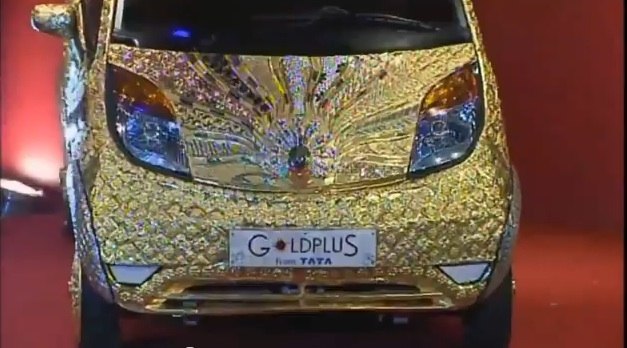
    You read it right, A Tata Nano slapped with 80 Kg of  22 karat Gold along with 15 KG of silver and loads of gemstones. The top speed of the car boils down to 110 KM/hr and the price goes up to 22 crore. Yup a price that is 2200 times the price of the original car. 

    The funny thing here remains however, in a country like ours, taking this ride out for a spin would result in the car dropping back to its original value in a couple of hours.

    Check out the video below.

  • Tech 101: How OLED Displays Work

    Tech 101: How OLED Displays Work

    In our previous article, we explained How Modern LCDs Work. In this article, we’ll be exploring how the new generation of displays based on OLED technology work.


    What Exactly are OLEDs?

    There are a lot of products in the market today ranging from TV’s to Laptops and even Smart Phones that contain an OLED display. But what are these displays and how do they work? OLED stands for Organic Light Emitting Diode. This technology is named after the organic polymers that are used in its construction. For a long time, organic compounds have been assumed to be electrical insulators but new research and manufacturing techniques have allowed the industry to use these polymers for many applications on a vast scale.

    OLEDs are solid-state devices which are composed of thin films of organic molecules which emit light when a current is applied. OLEDs can provide brighter crisper displays that use less power than conventional Light Emitting Diode (LED) and Liquid Crystal Display (LCD) technologies. Another application for OLEDs is in the form of lights to be used in homes and offices. These lights have a long life and are very efficient.


    The Manufacturing Process

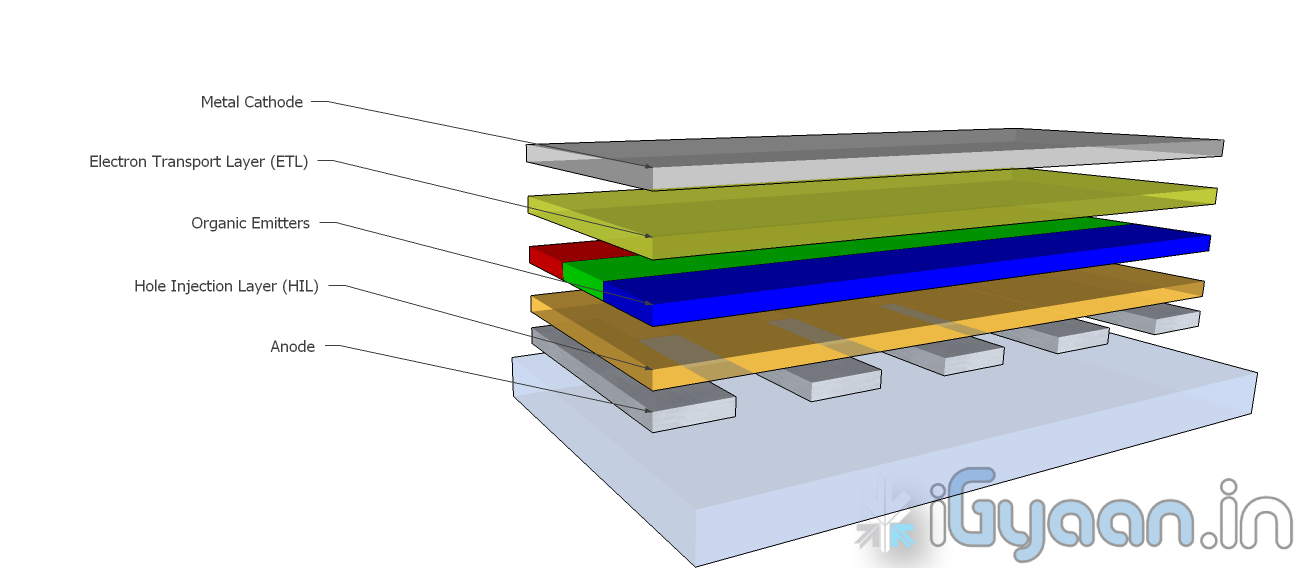
    OLEDs are basically layers of organic material sandwiched between an anode and a cathode and mounted on a substrate. This entire device is usually between 100 to 500 nanometers thick or is about 200 times thinner than a human hair.

    The substrate is usually a sheet of glass which is coated with a transparent conductive oxide which works as the anode. The next layer consists of hole injection material, the organic emitters and the electron transport layer which are together referred to as the organic stack. On top of the organic stack is the inorganic cathode. The device operates as follows:

    • Cathode – The cathode injects electrons into the system when a current flows through the device. It may or may not be transparent.
    • Organic Stack – This layer is made up of different organic polymers that are built up in layers. This is where light is made. The organic stack consists of the following layers:
      • Electron Transport Layer (ETL) – This layer consists of organic polymers or plastics that transport electrons from the cathode to the Organic Emitters.
      • Organic Emitters (OE) – This is a layer that is made up of organic polymers that may or may not be mixed with phosphorescent chemicals.  One polymer used in this layer is polyfluorene.When an electron finds a hole, it falls into the hole and gives up energy in the form of light.
      • Hole Injection Layer (HIL) – This layer is made up of polymers that transport electrons to the anode. This leaves ‘holes’ for electrons transported from the ETL to fill.
    • Anode – The anode removes electrons from the system when a current flows through the device. It is always transparent.

    This is the process by which a single OLED works. To turn them into colour displays, manufacturers place several layers of OEs on a display. There are various methods with which these individual pixels can be turned into a full colour display.


    Types of OLED Displays

    There are several types of OLED Display

    • Passive-matrix OLED
    • Active-matrix OLED
    • Transparent OLED
    • Top-emitting OLED
    • Foldable OLED
    • White OLED
    Passive Matrix OLEDs or PMOLEDs

    PMOLEDs are designed in a hash pattern. The anode and cathode are made in strips that are arranged perpendicular to each other. The points of intersection of the strips of anode and cathode make up the individual pixels where light is emitted. External circuitry is used to control which pixels are on and what colour they emit. The brightness of each pixel is dependent on the amount of current in the system.


    Active Matrix  OLEDs or AMOLEDs

    AMOLEDs have a full layer of anode and cathode materials but they borrow a technology from LCDs to produce a visible display. Sandwiched between the anode and the organic layer is a layer of thin film transistors or TFTs that makes the array. The TFT array is the circuitry that decides which pixel is on and what colour it displays. AMOLEDs are more efficient than PMOLEDs because the external circuitry used to run the PMOLEDs consumes more power. AMOLEDs also have a faster refresh rate which makes them more suitable to larger displays used in televisions and computer monitors.


    Transparent OLEDs or TOLEDs

    TOLEDs are constructed with only transparent  components, and are upto 85% as transparent as the substrate used when they are turned off. When it is turned on, the display still allows light to pass both ways and remains transparent. It can have either an active matrix or a passive matrix. This technology would be perfect for Heads Up Displays and Medical Equipment.


    Top Emitting OLEDs or TEOLEDs

    TEOLEDs are constructed with a substrate that is either opaque or reflective. They are perfectly suited for an active matrix design. They are used in smart-cards.


    Foldable OLEDs or FOLEDs

    FOLEDs are constructed with a highly flexible substrate which could either be a plastic or metallic foil. These types of OLEDs are very lightweight and durable. They are used in cell phones and can reduce breakage. They could also potentially be integrated into fabrics to create smart clothing.


    White OLEDs or WOLEDs

    WOLEDs  emit pure white light that is brighter and more uniform than the light which is emitted by fluorescent lights. . WOLEDs can be made in large sheets and can reduce energy costs massively if used to light homes and buildings due to their low power consumption.


    Advantages and Disadvantages of OLEDs

    OLEDs offer many advantages over the current favorite, LCDs and LEDs.

    • The organic construction of an OLED is much thinner than the many layers required for an LCD or LED display.
    • OLEDs can be built onto a thin plastic substrate which allows them to be flexible instead of the glass used in LCDs and LEDs.
    • Due to its design, an OLED display is much brighter than an LED display. This is because the conductive and emissive layers of an OLED can be stacked several times to produce more light than an LED while still remaining extremely thin.
    • Since OLEDs emit light themselves, they do not require a back-light. LCDs work by selectively  blocking areas of the back-light to produce individual pixels. OLEDs are also much more energy efficient than LCDs because they lack a back-light.
    • As OLEDs are made from plastics, they can be built into large thin sheets which makes them much easier to produce. It is much more difficult to create an LCD display of the same size.
    • OLEDs have a much viewing angle than LCDs because they do not block light in any fashion. Since they produce their own light, they can provide a field of view of upto 170o.

    For all their advantages over LCDs and LEDs, OLEDs have a few problems as well.

    • Red and green OLED films have a very long life of between 46,000 to 230,000 hours while blue OLED films currently have a much shorter lifespan of around 14,000 hours.
    • The manufacturing process for OLEDs is not cheap as of now.
    • OLEDs are not at all water resistant and can easily be damaged on contact with even a few drops of water.


    While LCD and LED technology remains in the mainstream, OLEDs are making headway into the television, computer and mobile segments. Manufacturers and engineers are realizing the potential benefits of using OLED technology for their devices. In the next few years we should see an increase in OLED sales as well as some novel applications of the technology.

    Stay tuned to the Tech 101 segment to learn more about what makes our everyday devices tick.

  • Tata Pixel – The Nano’s High-Tech Cousin

    Tata Pixel – The Nano’s High-Tech Cousin

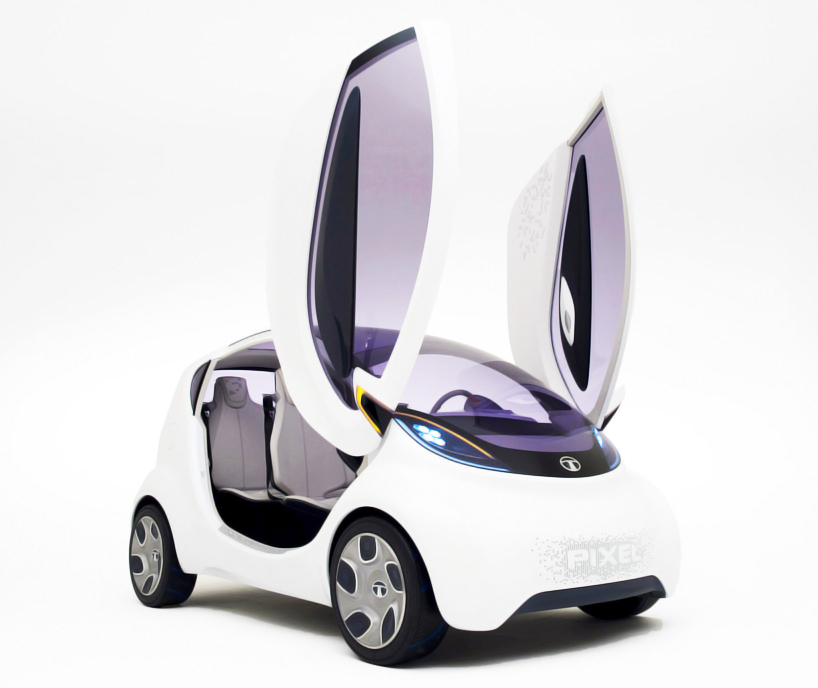
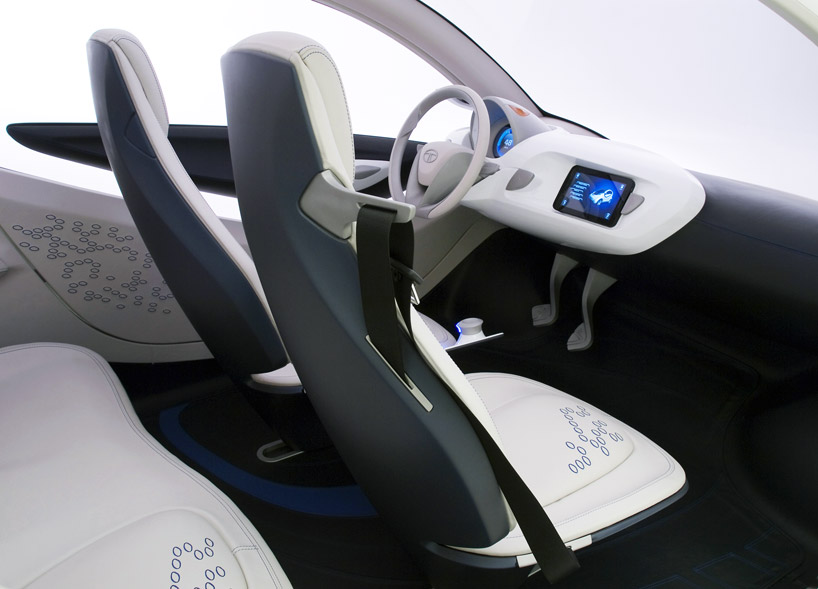
    Everyone must remember the Tata Nano. Well, they’ve come out with a similar high-tech varient for the european market. It boasts high fuel efficiency, ‘zero turn’ technology for minimal turning radius, built-in integration with tablets and smartphones, and an innovative door design. Measuring three meters (9.8 feet) long, the highly efficient ‘pixel’ combines a 1.2L three-cylinder turbocharged diesel engine with stop-start technology and an aerodynamic design to offer a combined cycle fuel economy of 3.4 L/100 km (69mpg), and producing carbon emissions limited to 89 g/km (0.3 lb/mi). ‘Zero turn’ technology makes use of the vehicle’s toroidal infinitely variable transmission to rotate the outer rear wheel forwards and the inner rear wheel backwards as the front wheels turn, producing a turning circle radius of 2.6 meters (8.5 feet).

    We’ll let you decide if they should have launced this in India…

  • The Gecko Nano Pad

    The Gecko Nano Pad


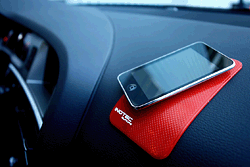
    The Nano Pad is a hand-sized pad that makes use of nanotechnology to create a vacuum system onto which cellphones and other devices stick. One can put it on the car dashboard to hold iPods, mobiles, PDAs, MP3 players, pens, coins or even reading glasses. The pad forms a vacuum seal “like a gecko’s foot”, making your cellphone, camera or other small gadgets “hands-free” while you are driving or busy with something else. The Nano-pad only comes in one size but will stick by being placed on any part of a hard, flat surface. It comes in a variety of colours and can be used indoors as well as in your car. It is said to be heat and cold resistant so we shouldn’t face any issues leaving it in our cars in the Indian summer.


iGyaan Network
Privacy Overview

This website uses cookies so that we can provide you with the best user experience possible. Cookie information is stored in your browser and performs functions such as recognising you when you return to our website and helping our team to understand which sections of the website you find most interesting and useful.