Tag: Octa-core

  • HTC Brings Out The Colourful Desire 820

    HTC Brings Out The Colourful Desire 820

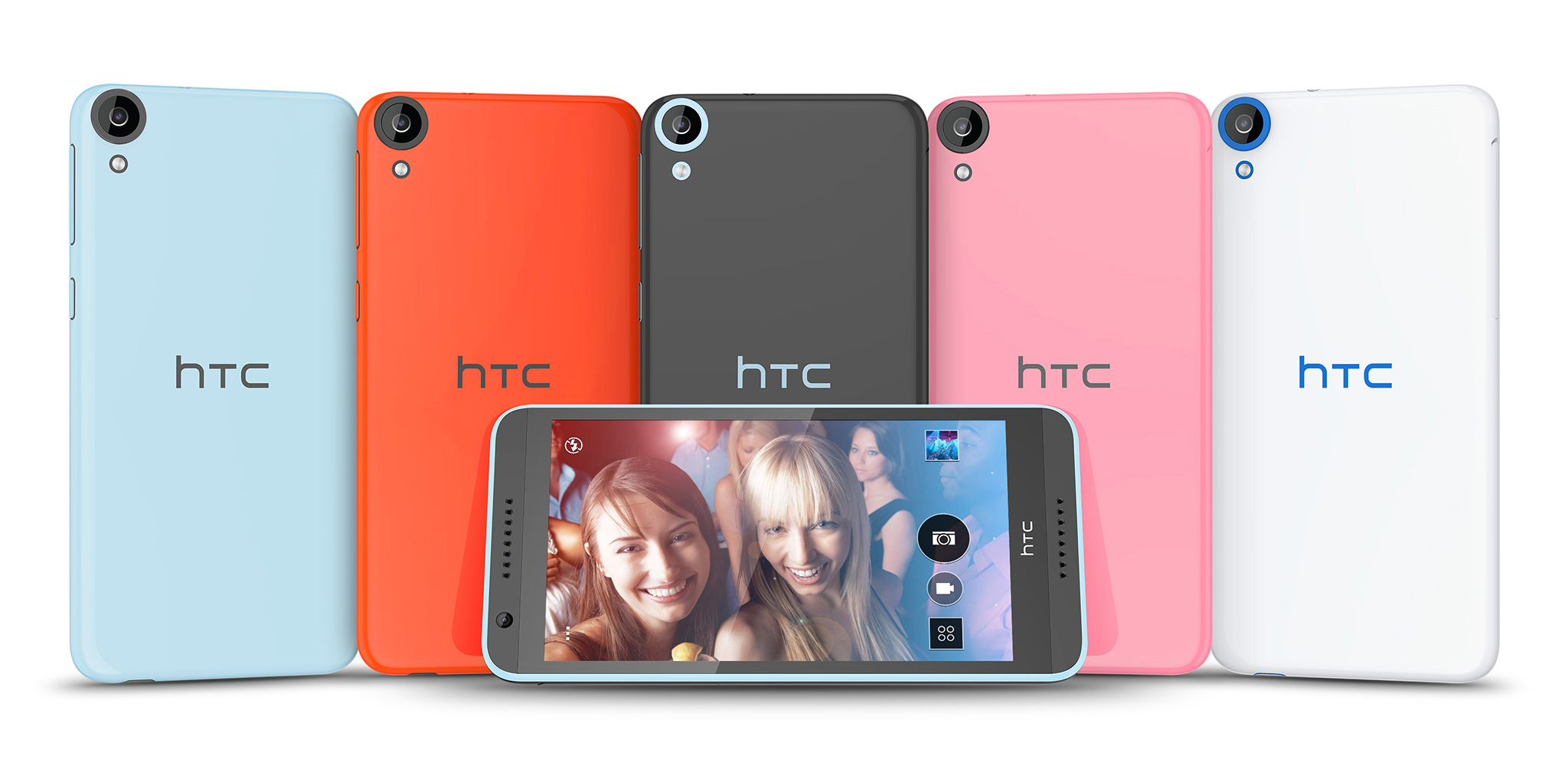
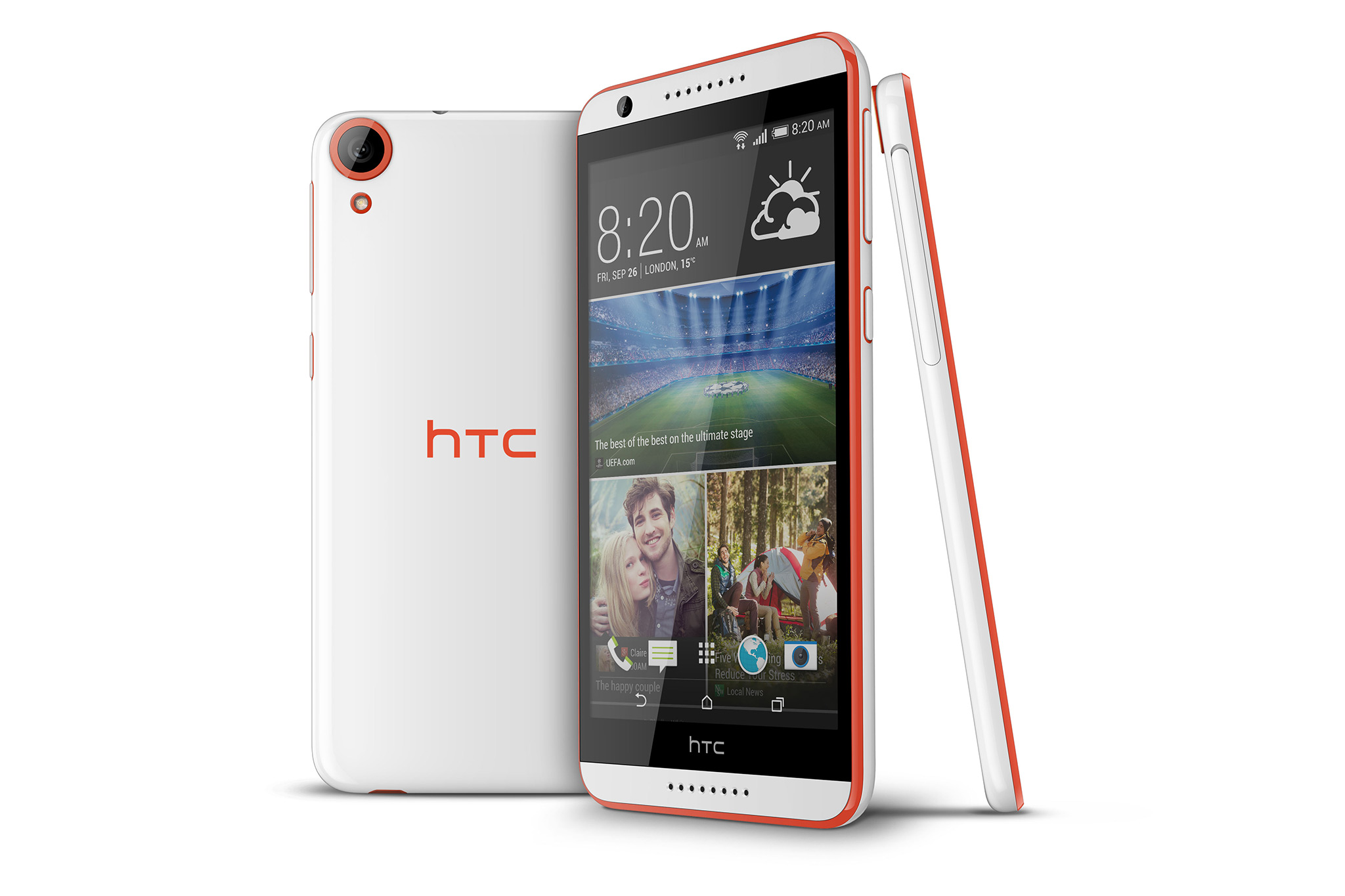
    HTC has had a good year. With the success of HTC One M8 and the Desire line-up, things are looking good for the company. Now HTC is about to bring another phone is its Desire line-up called the Desire 820. The phone was announced at the ongoing IFA event.

    The phone is a looker and comes with a bold two-tone color scheme that makes the device standout. Even the HTC logo on the back gets a different color treatment for each phone color option. The device is made in a unibody, polycarbonate casing that HTC defines as its “double shot color technology.” The color scheme surely has a youthful appeal and is pleasing to the eyes.

    Like the Desire 816 before it, the Desire 820 comes with a 5.5 inch 720p HD screen. The new phone will be one of the first phones to come with a 64 bit Qualcomm’s octa-core Snapdragon 615 chipset. The processor runs on two quad-core chips of 1.5GHz and 1.0GHz. It comes with 2 GB RAM and 16 GB internal storage.

    With the Colors and powerful front camera makes it a youth friendly device.
    The Colors and powerful front camera makes the Desire 820 a youth friendly device.

    The main camera on the device is a 13 MP shooter with f/2.2 aperture. Now the shining glory of this phone is the front camera, it packs an 8 MP camera on the front. This can be a selfie hogs’ favorite toy. Unless, of course, you got the money to enjoy the superior selfie and weefie capabilities that were showcased last night on the Note 4.

    The device is powered through a 2600 mAh battery. HTC says that the phone will be updated with Android L when it comes out. HTC has been one of the first companies to promise the Android L upgrades for most of its devices. It will also hold HTC’s Dual Boomsound front facing speakers. It will also have its version of the dot view case.

    The Desire 820 will come to the markets by the end of September and will be available in glossy and matte colors.  This is one colorful treat, and if priced right, it can prove to be some serious competition for others.

  • Samsung Galaxy Alpha: Samsung’s New Design Philosophy Unveiled

    Samsung Galaxy Alpha: Samsung’s New Design Philosophy Unveiled

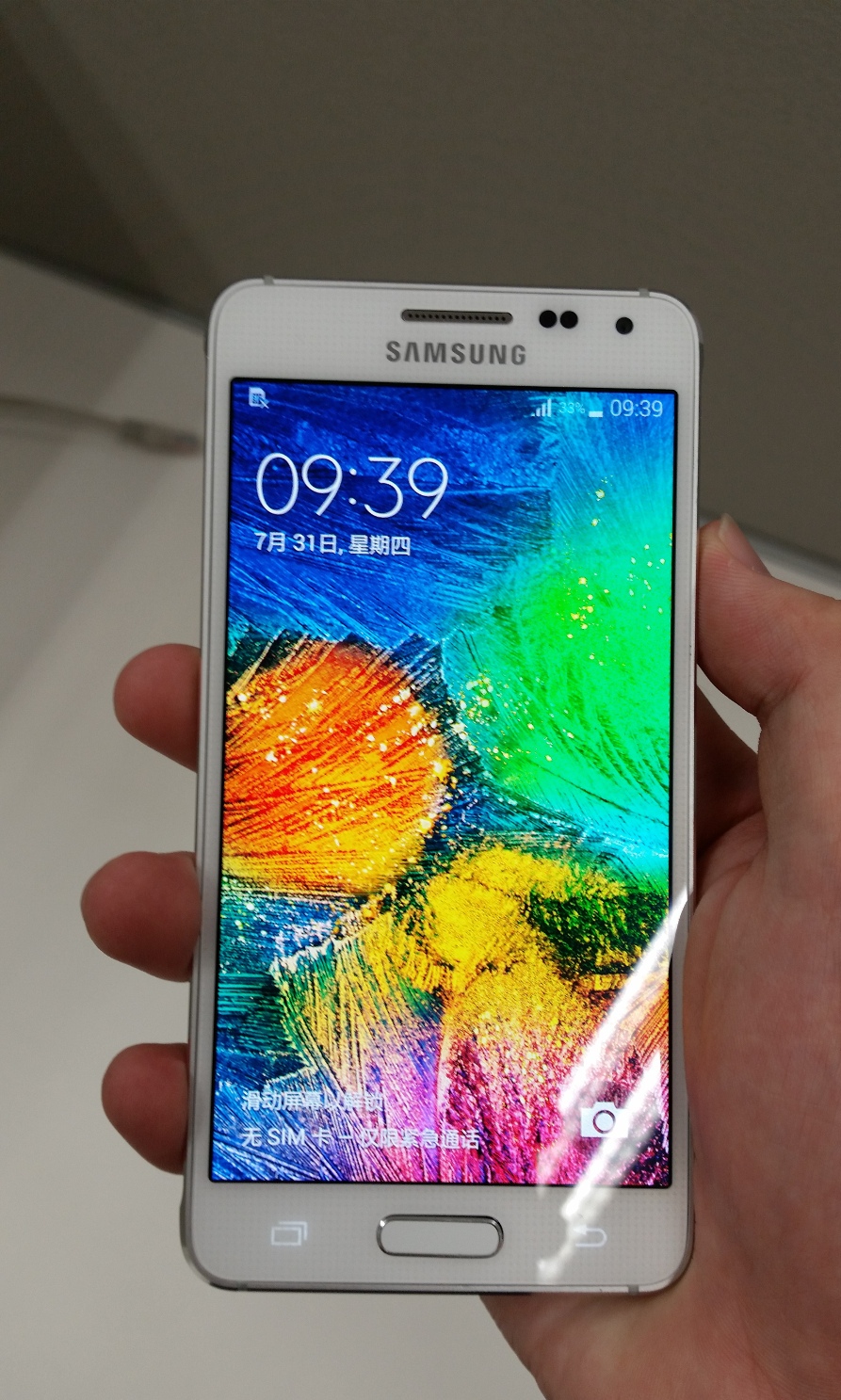
    The Galaxy Alpha has been surprisingly prone to leaks, like none other in its range. The phone looks like what an arrange marriage between Apple’s iPhone and Samsung Galaxy S5 might lead to. The phone as expected is made of a metal frame and boasts an Octa-core chipset.

    Galaxy Alpha had been hot in leakster circuits ever since it was announced but with its official launch, the leakers now have one less device to worry about. Samsung seems to be learning the lessons that the market has been trying to teach it for quite a while. The company has tried a different design approach for this device. Though it resembles the design of the iPhone, it is still a welcome change from all that plastic Samsung has been throwing at the consumers for the last few years.

    The phone had seen a lot many leaks before its official release.
    The phone had seen a lot many leaks before its official release.

    The phone is a lot thinner in comparison to its older siblings. The Alpha is 6.7mm thick and weighs about 115 grams. The display on the phone is a 4.7 inch screen with 1280X720 resolution. The styling does look premium on the device. It is anticipated that Samsung’s new design philosophy would also influence the upcoming Galaxy Note 4 which is expected to be made of new materials.

    On the hardware front, the Samsung Galaxy has a few things that won’t impress the technologically minded. The device runs on the latest Android Kitkat 4.4.4 OS. It has an unnamed Octa core processor (Quad 1.8GHz + Quad 1.3GHz), and it is most probably an Exynos 5 based chipset. The RAM on the device is 2 GB and has internal storage of 32 GB. It has no expandable storage though. The Alpha has a dismal 1860 mAh battery which might dissuade a lot of folks from getting the device.

    The main camera on the Alpha is a 12 megapixel shooter and is accompanied by a 2.1 MP front camera. It is capable of shooting 4K videos. It will retain the usual Samsung features such as Ultra-Power Saving Mode, S Health, Fingerprint Scanner, and Private Mode, amongst others.

    The Galaxy Alpha will be available in September and will be available in black, white, gold, silver and blue colors.

  • Xiaomi’s next Budget Phone with Octa Core Mediatek Chipset bounces online

    Xiaomi’s next Budget Phone with Octa Core Mediatek Chipset bounces online

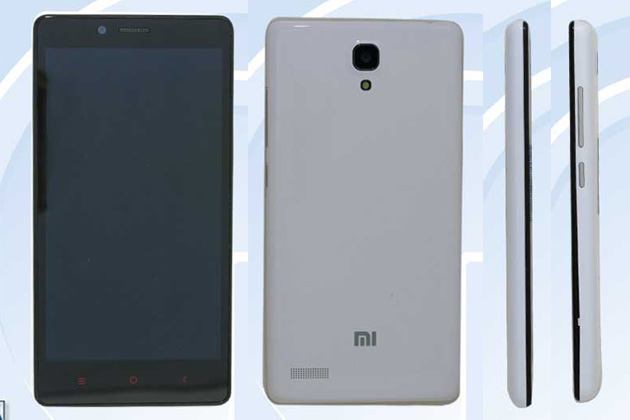
    Xiaomi’s new Redmi handset is supposed to be a sequel to their previous budget phone, has now finally been spotted online. The sub Rs. 10,000 / US $130 handset supposedly is called the Redmi aswell thanks to the red android buttons on the front of the handset.

    It’ll feature a 5.5-inch, 720p IPS display), as well as Android 4.2.2, 1GB of RAM and an octa-core processor  coming in two versions: 1.4GHz and 1.7GHz.

    Designed to be sold for China Mobile the handset will be unlocked to 3G, TD-SCDMA, WCDMA option and CDMA 2000.

    The Camera bundle includes a 5 MP front camera and a 13 MP main shooter. There is 8 GB of storage and 32 Gb expandability for the handset that comes with just 1 GB RAM. The Redmi will still miss out on LTE whereas other manufacturers are now gunning for LTE handsets in the sub 10,000 price bracket.

  • Samsung’s Exynos 5 will run all Eight Cores Together By End of 2013

    Samsung’s Exynos 5 will run all Eight Cores Together By End of 2013

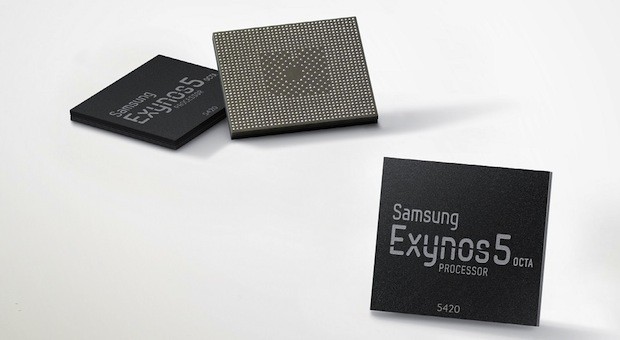
    Samsung today announced its Heterogeneous Multi-Processing (HMP) solution for the Exynos 5 Octa to fully maximize the benefits of the ARM big.LITTLE technology. The HMP capability gives system-level designers the ability to develop solutions that might deliver the right combination of high-performance and low-power to carry out tasks like  3D gaming, complex augmented reality and advanced web browsing.

    It’s usually assumed that the big CPU will do all the performance-critical work, however, power-efficient little cores can handle many significant workloads all on their own, so the workload is balanced within the system,” said Taehoon Kim, vice president of System LSI marketing, Samsung Electronics. “big.LITTLE processing is designed to deliver the right combination of processors for a specific job. An eight-core processor with HMP is the truest form of the big.LITTLE technology with limitless benefits to the users of high-performance, low-power mobile products.”
    Exynos 5 Octa

    This technology will be available in the 4th quarter of this year, it will let devices access both sides of the big.LITTLE ARM configuration simultaneously, which the company claims will increase both performance and efficiency. While software threads with high priority use the “big” A15 core, lower priority tasks can run on the “small” A7 without needing to switch back and forth, says Samsung. Samsung isn’t the only one running this setup, as MediaTek also announced an improvement for its MT8135 back in July. 

    ARM big.LITTLE multi-processing technology delivers the highest performance and efficiency across the widest range of workloads,” said Noel Hurley, vice president, Strategy and Marketing, Processor Division, ARM. “We welcome Samsung’s continued commitment to deploying the leading-edge technology on their latest chips featuring the ARM Cortex™-A series of processors, ARM Mali™ GPUs and ARM Artisan™ physical IP.” 

    The video below shows, the Samsung Exynos 5 Octa has eight core processor, four little ones for small always on application, and four bigger application for graphic intensives stuff. 

    [youtube id=”Zwbeb08W27U” width=”100%” height=”300px”]

    [toggle title=”Press Release “]Samsung Electronics Co., Ltd., a world leader in advanced semiconductor solutions, today announced its Heterogeneous Multi-Processing (HMP) solution for the Exynos 5 Octa to fully maximize the benefits of the ARM® big.LITTLE™ technology. The HMP capability gives system-level designers the ability to develop solutions that deliver the right combination of high-performance and low-power to carry out tasks such as 3D gaming, complex augmented reality and advanced web browsing.

    “It’s usually assumed that the big CPU will do all the performance-critical work, however, power-efficient little cores can handle many significant workloads all on their own, so the workload is balanced within the system,” said Taehoon Kim, vice president of System LSI marketing, Samsung Electronics. “big.LITTLE processing is designed to deliver the right combination of processors for a specific job. An eight-core processor with HMP is the truest form of the big.LITTLE technology with limitless benefits to the users of high-performance, low-power mobile products.”

    “ARM big.LITTLE multi-processing technology delivers the highest performance and efficiency across the widest range of workloads,” said Noel Hurley, vice president, Strategy and Marketing, Processor Division, ARM. “We welcome Samsung’s continued commitment to deploying the leading-edge technology on their latest chips featuring the ARM Cortex™-A series of processors, ARM Mali™ GPUs and ARM Artisan™ physical IP.”

    HMP is the most powerful use model for ARM big.LITTLE technology, as it enables the use of all physical cores at the same time. Software threads with high priority or high computational intensity can be allocated to the ‘big’ Cortex-A15 cores while threads with less priority or are less computationally intensive, can be performed by the ‘LITTLE’ Cortex-A7 cores, enabling a highly responsive, low-energy system to be built.

    Software implementation is essential to maximizing the benefits of big.LITTLE technology. Multi-processing software controls the scheduling of threads of execution to the appropriate core. In earlier versions of the big.LITTLE software, the whole processor context is moved up to the ‘big’ core or down to the ‘LITTLE’ core based on the measured work load. In-depth study and analysis of diverse use case scenarios enable Samsung to achieve efficiency and high-performance, while managing power levels to deliver optimal user environments.

    The HMP solution for Samsung’s Exynos 5 Octa application processors will be available to customers in 4Q of 2013.

    About Samsung Electronics Co., Ltd.

    Samsung Electronics Co., Ltd. is a global leader in technology, opening new possibilities for people everywhere. Through relentless innovation and discovery, we are transforming the worlds of televisions, smartphones, personal computers, printers, cameras, home appliances, LTE systems, medical devices, semiconductors and LED solutions. We employ 236,000 people across 79 countries with annual sales exceeding US$187.8 billion. To discover more, please visit www.samsung.com.
    [/toggle]
     

  • MediaTek Reveals The World’s First True Octa-Core Mobile SoC

    MediaTek Reveals The World’s First True Octa-Core Mobile SoC

    Samsung and Qualcomm are often associated in making the markets leading processors that are found in numerous mobile devices, while MediaTek are often responsible for providing chips for more affordable hardware. Now though MediaTek beats Samsung with the first true Octa-Core MT6592 processor.

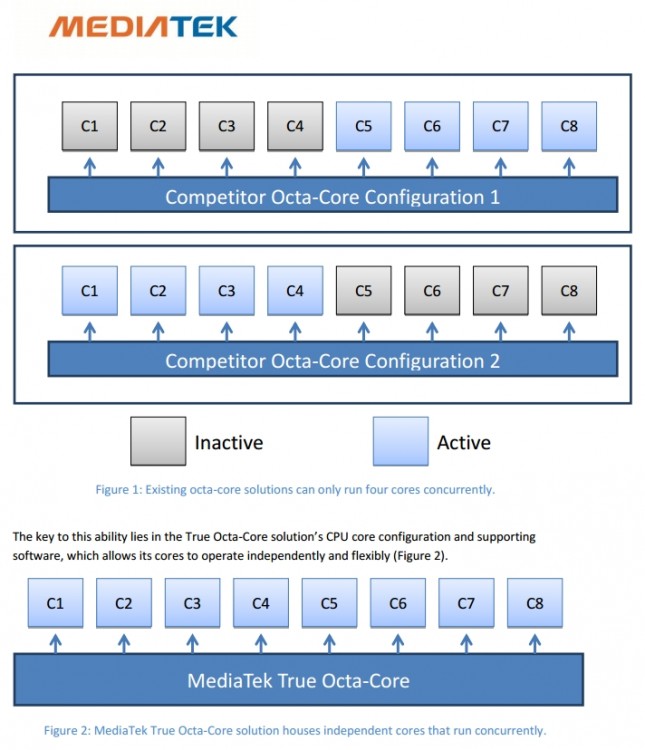
    The supplier of cheap quad-core chipsets to Chinese Smartphone manufacturers has announced the world’s first true Octa-core processor, where all 8 cores work together in tandem, and will reportedly feature performance that matches or surpasses that of the most powerful mobile SoC (based on ARM) currently, the Qualcomm Snapdragon 800 SoC. The True Octa Core SOC will run at speeds of 1.6GHz to 2GHz.

    mediatek

    MediaTek said the product is a “true octo-core solution,” whereas other existing octo-core processors can only switch between using four cores at a time.

    For example, Samsung’s previous octo-core chip, the Exynos 5410, is essentially two quad-core chips packed together and was used in some versions of its Galaxy S4 smartphone. One set of quad-core chips is designed for high-performance tasks such as gaming or video playback, while the other is made to handle less intensive processes like emailing or texting. But only four of the cores can be active at one time.

    Do you think we will see many high end mobile devices using the MediaTek MT6592?

    [Via]

iGyaan Network
Privacy Overview

This website uses cookies so that we can provide you with the best user experience possible. Cookie information is stored in your browser and performs functions such as recognising you when you return to our website and helping our team to understand which sections of the website you find most interesting and useful.