Tag: processor

  • Samsung Galaxy S 2011 Version to have a 1.4 GHZ processor

    Samsung Galaxy S 2011 Version to have a 1.4 GHZ processor

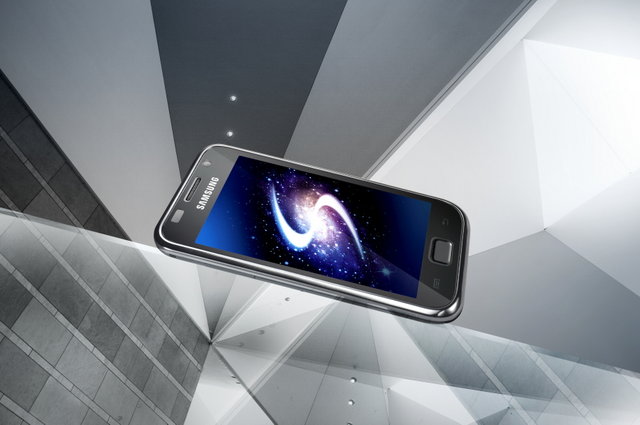
    Samsung in Russia has informed that they will launch a new version of the popular Galaxy S Android smartphone next month.

    The Galaxy S 2011 edition will ship with Android 2.3 and  a new metal back cover.

    The phone packs

    • 1.4GHz Qualcomm MSM8255T Snapdragon processor
    • 14.4Mbps HSPA+ radio
    • 1,650mAh battery
    • 4-inch Super AMOLED display
    • 8GB of internal storage
    • Bluetooth 3.0
    • 5 megapixel camera
    • 720p HD video
    • 24,000 rubles ($846 USD) or INR 40,000 +

    No news on Launch in India or other countries.

    [Samsung Russia]

  • Rumor: Lg to release Optimus Big 4.3 inch Smartphone

    Rumor: Lg to release Optimus Big 4.3 inch Smartphone

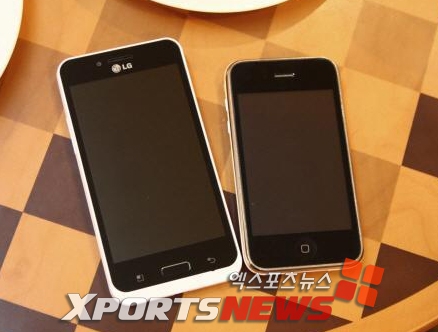
    According to some leaked images and specs, LG has a new phone in the works codenamed “Optimus Big”. This device is all set to take on the likes of HTC with their humongous displays. The Optimus Big sports

    • 4.3-inch screen
    • Single-core 1GHz processor
    • T-DMB TV tuner
    • LG’s NOVA display.
    • Forward-facing camera for video chats
    • Android (version unknown)

    [hankyung]

  • HTC Announces New HD7s, Coming in Summer

    HTC Announces New HD7s, Coming in Summer

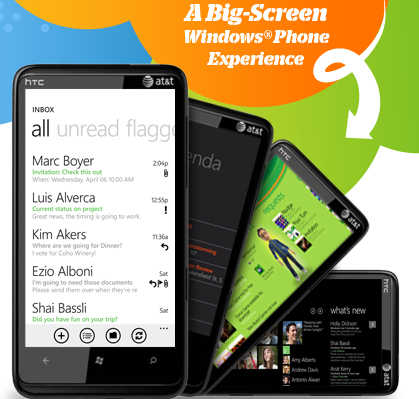
    HTC has just announced the new HTC HD7s, A successor to the HD7 which has only a minor improvement in tow, which actually turns out to be a major improvement. The HD7s adds a Super LCD to the mix making the display even more eye-friendly and much better in drastic situations. Thic change will also improve the battery life of the unit and make using the device a better experience.

    Our Sources at HTC India say this device will hit as a quiet Update in June-July 2011 in India. Pricing Similar to the existing model is expected.

  • Your Desktop Supercomputer: Coming Soon

    Your Desktop Supercomputer: Coming Soon

    Scientists at the University of Massachusetts Lowell have managed to squeeze over a thousand processor cores onto a single chip. We’ve heard a lot about the potential for future desktop-sized supercomputers, but more than anything else this research proves that in the not-too-distant future it’s likely to be a reality. Interestingly enough, there’s also a green angle to this idea: FPGA chips can be more power efficient than their competitors, and if less computer time is needed to process complex tasks, then the overall power consumption of computers using the tech could be impressively low.


    The advance was made by Dr. Wim Vanderbauwhede’s team, who programmed an advanced chip called a Field Programmable Gate Array (FPGA). FPGA systems have been around for a while, and their strength is that they can be programmed “in the field” to best suit whatever task they’re needed for, unlike the hard-coded silicon ship designs you’re probably imagining. The UM team’s innovation was in working out how to program the FPGA to act as mini processor cores, since the tech is typically difficult to work with. This has traditionally been a barrier to their use in desktop PCs, although small FPGAs are often found inside devices like LCD TVs.


    Once the 1,000 individual CPU cores had been programmed onto the chip, the scientists took the necessary next step to prove how useful their innovation is: They ran an intensive algorithm through it to test how powerful it was, and they chose a tricky one too–at the core of motion MPEG video processing, used in many online video systems. The results speak for themselves. Using the kilo-core FPGA computer, the team was able to process 5 gigabytes per sec of movie files, which is about 20 times the rate that existing high-end computers can manage.

  • TI announces OMAP 5 – two high performance and two low power cores

    TI announces OMAP 5 – two high performance and two low power cores

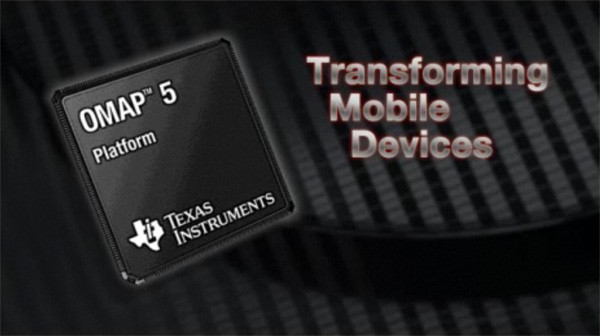
    Before we could get our hands dirty with the Ti-OMAP 4 devices, Texas Instruments has announced the Quad core – Ti-OMAP 5.  The 5 has two Cortex-A15 cores, each running at up to 2GHz (Cortex-A15 is the fastest architecture ARM has announced to date )there are another two Cortex-M4 processors along for the ride, ready to take over less intensive tasks at much lower power consumption to improve device responsiveness

    Moreover there is :

    • support up to four cameras operating at the same time
    • 3D playback
    • 3D recording
    • 2D upsampling to 3D at 1080p resolution
    • Upto 8GB of RAM support


    Full Press Release


    Not just a faster horse: TI’s OMAP™ 5 platform transforms the concept of ‘mobile’

    – New OMAP 5 platform creates disruptive mobile experiences akin to Henry Ford’s transformative automobile advancements

    – Mobile computing, stereoscopic 3D, gesture recognition and computational photography intensified by TI’s best-in-class applications platform

    – Sophisticated multi-core processing, including ARM® Cortex™-A15 MPCore™ processors

    DALLAS (Feb. 7, 2011) – Texas Instruments Incorporated (TI) (NYSE: TXN) announced today the next generation of its popular OMAP™ family: the OMAP 5 mobile applications platform, which is positioned to transform how mobile devices, such as Smartphones, tablets and other mobile form factors are used, making them even more valuable in our daily lives. More information on the OMAP 5 platform can be found here: www.ti.com/wbu_omap5_pr_lp.

    Imagine carrying only one productivity tool while in the office, on the road or at home – a single mobile device which provides PC-like computing performance with mobile power levels. Imagine using the same device to conduct a stereoscopic 3D (S3D) video conference for work. Imagine being in a meeting and projecting a document from this device, which you can edit by simply touching the projected image on a surface. Imagine going home and switching the device to your personal operating system to drive a next-generation game on your HDTV using wireless display technology. These capabilities are only highlights of what the TI OMAP 5 platform uniquely delivers. To see more experiences enabled by the OMAP 5 platform, view a video here: www.ti.com/wbu_omap5_pr_v.

    Highest performance, lowest power…yet again
    The 28 nanometer OMAP 5 applications processors carry on the OMAP family tradition of delivering significant increases in performance and functionality, while lowering power consumption compared to their predecessors. Specifically, they offer up to 3x processing performance and five-fold 3D graphics improvement, yet provide a nearly 60 percent average power reduction compared to a sample user experience on the OMAP 4 platform. Additionally, the OMAP 5 platform’s software is designed for maximum reuse to ease migration from the OMAP 4 platform.

    “The next decade will bring a revolution in mobile computing, as devices continue to converge, attempting to become one single device that meets all of our computing, entertainment, and complex day-to-day needs and interests. However, the bridge to true mobile computing enablement was missing until today. The OMAP 5 platform will be at the heart of driving the mobile computing revolution by delivering the highest computing, graphics and multimedia performance possible within the low power budget required by mobile form factors,” said Remi El-Ouazzane, vice president, OMAP platform business unit, TI.

    Sophisticated, multi-core processing: harmonized for the best possible user experience
    The OMAP 5 processor leverages two ARM® Cortex™-A15 MPCores™ – the most advanced ARM architecture to date – capable of speeds of up to 2 GHz per core in the OMAP 5 implementation. With a 50 percent boost in performance over the Cortex-A9 core (at the same clock frequency), combined with up to 8GB of dynamic memory access and hardware virtualization support, the Cortex-A15 core can enable true mobile computing experiences, such as the ones referenced above.

    The OMAP 5 architecture utilizes an intelligent combination of many different processing cores – each tailored and power-optimized for specific functions – and all harmonized to provide the best possible user experience. In addition to the two Cortex-A15 cores, the OMAP 5 processor includes individual, dedicated engines for: video, imaging and vision, DSP, 3D graphics, 2D graphics, display and security. The processor also includes two ARM Cortex-M4 processors for offloading real-time processing from the Cortex-A15 cores to improve low-level control and responsiveness of mobile devices.

    “We continue to see high performance mobile devices, such as advanced Smartphones and tablets, requiring increased processor performance while remaining within the restricted mobile power consumption boundaries,” said Mike Inglis, EVP and general manager of the ARM Processor Division. “The OMAP 5 processor highlights the advantage of the ARM business model. The relationship enables product differentiation through the integration of low power multi-core ARM processor cores with the partners’ own system-on-chip technologies, including power management, audio and video processing. ARM is proud to have contributed to the OMAP 5 platform, which enables OEM customers to leverage the extensive ARM software ecosystem to quickly deliver innovative new mobile solutions.”

    Next-generation natural user interfaces
    Natural user interfaces (NUI) – how we interact with the world around us in an intuitive, natural way – are taken to the next level with the OMAP 5 platform’s advanced support for S3D, gesturing (including proximity sensing), and interactive projection.

    The OMAP 5 processor can support up to four cameras in parallel, as well as record and play back S3D video in 1080p quality, and perform real-time conversion of 2D content to S3D at 1080p resolution. The new processor can also deliver advanced short- and long-range gesturing applications, as well as full-body and multi-body interactive gestures, utilizing either 2D or S3D cameras. The OMAP 5 processor, coupled with a TI DLP® Pico™ projector and a camera, can also enable interactive projection where the user can actually “touch and drag” projected images on both a table top or wall.

    Additionally, the OMAP 5 processor can interface with and leverage a wide variety of sensor technologies to enable touchless sensing, such as proximity sensing, capacitive sensing and ultrasonic sensing.

    Computational photography – the industry’s next frontier
    Today, most mobile devices are equipped with built-in cameras; however, due to the physical limitations of the device, picture and video quality is not on par with stand-alone consumer electronic products, such as digital SLR cameras. In order to close this quality gap, computational algorithms are used to compensate for these limitations. The OMAP 5 processor includes hardware and software resources that enable the development and deployment of such algorithms, such as camera stabilization, motion blur reduction, noise reduction, high dynamic range and face-based processing. The new processor also goes a step further by using the same OMAP 5 hardware resources with vision algorithms to extract features and data from the picture, in order to implement applications such as face recognition, object recognition and text recognition. These vision capabilities can also be used as the foundation for many different and exciting augmented reality applications.

    Industry’s best all-around applications processor platform
    The OMAP 5 platform sports an impressive list of features and benefits supporting everything from open source platforms to complementary TI technologies, including:

    Strengthening the OMAP 5 platform’s value, TI leverages its open source community involvement to benefit customer product development. Early extensive work in community projects translates to a significant quality and schedule advantage for device manufacturers, including power, memory and performance optimization. Additionally, TI’s pre-integrated software packages for popular Linux-based distributions help manufacturers achieve maximum system-level performance while driving a faster time-to-market.

    Availability
    TI’s OMAP 5 platform is expected to sample in the second half of 2011, with devices on the market in the second half of 2012. The OMAP5430 processor is offered in a 14x14mm Package-on-Package (PoP) with LPDDR2 memory support. The OMAP5432 processor is offered in a 17x17mm BGA package with DDR3/DDR3L memory support. 

    These products are intended for high-volume mobile OEMs and ODMs and are not available through distributors. TI also plans to develop compatible ARM Cortex-A15 processor-based solutions for broader market applications across TI’s product portfolio.
  • The Apple iPad 2 – What we know So Far

    The Apple iPad 2 – What we know So Far

    Apple has its devices on a yearly refresh, every year around the same time, you get an upgraded version of the iPhone, the iPod, Macbooks etc. Just like that the iPad will also see a refresh. We started hearing rumors of iPad’s redesigned structure and obvious design changes in November 2010.

    Now the iPad, was announced in the last week of Jan 2010, we can expect a similar time frame for a refresh of the Tablet. Something has to be new and the Rumor mill has been running haywire over it.

    Here are a collection of images over the past month and our thoughts on what the new iPad may be like.


    New Structure

    Images like the one above are renders of the carbon fibre patent that Apple had filed on May 18, 2009. This incorporates a liquid metal structure with a carbon fibre back. This would not only make the iPad extremely nice looking, But, also give it a lighter yet solid construction, immensely improving the antenna.

    The likes of this happening are however, very- very low. We still have our hopes up.

    Cases

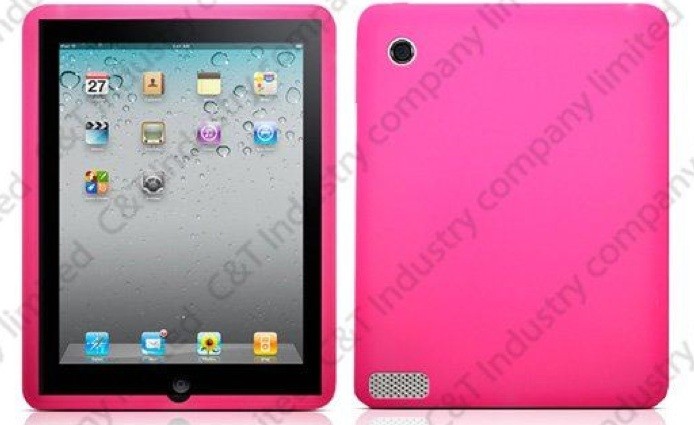
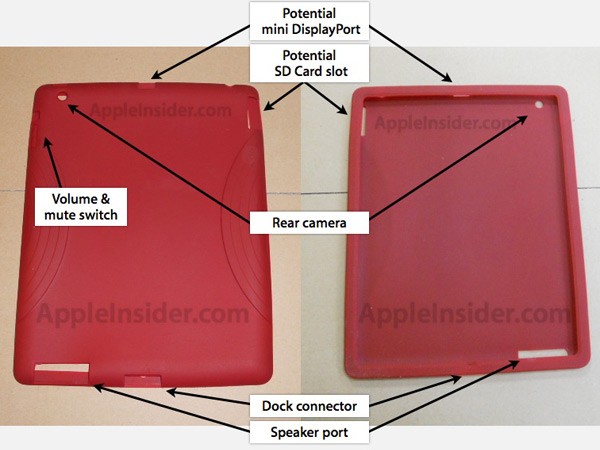
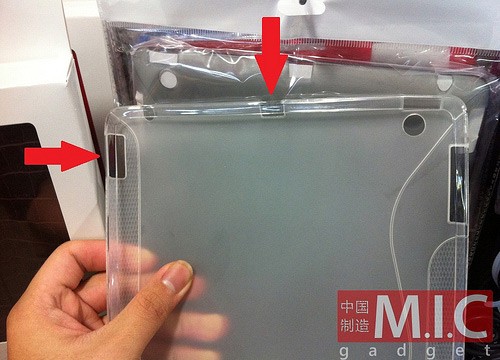
    The second wave of iPad 2 rumors came with iPad 2 cases. These cases started showing up at manufacturers across the china market, showing cutouts for the back camera and an new speaker cutout.

    This shows us that two things that might come are the Camera on the back and a improved speaker on the next gen iPad. We feel there is a very high chance of this happening.

    Facetime and Retina Display

    Since Apple has been adding front cameras and retina displays to all its products in 2010, it wouldn’t be false to guess that the iPad 2 will have at least a front facing camera and a higher res display, if not a retina display. The new iOS 4.3 beta revealed some interesting information on the next release. A bunch of people snooping around the new files found wallpapers for the iPad that have the resolution . – 1536 x 800px compared to the existing 768 x 400  px that is approximately 4x the resolution (2x both ways).

    We also believe, looking at Apple’s trend that the new iPad will definitely have a front facing camera and a Higher resolution display.

    Gizmodo posted a good sketch of what the iPad 2 may look like, including resolution enhancement.


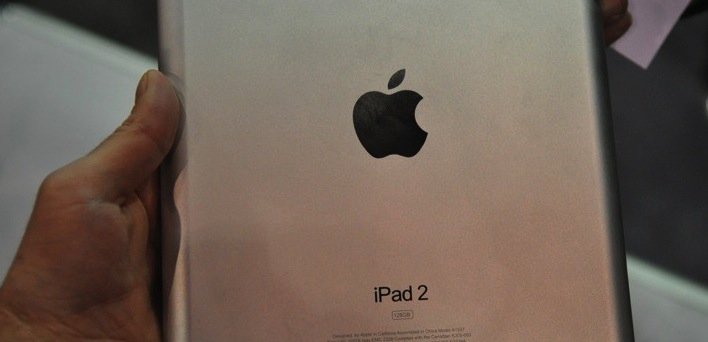
    Engadget got hold of a dummy of the iPad 2 during CES at one of the case manufacturers booths. this showed a new design- with a flat back and a potentially larger capacity – 128 GB to be precise. This would be just brilliant for the iPad


    New Rumors

    After a series of breakouts, a whole bunch of new information has come into light. There is news of a new A5 chip, this will be used in the new iPhone this year and apparently the new iPad as-well. Whats the A5 chip? well the heart of the A5 is the multi-core ARM Cortex A9. Which will also be the heart of Nvidia Tegra processors that will be in the series of Android devices slated for this year, along with the Ti-omap processor in the Blackberry Playbook.

    AppleInsider claims that Apple is moving to dual-core SGX543 graphics, up from the A4’s single SGX535 GPU. This would enable it to process graphics at 4x times the capability – and the 4x resolution included. We can also expect 1080P hHD video output, and an improved experience along with higher ram and overall enhancement of hardware. But, hey that what we want anyway.

    Some more interesting pictures of cases have also shown up. this ones have to new cut-out – claimed possibly for Sd-card slot and a display out. We are highly skeptical that Apple may add a memory card slot to increase memory size, may only act as a camera card reader, But, nonetheless the SD CARD slot would be a great addon. The Video out port may be a possibility, But, then again Apple can use the dock connector for that and dont really need a dedicated video out port, Unless its HDMI.

    So here is a a Final List of features that may or may not come to the iPad

    • Facetime Camera – High Possibility
    • Rear Camera – High Possibility
    • New Liquid Metal design + carbon fibre – Unlikely
    • 4x Graphics – Possible
    • More Ram – High Possibility (and much needed)
    • New A5 Chip – High Possibility
    • Sd Card Slot- Unlikely
    • Mini Display Port – Unlikely
    • Larger Capacity 128 gb – Possible
    • Retina Display – High Res Display is more likely
    • 4G – No rumors on that – our guess – Not happening


    Sources : Engadget, Gizmodo, Mac-Rumors, MICGAdget, Apple- Insider , Twitter


iGyaan Network
Privacy Overview

This website uses cookies so that we can provide you with the best user experience possible. Cookie information is stored in your browser and performs functions such as recognising you when you return to our website and helping our team to understand which sections of the website you find most interesting and useful.