Tag: research

  • A Transparent Glass That Generates Solar Energy

    A Transparent Glass That Generates Solar Energy

    We have lots of avenues from where we can generate energy without having to touch the biochemical fuel made of prehistoric organisms. There is tremendous potential in the Sun and Wind to generate electricity. But the roof mounted solar cells are  passé, its time to let the modern glass based architecture, pay for themselves and their maintenance costs by covering them with transparent solar concentrators.

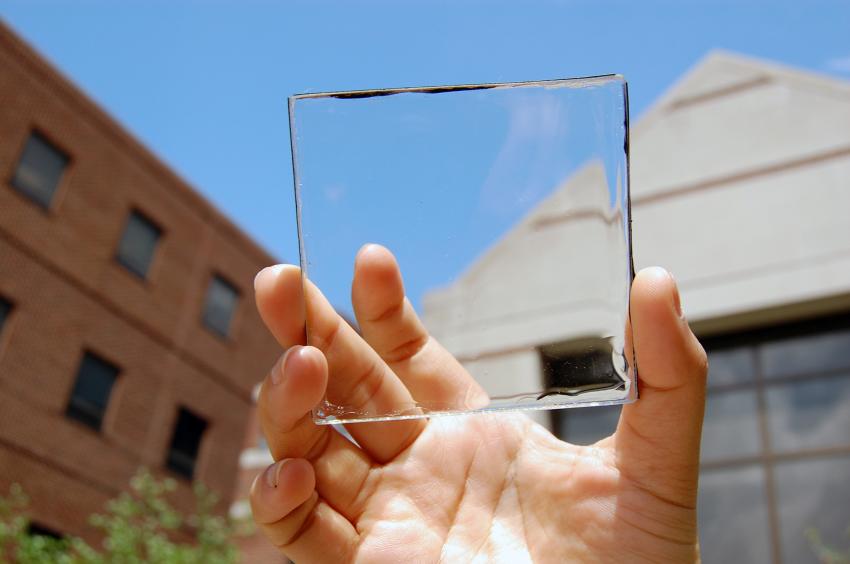
    Researchers at the Michigan State University have developed transparent solar energy concentrators that can someday be used as window glass. Not just that, it can be used to make display panels for mobile phones or devices with flat surfaces. So you can easily imagine a future where phones will be able to charge themselves. Talk about a revolutionary idea. The study was featured in the journal Advanced Optical Materials.

    The technology can be used to make windows that can generate energy for the office
    The technology can be used to make windows that can generate energy for the office

    There have been previous efforts into the technology, but most of the time the material in the end was either too inefficient or was colored. A solar concentrator glass needs to be transparent to have some practical value. Most of the glass around us is transparent and colored glass can only be used for decorative purposes and not on office windows.

    The new glass material has been developed by Richard Lunt, assistant professor of chemical engineering and materials science, and his team. The material used in this transparent concentrator uses small organic molecules to absorb specific non-visible wavelengths of sunlight. These materials do not absorb light from the visible spectrum and hence appear transparent.

    These panels can be tuned to pick up light from ultraviolet and near-infrared wavelengths that then glow at another wavelength of infrared. This glowing infrared light is then directed towards the edge of the panel where it is used to generate electricity using photovoltaic cells.

    The ultimate intention of the research team is to make unobtrusive and almost invisible. This will also ease out the process of creating an off grid system where buildings can generate the electricity they need on their own.

    As the project is still in the first steps, the efficiency of these concentrators is at roughly 1 percent. The panel is expected to achieve 5 per cent efficiency when fully optimized. For some perspective, it’s important to know that even the most capable colored concentrator has an efficiency of about 7 per cent. This just tells us that we still have to make huge strides in unlocking the full potential of the sun.

  • Google X’s New Study, Baseline : The Portrait of a Perfect Human Body

    Google X’s New Study, Baseline : The Portrait of a Perfect Human Body

    Google’s semi-secret workshop is one of the most innovation oriented institutions in the world. The research facility takes on some of the most fundamental questions on transportation, communication and others. Then, it takes an alternative bottom-up effort to understand them. The facility worked on concepts like Teleportation, Space elevators, and it is also the birthplace of projects like Google Glass, Driverless car and the upcoming Project Loon. Now with Project Baseline, Google plans to understand how a perfectly healthy human should look like and what factors restricts humans from achieving it.

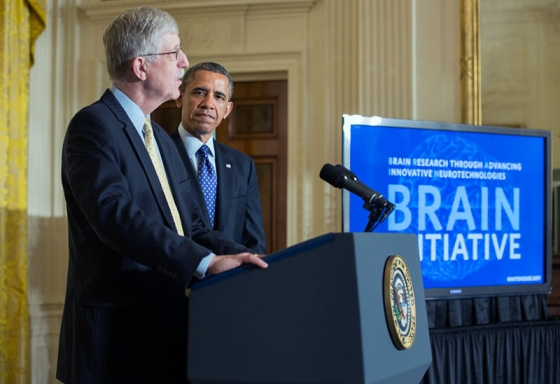
    The plan is as audacious as President Obama's Brain Initiative.
    The plan is as audacious as President Obama’s Brain Initiative.

    The study will collect anonymous genetic and molecular data beginning with 175 people. They will eventually accumulate data of thousand more individuals. The study is lead by Dr. Andrew Conrad, who is a molecular biologist. He is credited for the development of cheap, high-volume tests for HIV in blood-plasma donations. Dr. Conrad has set up a team of about 70-to-100 experts from fields including physiology, biochemistry, optics, imaging and molecular biology for the study.

    The study is a reimagination of the workings of the human body and how diseases can be prevented. This will be a prevention-oriented study which will try to find ways to inhibit naturally occurring diseases like stomach and heart ailments.

    The project will collect hundreds of different samples using a wide variety of new diagnostic tools instead of focusing on specific diseases. Then Google will use its massive computing power to find particular biological patterns, or “biomarkers,” buried in the information. The researchers hope to use these biomarkers to see if they can be helpful in detecting diseases at an earlier stage. Google wants data on parameters like contributors’ entire genomes, their parents’ genetic history. Apart from that, information on how they metabolize food, nutrients and drugs, how fast their hearts beat under stress and how chemical reactions change the behavior of their genes will also be assessed.

    Google has massive computing infrastructure for processing the massive information that will be generated by this project. According to the research team, Baseline, like previous Google X projects will be a look into the unknown. This project can also run in correlation with President Obama’s BRAIN initiative which is one of the most intensive looks into the functioning of the human neurons.

    Like other Google X moonshot projects, this project is not time bound. Google’s look into teleportation was seen as scientifically unachievable, whereas a look into a healthy human body will be practical and help some of the fundamental problems with healthcare. Google has also promised that it will not share the data with corporate interests, and this will be anonymous study.

    Baseline will try to identify Biomarkers which can be used to identify and prevent diseases earlier
    Baseline will try to identify Biomarkers which can be used to identify and prevent diseases earlier

    There is of course series oversight as the study tries to peer into the human body at a molecular level. When the study kick starts, it will be monitored by institutional review boards comprising of medical professionals from Duke and Stanford University. The board will also keep a vigilant eye on how the information is being utilized.

    This project basically is a massive pattern recognition exercise. It aims to understand in the most fundamental sense as to what makes us human and what makes us tick. Studies like this and the BRAIN initiative will certainly help us gaze into our self and figure out what separates and unites us. Health research should be a priority research and done by the government thereby democratizing the data. As they also involve massive costs; the BRAIN initiative will cost $300 Million a year for ten years; these projects should have public investment to prevent misuse of data for commercial purposes.

    Google also deserves credit for envisioning this audacious study, for taking on the research in an open, transparent manner, unlike the healthcare industry which persists on closed patented knowledge. Google has always pushed for free knowledge and its most prominent success in this field has been the Android operating system. Also, they need to be appreciated for taking on resource intensive projects without compromising with their quarterly results. Google has shown that it is not hard for a giant corporation to not be evil.

  • Facebook will Use Artificial Intelligence to Understand and Predict Our Actions

    Facebook will Use Artificial Intelligence to Understand and Predict Our Actions

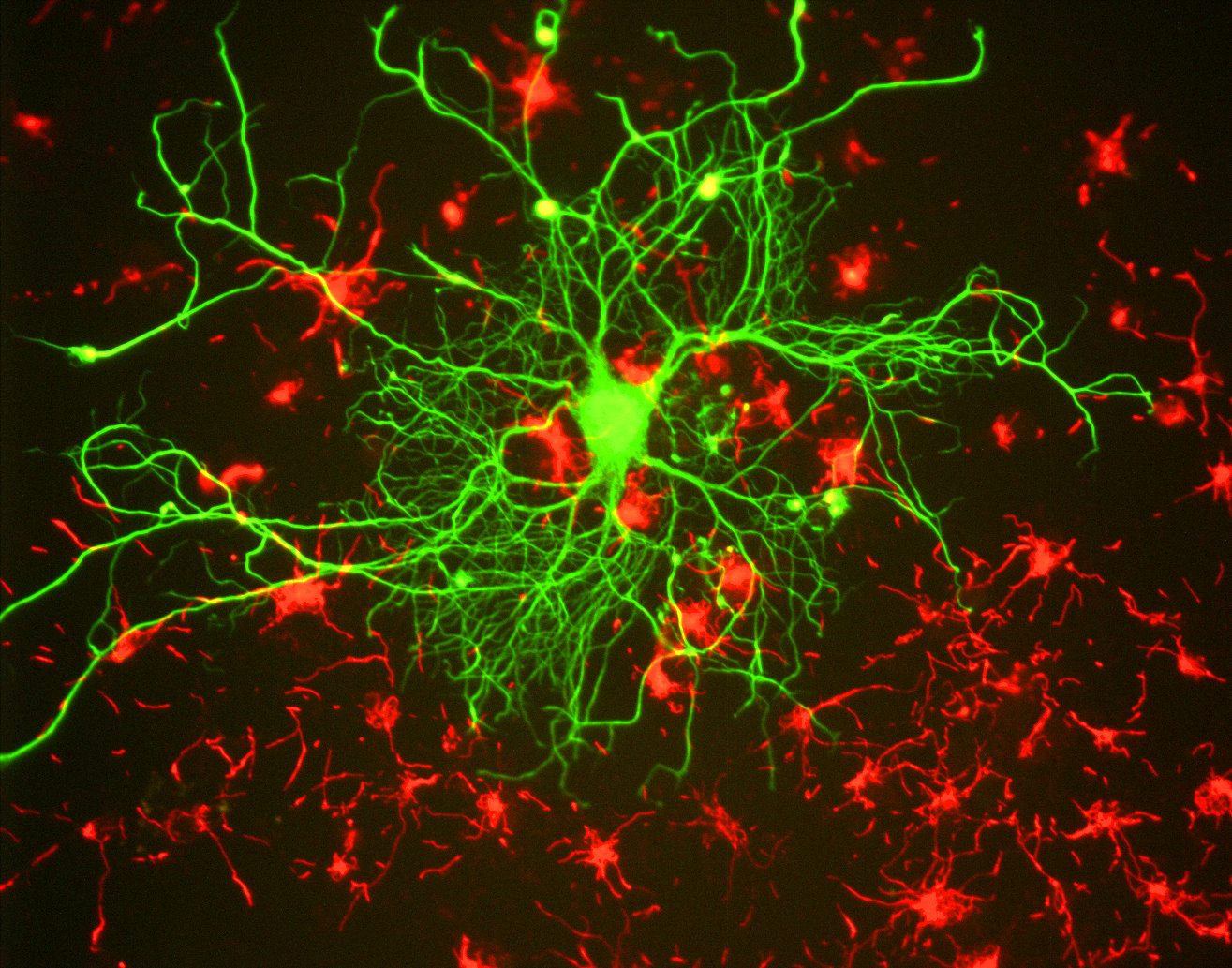
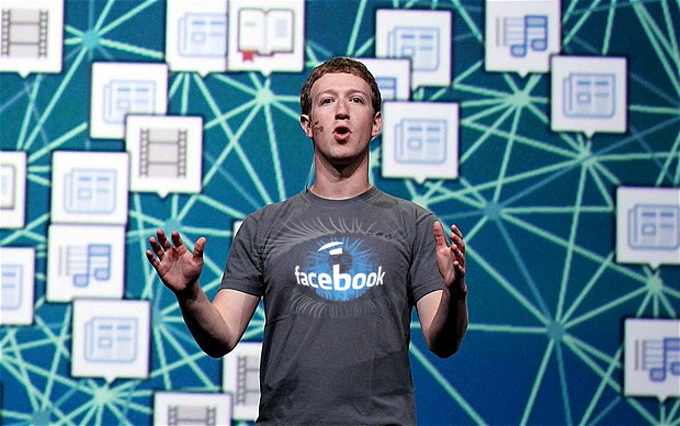
    Facebook is trying to get a better understanding of the 700 million people with help of AI which they call as ‘deep learning’, targeting people who share everything happening in their life through the social networking giant everyday.

    A new research group in Facebook (called “AI Team”) is working on this artificial intelligence, which will use the simulated networks of brain cells to process the data. With the help of this strategy, the social networking site might be able to predict our actions online and to show us content that is more relevant to our interests, and to better target advertisements as well.

    The new team hopes to use deep learning AI, to determine which posts are genuinely important. The technology could also be used to sort users photos, and it might even select the best shots. However, the AI work has only just started, the company shared with MIT Technology, that it should release some findings to the public.

    Facebook is not the first company to bring deep learning, last year Google and even IBM have also used this concept in the past. Deep learning uses a multi-layered approach to data, parsing information to build up a body of knowledge that can be used to figure out concepts or even understand what objects sound and look like. 

    [via]

  • Researchers from Stanford make genetic transistors, pave way for Bio-Computing

    Researchers from Stanford make genetic transistors, pave way for Bio-Computing

    Researchers from the Genetic engineering department at Stanford University have developed a new genetic transistor, called the transcriptor. These Transcriptors substitute DNA for semiconductors and RNA for the electrons in traditional transistors, the transcriptor then controls the flow of a specific RNA protein along a DNA strand using tailored combinations of enzymes. 

    These transcripts were then used to create logic gates, and answer true and false to questions then posed within the cells. The bio cells can tell cancerous cells to stop dividing after they reach a certain number, or turn plant cells into sensors for monitoring the environment. This could be a brilliant break through in cancer research. 

    The researchers released some of their blueprints under a public domain license, which they hope will be used by other scientists to help speed up work on the overall goal of building a complete biocomputer.

    However, In February, a separate team at the University of Massachusetts published details on their own version of this transistor. Although the development of such transistors for real world applications is still years away, one can only hope that this technology relieves mankind from the illnesses of today.


    [VIA]

  • Tablets : Micromax Sold More Than Apple And Samsung In Q2

    Tablets : Micromax Sold More Than Apple And Samsung In Q2

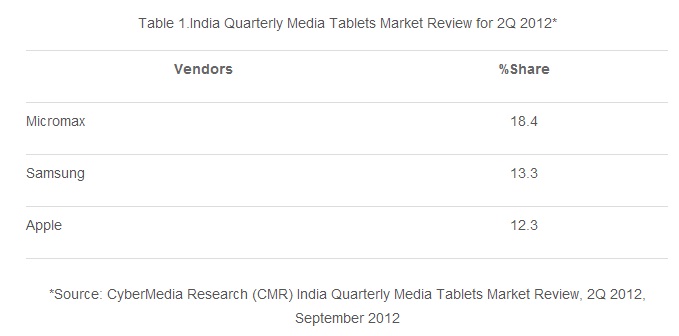
    In a CyberMedia Research it has been revealed that Micromax leads the Indian tablets market with 18.4 percent share in the second quarter of 2012. Samsung is in second position with 13.3 percent market share. Apple has a market share of 12.3 percent in terms of unit shipments during the 2Q 2012.

    India tablet market sales touched 0.55 million units in 2Q 2012, up 673 percent y-o-y.

    Entry of new tablet vendors and introduction of offerings from existing vendors at low to medium price points have contributed to the significant growth.


    Though the tablet PC market in India is still at a nascent stage, but at the same time, has become competitive due to entry of new vendors with entry-level offerings, the report said.

    Close to 90 vendors launched their tablets till Q2 2012. The average selling value (ASV) in the said period dropped to little above Rs 13,000 from Rs 26,000 in the January-March 2012 period as a majority of vendors launched their products in the Rs 5,000-10,000 price range.

    [quote]”During 2Q 2012, 47.4 per cent of tablet sales were from new entrants in the market with a strong focus on addressing application areas in the Education and Entertainment segments,” CMR Lead Analyst (Telecoms Practice) Faisal Kawoosa said.[/quote]

    This trend demonstrates clearly that vendors are positioning their devices at India’s youth, he added.

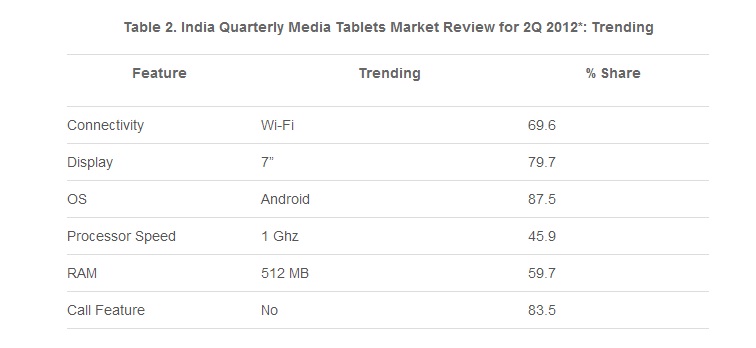
    Some of the key trends in terms of specifications of media tablets inIndianoted in 2Q 2012 are listed in the table below.

    Android operating system had the lion’s share of the market at 87.5 per cent.

    “As Android devices become increasingly popular with users across the world, competition is increasing in the India tablets market with more and more vendors launching devices based on the Android OS,” he said.

  • First iPhone in Space

    First iPhone in Space

    The last space shuttle launch is scheduled towards the end of this year and its going to be carrying some special cargo. Two iPhone 4’s will be on board running special software designed by Odyssey Space Research.

    Once the space shuttle docks with the International Space Station, the crew members will use the iPhones to conduct four experiments, using the iPhones’ cameras, gyroscopes, and other sensors.

    [quote]”I’m pretty sure this is the very first iPhone to go into space,” said Odyssey CEO Brian Rishikof.[/quote]

    The debut of the iPhone 4 in 2010 inspired the Odyssey team to create iOS based space experiments as the new phone had a built in gyroscope. The company has developed software and simulations for guidance and navigation used in several spacecraft; a gyroscope means that the iPhone could potentially be used to determine a vehicle’s orientation in space as well as its position.

    The four experiments are:

    • A “limb tracker,” which lets astronauts take a picture of the Earth’s limb (its curved edge). The app then estimates the iPhone’s altitude.
    • A sensor calibration tool that uses camera images plus multiple sensors to calibrate the phone’s gyroscope and accelerometers.
    • Latitude and longitude estimation using photos of the Earth and matching them to wireframes of coastlines.
    • A test to see if space radiation affects computer memory by watching for unintended changes to single bits in the iPhones’ RAM.
  • Flexible Paper Phone shows off the Future of Flexible Displays – Today

    Flexible Paper Phone shows off the Future of Flexible Displays – Today

    The new Paper Phone concept takes off where multitouch left off, The technology integrates a flexible E-Ink display mounted on a sheet of Bend Sensors. The sensors record your bend movements and every time you repeat the movement the pre specified input action is triggered. Check Out the Video for a full in depth look at the tech in action.

  • New Imaging technique could end Biopsies for Doctors, make patients happy

    New Imaging technique could end Biopsies for Doctors, make patients happy

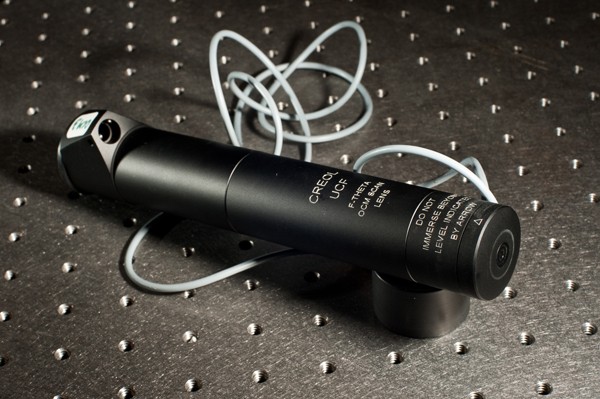
    Biopsies are used to detect cancer cells in body tissue or matter, and usually involve an invasive and painful method. A new technique developed by a professor at the University of Rochester will take high-resolution 3D images under the skin’s surface, potentially eliminating the need for biopsies in cancer detection. Professor Jannick Rolland created a prototype that uses a liquid lens, in which a droplet of water replaces the standard glass lens, in conjunction with near-infrared light, to take thousands of pictures at varying depths. Those images are then combined to create clear, 3D renderings of what lies up to one millimeter below your epidermis.

    While these methods have already been tested on Humans and under human skin, the professor claims that the method is a long way from full launch. Possibly years!

    Either way , looks like we are getting closer and closer to a possible cure to the dreaded disease.


iGyaan Network
Privacy Overview

This website uses cookies so that we can provide you with the best user experience possible. Cookie information is stored in your browser and performs functions such as recognising you when you return to our website and helping our team to understand which sections of the website you find most interesting and useful.