Tag: robot

  • Hilton Hires a Robot Concierge Powered by IBM’s Watson Smart AI

    Hilton Hires a Robot Concierge Powered by IBM’s Watson Smart AI

    Artificial Intelligence over the past couple of years has progressed at a rapid pace. Be it Robots like Pepper which possess the capability to understand human emotions or simple pieces of intelligent code such as Siri which can based on your past behaviour patterns assist you in your day to day tasks, artificial intelligence is slowly but surely taking center stage in our lives today.

    In a continuation of this trend, robots with artificial intelligence are now making way to hotels near you. Hilton, the famous hotel chain, has partnered with IBM to create a robotic concierge that it will fondly call “Connie” in memory of its founder, Conrad Hilton.

    https://www.youtube.com/watch?v=jC0I08qt5VU

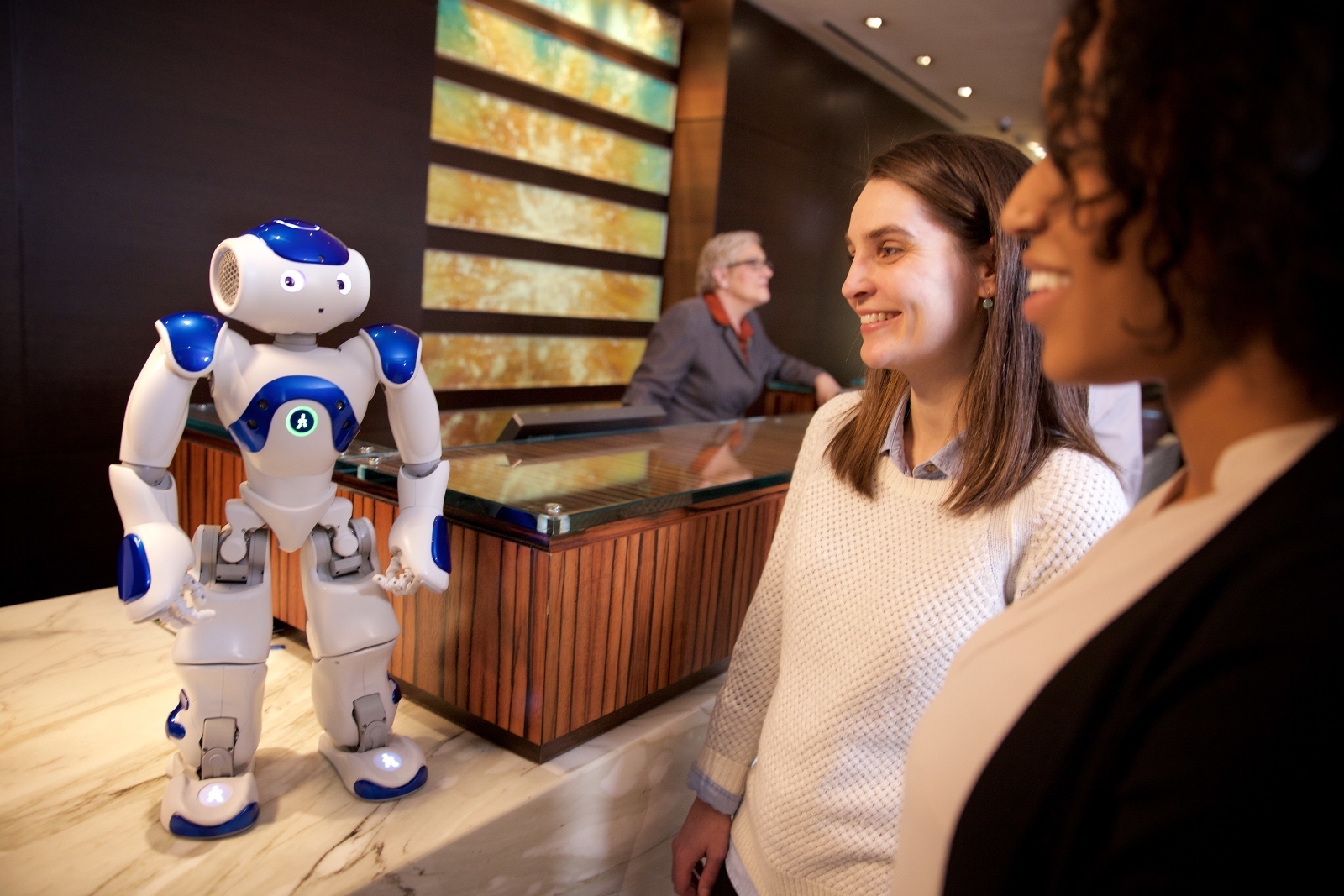
    Connie is a Nao robot, a French 58cm-tall bot which is powered by IBM’s AI tech, Watson Smart. IBM claims that this Robo Concierge can understand speech, and the tech giant further claims that it enables the ‘bot to greet guests, answer questions about the hotel, and provide details about local services, sights and restaurants.”

    Talking about the move, Rob High, chief technology officer of Watson said in a statement,

    “This project with Hilton and WayBlazer represents an important shift in human-machine interaction, enabled by the embodiment of Watson’s cognitive computing. Watson helps Connie understand and respond naturally to the needs and interests of Hilton’s guests—which is an experience that’s particularly powerful in a hospitality setting, where it can lead to deeper guest engagement.”

    Just in case you were wondering, Hilton’s friendly Robo Concierge, Connie, is not the first robot to to be employed by a hotel. Japanese hotel, the Hen-na in Nagasaki has a staff which is majorly manned by robots, speaking both Japanese and English.


  • RoboHon is a Tiny Robot Phone That is All Kinds of Adorable

    RoboHon is a Tiny Robot Phone That is All Kinds of Adorable

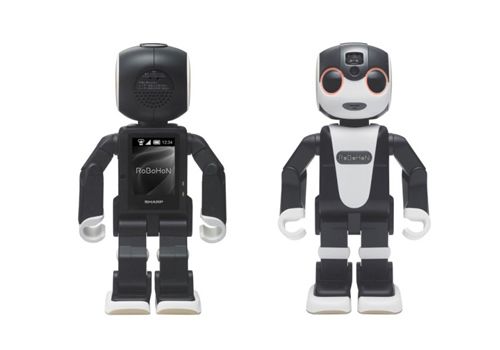
    We bring you news straight from Japan, and it’s tech related. So yes, it has something to do with robots. But this time its not just any robot. It’s Japan doing what it does best – making a smartphone that looks like a cute little robot.

    RoboHon

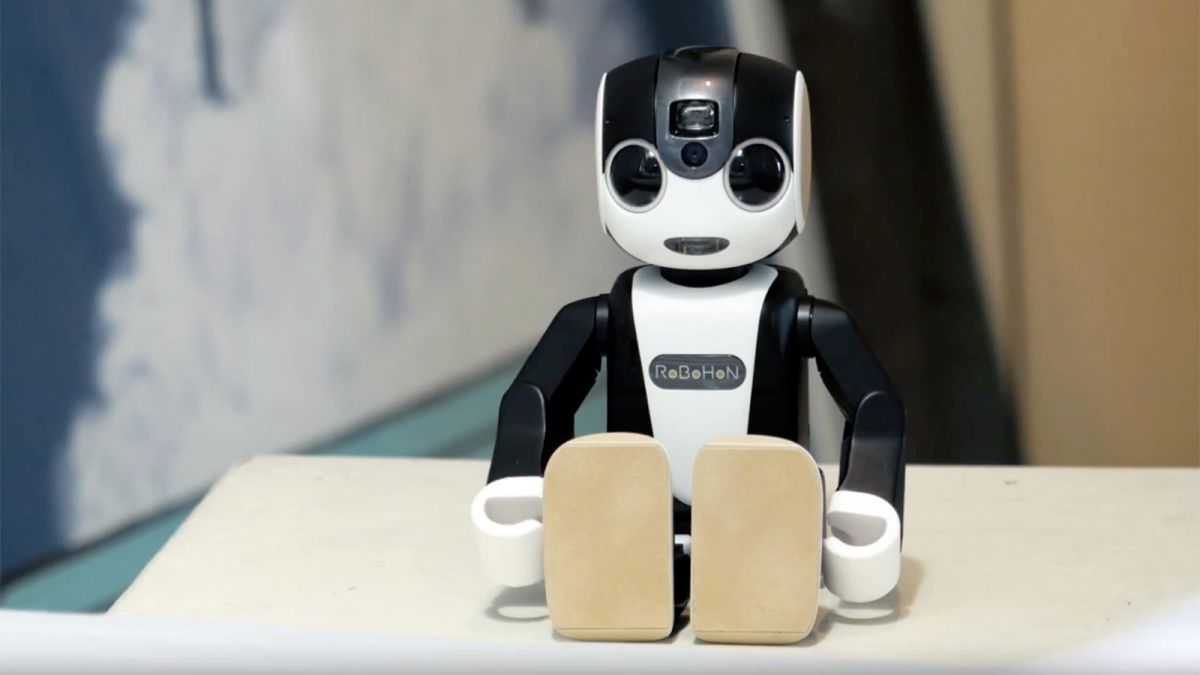
    Move over, Pepper, there’s a new robot in town and it’s called RoboHon. This tiny robot smartphone is the latest creation announced by Sharp and designed by Tomotaka Takahashi, and it is jammed full of skills and features. If you ever decide to leave your sleek and thin smartphones for a bipedal robot phone with arms and legs and a mouth, then this is what you need. You’d also need to move to Japan for it, but that’s besides the point.

    robohon

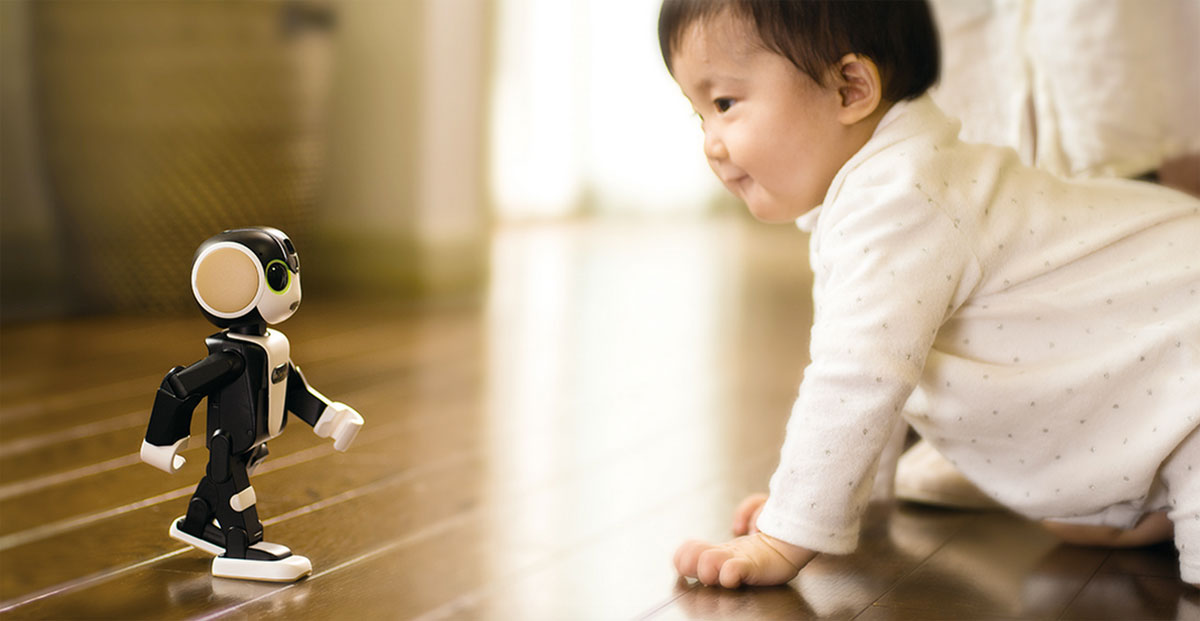
    RoboHon is an 8-inch robot with a 2-inch screen on the back  and a camera and projector built into its face. This phobot (phone + robot) can walk, talk, dance, raise its arm to get your attention, and can also connect to LTE and WiFi. RoboHon has facial recognition, and voice recognition built-in too. So it can identify people and act accordingly, telling them they have a new message or to smile for the camera. You can also set reminders and RoboHon will respond like Siri, though a lot less creepy. It also promises to be there to cheer you up when you’re feeling blue.

    Now, this robot phone is not exactly going to be easy to fit in your pocket, and is the complete opposite of how other smartphones are evolving, but hey, its still an adorable looking robot, so that’s reason enough to bring a smile to your face. Sharp says it will release RoboHan in Japan in the first half of 2016. Watch the video of the multi-purpose, joyful tiny bot below. We’re sure it’s going to be the best thing you’ve seen all day.

    https://www.youtube.com/watch?t=55&v=HQtIlxe_ZkY

  • In Australia, a Robot Waited in Line to Buy the New iPhone 6s

    In Australia, a Robot Waited in Line to Buy the New iPhone 6s

    The possession of an iPhone right after its release is not an easy task, you’ll have to wait in long lines outside stores for days until you receive it. Seems like a horribly inconvenient thing to do, especially when your life really doesn’t come to a standstill just because the new iPhone has come to town. But a lady is Australia has found the perfect solution to get her iPhone while standing in the long line and at the same time go to work.

    lucy

    The idea is something like Sheldon Cooper’s TV Robot, in the episode where he was ill and hence created a virtual robot with a TV Screen attached to a Segway-type device, which could go to work while he was lying in bed sick at home.

    Lucy Kelly a resident of Sydney, Australia has used a telepresence robot to stand in line instead of her. It is basically an iPad attached to a sleek segway looking device. This robot reportedly arrived at the Apple store at 5:00am and is fourth in line to receive the new iPhone 6s. Further reports also suggest that Kelly’s company often uses this device to attend meetings half way around the world.

    “We use them for everything, just to show new technology. It is a cool demonstration of what the future of technology will be,” said Kelly

    This device works through an app that allows people to connect from anywhere and communicate via an iPad. The device is in line forthe iPhone 6s and 6s Plus which is arriving first in Australia. The question now arises about an overnight stay. Where is the robot going to find shelter? Well Kelly has taken care of it. The robot, who is named Lucy will stay in a special tent that comes with a charger and keeps it dry in case it begins to rain. Once the momentous time arrives, the robot will be able to buy the iPhone 6s without human interaction.

    lindsay

    Good luck to Lucy. Maybe gen-next is getting smarter because as long as you are get inspired by Sheldon Cooper, you should be just fine.

    Source : [tw-button size=”small” background=”#07ABE2″ color=”” target=”_blank” link=”In Australia, a Robot Named Lucy Waited in Line to Buy the New iPhone 6s http://1gn.in/1NQ3iir”]Mashable[/tw-button]

  • Japanese Robot Successfully Extracts A Wisdom Tooth

    Japanese Robot Successfully Extracts A Wisdom Tooth

    Few months back, a Japanese robot successfully removed a wisdom tooth of a 55 year old man in a local clinic in Tokyo. The robot, who is rightly nicknamed “Al Dente”, removed the tooth without any inconvenience to the patient.

    The robot is part of a Japanese program that is looking to substitute 30% of Japan’s dentists with robots by the year 2030. “We knew the software is perfect, we knew Al Dente has all the capabilities to maintain such a delicate mission but from this, to completing a successful wisdom tooth removal… I mean, there were moments I felt pity for that man on the dentist chair. It’s good to know that our experiment had a happy end, knowing from previous tests that much more blood could have been spilled there,” said Ishaki Morakuni, one of the developers in the program.

    This program is finding strong reactions from certain parts of the world who are concerned that the idea of robots such as “Al Dente” substituting humans could lead to the disappearance of the profession itself. “This is our job of which we’re very proud,” said a spokesman of a small group in France. “We don’t like the idea of them (robots – O.N.) coming and taking our place. People must understand that even if robots can pull put an aching tooth, they will not be there to tell us jokes or calm us down when blood is pouring down like a river.”

  • Larger Than Life Robots to go on Battle in a US Vs Japan Fight

    Larger Than Life Robots to go on Battle in a US Vs Japan Fight

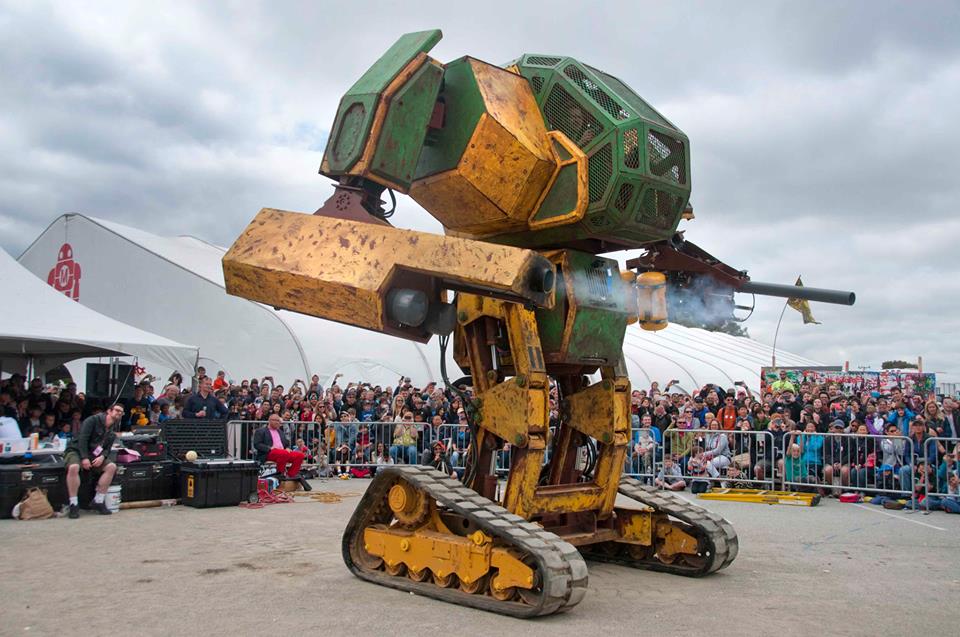
    This is the real deal for those who always wanted to see a duel between gigantic robots. It may become a reality within a year, it seems. And no, it is not for a new movie. This challenge has been put up by USA to Japan, which has already been accepted.

    MegaBots founders Gui Cavalcanti and Matt Oehrlein, have issued the challenge to Suidobashi Heavy Industries from Japan through a video on YouTube. In true American style, the video is done teeming with full patriotism as the whole message borders on parody, in a hilarious way, of course.

    Suidobashi, we have a giant robot, you have a giant robot. You know what needs to happen. We challenge you to a duel.

    Suidobashi’s response to them is also clever and witty where the video stars the creator and founder, Kogoro Kurata wrapping a Japanese flag as a cape.

    However in a more serious fashion, the Japanese were apparently calm and collected in their response, stating,

    We cannot let another country win this. Giant robots are all about Japanese culture.

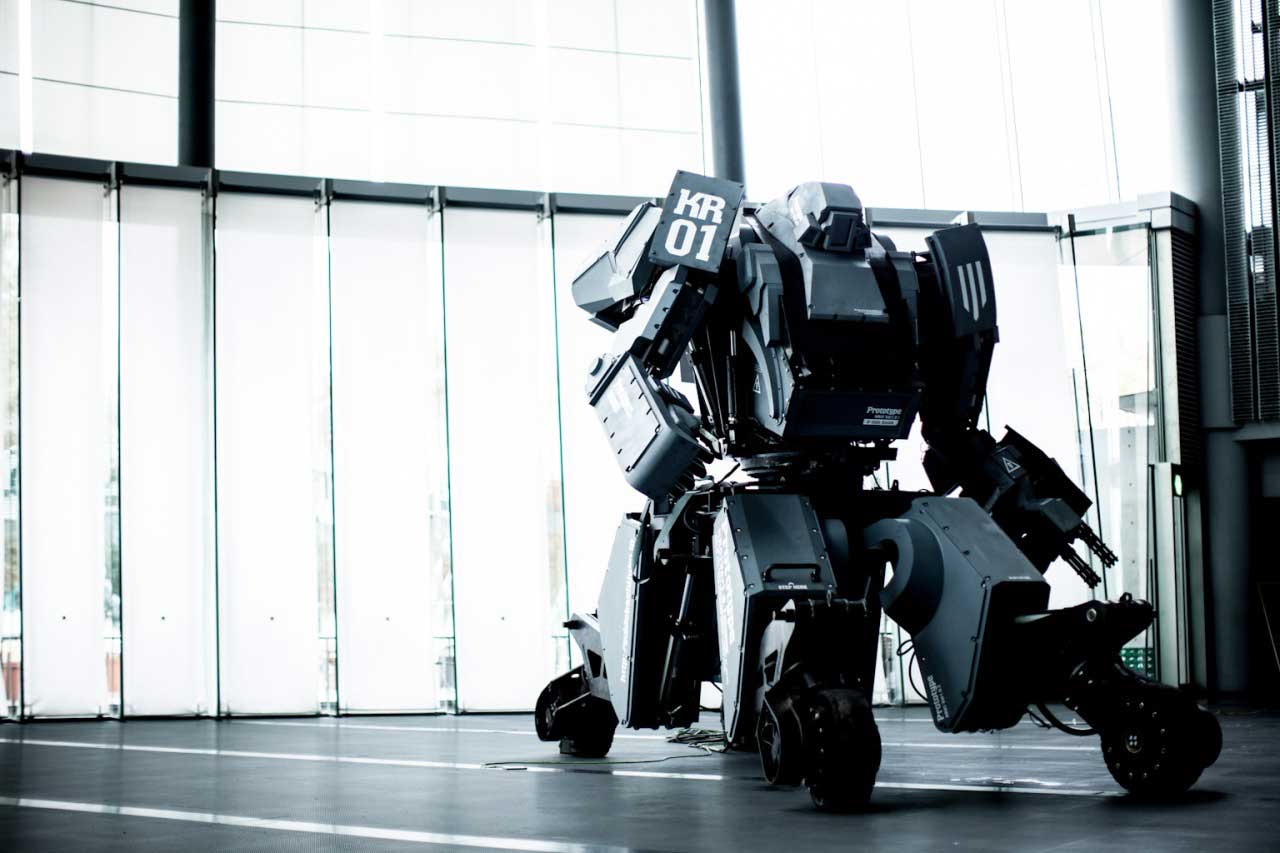
    The MegaBots Mark II robot is 15 feet tall, weighs 5.4 tons and carries enormous paintball guns that can shoot projectiles at speeds exceeding 100 mph. Meanwhile, the Kuratas is a 13-foot-tall robot that weighs 4 tons and is decked with diverse weapon systems, including a “smile-activated” BB Gatling gun. Kuratas is guided by one person while the Mark II needs a two-man crew.

    MegaBots’ primary challenge demanded that the battle should happen in one year’s time, and Kuratas replied by recommending that they even forego the cannons and punch it out in an old-fashioned brawl. Although additional specifics for time and location have not been released, let’s all pause for a moment and consider that the world we have been expecting is finally here.

    Let us compare the bots:

    Name: Mk. II

    Mk. II
    Designers:
    Location: San Francisco, California
    Debut: 2015, Bay Area Maker Faire
    Height: 15? (standing)
    Weight: 12,000 lbs
    Cockpit: Dual pilot
    Locomotion: Two tracks, from a CAT 289c skidsteer, one of the largest made. Legs are  A36 plate steel, lasercut and welded at the seams. 13 degrees of freedom across 20 hydraulic actuators
    Power: 24HP honda gas engine spinning a hydraulic gear pump
    Armaments: Arm cannons. The right arm can fire 3lb, 6? paint cannonballs at 130mph. The left arm has a 20x shot missile launcher, firing 2.5? circumference paint missiles 150mph.

    Name: Kuratas

    Kuratas

    Creator: Kogoro Kuratas, Suidobashi Industries
    Location: Tokyo, Japan
    Debut: 2012
    Height: 13.1? (standing)
    Weight: 9,900 lbs
    Cockpit: Single pilot
    Locomotion: Four wheels, each mounted to individual legs. 30 hydraulic actuators
    Power: Diesel engine
    Armaments: BB mini-gun shooting 6000 rounds per minute, water bottles
    Note: You can order your own Kurata mech suit from Amazon.jp for just $1 million.

  • The Future is nearer than ever as South Korea tests Robot Guards for Prisons

    The Future is nearer than ever as South Korea tests Robot Guards for Prisons

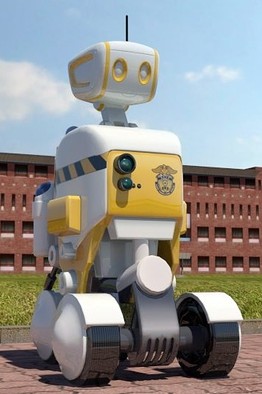
    South Korea is aiming hard and fast to become the leader in Robotics. The country is also the first to test out robot prototypes for use in security installations. Nothing close to the terminator movies and more like Wall-E these robots will be used for basic security details and will be equipped with tactical advantages against prisoners. 

    Unlike CCTV that just monitors cells through screens, the robots are programmed to analyze various activities of those in prison and identify abnormal behavior

    -Prof. Lee Baik-chul of Kyonggi University

    The robots can also work as a communication channel when inmates want to contact guards in an emergency. According to Mr. Lee, prison officers have welcomed the idea because the robots can potentially reduce their workload, particularly at night.

    But the robots are not terminators. Their job is not cracking down on violent prisoners. They are helpers. When an inmate is in a life-threatening situation or seriously ill, he or she can reach out for help quickly.

    – Prof. Lee Baik-chul

    [WSJ]

  • Largest OEM To Replace 1 Million Employees With Robots

    Largest OEM To Replace 1 Million Employees With Robots

    Taiwanese based  original equipment manufacturer, Foxconn has announced that it is going to supplant its workforce with close to a million robots. The two things that Foxconn is most famous for are the spate of suicides that plagued the factory or for the fact that it manufactures most of the gizmo’s around you (including the iPad and iPhone).

    At the moment the company currently employs 1.2 million workers and has around 10,000 robots as well. The number of robots will be increased to 300,000 by the end of 2012 and by 2014, it will be increased even further to 1 million. The number of workers that will be displaced by the robots is uncertain at this time. However, it would be very unlikely that Foxconn would be looking to hire over the next three years.

    The Foxconn chairman Terry Gou informed workers of the plan at the company Dance Party. Not the occasion we’d have picked…

  • Lens Free Camera Developed at Cornell

    Lens Free Camera Developed at Cornell

    Patrick Gill, a postdoctoral associate, led a team that invented the camera in the laboratory of Alyosha Molnar, assistant professor of computing and electrical engineering at Cornell. Their working prototype, resolves images 20 pixels across, which is not studio quality but is quite impressive from a camera that’s only a hundredth of a millimeter thick. The camera was developed to shed light onto objects that were previously hard to see.

    Gill’s camera looks like a tiny compact disc and is made of a flat piece of doped silicone, which makes its manufacturing costs amount to just a few cents. The camera is incredibly small and light and is much cheaper than traditional small cameras which cost a dollar or more to manufacture and require bulky focusing optics.

    The scientists call the camera a Planar Fourier Capture Array (PFCA) since it uses the principles of the Fourier transformation, which is a mathematical tool that allows multiple ways of capturing the same information. The scientists would continue to refine the camera’s resolution and efficiency as they believe that such a device can have a multitude of applications. It could be used in devices that need to measure the angle of the sun or in a simple robot that requires a vision system to navigate.

  • Liquid Robotics to Launch Wave Gliders to collect Oceanographic Data

    Liquid Robotics to Launch Wave Gliders to collect Oceanographic Data

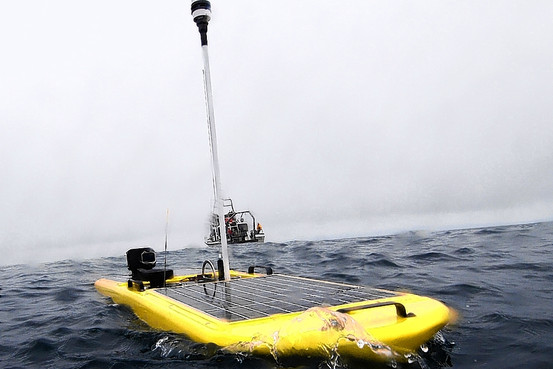
    Liquid Robotics, a Silicon Valley startup, makes remote controlled robots that cruise the open ocean and gather data. The company plans to collect this data and offer it up to consumers on the web. The machines, called Wave Gliders, can keep track of all sorts of data including whale songs, wave heights and the presence of nearby ships. The company plans to sell these robots to governments, research institutions and energy companies for between $1,50,000 and $5,00,000 a piece depending on the included components.

    The wave glider features a 6-foot, 10-inch-long floating section equipped with solar panels, a battery and sensors. Tethered 23 feet below the float in the water is a similarly sized glider with metal wings and a rudder that propel and steer the device.

    The inventor of the device, Robert Hine, originally made the device for a friend who wished to study whale songs off the coast of Hawaii. He started designing and fabricating the machines in 2005, taking every other week off from his job as a semiconductor engineer. He experimented with different Electric Engine designs, but they all failed. After much research, he came up with a design that harnesses the natural energy in waves, like a sailboat harnesses the wind.

    The gliders ‘wings’ use the up and down motion of the waves to propel the device forward at a pace of around 1.5 miles per hour. Operators are able to map out a route and have waypoints transmitted to the robot via satellite. It then uses GPS signals to follow the programmed route. The robot is unable to remain still but can criss-cross the same area.

    Because the gliders are essentially floating platforms that can be programmed to go anywhere, there are many possible uses. They can measure ocean and air temperature to help predict storms and water currents and wave height for shippers trying to determine the safest route for their vessels. They also can help oceanographers monitor whales and other aquatic life. In crowded areas like the Gulf of Mexico, gliders could collect location, speed and destination information for ships—information that now is sent through radio signals—and display the information on a map. There are less obvious uses as well. Mr. Vass imagines equipping gliders with cellular towers to provide coverage in the middle of oceans. Also, gliders could be programmed to dispense fish food, creating fish farms that move around at sea.

    Liquid Robotics isn’t the only company that makes unmanned sea vehicles for data collection. iRobot Corp., creator of the Roomba vacuum cleaner, makes a glider that collects information up to 3,000 feet under water, surfacing from time to time to transmit its findings and collect new instructions. The Slocum glider from Teledyne Technologies Inc. works in a similar way. Both gliders can collect information from far deeper in the ocean than the one from Liquid Robotics, but aren’t able to transmit data continuously.

  • Scientists Develop Robotic Skin

    Scientists Develop Robotic Skin

    The human skin is a magnificent sensory organ. It can detect the minutest gust of wind to a single touch. Robots however, are unable to sense the world around them in this fashion. Scientists at the Technical University of Munich (TUM), Germany, are developing an artificial skin for robots with a similar quality.

    The skin will provide important tactile feedback for the robot and augment its existing camera “eyes”, its infrared sensors and gripping tools. As with human skin, the way the artificial skin is touched could trigger different reactions from the robot. It could for example, run away when hit, or use its eyes to see what has touched it.

    The centrepiece of the new robotic skin is a five square cm hexagonal plate or circuit board. Each small circuit board contains four infrared sensors that detect anything closer than one cm. There are also six temperature sensors and an accelerometer, which allow the robot to accurately measure the movement of its limbs. The circuit board was designed keeping future expandability in mind, hence it can have more sensors attached as needed.

  • Mech Warrior – Kiddie Style

    Mech Warrior – Kiddie Style

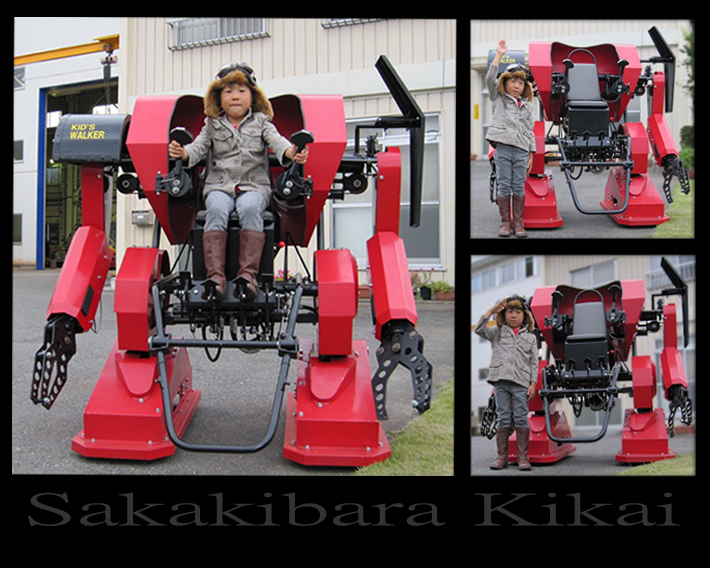
    When we  were children, we had a lot of toys that we thought were really cool. Among them were some Hotwheels cars, a few GI-Joe action figures (which we had great fun with on Diwali —- Read EXPLOSIONS), some LEGO and a few other things. Today, kids have all the fun. Japanese manufacturer Sakakibara Kikai has released a fully functional Mech Suit , with working claws, for your child to terrorize his/her peers into submission.

    Weighing in at a whopping 340kg, the suit is 1.6m in height, 1.6m wide and 1.3m deep. It runs on a gasoline engine and is perscribed for children of ages 4 and up. The suit costs 1,800,000 Yen. it looks like they’re working on a model for adults as well.

  • Record Breaking Robot Still Slower Than a Human

    Record Breaking Robot Still Slower Than a Human

    A rubik’s cube solving robot from Swinburne University in Australia has shattered the world speed record by spinning the cube to show all solid colors in a mere 10.18 seconds. The thing is so fast, that it looks like they housed it inside a protective box just in case the cube flew into several pieces.

    Despite all that speed, the robot doesn’t come close to 15 year old Australian Feliks Zemdegs, who recently broke his own human record with a 6.24 second solve.

  • Samsung introduces a super quiet robot vacum : Tango

    Samsung introduces a super quiet robot vacum : Tango

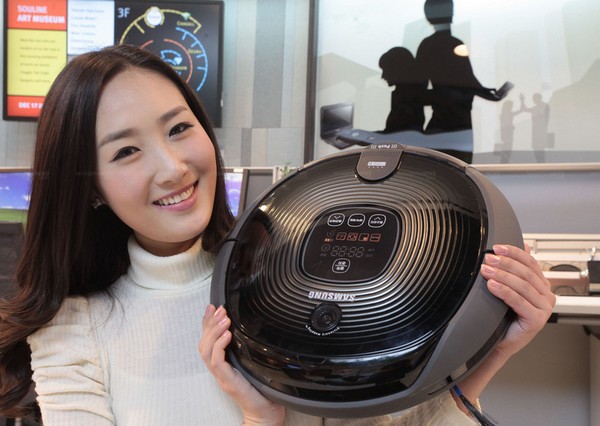
    The newest vacum cleaner from Samsung termed the “intruder” is super quiet at just 50db of noise level, Priced in Korea for about 750,000 Won (32,,000 Inr). The company plans to launch it worldwide by August 2011.


    Via : Engadget

iGyaan Network
Privacy Overview

This website uses cookies so that we can provide you with the best user experience possible. Cookie information is stored in your browser and performs functions such as recognising you when you return to our website and helping our team to understand which sections of the website you find most interesting and useful.