Tag: Telecom companies

  • Airtel Joins Hands With Tata To Survive The Jio Storm

    Airtel Joins Hands With Tata To Survive The Jio Storm

    The introduction of the Reliance Group’s Jio network has brought substantial changes in the Indian telecom industry. It is a common occurrence in businesses to have acquisitions and mergers taking place for mutual benefit between two or more parties. The added edge of two companies working together helps provide an advantage to both parties and increases economical prospects, such as the Airtel and Tata merger.

    According to a new report, Tata Teleservices’ Consumer Mobile services have now officially been integrated into Bharti Airtel. The news of the completion of the merger arrived after a joint statement issued by both the companies.
    Telecom services

    The aforementioned companies have seen their fair share of business troubles ever since the debut of the highly competitive Jio network. Reliance Group’s critically acclaimed network had brought data packages and call rates to an all-time low. Noteworthy, India currently holds the title of consuming the highest amount of mobile data per head, which is somewhat due to the Jio revolution. This seemingly undercut every one of the prevailing competitors such as Airtel, Vodafone and Idea. Furthermore, the move caused massive losses to other telecom service providers and forced many to slash rates or start a joint venture, such as the Idea India and Vodafone merger.

    Airtel

    As of July 1st 2019, the arrangement regarding the merger of the Consumer Mobile Businesses of Tata Teleservices and Tata Teleservices (Maharashtra) into Bharti Airtel and Bharti Hexacom are now in effect. In accordance with the merger, Airtel will absorb the Tata Telecom services operations in 19 telecom circles. It has also agreed to take all the customers, assets, spectrum, and agreed liabilities of the Consumer Mobile Business from Tata.
    Tata

    Also ReadA 15 Year Old Indian Stabs Elder Sibling Over PUBG Mobile

    The merger will boost Airtel’s spectrum pool with a significant addition of 178.5MHz spectrum in 1800, 2100 and 850 MHz bands. These are used in 4G and translate to better overall connectivity, spread and penetration of the network. This is a welcomed move as existing Airtel and even Tata customers will largely benefit from the business merger. It is yet to see how performance is affected in real-world practice but positive results are expected all across the board.

  • Airtel Gearing Up To Boost High Speed Data Network With Project LEAP

    Airtel Gearing Up To Boost High Speed Data Network With Project LEAP

    Airtel has taken some more steps towards its goal of its complete network transformation. The telecom provider, which is one of the leading in India and was at one point of time, amongst the largest int he world, plans to get back on track. Airtel’s 4G network already covers 100% of Karnataka. It is the only telecom provider in the region to offer 4G, 3G and 2G services. to give a recap of its journey in the state, here are some numbers:

    • 4G services on 2300 MHz launched in 2012
    • 4G services on 1800 MHz launched in 2015
    • VoLTE services launched in November 2017
    • Towns and villages covered by network  – 39,000

    Now, in an effort to maintain their lead in this territory, the company will rollout 13,000 new mobile tower sites and also spread a 4500 km long optical fibre network that will enable them to boost high speed data network capacity.

    Also Read: Google Building A Separate Search Engine For China

    This rollout will also include deployment of Pre-5G Massive MIMO (Multiple Input, Multiple Output) technology in vital residential and commercial hubs. However, the success in Karnataka is just a demonstration of the ongoing Project LEAP.

    Project LEAP:

    Airtel started working on project LEAP back in 2015 and planned a massive investment of Rs 60,000 crore. Some of that has already been used up and the remaining will be spent in the upcoming future.

    The key points of project LEAP are:

    • Create India’s first Open Network – An open network will allow users to see the mobile network coverage in their area with the help of simple colour schemes. These colour schemes will define whether the network quality in their location is excellent, good, moderate or has no-coverage.
    • Users will also be able to locate company outlets and service centers with the help of a graphical map an easy to read colour schemes.
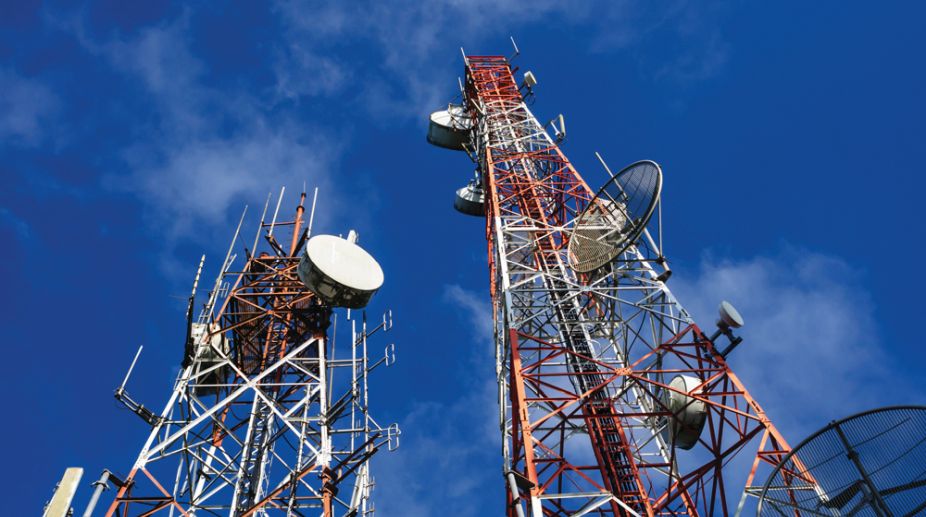
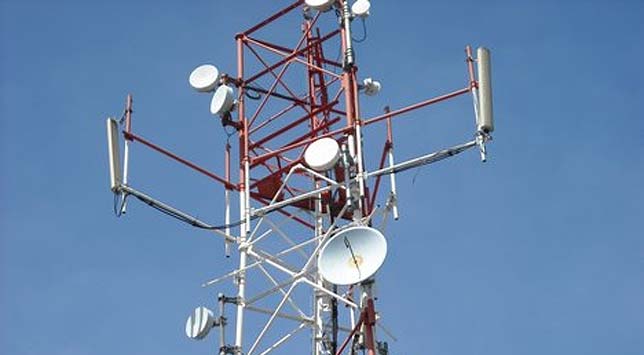
    • Under project LEAP, Airtel also plans to strengthen their network of mobile towers throughout the nation. The company will upgrade current towers and will also increase the number of towers.

    A New Telecom Leader?

    Airtel might be taking these steps as a counter-attack towards Jio. Airtel posted it first loss in 15 years, months after the arrival of Jio. Furthermore, Jio is continuously gaining traction since its launch. Jio scaled quickly because it adapted 4G  technology faster than Airtel and now Airtel is trying to use the same trick to get back its lost marketshare. Airtel wants to be prepared when the 5G devices come out in 2019. It will allow Airtel to fight hard against big telecom players like Jio and the recently announced merger of Aditya Birla’s Idea and Vodafone group.


  • India To Roll Out 5G Internet By 2020

    India To Roll Out 5G Internet By 2020

    India is planning to roll out 5G internet services by the year 2020. In order to complete this task successfully, the government has set up a high-level forum which will evaluate all possible roadmaps to make sure that 5G internet becomes prominent in the country. For the said objective, the ministries of telecom, information and technology, and science and technology have been included in the forum. A budget of Rs 500 crore is set aside for research and development of 5G technology by the government.

    The minister of State for Communications Manoj Sinha said:

    We missed the opportunity to participate when the standards were being set for 3G and 4G, but don’t want to miss the 5G opportunity. Now when the standards are being set for 5G across the world, India will also participate in the process. As per the OECD Committee on Digital Economic Policy, it has been stated that 5G technologies rollout will help in increasing GDP, creating employment, and digitising the economy.

    Apart from the government, Indian telcos such as Airtel are also actively taking initiatives toward the 5G technology. Airtel on 26th September launched a mimo, a pre-5G technology, producing internet browsing speeds three times higher than the current levels. State-run Bharat Sanchar Nigam Ltd. along with Airtel have also signed initial pacts with smartphone makers such as Nokia for the development of 5G and its applications which are relevant to India.

    India was slow to jump aboard the 3G and 4G train. Even currently, the 4G technology adoption is at a nascent stage whereas a lot of countries have adopted 4G and even 3G has become a secondary internet technology. In order not to lose out on the 5G hype, India is planning to hold auction for 5G spectrums. While a part of the government back an early sale of 5G airwaves, the telecom industry wants it to be sold only post 2018, citing the lack advanced ecosystem around the technology as the main reason. The industry also believes that India will get 5G only around 2021-2022.

    The International Telecommunication Union (ITU), which will finalise the standards for 5G mobile technology proposed the downlink peak rate for 5G at 20 gigabits (or 20,000 megabits) per second. These speeds however, cannot be ascertained yet since the technology is yet to be deployed.

    A country where even 4G speeds at the moment are underwhelming and network speed throttling is a major issue, 5G technology becoming a regular for consumers seem like an overkill or a distant dream. But, the forum setup by the government includes all the important bodies necessary to make 5G technology a relevant dream in the future. The high-level forum will work towards accelerated deployment of 5G for specific use cases in India, and these will include development of roadmap related to emerging technologies, testing, and trials.

    Manoj Sinha has said that India is “We are open to collaboration” with countries who have set up a similar forum. This early resilience shown by the government is definitely a positive sign and a step in the right direction.

  • TRAI Makes it Mandatory for Telecom Companies to Compensate for Call Drops

    TRAI Makes it Mandatory for Telecom Companies to Compensate for Call Drops

    There is someone out there who feels that people have suffered long enough from dropped calls. The Telecom Regulatory Authority of India (TRAI) today made it mandatory for telecom companies to compensate consumers for call drops. Customers will now be compensated by 1 rupee for every call drop with a limit of three dropped calls a days.

    This new ruling will be made effective from January 1, 2016. Telecom operators will have to send a message through SMS or USSD to its calling customer giving details of the amount credited in his/her account within four hours of a dropped call. The detail of the credit should be provided in the bill for post-paid customers.

    Call-drop-tower

    TRAI said that this mandate will give some relief to consumers who have been troubled by call drops. At the same time, this new rule will cause service providers to improve their quality of service. TRAI also said that it will make sure service providers are compensating consumers properly and will undertake a review after six months.

    Accroding to some reports, telecos are not at all pleased with this decision and are looking in to this matter with a possibility of taking TRAI to court. Individual service providers are complaining of serious financial hit with this move. “It will be a hefty payout and, in many cases, it is not technically feasible to monitor call drops.”

    A final decision is expected to be taken in a day or two.

  • Government Reprimands Telecom Companies for Providing Terrible Service

    Government Reprimands Telecom Companies for Providing Terrible Service

    As users complain of call drops and call lags, the government has asked Telecom companies to improve their standards by ‘focusing on improving capital expenditure and optimising resource utilisation to curb call drops,’ as stated by Business Standard.

    “The projected acute shortage of towers due to non-cooperation of state government and local bodies can’t be accepted as a reason for the call drops in last four to six months as this problem has assumed severe proportion during this period,” it said.

    A meeting was held on Tuesday with the Telecom Secretary Rakesh Garg and the CEOs of telecom service providers (TSP) and the main issue of call drops was discussed at length. Garg concluded the meeting by saying that the government was lending as much support as possible regarding ‘the issue of dispelling of unfounded fears from EMF radiation and other issues raised by TSPs.’

    He also asked the TSPs to look into areas such as deployment of additional sites to ensure optimum coverage, use of geo-spatial tool for micro-analyzing time-spatial performance, real time network optimization and load balancing etc, which will all lead to the betterment of the QoS (Quality of service.)

    In response, the operators have claimed an investment of Rs.134,000 crore, out of which Rs.24,000 crore is for capital equipment with a capital expenditure revenue ratio of 73% against global coverage of 12-18%.

    The government issued another statement saying:

    “There is an immediate requirement of rigorous optimisation exercise to be taken up by all service providers.”

    Now that the operators have been picked up for not being able to deliver good service quality,  they have assured the government that they will take action for optimisation of networks and do it on a regular basis, thereby improving the overall performance.

    Let’s hope these aren’t false promises.

iGyaan Network
Privacy Overview

This website uses cookies so that we can provide you with the best user experience possible. Cookie information is stored in your browser and performs functions such as recognising you when you return to our website and helping our team to understand which sections of the website you find most interesting and useful.