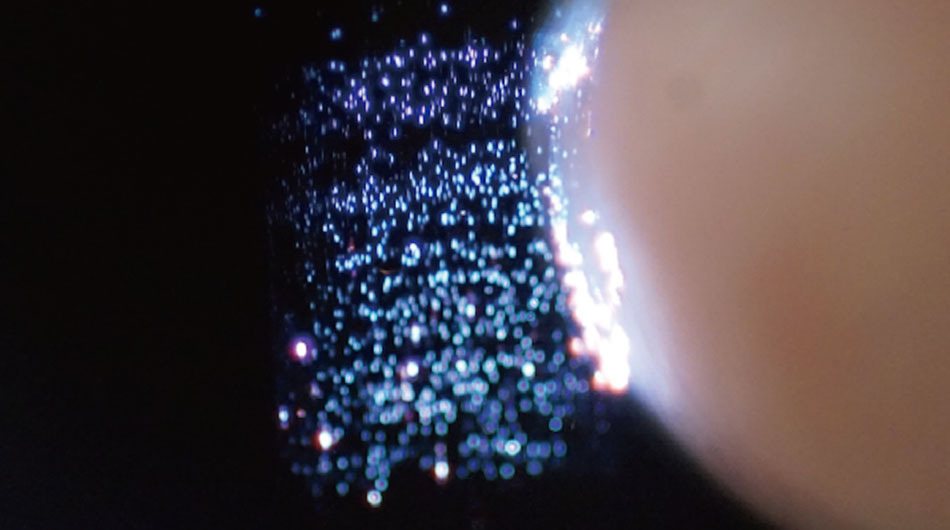
In a not-so-distant future, you will be able to interact with holograms, Tony Stark-style. Thanks to researchers at Japan’s Digital Nature Group, a system has been developed which allows you to touch holograms composed out of lasers.
According to the lab, they have used femtosecond lasers to develop “a method of rendering aerial and volumetric graphics”. For those unfamiliar with the concept, femtosecond lasers emit pulses for a very short duration, i.e., for one millionth of a billionth of a second. The short-duration pulses “excite” matter to create “voxels” of light, which draw 3D holograms at a resolution of “4,000 and 200,000 dots per second”.
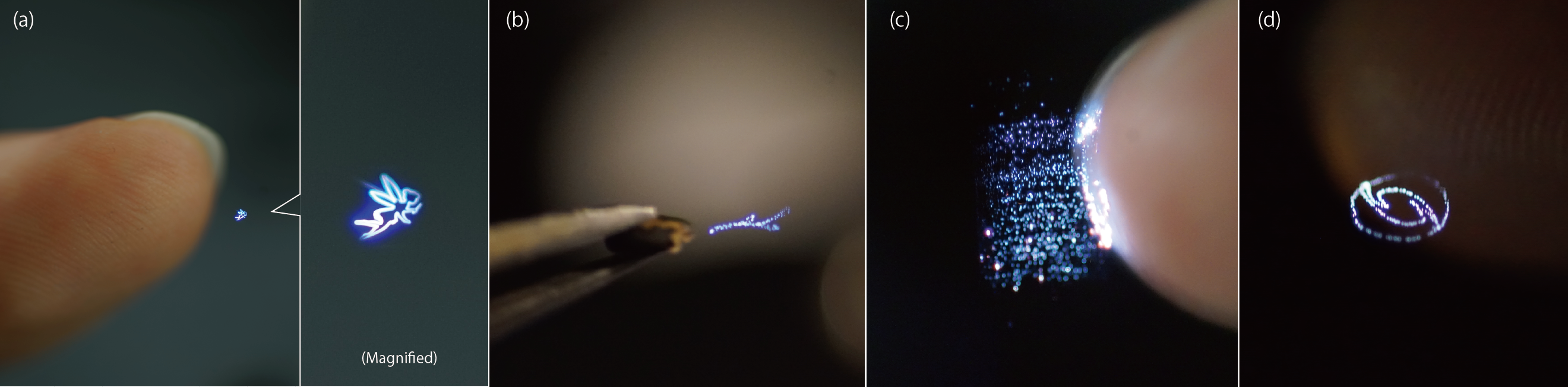
Although lasers have been used to create 3D holograms in thin air, the fact that they are unsafe for humans is what makes this latest development exciting. Due to the faster nature of femtosecond lasers, scientists at Digital Nature Group have recognised this quality and used it to create a hologram that one can actually safely touch. As the team explains, shock waves are generated by plasma when a user touches the plasma voxels. The user feels an impulse on the finger as if the light has physical substance.
This new technology has many daily-life applications and if applied properly, it could revolutionize virtual-reality since it is a new form of haptic interface. .
The team will demonstrate femtosecond laser-based holograms to the public as a part of the Siggraph 2015 exhibition in August 2015.
This video will explain you the mechanism behind the interactive hologram:

Leave a Reply