
Back in March, NVIDIA showed off its roadmap of its Tegra SoCs and what we can expect from them. Well, it may be late July, and we may be still waiting on Tegra 4 devices to pop up, but NVIDIA clearly hasn’t stopped working. The company recently showcased some of the features in Project Logan, with a large focus on Mobile Kepler.
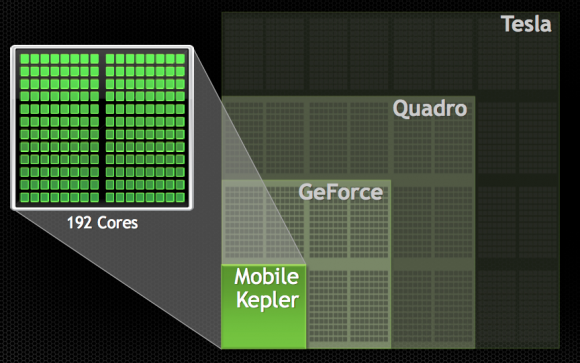
Today the company revealed that its upcoming mobile chip will utilize the same Kepler graphics architecture found in its latest desktop and laptop GPUs, bringing graphics that exceed PS3 and rival current PCs to smartphones and tablets. Behold Project Logan.
“I think this is the biggest breakthrough in graphics since we introduced the GeForce 256 (graphics chip) 14 years ago,” said Dan Vivoli, senior vice president of corporate and strategic marketing at Nvidia in Santa Clara, Calif., in an interview with GamesBeat. “But this is 400 times more powerful than the original GeForce. This is the most efficient mobile processor ever designed.”
Kepler supports the full spectrum of OpenGL – including the just-announced OpenGL 4.4 full-featured graphics specification and the OpenGL ES 3.0 embedded standard. It also supports DirectX 11, Microsoft’s latest graphics API.
Nvidia’s first Project Logan prototype chips have been back from the factories for only a few weeks, but the company says they are running cool demos such as Ira already.
[youtube id=”Vx0t-WJFXzo” width=”100%” height=”300px”]
[Via]

Leave a Reply to Aman Arora Cancel reply