Author: Anand Kapre

  • New Software Allows Unlimited Detail In Games

    New Software Allows Unlimited Detail In Games

    Computer games have come a long way since the days of Pacman and Mario. In today’s day, all the cool 3D graphics that you see are made up of polygons. Polygons are nothing but flat images that are joined together to create an object in 3D. The higher the number of polygons, the greater the viewing detail.

    Game developers have been trying very hard for a number of years to increase the polygon count in the games they make. However, computers face a problem when it comes to increased polygon counts. The higher the number of polygons, the greater processing power it takes to render all those polygons. Its because of this limitation that you will find games that have superb detail on one side of an object, while the other side is just a plain texturized image. Putting a cap on the number of polygons leads to a lot of compromises: You want a super detailed character? No problem, but then your world will look bland.

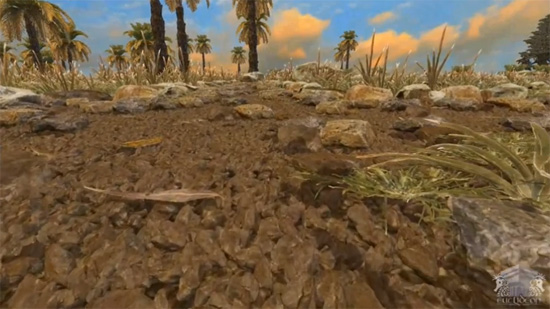
    An Australian company called Euclideon has developed a game engine that does away with polygons and instead replaces them with point clouds that are made up of individual ‘atoms’. So doesn’t increasing the number of objects on screen slow down everything? Well you’d think so but the company says that it has made it work and your computer will make it work too. The company has developed a 1 sq km island using their game engine and each speck of dirt on that island is made up of millions of these ‘atoms’ per cubic inch.

    The plus side to this is that the graphics are amazing. Simply put, polygons just cant cope with the kind of quality that the Euclideon ‘atoms’ can create. The curves that are generated with the ‘atoms’ are amazingly smooth and the level of detail is through the roof. You can quite literally see each individual grain of sand. In the next few years, computer games are going to make a huge leap forward in terms of graphics and we’re very exited about this technology and can’t wait for the company to deliver this game engine into the hands of game developers. Watch the video below for a demo of the engine in action:


  • Largest OEM To Replace 1 Million Employees With Robots

    Largest OEM To Replace 1 Million Employees With Robots

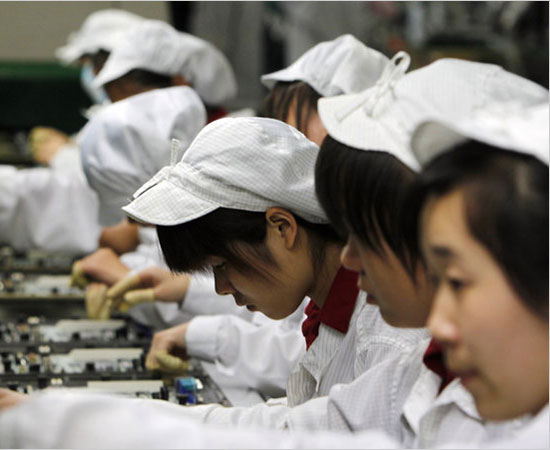
    Taiwanese based  original equipment manufacturer, Foxconn has announced that it is going to supplant its workforce with close to a million robots. The two things that Foxconn is most famous for are the spate of suicides that plagued the factory or for the fact that it manufactures most of the gizmo’s around you (including the iPad and iPhone).

    At the moment the company currently employs 1.2 million workers and has around 10,000 robots as well. The number of robots will be increased to 300,000 by the end of 2012 and by 2014, it will be increased even further to 1 million. The number of workers that will be displaced by the robots is uncertain at this time. However, it would be very unlikely that Foxconn would be looking to hire over the next three years.

    The Foxconn chairman Terry Gou informed workers of the plan at the company Dance Party. Not the occasion we’d have picked…

  • The Orange Sound Charge T-Shirt

    The Orange Sound Charge T-Shirt

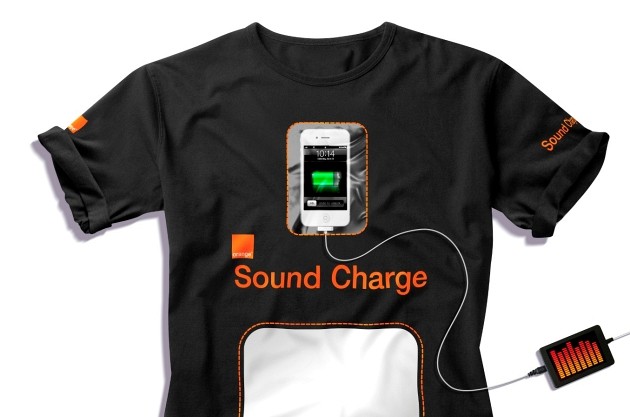
    UK based mobile operator Orange has developed a new T-Shirt that can charge your mobile phone. It uses a piezoelectric film which is stitched on the t-shirt, to capture sound waves, convert them into electricity and store it in a battery. A variety of mobile devices can then be plugged into the battery to charge.


    The Sound Charge uses an existing technology in a revolutionary way; by reversing the use of a product called Piezoelectric film within a specially designed t-shirt, allowing people to charge their mobile phones whilst enjoying their favourite act at Glastonbury.


    Adding more details to the amazing T-Shirt, Andrew Pearcey Head of Sponsorship at Orange UK said:

    We envisage that this pioneering technology could really change the face of mobile charging in environments where eco charging solutions need to be found. It could even influence trends in fashion, with designers looking to integrate this passive charging solution into clothing.

  • The Nendo Data Clip

    The Nendo Data Clip

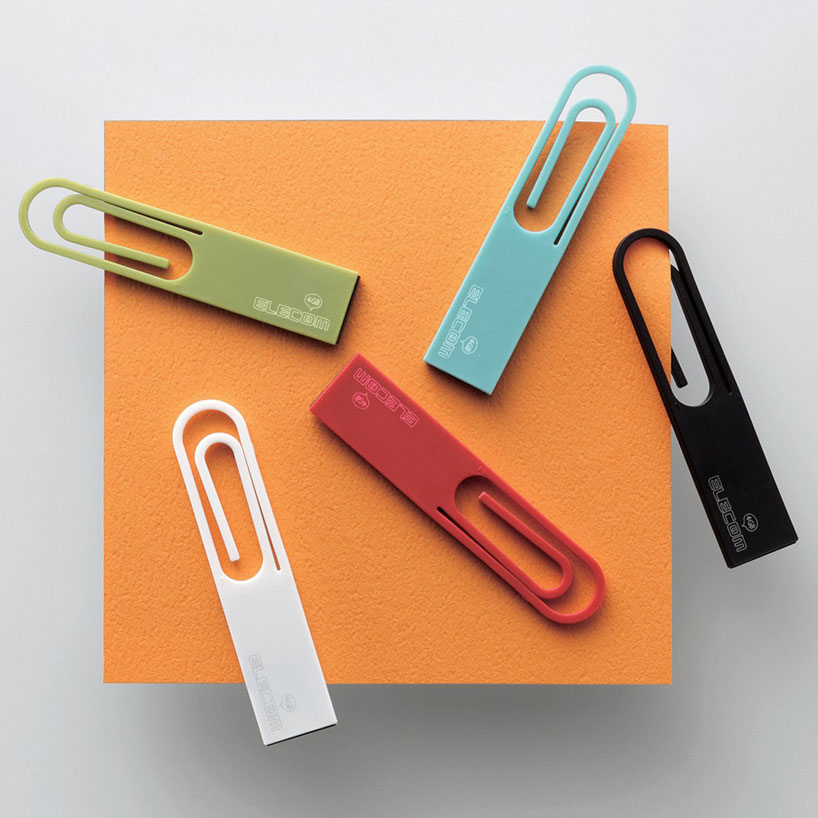
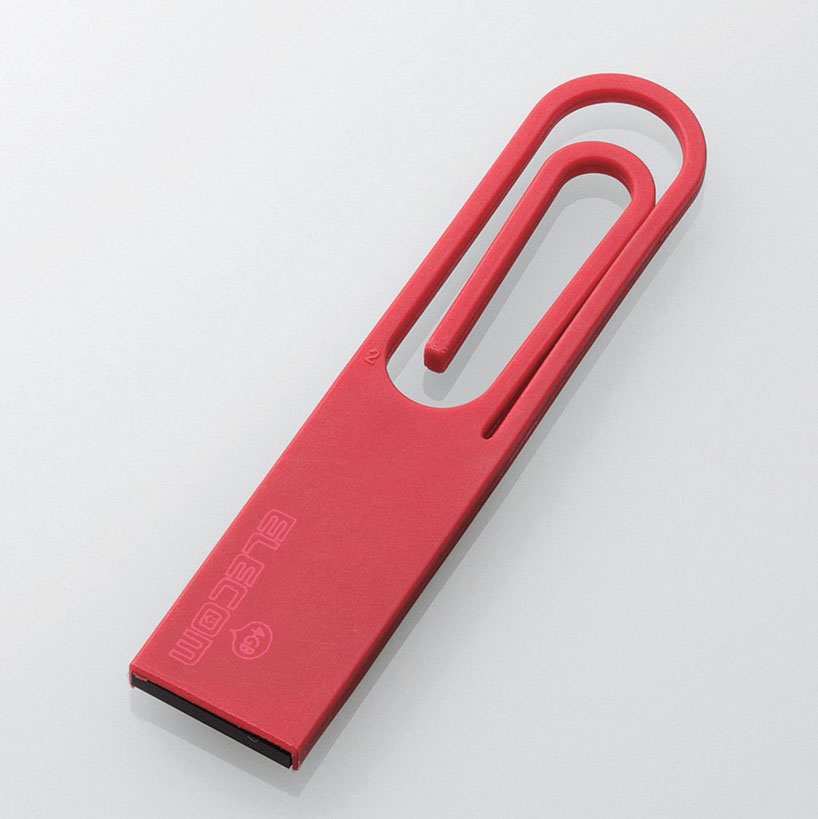
    Nendo, a Japanese company has designed a USB pen drive in the shape of a paper clip for Elecom. The design is supposed to define a new relationship between physical and digital media. It can be used as a standard paper clip to keep papers and files organized.

  • A Solar Panel That Works Without The Sun

    A Solar Panel That Works Without The Sun

    Solar panels have come a long way since the technology was first invented. But the major drawback of using photovoltaics on Earth is that it eventually gets dark. Researchers at MIT have developed a solution to this problem. They’ve come up with a photovoltaic cell which doesn’t need any sunlight and is built into a button sized generator that can run your smart-phone for a week.

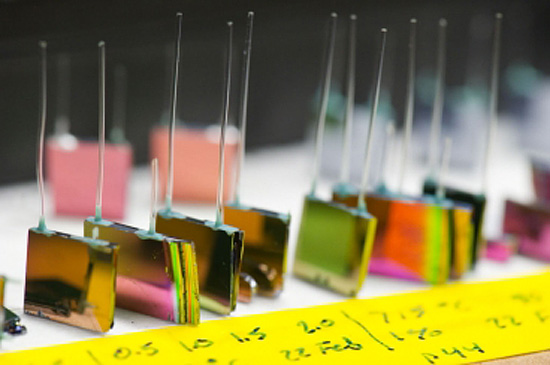
    In the image above, you have many of these generators that require a fuel, like butane, from which they generate heat. The material that the generators are made out of are pockmarked with billions of tiny (we’re taking nanometer scale here) holes. When this pockmarked surface heats up, it emits light in a few very specific wavelengths that are then captured by photovoltaic cells that are tuned to those specific wavelengths, and then you get electricity.

    The basic principle of the new generators is the same as the one that feeds electricity to your house. A fuel is heated and converted into electricity. With a power plant, the heat is used to boil water to steam, and the steam is used to turn a turbine, which generates electricity. The new generators follow the exact same principle, but with no moving parts and a one step process, they are many times more efficient. Their prototype uses butane as a fuel but you can use anything that burns, coal, wood, uranium, you name it.

    So as a consumer, what can you look forward to? Currently, MIT’s generator is about three times more efficient than a lithium ion battery, and since they run on butane, you just need to refill them and they’re good to go. With a little bit of work, MIT researchers say that they can triple their current efficiency, and since all this can be scaled down, you can expect a new smart phone using this technology to run for a solid week without a recharge in the near future.

  • New WiFi Standard Has A 100 Km Range

    New WiFi Standard Has A 100 Km Range

    We’ve finally got a new WiFi standard to look forward to. The IEEE has officially released a new standard for 802.22 WiFi which can cover an area of over 31000 square kilometers from a single base station. You’re all probably familiar with the current standard 802.11 a/b/g/n as this is the standard that you use to connect to the Internet everyday.

    The exponentially increased range is because the frequency that the WiFi network transmits on has changed. Over the last few years, analog television has seen a dramatic decrease in viewership. Using that very same frequency of 54MHz to 698 MHz the new standard gains increased range as these frequencies are very good for long range transmissions, which is why the range was used for analog TV signals.

    The new 802.22 standard is not going to make your current router obsolete just yet. What it will be good for is to provide Internet access in rural areas or to provide municipal WiFi for an entire city. With a single base station having a transmission rate of 22 Mbps and a range of 100 km, it’s only a matter of time before we’re never without WiFi again. Well it’s perhaps time that we said goodbye to 3G.

  • How To Tie A Water Balloon In Under 10 Seconds

    How To Tie A Water Balloon In Under 10 Seconds

    We’ve all played Holi at some point or another, and we’ve all tied our fare share of water balloons. Unfortunately, some people find it hard to tie water balloons. This might be for many reasons but most of the time its because the balloons are very small and the person tying them has fat fingers. Case in point – me.

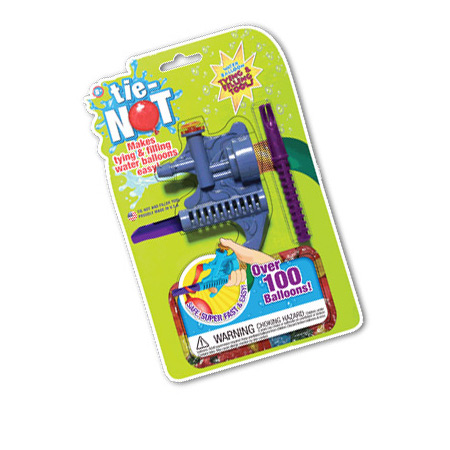
    Well we’ve found the perfect solution for all our balloon tying needs and its called the Tie Not. This fascinating gadget fits a standard garden hose and can fill a balloon and tie it for you too. The best part? Its amazingly simple to use. Watch the video below and then make a mental bookmark to get this for next Holi. Your friends will thank you…


  • The Future Of Shopping Has Arrived

    The Future Of Shopping Has Arrived

    In China, SK Telecom has begun pilot testing of a new shopping cart system dubbed the Smart Cart. These carts basically have an integrated tablet which is running a proprietary software that communicates with a shoppers smart phone through an application developed for this purpose.

    Once users have downloaded the Smart Cart application to their phones, they can search for product information, discounts, coupons and they can even make a shopping list. When in the supermarket, the users phone is synced to the aforementioned tablet, which has a positioning sensor which can determine a shoppers location to 1m within the store. This allows users to get information about that section of the store and also allows store owners to provide targeted advertisements.

    Upon checkout, the tablet shows a list of purchased items as well as any membership points and coupons earned. SK Telecom elaborates:

    We expect that ‘Smart Cart’ will become a more personalized smart shopping service when combined with customer information– like shopping history and usage pattern– managed by existing retailers. Customers will shop conveniently through product recommendations based on analysis of user’s shopping history and location information; manufacturers will be able to carry out targeted marketing for customers located in the store; and retailers will secure a new marketing channel that enables integrated and seamless communication with customers.


  • Skypump – The Green Charging Station

    Skypump – The Green Charging Station

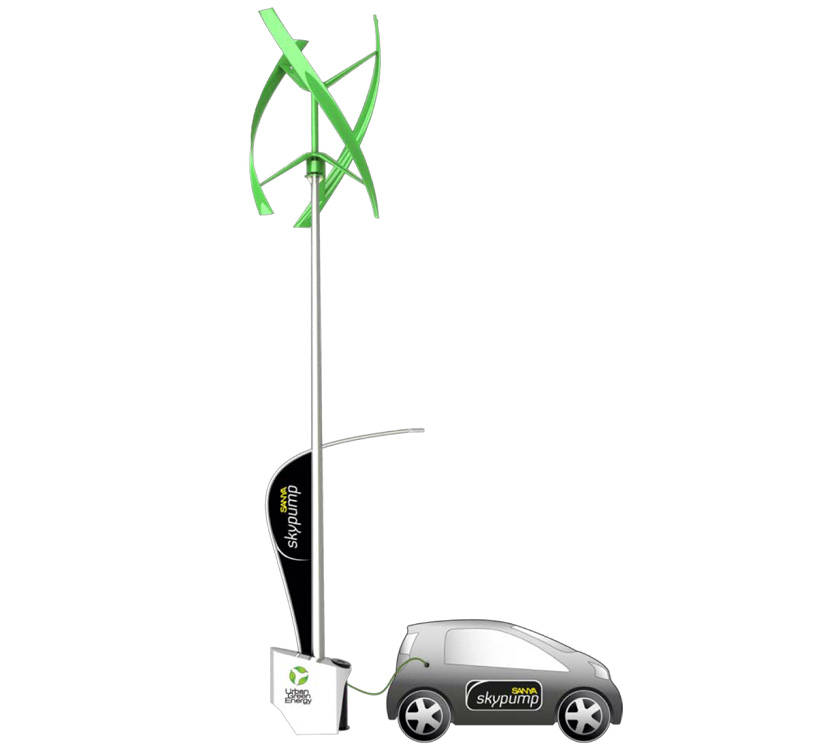
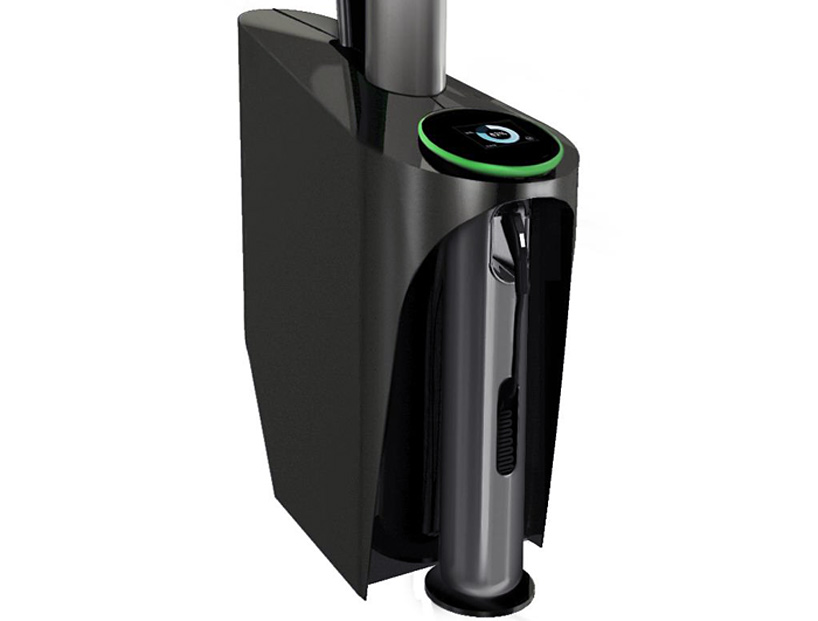
    The Sanya Skypump is a wind powered charging station for electric vehicles and it has been developed by Urban Green Energy in collaboration with General Electric. While still in the conceptual stages, the Skypump combines a GE Wattstation with a urban green wind turbine which can capture up to 4KW of wind energy.

    The turbine is 13m high and can easily be installed in parking lots, rest stops and other areas. As it is attached to the grid, once the station is fully charged and a vehicle is not plugged in, the Skypump will keep pumping electricity back into the grid. The company is also producing a version of the charging station for domestic use. The domestic version will be using a wall mounted GE Wattstation which can charge an electric car in four to eight hours. There is no news on whether the Skypump will offer similar efficiency.


  • Smart Pebbles – A Cool Spot For Your Phone

    Smart Pebbles – A Cool Spot For Your Phone

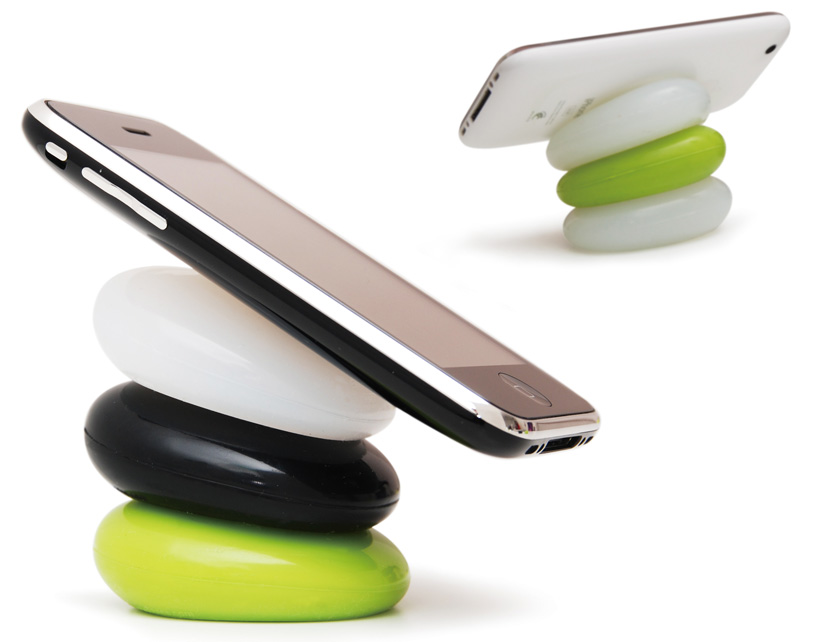
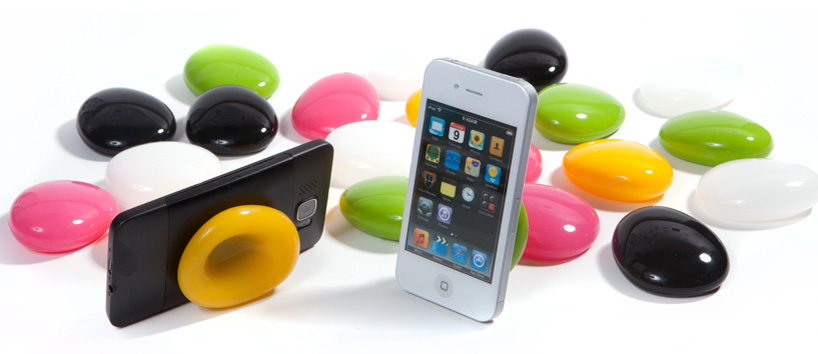
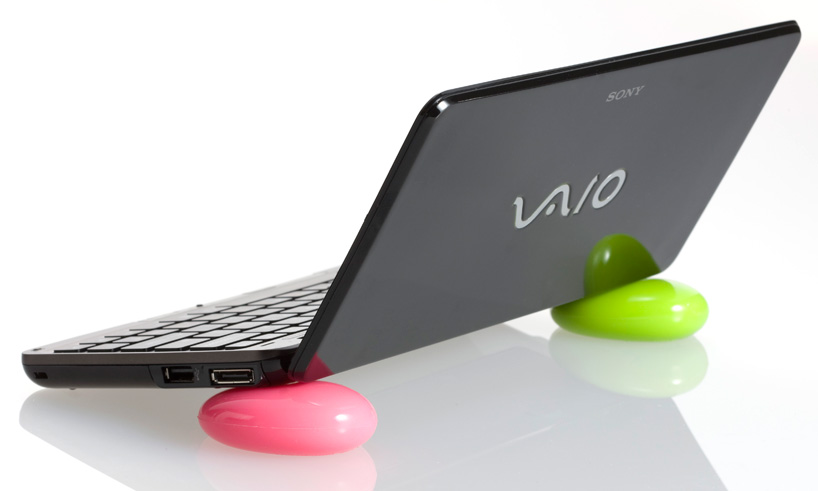
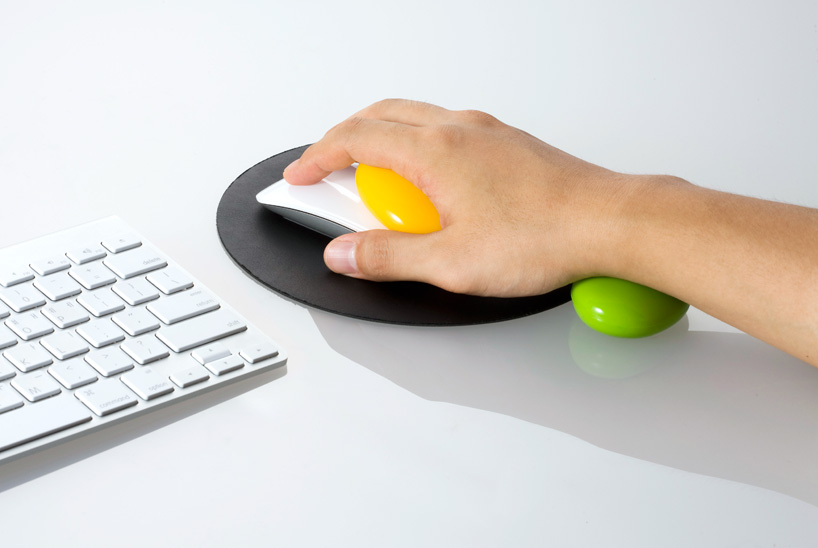
    Every now and again we find a product which we look at and go, “That’s cool, I want one”. Well the smart pebbles are one of those products. These colourful pebbles created by Korean designer Kijin Shin of Designmaxx provide a comfortable resting spot for your phone, tablet, laptop or any other device that you want. They can also be used as a wrist support while you’re using the mouse. To use the pebbles, simply press them in the center and you can then proceed to place your phone, laptop or tablet on them. The pebbles are available for 15 USD for a pair.


  • The Festo Smart Bird – A Miracle In Aviation

    The Festo Smart Bird – A Miracle In Aviation

    We’ve all seen Wile E Coyote trying to flap some ACME wings to take off from a cliff to catch the Road Runner and failing every single time. Well sadly, like the coyote, man has had the greatest trouble trying to design a machine that can fly like a bird. Until today, we have not had the materials or the scientific data to unravel the mystery of flight. And it’s not for a lack of trying. Many engineers and scientists have, over the years, tried to achieve this goal but have failed time and time again.

    After many centuries of observing bird flight and analysing its motion and studying the anatomy of birds, man has enough data to replicate the way a bird flies. Researchers at Festo, a global leader in the fields of pneumatic and electrical automation technology, have developed a prototype that they’ve dubbed the Smart Bird. Watch the video below and see it take its first flight.


  • Tech 101 – How Touch Screens Work

    Tech 101 – How Touch Screens Work

    Previously, we’ve explained How Liquid Crystal Displays Work as well as How OLED Displays Work. Today, we’re going to explain how Touch Screens Work.

    Touch Screens are all the rage today. You’ll find them in many devices like tablets, smart-phones, computer monitors, PDAs, ATMs, table tops, kiosks etc. A touch screen can use multiple inputs from your fingers to styluses and even sausages! But how does this marvel of technology really work? There are many different types of touch screen displays. You will hear many marketing gimmicks regarding capacitive or resistive technology, but most people just don’t know the difference. Read on to learn more about this fascinating technology.

     The first touch screen was made all the way back in 1965 by E.A. Johnson at the Royal Radar Establishment, Malvern, UK. Since that first prototype, many methods of detecting touch on a display have been developed. The most widely used touch screen technologies are explained below:

    Resistive Touch Screens

    A resistive touch screen is composed of many layers. The two most important layers are made of a flexible polymer which are coated with a resistive material and are separated with an air gap or microdots. The resistive material is applied in lines on each sheet and they are placed perpendicular to each other. When a person touches their finger to a resistive touch screen, the two layers are pressed together, and the points of intersection on the two layers allow the processor to accurately measure the position of the touch.

    When pressure is applied to the screen, a uniform voltage is applied to the first sheet, and the second sheet measures the voltage as distance along the first sheet, which gives the X coordinate. Similarly, when the X coordinate has been ascertained, a voltage is applied to the second sheet, and the first sheet is used to measure the distance, which gives the Y coordinate. These measurements take place in only a few milliseconds, which means that a touch is registered as soon as contact is made.

    Since these types of touch screens rely on a point of contact between the two resistive layers, any pointing device like a finger or stylus can be used on them. These screens are also quite inexpensive to manufacture as they don’t require any specialized components. Due to the design of these screens, registering multiple points of contact was not possible due to vectoring issues. However, new technology is now available that overcomes these vectoring issues and allows multiple points of contact to be measured.


    Capacitive Touch Screens

    Capacitive touch screens can be based on two different technologies:

    Surface Capacitance

    This is the most basic form of capacitive touch screen technology. One side of the insulator is coated with a conductive layer. A voltage is applied to this conductive layer, which results in a uniform electrostatic field. When you bring your finger in contact with the screen, a capacitor is formed dynamically. This changes the electrostatic field across the screen and this change is measured by sensors placed in the four corners of the screen. The point of contact can be accurately measured based on the change in capacitance in the four corners of the screen. The greater the change in any corner, the closer the point of touch is to that corner. As there are no moving parts, these types of capacitive touch screens are very durable and are used in industrial applications as well as kiosks.


    Projected Capacitance

    Projected capacitive touch screens work on a principle similar to the matrix found in Liquid Crystal Displays. There can be either a single layer on which an X-Y grid is etched to form a grid pattern of electrodes or two separate perpendicular layers on which parallel lines are etched to form the grid. There are two basic types of projected capacitance technologies – Mutual capacitance and self capacitance.

    • Mutual Capacitance: These types of capacitive displays have a capacitor at every intersection along the grid. A voltage is applied across the rows or columns which creates a local electric field across the display. When it is touched with a finger or capacitive stylus, the capacitance at each point on the grid changes, which can be measured and gives an accurate location of the point o contact. This technology can measure multiple points of touch.
    • Self Capacitance: This type of capacitive touch screen can have the same grid pattern as a Mutual Capacitance screen but the rows and columns operate independently. With this type of screen, the capacitive load of a finger is measured on each row and column by a current meter which gives the point of touch. These types of screens can only measure one point of touch at a time.

    Projected Capacitance touch screens can operate without direct contact and can have a layer of insulation between the user and the screen itself. However, they require the use of a capacitive input device in the form of a human finger or a specialized stylus with a capacitive foam tip. These types of touchscreens are more expensive to manufacture than resistive touch screens. They also face issues when in contact with any capacitive material like water.


    Infrared Touch Screens

    These types of touch screens work on a very simple principle. Infrared LEDs or lasers are used to form an X-Y grid on the surface of the screen. These transmitters are coupled with receivers that monitor the grid pattern. When a touch event occurs, the infrared light from the transmitters is blocked in that region. The receivers that are no longer detecting an infrared signal are used to measure the exact point of contact.

    Infrared touch screens face many problems from objects that obstruct the infrared grid such as smudges on the screen and dust particles. Any kind of input can be taken on these screen from fingers to gloves to styluses.


    So now that you know how a touch screen works, we hope that you can have a new-found appreciation for all the devices that use this technology. A tremendous amount of research and hard work has been put in to make an input interface for a sense that most of us take for granted – Touch.
  • McAfee Family Protection Software Launched in India (PR)

    McAfee Family Protection Software Launched in India (PR)

    McAfee has launched its Family Protection Software in India. This software is not only an antivirus tool but it also provides content filters to protect children from the hazards of the Internet. It is designed to provide parents with an insight into the digital lives of their children. Read the Press Release for more information.


    [toggle title_open=”Collapse Press Release” title_closed=”Expand Press Release” hide=”yes” border=”yes” style=”default” excerpt_length=”0″ read_more_text=”Read More” read_less_text=”Read Less” include_excerpt_html=”no”]

    McAfee announced the launch of McAfee® Family Protection, a parental control program that protects children of all ages from online risks while allowing them the freedom to safely explore the Internet.

     “Online concerns for tweens and teens are not what they were two years ago” said Venkat Krishnapur, Senior Director, McAfee India. “The threat landscape has changed dramatically – especially in the context of how children of various ages in urban India use the internet and how they are exposed to various forms of threats online. McAfee Family Protection is a powerful tool that helps parents get better insight to the digital lifestyles of their children. Parents can choose to block categories of sites, filter out only a handful of sites, or block nothing at all and simply review online activity reports. Its innovative features such as online activity reports, age appropriate settings and YouTube, games and website blocking and so on gives Indian parents a powerful tool to ensure their kids stay safe when using the Internet.”

     Use of the Internet by Indian children and new parenting challenges:

     McAfee commissioned Synovate, to conduct a comprehensive research titled ‘How safe are Indian kids online?’  across 10 cities- New Delhi, Mumbai, Pune, Ludhiana, Kolkata, Ahmedabad, Bangalore, Chennai, Hyderabad, and Cochin, covering 500 children and 496 parents. Following are key highlights of the revelations from this survey:

    •  62% of all polled kids have shared personal information online.
    • 58% kids share their home addresses on the internet.
    • 39% of all polled kids do not tell their parents about these online activities
    • 12% of all polled kids had been victims of some kind of cyber threat

    “These findings are extremely relevant from the perspective of Indian parents. As the internet evolves into a new platform for self expression and social interaction, children are indiscriminately indulging in information exchange leading to an increasing rate of cyber exploits. The introduction of technologies like McAfee Family Protection is a step in the right direction as it enables us parents to understand, handhold and mould our children’s online persona and behavior”, said Anindita Mishra- McAfee Cybermum India.

    In the context of these newfound online threats, McAfee Family Protection offers a host of essential features to enable Indian families in monitoring their children’s online activities:

    • Age-Appropriate Settings – Settings are customized according to age-groups
    • Filtering for Music and Online Games –Parents can decide what rating of content children have access to. Types of filtering include:
      • Songs with explicit lyrics from iTunes
      • Access to online gaming sites
      • Viewing of objectionable videos on YouTube
    • Encrypted website blocking blocks teens from accessing proxy sites so they cannot try to bypass content filters
    • Program blocking enables parents to block any program, including file sharing networks which can lead to malware infections on PCs
    • Instant messaging monitoring enables parents to monitor and record complete instant message conversations to alert them of improper dialogue with strangers
    • Time limits help families manage the amount of time their children spend online: families are able to set the day and/or time for when their child can access the Internet
    • Email blocking pre-approves email accounts that a child is able to access and blocks emails from unknown sources
    • Instant email alerts can be sent to parents when access to objectionable material is attempted
    • Social network filtering records all social network postings that contain profanity and posts that include confidential information that has been predetermined by parents–such as a home address, phone, school name, etc


    [/toggle]

  • Traveling Wave Reactors – The New Nuclear Power Source

    Traveling Wave Reactors – The New Nuclear Power Source

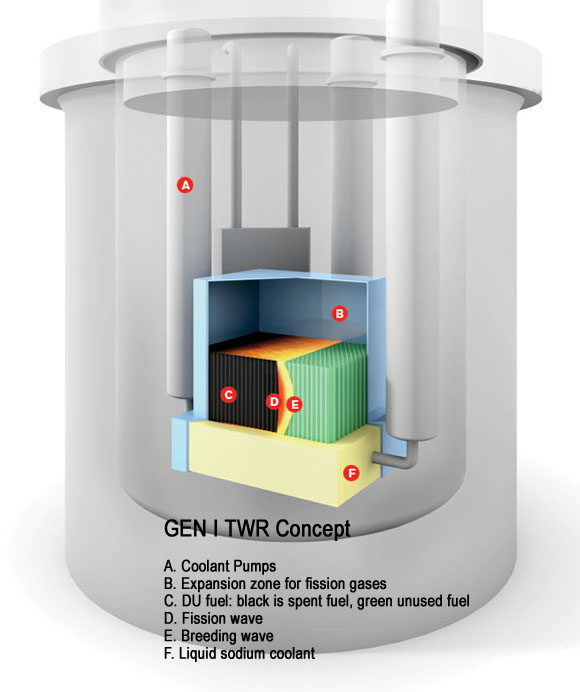
    Conventional nuclear reactors use Uranium 235 as their power source. However, out of all the Uranium that we dig up, only about 1% is U-235 while the rest is composed of, its not so reactive cousin, U-238. So what can we do with this U-238? Well according to some new research, we can now use U-238 as a fuel to power a new generation of nuclear reactors.

    Bill Gates has funded a new startup called Terrapower which is attempting to build the first prototype of a new type of nuclear reactor called a traveling wave reactor. this reactor will be using uranium 238 as a fuel source. How this will work is that a bunch of uranium 238 rods will be placed around a rod of uranium 235. This rod of U235 will kickstart the entire process. The uranium 238 gets converted into plutonium 239. This will generate heat and keep the entire reaction going, and as it propagates outwards from the center in a kind of wave, more rods of U-238 can be added to keep it going. Once the fuel gets used up, it can be used to kickstart a new reaction.

    What this basically means is that you can burn the expensive fuel, you can burn the cheap fuel, you can burn the waste from other nuclear reactors and generate electricity from the whole thing. If we start extracting Uranium from sea water, which is apparently easy to do, we can provide enough electricity to power the entire human race without any problems for thousands of years.

  • Apple Batteries Hacked

    Apple Batteries Hacked

    Did you know that the batteries in your Macbook can be hacked? You didn’t? Well now you do. Laptop batteries have evolved from being just batteries to a system that incorporates a microprocessor with a firmware to control it. This firmware performs various functions such as charging and discharging the battery, providing information on battery condition and charge rates, and telling the computer how much juice is left.

    Apple has, in the past, released hotfixes for malfunctioning batteries, and by analyzing these hotfixes, security researcher Charlie Miller has gained direct access to the embedded firmware. He has found some flaws in Apple’s firmware which allow malicious code to be embedded. So what can this malicious coded do? Well for starters it can brick your battery, which means that it will neither charge nor discharge itself. It could provide false information about the battery to the computer. This code can also execute software on your MacBook and no amount of anti-virus software and system formats can get rid of it, because its not on the system.

    The good news is that no amount of malicious code can make your battery overheat and explode. The bad news is that patching these vulnerabilities means that Apple will no longer be able to provide hotfixes for its batteries.


iGyaan Network
Privacy Overview

This website uses cookies so that we can provide you with the best user experience possible. Cookie information is stored in your browser and performs functions such as recognising you when you return to our website and helping our team to understand which sections of the website you find most interesting and useful.