Author: Shivaank Rana

  • Gillette’s Flexball Fusion ProGlide Razor’s Tech is a Smart Idea

    Gillette’s Flexball Fusion ProGlide Razor’s Tech is a Smart Idea

    Each time Gillette launches a new razor, most recent converts usually cringe at the thought of changing their razor. Unlike the Avenger Razors, the new Flexball however, is a rather simple step in getting the best shave. It launched a while back globally, but recently made its debut in India.
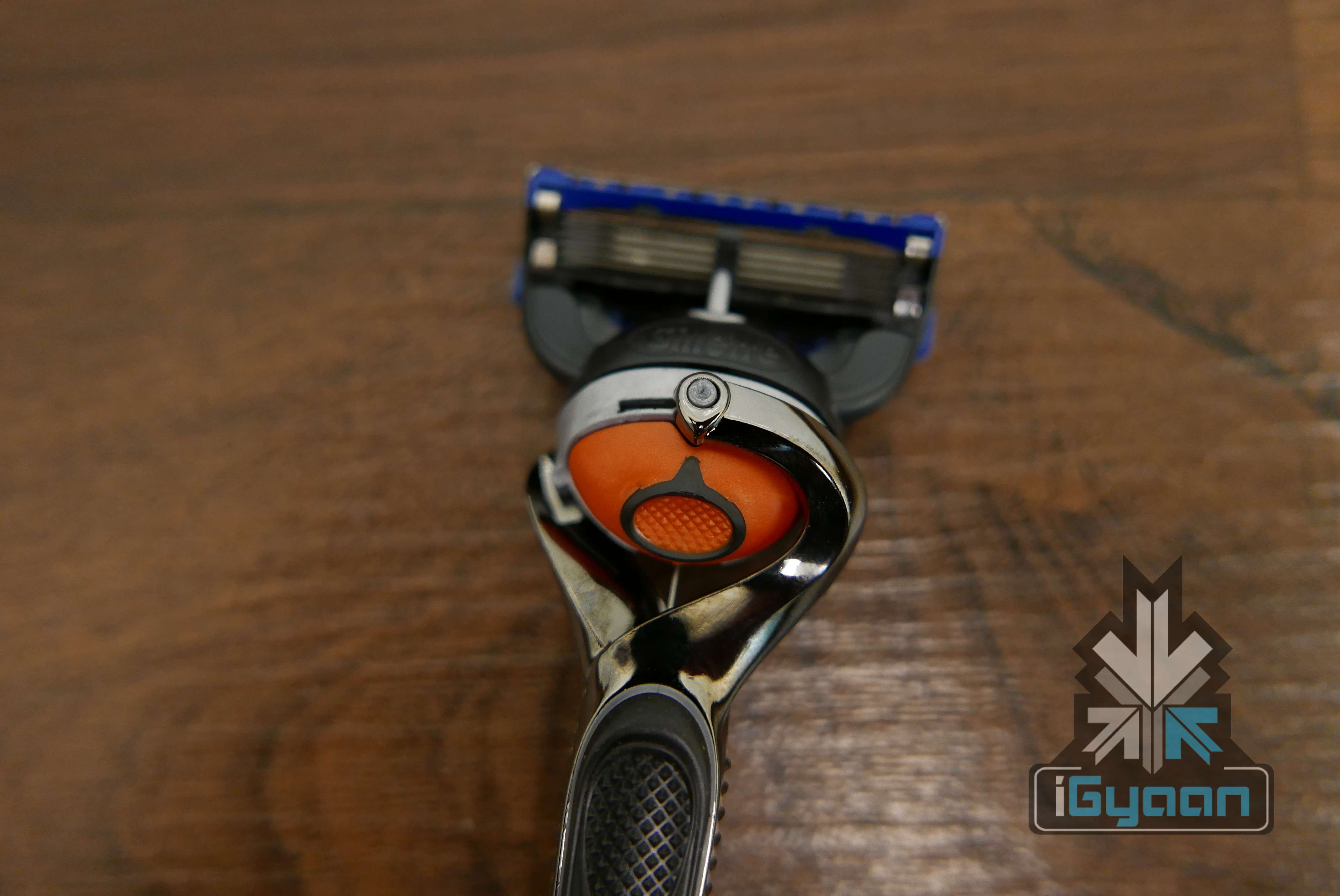
    Gillette Fusion Flexball ProGlide 4
    Flexball

    The razor costs Rs. 499 and is available exclusively on Amazon India. It still works with your existing Fusion blades if you have those lying around. The new blades are however, considerably improved.  The blades are thinner and have a finer edge which will help with thick hair beards. The rubber grip at the bottom of the razor is more stubborn and the lubrication strip comes with a new mineral oil.

    https://www.youtube.com/watch?v=RxPgcd1Embo

    Since the face is not geometrical, the Flexball razor comes with a ball joint just under where the razor is. When you shave the ball joint flexes left or right up to an angle of 24 degrees as you slide it across your face. This also prevents you from shaving in different angles and you can get a clean shave with just a single swipe in one direction.

    While most of its features come directly from the previous ‘Fusion’ razor, the predecessor had some issues. The blades were not properly spaced which seems to have been solved in this version. The rear trimmer was also difficult to use and often caused more cuts than precision trims. The precision trimmer on the new Flexball Razor has a tiny comb that will align the hair before they are sliced out.

    https://www.youtube.com/watch?v=jvuBDT9JjN4

    If you think you are ready for a new Razor, the trial version of the Gillette Flexball Fusion ProGlide is available on Amazon for a relatively low price. So do you think that Gillette is the best a man can get, or there are better ones?

    Gillette Fusion Flexball ProGlide 5

  • Goophone Clones The New HTC One Even Before It’s Launched!

    Goophone Clones The New HTC One Even Before It’s Launched!

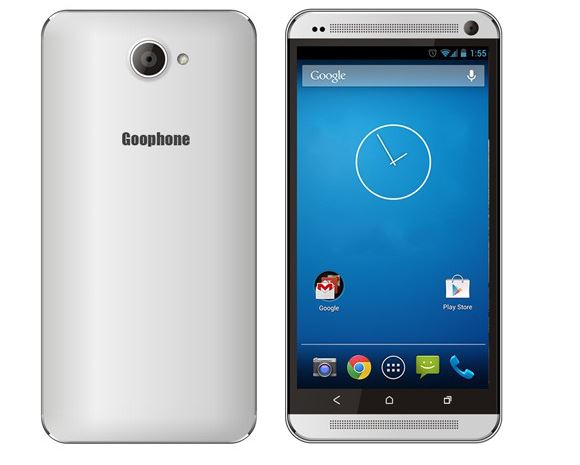
    Remember Goophone? The company that cloned the Samsung Galaxy S5 within 2 days of its launch? Well, they’ve bettered themselves by launching their version of the all new HTC One, even before it’s been announced!

    Goophone hasn’t shied away from using the purported codename of the real All New HTC One, M8. HTC is due to announce its 2014 flagship on March 25th whereas the clone has already been listed and can be ordered by anyone willing to purchase it. In a sense its Goophone’s own successor, as it cloned the HTC One last year as well.

    As can be expected with all the other Goophone clones this latest clone only resembles the HTC M8 in physical appearance but its internal hardware is quite different. At first glance you might be fooled into thinking that it is the real deal from the front view as it appears to have a similar design as the original device. The back part of the device bears the Goophone brand which announces that it isn’t an HTC device. 

    Of course the Goophone wasn’t able to pull off the rear dual cameras that are widely expected of the upcoming flagship HTC device. Also for a price of $229 we are certainly not expecting high quality metal to be covering up all the parts that are under the hood of the phone.

    Specs-wise, the GooPhone M8 is similar to the GooPhone S5, as it comes with an eight-core MediaTek processor clocked at 1.7 GHz, mated to only 1 GB RAM.  Other specs include a 5-inch, 1080p display, a 13-megapixel non-Ultrapixel rear camera, a 5-megapixel front camera, 16 GB expandable storage, a 2,800 mAh battery, and Android 4.2 Jelly Bean out of the box.  

  • Nokia Lumia 630 Press Render Leaks

    Nokia Lumia 630 Press Render Leaks

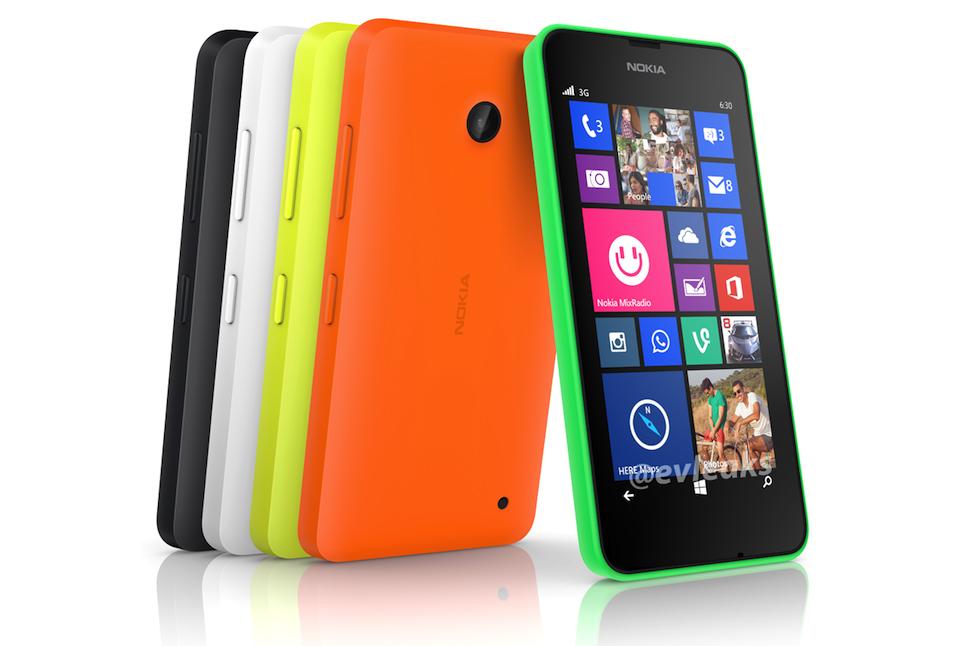
    The rumored Nokia Lumia 630 is thought to be one of the first handsets to run Microsoft’s incoming Windows Phone 8.1 OS and it was shown off  today in a leaked press render.

    The phone has been leaked through the @evleaks Twitter account, and is a traditional press-style glamor shot of a phone apparently named the Lumia 630. Pictured in five different colors, it’s shown running Windows Phone 8. 

    Some of the notable feature here include a lack of fixed hardware controls on the front of the device. Rather, the new version of Windows Phone will allow for the inclusion of on-screen prompts for the usual back, Windows, and search commands.

    The leaked shot also shows that the Nokia Lumia 630 lacks a camera flash and, in a first for a Windows Phone, a physical camera shutter button.

    Not much is known about the handset at this point, but according to one of the images posted on Baidu, the Lumia 630 will feature a 4.5-inch display with a decent enough resolution of 854 x 480 pixels. Under the hood with be the mid-range Snapdragon 400 processor accompanied by 1GB of RAM.

  • Flipboard Buys Rival Zite From CNN

    Flipboard Buys Rival Zite From CNN

    Flipboard, the magazine-style news reading app, is buying competitor Zite from CNN, the companies announced Wednesday.

    The Zite app was a part of CNN for three years, since it had acquired the company for nearly $20 million. The terms and money involved in this deal have not yet been disclosed clearly. The move is a sign of ongoing consolidation in the space and comes in the wake of Facebook launching a Flipboard competitor called Paper. Flipboard benefits by cutting one more competitor from the field through the sheer act of buying it. 

    “We’re going to integrate the technology into Flipboard in the coming months,” Flipboard CEO Mike McCue said during a press call Wednesday. “We do not plan to continue to evolve Zite, we think we should focus on a single product.”

    He added that Zite users will be able to use their logins to set up a new Flipboard account, and that Flipboard will continue to support Zite for the time it takes to complete the integration of its technology.

    If you are not familiar with Zite, it is a personal news reading application that launched on the iPad in 2011. Essentially, Zite was a big recommendation engine that gives you articles based on what you like to read—based on your social feeds like Facebook and Twitter, but also based on your reading history and preferences.

  • DirectX 12 Will Be Revealed This Month at GDC

    DirectX 12 Will Be Revealed This Month at GDC

    Microsoft will reveal the latest version of its gaming and multimedia API – DirectX 12 – on March 20th.

    It would appear that all the usual suspects are already on board — the use of their logos on the DirectX 12 website strongly suggests that AMD, Nvidia, Intel, and Qualcomm are all preparing DX12 hardware.

    The March 20 sponsored session will be hosted by Microsoft graphics development manager Anuj Gosalia, and is described as follows:

    For nearly 20 years, DirectX has been the platform used by game developers to create the fastest, most visually impressive games on the planet. However, you asked us to do more. You asked us to bring you even closer to the metal and to do so on an unparalleled assortment of hardware. You also asked us for better tools so that you can squeeze every last drop of performance out of your PC, tablet, phone and console. Come learn our plans to deliver.

    Another session, dubbed Direct3D Futures, will discuss “future improvements in Direct3D that will allow developers an unprecedented level of hardware control and reduced CPU rendering overhead across a broad ecosystem of hardware.” 

    The previous version of the interfaces, which enable 3D animation and other multimedia effects used mostly in games, was released in 2009 with the launch of Windows 7. Developers tap into DirectX so their applications can take full advantage of the hardware power of the PC.

  • Spotify Acquires The Echo Nest

    Spotify Acquires The Echo Nest

    The music streaming app and desktop platform Spotify, which plays tunes for users without the hassle of downloading music, took on Somerville-based The Echo Nest, the company announced on Thursday.

    The company says that the acquisition supports Spotify’s strategy to grow global music consumption and overall revenue back to the music industry “by building the best user experience and music discovery engine for millions of global fans.”

    For the time being, The Echo Nest will continue to operate as normal, maintaining its offices in Somerville, Massachusetts and San Francisco. Also, the company will continue to offer its API, on which numerous music apps are built, for free, Spotify stating that it recognises that “the developer community is crucial to the success of both Spotify and The Echo Nest”. 

    Given that The Echo Nest powers many of Spotify’s competitors, including eMusic, MOG, VEVO, Twitter Music, and Rdio, how exactly Spotify manages the API moving forward could impact online music across the board.

    In a statement, Chief Executive and founder Daniel Ek said the company has “been fans of the Echo Nest for a really long time” and that the takeover will help Spotify’s “quest to play you the best music possible.”

  • Yahoo! To End Facebook And Google Sign-Ins

    Yahoo! To End Facebook And Google Sign-Ins

    Yahoo is planning on removing all of the Facebook and Google login functionality in a move to heighten the overall user experience. This latest move by CEO Marissa Mayer who has been shaking up nearly everything from search to company culture to acquisitions.

    “Yahoo is continually working on improving the user experience,” the company said in a statement, noting that the new process “will allow us to offer the best personalized experience to everyone.”

    For now, users can still access Yahoo services using their Facebook or Google log-ins. A timeline wasn’t provided for when exactly they will cease to exist.

    As TNW reports, the move to integrate Facebook and Google log-ins three years ago came as Yahoo sought to tap on their huge numbers of users — but it seems like CEO Marissa Mayer is keen to take a different route in a bid to reclaim native users and revive its ecosystem.

    The first Yahoo service to require the new sign-in process is Yahoo Sports Tourney Pick’Em, a service focused on the NCAA college basketball tournament which begins later this month. News of the change to Yahoo’s Tourney Pick’Em sign-in process was first reported by the technology blog Betanews.

  • Android 4.4 Update Ends Samsung’s Benchmark Boosting

    Android 4.4 Update Ends Samsung’s Benchmark Boosting

    The past few months the folks at Samsung were accused of artificially boosting the benchmark performance of their high-end smartphones, by overclocking the CPU and GPU while the benchmark tests are running. With Android 4.4 KitKat, Samsung has ceased this behavior. The whitelists have been removed, the browser no longer detects SunSpider or Rightware’s Browsermark, and the phone doesn’t display unusual activity or processor clocks when benchmark applications are run.

    While the phones do still perform better than their Android 4.2 running counterparts, that should mostly be a result of the under-the-hood improvements made by Google in the latest version of the mobile OS.

    According to a report by Ars Technica:

    Moving to Android 4.4, that strange CPU activity stops happening. Every single benchmark we ran prompted variable-but-normal fluctuations in CPU speed based on actual activity. Speeds would ramp up for a couple of seconds while the app launched, but once it became idle, the speeds settled back down to where they would normally be.

    Compare this to the behaviour in Android 4.3 “where all four cores go right to the maximum speed of 1.9GHz when a benchmark app is opened.”

    Benchmarks are useful tools, but they are not, or should not be, the deciding factor in purchasing a device anyway but we’re glad to see Samsung moving away from this behavior on older devices. The real test will come with the launch of the Galaxy S5.


  • Pebble 2.0 Beta App Updated And Available For Developers

    Pebble 2.0 Beta App Updated And Available For Developers

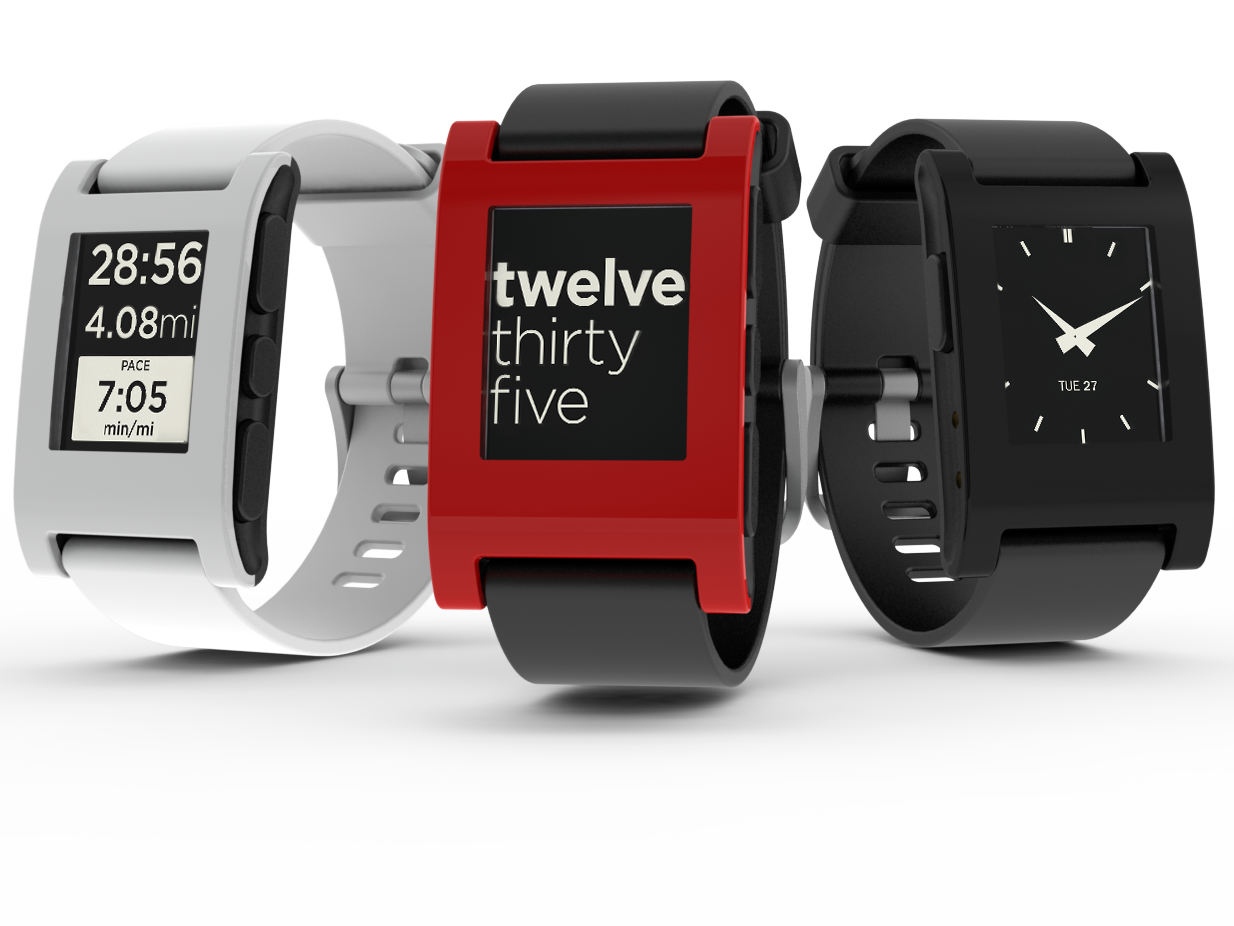
    Today Pebble officially pushed out version 11 of the Pebble 2.0 Beta app for Android. The update brings with it fixes that are said to offer “considerably” improved stability as well as firmware installation enhancements, fixes for sideloading issues and tweaks to make MyPebble load faster. 

    For those users who have the smartwatch, the company notes that you’ll need to remove previous Beta versions and install this one.

    • PebbleKit JS localStorage is now sandboxed for each app
    • Many improvements to onboarding and FW installation
    • Issues with sideloading apps in some circumstances have been fixed
    • Some issues with loading JS configuration views after the app has been quit have been addressed
    • JavaScript app logs printed via ADB are cleaner
    • MyPebble now loads faster
    • Known issue: Pairing a Pebble during onboarding may not succeed. If you run into problems, exit the Pebble app. Remove the pairing entry from Android BT settings & your Pebble. Then pair manually using BT settings.

    You’ll need to uninstall version 10 before you install this one, and any javascript-based apps will need manually reinstalled. 

  • Oppo’s Find 7 Will Have 50 MP Camera?

    Oppo’s Find 7 Will Have 50 MP Camera?

    The Oppo Find 7 will be announced at a press event which takes place in Beijing on the 19th of March, and now a photo has appeared online which was apparently taken with the camera on the handset. An image sample implies an astonishing 50-megapixel rear camera for the Oppo Find 7, news that should make a few heads turn!

    oppo

    It’s difficult to judge the quality from one image alone, but this prospect is likely to excite plenty of potential buyers. We also wonder whether Oppo will provide an oversampling option, similar to that offered by Nokia’s PureView technology.

    At this point, we know that the OPPO Find 7 will be available in two hardware versions. Both will be based on Qualcomm’s Snapdragon 801 solution. One will give a screen with a diagonal of 5? Full HD, while the second will make the jump to the diagonal of 5.5″ and resolution of 2560 x 1440 pixels.

    If the OPPO manufacturer is not playing with our patience and will not encounter other technological difficulties, Find 7 will be the first mobile phone with 2K screen, which says much about the ambitions of the new wave of Chinese manufacturers.

    Other specifications on the Oppo Find 7 will include 16GB of built in storage plus 3GB of RAM, the device is expected to come with Android 4.4 KitKat.

    Over to the event in Beijing!

    [Via]

  • HTC M8 Leaks In Video, Company Cautions Uploader

    HTC M8 Leaks In Video, Company Cautions Uploader

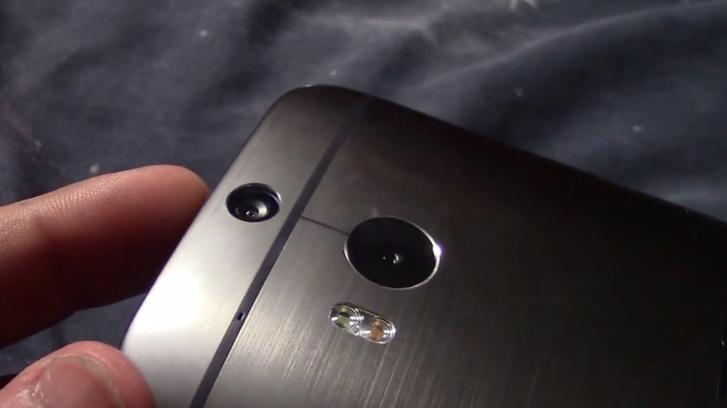
    A young YouTuber by the name of Roshan Jamkatel has posted a 12-minute review of a developer edition HTC M8, the codename for the new HTC One.

    The 12-minute video shows off both an AT&T HTC M8’s hardware and software, giving us a glimpse at its dual rear cameras, on-screen buttons and refreshed camera UI. We’re also shown the M8?s microSD card slot, which is housed directly above the device’s volume rocker. There are a number of comparisons to the original HTC One in the video as well, giving us a good idea of just how HTC’s 2014 flagship compares to its predecessor.

    The body appears to sport more rounded corners and rear, while the metal chassis remains and navigation keys are moved on screen – all things which fall in line with previous rumours.

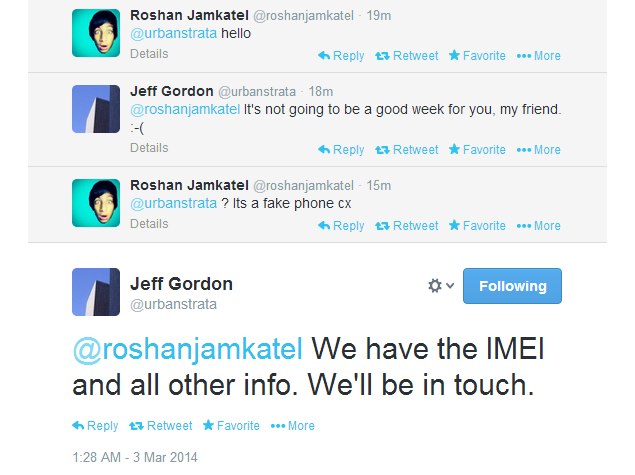
    The video was taken down from Roshan Jamkatel’s account, after a very threatening exchange with HTC Senior Global Online Communications Manager, Jeff Gordon.

    htc

    Jeff Gordon supposedly tweeted: “it’s not going to be a good week for you, my friend,” followed by “we have the IMEI and all other info. We’ll be in touch,” but the posts have since been removed.

  • Karbonn To Launch World’s First Android, Windows Phone Dual Boot Handset

    Karbonn To Launch World’s First Android, Windows Phone Dual Boot Handset

    Dual-OS phones running Windows Phone and Android are six months away from launch, according to the chairperson of Karbonn, which has apparently signed a deal with Microsoft to produce them. 

    It is reported that the dual-OS smartphones will be out by June and will target office-going professionals and ‘techies.’

    “Microsoft has eased the regulations and is opening up its platform for other players. We signed the agreement two days ago and will launch a range of Windows phones in about three months” – Karbonn CEO Sudhir Hasija

    Price is still a mystery and so are the specs; we can only hope this Karbonn will be a high-end device with Snapdragon 800 quad-core chip. While it may seem a bit surprising that Microsoft would agree to share space on a handset, Microsoft has been taking steps to make it easier for manufacturers to install their software. That includes support for Qualcomm’s Android reference designs which would allow a phone maker to use the same hardware for Android or Windows Phone devices.

    Reports surfaced recently that it had asked HTC to combine Windows Phone and Android on one device as well.

  • Nokia X Gets Hacked To Run Google apps

    Nokia X Gets Hacked To Run Google apps

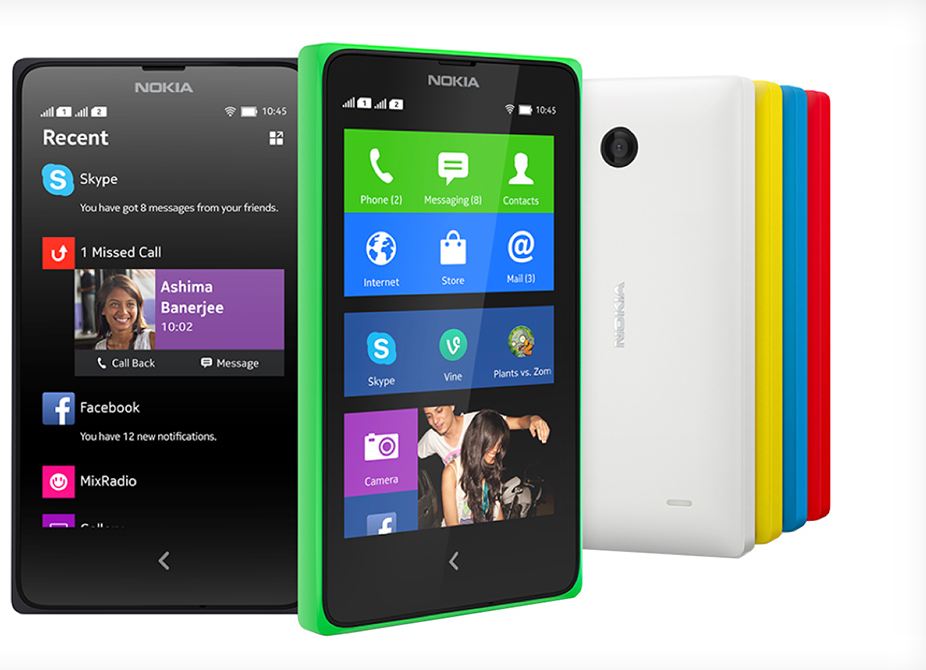
    The recently launched Nokia X, the Android powered device that is intended to promote Microsoft’s services via Android, has been hacked to run Google’s services instead. Basically, you will now be able to run any Google Mobile Services – PlayStore, Gmail, Maps, Notes, etc, on the device. 

    The forked version of Android will not include Play Store or any Google App, like Chrome, Maps etc, however, it can still manage to run the Android applications you want. These X smartphones from Nokia will instead include, Skype, Here maps, Outlook and more services. 

    The first thing to remember about running Android is that any attempt to release a feature or app exclusively for one device family will only result in the hack/mod-minded Android community extracting and sharing said treasure with those running other Android-based devices.

    The hack is pretty simple and we could see a good number of Nokia X models running Google services in the future. A developer named KashaMalaga, by using the popular rooting application, FramaRoot, which lets you avail admin privileges in just one-click, found a quick way to bypass the Nokia X’s bootloader and make it fit for installing a modified version of the operating system (custom ROM).

    [Via]

  • Report : Microsoft Developing Free Windows 8.1 Operating System

    Report : Microsoft Developing Free Windows 8.1 Operating System

    Sources close to Microsoft have reported this week that the company is currently developing and experimenting with a new free version of its Windows 8.1 operating system.

    Bing, which will be at the center of the low-cost operating system, is already growing as a platform and Microsoft hopes that will continue into the future.

    While early versions of the software have leaked online, we understand that Windows 8.1 with Bing is an experimental project that aims to bring a low-cost version of Windows to consumers. 

    Considering that the company has already cut licensing fees by as much as 70%, Microsoft is already looking to make Windows 8.1 a low-cost OS for manufacturers interested in using the platform.

    More details of a low-cost Windows 8.1 operating system as well as the merging of Windows RT and Windows Phone are expected to be made available by Microsoft during their Build conference later this year.

    [Via]

  • Boeing Black Announced : A Tamper Proof Smartphone

    Boeing Black Announced : A Tamper Proof Smartphone

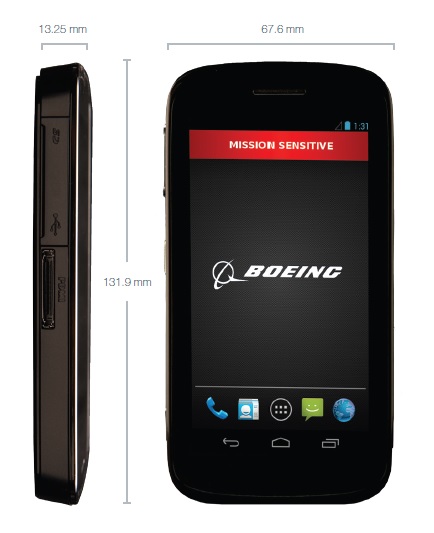
    Boeing Co. on Wednesday unveiled a smartphone that appears to come straight from a James Bond spy movie.

    The long-rumoured “Black” Android spy smartphone, which has the ability to self-destruct if tampered with, will soon be a reality, according to a patent filed by the aerospace and defence contractor.

    “Boeing’s Black phone will be sold primarily to government agencies and companies engaged in contractual activities with those agencies that are related to defense and homeland security,” the filing states. “The device will be marketed and sold in a manner such that low level technical and operational information about the product will not be provided to the general public.”

    boeing

    The Android device has a 4.3-inch diagonal screen, dual 1.2 gigahertz ARM Cortext APU processors and weighs 170 grams. It includes hardware-level security modules and “configurable inhibit controls” to protect the device, its data and transmitted information. The phone also has modular design and expansion port that lets customers add additional sensors or enhancements, such as satellite connectivity or expanded power capacity.

    Due to the phone’s security features, Boeing is releasing few details about the wireless network operators or manufacturer it is working with, and has not provided a price or date by which the phone might be widely available, but said it has begun offering the phone to potential customers.

iGyaan Network
Privacy Overview

This website uses cookies so that we can provide you with the best user experience possible. Cookie information is stored in your browser and performs functions such as recognising you when you return to our website and helping our team to understand which sections of the website you find most interesting and useful.