Author: Shivaank Rana

  • Virus found in Mideast can spy on finance transactions

    Virus found in Mideast can spy on finance transactions

    A new cyber surveillance virus has been found in the Middle East that can spy on financial transactions, email and social networking activity, according to a leading computer security firm, Kaspersky Lab.

    Dubbed Gauss, the virus may also be capable of attacking critical infrastructure and was built in the same laboratories as Stuxnet, the computer worm widely believed to have been used by the United States and Israel to attack Iran’s nuclear program, Kaspersky Lab said on Thursday.

    The Moscow-based firm said it found Gauss had infected personal computers in Lebanon, Israel and the Palestinian Territories. It declined to speculate on who was behind the virus but said it was related to Stuxnet and two other cyber espionage tools, Flame and Duqu.

    “After looking at Stuxnet, Duqu and Flame, we can say with a high degree of certainty that Gauss comes from the same ‘factory’ or ‘factories,’” Kaspersky Lab said in a posting on its website. “All these attack toolkits represent the high end of nation-state-sponsored cyber-espionage and cyber war operations.”

    Kaspersky Lab’s findings are likely to fuel a growing international debate over the development and use of cyber weapons. Those discussions were stirred up by the discovery of Flame in May by Kaspersky and others. Washington has declined comment on whether it was behind Stuxnet.

    According to Kaspersky Lab, Gauss can steal Internet browser passwords and other data, send information about system configurations, steal credentials for accessing banking systems in the Middle East, and hijack login information for social networking sites, email and instant messaging accounts.

    Modules in the Gauss virus have internal names that Kaspersky Lab researchers believe were chosen to pay homage to famous mathematicians and philosophers, including Johann Carl Friedrich Gauss, Kurt Godel and Joseph-Louis Lagrange.

    Kaspersky Lab said it called the virus Gauss because that is the name of the most important module, which implements its data-stealing capabilities.

    One of the firm’s top researchers said Gauss also contains a module known as “Godel” that may include a Stuxnet-like weapon for attacking industrial control systems.

    Stuxnet, discovered in 2010, attacked via USB drives and was designed to attack computers that controlled the centrifuges at a uranium enrichment facility in Natanz, Iran.

    Roel Schouwenberg, a senior researcher with Kaspersky, said the Godel code may include a similar “warhead.”

    Godel copies a compressed, encrypted program onto USB drives. That program will only decompress and activate when it comes in contact with a targeted system.

    While Kaspersky has yet to fully crack Godel’s code, Schouwenberg said he suspects it is a cyber weapon designed to cause physical damage and that its developers went to a lot of trouble to hide its purpose, using an encryption scheme that could take months or even years to unravel.

    CODE BREAKERS WANTED

    He said the prospect that a cyber weapon like Gauss or Stuxnet could attack critical infrastructure keeps him up at night.

    “They could do pretty much anything,” he said. “A few weeks ago when power went out in and around (Washington) D.C., my first thought was a cyber weapon.”

    Kaspersky said it is searching for “world-class” cryptographers to help it break the code.

    A United Nations agency that advises countries on protecting critical infrastructure plans to send an alert on the mysterious code.

    “We are going to, of course, inform member states that there is an unknown payload,” said Marco Obiso, a cyber security coordinator for the U.N.’s Geneva-based International Telecommunications Union, or ITU.

    “We don’t know what exactly it does. We can have some ideas. We are going to emphasize this,” he said.

    The ITU issued a warning about Flame shortly after the virus was unveiled by Kaspersky in late May. The agency told member nations that Flame could potentially be used to attack critical infrastructure, according to Obiso.

    At the time, experts knew only that Flame was a sophisticated espionage tool; they were not certain it could damage computer networks.

    Several weeks later, researchers at another security firm, Symantec Corp, confirmed suspicions that Flame was capable of deleting computer data and likely was used to attack Iran in April.

    Iran blamed Flame for causing data loss on computers in the country’s main oil export terminal and Oil Ministry. Reports of the data losses prompted the ITU to ask Kaspersky to search for a data-wiping virus, which resulted in its discovery of Flame and Gauss.
     
     
  • Google Tests Showing Gmail Messages in Search Results

    Google Tests Showing Gmail Messages in Search Results

    Google is creating an information bridge between its influential Internet search engine and its widely used Gmail service in its latest attempt to deliver more personal responses more quickly.

    The experimental feature unveiled Wednesday will enable Google’s search engine to mine the correspondence stored within a user’s Gmail account for any data tied to a search request. For example, a query containing the word “Amazon” would pull emails with shipping information sent by the online retailer.

    Such Gmail results will typically be shown to the right of the main results, though in some instances, the top of the search page will highlight an answer extracted directly from an email. For example, the request “my flight” will show specific airline information imported from Gmail. Something similar could eventually happen when searching for a restaurant reservation or tickets to a concert.

    Although Google has a commanding lead in Internet search, it remains worried about the threat posed by social networking services such as Facebook Inc. As social networks have made it easier to share information online, the Web is starting to revolve more around people than the keywords and links that Google’s search engine.

    Google has been trying to adapt by building more personal services and plugging them into its search engine.

    Blending email information into general search results could raise privacy worries. Google is trying to mitigate that by showing Gmail results in a collapsed format that users must open to see the details. For now, users must sign up to participate.

    Google Inc. ran into trouble over privacy in 2010 when it tapped the personal contact information within Gmail accounts to build a social networking service called Buzz. Google set up Buzz in a way that caused many users to inadvertently expose personal data from Gmail. An uproar culminated in a Federal Trade Commission settlement requiring the company to improve its privacy controls and undergo audits for 20 years.

    Google is treading carefully as it hooks Gmail up to its Internet search engine. The new feature initially will be available to 1 million Gmail users who sign up at HTTP://G.CO/SEARCHTRIAL . That’s a small fraction of the more than 425 million Gmail accounts that have been set up since Google launched its free email service eight years ago to compete against the offerings from Yahoo Inc. and Microsoft Corp.

    After getting feedback from the test participants, Google hopes to give all Gmail users the option of plugging their accounts into the main search engine, according to Amit Singhal, a senior vice president for the company.

    Singhal said Google is also willing to display information from other email service in its main search results. The gesture could avoid spurring additional complaints about Google abusing its position as the Internet’s search leader to favor its other services. That issue is the focal point of an antitrust investigation by antitrust regulators in the U.S. and Europe.

    Microsoft said it has no plans to make information in its competing Web mail service available to Google’s search engine. Yahoo, which operates another Gmail rival, had no comment.


  • Google says voice is the future of web search, introduces Siri-like app for iOS

    Google says voice is the future of web search, introduces Siri-like app for iOS


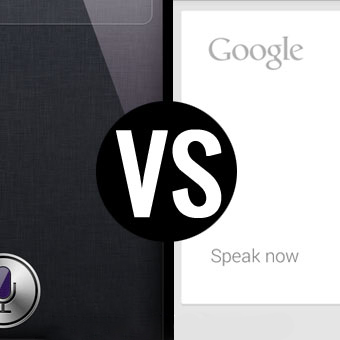
    Google Inc showed off enhancements to its voice-based search technology for Apple Inc’s iPhone and said it was testing a new service that will combine its Web-based email with its search engine.

    The new version of Google’s search app for the iPhone and iPad, expected to be available within a few days, will let users find information about everything from the weather to nearby movie showings by speaking into the devices, matching some of the capabilities offered by Apple’s own Siri technology.

    Google’s new app recites answers to search results in a human sounding voice, similar to Apple’s Siri, which some analysts and technology observers believe could make iPhone users less reliant on Google’s search service.

    The news comes as the relationship between the two companies grows increasingly competitive. On Monday Apple said it would no longer offer Google’s YouTube app as a pre-loaded app in future versions of its iPhone.

    Google, which unveiled a version of the voice-based search app for its Android software earlier this year, showcased the version for Apple devices at a press event at its San Francisco offices on Wednesday.

    The company also announced a test version of a new service that will integrate users’ personal emails into searches on the Google website. The service, which Google said will initially be available to 1 million users, aims to make it easier for consumers to access information such as flight schedules or shipping orders.

    A truly universal search will “have all the information that humanity has put on the Web and information that’s your information,” Amit Singhal, senior vice president of Google Search.

    The initial “field trial” will work with Google’s Gmail, but Singhal said the company was open to working with other email providers.

    Source : Reuters

  • MapmyIndia introduces 3G, Android enabled CarPad 5

    MapmyIndia introduces 3G, Android enabled CarPad 5


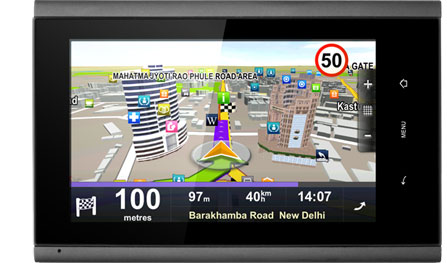
    MapmyIndia, provider of digital maps, navigation and location-based services, has launched CarPad 5, a connected car product. Built on Android OS, CarPad 5 is an all-In-One GPS Navigator, Smart Phone and 3G Tablet. It 5 runs on a 1GHz Samsung processor (Cortex A8, S5PV210) and features a 5 inch capacitive touch screen. It is priced at Rs 19,990 and contains the CarPad windshield mount and Car charger.

    The navigation device has built-in 3G & Wi-Fi and comes preloaded with Aura, MapmyIndia’s fully 3D and connected GPS navigation interface.

    Rakesh Verma, managing director at MapmyIndia said that the CarPad 5 is one of the many in-car productivity gadgets they plan to launch in the near future.

    The company claims Aura maps offers real-time traffic updates, house level search, security (track and trace) and discount offers in the vicinity. It covers over 6.3 million places, 5,79,000 towns and villages, 4000 cities at street-level, house-level data for 36 cities and 3D landmarks and building footprints for 34 major cities. 

    The navigation device is 3G enabled and allows users to call, message, mail and chat, search and browse the web at high speed, and access social networks.

  • India ranks No.2 in Google search queries for education

    India ranks No.2 in Google search queries for education

    India ranked second in the number of education queries on Google, the search engine major said today.

    India was ranked 8th in 2008, and is now behind only to the US, reveals a study titled ‘Students on the web’ compiled by Google India. The study was compiled by combining Google search query patterns and an offline research conducted by TNS Australia on behalf of Google India

    [quote]“With over 60 million Internet user population in India being in age group of 18-35, educational related search queries are exploding on Google. Our core objective behind compiling this study was to understand the impact Internet is having on this young population with regard to education related decision making by the students,” Google India Vice President and Managing Director Rajan Anandan said.[/quote]

    Education related queries on Google in India are growing at over 46 per cent year on year that highlights strong demand for information on institutes and courses that are available in the country.

    Out of all education related search queries on Google, over 40 per cent of queries were for higher education courses and institutes.

    Search queries from mobile phones have considerably grown showing a growth of over 135 per cent and amounting to over 22 per cent of all education related search queries.

  • iBall ropes in Kareena Kapoor as Brand Ambassador

    iBall ropes in Kareena Kapoor as Brand Ambassador


    iBall has brought in Kareena Kapoor as its brand ambassador for its mobile phones.

    Commenting on Kapoor’s appointment, Sandeep Parasrampuria, director, iBall, said,  “Kareena is an icon for the youth. Her hard work makes her a performance-powered actor and besides, she has always been associated with style, glamour, vibrancy and all things chic. She is also known for setting trends and doing things differently. There is thus no doubt that she would provide the perfect brand fit for us.”

    Kapoor will feature in a TVC created by an in-house team at iBall. The film will go on air after 15 August.

  • Microsoft Launches Kinect For Windows In India At Rs 19,990

    Microsoft Launches Kinect For Windows In India At Rs 19,990


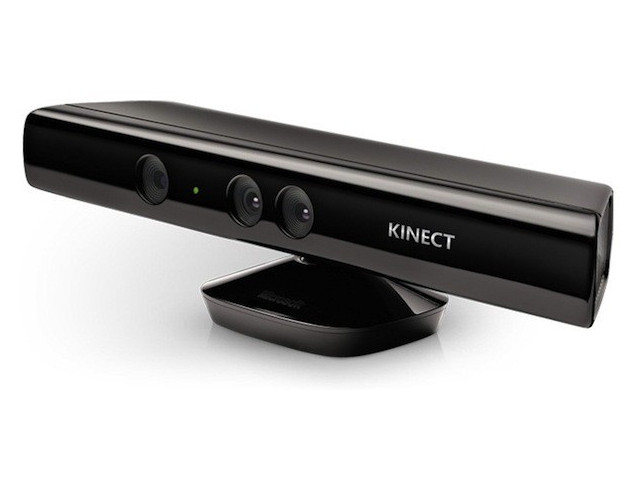
    Kinect for Windows sensor, which aims to harness Microsoft’s Natural User Interface in a bid to ‘revolutionise’ computing,  is now available in India along with the Software Development Kit (SDK). The Kinect for Windows sensor is available at Rs 19,990 while the SDK is available for free download at http://www.microsoft.com/en-us/kinectforwindows/.

    The Xbox 360’s Kinect accessory has been quite a hit among casual gamers. Its list of accomplishments doesn’t end there though, as developers and scientists have modded it to carry out some complex tasks.

    Microsoft is hoping that developers and businesses will take advantage of the cutting-edge features of this motion sensing technology like improved skeletal tracking, , enhanced speech, seated mode tracking to create innovative applications. 

    Kinect for Windows will include Studio – a tool which allows developers to record and play back Kinect data; Human Interface Guidelines (HIG) to guide developers on best practices for the creation of Natural User Interfaces and the Face Tracking SDK, which provides a real-time 3D mesh of facial features tracking the head position, location of eyebrows and the shape of the mouth.

  • Cleartrip launches mobile app for iPhone

    Cleartrip launches mobile app for iPhone


    Cleartrip launched its mobile app for iPhone with its special split-screen search facility.

    The split screen design was invented by Cleartrip when it launched six years ago.

    The new search form hosts some handy features like geo-location for selecting departure airport for current location, recently searched airports and the ability to easily swap the “from” and “to” cities with a tap. Additionally, there are filters that help narrow down the search by sorting results by specific airlines, flight timings or non-stop flights.

    Payments can be made using credit cards, debit cards or net banking account. Alternately, by signing into the Cleartrip Account, payments can also be made using Expressway. The cards selected on Cleartrip’s desktop site are also available on this app.

  • Wikipedia back online after brief service cut

    Wikipedia back online after brief service cut

    Online encyclopaedia Wikipedia was knocked offline on Monday thanks to two accidentally cut cables near a data centre in Florida.

    The site, and various associated services, were inaccessible or extremely sluggish for over two hours beginning at around 1430 BST on Monday.

    A status web page showed various parts of the Wikimedia network as suffering performance issues.

    Wikipedia ruled out any suggestion of malicious intent being behind problem.

    The two cables, which stretched between Tampa and Virginia, were broken for an hour and six minutes, the site said.

    After the cables were repaired, it took another hour for basic service on Wikipedia to be restored.

    Its mobile site appeared to unaffected, although the service’s API – application programming interface – continued to suffer problems even when the main site had been restored.

    David Gerard, a UK spokesman for the Wikimedia Foundation – the charity which owns Wikipedia and other similar sites – told the BBC that the problem had been fixed.

    “Things appear to have been patched up, services are being brought back and things are getting to OK now,” he said.

    “Someone cut the cables going to the Tampa, Florida data centre. We have two big [centres], one in Florida and one in Virginia, and some network proxies in Amsterdam.

    “Everyone in that data centre was affected!”

    He said it was not yet clear what had caused the cut, or where exactly it had taken place.

    Mr Gerard joked that due to the site’s limited financial resources, some of its infrastructure relied on “gaffer tape and string”.

    In an error message posted to the site, the Wikimedia Foundation reiterated its reliance on donations to fund its continued operation.

    “The Wikimedia Foundation is a non-profit organisation which hosts some of the most popular sites on the internet,” the message read.

    “It has a constant need to purchase new hardware. If you would like to help, please donate.”

    Despite its limited funding, the site is considered to have impressive reliability. Its last significant down time was deliberate – the site went “offline” for 24 hours in protest at proposed anti-piracy bills in the US.

  • Google to shut down podcast app Listen, Video for Business & Apps for Teams

    Google to shut down podcast app Listen, Video for Business & Apps for Teams

    Google will be shuttering Apps for Teams, Google Listen, Google Video for Business and an unspecified number of its more than 150 blogs.

    [quote]“Technology has the power to change people’s lives. But to make a difference, we need to carefully consider what to focus on, and make hard decisions about what we won’t pursue,” Google wrote in a blog post. “This enables us to devote more time and resources giving you products you love, and making them better for you.”[/quote]

    Google says it’s made changes to around 50 products, features and services in the past year. By eliminating products, it says, it can better allocate its time to more popular products, which will be used by more people.

    Google Apps for Teams was launched in 2008 to allow people with school or business email addresses to collaborate on non-email applications, such as Google Docs, Google Calendar and Google Talk. Come Sept. 4, Google will turn Team accounts into regular Google accounts.

    In 2009, Google Listen was launched for improved podcast discovery, which the company says has been made irrelevant because of Google Play. The podcast search function will be discontinued Nov. 1, though people who’ve already downloaded specific tracks will still be able to listen. Podcast subscriptions will be available in Google Reader, under the “Listen Subscription” folder.

    Google Video for Business has allowed Apps for Business and Apps for Education users to use video for internal communications. Stored videos will be migrated this fall into Google Drive, but will not count against a user’s storage quota.

    Though Google did not elaborate on which of its more than 150 blogs it would be terminating, the company says it won’t reduce post quantity, rather it will consolidate its communications in its most popular blogs.

  • Amazon selling more Kindle ebooks than print books

    Amazon selling more Kindle ebooks than print books

    The UK’s biggest book retailer Amazon now sells more ebooks than hardbacks and paperbacks combined, the company has said. For every 100 print books sold through the site, Amazon said it sold 114 titles for its Kindle e-reader device.

    It added that the average Kindle owner bought up to four times more books than they did before owning the device.

    The strong figures have been boosted by titles such as multi-million selling erotic novel Fifty Shades of Grey. The book has sold more than 31 million copies worldwide, with two million ebooks of the title selling in less than four months.

    The figures do not take into account ebook sales on other platforms, such as Apple’s iBooks or the website for bookseller Waterstones.

    Amazon’s figures have also been boosted by a surge in popularity for self-publishing. The company said there had been a 400% increase in authors using Kindle Direct Publishing since summer 2011.

    Among them were some of the site’s bestsellers. British author Kerry Wilkinson is one of the world’s most successful self-published authors. He has sold more than 300,000 copies of his work in the past year.

    With print sales, however, Amazon faces competition from many big, established retailers.

    “To really judge the state of the ebook market, we need proper sales data so that we can compare across the board,” he wrote.

    Jonathan Ruppin, web editor for bookseller Foyles, said it is a trend the book industry must adapt to deal with.

    “The proportion of sales that are taken up by ebooks will continue to increase,” he told the BBC.

    The figures were released as Amazon marked the two-year anniversary of the Kindle’s release in the UK.

    “Customers in the UK are now choosing Kindle books more often than print books, even as our print business continues to grow,” said Jorrit Van der Meulen, vice-president of Kindle in Europe.

    “As a result of the success of Kindle, we’re selling more books than ever before on behalf of authors and publishers.

    “And thanks to Kindle Direct Publishing, thousands of self-published authors have also been given an outlet to share their work with the millions of Kindle readers worldwide.”

    However, despite the e-reader’s popularity, the company is still yet to announce plans to sell the Kindle Fire – a tablet computer – in the UK, despite it being on sale for over eight months.

  • Rumor: Screenshot for New Prince of Persia Game Leaked

    Rumor: Screenshot for New Prince of Persia Game Leaked

    Rumor: Screenshot for New Prince of Persia Game Leaked

    It’s been difficult for the Prince to make his way back into the spotlight over the past few years, and that’s mostly because Ubisoft has another nimble, cloaked mascot who’s been cleaning up at retail. While Assassin’s Creed has been the focus for the French gaming company, an image spotted on the Ubisoft message boards now points to a possible new entry in the Prince of Persia franchise.

    What evidence do we currently have? Well, down at the bottom, POP_ZERO_2 is visible. Prince of Persia Zero was the codename for a 2010 reboot that never quite got off the ground, so it’s possible that this could be the second attempt. The setting and protagonist aren’t exactly familiar, but this may be in an attempt to differentiate what’s currently a franchise in need of some life.

    An image that in many ways matches the tone of this screenshot was released before E3, so there may be some serious validity to the forum post. Whatever it is, it looks interesting, and we’ll be keeping our eyes peeled for any more information.

    Source : StickSkills

  • TRAI to ask for import ban on phones with fake IMEI

    TRAI to ask for import ban on phones with fake IMEI

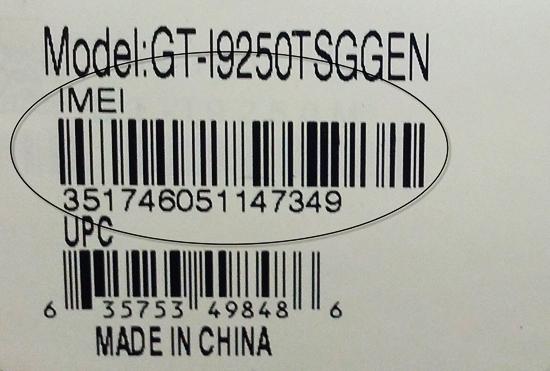
    Telecom regulator TRAI is planning to approach the Commerce and Industry Ministry to ban imports of mobile phones carrying inauthentic unique IMEI (International Mobile Equipment Identity) numbers, which help the authorities track users.

    [quote]“TRAI will soon write to the Commerce Ministry to ban such phones. Import of only those cell phones should be allowed which are certified by GSMA-and TIA-authorised bodies for GSM [Global System for Mobile] and CDMA handsets respectively,” an official told PTI.[/quote]

    The GSM Association and Telecommunications Industry Association are global bodies that provide unique numbers to mobile handset companies.

    The move aims to check proliferation of mobile handsets with duplicate or cloned IMEI numbers, which are dangerous for national security.

    An IMEI comprises 15-digit codes assigned to a handset and it appears on the operator’s network whenever a call is made. Concerns had been raised over their usage after terror attacks in India.

    Cloning issues in the case of CDMA handsets are negligible but rampant in the case of GSM handsets, the official said.

    The government has banned services on mobile handsets with fake IMEI numbers after November 30, 2009.

    However, according to informed sources, during a test conducted in a telecom service area, government officials were surprised to see over 18,000 mobile handsets using the same IMEI number.

    “The idea is to ask importers of handsets to provide a certificate issued by a GSMA or TIA authorised body for entry of his consignment in the country,” the official said.

    Mobile phones without the unique security code are making inroads into the grey market by cloning the IMEI numbers of genuine sets. Through cloning, the IMEIs of bona fide mobile sets can be used by antisocial elements.

  • Apple Patent Envisions a Smart Cover With Built-In Display, Keyboard

    Apple Patent Envisions a Smart Cover With Built-In Display, Keyboard

    If you think the Surface tablet’s Touch Cover and Type Cover are cool, then take a look at what Apple has in the works. The company that’s dominating the tablet industry with the iPad is looking to patent what appears to be next-generation Smart Covers, complete with built-in, flexible AMOLED displays, keyboards, and even solar panels and radio frequency (RF) energy collection antennas.

    Apple’s patent application for a “Cover Attachment With Flexible Display,” was published by the United States Patent and Trademark Office Thursday, and shows a number of possible Smart Cover embodiments, one of which should look particularly familiar to Microsoft watchers.

    When Microsoft first showed off its Surface tablet in June, it spent a significant amount of time touting the benefits of the peripheral Touch Cover, a tablet cover with a flat, built-in keyboard. It was a key features etting the Surface apart from the iPad. But it looks like Apple has been thinking along the same lines for at least a year — the company first filed its patent on Aug. 11, 2011 — and has come up with a flexible Smart Cover that includes a fabric keyboard and potential video or document controls on a back flap.

    “First, this configuration gives the user an experience much closer to the one enjoyed by laptop users. Second, by allowing the user to easily view the screen and by providing a convenient surface to type on, tasks such as word processing and email become much more efficient,” the patent document states.

    This sounds a lot like what Microsoft said about its Touch Cover advantages, but Apple is envisioning much more (though whether any of Apple’s ideas ever reach fruition is a different matter entirely).

    One of the most interesting embodiments in the patent is a Smart Cover with a built-in AMOLED display made of a thin, polyimide substrate that could extend the iPad’s display. The cover would connect to the tablet through a wireless or wired data connection, or could even via other ports such as DisplayPort, mini DisplayPort, DVI, or Thunderbolt.

    “The addition of cover display ameliorates the limited screen area problem and makes a number of tasks significantly easier, in some cases functioning as an extended desktop,” the patent states. It goes on to list a few examples of how the cover display could help with reviewing multiple documents at once. I imagine the scheme might also be helpful for general multitasking — you could keep your e-mail on the cover display and your web browser on the iPad display. The patent adds that the cover’s display could be enhanced with multi-touch gestures.

    Since the cover’s display is flexible and can be used as an iPad stand (just like the current Smart Cover), the patent says that the cover could also recognize when it’s being bent back (with the help of an accelerometer) and activate itself for a specific purpose. For example, the cover display’s panel might display your Facebook status or latest tweet, the current time, or even your name — useful for when in meetings with strangers.

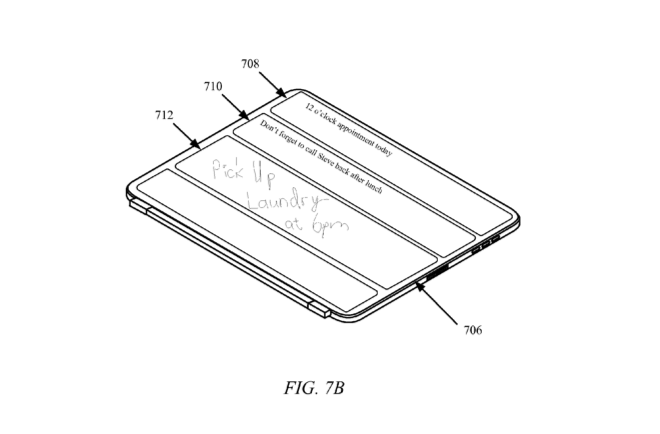
    The display doesn’t have to stay within the confines of the tablet. Apple’s filings also describe another option in which the cover features small displays across the outside panels, allowing you to view information without having to open the cover and turn on the tablet. Instead of AMOLED display technology, the patent describes this embodiment as using electronic paper, which requires no extra power to maintain static images or text. The cover, in this case, could be used to display calendar reminders, tasks, or decorative patterns.

    How does the cover display get power? Apple has thought of a few options. The patent document describes a custom MagSafe connector that would allow the cover to draw power from the iPad itself. Alternatively, the cover could include a small battery, so that it doesn’t drain the tablet’s power. Another interesting option is to include “ambient energy collectors” such as solar panels and RF antennas.

    In one embodiment, the iPad cover has integrated solar panels on the outside of the cover. In this case, the cover doesn’t only power itself, but it could also transfer energy to the tablet. The cover could also include RF antennas, which the filings admit do not yield as much energy. Still, the antennas could power a micro battery or a super capacitor inside the actual cover, to power the low-energy AMOLED or electronic paper display. One advantage of the RF antennas is that they can collect energy whether the cover is open or closed, whereas the solar panels have to face a light source.

    It’s clear that Apple has covered a lot of Smart Cover ground with this patent. It would be amazing to see all of these become actual shipping product features, available for various kinds of user needs. But knowing how Apple functions, it’s more likely that they will come out with one or two options. And if the company is smart, we’ll see a new cover with a built-in keyboard — to ensure nobody opts for a Microsoft Surface just because of the available Touch Cover.

    Source : Wired 
  • HTC Desire VC launched in India for Rs 21,999

    HTC Desire VC launched in India for Rs 21,999

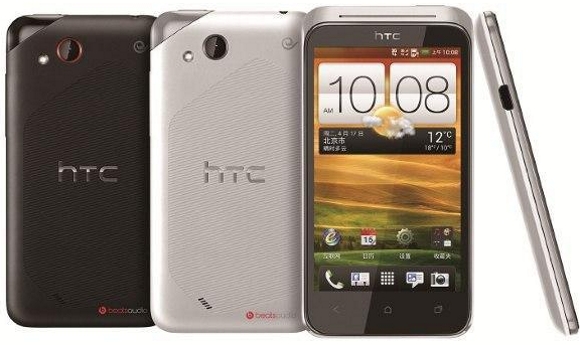
    The official HTC Desire VC Tata Docomo India price and availability details have arrived. The Taiwanese manufacturer has partnered with the carrier to offer the device with a range of flexible data plans.

    This member of the Desire series deploys a 4-inch display that’s said to render a hyper-viewing angle for streaming media content. It tags along the dual SIM attribute and enables convenient switching between CDMA and GSM Networks. A 5MP autofocus snapper with flash is embedded on its exterior. It is powered by a 1650 mAh battery. The phone has a 1GHz processor. It ships with Android ICS out of the box.

    [quote]“The new HTC Desire VC is an excellent amalgamation of style and technology. Its innovative design and dual-sim capability allows users to maximize their network connections while smartly managing data usage – making it the perfect lifestyle smartphone choice,” commented Faisal Siddiqui, Country Manager, HTC India.[/quote]


    Quite predictably, the handset employs Beats Audio technology to cater to musical needs. It packs in 4GB of memory onboard that can be expanded via a microSD card slot. Besides, there’s free Dropbox storage for 2 years. For connectivity purposes, options like Wi-Fi, a 3.5mm audio jack, a micro-USB port and Bluetooth 4.0 are thrown into the mix. This ICS handset is the first to provide its users with HSIA internet for smooth web browsing.

    Its price is marked at Rs. 21,999. Apart from convenient data plans, buyers tying up with the network provider’s post-paid or pre-paid schemes will receive a voice and data offer too.

iGyaan Network
Privacy Overview

This website uses cookies so that we can provide you with the best user experience possible. Cookie information is stored in your browser and performs functions such as recognising you when you return to our website and helping our team to understand which sections of the website you find most interesting and useful.