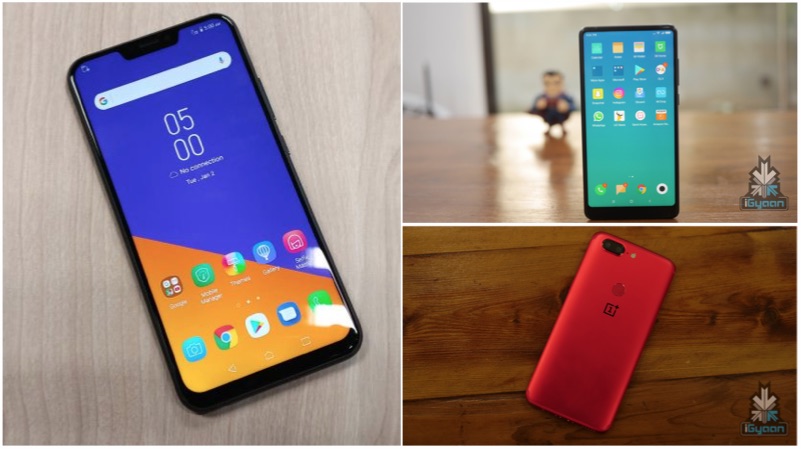
Asus has launched its new flagship smartphone, the Asus Zenfone 5Z at MWC 2018. While at first glance it might look like an iPhone X knockoff, it has a lot more going on for it. In fact, the smartphone was launched along with three other Zenfone devices. The most interesting aspect of the Asus Zenfone 5Z is that it runs on the Snapdragon 845 and is priced at EUR 479 (Rs. 38,000 approx.).
Before MWC 2018 began, many expected Samsung to rule the Snapdragon 845 roost with its Galaxy S9 and S9+. However, smartphone makers like Sony and now Asus, have launched devices powered by the Snapdragon 845 chipset as well. The Asus Zenfone 5Z is the latest one before Xiaomi launches the Mi Mix 2S in late-March.
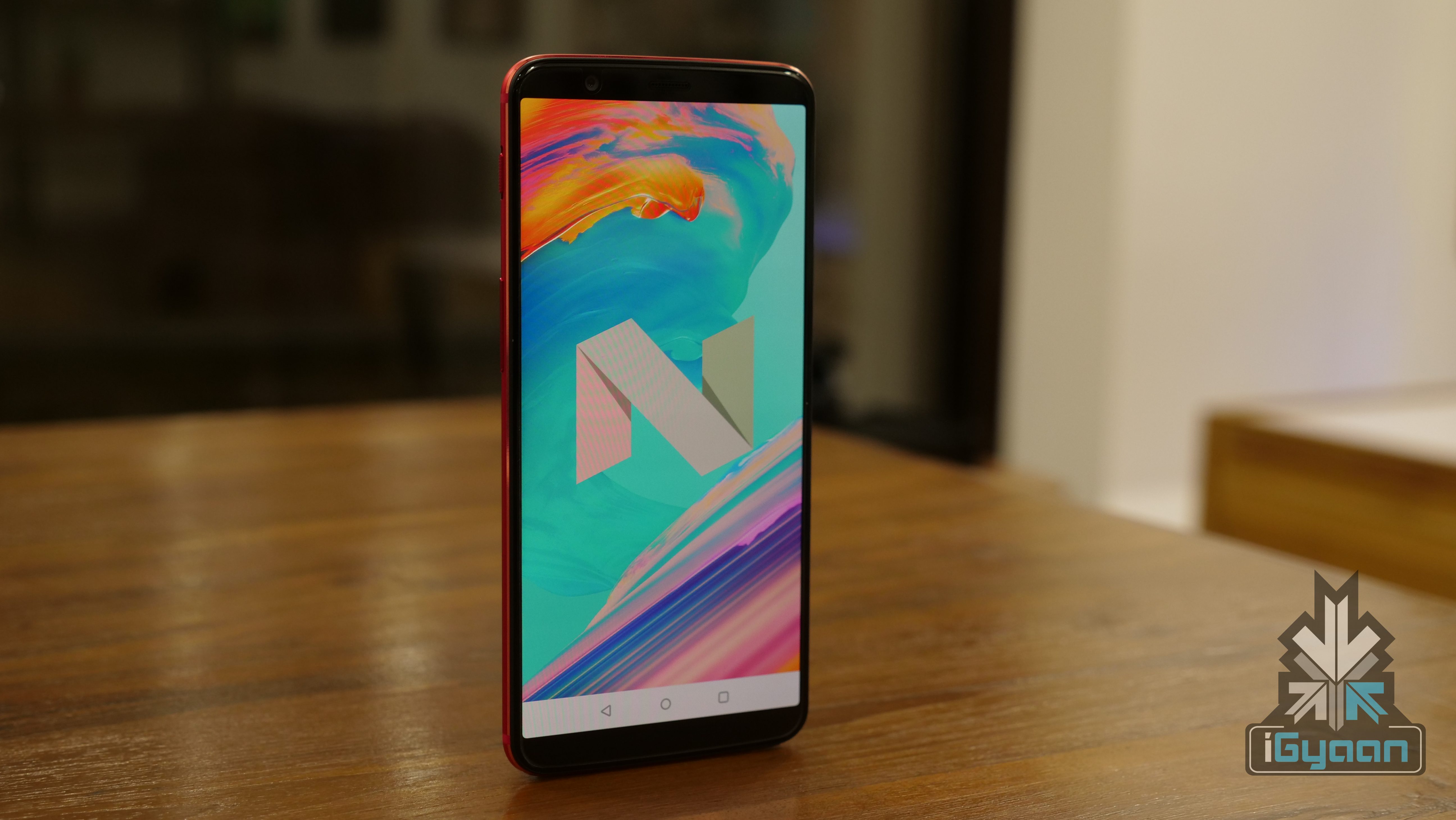
At this price point, the Zenfoone 5Z is much more affordable than the likes of the Galaxy S9 and Xperia XZ2. However, it will be interesting to see if and when Asus decides to launch the device in India, what the pricing will be like. If the company manages to keep the pricing under Rs. 40,000 the Zenfone 5Z will directly compete with the OnePlus 5T and Xiaomi Mi Mix 2. However, both of these smartphones run on the now older Snapdragon 835 chipset.
While the design of the Asus Zenfone 5Z and its UI might not be everyone’s cup of tea, there is no denying the potential of its chipset. The Galaxy S9, however, will be powered by the Exynos 9810 in India, will launch at a price of Rs. 62500. So, how does the Asus Zenfone 5Z hold up against the likes of the OnePlus 5T and Mi Mix 2? Let’s find out.
Comparison
Specifications
Asus Zenfone 5Z
OnePlus 5T
Xiaomi Mi Mix 2
Price
Starting at EUR 479 (Rs. 38,000 approx.)
Starting at Rs. 32999
Rs. 32999
Display
6.2 inch IPS LCD
6 inch Optic AMOLED
5.99 inch IPS LCD
Resolution
2246 x 1080 px
18.5:9
402 ppi
2160 x 1080 px
18:9
401 ppi
2160 x 1080 px
18:9
403 ppi
Chipset
Snapdragon 845
Snapdragon 835
Snapdragon 835
RAM
4GB
6GB
8GB
6GB
8GB
6GB
Storage
64GB
128GB
Expandable up to 400GB
64GB
128GB
Non-Expandable
128GB
Non-Expandable
Battery
3300 mAh
QuickCharge 4.0
3300 mAh
DashCharge
3400 mAh
QuickCharge
Primary Camera
12MP Sony IMX363 sensorf/1.8 aperture
Unspecified MP 120° wide-angle camera with 6p lens
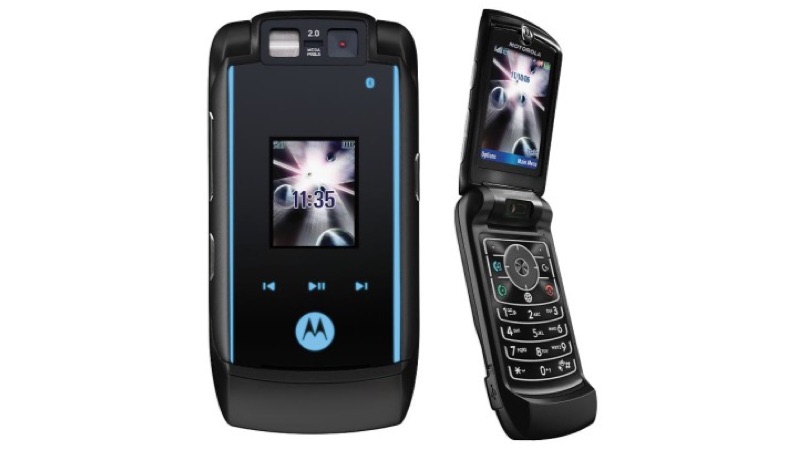
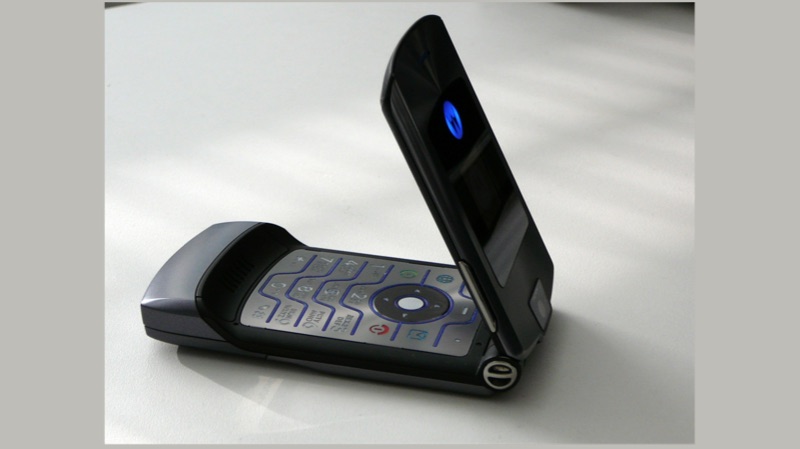
Back in 2004, way before the rise of Android and iOS, the Moto RAZR was one of the most sought-after phones. The flip phone looked premium and at the time of the launch, was wanted by almost everyone. Nokia, at that time, was the most successful phone maker and the Moto RAZR was a worthy competitor. It sold over 130 million units during its run.
Since then, Motorola has gone on to be owned by Google, and then Lenovo. It now makes Android smartphones that are nothing like the Moto RAZR. However, there is still hope. There is a possibility of the Moto RAZR making a comeback in the smartphone industry. However, don’t take our word. This is according to a comment made by the CEO of Lenovo:
With the new technology, particularly foldable screens, I think you will see more and more innovation on our smartphone design. So hopefully what you just described (referring to the Moto RAZR brand) will be developed or realized very soon.
When asked to confirm if he was specifically referring to the RAZR, he replied, “I think I have already answered the question”. It is fair to say that the company has plans for reimagining a classic with the modern-day technology. However, don’t hold your breath to it as this smartphone could be a few years away.
Nokia 8810 4G At MWC 2018
However, what will be interesting to see is the implementation of the modern-day smartphone. Much like what Nokia has done, we could see a revamped Moto RAZR with updated features, camera, and a build reminiscent of the old Moto RAZR. On the other hand, it could be a complete revamp of the old phone. Lenovo could launch a foldable smartphone running Android which folds to look like the Moto RAZR. Opportunities, as they say, are endless here.
Conclusion
HMD Global, in particular, has been instrumental in reviving a few Nokia classics. Right from the Nokia 3310 4G model to the recently launched Nokia 8810 4G, some classics have been revamped to suit the current market. Since the Moto RAZR was such an iconic phone and has been a part of the pop culture in that era, it could be a great move for Lenovo-Moto.
OnePlus has had some of the most successful smartphones in India. From the OnePlus One to the OnePlus 5T, the price to performance ratio of OnePlus devices has more or less been spot-on. Even though the OnePlus 5 received some flak for a shaky camera and design too similar to the iPhone 7 Plus, it was a great smartphone for the price. With the OnePlus 5T, the company moved on to a modern design and introduced Face Unlock as well. However, greater things are expected from the OnePlus 6 and a new leak has revealed some interesting details.
Leaked images of the OnePlus 6 reveal that it will have some resemblance to the iPhone X. While the iPhone X and its notch was met with scepticism at the launch, it has, since then, become a feature a lot of other smartphone makers have imitated. The OnePlus 6 will also have a notch on top which will house the earpiece and camera. However, unlike other smartphone makers, OnePlus could use the notch to house extra hardware for a much safer Face Unlock system that could essentially replace the fingerprint sensor.
iPhone X Notch
To the back of the smartphone is where things get interesting. It looks like the OnePlus 6 will finally have a glass design which means it could introduce wireless charging as well. Although, OnePlus has conceded that DashCharge is much better than wireless charging. The dual-camera setup looks uncannily similar to the recently launched Galaxy S9+ as well.
The leaked image shows that the smartphone is running on Oxygen OS 5.1 based on Android 8.1 Oreo.
Specifications and speculations:
The smartphone has 6GB RAM and 64GB storage, which looks like the base variant of the OnePlus 6. OnePlus has been using similar RAM and storage combinations from the launch of OnePlus 3.
The smartphone might have a 6.2-inch display with a higher screen to body proportion. Similarly, the notch houses the main earpiece, front-facing camera and a LED flash unit. Similar to the OnePlus 5T, the company might implement the face unlock using the front-facing camera.
Conclusion:
Applying OnePlus’s two smartphones a year philosophy, the OnePlus 6 is expected to launch in June. However, this might just be a prototype, which may not make into the final production stage.
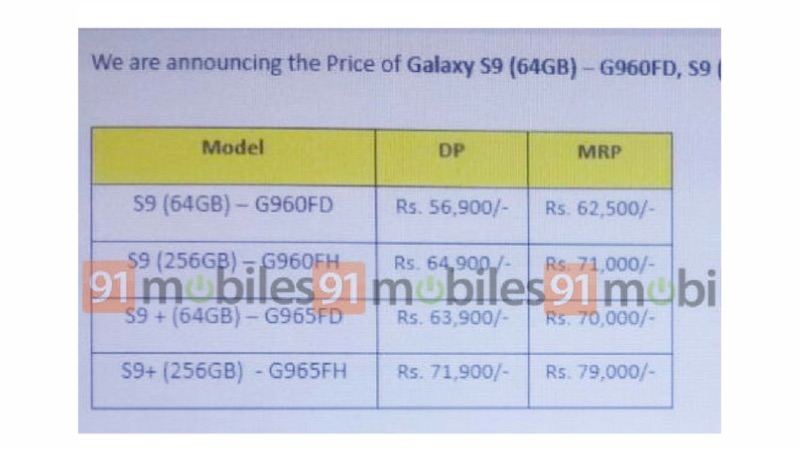
Samsung launched the Galaxy S9 and S9+ on the 25th of February. At the time of the launch, the price of the devices in the US market was revealed. It was expected that the price of the smartphones will be unveiled at the official India launch in March. However, a leak of official documents has revealed the possible pricing of the Galaxy S9 and S9+ in India.
The Samsung Galaxy S9 will start a price of Rs. 62,500 and the 256GB variant will be priced at Rs. 71000. The Galaxy S9+, however, will start at Rs. 70,000 and the 256GB model will retail for Rs. 79000. To put things into perspective, the Galaxy S8 was launched at a price of Rs. 57900 and the S8+ for Rs. 64900. The smartphones will be sold online via Flipkart and the official website of Samsung India.
Samsung Galaxy S9
The Samsung Galaxy S9 has a 5.8 inch Super AMOLED display with a 2960 x 1440 px resolution. This translates to an 18.5:9 aspect ratio, which means it is slightly taller than the usual bezel-less smartphones.
Depending on the market, the Galaxy S9’s chipset will vary. For the US and South Korean market, the S9 will be powered by the Qualcomm Snapdragon 845 chipset. The Galaxy S9 and S9+ are the first-ever smartphones launched with the new flagship chipset. For the rest of the world, it will be powered by the new Exynos 9810 chipset. Coupled with the chipset is 4GB of RAM and 64GB of onboard storage. Similar to a lot of Samsung smartphones, the storage will be expandable up to 256GB via a MicroSD card.
Out of the box, the Samsung Galaxy S9 will run Android 8 Oreo out of the box with Experience 9.0 on top. Powering the smartphone will be a 3000 mAh battery, just like the Galaxy S8. The smartphone will have QuickCharge 4.0 compatibility and support wireless charging. Similar to its predecessor, the Galaxy S9 also has an IP68 rating for water and dust resistance. The Galaxy S9 also has a dual stereo speaker system tuned by AKG and Dolby surround sound.
The Galaxy S9 has a single Dual Pixel 12 MP sensor with dual /1.5 and f/2.4 apertures. In bright lighting conditions, the camera will use the f/2.4 aperture, while the wider f/1.5 aperture is used in dark lighting conditions. It also captures 720P videos at 960fps and 4K videos at 60fps, similar to the Apple iPhone X. On the front of the smartphone is an 8MP camera with an f/1.6 aperture and records 4K videos.
Samsung Galaxy S9+
As is with its smaller sibling, the Galaxy S9+ has the same screen size as the Galaxy S8+. It sports a 6.2 inch Super AMOLED display with a 2960 x 1440 px resolution.
Under the hood, it will either be powered by the Snapdragon 845 chipset or Exynos 9810. This will again depend on whether it is being sold in the US, South Korea or rest of the world. Unlike the Galaxy S9, the S9+ will be available in 6GB RAM/64GB storage, 6GB RAM/128GB storage and 6GB RAM/256GB models in major markets across the world.
Out of the box, the Galaxy S9+ will also run Android 8 Oreo out of the box with Experience 9.0 on top. Powering the smartphone will be a 3500 mAh battery, just like the Galaxy S8+. Similar to its predecessor, the Galaxy S9+ also has an IP68 rating for water and dust resistance.
Unlike its predecessor, the Galaxy S9+ has a dual-camera setup on the back. The Galaxy S9+ has one wide-angle 12MP camera with an f/1.5 aperture and the other is a 12MP telephoto lens with an f/2.4 aperture. The telephoto lens is the same one found on the Galaxy Note8, which means it has OIS. On the front of the smartphone is an 8MP camera with an f/1.6 aperture and records 4K videos.
Samsung has launched its new flagship devices, the Galaxy S9 and S9+. Both the smartphones are available for pre-order in India and will go on sale from the 16th of March. However, the price of the smartphones has not been revealed yet. That is expected to happen on the 4th of March. Samsung won’t be selling the 128GB storage variant in India, only the 64GB and 256GB variant will be available.
The Galaxy S9 and S9+ will carry a premium price tag for sure, and go up against the likes of the iPhone X, iPhone 8 Plus and even Galaxy Note8. However, flagship specifications no longer come at a premium price tag. Android smartphones like the OnePlus 5Tand Mi Mix 2 offer top of the line specifications at a much lower cost. So, how does the Samsung Galaxy S9/S9+ stack up against the competition? Let’s find out!
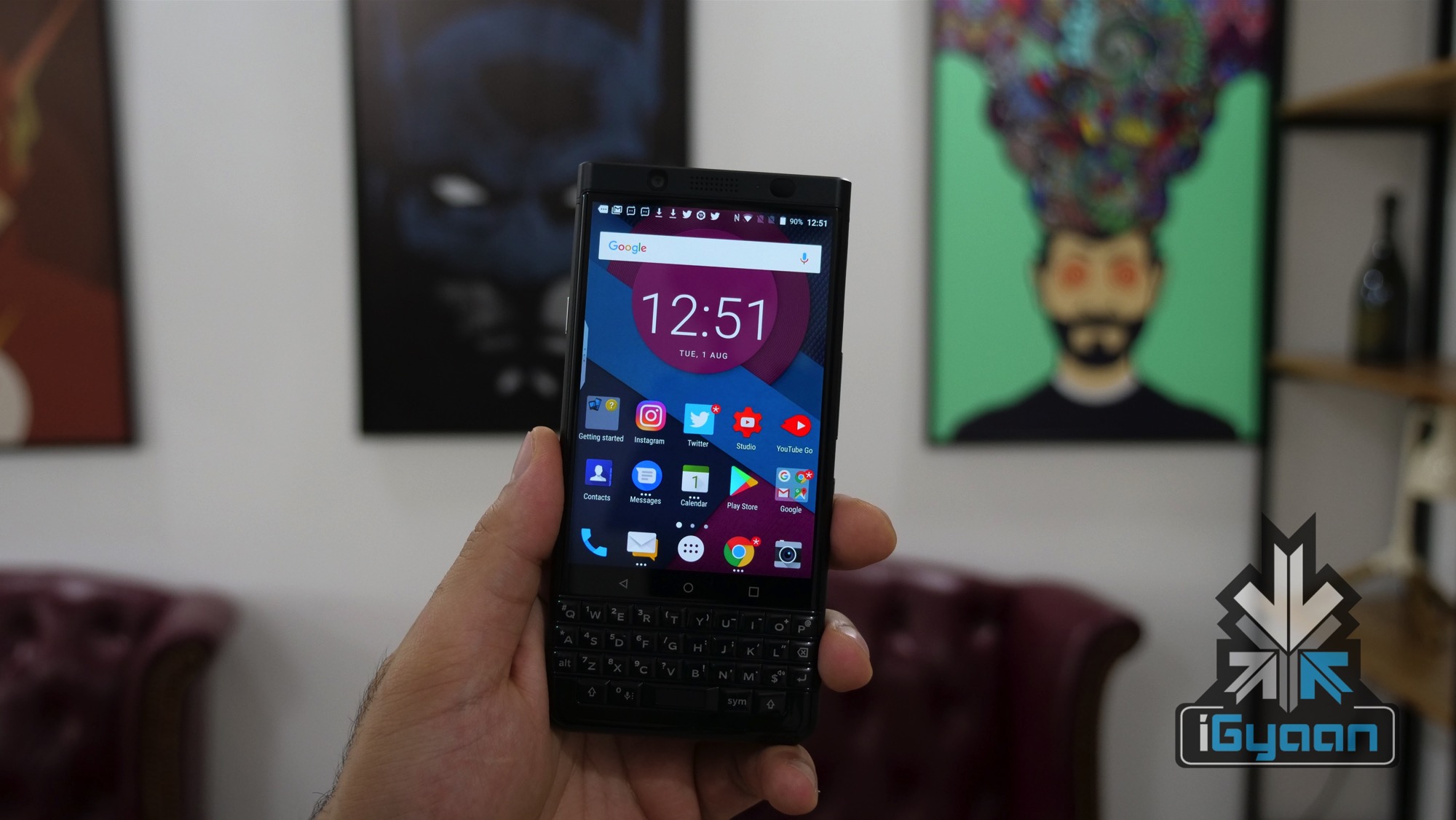
BlackBerry has launched a few interesting smartphones since moving to Android OS. Devices like the KEYone with a full-sized keyboard was a great prospect for people who still craved for a physical keyboard but, also wanted an Android smartphone. The company has also launched touchscreen-only devices like the Motion. However, people found the device to be lacking anything extra for it to be a success.
KEYone
So far, the smartphone maker has stuck to an older design but, things could change soon. There are three organisations that have the license to build BlackBerry-branded smartphones. While TCL/BlackBerry and BB Merah Putih have released BlackBerry handsets, Optiemus Infracom hasn’t. It now looks like Optiemus Infracom will finally release its own take on a “BB” smartphone and it could be the most exciting one yet.
Leak
BlackBerry 'Ghost': a bezel-less, premium Android handset from licensee Optiemus; coming soon to India. pic.twitter.com/KTAvKbDl5v
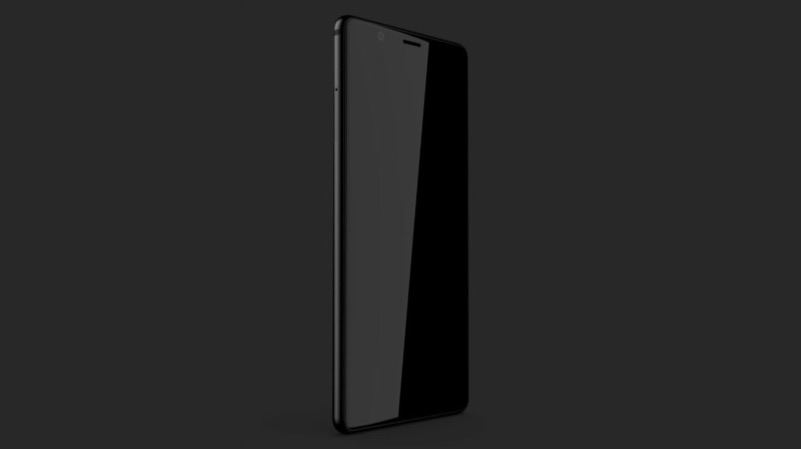
Evan Blass, a famous leaker has posted an image of the BlackBerry Ghost. He also mentions that the Ghost will be launched in India, without mention any other details. According to the image, the Ghost will have an 18:9 aspect ratio and thin bezels. There is only one image that Evan Blass has posted and no other details about the build and camera have been revealed.
Conclusion
While BlackBerry was one of the most sought-after smartphone brands back in the day, things have certainly changed. The company has released a few interesting devices but, never hit the ground running. Maybe, a new design, stock OS and the company’s own security features will spark an interest in the Ghost. Also, it would be interesting if the company names it the Ghost.
After weeks of multiple leaks, Samsung has launched the Galaxy S9 and Galaxy S9+ at an event in Barcelona. The design, specifications, and a lot of the features were leaked ahead of the launch. The Galaxy S9 is priced at US$ 719.99 for the unlocked version in the US. However, the starting price of the Galaxy S9+ is US$ 839.99. The smartphones will go on sale on the 16th of March globally. In India, the devices will be launched on the 6th of March and go on sale on the 16th of March along with the rest of the world.
The Samsung Galaxy S9 and its bigger sibling, the Galaxy S9+ succeeds the Galaxy S8 and S8+ as the 2018 flagship phones. Unlike the previous generation smartphones, the Samsung Galaxy S9 and Galaxy S9+ have more differences than just the display and battery sizes. Samsung has made the Galaxy S9+ a bit more feature-packed to justify the higher price tag.
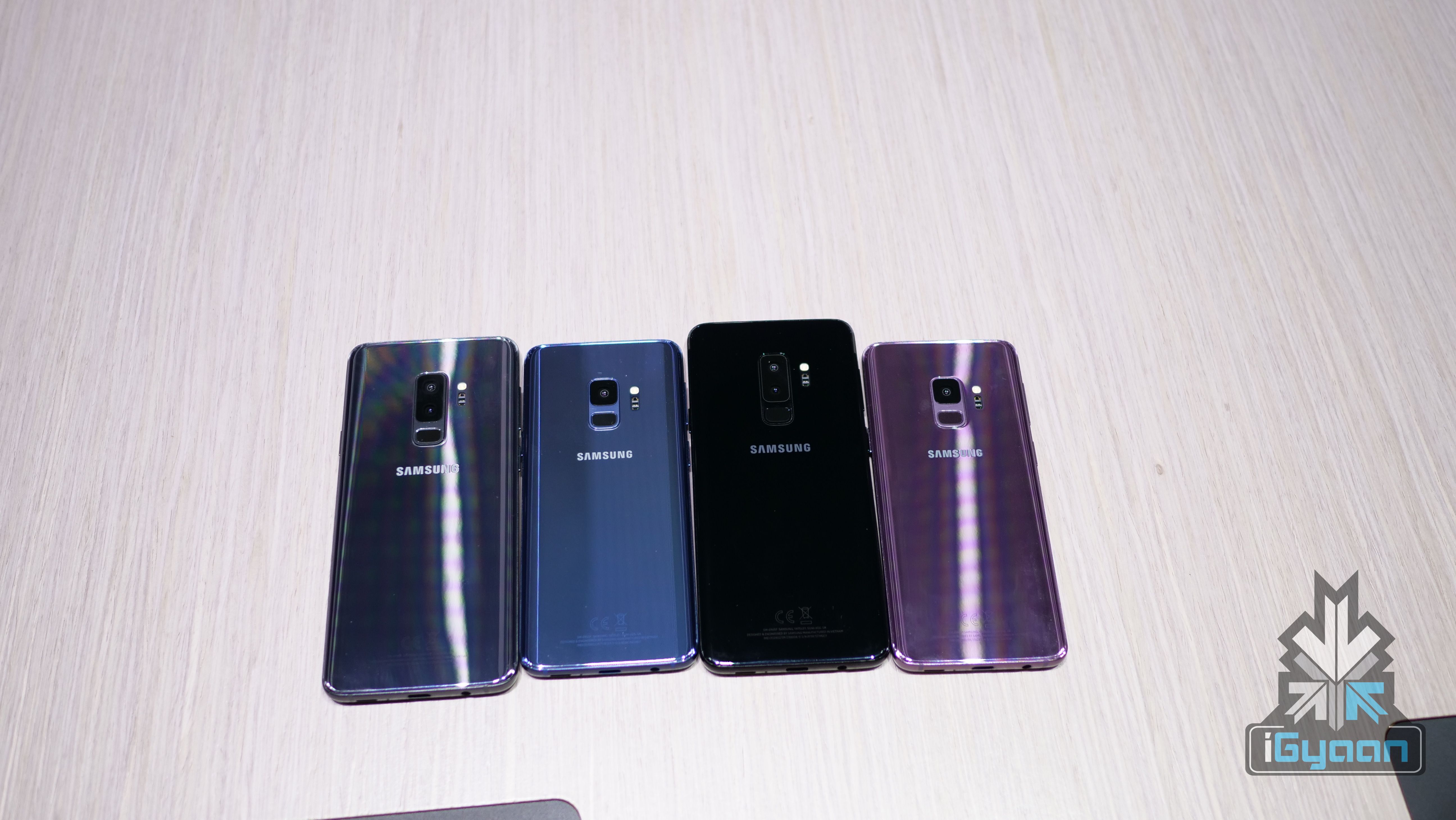
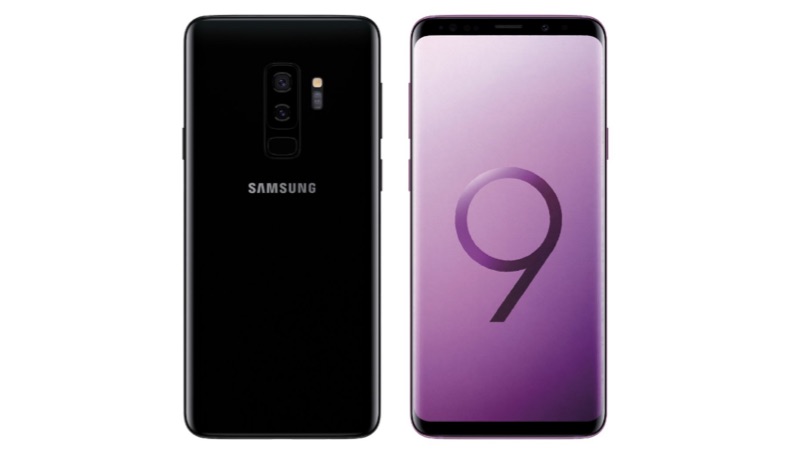
Subsequently, the Samsung Galaxy S9 and Galaxy S9+ look extremely similar to their predecessors. The bezels are slightly thinner but, it is hard to differentiate between the two generations, at least from the front. To the back of the devices is where you see the difference. While the Galaxy S8 and S8+ were two of the most successful Android smartphones of 2017 and were lauded for their looks, there was an issue with the design.
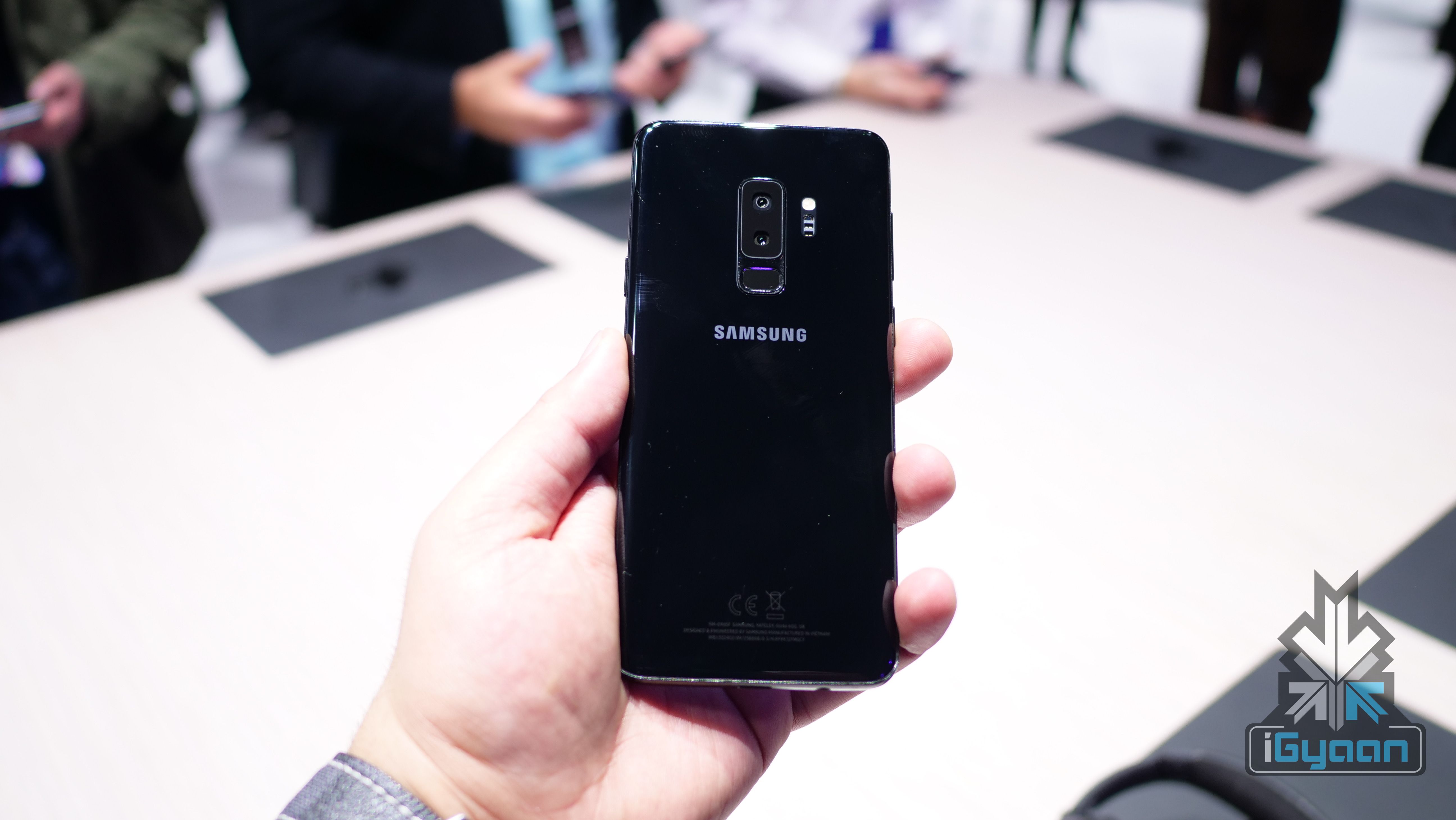
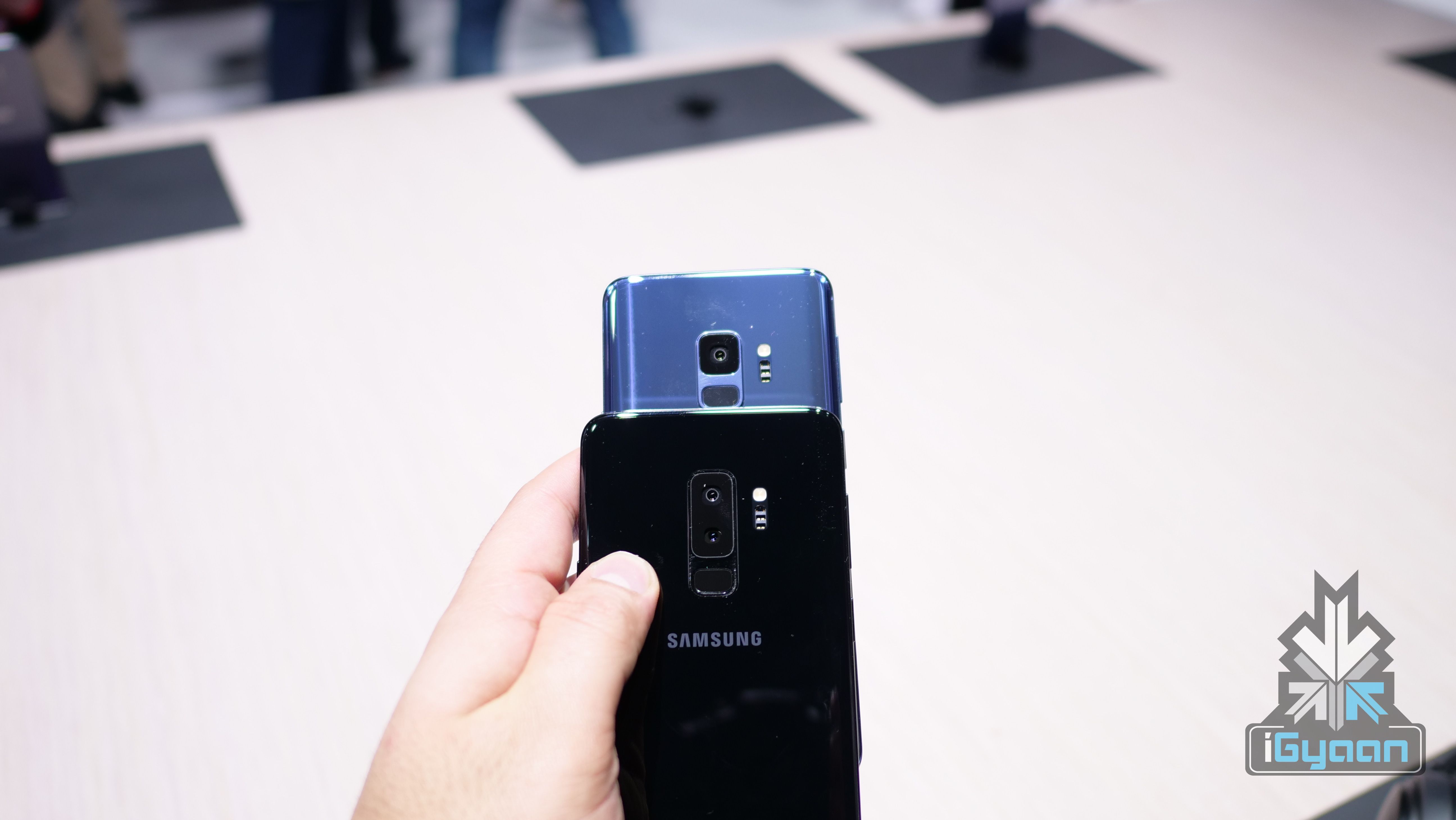
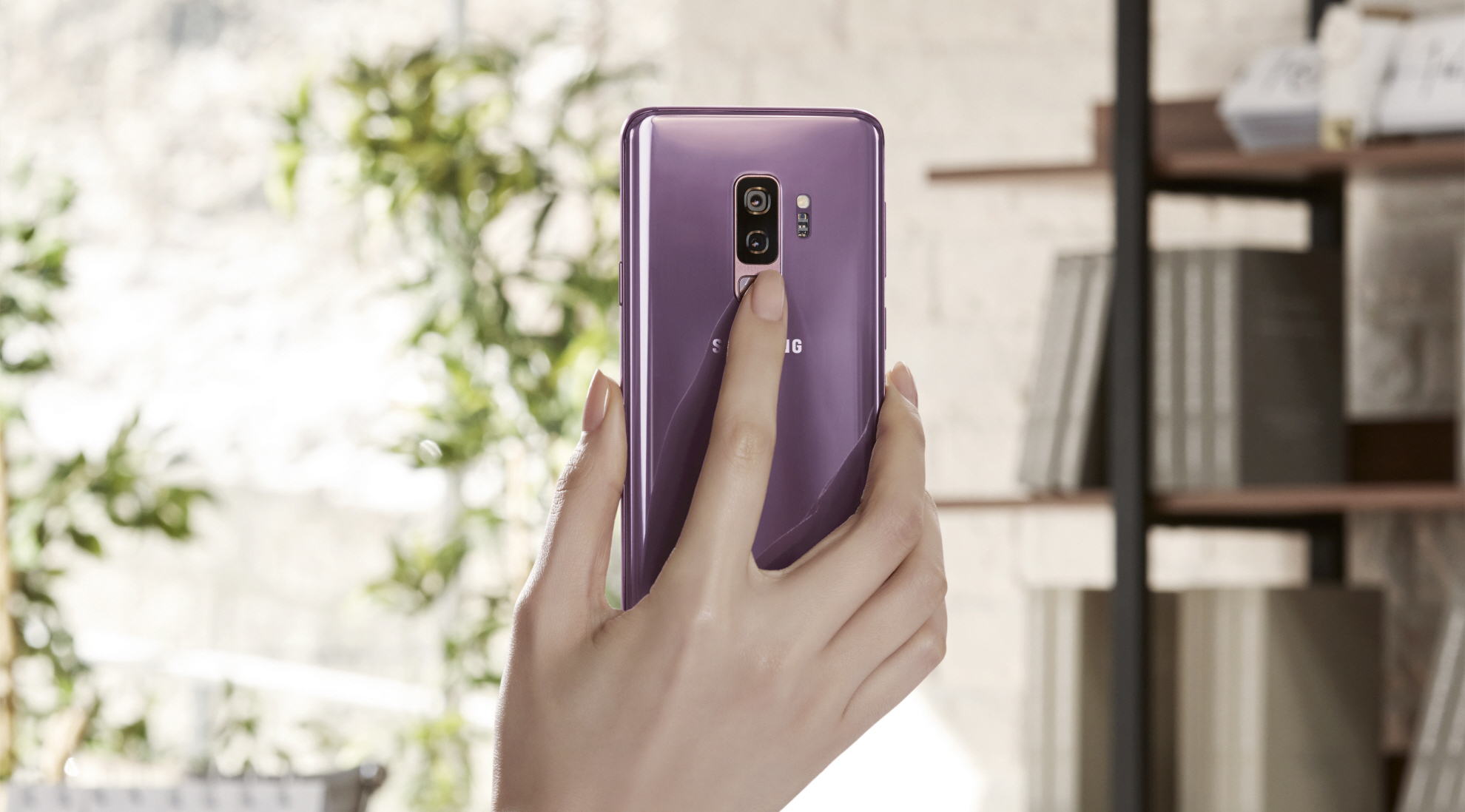
Due to the decreased bezels, Samsung had to move the fingerprint sensor to the back of the phone. However, the execution left a lot to be desired as the sensor was placed next to the camera module. It looks like Samsung took the criticism into consideration. The Galaxy S9 and S9+ come with a fingerprint sensor placed below the camera module. This is a much more ergonomic placement for a rear-facing fingerprint sensor.
Samsung launched the Galaxy Note8 back in August 2017 to a great reception. It built on the success of the Galaxy S8 devices and offered a lot more at a slightly higher price. However, it was still the most expensive Samsung Android device almost touching thousand dollar mark. The Samsung Galaxy S9 and Galaxy S9+, according to early rumours were going to be these radically different smartphones with almost no bezels on the display.
However, that seemed too good to be true and as we moved closer to the imminent launch, we saw more accurate renders. The renders revealed something that will hold true for the smartphone industry in general. As we approach the future of completely bezel-less smartphones, the difference in design between two generations will be minimal. The Galaxy S9 and S9+, represent that future.
Galaxy S8
On the 25th of February, Samsung finally launched its two new flagship smartphones, the Galaxy S9 and Galaxy S9+. As is with almost every launch these days, there was barely anything for Samsung to tell us that would be a surprise.Right from the volume rockers placement to the stereo speakers, everything about the devices was leaked well in advance. However, the Samsung flagship phones will dominate smartphone sales this year and these are two of the most important Android smartphones of 2018.
So, from the Galaxy S8 of 2017 to the Galaxy S9 of 2018, what really has changed, and what remains constant?
Galaxy S9, Galaxy S9+
Design
The Samsung Galaxy S8 and S8+ were some of the best-looking smartphones of 2017. Samsung incorporated its edge design with thinner bezels and called it the “Infinity Display”. The glass on the front and back with a metal frame meant that the smartphones looked stunning. However, they were also fingerprint magnets. Somebody once said, “Don’t fix it if it ain’t broken,” and someone at Samsung followed the philosophy.
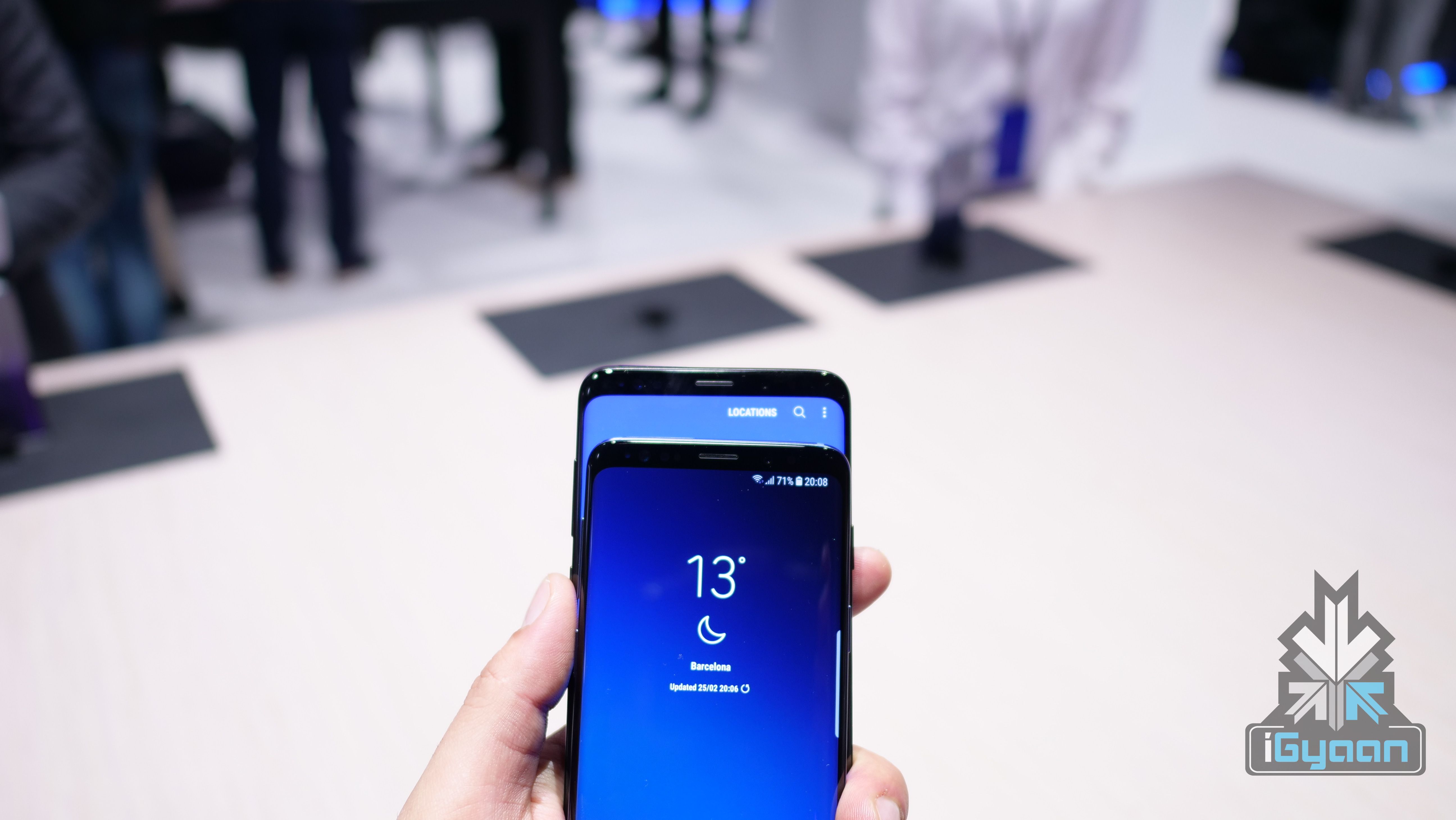
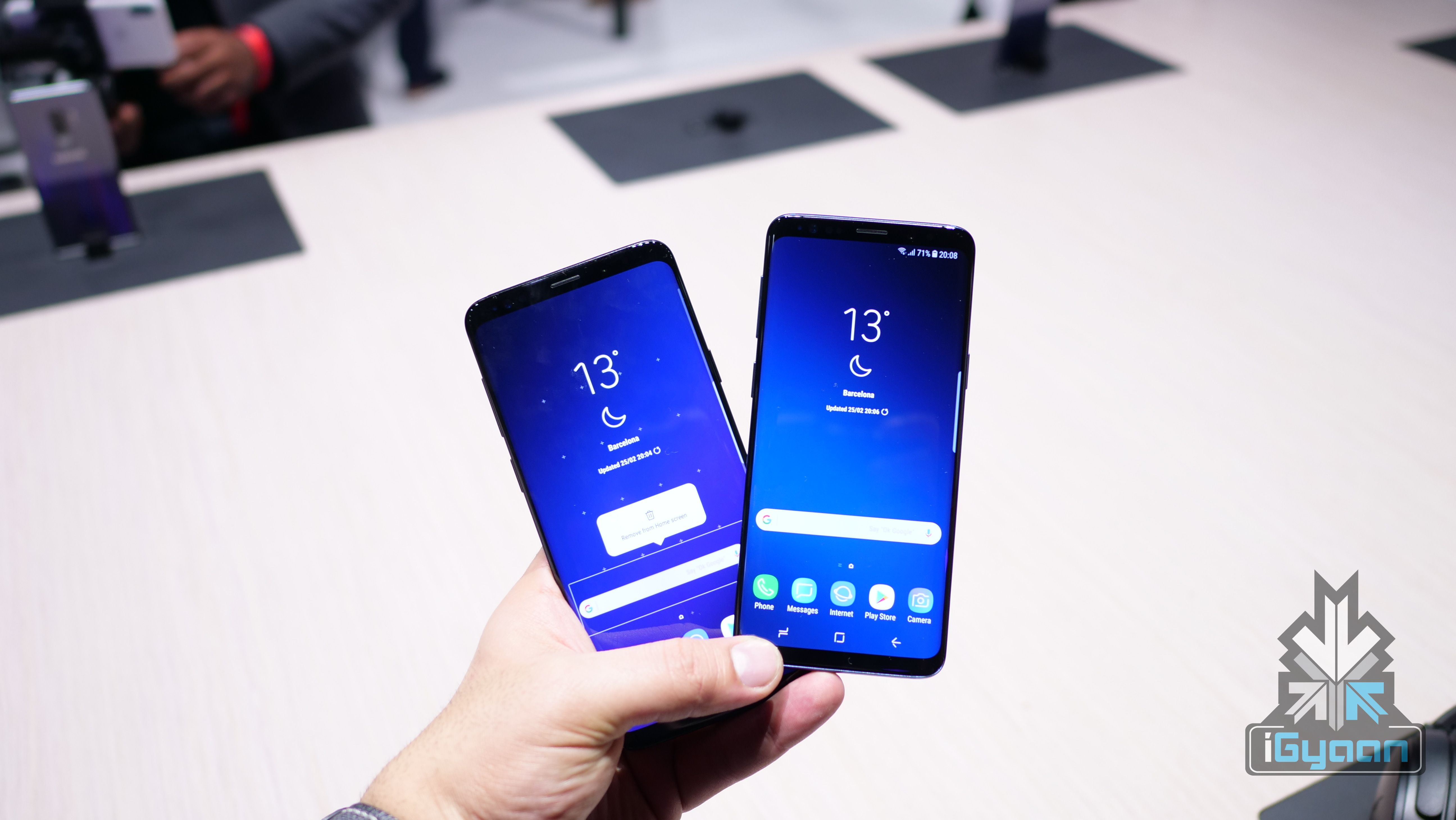
The Galaxy S9 and S9+, barring slightly thinner bezels, look very similar to their predecessors. In fact, it is hard to pick the correct one out when put side by side, at least from the front. To the back is where Samsung has made a necessary change. The Galaxy S8 and S8+, while lauded for their design, had a very suspect fingerprint sensor placement. With the new flagship phones, Samsung has fixed that and moved the sensor below the camera module.
Also, the Galaxy S9+ now has a dual-camera setup which is similar to the Galaxy Note8. However, the Galaxy Note8 had a horizontally placed setup while the S9+ has a vertically placed dual-camera setup.
Galaxy S9, S9+ Colour Variants
Display
The Samsung Galaxy S9 and Galaxy S9+ have the exact same displays as their predecessors. Smaller of the two siblings, the S9 has a 5.8 inch Super AMOLED display while the S9+ has a 6.2 inch Super AMOLED display. Both smartphones have a 2960 x 1440 px resolution which translates to an 18.5:9 aspect ratio. This means that the Galaxy S9 devices are slightly taller than the usual 18:9 devices. The smartphones have a curved display where the edges can be used for shortcuts. This has become a standard for Samsung flagship phones now.
Under The Hood
It is understandable if the design and display don’t get an upgrade over a generation. However, seldom do you see a company launching a new generation smartphone with the same hardware. Same is the case here as well. The Galaxy S9 and Galaxy S9+ are powered by the new and faster chipsets. For the US and South Korean markets, the S9 and S9+ will have the Snapdragon 845 chipset under the hood. For the rest of the world, they will be powered by Samsung’s own Exynos 9810 chipset.
The Galaxy S9 has 4GB of RAM while the Galaxy S9+ has 6GB of RAM. Both the smartphones will be available in 64GB, 128GB and 256GB storage variants which will be expandable via a microSD card. Also, for the first time in the Galaxy S series, Samsung has included a dual stereo speaker setup. These speakers are tuned by AKG and come with Dolby Atmos integration as well. Samsung has also decided to stay away from the herd and include a 3.5mm headphone jack which is great for people who still prefer wired headphones over Bluetooth ones.
Galaxy S9+
Similar to the predecessors, the Galaxy S9 is powered by a 3000 mAh battery while a 3500 mAh battery powers the S9+. Both devices support QuickCharge 4.0 and wireless charging as well. This time around, the iris scanner is more advanced and there is a Face Unlock feature called Intelligent Scan. If someone is not a fan of the rear-facing fingerprint sensor, there are more ways to unlock their smartphone now.
Software
The Samsung Galaxy S9 and S9+ will run Android 8 Oreo out of the box with Experience UI 9.0 on top. Samsung’s custom skin has come a long way since the days of TouchWiz. It definitely holds up for a longer period of time and looks much better. There will be a lot of customisation options as well. In fact, this also means that smartphones like the Galaxy Note8 will also finally start receiving Android 8 Oreo update.
Cameras
Before even unveiling the new smartphones, Samsung revealed what will be new in them. The teaser poster clearly stated that the Galaxy S9 and S9+ will have much better cameras than their predecessors. On paper, that is definitely true but, we will test out the cameras in detail before giving our two cents on it. However, the Galaxy S9 and S9+ do have improved specifications in the camera department.
The Galaxy S9 has retained a single camera setup on the back. It is a Dual-Pixel 12MP camera with a variable aperture of f/1.5 to f/2.4. In bright lighting conditions, the camera will use the f/2.4 aperture, while the wider f/1.5 aperture is used in dark lighting conditions. It also captures 720P videos at 960fps and 4K videos at 60fps, similar to the Apple iPhone X. On the front of the smartphone is an 8MP camera with an f/1.6 aperture and records 4K videos.
The Galaxy S9+ gets a dual-camera setup on the back. The primary 12MP camera is the same one found on the Galaxy S9. The secondary telephoto lens is a 13MP camera with OIS and an f/2.4 aperture. This telephoto lens is the same one found on the Galaxy Note8. As is with S9, it records 720P videos at 960fps and 4K videos at 60fps. This is one more feature where the Galaxy S9 devices will go head to head with the iPhone X.
Some people might call it an Animoji rip off but, Samsung is calling it AR Emoji. Basically, the smartphone captures the face data, analyses it, which allows users to make animated versions of themselves. These can later be customised further. It is a fun feature to have on your smartphone but, you probably won’t spend all that money just for AR Emojis. However, it is something that Samsung demoed at the launch and believes it has enough customisation options to make it interesting.
Conclusion
While there is no information about the exact pricing of the two devices in India, they will be pricier than their predecessors. The pre-booking for the S9 and S9+ has already begun India and will go on sale from the 16th of March. Will you be buying one?
After weeks of multiple leaks, Samsung has launched the Galaxy S9 and Galaxy S9+ at an event in Barcelona. The design, specifications, and a lot of the features were leaked ahead of the launch. The Galaxy S9 is priced at US$ 719.99 for the unlocked version in the US. However, the starting price of the Galaxy S9+ is US$ 839.99. The smartphones will go on sale on the 16th of March globally. In India, the devices will be launched on the 6th of March and go on sale on the 16th of March along with the rest of the world.
The Samsung Galaxy S9 and its bigger sibling, the Galaxy S9+ succeeds the Galaxy S8 and S8+ as the 2018 flagship phones. Unlike the previous generation smartphones, the Samsung Galaxy S9 and Galaxy S9+ have more differences than just the display and battery sizes. Samsung has made the Galaxy S9+ a bit more feature-packed to justify the higher price tag.
As expected, the Samsung Galaxy S9 and Galaxy S9+ look extremely similar to their predecessors. The bezels are slightly thinner but, it is hard to differentiate between the two generations, at least from the front. To the back of the devices is where you see the difference. While the Galaxy S8 and S8+ were two of the most successful Android smartphones of 2017 and were lauded for their looks, there was an issue with the design.
Due to the decreased bezels, Samsung had to move the fingerprint sensor to the back of the phone. However, the execution left a lot to be desired as the sensor was placed next to the camera module. It looks like Samsung took the criticism into consideration. The Galaxy S9 and S9+ come with a fingerprint sensor placed below the camera module. This is a much more ergonomic placement for a rear-facing fingerprint sensor.
The Samsung Galaxy S9 and S9+ have a new feature similar to Apple’s Animojis. It is called AR Emoji. Basically, the smartphone captures the face data, analyses it, which allows users to make animated versions of themselves. These can later be customised further.
Samsung Galaxy S9
The Samsung Galaxy S9 has a 5.8 inch Super AMOLED display with a 2960 x 1440 px resolution. This translates to an 18.5:9 aspect ratio, which means it is slightly taller than the usual bezel-less smartphones.
Depending on the market, the Galaxy S9’s chipset will vary. For the US and South Korean market, the S9 will be powered by the Qualcomm Snapdragon 845 chipset. The Galaxy S9 and S9+ are the first-ever smartphones launched with the new flagship chipset. For the rest of the world, it will be powered by the new Exynos 9810 chipset. Coupled with the chipset is 4GB of RAM and 64GB of onboard storage. Similar to a lot of Samsung smartphones, the storage will be expandable up to 256GB via a MicroSD card.
Out of the box, the Samsung Galaxy S9 will run Android 8 Oreo out of the box with Experience 9.0 on top. Powering the smartphone will be a 3000 mAh battery, just like the Galaxy S8. The smartphone will have QuickCharge 4.0 compatibility and support wireless charging. Similar to its predecessor, the Galaxy S9 also has an IP68 rating for water and dust resistance. The Galaxy S9 also has a dual stereo speaker system tuned by AKG and Dolby surround sound.
The Galaxy S9 has a single Dual Pixel 12 MP sensor with dual /1.5 and f/2.4 apertures. In bright lighting conditions, the camera will use the f/2.4 aperture, while the wider f/1.5 aperture is used in dark lighting conditions. It also captures 720P videos at 960fps and 4K videos at 60fps, similar to the Apple iPhone X. On the front of the smartphone is an 8MP camera with an f/1.6 aperture and records 4K videos.
Samsung Galaxy S9+
As is with its smaller sibling, the Galaxy S9+ has the same screen size as the Galaxy S8+. It sports a 6.2 inch Super AMOLED display with a 2960 x 1440 px resolution.
Under the hood, it will either be powered by the Snapdragon 845 chipset or Exynos 9810. This will again depend on whether it is being sold in the US, South Korea or rest of the world. Unlike the Galaxy S9, the S9+ will be available in 6GB RAM/64GB storage, 6GB RAM/128GB storage and 6GB RAM/256GB models in major markets across the world.
Out of the box, the Galaxy S9+ will also run Android 8 Oreo out of the box with Experience 9.0 on top. Powering the smartphone will be a 3500 mAh battery, just like the Galaxy S8+. The smartphone will have QuickCharge 4.0 compatibility and support wireless charging. Similar to its predecessor, the Galaxy S9+ also has an IP68 rating for water and dust resistance.
The main difference between the two S9 models this year is in the camera department. Unlike its predecessor, the Galaxy S9+ has a dual-camera setup on the back. The Galaxy S9+ has one wide-angle 12MP camera with an f/1.5 aperture and the other is a 12MP telephoto lens with an f/2.4 aperture. The telephoto lens is the same one found on the Galaxy Note8, which means it has OIS. On the front of the smartphone is an 8MP camera with an f/1.6 aperture and records 4K videos.
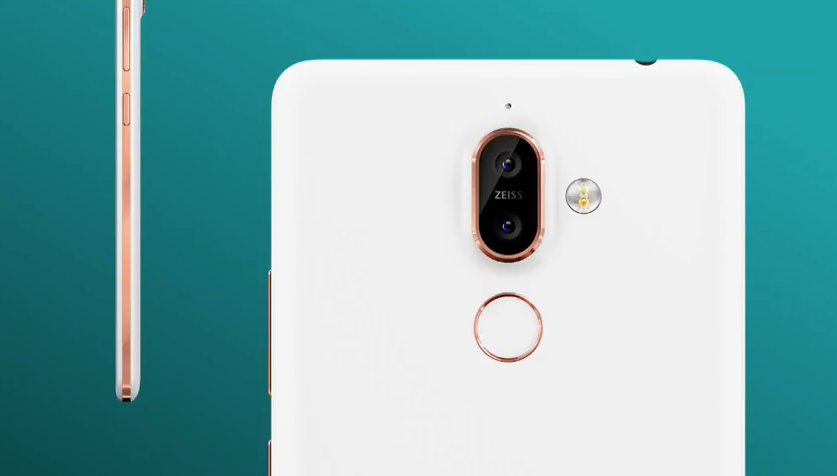
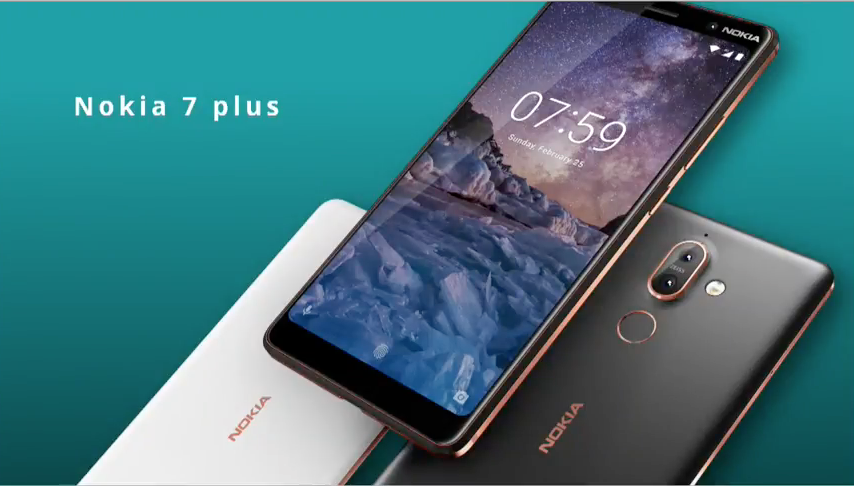
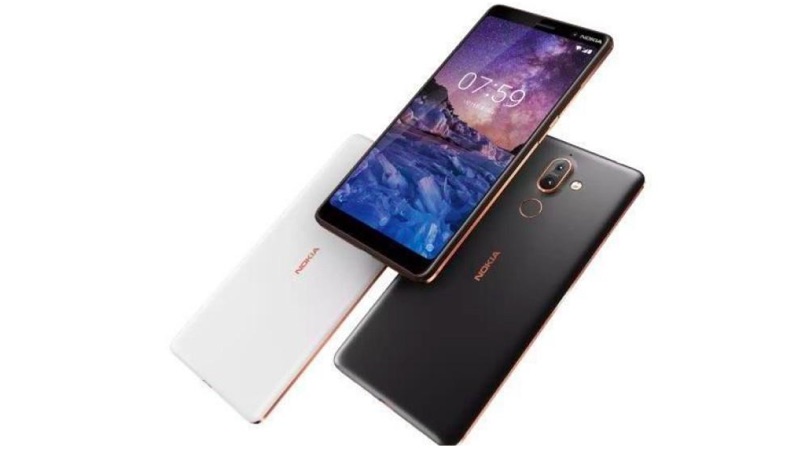
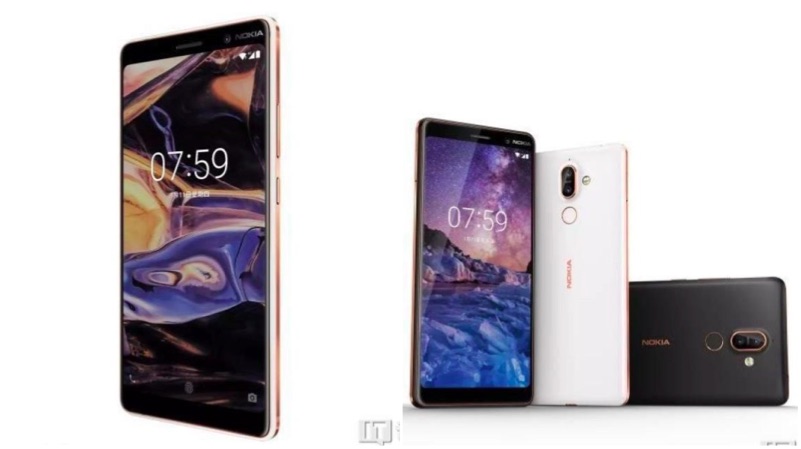
HMD Global has officially launched the Nokia 7 Plus at an event in Barcelona. It succeeds the recently launched Nokia 7 and will be a global device, unlike the Nokia 7. The Nokia 7 Plus is also an Android One device, which means that it will get Android update support for more than 2 years. It carries a price tag of EUR 399 (roughly Rs. 31,750) and will go on sale in early April in Black/ Copper and White/ Copper colour variants.
While the Nokia 7 had an older design with thick bezels and a 16:9 aspect ratio, the Nokia 7 Plus has an upgraded design. The Nokia 7 Plus has an 18:9 aspect ratio and the design accents similar to the Nokia 6 2018.
Specifications
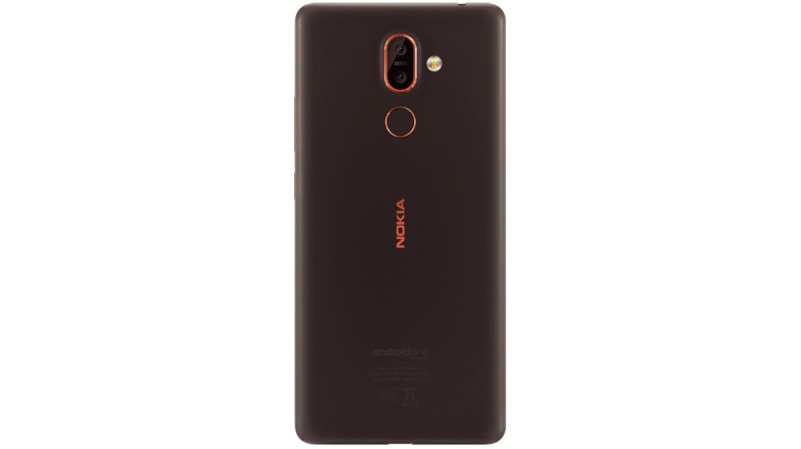
The Nokia 7 has a 5.2 inch IPS LCD display with a 1920 x 1080 px resolution. Nokia 7 Plus, on the other hand, has a 6 inch display with an 18:9 aspect ratio hence, the “Plus” moniker. The Nokia 7 plus also features a dual-tone design thanks to a few gilded bits and pieces. Like the fingerprint scanner ring, the dual-camera casing and the Nokia logo on the back.
Under the hood, the 7 Plus has the Qualcomm Snapdragon 660 chipset and 2.2GHz octa-core processor. That is coupled with 4GB of RAM and 64GB of onboard storage which will be expandable via microSD card. The fingerprint sensor is now placed on the back and has the similar colour accents found on the Nokia 6 (2018).
On the back of the 7 Plus is a dual-camera setup powered by Zeiss optics. The primary wide-angle sensor is a 12MP camera with an f/1.75 aperture coupled with a 13MP telephoto lens with an f/2.6 aperture. The telephoto lens will allow for bokeh shots which have now become very trendy. On the front is a 16MP fixed focus camera with an f/2.0 aperture, 1-micron pixels, and Zeiss optics.
Conclusion
At a price of EUR 399 (roughly Rs. 31,750), the Nokia 7 Plus has a lot of competition. If and when HMD Global launches the Nokia 7 Plus in India, it will have to be priced closer to the Moto X4 rather than the Honor View10. However, the price and details for the Nokia 7 Plus in India have not been revealed yet.
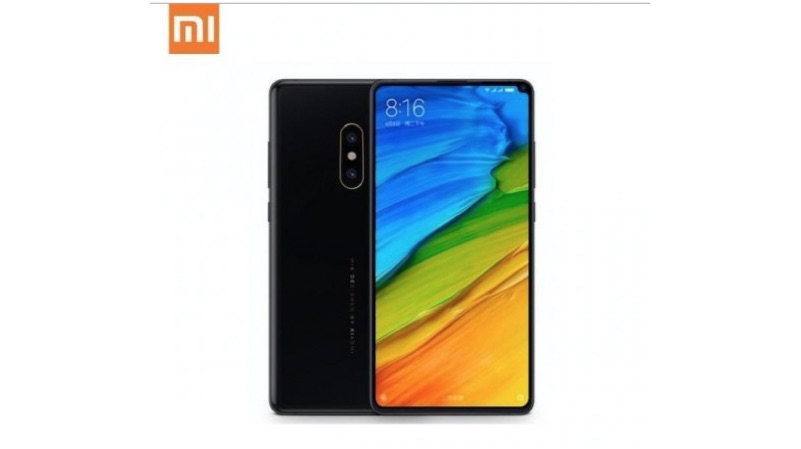
Up until a few minutes ago, the prospect of the Mi Mix 2S launch was uncertain. The renders of the smartphone, although interesting, seemed too different to be real. However, just before the launch of the Samsung Galaxy S9 and S9+, Xiaomi has blatantly confirmed the launch of the Mi Mix 2S on Twitter.
A lot of smartphone makers like posting teasers before the official launch. However, Xiaomi has gone ahead and spilt the beans on its MWC 2018 plans. The company will be launching the Mi Mix 2S with the Snapdragon 845 on March 27th in China. The timing of the move is interesting since we are just a few hours away from the launch of the Galaxy S9 and S9+, which will be the first ever smartphones to run on the Snapdragon 845 chipset.
Mi Mix 2S Expectations
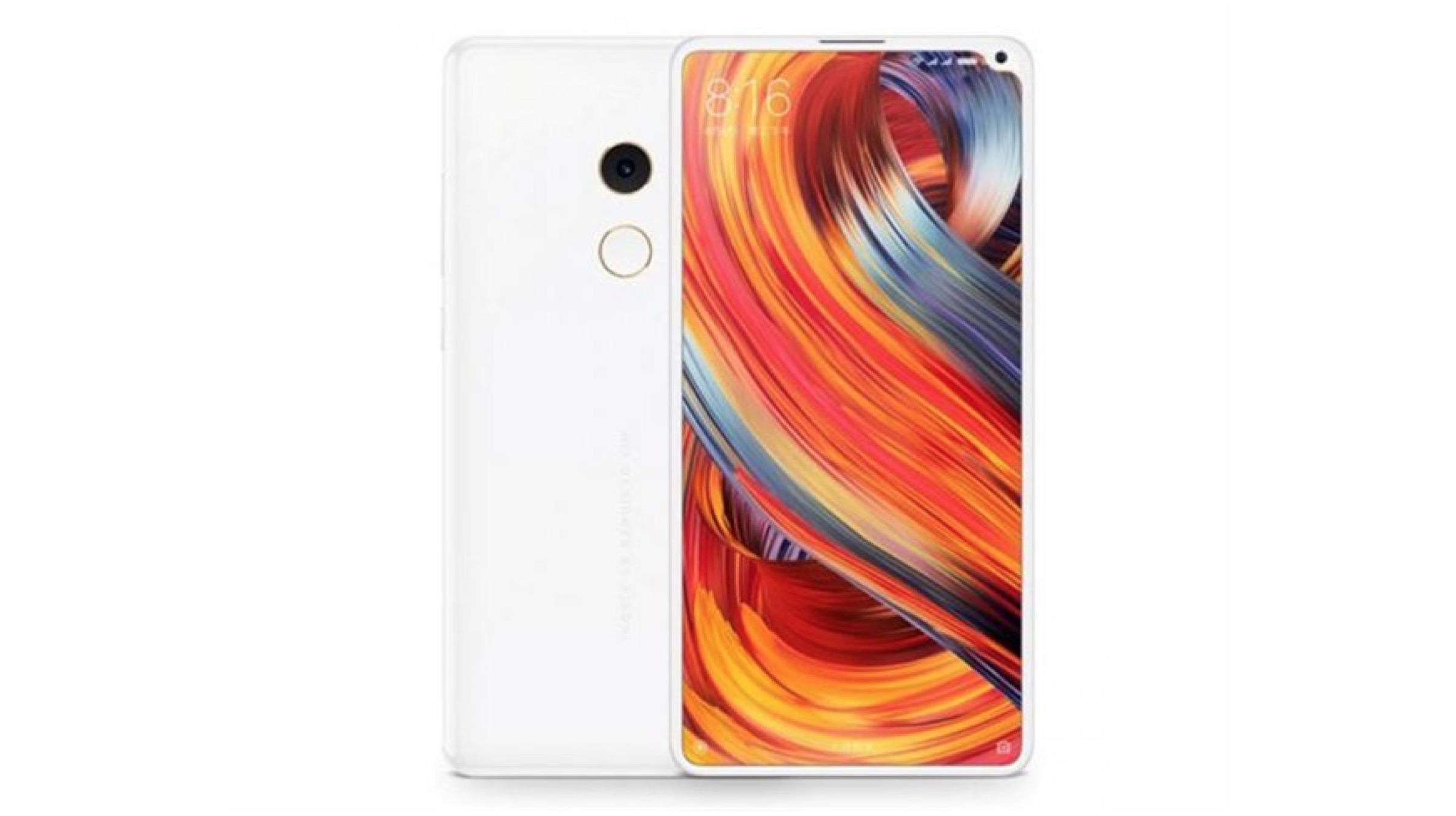
The back of the Mi Mix 2S is expected to be the same as the Mi Mix 2. It will be made of ceramic which means it’ll be a fingerprint magnet. However, that is a price you have to pay for a device that looks as premium as the Mi Mix 2S. The significant change will be in the camera department. This time around, the Mi Mix 2S will have a dual-camera setup, which could be similar to the one found on the Mi A1, albeit of better quality.
On the front is where Xiaomi will look to one-up the much-famed Samsung Galaxy S9 and S9+. The leaked image confirms that the smartphone will have a different take on the notch. The bezels all around the display will be uniform but, the top right corner will protrude a bit.
It will be powered by the Qualcomm Snapdragon 845 chipset coupled with 8GB of RAM and 256GB onboard storage.
HMD Global is rumoured to be launching a few smartphones at MWC 2018. Unlike a few other smartphone makers, it seems unfazed by the launch of the Samsung GalaxyS9 and S9+. One of the devices that HMD Global will launch, is the Nokia 7 Plus. So far, we have seen a few renders that hint toward an 18:9 aspect ratio, a first for Nokia smartphones.
New renders of the smartphone corroborate with previous claims and reveal a revamped design for Nokia smartphones. The Nokia 7 Plus will be an upgrade over the Nokia 7, which featured a 16:9 aspect ratio and thick bezels. The 7 Plus, along with hardware upgrades, the Nokia 7 Plus will also have a modern design along with a new colour scheme. A similar colour scheme was first seen on the Nokia 6 (2018).
Like the Nokia 8, the Nokia 7 Plus is also expected to have a dual-camera setup on the back. The renders also reveal that the Nokia 7 Plus won’t have Clear ID, and the fingerprint sensor will be placed on the back, just under the camera module.
Nokia 7 Plus Renders
Nokia 7 Plus Expectations
The 7 Plus will be an upgrade to the Nokia 7, which was hugely popular in China. Nokia 7 Plus, however, is expected to be a global device meant for markets like India.
The smartphone, like a lot of 18:9 phones, will have a 5.99 inch display with a 2160 x 1080 px resolution. Under the hood, the smartphone is expected to be powered by the Qualcomm Snapdragon 660 chipset. That will be coupled with 4GB RAM and 64GB of onboard storage.
The 7 Plus will have a 12MP wide-angle lens along with a 13MP telephoto lens. The front of the smartphone is expected to house a 16MP camera with no LED flash. The primary camera setup will also have a Nokia Pro mode along with the Bothie feature.
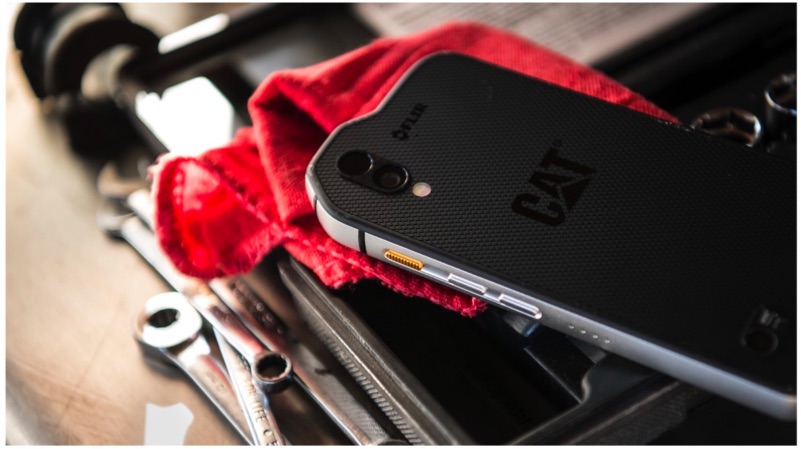
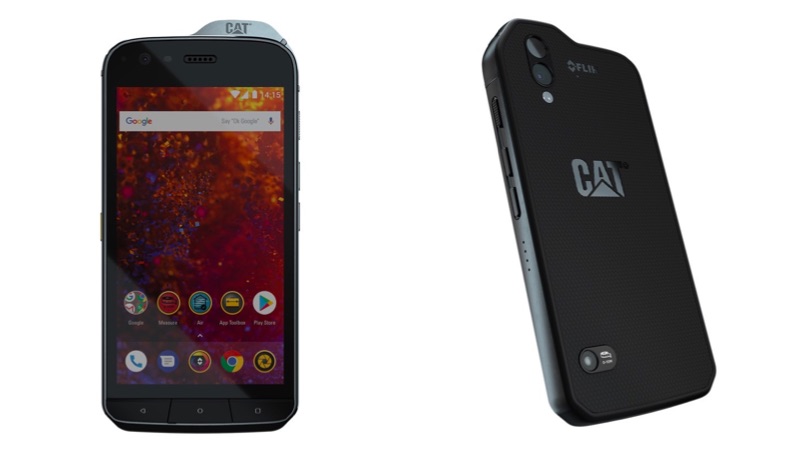
While the world awaits the launch of the Samsung Galaxy S9, a new Android device has already hit the thousand dollar mark. In 2017, the Samsung Galaxy Note8 came close and everyone expected the Galaxy S9+ to be priced equivalent or higher than the 64GB iPhone X. However, the Cat S61, a recently launched rugged Android smartphone is priced at US$ 999.
The Cat S61 succeeds the Cat S60, which was also an extremely rugged smartphone. The market for premium rugged smartphones is extremely niche. However, people with a certain lifestyle would certainly appreciate what the Cat S61 brings to the table. Cat is known for coming out with smartphones that fit this demographic and the Cat S61 does the same, however, at a very premium price.
Specifications
The Cat S61 has a 5.2 inch IPS LCD display 1920 x 1080 px resolution. The device has the now archaic 16:9 aspect ratio and comes with huge bezels around the display. However, that solves a purpose, since this device is supposed to be used ruggedly.
Under the hood, it has the Qualcomm Snapdragon 630 chipset with a 2.2GHz octa-core processor. This is coupled with 4GB RAM and 64GB onboard storage which is expandable up to 256GB using a microSD card. Unfortunately, there is no fingerprint sensor on the device which is unusual for a smartphone being launched in 2018.
However, unlike a lot of 2018 Android devices, the Cat S61 will run Android 8 Oreo out of the box. It will also be updated to Android P in the future. It is powered by a massive 4500 mAh battery that charges via a USB C port.
To the back of the phone is a single 16MP camera while the front houses an 8MP camera.
Rugged Features
In isolation, the specifications of this smartphone are definitely underwhelming. However, this smartphone has some features that are hard to find in any other smartphone. Also, this is because this device has a very specific target audience and regular phones do not need such features.
The 5.2 inch display on the Cat S61 works with gloves on and with wet fingers. Also, the FLIR thermal camera measures temperatures ranging from -20°C to 400°C. In fact, it has a feature to live stream these thermal images as well. Interestingly, the smartphone has a built-in Sensirion air quality sensor. This sensor will alert users of high levels of indoor air pollutants that can come from paints, solvents, carpets, furniture, or even cleaning products. Not just that, the sensor also reads humidity levels and temperatures.
The device comes with a laser-assisted distance measurement tool that lets users measure point-to-point distances of up to 10 meters. The build of the smartphone is rugged, thanks to the aluminium-reinforced frame, MIL Spec 810G rating and IP68 rating for water and dust resistance.
The Samsung Galaxy S9 and S9+, as usual, have almost nothing to surprise us with, at the launch. Over the past few weeks, the 2018 flagship smartphones have been leaked in some shape or form. While the design of the devices has been leaked enough in renders and live images, the pricing is also starting to get clearer by the day.
A new leak by Evan Blass has revealed the European prices of the Samsung Galaxy S9 and S9+. The Galaxy S9 will retain for EUR 841, while the S9+ will be priced at EUR 997. However, if industry trend prevails, the prices could be EUR 849 and EUR 999, respectively. A previous leak suggested that the Galaxy S9 would be priced at EUR 837 and the Galaxy S9+ would retail for EUR 905.
It is fair to assume that the price of the smartphones will be much higher than the official price of their predecessors. In India, iGyaan reported that the Galaxy S9 will be priced at Rs. 69000 which is higher than the price of the Galaxy S8. In fact, the Galaxy S9 base variant would be priced higher than the Galaxy Note 8 if the price is accurate.
Samsung Galaxy S9, S9+ Specifications:
The Samsung Galaxy S9 is expected to have a 5.8-inch Super AMOLED QHD+ display with 18:9 aspect ratio, with narrow bezels. Under the hood, the smartphone will be powered by either Snapdragon 845 chipset or Exynos 9810. According to a leak, the device will be offered in two storage options, 4GB RAM/64GB storage and 4GB RAM/128GB storage.
@evleaks
The camera on the Galaxy S9 will have a noticeable upgrade. A leak reveals that the device would have a 12 MP camera with a variable aperture from F/1.5 to F/2.4. The mobile is expected to run Android 8.1 Oreo out of the box with Experience UI on the top.
Like its predecessors, the Galaxy S9 will have an IP68 water and dust resistance certification. The smartphone will have “Intelligent Scan,” which uses both iris scanner and facial recognition. However, since this technology uses Samsung API, this feature won’t be utilised for banking.
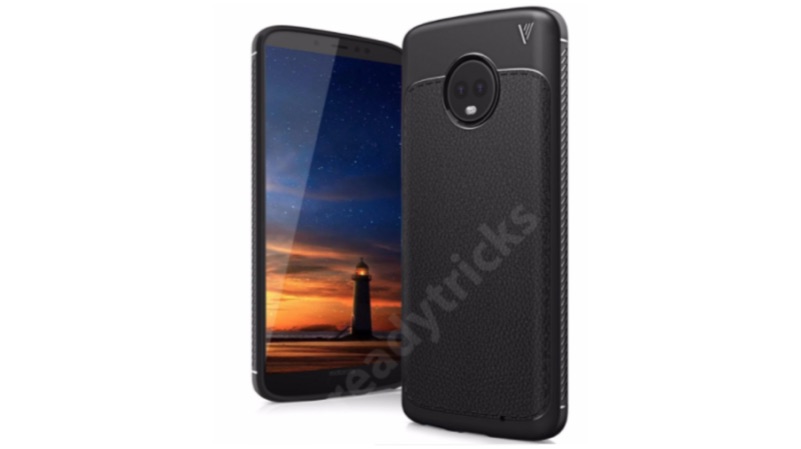
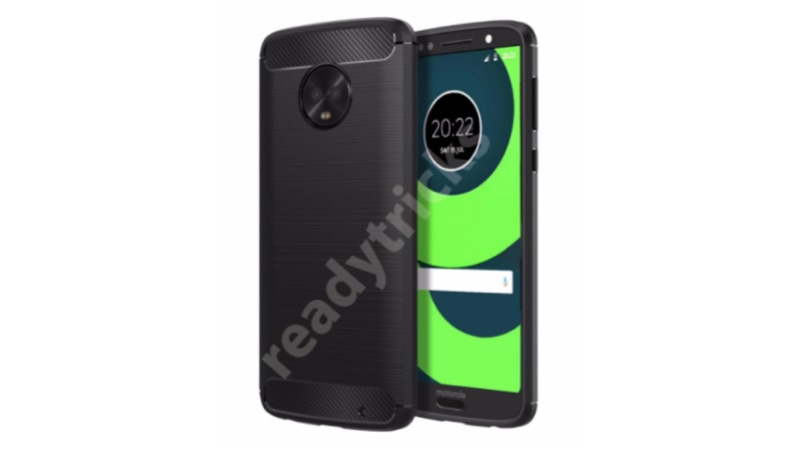
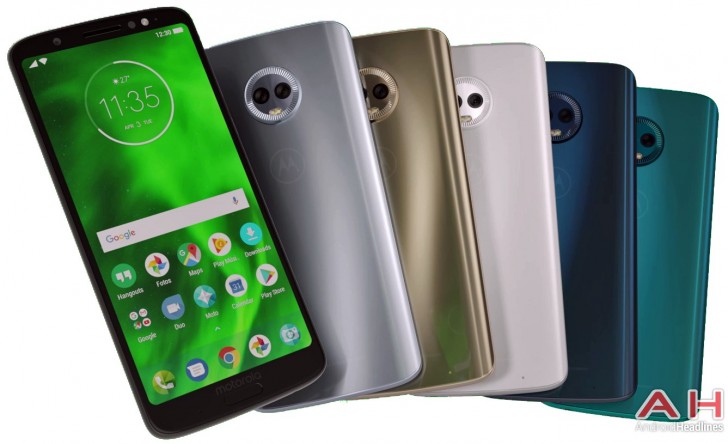
The rumours surrounding the Moto G6 Plushave picked up some pace. While many believe that Motorola will launch the ‘G’ series at MWC 2018, it seems unlikely right now. The design of the Moto G6 Plus was leaked a few weeks ago and new images of the possible case of the Moto G6 Plus have been leaked now.
Moto G6 Plus Live Image
As expected, Motorola might move on to the new standard of 18:9 aspect ratios. However, one interesting decision is related to the fingerprint sensor placement. While devices like the Honor 7X moved the fingerprint sensor to the back, the Moto G6 Plus might house the sensor in the thin bottom bezel. The Moto G6 Plus will have a dual-camera setup like the G5s Plus. However. the implementation is expected to be different.
Interestingly, Motorola has also replaced the “Moto” branding with “Motorola”. The branding is placed just above the fingerprint sensor in the bottom bezel.
Moto G6 Plus Specifications
The Moto G6 Plus will have a 5.93-inch 2160 x 1080p IPS LCD display with 2.5D curved tempered glass protection. Under the hood, the smartphone will be powered by Qualcomm Snapdragon 630 Octa-core chipset with up to 6GB RAM and 64GB storage.
In terms of cameras, the phone might have a 12 MP and 5 MP camera setup on the back. The setup is expected to be different from what we have seen so far from Moto devices. The 5MP sensor will be used to capture depth effect shots. The front-facing camera is expected to sport a 16MP sensor with a front-facing LED flash.
The smartphone will run on close to stock Android 8 Oreo OS. However, the Moto G6 Play which was spotted earlier had a ZUK UI on top of Android 8.0. So, it is very early to make any kind of assumption on the type of Android the smartphone might come with. However, it seems unlikely that Motorola will move to a custom skin considering the success it has had with stock OS.