Author: Vivek Umashankar

  • Sony Xperia Ear Duo Wireless Earphones Launched At MWC 2018

    Sony Xperia Ear Duo Wireless Earphones Launched At MWC 2018

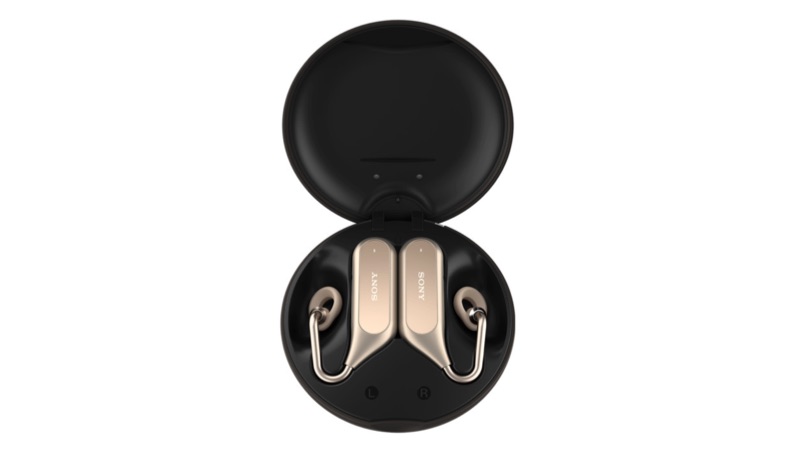
    Sony has officially launched the Xperia Ear Duo at MWC 2018. Just like Google, Sony has launched a pair of wireless Bluetooth earphones after removing the 3.5mm headphone jack from its new Xperia XZ2 and XZ2 Compact. These are a universal pair of Bluetooth earphones, which works with iOS and Android devices.

    Pricing and availability:

    The Sony Ear Duo will be available in selected markets in Black and Gold style from Spring 2018. However, the pricing is yet to be announced.

    Hiroshi Ito, Deputy Head of Smart Product Business Group at Sony Mobile Communications said:

    Xperia Ear Duo represents what we’ve learned from audio and acoustics research. Ear Duo is the first wireless headset to deliver a breakthrough Dual Listening experience – the ability to hear music and notifications simultaneously with sounds from the world around you.
    Features of Sony Xperia Ear Duo:

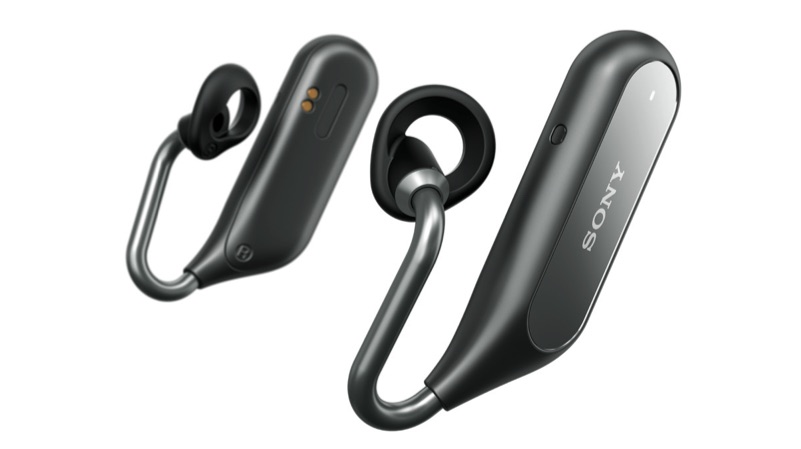
    These wireless earphones are based on the new Sony concept called “Dual Listening”. The earphones bring the capability, which enables to listen to a music track + environmental sound.

    Sony has developed a special Spatial Acoustic Conductor, which transmits the sound directly into the ear. The specially designed ring surrounds the ear canal, which blends the music and the sound from the environment seamlessly.

    The earphones use AI to adjust the volume according to the external factors, which enables the crystal clear audio listening experience using Sony’s Clear Chase technology. The Xperia Ear Duo are IPX2 certified for splash proof. Which means one can use this while exercising without any worries.

    The Sony Xperia Ear Duo is equipped with a low power consuming CXD5602 chipset with a multisensor platform. In fact, the headphones support various head gestures like nodding to decline a call, shaking your head from left to right to change the music etc.

    The earphones do not come with a dedicated voice assistance. Instead, one can use voice control to access Google Assistance or Siri. This works in most of the situations due to the quad microphone system.
  • Samsung Galaxy S9, Galaxy S9+ Available To Pre-Book In India

    Samsung Galaxy S9, Galaxy S9+ Available To Pre-Book In India

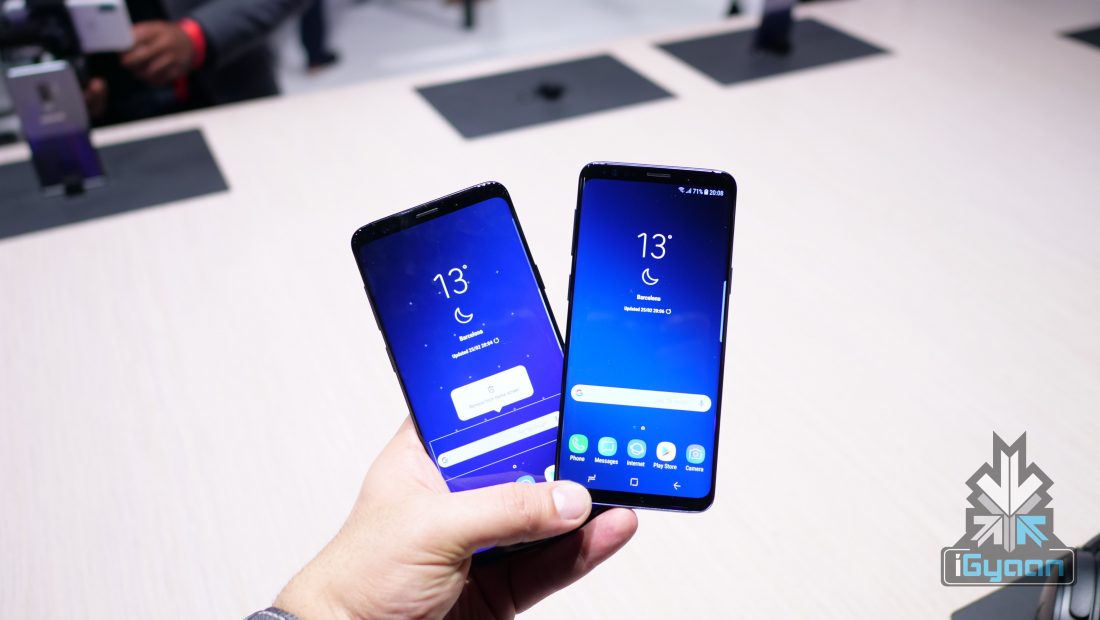
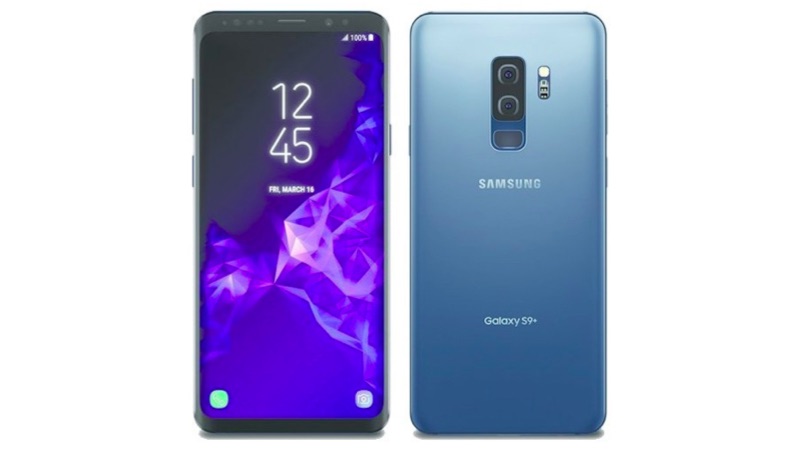
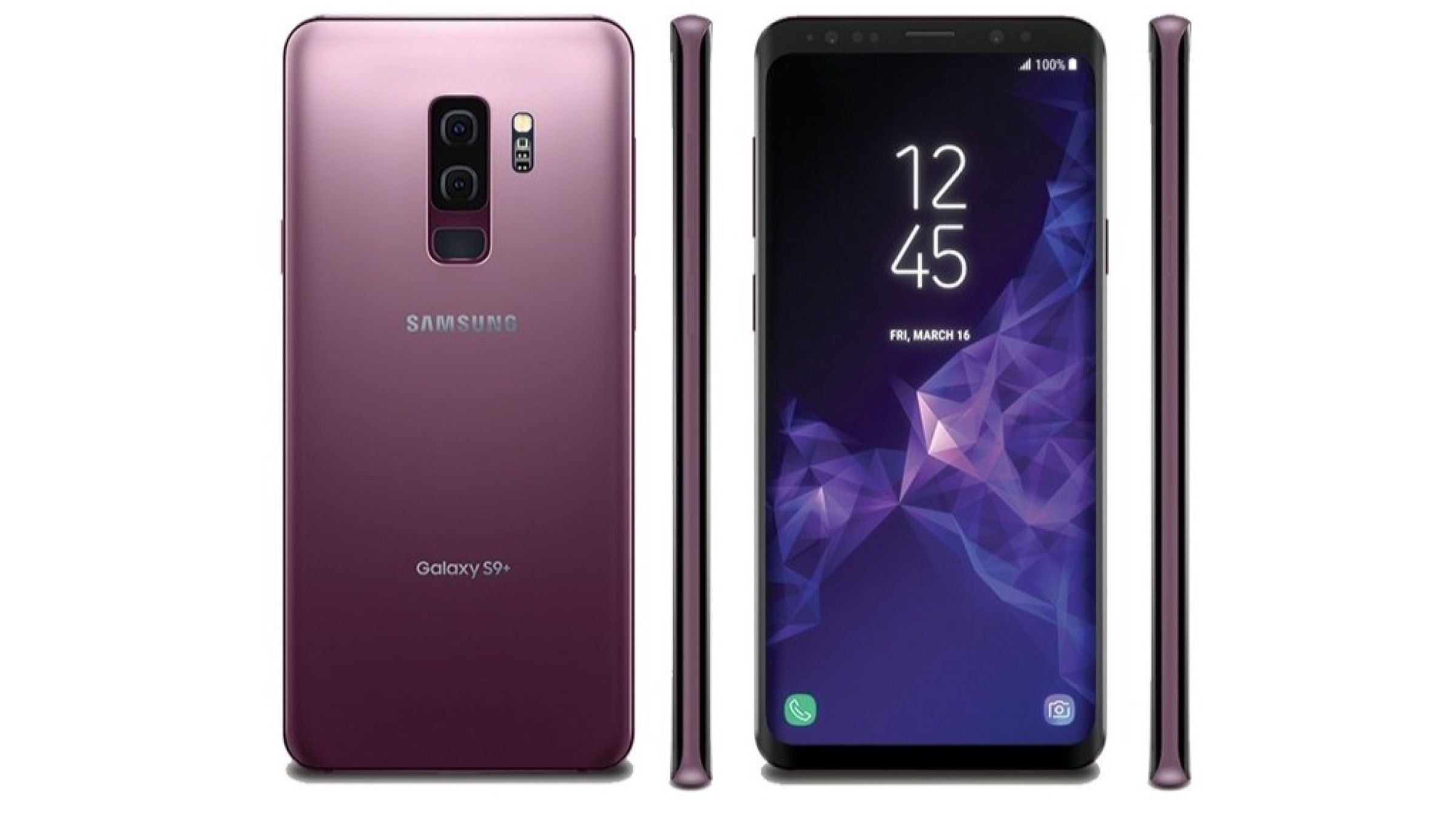
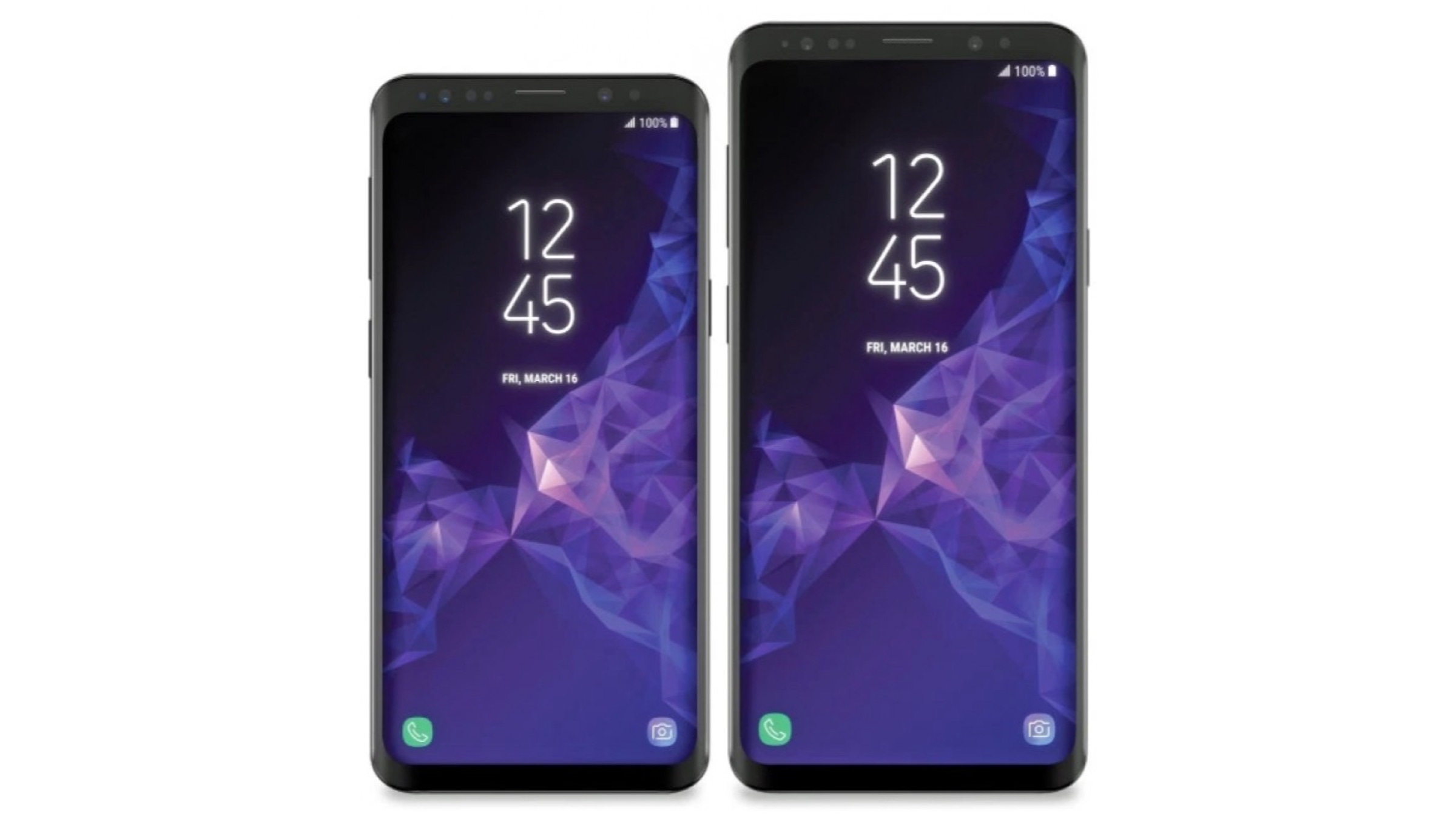
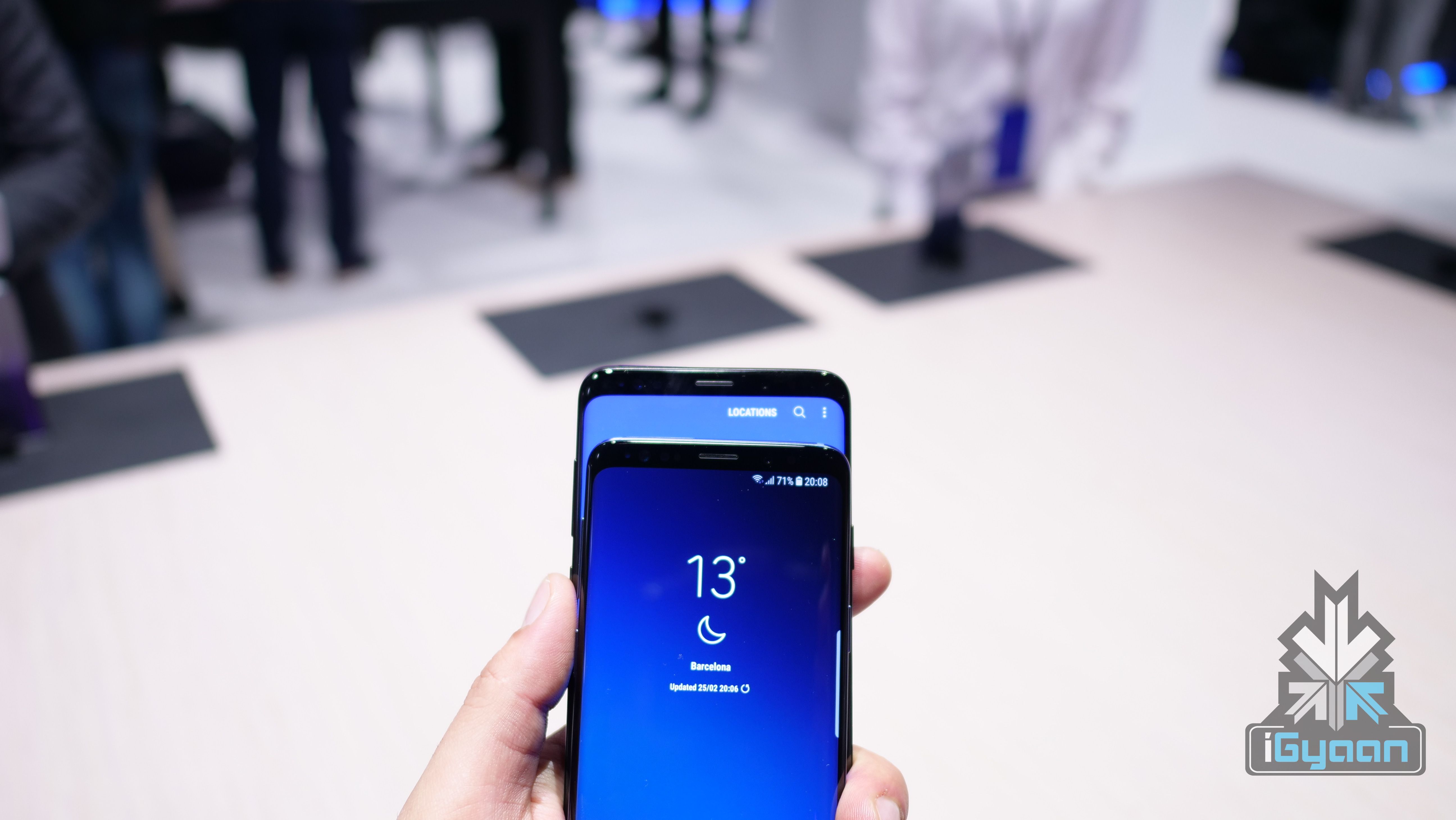
    Samsung officially launched the Samsung Galaxy S9 and the Galaxy S9+ at MWC 2018. In the US, the Galaxy S9 is priced at US$ 719.99 and the Galaxy S9+ retails for US$ 839.99. In fact, the direct conversion to Indian rupees comes to around Rs 46,600 and Rs 54,400. However, the price will be higher than that in the Indian market.

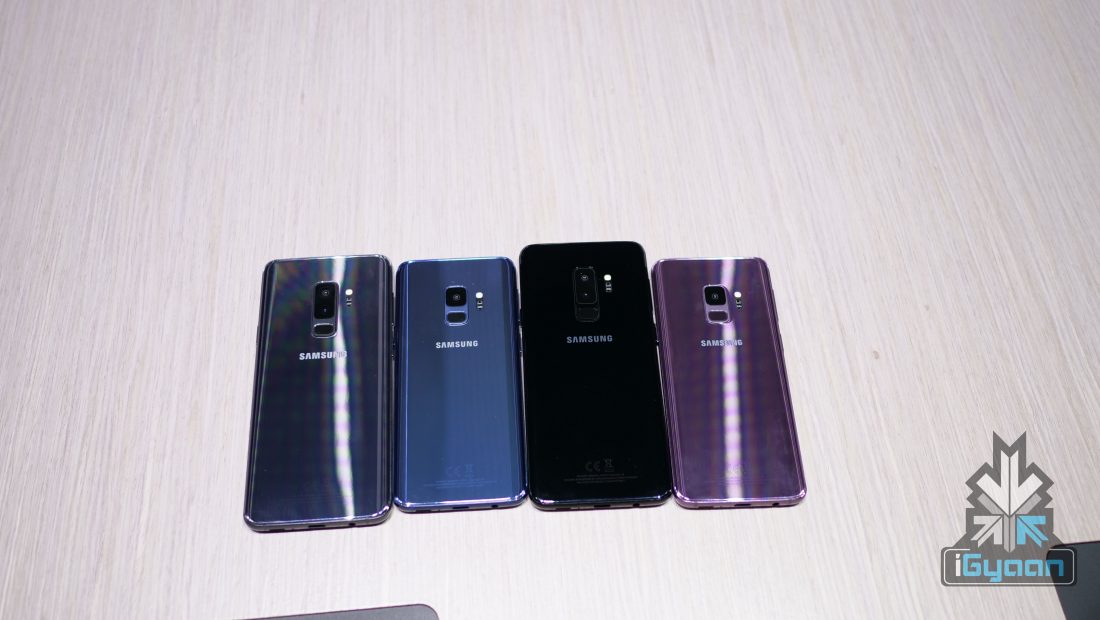
    Samsung is yet to make an announcement about the retail prices of these phone in India. However, these phones are already up for pre-booking on the Samsung India official website. The 64GB variant will be available in Midnight Black, Coral Blue, Lilac Purple and the 256GB variant is limited to Midnight Black as of now. However, there is no information about the inclusion of complimentary wireless charging dock for the pre-orders like the Galaxy S7 and S8 pre-booking.S9+

    How to Pre-book?
    • Head to Samsung India official website
    • Select your model, colour, and storage option
    • Make an advance payment of Rs 2000
    • You will receive a pre-booking coupon
    • Once the phone goes official, you will receive a text message with the complete pricing details
    • Apply the pre-book coupon, which adjusts Rs 2000 from the final amount
      S9+
    Specifications of Galaxy S9:

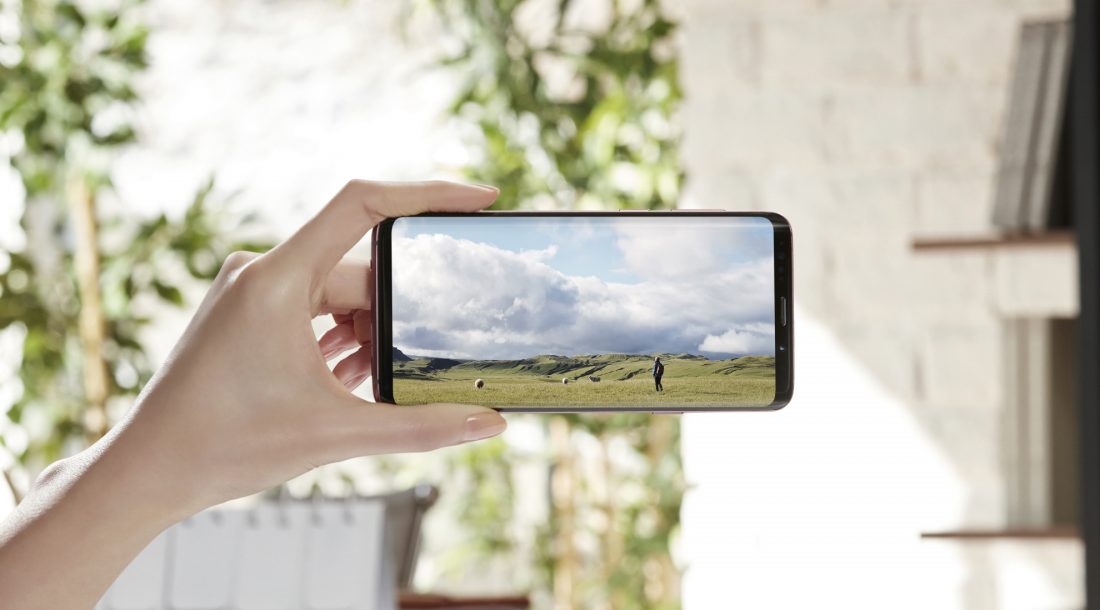
    The Samsung Galaxy S9 has a 5.8 inch Super AMOLED display with a 2960 x 1440 px resolution. This translates to an 18.5:9 aspect ratio, which means it is slightly taller than the usual bezel-less smartphones.

    The smartphone is powered by the new Exynos 9810 chipset. Coupled with the chipset is 4GB of RAM and 64GB or 256GB of onboard storage. Similar to a lot of Samsung smartphones, the storage will be expandable up to 256GB via a MicroSD card.

    The Galaxy S9 has a single Dual Pixel 12 MP sensor with dual /1.5 and f/2.4 apertures. In bright lighting conditions, the camera will use the f/2.4 aperture, while the wider f/1.5 aperture is used in dark lighting conditions. It also captures 720P videos at 960fps and 4K videos at 60fps, similar to the Apple iPhone X. On the front of the smartphone is an 8MP camera with an f/1.6 aperture and records 4K videos.S9+

    Specifications of Galaxy S9+:

    As is with its smaller sibling, the Galaxy S9+ has the same screen size as the Galaxy S8+. It sports a 6.2 inch Super AMOLED display with a 2960 x 1440 px resolution.

    Under the hood, it is powered by the Exynos 9810 chipset. Unlike the Galaxy S9, the S9+ will be available in 6GB RAM/64GB storage and 6GB RAM/256GB models in major markets across the world. Similarly, the phone does support external micro SD cards up to 256GB.

    The main difference between the two S9 models this year is in the camera department. Unlike its predecessor, the Galaxy S9+ has a dual-camera setup on the back. The Galaxy S9+ has one wide-angle 12MP camera with an f/1.5 aperture and the other is a 12MP telephoto lens with an f/2.4 aperture. The telephoto lens is the same one found on the Galaxy Note8, which means it has OIS. On the front of the smartphone is an 8MP camera with an f/1.6 aperture and records 4K videos.

  • Sony Xperia XZ2 and XZ2 Compact Launched At MWC 2018

    Sony Xperia XZ2 and XZ2 Compact Launched At MWC 2018

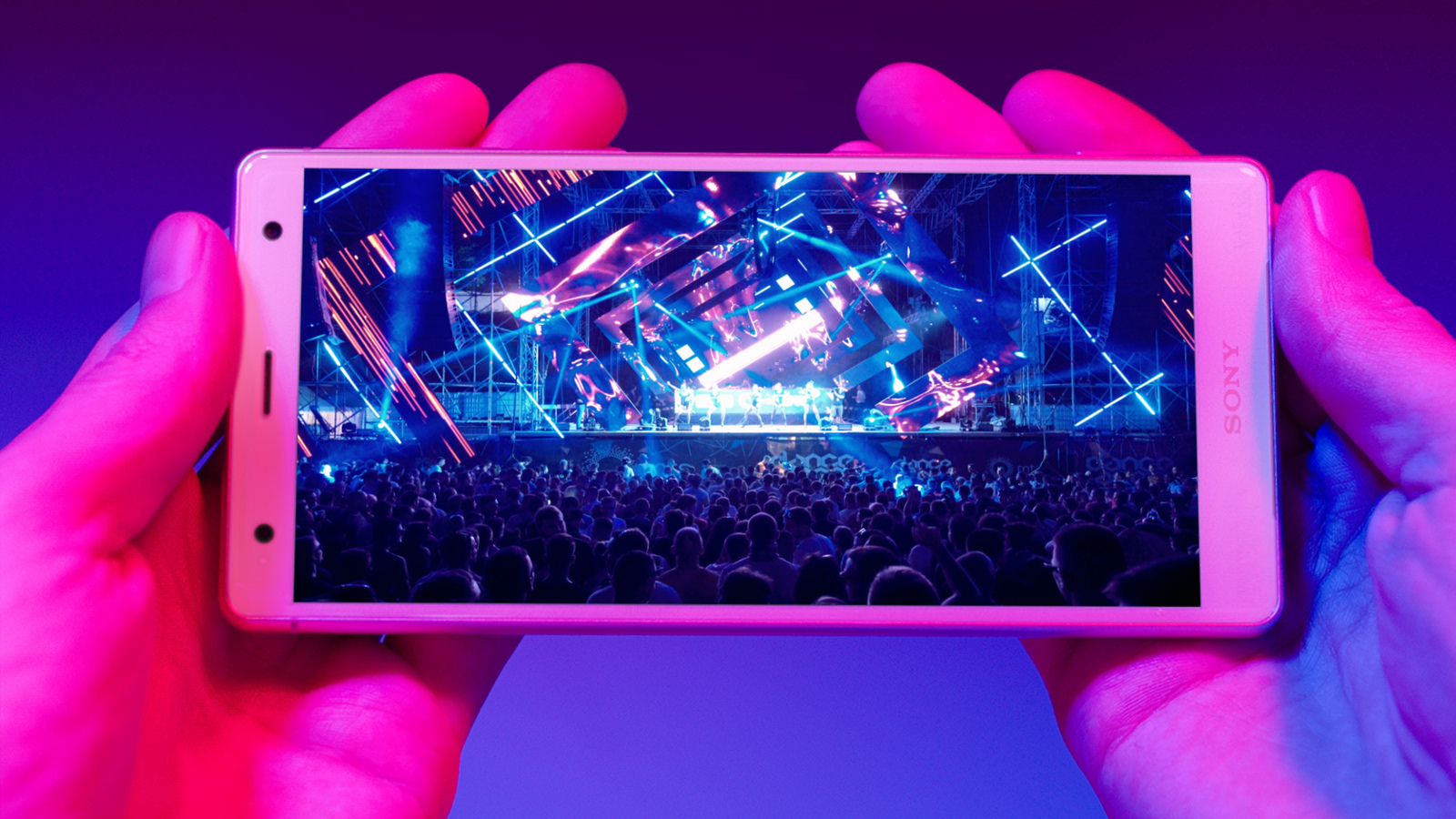
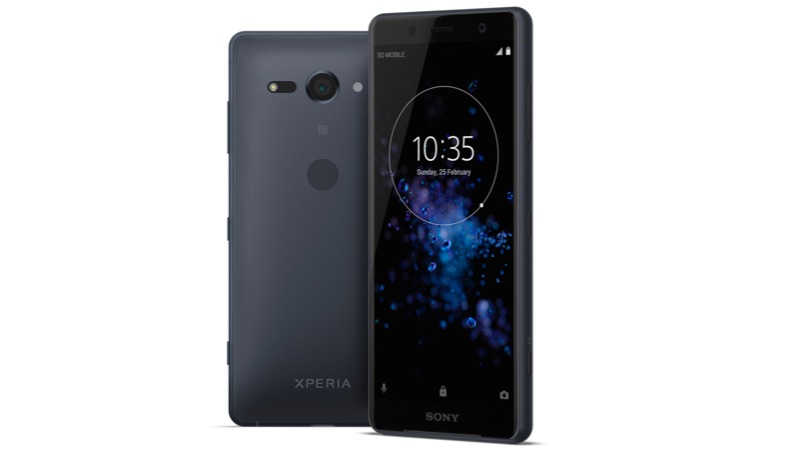
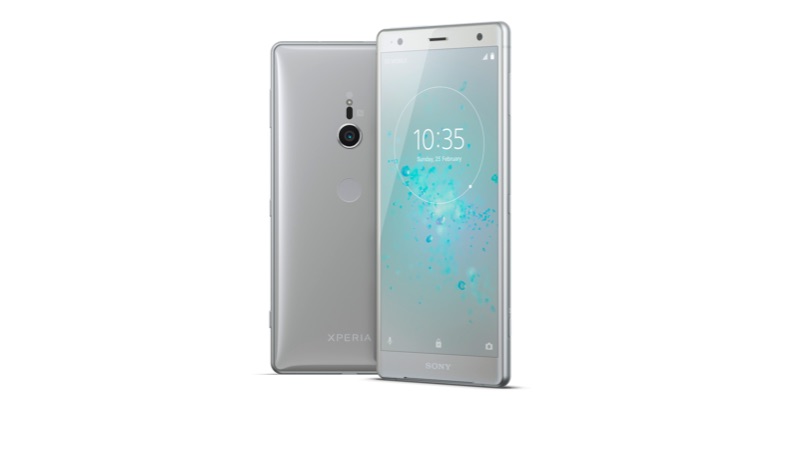
    Sony has officially launched the Sony Xperia XZ2 and the Sony Xperia XZ2 Compact at MWC 2018. Both the smartphones have been significantly redesigned inside out, with a new design philosophy.

    These are the first batch of smartphones from Sony to boast an 18:9 display with a curvier back. Sony is the second smartphone maker to announce the smartphone based on this new Snapdragon 845 chipset. With this new flagship series, Sony no longer offers 3.5 mm headphone jack.

    Pricing and availability:

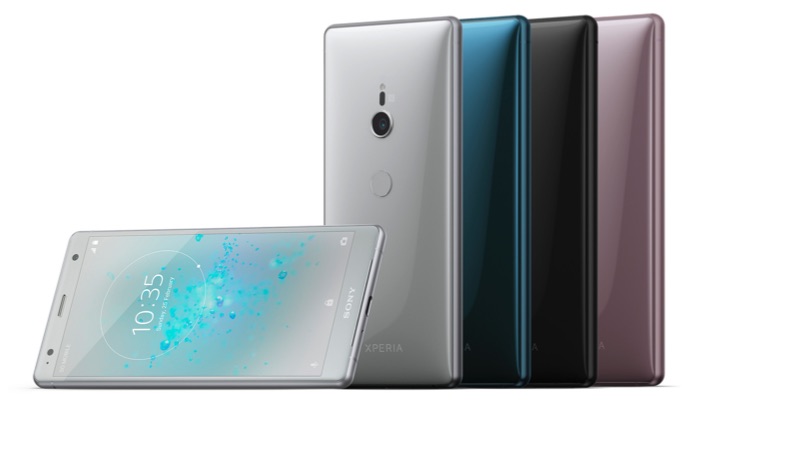
    The Sony Xperia XZ2 and the XZ2 compact will be available from March 2018 in Black, White Silver, Moss Green and Coral Pink colours. However, there is no information on the pricing yet.

    Specifications of Sony Xperia XZ2 Compact:

    The Sony Xperia XZ2 Compact has a 5 inch FHD+ 2160 x 1080px IPS LCD display with 18:9 aspect ratio. Under the hood, the smartphone is powered by Qualcomm Snapdragon 845 Octa-core chipset based on Kryo 385 architecture, with 4GB RAM and 64GB storage. The storage is also expandable using micro SD card up to 400GB.

    The smartphone has an “anti-twist” aluminium frame with a “frosted-glass” like polycarbonate shell. Sony claims that the polycarbonate shell is scratch resistance. However, Sony is still missing out on the dual camera setup, which has been widely adopted in the industry.

    The phone has a 19 MP primary camera with support for 4K video recording and super slow motion video up to 960 fps. For the front-facing camera, the company is using a 5MP wide-angle lens with f/2.2 aperture that records 1080p videos. In fact, the front camera also comes with EIS. The smartphone runs on Android 8.1 Oreo with the Xperia UI on the top. In fact, even the Xperia XZ had similar slow-motion video recording capability.

    The Sony Xperia XZ2 Compact has a 2870 mAh sealed battery with fast charging support. However, the device does not support wireless charging.

    Specifications of Sony Xperia XZ2:

    Like the Sony Xperia XZ2 Compact, the Sony Xperia XZ2 offers flagship class specifications. The Sony Xperia XZ2 has a bigger 5.7 inch screen with the same 2160 x 1080px resolution. The smartphone is powered by the same Qualcomm Snapdragon 845 chipset with 4GB RAM and 64GB storage. The smartphone also offers support for external SD card. However, the Xperia XZ2 uses a similar aluminium frame with the back panel is made using 3D Gorilla Glass shielding, which enables the wireless charging capability.

    However, the cameras found on the Xperia XZ2 are the same as the XZ2 Compact. The smartphone offers a 19 MP primary camera with an f/2.0 aperture and a 5 MP front-facing camera with an f/2.2 aperture.

    The phone has a slightly bigger 3180 mAh battery with fast charging and wireless charging capability. Like the compact variant, the Xperia XZ2 is also IP68 certified for the water and dust resistance.

    Conclusion:

    The Sony Xperia XZ2 and the Sony Xperia XZ2 Compact represents a design change necessary for Sony devices and do not look anything like the Xperia flagships of the yesteryears. However, Sony’s pricing strategy will determine the two smartphone’s fate in markets like India.

  • Vivo APEX Has A Hidden Front Camera

    Vivo APEX Has A Hidden Front Camera

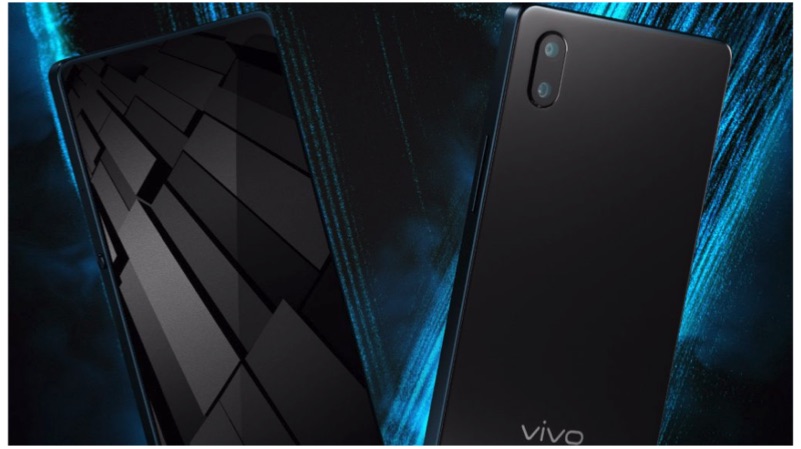
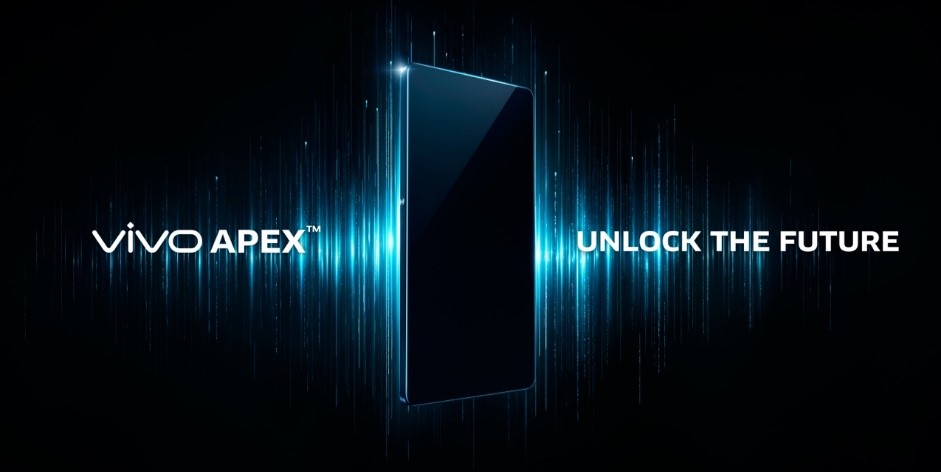
    Vivo showcased a smartphone with an in-screen fingerprint scanner at CES 2018. At the ongoing MWC 2018, the company has announced a new concept smartphone with an impressive screen to body ratio. The Vivo APEX FullView is the first production smartphone to achieve this ratio. The smartphone has minimal bezels on all four sides. In fact, the uses a retractable mechanism for the front-facing camera.

    However, the company hasn’t revealed the exact tech specifications, pricing, or the availability of the Vivo APEX.

    Features:

    The Vivo APEX also offers an in-screen fingerprint scanner with a much bigger footprint. Unlike the Vivo X20 Plus UD, half of the screen portion of the Vivo APEX acts as a fingerprint scanner. The device comes with 1.8 mm bezels on three sides with 4.3 mm bezels on the bottom. In fact, it does not have a microphone, instead, it uses the SounCasting technology similar to the one found on the Mi MIX, which turns the entire display into a speaker.

    The 8 MP front-facing camera uses elevating mechanism, which rises within 0.8 seconds whenever it is required. The phone uses OLED display, which might use the similar fingerprint scanner unit from Synaptic.

    The device also offers a new system in package (SIP) technology to integrate the DAC with three amplifiers, which reduces the space of circuit board up to 60%. The reduction in the circuit size has enabled the company to fit in a larger battery.

    Alex Feng, Senior Vice President of Vivo said:

    APEX is an iteration of our constant pursuit of setting new industry standards and to deliver the ultimate mobile experience. From breakthroughs in audio, photography to In-Display Fingerprint Scanning Technology, Vivo has remained committed to realizing our vision for future smartphones. What we showcase in this concept phone is only a fraction of our innovation pipeline. We will continue to explore all possibilities to bring the best possible experiences to our consumers.

  • Nokia 8110 4G Officially Launched At MWC 2018

    Nokia 8110 4G Officially Launched At MWC 2018

    Nokia launches a refreshed version of the infamous version of the Nokia 8810 with 4G capability. The company calls the Nokia 8810 4G as the vacation or weekend phone. However, for the phone of this calibre, it packs powerful internals and an impressive design.

    Design:

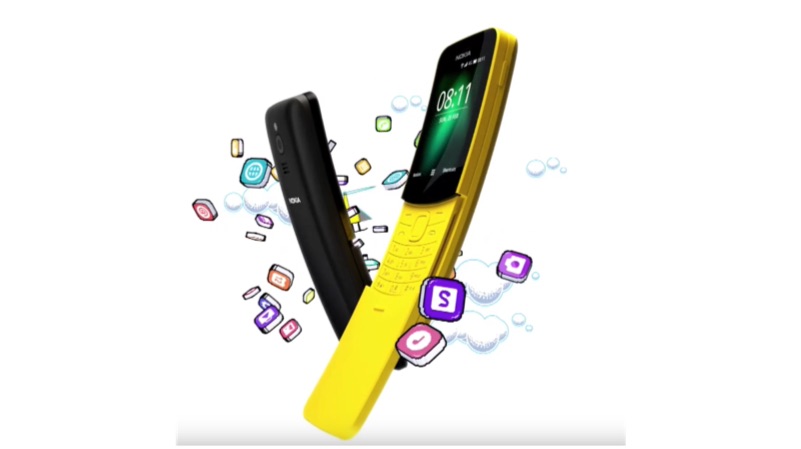
    The Nokia 8110 4G comes with unique curved design, with a swappable keypad cover, which comes in black and banana yellow colour. However, the device will be available from April 2018 for an average price of 79 Euros.

    The Nokia 8810 4G takes the design hints from the original Nokia 8810, which was launched in 1998. The phone comes with a T4 keypad with a replaceable back panel. The design does bring back the nostalgia feelings back into 2018.

    Specifications:

    The Nokia 8810 4G comes with a 2.4-inch display with 240x 320 px resolution. Under the hood, the smartphone is powered by Qualcomm Snapdragon 205 1.1 Ghz dual core chipset with 512 MB RAM and 4GB onboard storage. However, the smartphone does memory expansion using an external SD card.

    The phone comes with 2 MP primary camera with an LED flash, with VGA quality video recording capability. The phone packs in a user replaceable 1500 mAh battery with micro USB port for charging and data syncing. However, there is no front-facing camera on the phone, which is little disappointing.

    The device supports dual SIM cards with support for 2G, 3G and 4G LTE networks. In fact, the 4G data can be wirelessly shared using the built-in WiFi hotspot feature. Unlike the Nokia 8 Sirocco, the Nokia 8810 does retain the 3.5 mm headphone jack.

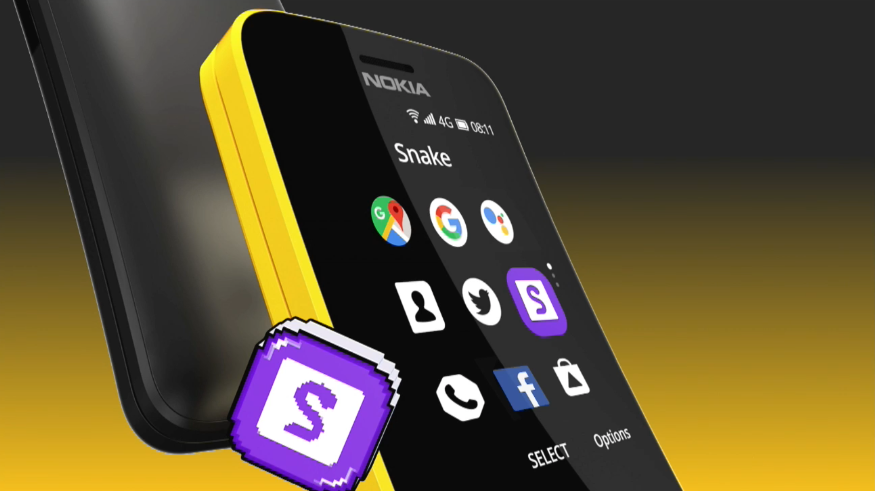
    The smartphone runs on custom Smart Feature OS, which comes with Google Maps, Google Assistance and Google Now. In fact, it also features apps like Facebook and Twitter. Additional apps can also be downloaded via the app store.

  • Nokia 8 Sirocco Launched For EUR 749 At MWC 2018

    Nokia 8 Sirocco Launched For EUR 749 At MWC 2018

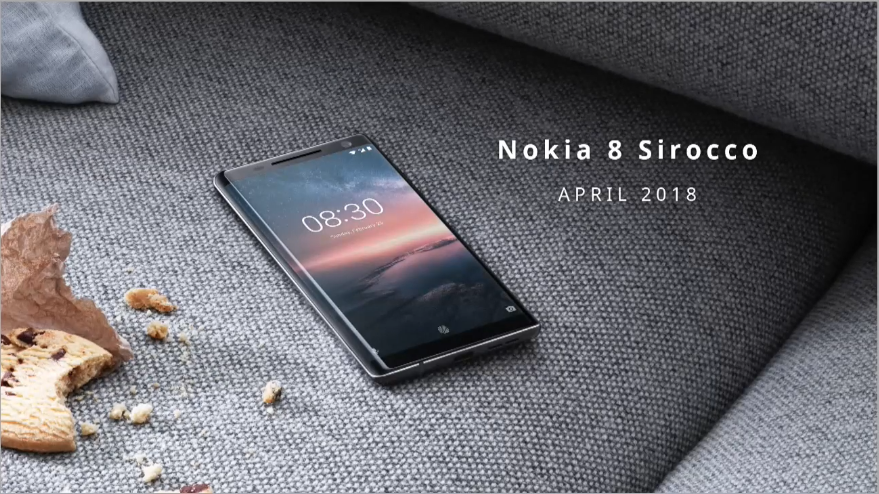
    Nokia has officially launched the Nokia 8 Sirocco edition at MWC 2018, which will be available from April 2018 for 749 Euros. In fact, this is the most premium smartphone that supports Android One Programme.

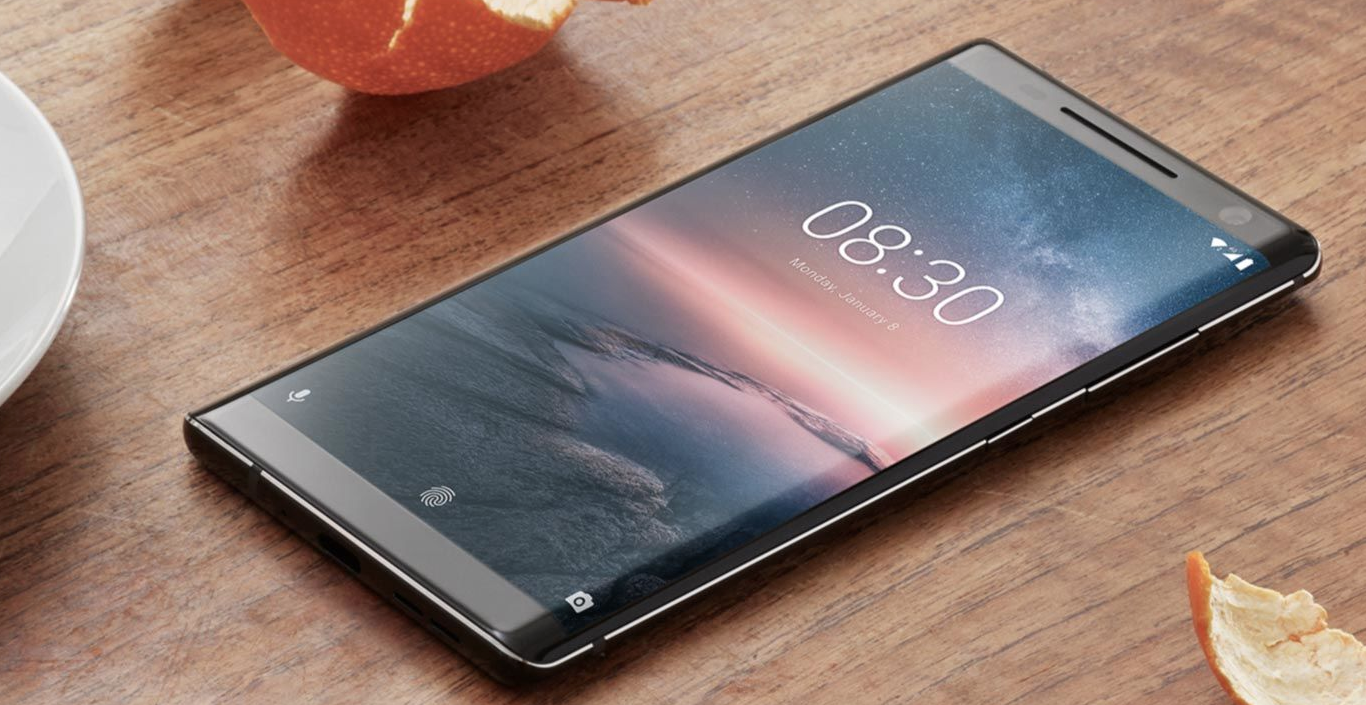
    The smartphone is constructed from a single block of stainless steel like the Apple iPhone X. This makes the Nokia 8 Sirocco a strong smartphone, as stainless steel is 4 times harder than the Aluminium, with IP67 water and dust resistance certification. In fact, it measures 7.5 mm at its thickest point and 2 mm at it thinnest. This is the first Nokia Android smartphone to support wireless charging.

    Specifications:

    The Nokia 8 Sirocco has a 5.5 inch pOLED QHD+ 2560 x 1440 px display with 18:9 aspect ratio. The display offers a dual curved design with the vacuum moulding technology with Gorilla Glass 5. The device is powered by Qualcomm Snapdragon 835 chipset with 4GB RAM and 128GB storage.

    The Nokia 8 Sirocco comes with dual primary camera setup, powered by Zeiss. The primary 12 MP sensor has an f/1.75 aperture with 1.4-micron pixel size and the secondary 13 MP telephoto lens has an f/2.6 aperture. The device has a 5 MP front-facing camera with f/2.0 aperture and 1.micron pixel size. In fact, the primary camera setup found on the smartphone is exactly similar to the Nokia 7 Plus’s camera specifications.

    The device does offer additional features like NFC, 4G VoLte, Bluetooth 5.0, and a rear-facing fingerprint scanner. However, this is the first Nokia smartphone to remove the 3.5 mm headphone jack.

  • Nokia 1 Officially Launched For US$ 85 At MWC 2018

    Nokia 1 Officially Launched For US$ 85 At MWC 2018

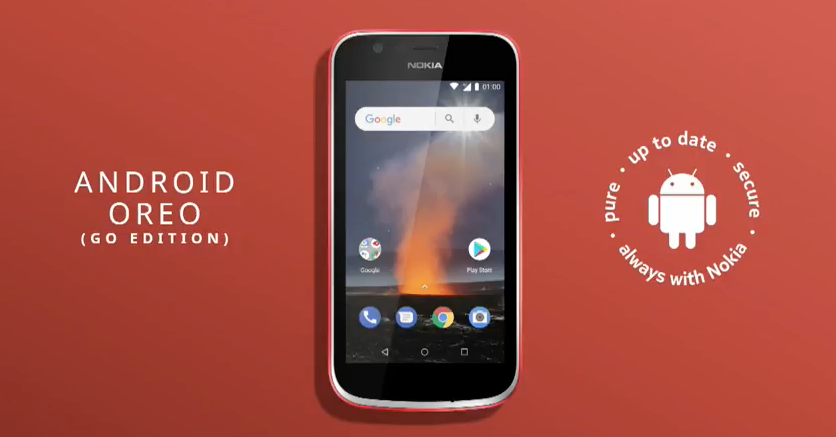
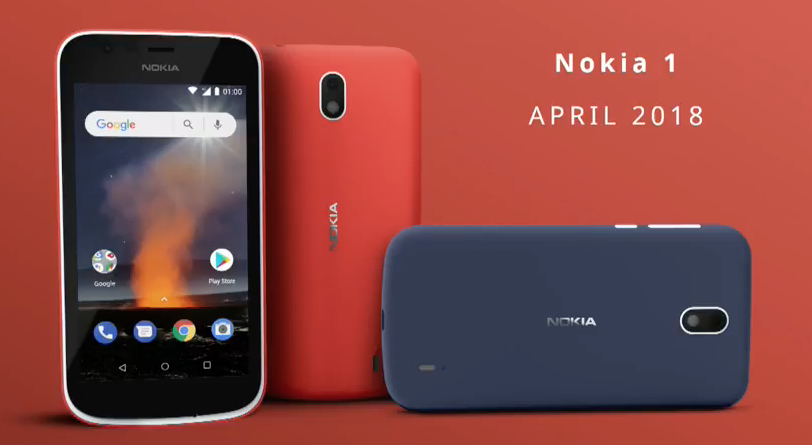
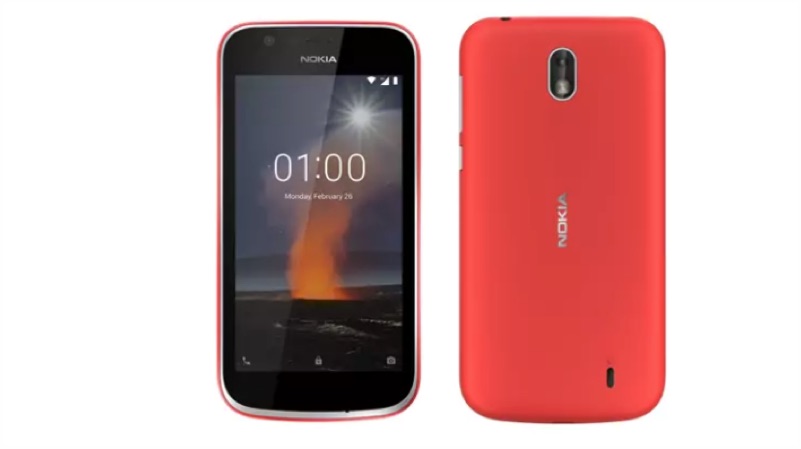
    HMD Global has launched the Nokia 1 at an event in Barcelona along with a few other smartphones like the Nokia 7 Plus. The Nokia 1, as speculated, is an entry-level Android Go device which will retail for US$ 85 (Rs. 5500 approx.), excluding taxes and subsidies. However, the company has claimed that this a global price. Hence, it is expected to be launched in India at a price of Rs. 5000 or less.

    The Nokia 1 will be the most affordable Android smartphone from the company, which right now, is the Nokia 2. While there are no details pertaining to its launch in India, the Nokia 1 will go on sale in April globally. It will be available in Dark Blue and Warm Red colour variants. Along with that, the company will also sell Xpress-on covers priced at $7.99 (Rs. 500 approx.) in Azure, Grey, Yellow and Pink colours.

    Specifications

    The Nokia 1 4.5 inch FWVGA display with an 854 x 480 px resolution. Under the hood, the Nokia 1 has the MediaTek MT6737M chipset with a 1GHz quad-core processor. This is coupled with  1GB of LPDDR3 RAM and 8GB of onboard storage.

    Out of the box, the smartphone will run Android 8.1 Oreo based Android Go operating system. Powering the smartphone will be a 2150 mAh battery which the company claims will deliver up to 9 hours of talk time and up to 15 days of standby time.
    Android Go

    Google claims that Android Go’s Oreo edition will be a variant of Android Oreo that a manufacturer can just set by ticking off a configuration flag. What this basically does is that it sets up the phone to use the “Go” versions of a handful of Google apps such as the main Google app, Google Assistant, Google Maps, Gmail, and others.

    Google claims that the smaller apps and slimmer OS can as much as halve the amount of storage that’s taken up by default on a new phone running default OS.

    Conclusion

    While the Nokia 1 seems like an interesting phone, the Indian entry-level market has come competition. If it launches at the global price, the Nokia 1 will compete with the likes of Xiaomi Redmi 5A which offers much better specifications at a similar price point. However, this will depend on the pricing of the smartphone.

  • Huawei Launches The First 5G CPE At MWC 2018

    Huawei Launches The First 5G CPE At MWC 2018

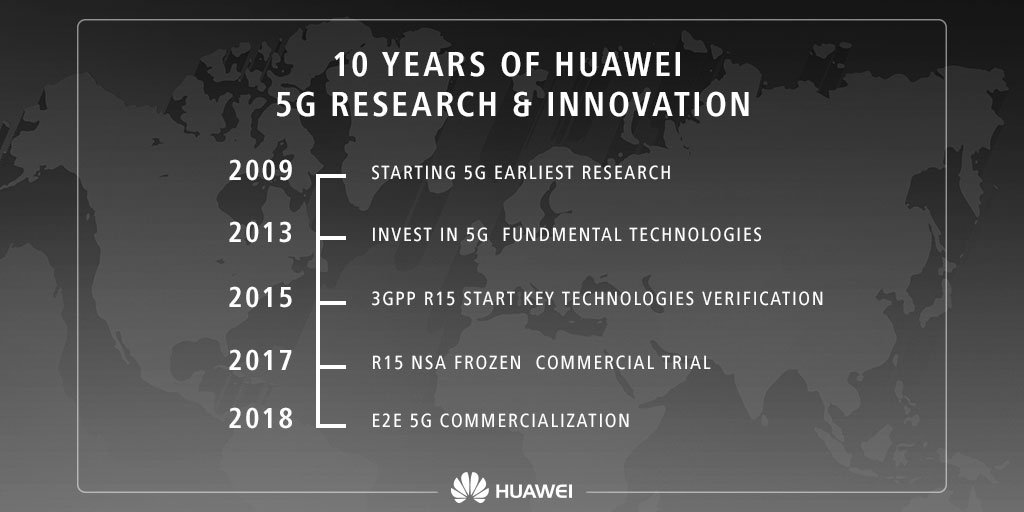
    Huawei has launched the worlds first 5G CPE at MWC 2018. However, the availability of the CPE will be limited to North America. The CPE stands for Customer Premise Equipment, which enables the company to test the true potential of the 5G network before the official rollout.

    Huawei has partnered with the Canadian telecom company TELUS to implement this technology in Canada. Initially, this technology will be tested with the TELUS employees based on the successful 5G 3GPP mmWave tests that were conducted by the Huawei and TELUS in June 2017.

    H Ibrahim Gedeon, CTO at TELUS said:

     This trial represents continued progress toward the launch of 5G, as we start to replicate both the in-home experience and network footprint we will see when 5G becomes commercially available in the near future. Wireless 5G services will generate tremendous benefits for consumers, operators, governments and more through the use of advanced IoT devices, big data applications, smart city systems and other technologies of the future.

    Dr Wen Tong, Huawei Fellow, and CTO Huawei Wireless said:

    mmWave technology will be an important tool in ensuring widespread deployment of 5G technology in Canada. Huawei’s 5G solutions and terminals will enable 5G coverage over a neighbourhood or small community cost effectively. While providing more convenient and high-speed home broadband Internet access services. This friendly user trial will drive the global 3GPP unified 5G standard and build a solid foundation for the 5G early commercialization.

    The Huawei 5G CPE utilises 5G gNodeB related elements built by Huawei?TELUS 5G lab. The trail system is based on the 28GHz mmwave band with 800 MHz of bandwidth. In fact, the 5G CPE from Huawei uses the existing technologies like MIMO, F-OFDM, and Polar Code.

    With the 5G technology, the company will be able to replace the fibre to home solutions. Huawei calls this as “Last-Mile” solution for the consumers and business. The deployment of wireless 5G solutions will help the brands to reduce the cost of operations. The 5G equipment has smaller footprints compared to the traditional towers. In fact, it helps the requirement of government’s permission to set up new towers.

  • Huawei MediaPad M5 10 Pro Launched At MWC 2018

    Huawei MediaPad M5 10 Pro Launched At MWC 2018

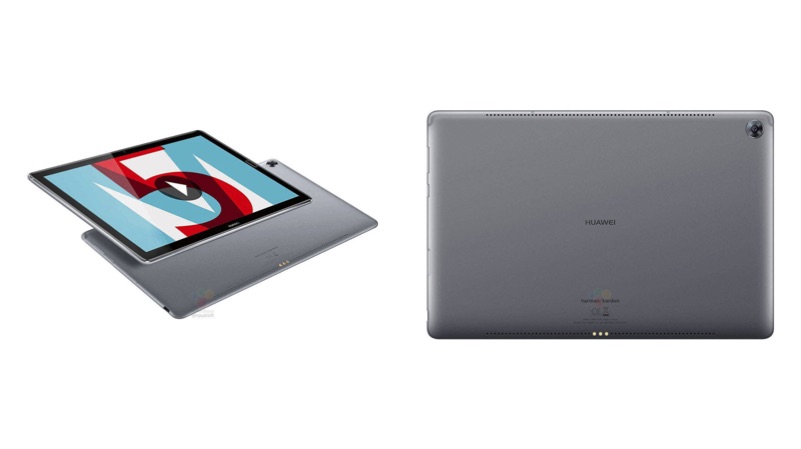
    Thanks to smartphones with 6 inch or bigger display, the market for the tablet has been getting depreciated over the time. However, Huawei has posted a huge 28% YoY growth, which encourages the company to make more tablets. Huawei has officially launched Huawei MediaPad M5 Pro and Huawei MediaPad M5 at MWC 2018. The flagship tablets from Huawei comes with 8.4-inch and a 10.8-inch display with a comfortable to hold-in-hand curved design.

    The only difference between the 10.8-inch Pro and non-pro model is the M-Pen. The Pro version comes with a dedicated stylus called M-Pen. This new range of tables from Huawei will be available for consumers from March.

    Design:

    The tablets come with full metal unibody design

    In fact, this might be the first tablet from Huawei to support OIS and 4K video recording capability. One of the front-bezel has a home button with an embedded fingerprint scanner.

    At the back, the Huawei MediaPad M5 Pro comes with multiple grills, which houses the quad-speaker setup with Harman Kardon branding. These speakers are driven by a dedicated smart-PA chipset for rich and clear sound. However, do note that the 8.4-inch Huawei MediaPad M5 comes with dual stereo speaker setup.

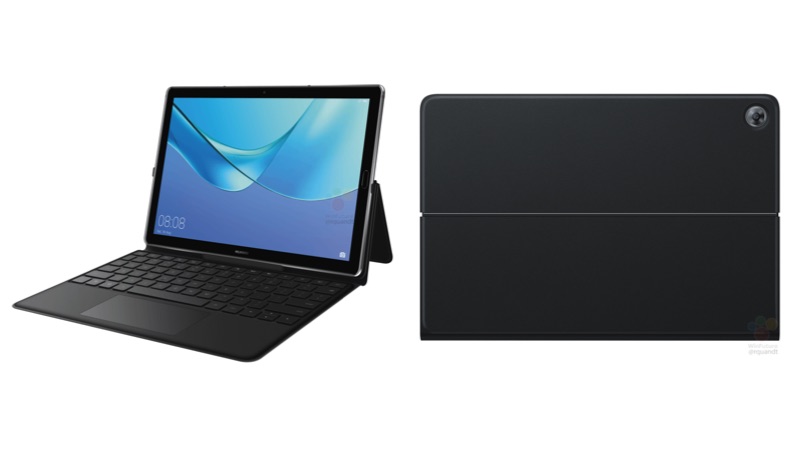
    The company might also release an additional detachable keyboard, which doubles as the case cover. In fact, with this smart case, the users will be able to enjoy 2-in-1 PC experience with a desktop view, with multitasking and file management system. The company also offers a custom stylus called M-Pen, which can be used for sketching and designing.
    Specifications:

    The tablet comes with a massive 8.4-inch or  10 inch IPS LCD panel with 2560 x 1660 Px resolution. Though the leak does not indicate the chipset that powers the device, it does say that it comes with 4GB RAM and 32GB or 64GB storage. Compared to the iPad mini and iPad Pro, the Huawei MediaPad M5 Pro has 280 and 359 PPI. The display is enhanced with ClariVu, which offers 20% improvement in picture quality.

    These tablets are powered by HiSilicon Kirin 960 Octa-core processor with 4GB RAM. The storage option varies from 32GB, 64GB, and 128GB. The tablets come with 13 MP primary camera with an f/2.2 aperture with support for PDAF. For the front-facing camera, the company is using an 8 MP sesnsor with fixed focus and an f/2.2 aperture. However, we have no details on the battery capacity of the device.

    Huawei MediaPad M5 RAM + Storage Price for 8.4-inch Price for 10.8-inch
    Wifi Only 4GB + 32GB 349 Euros 399 Euros
    Wifi Only 4GB + 64GB 399 Euros 449 Euros
    Wifi Only 4GB + 128GB 449 Euros 499 Euros
    WiFi + LTE 4GB + 32GB 399 Euros 449 Euros
    WiFi + LTE 4GB + 64GB 449 Euros 499 Euros
    WiFi + LTE 4GB + 128GB 499 Euros 549 Euros


    Huawei MediaPad M5 Pro RAM + Storage Price for 10.8-inch
    WiFi only 4GB + 64GB 499 Euros
    WiFi only 4GB + 128GB 549 Euros
    WiFi + LTE 4GB + 64GB 549 Euros
    WiFi + LTE 4GB + 128GB 599 Euros
  • Huawei MateBook X Pro Launched At EUR 1499

    Huawei MateBook X Pro Launched At EUR 1499

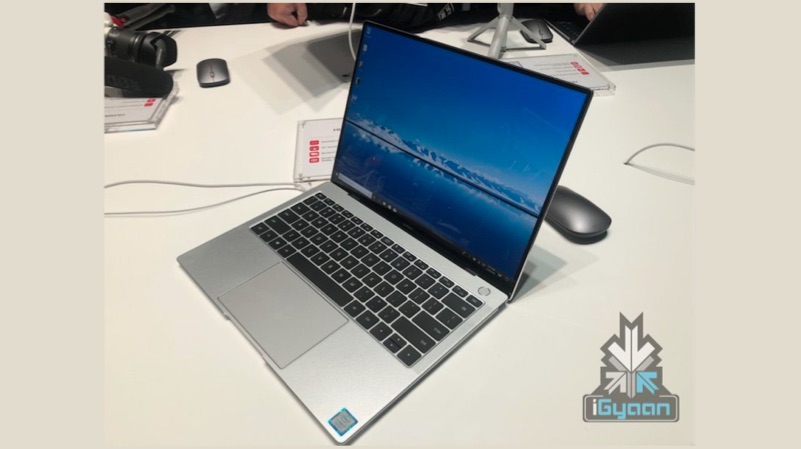
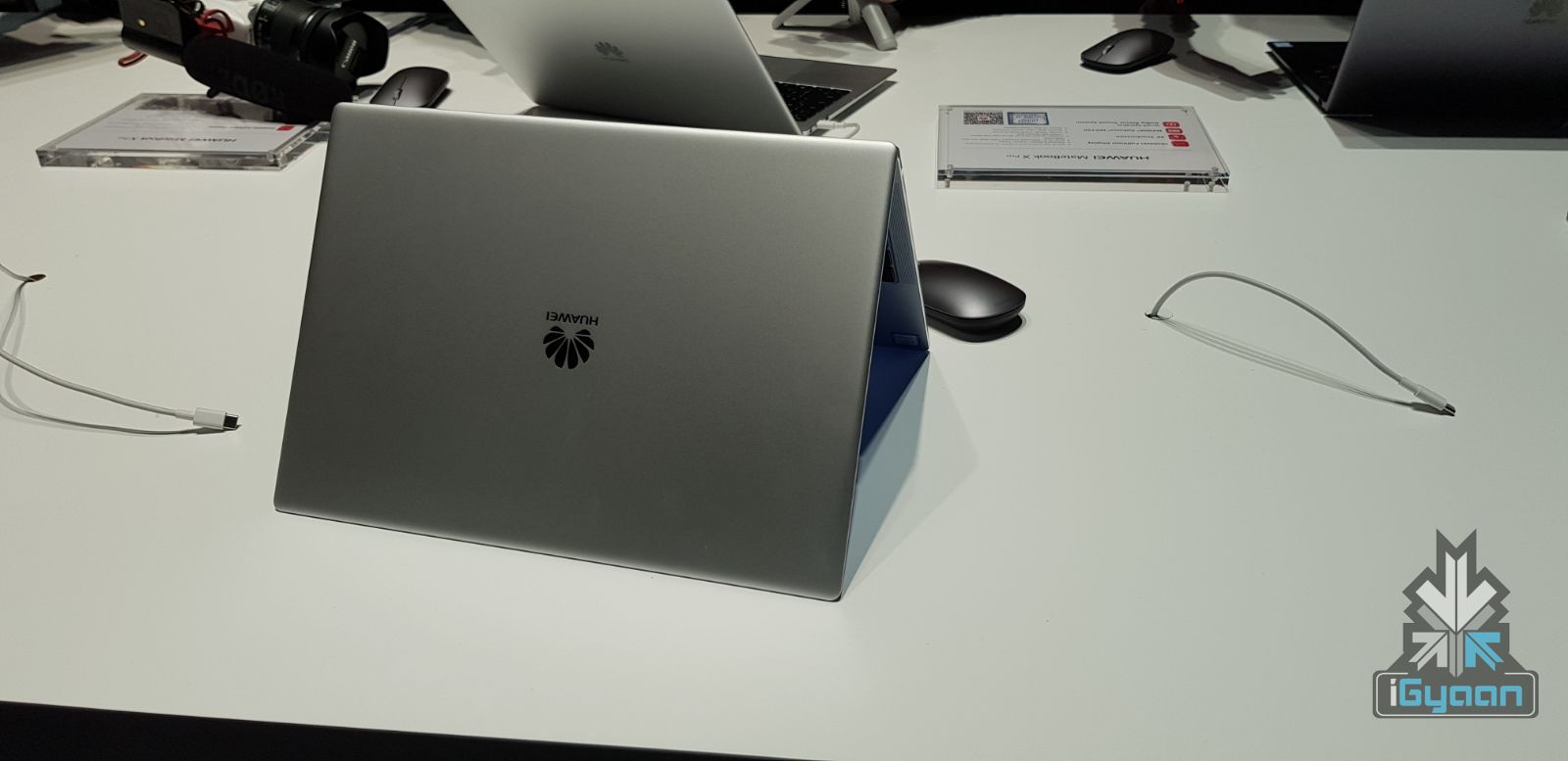
    Huawei has launched the FullView touchscreen notebook, called Huawei MateBook X Pro at MWC 2018. The Huawei MateBook X Pro will succeed the MateBook X which was launched in 2017. The Matebook X Pro starts at a price of EUR 1499 and goes up to EUR 1899. The company has stated that it will go on sale in Q2 of 2018.

    Specifications

    The notebook comes with 13.9 inch display with 92% screen to body ration. It uses a low power consuming LTPS touch-screen with 3000 x 2000 px resolution, which offers 20 pixels per inch. The display supports 100% sRGB colour gamut with a maximum brightness of 450 nits and 1500:1 contrast ratio. The display is protected by Corning Gorilla Glass for smooth and responsive multi-touch screen experience. The notebook runs on Windows 10 operating system with Windows Hello support.

    The Huawei MateBook X Pro comes with the latest Intel 8th generation Intel Core i7 chipset with NVIDIA GeForce MX150 mobile GPU.

    The Huawei MateBook X Pro offers perfect diamond cut edges with sandblast finish for a more uniform finish. The notebook is one of the lightest in its category, which weights at just 1.33 KG. Compared to the 13.3-inch Apple MacBook Pro, the Huawei MateBook X Pro is 50% thinner with similar hardware capabilities. Keeping this thin, the notebook also ships with a full sized USB 3.0 port, two USB type C ports and a 3.5 mm headphone jack.

    The USB type C port does support Thunderbolts 3, which can drive an external display with up to 4K resolution. The port can also support external GPU like the NVIDIA GTX1080. The company has re-engineered the cooling system on the Huawei MateBook X Pro, which now comes with passive and active mode with temperature detection fans control. It uses the custom Huawei shark fin fan design, which offers up to 20% more efficient.

    The Quad speaker setup on the notebook comes with the clear treble tweeter and rich base subwoofer. In fact, The sound profile has been fine-tuned by Dolby Atmos. It has a built-in 4 microphone solution, which offers 360-degree listening without any distortions. The Huawei MateBook X Pro comes with all-day battery life. Which means, the device can offer up to 15 hours of web browsing, or 14 hours of office work or 12 hours of video playback on a single charge.

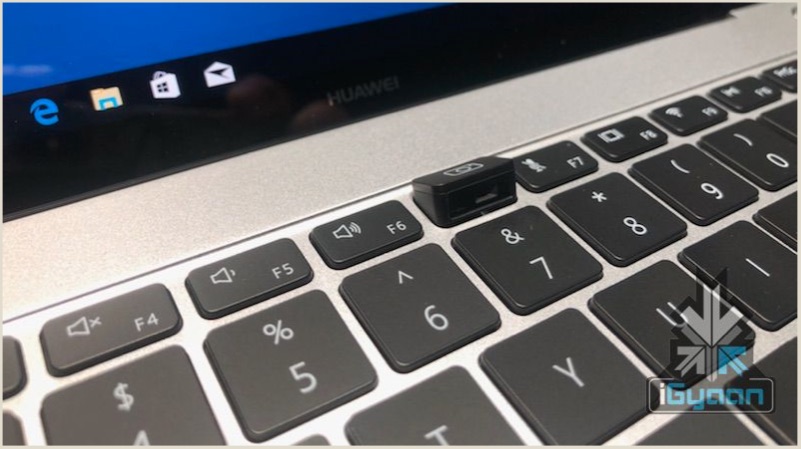
    Traditionally notebooks use keypad authentication. However, Huawei MateBook X Pro comes with iris scanner + fingerprint scanner + keyboard. A user can use any one of these features to login into the notebook. Like the Apple MacBook Pro, the Huawei MateBook X Pro comes with the one-touch power button, which also doubles as a fingerprint scanner.

    The notebooks’ keypad is spill proof, which saves the device from the accidental coffee or water spills. The Huawei MateBook X Pro has the largest trackpad on any notebooks under 14 inch display.

  • LG V30S ThinQ Announced With AI Capabilities

    LG V30S ThinQ Announced With AI Capabilities

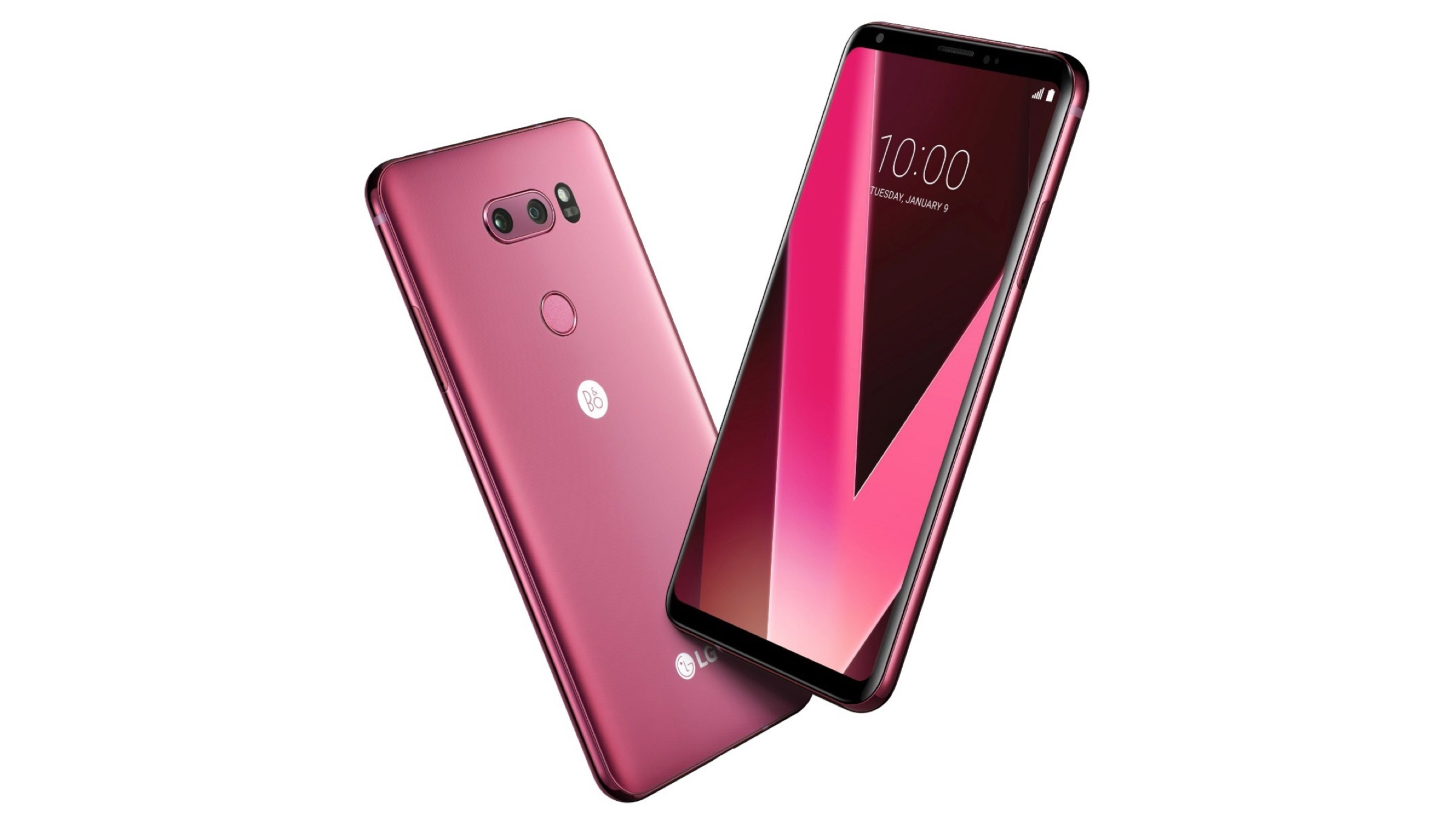
    Smartphone makers like Samsung and Xiaomi are getting ready to launch their flagship smartphones with Snapdragon 845 at MWC 2018. However, LG has taken a different route by launching the LG V30 with a new software update as the LG V30S ThinQ. In fact, there is a plus version of the model, which offers 256GB storage.

    Though these smartphones have been officially launched, the company hasn’t unveiled the pricing or availability.

    What’s new?

    The company has stressed a lot on the improved camera capabilities and voice recognition, which were missing on the Lg V30.

    The new camera on the LG V30S ThinQ comes with the AI capability called, Vision AI. The vision Ai offers three new features called AI Cam, QLens, and Bright Mode.

    LG V30+ Alpha
    LG V30

    The AI Cam’s dedicated mission is to analyse the subject, which helps the camera to choose proper shooting mood. These modes include portrait, flower, sunrise, city, animal, and Human. With the machine learning, the AI camera will get better over the time.

    The QLens comes handy for those who shop a lot. Scanning a bar-code on the product will get you the complete information about the product. However, this depends on the information provided by the manufacturer. In fact, the company claims that it also shows similar products with the lower price tags. The QLens can also be used to get detailed information on the buildings and landmarks.

    Bright mode deals with the low light photography. The combination of the f/1.6 aperture lens and Bright mode algorithms improve the images quality taken in low light situations.

    Specifications:

    The specifications of the LG V30S ThinQ are almost identical to the specifications of the LG V30 and LG V30+.

    The LG V30S ThinQ has the Qualcomm Snapdragon 835 chipset, a 2.4GHz octa-core processor, 6 GB RAM and 128GB of onboard storage which can be expanded up to 2TB via a microSD card. The smartphone has an IP68 rating for water and dust resistance and MIL-STD 810G rating for durability. The special LG V30S+ ThinQ edition comes with 256GB storage.

    The device is powered by a 3300mAh battery with wireless fast charging which supports 3.0 quick charge. The smartphone runs Android 7.1.2 with LG’s UX 6.0+ on top which offers a few customisation options.

    The LG V30S ThinQ incorporates a 32-bit Hi-Fi Quad DAC powered by Bang & Olufsen with few sound presets like enhanced, detailed, bass and live. The smartphone also has support for Master Quality Authenticated (MQA) technology for high-resolution audio streaming.

    Aside from the rear-mounted fingerprint scanner which also doubles as a home button, LG has introduced few new security features in the LG V30+ such as facial and voice recognition. The voice recognition will even work along with the music playback.

    The LG V30S ThinQ features a dual-camera setup at the back. As LG had announced, this smartphone has the first ever inbuilt camera unit to feature a 16MP crystal clear lens made of glass with an f/1.6 aperture and another 13MP wide angle lens with an f/1.9 aperture. The camera features laser detection AF, optical image stabilisation and electronic image stabilisation. On the front side, the LG V30+ sports a 5MP wide-angle camera with an f/2.2 aperture.

  • Samsung Galaxy S9 Launch Video Leaked Ahead Of Official Launch

    Samsung Galaxy S9 Launch Video Leaked Ahead Of Official Launch

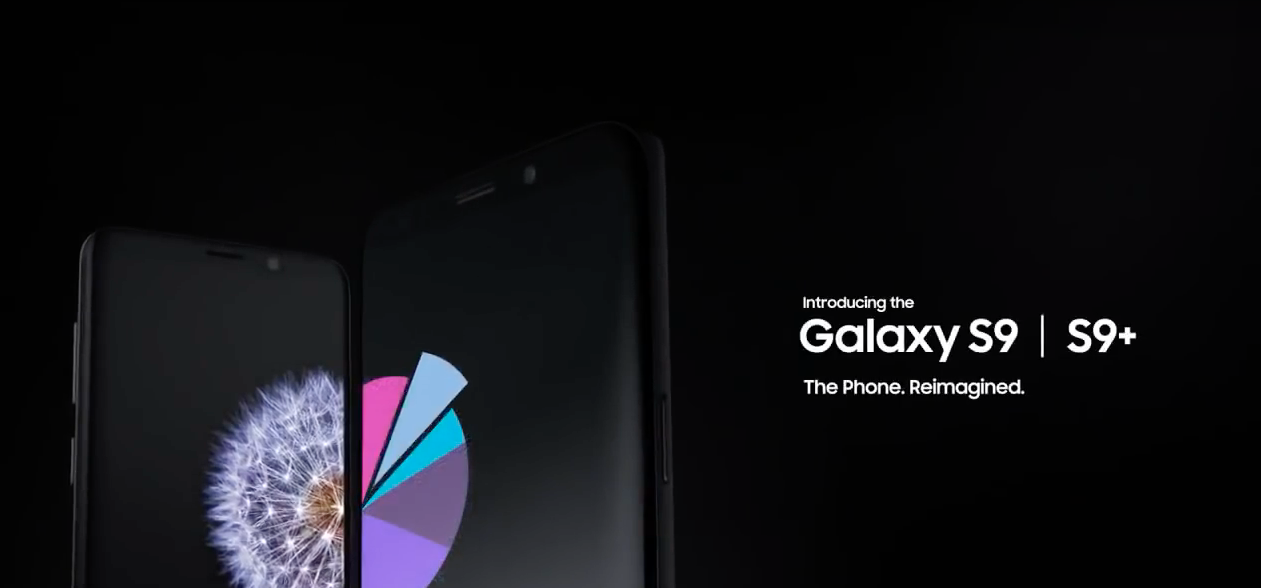
    The Samsung Galaxy S9 and S9+, as usual, have almost nothing to surprise us with, at the launch. Over the past few weeks, the 2018 flagship smartphones have been leaked in some shape or form. While the design of the devices has been leaked enough in renders and live images, the pricing is also starting to get clearer by the day. The smartphone will be launched today at MWC 2018.

    Renders by @evleaks
    The Video

    The Video begins by showing the display on of the Galaxy S9, with the multi-window mode. Samsung has introduced to the Samsung Dex, which is an add-on accessory that converts the Galaxy S9 into a PC. After connecting the phone to the Dex accessories. The smartphone can also be used as a trackpad or a keyboard to edit those serious office presentations.

    Then comes the camera, the Galaxy S9’s camera now offers live Bixby translation, like the one we have seen on the Honor View10.  The new AR capability of the camera will be able to detect the problem with your LAN connection and will help you to fix it instantly.

    Renders by @evleaks

    The new Galaxy S9 or the Galaxy S9+ also comes with app pairing, which helps you to organize two mostly used apps together as a single entity. Like the Galaxy S7 and the S8, the Galaxy S9 and S9+ are also IP68 certified against water and dust.

    The Samsung Knox 3.1 is advertised to secure your data with biometric authentication for the face unlock. However, unlike Apple iPhone X, the device also has a fingerprint scanner, located on the back of the smartphone.

    There is a special enterprise edition of the Galaxy S9 and it comes with 24×7 technical support. These smartphones are covered under extended warranty support with up to 4 years of security updates. However, the standard edition is expected to receive two years of software update.

    Galaxy S9
    Press Renders
    Expected specifications:

    The Samsung Galaxy S9 is expected to have a 5.8-inch Super AMOLED QHD+ display with 18:9 aspect ratio, with narrow bezels. Under the hood, the smartphone will be powered by either Snapdragon 845 chipset or Exynos 9810. According to a leak, the device will be offered in two storage options, 4GB RAM/64GB storage and 4GB RAM/128GB storage.

    The camera on the smartphone will have a noticeable upgrade. A leak reveals that the device would have a 12 MP camera with a variable aperture from F/1.5 to F/2.4. The mobile is expected to run Android 8.1 Oreo out of the box with Experience UI on the top. In fact, the Galaxy S9+ comes with a secondary dual camera and the functionality of the camera is yet to be known.

  • Sony RXO Action Camera Launched In India For Rs 64,990

    Sony RXO Action Camera Launched In India For Rs 64,990

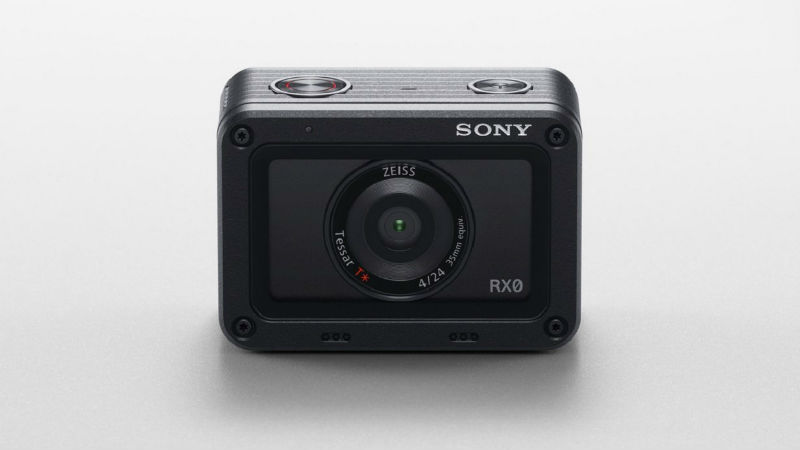
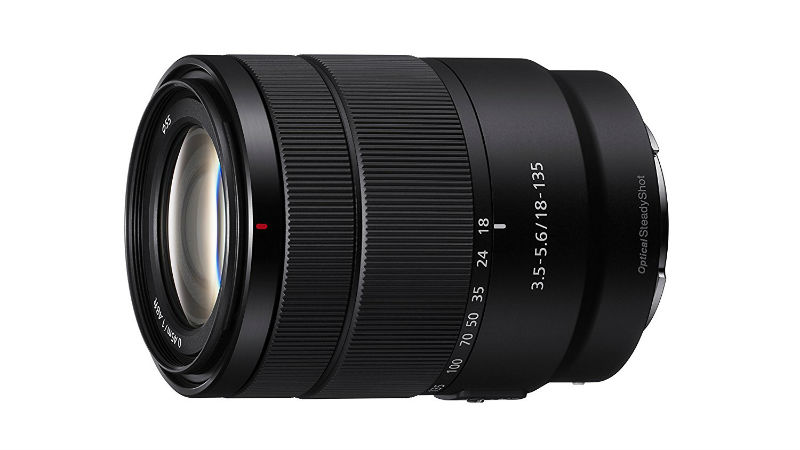
    Sony has officially launched its latest premium Sony RXO Action camera in India for Rs 64,990. Along with the camera, the company also announced the SEL18135 Wide-Zoom lens for Rs 49,990. The camera will be available via Sony Center, Alpha Flagship stores, and Sony authorised dealers from 22nd Feb.

    Additional accessories like VCT-CGR1 cage, MPK-HSR1 casing, CPT-R1 cable protector, VF-SPR1 Spare lens protector, VFA-305R1 Filter Adaptor Kit, NP-BJ1 Rechargeable Battery Pack, and ACC-TRDCJ are also available at the additional cost.

    Design and features:

    The Sony RXO Action Camera offers rugged construction with IPX8 certification, which can operate under 10-meter deep water up to 60 minutes.

    Combination of this camera with the MPK-HSR1 can extend the function up to 100-meter deep water. In fact, the camera can all alone withstand up to 2 meters fall and can breeze through harsh shooting conditions like rain, sand, dust, and snow.

    Specifications:

    The Sony RXO has a 1 inch Exmor RS CMOS image sensor with up to ISO 12800 light sensitivity, powered by BIONZ X processor and a DRM chip for fast large volume output.

    The camera comes with a fixed Zeiss Tessar T 24 mm wide angle lens with an f/4 aperture. The Sony RXO Action camera does offer anti-distortion shutter as fast as 1/320000 per second. In fact, the camera is optically stabilised, which helps in getting stable video footages.

    The 16fps frame rate is one of the faster burst-mode for the camera of this calibre. There is even Super slow motion feature, which offers a staggering frame rate of 960/1000 frames per second. However, one has to use high write and read memory card to capture slow motion videos.

  • Doogee V With In-Screen Fingerprint Scanner And iPhone X-Like Notch To Launch At MWC 2018

    Doogee V With In-Screen Fingerprint Scanner And iPhone X-Like Notch To Launch At MWC 2018

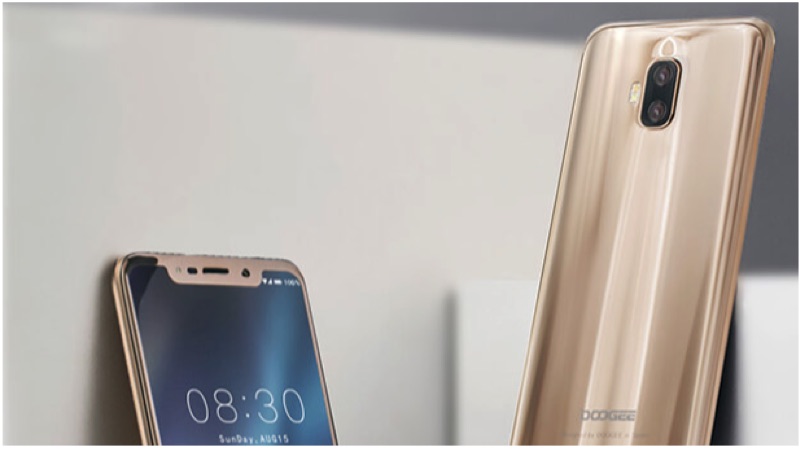
    Doogee is all set to launch its first smartphone with an in-screen fingerprint scanner at MWC 2018. In fact, the Doogee V uses the same technology as that of the Vivo’s recently launched Vivo X20 Plus UD. The smartphone has been officially listed on Doogee’s official website.

    The Doogee V embraces a unibody glass design with a metallic frame. Similar to the iPhone X, the Doogee V also has a notch on the display which could house the hardware used for “Face ID,” as the company calls it.

    Doogee V Specifications:
    Doogee V

    The Doogee V has a 6.2 inch 18:9 aspect ratio OLED display with 2160 x 1080px resolution. As this device comes with an In-screen fingerprint scanner, there are no physical or capacitive buttons on the front.

    The company hasn’t mentioned any details on the chipset or the RAM it uses. In fact, these are the only factors that are yet to be known about the Doogee V. The phone offers a dual primary camera setup with a 16 MP + 8 MP sensor combination, the function of the secondary camera is yet to be known.

    The single front-facing camera will also support face unlock. Interestingly, the company has used “Face ID” to describe its facial recognition system. Face ID is what Apple calls its facial recognition system on the iPhone X.
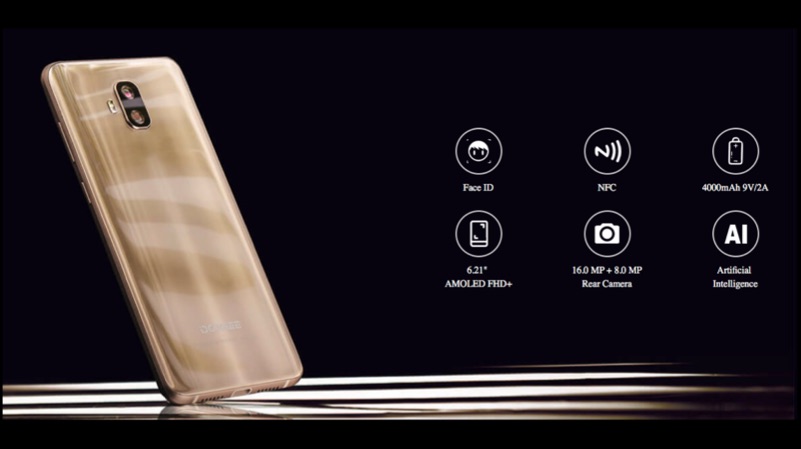
    The glass back panel comes with a maze finish with support for NFC connectivity. The smartphone comes with a 4000 mAh Li-ion battery with fast charging support via USB type C Port.

    The image also mentions the presence of AI. Along with shrinking bezels and increasing price, many people believe that the integration of AI will be the next big thing in the smartphone industry. Therefore, we will see more smartphones with emphasis on AI in the coming weeks.


  • Android P: What To Expect

    Android P: What To Expect

    With the launch of Android 8 Oreo, Google natively introduced features like notification dots and always on display. However, the upcoming Android P is expected to build upon that introduce more features:

    Five expected Features of Android P:

    Support for notch

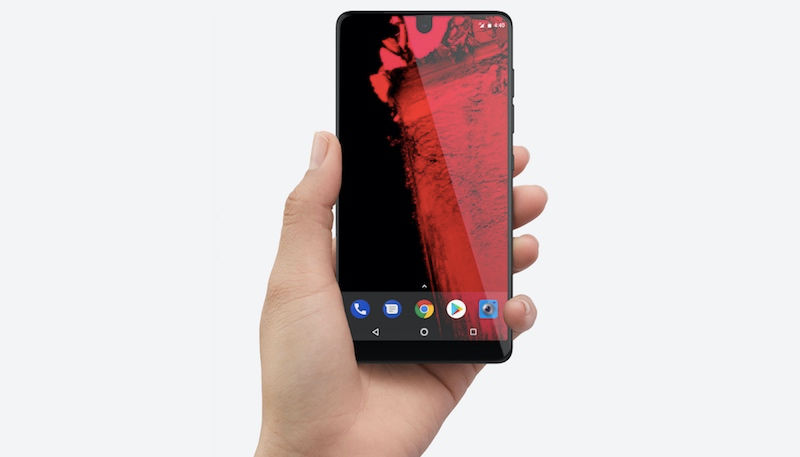
    Android P is expected to support smartphones with a notch. Though Android already have smartphones with the notch (Essential Ph-1) the inclusion of support for notch will have a major impact on the Apps and layouts. In fact, the upcoming Pixel 3 is also expected to embrace the notch.

    notch
    Essential Ph-1

    Dark mode

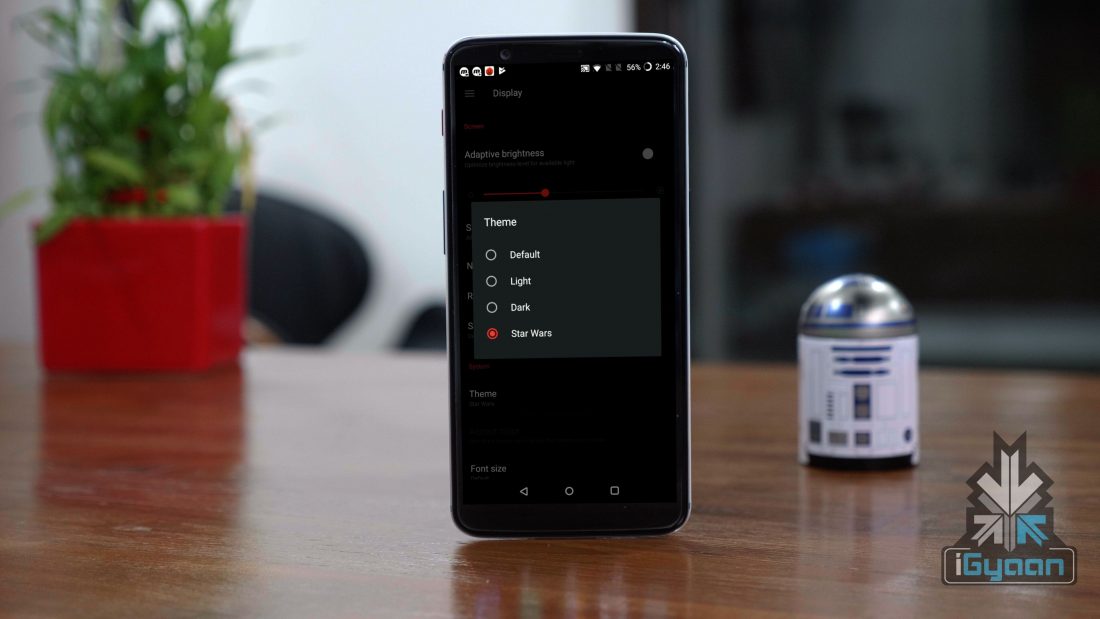
    This is probably the most anticipated feature of Android OS. In fact, few smartphone OEMs like Samsung and OnePlus does support dark mode, which has a huge impact on the battery life of the device, that too on a device with an OLED display.

    Strict privacy controls

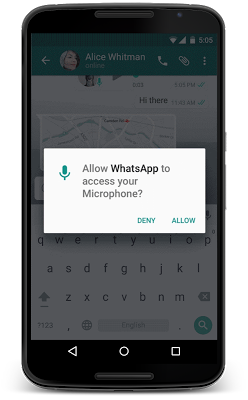
    Users security has been the biggest all-time concern for the smartphones powered by Android OS. The Android 6 Marshmallow came with the option to ask permission to use certain features of the phone. The Android P will take this to the next level with additional control over the microphone, camera, and internet accessibility. However, MIUI has this option from last four years.

    Solving the OS fragmentation issues

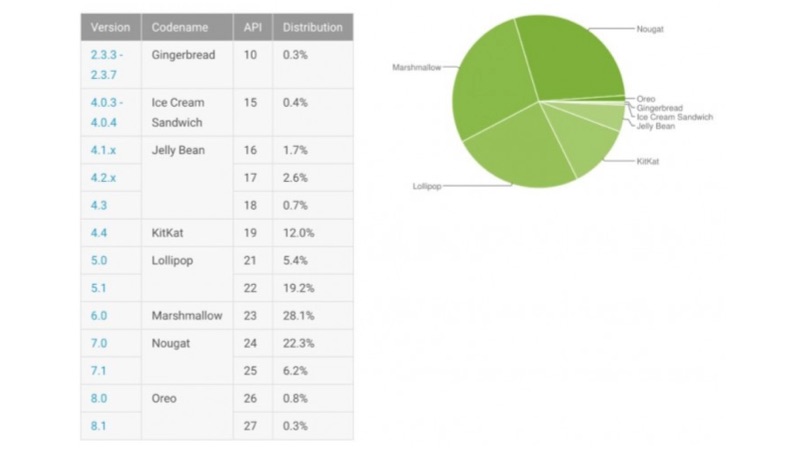
    Starting with the Android P with the help of Project Treble, Google will push faster OS updates to more smartphones. In fact, smartphones like the Honor View10 and the Xiaomi Redmi Note 5 Pro are expected to be the first set of smartphones to support Project Treble.

    More customisation options

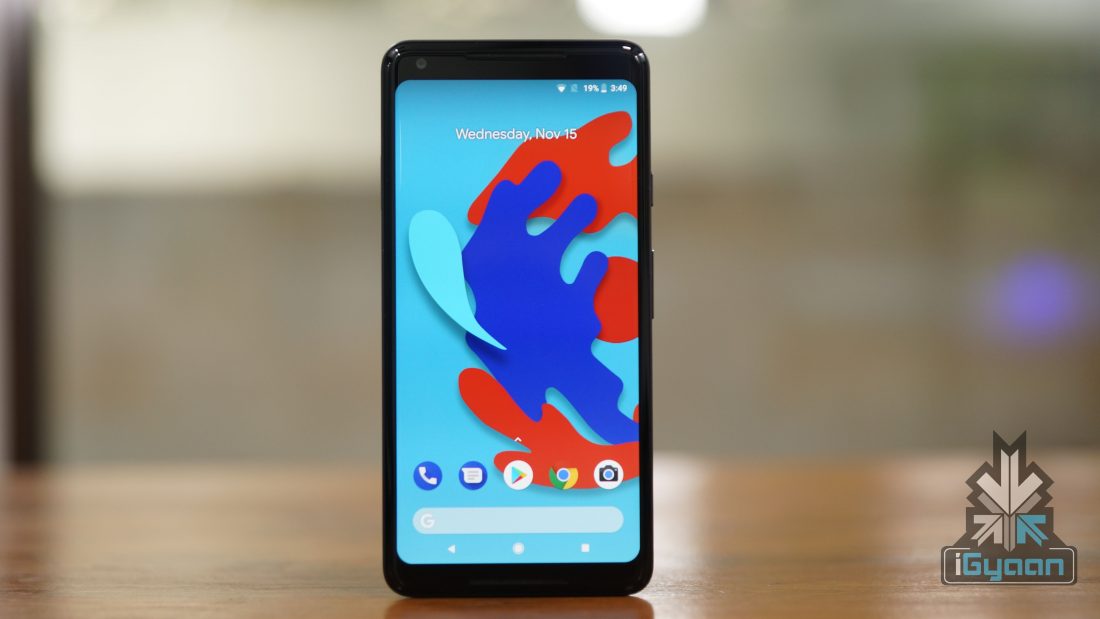
    The Android P is expected to offer more customisations, compared to the earlier versions of the Android operating system. Google might release the Google Pixel launcher for the general public. As of now, the Pixel launcher is limited to a small number of smartphones. Though it is available on Google Play store, it is incompatible with most of the smartphones.

    Pixel 2 XL Runs Android 8 Oreo
iGyaan Network
Privacy Overview

This website uses cookies so that we can provide you with the best user experience possible. Cookie information is stored in your browser and performs functions such as recognising you when you return to our website and helping our team to understand which sections of the website you find most interesting and useful.