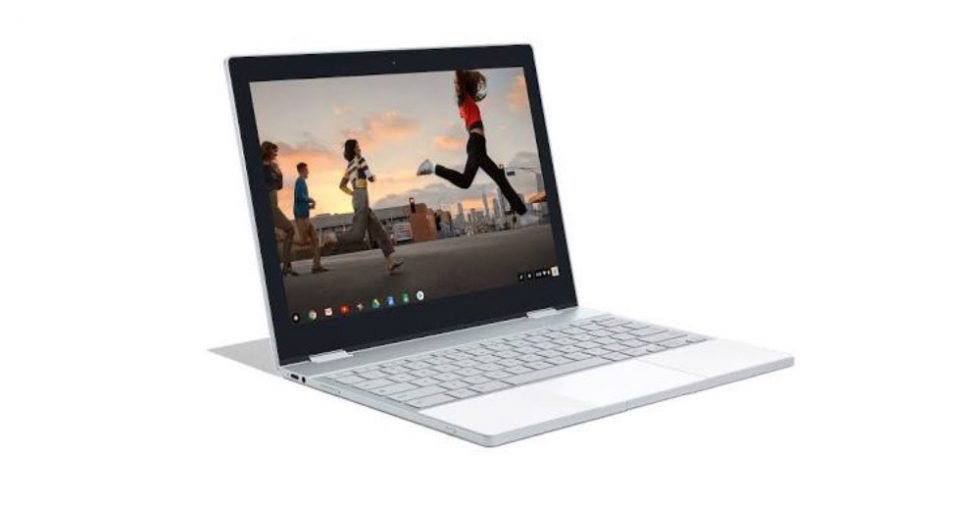
The Pixelbook was unveiled back in October along with the Pixel 2 smartphones and a few other Google products. It now appears that Google is working on a new Pixelbook which will self-adjust the display angle according to the user’s face and will be activated by a touchpad.
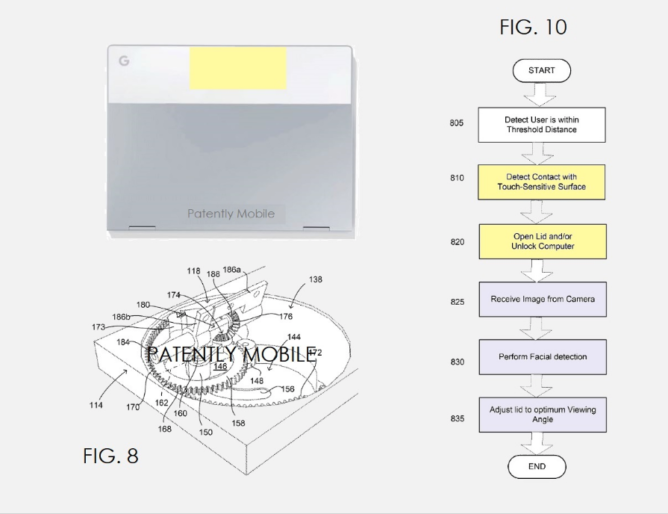
In a new patent, a motorised lid for the Pixelbook was spotted. This lid would ensure that you wouldn’t have to exert as much physical force to use your laptop.
The patent was filed back in Q4 of 2013 but, it was only recently granted to the tech giant. It is worth noting here that one of the people credited for the patent is Ken Loo, who is a Senior Product Design Engineer who worked on the Pixel phone, Pixelbook, and as the lead engineer for Google’s self-driving car’s sensors.
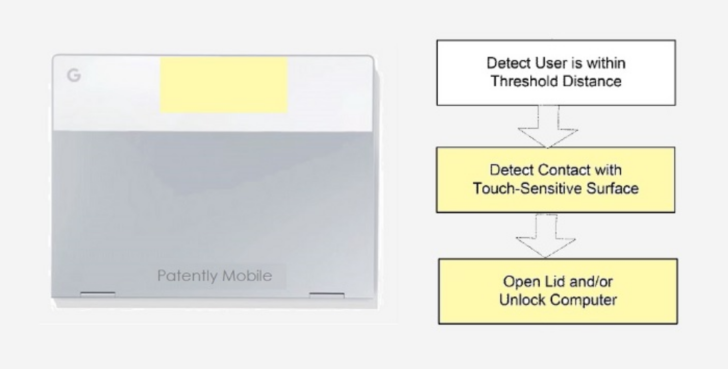
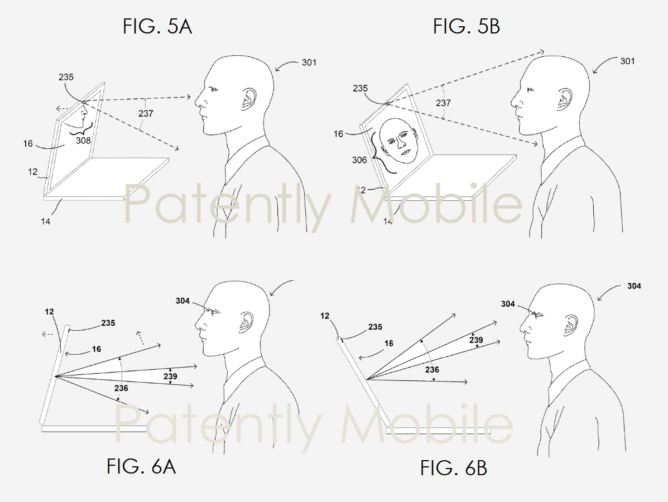
Here’s how this futuristic self-adjusting Pixelbook will work: The user will tap the touchpad with a certain level of pressure or duration of time (which should be customisable), which would make the hinge motor open the lid. The front-facing camera would then track your face and make the hinge’s angle optimal for your the best viewing angle. It won’t be a surprise if face unlock is also incorporated in this laptop since highly accurate cameras or sensors will be used to track the face.
The lid will keep on adjusting itself while you use the laptop. The computer might even use a body part, or an accessory to predict the location of your face and adjust accordingly. However, if the sensors do not detect a face for x number of seconds, it would automatically close and lock itself. You’d also be able to close it via a certain motion on the touchpad.
All of this sounds great in theory but, it will be interesting to see how the implementation will done on this Pixelbook. Google’s hardware team has its plate full if it has to nail this technology and make the Pixelbook a viable option in a market where MacBooks and spec’s out PCs dominate the consumer’s mindset.
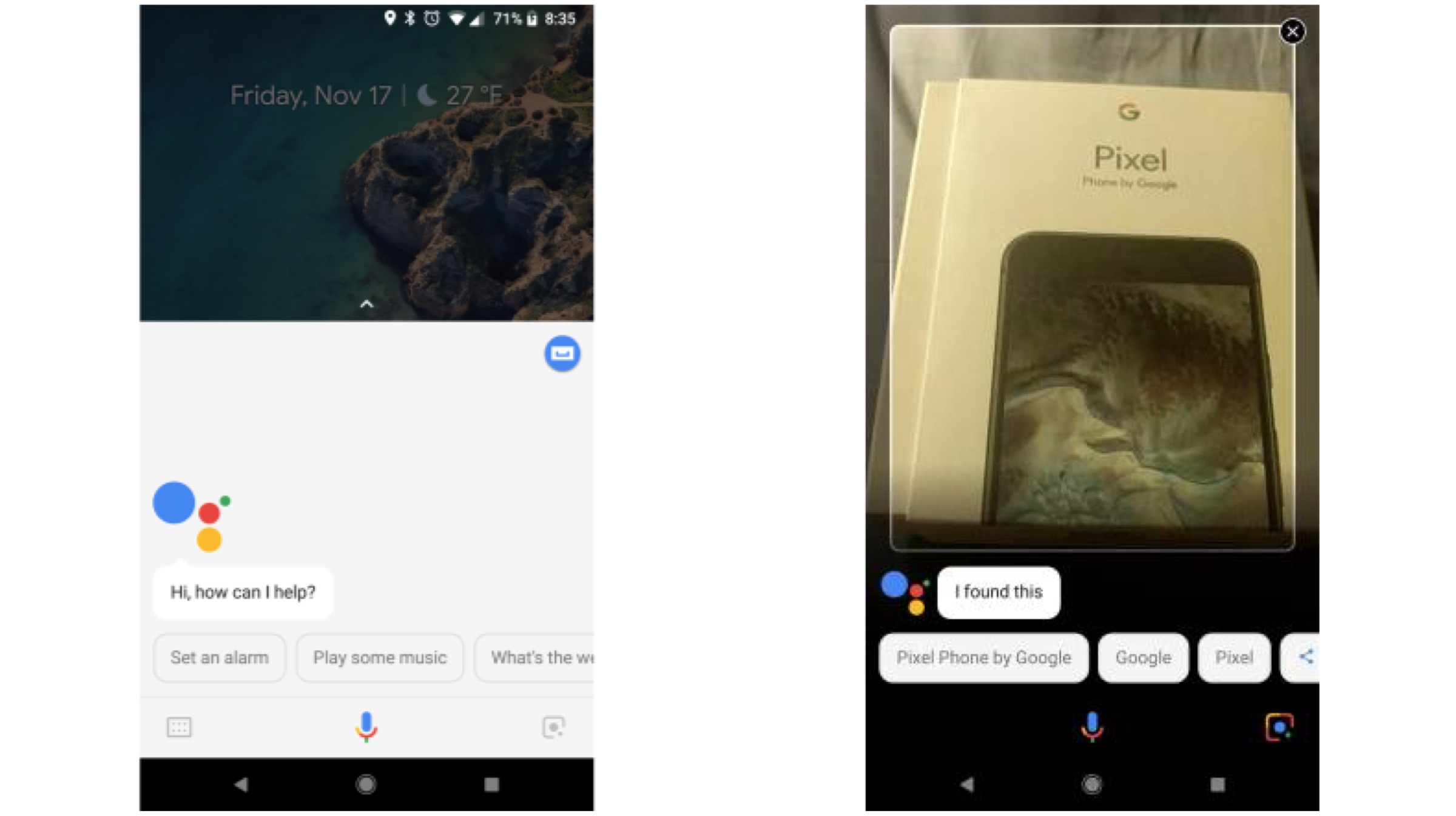
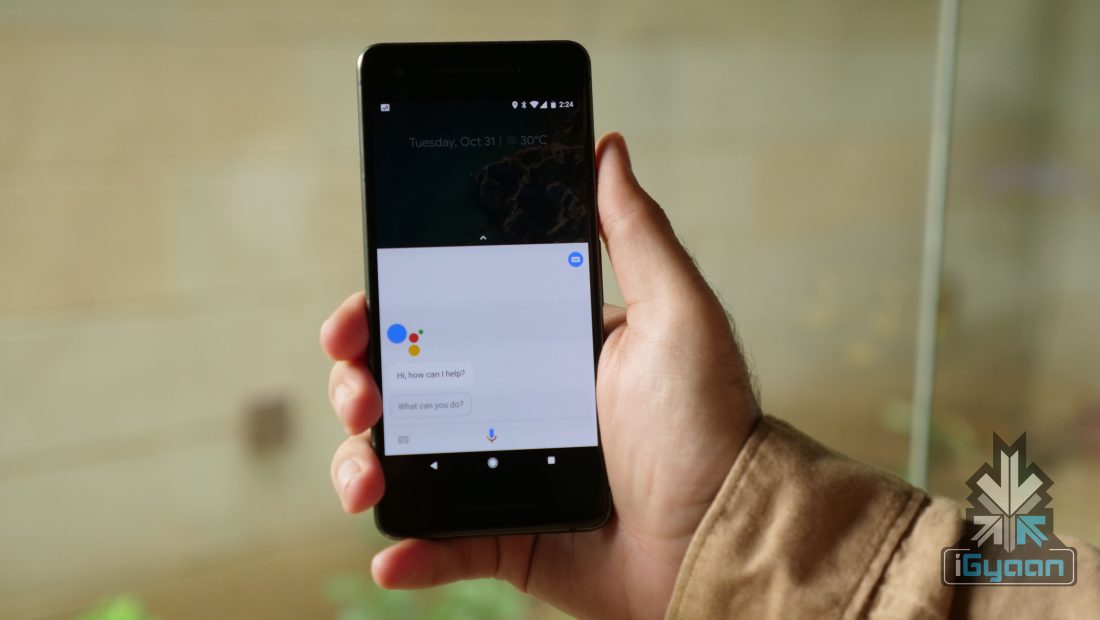
Google has started rolling an update for Pixel and Pixel 2 devices which brings the Google Lens feature to these phones. 9To5Google reported that the some users have noticed the Lens feature in the Google Assistant app.
The first users have spotted the visual search feature up and running on their Pixel and Pixel 2 phones.
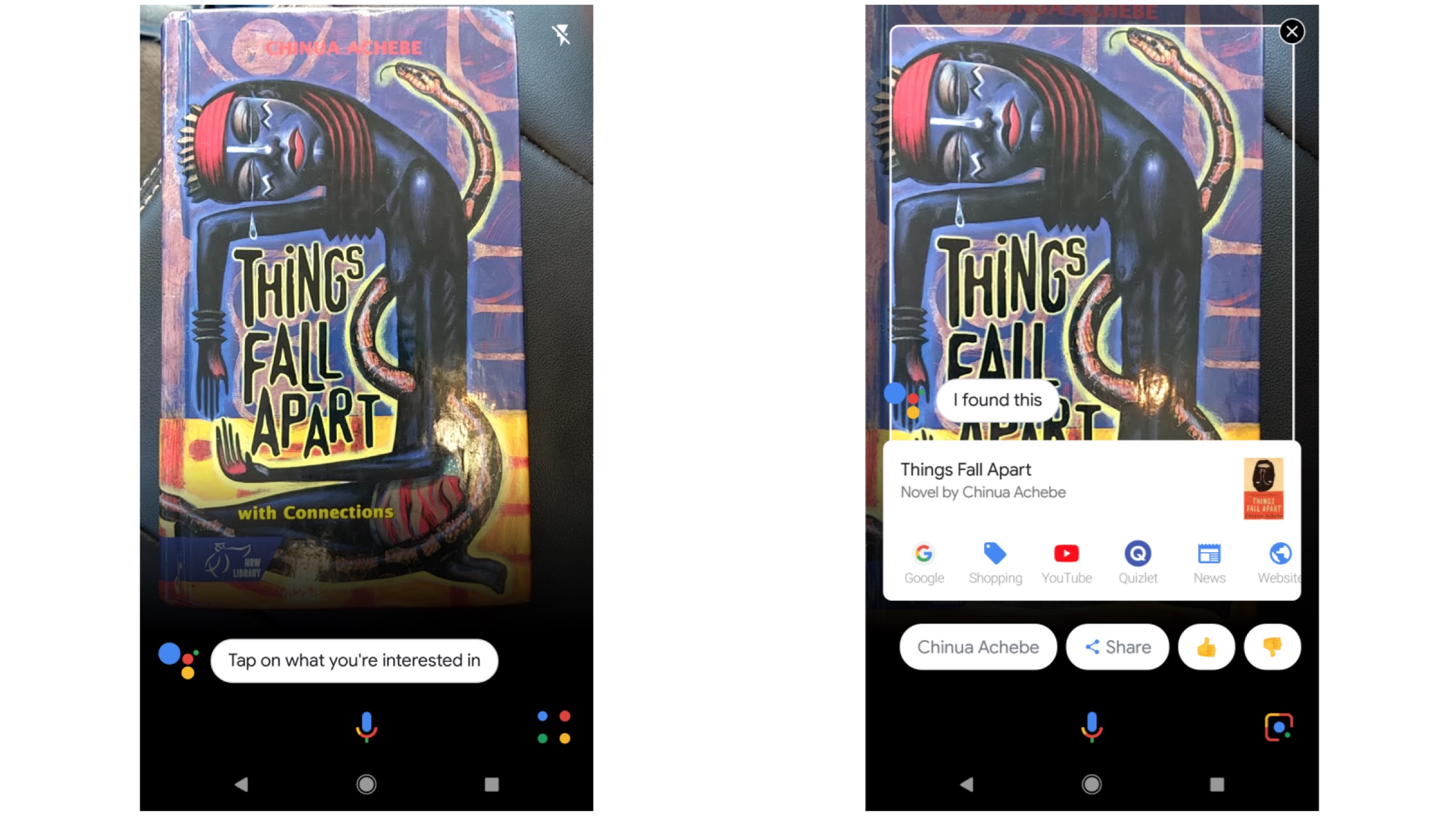
In Photos, Lens can be triggered when viewing an image or a screenshot. However, in Google Assistant, it is integrated right into the sheet that pops up after holding down on the home button, or squeezing the frame of the Pixel 2. Once triggered, the Lens runs an image based search and pulls out web page links, options to open another app or links to buy a certain product.
When Lens was firs unveiled, Google CEO Sundar Pichai described Google Lens as a set of vision based computing capabilities that can understand what you’re looking at and perform actions based on that information. If you trigger Lens while pointing your phone to a book, it will scan the cover of the book and pull links to buy or read the particular book online. Google says Lens has an accuracy of over 95%.
While the rollout is still minimal, and extensive rollout to all the Pixel and Pixel 2 devices is expected to happen in the coming days.
Ever since the Pixel 2 and Pixel 2 XL were launched back in October, the two Android flagship phones have been marred with some issue or the other. While the Pixel 2 XL has faced a lot of flak for its shoddy display and extremely apparent colour shifting, the Pixel 2 has also had some minor issues that have been reported extensively online. One of them is the buzzing noise a user can hear when they put the phone to their ear during a call. Google has announced that an upcoming software update will fix this issue.
Hey all,
We’re rolling out a software update in the coming weeks which eliminates a faint buzzing sound on some Pixel 2 devices when the phone is placed to your ear during a phone call.
Thanks.
It is worth noting that the buzzing noise is different from the “clicking” noise that some Pixel 2 and Pixel 2 XL users have experienced in the past. While an update fixed that issue, people found a way around that issue by switching off NFC.
Considering Google’s prowess in the software part of technology, it is surprising that most of the problems with the two Pixel 2 phones have been software related. On the flip side, it is a good sign that Google is taking note of every little issue reported by users and trying to actively fix them.
Even though we’ve almost reached the end of 2017, there is a constant flux of high-end phones launching week in and week out. We recently saw three high profile Android phones launching in November itself, the Razer Phone, HTC U11+ (a mid range variant called the HTC U11 Life was launched as well) and the OnePlus 5T. Excluding the HTC U11+, the OnePlus 5T and the Razer Phone have the best specifications you can ask for in an Android phone. Snapdragon 835, up to 8GB of RAM and umpteen amount of storage.
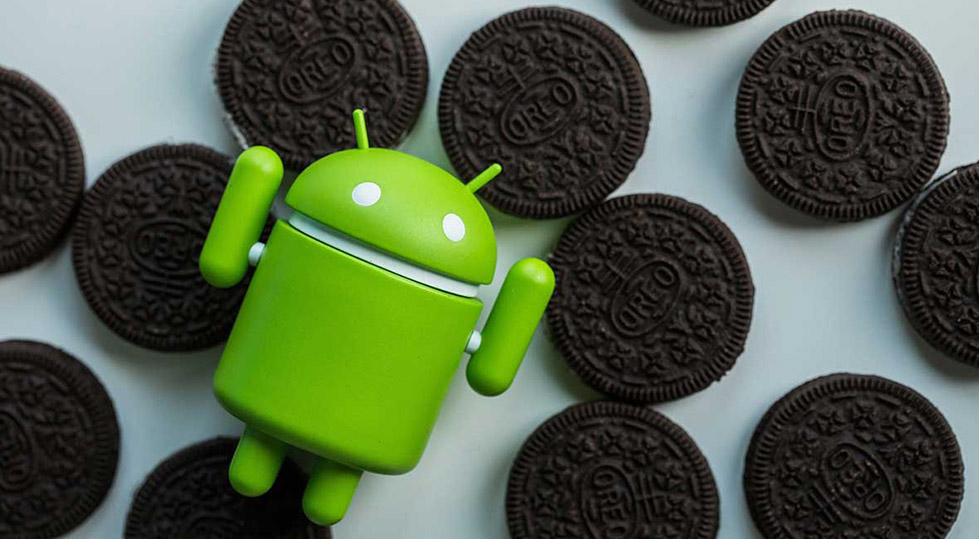
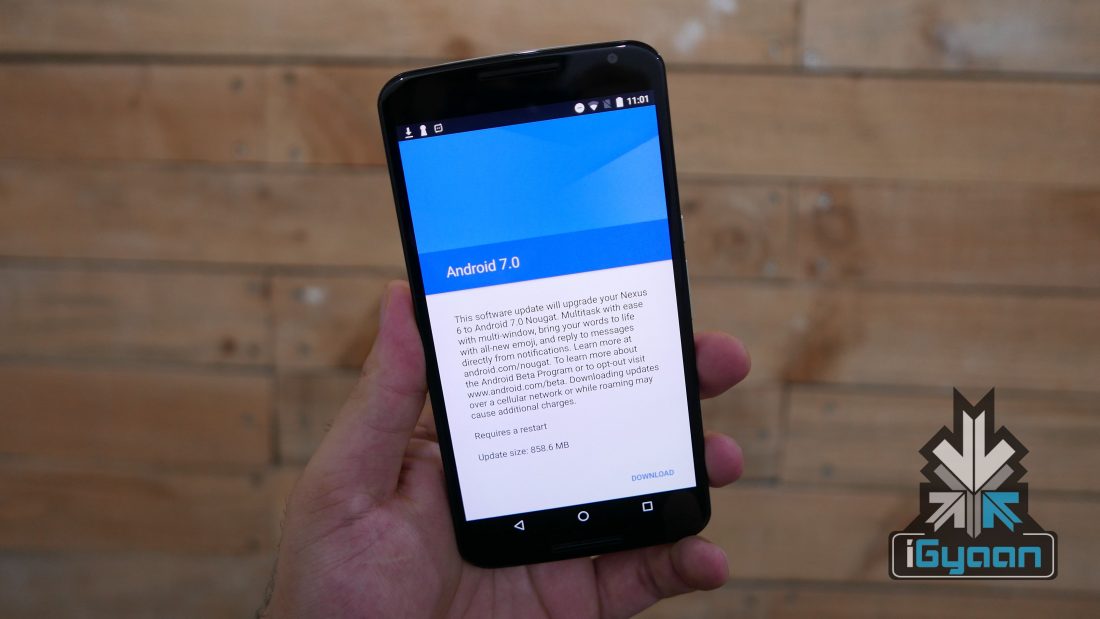
But, these two phones have one thing in common which should not be acceptable in November of 2017. Both the devices run on an Android OS version which is more than a year old. Android 8.0 Oreo was launched back in August and it has been three months since it was made available for all these big smartphone companies to adopt and install in its new phones.
When the OnePlus 5T was launched, the Chinese smartphone maker said it is due to the intensive testing programme that it has not yet introduced Android 8.0 Oreo in the latest OnePlus 5T. Razer gave a similar reason and said it will push out an update soon enough. But, is soon enough good enough? You’re paying close US $700 for the Razer Phone and the higher end OnePlus 5T has a price tag of US $549, at this price, a consumer at least deserved whatever the latest software is in the market.
Yes, at the price these two phones have the best specifications in the market and the performance will be amazing enough to ignore what Android OS version these phones are running.
But, won’t the latest and greatest Android OS match better with the latest and greatest chipset? With Android 8.0 Oreo, Google introduced faster boot speeds, tighter security and those notification dots along with a lot of under the hood improvements. That should amount to something more than just, “it looks great, it will work great as well.” That is usually our defence for phones running older Android OS versions.
An average consumer barely even notices what OS version their phone is running. But, it matters, because the latest version of any operating system means that it performs better than the previous one and will be better for the longevity of your phone.
Android 8.0 Oreo On Pixel 2 XL
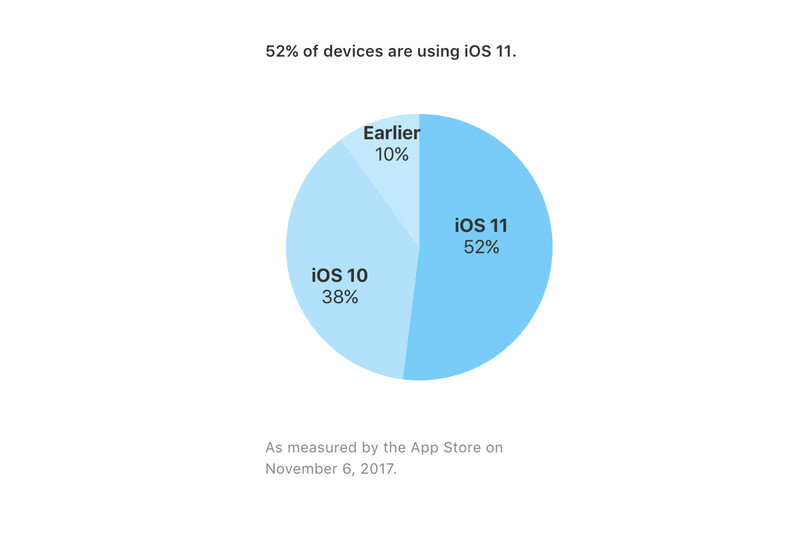
Android 8.0 Oreo is currently available in only 0.3% Android phones, while iOS 11, which was launched in September is present in over 50% of iOS devices. For further context, here is the Android OS and the percentage of Android phones running it:
Android KitKat (13.8%) – 2013,
Lollipop (27.2%) – 2014,
Marshmallow (30.9%) – 2015
Nougat (20.6%) – 2016
Android Lollipop, launched back in 2014 is more prevalent than Android Nougat that was launched in 2016. This tells you the story of Android’s adoption rate, especially when compared to iOS 11. Even iOS 10, which was launched in 2016 is available in 38% of the iOS devices currently out in the market.
It is hard to believe that companies like Razer and OnePlus would bring out their marquee phones with dated software because of lack of effort. It may be because the difference between Android Nougat and Android Oreo from the look of it, isn’t much. An average consumer would not make out the difference unless the consumer is coming from KitKat or Gingerbread. Fragmentation of Android devices is also a reason why so many smartphones currently never see a major software upgrade through their lifecycle.
Google’s Android One resurgence shows that the company wants more people to adopt to the latest OS and not wait for other OEMs to make a skin based on the latest Android OS and then push it out to consumers. Whether the Android One project will be a success is yet to be seen and how the adoption rate will change for Android 8.0 Oreo.
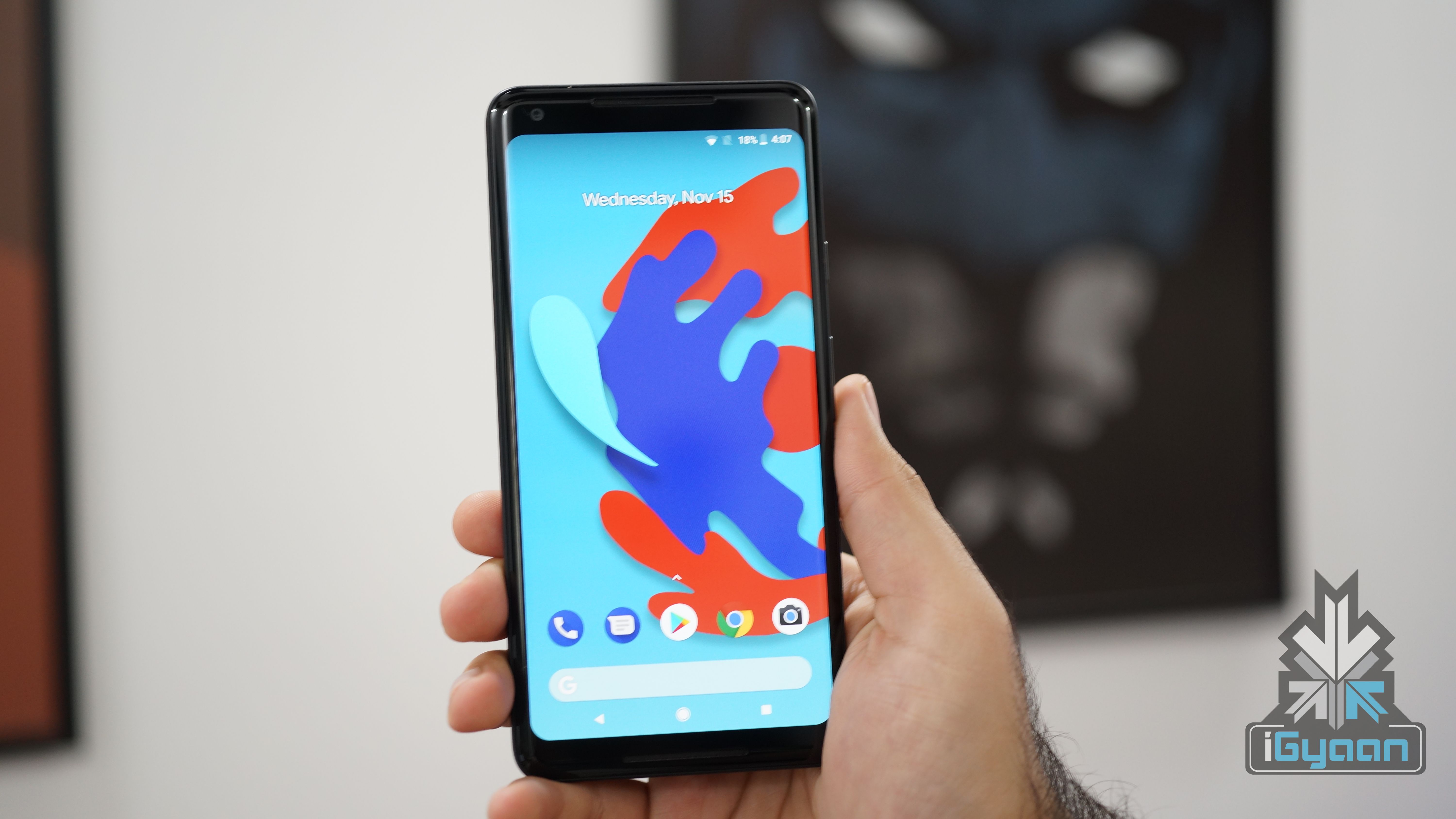
The Google Pixel 2 XL is now available to buy in India. The 64GB variant of the Pixel 2XL is price at Rs 73000 while the 128GB variant will cost you Rs 82000. The Google Pixel 2 XL has run into some issues since it launch but, Google has said that these issues can be fixed with a software update.
The smartphone has a 6 inch 2880 x 1440 px POLED display which translates into an 18:9 aspect ratio. Protecting the display is Corning Gorilla Glass 5.
Under the hood, the Pixel 2 XL has the Qualcomm Snapdragon 835 chipset, 2.4GHz octa core processor, Adreno 540, 4GB RAM and 64GB/128GB onboard storage. The fingerprint sensor sits at the back of the device but, this time around the “glass window” is smaller. Powering the device is a 3520 mAh battery which is larger than the one found in the Pixel 2.
Just like the Pixel 2, the device runs Android 8.0 Oreo out of the box and will receive the Android P update in 2018.
Google has decided to go for a single camera setup similar to last year’s Pixel phones. The rear-facing camera is a 12.2 MP sensor with an f/1.8 aperture and 1.4 micron pixel size. On the front is an 8MP camera with an f/2.4 aperture. The Pixel 2 XL uses both OIS and EIS simultaneously which should ideally result in better low-light photography and stable videos.
Google has introduced new features in the camera department like the addition of AR. Google says Pixel 2 XL has greater high dynamic range, optical image stabilisation, and a portrait mode that doesn’t use a second camera but dual-sensor image technology.
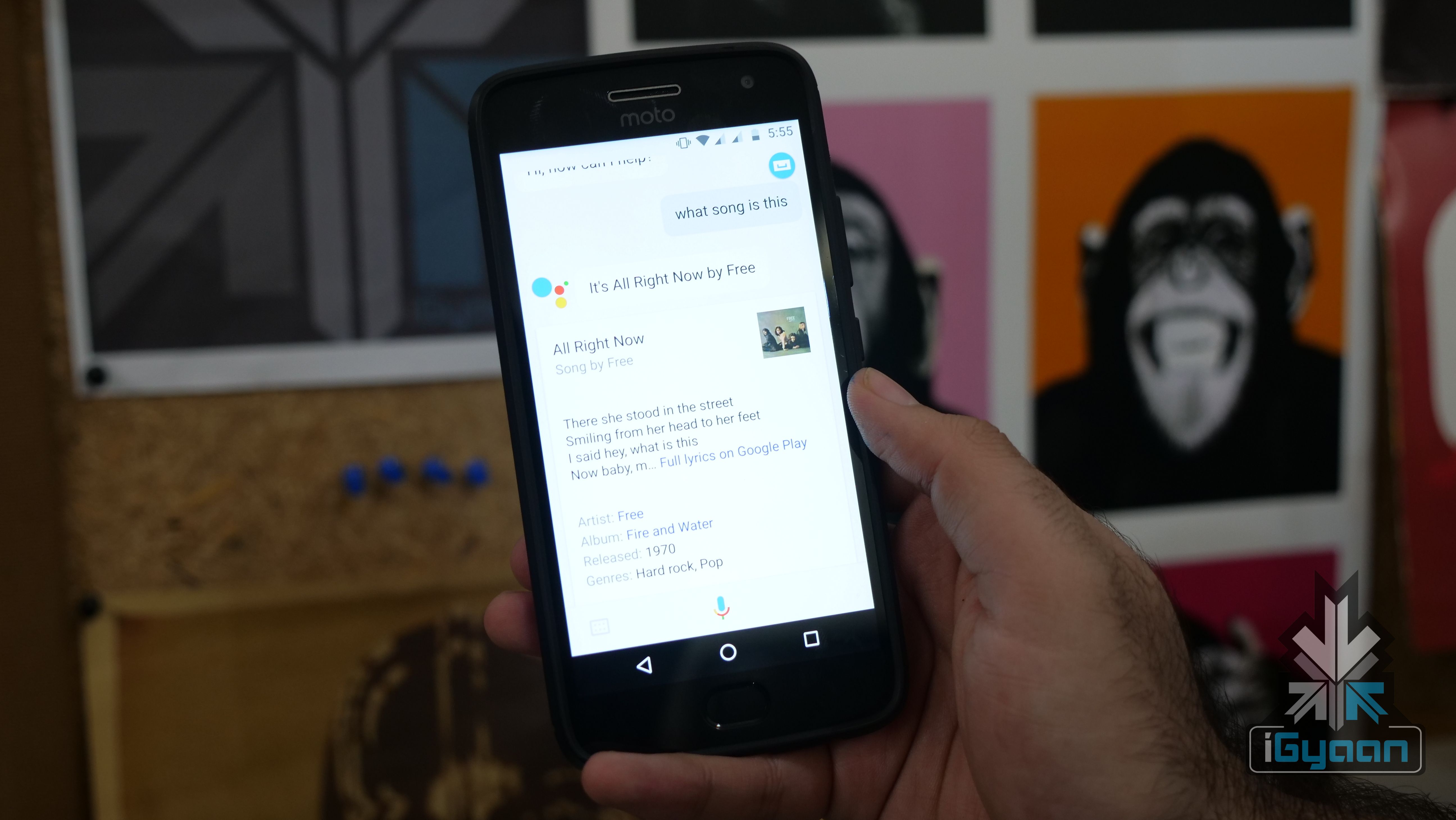
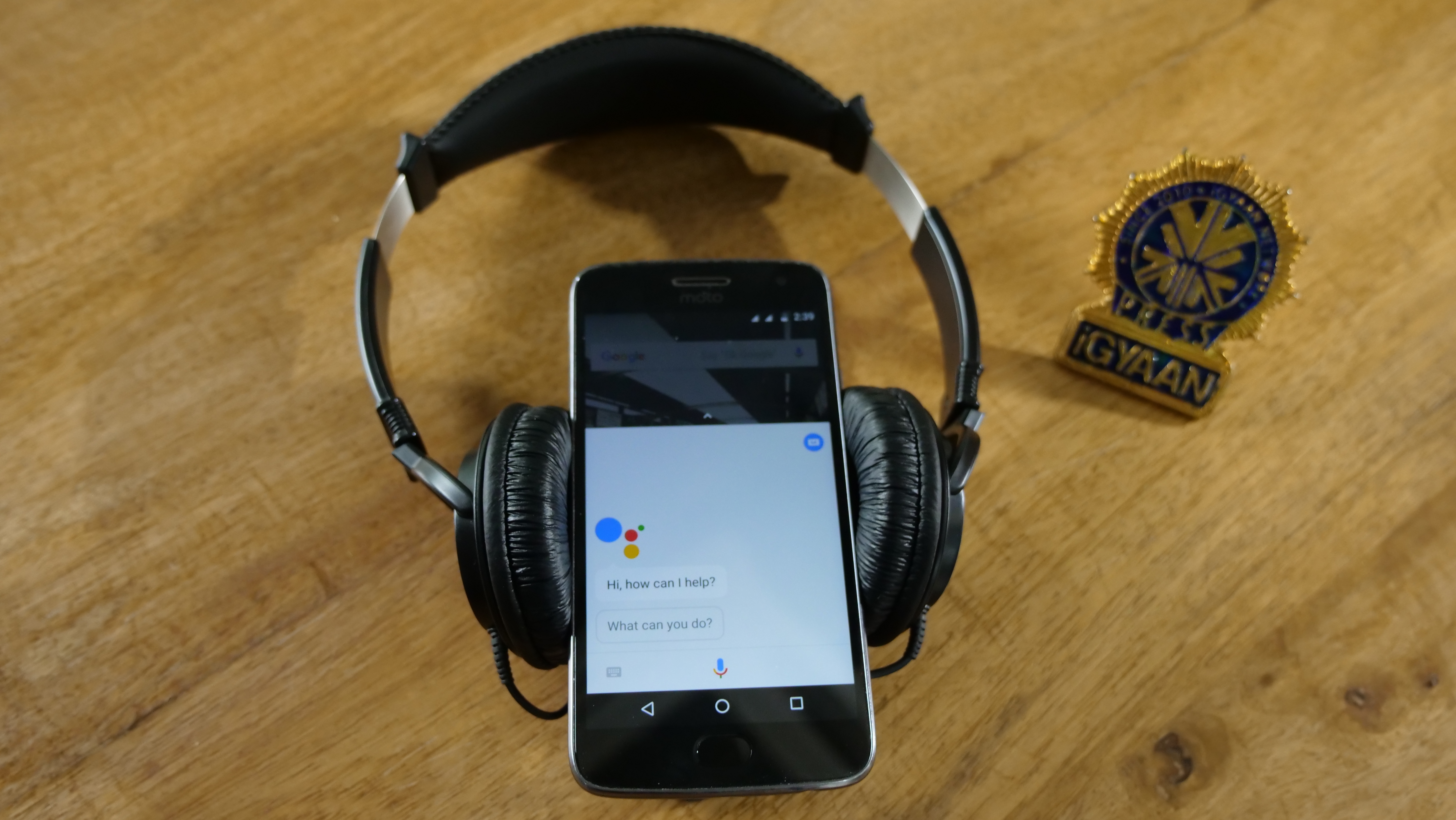
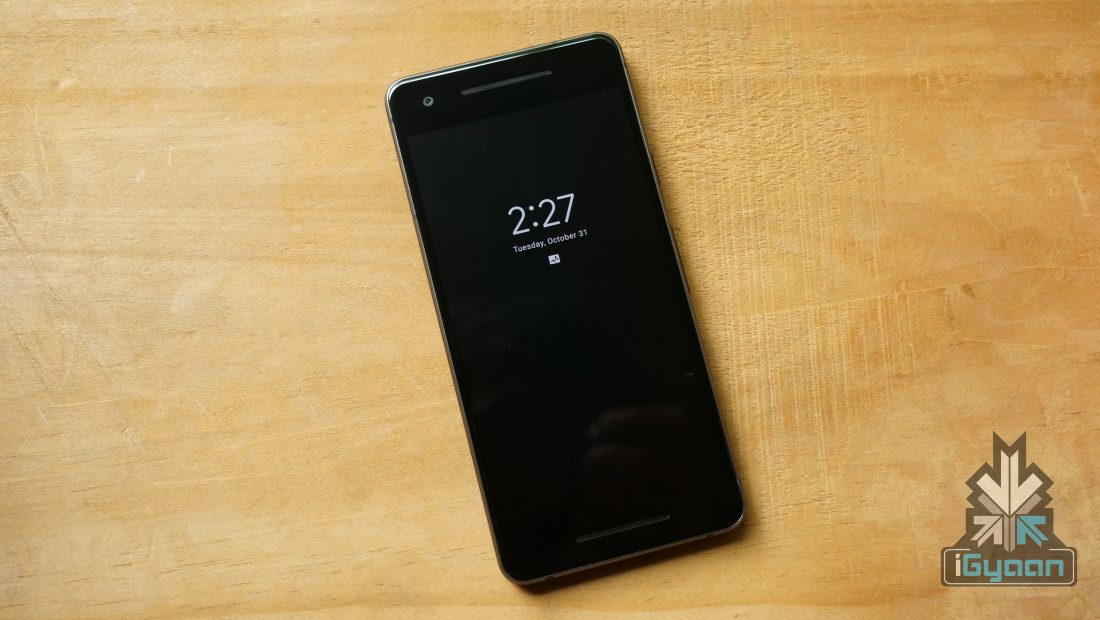
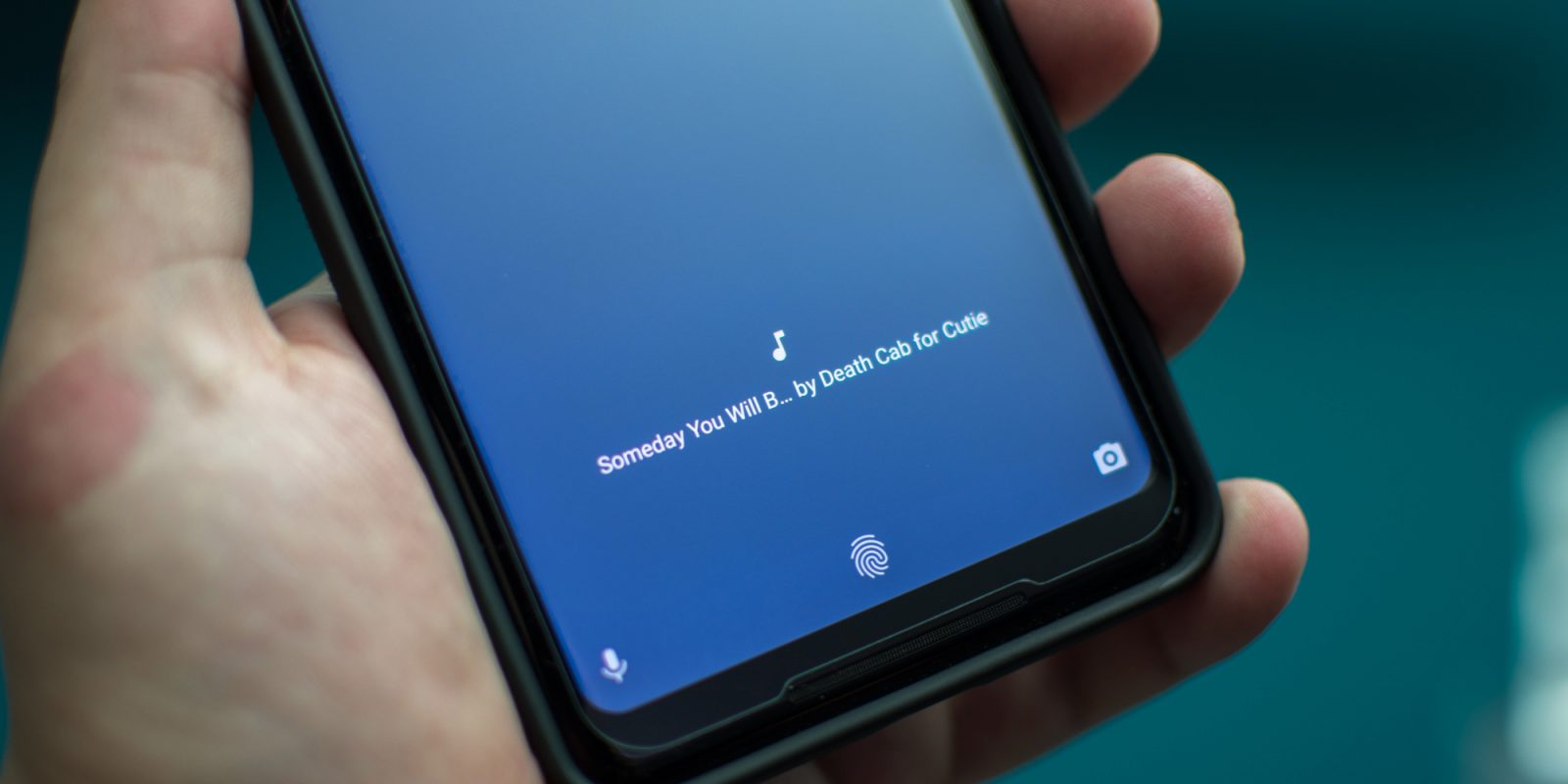
Google has rolled out an update to the Google Assistant which enables the AI assistant to recognise songs. One of the more popular features introduced in the Pixel 2 phones is ‘Now Playing‘, wherein the Pixel2 can recognise songs playing and pull up links to buy or stream them. The catch here is that while Pixel 2 doesn’t use the internet to search for songs, the Google Assistant needs the internet to recognise the song and pull up results.
This feature will come in handy more than you think. If you are always reaching into your pocket and struggling to open Shazam just in time for it to catch the song and show a result, this feature can be priceless.
If you enter a cafe and want to know what song is playing, simply open up Google Assistant and ask ‘what song is this’. Depending on how fast your internet connection is, Assistant will pull up a card for you with the name of the song, the artist, lyrics, and YouTube, Google Play Music, and Spotify (not available in India) streaming links. If Google Assistant has voice set as the preferred input method and you’re in a loud environment, you will see a new “What’s this song?” chip as the first suggestion in the carousel.
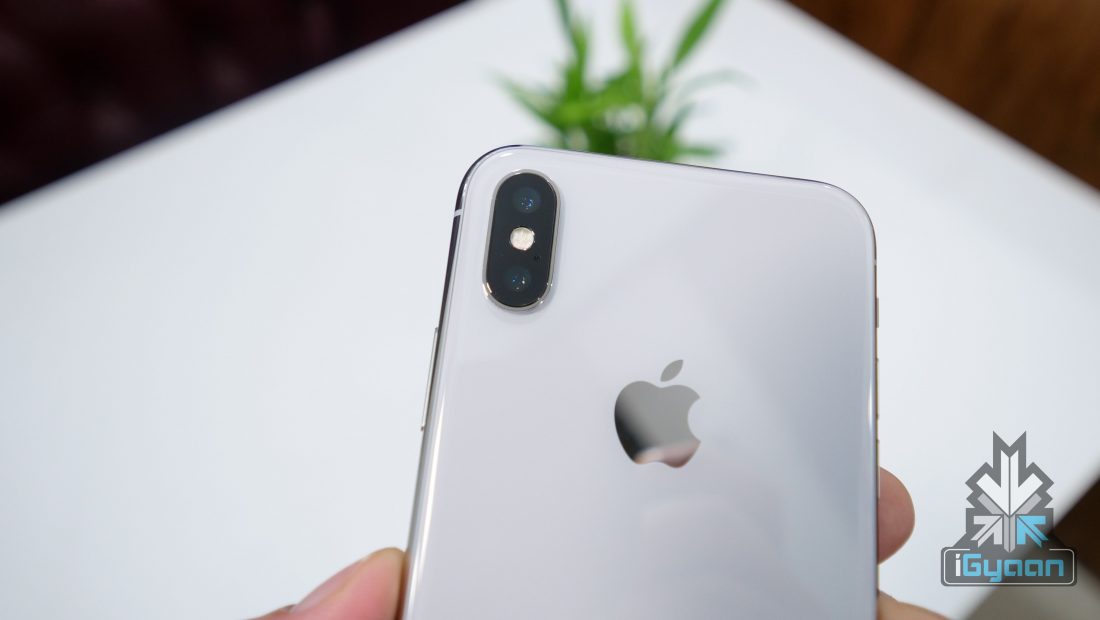
The Google Pixel 2 was launched after the iPhone X but, thanks to it being available before the iPhone X the phone was put through its paces all over the internet. DXOmark is a portal that rates the camera of a smartphone on different parameters and the Google Pixel 2 came out to be the highest rated smartphone ever. The recently launched iPhone X was tested by DXOmark and was given an overall rating of 97, which is onepoint less than the Pixel 2.
In its summary, DXOmark said:
With a Photo score of 101, the Apple iPhone X achieves the best results so far for still images, edging out the Huawei Mate 10 Pro and the Samsung Galaxy Note 8, the previous joint leaders in the Photo ranking, by one point.
Its overall score of 97 puts the iPhone X into joint second place with the Huawei Mate 10 in the current DxOMark Mobile overall rankings, just behind the Google Pixel 2 with 98 points.
It is interesting to note here that despite clicking the best still images, the iPhone X falls short of the overall score of the Pixel 2 because of its video recording capabilities. The iPhone X is the only smartphone that records 3840 x 2160 px videos at 60fps.
For video, the X doesn’t quite rise to the same high-water mark, achieving a video sub-score of 89 points.
Photos are an extremely subjective aspect of smartphones, just like sound hence, scores by DXOmark can mean everything or absolutely nothing to a consumer. Still, having the second best smartphone camera in the world is no mean feat.
The iPhone X has dual 12-megapixel rear cameras, and it’s equipped with dual optical image stabilisation. The sensors are both larger and faster, according to Apple, and the main camera is equipped with a wide angle lens and has an f/1.8 aperture while the secondary telephoto lens has an f/2.4 aperture. In between the two cameras is a quad-LED True Tone flash. Both the front and back cameras have the portrait mode. The rear cameras have the portrait lighting feature, just like the iPhone 8 and iPhone 8 Plus.
Would you prefer the Google Pixel 2 over the iPhoneX on the sole basis of their DXOmark scores? Let us know in the comments below.
Ever since its launch, the Google Pixel 2 XL has been in the news for all the wrong reasons. The integration of software, hardware and AI by Google in the Pixel 2 smartphones has been overshadowed by the growing complaints against the Pixel 2 XL’s OLED display. In a new software update, apart from the December security patch, Google has introduced new settings in the display menu, in a bid to improve the user experience.
The update also contains a fix for the faint clicking noise heard in some Pixel 2s as well as changes to the Pixel 2 XL’s display behaviour to mitigate against potential screen burn-in. About the new update, a Google community manager writes:
As we mentioned in our deeper dive, this update also brings planned UI changes which extend the life of the OLED display, including a fade out of the navigation buttons at the bottom of the screen and an update to maximum brightness. These features have been carefully designed so as not to detract from the user experience. Since all OLED displays experience some degree of decay over time, we’ll continue to make enhancements which maximise the life of your Pixel screen.
With the new update, there will be a new set of three different options on both models: boosted, natural, and saturated under the Display settings option. Here is how Google described how the “saturated” setting would look:
The saturated mode puts the display into an unmanaged configuration, similar to how the Pixel 1 operates. The colors will be more saturated and vibrant, but less accurate (similar to most other smartphones which display more vibrant colors): we give consumers the option to choose the colour saturation.
Google’s definition of the saturated setting proves that even though this update has rolled out, the company still doesn’t want its users to use this setting. Google’s intentions are to keep the Pixel 2 XL looking accurate rather than eye-pleasing and unnatural.
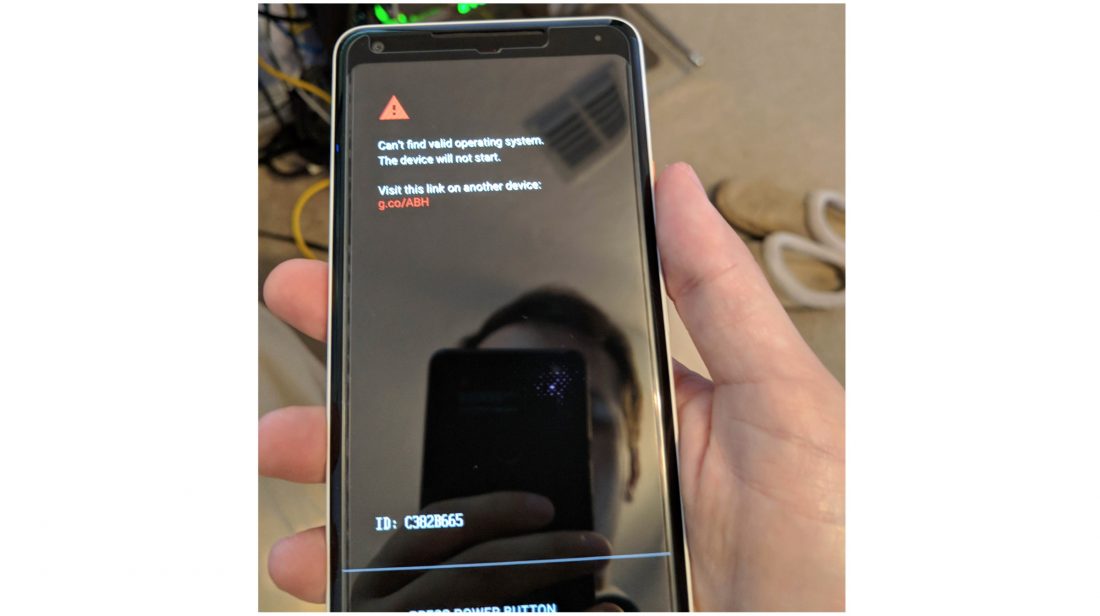
Google appears to have forgotten that an Android phone needs an Android OS to function. Reports from the US claim that a few Google Pixel 2 XL were shipped to customers without an operating system. There are multiple threads on Reddit on the issue, and almost all users complain about the same message welcoming them “Can’t find valid operating system. The device will not start.” After multiple issues were reported, Google responded that it will be replacing all the devices which were shipped with this issue.
One of the Reddit users wrote in a thread:
I came home excited to unbox my new Pixel 2 XL. Upon turning on the device I was greeted with a black screen stating, “Can’t find valid operating system. The device will not start.” Spent an hour on the chat with two different customer service reps and they are wanting to send me a replacement phone. Really frustrating.
There seems to be no end to the woes of Google’s new flagship phone, the Pixel 2 XL. Even though the phone’s software and camera has been appreciated, the dismal display has been panned by critics especially considering the fact that it costs close to Rs 80000 in India. Complaints of a blue tint and screen burnout have been reported and Google did come out and clarify its stand. Google has said that a future software patch will resolve the blue tint issue and the users will be able to tweak the display settings to show more vibrant colours.
Apart from the display, some customers complained that their Pixel 2 XL boxes had a cutout for Pixelbuds but, there were no Pixelbuds to be found inside the box.
Thanks to social media, little issues can be blown out of proportion but, shipping a smartphone without an operating system seems to be a first of its kind issue. To be successful in markets where Google has not even launched the device, it needs to negate these issues and start shipping the best version of the Google Pixel 2 and Pixel 2 XL.
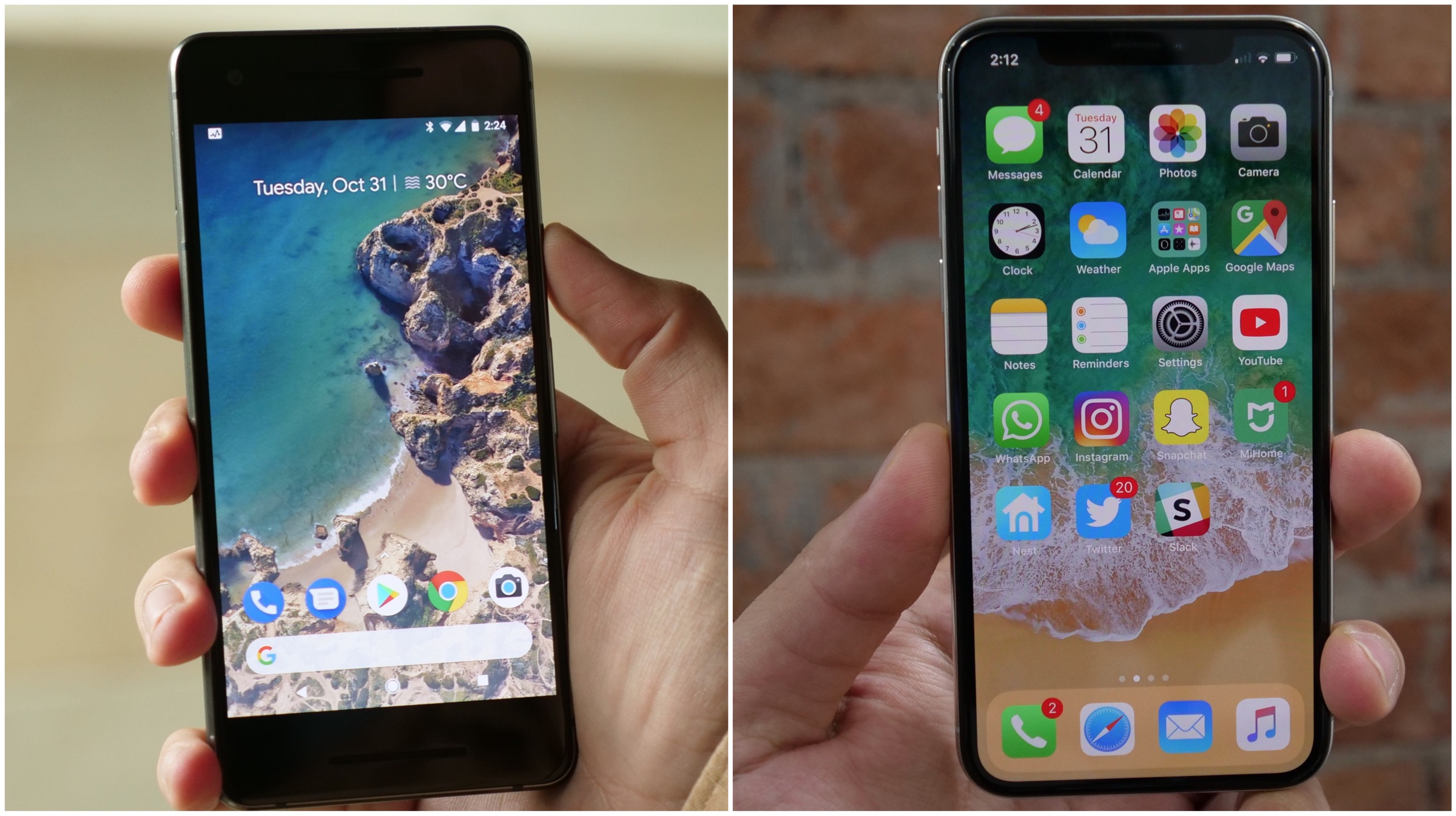
Apple and Google have been rivals in the world of tech for a long time now. For many years, Google was known for its software business but, it recently took control over its phones’ hardware as well with the rise of the Pixel lineup. In September, Apple launched the marquee iPhone X and Google launched the Pixel 2 and Pixel 2 XLa month later. While the iPhone X takes a huge detour in terms of design from its predecessor, you can still see shades of the original Pixel devices in the new Pixel 2 smartphones. Both, the iPhone X and Google Pixel 2 went up for pre-orders in India on the 27th of October. Let’s stack up the Google Pixel 2 against the iPhone X and see who comes out on top.
Price
If you care about your budget and are okay with either Android or iOS, then the Pixel 2 should be your choice. The Pixel 2 starts at a price of Rs 63000 for the 64GB variant while the iPhone X costs Rs 89000 for the 64GB variant. Even the Pixel 2 XL will be cheaper than the iPhone X and fit better in your budget.
Design
There isn’t a competition here in the design department. Even if it were the Pixel 2 XL against the iPhone X, the latter would win on any day under the Sun. The iPhone X has minimal bezels around a 5.8-inch OLED display while Pixel 2 , even though has the front-firing stereo speakers, still possesses those big 2015 bezels. The iPhone X has a glass back which enables the much-awaited wireless charging feature, while it eludes the Google Pixel 2 owing to an aluminium body. The “glass window” from the 2016 Pixel smartphone retains its place albeit a smaller size which, some people like and other people find hideous. The glass back on the iPhone X however means that it is a fingerprint magnet but, a skin or a cover can negate that. The design department goes hands down, to the Apple iPhone X.
Multimedia
With smartphones getting more expensive and people becoming more mobile, the media consumption has largely shifted from laptops and desktops to smartphones. When you buy thousand dollar, or a nearly thousand dollar smartphone, you better get excellent media consumption experience. Here’s where, again, the iPhone X trumps the Google Pixel 2. Despite the front-firing speakers on the Pixel 2, the speaker on the iPhone X is much louder and has a better sound stage than the Pixel 2. Pixel 2 is loud, no doubt, but when stacked up against the iPhone X, it falls short in quality and volume as well. The display on the iPhone X is an OLED panel with a 2436 x 1125 resolution in comparison to the 5 inch AMOLED 1920 x 1080 px on the Pixel 2. While watching videos, the notch on the iPhone X can be negated by pinching out of the video or, you can choose to embrace the notch. The viewing angles are much better on the iPhone X which translates to amazing video watching experience. Both the phones are missing the headphone jack so, if you are not willing to live the dongle-life, bluetooth headphones are the way to go. With a better display and speakers, the iPhone X beats the Google Pixel 2 in the multimedia department.
Software
Comparing iOS and Android is like comparing apples to oranges, you can do it, but, it doesn’t solve any purpose. The Google Pixel 2 runs pure Android 8.0 Oreo with some nifty features like ‘Now Playing’ and squeeze to launch the Google Assistant. On the iPhone X, you still have to long press the lock/unlock button to launch Siri. The iPhone X runs iOS 11 out of the box, and even though the latest version of iOS has run into some issues, it is a smooth experience over-all on the iPhone. With the riddance of the home button on the iPhone X, the navigation within the phone is replaced by gestures. Both the Google Pixel 2 and iPhone X will receive software updates for years to come, and in the end it is up to you to choose between Android and iOS.
Gaming Performance
If you are that person who swears by the benchmark scores, then the iPhone X scores a whopping 229507 on Antutu while the Pixel 2 scores 150957. Gaming on both the phones was a breeze and the Snapdragon 835 on the Pixel 2 and A11 Bionic chip on the iPhone X does not disappoint. Once you get used to the gestures on the iPhone X, you realise that multi-tasking and general usage is extremely smooth and same is the case with the Pixel 2. Android phones have been criticised for slowing down with time and it will be interesting to see how the two phones will perform in the coming months after extensive usage.
Camera
Both the iPhone X and Pixel 2 have great cameras. The 12.2MP camera on the Pixel 2 and the 12MP dual camera setup on the iPhone X perform great in low-light conditions and in brightly lit environments, there is barely anything to guess them apart. The difference comes in the video department, the iPhone X takes video recording a notch higher (no pun intended) with 4K videos at 60fps while the Pixel 2 still records 4K videos at 30fps.
Google is trying hard to reduce the time it takes to pair bluetooth devices with Android phones. A new update is going to make pairing some Bluetooth devices much easier. Starting with Google Play Services 11.7 on Android 6.0 Marshmallow and higher, users will be able to take advantage of the new Fast Pair feature. Fast Pair will make the process of pairing Bluetooth devices easier by scanning for nearby Bluetooth Low Energy (BLE) broadcasts and prompting you to pair with them.
Once Fast Pair is enabled, Android will scan for BLE broadcasts close to the user’s device and discovers a Fast Pair packet. That packet is then in turn sent to Google’s servers to retrieve the device’s product name, image, and companion app. After that information is returned, a high-priority notification shows up on the user’s device and asks them to “tap to pair” to the device. That notification will display the product name and image that Google’s server returned.
Once the user taps on the notification, standard Bluetooth connection is established and the device is connected to the phone. After a successful connection, a second notification will appear with a link to download a companion app if the Bluetooth device has one.
It is worth noting that barely any pair of bluetooth headphones support Fast Pair now. As of now, only Google Pixelbuds and Libratone Q Adapt headphones support this upcoming feature. The soon to be launched Plantronics Voyager 8200 series wireless headphones will also support the feature too. Google is open to supporting more devices in the future and if you are a Bluetooth device manufacturer, you can contact Google here.
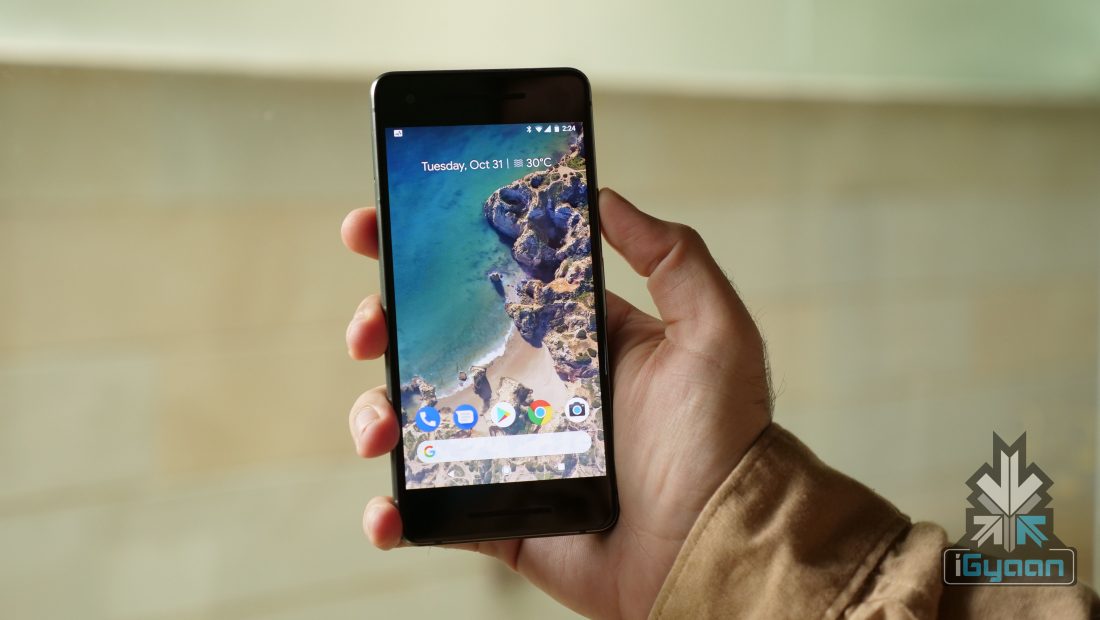
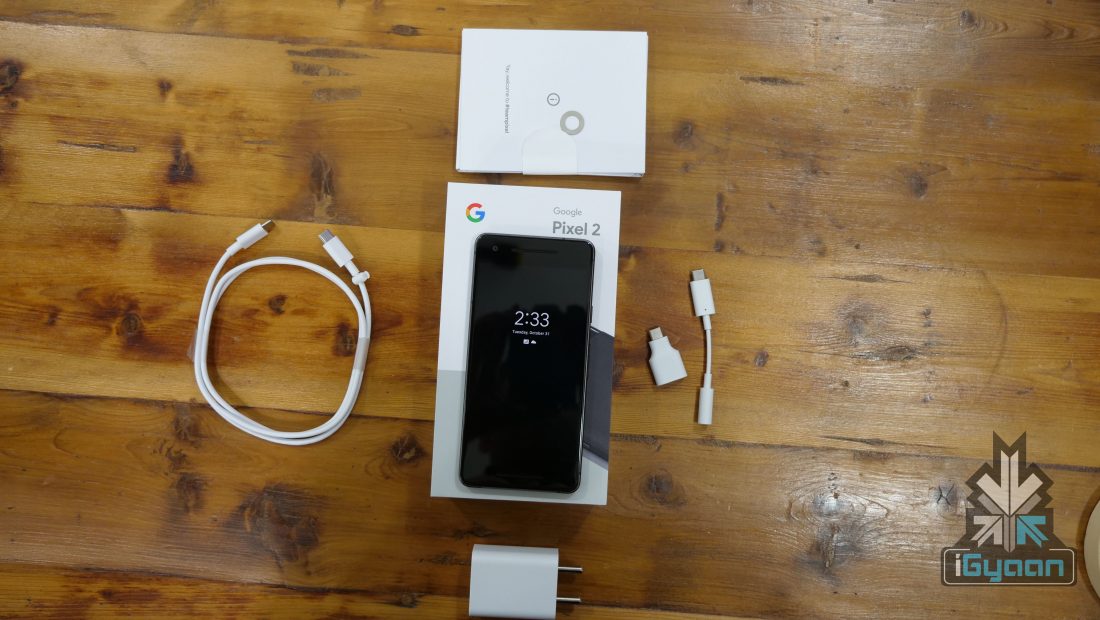
Google launched the next iteration of its flagship Pixel smartphone lineup, the Pixel 2 and Pixel 2 XLon the 4th of October during a launch event at the Google HQ. The most interesting aspect of the Google Pixel 2 and Pixel 2XL is the tight integration of its software, hardware and AI. Google talked a lot about the importance of AI in the future and how the new devices take advantage of the Google Assistant. We have the smaller sibling of the two, the Google Pixel 2 with us which starts at a price of Rs 61000 in India for the 64GB storage variant. Let’s unbox it and see what we get inside:
Google Pixel 2
Sim ejector tool
Documentation
USB C to 3.5mm jack converter
USB C cable
Wall charger
The launch of the Google Pixel 2 and Pixel 2 XL has been marred by the glaring issues with the smartphone’s display. However, most of the complaints have been directed towards the Pixel 2 XL for its pOLED panel.
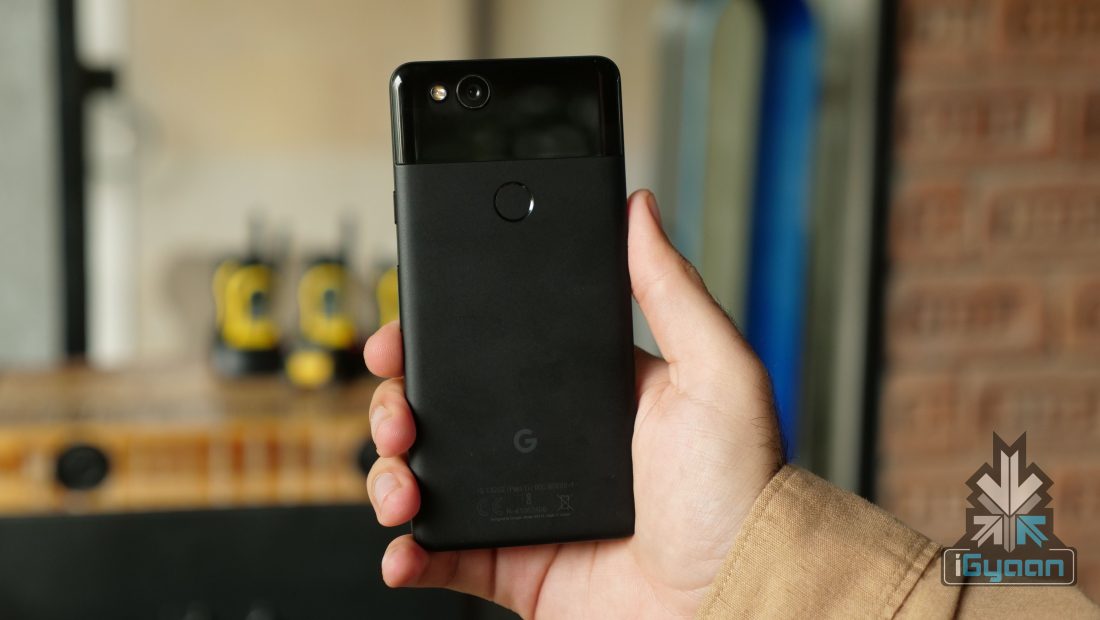
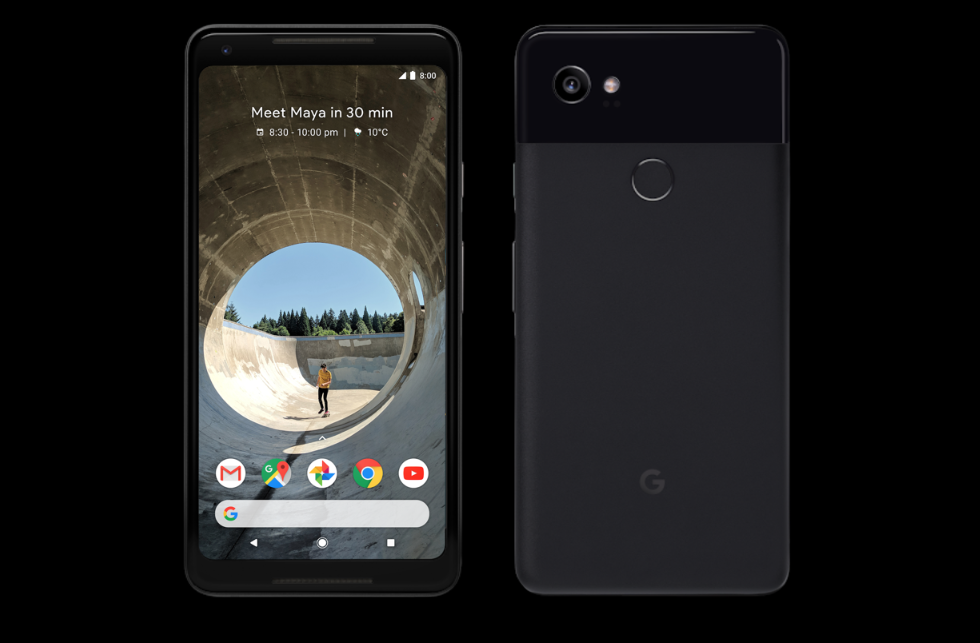
The Google Pixel 2 has a 5 inch 1920 x 1080 px AMOLED display with Corning Gorilla Glass 5 on top for protection. Powering the device is a 2700 mAh battery and it runs Android 8.0 Oreo out of the box. As is with with every Google phone, the new Pixel 2 will be first in line to receive Android P update in 2018. Under the hood, the device has typical 2017 flagship specifications. It has the Qualcomm Snapdragon 835 chipset, 2.4GHz octa-core processor, Adreno 540, 4GB RAM and 64GB/128GB onboard storage. The fingerprint sensor sits at the back of the device but, this time around the “glass window” is smaller. The two-tone colour of the phone is also reminiscent of the original Pixel from 2016. Google claims that the fingerprint sensor is the fastest on a smartphone. The Pixel 2 is water resistant as well.
Google has decided to go for a single camera setup similar to last year’s Pixel phones. The rear-facing camera is a 12.2 MP sensor with an f/1.8 aperture and 1.4 micron pixel size. On the front is an 8MP camera with an f/2.4 aperture. Google has introduced new features in the camera department like the addition of AR. You’ll be able to add 3D characters and emoji into photos and videos and see them move around as you’re capturing the scene. That includes things like a sleepy coffee cup, but also some recognisable characters. Google is going to be partnering with third parties to add in some famous faces. This year, the Pixel 2 and Pixel 2 XL use a technology called “dual-pixel” which divides every pixel into two.
Google launched the Pixel 2 and Pixel 2 XL globally on the 4th of October and showed signs of getting serious about its hardware. Google talked highly about its new phones’ integration of software, hardware and AI. The bigger sibling, the Pixel 2 XL has a pOLED display and over the course of past few weeks, several issues pertaining to its display have surfaced online. Issues like black smearing and screen burn in were heavily reported and Google responded with a simple, “We are actively investigating” the issues. Now, Google has released a blog post in which the company has said that the display issues will be resolved via a software update and the warranty period for all Pixel 2 owners has been extended to two years.
Our current investigation of burn-in, which started as soon as we received the first user report on October 22, confirms that the differential ageing is in line with that of other premium smartphones and should not affect the normal, day-to-day user experience of the Pixel 2 XL.
Regardless, we use software to safeguard the user experience and maximise the life of the OLED display, and we’ll make ongoing software updates to optimise further. We’re very confident that the Pixel 2 delivers an exceptional smartphone experience, and to give users peace of mind, every Pixel 2 and Pixel 2 XL will now come with a 2-year warranty worldwide.
This should come as a relieve to people who have bought the Pixel 2 XL or had plans to buy one. The Pixel 2 and Pixel 2 XL pre-orders have begun in India and will be sold online via Flipkart.
Google launched the Google Pixel 2 and Pixel 2 XL on the 4th of October at a launch event at the Google HQ. Google talked about the integration of software, hardware and AI in their new range of products. One nifty feature that combines the three is the ‘Now Playing’ feature. When activated, it uses the always listening microphones of the Pixel 2 smartphones to detect a song in the background and display the name and artist of the song on the lock screen. In the notification window, it then displays links to buy or stream the song. The differentiating factor from Shazam here is that the phone doesn’t need to be connected to the internet for this feature to work. The music-identification feature uses an offline library of “tens of thousands” of songs to identify tracks.
This feature will come in handy more than you think. If you are always reaching into your pocket and struggling to open Shazam just in time for it to catch the song and show a result, this feature can be priceless. One catch though, is that what if you want to listen to a song that was played a while ago at the restaurant and now you’re in the car and you can’t recall the name of that particular song?
That’s where Now Playing History comes in, and if you are planning to buy a Pixel 2 device and music-identification is something you frequently do or need, this could be a must-have app for you. As the name suggests, Now Playing History essentially lets you view a list of songs that your Pixel 2 has been listening to. Not only does it display the exact time at which the song was recognised but it also lets you play the song via Google Play Music, YouTube, or Spotify (not yet available in India) once you click on each song. As handy as it is, the app however, is not free.
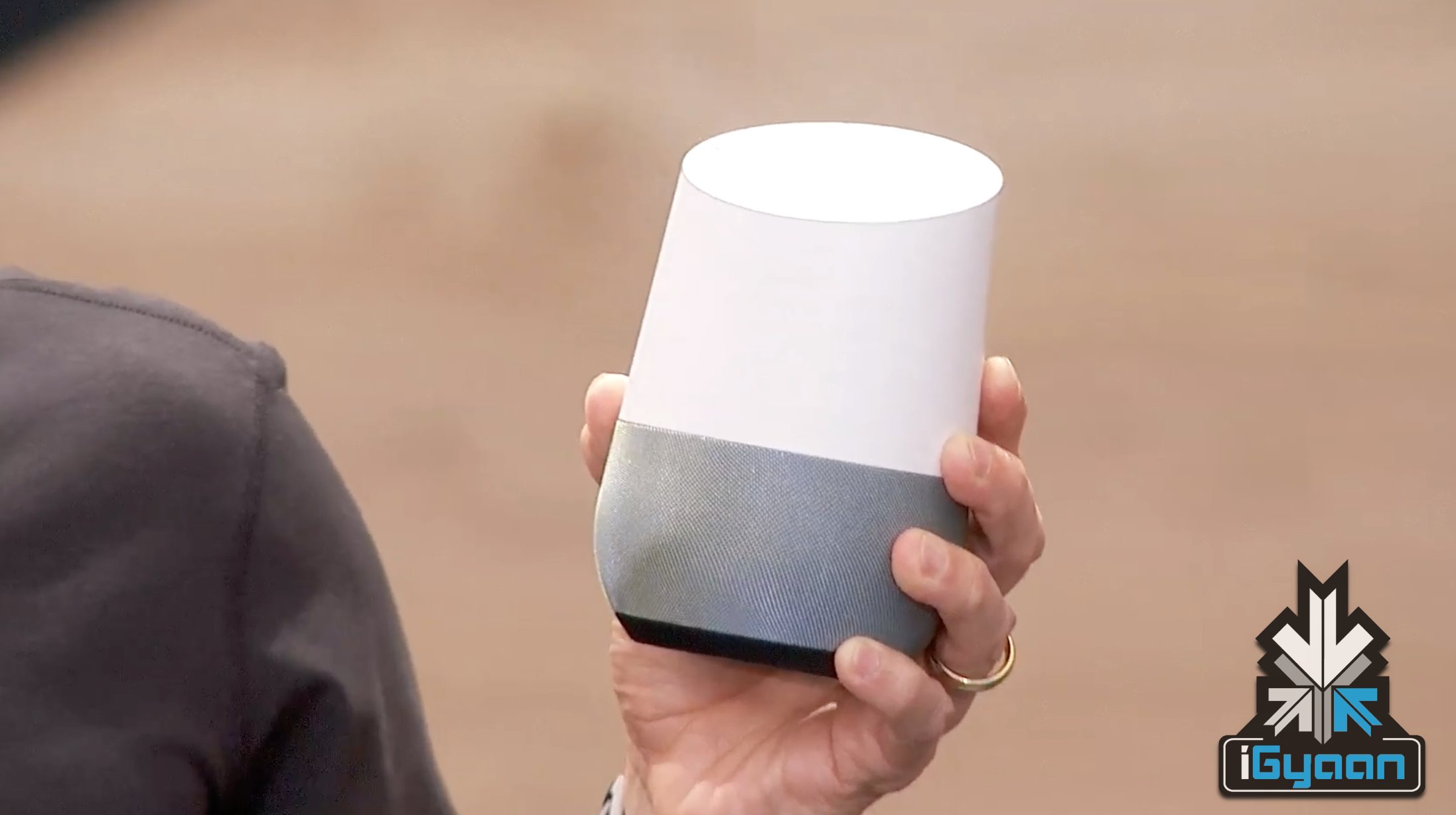
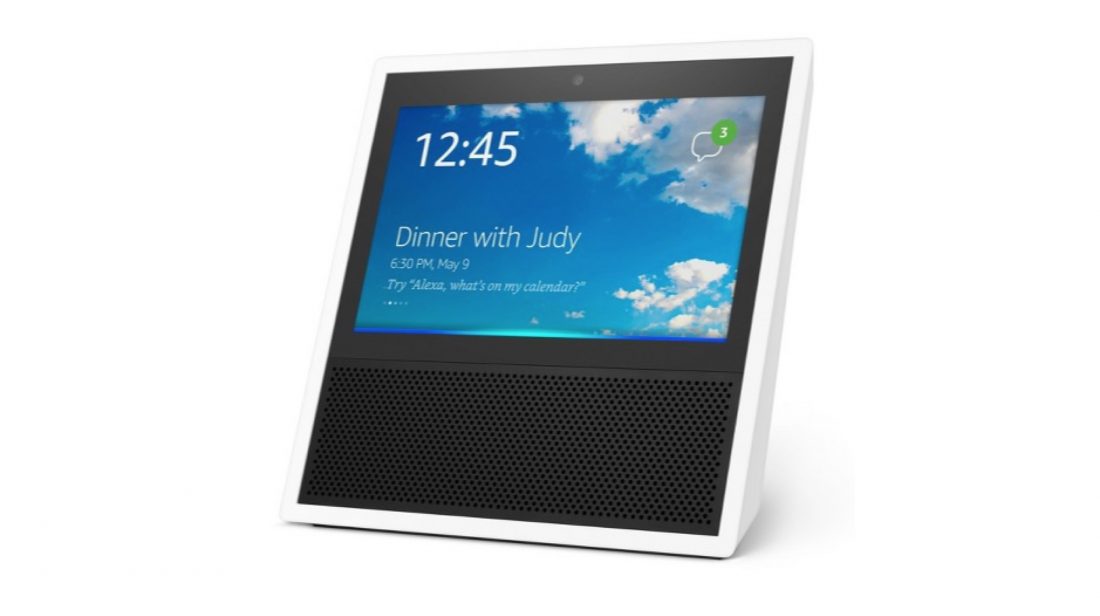
Google has been battling with Amazon in the smart speaker space since launching the Google Home. Google Home was the only smart speaker made by Google until 4th of October when it launched a new variant of the smart speaker, the Google Home Mini. It is speculated that the Google Home Mini was launched to compete with the inexpensive Amazon Echo Dot and had the same price as well (US $49). Amazon recently launched the Echo Show, which is a smart speaker with a touchscreen display and it appears that Google is working on a touchscreen smart speaker as well, as found by Android Police.
Amazon Echo Show
This seems to corroborate with a report from TechCrunch in September which suggested that Google was working on a table top smart screen device codenamed ‘Manhattan’ which would compete with the Amazon Echo Show. A deep study into the the APK of 7.14.15 beta version of the Google app found references to multiple on-display features such as notifications, YouTube video playback, photo galleries, Google Maps with business listings and more. The code throughout the app references “Quartz” that operates using voice commands.
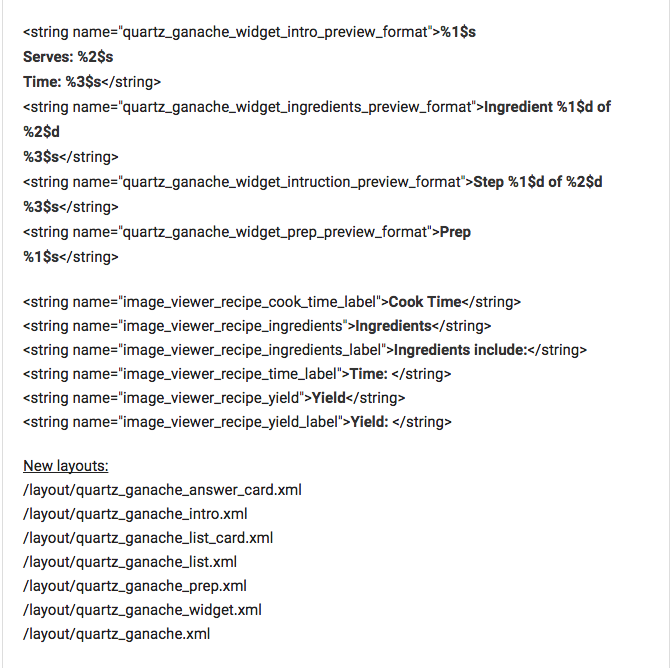
The reference to Quartz can be found in many strings
The reference of Quartz suggests that Google intends it for kitchen use as the study of the app points to a screen that can be used to display recipes and timers. The weather function referenced in Quartz offers 32 different dedicated icons showing everything from a sunny day to blizzards and hurricanes.
The new smart speaker will display cooking recipes
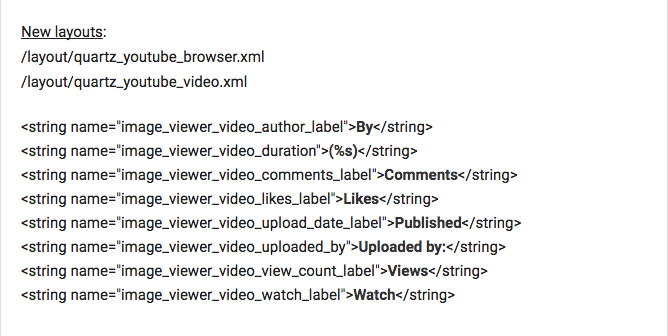
Google has an array of smart home devices ranging from smart speakers to wireless streaming devices like the ChromeCast. Coming up with a touchscreen smart speaker to compete with the Echo Show makes sense for Google and make full use of its AI and software integration. Also, the “Quartz” will play YouTube videos, unlike the Echo Show.
The Google smart speaker will play YouTube videos unlike the Echo Show