Delhi’s audacious project of bringing Wi-Fi connectivity to the markets of Delhi has begun at Khan Market. The shopping area now has limited time, free usage internet. After the free usage has expired, the shoppers can just use scratch cards to get access to the network.
To connect to the network, you just have to punch in some basic information such as email ID and phone number. Next you get a one-time password (OTP) on your phone using which you can register into the Wi-Fi network.
The facility was to be extended to Connaught Place (CP) but it is facing some technical delays. The major issue in bringing WiFi access to CP has been the size of the area. To avoid the place from looking cluttered, the cables for the services are being laid underground.
Tata Docomo and Vodafone who have partnered together with NDMC for the service say that CP will be Wi-Fi activated by the end of the month. As of now a beta service is being run in the N-block of CP.
The security agencies based in CP have also raised some issues with the service. According to them the WiFi service may be used to interfere with their network. But the folks at NDMC state that the networks used are extremely secure.
The service providers have got their security clearance after clearing five levels of certification testing. The project can also be monitored by the Department of Telecom, thereby being in safe hands.
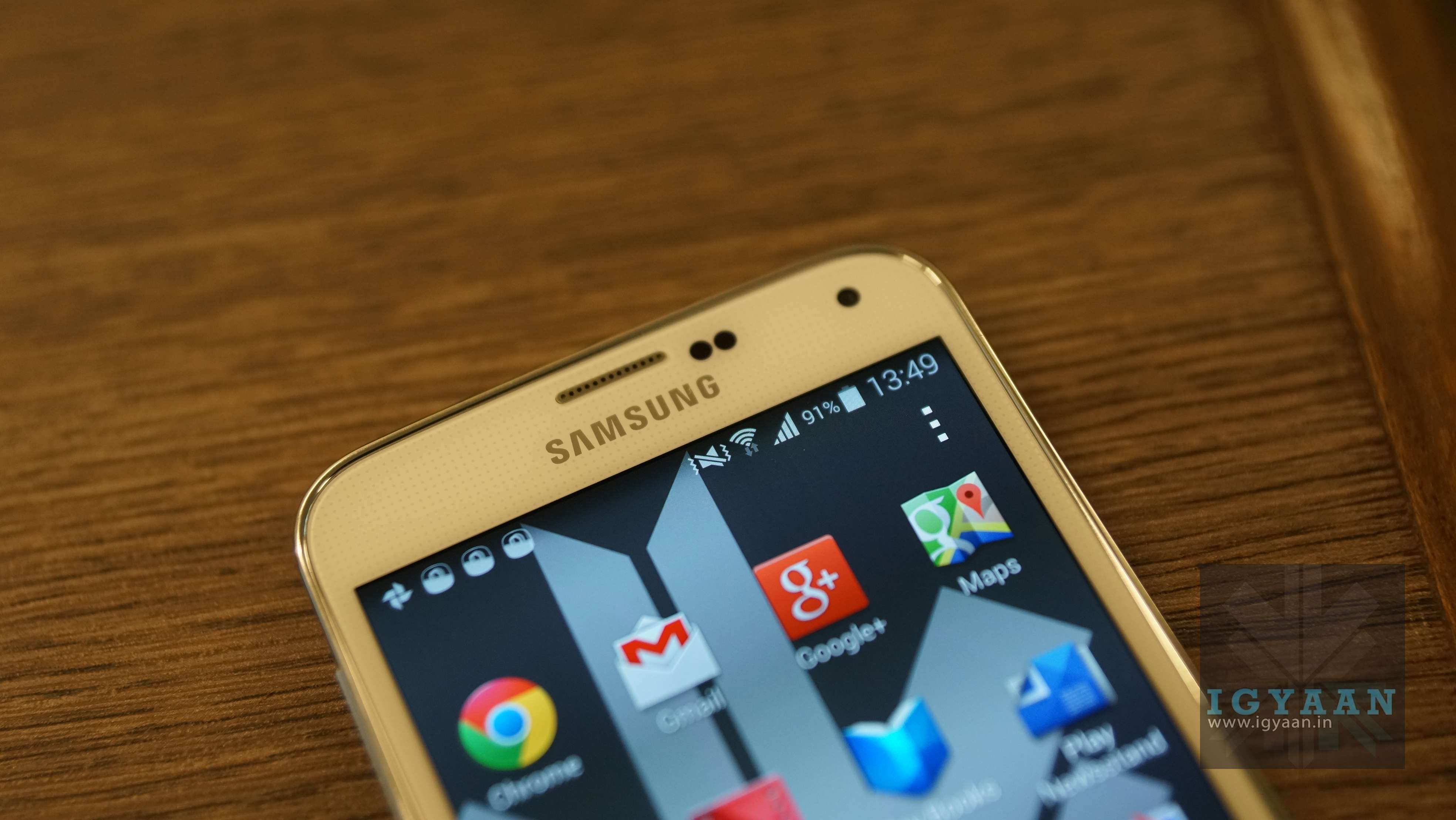
Samsung has more or less dominated the smartphone market in the past couple of years. After a short, yet fruitful reign of the Cupertino based Apple Inc. and their iPhone, Samsung took the pole position and has not wanted to let go ever since then.
With the power of 100% component control, in-house manufacturing and software R&D, Samsung led the rat race thanks to all its strengths. But, just like every other leader in the past, Samsung took the threat of competition lightly. So sure of their position and their loyalties, the Korean manufacturer failed to realise the need of the modern day man.
2014 may have seen less of it, but up until last year it was impossible to go ten days without an announcement from Samsung and that too just the mobile division. With their consumer electronics and home appliances doing their bit separately. Samsung wanted to be present, and today it is present in each and every price segment.
So here is a big question; why has Samsung started to dwindle, why are the consumers against the company they loved so much and what has really happened?
The answer lies in Samsung’s own flawed approach. Even though the company made sure it could tighten its ends and function like a well-oiled single operational unit, too much goodwill from within the organization led to almost zero critical feedback. Everyone in-house was busy appreciating how wonderful they are, no one telling them where they are wrong.
The Korean giant also failed to answer people’s unanimous need of better-built phones that not only performed well but were also made with the use of premium materials. Samsung failed the consumer’s demand and hope within a brand that people had only just begun to trust. Samsung never changed their design philosophy, making handset after handset to feed the familiarity of the brand.
A premium phone to create excitement in the flagship market; and then a mid-segment with similar looks and software capabilities to excite and create aspiration for those who could not afford the premium segment. Then there was the down segment shift of the same design to the lowest price point.
Not to say that this strategy didn’t work for Samsung, 2012 and 2013 alone saw an estimated 150+ launches for Samsung Mobile division, that is four times their next closest competitor and 75 times that of Apple Smartphone announcements, being the iPhone 5s and 5c.
2014 was also supposed to be a year of Samsung; many launches and many price segments and many new-magical innovations. But, things like multi-window and air gesture were not going to get attention. Hopes were pegged on a metal built handset with a 2k display, which was supposed to woo the crowd and earn the Korean company millions and millions of dollars with the Samsung Galaxy S5. But, ironically the complete opposite started to happen, the Korean giant started to lose market share and how. The company is worried, to the extent that they have reshuffled policies and opened up board rooms for strategy building. Resources are being spent, and ideas are being made within the company to rebuild the position that Samsung seems to be losing fast.
Samsung knows very well that they failed with the Samsung Galaxy S5, especially in markets like India, where they offered a sub standard and sub performance flagship, which not only quickly dropped in price but also in fan fare.
Samsung has never been a humble company; employees seem to be trained always to be arrogant and adamant about their policies, and about the position of the company. The beginning of the company itself is said to be tainted by a tale of controversy. Originally started as a trucking business in 1938, by the name of Samsung Trading Co, the company had corrupt ties with war governments trying to give an industrial strength to the country and survived through the war to become what is now a mega company.
The company’s chairman of 25 years, Lee Kun-hee resigned from Samsung in 2008 after being indicted and found guilty of embezzlement and tax evasion in Samsung’s infamous slush funds scandal. It is estimated that the company had over US $200 million in budgets for bribing prosecutors and politicians in favour of Samsung policies and making them blind towards the company’s misconduct.
But how does that play in today’s scenario? and how does that affect us in any manner?
It is speculated that Samsung has kept a stiff upper lip in India since its inception in the early days. The company is said to have deep ties with the Indian government and deeper pockets for the not so honest few in control. Samsung has often managed to bend rules in favour of their products and managing to change laws to better help the company’s growth.
However, while the Korean company was busy playing its deep rooted tactics, a new enemy was lurking in the shadows. Samsung essentially dethroned by local competition in markets they wouldn’t have imagined possible.
Micromax has always been playing catch up with Samsung, playing on the weaknesses of the company and essentially delivering a value for money prospect for the consumer who was sick of the boring design and hardware mix of Samsung. Micromax even brought unibody aluminium phones to mid and low segment markets while Samsung’s flagships continued to be made out of plastic. (we meant “Polycarbonate painted – er – plastic”)
In China on the other hand, Samsung never considered Xiaomi a threat, assuming that the company would never reach production requirements of the market. Most investment specialists and market reach firms estimated that Xiaomi would fizzle out in less than a year from inception. But just like Nokia back in the day, these people were wrong, very wrong; Xiaomi dethroned Samsung to gain not only the current position but as the leader in the Chinese market. The company has secured millions of pre-orders of their upcoming phones, the Redmi and the Mi4, ensuring them success and a tight position on the top of the chain for a few months if not years.
Xiaomi has also seen success in markets like India where they have managed to gather interest of the consumer, although largely lacking supply. The Indian market may not be that forgiving to the company if their current policy of sale of phones continues. However, this has set rolling the notion for a perfect budget phone, making companies like Samsung with red-rock strategies of selling dated products for newer markets obsolete.
The reign of Samsung is far from over, in-fact the company may as well be in a great place to play its strengths and recover market share with ease. The lack of great phones hasn’t helped the Korean manufacturer, and with their flagship of 2014 fizzling out in the market, Samsung will need new products and cut throat pricing strategy to regain their stronghold in markets like India. With players like Motorola, Xiaomi and Gionee playing catch-up in India, Samsung may have their work cut out for them.
Their previous relationships with their distribution and end retail chain are also in the swamp, and the company is having a real hard time coping with the situation. With all eyes perched on the new Note 4, Samsung may have more on the line than ever before. If the Korean smartphone maker fails to deliver in their monopolised category, they might have a tough time recovering. Samsung India plans to play a lot more in the online space, which initially was being ignored by the Korean company, and if previous examples have taught us anything, we know India is more than ready for e-commerce.
Looks like everything we own and use is on its way to becoming ‘smart’. From smartphones to smartTVs, need of technological advancement has become a major part of tech business these day; smart tech ecosystem are slowly and steadily approaching our homes now.
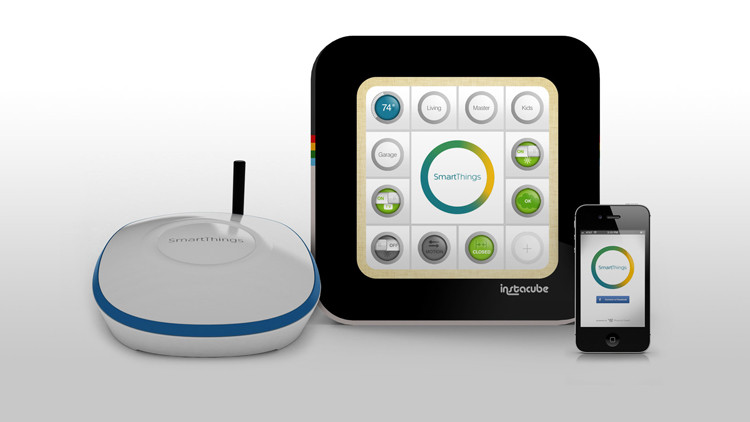
Seems like Samsung is playing it big to become the center of smart home with its acquisition of SmartThings. While the companies did not disclose the price, reports are the South Korean consumer electronics giant paid about $200 million.
The deal is the latest sign that big companies are staking out positions in what industry executives call the Internet of Things. That broad term encompasses just about any product that can be augmented with computing and communications capability, including doorlocks, smoke alarms, wearable devices and new-wave security cameras.
SmartThings will operate as an independent company under CEO Alex Hawkinson, within Samsung’s Open Innovation Center group, says Samsung. The firm will move from Washington DC to OIC’s headquarters in Palo Alto, California.
Joining forces with Samsung will enable us to support all of the leading smartphone vendors, devices, and applications; expand our base of developers and enhance the tools and programs that they rely on
Founded in 2012, SmartThings has created an unusually influential position. It sells a $99 home controller device, but its broader functions include operating an online service and setting specifications to help developers create designs for gadgets that work together and are controlled using smartphone apps.
While the company has been acquired by Samsung, being in the Open Innovation Center, the company will be kept at arms length away from Samsung, We want to people to understand how important it is that they will stay independent. SmartThings will continue to work with its developer community and business partners. In the meantime, we’ll be exploring ways to partner with them.
[/quote]
Like Oculus VR, which recently sold to Facebook for $2 billion, SmartThings started as a Kickstarter project in 2012. It has since raised just over $15 million in funding, with investors being Greylock Partners, Highland Capital and First Round Capital, among others.
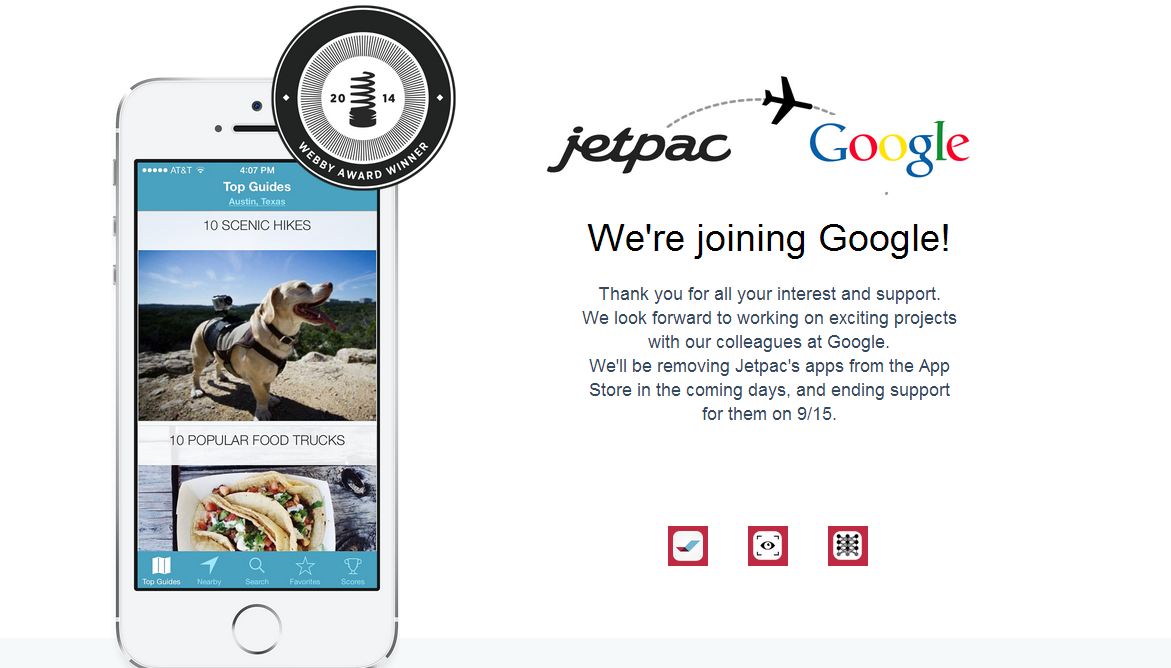
Adding to the long list of artificial-intelligence hiring, Google Inc is buying Jetpac Inc, the startup that designs social travel applications.
In an official tweet, Jetpac Co-Founder and Chief Technology Officer Pete Warden directed people to a new company homepage that announced the news:
We look forward to working on exciting projects with our colleagues at Google. We’ll be removing Jetpac’s apps from the App Store in the coming days, and ending support for them on 9/15.
That may have been a disappointment for the existing users, but for people who use Google services there is some good news. As company managed to simplify a complex branch of artificial intelligence known as computer vision and make it easy for lots of people to use.
More recently, Jetpac developed a mechanism for spotting smiles in pictures to discern how happy people are in a city.
The Jetpac team is highly skilled in this particular field which is an area Google has done plenty of work on, but it certainly could use more talent and ideas for ways to implement image-recognition technologies as plenty other companies, including Microsoft and Baidu, beef up their own deep-learning operations.
Jetpac announced a $2.4 million funding round in 2012. The startup’s investors include Khosla Ventures, Morado Venture Partners, and Jerry Yang. Earlier in its life, the Jetpac app let people explore travel pictures from their Facebook friends and decide where they wanted to visit.
Last January, Google also bought DEEPMIND, an artificial intelligence startup, which was founded in 2011 by Demis Hassabis, Shane Legg and Mustafa Suleyman. The team is based in London and combine the techniques from machine learning and systems neuroscience to build powerful general-purpose learning algorithms. Also, earlier this year, Google bought Nest Labs Inc, which makes smart thermostat and smoke alarms, for $3.2 billion, making the deal one of the largest in Google’s history.
Check this amazing video where the company explains how their app works.
Universal Serial Buses (USB’s) have changed the way we interact with our computing devices. Before their massive use, computer peripherals had different sockets for each kind. With the advent of the USB, it all changed, and we had the luxury of multiple devices following similar connection protocols. The USB was capable of taking care of almost all the gizmos we wanted to connect to our computers and gave birth to a whole new market of USB devices.
Fast forward to the mobile revolution. The mobile ecosystem got a major boost, first from the mini USB and then from micro USB, which virtually replaced all other propriety connectors. The standard micro USB gave immense convenience to folks who could just juice up their devices using their friends chargers instead of finding the adapter made for their phone.
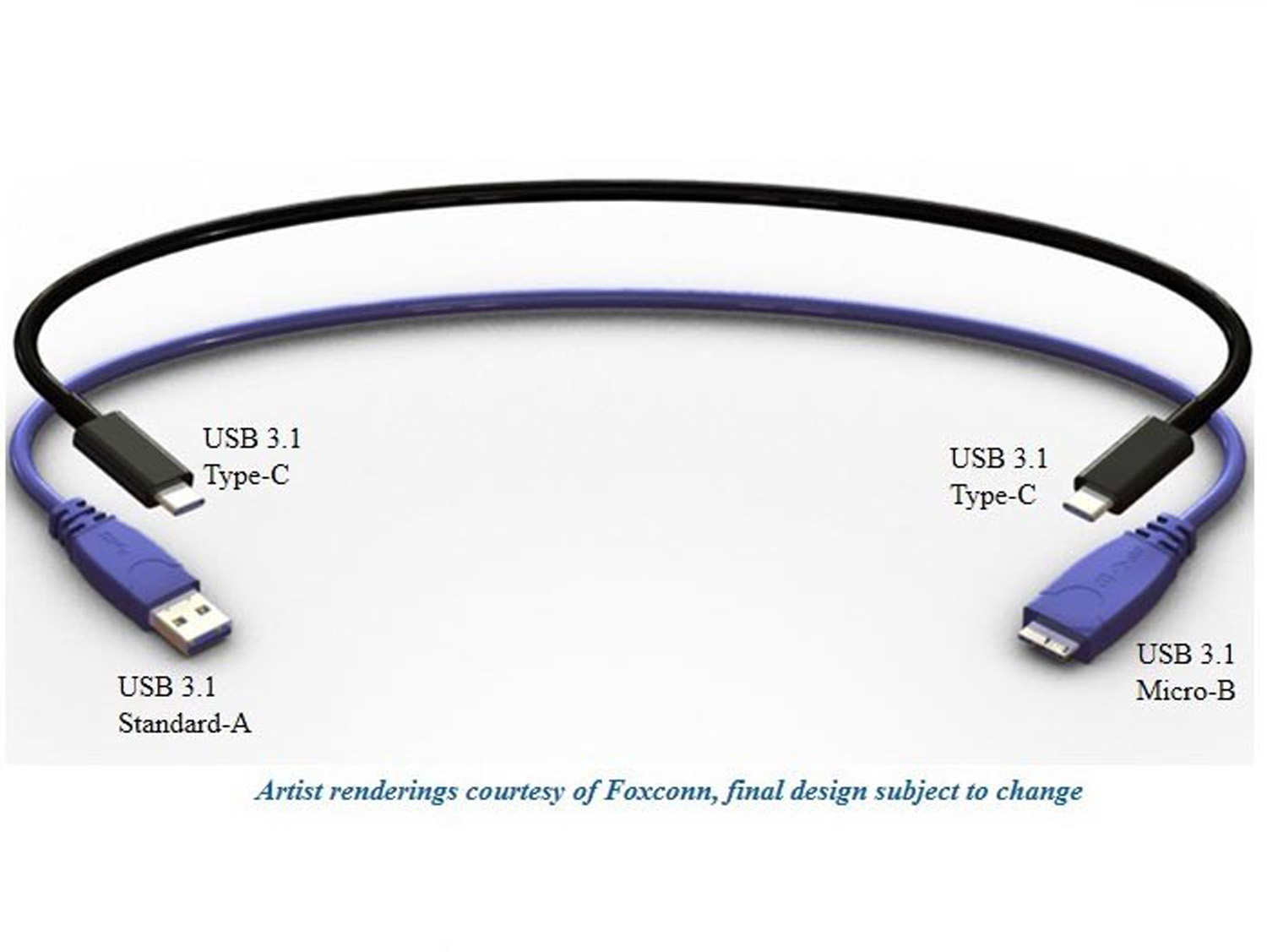
The reversible Type-C will be a lot more convenient than the present USB
The new Type-C USB intends to take convenience to the next level. Its makers say that they’ve completed work on this innovation and this USB can be incorporated in mobiles as well as bigger devices. The shining glory of Type-C is its reversibility. Which means that you don’t have to keep turning the USB around till the planets align in the exact positions for it to go into the slot.
The only issue with this next generation USB is that it can’t directly function with the older design. But the problem can be easily fixed using adapters. And the folks who now grumble that it’ll take long to integrate this new USB into devices, just remember the times when every company had their own propriety connector. When the market demanded a standard cable, all these companies had to oblige and then the micro USB became a standard across almost all devices. The connectors are also capable of 10 Gbps of bandwidth so they’ll definitely be welcomed by the users. The technical details of the Type-C USB will be unveiled soon.
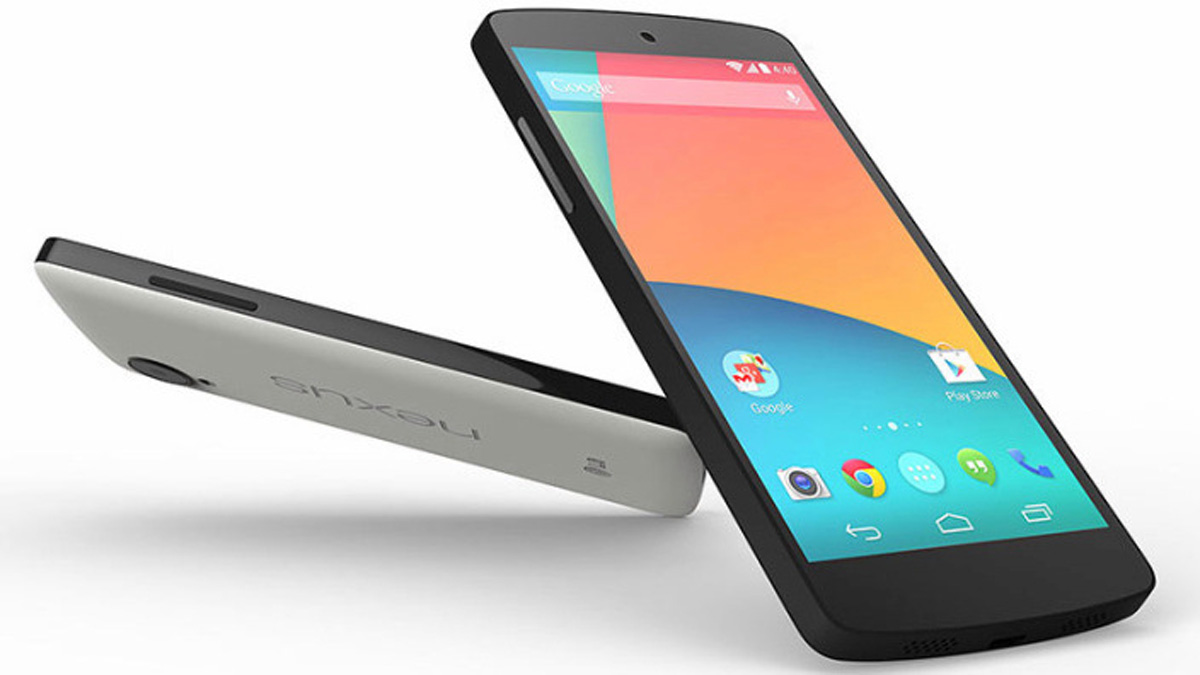
Just when we got to know that Motorola might bring out the next Nexus smartphone, it is now being reported that HP and Google were to partner together for an enterprise Nexus device.
The Information reports that the two tech giants have been having talks to bring enterprise specific devices and were planning to expand Google Now for enterprise needs.
Google and Apple had previously made the decision to quell all the lawsuits they had been hurling at each other in the past. The companies had decided to compete in the market instead of the courthouse, and this seems to be the beginning of the market wars. Just a few weeks back Apple had partnered with IBM to bring enterprise solutions through its iOS ecosystem.
The proposition that was being examined between the two companies was the prospect of bringing Google Now to the corporate environment. Google would try to simplify data gathering and access through Google’s personal assistant.
Being an enterprise device, the hardware had high-end encryption. It is said that Google wasn’t appreciative of the hardware that HP brought into the deal, and hence, the talks have apparently failed.
This surely doesn’t seem like the end of Google’s pursuit to bring convenience in enterprise mobility. The mobile environment in the corporate arena is up for grabs, and the monetary rewards will be massive. There is a massive opportunity here, and the company that gives the perfect enterprise mobility solution will be rewarded the way Microsoft was rewarded with its desktop computer business. This war will sure be fun to watch and follow.
Last week, we heard reports that Micromax had dethroned Samsung to become the Number 1 phone manufacturer for Q2 2014 in terms of units shipped. However, Samsung says this is not the case.
Economic Times talked to Samsung President and Chief Executive for South-West Asia, BD Park. He claims that these reports are false. He admitted that sales had decreased in the past quarter, and that the Galaxy S5 did not sell as well as they had predicted. Nevertheless, the company still met its targets, and according to their internal data, still controls more than 50% of the Indian market with more than double the sales of the alleged market leaders, Micromax.
Park further went on to say that “there was some business motive behind the release of such kind of data”, directly pointing the finger at Micromax for releasing false information as a media stunt to increase sales. These are some very serious allegations, and we will have to wait and see if any of these hold true.
The earlier reports were prepared by Hong-Kong based independent firm called Counterpoint Technology Market Research, allegedly being based on “thorough channel checks in terms of sales.” However, CyberMedia Research (CMR) said that while the Korean company was still the leader, the gap between the two had narrowed sharply.
Google along with some major Asian telecom companies is planning to bring high-speed internet connectivity to Asia using undersea cables that will connect the two sides of the pacific in a technological alliance. The cables will connect western USA to Japan. The data transmission speed of this cable is an astounding 60 Terabits per second (Tbps.)
For this mega venture, Google will partner with some of the major telecom names in Asia such as China Mobile International and China Telecom Global. From Malaysia, there is the Global transit, from Japan KDDI and Singapore’s Singtel will also be a part of this venture.
The cables, aptly named ‘Faster’ will aid in quenching the thirst of massive internet traffic in these growing markets. Google’s senior vice president of technical infrastructure, Urs Hölzle describes the project on his Google+ page as a backbone infrastructure development for its Android system and Google Cloud computing Platform.
“At Google we want our products to be fast and reliable, and that requires a great network infrastructure, whether it’s for more than a billion Android users or developers building products on Google Cloud Platform. And sometimes the fastest path requires going through the ocean. That’s why we’re investing in FASTER, a new undersea cable that will connect major West Coast cities in the US to two coastal locations in Japan with a design capacity of 60 Tbps (that’s about ten million times faster than your cable modem).”
[/quote]
NEC Corporation will act as a system supplier for the FASTER cable system. NEC has more than 30 years of experience in constructing over 200,000 kilometers of cables (that’s like five times the circumference of Earth.) NEC is one of the world’s top vendors of submarine cable systems.
Google has previously invested in other undersea initiatives too like UNITY in 2008 and SJC (South-East Asia Japan Cable) in 2011. The company’s initiative to speed up the internet will help boost innovation in the countries connected through this network. It will aid in facilitating home grown products that will have an equal opportunity to stand in the world and find consumers in a different part of the world. These forms of infrastructural development have the potential to evolve the human race into one interdependent and functional species which can aim for the stars together. Though the thought is a Utopian one but Google deserves the kudos for investing in real world technological infrastructure which will be beneficial to it, as well as the people.
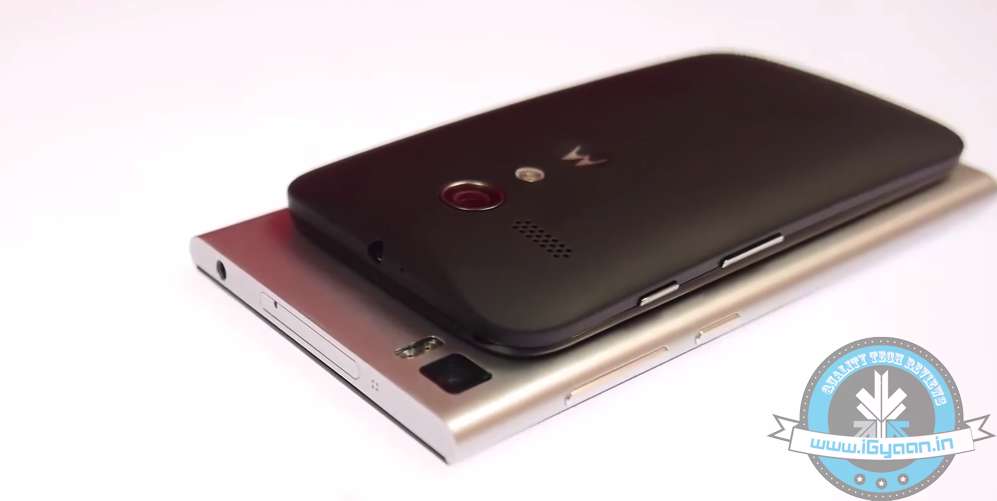
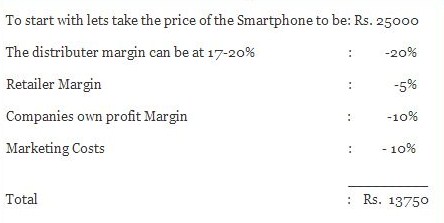
Many of you have inquired as to how the Chinese smartphone manufacturers are capable of bringing high speced devices that are priced so low. Here we attempt to explain how the likes of Xiaomi and others go about their business of creating havoc in the mobile markets everywhere.
Both Motorola and Xiaomi have kept prices low by using the e-tailing route
It is estimated that companies like Xiaomi are selling their phones at a loss of Rs. 1000 so that they can create a market buzz around their products. Xiaomi is bringing in just about a 1,00,000 units of their phones to India and have been selling them out in periodic flash sales. By bringing in a limited number of device the company start a stampede and this causes other competitors to reduce their prices, something we saw Motorola do when they slashed Moto G’s price by Rs. 2000. By using this strategy, Xiaomi, with its limited marketing budget has made its name shine out in the market.
However there is a downside to this marketing technique. The flash sales are now confusing and sometimes irritating the potential consumers who want the phone but cannot buy them. It has started to create a negative perception amongst such consumers. They are now seeking alternatives to the phone.
Now here is where the internet marketing convenience adds in. Basically, by just using an online sales channel, a strategy devised by companies like Motorola, the companies get to save massive amounts in distribution, marketing, dealership and other costs. And hence these high speced products reach the consumers in what can be called shockingly low prices, well its shocking for big brands at least.
It is also speculated that another Chinese smartphone manufacturer, One Plus, intends to try its luck in the Indian market. Their phone, the One Plus One is a high speced powerhouse which comes at mid segment prices. They too have limited stocks and might take the Xiaomi approach. But if these companies plan to stay in the Indian market for the long run, they need to come with stocks in accordance with the demand in the market. Or else they will just act as an inspiration to companies with already big reach to bring similar products and in turn, take away these companies potential customers.
You may have heard of a lot many schemes employees are offered when the exit door is shown after an acquisition. There are severance packages, voluntary retirement schemes and other options provided to soon-to-be-ex-employees. But then comes Microsoft doing something that can be seen as borderline evil.
Being taken over by one of the biggest tech giants must have made the employees of Nokia’s former factory in China optimistic about their future. But all hopes were lost when Microsoft announced massive job cuts last month. A majority of the 18000 jobs to be cut by Microsoft will be from Nokia’s stable.
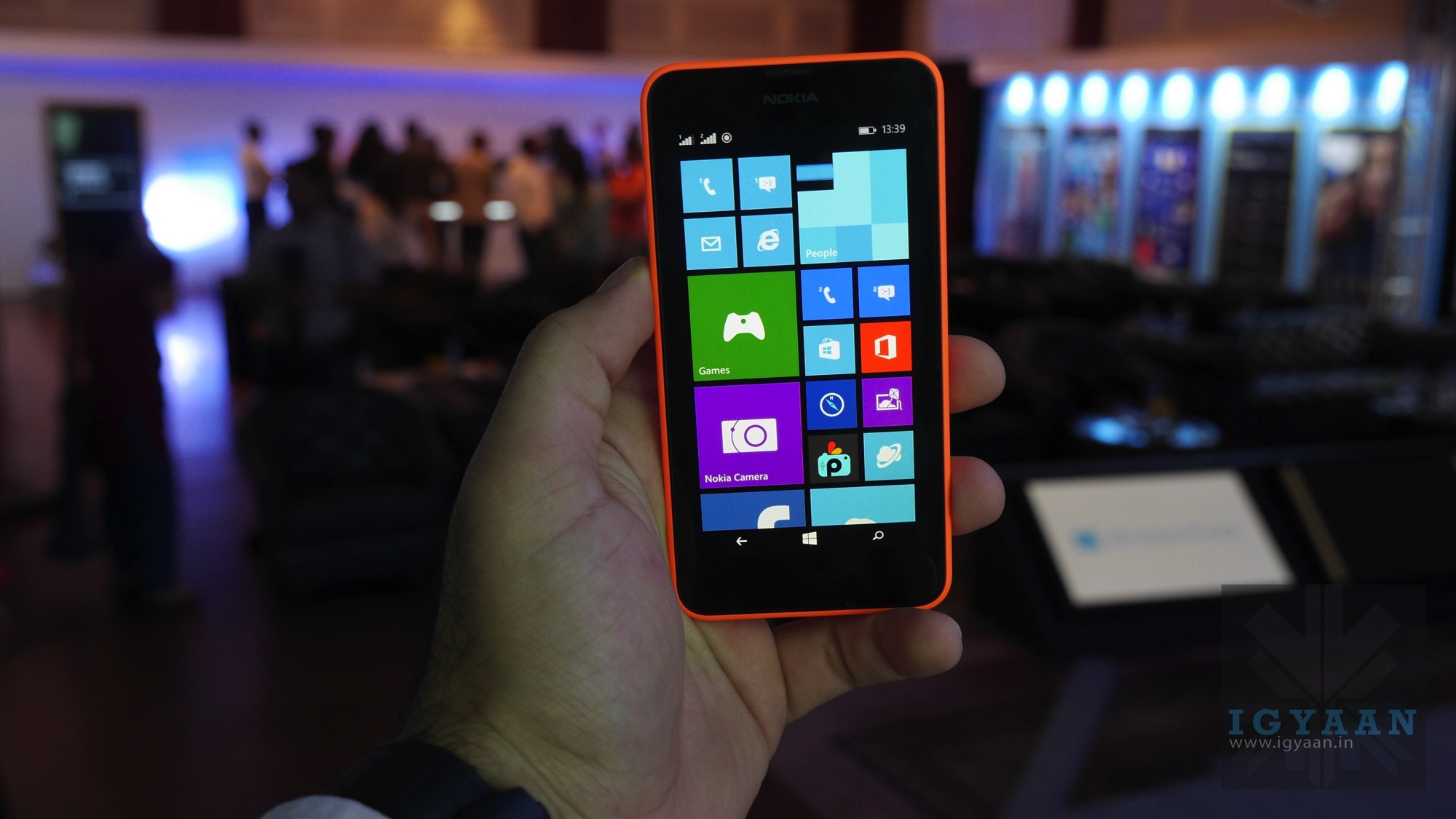
Microsoft said that it will notify those employees in the coming 6 months. The process seems to have started at the Chinese factory where the employees are being offered a Nokia 630 as a consolation for leaving the job.
This is a measly goodbye gift from Microsoft. The phones are being offered on a first come first serve basis for 300 employees. The employees weren’t even explicitly told about their job losses and are unsure about the severance plans by the company. Hopefully after the story coming in international light, Microsoft might give a better deal to these employees.
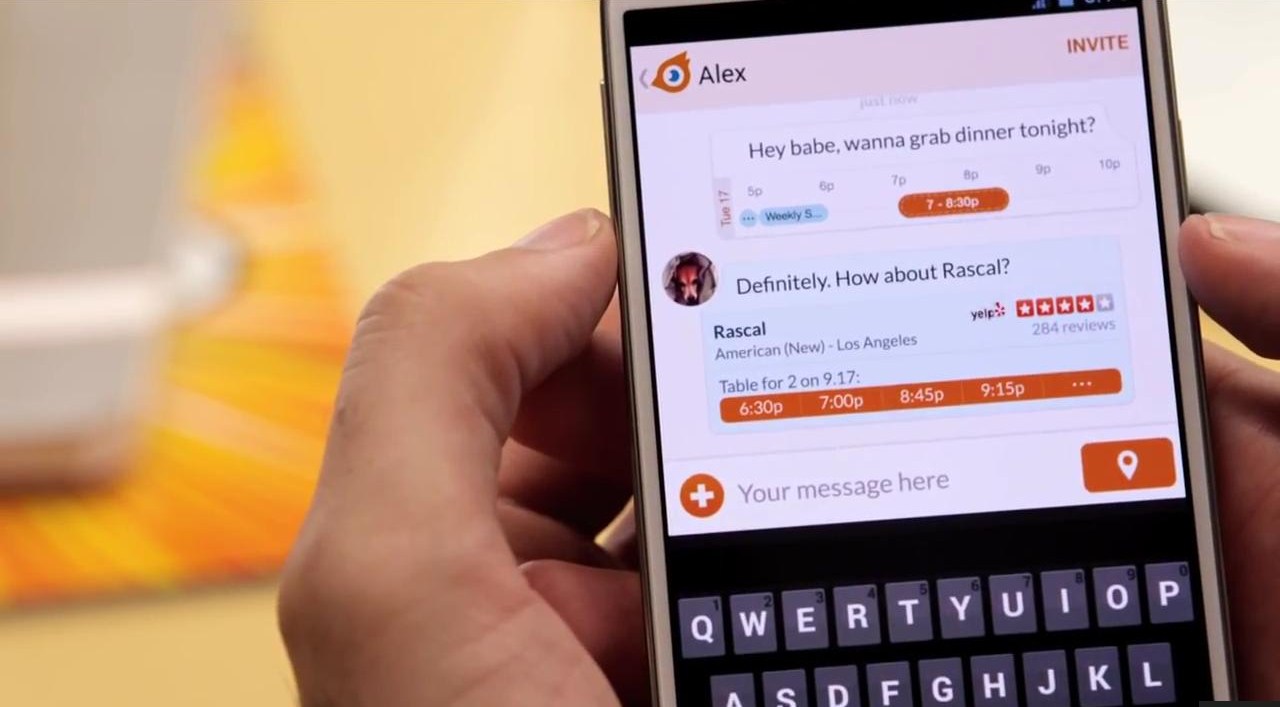
Google has bought an intelligent, personal assistant based messaging app called EMU. The app is created by an ex-Google and an ex-Apple employee who worked on Siri. The basic premise of the app is close to what Google Now offers. It goes through your conversations and picks up leads to provide the users with recommendations related to their interest.
Emu began as an Android app, and its superior assistance feature must have prompted Google to loosen its purse strings. The app is capable of scheduling appointments to the calendar, set reminders and setting restaurant reservations with convenience like never before.
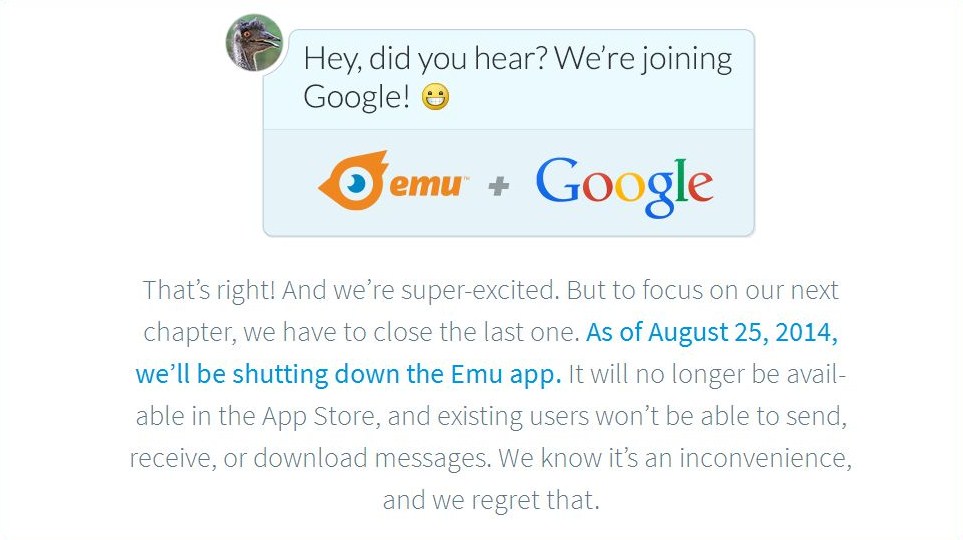
This is how the website looked soon after the acquisition announcement.
Messaging is where a lot of big companies have been investing. With Facebook buying Whatsapp, it was evident that messaging apps have grown in prominence and have overtaken the good old SMS. Now there is a race to perfect a messaging app. Apple, at WWDC this year has already presented a unique messaging feature which intertwines all its ecosystem’s messaging features. Apple’s messaging features were appreciated even though they seemed “inspired” by the features of various apps like Whatsapp, Snapchat, etc.
It is said that Google’s acquired Emu to strengthen its Hangout app, thereby giving an alternative to what Apple has to offer. Emu founders have announced that the app will cease to exist as an independent app and will be shut down by August 25. It will be interesting to see if Google plays the messaging game. Will it repeat its email success with Gmail or we’ll end up with another Google Plus fiasco?
Emu is impressive the way it was introduced and Google might have learnt its lessons by now and may be ready to go head-to-head with Apple.
Check out what the app can do in this video. Caution: They have a catchy background score that will be stuck in your head all day long.
As if Samsung wasn’t facing enough heat from the market and the users, the dealers of Samsung are taking them on the retail and e-tail price gap. The representatives of Samsung Retail dealers have told Samsung if the massive discrepancies in prices are not stabilized, they may have to boycott the brand.
Samsung has not had a good time against the competition in the past couple years. The phones are seen as identical replicas of each other and their features are unable to compete with the likes of Motorola, LG and the latest entrants, Xiaomi and Asus. In fact, Samsung, which boasted of holding the throne of the biggest smartphone company in the top two populous countries in the world saw itself dip to 2nd spot. Micromax toppled Samsung’s majority in India and Xiaomi stole its spot in China.
The center issue is that Samsung offers its dealers a margin of 5.5% while the phones can be bought online for 20-25% discounts. The dealers say that they are not able to meet their sales targets as consumers are scared the prices might keep dropping. Times of India reports that some of the dealers have been selling the phones in wholesale markets to achieve their sales goals. These phones too make their way on the internet and are sold at discounted rates.
The dealers have threatened the company with a boycott that includes blacking out Samsung’s branding. Samsung executives have asked the dealers to not take any drastic steps as of yet. The dealer body has given the South Korean electronics giant time till the 15th of August to resolve the pricing issue. Samsung needs a strategy reanalysis if it wants to prevent a certain dip in sales numbers which includes focus on mobile innovation. Or else it won’t be long before they follow Nokia’s path.
Finally we have a number, a date that will put an end to months’ worth of speculations and rumors. The next edition of Apple’s famed iPhone series will be unveiled on the 9th of September this year. The news was shared by John Paczkowski of re/code.
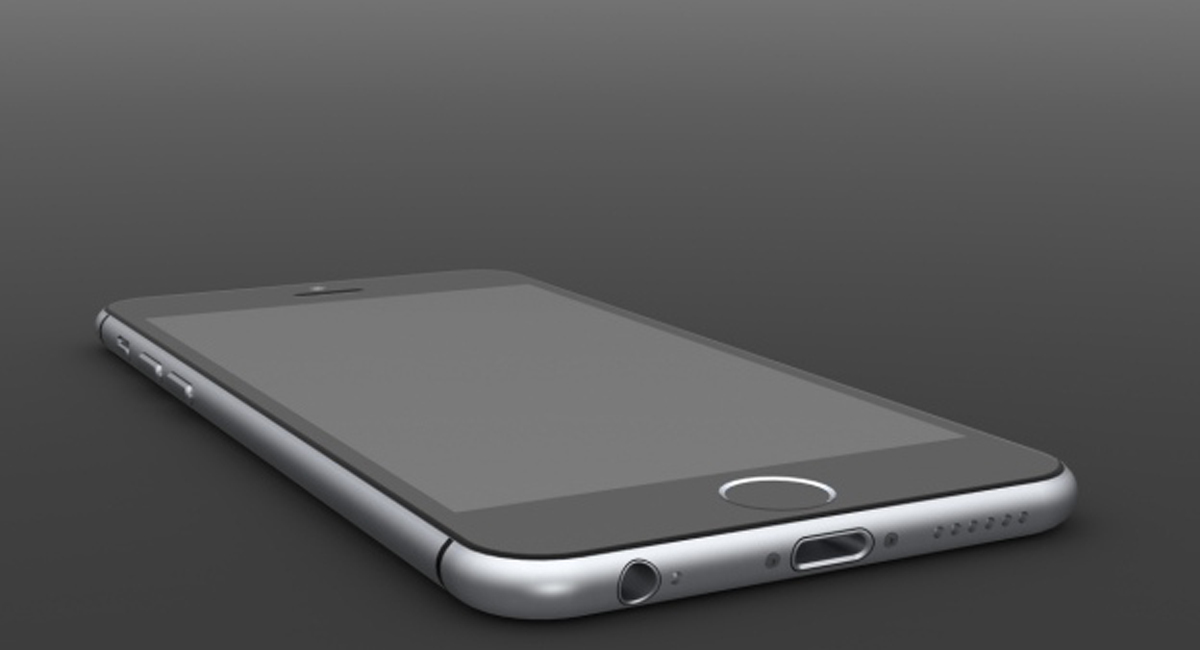
The new phone will see a major departure from Apple’s usual phone design philosophy that has remained constant ever since the first iPhone was released. The next generation iPhone 6 is expected to come in two variants, a 4.7 inch model and a 5.5 inch phablet.
Historically Apple has brought out its flagship phones in the month of September and the phones are released in the market 10 days after the launch. This year is expected to be in line with that, because Apple is all about continuity.
Apart from the iPhone 6 launch, Apple is also expected to bring out its own Smartwatch to enter into a growing market of wearables. Tech industry is impatiently waiting for what could be Apple’s take of a Smartwatch and it is getting a full Apple rumor mill treatment with regular leaks about specs and designs. But nothing is sure of as yet and there has been no official word from the Cupertino based tech giant as yet.
After a long wait, and getting entertained with leaks and rumors, it will be a big relief to finally have a date to set on their calendars. With the smartphone market having radically evolved since the first iPhone release back in 2007, Apple needs to have something phenomenal in store to impress the enthusiast and the market. What is interesting is the Apple’s arch rival Samsung will release its Flagship phablet, the Note 4 at IFA Berlin on September 3. The battle of giants will always be good for the consumers. So Apple, Samsung, Fight !
Now this is surprising coming from Microsoft. The company will try to consolidate all the systems currently running on previous versions of Windows by offering an incredible deal. The next operating system release, Windows 9 might come as a free upgrade for Windows XP, Vista and 7 users.
The thought must have dawned on Windows executives when they saw the WWDC this year when Tim Cook incorrectly stated a low Windows 8 adoption rate (about 14% in comparison to Maverick’s 51%). It did get called out on the internet by Windows enthusiasts who found the figures to be wrong (Windows 8 to Mavericks ratio is about 5 to 1), but the Windows guys must have seen an opportunity here.
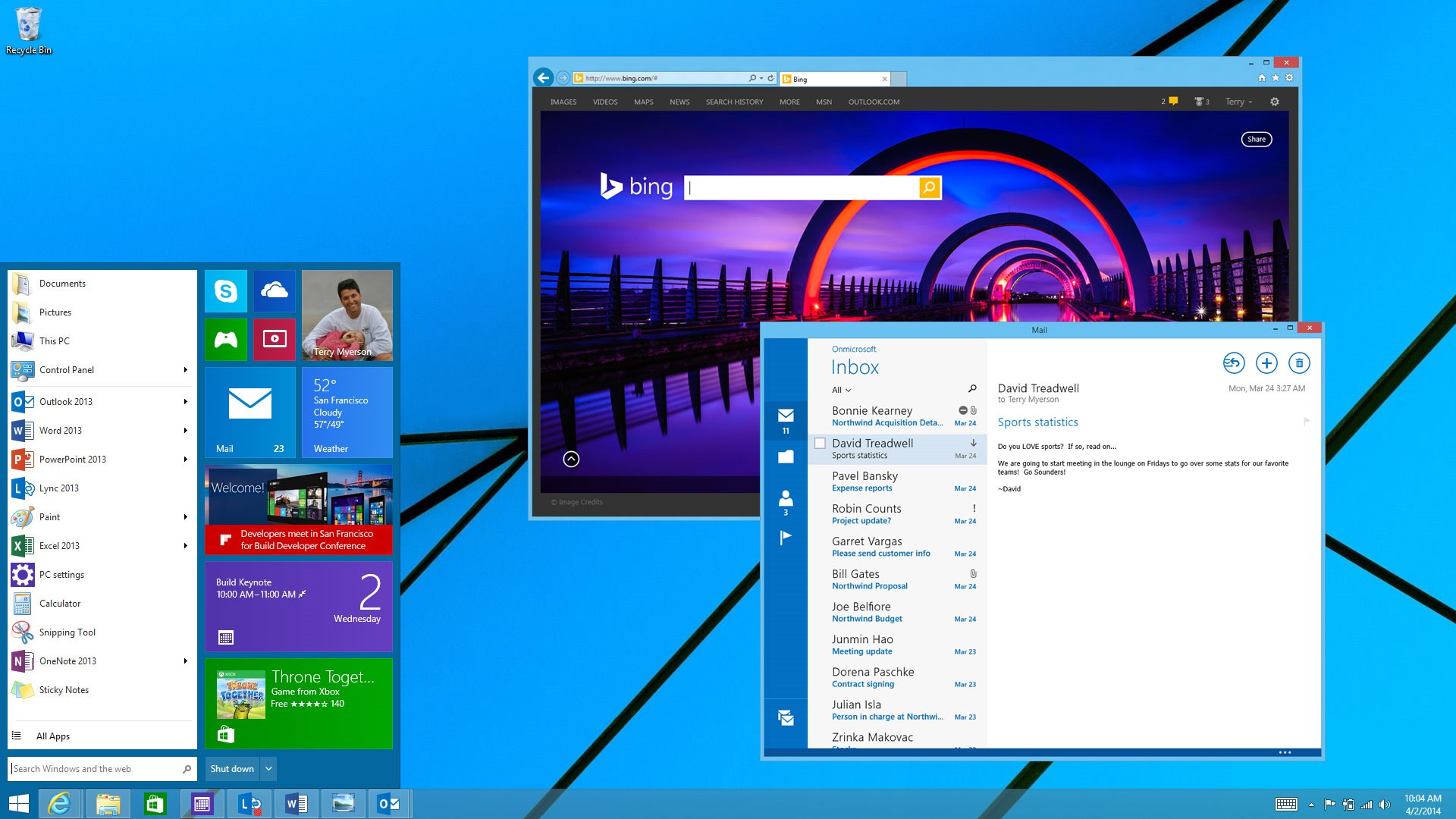
Windows 9 leaks present a refreshing new look while keeping the classic Windows appeal.
There is a huge number of corporates and personal systems users who still work on and prefer Windows XP, one of Microsoft’s most profitable products. The biggest hindrance in upgrading to a new Windows system has always been the cost of buying the softwares. But by offering their software as a free upgrade, apart from making it appealing, functional and hence upgrade worthy, Windows can easily win a lot of hearts. Also Windows 9 needs to be compatible with the previous generation machines.
A large number of people are used to the Windows ecosystem and are quite comfortable. Lately folks have started looking for alternatives such as Ubuntu and Google Chrome. By offering a free update, Microsoft might not only be able to keep the old faithful but might also win some folks over from the Google and Linux ecosystems.
Microsoft is releasing a small update for the present OS called the Windows 8.1 update 2 on the 12th of August. They have set the ball rolling for the next major release, currently codenamed Windows Threshold. The new Windows version might release around Spring next year. The new version has been rumored to have an updated start menu that, if the leaked versions are to be trusted, is quite functional.
It is joked that every alternative release of Windows is better than its predecessor. So people who were impressed by Windows 7 and disappointed by Windows 8 are keeping their hopes up for the next one. Come on Microsoft, show us what you got!
Samsung’s much awaited Note 4 which is expected to release next month will be again Samsung’s high shelf device. Samsung which has recently faced some serious consumer bashing for not innovating in accordance with the competition and its identical looking devices might want to bring back those users back to its side. The Note 4 would be a good opportunity for Samsung to show off its innovation muscle, especially when the competition is getting really tough with LG’s G3 and Apple’s new iPhone 6 being under constant limelight.
The 5.7 inch Super AMOLED display laced Galaxy Note 3 came with a 1.9GHz eight-core Exynos 5 Octa chipset with 3GB of RAM was released at Rs. 49,990. The device is now available on Flipkart for to Rs 37,983.
Besides the Note 3, its mini version, the Note 3 Neo also saw a major price cut. The device was launched in the market in February this year for a price of Rs 40,900. It features a 5.5-inch 720p Super AMOLED display with Exynos hexacore processor paired with 2GB of RAM. The price of the device after the cut stands at Rs 27,249, talk about a massive cut.
There is though not a lot known about the Samsung’s big release, the Note 4. It is expected to help Samsung gain back some lost trust and prove to competitors of Samsung’s formidability in the smartphone market. The new Note 4 might have a 5.7-inch Quad HD display keeping in line with 2K flagship displays with 3GB of RAM and 32GB internal storage. According to the various rumors, the device might also feature an eye-scanner and might also be powered by a new 64-bit processor. Hopefully Samsung will take a departure from Exynos Chipset for this one and bring in something which will let the Note 4 access its full capabilities.