Category: Government, Law and Policy

  • Apple And Google Join Forces To Acquire Kodak Patents

    kodak

    According to a Bloomberg report, Apple and Google could be joining forces to buy Eastman Kodak patents out of bankruptcy for around $500 million.

    Apple’s groups aiming for the Kodak patents included Microsoft and Intellectual Ventures Management LLC, sources said, while Google’s associates included patent risk solutions company RPX and the makers of Google’s Android phones.

    Kodak went into Chapter 11 bankruptcy in January and got a cash infusion based largely on the value that could be realized on the auction of its patent portfolio. Kodak has a huge amount of digital imaging patents and estimates the stack’s value at over $2bn at current market rates.

    Unlikely partnerships are typical in patent sales because they allow competitors to neutralize potential infringement litigation. A group including Apple,Microsoft Corp. and Research in Motion Ltd. bought Nortel Networks Corp.’s more than 6,000 patents for $4.5 billion out of bankruptcy last year. Google lost the auction for those patents after making an initial offer of $900 million.

    [quote]”Apple and Google learned a lesson from the Nortel’s auction,” said Richard Ehrlickman, former vice president of Intellectual Property at International Business Machines Corp. and president of IP Offerings, a patent brokerage and consulting company in the Bloomberg report. “They have decided to come together in this process to reduce the cost of purchasing the Kodak patents, while meeting their business needs.”[/quote]

    What exactly the two companies would do with  the Kodak patents is unclear, but owning patents is a thing companies like to do. So, maybe they’ll just own them to own them. There’s always that option.

  • Woman Sued For Defamation After Writing Negative Review On Yelp!

    Woman Sued For Defamation After Writing Negative Review On Yelp!

    yelp

    A negative Yelp review could cost one woman close to $1 million.

    Jane Perez, a Virginia woman who wrote a scathing Yelp review of the contracting company that worked on her home, is being sued by Christopher Dietz for $750,000, according to the Washington Post.

    Unhappy with the work Dietz’s company, Dietz Development LLC, did on her house, Perez took her anger to the web, alleging that the company had done damage to her home and that jewelry had disappeared. On Wednesday, a judge in Fairfax County Virginia ruled in a preliminary injunction that certain accusations be deleted—and as of Thursday Perez’s comments are no longer viewable on the Yelp page for Dietz Development.

    A police investigation found no connection between the missing jewelry and Dietz or his company. 

    Perez was also ordered to change a reference to a previous lawsuit filed by Dietz because it included incorrect legal terminology.

    The actual online review websites–Yelp, Angie’s List, TripAdvisor, etc.–are protected from lawsuit by the Communications Decency Act of 1996. Section 230 of the law protects online service providers from liability based on actions of third parties (a.k.a site users.) But the claims made by the reviewer can be subject to defamation charges, which vary based on state laws.

    In Virginia, where Dietz is bringing his suit, the state says that someone can be found guilty of defamation charges if he or she makes or even implies statements that are not factual that harm a person or businesses’ reputation.

  • Mexican Court Rules Against Yahoo, Orders $2.7 Billion Pay Out

    Mexican Court Rules Against Yahoo, Orders $2.7 Billion Pay Out

    yahoo

    A Mexican court has ruled that Yahoo is liable for $2.7 billion in damages in a lawsuit over a contract that was disputed between the Internet giant and its former partners over a directories business.

    An announcement was made on Friday by Yahoo regarding the judgment. Yahoo said it believed the claims filed against them were meritless and they would file all appeals that were granted them by the law.

    The two companies that sued Yahoo were Ideas Interactivas and Worldwide Directories. At the start of 2000, the company began producing in Mexico both a printed and digital phone book titled Yahoo Paginas Utiles.

    Both Mexican companies allege a breach of promise and contract as well as lost profits for the many lost contracts, which had been involved with the yellow pages listings directory service. A civil court in Mexico’s capital of Mexico City made the ruling.

    Yahoo declined to make any further comments other than what was in the statement. Both Mexican companies also would not comment on the court’s decision. Court documents relating to the case were unavailable.

    On Friday, in hours following the close of trading, Yahoo stock was down 1.6% following the statement released by the company. If the court ruling is upheld, it will be a direct blow to Marissa Mayer, the CEO of Yahoo and her attempt at turning the Internet giant around.

    A large number of Yahoo investors have taken to Mayer since she was hired away from Google in July. They like her idea of mobile based refocusing the portfolio of websites and Yahoo’s online service.

    [Ticker Report]

  • Apple, Samsung Patent Clash Expands To iPad mini, iPad 4, New iPod touch

    Apple, Samsung Patent Clash Expands To iPad mini, iPad 4, New iPod touch

    samsung

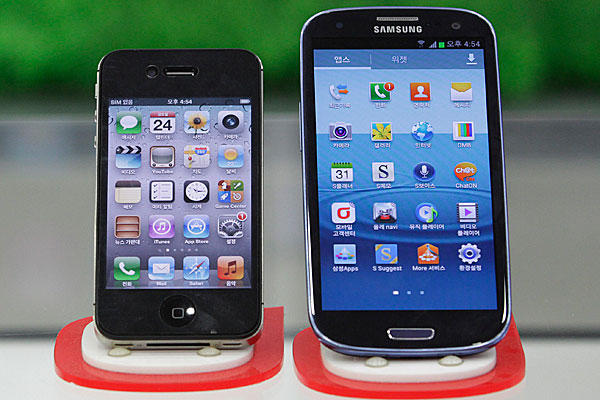
    Samsung Electronics has alleged that three recent products from Apple, including the iPad mini, infringe on its patents.

    The South Korean company said in a filing Wednesday in U.S. District Court for the Northern District of California, San Jose division, that the products were released by Apple after Samsung submitted its original infringement contentions on June 15, and a motion to supplement on Oct. 1 that added the iPhone 5 to products that allegedly infringe its patents.

    The products included in the latest motion to amend and supplement the infringement contentions are the iPad mini and the latest versions of the iPad and iPod touch.

    Samsung has also asked for clarification from the court if its original contentions properly allege infringement of U.S. Patent No. 7,672,470 by three prior generations of the iPod touch, and alternatively asks leave to add these products to its infringement contentions.

    [quote]On Wednesday, Samsung’s chief executive Shin Jong-kyun told The Korean Times: “Without Samsung-owned wireless patents, it’s impossible for… Apple to produce its handsets.”[/quote]

    Samsung and Apple are no strangers to court battles, having been engaged in vicious patent battle that extends across four continents since April 2011. Back in August, a court awarded Apple over $1 billion in damages after upholding claims that Samsung had infringing several iPhone and iPad patents with its Galaxy S-series smartphones. Samsung has since appealed against the ruling.

    But it hasn’t all been going Apple’s way, with courts in the Netherlands, the U.K. and Japan dismissing Apple’s claims of infringement by Samsung.

  • FTC’s $22.5 Million Fine Of Google Approved

    FTC’s $22.5 Million Fine Of Google Approved

    Google

    A federal judge on Friday approved a legal settlement in which Google agreed to pay a record fine of $22.5 million to resolve federal allegations of privacy violations, despite objections from a consumer group that argues the penalty is too weak.

    Hours after holding a brief hearing in San Francisco’s federal court, U.S. District Judge Susan Illston ruled that the negotiated agreement is “fair, adequate and reasonable.”

    The Federal Trade Commission had touted the penalty, negotiated last summer, as the largest fine it has ever assessed in a case of this kind. The settlement stems from an FTC investigation which found that Google’s advertising service used software “cookies” to track the Web pages visited by people who used Apple’s Safari Web browser, after promising that it would not do so.

    Google, which has maintained that the tracking was inadvertent, did not admit to any legal violation but agreed to disable the cookies. Attorneys for both Google and the FTC spoke in favor of the settlement in court, while an attorney for the nonprofit Consumer Watchdog group opposed the agreement as ineffective.

    The fine, although large by the federal government’s standards, is a drop in the bucket for Google, which made nearly $38 billion in revenue last year.

    “We were disappointed, but think we made important points that will have an impact on how similar cases are dealt with in the future,” said John Simpson, director of the Consumer Watchdog Privacy Project.

  • Aakash 2 Tablet Launched In India At Rs 1,130

    Aakash 2 Tablet Launched In India At Rs 1,130

     aakash 2

    India’s low cost tablet Aakash 2 was officially launched here on Sunday at a subsidised rate of Rs 1130 for Indian students.

    The new and improved Aakash 2 tablet was unveiled by the President of India, Pranab Mukherjee in Vigyan Bhavan, New Delhi. Thousands of teachers are attending the event to virtually participate in the launch event through online video conferencing.

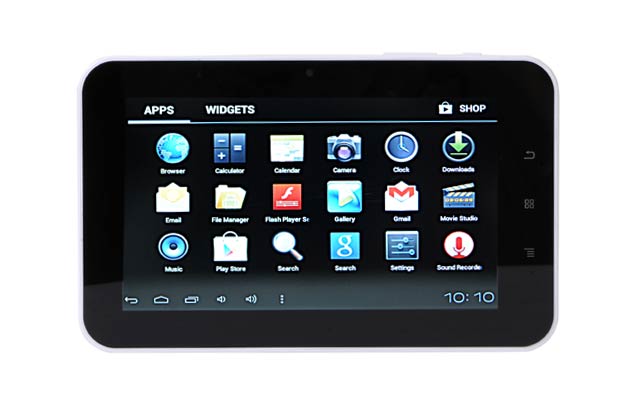
    The new version ‘Aakash 2?, which will be made available to students of engineering colleges and universities to begin with, is now powered by a processor running at 1 GHz, has 512 MB RAM, a 7 inch capacitive touch screen and battery life of three hours on Wi-Fi.

    The screen resolution is 800×480 pixels. The previous version of Aakash had a 7-inch resistive touch screen. Akash 2 runs Android 4.0 aka Ice-Cream Sandwich and has front facing VGA camera along with Wi-fi support. It has 4GB (internal) flash memory, which is expandable up to 32GB using a micro SD card.

    The commercial version of the Aakash 2 unit is branded as UbiSlate 7Ci, and is available for purchase on DataWind’s website at Rs 3,500.

    The tablet ‘Aakash’ was launched in October last year by the government to make available computing devices to students at subsidised rates. However, the project ran into controversy following IIT Rajasthan rejecting the devices manufactured by Datawind. Datawind had won the tender for making and supplying one lakh Aakash tablets for price of around $49 per unit.

  • Google Contemplating FTC Settlement Over Patents : WSJ

    Google Contemplating FTC Settlement Over Patents : WSJ

    motorola

    According to a report in the Wall Street Journal, Google is contemplating a settlement of an FTC investigation that is probing whether the company purposely refused to license industry essential patents to competing mobile device makers, and in some cases leveraged the IP to seek injunctions.

    The FTC in June began investigating Google’s use of patents it acquired after purchasing Motorola in May. 
    Following the buyout, the internet search giant continued to press forward with a number of existing lawsuits, including possibly anticompetitive litigation regarding standards-essential FRAND patents.

    One of the sources noted that the FTC had threatened to bring a case against Google over alleged unfair business practices involving the use of Motorola’s IP against rival mobile device makers like Apple and Microsoft. During discussions, the agency’s lawyers cited a number of cases in which the Google subsidiary possibly violated FRAND terms. 

    Google reportedly argued that competitors currently holding FRAND patents also violated their duties in bringing suit against Motorola and others, including filings from Apple. The company went on to say that if a settlement was reached, it would be left defenseless as rivals push forward with their own FRAND claims. 

    [Apple Insider]

  • Tata Motors’ Special Vehicles For Gujarat Police Force

    Tata Motors’ Special Vehicles For Gujarat Police Force

    Tata Motors Defence Solutions (TADS), a strategic partner of the Indian Armed Forces since 1958, delivered state-of-the-art 21 Light Armoured Troop Carriers (LATC) to the Gujarat Police Force. The new LATC will enhance the arsenal of the Gujarat Police Force and will certainly empower their security alertness.

    Tata Motors Defence Solutions makes a wide range of vehicles, in the light, medium and heavy categories. These include logistics, tactical, armoured and specialist vehicles. The Tata Motors Service network enables maximum operational readiness and low life-cycle maintenance costs for its Defence vehicles across the country.

    [quote]Vernon Noronha, Vice President (VP), Defence and Government Business, Tata Motors said, “Tata Motors’ Defence Solutions covers the complete range of logistics and armoured vehicles that have been popular in supporting police and paramilitary forces across the country. The Tata Light Armoured Troop Carrier will enable comfortable movement of troops across the state.”[/quote]

    Reportedly, the Tata LATC has all the trimmings of a world class product and incorporates an incredibly powerful powertrain, under its hood. Further, the vehicles comes with top draw security features and has been assimilated with an All Wheel Drive (AWD) system, besides coming with advance protective measures on all sides. The cutting-edge LATC vehicles have been laced with bullet-proof and splinter-proof glassing along with suspended seats and explosion resistant material in the fuel tank.


  • Government Blocks Facebook, YouTube in Kashmir

    Government Blocks Facebook, YouTube in Kashmir

    There are reports that the Indian government has blocked Facebook and YouTube in Kashmir. The story was first reported by GreaterKashmir which said that, ISP companies blocked social networking sites including Facebook and YouTube in Kashmir without any official directive the state government.

    The cellular companies have also blocked GPRS facilities on the mobile telephones causing immense inconvenience to the subscribers.  Greater Kashmir received over a dozen telephone calls from different areas of the Valley, complaining that the internet service has been blocked by companies including BSNL, Reliance, Aircel, Airtel and Vodafone.

    It was previously reported that the certain URLs with offensive content had been blocked, but it now seems that access to the entire websites have been restricted. Last month the Government of Jammu & Kashmir had directed service providers to ensure that the controversial YouTube video was not accessible from the state.

  • Foxconn Plant Closed After Riot

    Foxconn Plant Closed After Riot

    Image Courtesy : Engadget

    About 2,000 Chinese employees of an iPhone assembly company fought a pitched battle into the early hours of Monday, forcing the huge electronics plant where they work to be shut down. Authorities in the northern city of Taiyuan sent 5,000 police to restore order after what the plant’s Taiwanese owners Foxconn Technology Group said was a personal dispute in a dormitory that erupted into a mass brawl.

    The company said the incident was confined to an employee dormitory and “no production facilities or equipment have been affected.” It said the cause of the disturbance was still under investigation.

    One Foxconn employee reached by telephone Monday afternoon, however, said the incident began when workers started brawling with security guards. Unconfirmed photographs and video circulated on social networking sites, purporting to be from the factory, showed smashed windows, riot police officers and large groups of workers milling around. The Foxconn plant, in the Chinese city of Taiyuan, employs about 79,000 workers.

    The Chinese state-run news media said 5,000 police officers had been called in to quell the riot.  The disturbance is the latest problem to hit Foxconn, which also is a key supplier to Dell, Hewlett-Packard and Microsoft. It is part of Hon Hai Group of Taiwan and has been struggling to improve labor conditions at its China factories after reports about labor abuse and work safety violations.

    Apple and Foxconn have worked together in the last year to improve conditions, raise pay and improve labor standards.

  • Indian developers can now sell paid apps in Google Play Store

    Indian developers can now sell paid apps in Google Play Store

    Google has now added India to the list of countries from where developers are allowed to sell paid apps on the Google Play Store. This move will allow individual app developers and development companies from India to sell their apps on Android devices and also enable in-app purchases.

    Until now, developers were figuring out ways to circumvent the restriction. In some cases, this meant having to travel to the U.S. to create a local bank account there in the name of relatives and friends or even floating a company there for this purpose.

    On its official Google Developer support page, Google listed India as one of the countries from where developers could register as Google Check-out merchants and sell paid Applications.

    Next Wave Multimedia in Chennai, which has published more than 10 Apps each on both the Apple iTunes and the Android Marketplace over past three years, was one of the early entrants in the mobile Apps space.

  • Add iPhone 5 to U.S lawsuits : Samsung

    Add iPhone 5 to U.S lawsuits : Samsung

    Samsung Electronics Co said on Thursday it planned to add Apple’s iPhone 5 to its existing patent lawsuits against the U.S. rival.

    The company added that it needs to examine the iPhone 5 first, however. It said the change in the lawsuit will likely come “as soon as it has had a reasonable opportunity to analyze the device.”

    Samsung’s action, when it happens, is not expected to affect sales of the iPhone 5, which begin on Friday in the U.S. and eight other countries.

    [quote]”Samsung anticipates that it will file, in the near future, a motion to amend its infringement contentions to add the iPhone 5 as an accused product,” it said in a US court filing. “Based on information currently available, Samsung expects that the iPhone 5 will infringe the asserted Samsung patents-in-suit in the same way as the other accused iPhone models.” [/quote]

    Samsung and Apple are locked in global patent battle in 10 countries and the stakes are high as the two technology giants vie for the top spot in the booming smartphone market. Both companies are also aggressively raising marketing spending to promote their latest products ahead of the crucial year-end holiday season. 

  • The Indian Govt will make the fastest super Computer in the world by 2017 – with Rs 4700 Crore

    The Indian Govt will make the fastest super Computer in the world by 2017 – with Rs 4700 Crore

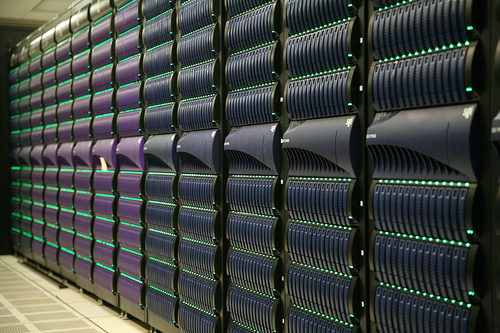
    The Govt of India is planning a supercomputer which will run at an Exaflop, a computing speed which is 61 times faster than the fastest supercomputer yet, Sequoia, which has registered a top computing speed of 16.32 petaflops.

    Telecom and IT Minister Kapil Sibal is understood to have written to Prime Minister Manmohan Singh sharing the roadmap to develop “petaflop and exaflop range of supercomputers” at an estimated cost of Rs 4,700 crore over 5 years.

    [quote]In his  letter, he has said that C-DAC has developed a proposal with a roadmap to develop a petaflop and exaflop range of supercomputers in the country with an outlay of Rs 4,700 crore. The Minister has written that C-DAC developed first supercomputers in the country, the PARAM series. Presently Param Yuva with 54 teraflop computing power is serving many researchers through Garuda Computing Grid,” a government official said.[/quote]

    The proposal made in the letter says that DEITY should be given tasks to set up a National Apex Committee to oversee the implementation of the proposed Supercomputing Mission and C-DAC should establish peta and exascale supercomputing facilities and development activities.

  • FBI Used Apple UDID’s To Track 12 mn Users : Hackers

    FBI Used Apple UDID’s To Track 12 mn Users : Hackers

    A hacker group has claimed to have obtained personal data from 12 million Apple iPhone and iPad users by breaching an FBI computer, raising concerns about government tracking.

    The UDIDs were reported to be stolen from FBI special agent Christopher Stangl’s laptop. Earlier this year Stangl was one of the FBI agents participating in a call that was breached by Anonymous hackers.

    According to a Pastebin post, hackers used a then-new Java exploit to get into Stangl’s machine.

    [quote]”During the second week of March 2012, a Dell Vostro notebook, used by Supervisor Special Agent Christopher K. Stangl from FBI Regional Cyber Action Team and New York FBI Office Evidence Response Team was breached using the AtomicReferenceArray vulnerability on Java,” the posting states. “During the shell session some files were downloaded from his Desktop folder one of them with the name of ‘NCFTA_iOS_devices_intel.csv’ turned to be a list of 12,367,232 Apple iOS devices including Unique Device Identifiers (UDID), user names, name of device, type of device, Apple Push Notification Service tokens, zipcodes, cellphone numbers, addresses, etc. the personal details fields referring to people appears many times empty leaving the whole list incompleted on many parts.”[/quote]

    The hackers say that the hacked database included user names, name of device, type of device, Apple Push Notification Service tokens, zipcodes, cellphone numbers and addresses of iPhone and iPad users. According to AntiSec they have stripped personally identifiable information prior to publication.

    It was also added that Apple was looking for alternatives to the UDID system. The post goes on to say, in this case it’s too late for those concerned owners on the list. 


  • Governments enforces stringent mobile radiation standards

    Governments enforces stringent mobile radiation standards

    The government has imposed stringent mobile radiation standards which will come into effect from today.  

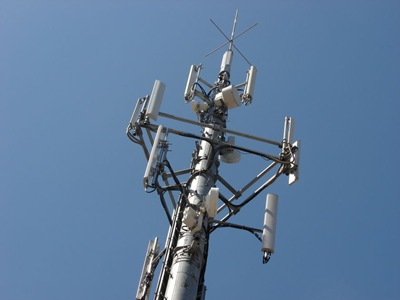
    With new guidelines coming into force, radiation emission from telecom towers will come down to 1/10th of the present level, a development that will address public health concerns. Also, the handsets to be rolled out from domestic manufacturing units or to be imported will have reduced absorption capacity, as per the new guidelines.

    [quote]”Now with more stringent rules, we want to make sure that there is no violation. We told them to make required changes in all areas to meet new emission norms immediately,” Kapil Sibal said.[/quote]

    Mobile phone companies would have to provide self-certification of compliance with the new norms and register with the telecom enforcement resource & monitoring (Term) cells. Term cells would conduct random audits and in case of complaints. The telecom department can impose a fine of 5 lakh per tower per telco if the rules are flouted.

iGyaan Network
Privacy Overview

This website uses cookies so that we can provide you with the best user experience possible. Cookie information is stored in your browser and performs functions such as recognising you when you return to our website and helping our team to understand which sections of the website you find most interesting and useful.