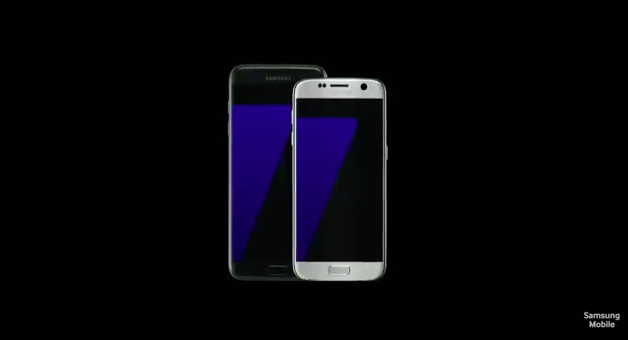
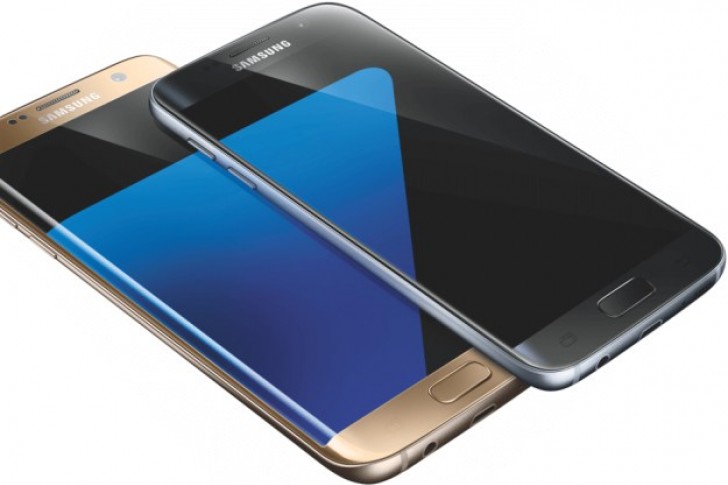
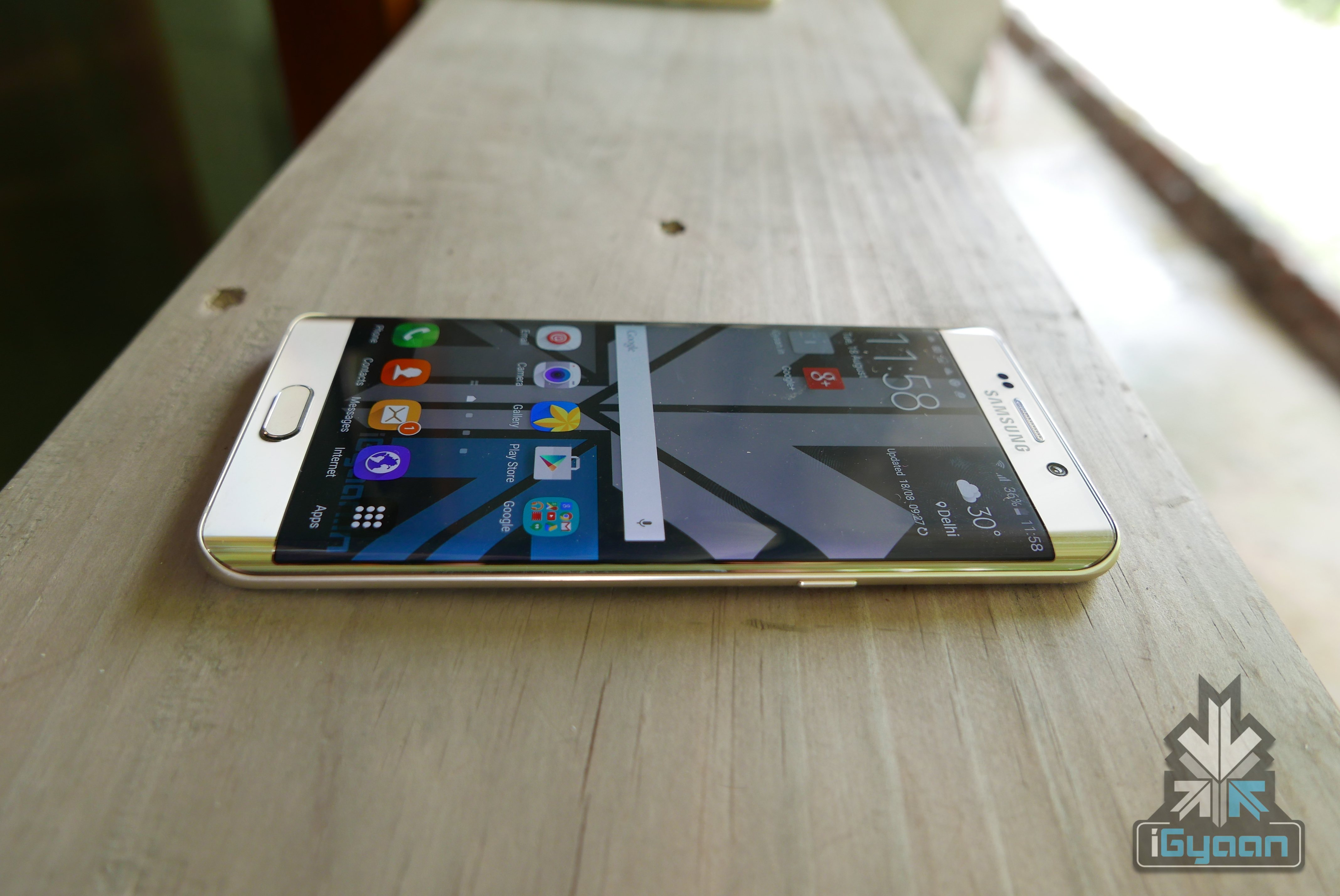
It’s finally here. After months of rumours and speculations, Samsung has now finally unveiled its newest flagship devices, the Galaxy S7 and S7 Edge. The next Galaxy devices come promising spectacular design language and next-gen performance and specifications.
The 5.1-inch S7 Super AMOLED display with quad HD resolution. Two SoC configurations are offered – one being the new Exynos 8890 and the other being Qualcomm’s Snapdragon 820. The device comes with 4GB of RAM and 64GB of internal storage as well as a MicroSD card slot this time around and the battery is 3000mAh. A fingerprint sensor is housed in the home button.
The S7 Edge comes with a 5.5-inch Super AMOLED display with quad HD resolution. A Snapdragon 820 processor powers the device along with 4GB RAM and 64GB storage and 3600mAh battery pack.
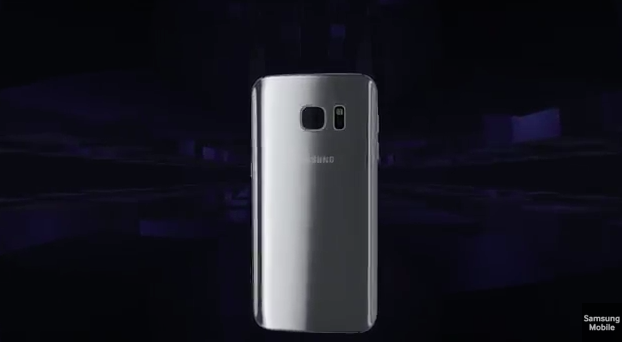
The Galaxy S6 and S6 Edge Plus had incredible cameras that won last year. This year, Samsung wants to take its camera up a notch which is why it’s using a new Britecell technology for the Galaxy S7 for better low-light photography. Both the S7 and S7 Edge feature ‘Dual Pixel’ cameras with a 12MP with f/1.7 aperture rear camera and a 5MP front. Samsung has boasted of exceptional low-light captures with the Galaxy S7 devices and it may just dominate the camera department once again this year.
Moving over to the design, the Galaxy S7 and S7 Edge follow the same design language as their S6 counterparts. The S6 devices of last year were beautifully crafted phones and Samsung made a smart move not to change that. Only the standard 5.1-inch S7 will have a curved edge at the back rather than a flat one seen on in the S6. Samsung hasn’t changed the exteriors too much but has simply refined it. It has added a MicroSD tray while maintaining the sleek look.
Finally, some other features include IP68 water and dust resistance, wireless charging. It also features the Always On mode that shows you notifications without having to turn on your device. The camera bump is still there but is lower than that found on the S6 devices. Quick Access App lets you swipe through the screen on the Edge to quickly access your favourite apps. Samsung is also taking gaming to the next level with next-gen Vulcan API graphics.
Pricing of the devices have not been revealed as yet. Samsung has also not revealed all the specifications so some are subject to change. Check the spec table below for everything you need to know.
In less than an hour, Samsung will unveil its next Galaxy flagship device, the S7 and S7 Edge at the MWC Unpacked event. We have heard a lot of rumoured specs and seen a lot of leaked images and renders and it’s almost time to see how much of those have come true. You can catch the event live right here. Hit play on the link below and sit tight for the event to begin.
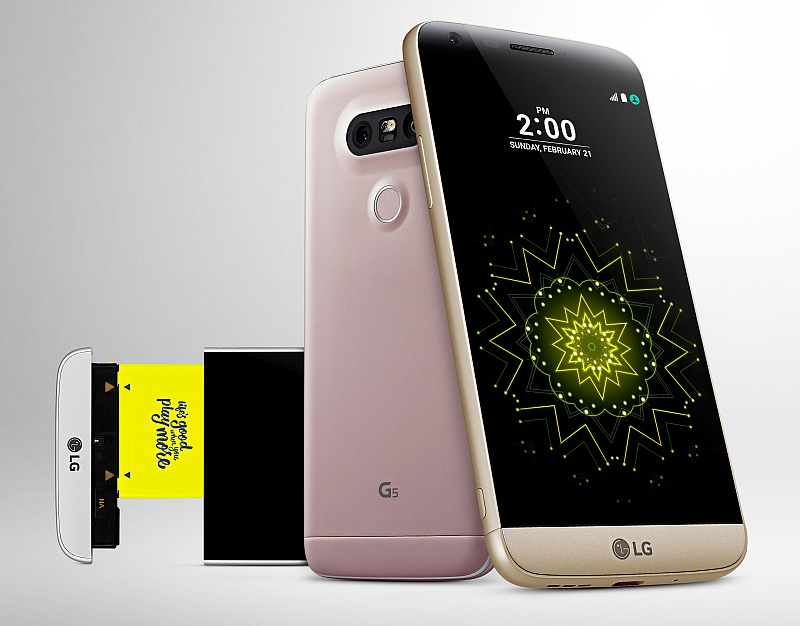
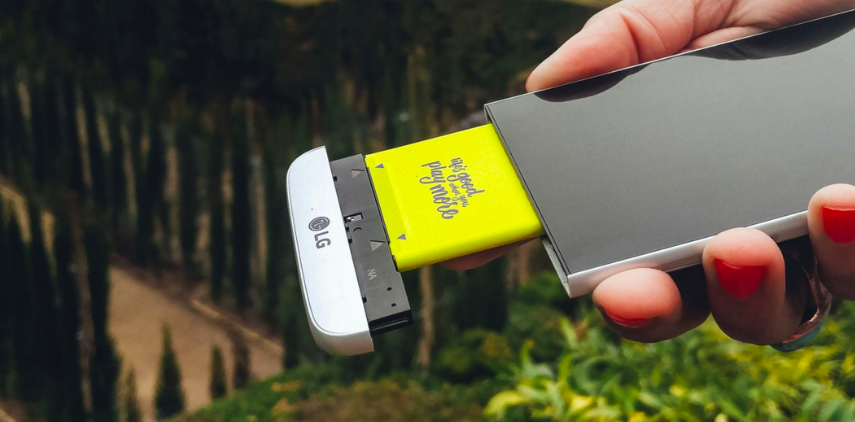
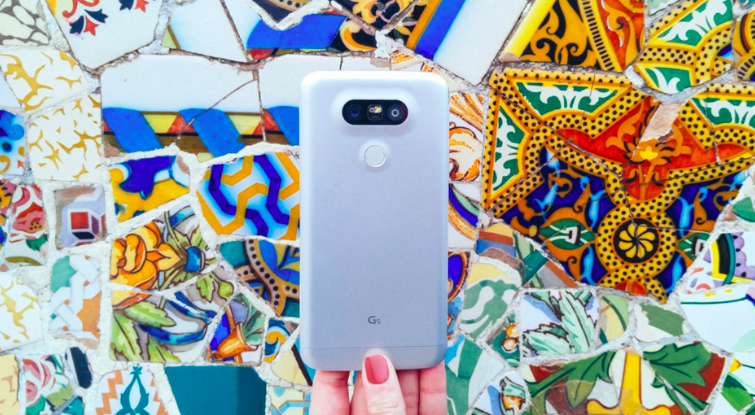
South Korean tech Giant, LG, announced its much-awaited flagship, the G5 in Barcelona during the Mobile World Congress today. The G5 has a full metal body and comes with impressive specifications but the what sets the phone apart from its competition is the fact that it comes with modular attachments which for now can be utilised to enhance the camera and battery of the phone.
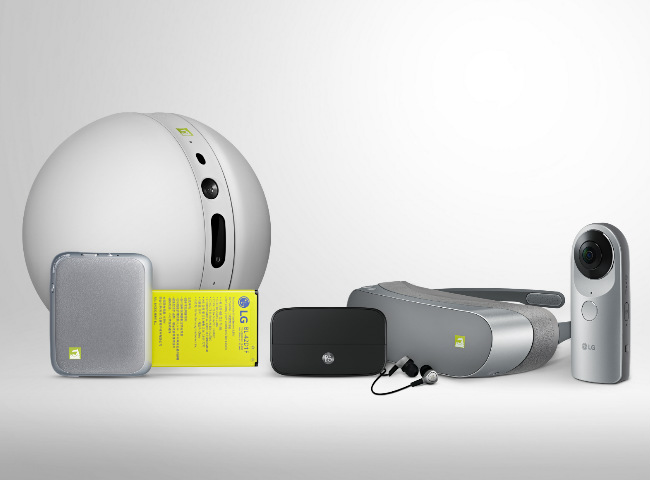
The company also announced modular accessories for the phone at the launch. Most interesting of the lot was the LG Cam Plus module which can be attached to the G5 through the battery slot giving the user “comfortable grip and convenient control of a DSLR” for better imaging and also adds to the battery of the phone taking the capacity up to 4000mAh.
Next is the Hi-Fi Plus with B&O Play module. This is a Hi-Fi DAC audio player which is perfect for audiophiles. It can also play high-definition audio files encoded in 32-bit at 384KHz.
On the specifications front, the LG G5 comes packing a primary 5.3-inch QHD LCD display with 3D Arc Glass on top. It also has a cool Always-on feature that lights up the display for access to important updates. The phone’s construction is full metal unibody and is powered by a Snapdragon 820 chipset, paired with 4GB of RAM and 32GB of internal storage, expandable by upto 2TB with microSD cards.
When it comes to photography, the phone is equipped with dual cameras at the back. A standard 16-megapixel 78-degree lens and another 8-megapixel 135-degree wide angle lens. The LG G5 features a front-facing 8-megapixel camera too for clicking selfies.
LG G5 comes packing a 2,800mAh removable battery with Quick Charge 3.0, and when it comes to connectivity it gives users options such as Bluetooth 4.2, NFC and Wi-Fi 802.11ac. The smartphone also features USB Type-C 2.0 port. The G5 runs on Android 6.0 Marshmallow OS with LG’s custom UI on top. The G5 will be available in four different colors, silver, gold, pink and silver. No pricing details have been revealed yet so watch this space for more details.
MWC 2016 has officially kicked off. The opening day saw Huawei and LG take the stage unveiling their new devices. LG, of course, unveiled its flagship G5 modular smartphone while Huawei launched the Huawei MateBook.
The MateBook is a 12-inch 2 in 1 tablet that is powered by Windows 10. With this, Huawei looks to Microsoft’s Surface Pro 4 and Apple’s iPad Pro. The MateBook comes with a detachable keyboard much like the iPad Pro. Launched at a price of $699, the MateBook comes with an Intel Core m3 processor, 4GB of RAM, 500GB storage, and a 128GB SSD. The tablet also features a 5MP front camera and a fingerprint sensor on he side. The keyboard, stylus and dock are priced at $169, $69 $99, respectively.
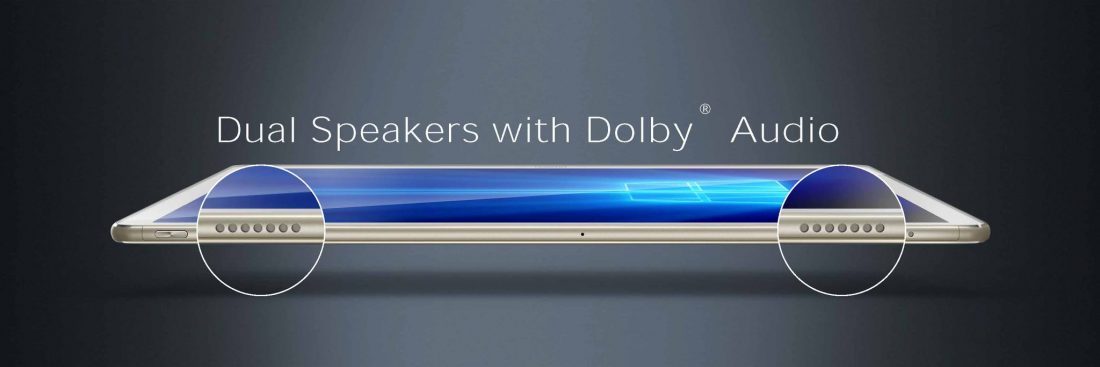
The MateBook, according to Huawei, is the result of all that the company has learned from its smartphones and tablets over the years. The display is a nice 2160×1440 pixel resolution with a 10mm thin bezel around it. The metal unibody design gives it a premium feel. The tablet also features dual speakers at the bottom with Dolby Audio.
The MateBook’s 4430mAh high-density Lithium battery promises up to 10 hours of battery life after which a USB Type-C Cable will charge it back up in no time. Weighing in at 640g, the MateBook is lighter than the iPad Pro and the Surface Pro 4.
The Mobile World Congress 2016 will kick off in Barcelona in just a few hours. One of the biggest mobile trade shows in the world will play host to a number of brands who will unveil their new smartphones – some flagships, some not so flagship – that will set the standard for 2016. Here are the phones that will be unveiled at the MWC 2016.
Samsung Galaxy S7 and S7 Edge
There have been a lot of rumours and a lot of questions regarding the launch and specs of Samsung’s upcoming flagship Galaxy S7 devices. What everyone is expecting is Samsung to pull out another stunning flagship that pushes the boundaries of design and power, like it did with the Galaxy S6 series.
It’s almost confirmed that the Galaxy S7 will arrive in two variants – one powered by the new Snapdragon 820 chipset and the other by Exynos 8890.
Among the many rumours that have been making the rounds, some that have caught our attention is that the S7 devices will feature Apple’s 3D Touch-like pressure sensitive display called ClearForce that’s being developed by Synaptics. Additionally, the Galaxy S7 will have a Type C USB Port which means the device will charge significantly faster.
The standard Galaxy S7 will likely sport a 5.2-inch Super AMOLED display while the ‘Edge’ variant will come with a 5.5-inch display of the same kind. In terms of design, Samsung is sticking to the S6 design language only upgrading the specs, which we’re not complaining about. The flagship devices are slated to be unveiled today at the MWC ‘Unpacked’ event.
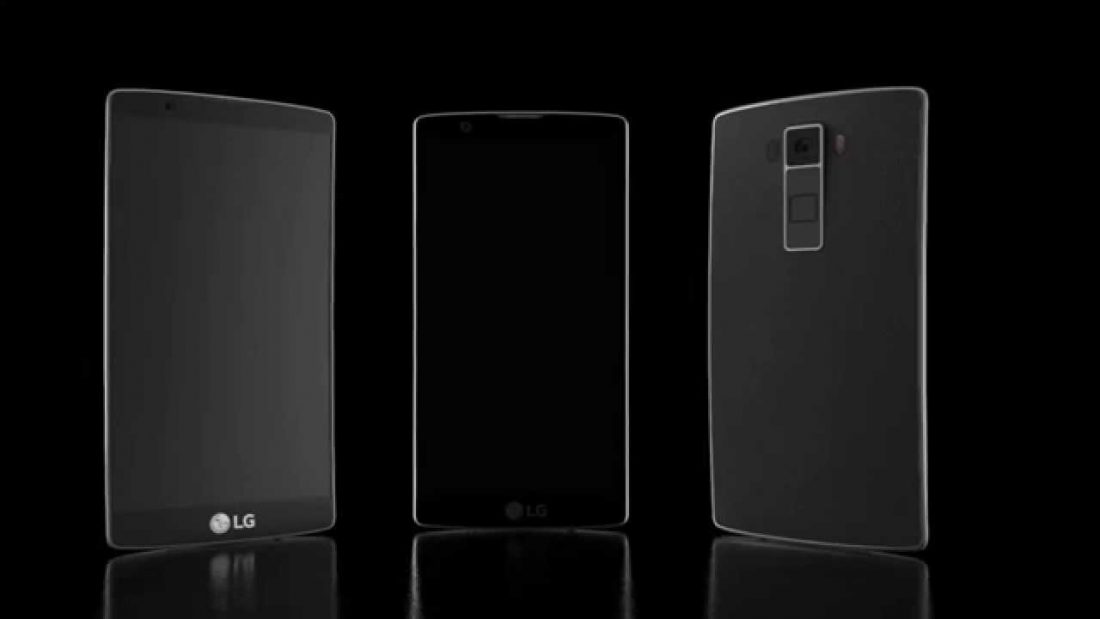
LG G5
The device will sport a 5.3-inch Quad HD display, powered by the new Snapdragon 820 SoC with 3 GB of RAM and an 8 MP front camera. Other specs include a full metal body, SIM and MicroSD slot, heart rate sensor that’s under the camera module, a fingerprint sensor embedded in the power button, a USB Type-C port, bottom firing speaker and an IR blaster on top.
Some recent rumours have suggested a modular design for the LG G5 where the bottom is detachable so as to easily remove the battery pack. This, however, is still a long shot and nothing has been confirmed on that front.
A leaked image also suggests that the LG G5 will sport a dual camera set-up at the back – 16 MP and 8 MP. LG will launch the G5 flagship smartphone today as well. In fact, LG and Huawei will kick off the MWC with their flagships in just a short while from now.
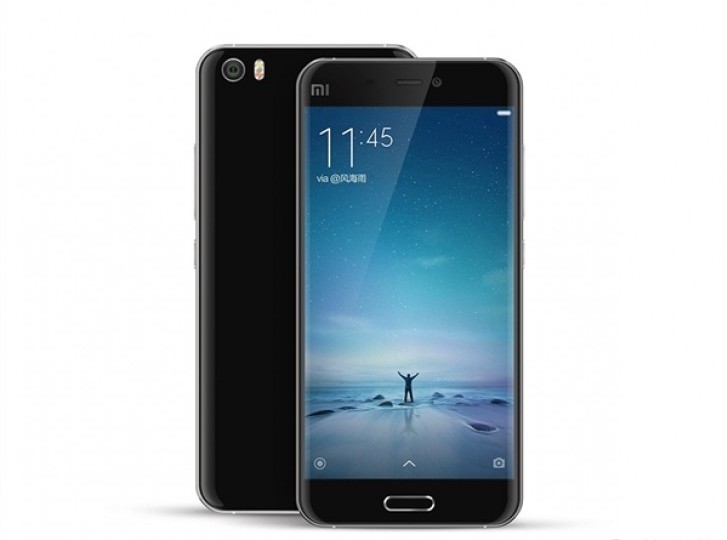
Xiaomi Mi 5
Xiaomi fans have been eagerly awaiting the Mi 5 flagship smartphone, which has been delayed due to the launch of the Snapdragon 820 chipset.
Recent rumours about the specs of the Mi 5 are contradictory with some claiming the Mi 5 will sport a 5.5-inch screen with quad HD (2560×1440) display and the others pointing to a 5.7-inch with Full HD display. What’s almost confirmed is a Snapdragon 820 chipset, 20MP primary camera and an 8MP front cameras. The device will also come with 3,800mAh battery and 4G LTE support. RAM is set at 4GB and the phone will offer 16GB/64GB/128GB storage options.
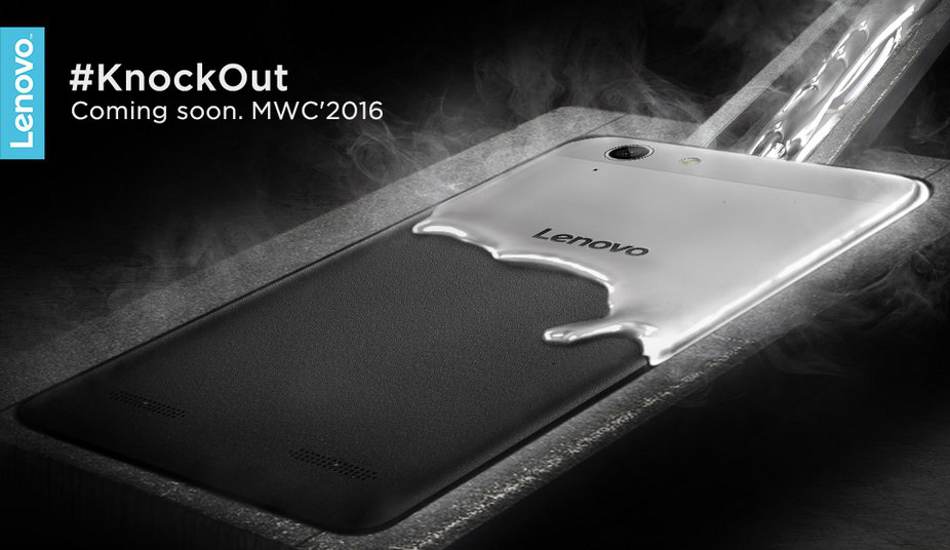
Lenovo Lemon Plus
Lemon 3 Plus is expected to come with a 5.5-inch Full HD IPS display and a1.5 GH octa-core Qualcomm Snapdragon 616 processor. It will be paired with 3GB of RAM and Adreno 405 GPU, and will be ship with Android 5.1 Lollipop operating system out of the box.
It will be equipped with 16GB of internal storage, further expandable up-to 128GB via a micro SD card.The cameras on the phone will see a 13-megapixel rear camera with LED flash and a 5-megapixel selfie snapper. It will also include 4G LTE, Bluetooth, Wi-Fi, USB 2.0 and GPS for connectivity.
Cat S60
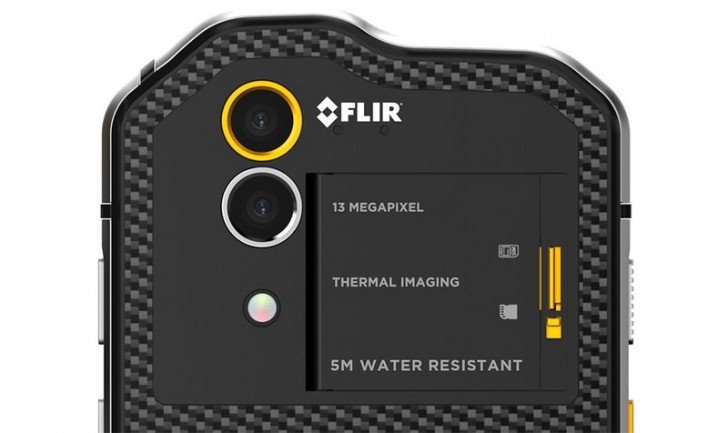
Cat’s new S60 is the latest in the line of rugged smartphones from the United Kingdom based brand, and it comes with two very unique features. Cat has added a FLIR thermal imaging camera and the first waterproof rating to a depth of 5 meters for up to an hour on this rugged phone.
The Cat S60 features a military-grade thermal imaging C2 camera module from FLIR. This is the same technology used in the Intel-powered Daqri smart helmet, enabling the Cat S60 to show temperature changes.
Other specs of the phone include a 4.7-inch 720p display, Snapdragon 617 with 3GB of RAM and 32GB storage. The phone runs Android 6.0 Marshmallow and offers 4G LTE connectivity. It also comes with a 13MP main camera, 5MP front camera. A massive 3,800mAh battery powers the device.
HP Elite X3
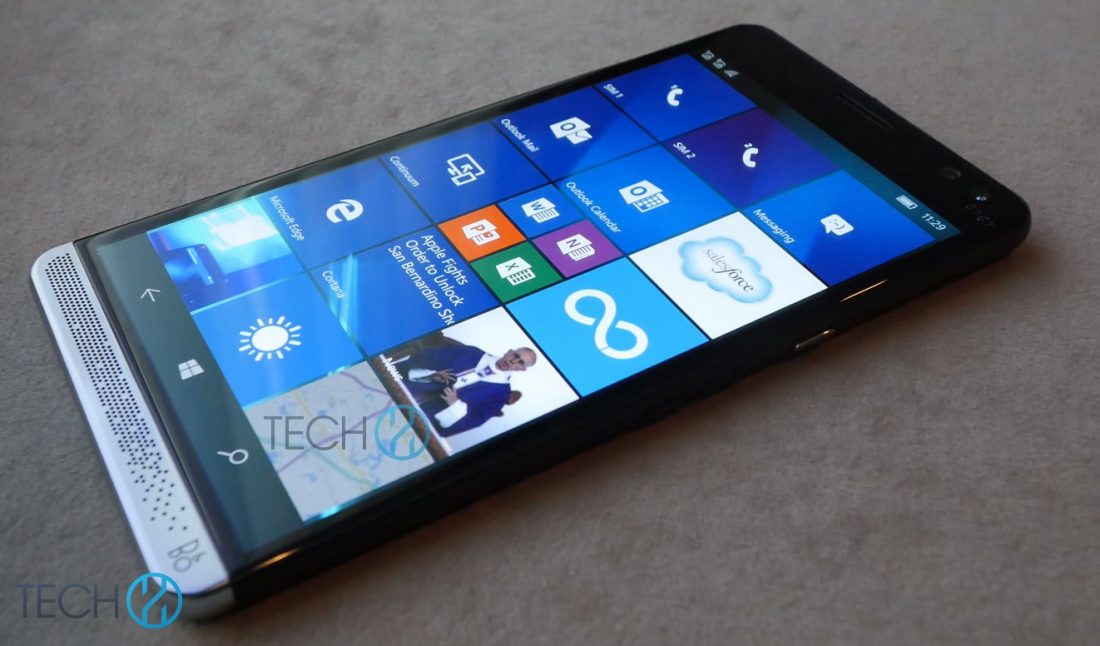
HP is expected to announce the Elite x3 at MWC next week, and as such, it’s not too big of a surprise images and specs of the device have leaked today. The Elite x3 which will be a Windows phone will pit itself against the Microsoft’s Lumia 950 XL in the Windows 10 mobile ecosystem, as it packs some very high-end innards.
The phone will come with a 5.96-inch QHD touchscreen, a 16-megapixel camera at the back, an 8-megapixel camera at the front for clicking selfies. It will be powered by Qualcomm’s Snapdragon 820 SoC paired with 4GB of RAM and 32GB of expandable storage. It will also come with support for USB Type-C and will also support USB 3.0, Qi wireless charging.
The Elite x3 will also house a fingerprint scanner, a fancy iris sensor, a special docking connection, IP67 certification for water and dust resistance, as well as MIL-STD-810G rating for withstanding drops from 1 meter or less. It will also support Microsoft’s Continuum feature. Pretty impressive we say.
Huawei P9
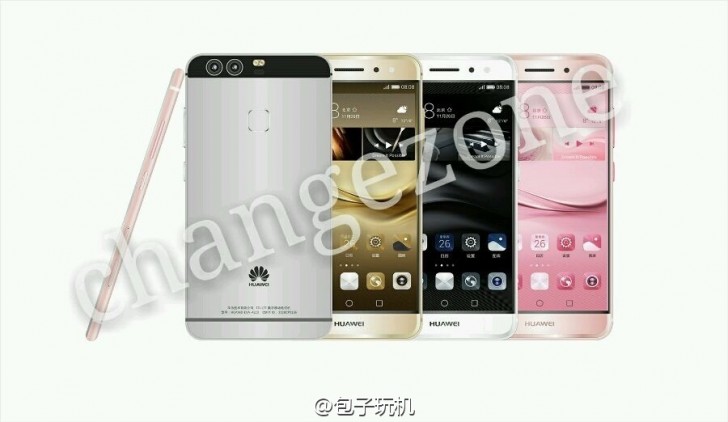
If rumours are to be believed, Huawei will also be present at the event and will be unveiling the Huawei P9 today. We have some renders that tell us what might be the look of the device as well as hints at some new features.
The renders reveal an all-metal design for the Huawei P9. What the images also show us is a dual rear camera setup and a fingerprint scanner at the back. If you look close enough, you’ll also notice a 2.5D curved screen on the front of the device. The bezels look pretty thin on the front while the power button and volume controls fall to the right side. The renders also show possible color options for the P9 in gold, white, pink and gray.
On the specs front, the P9 is likely to come with a Kirin 950 SoC, 4GB of RAM and a 5.2-inch display, none of which have been confirmed yet, of course. Late last month, there were also rumours that the P9 will come in multiple variants. What is expected is that Huawei besides launching its top of the line P9, will also come out with a cheaper P9 Lite, and a phablet the P9 MAX.
The last variant which Huawei plans to bring to the market as a treat for all its fans will be a beefed up variant of the P9, and will come with premium features.
The fourth model is set to offer a display whose size would lie between the P9, and the P9 MAX, with QHD resolution output. It will also feature additional RAM and storage. The fourth variant on top of this will feature an improved camera: a dual lens, dual (12 MP) sensor configuration described as a second-generation technology.
Sony Xperia Z6
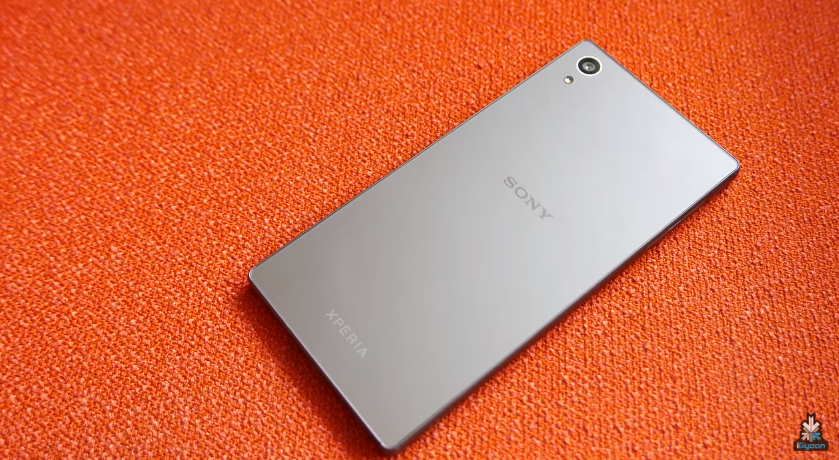
Sony Xperia Z5
This last one is the least likely to make an appearance at the MWC since Sony launched the Xperia Z5 only 6 months ago. However, some rumours have suggested that Sony may just unveil the Z6 or may talk about the phone(s) a little.
It is rumoured that a total of six Z6 devices will be launched this year: a 4-inch Xperia Z6 Mini, a 4.6-inch Xperia Z6 Compact, a 5.2-inch Xperia Z6, a 5.8-inch Xperia Z6 Plus, a 6.4-inch Xperia Z6 Ultra, and a 5-inch Z6 Lite. Now, Sony is yet to confirm the rumours, but you can expect some, if not all, to be true.
What you can expect from the Xperia Z6 is a build that’ll reflect the Z5 with a squarer, flatter design rather than the traditional rounded edges that Sony had previously stuck to with the older models. The Z6 will also come with a fingerprint scanner added to the power side button.
The burning question is whether Sony will go for a 2K display with the 5.2-inch Xperia Z6 or will it continue with a Full HD display as it has with the Z5. Doing the former would mean having to sacrifice battery life, which Sony isn’t all too fond of doing at the moment.
In what will be a major shift from tradition, Apple has set its sights on launching three iPhones in a calendar year. It had almost become a tradition for Apple to release two variants of its flagship phone, a cheaper variant along with a more expensive one in the past years. It was the case for the iPhone 5 series, and so was the strategy followed for the last set of iPhones from 2015.
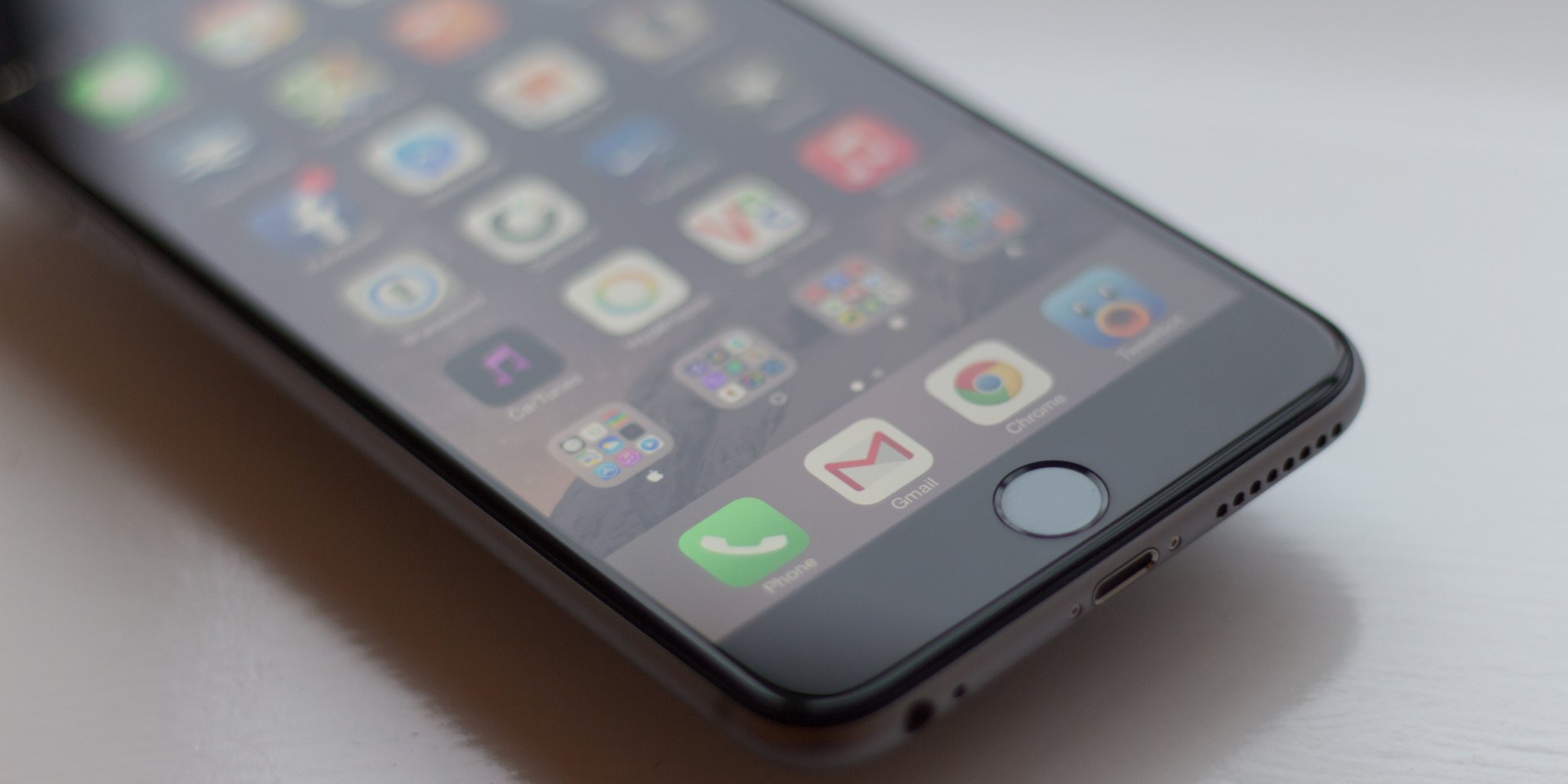
For weeks now we have been hearing rumours that Apple is working on a 4-inch iPhone. The device is likely to be called the iPhone 5se and according to reports will be unveiled at an Apple event on 18th March 2016. Here’s a roundup of everything we know so far from the various rumours that have been going around about this still to be confirmed phone.
Design
This device which is believed to be a replacement for the current entry-level iPhone 5s, has already managed garner a lot of attention. Many analysts predict that it could even turn out to be the years hottest model. The 4-inch display is expected to be a great asset to the iPhone 5se’s design. The idea behind this small form factor is what the company’s founder Steve Jobs believed was to give the user a comfortable experience of navigating across the phones display with just one hand.
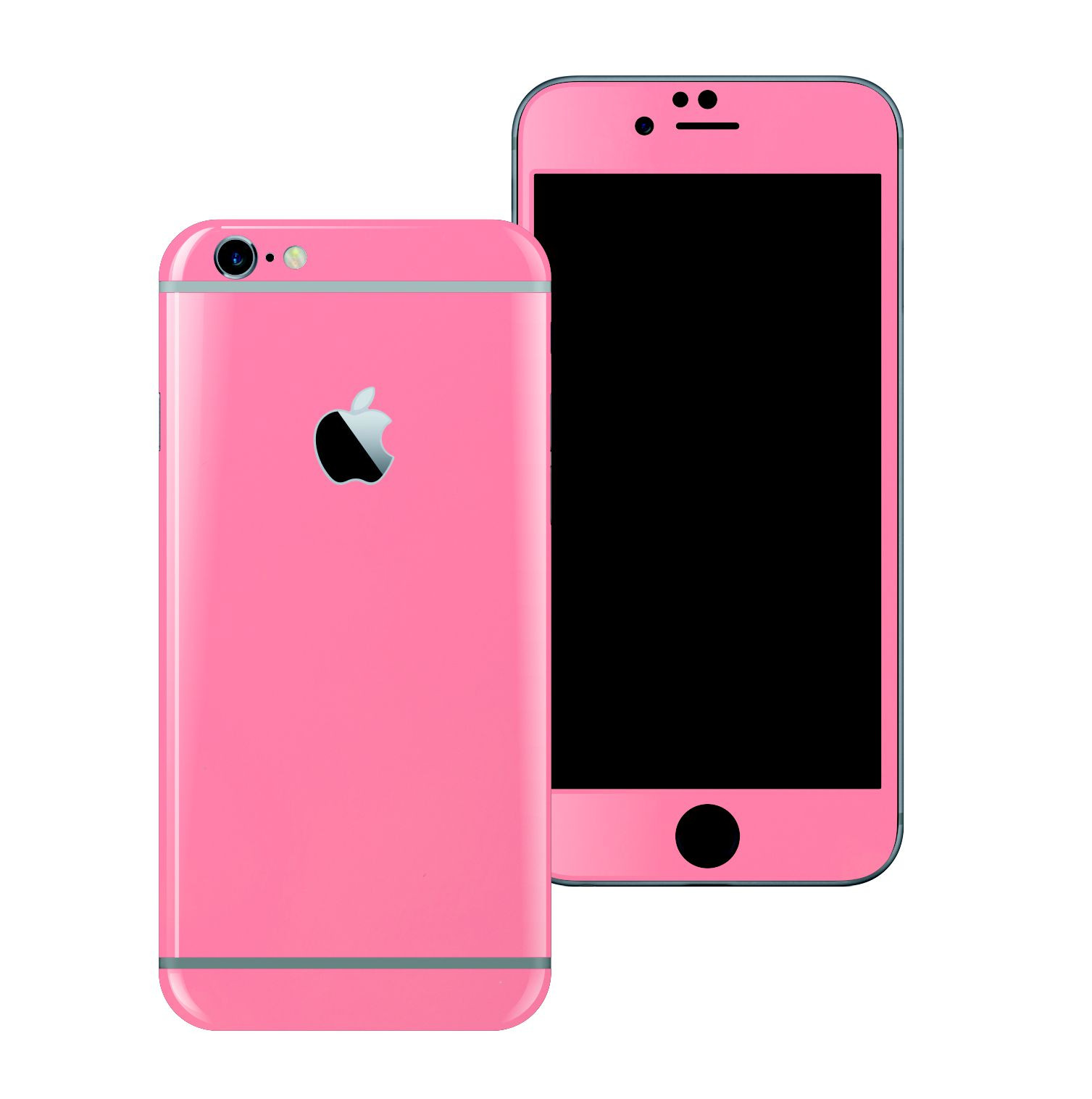
According to reports, the sharp, angular edges of the iPhone 5s are rumored to be replaced by smooth, curvier designs that Apple debuted on the iPhone 6 and iPhone 6 Plus. The phone is expected to come out in three color variants, “Rose Pink”, “Space Grey” and ” Silver”. The Gold hue is expected to be given a miss for the cheaper iPhone 5se.
Processor and Other Specification
The new iPhone 5se, as rumours suggest, will come with solid processing power so that it can keep pace with the best flagships available in the market. The phone is said to pack under the hood either an A8+ M8 combo, or the more poweful A9 SoC which is currently used on the latest and greatest iPhones that Apple can offer in 2016. The phone will come equipped with 1 GB of RAM, 16 GB internal storage. A 1642 MaH will come housed inside the phone.
Having said that, taking in perspective the phone’s relatively small 4-inch display, and Apple’s previous track record of being a bit economical with the firepower they add to their phones, betting on the new smartphone to be equipped with the A8 would seem more plausible.
Camera
Apple which has always been known for bringing to the users phones with great cameras, plans to shower the iPhone 5se with good specs. Reports suggest the iPhone 5se to get the same 8-megapixel rear and 1.2-megapixel front-facing cameras from Apple’s iPhone 6. Sadly, the better 5-megapixel front camera from the 6s will fail to make the cut.
The new phone though will be able capture large panorama shots, along with getting the capability of capturing Live Photos.
Display
An interesting rumour doing the rounds about the iPhone 5se is that the phone will support a sapphire display, which is highly scratch and shatter resistant. In fact, some of the higher-end Apple Watch models have sapphire display as well as OLED technology, which Apple is rumoured to bring to its next flagship device, but will not likely be seen in the iPhone 5se.
One thing that is also expected is the phone to miss out on the 3D touch display which the iPhone 6s and 6s Plus come equipped with, which shouldn’t come as a big surprise considering the expected low price point of the iPhone 5se.
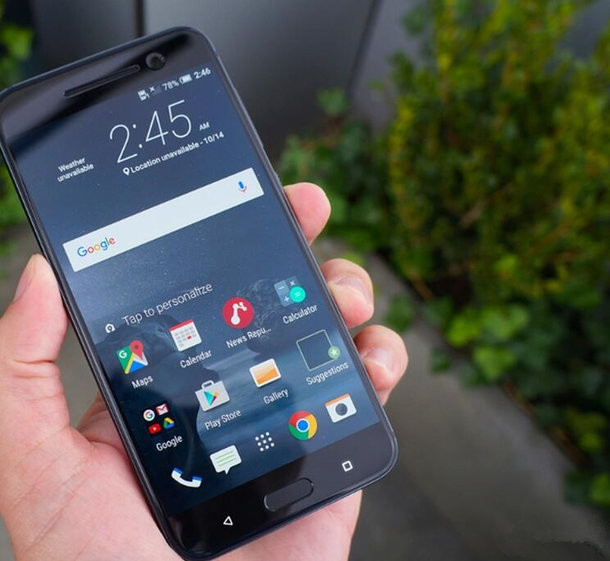
Over the past few weeks we’ve seen a lot of leaked live images of the HTC One M10, some in a dimly lit setting and one in white. Now, we have the One M10 in black captured in broad daylight, revealing the front of the phone absolutely clearly as well as the Sense UI that the device will come with on top of the Android Marshmallow OS.
The picture pretty much confirms past images of what the device is going to look like. HTC has ditched the M-series design language and has instead embraced the A9-like design with a home button and ditching the BoomSoud dual front speakers. This may not work in HTC’s favour seeing as how the One A9 received poor responses and did not really appear as anything unique for the company in terms of design. We’ll still have to wait and see for the actual unveiling before making a hasty judgement, but the design so far is fairly underwhelming.
The picture also shows the handset running HTC’s Sense UI, which hasn’t undergone any major changes. This is good news for those who have a soft spot for HTC’s custom UI. The HTC One M10 will sport a Snapdragon 820 chipset under the hood along with a powerful graphics card.
Other rumoured features include a Touch ID fingerprint scanner housed inside the home button, 4 GB of RAM with 16 GB and 32 GB internal storage variants and a battery capacity of 3,500 mAh. The device is expected to come out sometime in April.
China’s Apple is all set to launch its latest flagship, Xiaomi Mi 5 to eager audiences this week on the 24th at a media event during the upcoming Mobile World Congress 2016. This is the first time that the Chinese smartphone company will be rubbing shoulders with the big boys at MWC, so as such Wednesday’s launch event holds great importance for the company.
In the run-up to the launch, the company has already posted multiple teasers to wet the appetite of fans around the globe calling the upcoming handset ” all you ever imagined, and more.” The company has been nice enough to reveal the phone’s SoC, but other than there has been a lot that has leaked onto forums on the Internet. Today, we bring to you an assortment of the most credible of those leaks and rumours.
Design
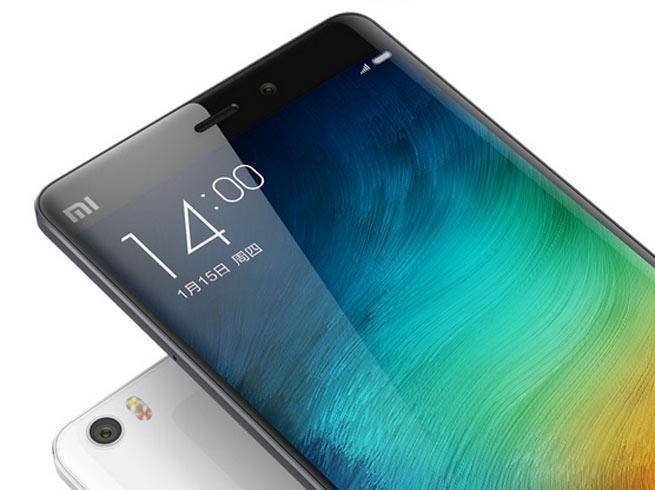
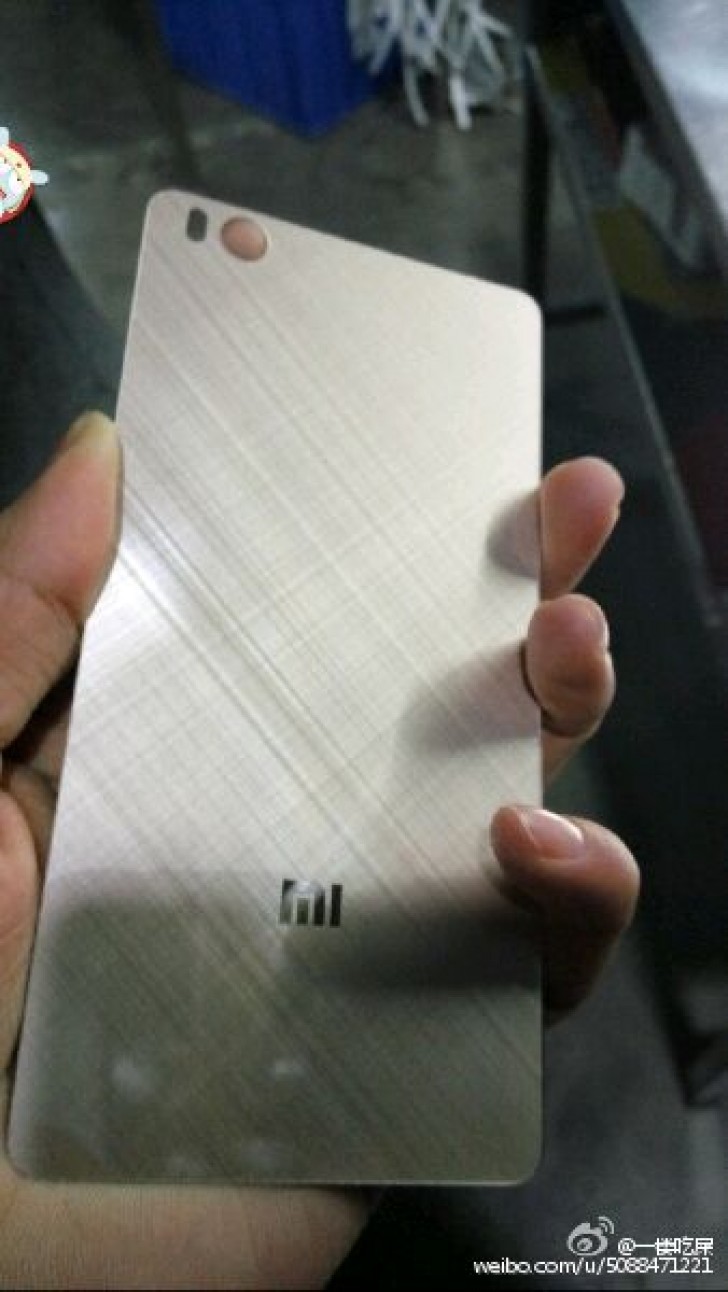
This flagship killer from Xiaomi is to come with impressive design scheme. The phone will see a metallic frame with glass panels at the front and back of the phone. It will be available in colors like gold, pink, silver and black.
On the design front, the MI 5 seems to show thin bezels. It looks like the phone will not have a 2.5D curved glass. The screen to body ratio looks great and you also see a thinner home button at the bottom. A fingerprint scanner which will be able to receive 3D commands on the front right under the hardware home button is also expected.
Processor
The Xiaomi Mi 5 will be powered by the highly anticipated Snapdragon 820 SoC. This chipset is the next big thing by Qualcomm, and it will be seen in many of the major flagship devices set to come out this yeat, Xiaomi will be one of the first devices to join the party.
The 820 SoC with X12 LTE supports the ultimate in connectivity, graphics, photography, power and battery efficiency. The SoC comes with the Adreno 530 GPU which offers 40% improvement to graphics performance, compute capabilities, and power usage when compared to last year’s Adreno 430, and at the same time this SoC will be almost 50% more energy efficient than last year’s chip. Big gains indeed.
Camera
Xiaomi’s co-founder and President, Lin Bin, along with other from the top brass of the company such as Hugo Barra have been sharing camera samples of the Mi 5 handset for some time now, hinting at how great the camera on their new phone is.
Latest reports reveal the phone to come with a beefy 26-megapixel camera with f/1.6 lens. The is front camera is expected to be an 8-megapixel shooter. The main camera is also expected to come with tech like laser autofocus and Optical Image Stabilization.
Display
There has been conflicting news about the display on the phone. Earlier reports indicated a 5.7 inch Full HD display on the phone while others pegged the phone to come with a 5.2-inch QHD display with 2.5D curved glass on the front.
But, latest reports deem these to be fanciful tales from the land of rumours, and claim that the phone will indeed come with a 5.2 inch Full HD display only. The company is also expected to give a miss to the 2.5D curved glass.
One thing that is surprisingly being tipped to make the cut is the phone using a pressure sensitive display panel, much like Apple’s Force Touch or 3D Touch display that’s used on the iPhone 6s and the 6s Plus.
Other Specs
The Xiaomi Mi 5 will feature 3 GB of RAM on 32 GB storage model and 4 GB of RAM on 64 GB storage edition. It will also come with support for microSD card slot. The Xiaomi Mi 5 is expected to feature 802.11ad an industry-first Wi-Fi connection standard. A battery of 3600 mAh will be present inside the Xiaomi Mi 5. The device should also be compatible with Qualcomm’s Quick Charge 3.0.
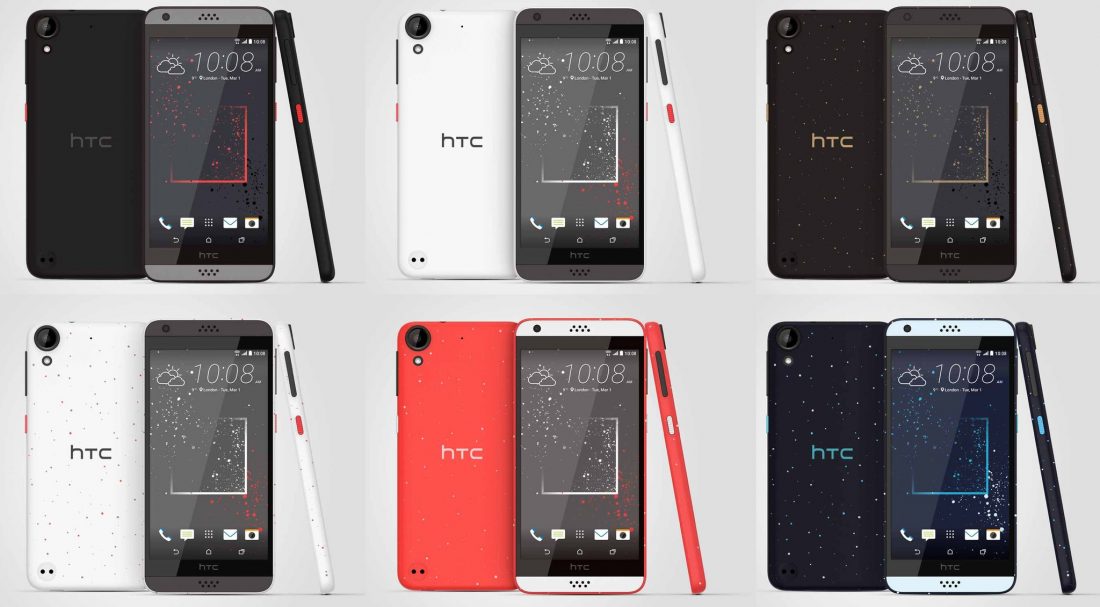
While the world is busy thinking about the One M10, HTC’s upcoming flagship smartphone that is scheduled for an April launch, a new HTC device has just been leaked by popular tipster @evleaks. The device is called A16 and is likely to be one of the mid-range smartphones from the company and could be HTC’s MWC product.
The image posted on Twitter shows the device in six great colour options. The different options combine two to three colours for a very funky looking phone. Apart from that, you get a nice look at the front and back of the device and there’s plenty to see here. What’s more, looking at the A16, there is plenty that isn’t seen in the One M10. The A16 shows a very HTC Desire-like design.
The front shows off some large bezels and the HTC logo on the front. The top and bottom house the BoomSound speakers and the grills look a tad different which isn’t such a bad thing. The right side has the volume rocker and power button. Over on the back, one notices something interesting on the bottom. There are two holes which may just be a third speaker or strap holes though it’s hard to tell at the moment. Meanwhile, the camera is placed at the top left corner with the LED flash just below it.
Now, from what the images reveal, the A16 does look pretty funky and looks to aim a younger demographic with its look. The design of the A16 on first glimpse looks a lot more appealing than what the alleged One M10 renders and live images have revealed. We’re not sure when the A16 will come out yet and we have no detail on its specs. The A16 could be unveiled at the MWC seeing as how the One M10 has been pushed to April.
Things are getting ugly between the FBI, and Apple. In latest developments in this ongoing saga, the Department of Justice has gotten itself involved and has filed a motion asking Apple to comply with the FBI order.
Over the last few days, the courts ordered Apple to create a special version of the iOS to access a work iPhone 5c of one of the suspected terrorists involved in the San Bernardino shooting. What ensued then was Apple bringing the debate to the public discourse when its CEO, Tim Cook, wrote a strongly worded open letter to its customers worldwide in which it insinuated that it will not comply with the court’s orders as it will be detrimental to the privacy of each and everyone using the iPhone 5c.
This motion filed against Apple shouldn’t come as a surprise after what the Obama government has already said on the issue. The government earlier revealed that it is in the favour of FBI’s argument, and considers rooting out terrorism a priority over the privacy of millions around the globe.
The Department of Justice filing which could have grave implications for all of us read,
“Apple left the government with no option other than to apply to this Court for the Order issued on February 16, 2016. The Order requires Apple to assist the FBI with respect to this single iPhone used by Farook by providing the FBI with the opportunity to determine the passcode. The Order does not, as Apple’s public statement alleges, require Apple to create or provide a ‘back door’ to every iPhone; it does not provide ‘hackers and criminals’ access to iPhones; it does not require Apple to ‘hack [its] own users’ or to ‘decrypt’ its own phones; it does not give the government ‘the power to reach into anyone’s device’ without a warrant or court authorization; and it does not compromise the security of personal information.”
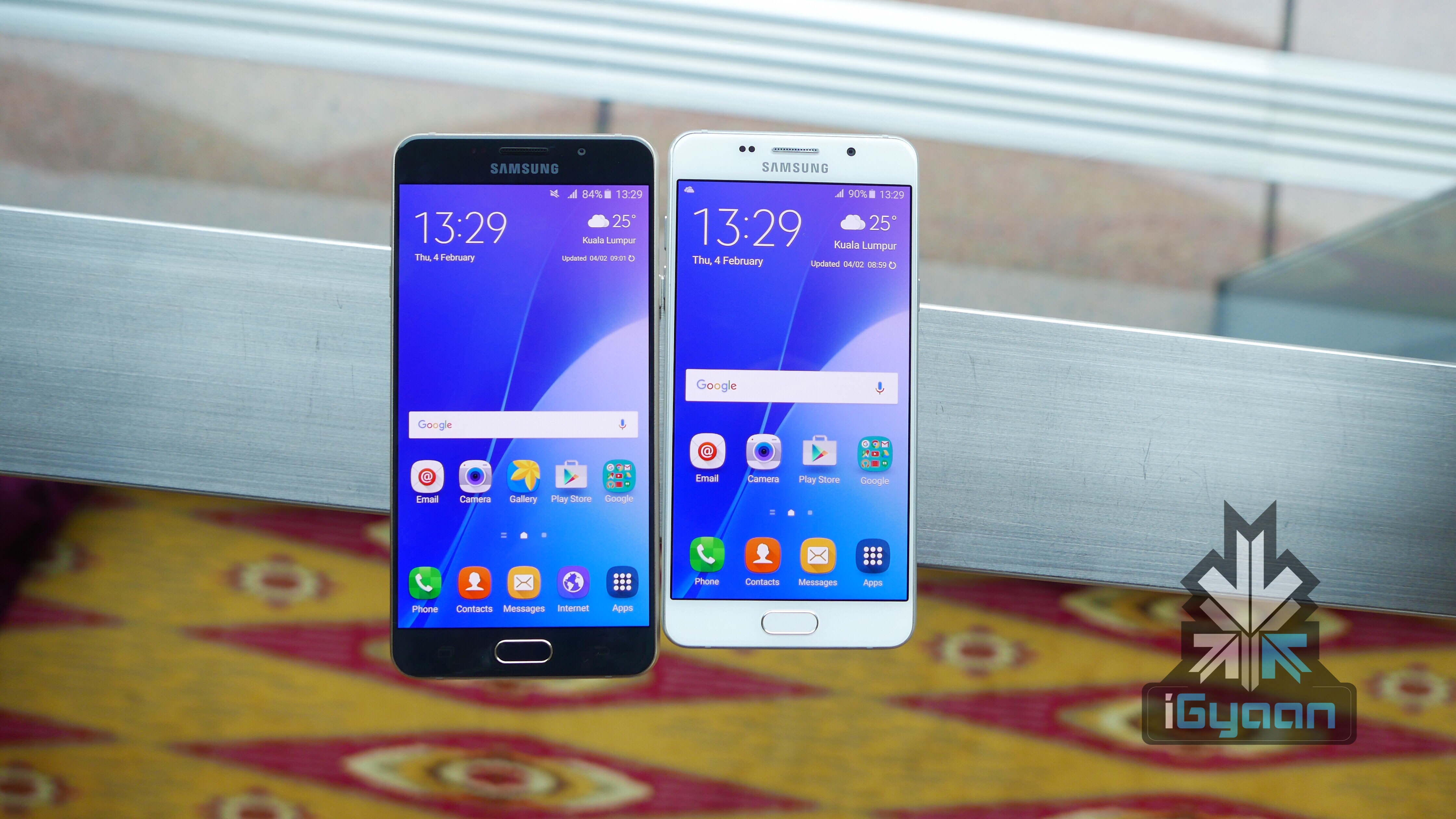
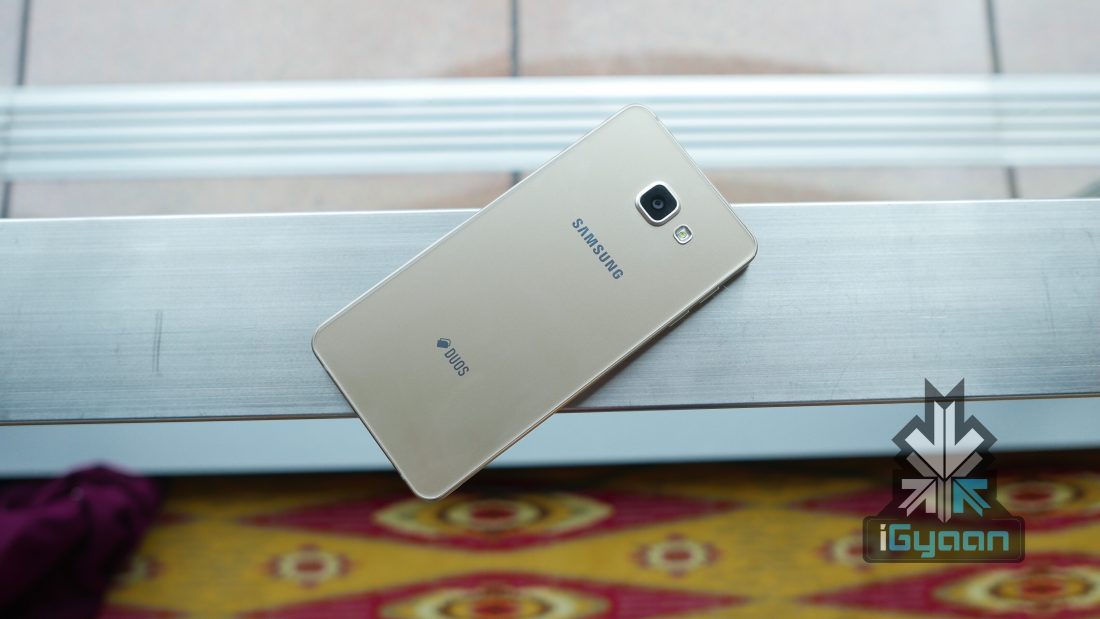
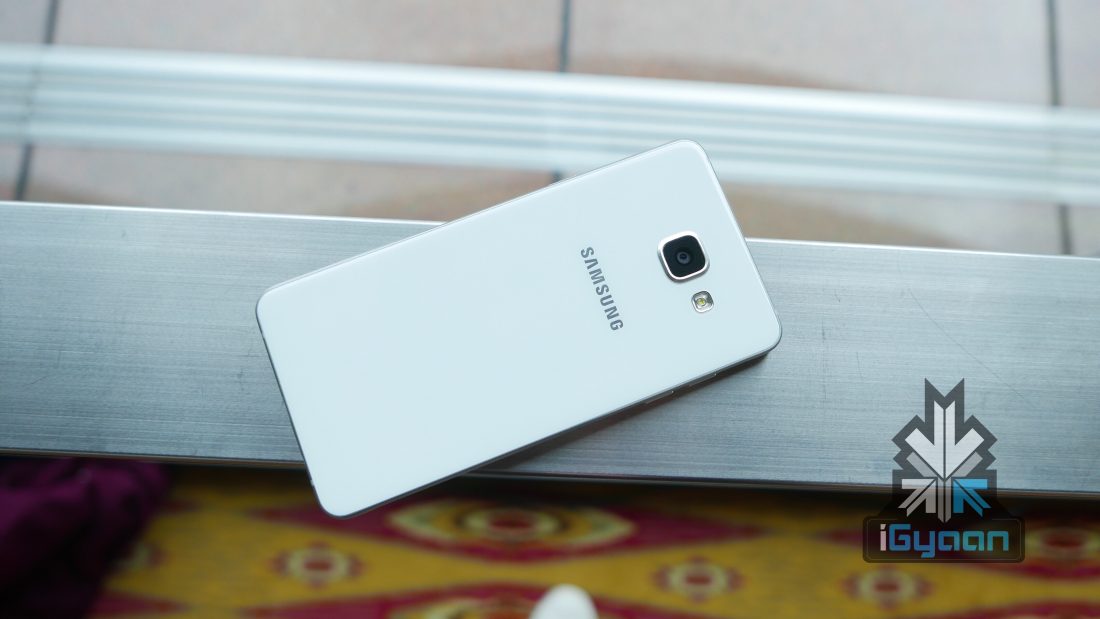
Earlier this month, Samsung unveiled the new Galaxy A5 and A7 devices at the Samsung Forum. The mid-range devices come with updated specifications and features including OIS and a fingerprint sensor. The 5.2-inch A5 is priced at Rs 29,400 while the 5.5-inch A7 come with a price tag of Rs 33, 400.
The updated A-series take the S6 glass and metal design language forward this year and introduces them in the Galaxy A7 and A5. The A7 sports a 5.5-inch AMOLED FHD screen with 1920 x 1080p resolution and a 1.6 GHz octa-core processor, 3GB of RAM and 16GB internal storage and 3,300mAh Fast Charging battery.
Galaxy A7 (2016)
On the camera front, the A7 features a 13MP primary camera with f/1.9 aperture and OIS. The front camera also features a f/1.9 aperture.
The A5 upgrades to 5.2-inch AMOLED FHD screen with 1080p resolution. 2GB RAM and 16GB storage, octa-core processor and bumps the battery to 2,900mAh as well. A5 packs a 13MP primary camera with OIS and a 5MP front camera.
Galaxy A5 (2016)
The highlight of the devices is its new design language that borrows the glass and metal combination seen in last year’s Galaxy S6 flagship. The devices look and feel premium and great in the hand. Both the devices also come with fast charging capabilities, and you’ll get around 3-4 hours in 15 minutes if charge.
The UI of the devices is quick and snappy with little bloatware. All stock Samsung features are available including Flipboard and there’s isn’t anything new to be found here. The only downside here is the pricing of the devices which is now close to the Galaxy S6 flagship, especially the A7. This may lose a lot of potential buyers as those willing to shell out the amount would rather go with the S6 rather than the A7 given a faster processor, fantastic camera and other flagship specs in the former.
Specification
Galaxy A7
Galaxy A5
Display
5.5? FHD Super AMOLED
5.2? FHD Super AMOLED
Processor
1.6GHz Octa-Core Processor
1.6GHz Octa-Core Processor
RAM
3GB
2GB
Front Camera
5.0MP(f1.9)
5.0MP(f1.9)
Rear Camera
13MP(f1.9) AF with LED Flash
13MP (f1.9) AF with LED Flash
Storage
16GB
16GB
Expandability
128GB
128GB
Battery
3,300 mAh, Fast Charging
2,900 mAh, Fast charging
Connectivity
Wi-Fi 802.11 a/b/g/n, Bluetooth® v 4.1, ANT+, USB 2.0, NFC (UICC, eSE)
Wi-Fi 802.11 a/b/g/n, Bluetooth® v 4.1, ANT+, USB 2.0, NFC (UICC, eSE)
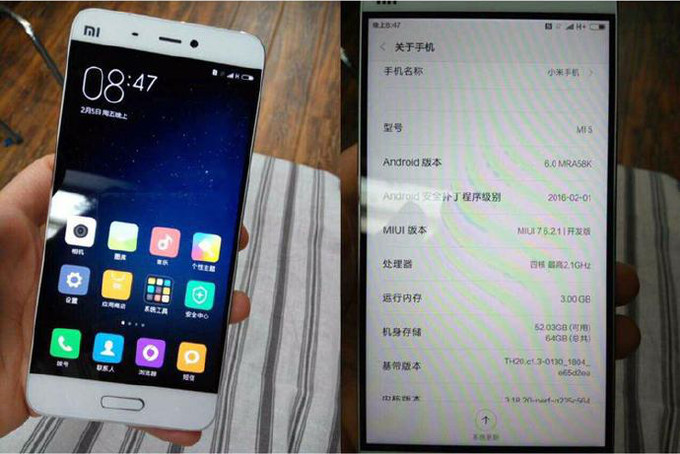
Ahead of the Xiaomi Mi 5 launch on 24th February, leaks about the phone coming in thick and fast. The latest leaked images reveal the phone in all its glory with a 5.2-inch 1080p display, and a fingerprint sensor.
A screenshot has also leaked which shows the phone’s information and takes the lid off on this badly kept secret’s internal hardware specification.
The screenshot reveals most of what was already known. The screenshot shows the phone to come with a Qualcomm Snapdragon 820 clocked at 2.1 Ghz paired with 3GB of RAM for smooth performance. Internal memory is revealed to be 64GB storage (of which 52GB is available), and it shows the phone to come running Android 6.0 with MIUI 7.6.2.1.
The specifications look impressive, so does the phone’s aesthetics in the leaked image, what’s left now is to see just how well the phone does in the comparison to the other flagships in the market.
As the Android operating system has grown, Samsung has not just grown with it, but completely dominated it. From the platform’s early days it has complemented the software with aggressive hardware and pleasing aesthetics. The South Korean manufacturer has sold more mobile phones than any other Android device manufacturer, and this success has been entirely built on Samsung’s Galaxy brand which to date has churned out over 100 separate devices.
Samsung’s Galaxy S range of flagship smartphones has been one of the major reasons behind Samsung achieving such success at the market. In all honesty, the Galaxy S series devices have done as much to help the Android operating system grow, as the platform has done to help it grow. Today we take a trip down memory lane, and take a look at the Galaxy S series flagships from the year’s gone by.
Samsung Galaxy S
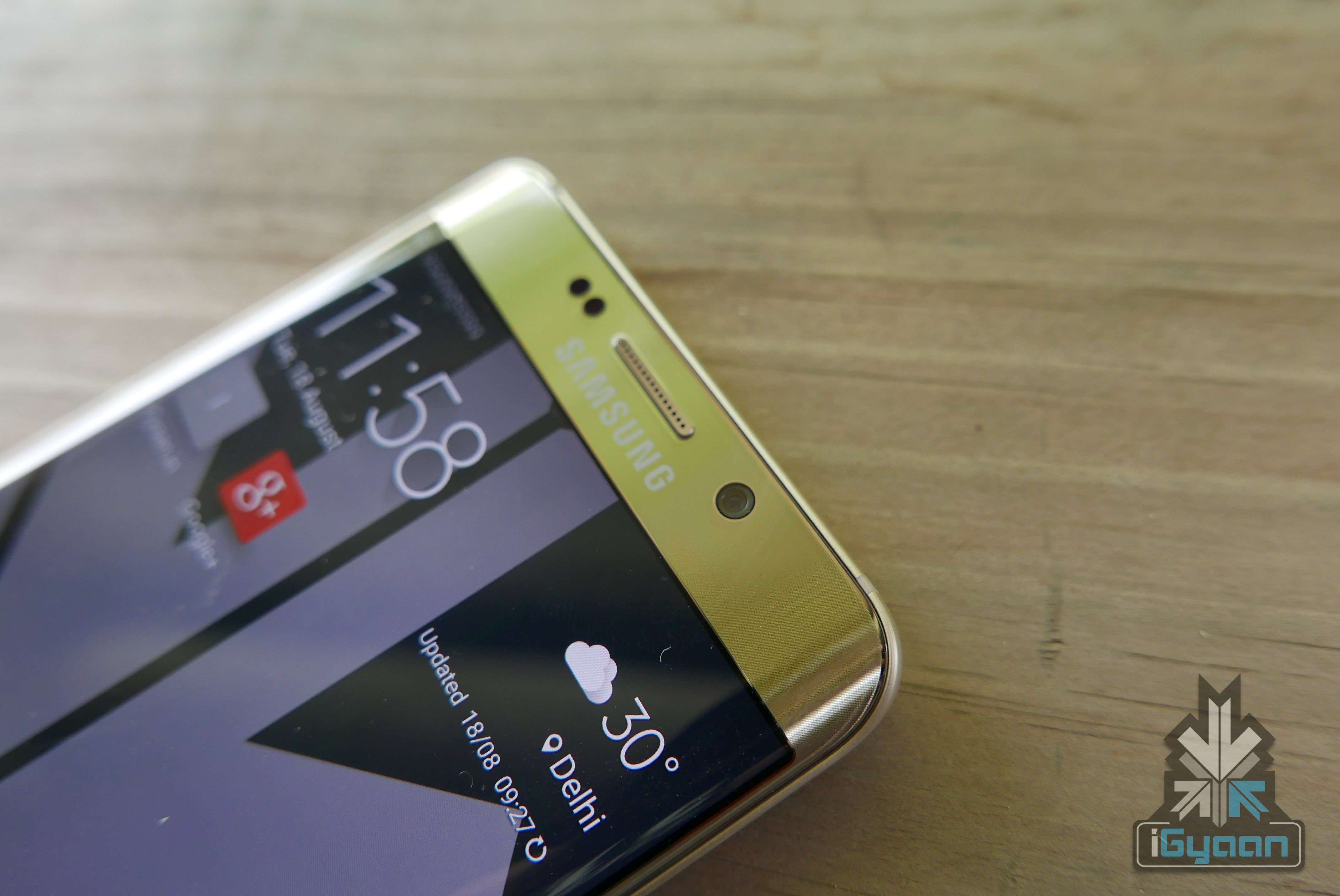
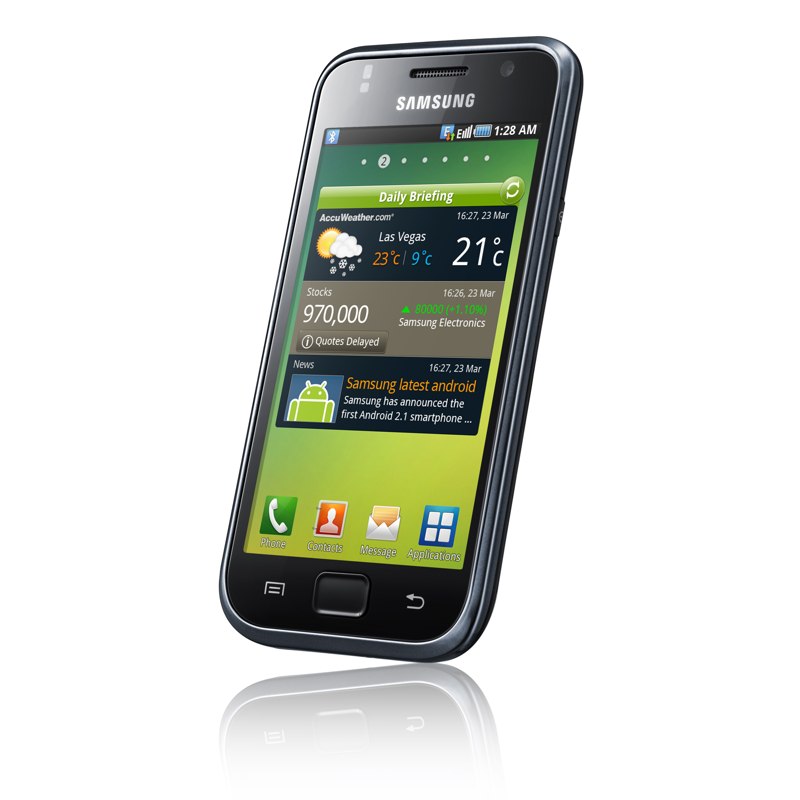
The original Samsung Galaxy S was released in June 2010 and by the time it was taken off shelves, the handset sold over 24 million units worldwide. This Android device was pitted against the iPhone as a high-end, premium smartphone alternative. The Galaxy S set the tone for the rest of the Galaxy series and as such sealed its legacy forever.
The phone came with 1 GHz processor, a 4.0-inch AMOLED screen and had a 5MP rear facing camera without a flash, and a front facing VGA camera. The Galaxy S came with impressive specs for the time and was generally accepted to be one of the better devices to come with Android on-board but the sales still were a little disappointing. The device was originally launched running Android 2.1 Eclair, and was later updated to 2.2 FroYo, and finally then finally updated to 2.3 Gingerbread before being ignored by Samsung for further updates.
Samsung Galaxy S II
The Summer of 2011 saw what probably was the game changer for Samsung. The South Korean company which had been making phones long before its competitors, HTC and Apple had even stepped into the industry was finally going to have its moment of glory.
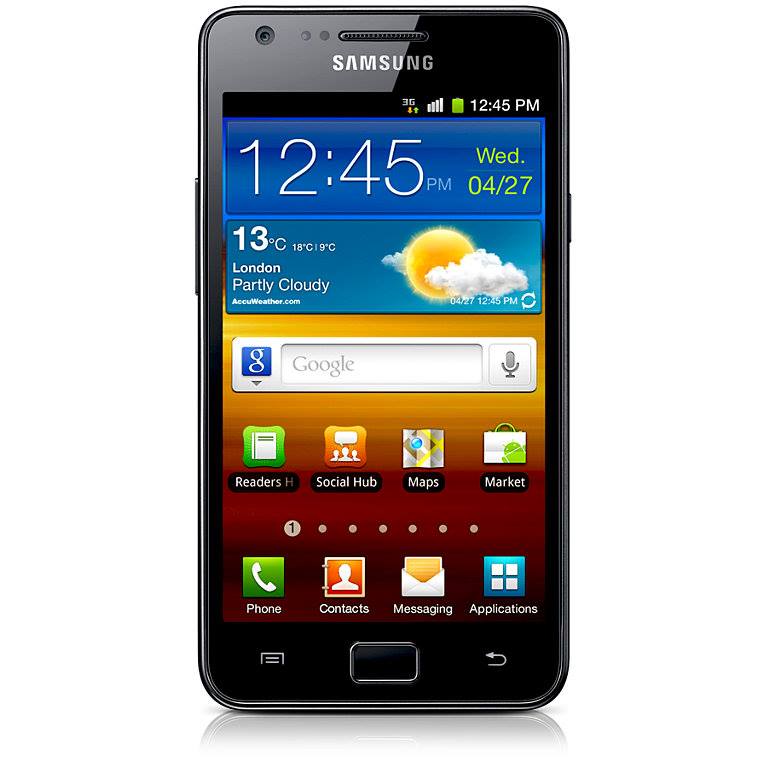
The Galaxy S2 turned out to be the device which secured Samsung’s place at the top of the Android tree. The S2 launched in more than 120 countries in the summer of 2011, and was met with great reception with over 50 million S II being sold by Samsung Worldwide.
The phone was big on internals, and featured a dual-core Cortex A9 processor paired with 1 GB of RAM and a newer generation, 4.3-inch Super AMOLED display. The display was also covered with the first generation Corning Gorilla Glass coating.
There was an 8MP rear camera and this time it came with a flash. The front camera was also bumped to a 2MP camera. The design pattern evolved from the first S series handset and saw the impressive hardware being nicely tucked into a squared design that was very thin. Importantly, the phone’s design incorporated space for a Removable Li-Ion 1650 mAh battery which was one of the biggest draws for the phone.
Galaxy S III
If S II was good, then S III was going to be even better for the South Korean tech giant. Riding on the back of the S II, Samsung came into 2012 firmly as the market leader. The S series phones by now had evolved from being just high-end Android offerings, to being positioned as the “Anti-iPhone” smartphones.
S III was at that time Samsung’s best-selling smartphone to date. It’s helped the South Korea-based company dethrone Apple’s global market share, and it made the Galaxy S series name synonymous with Android.
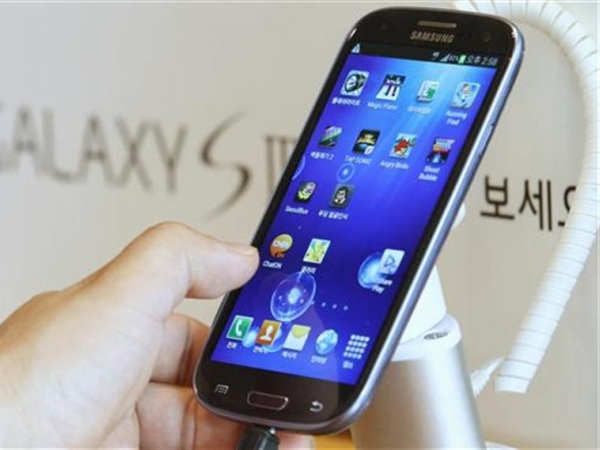
S III saw a design change for the Samsung Galaxy S series. The S3 perfected on the chinks of the phone before and came to the market as a beautiful offering curved design and brilliant specs.
The smartphone was powered by a quad-core 1.4GHz Cortex-A9 CPU, while the Mali-400MP GPU also showed up alongside 1GB of RAM. The phone retained the 8MP rear camera but produced better pictures owing to ertain software improvents. The display on the phone was a 720p HD resolution SuperAMOLED screen. S III came with Android 4.0 Ice Cream Sandwich which paired with the internals produced great results.
Samsung also started to significantly improve things at the software end starting with the S III. It included many additional features such as Smart Stay, which wallowed the screen to stay on when the user was looking at it. The S III also introduced the Nature UX, whichbrought in new notification whistle and watery sounds when unlocking the device. All of these addtions very popular with its growing customer base.
Galaxy S IV
Samsung introduced in 2013 the Galaxy S IV. Samsung sold over 40 million of these in just the first 6 months, and by the end of the year ended up with 65% market share of all Android devices but according to reports from that time, the company apparently was’nt too happy with its showing. Nonetheless, the phone again managed to cement its supremacy in the market.
The handset was built around a 5.0-inch, 1080p SuperAMOLED screen. Samsung fitted it with a higher clocked a 32-bit, quad-core version of the Qualcomm Snapdragon 600 processor clocked at 1.9 GHz. The phone used 2 GB of RAM for smooth performance. It came with a minimum of 16 GB of internal storage and a beefy 13MP rear camera. The S4 also came with a heart rate sensor which was a first for the market.
Galaxy S5
Galaxy S5 used as illustration
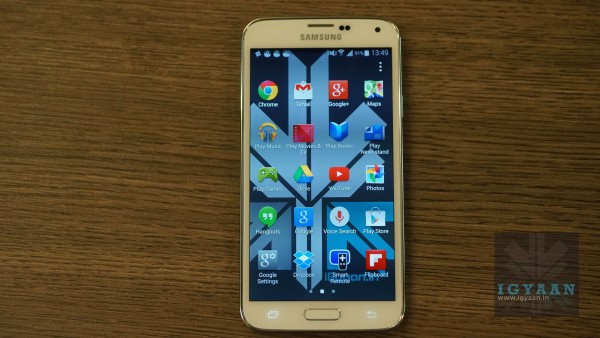
2014 saw Samsung bring to its fan base the S5. The galaxy S5 was not a huge departure from the S4. Key differences lay in an upgraded processor, camera and nifty features like water/dust resistant body. The phonesaw great sales at the market, and was widely appreciated for its design which saw a polycarbonate rear panel that provided access to a removable battery.
The S5 came rocking two Quad Core processors, one clocked at 1.9 GHz and the other at 1.3 GHz. Samsung claims that unlike its predecessor, the Galaxy S5 had both the quad cores running simultaneously thereby giving you the experience of a true octa processor. The phone used the 1.3 GHz Quad core to handle the lighter applications, whereas the more power intensive apps (HD games, HD video playback) were taken care of by the 1.9 GHz Quad Core processor. 2 GB RAM is what supports the processors in the Galaxy S5.
Galaxy S6
The last iteration of the Galaxy S series phones came in multiple variants in 2015. The S6 was avaialble in three variants, the standard S6, the more fancy looking S6 edge, and the S6 edge+.
The Samsung Galaxy S6 featured many radical changes. The company moved a more premium metal and glass build. The use of these new build materials not only makes for a device that is still one of the best looking in the market, and frankly was a far better designed smartphone than the previous years had seen. It did though result in the doing away with the microSD card slot and removable battery.
Talking about the two most well recieved variants of the S6, both carried almost identical specs, and only diffrered slightly when it came to the processor and battery power. Both of them sport a 5.1-inch QuadHD Super AMOLED (577ppi) and feature 3GB LPDDR4. The former handset is powered by 2.1GHz Exynos octa-core, while the latter embeds a bit powerful 2.5 GHz Exynos octa-core processor. Running on Android 5.0.2 Lollipop with 16MP rear and 5MP front snapper, the standard Galaxy S6 gets its juice from the 2550mAh battery. On the other hand, its curvy counterpart boasts a slightly robust 2600mAh battery.
.
The rumours and leaks are coming in hot and fast for LG, Samsung and Xiaomi. These three are the big names that are set to unveil their flagship devices in a couple of days from now at the MWC 2016 in Barcelona. A lot of rumours and leaked images have been surfacing about the Galaxy S7 and the Lg G5 flagships. Today, some new leaked images of the Xiaomi Mi 5 flagship have emerged that reveal design details and some specifications.
The image of the alleged Mi 5 shows it running Xiaomi’s MIUI build 7.6.2.1. interface on top of Android 6 Marshmallow, and the processor is clocked at 2.1 GHz. It also shows that the device feautures 3GB of RAM and 64GB of storage confirming earlier rumours.
Apart from this, the Mi 5 is expected to boast of a 5.2-inch Quad HD display and will be powered by a Snapdragon 820 chipset like many other flagships will be this year. It also suggested the phone will have a 6-element 16MP camera on the back with f/2.2 aperture and 4K video recording.
On the design front, the MI 5 seems to show thinner bezels as opposed to recent renders. It also looks like the phone will not have a 2.5D curved glass. The screen to body ration looks great and you also see a thinner home button at the bottom.
In just a couple of days we’ll know exactly how the Mi 5 as well as the Galaxy S7 and the G5 look and how close the rumours were in terms of specifications. Follow this space for everything on the MWC 2016.
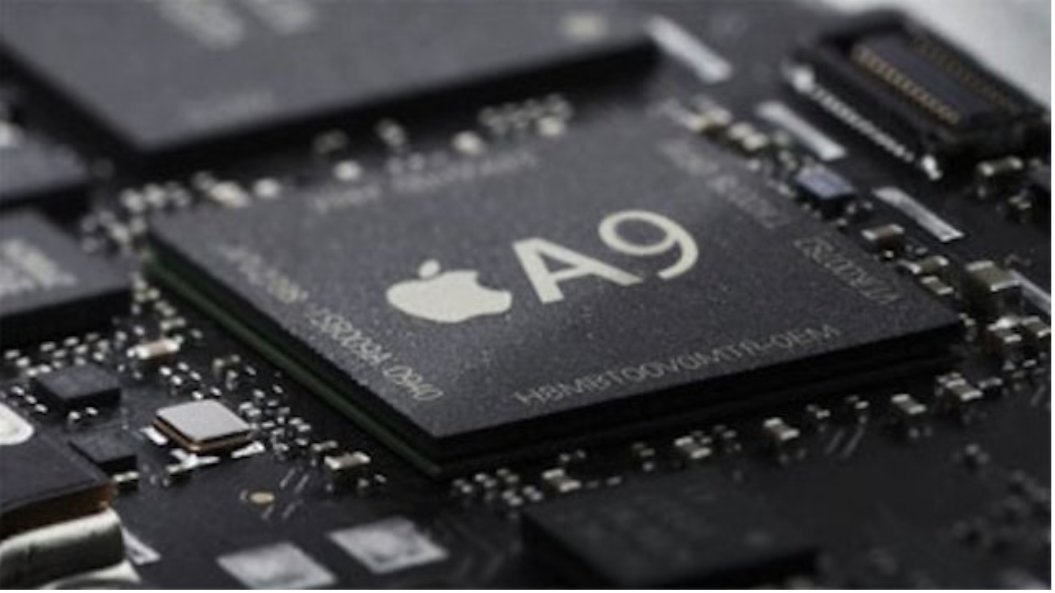
According to latest reports, the iPhone 5se will come equipped with an A9 processor, and the iPad Air 3 will be equipped with the A9X chip. These are the same chips found currently on the iPhone 6s, the iPad Pro.
Early iPhone 5se rumours pointed towards information on the processor regarding the processor. Multiple reports suggested it to come with the A9 while others pointing towards the previous-generation A8. But latest reports from reliable sources confirms what already was expected.
Latest reports also corroborates earlier reports about Apple planning to introduce the iPhone 5se and iPad Air 3 during an event in March. Previous rumors all point to this event taking place on Tuesday, March 15.
The still to be announced iPhone 5se is Apple’s 4-inch iPhone, which will be sold alongside its larger-screened flagship devices. iPhone 5se rumors suggest it will look like a cross between an iPhone 5s and an iPhone 6s, and will use the iPhone 5s body with the curved display glass of the newer device.
The iPad Air 3, will feature several design similarities with the iPad Pro. It is expected to include four speakers, two at the top and two at the bottom, along with a possible Smart Connector for accessories and a rear LED flash, the first to be implemented in an iPad.