Blog

  • Thanks to a New Compact Processor, Xbox One Might Get Cheaper

    Thanks to a New Compact Processor, Xbox One Might Get Cheaper

    It is Microsoft’s policy to Y-cut the Xbox One’s price for the holidays, but there are hints that the gaming console may get a permanent price drop. Recent reports have hinted that Microsoft is planning for a potential smaller, cooler and cheaper Xbox One processor and how that could result in a thinner and cheaper Xbox One console.

    Daniel McConnell, AMD’s Senior Physical Design Manager, had posted on his LinkedIn profile that he “successfully planned and executed the first APU for Microsoft’s Xbox One console in 28 nm technology and a cost-reduced derivative in 20 nm technology.” The entry containing the 20 nm processor has since been removed from McConnell’s profile.

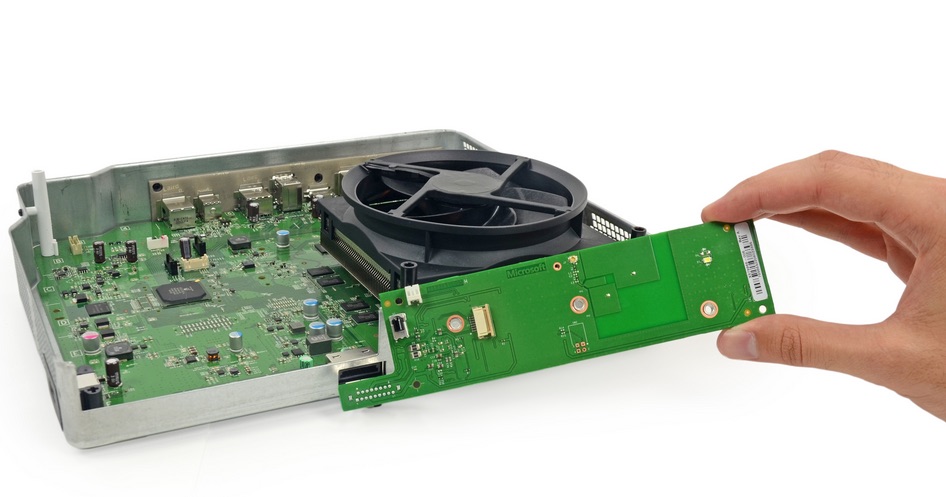
    Xbox One’s processor is fabricated at 28 nm, meaning each transistor measures 28 thousand-millionths of a meter. A 20 nm version would lower cost and power consumption, which would have a knock-on effect on cooling systems and, therefore, on casing design.
    xbox-one-cheaper
    A 20 nm processor would lower the costs and power consumption, which would have a knock-on effect on cooling systems and therefore on casing design.

    There aren’t any clues as to when this slim and affordable silicon will arrive, but recent AMD roadmap leaks suggest that its first CPU architecture based on the technology will ship in 2015. In other words, you could buy a cheaper Xbox by this time next year.

    It is said that the new processor could be as much as 30 per cent more powerful while consuming 25 per cent less energy. And the small size means smaller cooling assembly and a thinner chassis to go along it, which ultimately translates to lower-priced device.

    Xbox One has been struggling to break into the market like as it did in the past, but has been unsuccessful due to the soaring sales of PS4. The use of faster, slimmer and cheaper processor can help Microsoft step up its game and revive its old charm in the market.
  • Google Launches an Initiative to Promote Indian Languages

    Google Launches an Initiative to Promote Indian Languages

    India has a vast and diverse population. This population exists with multiple languages, customs and cultures, under one roof. In such a country, internet can be a great tool for the development of people from different languages to come and share their ideas. But for this to happen, it is essential that there is a language support system to assist people with the use of this information superhighway. Google has now formed an alliance that will work towards promoting Indian regional languages.

    The alliance will work towards providing support to Indian language users to create and receive content in their languages with ease. Google intends to involve over 300 million users from India using the language initiative by 2017.

    It is estimated that India will have about 500 million internet users by the end of 2017, up from 200 million users at present. It will surpass the whole internet population of the US. Creating content and accessibility options for regional language speakers will create a healthy future market for the internet giant. India also has a robust smartphone market, and Google can make heavy gains by providing language assistance to the people of India.

    The company did a demonstration of its Hindi voice search capabilities on an Android phone. They also launched an aggregation website called hindiweb.com where people can find access to most sites that provide content in Hindi.

    This alliance is, in fact, an appreciable initiative from the Silicon Valley giant. It is of course going to benefit Google by bringing in new users for its services, but it will be greatly beneficial to a whole new population of the country that has still not gained access to this essential utility. Google’s alliance will include companies like Times Internet, C-Dac, Reverie Language Technologies, LinguaNext Technologies, and Amar Ujala Publications and some others.

  • 64GB OnePlus One to be Priced Under Rs. 25,000 in India

    64GB OnePlus One to be Priced Under Rs. 25,000 in India

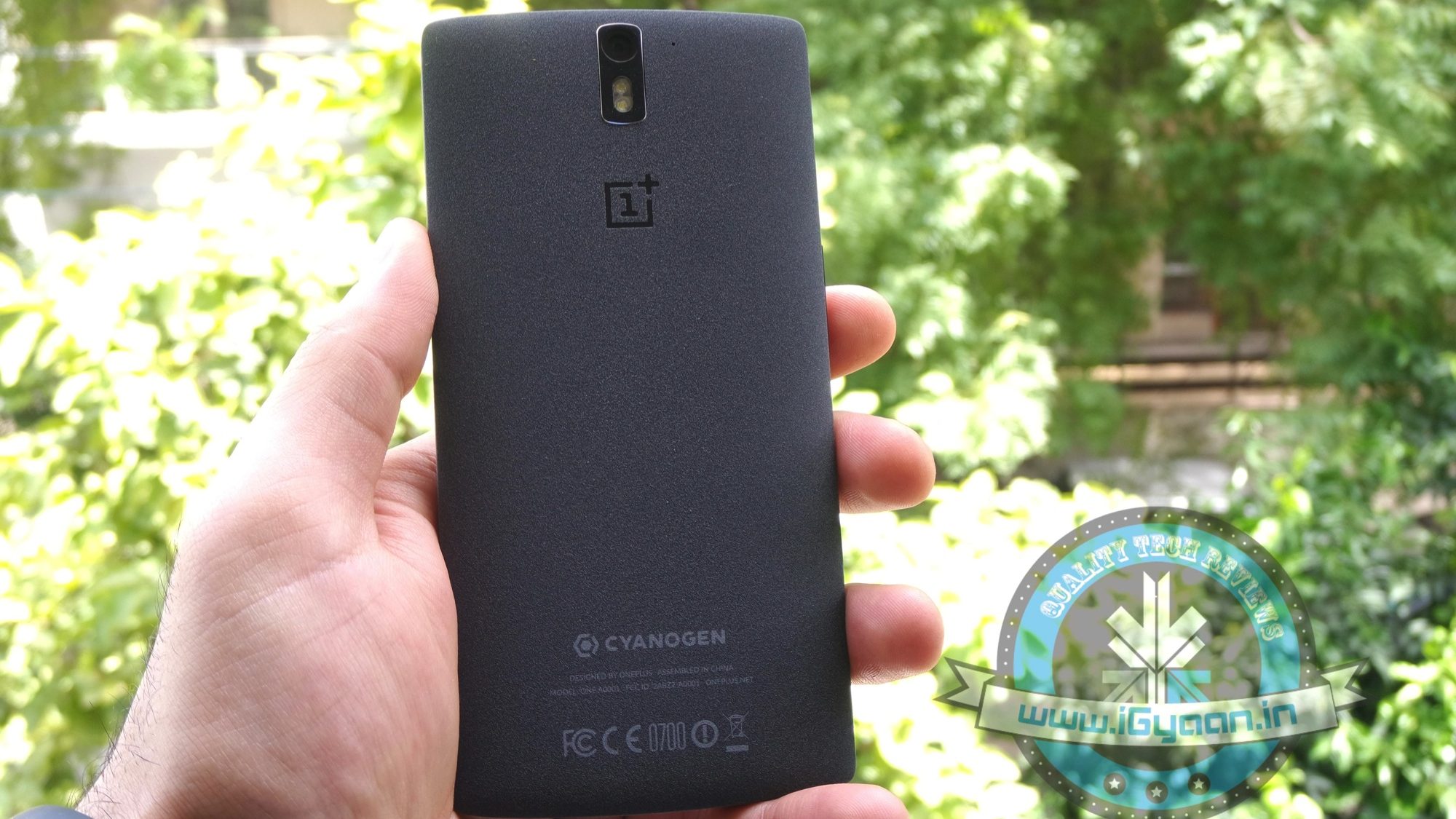
    One of the long-awaited phones in India has been the OnePlus One. This one of a kind phone has created waves all over the world. Its youthful design coupled with high specs and low price has made the device a darling of technology enthusiasts. The added value of exclusivity has made OnePlus One even more desirable. Lately, the company has opened up on what all Indians were till now waiting for, its price.

    The Chinese company will be selling its blockbuster phone through its India-specific invite system. In an interaction with The Indian Express, the company claims that this will prevent shortage of device for potential customers. The invite process is also much fair and transparent then the flash sale model.

    The company has mentioned the price of the 64 GB variant for less than Rs. 25,000 ($407 approx), which is a bit above the expected price range, but still is a great offering if its specs are taken into account. OnePlus One’s Cyanogen-based user experience has been appreciated for its customisability and regular updates. The phone will also be available in its 16 GB avatar, but its price isn’t known as yet.

    The phone doesn’t have much of a competition in its mid-segment price. It will compete with Nexus 5, Elife E7, Desire 820 and their likes. Considering the demand for the device, it is surely expected to repeat a Xiaomi act in India. Whatever may be the case, the winner will still be the consumer who will get this fantastic piece of gadgetry at an enviable price.

  • Google Makes Bookmarks Interactive With New ‘Bookmark Manager’

    Google Makes Bookmarks Interactive With New ‘Bookmark Manager’

    With the sheer amount of things on the internet, you might find it hard to keep track of everything. To make your work feasible, you create bookmarks, but now the shortage of time to catch up on these bookmarks has led to the never-ending list that just stays there never to be caught back. Google seems to have stepped in the way to make bookmarks more accessible and useful.

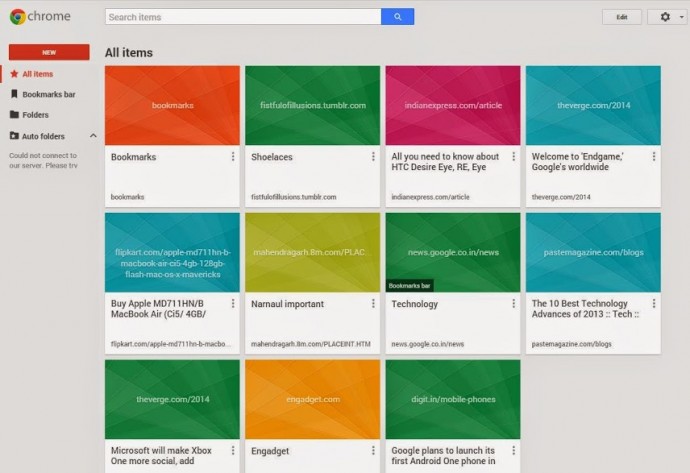
    The company has introduced an extension for Chrome called Google Bookmark Manager. The extension will bring all your bookmarks in a grid view. The bookmarks will all be pooled together in various folders. During the creation of a new bookmark, Google will prompt you with some folder suggestions. To make things even easier, you can add photos or notes to folders you desire to access quickly.

    bookmark manager

    This new extension will also get a boost from ‘Power Searching with Google’. The extension will be able to scan into the content of bookmarked pages to let you find out what you were looking for. It does seem like Google has got some inspiration from the new Safari bookmarks that are available in Yosemite.

    The bookmark manager will come really handy for folks who want immense convenience to access their references. The bookmarks have been around since the inception of consumer web browser, but it’s good to see it finally getting attention from browser manufacturers. Guess Safari and Chrome have new bookmark managers, Firefox may join soon, but the users of Internet Explorer should anticipate their upgrade by the end of the decade.

  • Microsoft Opens Up Outlook to Third-Party App Developers

    Microsoft Opens Up Outlook to Third-Party App Developers

    Microsoft is opening its business-centric Office service to developers on a large scale this time around. Earlier this year, the software giant invited developers to make third-party apps for Office 365, and now that plan includes Outlook.com.

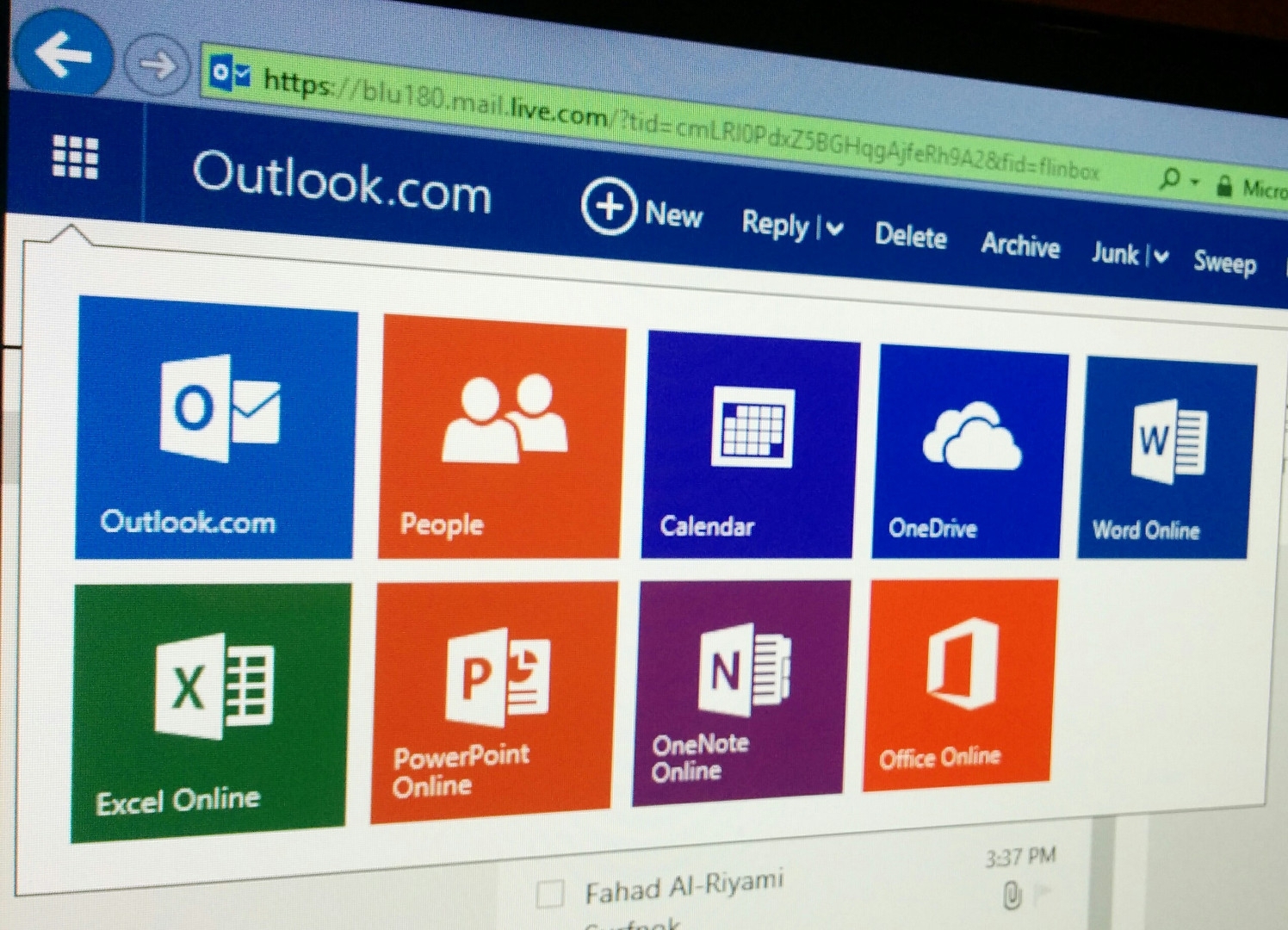
    A new suite of APIs, which will soon be released by the company, will give developers tools to integrate into Microsoft’s webmail service and add features to everything from the Calendar to the Compose screen and Contacts. However, these apps won’t come to mainstream until spring 2015. Anyhow, the plan of the company to bring third-party apps holds some exciting promise and possibilities.

    IMG_20141022_225615_0

    The company’s official blogpost reads : “Think about it: Whenever a customer reads or composes an email or calendar event, your app could be there, helping them get the job done. If you have a great idea for how our customers should interact with their email or calendar, now is the time to make it happen. Not only are these apps simple to build–they use open web technologies such as HTML and Javascript–but you can start building them todayTo learn how to get started, check out ‘Mail apps for Outlook’ on MSDN and the Office Dev Center.”

    Along with this, ‘Mail apps for Outlook’, which work on Exchange Server 2013, Outlook 2013, Outlook Web Access, and OWA for Devices, will soon work on Outlook.com too, bringing together some 400 million potential new users of app developers, and all without browser plugins or extensions.

    Developers may come up with some truly useful apps that plug into not only Outlook.com, but also the rest of the Office 365 ecosystem, which includes Word, Excel and PowerPoint. According to Microsoft, these apps will be cross-platform.

  • Google Nexus 6 ‘Coming Soon’ to a Flipkart Near You

    Google Nexus 6 ‘Coming Soon’ to a Flipkart Near You

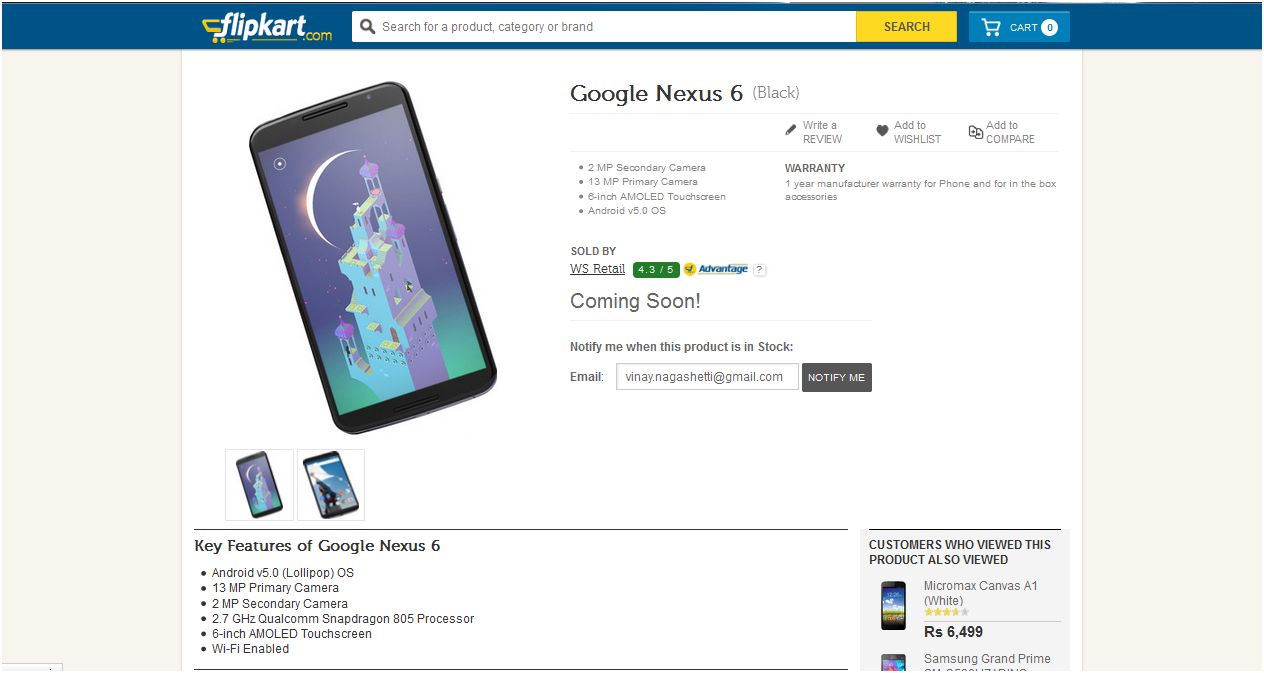
    Google’s latest collaborative flagship device is the best Android phone out there. The phone sits on a pedestal and sets a standard for other phones to achieve. It is one of the highly sought-after phones in the market and will be available soon. But Indians were surprised and elated this morning to find the phone listed on Flipkart.

    Nexus 6 was listed with a ‘Coming Soon’ tag on the e-tailers website. The price hasn’t been listed yet, but it is expected to cost top rupees, considering its high specs. In the US, the phone is available on the Google Play Store. The 32 GB variant is available for $649 (about Rs. 40,000) and the 64 GB variant costs $699 (about Rs. 43,000). You can expect the phone to come in the Rs. 45,000-55,000 price bracket in India.

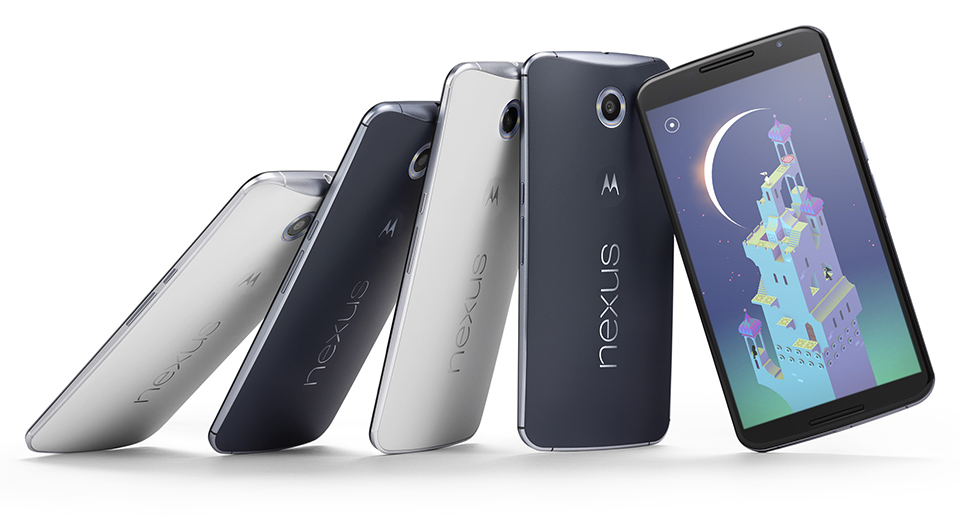
    Nexus 6

    The listing though should not be seen as an indication of its availability anytime soon. The phone might take a good couple of weeks before it is finally available for purchase in the country. In some countries, the phone was expected to be introduced for pre-orders today, but it is being reported that the pre-orders will be delayed till 18th of this month.

    Google Nexus 6 is in-demand for its top of the line features. It comes with a 5.96-inch QHD (1440×2560 pixels) display with a pixel density of 493ppi. It is powered by a 2.7GHz quad-core Qualcomm Snapdragon 805 processor and supported by 3 GB of RAM. This Google flagship is available in 32 GB and 64 GB internal storage variants. The device will run on the Android 5.0 Lollipop operating system. It will get its juice from a 3220mAh battery and with the Lollipop, it is expected to give a better battery backup. For imaging, Nexus 6 has a 13-megapixel rear camera and a 2-megapixel front camera.

    So, if you want to be one of the first ones to get hold of this phenomenal phone, then you just have to be patient for some more weeks. You will appreciate it and looking at the spec-sheet, it surely looks worth the wait.

  • Google to Take on Apple’s AirDrop with ‘Copresence’

    Google to Take on Apple’s AirDrop with ‘Copresence’

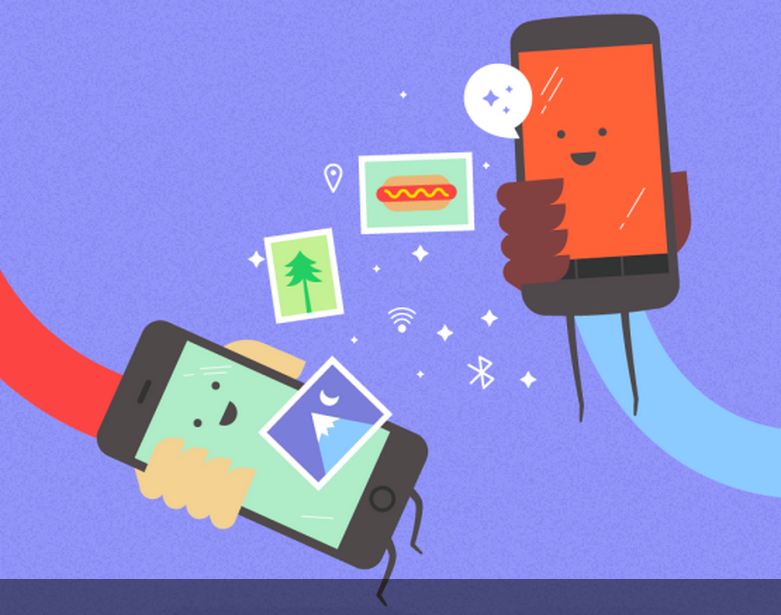
    Recent reports have hinted that Google has been working on a new service that would allow Android users to share media with other nearby devices, even with the iOS devices like iPhones and iPads instead of gadgets running Google’s mobile OS only.

    That means, this feature will allow us to exchange photos, music, contacts, directions, messages and other data between cross-platform devices easily. It is said that Google is planning to optimize this service with location information, Bluetooth and Wi-Fi, which is rumored to be based around the same kind of technology on which Chromecast works.

    copresence

    A tipster leaked the information saying that the service is codenamed as “Copresence”. Code buried in the Google Play Services’ latest version, an app on Android responsible for keeping much of Google’s core functionality working, reportedly revealed the upcoming feature, along with a few images that go with the service.

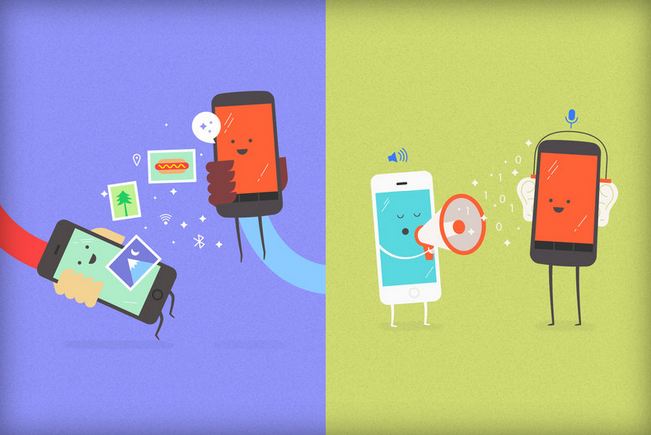
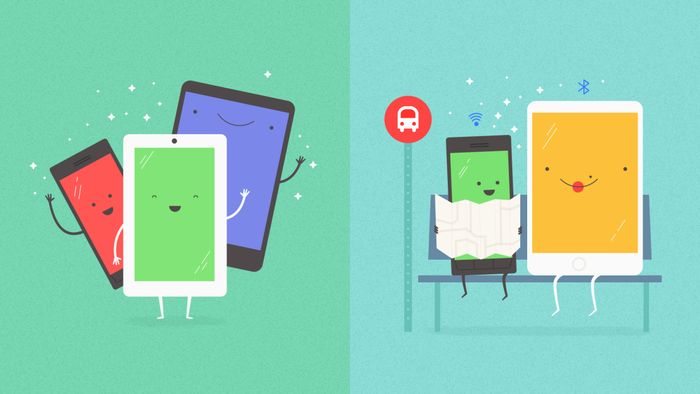
    The illustrations that you see below are possibly for the Google Play Services. These are presumably designed to inform users about the service, and they suggest that “Copresence” will work with both Android and iOS devices.

    Untitled-1.0

    Along with this, GigaOM has pointed out a number of references to the feature in bug reports for a developer version of Google Chrome, suggesting that the service could work with the popular browsers and computers as well. The new service sounds a lot like Apple’s AirDrop on iOS, which allows for sharing between iOS devices that are close to one another, across networks and with the option of sharing beyond your address book.

    The fact that the new data sharing service by Google will be cross-platform has already created a stir. If Copresence is a real deal, we might see it first with a limited number of Google’s products, most notably Google Drive.

  • WhatsApp User-Base Reaches 70 Million in India

    WhatsApp User-Base Reaches 70 Million in India

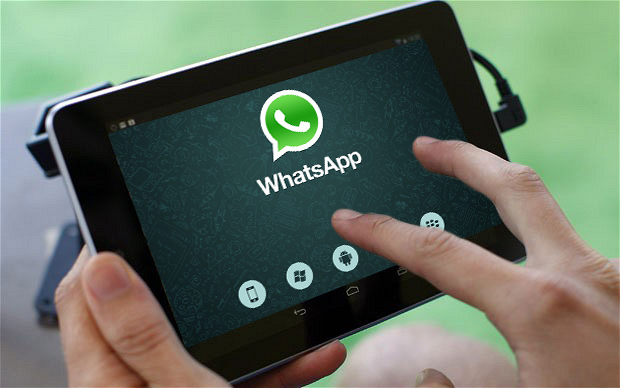
    There is absolutely no doubt that WhatsApp is one of the most popular messenger services all over the world. Recently in an event, WhatsApp’s Business Development head Neeraj Arora revealed that in India, the user base of the application has grown to 70 million active-users, which is over a 10th of its global users.

    “We have 70 million active-users here who use the application at least once a month,” said Arora at the fifth annual INK Conference in Mumbai. He further added to his statement that the total user base for the company is 600 million, including the one bought by Facebook in a $19-billion deal earlier this year.

    WhatsApp for Tab

    India is one of the biggest markets for WhatsApp, a application which targets to connect billions. Arora stated that WhatsApp will continue to hold a stand-alone identity even after the Facebook acquisition and will not get merged with the social networking website.

    The company also commented that with the team of just 80 people, WhatsApp is already getting benefitted through learnings from the social networking giant. Also, it could have been a pretty good deal if he would have paid some money to buy WhatsApp three years back, Arora stressed upon the fact that the company has grown a lot since then. That time, it would have been in “low tens of million” dollars. The user-base has exponentially grown to 600 million from the 30 million three years ago.

  • Collapsible and Wearable Smartphone Kyocera Proteus Sets a Benchmark

    Collapsible and Wearable Smartphone Kyocera Proteus Sets a Benchmark

    No smartphone calls for as many speculative rumors as much as the iPhone. Before every iPhone release, there is one render that keeps making a comeback. It shows a flexible device that can collapse and become a wearable. Well, Apple won’t be making any such device anytime soon, but a Japanese company Kyocera has beaten the brand name to bring such a device for the world to drool over.

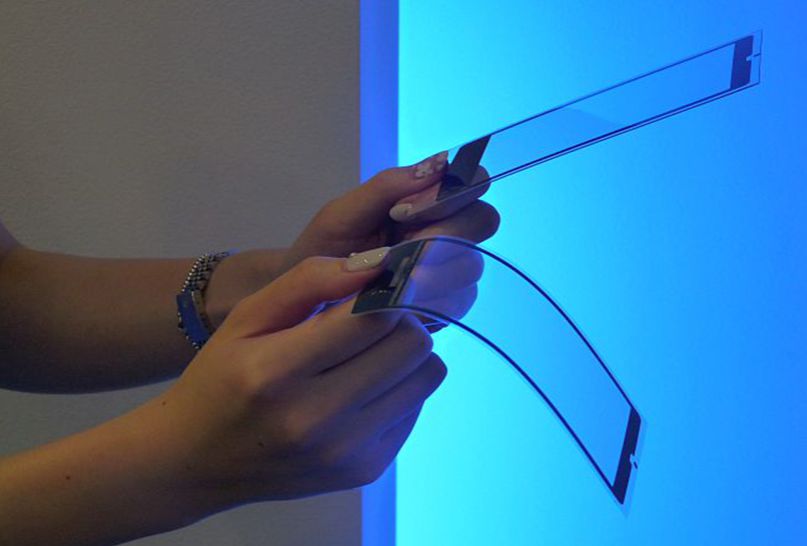
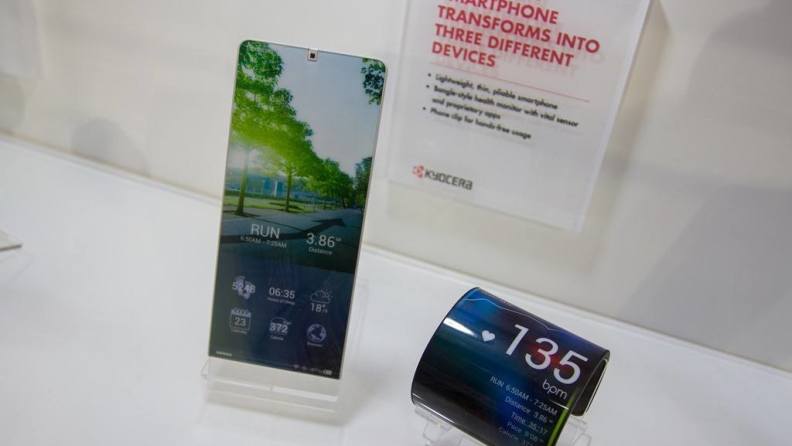
    Meet the Kyocera Proteus, a device with unmatched innovation. It can transform from a flat, bar-shaped phone into a bracelet and can be draped or wrapped around a thin rail, like a cycle handlebar. This device when mass-produced can make all of the present mobile technologies obsolete.

    The Proteus concept was presented at CEATEC, which is Japan’s largest consumer electronics show. The concept is ultrathin, almost see-through, and superlight.

    When folded from the bar mode to a wearable mode, the phone turns on its sensors and you can start your health tracking on the device. When riding a bike, the device can become your GPS guide. The possibilities of this device are endless.

    The Proteus is expected to have AMOLED display. The concept looks great in its initial stages, and it’s a great one-device solution that everyone was looking for. The company is currently in the process of figuring out the battery technology to be utilized to make the device fully functional. There are multiple suggestions being given. According to a source, one of the most innovative suggestion is the inclusion of piezoelectric generators that will convert kinetic energy into electric charge. Hence, the battery can be completely avoided and the device can be charged even on the move.

    Kyocera deserves credit for bringing the fantastic product to reality. We just hope they get rid of all the glitches and take us into the future as soon as possible. Now who is working on those damn jetpacks?

  • BBM Brings Snapchat-Like Multiple Features With its New Update

    BBM Brings Snapchat-Like Multiple Features With its New Update

    BlackBerry’s propriety messaging system BBM (BlackBerry Messenger) has been one of the most successful messaging apps. The company has even introduced versions for other operating systems. At this time, when the company is struggling to hold back its position in the market, it’s natural that they are bringing new features to their most visible product.

    BlackBerry has added several features to the new version of BBM. This includes Snapchat-like time-limited messaging attribute. It allows you to send an image or message, and set the amount of time you want it to be visible to the other person. The application will even send you notifications if the other person takes a snapshot of that picture or the message.

    Other upgrades include message retraction, timed messages, HD image transfer, and many more. The message retraction will come really handy for folks who compulsively and erroneously hit the send key, and also for drunk texters who can swiftly act when they gain some senses and get rid of that embarrassing message or pic they have previously sent.

    It seems like BlackBerry went into a full ‘get-inspired’ mode, and it borrowed features from several major apps and made one unified app. It also has a Skype-like feature where you can see what your contacts are listening to or watching.

    The app will be available for download for BlackBerry, iPhone and Android users. But all these awesomeness come at a price. The features like timed messages and message retraction will be free only for the first three months, after which you’d have to pay for them. This will be a major challenge for the company as users already have free access to all these features through other apps. BlackBerry wants to eventually provide a BBM subscription service that comes bundled with all the multiple features it has introduced with this update.

    So, this seems like a great app to have which gives almost all the features of all the messaging apps combined. You can either keep using all the free apps that crowd your phone or you can just pay a premium for one unified app. That is for you to decide.

  • HP Teams Up With a Fashion Designer to Debut a Sleek Smartwatch

    HP Teams Up With a Fashion Designer to Debut a Sleek Smartwatch

    With an onslaught of smart wearables these days, HP has engineered a watch with designer Michael Bastian to create a traditional-looking timepiece called the ‘MB Chronowig’.

    This wearable will be compatible with iOS and Android, and comprises all smartwatch features along with a design that emanates traditional watches. The MB Chronowig facilitates users to control music from their wrist, as well as displays email/text notifications. The watch can also sync with your calendar and alarm. This innovative piece does all these nifty little tricks while looking quite elegant – courtesy, the fashion designer.

    hp smartwatch 1

    The smartwatch will be up for sale on the website Gilt.com from 7th November. The range starts from $349 for the base silver-plated model. If you’re willing to shell out $649, there’s also one that comes in black with a sapphire glass and an elegant alligator strap.

  • With Moto-Power Lenovo Becomes the Third Largest Smartphone Company in India

    With Moto-Power Lenovo Becomes the Third Largest Smartphone Company in India

    The acquisition of one of the most adored brands, Motorola by Lenovo was met with a wide negative response in India. But this acquisition did more for Lenovo than just being the owner of an awesome brand. It took an enormous leap in the Indian smartphone market. The Chinese electronics company now is the third biggest smartphone company in India.

    Lenovo acquired Motorola from Google for a sum of $2.9-billion. The deal was finalized this Thursday, the 30th of October, and it will give Lenovo the boost in the Indian market that it was looking for. The deal got Lenovo in the third spot in India and many other markets globally.

    This may also mean a bit of a pull back for Xiaomi. According to data research by IDC, the company will move down to the fourth spot after just recently hitting the podium stand. Seems like celebrations didn’t last long for the company. This will be a neck and neck competition because both Motorola and Xiaomi are stars of the low-cost markets. This is a market where the maximum amount of sales takes place. Lenovo has a good market stand in the offline channels and combined with the high online demand for Motorola product it can easily set a flag post at the third spot.

    blog_post_banner-01-01v3

    The top spot in India is still in the hands of Samsung, that has come up to become an alternative recognizable brand after the demise of Nokia. It holds 23.8% of the mobile phone market and is distantly followed by Apple with a market share of 12%.

    Lenovo says that it considers India as an important market, and it will continue its original market plan. It will definitely benefit from the brand recognition of Motorola, especially  in the youth market. Since its return to Indian shores, the company has sold over 2 million products from its catalog.

    The Lenovo-Motorola partnership plans to sell about 100 million smartphones and tablets globally by march of next year which is an audacious task. The part of this acquisition that will be appreciated by most folks casting doubts on the future of Motorola products is that Lenovo and Motorola will continue on as separate entities. So you can expect your next Moto buy to still hold the Moto experience that you have come to love and appreciate.

  • Everykey: A Single Wristband That Would Replace All Your Keys and Passwords

    Everykey: A Single Wristband That Would Replace All Your Keys and Passwords

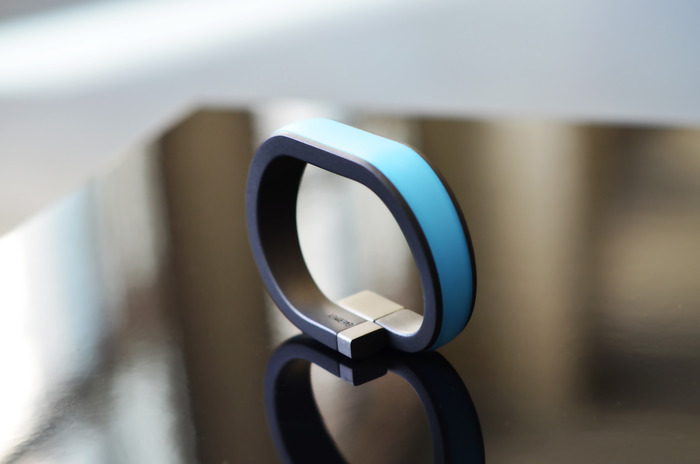
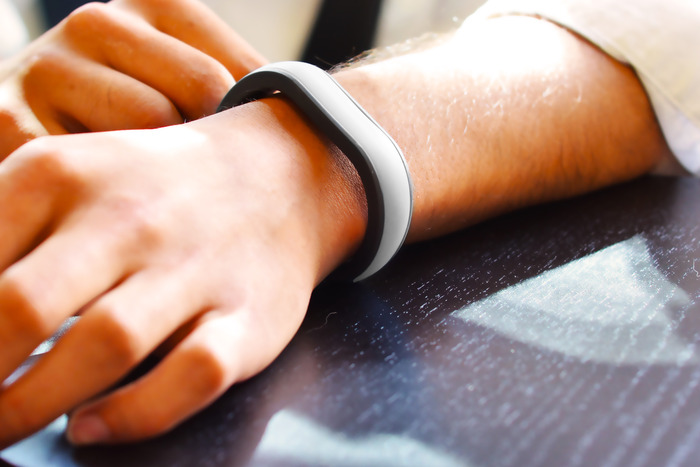
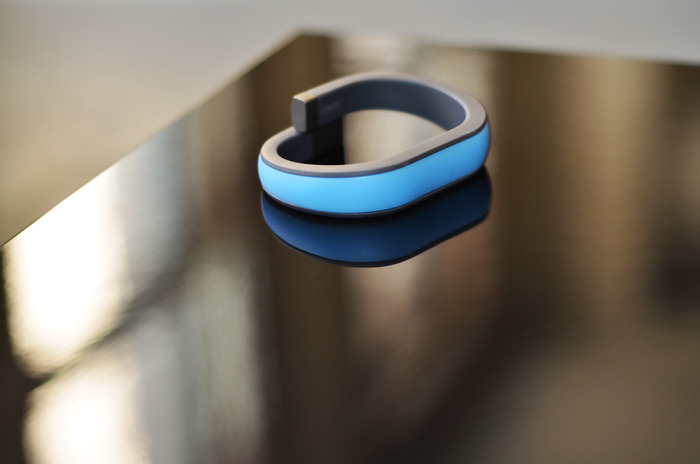
    A new start-up called Everykey launched a Kickstarter campaign to fund production of its stylish wristband that replaces keys and passwords with one easy-to-use device. A month old fundraiser started on 29th October and the company has pledged to raise $100,000 in this one month.

    The Everykey wristband is designed to store your passwords and keys securely for easy access. Available in a multitude of fashion-forward colors, Everykey is an innovative universal access device for everything that requires a physical key or password. It allows immediate access to a user’s password-protected electronics such as a smartphone, tablet, or computer, as well as physically locked items including doors, car doors, bike locks, and other access devices that need to be controlled.

    455c8e7ea0cc8593a486c1c7ebe5a5b4_large

    “When the Everykey wristband is within the range of a user’s device, the wristband will allow the user to bypass that device’s password or physically unlock it automatically, eliminating the need for complicated passwords and cumbersome keys. Everykey also manages a password keychain, which can be used to seamlessly log users into their online accounts when they’re close to one of their devices. When the wristband goes out of range, the device automatically re-enables security mechanisms so it is safe and secure when out of trusted hands.” reads Everykey’s Kickstarter page.

    c2ed16db7be4d830209b53e1000fea38_large

    “We just came up with a conceptual idea, we didn’t think it was our place to develop it because its hardware would take a lot of money to develop,” Chris Wentz, Co-Founder of Everykey, said in an interview. “But at the end of the class, the professor shook our hands and said, ‘You guys should consider doing this as a real business.’ And he offered to invest his own money. We realized, ‘Oh, this could potentially be a big idea.’”

    Everykey uses military grade encryption, allowing only you to access your personal property and accounts. Like a credit card, you can instantly disable your Everykey if it ever gets lost or stolen.

  • Troubled Waters Lay Ahead for Sony as it Registers $1.2 Billion Loss

    Troubled Waters Lay Ahead for Sony as it Registers $1.2 Billion Loss

    Billion is an amazing number. It is used to signify the number of stars in the sky, the populations of India and China, and the number of atoms in a human body. But for Sony, the term means time to take drastic measures. The Japanese consumer-electronic giant has been in troubled waters for a while and seems like it’s not going to come to an end anytime soon.

    The company has registered a record loss of $1.2 billion. This has led the company to decrease its smartphone sales figures from 43 million to 41 million. This came after the company has decreased its sales projection from 50 million to 43 million in this financial year that runs from April 2014 to March 2015.

    There is some silver lining in this bleak news from the once-unanimously valued brand. The company saw an overall sales increase by 7.2% to reach $17.4 billion. Sony’s latest gaming console, the PlayStation 4, is the most visible product that is holding up its fort as of now.

    The Japanese company has been in damage control mode for a while. It increased its marketing expenses, and research and development expenses, in order to expand sales. This may pay off in some key markets.

    Sony’s latest flagships have been appreciated for their features, but they come at a flagship price range. Hence, the phones haven’t been able to provide the company the revenue they require. Sony has also given the charge of its smartphone business in the hands of a new head, Hiroki Totok. He will replace the current head, Kunimasa Suzuki, on 16th November. Hopefully, the infusion of new head might bring some ideas that will help get Sony back on track. Or else, it may go the way of Nokia, which is, fortunately, not a possibility as of yet.

  • Motorola’s Monster Droid Might Get a Global Release as ‘Moto Maxx’

    Motorola’s Monster Droid Might Get a Global Release as ‘Moto Maxx’

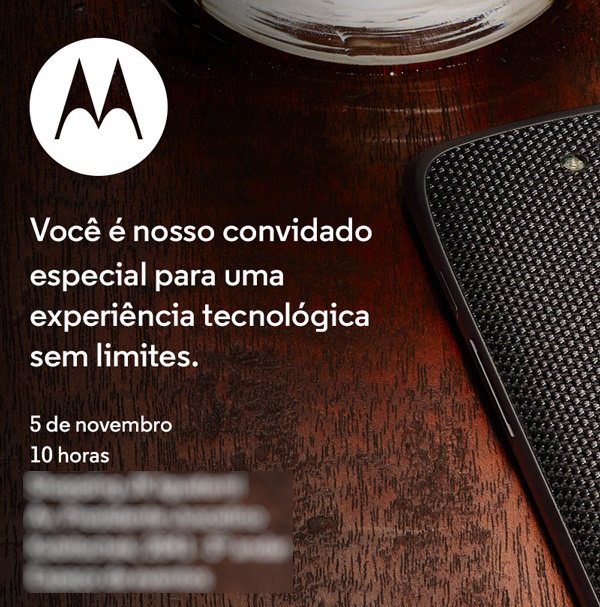
    Verizon-exclusive Motorola DROID Turbo is reported to get a global release under the company’s quintessential ‘Maxx’ branding. Going by the invite posted by a Portuguese publication named Tecnoblog, the company is gearing up to announce the global roll-out of the smartphone on 5th November at an event in Sao Paulo, Brazil. The country has always been an important market for Motorola since its heydays, which is evident by the fact that the company globally unveiled the popular Moto G (first generation) last year at an event in Sao Paulo.

    The invite doesn’t illustrate any specific phone, but it does show a device with the same Ballistic Nylon back panel featured on the DROID Turbo.

    motorola-droid-turbo-moto-maxx-invite

    The DROID Turbo, which is popularly known as Moto Maxx, features a 5.2-inch Quad-HD AMOLED display, 3900 mAh battery, Android 4.4.4 KitKat and 2.7 GHz quad-core Qualcomm Snapdragon 805 processor. The phone also packs 21 MP rear camera with f/2.0, 2 MP front snapper, LTE support, 3 GB of RAM, and 32/64 GB of internal storage.

    Motorola’s last Maxx-branded smartphone, the Motorola DROID MAXX, launched last year exclusively at Verizon Wireless. Meanwhile, the last ‘Droid’ smartphone that was announced back in 2012 in India was the Motorola RAZR MAXX.

iGyaan Network
Privacy Overview

This website uses cookies so that we can provide you with the best user experience possible. Cookie information is stored in your browser and performs functions such as recognising you when you return to our website and helping our team to understand which sections of the website you find most interesting and useful.