Today Crytek released a trailer that serves as a preview of Crysis 3‘s graphics and the capabilities of their proprietary tech CryEngine 3. It’s pretty much porn for you video game artists out there.
The in-game footage is probably from a high-end PC. While the PS3 and Xbox 360 versions of Crysis 3 will be easy on the eyes, it seems unlikely they’d be capable of this level of quality. Look at it as a preview of next-gen consoles’ potential, I guess.
Tesselated vegetations, displacement mapping and real-time volumetric cloud shadows are among the features touted in the trailer. I understand about half of those words. The video seems to be targeted at fellow developers. Fortunately purty graphics are easy to decode even if the tech jargon isn’t.
Red Camera’s CEO, Jim Jannard claims that the company’s new camera sensor are going to be the most extreme thing that has happened to the movie industry in a long time. While the company calls this camera the new resolution and dynamic range king. It is also touted as the cleanest sensor you have ever seen, ISO 2000 looks better than MX at ISO 800.
The company showed off its sensor at NAB touting 15+ stops of DR and 120fps at a full 5K of resolution, with $6,000 upgrades for Epic customers coming at the end of the year. Dont worry if you own their new $9,700 (brain only) Scarlet-X, which is also set to get the Dragon Sensor.
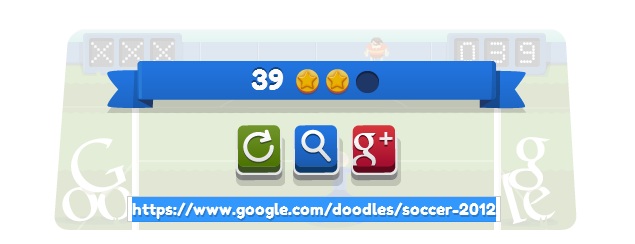
Yet another enthralling Google Doodle! This time, you get the chance to be the next Peter Schmeichel! Save shots from a notoriously obese player as he starts off slow but somehow manages to fire bullets as the game goes on! I managed a score of 39 (Beat That!) and have been trying better that ever since! Go check it out now and post your score below!
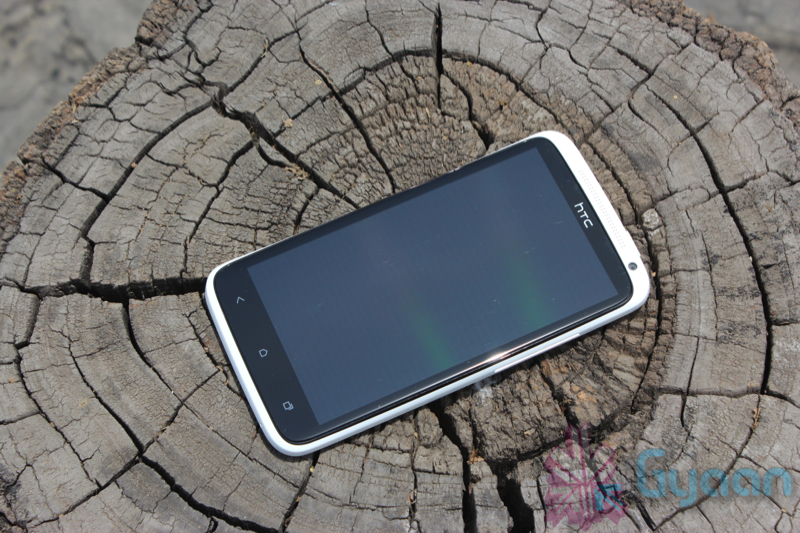
The international version of the HTC One X will be getting its Android 4.0.4 Ice Cream Sandwich update today, the same update that began rolling out for the AT&T version of the device just a short time ago.
HTC has announced, courtesy of Engadget, that the HTC One X’s Android 4.0.4 update will begin to roll out today and that it will be bringing a number of enhancements along with it.
Owners of the international HTC One X will now be able to map a menu function to the ‘recent app’ key in the lower right hand corner of the device. This will improve presentation in applications that currently do not support Ice Cream Sandwich. So obviously, this makes the button more useful than it already was.
The update will also new abilities to the device’s camera including white balance and continuous autofocus, both of which will be welcomed improvements.
HTC has also included a dedicated tab switching button in the browser to make it easier for owners to switch between tabs in the browser.
The update for the HTC One X will also bring better overall browsing, more stability to the device, and more. So, it’s a pretty substantial update and one that users will want to take advantage of as soon as they possibly can.
Of course, the update is not Android 4.1 Jelly Bean, Google’s latest piece of mobile software that is all the rage right now in the Android world.
HTC has promised Android 4.1 for the HTC One XL, HTC One X, and the HTC One S at some point down the road but first, it needs to take care of some devices that are still limping their way to Android 4.0 Ice Cream Sandwich.
Account details for millions of players have been stolen in a hack attack on Blizzard, the maker of World of Warcraft, StarCraft and Diablo.
Blizzard revealed details of the breach in a message posted to its Battle.net account management service. Players in North America should change their login details for the account management service, said Blizzard.
So far, it said, there was no evidence that credit card numbers and other personal details had been taken.
In the message, Blizzard boss Mike Morhaime said it discovered on 4 August that there had been “unauthorized and illegal access” to its internal network.
Its investigation into the breach revealed that whoever broke in got a copy of a list of all email addresses for Battle.net users outside China.
Battle.net is the overarching account management and login service gamers use to play Blizzard games including World of Warcraft, StarCraft 2 and Diablo 3.
Also accessed was information about the security questions and account authenticators used by players on North American servers. As well as players in the US and Canada this includes people in Latin America, Australia, New Zealand, and Southeast Asia.
The attackers also stole a cryptographically scrambled list of the passwords used on North American Battle.net accounts. The technique Blizzard used to conceal these passwords, said Mr Morhaime, made it hard to unscramble them.
Blizzard said that, as far as it knew, the information stolen would not be enough for attackers to gain unauthorised access to Battle.net accounts.
Despite this, it urged players on North America servers to change their passwords, especially if that secret phrase or character combination was used on other services.
It said it had begun an automatic process to force players to change their secret questions and get those who use authenticators to update their devices.
It said it had found “no evidence” that credit card numbers, billing addresses or real names had been exposed.
“We are truly sorry that this has happened,” said Mr Morhaime.
Paul Ducklin, a researcher at security firm Sophos, said the breach was “painful but probably not too bad” in a blogpost about the attack. He said the way Blizzard stored and managed login and password data was “sensible” and should reduce the theft’s impact.
Bharti Airtel has crossed 200 million customers in India. The 200 million customers include Airtel 2G, 3G, 4G, fixed line. DSL broadband. IPTV and DTH customers. Airtel started operations in India in 1995 and 2009 after 14 years it managed to reach the 100 million customer mark. Three years post the 100 Million mark Airtel has crossed 200 Million.
Airtel became the first Indian telecom operator in India to start 4G operations. With infrastructure of basic networks still struggling, Airtel still remains as the preferred service provider.
187.3 million are mobile customers which makes Bharti Airtel the largest wireless operator in India. Additionally, Airtel has 5.1 million active 3G customers of which 3.7 million are active 3G data customers.
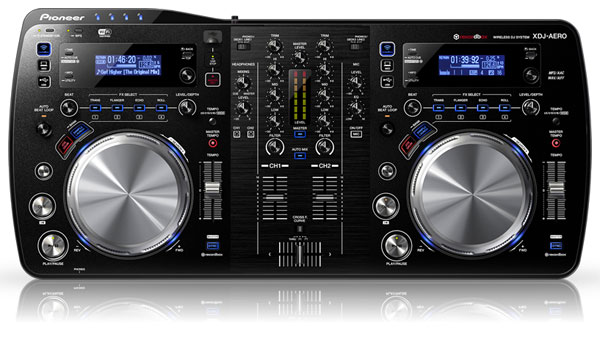
Pioneer has always been in lead when it came to real DJ gear. With the advent of the new WiFi enabled XDJ they have truly taken a massive leap forward in Digital DeeJaying. The new WIreless console has a built-in 24-bit audio interface, two-channel mixer (which can be used standalone), cue-point triggers, FX and filters you would fine on any DJ console. The Pricing also seems very non reasonable at US $ 1399 (IN Rs. 77655). But hey, its a complete wireless DJ machine-ama-jig-thingie!
On a serious note, you can use your iPhone and Android Smartphone for Storage.
Specs Include
Playable media Smartphones, tablets, USB storage devices (Flash memory/HDD, etc.), computers (Mac/Windows PC)
Playable file formats USB connection:MP3, AAC, WAV, AIFF up to 24 Bit/44.1kHz
Wi-Fi connection:MP3, AAC
USB storage formats supported FAT, FAT32, HFS+ (read-only, when journaling)
Recording file WAV, 16bit/44.1kHz
Number of channels 2
Wireless communications format IEEE 802.11b/g/n (2.4GHz band)
Sampling rate 44.1 kHz
A/D, D/A converter 24 bit
Frequency response 20 Hz?20 kHz
S/N ratio 105 dB or above
Total harmonic distortion Max. 0.003 %
Head room 19dB
USB ports A port ??, B port ??
Inputs Phono/Line ×2(RCA)
Mic ×1(1/4-inch phone)
Outputs Master out ×2 (1/4-inch phone ×1, RCA×1)
Headphone monitor out ×2 (front 1/4-inch phone, minipin)
Enclosed AC adapter Power: AC100 V?50 Hz/60 Hz) Rated output: DC12 V
Maximumexternaldimensions
(W×H×D) 623 ×289.5 ×65 mm
Unit mass 3.7 kg
rekordbox™ music management software (included):
Supported OS Mac OS®X (10.5.8 or above)
Windows®7 Home Premium/Professional/Ultimate
Windows Vista® Home Basic/Home Premium/ Ultimate/Business (SP2 or above)
Windows® XP Home Edition/Professional (from SP3)
(Windows® XP Professional x64 edition is not supported?
Playable file formats MP3, AAC, WAV, AIFF
Check out the video and the Press Release Below.
[toggle_box title=”Press Release” width=”Width of toggle box”]
Pioneer presents the XDJ-AERO, the first-ever wireless all-in-one DJ system, and the first native player for rekordbox™ music management software
To view the XDJ-AERO video click HERE
XDJ-AERO Pioneer has broken the mould yet again with the XDJ-AERO, the industry’s first1 Wi-Fi enabled all-in-one DJ system and native rekordbox™ player.
The groundbreaking DJ system is set to change the way DJs play by liberating them from endless cables and connections. In an industry first, the XDJ-AERO allows DJs to load music wirelessly from smartphones, tablets, laptops and PCs2, instantly taking the hassle out of set up. A multipurpose unit, the XDJ-AERO also works with Pioneer’s new mobile application, functions as a standalone mixer and can be used as a MIDI and HID controller.
The XDJ-AERO creates its own private Wi-Fi network, allowing DJs to connect to up to four wireless devices at once. The audience can even get involved by sending tracks from their own smartphones or tablets to the XDJ-AERO for a more interactive experience.
And, as the first native player for Pioneer’s rekordbox music management software, the XDJ-AERO puts all of the software’s features and functions right at DJs’ fingertips. rekordbox allows DJs to create and edit playlists on the fly; view beat grids; analyse BPM; and load wave forms during their sets.
Compatible with Pioneer’s new mobile application3 for smartphones and tablets, the XDJ-AERO makes DJing truly mobile. DJs can use the mobile application to manage their music on the road and then wirelessly load their tracks and playlists to the XDJ-AERO.
DJs can switch between the XDJ-AERO’s mobile and USB inputs at the touch of a button. And the DJ system boasts all of their favourite features, including sample banks, Sound Colour Filters and rekordbox quantized beat sync.
The XDJ-AERO also functions as a 24-bit audio interface, MIDI controller for Traktor and HID controller for Virtual DJ software. And it can be used as a stand-alone mixer when connected to CDJs and turntables.
A premium piece of kit both inside and out, the XDJ-AERO has the look and feel of a pro-DJ product with its classic black finish and sleek aluminium faceplate. And, at just 45 mm thick, the portable, lightweight XDJ-AERO is the world’s thinnest combined player and mixer.
The XDJ-AERO: the world’s first wireless all-in-one DJ player, mixer and MIDI controller.
The XDJ-AERO will be available from August 2012 at an SRP of 869 GBP/999 EUR, including VAT.
Key features of the XDJ-AERO
1. INDUSTRY FIRST: Wirelessly connect up to four devices By creating an ad hoc network, the XDJ-AERO can sync with up to four Wi-Fi enabled devices at once, without the need for any extra equipment. For the first time, DJs can use smartphones, tablets and computers to wirelessly load rekordbox music to their decks.
DJs can use the XDJ-AERO to control wireless devices remotely so they can browse tracks and load them directly to their decks even if the device is not in their hands.
And the new mobile application allows DJs to use their smartphones and tablets as remote controls for the XDJ-AERO. With USB source selected, DJs can browse music and load tracks on the XDJ-AERO using the devices’ bigger, touch-sensitive screens.
The audience can send music from their wireless devices to the XDJ-AERO, though tracks will not load until the DJ accepts them. If a device goes out of range while a track is being played an emergency loop is created so there is no break in the music. And if a call is made on a smartphone mid-track, the music will continue to play as long as the device supports multitasking.
Plus, by switching the XDJ-AERO’s music source from wireless to USB, DJs can play tracks on both decks from a single rekordbox-ready storage device.
2. Includes all the popular features from Pioneer’s pro-range The XDJ-AERO brings together all of the most exciting features from Pioneer’s most popular multi-format players and mixers, including:
Beat effects4: the XDJ-AERO boasts the most user-friendly and popular effects from Pioneer’s DJM range – Trans, Flanger, Roll and Echo. Post-fader: the effects are applied to the sound after the fader, allowing the sound to fade out naturally rather than stopping suddenly when the DJ cuts the source audio with the faders. Sound color effects: borrowed from the DJM series, the Sound Color Filters add high- and low-pass filters to the beat effects for even more creativity Sample banks: pre-loaded with four samples. Auto Loop: tracks can be automatically looped at specified positions. Quantize: DJs will never miss a beat again as the quantize function automatically synchronises the beat of rekordbox-ready tracks and effects.
3. Automatic features that make perfect mixes a breeze
Beat Sync5: automatically syncs all tracks to the beat to the master deck using rekordbox beat grid information. Auto Mix: automatically mixes each track within a playlist if DJs need to step away from the deck during long sets.
4. Performance features and sample playback
INDUSTRY FIRST Jog Drum: a more DJ-friendly way of engaging samples. DJs simply load a sample onto the deck and press Jog Drum; they can then trigger and scratch the samples by drumming directly on the jog wheel for more control and creativity. Sample Launch: with four samples pre-loaded onto each deck, DJs simply push Sample Launch once to perform with the currently engaged sample. By holding down Sample Launch, they can select another sample to perform with. Samples can also be launched using the XDJ-AERO’s effects, loops and pitch controls.
5. One-touch recording of popular mixes Inherited from Pioneer’s DJM-350 mixer, the XDJ-AERO allows DJs to record their creations directly to USB as uncompressed CD-quality WAV files.
6. MIDI and HID control for ultimate flexibility The XDJ-AERO can be used as a MIDI controller for Traktor and HID controller for Virtual DJ software.
7. Connect external hardware to use as a stand-alone mixer For maximum flexibility, the unified player and mixer unit also has inputs to connect external hardware, such as CDJs or turntables, so DJs can use it as an independent mixer.
8. Premium design and build looks the part every time With its classic black finish, sleek aluminium faceplate, blue LED lights and Pioneer’s industry-standard interface, the XDJ-AERO looks professional in any venue.
9. High-end components for superb sound in any environment The XDJ-AERO’s audio circuits are the same as those used in Pioneer’s pro-DJ equipment to guarantee pristine sound reproduction. And full digital processing has been used to minimise distortion and noise from A/D-D/A conversion.
10. Other features
Onboard 44.1kHz/24bit high resolution soundcard Independent three-band equalizer Dual headphone output –minijack for inner-ear headphones and standard jack for full-size headphones Four-colour LCD displaying 18 languages Mic input and balanced TRS output
Main specifications – XDJ AERO
Playable media Smartphones, tablets, USB storage devices (Flash memory/HDD, etc.), computers (Mac/Windows PC) Playable file formats USB connection:MP3, AAC, WAV, AIFF up to 24 Bit/44.1kHz Wi-Fi connection:MP3, AAC USB storage formats supported FAT, FAT32, HFS+ (read-only, when journaling)
Recording file WAV, 16bit/44.1kHz Number of channels 2 Wireless communications format IEEE 802.11b/g/n (2.4GHz band) Sampling rate 44.1 kHz A/D, D/A converter 24 bit Frequency response 20 Hz?20 kHz S/N ratio 105 dB or above Total harmonic distortion Max. 0.003 % Head room 19dB USB ports A port ??, B port ?? Inputs Phono/Line ×2(RCA) Mic ×1(1/4-inch phone) Outputs Master out ×2 (1/4-inch phone ×1, RCA×1) Headphone monitor out ×2 (front 1/4-inch phone, minipin) Enclosed AC adapter Power: AC100 V?50 Hz/60 Hz) Rated output: DC12 V Maximumexternaldimensions (W×H×D) 623 ×289.5 ×65 mm Unit mass 3.7 kg rekordbox™ music management software (included): Supported OS Mac OS®X (10.5.8 or above) Windows®7 Home Premium/Professional/Ultimate Windows Vista® Home Basic/Home Premium/ Ultimate/Business (SP2 or above) Windows® XP Home Edition/Professional (from SP3) (Windows® XP Professional x64 edition is not supported? Playable file formats MP3, AAC, WAV, AIFF
Google Inc. has agreed to pay $22.5 million to settle Federal Trade Commission charges for misleading users about its tracking activities on Apple Inc.’s Safari browser, the regulatory agency said.
The penalty is the largest-ever FTC penalty for violating a commission order. It comes amid mounting privacy concerns related to the vast amount of information collected by technology companies through browsers, websites, social media and cell phones.
A representative from Google was not immediately available for comment.
For several months in 2011 and 2012, the FTC charged, Google placed advertising tracking cookies on the computers of Safari users who visited sites within Google’s DoubleClick advertising network, though the company had previously told users that they would automatically opt out of this tracking through the browser’s default settings.
Safari is the browser installed on Apple’s Macs, iPhones and iPads.
Google also represented itself as a member of the Network Advertising Initiative, an industry group that requires members to adhere to a code of conduct, which includes disclosing data collection and use.
Google generates a large chunk of its revenue from selling online advertising services, including the delivery of targeted ads online. By placing tracking cookies on a user’s computer, it can collect information about that person’s web-browsing activities, and use that information to send online ads targeted to the user’s interests.
Along with the penalty, Google has agreed to disable all the tracking cookies it said it would not place on users’ computers, the regulator said.
The FTC charged that Google’s actions violated an October 2011 settlement, which barred Google from misrepresenting the extent of control that customers have over the collection of their information. The earlier settlement dated back to FTC’s charges that Google had used deceptive practices and violated its primacy promises when it launched its social network Google Buzz.
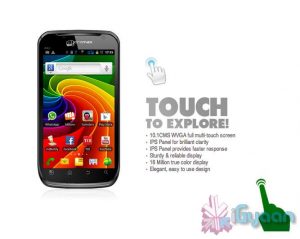
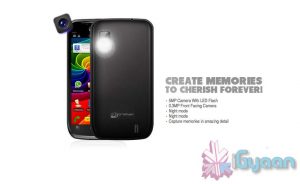
An Upcoming Superfone the A84 Elite has suddenly popped up on Micromax’s official website. Although, you need to do a bit of digging like iGyaan.
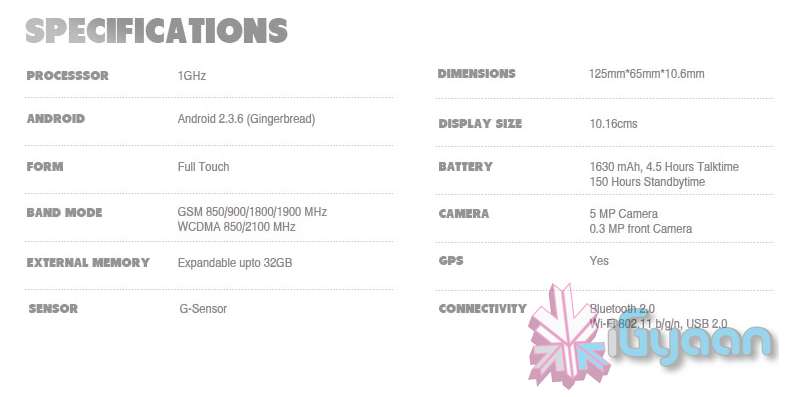
The phone features 1GHZ processor. 5MP LED Flash Camera. 10.1CMS WVGA Screen. Bluetooth 2.1. GPS, Wi-Fi, 3G connectivity. Motion Sensor. Expandable memory up to 32GB. A Large A80 style Battery and Android 2.3.6.
We will try and get pricing info for you guys asap.
Check out the images below or hit the source to check out the phone on Micromax’s website.
SO after hours and days of analysing entries, we have come to a verdict.
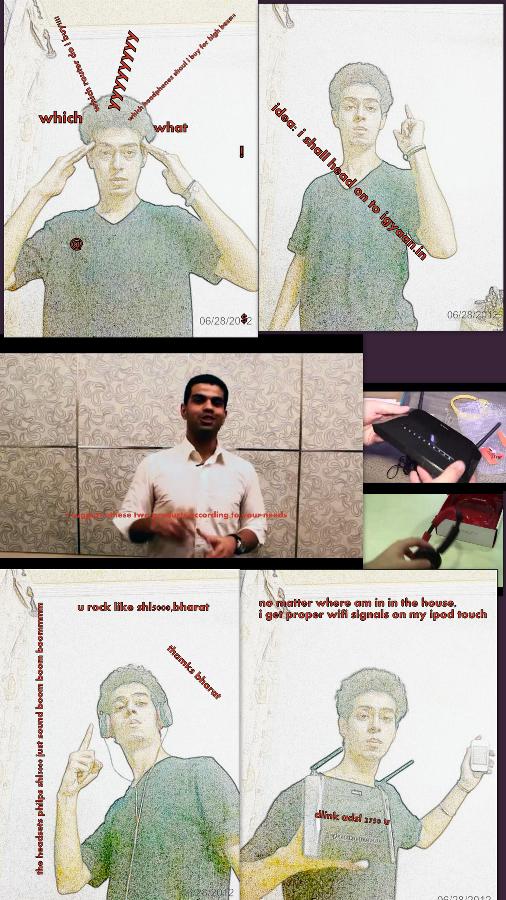
Although there were a lot of disappointing images that were just blatantly taken from the internet and pasted in the contest and some images that were totally unrelated to the contest, we had some good ones too.
[quote]Hi Bharat i am a huge fan of your reviews & this is a little concept that i had designed for this contest. i hope u guys can easily understand what is there in the picture. i want you people to expand your reviews to all the technologies. plzzz help us..[/quote]
This image shows creativity, the need of iGyaan and effort. So Congratulations Mr. Kumar for winning the first Prize.
So a BIG CONGRATULATIONS to all the winners. and a BIG THANKS to all those who played. If you didnt win, no worries, smile and congratulate the winners in the comments below because we have a surprise at the end of this post.
Winners :
We will be sending out emails to co-ordinate delivery of your winnings to you guys. Please be patient.
Everyone Else
For everyone who is disappointed, we announce our next set of Giveaways, start commenting below and tell us how good you are at rhyming.
We have a giveaway starting next week and you need to rhyme to win.
Next Giveaways,
Samsung Galaxy Duos Phones
Micromax Funboox
Micromax Funbook Pro
Dont forget to leave a comment below if you want this contest.
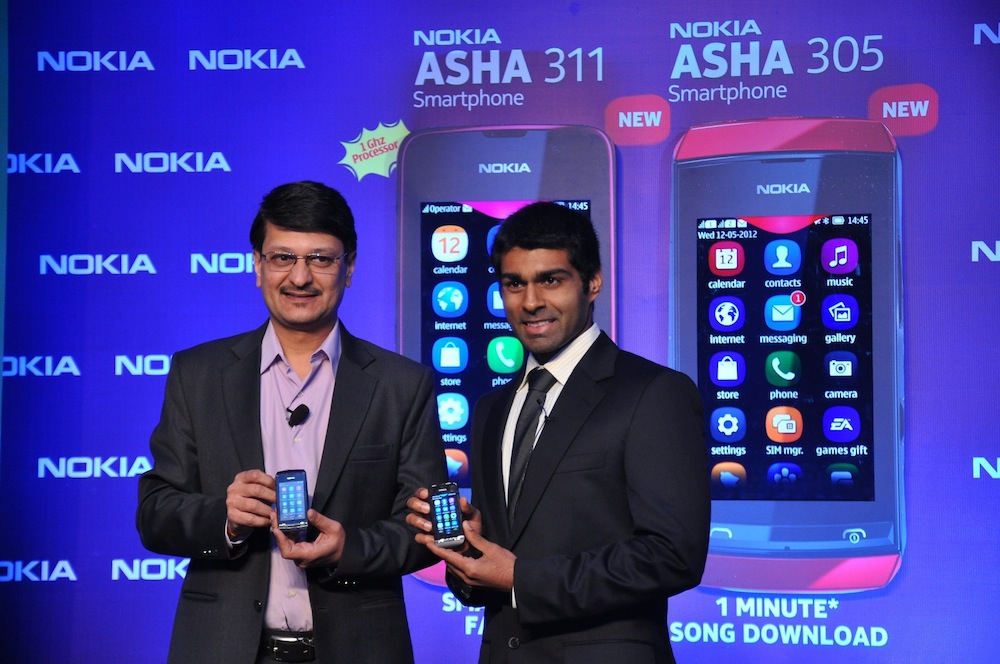
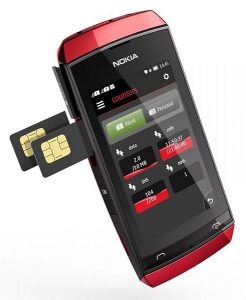
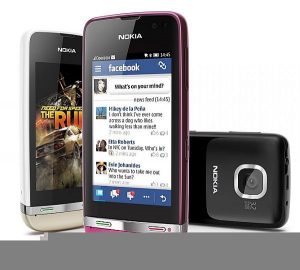
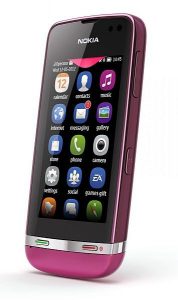
Nokia has today launched their new range of “Budget Smartphones” in India. The Asha 305 and Asha 311 are what nokia calls the consumers smartphone, where smartness lies in their capabilty of delivering value to the consumer.
Karun Chandhok, Formula One Driver, was present to launch the devices along side Viral Oza, Director Marketing, Nokia India.
[quote]The latest Nokia Asha devices were launched by India’s ace racer, Karun Chandhok. “I spend most of my time on the road and this is a great device for me to stay connected with my friends and loved ones. Being a gaming enthusiast, I am impressed by the EA Games package on these devices. With these devices, Nokia again has launched a winner true to its legacy,” said Karun Chandhok.[/quote]
[quote]The Nokia Asha family has received tremendous consumer response. With a variety of form factors across price points and innovations such as Nokia Browser, Nokia Maps and DRM free Nokia Music, Nokia Asha family has triggered data consumption habits in first time data users. With the launch of Nokia Asha Touch range, we are strengthening our range of ‘mobile internet’ devices that offer these exciting experiences to the consumers, said Mr. Viral Oza, Director Marketing, Nokia India[/quote]
The most prominent feature for these touch screen dual sim phones is probably the internet connectivity boasted by the new Nokia Cloud browsers that will deliver compressed data (compressed on Nokia servers) by upto 85 %, to deliver a faster and cheaper internet experience.
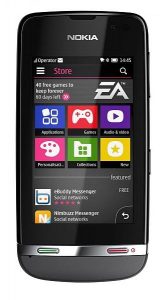
Nokia’s new tie up with EA Sports offers 40 free games to download and keep forever, although these games are Java versions of their popular counterparts. Nokia is also touting Maps, Nokia Music and Nokia Apps as a prominent feature in these phones.
The Phones at a Glance.
Nokia Asha 305
3” WQVGA resistive touch screen
Bluetooth and Dual Band connectivity
2MP camera
Available in Dark Grey, Red, mid blue and a silver white variant.
A new cyber surveillance virus has been found in the Middle East that can spy on financial transactions, email and social networking activity, according to a leading computer security firm, Kaspersky Lab.
Dubbed Gauss, the virus may also be capable of attacking critical infrastructure and was built in the same laboratories as Stuxnet, the computer worm widely believed to have been used by the United States and Israel to attack Iran’s nuclear program, Kaspersky Lab said on Thursday.
The Moscow-based firm said it found Gauss had infected personal computers in Lebanon, Israel and the Palestinian Territories. It declined to speculate on who was behind the virus but said it was related to Stuxnet and two other cyber espionage tools, Flame and Duqu.
“After looking at Stuxnet, Duqu and Flame, we can say with a high degree of certainty that Gauss comes from the same ‘factory’ or ‘factories,’” Kaspersky Lab said in a posting on its website. “All these attack toolkits represent the high end of nation-state-sponsored cyber-espionage and cyber war operations.”
Kaspersky Lab’s findings are likely to fuel a growing international debate over the development and use of cyber weapons. Those discussions were stirred up by the discovery of Flame in May by Kaspersky and others. Washington has declined comment on whether it was behind Stuxnet.
According to Kaspersky Lab, Gauss can steal Internet browser passwords and other data, send information about system configurations, steal credentials for accessing banking systems in the Middle East, and hijack login information for social networking sites, email and instant messaging accounts.
Modules in the Gauss virus have internal names that Kaspersky Lab researchers believe were chosen to pay homage to famous mathematicians and philosophers, including Johann Carl Friedrich Gauss, Kurt Godel and Joseph-Louis Lagrange.
Kaspersky Lab said it called the virus Gauss because that is the name of the most important module, which implements its data-stealing capabilities.
One of the firm’s top researchers said Gauss also contains a module known as “Godel” that may include a Stuxnet-like weapon for attacking industrial control systems.
Stuxnet, discovered in 2010, attacked via USB drives and was designed to attack computers that controlled the centrifuges at a uranium enrichment facility in Natanz, Iran.
Roel Schouwenberg, a senior researcher with Kaspersky, said the Godel code may include a similar “warhead.”
Godel copies a compressed, encrypted program onto USB drives. That program will only decompress and activate when it comes in contact with a targeted system.
While Kaspersky has yet to fully crack Godel’s code, Schouwenberg said he suspects it is a cyber weapon designed to cause physical damage and that its developers went to a lot of trouble to hide its purpose, using an encryption scheme that could take months or even years to unravel.
CODE BREAKERS WANTED
He said the prospect that a cyber weapon like Gauss or Stuxnet could attack critical infrastructure keeps him up at night.
“They could do pretty much anything,” he said. “A few weeks ago when power went out in and around (Washington) D.C., my first thought was a cyber weapon.”
Kaspersky said it is searching for “world-class” cryptographers to help it break the code.
A United Nations agency that advises countries on protecting critical infrastructure plans to send an alert on the mysterious code.
“We are going to, of course, inform member states that there is an unknown payload,” said Marco Obiso, a cyber security coordinator for the U.N.’s Geneva-based International Telecommunications Union, or ITU.
“We don’t know what exactly it does. We can have some ideas. We are going to emphasize this,” he said.
The ITU issued a warning about Flame shortly after the virus was unveiled by Kaspersky in late May. The agency told member nations that Flame could potentially be used to attack critical infrastructure, according to Obiso.
At the time, experts knew only that Flame was a sophisticated espionage tool; they were not certain it could damage computer networks.
Several weeks later, researchers at another security firm, Symantec Corp, confirmed suspicions that Flame was capable of deleting computer data and likely was used to attack Iran in April.
Iran blamed Flame for causing data loss on computers in the country’s main oil export terminal and Oil Ministry. Reports of the data losses prompted the ITU to ask Kaspersky to search for a data-wiping virus, which resulted in its discovery of Flame and Gauss.
Google is creating an information bridge between its influential Internet search engine and its widely used Gmail service in its latest attempt to deliver more personal responses more quickly.
The experimental feature unveiled Wednesday will enable Google’s search engine to mine the correspondence stored within a user’s Gmail account for any data tied to a search request. For example, a query containing the word “Amazon” would pull emails with shipping information sent by the online retailer.
Such Gmail results will typically be shown to the right of the main results, though in some instances, the top of the search page will highlight an answer extracted directly from an email. For example, the request “my flight” will show specific airline information imported from Gmail. Something similar could eventually happen when searching for a restaurant reservation or tickets to a concert.
Although Google has a commanding lead in Internet search, it remains worried about the threat posed by social networking services such as Facebook Inc. As social networks have made it easier to share information online, the Web is starting to revolve more around people than the keywords and links that Google’s search engine.
Google has been trying to adapt by building more personal services and plugging them into its search engine.
Blending email information into general search results could raise privacy worries. Google is trying to mitigate that by showing Gmail results in a collapsed format that users must open to see the details. For now, users must sign up to participate.
Google Inc. ran into trouble over privacy in 2010 when it tapped the personal contact information within Gmail accounts to build a social networking service called Buzz. Google set up Buzz in a way that caused many users to inadvertently expose personal data from Gmail. An uproar culminated in a Federal Trade Commission settlement requiring the company to improve its privacy controls and undergo audits for 20 years.
Google is treading carefully as it hooks Gmail up to its Internet search engine. The new feature initially will be available to 1 million Gmail users who sign up at HTTP://G.CO/SEARCHTRIAL . That’s a small fraction of the more than 425 million Gmail accounts that have been set up since Google launched its free email service eight years ago to compete against the offerings from Yahoo Inc. and Microsoft Corp.
After getting feedback from the test participants, Google hopes to give all Gmail users the option of plugging their accounts into the main search engine, according to Amit Singhal, a senior vice president for the company.
Singhal said Google is also willing to display information from other email service in its main search results. The gesture could avoid spurring additional complaints about Google abusing its position as the Internet’s search leader to favor its other services. That issue is the focal point of an antitrust investigation by antitrust regulators in the U.S. and Europe.
Microsoft said it has no plans to make information in its competing Web mail service available to Google’s search engine. Yahoo, which operates another Gmail rival, had no comment.
Google Inc showed off enhancements to its voice-based search technology for Apple Inc’s iPhone and said it was testing a new service that will combine its Web-based email with its search engine.
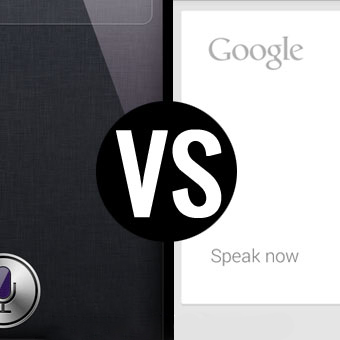
The new version of Google’s search app for the iPhone and iPad, expected to be available within a few days, will let users find information about everything from the weather to nearby movie showings by speaking into the devices, matching some of the capabilities offered by Apple’s own Siri technology.
Google’s new app recites answers to search results in a human sounding voice, similar to Apple’s Siri, which some analysts and technology observers believe could make iPhone users less reliant on Google’s search service.
The news comes as the relationship between the two companies grows increasingly competitive. On Monday Apple said it would no longer offer Google’s YouTube app as a pre-loaded app in future versions of its iPhone.
Google, which unveiled a version of the voice-based search app for its Android software earlier this year, showcased the version for Apple devices at a press event at its San Francisco offices on Wednesday.
The company also announced a test version of a new service that will integrate users’ personal emails into searches on the Google website. The service, which Google said will initially be available to 1 million users, aims to make it easier for consumers to access information such as flight schedules or shipping orders.
A truly universal search will “have all the information that humanity has put on the Web and information that’s your information,” Amit Singhal, senior vice president of Google Search.
The initial “field trial” will work with Google’s Gmail, but Singhal said the company was open to working with other email providers.
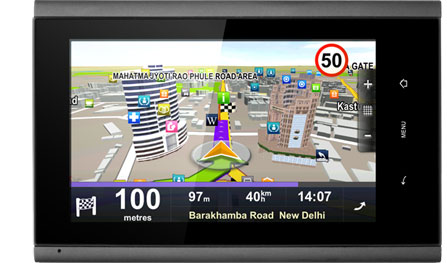
MapmyIndia, provider of digital maps, navigation and location-based services, has launched CarPad 5, a connected car product. Built on Android OS, CarPad 5 is an all-In-One GPS Navigator, Smart Phone and 3G Tablet. It 5 runs on a 1GHz Samsung processor (Cortex A8, S5PV210) and features a 5 inch capacitive touch screen. It is priced at Rs 19,990 and contains the CarPad windshield mount and Car charger.
The navigation device has built-in 3G & Wi-Fi and comes preloaded with Aura, MapmyIndia’s fully 3D and connected GPS navigation interface.
Rakesh Verma, managing director at MapmyIndia said that the CarPad 5 is one of the many in-car productivity gadgets they plan to launch in the near future.
The company claims Aura maps offers real-time traffic updates, house level search, security (track and trace) and discount offers in the vicinity. It covers over 6.3 million places, 5,79,000 towns and villages, 4000 cities at street-level, house-level data for 36 cities and 3D landmarks and building footprints for 34 major cities.
The navigation device is 3G enabled and allows users to call, message, mail and chat, search and browse the web at high speed, and access social networks.