Technical Researchers from Purdue University and the University of Iowa have exposed vulnerabilities in the data infrastructure of 4G and 5G networks, which lets attackers track down the location of any mobile phone on a given network. Furthermore, they can also snoop in on users during a phone call. With the advent of 5G not very far away, an exposed liability of this sort can be serious.
About The Attacks
When 5G was announced, reports said that the new network would be more secure than the previous iteration. Instead, the researchers unveiled three different kinds of attacks which hackers can use to breach a network which is running on 4G or the upcoming 5G technology. They are known as Torpedo attacks, Piercers and IMSI-Cracking attacks.
Torpedo Attacks
The primary form of breaching is called a Torpedo attack. It exploits a vulnerability in the paging protocols that various carriers such as Verizon and Sprint use. The protocol actually notifies the person about an incoming call or text message. As per reports, if multiple phone calls are made and dropped to a single node, it might trigger a paging message without informing the target device. This way, the hacker may derive the user’s location, and he can further hijack the paging channel via the IP address.
Piercer And IMSI-Cracking Attacks
The Piercer attack, which is an extension of the Torpedo attack allows the attacker to find out the IMSI (International Mobile Subscriber Identity) on the 4G network. In the third and final form of attack, the hacker can straightaway brute-force an IMSI number in both the networks (4G and 5G), which is exactly where the IMSI numbers are encrypted.
As per reports, all major US operators which are trying to bring 5G functionality to their devices are at risk from this exploit. More so, because the equipment to carry out such an attack is very cheap and readily available.
After launching 4G services in NCR last week, Vodafone has today announced the roll-out of its high-speed 4G services in prominent business and residential corridors of Mumbai across the Western suburbs and South Mumbai in a phased manner. The roll-out will be complete by the end of next month as had been earlier revealed by Vodafone.
Vodafone has revealed that all existing customers can move to 4G plans at the same price as their existing 3G plans. The Vodafone 4G network in Mumbai is built on an 1800 MHz band and will enable Vodafone 4G customers to gain access to the service across a range of smart devices including Mobile Wi-Fi and dongles.
Speaking at the launch, Sunil Sood, Managing Director and CEO, Vodafone India said, “We are delighted to launch our high-speed 4G services in Mumbai for our customers to experience the most advanced wireless broadband experience available across the globe today. Vodafone’s global expertise and experience of launching 4G across 19 countries gives us a better understanding of this technology and need of the 4G customer. Initial response from customers who have experienced 4G services in Kerala, Karnataka, Kolkata, Delhi and NCR has been positive and encouraging. As a steadfast partner of Digital India, we remain focused on deploying multiple technologies – 2G, 3G or 4G for optimum use as each technology has its own vital role to play in servicing the myriad connectivity needs of consumers across the country. ”
About a month ago, Vodafone revealed plans of rolling out 4G services in major cities of India. This was followed by 4G internet soon being made available in Delhi and NCR. Now the company has announced dates of when it will be available in Bangalore and Mumbai.
Vodafone will launch 4G services in Mumbai on the 10th of February and in Bangalore on 11th of February. Vodafone is also planning on home delivering 4G-ready SIMs to its premium high-value customers in Mumbai, and formal communication for it is already being sent out. The launch in Mumbai will be in phases starting with South Mumbai.
Currently, Vodafone is offering data packs ranging from 35 MB which costs Rs. 11, going up to Rs. 2,499 for 20 GB in Delhi and NCR. It has also become country’s first network provider to provide 4G international roaming in the UK, Romania, Spain and Netherlands. Vodafone, one of the biggest network operators of India, also has big plans like introducing 5G in countries like Australia by 2020. But let’s see if it manages to overcome the 4G hurdle first.
After successfully launching its 4G services in Kerala, Karnataka and Kolkata, Vodafone has now announced the release of its next-generation 4G network in Gurgaon, soon to be followed by Delhi and the NCR in regular phases.
Running on an 1800 MHz band of the spectrum, the service can be used on all smartphones with 4G support, and will make the overall experience of downloading and streaming media efficient and enjoyable. The 4G Mobile Wi-Fi would support connectivity for up to 10 devices.
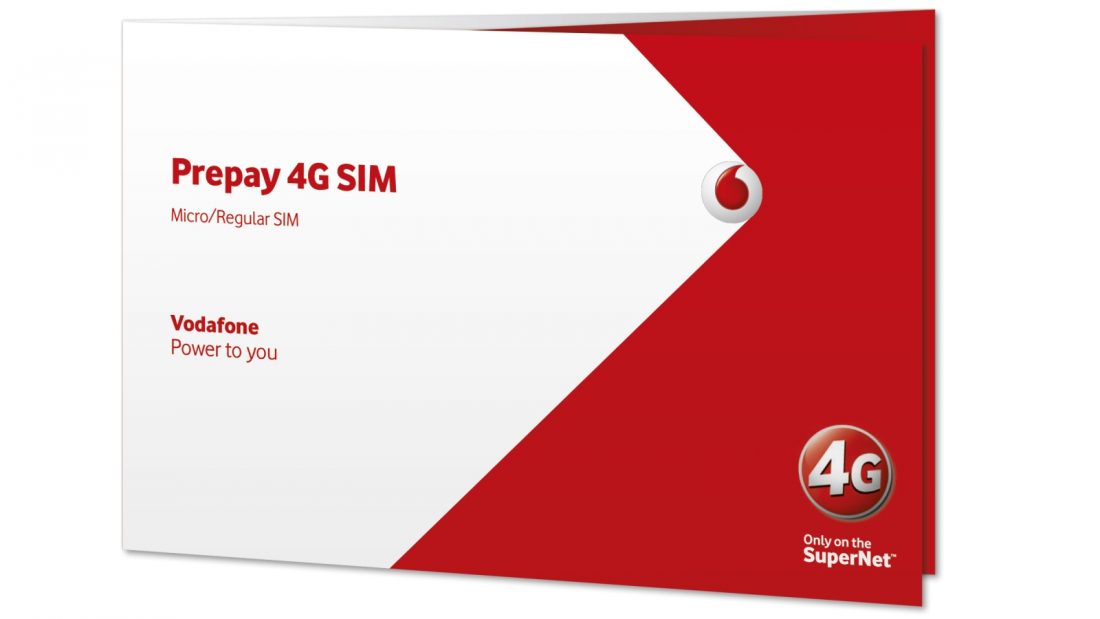
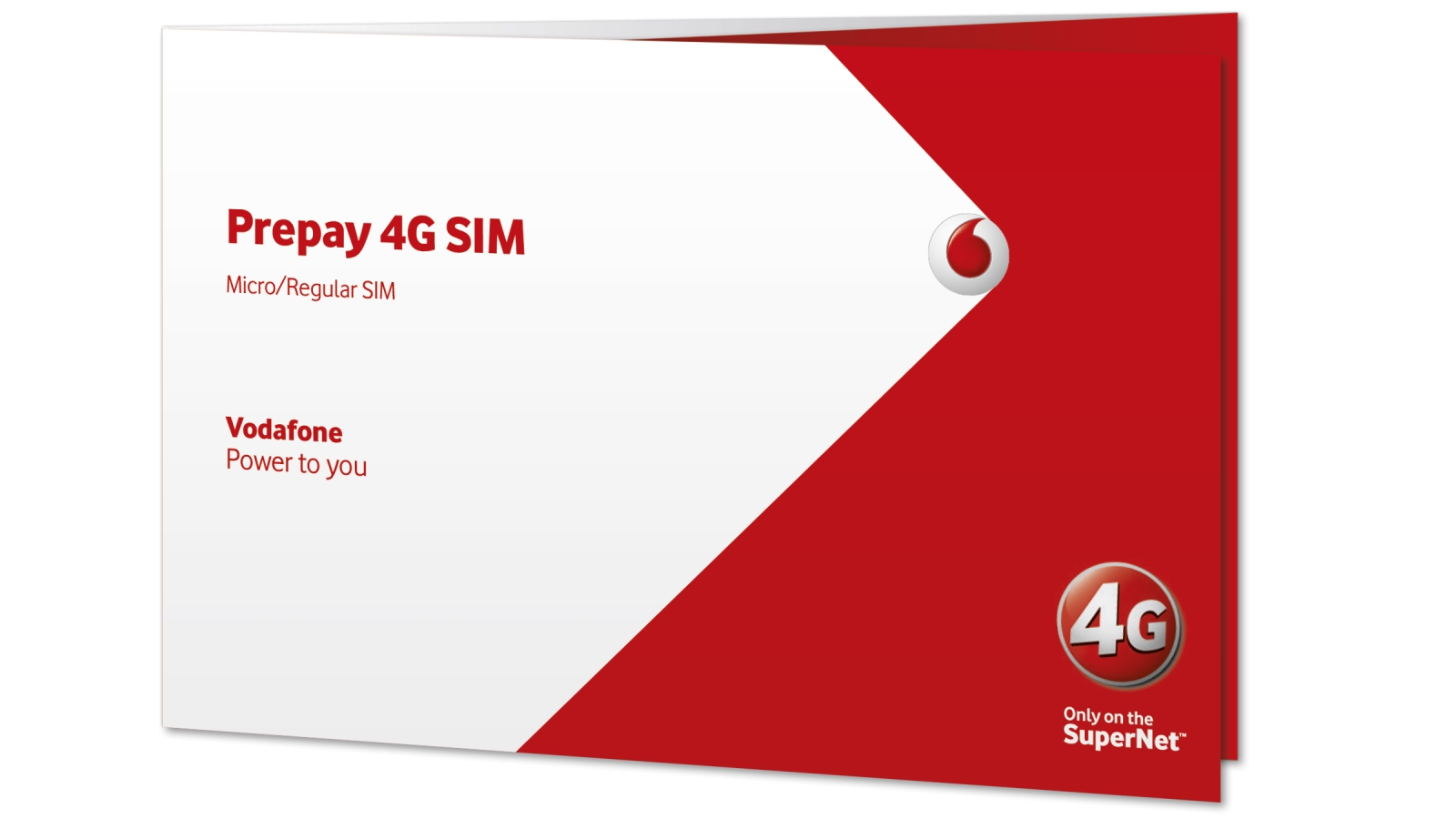
The company also has a series of offers up its sleeve that include high-speed 4G SIMs, but also free 4G upgrade for those already using Vodafone SIMs. Users can enjoy up to 3 months of access to free television, movies and music on Vodafone Play as part of their Vodafone 4G subscription. Vodafone Music, HOOQ, an on-demand video service, and Hungama Play, are some of the other services users would be able to avail as part of their subscription.
Currently, Vodafone is offering data packs ranging from 35 MB which costs Rs. 11, going up to Rs. 2,499 for 20 GB. The company is also offering door-step delivery of postpaid 4G SIMs for requests that are received before 4 PM on the day the request is made. Vodafone has also become country’s first network provider to provide 4G international roaming in the UK, Romania, Spain and Netherlands.
After treating its loyal customers in Australia with the news of 5G launch in the country by 2020, Vodafone brings some much-needed love to its customers here in India. Vodafone India has revealed that it will from today start the upgrade of SIMs to the next generation 4G ready SIMs in Delhi.
Vodafone which has already launched its high-speed 4G services in Kerala on a trial basis, will continue to roll out 4G services to major metros by March 2016. As Vodafone India enters the final stages of bringing 4G network to the country’s capital, it announced the availability of 4G SIMs for its customers at Vodafone stores across the city.
Adding incentive to the already sweet deal, Vodafone has informed that customers who are upgrading to 4G-Ready SIMs will be rewarded with free 1GB 4G internet, at the time of launch. All they need to do is send a short SMS “GO4G” to 199.
Needless to say, to make the magic work, customers will need a 4G ready phone along with a 4G SIM at the time of the launch.
This upgrade before the launch is being done to ensure a smooth, seamless and hassle-free transition from older generation tech to 4G when the service finally arrives in the market. A formal announcement regarding the launch, which is expected soon, will be made in due course.
“Before we step into the next generation of telecommunications, we want to make the transition to 4G to be smooth and seamless for our 10 million customers in Delhi & NCR. We want them to be 4G-ready so that they can start experiencing the benefits of high-speed mobile internet services as soon as they are launched commercially. Hence, this facility to upgrade to 4G-ready SIMs in advance. We are excited and fully geared up to launch our 4G services on the superior 1800 MHz band in Delhi & NCR very soon,” said Apoorva Mehrotra, Business Head–Delhi & NCR, Vodafone India.
Along the lines of what it had earlier promised to customers in Mumbai, Vodafone is also making arrangements for home delivery of 4G-ready SIMs to its premium customers across Delhi & NCR region. A formal communication is being sent out to all these customers with details of the initiative
India’s second largest telecom operator, Vodafone, has revealed plans to roll out 4G services in major cities including Delhi, and Mumbai by end of March, 2016. The Britain based operator, which has one of the widest network in terms of reach in an official statement communicated,”Vodafone has already launched its high speed 4G services in Kerala. The intensity of its roll-out will continue with major metros like Mumbai, Kolkata, Bengaluru and Delhi to be launched by March 2016″
In a bid to showcase it’s superior customer service, it has already started to issue 4G ready SIM cards in Mumbai. Vodafone India Business Head Mumbai, Ishmeet Singh said,
“The company is fully geared up to launch 4G services in 1800 Mhz band in Mumbai very soon. We want our customers to be 4G-ready so that they can start experiencing the benefits of high-speed mobile Internet services as soon as they are launched commercially. Hence, this facility to upgrade to 4G-ready SIMs in advance”
Vodafone is also planning on home delivering 4G-ready SIMs to its premium high-value customers in Mumbai, and formal communication for it is already being sent out.
Vodafone is finally giving out an upgrade to 4G connection for its customers, along with a ‘Superfast 4G SIM’. They have also introduced a trial pack of 120MB for Rs.29 along with a 100% extra data for all 4G RED customers for 3 months. Vodafone’s 4G is claiming to support connectivity of WiFi for up to 10 devices and also promises to simplify the customer’s experience with a ‘same day doorstep’ post-paid delivery system and instant activation for those who want to change their SIM.
For a more detailed understanding of what the Vodafone 4G platform entails, we can tell you that the 4G LTE network runs on an 1800Mhz speed and can be accessed via any 4G enabled handsets available across the country. It will be launched in Kochi on the 14th of December 2015, making it the first telecom operator in Kerala to offer 2G/3G/4G services on its own convergent radio technology.
“Vodafone’s global expertise and experience of launching 4G across 19 countries gives us a better understanding of this technology and the needs of the 4G customer.” – says Sunil Sood MD & CEO of Vodafone, India.
Vodafone will initially roll out its 4G services in the metropolitan cities of Mumbai, Delhi, Bangaluru and Kolkata. We all know that Vodafone is slightly late in the 4G scene, with Airtel currently in the lead. But, all the hype surrounding its delay and it finally seeing the light of day should be able to get the amount of traffic it is looking for. Let us hope that Vodafone is able to resolve all its issues ranging from call-drops to the late entry of 4G soon.
4G LTE is finally rolling out full swing in the country, after Airtel and Reliance Jio, Vodafone is finally aiming to launch 4G connections in December. As of now, it seems to be focusing on IT strong circles such as Delhi, Mumbai, Karnataka, Kerala and Kolkata. These are the places that they have identified as being most adaptable to a SIM change from 3G to 4G. As far as the question about equipment comes in; they will be using Ericsson and Swedish made Nokia equipment to launch the 4G SIMs.
Vodafone acquired the spectrum for these circles in January of 2015, and the delay has been due to implementation of equipment due to strong laws in the above said circles.
However, Airtel already has coverage in 330 towns and Reliance Jio aiming to be the market leader for 4G in India; it is to be seen as to how Vodafone will capture the market.
Reliance is aiming for low price 4G data implementation early 2016 aiming to charge subscribers of Jio as low as Rs 50-100 for 1 GB of data vs the current price of approximately Rs. 250 for 1 GB of 4G data.
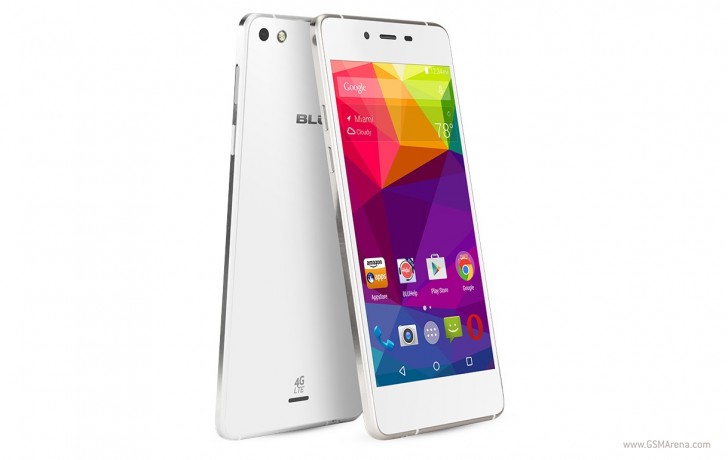
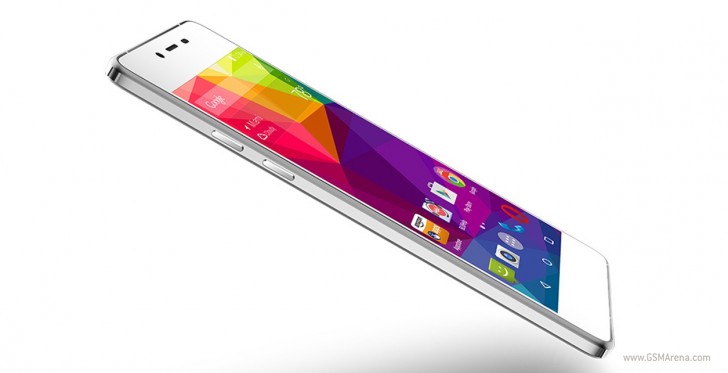
BLU, a Miami-based manufacturer unveiled a new smartphone called the Vivo Air LTE in the United States. This phone is touted as being the slimmest 4G LTE smartphone in USA weighing just 97 grams and measuring a mere 5.1 mm.
The Vivo Air LTE is an upgraded version of the BLU Vivo Air that was announced in January. This upgraded version now runs on the Qualcomm Snapdragon 410 along with a 2GB of RAM.
It comes with a 4.8 inch Super AMOLED display with 720p resolution. On the camera front, it comes with an 8MP primary camera and a 5MP secondary camera. It has a 16GB of built-in memory and runs on the Android Lollipop.The LTE on this mobile will be compatible with AT&T and T-Mobile.
The BLU Vivo LTE is fueled by a 2,050mAh battery and is expected to go on sale from the 22nd of September 2015 onward. It will also come in two colour variants – black and white and will be priced at $199.
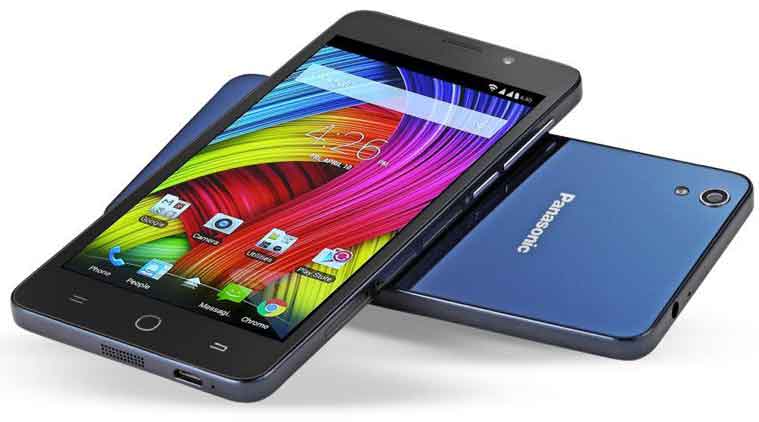
Panasonic has announced three new 4G LTE enabled smartphones today – the Eluga I2, Eluga L2, and T45 4G . All four phones are supported by the Android 5.1 Lollipop OS and priced at Rs. 8290, 9,990, and Rs. 6,990 respectively.
The Eluga models support a dual 8MP LED flash camera and a 2MP front facing camera. It also comes with an Oncell Touch panel and is powered by a 2500mAh battery and a 2000mAh battery in the L2 and I2 models, respectively.
The L2 comes with a 5.5 inch display and comes in a gray moondust or black leatherette finish while the I2 comes with a 5 inch display and come in a gold, silver or gray metallic glaze. All three models – the Eluga I2, Eluga L2, and T45 4G, come with a 1GHz Quad Core processer and offer 1GB RAM with 8GB internal memory expandable up to 32GB.
“The Panasonic smartphone range has become synonymous with innovation and foresight in India. We always keep a track of tech trends and advancement in the mobile market. With the launch of three additional gadgets in the 4G space, we will continue to expand our product offerings with the aim to provide an uncompromised smartphone experience, at very competitive prices.” – Mr. Manish Sharma, Managing Director, Panasonic India
The display also comes in a true-colour IPS resolution, while the T45 4G is equipped with a full connectivity package – Dual SIM, WiFi, Bluetooth and GPS – and is qualified with 21 regional languages to advance 4G LTE technology across India.
The phone will be available at all stores across the nation.
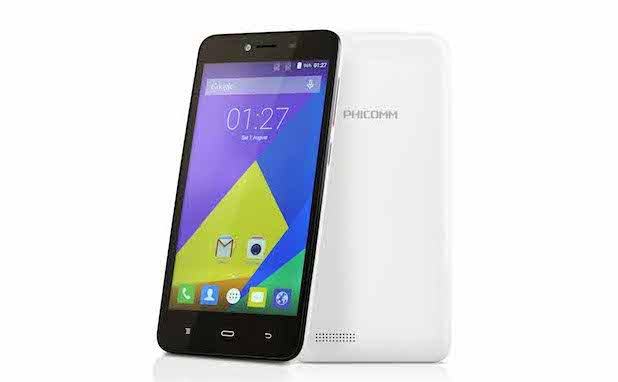
Phicomm has launched its second smartphone in India today, called the Energy 653, and priced it at Rs.4,999. This is in direct competition with the recently launched Micromax Canvas Xpress 2, which comes with a price tag of Rs. 5,999. The homegrown company at the time proclaimed that it had brought out the cheapest 4G enabled smartphone in the market.
Well, it didn’t take time before Phicomm took over its glory. Another one in the market with the same price tag, is the ZTE Blade Qlux, which also is LTE enabled.
The new smartphone, Energy 653, features a 5-inch HD (1280×720 pixels) display, and is powered by a 1.1GHz Snapdragon 210 quad-core processor, an Adreno 304 GPU chipset, and a 1GB of RAM. It also has an 8GB internal memory, expandable up to 64GB via microSD card.
The rear camera comes with an 8MP display with f/2.4 aperture and LED flash, while the front has a 2MP selfie camera. Connectivity options include dual-SIM card slots, 4G LTE support, Wi-Fi 802.11 b/g/n, Bluetooth 4.0 and GPS with a battery of 2,230mAh. The device is run by the Android 5.1 Lollipop out-of-the-box and is currently, said to be the most affordable 4G LTE capable smartphone in India, along with an HD display.
On paper, it seems like quite a good deal for the price. Here are the full specifications:
Features
Phicomm Energy 653
Display
5-inch HD (1280×720 pixels)
OS
Android 5.1 Lollipop out-of-the-box
Processor
1.1GHz Snapdragon 210 quad-core processor
RAM
1GB
Storage
8GB internal memory, expandable to 64GB using a microSD card slot
Rear Camera
8MP display with f/2.4 aperture and LED flash
Front Camera
2MP selfie camera
Connectivity
dual-SIM card slots, 4G LTE support, Wi-Fi 802.11 b/g/n, Bluetooth 4.0 and GPS
Battery
2,230mAh
Price
Rs.4,999
The Energy 653 is said to be exclusively available on Amazon India. Click here to buy now:
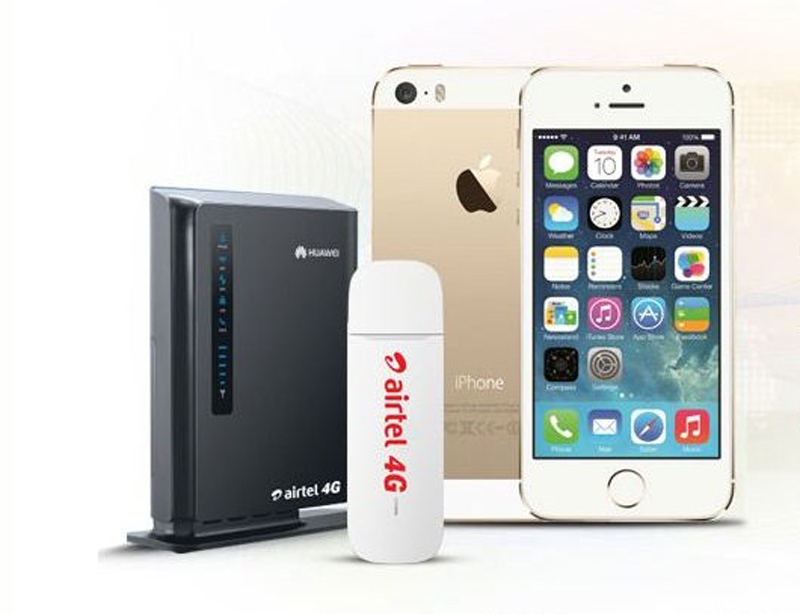
Airtel, has been launching its 4G services in various parts of the country, such as Bangalore and very recently Delhi. However, today it has launched its all India 4G services. To use this, you will have to swap your SIM card to one that supports 4G connectivity. Airtel has made this change very easy and efficient by ensuring a swapped SIMs within 10 minutes and a 4 hour doorstep delivery system.
The pricing of the 4G connectivity remains the same as the 3G, making it an affordable switch – something Indian customers always look forward to. Airtel is also launching an app called Wynk, that allows you to watch movies and videos on smartphones, as well as allows you to download and watch movies offline.
Various Airtel 4G services include an infinity plans which allows you to make unlimited calls with more data than usual, however not unlimited. The two cons of the 4G so far are – firstly, it uses up too much battery life and secondly, that it doesn’t have an unlimited data plan as yet.
With Airtel being the first mobile company in India to launch the 4G services, it is to be seen whether they capture the 4G market or not. Other companies such as Vodafone, are catching up to the 4G fever.
Airtel has decided to open up 1000 more stores by December, to give customers a first-hand experience about its 4G services and information about its low-priced handsets.
Reports suggest, that Airtel is in talks with Samsung, ZTE, Huawei and Xiaomi to launch affordable 4G devices starting from Rs. 4000, later this year. Airtel is also said to be expanding, by opening many company-owned company operated (coco) retail outlets. There are already 300 stores, and the company plans to open a 1000 more by December.
According to statistics, Airtel is said to be spread across 1.5 million outlets in towns and villages and covers approximately 86.8 per cent of the population as of March 2015. Airtel, exclusively provides 4G services in over 45 cities via TD-LTE & FDD-LTE technology.
Other competitors like, Reliance Jio Infocomm are said to re-enter the telecom business with a smartphone priced at Rs. 4000 by December, which will offer voice and data services at Rs.300-500 per month.
With Airtel’s competitors also stepping it up, it is to be seen whether Airtel will be the largest 4G providing company. However, Airtel has not confirmed any of these sources.
India has been stuck in the internet revolution for many a years. And while the country is progressing at a rapid speed, infrastructure is not growing fast enough. With new businesses sprouting each day, the need for a connected economy has increased considerably.
India’s Massive Market
India is one of the largest consumers of mobile phones in the world. Enough so, that many manufacturers have put India in the first list of launch countries. According to the TRAI Performance Indicator Report, India has 414.18 million wireless GSM connected users as of March 2015. But this is just in the rural sector, the all India number is at 705.21 928 Million according to the COAI report of May 2015 and Others report of Dec 2014. This number also receives staggering growth of 2.5% month on month in the Rural sector and a growth of 0.90% month on month nationwide.
What appears to be a small growth percentage, 2.5% growth means that the industry is adding approximately 10.2 million rural subscribers a month at the current trend. This additional user base earns the industry approximately Rs. 1200 crore each quarter. This large number is only a dip in an industry that moved around Rs. 26781 crore in revenue in Q4 2014.
The large revenue for the telecom operators is driven largely by the large number of users and large user base additions each month. But how much has the industry progressed since the begining of the internet age.
[pullquote_left] By the End of 2014 the World was Consuming 3000 PetaBytes of Data [/pullquote_left]
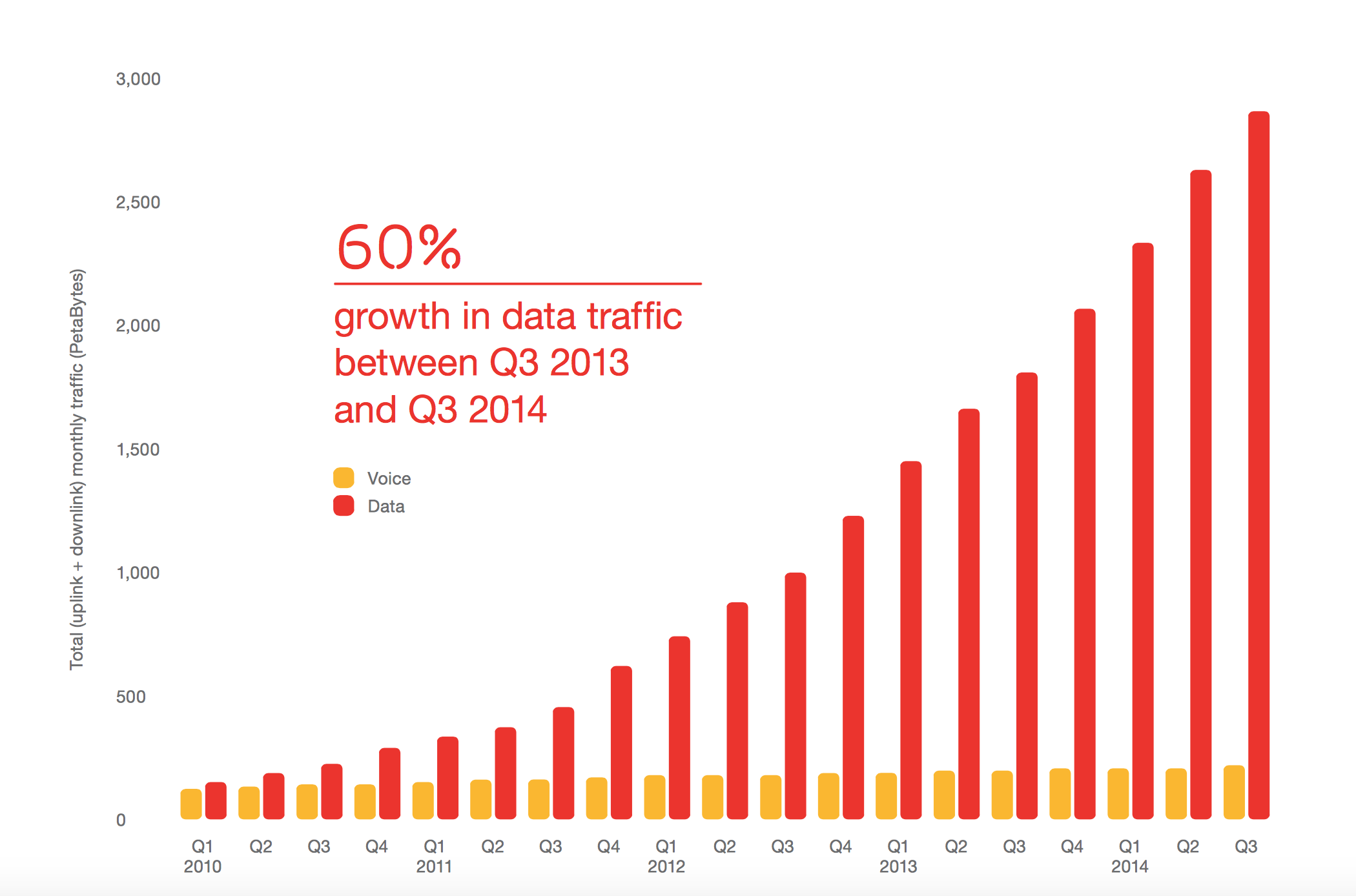
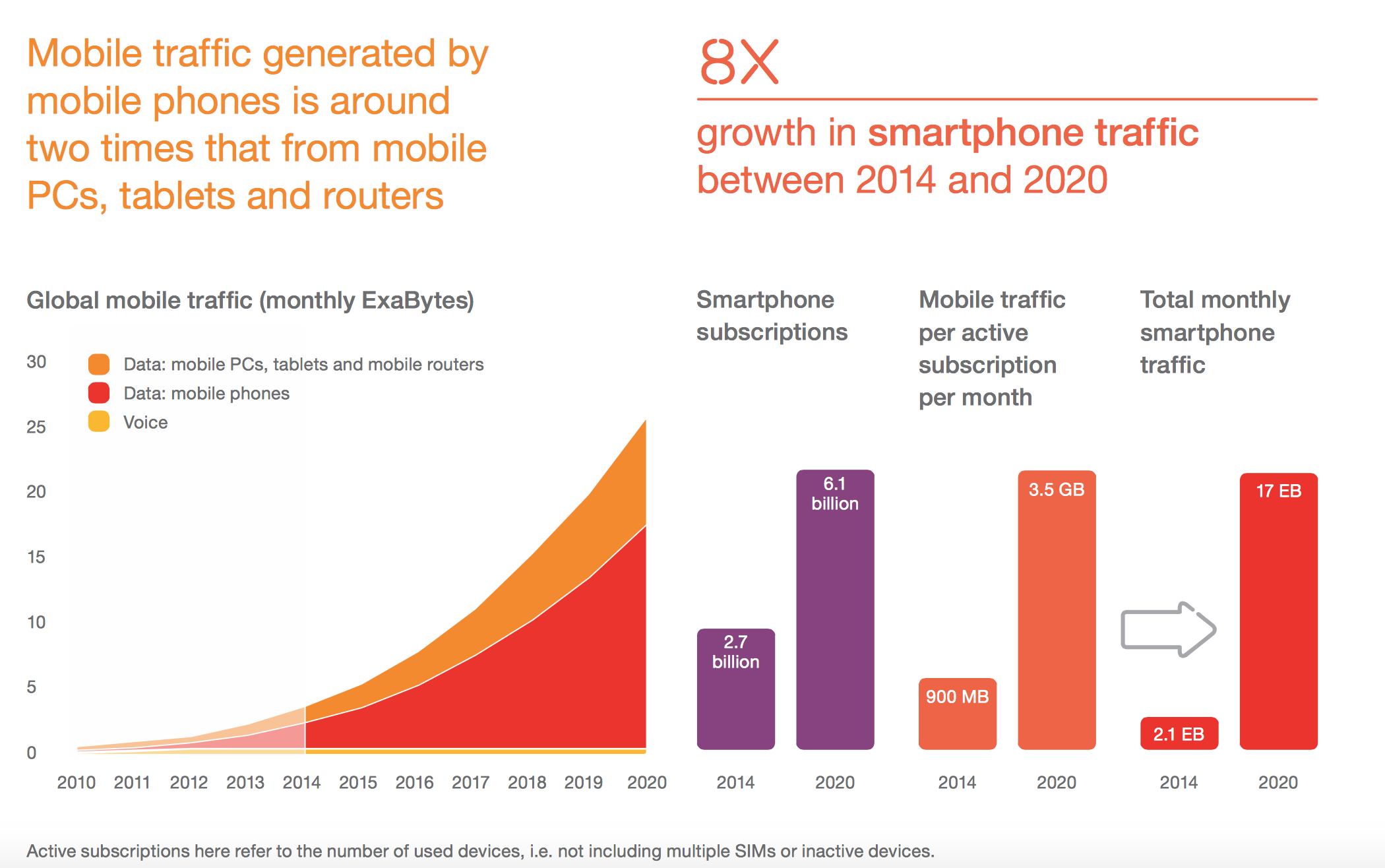
Global consumption of mobile data is through the roof. By Q4 2010 the world was only getting acquainted to mobile data and consumption of data on a portable phone was at 400 PetaBytes (mobile data traffic Up+Down). However, by the end of 2014 the world was consuming 3000 PetaBytes of Data. The industry estimates that the growth with continue by 60-70% each month.
Global Launch Trends
HSPA 42 Mbps networks have been commercially launched in 86 countries, while LTE networks have been commercially launched in 112 countries. So far, 40 LTE TDD networks have been made commercially available in 27 countries, with 27 operators launching LTE services using only the TDD mode, and 13 deploying both TDD and FDD modes together. 6 In a mixed LTE FDD/TDD network, the use of FDD for the uplink can improve the effective coverage area of the TDD band, and can also make TDD more efficient on the downlink.
On the other side mobile operators in 75 countries have now launched HD voice commercially. VoLTE or “voice on LTE” provides users with telecom-grade HD voice, video calling and other new, richer communication services on LTE smartphones.
State of Indian Networks
Despite all the launches mentioned above, India remains as a part of none of them. While India contributes to a large percentage of global mobile data usage, it all somehow comes from poor data connections.
It is estimated that if connection quality and speeds were to improve in India, the present data consumption would increase by 400%. A number that the industry should play close attention to. Over 60% of the data consumption in India was mobile data by the end of 2014.
Mobile Data Drivers
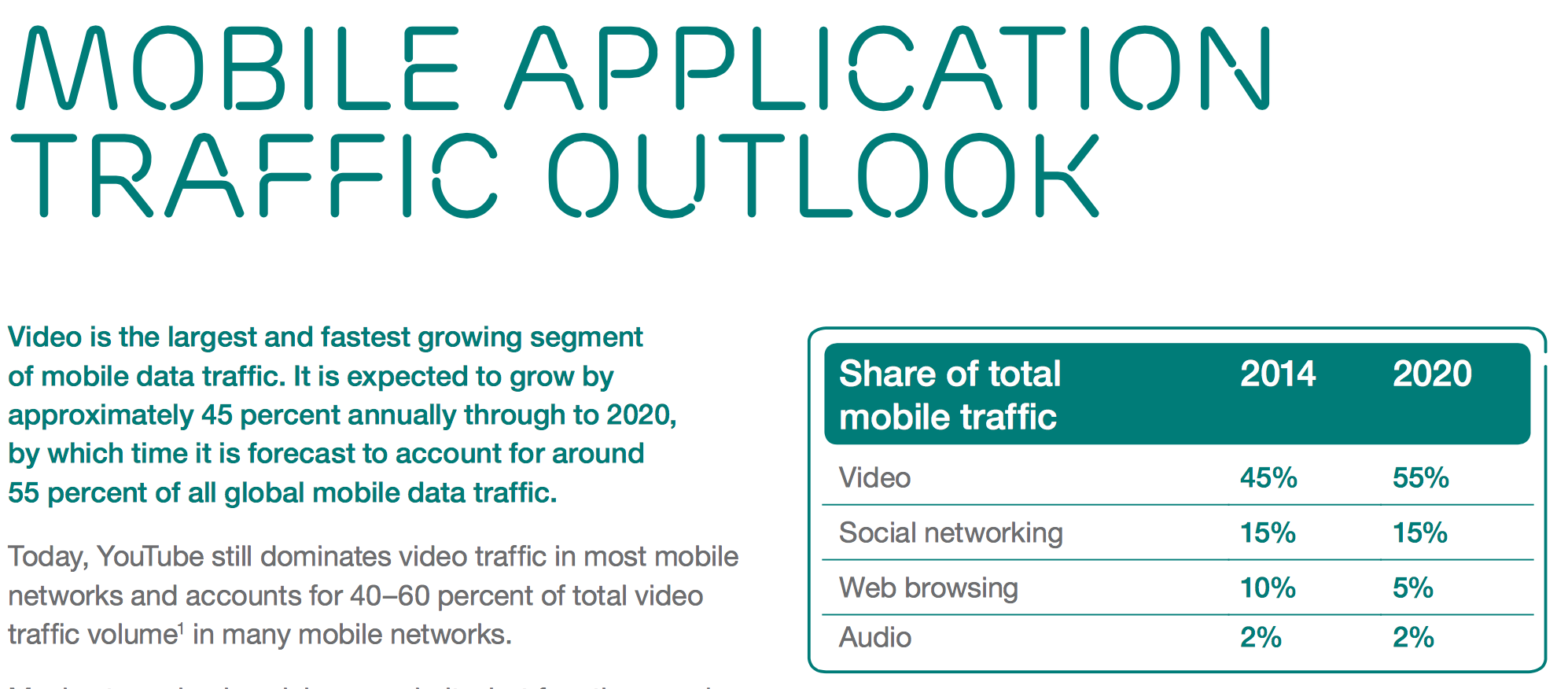
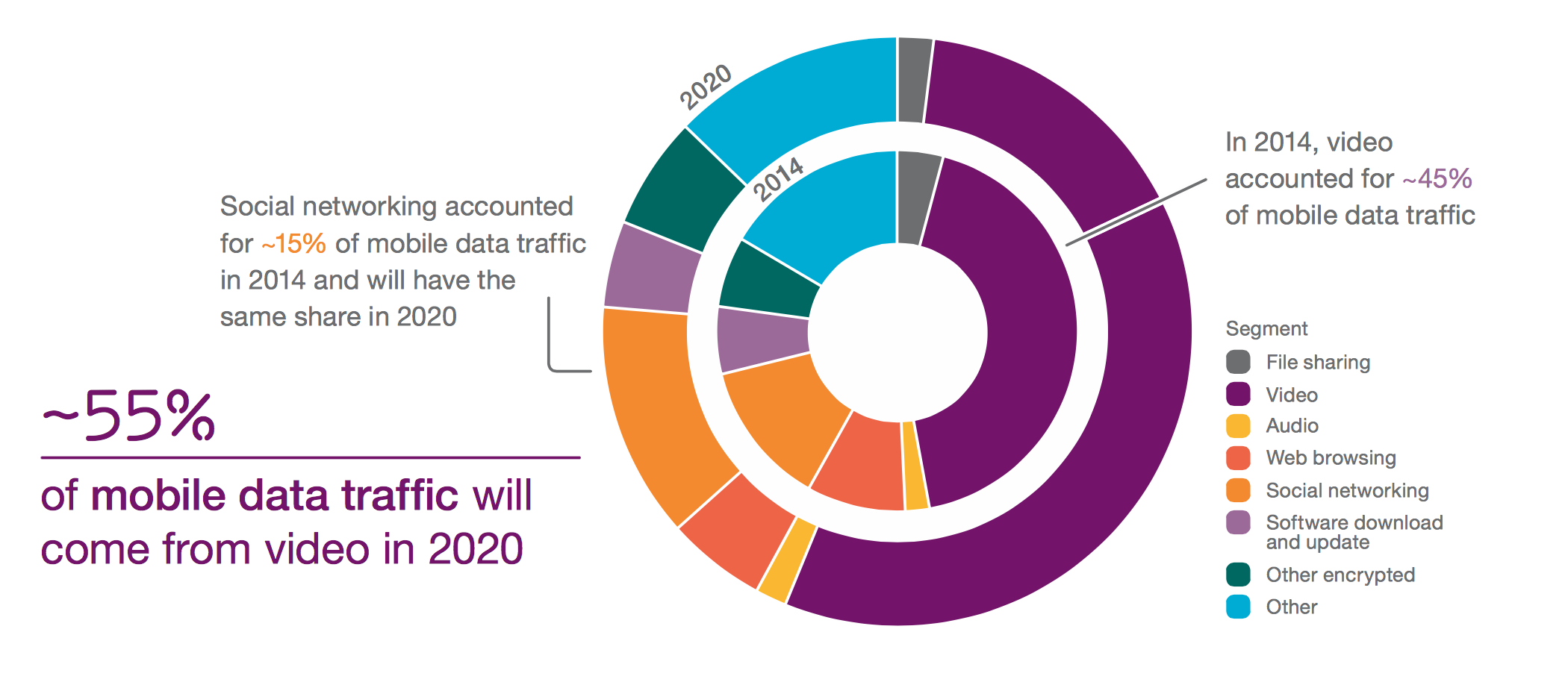
Out of the total mobile data consumed in India, 45% comes from video playback from websites like YouTube. A large chunk of music streaming services are also responsible for driving mobile data in the country.
Mobile Data Usage
[pullquote_left]55% of mobile data will be consumed for Video services[/pullquote_left]
Globally, YouTube is responsible for consumption of 40-60% of mobile data, a number which is relatively lower at 17% in India due to mobile data connectivity and speed limitations.
It is estimated that by the year 2020, 55% of mobile data will be consumed for Video services. Reaching this percentage will be possible by the implementation of 5G mobile data globally. 5G services are being tested in over 8 countries as we read this, while implementation for global markets is kept at 2019. India (and some other markets) are not a part of this implementation list.
India is about 5 years behind the 4G rollout targets (Dec 2010) and 2 years behind LTE 2.0. HD Voice and Video are not being talked about by the Indian industry leaders, despite the fact that India is one of the largest contributors to the overall revenue for the mobile industry.
Data and Future
India needs fast internet access, as a developing nation, its metropolitan cities need to be connected to the world. With a boom in startup culture and high paying jobs with international markets, most suffer due to lack of internet access. Video consumption and video calling with services like Skype, Google Hangouts and even FaceTime are at an all time high and consumers end up paying large sums of money just to say connected.
[pullquote_right]FUP has slowed down growth[/pullquote_right]
The biggest limiting factor in the whole telecom industry is the limited usage policies implemented by the companies. The limited usage policy or fair usage policy (FUP) was first implemented by Airtel and Tata Teleservices to prevent users for exploiting their internet connection speeds and downloading illegal materials from the internet.
The FUP has since not been removed and with no pressure from TRAI (Telecom Regulatory Authority of India) this antiquated method continues to haunt each user.
Airtel is one of the biggest users of this aged method of policing the usage of high speed data and is also one who exploits its use the most to benefit in the long run. Airtel has annoying auto redirects (Smart Bytes) that transfer you to a buy page insisting that you buy additional data packs to continue on the fast speed. These packs are usually 4-5 times the cost of the bundled data and tend to really hurt consumers financially.
The world is getting connected, using a highway of data which is not only fast but also super efficient and budget friendly.
However, we are no where near that future. Most operators globally offer the ability to choose a plan that suits the customers needs. The United States and countries like United Kingdom, Australia, South Korea, Japan, New Zealand, Spain, Canada and many others are not familiar with the term FUP. In fact, any form of throttling is against the law in many of these countries. Terming the so called limiting plans as “marketing gimmicks” countries have ensured that the consumer gets what he pays for, no more and especially no less.
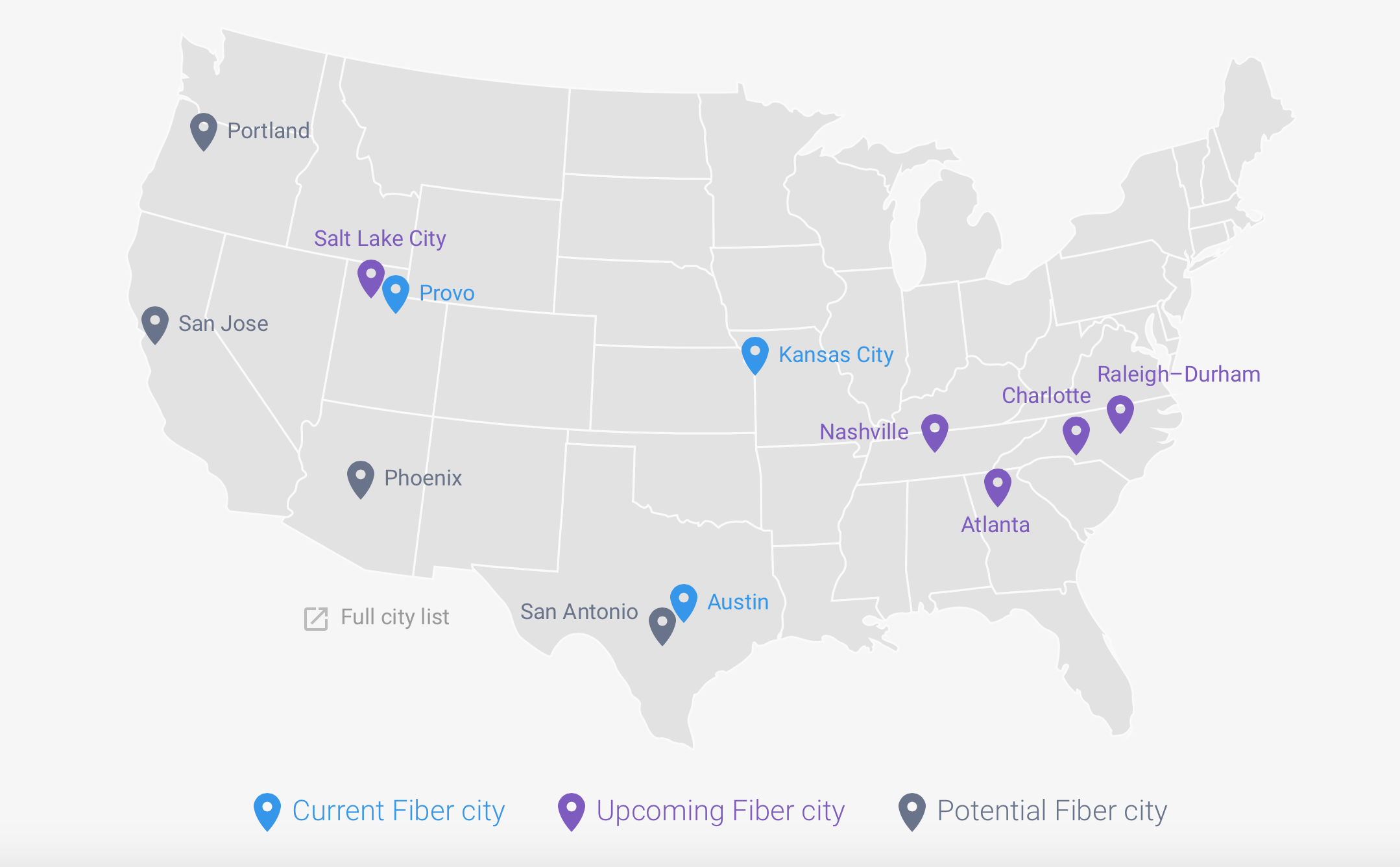
Google Fibre Deployment Map
Then there are packages from the likes of Google Fibre limited in reach and availability, Google has made possible speeds of upto 1000 Mbps for as little as US $ 70/month (chump change compared to what iGyaan spends for Internet) available at residences across the United States. They also offer a “Basic Plan” which is at 5 Mbps downloads and 1 Mbps uploads (unlimited) for a price of US $0 if you pay the installation fee. Free Internet! If that does not help the startup economy, then what else will?
Something needs to change
India and Indians deserve the ability to get unlimited internet, the users seem to be paying for it, but nobody seems to be getting it. Riddled by hidden corporate talk and contracts that fool the customers into believing that they are getting the best possible deal. Everybody has the right to stay connected, and a fast internet connection is more like a lifeline today.
Many sectors in the country do offer high speed data connections for a higher price. However, these too are controlled by limits, and speed drops are often too high. A 100 Mbps connection from Airtel Fibrenet drops to a mere 512 Kbps post a 100GB download. A simple math calculation will tell you that it takes just 2 Hours, 23 Minutes and 9.93 Seconds to download 100 GB on such a connection. Post the download you either have to pay heavy sums of money to get data packs or live with a devastatingly slow 512 Kbps which would take 19 Days, 10 Hours, 2 Minutes and 1.6 Seconds to download the same 100 GB. Airtel charges INR 5,999 + tax for this plan , making it well over US $100. Now compare this to Google’s 1000 Mbps line with no limits whatsoever, which costs US $ 70 /month.
Something needs to change and fast! Sign our petition below and be part of the voice of change. #StopFUP #EndFUP
4G LTE is deemed to be roughly 10-20 times faster than 3G standards. With the popular carriers embracing 4G LTE and offering attractive tariff plans, smartphone makers have come out with a handful of budget devices with LTE support.
Want a future-proof smartphone but don’t have the budget to shell out money for a high-end device? We are listing the top 4 LTE capable Smartphones under 10K:
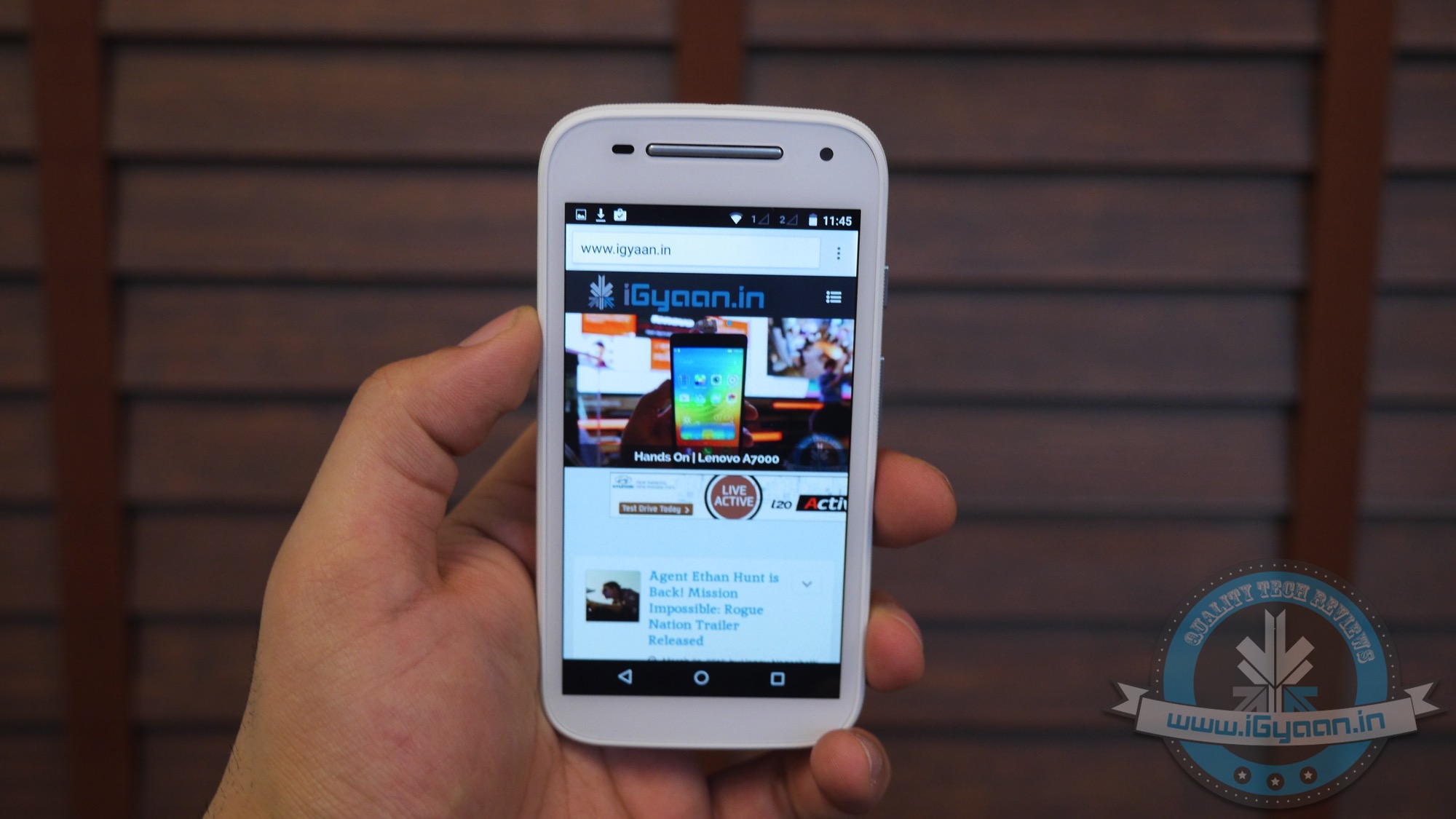
Motorola Moto E (Gen 2) 4G
Priced at Rs 7,999, the Motorola Moto E is one of the highly recommended phones available in the market within Rs 10,000. This handset sports a 4.5-inch qHD display with 960×540-pixel resolution. It is powered by a 1.2GHz Snapdragon quad-core processor paired with 1GB RAM. It can store 8GB of data internally and can be expanded via microSD up to GB. Other than this, the handset also features a 5-megapixel primary camera, VGA secondary camera, 2,390mAh battery, and connectivity options like dual-SIM card slots, LTE support, Wi-Fi, Bluetooth, and GPS. It runs on Android Lollipop.
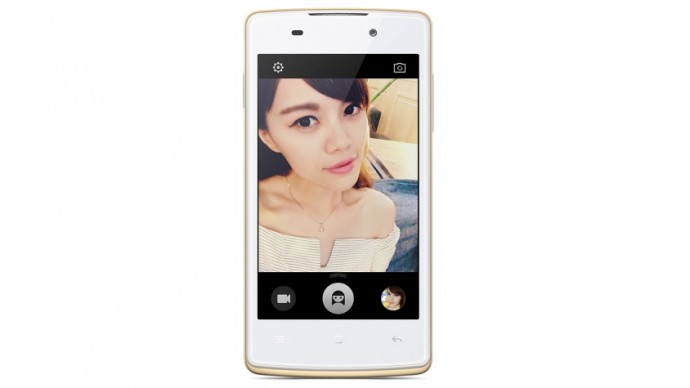
OPPO Joy Plus
OPPO launched the Joy smartphone back in April 2014. After almost a year after, OPPO launched its successor, the OPPO Joy Plus. The dual-SIM smartphone runs on Android 4.4.2 KitKat united with the company’s ColorOS 2.0 UI. Display features include a 4-inch WVGA IPS screen with 480x800p resolution and 234ppi pixel density. It equips a 1.3GHz dual-core MediaTek (MT6572) coupled along with a 1GB RAM. The memory capacity of the device comprises of 4GB of internal memory, which can be extended up to 32GB via microSD card. It has a 3MP primary camera with LED flash and a 0.3MP front shooter and picks up power from a 1,700mAh removable Li-ion battery. On the connectivity front, the Joy Plus offers 3G, GPRS/EDGE, Wi-Fi 802.11 b/g/n, Micro-USB and Bluetooth options and is priced at Rs 6,990.
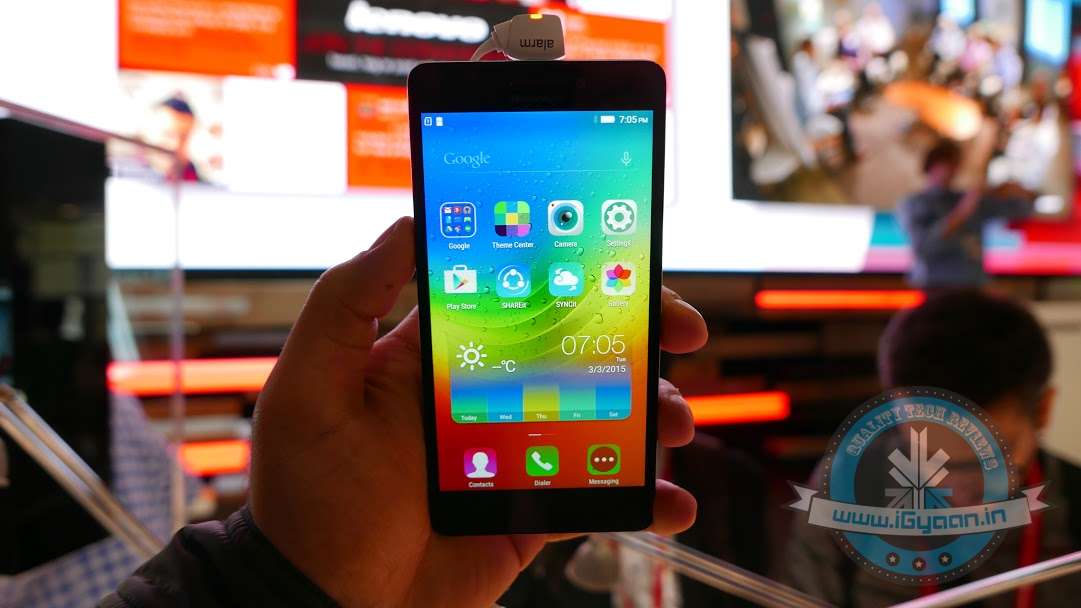
Lenovo A7000
According to a source cited by Times of India, the Lenovo A7000 will cost users somewhere around Rs. 8,999 to Rs. 9,999. Talking about the specifications, the Lenovo A7000 sports a 5.5 inch HD display. It is powered by a 1.5 GHz MediaTek True8Core processor with 4G LTE. It boasts 2 GB RAM and 8 GB internal storage which is expandable through MicroSD. The smartphone runs on Android 5.0 Lollipop. While looking at the camera, this device offers an 8 MP shooter on the back and a 5 MP front camera on the front. It gets its juice from a 2,900 mAh battery.
Yu Yuphoria
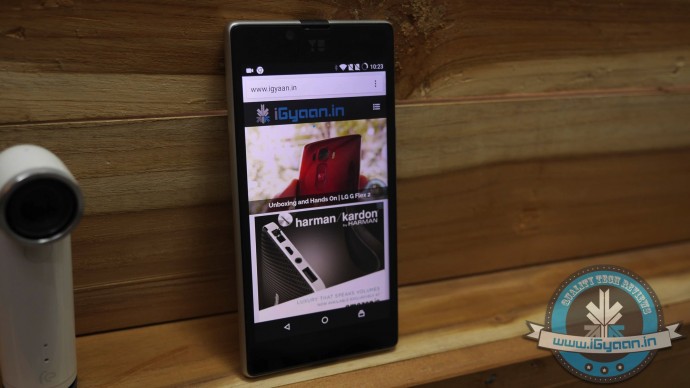
Not long after Micromax set up a new company by the name YU Televentures and launched a new device called the YU Yureka, the company launched the new YU Yuphoria. The device is the first to be designed by YU and is Made in India. It has been launched at a price of Rs. 6,999. It runs on a Qualcomm 410 64bit Chipset, with a 1.2 GHz Quad-Core CPU and Adreno A306 GPU, with 2 GB of RAM and 16 GB of storage and 64 GB expandability option. It has an 8MP primary camera and a 5MP front camera. The battery is kept at 2230 mAh and is priced at Rs. 6,999
 When 5G was announced, reports said that the new network would be more secure than the previous iteration. Instead, the researchers unveiled three different kinds of attacks which hackers can use to breach a network which is running on 4G or the upcoming 5G technology. They are known as Torpedo attacks, Piercers and IMSI-Cracking attacks.
 The primary form of breaching is called a Torpedo attack. It exploits a vulnerability in the paging protocols that various carriers such as Verizon and Sprint use. The protocol actually notifies the person about an incoming call or text message. As per reports, if multiple phone calls are made and dropped to a single node, it might trigger a paging message without informing the target device. This way, the hacker may derive the user’s location, and he can further hijack the paging channel via the IP address.
 The Piercer attack, which is an extension of the Torpedo attack allows the attacker to find out the IMSI (International Mobile Subscriber Identity) on the 4G network. In the third and final form of attack, the hacker can straightaway brute-force an IMSI number in both the networks (4G and 5G), which is exactly where the IMSI numbers are encrypted.