Tag: digital india

  • Prime Minister Narendra Modi Crosses 16 Million Followers on Twitter

    Prime Minister Narendra Modi Crosses 16 Million Followers on Twitter

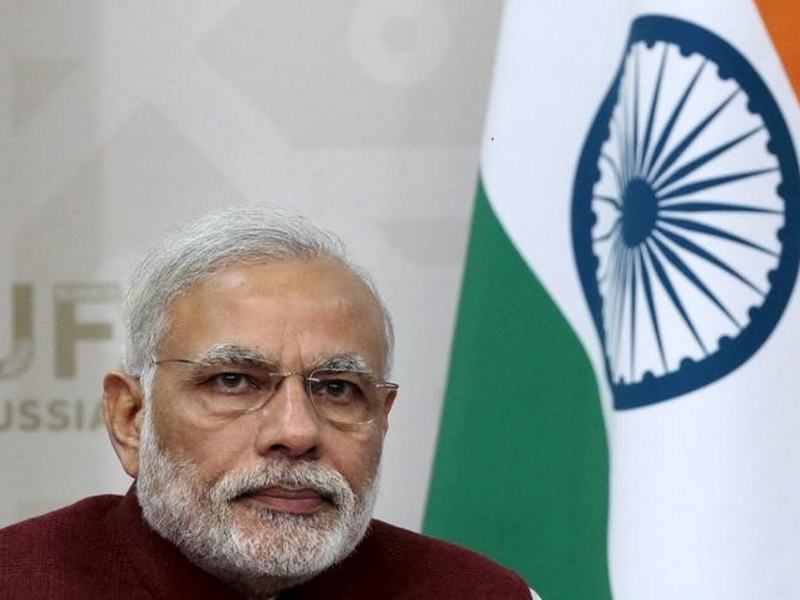
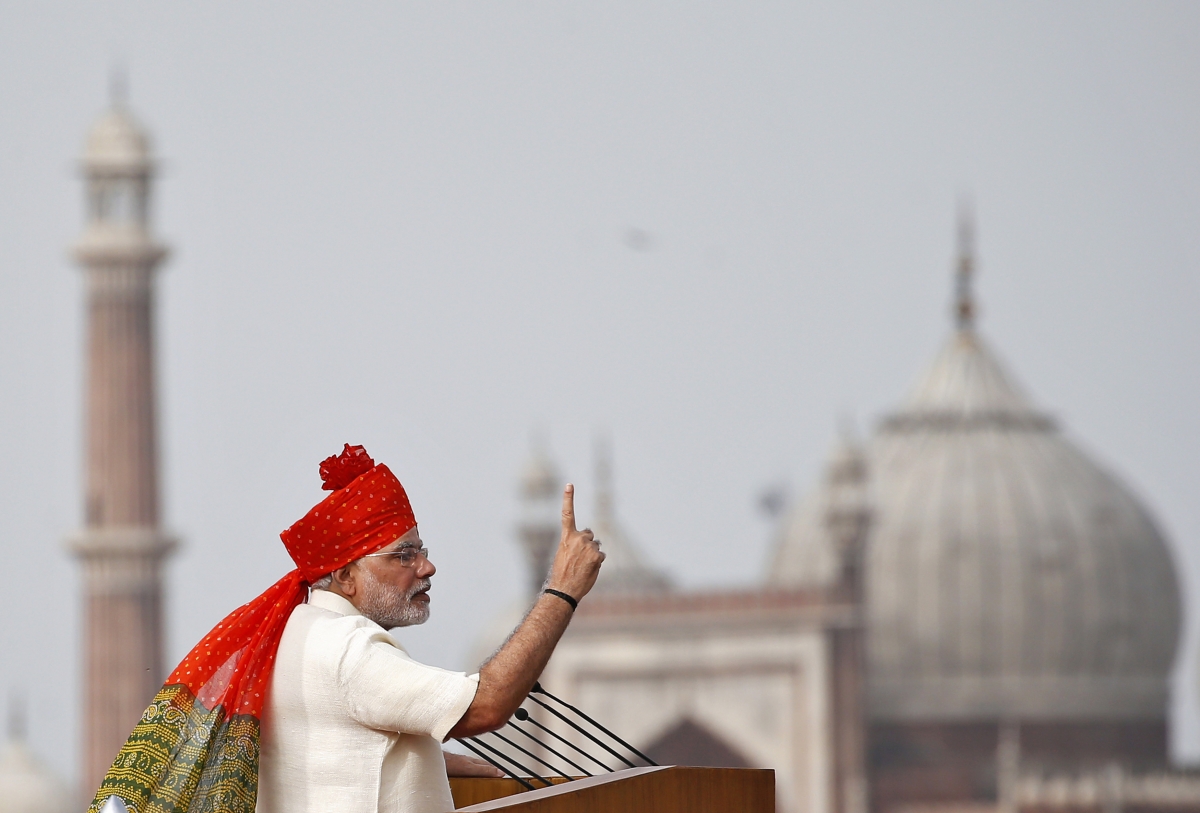
    In todays digital age, if you want to know when a person has made it big, see his/her followers. Social networking sites like Twitter don’t just serve to send out tweets, but also discreetly lets people know just how popular you are. if you wanted to know he most popular politician in the world, head to Twitter and see who’s got the most followers. Currently U.S President Barack Obama is the most popular politician on Twitter with 66.1 million followers. Indian Prime Minister Narendra Modi is now second in the list of most followed politicians with 16.1 million followers.

    Since PM Modi was sworn into office on May 26, 2014, his followers have grown by 11.9 million. While PM Modi is the second most popular politician in the world, he is the third most followed Indian behind Amitabh Bachan (17.8 million) and Shah Rukh Khan (16.2 million).

    One of the reasons that factor into the Prime Minister’s Twitter rise is his Make in India initiative that has received strong support. Indeed, PM Modi’s upward trend reinforces his vision to build a Digital India, and he’s leading from the front, being called India’s first and most digital-savvy leader. His ambitions like #MakeInIndia #SwachBharat #MannKiBaat and #SelfieWithDaughter have trended on Twitter on many occasions.

    In fact, #MakeInIndia was so big that it became the first non-US brand to launch its own Twitter emoji to a worldwide audience.


    Here are some of PM Modi’s top retweeted tweets of the past few months:


  • Why You Should Think Before Using Facebook’s Indian Flag Photo

    Why You Should Think Before Using Facebook’s Indian Flag Photo

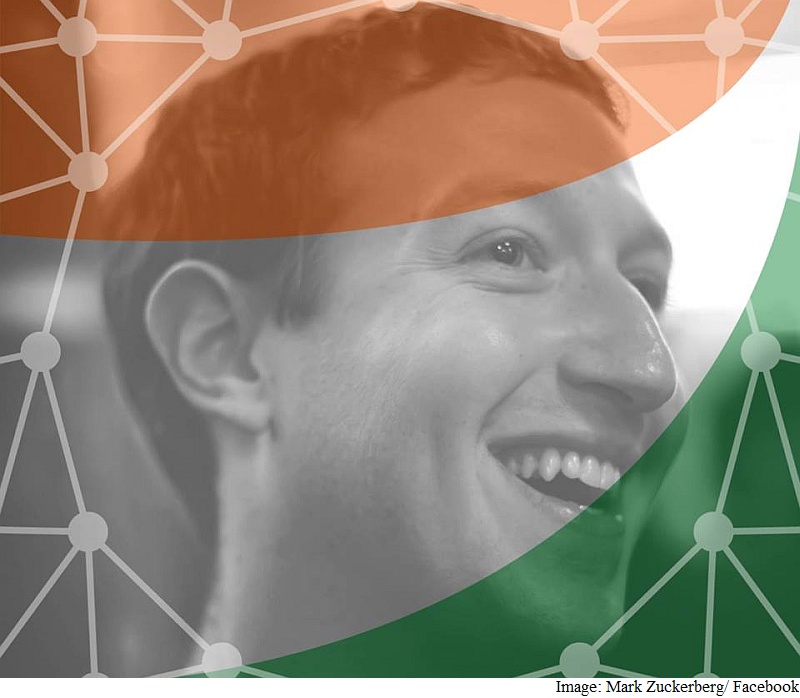
    Mark Zuckerberg recently changed his Facebook display picture to one which has an over-lay of the Indian flag. This was done following his Town Hall meeting with Prime Minister Narendra Modi in Silicon Valley this week. Zuckerberg unequivocally expressed his support for the Digital India campaign of the country.

    Mark Zuckerberg

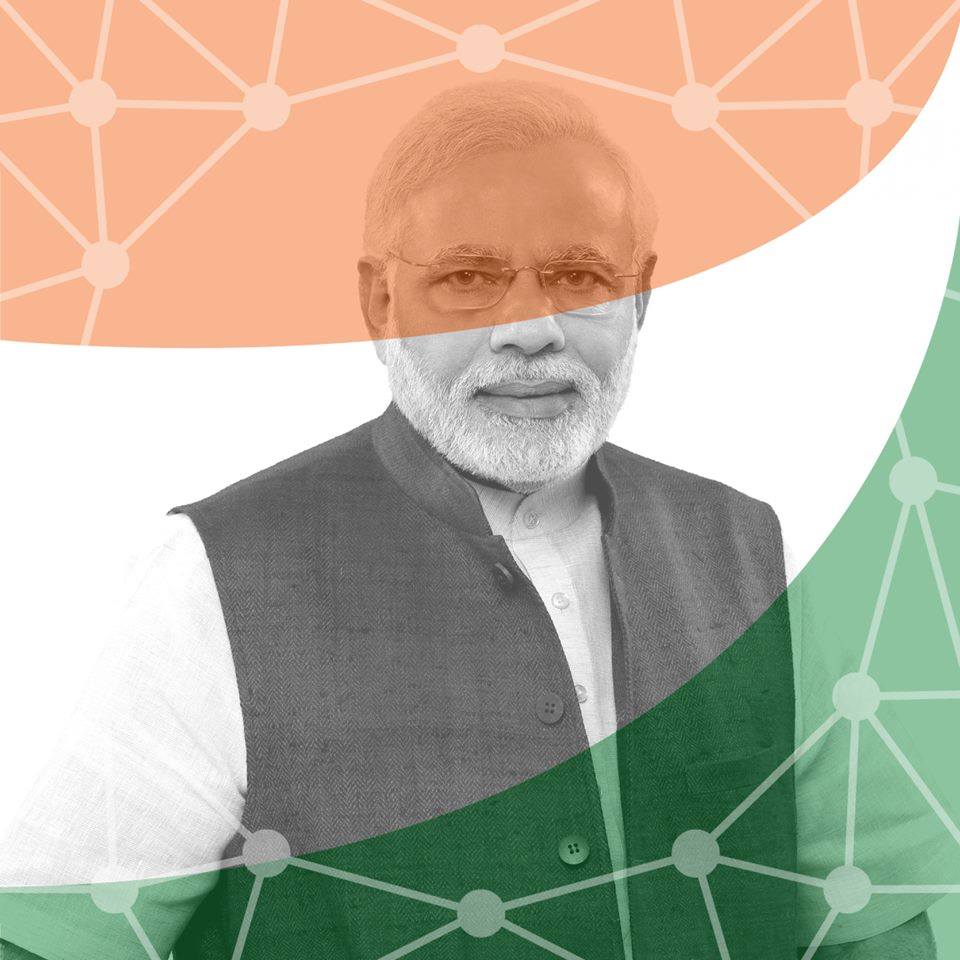
    Prime Minister Modi soon followed league and changed his display picture on Facebook as well. Facebook also introduced a feature which allowed users everywhere to make the tri-colour part of their display pictures. Post this, people, as we know them to be, switched their profile pictures left and right and centre. All of a sudden, we woke up to find unanimous, enthusiastic support for Digital India. Utopia, could it be?

    Narendra ModiMaybe not. A lot of netizens took to social media platforms to express their dismay at the new feature, which was allegedly directly connected with Facebook’s Internet.org. It was assumed that these pictures had a source code which would automatically link them to Internet.org, inadvertently making them support the initiative.

    Now the idea of thousands and millions being included within the ambit of the virtual world sounds brilliant and one everyone is up for. But before that, those endorsing this initiative as part of Digital India campaign need to understand all that it entails.internet.org

    Internet.org:

    Internet.org refers to a collaboration between Facebook and six other companies, namely, Samsung, Qualcomm, Nokia, Ericsson, MediaTek and Opera Software. The aim of this collaboration is to bring easily accessible internet to developing countries, especially in remote rural areas. However since it includes only selected services and online operators, it is seen not only as a direct threat to net neutrality but also as rampant publicizing of Facebook. It would be a single company, or a small group of them, which would decide what services are made available and which ones are excluded, a right earlier extended only to the user of the internet, not the service providers.

    However, earlier today, an official statement was made by Facebook which reads as follows:

    “There is absolutely no connection between updating your profile picture for digital India and registering support for Internet.org. An engineer mistakenly used the words “Internet.org profile picture” as a shorthand name he chose for part of the code. But this product in no way connects to or registers support for Internet.org. We are changing the code today to eliminate any confusion.”

    mark_zuckerberg_internet_org_reuters

    And so, the hue and cry gradually died. But the proposition still remains -before you jump at the idea of a tri-coloured display picture, try remembering the things it implies. Granted such a picture does not necessarily mean support for Internet.org, yet the issue of separating Digital India from Internet.org remains just as relevant. Nothing would be better on the tech front than to have a country where internet is available in every household. But any policy that endangers net neutrality, and therefore, the freedom of expression and to make choices in the virtual space, needs to be reconsidered.


  • Here’s How Facebook is Supporting ‘Digital India’

    Here’s How Facebook is Supporting ‘Digital India’

    Prime Minister Narendra Modi’s visit to the Silicon Valley has already created quite a buzz on social media platforms. While the likes of Sundar Pichai and Tim Cook have expressed their support for Digital India on Twitter, Mark Zuckerberg wanted to express his support by displaying it to the world on his home turf, and by that we mean Facebook. On Sunday, Zuckerberg changed his profile picture ahead of his Townhall interaction with the PM. The new profile picture has his own display picture with the Indian tricolour overlaying it.

    I changed my profile picture to support Digital India, the Indian government's effort to connect rural communities to... Posted by Mark Zuckerberg on Sunday, September 27, 2015
    Clearly, Zuckerberg's "effort to connect rural communities" integrates Digital India with his own Internet.org initiative (now changed to Free Basics by Facebook).  Following Zuckerberg, Modi changed his profile picture as well, and expressed his thanks for Zuckerberg's support.
    Thanks Mark Zuckerberg for the support. I changed my DP in support of the efforts towards a Digital India. You too can change your DP at fb.com/supportdigitalindia Posted by Narendra Modi on Sunday, September 27, 2015
    Pretty soon the rest of Facebook caught on as well with thousands of users changing their profile pictures in support of Digital India. Users can visit fb.com/supportdigitalindia to have their own version of the profile picture. It seems likely that Facebook is attempting to merge Internet.org with Digital India since the former has received strong criticism in India. In the last few months, we have been seeing advertisements by Facebook claiming how rural India will benefit from free internet. Post your comments below if you think Digital India should merge with Internet.org or not.
     

  • Narendra Modi in Silicon Valley: Could ‘Digital India’ Be a Reality?

    Narendra Modi in Silicon Valley: Could ‘Digital India’ Be a Reality?

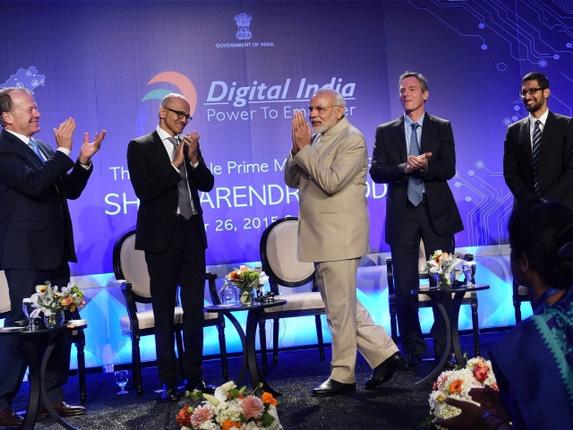
    PM Narendra Modi’s visit to Silicon Valley, against the backdrop of campaigns like Digital India and Make in India, has the whole country aflutter with hopes of potential developments in the Indian tech scene. Aimed at promoting the spread of tech-literacy all over the country, the visit includes Modi meeting the CEOs of tech giants. Needless to say, the development of events led to some important announcements.Modi and Digital India

    Google: Modi met Google CEO Sundar Pichai yesterday and discussed plans on introducing Wi-Fi connectivity across 500 railway stations in India, with speeds good enough to stream HD videos. Modi said that Google plans on covering 100 stations by the end of 2016. “We are expanding our public Wi-Fi hotspots. For example, we want to ensure that free Wi-Fi is not only there in airport lounges, but also on our railway platforms. Teaming up with Google, we will cover 500 railway stations in a short time,” he said. Pichai also announced that Google will roll out 11 Indian languages for Android users to type in next month.

    Microsoft: Satya Nadella announced that Microsoft would use its cloud services in India. “We believe low cost broadband connectivity coupled with the scale of cloud computing and the intelligence that can be harnessed from data can help drive creativity, efficiency and productivity across governments and businesses of all size. This is turn will create global opportunities for India,” Mr Nadella said. 

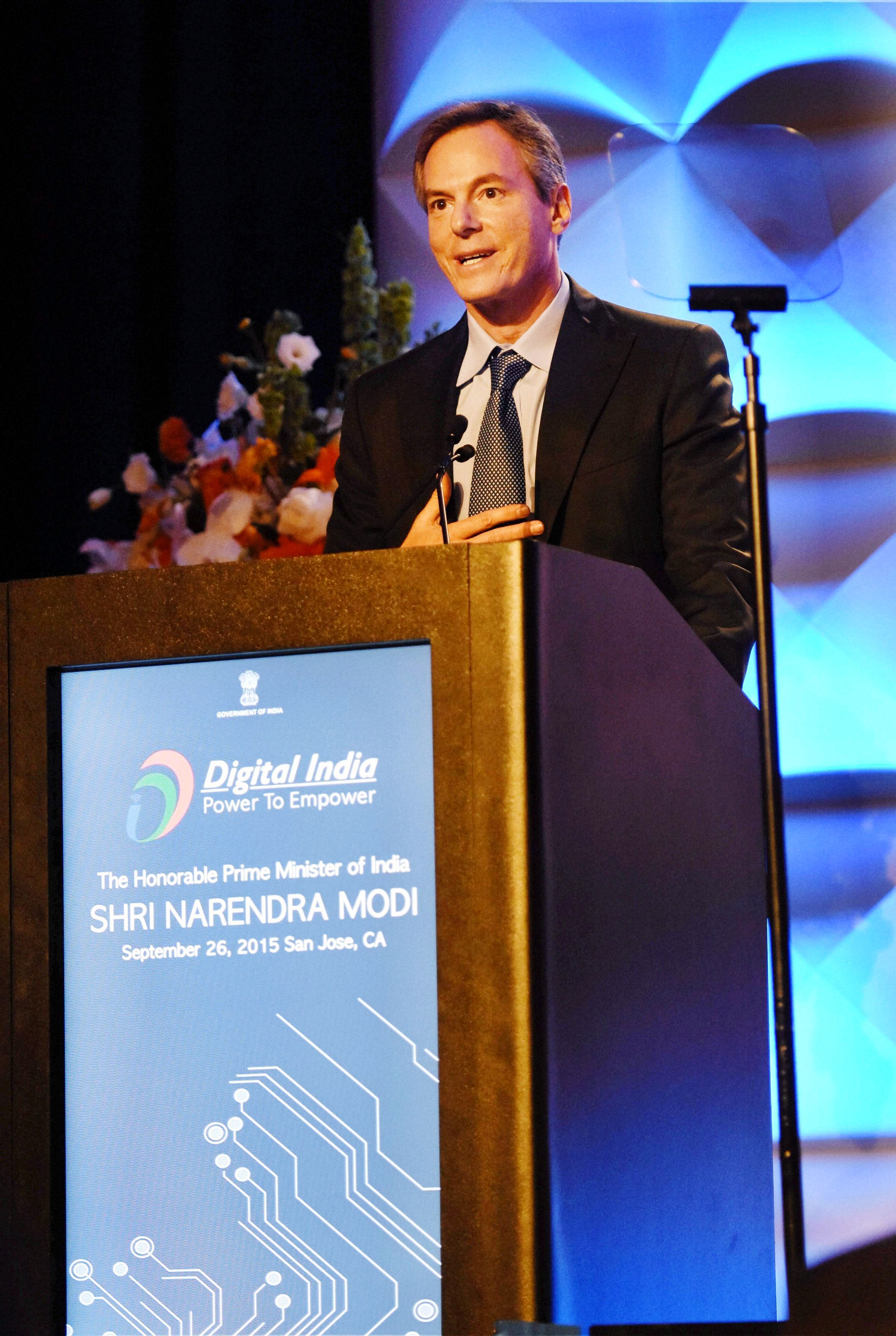
    Qualcomm: Qualcomm announced a 10 billion rupee venture capital fund for startups. The company also announced the set up of a lab in Bangalore for product innovation. “We share Prime Minister Narendra Modi’s vision to transform India into a digitally empowered society and knowledge economy,” Qualcomm executive chairman Paul E Jacobs said.

    Paul E. Jacobs talks about Digital India

    Tesla:

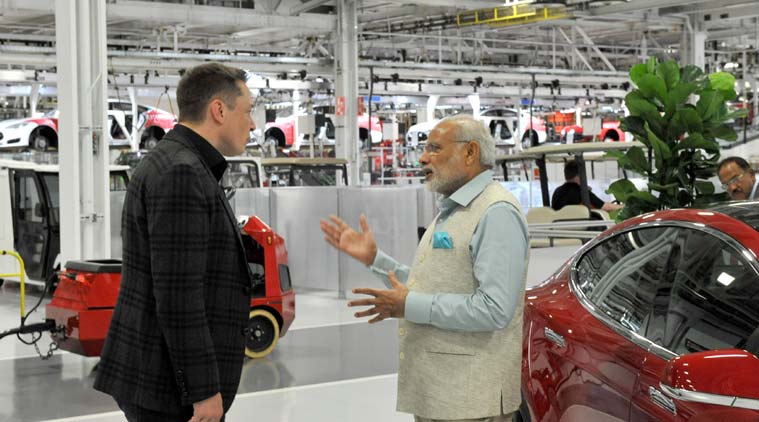
    A significant part of the first day of the PM’s visit to Silicon Valley was spent with two CEOs, Tesla’s Elon Musk, and Apple’s Tim Cook. The meeting with Musk was structured with the aim of securing company’s “Powerwall” invention for the Indian tech world. Powerwall is a long term storage device for solar energy capable of bringing “energy to hitherto unserviced areas of India”.  This innovation is expected to include more than just solar energy, and hopes to explore alternative energy sources as well.

    Modi with Elon Musk
    PM Modi with Elon Musk

    Apple:

    Tim Cook, the CTO of the company, spoke about India and said, “India has a special place in the heart of every Apple employee for the simple reason that Steve Jobs, when he was young man, went to India for inspiration and it was what he saw in India that infused in him the desire to create Apple.”


    Apple sees immense potential for app development in the country, especially for young entrepreneurs in the field. Following the example of China, where the company has managed to give rise to about 15 lakh jobs, Apple’s involvement in India seems a huge leap for the Digital India campaign.

    Facebook:

    After a one-on-one meeting with Facebook founder and CEO, Mark Zuckerberg, Prime Minister Modi shared the stage with him for a 50-minute discussion on technology, social media and Digital India. Zuckerberg mentioned how India has shaped Facebook’s history by providing a market of millions of netizens all connected through the social media platform. The PM made a comment good humouredly and said, “We used to have elections every five years. Now we have them every five minutes.”

    Mark Zuckerberg

    Zuckerberg showed his support for the Digital India campaign by updating the picture on his Facebook page with a tri-coloured display picture.
    Modi visits Silicon Valley

    The PM returns from Silicon Valley on 30th September with immense promise for the country in the realm of internet and technology. A sense of anticipation would perhaps be natural at this juncture as we await the execution of these plans. If seen till the end, a larger proportion of the country’s population would have access to internet services and those already using the internet would have smoother, faster services. Hopefully the UN is listening next time it decides to conduct a poll of internet services in the country.

  • Narendra Modi Flags Digital India Campaign with Digital India Week

    Narendra Modi Flags Digital India Campaign with Digital India Week

    ‘Make in India’ is an initiative that was started back in September 2014 by the Prime Minister of India, Narendra Modi. The principal objective of this initiative is to build manufacturing firms within India to generate more job opportunities and improve the skills of the people of India across different sectors like automobile, aviation, biotechnology, defence manufacturing, mining, oil and gas, ports, railways, textile and much more. As a part of the ‘Make in India’ campaign, Prime Minister, Narendra Modi, has launched the ‘Digital India Week’ today. He says the campaign is a part of a grander plan in the future and hopes to give better services with the use of IT.

    make in india

    Narendra Modi has been named as the chairman of the Digital India Week, where he also unveiled the official logo of the campaign that seeks to transform India into a digital powerhouse. For this campaign, Digital India will provide broadband connectivity to all panchayats, Wi-fi in all the schools and universities and public wi-fi hotspots in all important cities by 2019. It will be extended for giving services in areas like health, education, agriculture and banking. The vision is focused on three important areas:

    • Digital infrastructure as a utility to every citizen
    • Governance and service on Demand
    • Digital empowerment of Citizens

    The event saw tech powerhouses like Reliance Industries, Tata Group, Wipro, Bharti Group, etc. investing crores on the Digital India Programme.

    Officials say a plan will also be announced for “billions of dollars” of investment, most likely in manufacturing—critical for a government that needs to create more jobs, at a faster rate.

    India’s first cyber prime minister, Modi has used social media and particularly Twitter, where he has 13 million followers, to fashion himself as a leader in handling technology.

    With a growing economy and declining handset prices, India is one of the fastest developing smartphone markets in the world, and Modi is looking to harness India’s potential for social development in fields like education and health.

    For now, many companies are in support of the Make in India campaign. Companies from China like Alibaba and Xiaomi showed their full backing for the project. Alibaba Chairman said, “We are excited about India. We are excited about Make in India and Digital India.” Xiaomi President Lin Bin too showed his support and stated, “We have some big plans for India. We fully support Make in India.”

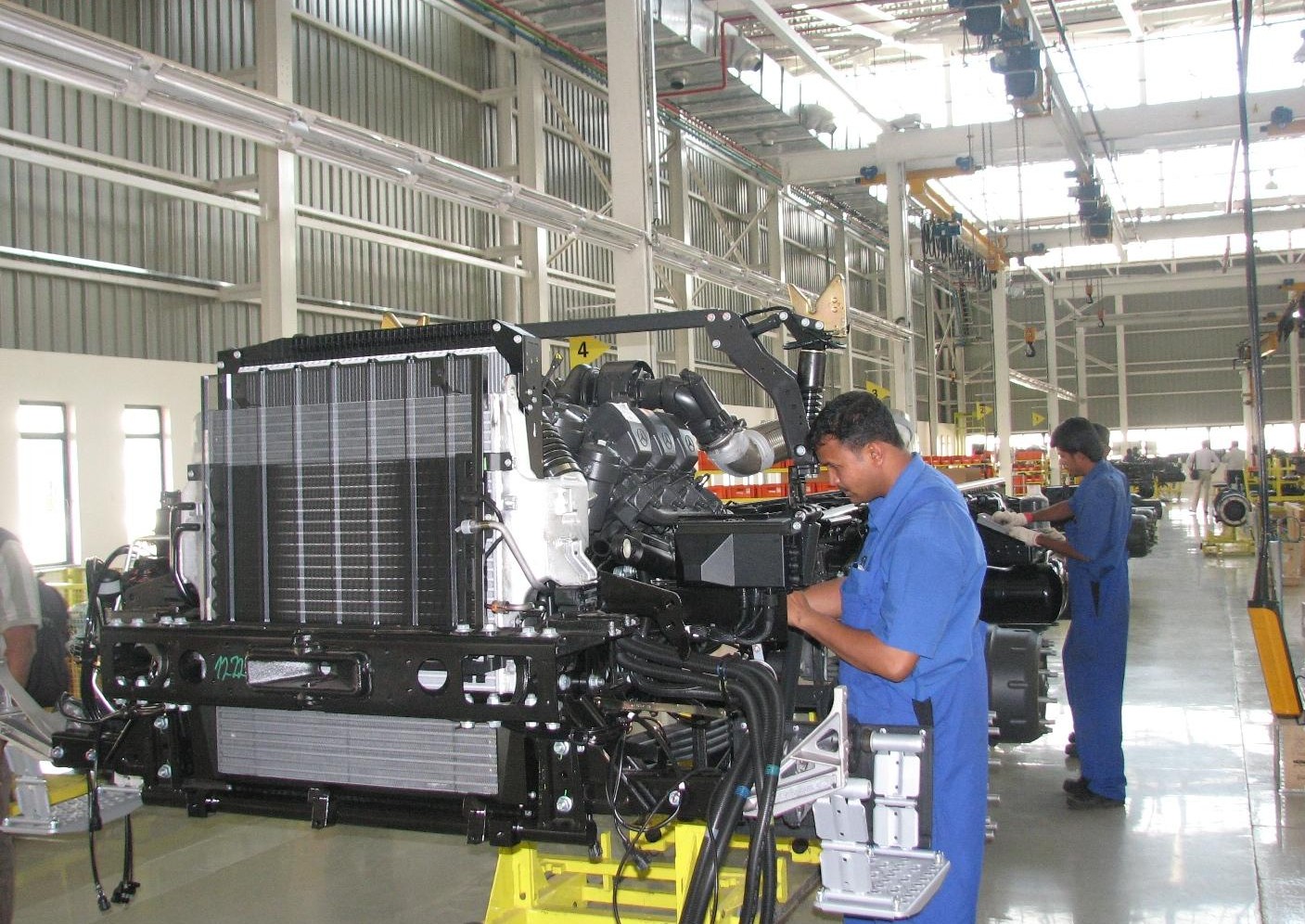
    Many companies have started putting up production houses in India like Celkon, Foxconn, Mercedes-Benz, etc.

    This initiative looks very promising. This can improve the economic well-being of Indian masses.

    Let us see how the campaign shapes up in the future.

    You can also follow Make in India YouTube campaign here.

  • Indian Tech Startups Write an Open Letter to PM Modi to Help Save Net Neutrality

    Indian Tech Startups Write an Open Letter to PM Modi to Help Save Net Neutrality

    An unbiased internet is a right of all and should not be a distinctive property limited to a privileged few. For the Internet to be a free entity is extremely important for regular internet users, as it is the equally essential for the budding businesses to grow. Start-up firms, who are launching themselves to gain recognition using the internet, need a non-discriminatory medium to establish themselves. For them, an unbiased platform both on the basis of cost and speed is a crucial need.

    A group of tech start-ups has pushed its concern over the lack of Net Neutrality. The emerging companies wrote an open letter to PM Modi which states the necessity of free Internet to build a Digital India. The letter throws light on the fact that the dream of India to produce the next Google is impossible without a non-discriminatory Internet. The Prime Minister of India, few days back, remarked in his speech that he wants India to be the birthplace of next renowned search engine.

    net-neutrality

    The letter by the small businesses reads, “We dream that an Indian startup may one day become the next Google, Facebook or Amazon. We know that you share our dream. We share another dream with you, the dream of a Digital India. We dream of this as Indians, and also as businesses that wish to serve a fast-growing Indian internet market. These dreams cannot be achieved without the open Internet.”

    The message ends up with the comment, “We request that open-house debates be held in major Indian cities after the consultation process is over. We, the start-ups that are at the forefront of creating Digital India, request you to take action now. We need you to protect our nation’s innovation ecosystem.” The open letter is signed by some of the fresh companies like Housing.com, Goibibo, TheSecretKart.com and much more.

    Late last year, Airtel attempted to violate net neutrality by charging extra for free calls and chat services, but faced an aggressive backlash resulting it to withdraw the proposed plan. Recently Airtel Zero, a scheme to offer free data access to a variety of mobile apps, faced such hostility that it forced Flipkart to back off from Airtel’s Zero plan. However, Airtel stood by its initial claim and came out openly denying the allegations.

    Meanwhile, the government has stepped into the matter and will look into the Zero plan. Facebook and Twitter are flooded with various campaigns such as #SavetheInternet, #NetNeutrality, to save the internet from classism.

    To read the full letter, click here.

  • Indian Government Puts Greater Stress On Using Open Source Software

    Indian Government Puts Greater Stress On Using Open Source Software

    The software markets around the world are dominated by US based products. With the revelation of the NSA snooping on the data of major companies like Google, Microsoft and other players, the governments around the world have become vary of using such products. The Indian government too is taking measures to reduce the dominance of US based products in its workflow and hence has introduced a new Open Source Software(OSS) Policy.

    With the use of open source software, the government intends to bring greater transparency. It is also looking to invest in propriety software for official functions. The development costs of OSS’s are also lower than the big brand software.

    An official statement said that the new policy will be applicable to the central government institutions, and state governments will have to induct the policy when they upgrade their e-governance systems. It also added that under the Digital India program, the government intends to bring low-cost, but high-quality services to the citizens and OSS are an optimal way of going about with the plans.

    All government institutions, under this policy, would have to consider OSS for implementing the E-governance model. The source code of these softwares will be available to community/adopter/end-user to study and modify the software. These softwares will also be “royalty-free.”

    India’s stand for open source software is appreciable and will lead to greater transparency. The governments of US, UK, Germany and many European nations have stressed on OSS platforms too. India’s crowdsourcing platform, MyGov.in has already been built on open source platforms.

iGyaan Network
Privacy Overview

This website uses cookies so that we can provide you with the best user experience possible. Cookie information is stored in your browser and performs functions such as recognising you when you return to our website and helping our team to understand which sections of the website you find most interesting and useful.