Tag: electricity

  • India’s Cochin Airport Has 100% Free Electricity Via a Massive Solar Project

    India’s Cochin Airport Has 100% Free Electricity Via a Massive Solar Project

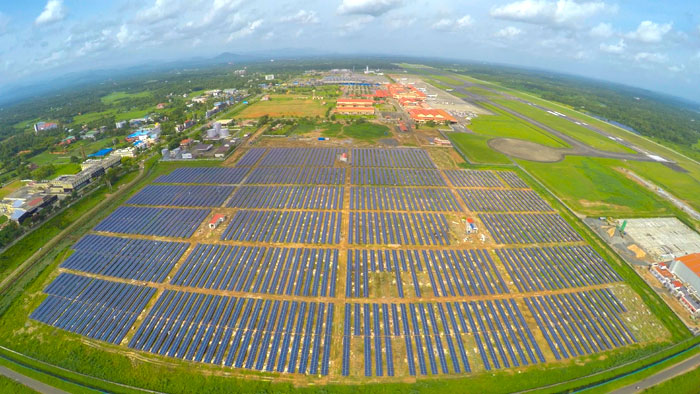
    Cochin Airport in India became the world’s first airport to become completely self-reliant as far as electricity is concerned.

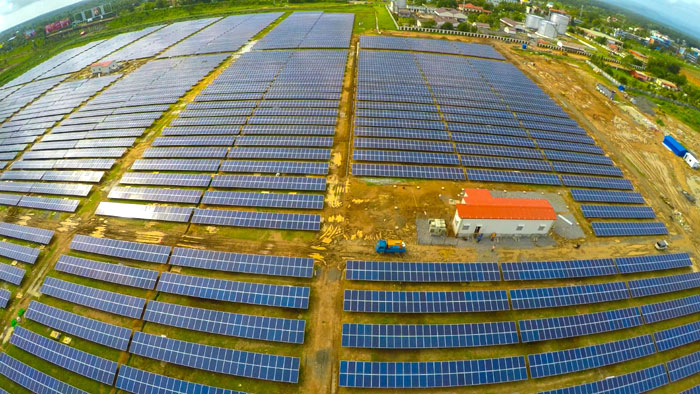
    The project, worth $10 Million, began in 2013 and was completed in 2015, it comprises of 46,150 solar panels laid on 45 acres of land near the airport’s cargo complex. Cochin airport’s solar power plant produces 50,000 to 60,000 units of electricity per day to for consumption by all facilities at the International airport.

    When we had realized that the power bill is on the higher side, we contemplated possibilities. Then the idea of tapping the green power came in. We consume around 48,000 unit (KWh) a day. So if we can produce the same, that too by strictly adhering to the green and sustainable development model of infrastructure development that we always follow, that would transcend a message to the world. Now this has become the world’s first airport fully operates on solar power ” -Said Mr.V.J.Kurian IAS, Managing Director, Cochin International Airport Ltd.

    This plant will produce 18 million units of clean power an annual power equivalent for 10,000 homes for one year. Over the next 25 years, this green energy project will avoid carbon dioxide emissions from coal-fired power plants by more than 3 lakh metric tons, which is equivalent to planting 3 million trees or not driving 750 miles.
    cochin solar feild

    Initially Kolkata-based M/s Vikram Solar Pvt. Ltd. was responsible for the 400 polycrystalline modules of an output of 250Wp and five Refu-sol 20kW capacity string inverters were used in this plant as a trial. After completion, the airport has so far saved more than 550 Metric Tonnes of CO2 emission.

    This solar project in itself is an incredible feat, and the fact that the whole airport is self-sustainable for at least the next 25 years makes it even more impressive

    Source

  • India’s upcoming floating Solar Farm

    India’s upcoming floating Solar Farm

    India is in a major energy crisis. With the population multiplying on a daily basis the need for cheap forms of electricity have become a must. India has large plans, whether politically invoked or not; we might be one of the first few nations with a large chunk of renewable electricity sources.

    About five years ago large parts of the Thar desert in Rajasthan and surrounding areas was sanctioned for subsidised privately run solar farms. The land was practically given for free, and an energy reclaim of Rs. 5/ KW (8 cents approximately) was promised to the solar energy companies that were supposed to be set up.

    The project is yet to see the light of day. However, sources tell us that the work is still underway.

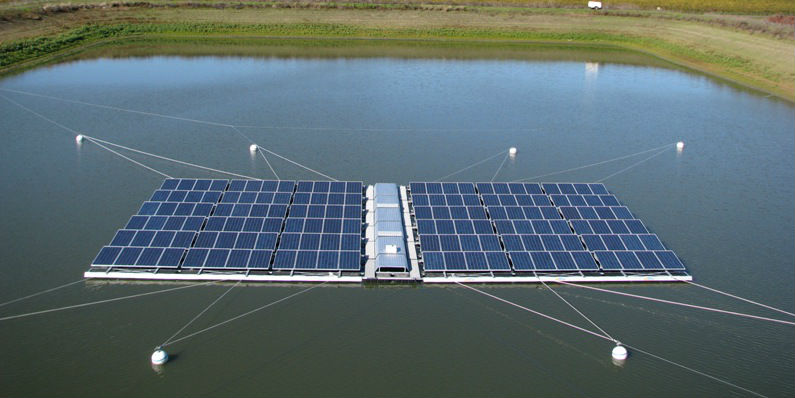
    Meanwhile, a new project in the southern state of Kerala is said to lead the Solar energy revolution in India, thanks to the abundance of sun and large water bodies. A new 50MW plant built entirely on 1.27 million square meter floating platform in Kerala is said already to be in the works. The plant has been approved by the NHPC and will get commissioned in October of 2014. (Yes this year).

    This Solar Farm project will provide cheap and renewable electricity to about 18,000 homes. After the states announcement on building two lakh megawatt of solar power generation capacity, the price of barren solar usable land rose this quarter by tenfold, building a plant on water will be cheap for the government as well as the people enjoying the electricity.

    [quote text_size=”small” author=”SP Gon Choudhury” author_title=”chairman of the Renewable Energy College”]

    Each station would require around 3,000 square feet of space to generate 20 kilowatt of power. There are many water bodies that could be used for this

    [/quote]

    The total project is estimated to cost between Rs 350 crore and Rs 400 crore, the Renewable Energy College will assist in sourcing material till commissioning of the plant.
    The first phase of this Solar Farm, estimated to cost Rs 35 lakh, has been fully funded by the ministry of new and renewable energy and is expected to generate around 12 kilowatt of power to begin with by October 2014.

    [quote text_size=”small” author=”SP Gon Choudhury” author_title=”Chairman of the Renewable Energy College”]

    The ecology of the water body is not likely to be affected much, and it will also reduce evaporation, thus helping preserve water levels during extreme summer. Solar panels installed on land, face reduction of yield as the ground heats up. When such panels are installed on a floating platform, the heating problem is solved to a great extent

    [/quote]

    The yield on these panels is expected to be 20% higher than land based solar power plants. The overall capital cost for such solar projects will be around Rs 6.5 crores per megawatt, which will bring down costs of electricity to Rs 7 / unit. This price will then be further regularised by the state electricity board.

    With the large availability of Sun energy in the country, the future may finally hold a strong supply of electricity for everyone, everywhere!

  • Researchers use Virus’s traits to create electricity from motion

    Researchers at Berkeley Labs have now coated electrodes with modified M13 bacteriophage, a harmless bacteria-eating virus, to create the first ever organic piezoelectric material which can convert force to electricity.

    The researchers also said that the option is a lot environment friendly as the material is non-toxic, organizes naturally into thin layers and self-regenerates, giving it a possible advantage over chemical options.

    By attaching thin layers to, for example, shoes one would be able to charge devices on the go, by sending cables up to pockets. Lets hope there isn’t an electrical leak, else some privates may get electrocuted.

  • The Wind Cube – A Modular Green Power System

    The Wind Cube – A Modular Green Power System

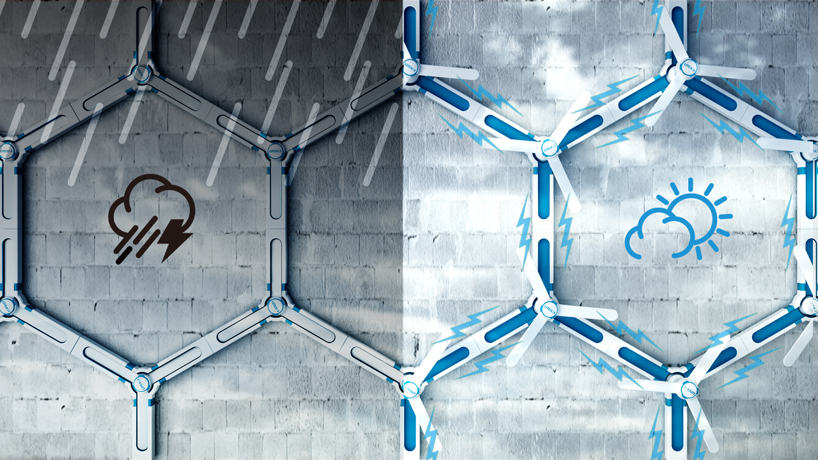
    The Wind Cube is a modular green energy power system that has been designed by Chen Liao Hsun for urban household use. “The concept,”he says, “is to use three-dimensional wind fields to make up for the insufficiency of two-dimensional ones.” Each individual unit can produce around 100 W of electricity which translates into an estimated 21.6 KWh a month. For an average family of 4 members, a total of 15 Wind Cube units would be enough to take them off the grid.


    This concept provides many advantages over traditional windmills. Each unit is designed to fit into adjacent units to form a hexagonal honey-comb structure which is very sturdy. Each unit is also designed with telescopic blades which can be pulled out when a gentle breeze is blowing and can be retracted during rough and stormy weather. In terms of installation, the units have been designed so that they plug into each other to automatically form a circuit and they have a three step installation process.


    While the real life efficiency of these devices is yet to be tested, it just might turn out that the honey-comb structure would be strong enough to set these up as a fence. This would perhaps increase the efficiency of these devices by providing them with an advantage in terms of wind speeds as compared to units that are installed against a wall.


  • A Solar Panel That Works Without The Sun

    A Solar Panel That Works Without The Sun

    Solar panels have come a long way since the technology was first invented. But the major drawback of using photovoltaics on Earth is that it eventually gets dark. Researchers at MIT have developed a solution to this problem. They’ve come up with a photovoltaic cell which doesn’t need any sunlight and is built into a button sized generator that can run your smart-phone for a week.

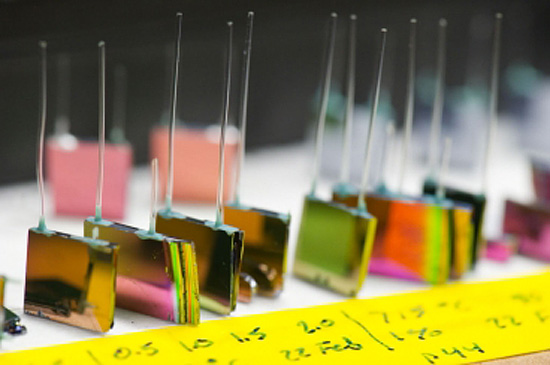
    In the image above, you have many of these generators that require a fuel, like butane, from which they generate heat. The material that the generators are made out of are pockmarked with billions of tiny (we’re taking nanometer scale here) holes. When this pockmarked surface heats up, it emits light in a few very specific wavelengths that are then captured by photovoltaic cells that are tuned to those specific wavelengths, and then you get electricity.

    The basic principle of the new generators is the same as the one that feeds electricity to your house. A fuel is heated and converted into electricity. With a power plant, the heat is used to boil water to steam, and the steam is used to turn a turbine, which generates electricity. The new generators follow the exact same principle, but with no moving parts and a one step process, they are many times more efficient. Their prototype uses butane as a fuel but you can use anything that burns, coal, wood, uranium, you name it.

    So as a consumer, what can you look forward to? Currently, MIT’s generator is about three times more efficient than a lithium ion battery, and since they run on butane, you just need to refill them and they’re good to go. With a little bit of work, MIT researchers say that they can triple their current efficiency, and since all this can be scaled down, you can expect a new smart phone using this technology to run for a solid week without a recharge in the near future.

  • Skypump – The Green Charging Station

    Skypump – The Green Charging Station

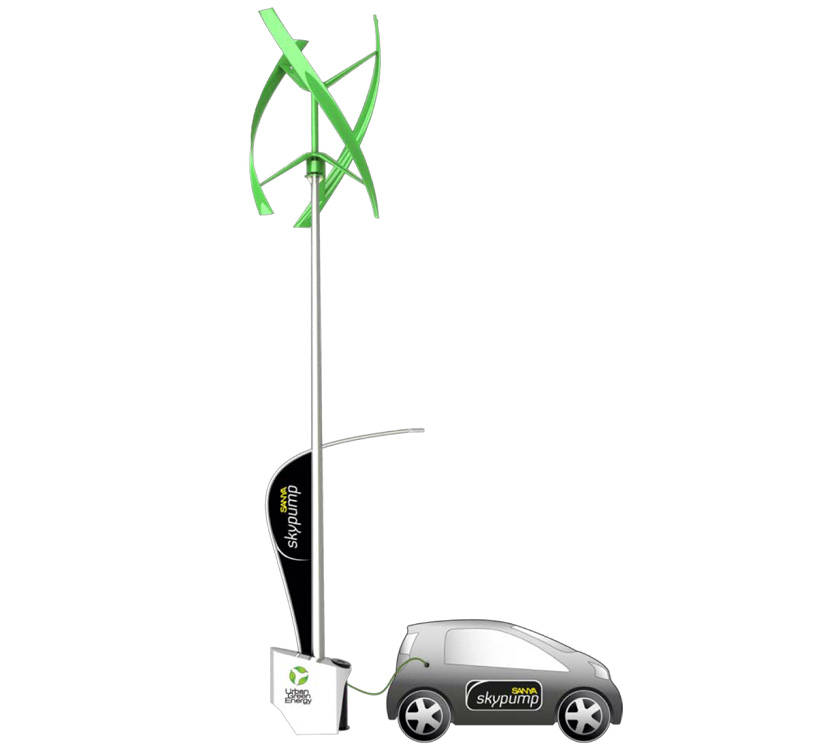
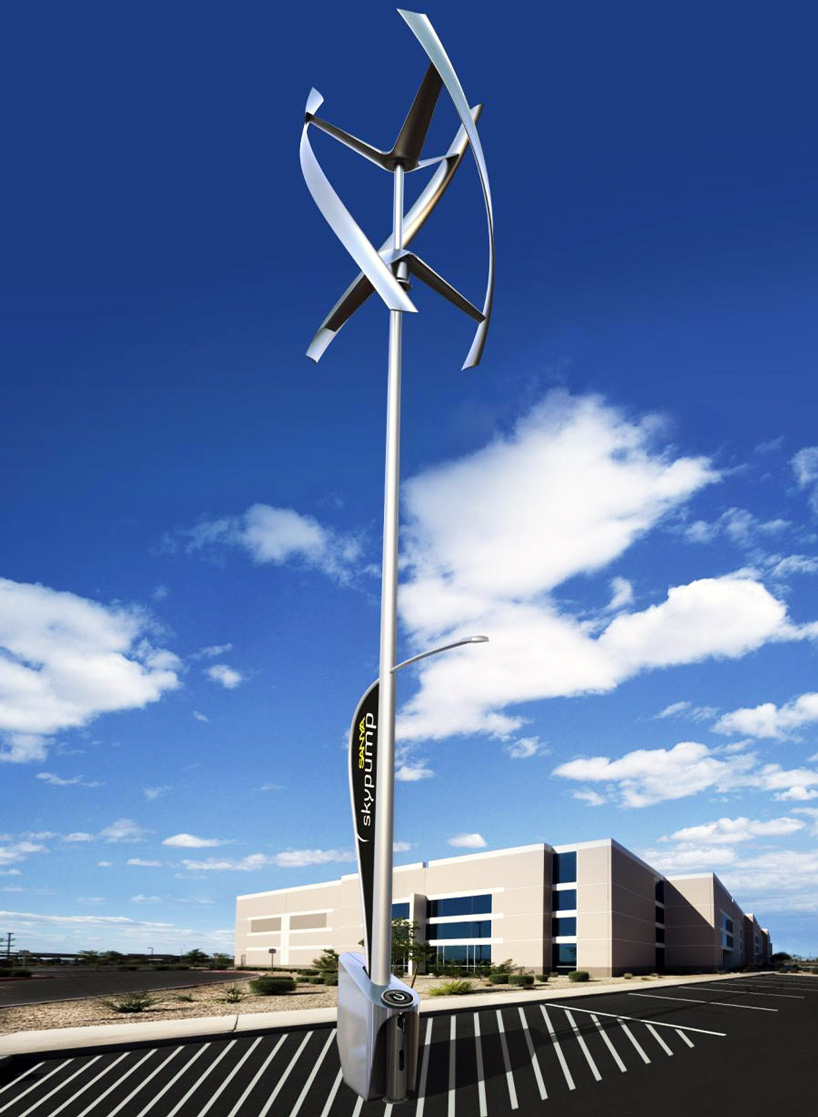
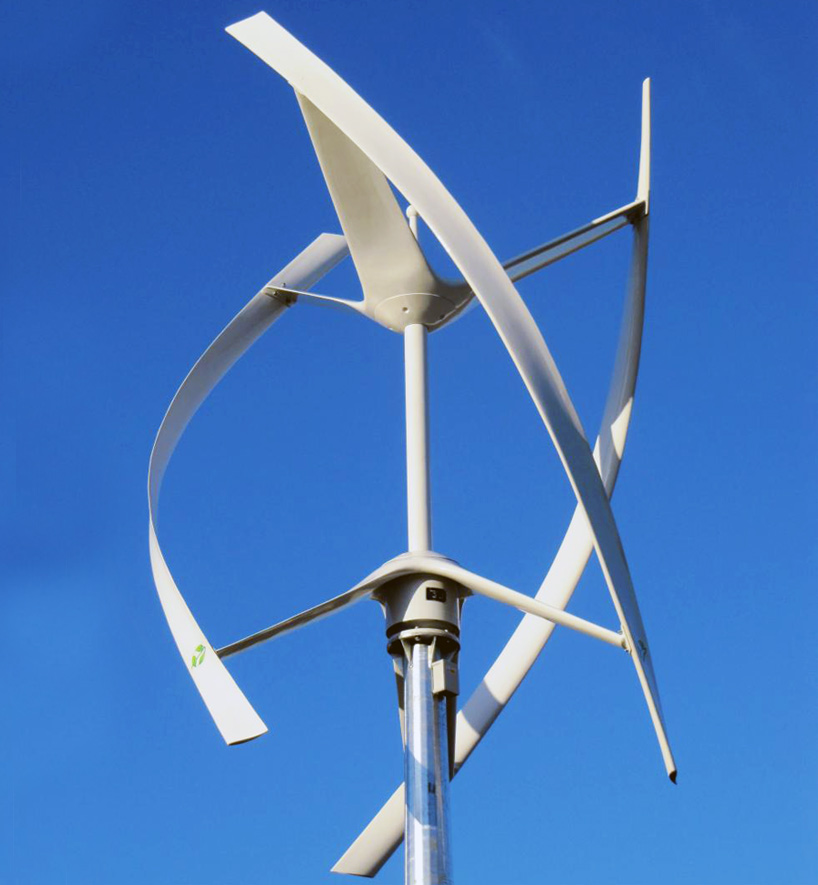
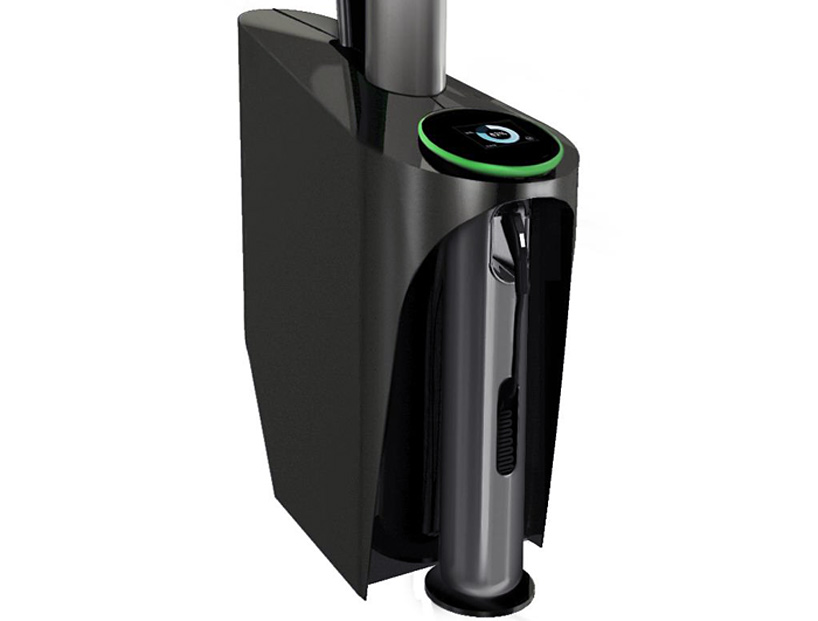
    The Sanya Skypump is a wind powered charging station for electric vehicles and it has been developed by Urban Green Energy in collaboration with General Electric. While still in the conceptual stages, the Skypump combines a GE Wattstation with a urban green wind turbine which can capture up to 4KW of wind energy.

    The turbine is 13m high and can easily be installed in parking lots, rest stops and other areas. As it is attached to the grid, once the station is fully charged and a vehicle is not plugged in, the Skypump will keep pumping electricity back into the grid. The company is also producing a version of the charging station for domestic use. The domestic version will be using a wall mounted GE Wattstation which can charge an electric car in four to eight hours. There is no news on whether the Skypump will offer similar efficiency.


  • Printable Antenna Generates Electricity from Out of the Blue

    Printable Antenna Generates Electricity from Out of the Blue

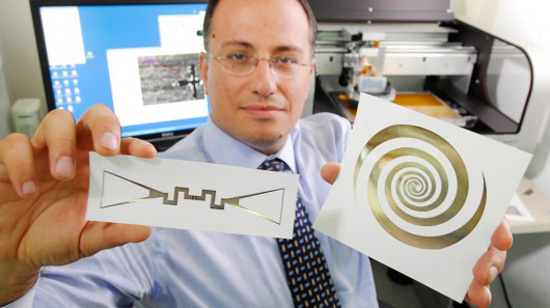
    WiFi networks, Cellphone and Radio Signals. These are just a few of the waves that are spamming the Electro Magnetic Spectrum around you most of the time. You can harvest this energy for more than its intended use. With printable antennas, you can power battery free electronics in most urban environments.

    Since this technology is still in its infancy and generates only a few milliwatts, so don’t expect it to power your cellphone or laptop anytime soon. What this technology is good for is powering networks of sensors in locations that don’t have electrical outlets, batteries or access to solar power. This could be a temperature sensor placed in the wall of your home, or a sensor built into the body of your car to check for structural damage. These sensors could also be teamed up with capacitors to collect power and send short bursts of wireless data to a receiver nearby.

    Theoretically, the amount of electricity generated could be increased in two ways. The first way would involve stacking these antennas one on top of the other and the second way would be to increase the surface area of each antenna. Combined, perhaps we could have a self charging battery or phone in the near future. We can only hope…

  • Flywheel Batteries to replace Chemical Ones

    Flywheel Batteries to replace Chemical Ones


    A flywheel battery is a system that stores electricity in the form of kinetic energy, in a mechanism that has a wheel that spins at tens of thousands of RPM. The batteries are made of carbon fiber and levitated in a vacuum using magnetic bearings. Carbon fibre is perfect for this application as it’s very strong and lightweight; it doesn’t take a lot of energy to keep it spinning.

    Flywheels are better than batteries in many applications. They can absorb and release power very very quickly, they don’t need much in the way of maintenance, and, most importantly, the amount of storage that they provide doesn’t degrade over time like chemical batteries do. They tend to be bulky, and the gyroscopic effect of a big spinning thingy means that they can be tricky to integrate into anything that moves, but for stationary power storage applications, flywheels could be the way to go for the future.

    It’s pretty easy to understand the basic method of operation of a flywheel. It’s really just a big wheel hooked up to a generator, and you can either put electricity into the generator to speed up the wheel and store energy, or you can suck electricity out of the generator by slowing the wheel down, just like the regenerative braking system in a hybrid car. The system isn’t perfect, and it does cost you something to keep the wheel spinning, but thanks to magnetic levitation and a sealed vacuum, modern flywheel batteries can be up to 97% efficient.

  • iDVM is the Digital Voltage meter companion for your iDevice

    iDVM is the Digital Voltage meter companion for your iDevice

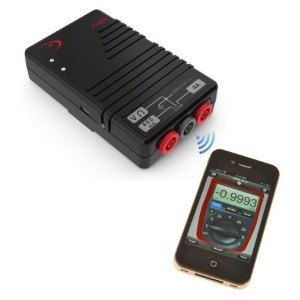
    iDVM Digital Multimeter — the world’s very first iDevice-enabled voltmeter, from Redfish Instruments. Designed specifically for auto/ electrical engineers in mind the Device uses Ad-hoc wireless network to connect with whatever iDevice you have. Once you’ve purchased the multimeter and downloaded the accompanying iDVM app, you’ll be able to gather electrical measurements from up to 30 yards away from your target, log data over extended periods of time and export your findings in spreadsheet or graph displays.

    Priced at just $220 (Inr 10,000)


    Press Release

    Redfish Instruments Introduces World’s First iPhone-Enabled Wireless Multimeter

    SANTA CRUZ, Calif.–(BUSINESS WIRE)–Redfish Instruments, Inc., a provider of iPhone- and iPad-enabled electronic test and measurement equipment, announced today the introduction of the iDVM™ Digital Multimeter. The iDVM multimeter wirelessly connects to an iPhone, iPad, or iPod Touch via an ad hoc wireless network allowing users to acquire, visualize, and share electrical measurement data on their Apple devices. The iDVM app can be downloaded free from the Apple App Store.

    According to Patrick O’Hara, Redfish Instruments’ president and CEO, “The unique pairing of the iPhone or iPad with a digital multimeter provides a user experience that is truly revolutionary. Not since the advent of the LCD has the multimeter been so substantially enhanced.” Regarding the market opportunity, Mr. O’Hara commented, “The iPhone and iPad provide a known user interface that permits customers to interact with electronic test and measurement tools that was not possible prior to this post-pc era. We believe that our new iDVM voltmeter is the first of many new uses for this tremendous interface; we’re excited to be an early pioneer.”

    Traditionally, multimeters have not provided an easy method of exporting or saving data. The iDVM permits a user to log data over an extended period of time using the iPhone or the iPad as the storage device. For example, service engineers can use the iDVM to collect data and store it in a report for submission to their clients, or keep the data on the voltmeter for their own records. Using the GeoTag feature of the iPhone or iPad, service engineers can even identify their location as part of the data. The iDVM is built in the USA using all USA-made parts, and uses rechargeable batteries.

    The iDVM was designed for a wide range of users-from automotive technicians, to advanced embedded systems engineers, to electrical or building contractors, to field service workers.

iGyaan Network
Privacy Overview

This website uses cookies so that we can provide you with the best user experience possible. Cookie information is stored in your browser and performs functions such as recognising you when you return to our website and helping our team to understand which sections of the website you find most interesting and useful.