Tag: Facebook

  • Whatsapp is Slowly Gaining Facebook Characteristics With ‘Like’ Option

    Whatsapp is Slowly Gaining Facebook Characteristics With ‘Like’ Option

    Facebook acquired Whatsapp last year for a whooping price of $19 billion. After the acquisition, Zuckerberg has been slowly been remodelling Whatsapp to the likes of Facebook. Both have been exchanging features with each other like Facebook is slowly turning its independent Messenger app into Whatsapp, integration of the ‘Seen’ blue tick on Whatsapp, and many more. Now, there are rumours about Whatsapp’s adoption of Facebook’s unique features, the ‘Like’ and ‘Mark as Read’ options.

    According to reports from WhatsApp beta tester Ilhan Pektas, WhatsApp could get characteristics such as “Like” and “Mark as unread” in a forthcoming update. The Like feature is exciting though we are not sure at this point how it will operate. Perhaps it will act in a similar manner as the thumbs up button on Facebook Messenger or like the photos being exchanged.

    The Thumbs up feature will allow users to send a fast and concise reply to simple questions without having to type it out. It could also be executed in group chats where photos and videos are shared and group chat members can “Like” it, which once again does away with the need to type out a comment if it isn’t required.

    The “Mark as unread” feature is impressive since this allows users to avoid the dreaded blue ticks to indicate a message has been read. However given that the blue ticks feature can be disabled, we are not sure if this feature is indeed necessary, but given that this is a rumored feature for now, do consider it for now.

    If this comes out to be true, the Facebook’s ‘Like’ button, which is a highlight trait of the social platform, will be an unique attachment to the most popularly used instant messaging service worldwide while the ‘mark as unread’ feature would also come handy similarly as seen in mail services.

  • Facebook is Working on a Music Streaming Service Of Their Own

    Facebook is Working on a Music Streaming Service Of Their Own

    With Apple’s recent and successful launch of Apple Music, the Music streaming space has gotten really crowded. With companies like Spotify and Pandora already eating the pie, Facebook wants now a big chink of this space.

    According to reports the social networking website has already tied up with various music labels and has already started showing music videos which are ad supported.

    With reports of a Youtube-esque video service for Facebook already in the works, an all audio variant is expected to roll out later this year. It would be rather easy for Facebook to just acquire an already running service, say Spotify.

    However, the folks over at Facebook are mum on the conversation and fail to add any new insight.

    Source : [tw-button size=”small” background=”” color=”” target=”_blank” link=”http://musically.com/2015/07/08/facebook-early-talks-audio-music-streaming-service/”]Musically[/tw-button]

  • Facebook Goes Green With Its New Data Centre

    Facebook Goes Green With Its New Data Centre

    Just because we are digital doesn’t always mean we are doing our bid to go green. Every photograph, video and every other file we upload on social media, cloud storage and email are stored in a facility known as a data centre. Without the data centres, companies like Facebook, Twitter and Google cannot handle the intense volume of traffic on Internet.

    Data centres mainly require electricity for the central servers that handle the data and to cool down the servers, which often get heated due to excess traffic. Environmental concerns have been raised due to the amount of energy consumed by these data centres. Companies like Apple and Google have been taking steps to reduce the carbon footprint generated by data centres and it seems Facebook has taken another step in that direction.

    facebook fort worth data centre
    Facebook’s new data centre in Fort Worth, Texas, USA.

    Facebook has announced that its next data centre in Fort Worth, Texas, USA, will be entirely powered by wind energy. With this data center, Facebook hopes to reduce its carbon footprint. In 2011, Facebook announced that its data center in Sweden would employ 70% fewer power generators than usual.

    The data centre in Fort Worth will run on 200 MW of power and is already under construction. The new facility is expected to operate by 2016.

    IT industry consumes about 10% of the world’s energy, most of which is used up by data centres. Thus, it has become important for technological companies to run their data centres on renewable sources of energy, which allows for a smaller carbon footprint without damaging the environment.

    Source: [tw-button size=”small” background=”” color=”” target=”_blank” link=”http://newsroom.fb.com/news/2015/07/the-newest-addition-to-the-facebook-data-center-fleet-fort-worth/”]Facebook[/tw-button]

  • Facebook Aims to Provide Fast Internet Access To the World Through Lasers

    Facebook Aims to Provide Fast Internet Access To the World Through Lasers

    Facebook’s latest endeavour, Internet.org has received a lot of flak for violating the rules of net neutrality. Co-founder Mark Zuckerberg has defended the company’s initiative many times, as he insists that the initiative’s sole purpose is to provide affordable Internet access to developing nations. It seems that Facebook has taken another step in this direction, as the company is working on lasers to improve Internet connectivity around the world.

    Today, Zuckerberg has posted a few photos from the Connectivity Lab, Facebook’s ambitious project to connect the world to the internet through “drones, satellites and lasers”. According to his Facebook post, the Connectivity Lab has developed laser beams that will be able to transmit data from the sky into communities. As the Facebook founder explains, the beams will dramatically increase the speed of sending data over long distances.

    https://www.facebook.com/zuck/posts/10102217102231151

    The laser beams in the photos have been made visible for demonstration purposes. Zuckerberg says the beams won’t be actually visible and has not provided any further explanation on how the system works.

    Internet.org is an initiative by Facebook to provide affordable Internet to developing nations by giving access to select Internet services for free. Facebook has been criticised for violating the principles of net neutrality through this initiative, as the program favors certain sites over other.

    It seems Facebook’s vision to provide the internet for everyone is one step closer to reality.

  • Facebook is Slowly Turning its Independent Messenger App into WhatsApp

    Facebook is Slowly Turning its Independent Messenger App into WhatsApp

    Recently, Facebook came out with a new feature that allows you to log into its Messenger without actually having a Facebook account. The social media giant made this announcement on Wednesday, stating that this move is being done to push Messenger’s count of 700 million users, higher. They said that users in US, Peru, Canada and Venezuela would no longer need a Facebook account to use Messenger.

    Users in the mentioned countries can make an account using their names and their phone number only. They can upload their phone contacts to the app. Yes, we know what you’re thinking, this is quite similar to popular instant messaging apps like WeChat and (Facebook-owned) WhatsApp.

    With Messenger, we’ve been focused on creating the best messaging experience possible by giving people a fun and easy way to connect and express themselves with friends. With this update, more people can enjoy all the features that are available on Messenger – including photos, videos, group chats, voice and video calling, stickers and more.

    Last year in July, when Facebook announced that it will be removing the messaging feature from its mobile app, which will require people to use its standalone Messenger app instead. This forced users to download the Messenger app to chat with their Facebook contacts on their mobiles.

    Just a few months prior to this, Facebook had acquired WhatsApp for $19 Billion. Then why, has Facebook been trying to make Facebook Messenger more and more like WhatsApp? It owns both. What difference would remain between the two, which were once entirely different apps?

    WhatsApp 1

    The math is simple. Currently, WhatsApp has about 800 million active users, and Messenger has about 700 million monthly users. If added up, the number would outweigh any other competitive instant messaging app. Messaging has become a way of life, and there are many users that use Facebook purely for chatting and talking with friends. This group of users will find the change very welcoming.

    Mark Zuckerberg is also on a spree to convert the chat-only app to something more. Messenger has, earlier this year, introduced the payment feature that allows you to make payments through the Messenger interface. He also introduced video calling and location sharing features.

    Needless to say, we’re certainly interested to see where the continuously-evolving Messenger finally lands in the near future.

  • Facebook Lite is a Compressed Android App That Works Fast Even on Slow Networks

    Facebook Lite is a Compressed Android App That Works Fast Even on Slow Networks

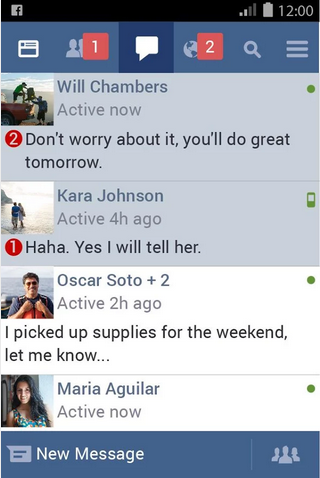
    Finally, Facebook is accomplishing its aim of expanding the internet to every corner of the globe. Recently, the social networking giant launched a trimmed-down version of its app that has been in the works for more than a year. Termed as ‘Facebook Lite’, the modern tool is dedicated to working in areas where telecommunication services are constrained. Facebook Lite uses less data and works even in narrow wireless bandwidth.

    The blog post updated by the company reads –

    In many areas, networks can be slow and not able to support all the functionality found in Facebook for Android. Facebook Lite was built for these situations, giving people a reliable Facebook experience when bandwidth is at a minimum.

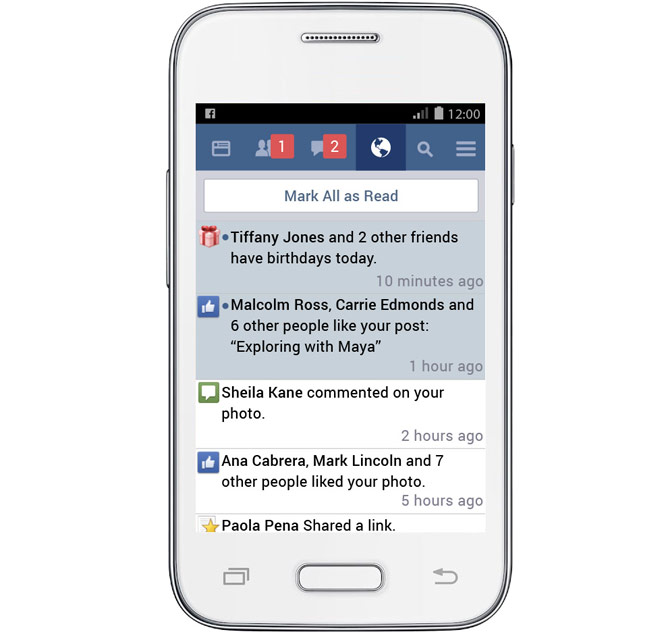
    The slimmer version is just 1MB in size, so it would take few seconds to download and install. However there will be certain design changes, the core functionality will be uniform in both the Facebook app and its lighter version. The social platform states that features like News Feed, status updates, photos and notifications will be identical on Facebook Lite.

    facebook lite 1

    Facebook Lite is the company’s push to make basic services available in developing countries at the lowest price possible. There are places in the world where buying internet data is an excessive expense because of its high cost. The app works faster with any device, and is data efficient, giving the same features with less data consumption. It’s like Facebook with an in-built Data Saver mode.

    facebook-lite

    As it works even on slow mobile networks, the page loads comparatively faster. Users can upload, download and check photos instantly, for which users had to wait for more than a couple of minutes on 2G networks. Users can have a real-time conversation with friends – either one-on-one or in group – on the slimmer Facebook edition.

    The tool is rolling out to countries across Asia, and in the coming weeks, it will be available in parts of Latin America, Africa and Europe. It works on all Android phones. The app is not available on Play Store for now, but will soon be live.

  • How to Effectively Block Someone on Facebook

    How to Effectively Block Someone on Facebook

    In the physical world, it may be difficult for you to cut some annoying people from your life. And admit it, we’ve all been in that situation where we wish we could ‘block’ that obnoxious boss, a lecherous acquaintance or maybe a spiteful ex, without confrontation. Facebook understands this and makes it super easy to shut someone out, without being harassed. Here is a three-step process to severe ties, instantly. Just virtually, of course.

    1. Go to the profile of the person you wish to block.

    Screen Shot 2015-05-29 at 4.44.05 PM

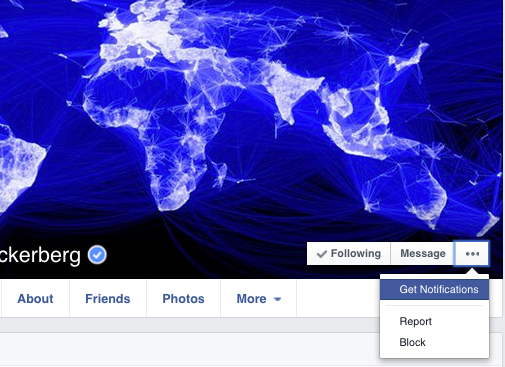
    2. Click the three dots “…” alongside Message and a list will appear

    Screen Shot 2015-05-29 at 4.42.56 PM

    3. Select ‘Block’ to restrict the person from sharing things with you.

    How Does Facebook Blocking Help?

    As soon as you confirm, the user will be blocked from receiving any notifications from you. Blocking is not permanent and you may choose to unblock anyone, anytime. It’s extremely efficient and the person will not be notified about the blocking. He/She can’t even find you on the social networking site, even if they try. If that sounds a bit harsh, then there are options to unfriend them or hide the particular post which you don’t want to see on your wall.

    Let the blocking begin.

  • WhatsApp Will Soon Allow You To Make Purchases And Download Apps

    WhatsApp Will Soon Allow You To Make Purchases And Download Apps

    When Facebook acquired WhatsApp for $19 billion last year, we weren’t sure how the social media giant would make use of the messaging app. However, at the F8 conference 2015, Facebook announced a new Business for Messenger initiative, through which the company might be able to make some profit. According to this initiative, Business for its Messenger app will give users the choice to install apps and make purchases with the Facebook Messenger app itself.

    The company said that they would include some of the features of Facebook Messenger and experiment with it on WhatsApp, to promote business to consumer communications that could be paid up by marketers.

    [quote text_size=”small” author=”David Wehner” author_title=”Facebook’s Chief Financial Officer”]

    We think that enabling that [business to consumer] messaging has an excellent business potential for us. As we learn those things, I think there are going to be opportunities to bring some of those things to WhatsApp, but that’s more longer-term than the near-term.

    [/quote]

    Facebook CEO, Mark Zuckerberg says that once WhatsApp reaches 1 billion users, will business through the messaging app is meaningful. For now, WhatsApp has got around 800 million users. After the $22 billion acquisition by Facebook, WhatsApp Chief Jan Koum said that the messaging app will be ad-free.

    Currently, Facebook is working with more business partners and will soon begin Business for its Messenger app.

  • You Will Soon Be Able To Sell Second Handed Goods Directly From Facebook

    You Will Soon Be Able To Sell Second Handed Goods Directly From Facebook

    After working on a new feature that may give Google a direct competition in the terms of a search engine, Facebook is now eyeing a feature that will let its users buy or sell goods through groups. Although, this feature is not new to Facebook as the social networking giant tried it briefly back in December 2014.

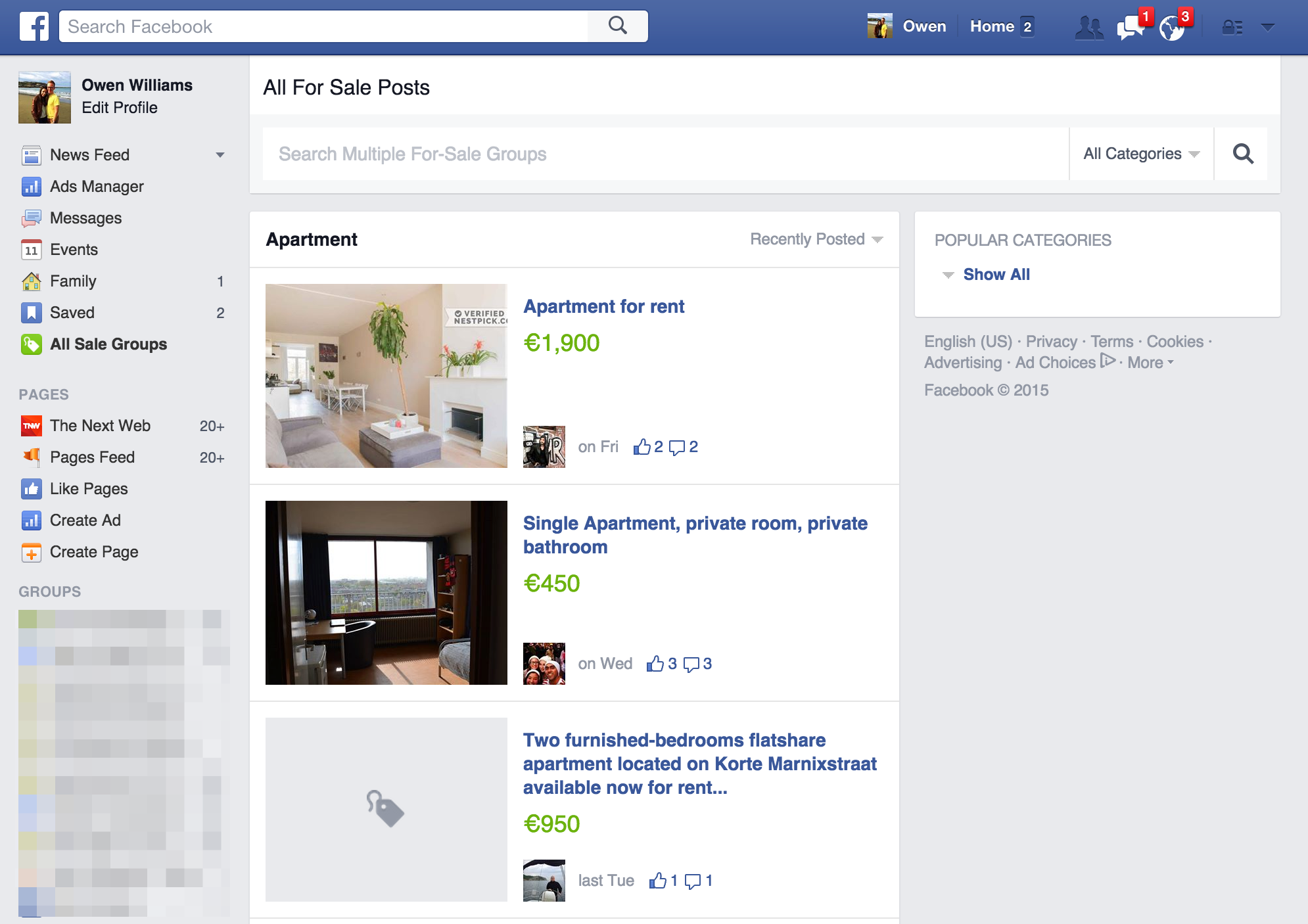
    Right now in its test mode, Facebook’s latest extension is a group called ‘All Sale Groups’ that will allow users to scan through a catalog of items that are up for grabs. The items are shown along with the Groups or categories they are a part of, in a unified manner. Facebook search box would enable people to search for goods that are made public and are up for sale. Categories like books, event tickets, clothing, video games, furniture, etc. helps in faster search results.

    facebook ebay

    When a person lists an item for sale, they mention the price and state whether the price rate is negotiable or not. The details include information about the product along with photos, pick up and delivery option.

    Vendors would not have to pay any commission to Facebook. In return, this raises up the chances that the user will stay on the social networking site for a long time.

    According to TheNextWeb, this feature is now in its infant form, and work is being done for its worldwide launch within the next few weeks. Looks like eBay has got its competitor!

  • Here’s How Facebook Would Like to Replace Google

    Here’s How Facebook Would Like to Replace Google

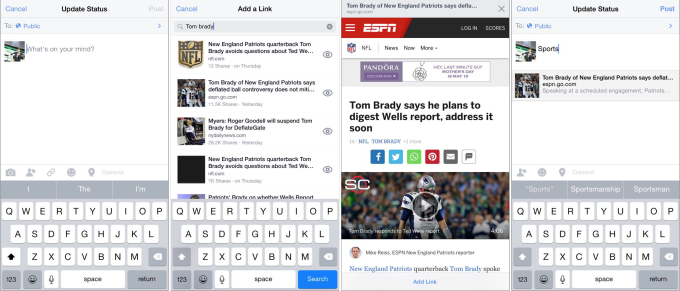
    When browsing through mobile, it is quite a task to open a website, copying the link, switching between the apps and pasting it on your Facebook status bar. For many users, this is quite a cumbersome job. According to TechCrunch, to change the experiences for its mobile users, Facebook is working on an internal test search engine for its mobile app.

    TechCrunch spotted that a few iOS users saw a new ‘Add a Link’ button next to buttons that we use to add photos, location and feelings. Upon writing down a word in the search engine, a list of related and matching links shows up that can be shared to your wall along with a caption. Using this feature, users will be able to bypass search engine while searching for content and give the social media giant a rich data of analytics of the type of content being explored and shared in a series of detailed statistics.

    facebook-add-a-link

    This move by Facebook may throw a hard brick on Google. On the other hand, Google has also allowed users to order food from its search results and add tweets. Apple, too, mentioned about the AppleBot on its support page, indicating an all-new Apple Search on Safari and other search related apps on iOS and OSX environment. This may set up an entirely new bar for search engines.

    There are no words when this feature will roll out for the rest of its mobile users. For now, only a handful of iOS users has access to this new tool.

  • Reliance’s New AD Pulls an ‘Airtel Zero’, Promotes Net Neutrality Violation

    While the hue and cry over Airtel’s controversial ‘Airtel Zero’ was justified, we need to be reminded that there are several other players in the market working on a similar plan.

    Here’s why we had a problem with Airtel Zero – it was a new platform that let companies buy data to offer their apps to consumers for free. It allowed users to access these apps without incurring data charges. This was seen as a direct violation of net neutrality as it gave priority access to some apps over others.

    Now let’s have a look at Reliance’s ‘Freenet’ service. Freenet is a service jointly launched by Reliance and Facebook in India, which hosts around 20 popular websites, (including AajTak, Facebook, Wikipedia etc) free of charge for Reliance customers.

    Notice a difference between the two services? We couldn’t find one either. Check out the ad here:

    https://www.youtube.com/watch?v=XT3-9odXdUg&feature=youtu.be

  • Facebook Includes Nokia HERE Maps on Messenger, Instagram Ahead of Official Buyout

    Facebook Includes Nokia HERE Maps on Messenger, Instagram Ahead of Official Buyout

    HERE maps, previously known as Ovi Maps or Nokia Maps, is an alternative of Google Maps and Apple Maps service. Nokia was in talks with buyers to sell out its maps unit,  but seems like Facebook has inked a deal to power maps on its various platforms.

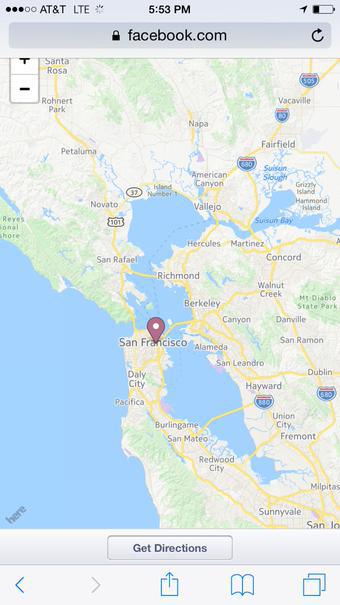
    The social networking site is presently using Here maps on the mobile version of its website, and on other applications like Facebook Messenger and Instagram. The Facebook spokesperson confirmed the same through statement –

    We are testing Nokia HERE maps across Facebook to give us more control and flexibility in delivering a consistent maps experience.

    here-facebook

    Nokia confirmed that it is seeking buyers to sell out its $2 billion Here map. The Finnish tech brand spent $8.1 billion to buy Chicago-based digital map maker, Navteq, in an effort to capitalize its market for mobile search, but the buy-out deemed unprofitable. Hence, in April, Nokia roped in the heavyweights of technology including Apple, FacebookAmazon, Alibaba Group, etc. to sell its maps business. According to Techcrunch, one of those potential buyers has already sealed a deal with Nokia.

    For now, Facebook has not given any details about its availability on iOS.

  • This Upcoming App Converts Your Facebook Page into a Full-fledged Website

    This Upcoming App Converts Your Facebook Page into a Full-fledged Website

    The Facebook Page feature helps businesses, brands and other organisations create public profiles. They use this to gain followers or fans, with people who ‘like’ their page. Now if you ever thought of converting your page into a full fledged website, you may very well have a chance of doing so. An experimental app is being worked upon that shows potential of achieving this feat.

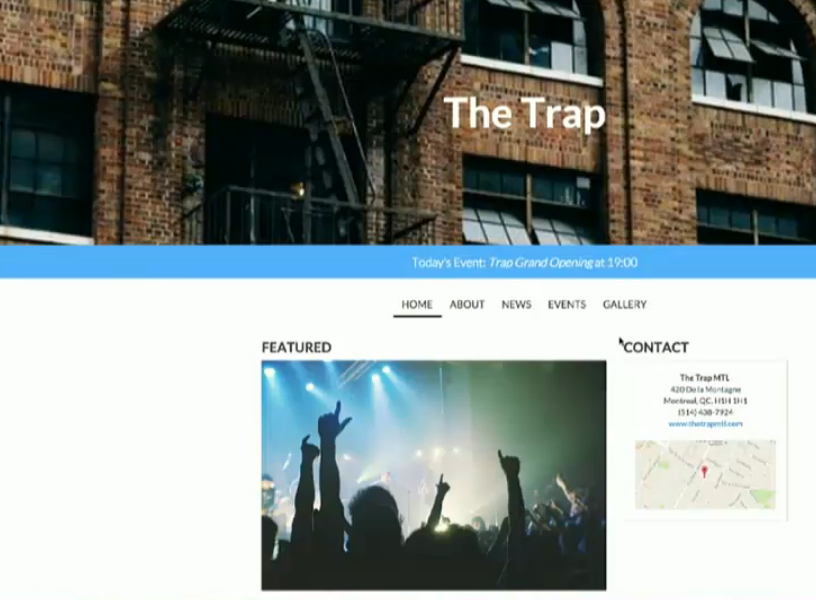
    The app, named Pager, has been developed by a team of three engineers. The rough framework was developed within 24 hours. All you need to do is link your Facebook account, and a list of pages owned by you pops out. You can then choose your desired page and save it, after which the site goes live. The site is divided into four categories, namely, ‘About’, ‘News’, ‘Events’ and ‘Gallery’.

    Pager 1
    ‘The Trap’ page converted into a website

    The ‘About’ gallery displays your business details like name, site information, etc. The ‘News’ section works pretty much like a wall post and ‘Events’ and ‘Gallery’ displays upcoming events and photos/videos, respectively. Alex llea, Anton Shevchenko and Darrel-Day Guerrero, who developed this app during the Disrupt NY Hackathon said that the central idea behind this was to allow small businesses who use Facebook to manage their website. The app is still in its infancy stage, but the team is laying down all the codes that can support the Facebook API.

  • Facebook Donation Drive Collects $10 Million to Help Nepal

    Facebook Donation Drive Collects $10 Million to Help Nepal

    Last weekend, Nepal was hit by a devastating earthquake which claimed more than 6,000 lives and many more missing are still missing. The earthquake’s epicentre originated 17km south of Kodari, Nepal and measured 7.9 on the Richter scale. Its after-tremors could be felt in places as far as Delhi and Uttar Pradesh. Many communication and technological powerhouses came forward to aid Nepal in this time of crisis. Google came up with an app that can be used to locate missing people, telecom enterprises like BSNL, MTNL, Idea, Vodafone and Airtel lowered down their call rates or made it entirely free of charge.

    Facebook initiated a donation drive in order to collect money for Nepal. The social networking giant launched a donation button that reached out almost 1.4 billion users worldwide. Facebook successfully raised over $10 million (Rs. 1.2 billion) within two days. Zuckerberg stated that the company would add $2 million, bringing the total to $12 million.

    We’ve seen our community come together in some amazing ways since the earthquake in Nepal. We activated Safety Check... Posted by Mark Zuckerberg on Thursday, April 30, 2015

    All the money will be handed over to a non-profit organization, International Medical Corps, who will be providing medical care, medicines, food, water, and other basic amenities for the Nepalese community. Zuckerberg states this effort have been amazing.

    Capture

    Read more in detail about how different technological powerhouses joined hands to help Nepal here.

    A picture is worth a thousand words. Click here to witness the devastation in Nepal after the earthquake.

  • Thinking of Donating to Help Nepal? Check Out Facebook’s Impressive New Initiative

    Thinking of Donating to Help Nepal? Check Out Facebook’s Impressive New Initiative

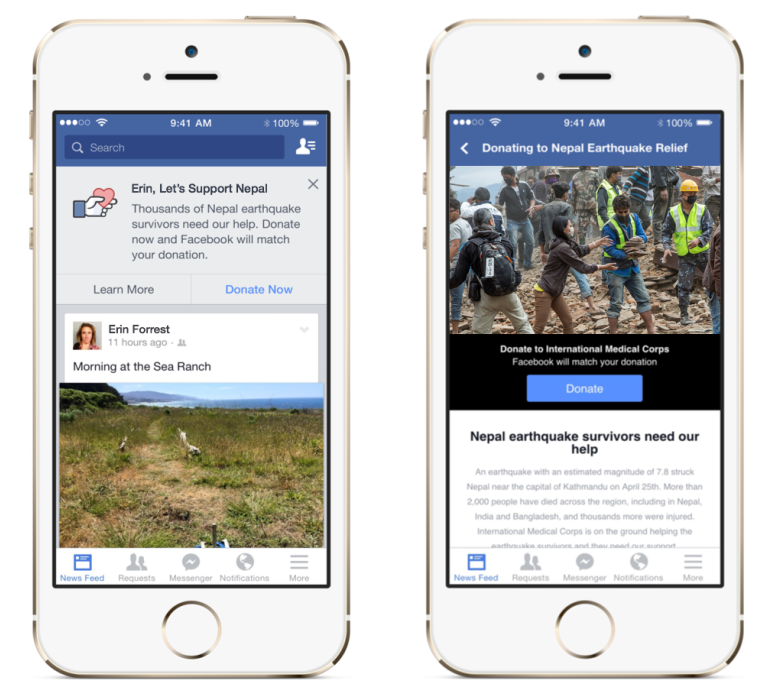
    Facebook’s initiatives to help the earthquake-hit people in Nepal are appreciable. Earlier it launched a ‘Safety Check’ feature to help people know who all are safe in the affected region. The social networking service has now come up with a new tool that will lend a hand in making contributions for the victims of the Nepal earthquake.

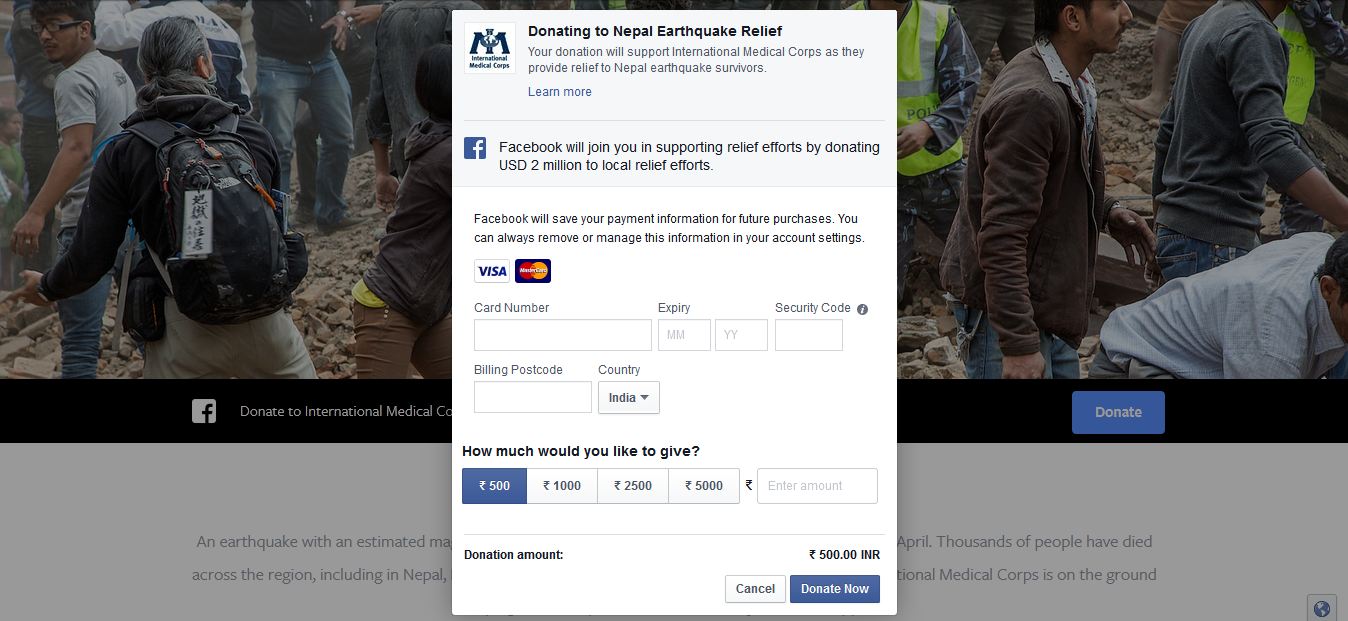
    The company has rolled out a ‘Donate button’ within the website which lets millions of connected users make a donation through Facebook. The fund raised for the Nepal earthquake-affected victims will go to International Medical Corps, which are on the ground serving the needful. The most brilliant part about this initiative is that the amount you donate, Facebook will match your donation till $2 million.

    facebook donate

    The CEO of Facebook Mark Zuckerberg stated in his blog post –

    People are coming together to support those affected by the earthquake that struck Nepal and impacted the populations of Nepal, India and Bangladesh

    Mark also announced through his Facebook account that it will match every dollar donated up to $2 million, and matching funds i.e. $2 million will be donated by the company. Facebook will distribute the amount to the local relief and rescue organizations providing immediate and continuous relief. The official page of Mark Zuckerberg reads

    Today we’re launching a special campaign to help raise funds for those affected by the Nepal earthquake.At the top of…

    Posted by Mark Zuckerberg on Monday, April 27, 2015


    Facebook says that till date, millions of people have been marked as safe and tens of millions of others have learnt about their safety across different sections of the world.

    Many countries have joined hands to help Nepal get over this tragic situation. India has already sent and is sending assistance to its neighboring nation. United States has also stood up to do its bit and has announced to send $10 million in relief to stand by Nepal in its hard time.

    The natural disaster that struck Nepal a few days back shook the very existence of the country. The death toll has passed 4,000 and is still increasing. According to UN, as much as eight million people are affected by this devastating incident.

    Willing people can make their contribution here and save lives.

iGyaan Network
Privacy Overview

This website uses cookies so that we can provide you with the best user experience possible. Cookie information is stored in your browser and performs functions such as recognising you when you return to our website and helping our team to understand which sections of the website you find most interesting and useful.