Tag: fake

  • AI Was Used To Make Barack Obama Deliver This Announcement

    AI Was Used To Make Barack Obama Deliver This Announcement

    When Google launched the Pixel 2 and Pixel 2 XL back in October 2017, the company talked a lot about Artificial Intelligence. Google said that the integration of AI and machine learning within a smartphone is the future and it might as well be right. Artificial Intelligence has grown leaps and bounds over the past few years and is now readily available in most smartphones in the form of a digital assistant like Siri or Alexa. Jordan Peele, the famous Oscar-winning comedian and filmmaker decided to do give us a glimpse of what advancements in AI can produce in the near future.

    In a video of Barrack Obama talking about everything from Black Panther to Donal Trump, Jordan Peele delivers a telling PSA about the future of fake news. The “fake video” was made by Peele’s production company using two tools, Adobe After Effects and the AI face-swapping tool FakeApp. Considering the technology used in this video is still in nascent stage, the authenticity of it is really hard to judge.

    Since the dawn of social media, we have been plagued with fake news. There have been multiple reports of bots spreading a certain fake news or agenda across the internet by making it go viral. While a photoshopped image or fake tweet can still be recognised by people with a keen eye or an open mind, a carefully doctored video using AI can be harder to spot. Adobe, the creator of Photoshop, is already working on an audio editing software called VoCo. It is like Photoshop, but for words, wherein users can generate new words using a speaker’s recorded voice. This can be a groundbreaking addition to the already prominent fake news industry.

    The process of making fake videos, which was a complicated job in the past, can soon become a hobby of a teenager with a computer. All of that will be possible because of the advancements in AI. As is with any form of technology, AI, if used maliciously, can create a lot of trouble especially when doctored videos can go viral in the blink of an eye.

    As Peele says in the end, we need to be more vigilante and trust news outlets when it comes to important topics. Fake news is easy to spread, but, it won’t be of any use if we are careful enough to not believe and share everything we read on the internet. While scientists work on tools to spot fake AI videos, let’s make sure that we question every provocative video on the internet and find a credible source before we hit the share button.


  • Huawei’s Recent P9 Image Blunder Paints a Poor Picture for Mobile Brands

    Huawei’s Recent P9 Image Blunder Paints a Poor Picture for Mobile Brands

    Huawei’s recent launch of the new P9 put a lot of attention on the brand, with claims that the smartphone camera can match DSLR quality shots.

    Huawei P9 blunder

    This image recently posted by Huawei on its Facebook page, promoting the P9.  Even though Huawei never directly claimed it was clicked with the P9. The caption read :

     The #HuaweiP9’s dual Leica cameras makes taking photos in low light conditions like this a pleasure.

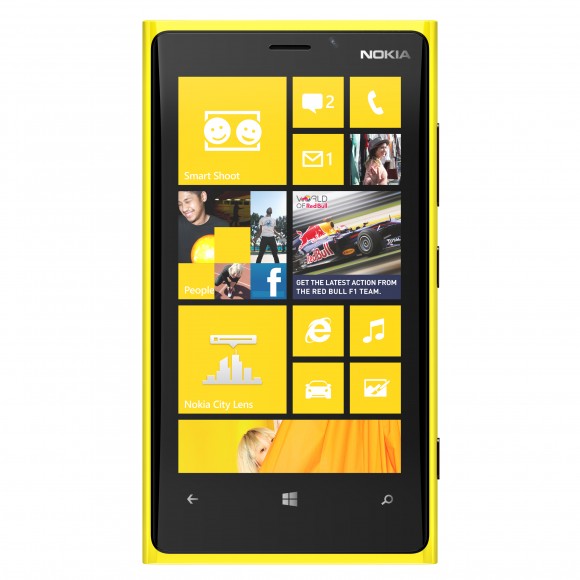
    The EXIF data, however, spoke another story altogether. The photo was actually shot with a Canon 5D III using a 70-200 F2.8  L series lens. This reminds us of the bad marketing Nokia did with the Lumia 920 back in 2012.

    Using DSLR images for marketing is more common than users expect. Most companies do it in their mainstream advertisements, and more so on social media.

    Huawei issued an apology on the issue :

    It has recently been highlighted that an image posted to our social channels was not shot on the Huawei P9. The photo, which was professionally taken while filming a Huawei P9 advert, was shared to inspire our community. We recognize though that we should have been clearer with the captions for this image. It was never our intention to mislead. We apologize for this and we have removed the image.

    However, trust once broken is seldom regained, and Huawei seems to have upset a large chunk of its followers.

    Claims in marketing media from brands often mislead users into expecting more from their phones. Claims like 2-day battery life, amazing cameras, and magical unicorns are made with phones that can barely manage to give average results.

    With no regulations in place for marketing norms, a consumers knowledge becomes his best weapon against poor and unethical marketing warlords.


  • Nokia Denies Comeback to Smartphone Business, Says “Reports are False”

    Nokia Denies Comeback to Smartphone Business, Says “Reports are False”

    The former leader of consumer smartphone manufacturer Nokia recently made headlines for considering making a comeback in the mobile manufacturing business. The firm heard the recent buzz over Internet and came out to publically announce that the information was false. The report of Nokia planning to return to the mobile business was surfaced by the reliable technology portal Re/Code, which stated that the news was disclosed by a Nokia Networks executive.

    The exact statement by the Finnish reads –

    Nokia notes recent news reports claiming the company communicated an intention to manufacture consumer handsets out of a R&D facility in China. These reports are false, and include comments incorrectly attributed to a Nokia Networks executive.

    Nokia reiterates it currently has no plans to manufacture or sell consumer handsets.

    Re/Code claimed that Microsoft-acquired Nokia is planning to bounce back to the smartphone business sometime next year. It also stated that several ambitious projects are in the making, and one among them is a virtual reality device. The company recently launched its first Nokia-branded Android tablet, along with an Android app called Z Launcher.

    Nokia was acquired at a whopping price of $7.2 billion last year by hardware and software leader Microsoft. It was learnt that Nokia can’t use its brand name on smartphones till Q4 2016. Since Nokia was launching one or the other products lately, the news didn’t seem unfitting.

    A while back, the company disclosed its move of acquiring Alcatel-Lucent for $16.5 billion. The new firm formed is called the Nokia Corporation. The acquisition will give a boost to its patent licensing business and networks division, which makes for 90 percent of the total revenue. The company is in talks with potential buyers to sell its maps business “HERE“.

  • Whoops! 32GB Nexus 7 Tablet Accidentally Shipped!

    Whoops! 32GB Nexus 7 Tablet Accidentally Shipped!

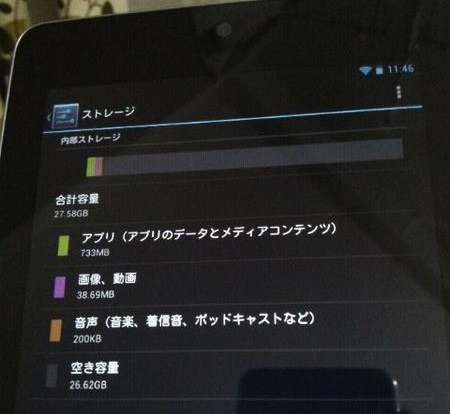
    The ASUS Google Nexus 7 is a very popular, keenly priced Android tablet. If you want to buy one you currently have only two choices; a version with 8GB of storage and a version with 16GB of storage. Since there is no SD card expansion available in these machines many users opt for the 16GB version, for obvious reasons. A Japanese customer who had made the prudent decision to go for more storage was in for a rather pleasant surprise!

    The Japanese customer got twice the value he paid for when he received an as-yet unannounced 32GB Nexus 7 tablet!

    It’s unclear how this may have happened, but if it’s true then Google won’t be able to deny the 32GB Nexus 7’s existence for much longer.

    The 32GB Nexus 7 reportedly arrived in the packaging of a 16GB model, but the device itself shows more than 26GB of free space in its settings. It seems the person in charge of jamming these Nexus 7 tablets into their boxes may have pulled one from the wrong pile.

    Then again, this could simply be a hoax.

  • Nokia Says Lumia Marketing was “Poor Judgement”

    Nokia Says Lumia Marketing was “Poor Judgement”

    Nokia found itself in a mess after they unveiled their new flagship Windows Phone 8 Lumia 920 a couple weeks back. The reason being was from a video they approved that promoted the OIS (optical image stabilization) features in the 920. If you remember, the video showed a girl riding a bike and the pleasant moments were all captured on camera by a friend, who was led to believe to be using the 920. However, the reflection in a window proved otherwise and revealed that the video was actually shot with a DSLR, not “the latest innovation from PureView technology.”

    In a written statement, a Nokia spokeswoman said the findings from the internal investigation “confirmed that poor judgment was exercised in the use of the [marketing] materials.” She added that Nokia has taken “appropriate action” as a result of the findings, but declined to elaborate on the steps it has taken.

    Nokia has yet to detail when the phones will become available, where to buy them or what they will cost.

  • Ignore missed calls from international numbers to prevent SIM cloning

    Ignore missed calls from international numbers to prevent SIM cloning

    Whoops! Something went wrong!

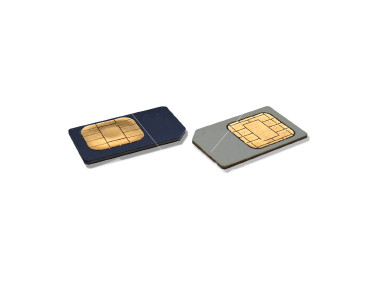
    BSNL has issued a fresh warning to users to not respond to calls from numbers starting with +92; #90 or #09, saying if they do they may fall prey to a bout of SIM card cloning. According to a report in TOI, BSNL has issued alerts to subscribers — particularly about the series mentioned above — saying that calling the number back after a missed call may make a user susceptible to SIM card cloning. There is, however, confusion over this claim made by some BSNL and intelligence officials. Cloning a SIM card requires physical access to it or the interception of the communication between the caller and his or her cellphone operator’s network. 

    It is said that one lakh subscribers have fallen prey to this scam. Intelligence agencies too are said to have confirmed to the service providers particularly in the UP West telecom division that such a racket is going on and the menace is growing fast. 

     If a subscriber attends the mobile phone before it starts ringing, the person on the other end pretends to be a call centre staff whose job is to watch whether the connectivity and call flow is seamless. The subscriber is requested to dial #09 or #90 to contact the caller in this regard.

    When the subscriber does so, it leads to cloning of SIM. This enables the culprits to then utilise the information stored in the phone as also the SIM, memory and data cards.

    There have been instances of subscribers receiving missed calls from numbers starting from +375 and this been on a rise in the recent past. These instances are alarming because if one tries to call back, then they’re charged a whopping $15 – $30 for that call. +375 is an international code, more specifically belonging to Belarus.

  • Chinese Authorities find 22 additional Fake Apple Stores

    Chinese Authorities find 22 additional Fake Apple Stores

    Remember the fake Apple stores that were in the news recently? Well the Chinese Authorities cracking down on impostor Apple stores have uncovered 22 additional Apple wannabes.  Now, the stores are being forced to remove Apple’s official logo after Apple China accused them of violating its trademark. The Administration for Industry and Commerce will setup a hotline in an effort to catch more illegal stores.

    In July, inspections of around 300 shops in Kunming were carried out after a blog post by an American living in the city exposed a near-flawless fake Apple Store where even the staff were convinced they were working for the California-based iPhone and iPad maker.

    [Read]

iGyaan Network
Privacy Overview

This website uses cookies so that we can provide you with the best user experience possible. Cookie information is stored in your browser and performs functions such as recognising you when you return to our website and helping our team to understand which sections of the website you find most interesting and useful.