Tag: google android

  • Google Pixel 2 And Pixel 2 XL Image Revealed

    Google Pixel 2 And Pixel 2 XL Image Revealed

    Google’s first Android smartphone – Pixel was launched on 20 October, 2016. Confirming the rumors, Osterloh announced last year that Pixel will pave way for its successors, the Pixel 2 and the Pixel 2 XL. He said, “There is an annual rhythm in the industry. So, you can count on us to follow it. You can (also) count on a successor this year, even if you don’t hear a date from me now”.

    Google is expected to launch the two Pixel successors later this year – Google Pixel 2 and Pixel 2 XL. Though no release dates have been announced yet, the rumors offer a hint at what Google has in store for us.

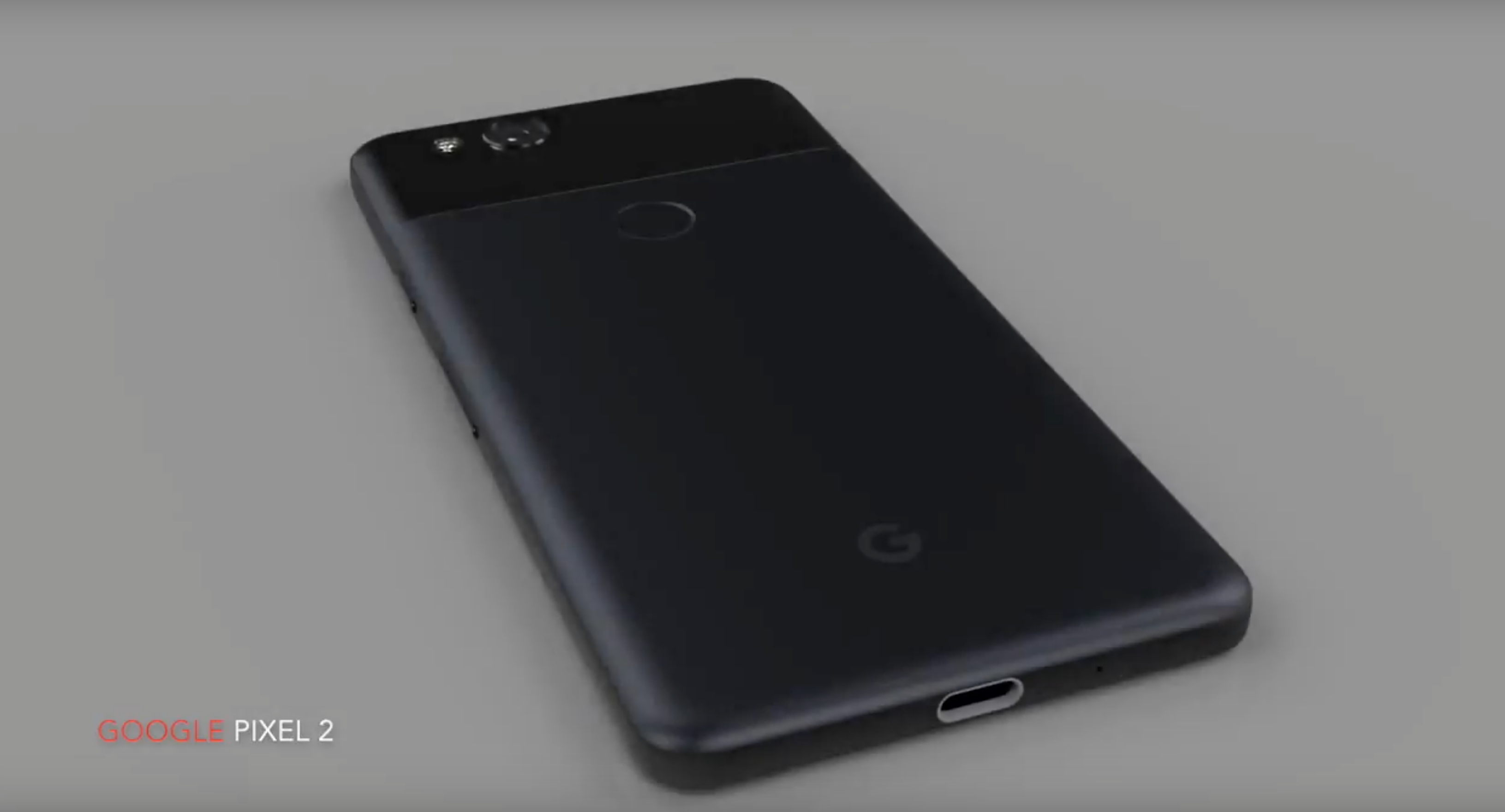
    Recent render leaks from one of the case makers show that the upcoming Pixel successors will be getting the best of both the worlds. The renders of the Pixel 2 and Pixel 2 XL  show that the devices will reportedly employ polarizing curved edges of the Galaxy Note 8 and top bezel cut-out of the iPhone 8.
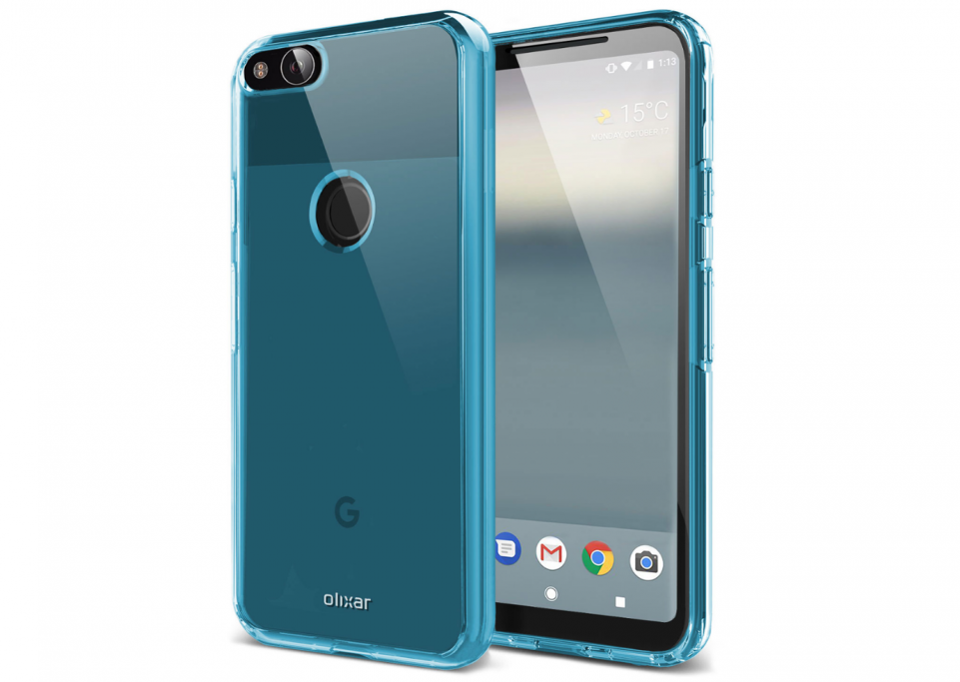
    Furthermore, Olixar has made the Pixel 2 and Pixel 2 XL cases available for pre-orders with prices starting from $5.99 for the basic FlexiShield range in UK and US.
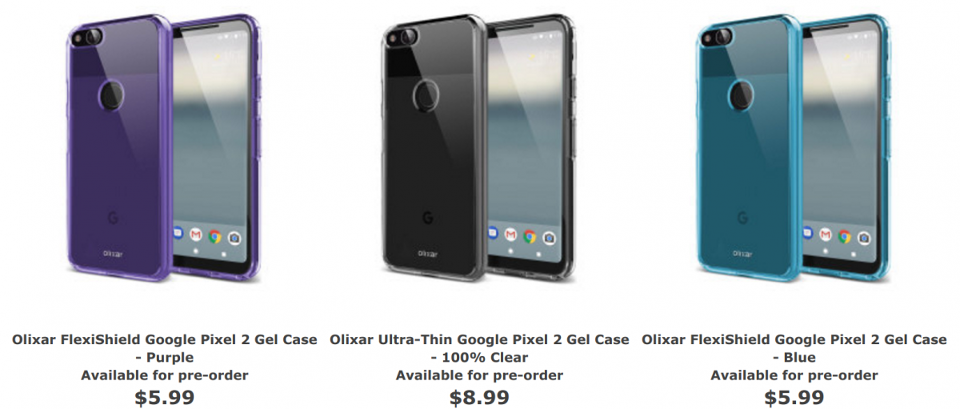


    Though the details about the Google’s upcoming smartphones have been hard to come by, here’s all we know about the next Pixel lineup.

    Several reports suggested that only the Pixel 2 XL will be launched with these features, but according to updated renders, Google seems to follow last year’s strategy of making both the phones almost identical with few exceptions. Given the previous rumors of LG manufacturing the smartphones, both the Pixel 2 and Pixel 2 XL look similar to the LG G6.

    Evident from the recent case images, both the Pixel 2 and 2 XL are expected to feature curved glass around the flat OLED display with small bezels. Speculations about the Pixel 2 XL sporting a slightly larger OLED display at 6 inches have also been doing the rounds, whereas the Pixel 2 is said to have a 5-inch, 1080p display in a chassis similar to the previous model.

    Reports suggest that the Pixel 2 and Pixel 2 XL will have an improved processor and a single-lens, dual-flash rear camera setup. Both the devices will most likely be water resistant and are expected to run on Snapdragon 835 chipset and with 4GB RAM and 64GB onboard storage.

    A recently updated image suggested that Google may be planning to replace the good ol’ 3.5mm headphone jack with a single USB-C port. But it can’t be said for sure as the case images of the top or bottom of the Pixel 2 and Pixel 2 XL are still unavailable.

    Other than that, both the smartphones will have the back panel much like the original Pixel – a mix of metal and glass. However, this time the fingerprint sensor might not be covered with the glass.

    The word on the street is that Google may launch the not so“affordable” Pixel successors by the end of this year. Osterloh hinted that the second edition of the highly-priced smartphones may not be ideal for a budget buyer. Therefore, we can expect the Google Pixel 2 to be in the same or slightly higher price bracket than its predecessor.
  • List of the First Smartphones Most Likely to Run Android M When it Launches

    List of the First Smartphones Most Likely to Run Android M When it Launches

    While Android Lollipop was a complete overhaul from its previous iteration (in terms of design and features), Android M is said to be a mere improvement. At the Google I/O conference, Senior VP Sunder Pichai announced that the company has spent effort on improving the software, rather than redesigning it. Nonetheless, we can’t wait to have the brand new set of features on our smartphones.

    Well, we’ve now decided to take on the burning question everyone wants answered, “Will my smartphone be upgraded to Android M?”.

    Here’s a list of smartphones that are most likely to receive the update first.

    Nexus Devices

    Google Nexus 6 3

    No surprise here. The Developer Preview is already out for Nexus 5, Nexus 6, Nexus 9, Nexus Player; and it sure looks good. As tradition goes, Google’s very own line-up of Nexus devices will be the first ones to receive the official update.

    The Moto Brigade

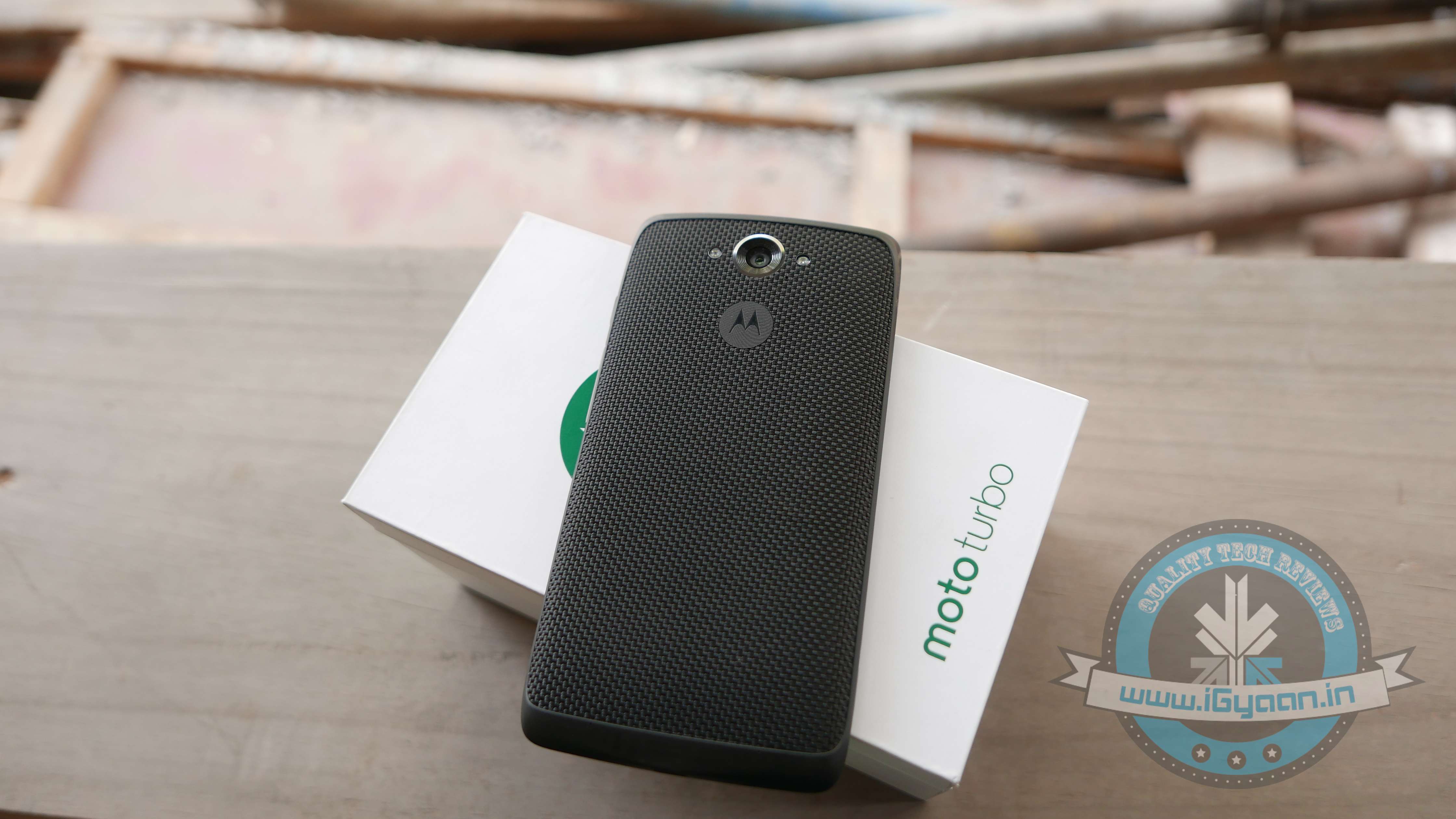
    Moto Turbo India 5

    Motorola has always been efficient in providing timely software updates. Even when Android Lollipop released, Motorola ensured its customers had it before many others. Moto X and Moto Turbo are first in line to get the Android M update, followed by the Moto G. Unfortunately, Moto E may not make the cut.

    OnePlus

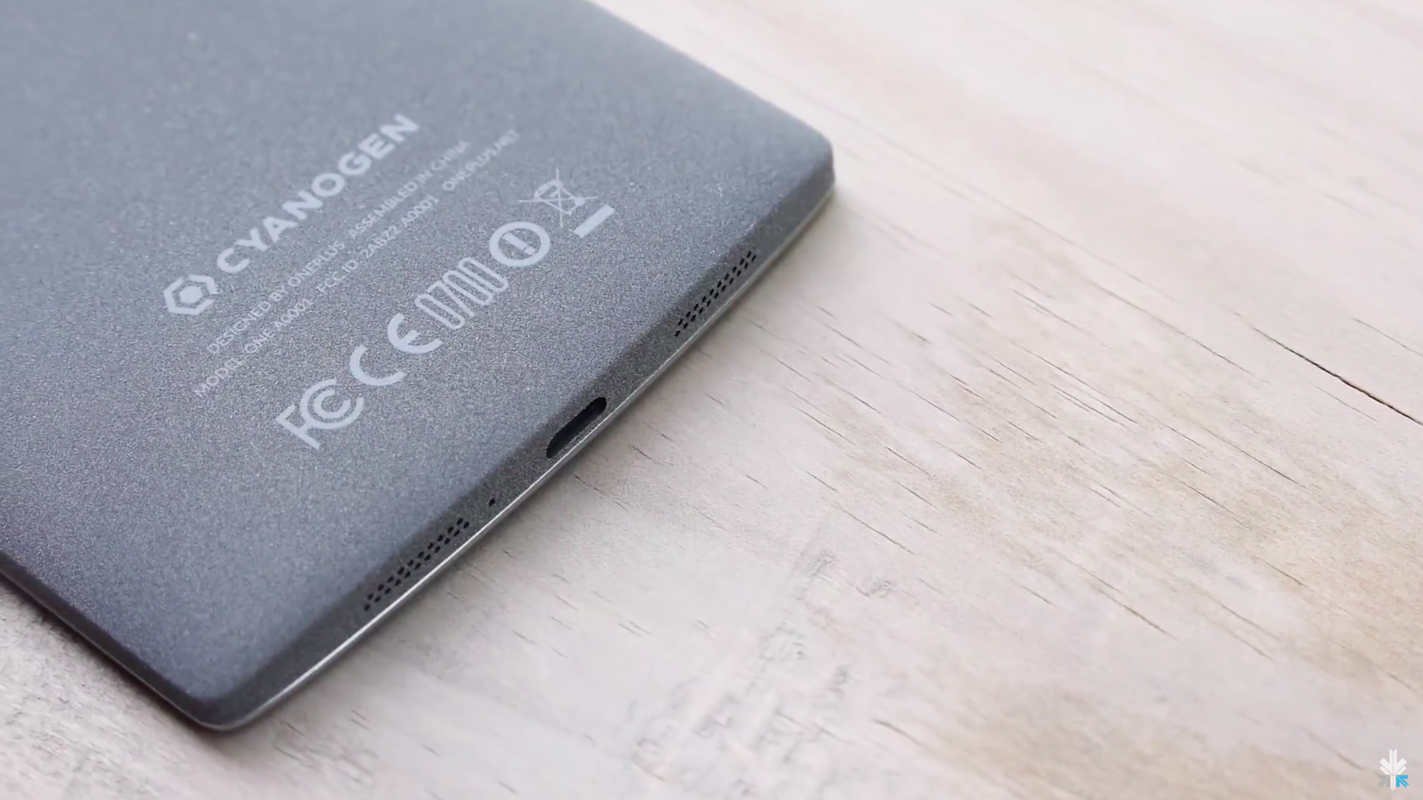
    cyanogen oneplus

    By the time Android M rolls out, we expect OnePlus would have announced its next flagship, the OnePlus Two. The company, just like Motorola, has been known to provide timely updates. Also heeding to the fact that the company has buried the hatchet with Cyanogen, we can expect both, OxygenOS as well as Cyanogen to be out in their Android M versions soon. In fact, all devices powered by Cyanogen (such as Yuphoria, Yureka) would be the privileged ones to receive Google’s latest update.

    Samsung Devices

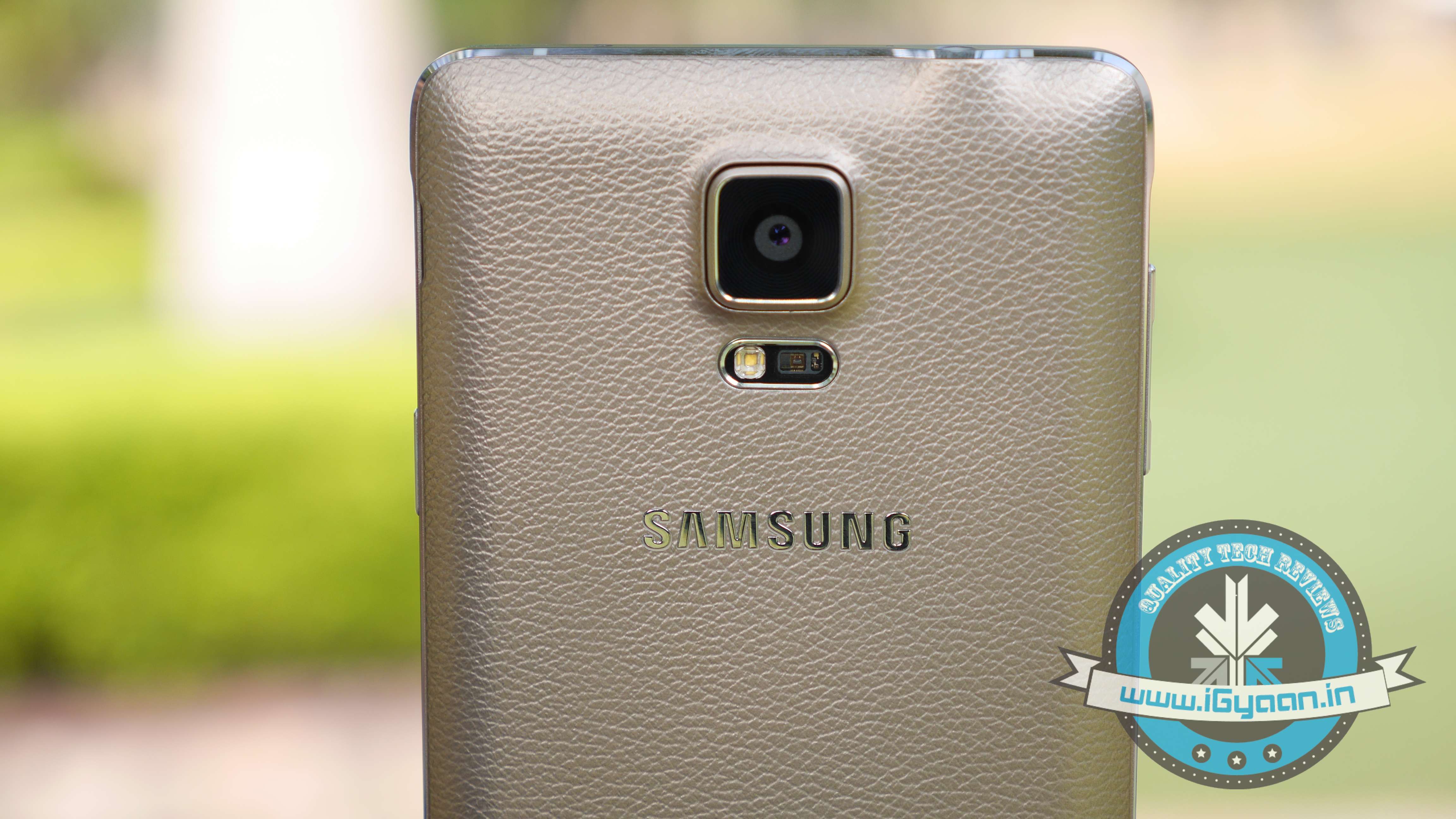
    Samsung Note 4 2

    While there is no official word from the company, Samsung Galaxy S6, Galaxy S5 and Samsung Note 4 are expected to be the first few devices to receive the Android M update. Also, the Samsung Galaxy Note 5 which is expected to launch between October and September 2015, will be upgraded to Android’s latest operating system.

    HTC

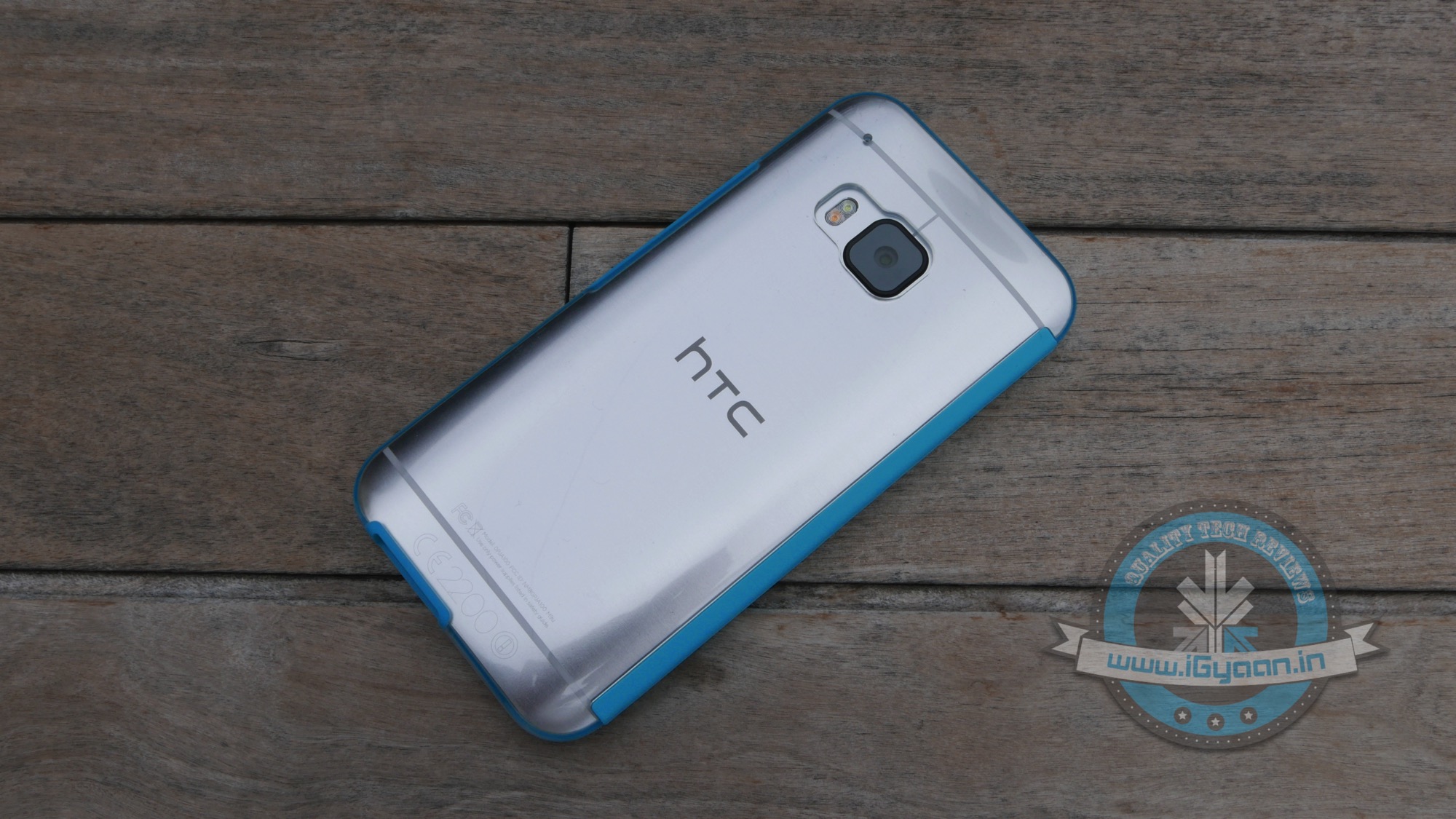
    HTC ONE M9 iGyaan 26

    HTC is one of the few companies that has jumped the gun and officially announced that their line-up of smartphones will be receiving the Android M update. The company recently stated that HTC One M9 and One M9+ are going to get it first, followed by other devices. The company was unclear about which these ‘other devices’ might be, we’re guessing they were talking about the HTC One E9 and the previous-gen One M8.

  • How to Install Android M on Your Nexus Device

    How to Install Android M on Your Nexus Device

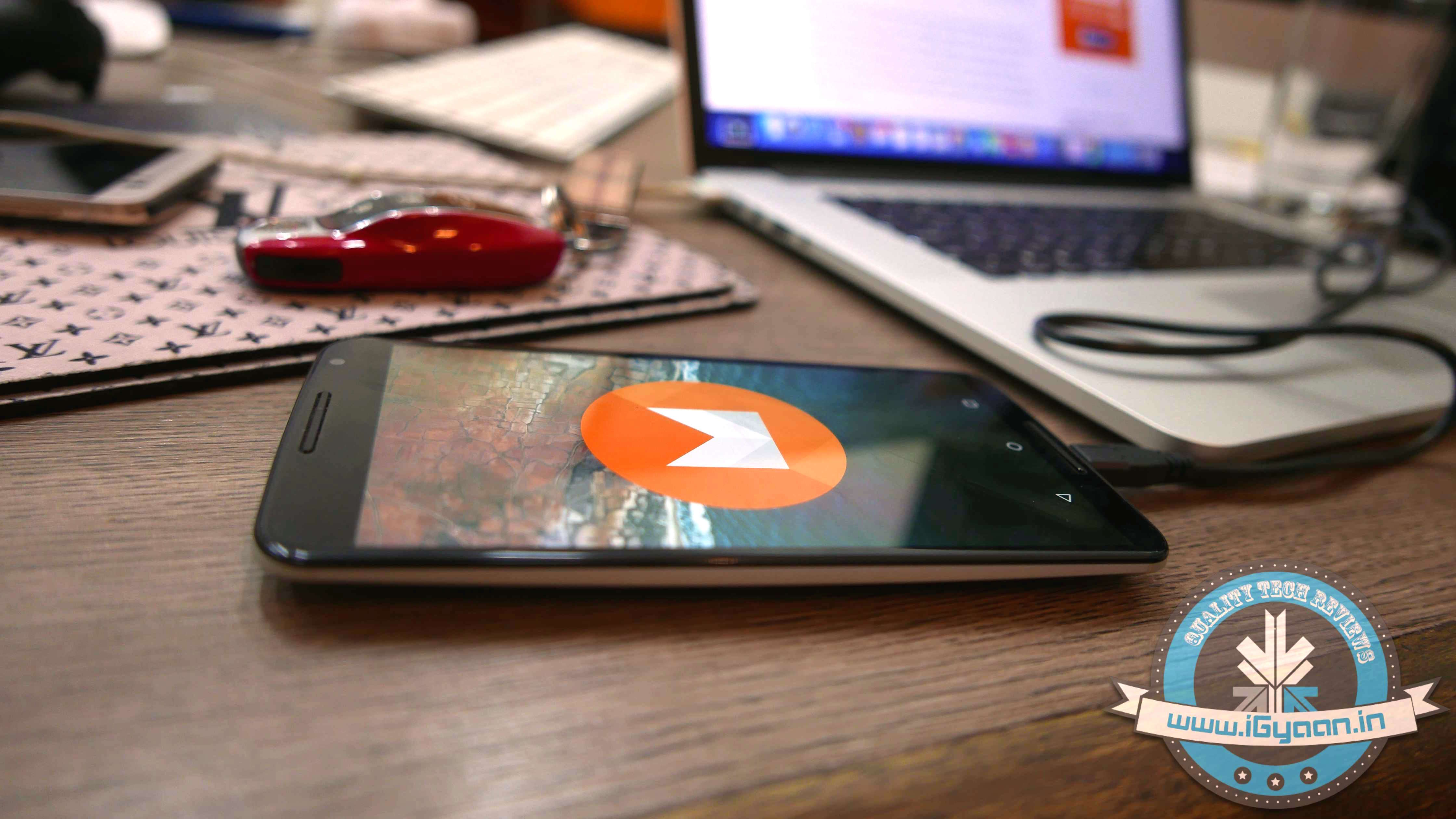
    At the I/O 2015 conference, Google announced the next version of Android. The company detailed some interesting features that will be available on Android devices later this year. With Android M, they have focused on improving the system’s overall quality and fixing the bugs found on Lollipop. While Google SVP Sundar Pichai’s speech seemed impressive, we wanted to see for ourselves what the fuss was all about.

    We installed Google’s Android M developer preview on our Nexus 6 and decided to share the step-by-step procedure.

    Disclaimer: 

    • Before you decide to install Android M on your device, consider the fact that it will wipe the smartphone’s memory entirely.
    • The developer preview also contains several bugs and may be unstable.
    • We wouldn’t recommend installing the OS on the Nexus device you use on an everyday basis. Some of the major applications are having trouble loading on Android M.
    • The Developer Preview is only out for Nexus 5, Nexus 6, Nexus 9 and Nexus Player.

    Preparation 

    • Back-up your Nexus Device.
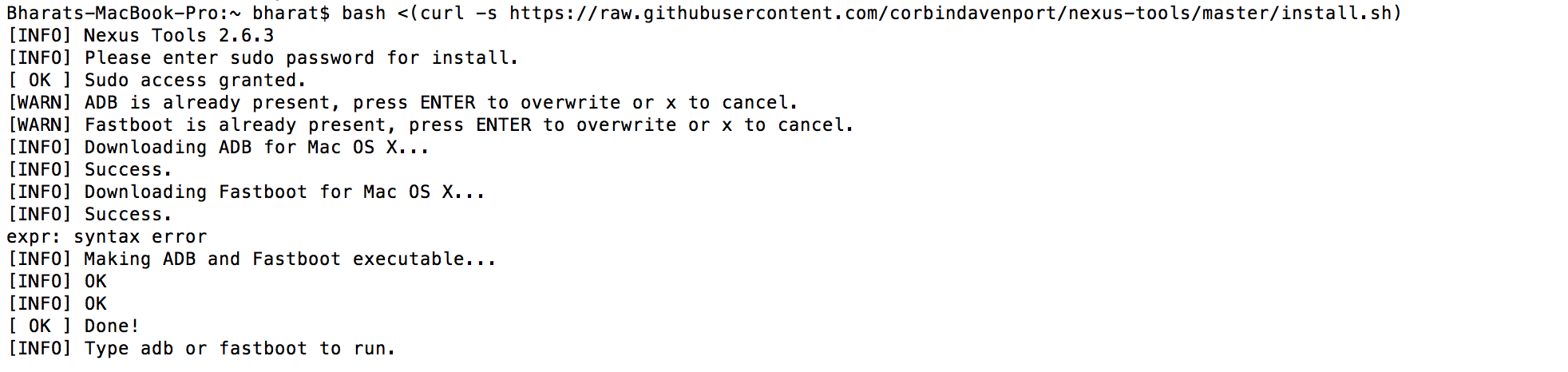
    • To make this quick and easy, before you begin, make sure you have ADB and fastboot installed on your computer.  The easiest way to install ADB on your machine is by inserting the following command on your Command Line/Terminal:
      bash <(curl -s https://raw.githubusercontent.com/corbindavenport/nexus-tools/master/install.sh)Android M 3
    • Download the factory images for your device here. Unzip and save them on a file on your desktop.

    Method

    • Now to begin, enable your device’s debugging mode and connect it to your computer via a USB cable.
    • Open an ADB command line and enter ‘adb reboot boot loader’Android M
    • Open the folder containing your factory images.
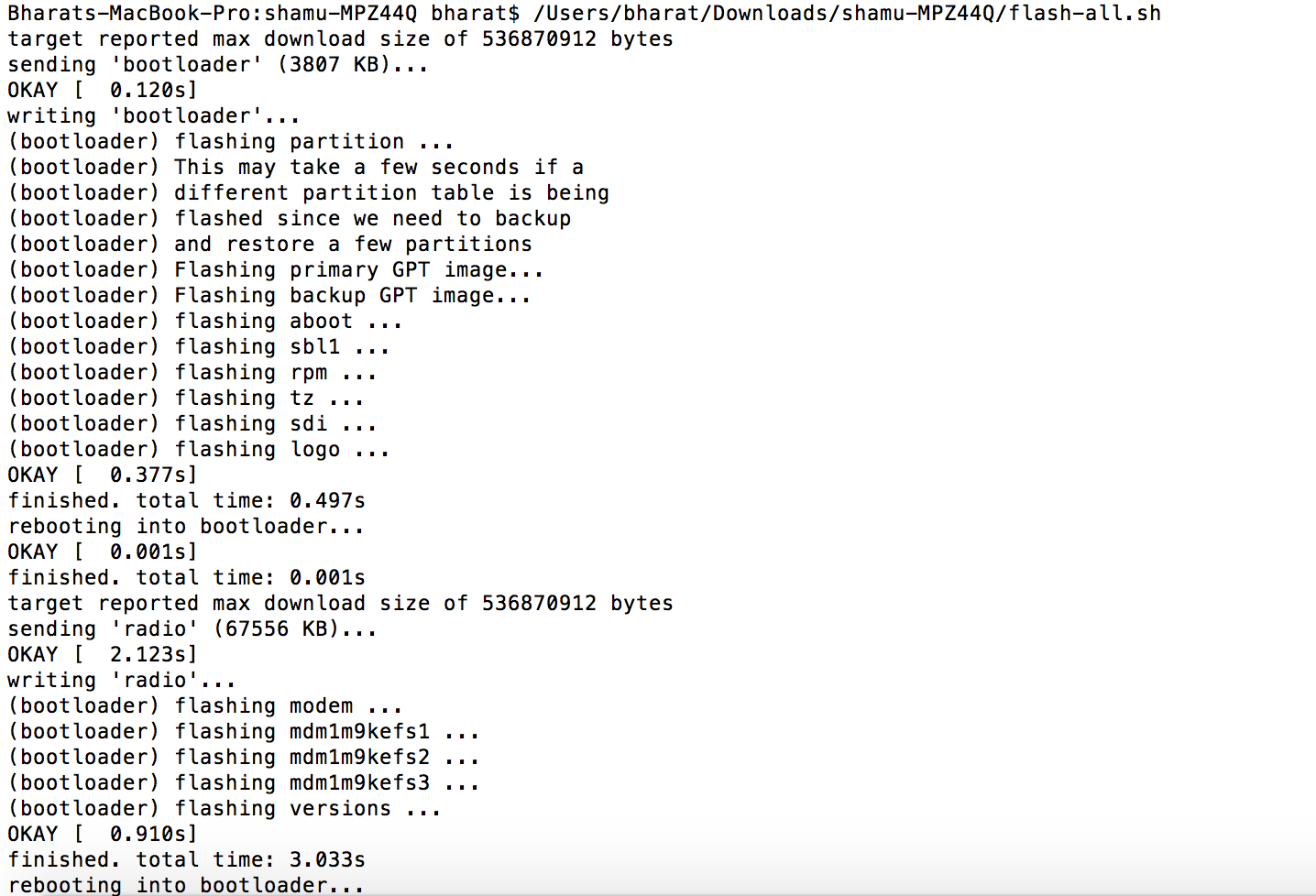
    • Now on the ADB command line, enter ‘flash-all’ to run the installation. This is the final step and it will initiate the process, as seen below: android M 2

    You will now have to wait till it gets installed. It took us approximately 5 minutes.

    Now you can enjoy fiddling around. To read more about Android M, click here.

  • Gmail Quietly Rolls Out a New Login Screen

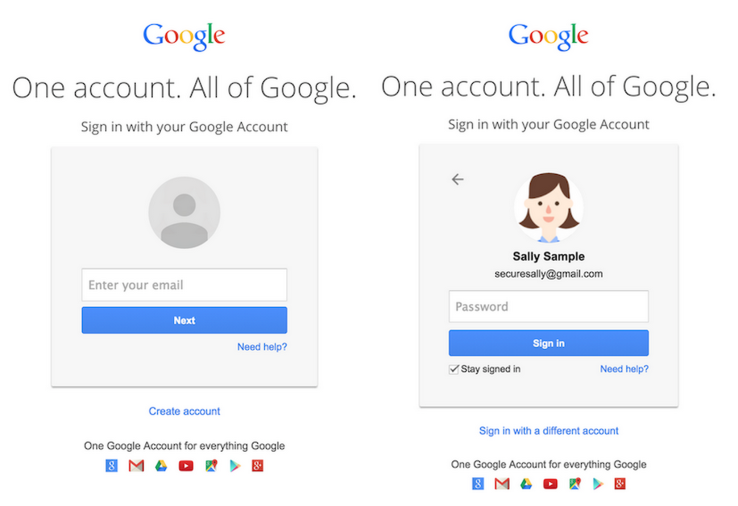
    Gmail was the only Google subsidiary that had not undergone many updates for a long time. But, Google has quietly rolled out a new update that may change the phase of web logins. According to TechCrunch, Gmail has rolled out a new login screen that would require you to go through two different pages, one asking for your Email ID and the other for your password.

    Before, to log into your Gmail account, you were required to enter your Email ID and password on the same page, which would later be directed to your inbox. With the new login screen, you will first have to enter your user id. The next page will ask you for your password, and then you will be directed to your inbox.

    gmail login

    Google’s official product forum reads that the new login screen will prepare for ‘future authentication solutions that complement passwords.’ It also claims that the new login screen will reduce confusion among people having multiple Gmail accounts. It also reads that a better experience is promised for SAML SSO users, like university users or corporate that sign in with a different identity other than Google.

    Google has not made clear what the above points meant. But the thread saw many users complaining about the change being unnecessary. Users have complained that the two-screen login process wastes time. Some users who have more than two accounts say the new screen have broken their ability to login using various password managers.

    TechCrunch also pointed out that the method is somewhat similar to the ‘Trusted Device’ option in Android devices that lets users unlock their devices when they come in vicinity of their smartphone or tablet while they have a chosen trusted device on their person.

  • Google Search Results Will Soon Include a List of Relevant Apps to Download

    Google Search Results Will Soon Include a List of Relevant Apps to Download

    Google, as we all know, is a powerful search engine which has given us the power of endless knowledge on our fingertips. Yesterday, it introduced a super useful new tool called ‘Find My Phone’ which helps locate missing Android smartphones and today, it revealed a feature that suggests apps based on your search.

    Through the newly developed feature called App Indexing, users will come across more relevant content on the web, along with applications notification on your Search page. That means, besides other results that usually pop up on your screen, applications suggestion relevant to your search will also be made available on your handset.

    google app index

    For example, if you type ‘Give me instructions to make perfect tea’ then a list of standard search results together with applications recommendations will appear before you. The application suggestions will come with an Install button that will take the users to the App Store for installation. Once installed, the app will take you straight on to the required content within it. The service will start for Android users sometime next week.

    The App Indexing program is beneficial to developers and users alike. Users can get app suggestions without browsing through millions of apps on Play Store and for developers, it will make their apps more discoverable. The app makers just need to implement the App Indexing API onto their applications.

    Developers can get more information on the App Indexing API here.

  • Google Search App For Android Update Brings Google Now Widget, Movie Ratings And More

    Google Search App For Android Update Brings Google Now Widget, Movie Ratings And More

    Google has issued an update to its Search app for Android, bringing the rumoured widget functionality to devices running Jelly Bean and higher. The update brings in fresh data, and adds support for movie tickets from Fandango.

    The update, for Android 4.1 and higher, will now provide users with movie ratings from Rotten Tomatoes, and real estate information from Zillow, when a house is listed on the markets and resides in that provider’s database. Also, if you live in the United States, and use the app, you will now be provided with a music button a song is currently employed and the app is in voice mode.

    What’s in this version:
    For Android 4.1+ (Jelly Bean):
    – Google Now widget for home screen or lock screen.
    – Movie passes from Fandango
    – Movies now includes ratings from Rotten Tomatoes
    – Real estate listings from Zillow when in the market for a home
    – Music button when a song is playing in voice mode (US only)
    – Support for US college sports

    Google, which made the widget announcement in an Android blog post, assured that Now is just getting started, so we’re sure to see many more updates and improvements hit the pipeline before long.

    The Google Search app for Android is available as a free download from the Google Play Store.

  • Android 4.2.2 Rolling Out For Nexus Devices

    Android 4.2.2 Rolling Out For Nexus Devices

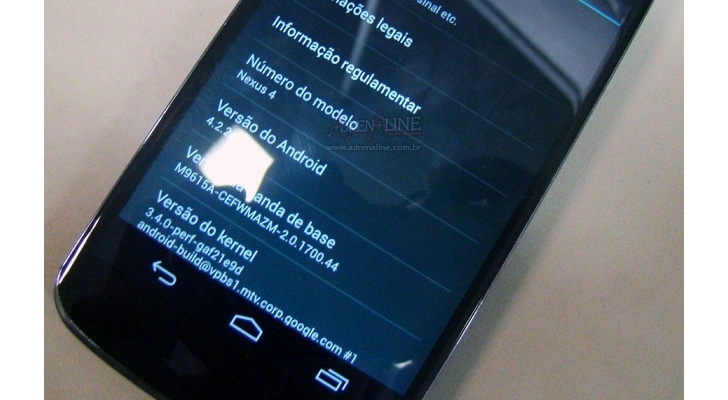
    Nexus owners may have a reason to stay up tonight, as a couple of Reddit users report that Android 4.2.2 has begun rolling out to the GSM Galaxy Nexus and the Nexus 7. This is a release Google was rumoured to start shipping in Brazilian Nexus 4?s over a month ago, but nothing ever came of that assertion.

    The report mentions that the update is being rolled out to select devices, carrying the JDQ39 build number. 

    We had earlier reported that the update is expected to roll out by the mid of February, so it doesn’t really come as a surprise that Google has started seeding it out.

    The update comes in at little over 46MB and considering the fairly significant size may feature plenty more under-the-hood changes. Android 4.2.2 is currently rolling out in waves and will likely hit the Nexus 4 in the following days if previous deployments are of any indication. For Galaxy Nexus owners there is an OTA Android 4.2.2 update file that can be manually downloaded and installed afterwards using ADB Sideload in the recovery.

    Unfortunately, there’s nothing too exciting to report, as the update provides mainly performance and stability fixes, and allegedly fixes a bug related to streaming music over a Bluetooth connection.

    It’s not surprising that the update doesn’t deliver many new features, as Google is widely expected to announce the next major release of its Android mobile operating system, which is likely to be named Android 5.0, at its Google I/O conference in May.

    Via: Reddit

  • Report : Android 4.2.2 Update Coming Later This Month

    Report : Android 4.2.2 Update Coming Later This Month

    android

    As we wait for the next big version of Android to appear — Key Lime Pie is rumoured to debut at Google I/O in May — Google hasn’t slowed down its sprucing and pruning of the current version.

    According to a recent article on ibtimes.com, Google might be set to make the new platform version available by mid-February, after concluding internal testing for it. 

    The story goes that Google has been having employees test the 4.2.2 update on all of the Nexus devices – Galaxy, 4, 7, and 10 – and that the update is close to being released. There isn’t a lot to the update, which is expected to be very minimal. The only major issue that is expected to be fixed is the “stuttering” audio issue when using a Bluetooth headset with the Nexus 7. 

    Multiple reports and videos have surfaced showing at least the latest LG Nexus 4 running 4.2.2 Jelly Bean for a select few. Google hasn’t pushed 4.2.2 to AOSP and it hasn’t been confirmed, but either way it’s coming soon.

    News of this forthcoming version of Jelly Bean comes not long after Google updated the Android version share page. According to the data, Jelly Bean–both versions 4.1 and 4.2–has grown by 3.2 per cent since last month. This new update will probably see more Jelly Bean devices being activated, giving a firm foothold to Jelly Bean before the next version of Android is released.

    [Android Community]

  • Android Winning Mobile War With Apple : Google Chairman Eric Schmidt

    Android Winning Mobile War With Apple : Google Chairman Eric Schmidt

    google

    Google is winning the smartphone war against Apple, says Eric Schmidt, the company’s Executive Chairman. In an interview with Bloomberg over the weekend, the outspoken executive said that, based on market share, Google doesn’t have to worry about the mobile game. It is clearly winning. With 75% worldwide market share as of Q3 2012, Android has infiltrated most developing markets to become the de facto entry-level smartphone OS. It has taken millions of users away from Symbian, BlackBerry, and is certainly the most affordable path to entry for users upgrading from “dumbphones.”

    [quote]“This is a huge platform change; this is of the scale of 20 years ago — Microsoft versus Apple,” he said. “We’re winning that war pretty clearly now.”[/quote]

    Schmidt’s remarks reflect Google’s growing confidence in its ability to attract users and advertisers as more customers rely on handheld devices and shun traditional computers. By giving away Android, Google cedes revenue to hardware partners, such as Samsung Electronics Co. Schmidt is willing to make that sacrifice because it drives demand for ads and other Internet- based services that benefit Google over time.

    [quote]“The core strategy is to make a bigger pie,” he said. “We will end up with a not perfectly controlled and not perfectly managed bigger pie by virtue of open systems.”[/quote]

    With high-quality core apps on both Android and iOS, it’s possible to stay within the Google ecosystem on either platform these days. Even though Android is its baby, Schmidt seems satisfied with the company’s iOS strategy.

    “The core strategy is to make a bigger pie,” he said. And what a tasty pie it is.

  • Jelly Bean Now On 6.7% of Android Devices : Google

    Jelly Bean Now On 6.7% of Android Devices : Google

     android

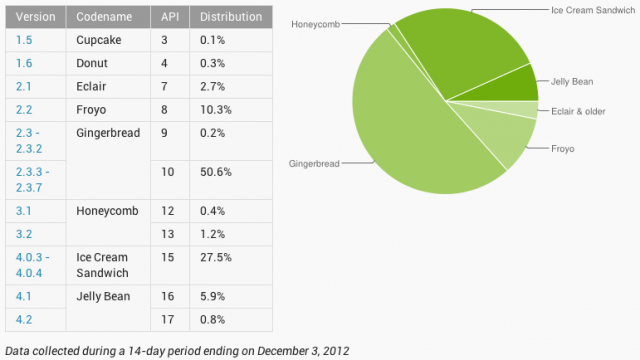
    Google’s latest iteration of their mobile OS, Jelly Bean, has enjoyed a good start so far – in the last thirty days alone, Jelly Bean has had a nice boost in scooping up more market share thanks to people buying Jelly Bean-based devices like the incredible Nexus 4 which comes with Android 4.2 Jelly Bean on-board. It now runs on 6.7% of all Android devices.

    Gingerbread is still the most widely used version of Android and is installed on 50.8% of devices while Android Ice Cream Sandwich comes in at second place with 27.5% of handsets running it. Although the statistics are aimed at offering useful insights to developers they give a good overview of how fast the newer versions of Android are catching up and what the state of the operating system’s fragmentation is.

    Incredibly, there are still traces of Cupcake, Donut and Eclair roaming around the Google Android universe, while Froyo still holds over 10-percent of the share.

    These latest figures from Google are based on users who have accessed the Play Store within the last 14 days. The next few months should show a more rapid shift in the percentages as more devices get the Jelly Bean update, not to mention the inevitable future success of Google’s Nexus 4.


  • Android 5.0 Key Lime Pie Seen In Sony ‘LT30i’ Benchamarks

    Android 5.0 Key Lime Pie Seen In Sony ‘LT30i’ Benchamarks

    android

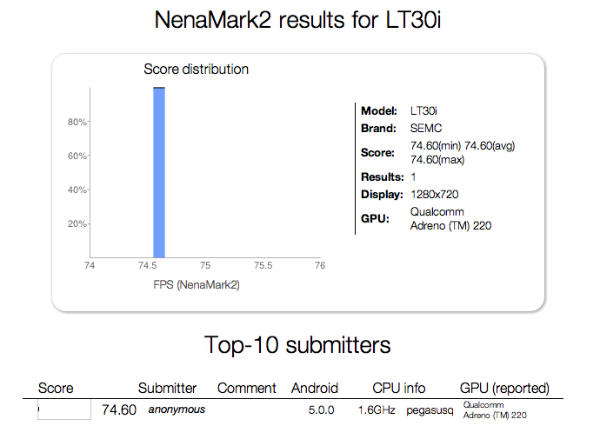
    Now that Android 4.2 Jelly Bean is safely released to the public, it’s time to focus our attention on the next big version, expected to be called Key Lime Pie and likely to be unveiled in February or March of next year. Key Lime Pie, has appeared online in benchmarking results on a yet-to-be-released Sony LT30i.

    The hardware it is being tested, Sony LT30i, is a variation of the Sony Xperia T clocked at 1.6Ghz. Because Sony is a close partner of Google, and may be readying its own Nexus phone, it’s entirely possible that the hardware manufacturer has been granted early access to Android 5.0 as part of the Android PDK.

    The LT30i features a 1.6GHz Qualcomm Snapdragon MSM8260 chip with modest Adreno 220 graphics. It also has a display of unknown size, but with a 720p resolution.

    All this has to be taken with the usual large pinch of salt as the benchmark figures could easily be faked, as you would have thought we are many months away from seeing Android 5.0 revealed. It is doubtful the company will announce the software before Google I/O next summer, but with Google anything may be possible.

  • Android 4.1 Jelly Bean Hits 2.7% Adoption, ICS at 25.8%, Gingerbread Still On 50%

    Android 4.1 Jelly Bean Hits 2.7% Adoption, ICS at 25.8%, Gingerbread Still On 50%

    android

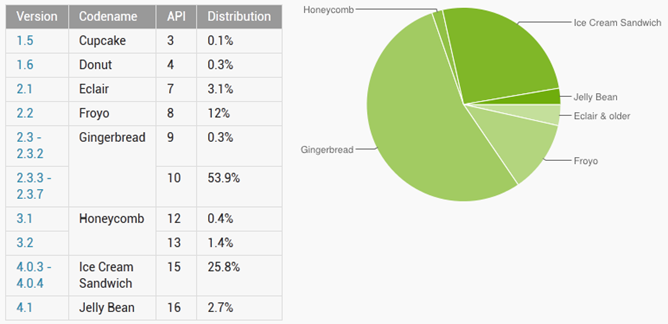
    Google has once again released their numbers of where each Android OS version is sitting at. This month it’s OS 4.1 Jelly Bean that has seen a modest boost, now powering 2.7% of all Android devices and up 0.9% in the last month. Ice Cream Sandwich also rose a respectable 5.1% to 25.8%. Still making up the largest share is OS 2.3 Gingerbread with 54.2%, but a good sign is that it decreased in the last four weeks by 1.6%. In addition, Cupcake, Donut Eclair and Froyo have all falled in percentages and continue to make their way into the history books.

    What version are you running?

  • Pinch-to-Zoom, Swipe To Delete Features Coming To Gmail for Android

    Pinch-to-Zoom, Swipe To Delete Features Coming To Gmail for Android

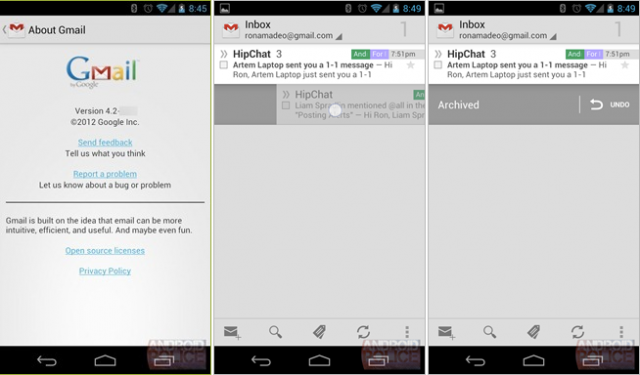
    We have some exciting news for long-suffering Android users patiently waiting for a feature that arguably should have been included since the beginning. Google is set to add pinch-to-zoom to its next version of Gmail, presumably to be added to the final build of Android 4.2 when the Nexus 4 launches next month.

    AndroidPolice obtained exclusive access to the .APK file, which seems to work without issue on Android 4.1 Jelly Bean. Besides the obvious improvements, Google has added some subtle things such as swipe right to archive/delete, as well as reporting phishing from inside the app.

    Even more features are said to be on their way, including the ability to swipe an email in the inbox view left or right to either archive or delete, always delete, or do nothing when in the All Mail or Sent views.

    We imagine the “archive or delete” option will hit you with a prompt asking you which one you want to do. You’ll also be able to do this for labels. Performing the gesture on “regular labels” will remove that label.

    Finally, a new “Report Phishing” feature has been added. Google probably wanted to give users a way to report the far more serious problem of phishing instead of the more generalized spam. This should hopefully allow them to bust these malicious emails more effectively and efficiently.

    You can check out a preview video after the break. Android Police says it’s working on obtaining permission to release the .APK to rooted Android users running Jelly Bean, but we’re sure other copies will crop up in the near future.

  • LG Optimus G Nexus Hands-On Report Surfaces Online!

    LG Optimus G Nexus Hands-On Report Surfaces Online!

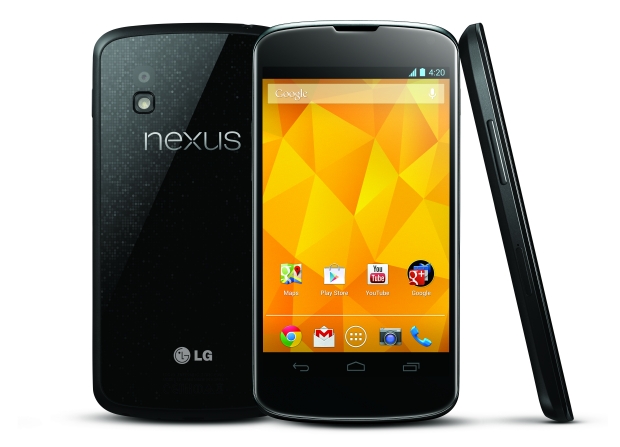
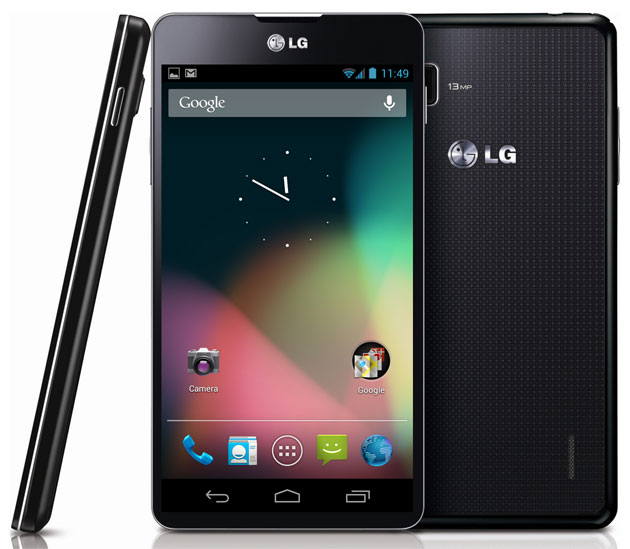
    We are getting further into October and in the last couple of days rumours surrounding the Google Nexus program have been heating up. Only recently there was no leaked news about any upcoming Nexus device, but in the last couple of days things are changing. now, a LG Optimus G Nexus hands on report has surfaced online.

    Android and Me has been given access to the first LG Optimus G Nexus hands on, albeit it can’t provide any images or videos of the device. Apparently the handset has been tested by a source that has access to it, without being a Google employee. Here’s what he told the publication :


    [quote]

    “I can confirm the next nexus is LG Optimus based. The phone looks surprisingly like the Galaxy Nexus and does not have sharp corners like the LG Optimus we already know. It has a silver’ring like the iPhone 3G around the outer edge of the screen which seemed to be similar to the Galaxy Nexus in size but was much better in brightness.

    I couldn’t have said if it was larger in the few minutes that I had the phone. Also, it has Nexus written on the back like the Nexus 7 except there is a color element to it. The ‘X’ is in four colors. There was also the LG logo on the back.

    Android 4.2 in its current state looked exactly like the 4.1.1 we love. There were no tabs on that build version for home-screens as you suggested from your other tipster. What I was amazed by is how fluid everything seemed to be from exiting apps, switching, etc. It seems like they’ve increased the number of transitions and their types. It still had the hodge-podge mess of multiple communication tools: Messenger, GTalk, Voice and SMS.”

    [/quote]

    If the information described above is correct, it’s describing a very iterative Nexus, one with a 8MP camera (not the 13MP module found in the Optimus G), running a new-but-familiar version of Android.

    This is getting interesting!


  • Epson Launches Android Powered Mobile Viewer

    Epson Launches Android Powered Mobile Viewer

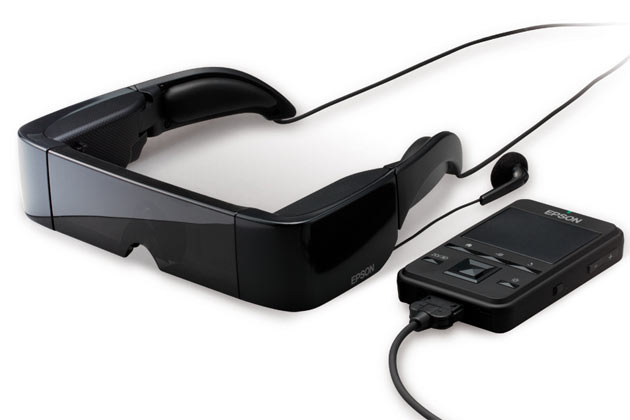
    Epson has announced the launch in India of its wearable display device – the Epson Moverio BT-100 see-through mobile viewer, which operates on the Google Android 2.2 Froyo platform. According to Epson, the “revolutionary mobile entertainment viewer lets you experience larger than life movies, images and more with crystal clarity.”

    The Epson Moverio BT-100 projects an 80-inch perceived ‘floating’ display 5 metres away from the user and it can be used for for web browsing, playing games, watching videos and interacting with content privately. The device also allows the user to see what’s around with its see-through ability.

    Specs highlights for the BT-100 include six hours of battery life, Dolby mobile surround sound, the ability to run apps like YouTube, which has a huge reservoir of 3D content. It has 1GB of internal memory, and supports 32GB microSDHC cards. The user-interface is controlled by a touch-enabled trackpad and navigation buttons. 

    It is priced at Rs. 42,900 and will be available in major retail outlets in Delhi, Mumbai, Bangalore & Hyderabad.

iGyaan Network
Privacy Overview

This website uses cookies so that we can provide you with the best user experience possible. Cookie information is stored in your browser and performs functions such as recognising you when you return to our website and helping our team to understand which sections of the website you find most interesting and useful.