Tag: google latest

  • Google Gives a Boost to Mobile-Friendly Websites With its New Update

    Google Gives a Boost to Mobile-Friendly Websites With its New Update

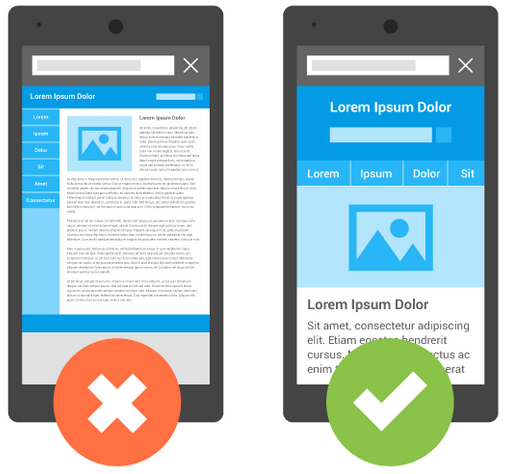
    Google is making a pre-determined move that will affect website search on mobile devices. The search giant has revised its search algorithm to rank sites at the top that are tailored for mobile screens. Termed as Mobile-Friendly update, the new changes have been implemented from yesterday.

    The new upgrade will push up the content fitting the small screen of your smartphones and force the desktop-optimised searches down to the bottom of the list. It will give a boost to mobile-adaptive websites, given that over 60 percent of the search is done through smartphones. The update is limited to just handsets only and doesn’t extend to bigger devices like tablets. This suggests that from now on, search results on mobile will be different from the results googled on the desktop.
    google mobile friendly update

    Google stated in its blog post –

    We’re boosting the ranking of mobile-friendly pages on mobile search results. Now searchers can more easily find high-quality and relevant results where text is readable without tapping or zooming, tap targets are spaced appropriately, and the page avoids unplayable content or horizontal scrolling.

    However Google is not favouring anyone in the internet business, it will give advantage to the sites designed for mobile. The search would work on Mobile-Friendly Test and would scan different factors of each page to give it a thumps up. It’s important to note that the update applies to individual pages, not entire websites. It will affect search results in all languages globally.

    The California-based giant recently did another major alteration for smartphones; it slipped a list of relevant apps within search results for you to download. Both these moves are useful for users and developers alike.
  • Jelly Bean Now On 6.7% of Android Devices : Google

    Jelly Bean Now On 6.7% of Android Devices : Google

     android

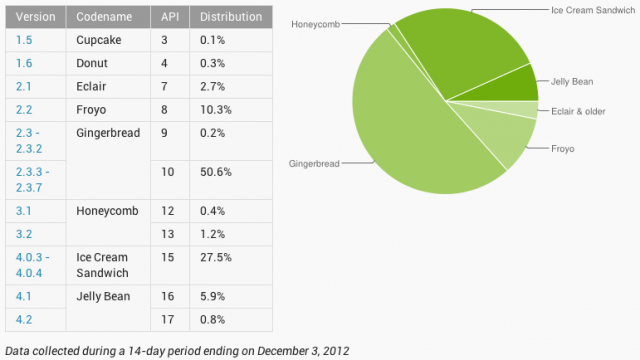
    Google’s latest iteration of their mobile OS, Jelly Bean, has enjoyed a good start so far – in the last thirty days alone, Jelly Bean has had a nice boost in scooping up more market share thanks to people buying Jelly Bean-based devices like the incredible Nexus 4 which comes with Android 4.2 Jelly Bean on-board. It now runs on 6.7% of all Android devices.

    Gingerbread is still the most widely used version of Android and is installed on 50.8% of devices while Android Ice Cream Sandwich comes in at second place with 27.5% of handsets running it. Although the statistics are aimed at offering useful insights to developers they give a good overview of how fast the newer versions of Android are catching up and what the state of the operating system’s fragmentation is.

    Incredibly, there are still traces of Cupcake, Donut and Eclair roaming around the Google Android universe, while Froyo still holds over 10-percent of the share.

    These latest figures from Google are based on users who have accessed the Play Store within the last 14 days. The next few months should show a more rapid shift in the percentages as more devices get the Jelly Bean update, not to mention the inevitable future success of Google’s Nexus 4.


  • FTC’s $22.5 Million Fine Of Google Approved

    FTC’s $22.5 Million Fine Of Google Approved

    Google

    A federal judge on Friday approved a legal settlement in which Google agreed to pay a record fine of $22.5 million to resolve federal allegations of privacy violations, despite objections from a consumer group that argues the penalty is too weak.

    Hours after holding a brief hearing in San Francisco’s federal court, U.S. District Judge Susan Illston ruled that the negotiated agreement is “fair, adequate and reasonable.”

    The Federal Trade Commission had touted the penalty, negotiated last summer, as the largest fine it has ever assessed in a case of this kind. The settlement stems from an FTC investigation which found that Google’s advertising service used software “cookies” to track the Web pages visited by people who used Apple’s Safari Web browser, after promising that it would not do so.

    Google, which has maintained that the tracking was inadvertent, did not admit to any legal violation but agreed to disable the cookies. Attorneys for both Google and the FTC spoke in favor of the settlement in court, while an attorney for the nonprofit Consumer Watchdog group opposed the agreement as ineffective.

    The fine, although large by the federal government’s standards, is a drop in the bucket for Google, which made nearly $38 billion in revenue last year.

    “We were disappointed, but think we made important points that will have an impact on how similar cases are dealt with in the future,” said John Simpson, director of the Consumer Watchdog Privacy Project.

  • Nexus 10 Tablet Now Sold Out on Google Play Store

    Nexus 10 Tablet Now Sold Out on Google Play Store

     nexus

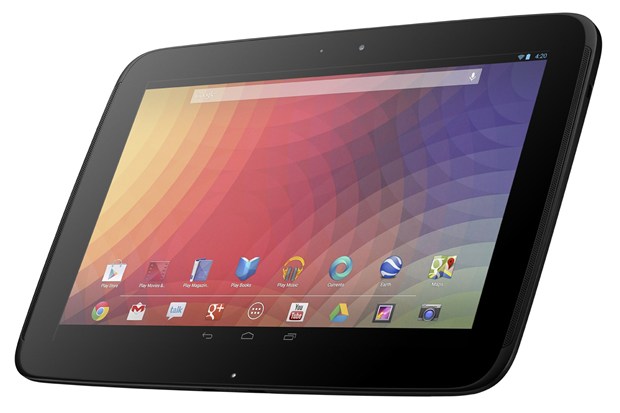
    November 13th saw the official release of the Samsung Nexus 10, at least for those lucky enough to actually order one before stock dried up. Within hours, almost every market was sold out of the Nexus 10, but the United States still managed to keep enough 16GB models in stock it seems. Until today, that is. The 16GB and the 32GB version of the Samsung Nexus 10 are now “sold out” in the Play Store.

    The last things you can buy now are the 16 and 32GB Nexus 7, and the new $199 Acer Chromebook. Everything else in the Google hardware department is sold out. Hopefully Google can get things back in order and get devices shipping again soon.

    Earlier this week, the Nexus 4 smartphone was sol out and some of those who ordered the smartphone received an email on Thursday, telling them that the device is on backorder and could ship sometime in the next 3 weeks.

    Good times for Google!


  • Google : Maps App Might Struggle For Apple approval

    Google : Maps App Might Struggle For Apple approval

    maps

    Those hoping to see Google Maps return to the iPhone might not want to hold their breath. 

    Sources at Google familiar with its mapping plans say they are “not optimistic” that Apple will ever approve a dedicated Google Maps iOS app. Though the app is reportedly in development and should be ready to ship by the end of the year, the sources say their plans are only proceeding in “the unlikely event” that Apple will choose to approve the app.

    Although any user can bookmark a page on the Safari browser linking to maps.google.com, many have been hoping that Apple will allow Google Maps back on the iPhone as a dedicated third-party app via the App Store. But there are doubts among some circles inside Google that such an app, when completed, would be approved by Apple.
     
    While one source indicated increased hopes that the dedicated Google Maps iOS app will eventually be approved now that Apple’s maps leader, Scott Forstall, has departed the company, another was less than enthusiastic about any increased prospects, citing industry politics and Apple’s need to save face as much as possible and “keep moving forward in an effort to make its obviously inferior product better”. The source also cites the present organisation of the App Store, which, to them, suggests Apple has little interested in approving an official Google Maps app.

    The release in mid-September of Apple’s latest mobile operating system, iOS 6, which runs on the iPhone 3GS, iPhone 4, iPhone 4S and is pre-installed on the iPhone 5, saw Apple replace Google Maps as the phone’s mapping software of choice with Apple’s own in-house mapping solution. Apple’s Maps app was widely panned by both the technology press and consumers. The software saw train stations disappear, an airport relocated miles from where it should be, and local points-of-interest, like cafes and shops, completely erased from streets. Public transport information and some locations were lost. The addition of turn-by-turn navigation and vector graphics – which Google had refused to provide to Apple on the iPhone – did not satisfy a significant number of users.

    Although chief executive Tim Cook said in October that 200 million devices had been upgraded to iOS 6, the new maps are seen as Apple’s most significant recent failure, and led Cook to issue a rare public apology on behalf of the company. Internal strife over the new maps was so great it reportedly became a key part of what led Cook last week tofire Forstall, the chief architect of Apple’s iOS and the one finally responsible for choosing to replace Google’s maps with Apple’s own.

    Google’s sources though do not think their own Maps app would be approved quickly. Specifically, they point to the lack of any mapping app in the “Find maps for your iPhone” section of the App Store – accessible only via iPhones or iPads – that use the Google Maps APIs to call wirelessly for location, routing or point-of-interest (POI) data.

    Further, a source at Google told me the feeling is that those apps were purposely left out of the new section because they promote Google and its “superior product” – at a time when there is so much bad blood between the companies over the continuing smartphone patent litigation (following allegations from the late Steve Jobs that Google’s Android OS ripped off iOS). In other words, no matter how bad Apple’s Maps are, the company still wants its users to move on from Google – and forget about them. This doesn’t bode well for the approval of an official Google Maps app, the source says.

    [The Guardian]

  • Leaked : Samsung Nexus 10 Quick Start Guide

    Leaked : Samsung Nexus 10 Quick Start Guide

    nexus 10

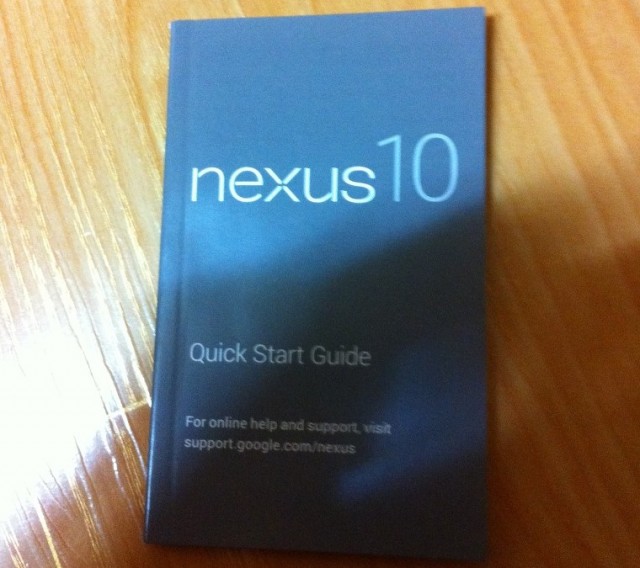
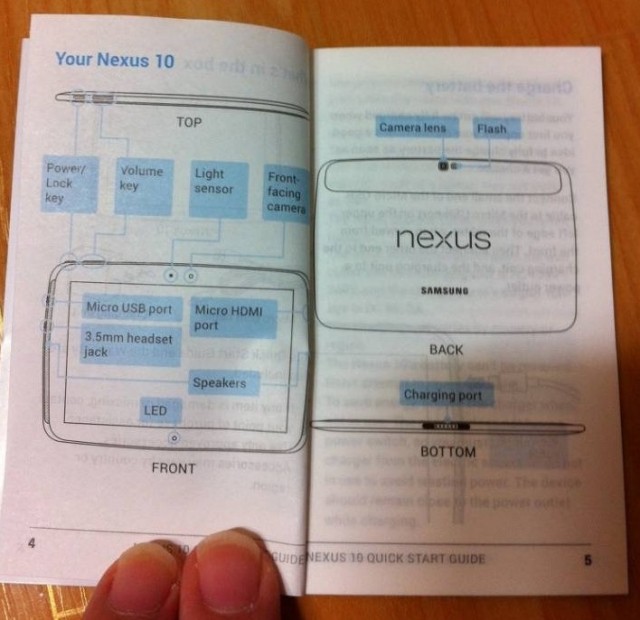
    If you needed any more proof that the Nexus 10 is coming next week, here it is. The Samsung Nexus 10’s quick start guide has leaked online,  courtesy of Korean site Seeko. 

    The photos show the name “Nexus 10” on the cover of the guide, and inside it are basic images of a tablet with both Samsung and Nexus branding. The outlines show that the Nexus 10 has a camera and notification LED on its face and a second camera with a flash on its rear. On the left side is a 3.5mm headphone jack and microUSB port, and over on the right side is a microHDMI port, and speakers are on either side of the display. The power/lock button looks to be on the top of the device along with a volume key.

    nexus 10

    There are no specs confirmed for the tablet but, from we’ve been hearing this could well become the Samsung tablet that packs a wonderful 2560×1600 display and a quad-core Exynos 5250 with Android 4.2, which would make for a compelling tablet, Android or otherwise.

    The Nexus 10 name popped up on our radar last week when it appeared in the EXIF data of a photo posted to Picasa.. This purported manual doesn’t confirm or debunk any of those details, but it does give us a peek at what the (basic) design of the Nexus 10 will be like, which appears to be similar to the Galaxy Note 10.1 with the speakers on its face and a panel around the rear camera.

    While none of this is official until Google makes it so, the company’s Android event is just a few days away, so it may not be long before we get to see the Nexus 10 in real life. Are you interested in a 10-inch Nexus tablet from Google and Samsung?

    All will be revealed on Monday!

  • Court lets Google appeal digital books class status

    Court lets Google appeal digital books class status

    Google Inc has won the right to appeal the granting of class status to thousands of authors suing the search engine company over its ambitious plan to create the world’s largest digital books library.

    In a brief order, the 2nd U.S. Circuit Court of Appeals in New York granted Google permission to challenge a May 31 decision by U.S. Circuit Judge Denny Chin letting authors sue as a group rather than individually.

    Billions of dollars are at stake in the seven-year-old lawsuit. Google has already scanned more than 20 million books, and the Authors Guild, a group representing authors, has said Google should pay $750 for each book copied.

    It is unclear when the 2nd Circuit will hear the appeal. Decertifying the class could make it harder for authors to win a large award against Google, either at trial or in a settlement.

    Chin had said it would be unjust to force Authors Guild members to sue individually, likely resulting in disparate results and much higher legal costs, “given the sweeping and undiscriminating nature of Google’s unauthorized copying.”

    But Google countered in a court filing that many class members, perhaps even a majority, benefited economically, and that case-by-case determinations were needed to show whether it was making “fair use” of the plaintiffs’ works.

    Citing a 2011 U.S. Supreme Court decision favoring Wal-Mart Stores Inc that made it harder to pursue class-action cases, Google said that even if “droves” of authors raised common issues, there was no “common answer” to address them.

    “Plaintiffs seek to shut down a significant part of Google Books and to recover potentially billions of dollars,” Google said. “With so much at stake, Google should not be forced to litigate without the full benefit of its principal defense.”

    Michael Boni, a lawyer for the Authors Guild, was not immediately available for comment. That group has argued that there is enough in common among the claims to let the class-action to go ahead and defeat the fair use defense.

    Google began creating the library after the Mountain View, California-based company agreed in 2004 with several major research libraries to digitize current and out-of-print works.

    Libraries whose works have been scanned include Harvard University, Oxford University, Stanford University, the University of California, the University of Michigan and the New York Public Library.

    In March 2011, Chin rejected a $125 million settlement of the case, saying it gave Google a “de facto monopoly” to copy books en masse without permission.

    Among the individual plaintiffs in the case is former New York Yankees baseball pitcher Jim Bouton, the author of “Ball Four.” Groups of photographers and graphic artists are also suing Google over its digitization of the works.

    Chin began handling the case as a trial judge and kept jurisdiction after he was elevated to the 2nd Circuit. Tuesday’s order was issued by a two-judge panel of the appeals court.

    [Reuters]

  • Google unveils world’s fastest Internet connection

    Google unveils world’s fastest Internet connection

    Internet giant Google has unveiled what it says is the world’s fastest internet connection through its ultra-high speed service, offering lightning-fast access of one gigabit per second.

    The service, which uses optical fibre to deliver speeds far in excess of traditional web services, offers speeds faster than almost anywhere else on Earth.

    After being chosen more than two years ago by Google as the place to unveil its fledgling Google Fiber gigabit-speed Internet and cable television services, residents of Kansas City are already signing up to be the first customers now that Google has started to take preregistrations.

    Google Fiber’s ultra high-speed connections and television offerings are aimed at surpassing those of current providers, allowing users to search live channels, Netflix, YouTube, recorded shows and tens of thousands of hours of on-demand programming.

    However, no phone service is available.

    “The phone is really a 1940s thing. Why have a landline? It’s sitting there, you use it once every two weeks,” Mr Pichette said.

    Google said it also intends to roll out product packages for businesses, but would not provide details.

    Google Fiber includes more than 100 networks and costs $120 a month for a package of TV, 1 gigabit per second Internet speeds and 1 terabyte of cloud storage.

    “People are going to have high expectations for this. The worst thing they can do is come out and disappoint.” said Mr Ben Schachter, an analyst with Macquarie Research.

    Google is also offering an Internet-only package priced at $70 a month. The download speeds would be around 1 gigabit a second, according to Google executives.

    Google is charging a $300 installation fee, saying consumers should treat it as a “home improvement” cost.

iGyaan Network
Privacy Overview

This website uses cookies so that we can provide you with the best user experience possible. Cookie information is stored in your browser and performs functions such as recognising you when you return to our website and helping our team to understand which sections of the website you find most interesting and useful.