Tag: google

  • Google Patents “Pay-per-Gaze” Advertising Model, Exploring Options

    Google Patents “Pay-per-Gaze” Advertising Model, Exploring Options

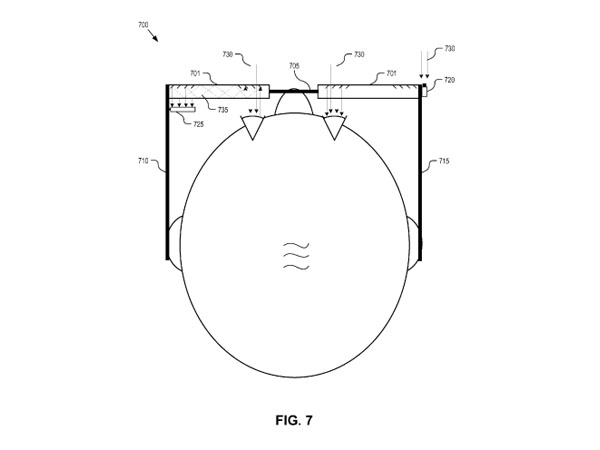
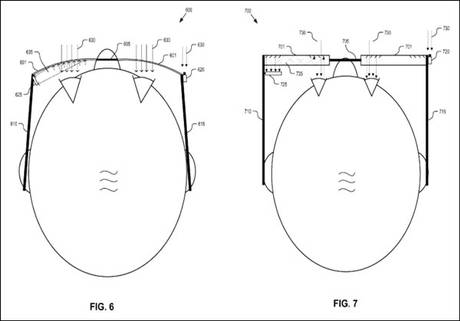
    Google has been granted a patent for eye-tracking technology that could one day allow for a pay-per-gaze model of advertising in the real world and online. The Google Glass-like device registers when individuals look at an advert before charging the relevant company, according to the patent. 
    Google

    The technology (spotted by The Verge via Phys.org) could also detect individuals’ “inferred emotional state information” by measuring pupil dilation. The patent was actually filed back in 2011, but was only granted to the company last week.

    “Under a pay per gaze advertising scheme advertisers are charged based upon whether a user actually viewed their advertisement,” reads the patent. “Pay per gaze advertising need not be limited to on-line advertisements, but rather can be extended to conventional advertisement media including billboards, magazines, newspapers, and other forms of conventional print media.”

    The patent also allows the technology to generate “latent search results” based on “at least a portion of the items views by the user” including items that are in the user’s peripheral vision. Search requests can then be cached for later use automatically without the user’s active permission.

    Google has previously been criticised for its attitude to privacy with regard to Glass, particularly by the Information Commissioner’s Office.

    Google has generously allowed for some degree of privacy here:

    To protect individual privacy, personal identifying data may be removed from the data and provided to the advertisers as anonymous analytics. In one embodiment, users may be given opt-in or opt-out privileges to control the type of data being gathered, when the data is being gathered or how the gathered data may be used or with whom it may be shared.
  • ICANN Ruling Denies Google Dotless Search Domains

    Google’s dream of owning a top level dotless search domain has turned into a nightmare. The gigantic search engine wanted ownership of an “http://search” dotless domain. But this has come up against the stringent restrictions of ICANN.

    A dotless top level domain name would resolve without a dot. For example, while something.example will resolve in most browsers, http://example will not.

    Google had hoped to use “search” as a dotless domain name. But recent security reports reconfirmed some of the security and stability risks of dotless domains.

    There was already a prohibition on dotless domain names in the applicant guidebook for new TLDs. The guidebook requires new TLD operators to get ICANN’s blessing to operate a dotless domain.

    Google needn’t give up entirely on all its plans. There’s still the possibility that it may end up owning the .search generic top-level domain (gTLD), even if it’s not allowed to operate it as a dotless domain.

    As The Verge reports, the dotless domain rejection isn’t much of a surprise given ICANN’s hesitance to change the status quo. While the organization has said nearly 2,000 new domain names could be on the way, it has introduced new domains relatively slowly. The biggest changes ICANN has introduced this year came in July, when the group activated four generic top-level domains: .???? (Arabic for “web”), .?? (Chinese for “game”), .?????? (Russian for “online”), and .???? (Russian for “web site”). 

    [Via]

  • Google Search, Now You Can Talk to Ask for Help

    Google Search, Now You Can Talk to Ask for Help

    Google Search is making it easier for users to find the information they are seeking within their own Gmail, Google Calendar or Google+ accounts just by making a request using their own voice.

    The upcoming new features are bringing the technology that Google Now users have been using for about a year. Google Search is now being engaged to provide a better experience for users as part of a new service that is rolling out to all U.S. English-speaking users over the next several days,”Soon you’ll be able to find this info instantly in Google Search if it’s in your Gmail, Google Calendar or Google Plus. For example, just ask or type, ‘What’s my flight status?’ or ‘When will my package arrive?” Said Roy Livne, Product Manager.


    We’ve been offering this kind of info—flights, reservations, appointments and more—for more than a year in Google Now,”. “We’ve gotten great feedback on how convenient it is, especially when you’re on the go. Now that it’s in Google Search, you can get it anytime you need it.” Said Roy Livne, product manager for Google Search, on The Official Google Blog.

    Google Now, which was introduced for Android devices by Google in June 2012, it presents its information to users through a series of flip-through “cards” that are visible on the screen of a device, providing a different piece of information on each card. The “cards” appear at the moment they are needed by users, such as the train schedule card appearing when they are heading to the local train station. 

    As per the blog, the information is secure, via encrypted connection, and visible only to you when you’re signed in to Google. Likewise, you can also control whether you want the service on or off. Whenever you don’t want to see it, simply click the globe icon at the top of the search results page to turn it off for that search session. To turn it off permanently, visit the “Private results” section in search settings.

    So if you haven’t tried it, you should! Its definitely worth an attempt!

  • Google+ For Android Update Removes Messenger, Adds Drive Integration

    Google+ For Android Update Removes Messenger, Adds Drive Integration

    Are you one of the millions of people who use Google+ everyday on your Android device. If so, Google has a treat for you in the form of new updates.

    Google’s Virgil Dobjanschi took to the website this morning to announce five upcoming updates for Google+ on Android. The updates range from usability improvements to the Google killing off certain features in favor of new ones.

    First, Messenger is gone, so no more confusion between the built-in messaging service and the better, independent Hangouts client.

    Users can also share their location with friends and family — or anyone in a circle, really — at a precise or city-wide level, and can differentiate based on Circles. It’s not a huge change, and we doubt a lot of people use the service, but since Latitude shut down last week this is now Google’s version of Find My Friends.

    Perhaps most important in this update is the ability to access Google Drive photos and videos from within Google+, and they’ll be given the Awesome treatment with no user input. This means photos uploaded to Google+ from Drive will be auto-enhanced and perhaps even animated.

    Users can also switch between Google accounts more easily, something that was a bit cumbersome in the past. Lastly, Google Apps for Business features are all supported in Google+ now.

    No word on when these changes are coming to iOS.

  • Google Launches Rs 12 Crore Hunt For India’s Most Innovative Social Entrepreneur. ‘Google Impact Challenge’

    Google Launches Rs 12 Crore Hunt For India’s Most Innovative Social Entrepreneur. ‘Google Impact Challenge’

    On the eve of India’s independence day, Google is celebrating the spirit of creativity and entrepreneurship of the world’s largest democracy by spotlighting the best local nonprofits that are using technology to make the world better. 

    As per Google:

    Today they are launching the Google Impact Challenge in India, inviting Indian nonprofits to tell us how they’d use technology to improve people’s lives. At the end of the challenge, four nonprofits will each receive a Rs 3 crore (around $500,000) Global Impact Award and technical assistance from Google to bring their projects to life. 

    • 5th September 2013 – Final day to apply to the Google Impact Challenge.
    • 21st October 2013 – Google announces the finalists, and the public votes online for their favourites.
    • 31st October 2013 – Each finalist team will pitch its idea to an esteemed panel of judges at an event in Delhi. Four finalists, including the non-profit chosen by the public vote, will be announced as Global Impact Award recipients.

    The Blog further said that registered Indian nonprofits can apply online until September 5 at g.co/indiachallenge. Googlers from India, and around the world, will review applications and announce the 10 best projects on October 21. You can learn more about the top 10 finalists then, and cast a vote for who you think should receive the Fan Favorite award.

    On October 31, I’ll join Ram Shriram, Jacquelline Fuller, Anu Aga and Jayant Sinha in Delhi to hear the 10 finalists pitch live. As judges, we’ll select three awardees based on their potential impact, scalability and ingenuity. We’ll also announce the winner of the Fan Favorite, according to your vote.”
    Growing up in India, I’ve seen firsthand the vibrancy and innovativeness of India’s social entrepreneurs. I’m excited to see their projects and support their ideas for how to use technology and Rs 3 crores to change the world. 

    Said – Nikesh Arora, Senior Vice President and Chief Business Officer Google

  • Asus to manufacture the Nexus 10 Refresh

    Asus to manufacture the Nexus 10 Refresh

    Following the success of the Nexus 7 2nd edition, Google has decided to hand over the reigns of the Nexus 10 to Asus aswell. The largest of the three Nexus devices from Google is due for a refresh and is expected to hit the market soon. Every year Multiple companies submit designs to Google, who then evaluates which device they want to carry the Nexus branding for the next year. Last year both Nexus tablets were appreciated by the masses the 7 inch manufactured by Asus and the 10 inch by Samsung.

    Courtesy : Geek.com
    Courtesy : Geek.com


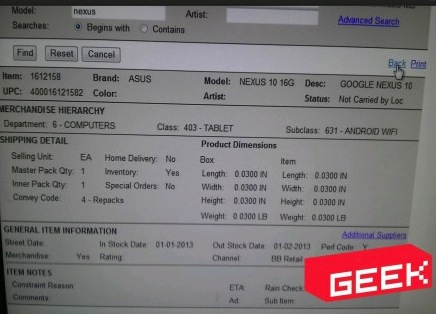
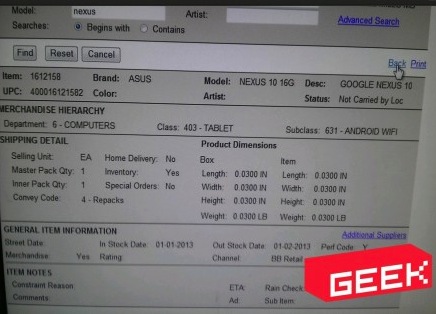
    Although the 10 inch Nexus Tablet last year, was almost as popular as the 7 inch variant , it seems that Samsung has been dropped out of the race this year and Asus is the manufacturer of choice. The new Nexus 10 tablet is expected to have a 2560×1600 display and will be powered by the latest generation Snapdragon Chipset by Qualcomm. A retail leak also shows the Brand Asus and the description as Google Nexus 10, which further confirms the story.


    If you have not already checked out our videos on the New Nexus 7, do it below.

    [youtube id=”Dq6MCDLmKXI” width=”100%” height=”300px”]

    [youtube id=”8FAzR1TjrxM” width=”100%” height=”300px”]

    [via]

  • Bill Gates : People Dying of Malaria Don’t Need Google Project Loon

    Bill Gates : People Dying of Malaria Don’t Need Google Project Loon

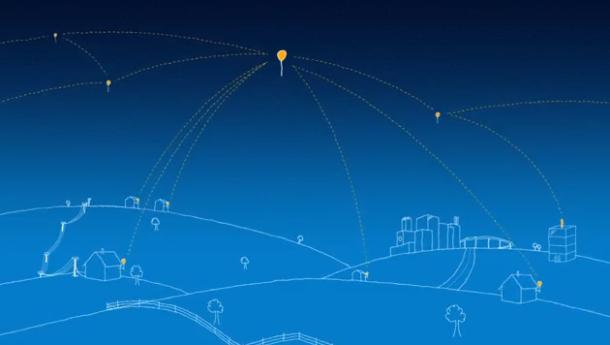
    Google recently unveiled Google Loon, which intends to use hot air balloons 49 feet wide stationed 12 miles above the planet, in order to provide high speed Internet services to regions without adequate broadband infrastructure. While most people around the world, whether they understood the concept or not, were impressed by the idea, Microsoft founder Bill Gates wasn’t. 

    The following is an excerpt from Gates’ interview published by Business Week

    One of Google’s convictions is that bringing Internet connectivity to less-developed countries can lead to all sorts of secondary benefits. It has a project to float broadband transmitters on balloons. Can bringing Internet access to parts of the world that don’t have it help solve problems?

    “When you’re dying of malaria, I suppose you’ll look up and see that balloon, and I’m not sure how it’ll help you. When a kid gets diarrhea, no, there’s no website that relieves that. Certainly I’m a huge believer in the digital revolution. And connecting up primary-health-care centers, connecting up schools, those are good things. But no, those are not, for the really low-income countries, unless you directly say we’re going to do something about malaria.

    Google started out saying they were going to do a broad set of things. They hired Larry Brilliant, and they got fantastic publicity. And then they shut it all down. Now they’re just doing their core thing. Fine. But the actors who just do their core thing are not going to uplift the poor.”

  • New Google Play Store 4.3.10 Update Brings New Features Including Recently Updated Section

    New Google Play Store 4.3.10 Update Brings New Features Including Recently Updated Section

    Google is rolling out a new version of the Play Store for Android phones and tablets, bringing a much-requested feature that many will be sure to appreciate. Since the implementation of automatic updates, many users have complained that they don’t know which apps are updated. They’re supposed to update and leave an entry in the notification panel, but many times that either doesn’t happen or they are overlooked.

    In version 4.3.10, Google has added a ‘Recently Updated’ section appended to the top of the My Apps tab. Now, when you’re checking for your favourite apps to be updated, they will display at the top of the page, in descending order from recent to least recent. While there’s no word on how many apps the section will fit — it hasn’t been available long enough to test more than a few — it’s a great feature nonetheless.

    Additionally, it seems that the Wallet logo is no longer displayed in the Play Store. Apparently, the update notification will now prompt users to “Touch to update.”

    And, when multiple apps are updated at once now, users will see a single expandable notification indicating which ones were altered, not a never-ending list of intruders. It’s a small but worthy change.

    Also, the new Play Store shows full list prices for book sales, while also packing a series of small tweaks, such as swapped position for the Buy and Rent buttons (with the former now placed at the top now, and the latter at the bottom).

    According to Android Police, which links to the available download, the file’s cryptographic signature guarantees that it hasn’t been modified, and that users can safely download and install it on their devices.

    [Via]

  • Google Adds Touch Features To Chrome

    Google Adds Touch Features To Chrome

    Google is finally testing out some touch-friendly features for its Chrome browser, which seem to be more and more needed with all the mobile devices running the browser.

    The update adds new features including the ability to swipe left to right, or right to left, to shift forward or back through visited web pages.

    And if you go poking around the Flags section of the browser you can also find the “enable pinch scale” option which lets you zoom in and out. Windows 8 also gets a tiny bit of love with Chrome fully supporting the on-screen keyboard on the desktop.

    Google warns users that Canary is prone to complete failures and is designed for developers and early adopters. The stable Chrome browser has 750 million active users browsing across multiple operating systems. 

    Earlier this year Microsoft announced that with the help of Windows 8.1 and industry partners, end users will expect touchscreens on PCs the same way they do on smartphones, leading to 80 percent of all Windows 8 devices having touchscreens by 2014.

    [Via]

  • Android 4.3 Will Keep WiFi Always On

    Android 4.3 Will Keep WiFi Always On

    The latest Google Android 4.3 upgrade brings all new features and also offers great performance. Google has also made a new change to the WiFi settings in Android 4.3. 

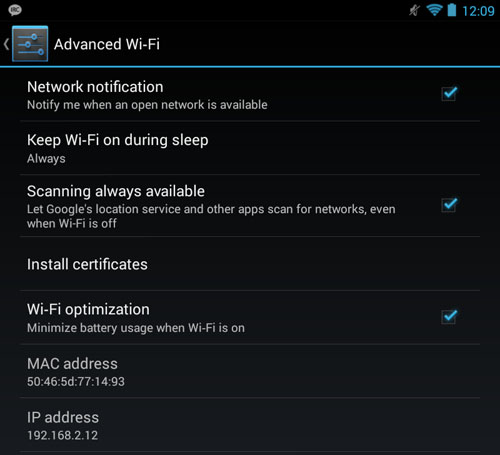
    To improve location accuracy and for other purposes, Google and other apps may scan for nearby networks, even when Wi-Fi is off ” – describes Google.

     It has been seen that the new version of Android will keep the WiFi radio always on, even after the user has manually turned it off. This feature is probably designed to save one’s battery life instead of wasting it, given that the only other way for one’s smartphone to discern one’s location is to drain the battery using GPS.

    To check and see whether your phone has this feature enabled by default (a number do not), you’ll have to navigate through the Android operating system’s settings. Here’s how:

    Android_43_Wifi


    Open up the Settings app and tap your finger on the Wireless and Networks option. Tap on the WiFi option, and then tap on the Menu button on your phone’s lower-right-hand corner. When the list pops up, tap your finger on the Advanced option. From there, you’ll want to make sure to check the “Scanning always available” option if you want to participate in the new Android 4.3 feature. Otherwise, if it’s checked, you need merely to uncheck it to ensure that “WiFi off” really means “WiFi off.”

    However, many now expressed their concern that malicious applications might exploit this new functionality. 

    Various user reports indicate that this feature remains off by default when they’ve updated their devices to Android 4.3. That means, it’s more important that you know about this potentially useful setting than to freak out about it, but it’s also worth checking this, and many of Android’s other “Advanced” wireless configuration options, when you’ve upgraded your mobile OS.

    Now will Google resolve this or add something to counter the issue is to be seen, but for the time being users must carefully read the application access and if they feel something suspicious they should avoid installing that application.


  • Inventor Of Hashtag Chris Messina Leaves Google

    Inventor Of Hashtag Chris Messina Leaves Google

    As The Next Web reports, Chris Messina has left Google to join the digital collectibles platform NeonMob. The former developer advocate and UX designer for the search company announced in a blog post that he will be working to build the new startup’s community and service, something he describes as “an important, new platform for digital creatives and art enthusiasts.”

    An advocate of open social Web technologies, Chris Messina had first joined Google to lead developer relations for the short-lived Google Buzz product. In recent years, he had worked on user experience design on the Google+ team.

    Since creating hashtags back in 2007 as way of grouping online conversations, he’s spent his time focusing on design and the open web at Google. Perhaps more accurately, redesign. Chris Messina is responsible for the search giant’s revamped brand badges, profiles and +1 button, as well as helping create the Google Developers knowledge base.

    Based in San Francisco, NeonMob is building a market for digital art.  He will be the head of the company’s community and growth starting next week.

    NeonMob describes itself as : NeonMob is a platform and community for discovering and collecting awesome, original, limited-edition, digital art. For those who grew up collecting comic books, cards, stamps, coins or other collectible paraphernalia, the concept of collecting online doesn’t stretch the imagination. The difference is, NeonMob is online, which makes finding fellow collectors and trading partners much easier – and on NeonMob, anybody can create stuff for others to collect!

    [Via]

  • Google Play Edition Galaxy S4 And HTC One Now Receiving Android 4.3 Update

    Google Play Edition Galaxy S4 And HTC One Now Receiving Android 4.3 Update

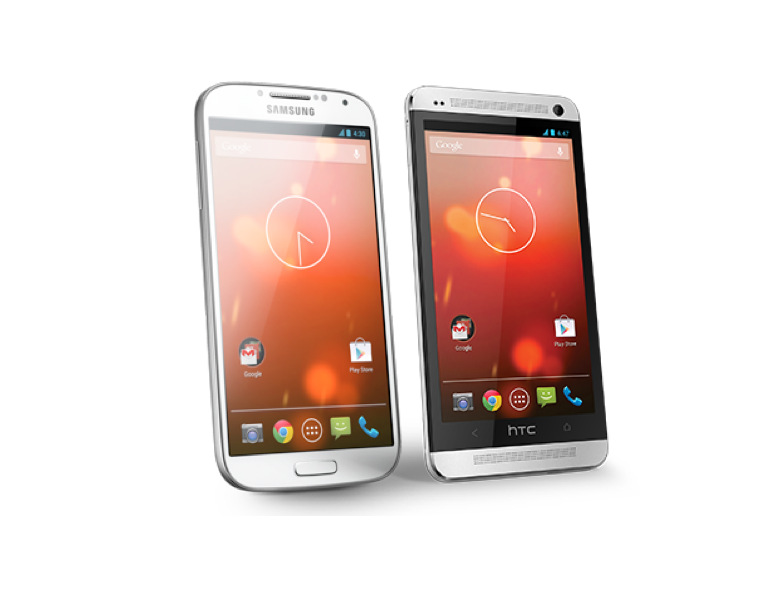
    After updating all the Nexus devices this week, the two Nexus 7 tablets, the Nexus 4 and the Samsung Galaxy Nexus, search engine giant Google’s Android division on Friday rolled out the Android 4.3 Jelly Bean update for the two Google Play Edition smartphones, the HTC One and the Samsung Galaxy S4. 

    When Google announced the Google Play edition of the S4, they promised quick updated along with a stock Android experience. These are two of the main reasons to get these devices over their standard versions that come with OEM customizations and are bound to receive the 4.3 update much, much later.

    These phones’ updates include most of Android 4.3’s key features—Bluetooth 4.0 and OpenGL ES 3.0 support among them—plus a few handset-specific enhancements. AnandTech reports, for example, that the Google Play edition HTC One’s IR blaster has now been enabled, as has Bluetooth pairing for the Galaxy S 4. Both phones were already using the new stock Camera app included with Android 4.3 on the Nexus devices, but they each come with a few minor cosmetic tweaks of their own.

    Do you think Samsung and HTC will capitalize on this momentum to help them release the Android 4.3 update for their mainstream devices in a more timely manner? Let us know below!

    [Via]

  • Android 4.3 Jelly Bean Announced

    Android 4.3 Jelly Bean Announced

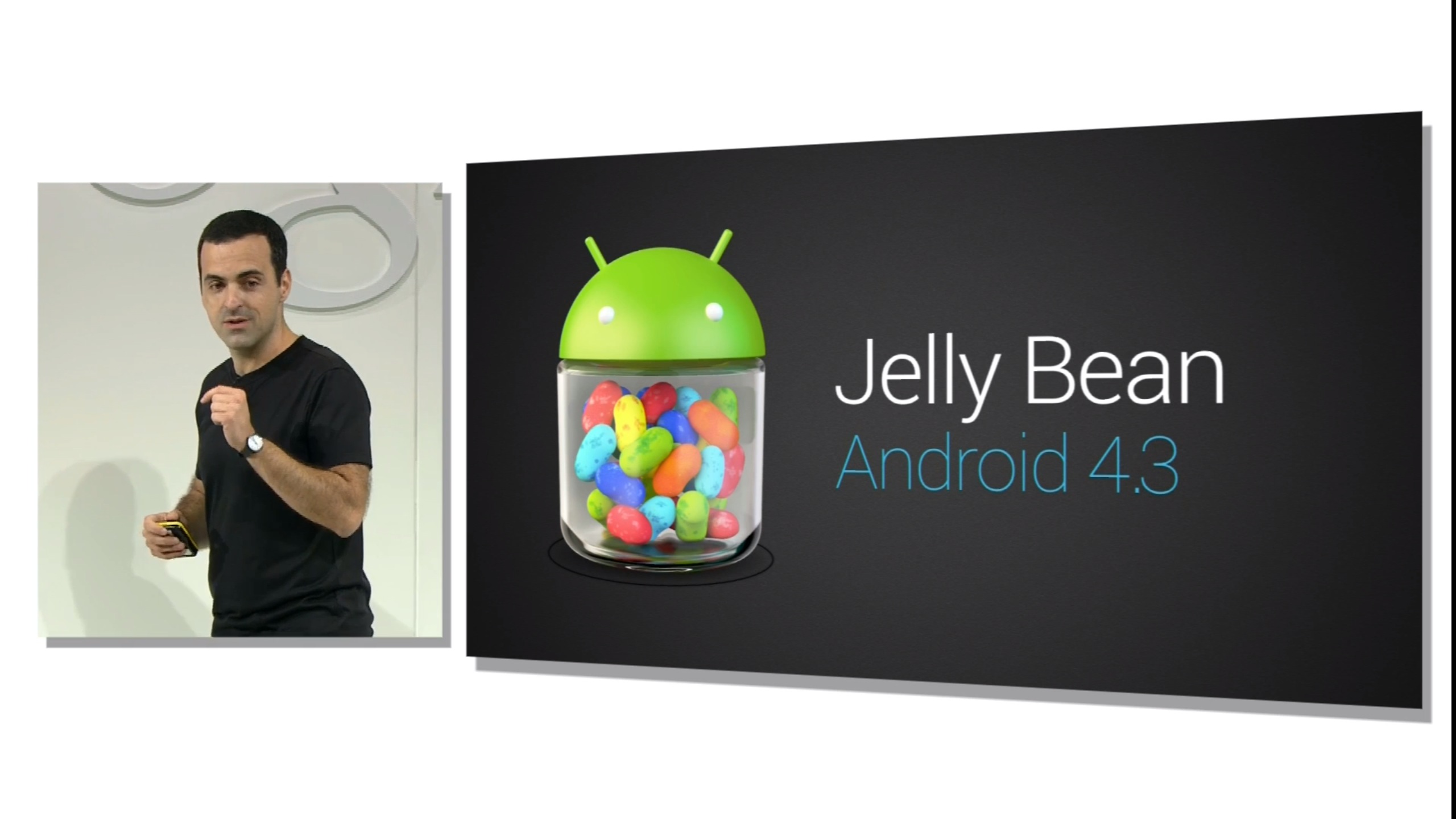
    Google today announced the latest iteration of Android – Android 4.3 Jelly Bean during a press breakfast in San Francisco.

    The long-awaited OS update will be coming to Android device users based on their devices. The Android 4.3 Jelly Bean update will start rolling out today to the Nexus 4, Nexus 7 and Nexus 10. The “Google Play Edition” versions of the HTC One and Samsung Galaxy S4 can expect it soon, most likely August or September.

    As ArsTechnica reports, the new operating system will feature multi-user restricted profiles. This will let users control access to contents and apps per user—so parents, for example, can control which applications their kids can access. When accessed from restricted profiles, applications behave differently. On stage, Hugo Barra demonstrated this by showing a puzzle game whose in-app purchase functionality was automatically disabled when it was accessed on the kid’s restricted profile.

    Other features include built-in OpenGL ES 3.0 support, DRM APIs for providing hardware-based encryption for protecting content, which will allow it to provide 1080p video to its tablets. The first partner is Netflix, which supports 1080p HD streaming. The Nexus 7 is the first device to support it.

    Android 4.3 also introduces many other features, including support for Bluetooth Smart devices, background Wi-Fi location, more language support and “easier text input.”

    We’ll bring you more on the new release as it comes. In the meantime, share your thoughts down in the comments. 

  • Google Posts Profits But Misses Revenue Expectations

    Google has released its Q2 2013 earnings today and, though they appear strong in absolutes, they missed analysts’ expectations by a fairly wide margin.

    The company posted $14.1 billion in revenue, up slightly from last quarter and an improvement of 20% from the previous quarter last year, but analysts were expecting  $14.4 billion. Net income was solid at $3.23 billion and $9.56 per share but, again, they were below expectations.

    Motorola maintained its reputation as an anchor weighing down the otherwise-profitable Google, as the hardware division posted a quarterly loss of $342 million on revenue of $998 million. Revenue was down from the previous quarter, while the net loss was up, placing even higher expectations on Moto X, which is expected to debut at the end of the month.

    Google’s average cost-per-click, which includes clicks related to ads served on Google sites and the sites of its network members, decreased about 6% in the quarter compared with a year ago. Analysts had predicted prices would drop about 3% in the period.

    “The shift from one screen to multiple screens and mobility creates tremendous opportunity for Google. With more devices, more information, and more activity online than ever, the potential to improve people’s lives even more is immense,” CEO Larry Page in a press release.

    Google is expected to spend upwards of $500 million on advertising Moto X, which is rumoured to be customizable by colour, engraving and build material. The company is otherwise extremely healthy, with over $53 billion cash on hand.

    [Via]

  • Google Employee Awarded First Microsoft Bug Program Bounty

    Google Employee Awarded First Microsoft Bug Program Bounty

    In June, Microsoft announced new “bounty programs” for people who could find exploits inside Windows 8.1 or vulnerabilities in the Internet Explorer 11 preview. This week, Microsoft announced that it has already informed one person that he has won money for finding an issue in IE11.

    According to a post published by Katie Moussouris, senior security strategist at Microsoft, the company has already paid one security engineer for finding a glitch in Internet Explorer 11, but no specifics have been provided.

    “The security community has responded enthusiastically to our new bounty programs, submitting over a dozen issues for us to investigate in just the first two weeks since the programs opened. I personally notified the very first bounty recipient via email today that his submission for the Internet Explorer 11 Preview Bug Bounty is confirmed and validated. (Translation: He’s getting paid.)” Moussouris wrote.

    And still, Moussouris mentioned the name of the lucky winner in a short tweet the past week, revealing that he’s none other than Ivan Fratric, a Google information security engineer who also won $50,000 (€38,300) in 2012 in the software maker’s BlueHat contest.

    While the Windows 8.1 bounty program is ongoing, the IE11 preview bounty program will end on July 26. Moussouris said a number of other researchers have also found exploits in IE11 and will be notified of that fact very soon. The reported vulnerabilities can qualify for bounties between $500 and $11,000, or even more in particular cases, depending on the gravity of the vulnerability and the quality of the report. 

    [Via]

iGyaan Network
Privacy Overview

This website uses cookies so that we can provide you with the best user experience possible. Cookie information is stored in your browser and performs functions such as recognising you when you return to our website and helping our team to understand which sections of the website you find most interesting and useful.