Tag: green

  • Apple Takes Steps to Reduce their Carbon Footprint

    Apple Takes Steps to Reduce their Carbon Footprint

    Apple at their 21st March event showed off their promise to the environment. Aiming for a 100% renewable power capability Apple reached 93% of its goal. Where 93% of all Apple facilities are run on renewable energy. Whereas, 100 % of their data centres are run on renewable sources of energy.


    Apple has also worked on a new Robot which lets the company take apart each and every component of any Apple device like an iPhone into components and send individual items back to the manufacturing line.


    Apple also said that almost 99% of all packaging used in their products comes from recycled paper or sustainable sources of paper.

    According to the Cupertino-based company their devices are built in a way so that they don’t reach the junkyard easily and are reused often. Apple will also offer free recycling for your old phones.


  • Researchers use Virus’s traits to create electricity from motion

    Researchers at Berkeley Labs have now coated electrodes with modified M13 bacteriophage, a harmless bacteria-eating virus, to create the first ever organic piezoelectric material which can convert force to electricity.

    The researchers also said that the option is a lot environment friendly as the material is non-toxic, organizes naturally into thin layers and self-regenerates, giving it a possible advantage over chemical options.

    By attaching thin layers to, for example, shoes one would be able to charge devices on the go, by sending cables up to pockets. Lets hope there isn’t an electrical leak, else some privates may get electrocuted.

  • Apple patent suggests fuel cell powered MacBooks

    Apple patent suggests fuel cell powered MacBooks


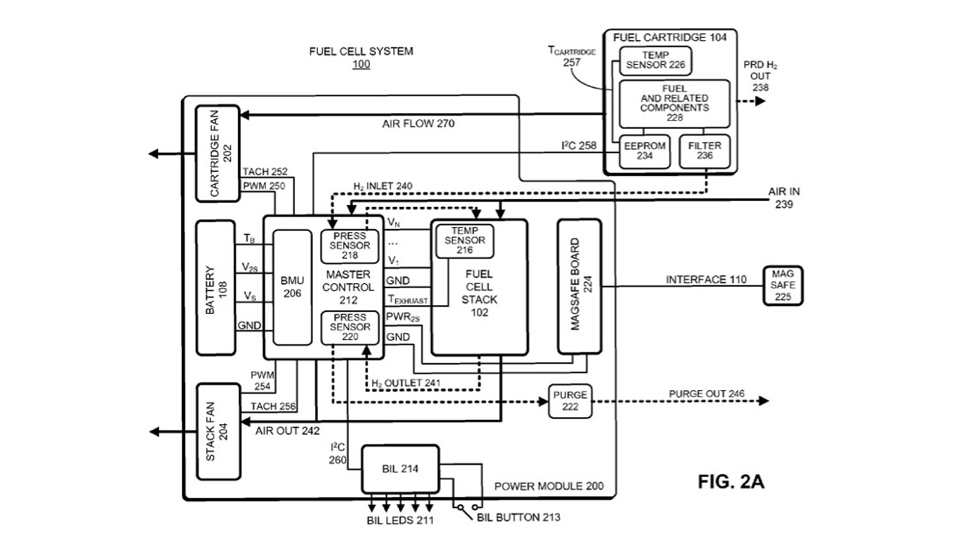
    Apple has filed for a new Patent that would allow for new MacBooks to go on for days and weeks without requiring a charge. This new technology would also allow for Cupertino’s new laptops to be slimmer and lighter. Apple has filed for a patent indicating that hydrogen fuel cells would be used to send and receive power from a battery to power a laptop computer. Apple also admits in this patent that the company is developing a product which is small enough and cheap enough to be placed in one of their laptops will be a challenge.

  • ETC : Google’s total investment in Solar energy nears 1 Billion US $

    ETC : Google’s total investment in Solar energy nears 1 Billion US $


    Not only do you find Google everywhere when it comes to computing, mobility and softwares. Google also invests in the future, including several ECO investments from the multi Billion dollar company. Google has pumped US $ 94 Million into their California Solar Energy project, totaling their investment to over $915 million. Google along with Equity from Sacramento based Power company KKR will build a 88MW  photovoltaic power plant that will power 1300 US homes via clean Solar energy. Google has already laid out further investment plans, ensuring that they cross the US$ 1 Billion mark sometime early next year.

    [Google]

  • The Wind Cube – A Modular Green Power System

    The Wind Cube – A Modular Green Power System

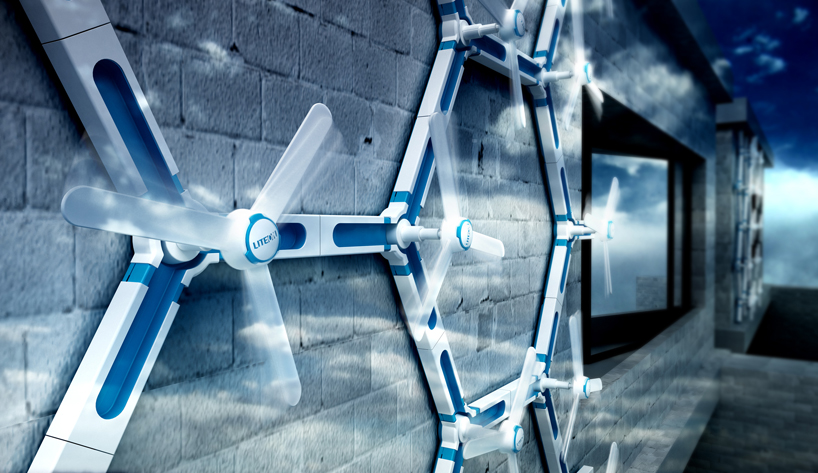
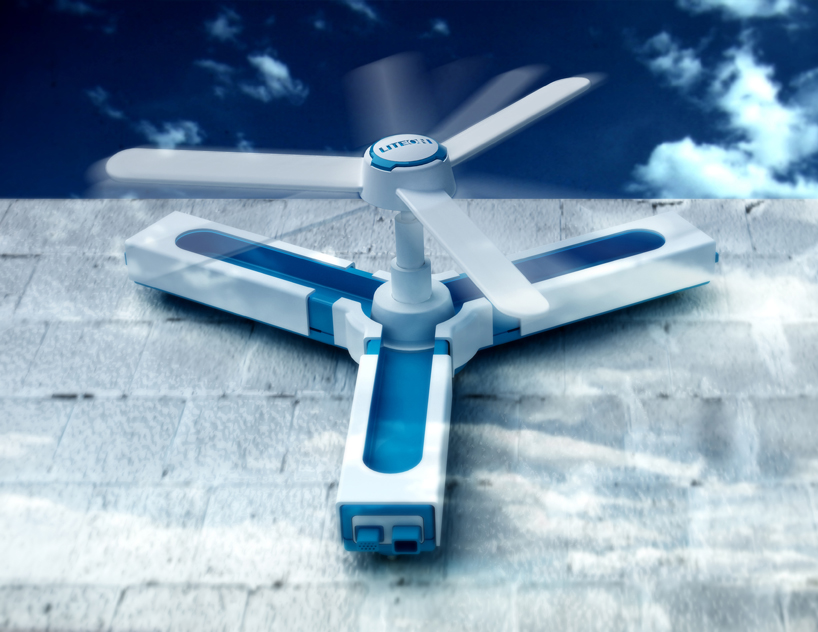
    The Wind Cube is a modular green energy power system that has been designed by Chen Liao Hsun for urban household use. “The concept,”he says, “is to use three-dimensional wind fields to make up for the insufficiency of two-dimensional ones.” Each individual unit can produce around 100 W of electricity which translates into an estimated 21.6 KWh a month. For an average family of 4 members, a total of 15 Wind Cube units would be enough to take them off the grid.


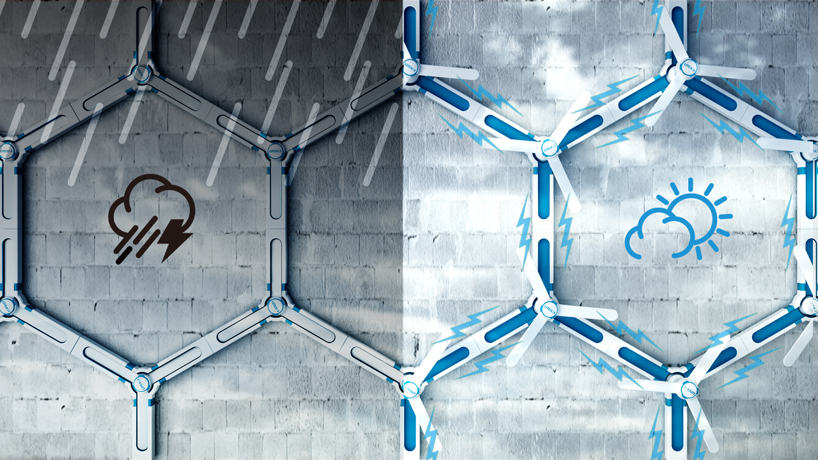
    This concept provides many advantages over traditional windmills. Each unit is designed to fit into adjacent units to form a hexagonal honey-comb structure which is very sturdy. Each unit is also designed with telescopic blades which can be pulled out when a gentle breeze is blowing and can be retracted during rough and stormy weather. In terms of installation, the units have been designed so that they plug into each other to automatically form a circuit and they have a three step installation process.


    While the real life efficiency of these devices is yet to be tested, it just might turn out that the honey-comb structure would be strong enough to set these up as a fence. This would perhaps increase the efficiency of these devices by providing them with an advantage in terms of wind speeds as compared to units that are installed against a wall.


  • Skypump – The Green Charging Station

    Skypump – The Green Charging Station

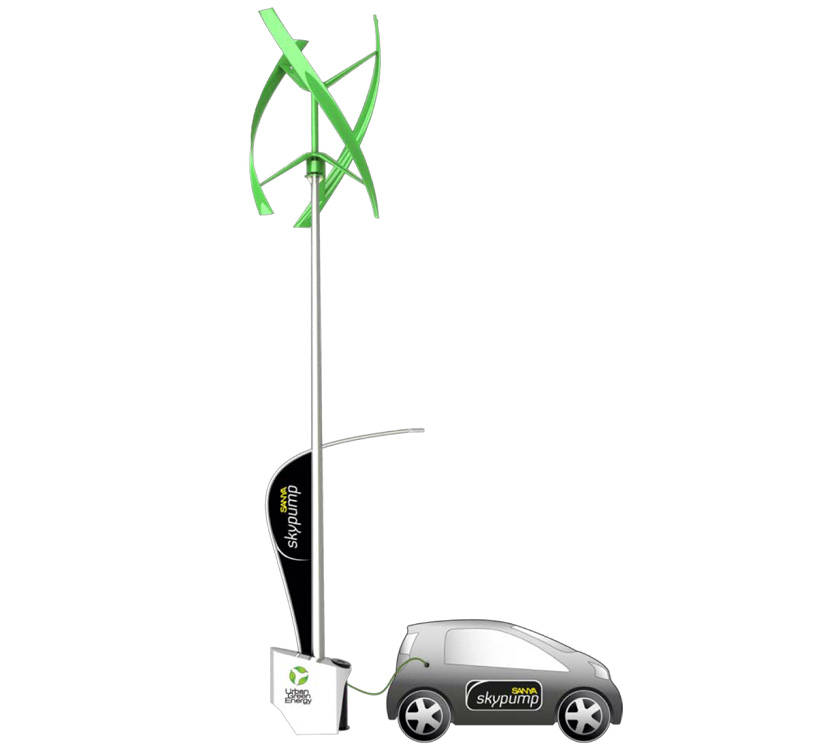
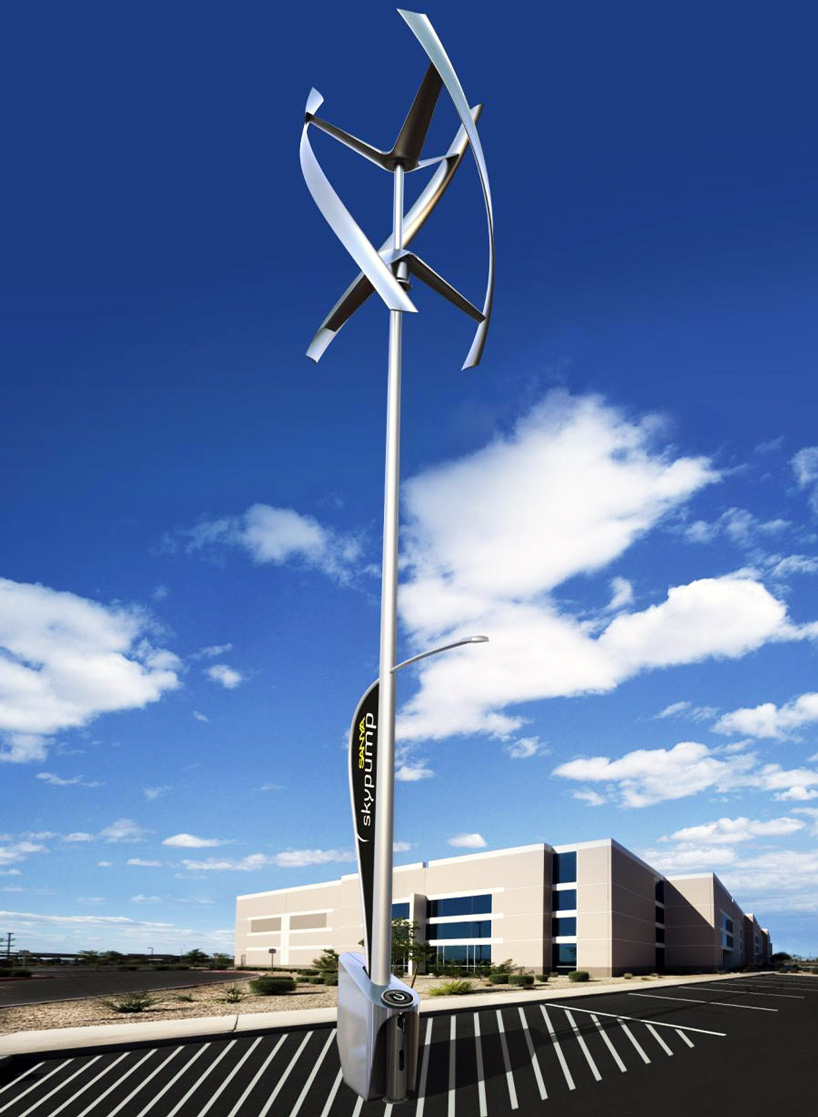
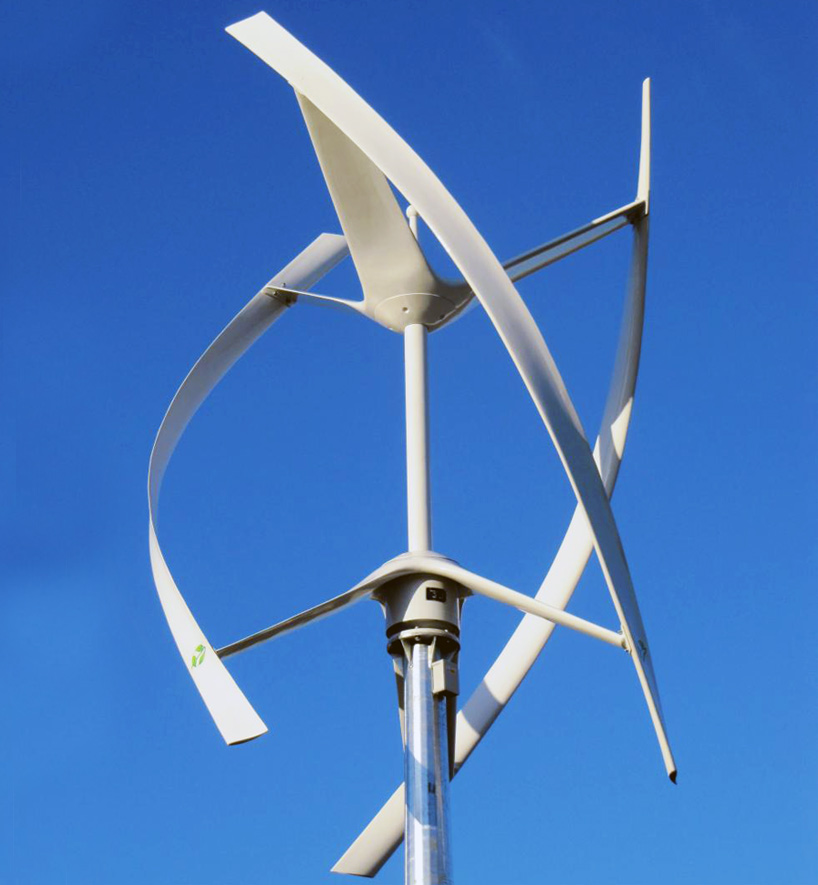
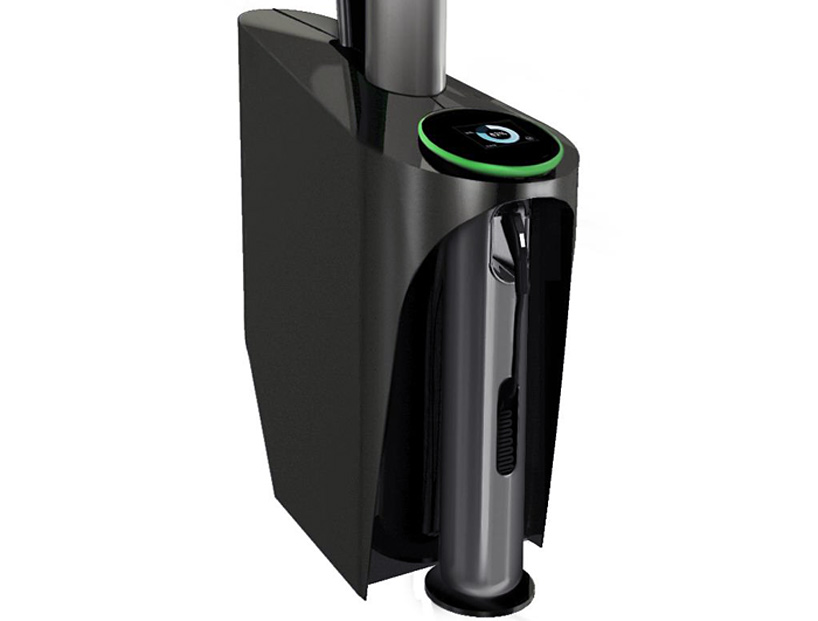
    The Sanya Skypump is a wind powered charging station for electric vehicles and it has been developed by Urban Green Energy in collaboration with General Electric. While still in the conceptual stages, the Skypump combines a GE Wattstation with a urban green wind turbine which can capture up to 4KW of wind energy.

    The turbine is 13m high and can easily be installed in parking lots, rest stops and other areas. As it is attached to the grid, once the station is fully charged and a vehicle is not plugged in, the Skypump will keep pumping electricity back into the grid. The company is also producing a version of the charging station for domestic use. The domestic version will be using a wall mounted GE Wattstation which can charge an electric car in four to eight hours. There is no news on whether the Skypump will offer similar efficiency.


  • Tech 101: Modern LCD Displays

    Tech 101: Modern LCD Displays


    Displays have come a long way since the old CRT monitors and TVs. Advancements in display technology have made many modern devices possible such as mobile phones, mobile gaming platforms like the Sony PSP, thinner Televisions and Monitors. We use them everyday, for a variety of tasks but do we really know how they work? What is an LCD? What is a TFT Screen? How do they display so many millions of colours? This article will answer these questions and many more.

    What is an LCD?

    The term LCD stands for Liquid Crystal Display. But what exactly are Liquid Crystals? The term is quite confusing. A substance can either be a crystal, like quartz, which is hard as rock, or it can be a liquid which is obviously different. How can it be both? We all learned that matter can exist in 3 states, solid, liquid and gas. Solids have their molecules in a very rigid orientation while liquids and gasses are exactly the opposite. There are a few substances that have properties that are like solids and liquids at the same time. What this means is the the molecules of the substance tend to maintain their orientation, like a solid, but they also tend to move around, like a liquid. This is why they are called Liquid Crystals.

    It takes a lot of energy to convert a solid into this state, and only a little more to convert it into a liquid. This is why LCD’s are so sensitive temperature changes. This property allows them to be used in the making of Mood Rings and Thermometers. There are many types of liquid crystals. The major type used in monitors and other displays are called Twisted Nematic Liquid Crystals. These type of crystals twist and untwist at varying degrees to allow light to pass through when a voltage is applied.

    What is a TFT?

    A Thin Film Transistor LCD or TFT-LCD is named after a very thin layer of transistors that are applied to the back of a Liquid Crystal Display. These transistors allow only one row of pixels to be updated at any given point in time. The speed with which this updation takes place fools your brain into thinking that its viewing a static image.

    In small LCDs such as the ones used in calculators and other devices, a voltage can be applied across one segment without interfering with other segments of the display. This is impractical for a large display with a large number of pixels, since it would require millions of connections, two for each one of the three colors (red, green and blue) of every pixel. To avoid this issue, the pixels are arranged in rows and columns, reducing the connection count from millions to thousands. The column and row wires attach to transistor switches, one for each pixel. The one-way current passing characteristic of the transistor prevents the charge applied to the pixel from draining between refreshes, which creates the persistence of vision.

    What is a Pixel?

    A single pixel is the smallest addressable screen element in a display device, or it is the smallest unit of picture that can be represented or controlled. Each pixel has its own unique address which corresponds to its coordinates on the screen. Pixels are normally arranged in a grid pattern. Each pixel is made up of three Sub-Pixels which have a different color, Red, Green and Blue. The voltage applied to each subpixel decides its colour intensity. There are 256 possible gradations for each subpixel and together all three give a combination of 256 x 256 x 256 = 16,777,216 colours to each pixel on the screen.


    How it Comes Together

    A simple LCD monitor has many layers of technology that make it function. The basic principle behind these types of monitors is the Polarization of Light. What this means is that light is strategically allowed or not allowed to pass through any given point on the screen.

    At the base of a monitor, you have a single line of white LED’s that provide a backlight. There are many layers of films placed on top of these LED’s to create even lighting across the back panel. The next layer consists of a plate of glass. At the back and front of this sheet of glass are two polarization films. Light passes through the back film and is twisted by the glass to be ‘in sync’ with the front film. If the light is ‘in sync’, it passes through, if not, it is blocked by the film.

    The sheet of glass is an amazing piece of technology. It basically consists of a layer of TFT’s and a Liquid Crystal array that is arranged in a grid format. Each point or pixel of the grid consists of three subpixels. These subpixels are what give the pixel its colour. They have a maximum intensity of 255. What this means is that if we set the intensity of the red subpixel to 0, then no light passes through, and it appears black. If the intensity is set to 255, then all the light passes through and it appears bright red. If we wanted to create a single pixel of sky blue colour, the red subpixel would be set at 135/255 intensity, the green subpixel would be set at 206/255 intensity and the blue subpixel would be set at 250/255 intensity. This is how each pixel of your display is updated 60 times a second. Thereore, for a display of 1024 x 768 resolution, the monitor is making 141,557,760 updates per second. If it takes you half a second to flip a switch, making these many updates would take you 819.2 days or 2.24 years. Thats a LOT of updates (and finger cramps).


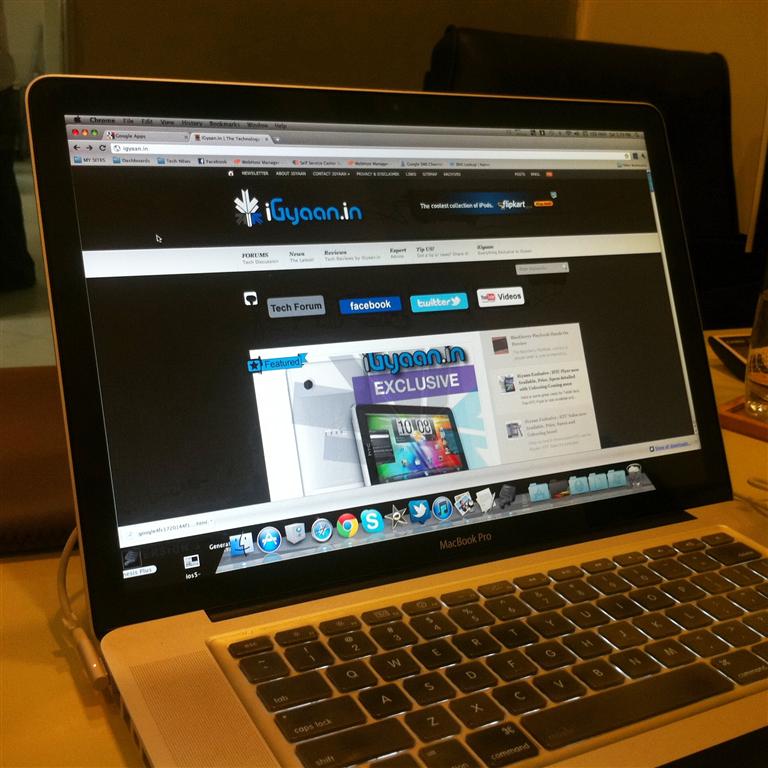
    To conclude, we would like to point out how much all of us take technology for granted. We have really got no idea what goes in to making most things we use everyday. We bicker and complain about our Tech being too slow or too old. We cant wait for the next big thing. At iGyaan, we have decided to start this section to demystify the basics of technology, so that the end user/consumer understands the true nature of the products that he/she is buying. We hope that you enjoy this section and learn something new from it. We’ll continue to bring you updates on the basics of technology. If you have something specific that you’d like us to talk about, please leave your requests on the comment section below.

    Stay tuned for the next update, continuing along the display line on OLEDs and AMOLEDs.

  • Samsung shows off ambient-light power source based transparent LCD display

    Samsung shows off ambient-light power source based transparent LCD display

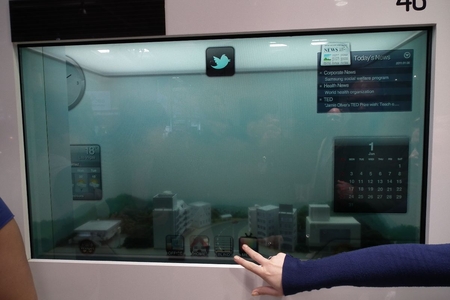
    Before we begin to talk about this next piece of hardware, let me tell you that we want one! The Samsung ambient light based transparent LCD shows what technology has achieved today. What we saw in movies and SCI-FI flick is becoming real day by day.

    What you see here is a prototype 46-inch display with 1920 x 1080 resolution and ten-finger touchscreen capability. The device generates is power from surrounding light, much like our calculators.

    Whats impressive is the fact that Samsung has been able to make a working prototype of a Huge touchscreen TV which along with its solar cells, efficiently generates power from your wall light bulb, enough to sustain itself.

    Makes you want to throw your calculator doesn’t it? well even your TV/Monitor.

    Whats more, there are some rumors of Samsung using this technology to develop larger panels than the ones currently in existence. The biggest panels that the company currently releases is a 65-inch model.

    [IT Pro Portal]

  • Eco-Tech : 1 Liter limit faucet – needed in India

    Eco-Tech : 1 Liter limit faucet – needed in India

    This brilliant looking water Faucet – meant for home as well as commercial applications is an earth saver. The faucet has a 1 lit tank as seen above, the water after being let out takes 30 sec to refill, discouraging the waste of water.

    Consider this, on an average in a commercial application a standard faucet uses/lets out water at the rate of  10 lit per minute. This will bring it down to 1 lit per minute. A 90% saving of the most useful resource on the planet. This would be a grace in India where people like to leave the water running. Although, in our country, impatience is as common as mobile phones.

  • ETC : A better Soda Can : Biodegradable

    ETC : A better Soda Can : Biodegradable


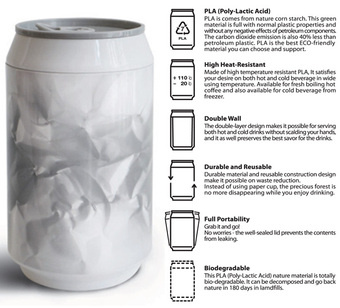
    This new design of of Soda Can , called the “Tin Can” is actually made up of PLA (poly-lactic acid), a sort of corn starch that can retain some plastic properties. The only thing is that the cans cost about 4 times the cost of a Coke Can here in India, for 2 $28 [Hao Shi via Yanko Design]

iGyaan Network
Privacy Overview

This website uses cookies so that we can provide you with the best user experience possible. Cookie information is stored in your browser and performs functions such as recognising you when you return to our website and helping our team to understand which sections of the website you find most interesting and useful.