Tag: IIT Delhi

  • IIT Delhi Student Invents A New Way To Detect Breast Cancer

    IIT Delhi Student Invents A New Way To Detect Breast Cancer

    IIT Delhi student, J.Jean Rossario Raj from the department for biomedical engineering, presented an alternate design in ultrasound transient elastography system for early detection of breast cancer. The project was to expertly diagnose and differentiate between malignant (cancerous) and benign (non-cancerous) tumours by combining various ultrasound imaging modes.

    Studies show that the malignant tumours are stiffer than benign ones. And one of the ways to detect the tumor is through Ultrasound elastography. It is a non invasive imaging technique which helps differentiate between the two types of tumours by evaluating the elasticity of the tumour.

    In an abstract, Jean provided a detailed account of her research. The research was conducted on 72 breast cancer patients using conventional non-invasive tumour detection techniques. With the help of the data collected during the research, Jean built a prototype for faster and efficient detection of cancer. The clinical data of the patients was tested using the prototype. The results show that the machine was able to detect tumours with 94.7% sensitivity, 90.6% specificity and 91.7% accuracy. The machine was also able to differentiate between the malignant and benign tumours with accuracy.

    Breast cancer is the most common cancers in women worldwide. It is the fifth most common cause of death from cancer in women. Nearly 1.7 million new cases were diagnosed in 2012, which represents about 12% of all new cancer cases and 25% of all cancers in women.

    In developed countries with advanced medical care, the survival rate of early stage breast cancers is 80-90 %, which falls to 24% for cancers diagnosed at a more advanced stage. Whereas, in developing countries, the survival rate further decreases to 40%.

    Breast cancer is increasing rapidly in developing countries where the majority of cases are diagnosed at later stages. The lack of early detection and adequate diagnosis of the cancer reduces the survival rate.

    Following is the standard procedure of diagnosing breast cancer

    • Breast Exam/Physical Exam
    • Mammography
    • Ultrasound Imaging
    • Biopsy
    • MRI

    Currently, a biopsy is the only definitive way to detect breast cancer. The procedure requires removing a sample of breast cells to analyse –

    • Whether the cells are cancerous
    • Type of cells involved in the cancer
    • Grade of the cancer
    • Hormone receptors of the cancer cells

    A biopsy is a time taking and invasive process. The machine uses a non invasive technique which will allow the doctors to diagnose the cancer at an early stage. The device will also allow the doctors to bypass the standard time consuming process and achieve faster results with  significantly improved specificity and accuracy. If used by medical practitioners and doctors, the machine invented by J.Jean Rossario Raj can help detect breast cancer early, thereby reducing female mortality.
  • IIT Delhi Wants To Solve the Irrigation Problem For Indian Farmers

    IIT Delhi Wants To Solve the Irrigation Problem For Indian Farmers

    India being an agrarian economy, is largely dependent on farmers, the seasonal monsoon and a reliable irrigation system. In a country where power cuts are in abundance and money is scarce, being able to get a proper irrigation system going is a real challenge. Taking the present scenario in account, the farmers face multiple challenges to simply irrigate the fields. Apart from the endless power cuts and the cost of fuel, other factors like the safety, sustainability and durability of the irrigation system are extremely questionable.

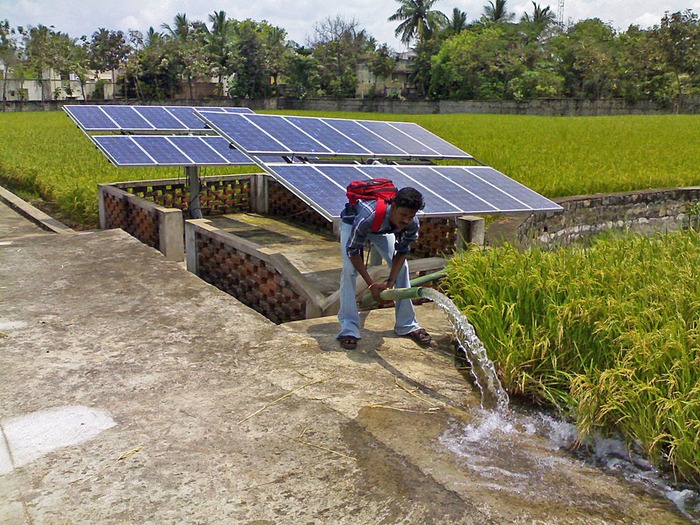
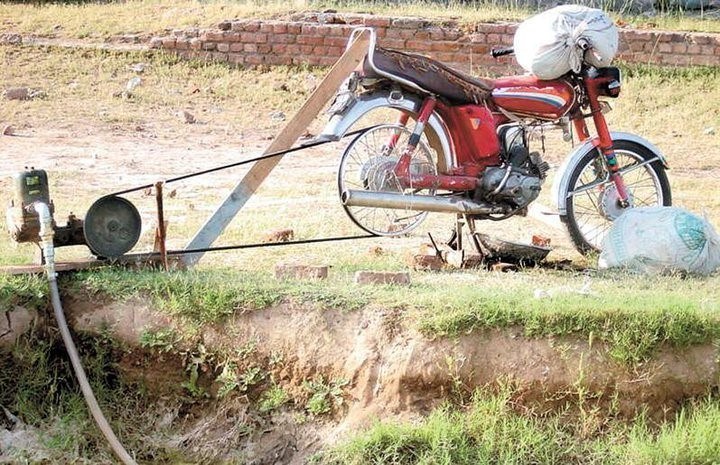
    Farmers currently resort to a device called “Jugaad pump” for irrigating the fields.This irrigation system is powered by a functional motor bike and is used for extracting water from open channels and ponds to deliver water for irrigation. While this “Juggad” works for some time, the bike run pump is not the ultimate and long term solution. A team of researchers from IIT Delhi has decided to build a solution which is sustainable and durable.

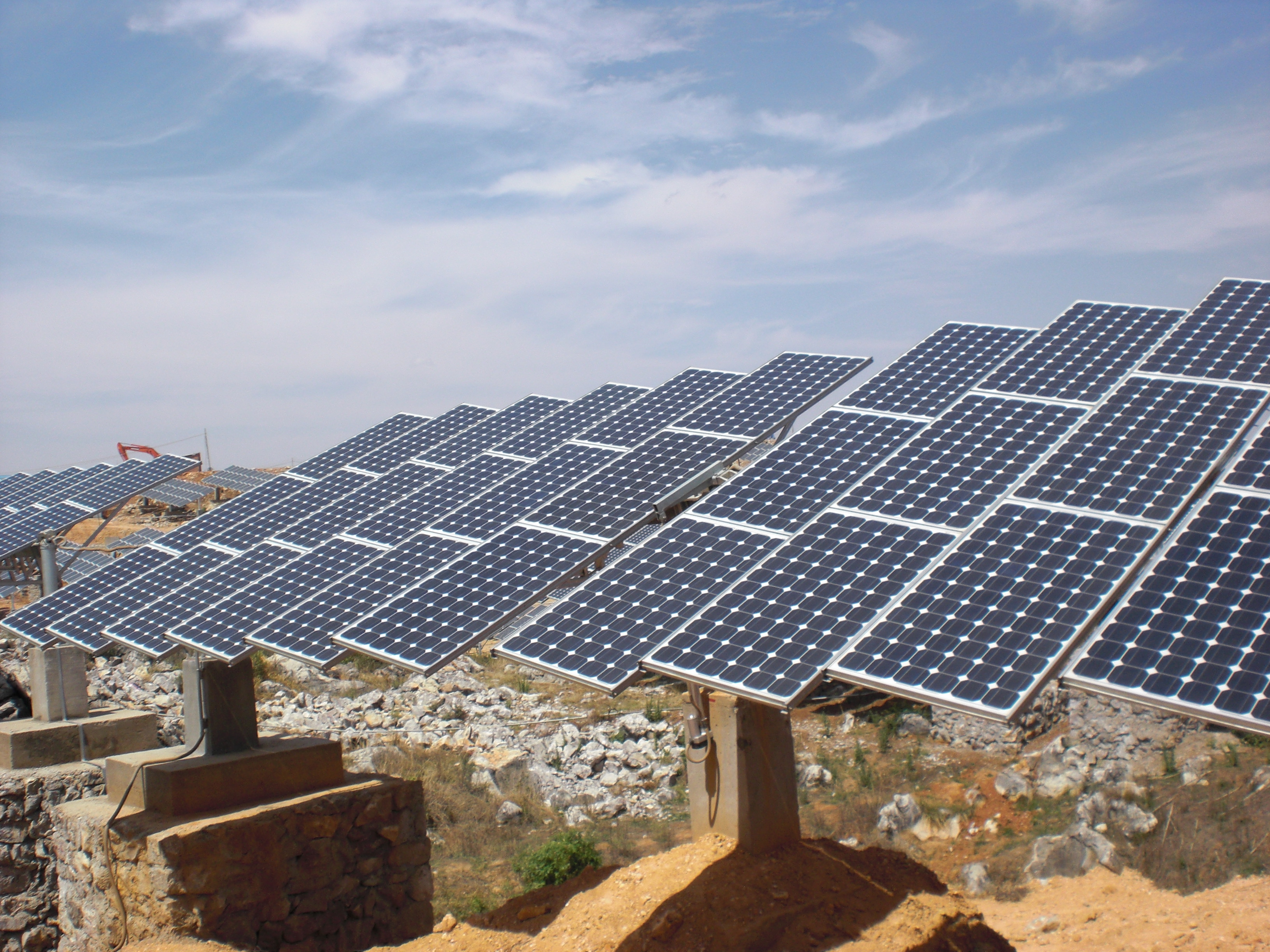
    IIT Delhi researchers are designing solar pumps and invertors that are cost effective and energy saving. The project which is in partnership with industry partner Shakti Pumps Limited, will boost the productivity of the farmers and has received a massive funding of Rs 1.12 crore. The IIT Delhi research team includes Prof. Bhim Singh (Principal Investigator) and research scholars Utkarsh Sharma, Aryadip Sen, Md Kashif, Rashmi Rai, Hina Parveen, Yalavarthi Amarnath.

    The research is carried out as a part of the project titled – Design and Development of Solar PV Based Super Efficient Agricultural Pumps and Hybrid Multidimensional Inverters- and falls under the Uchhatar Avishkar Yojana of the Ministry of Human Resource Development (MHRD).

    The project is based on decreasing the irrigation cost, or the cost of the energy (electricity or diesel) to drive the water pumps in remote areas where electricity is not yet available. The current irrigation cost in remote areas is upto 30% of the total input cost incurred by a farmer. This cost can be drastically reduced by solar powered water pumps.

    The solar pumps will incur one time installation cost and expected battery maintenance cost approximately every two years. The pump will convert solar energy into electricity and employ Direct Current (DC) as opposed to the Alternating Current (AC) which is being currently used by most farmers. A DC powered battery is more efficient and durable and will keep the solar powered pump working for a longer period.

    Project investigator Prof Bhim Singh says, “Besides development of super-efficient pumps we aim to design solar water pump with suitable motor considerations and variable frequency operation. We will subsequently be designing and developing the on grid/off grid hybrid inverter,”

    Professor further states that the project is aimed at design and development of the industrial products under three verticals. The team will also develop cost efficient inverters running on solar power which can be used to light up the household and feed the electrical grid. The final deliverables would include new technology in electrical drives fed from solar power, novel motor and pump design along with the hybrid inverter design.

    This project can help improve the lives of millions by making solar powered technology available at an affordable cost. But the maintenance cost after approximately every two years may make the farmers stick to their traditional method. A one time installation of the solar pump is expected to be expensive as well which may dissuade farmers not willing to incur the installation and the additional maintenance cost.

  • Facebook CEO Mark Zuckerberg At IIT Delhi: Here’s What Went Down

    Facebook CEO Mark Zuckerberg At IIT Delhi: Here’s What Went Down

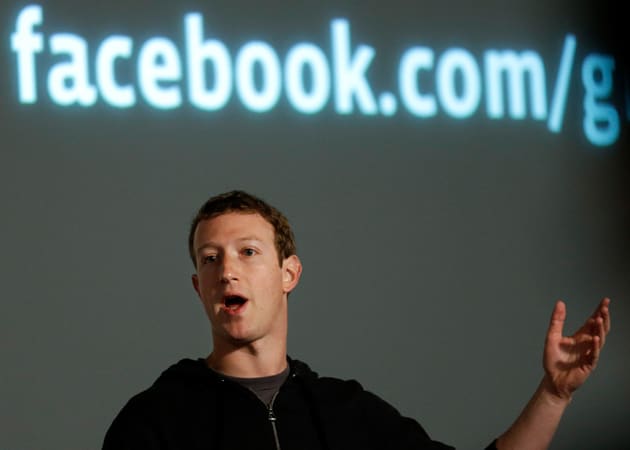
    Facebook CEO Mark Zuckerberg is in Delhi today and hosted a Townhall Q&A at the Indian Institute of Technology to a crowd of around 900 students. The visit was posted by Zuckerberg early this month on his Facebook page.

    Zuckerberg had posted that he was eager to meet and hear directly from one of Facebook’s “most active and engaged communities.” India has the second largest user base of Facebook with over 130 million active users.

    Facebook CEO Mark Zuckerberg's Date With IIT Delhi Today

    The Townhall Q&A started at 12 pm. Zuckerberg took the stage amidst a round of applause by the crowd. He expressed the importance of the Townhall Q&A in helping the social media site work better for every country.

    Why India?

    The questions began soon enough. The first question posed was regarding Zuckerberg’s interest in India. The Facebook CEO answered by saying that India still has a billion people who don’t have internet accessibility. One of his major interests is to bring basic internet access to as many people as possible, if not all. Zuckerberg is especially interested in bringing internet connectivity to rural areas. “We want to get the next billion people online,” said Zuckerberg.

    “India is the largest democracy. It is one of the countries where you cannot connect the world without connecting India.”

    Three Key Issues: Availability, Affordability and Awareness

    A followup to the previous question was how Facebook plans on bringing internet to the rest of India. Naturally, Mark Zuckerberg mentioned Internet.org.  He posed stats saying that the internet growth rate in India has doubled through Internet.org. Availability, affordability and awareness are three key areas that need to be addressed in order to bring internet.

    Solar-powered planes that beam down connectivity, apps that use less data, Free Basics that provide basic information and communication tools not only provide free internet but also raise awareness of what can be found on the internet, are some of the ways the company plans on tackling the three issues.

    “Internet.org and Facebook support Net Neutrality a hundred percent.”

    Death to Candy Crush Invites

    The top voted issue, that wasn’t exactly a surprise if you’ve been following Mark Zuckerberg’s post, was how to avoid getting Candy Crush invites. Based on the sheer number of votes, the question deserved to be asked. However, the answer did not help concerned and annoyed citizens. Zuckerberg stated that the company is working on getting rid of the problem. “I told my developers that can we have a solution to this problem (Candy Crush requests on Facebook) by the time I do my Q/A… So we are doing it now.”

    Facebook VR and Artificial Intellegence: A Connected Future

    Other questions asked were related to Facebook’s VR technology as well as artificial intelligence. With VR, the company wants to make video experience on Facebook more real than ever. And with AI, Facebook wants to make content more accessible for everyone, especially the physically handicapped. So, for example, a person who is blind will be able to understand a picture by having Facebook’s AI describe the picture.

    There were some lighthearted moments during the Q&A where Zuckerberg was asked what he would do if he had superpowers given by aliens. Zuckerberg answered by talking about the VR headset that is very much like having superpowers, or at least will be in 10 years time. “Through technology, you can pretty much have abilities similar to super powers.”

    Towards he end of the Q&A, Zuckerberg spoke about startups and the importance of knowing what you want to do rather than going in with little or no knowledge.

    “None of the people who built big companies thought that they would be as big as they ended up being… So my advice is focus on what you care about and not the decision to start a company”

iGyaan Network
Privacy Overview

This website uses cookies so that we can provide you with the best user experience possible. Cookie information is stored in your browser and performs functions such as recognising you when you return to our website and helping our team to understand which sections of the website you find most interesting and useful.