Tag: Internet.org

  • Facebook’s “Free Internet” TRAI Email Scam Explained

    Facebook’s “Free Internet” TRAI Email Scam Explained

    Internet.org was announced globally in August, 2013 and it arrived in India in February 2015. The initiative aims to provide free internet services on the Reliance network in the states of Tamil Nadu, Maharashtra, Andhra Pradesh, Gujarat, Kerala and Telangana. The users would have free data access to more than three dozen services.

    The idea of thousands and millions being included within the ambit of the virtual world sounds brilliant and one everyone is up for. But before that, those endorsing this initiative need to understand all that it entails.

    Internet.org:

    internet.orgInternet.org refers to a collaboration between Facebook and six other companies, namely, Samsung, Qualcomm, Nokia, Ericsson, MediaTek and Opera Software. The aim of this collaboration is to bring easily accessible internet to developing countries, especially in remote rural areas. However since it includes only selected services and online operators, it is seen not only as a direct threat to net neutrality but also as rampant publicizing of Facebook. It would be a single company, or a small group of them, which would decide what services are made available and which ones are excluded, a right earlier extended only to the user of the internet, not the service providers.

    The Digital India Display Picture Controversy:Mark Zuckerberg
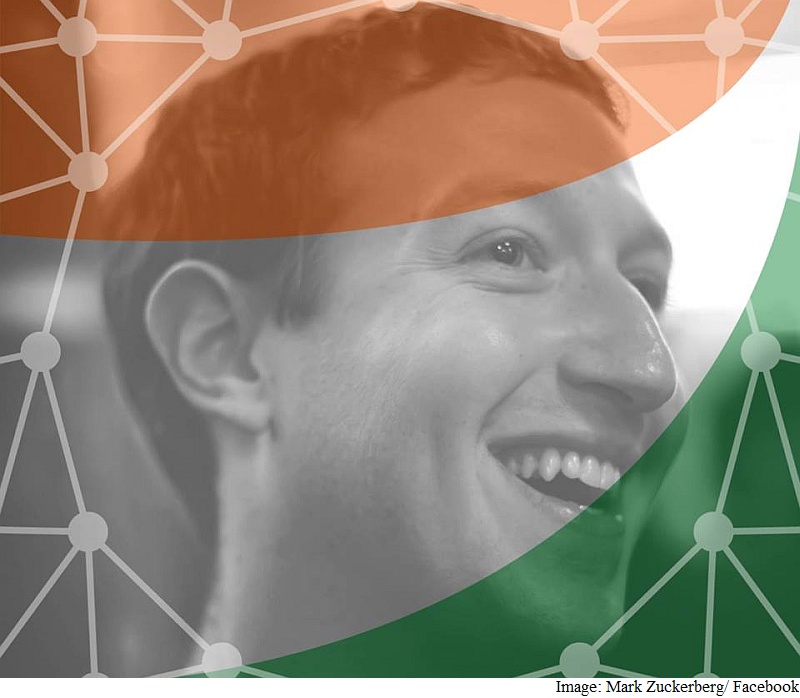
    This controversy surfaced during Prime Minister Narendra Modi’s trip to Silicon Valley to promote Digital India. When Mark Zuckerberg changed his display picture on Facebook to one with an overlay of the Indian flag, the Prime Minister followed suit and did the same with his display picture. Facebook also introduced a feature which allowed users everywhere to make the tri-colour part of their display pictures. Post this, people, as we know them to be, switched their profile pictures left and right and centre. All of a sudden, we woke up to find unanimous, enthusiastic support for Digital India. Utopia, could it be?Narendra Modi
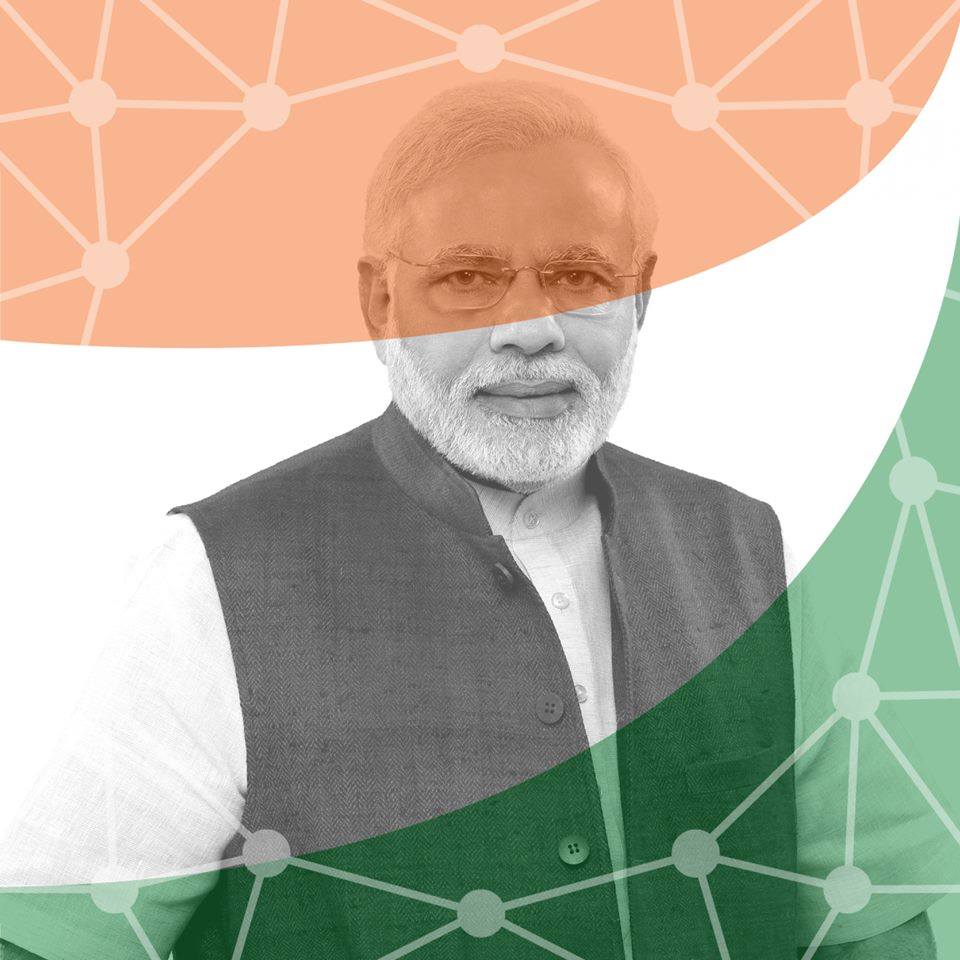
    A lot of netizens took to social media platforms to express their dismay at the new feature, which was allegedly directly connected with Facebook’s Internet.org. It was assumed that these pictures had a source code which would automatically link them to Internet.org, inadvertently making them support the initiative. However, the confusion was soon cleared up -the tri-coloured display pictures had nothing to do with Internet.org and that was the end of this controversy.

    Free Basics:Free Basics Internet.orgFree Basics is part of Internet.org and lets users access the services of the initiative by downloading an app. It became available in India last month and allowed users access to Facebook and Facebook messenger, Wikipedia, BBC News and health services, among others. The app was initially made available on Reliance Communications Network, Facebook’s partner in Internet.org.
    The app and the initiative has received flak from the word go for its alleged preferential treatment, and thereby being in direct contradiction with net neutrality. Mark Zuckerberg defended this, however, and said Free Basics provides not only internet services for free but plans to include more services and developers within its reach.

    Current Scenario:internet.org-facebookjpg
    A little after its release in the country, Free Basics ran into turbulent waters. Reliance Communications had to withhold the service after it received a request from the Telecom Regulatory Authority of India (TRAI) to do so.

    “As directed by TRAI, the commercial launch of Freebasics has been kept in abeyance, till they consider all details and convey a specific approval,” said a Reliance representative.

    This was soon followed by a Facebook campaign -users were flooded with notifications of their Facebook contacts having ‘voiced their opinion’ on Free Basics. Clicking on the notification directs the user to a page which automates reply to TRAI in appeal in favour of the same. Users were also presented with this pre-filled form as they logged in which would be sent to TRAI in support of Free Basics. Though this feature was meant only for Indian users, it was sent to many American users as well. Facebook claims it was a mistake which has been corrected. The fate of Free Basics is uncertain until a verdict is passed post TRAI’s hearing on net neutrality next month.

    India is one of the 36 countries where Free Basics has been launched and is the second largest user of Facebook in the world.

    Free Basics and Internet.org are the Same but Not Many Remember it:Facebook Free Basics Free Basics is an extension of Internet.org but quite a lot of seem to have forgotten that. There had been a lot of hue and cry only a couple of weeks ago over Internet.org and its ‘altruistic’ intentions behind the initiative. However, the clamour died down quiet magically as large number of people have stepped forward declaring their support for Free Basics on Facebook, without even realising it in many cases.

    Facebook notification windows have their hands full all over the country with updates about users voicing their opinions about Free Basics (read: declaring support for Internet.org, which they had opposed only a little while ago).

    Times of India aptly commented on the whole topic recently and said, “Facebook is just trying to play on the fact that most of us click the like button on its platform without reading or understanding the complete picture.”

    Nothing would be better on the tech front than to have a country where internet is available in every household. But any policy that endangers net neutrality, and therefore, the freedom of expression, needs to be reconsidered.

    Equal internet is important for the virtual space, for future Facebooks and platforms like iGyaan itself. It enforces net neutrality and makes sure consumers don’t end up paying with every click online. However, concepts like ‘free internet’, what the Facebook-based app aims to provide under its Internet.org campaign, tends to complicate things, and endangers net neutrality.

    Have you signed your TRAI-email petition yet on Facebook, if not would be willing to or would you rather steer clear from it? Let us know in the comments below.


  • Facebook and Alphabet Team Up For New Drone Project to Provide Internet

    Facebook and Alphabet Team Up For New Drone Project to Provide Internet

    Alphabet (Google’s parent company) and Facebook have brought their forces together to develop drones that can provide broadband internet access from above the Earth. Both companies have reportedly registered new drone designs with the US Federal Aviation Administration.

    Military Drone

    Apart from this, Alphabet is currently planning a secret operation at the Spaceport America allegedly creating a solar-powered drone. With smaller drones gaining the attention of big business firms like Alphabet and Amazon with their project Wing and Prime Air respectively, Google and Facebook are working on a larger drone that will be able to operate even as high as 90,000 feet above ground level.

    If their assessments are to be trusted, we can safely assume that these drones could possible be flying for weeks or months, thereby could also potentially provide cities and towns with high-speed internet in underdeveloped countries.

    “We’re working on ways to use drones and satellites to connect the billion people who don’t live in range of existing wireless networks,” said Facebook’s CEO, Mark Zuckerberg, in July.

    This project was preceded by Facebook last year, setting up an initiative with Nokia, Samsung and others to provide online access to two-thirds of the world via internet.org. However, that was a lone project, this one on the other hand, is a collaboration with Alphabet which would in turn help both companies reach new users in their advertising market. All we can hope for is that this initiative churns out something good. What do you think of this collaboration? Feel free to post your comments in the comment section below.

  • Facebook Aims to Provide Fast Internet Access To the World Through Lasers

    Facebook Aims to Provide Fast Internet Access To the World Through Lasers

    Facebook’s latest endeavour, Internet.org has received a lot of flak for violating the rules of net neutrality. Co-founder Mark Zuckerberg has defended the company’s initiative many times, as he insists that the initiative’s sole purpose is to provide affordable Internet access to developing nations. It seems that Facebook has taken another step in this direction, as the company is working on lasers to improve Internet connectivity around the world.

    Today, Zuckerberg has posted a few photos from the Connectivity Lab, Facebook’s ambitious project to connect the world to the internet through “drones, satellites and lasers”. According to his Facebook post, the Connectivity Lab has developed laser beams that will be able to transmit data from the sky into communities. As the Facebook founder explains, the beams will dramatically increase the speed of sending data over long distances.

    https://www.facebook.com/zuck/posts/10102217102231151

    The laser beams in the photos have been made visible for demonstration purposes. Zuckerberg says the beams won’t be actually visible and has not provided any further explanation on how the system works.

    Internet.org is an initiative by Facebook to provide affordable Internet to developing nations by giving access to select Internet services for free. Facebook has been criticised for violating the principles of net neutrality through this initiative, as the program favors certain sites over other.

    It seems Facebook’s vision to provide the internet for everyone is one step closer to reality.

  • Reliance’s New AD Pulls an ‘Airtel Zero’, Promotes Net Neutrality Violation

    While the hue and cry over Airtel’s controversial ‘Airtel Zero’ was justified, we need to be reminded that there are several other players in the market working on a similar plan.

    Here’s why we had a problem with Airtel Zero – it was a new platform that let companies buy data to offer their apps to consumers for free. It allowed users to access these apps without incurring data charges. This was seen as a direct violation of net neutrality as it gave priority access to some apps over others.

    Now let’s have a look at Reliance’s ‘Freenet’ service. Freenet is a service jointly launched by Reliance and Facebook in India, which hosts around 20 popular websites, (including AajTak, Facebook, Wikipedia etc) free of charge for Reliance customers.

    Notice a difference between the two services? We couldn’t find one either. Check out the ad here:

    https://www.youtube.com/watch?v=XT3-9odXdUg&feature=youtu.be

  • Facebook Showcases Solar-Powered Drones Which Will Beam Internet Down To Earth

    Facebook Showcases Solar-Powered Drones Which Will Beam Internet Down To Earth

    At the two-day F8 Developer Conference at Fort Mason in San Francisco, Facebook shared with the world its plans for year 2015. Yesterday we surfaced the news of Facebook extending Messenger support to third-party apps allowing users to interact with businesses. Now, the social networking giant announced that it will be building drones to help accomplish its Internet.org project.

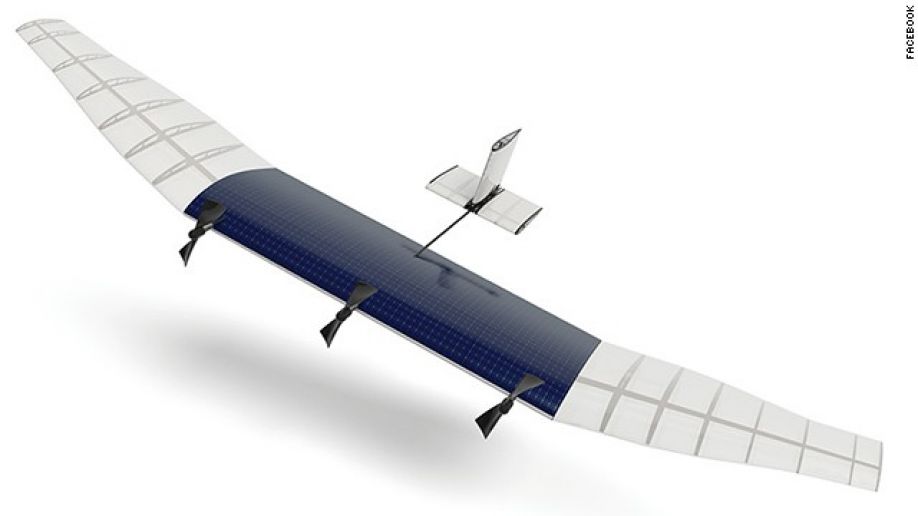
    According to The New York Times, the unmanned aerial vehicle will be V-shaped and are codenamed as Aquila. The drones have got their name from an eagle in Greek mythology. The wingspan of Aquila would be as wide as a Boeing 767 jet airliner, but will weigh as much as a compact car; thanks to the lightweight material to be used for its construction.

    drone

    The unmanned aerial vehicle will reportedly stay in the atmosphere for almost three months and will use solar power for its operations. Staying in the air, the drones will push internet access to 60,000 and 90,000 feet via lasers. During their suspension in the sky, the aerial vehicles will communicate with each other so that they cover the maximum area on the earth. According to the source, the first flights will begin in summer this year, however, the commercial deployment of these drones fleet may take time.

    Facebook’s drone initiatives are powered by its buyout of Ascenta, a drone maker in 2014. But it needs external support to build its fleet of drones. Facebook is seeking partners to fund its Aquila project to take off, and in turn the company will offer the data and technology to the supporters.

    Until now, Facebook was recognised as a social media entity, but looks like it wants to be the leading powers of the technology busines. Facebook inaugurated the limited free internet service across the world in August 2013 and today, it’s shaping itself to give maximum benefits to the people. It recently brought the internet.org initiative to India in a tie-up with Rcom. There are several initiative underway to offer low cost, high speed access to the entire population of the planet. Apart from Facebook’s drone initiative, Google is making headway in the arena with its Project Loon. SpaceX founder Elon Musk, in cooperation with Google also plans to cover the planet under a constellation of internet beaming satellites. The human population will soon become a connected civilization.

  • Facebook Plans to Expand Internet.Org to 100 Countries by Year End

    Facebook Plans to Expand Internet.Org to 100 Countries by Year End

    Facebook’s non-profit initiative to connect the world, Internet.org, is successfully running in six countries. The company’s CEO Mark Zuckerberg is quite happy with providing limited free internet to remote areas and is planning to expand the service to 100 more countries by the end of this year.

    Chris Daniels, VP of Internet.org at Facebook said in a statement –

    The ambitious goal this year is to roll it out to 100 [countries]. We don’t want to focus so much on the number, but we want this to spread to additional countries, operator groups and… see more people coming online, buying data and voice and SMS bundles. The number is indicative of our ambitious goal.

    Internet.org is a Facebook-led free internet program that works with data suppliers to provide free internet to people who can’t get online. It allows users to access basic sites like Wikipedia, job and health sites, and Facebook, of course. The service was launched back in 2013 and now it connects 7 million people of six nations across the globe – Zambia, Ghana, Kenya, Tanzania, Colombia and India.

    Zuckerberg thought ahead and his idea really worked. Countries provided with free internet have seen a sudden jump of 40% in the internet data demand. People are willing to get associated with the world around seeing the power of internet via little demo, that is Internet.org.

    Facebook’s step will draw more nations closer to each other and is a way to transform the developing nations into developed ones. Meanwhile, Facebook has teamed up with Google for Project Loon in establishing high-altitude balloons, a satellite-based network, to connect to connect people in rural and remote areas.

  • Facebook Brings Internet.org to India to Provide Free Basic Internet

    Facebook Brings Internet.org to India to Provide Free Basic Internet

    Facebook founder has been working on an audacious initiative to provide free internet to people who haven’t yet received the benefits of the information superhighway. Internet.org was launched on August 20, 2013 and has till now provided services more than 150 million people total across Africa and Latin America. Now the biggest social network has introduced the service in India.

    Internet.org is in partnership with Facebook and six mobile phone companies, namely Samsung, Ericsson, MediaTek, Microsoft, Opera Software, and Qualcomm. It is one of the initiatives along with Google’s Project Loon and Space-Internet plans by Tesla founder Elon Musk. They intend to reach the last 3 Billion people untouched by the internet.

    mark zuckerberg

    Mark Zuckerberg in a post on Facebook has announced the introduction of the initiative in India. The initiative will begin offering services on the Reliance network in the states of Tamil Nadu, Maharashtra, Andhra Pradesh, Gujarat, Kerala and Telangana. The users will now have free data access to more than three dozen services.

    Mr. Zuckerberg also hoped to one day connect everyone, and the power of the internet will serve every community across India and the world. He added that the day is coming soon. This initiative from Facebook is surely appreciable and will help empower the vulnerable communities in the world.

    Want to know more about Internet.org? Click here.

  • Facebook is Gearing Up to Test Wi-Fi Drones for Internet.org Initiative

    Facebook is Gearing Up to Test Wi-Fi Drones for Internet.org Initiative

    Facebook has taken steps ahead of Google in the race to provide internet to everyone in the world. Facebook plans to start testing its internet beaming solar-powered drones in 2015, with the ultimate aim of getting two-thirds of the global population online. Mark Zuckerberg has announced it to be part of the efforts of Internet.org.

    Speaking at the Social Good Summit in New York last week, engineering director at Facebook Connectivity Lab, Yael Maguire, detailed the company’s vision of internet-carrying drones, with plans to begin testing in 2015 in a US location which is yet to be determined. “In order for us to fly these planes; unmanned planes that have to fly for months, or perhaps years at a time, we actually have to fly above the weather, above all airspace. That’s between 60,000 and 90,000 feet. Routinely, planes don’t fly there, and certainly not drones” Maguire said.

    internetorg

    Wi-Fi will be beamed using solar-powered drones that are the size of a Boeing 747, announced Facebook. Facebook said that the drones would be powered by the Sun and that it would fly in the air for months or years at a time. Apart from the flying Wi-Fi drones, there will be satellites and infrared lasers too which will be built to provide Internet to all.

    Facebook has also gone on to join hands with Ericsson, Nokia, Qualcomm and Samsung for its effort. A spokesperson from Facebook confirmed that though these companies were helping Facebook with bringing internet connectivity to the developing nations, they weren’t going to be a part of the drone project.

    Google has been working on a similar project with one of the differences being that they have plans of making use of balloons in addition to the drones. Google’s project has been named project Loon. It has only performed a few tests of the ambitious proposal so far.

  • Facebook Launches Internet.org App for Free Internet Access in Zambia

    Facebook Launches Internet.org App for Free Internet Access in Zambia

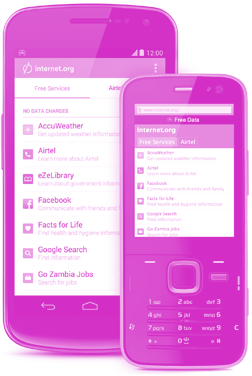
    Facebook’s internet accessibility initiative Internet.org today launched its Android and web app for the developing world with free data access to a limited set of services including Facebook, Messenger, Wikipedia, and Google Search. It also provides local health, employment, weather, and women’s rights resources.

    Internet.org_ (1)

    Internet.org’s app is just launched in Zambia before coming to other developing countries which is in partnership with local carrier Airtel who provides the free access in hopes that Zambians see the web’s value and buy pre-paid data through the app to explore the rest of the Internet.

    10574702_344525639029305_1278593965_n

    The Facebook Zero has been giving the developing world access to a stripped down version of Facebook since 2010. But this new Internet.org app with other services will be available as a compact, standalone Android app, baked into the Facebook for Android app, or freely available as a mobile website that the feature phones carried by the vast majority of Zambians can access.

    Online services accessible through the app range from AccuWeather to Google search, Wikipedia, a job search site as well as a breadth of health information. Facebook’s own app, along with its Messenger service, is also included. The app will work on Android phones as well as the simple “feature phones” that are used by the majority of people in Zambia.

    If users click on a link that takes them outside of the 13 predetermined services, they will get a warning that they may incur data charges. One thing missing from the features is email. Many people who are new to the Internet in developing nations don’t use email, opting to use messaging apps or social media sites instead.

    The company said Zambia is a country with 15 percent Internet penetration, it is a huge amount of people that can be connected. Zambia’s population is about 15 million according to the CIA World Factbook. The app will spread to additional countries down the line, but there is no word on which ones.

    The move comes as Facebook steps up investments in its Internet.org project, which seeks to connect the “next 5 billion” users to the Internet, many of whom lives in places like Africa and India. In March Facebook announced plans to use drones and satellites to deliver Internet connectivity to people in certain parts of the world.

    The initiative also has the potential to boost the size of Facebook’s audience, which currently totals 1.32 billion monthly users.

  • Facebook, Ericsson, MediaTek, Nokia, Opera, Samsung and Qualcomm form Internet.org

    Facebook, Ericsson, MediaTek, Nokia, Opera, Samsung and Qualcomm form Internet.org

    The global social network, Facebook and a few major companies like Ericsson, MediaTek, Nokia, Opera, Samsung and Qualcomm have joined hands to form what may be the future of the Internet. Internet.org is an initiative to deliver internet access to two-thirds of the world that currently does not have access to it. 

    The collaborative effort plans to bring down costs for deployment of such large infrastructure, By reducing the cost and amount of data required for most apps and enabling new business models, Internet.org is focused on enabling the next 5 billion people to come online.

    Although, many still struggle with basic internet access, and where implementations can be a lifelong goal, its not one that cannot be achieved. 

    For more than 100 years, Ericsson has been enabling communications for all and today more than 6 billion people in the world have access to mobile communications,” said Hans Vestberg, President and CEO of Ericsson. “We are committed to shaping the Networked Society – where everyone and everything will be connected in real time; creating the freedom, empowerment and opportunity to transform society. We believe affordable connectivity and internet access improves people’s lives and helps build a more sustainable planet and therefore we are excited to participate in the internet.org initiative.”

    “As a world leader in mobile solutions for emerging markets having powered more than 300 million smart devices within 2 years, MediaTek whole heartedly supports the internet.org initiative.” said MK Tsai, Chairman of MediaTek. “Global Internet and social media access represent the biggest shift since the industrial revolution, and we want to make it all-inclusive.”

    “Nokia is deeply passionate about connecting people – to one another and the world around them,” said Nokia President and CEO Stephen Elop. “Over the years, Nokia has connected well over a billion people. Our industry is now at an exciting inflection point where Internet connectivity is becoming more affordable and efficient for consumers while still offering them great experiences. Universal internet access will be the next great industrial revolution.”

    “Today, more than 300 million people use Opera every month to access the Internet. Tomorrow, we have a chance to serve the next 5 billion people connecting on mobile devices in developing countries. It’s in Opera’s DNA to save people time, money and data, and through internet.org we think we can help advance these goals.” — Lars Boilesen, CEO Opera Software.

    “Mobile has helped to transform many people’s lives in the emerging regions where often a computing device will be the first and only mobile experience they’ll ever have” said Paul Jacobs, chairman of the board and CEO of Qualcomm Incorporated. “Having shipped more than 11 billion chips, Qualcomm is a market leader that is committed to the goal of bridging the digital divide. We’re pleased to be a part of internet.org and to be working with key ecosystem players to drive this initiative forward.”

    “This new initiative has big potential to help accelerate access to the Internet for everyone,” said JK Shin, CEO and President of the IT & Mobile Communications Division at Samsung Electronics. “We’re focused on delivering high quality mobile devices to ensure that the next five billion people have great mobile Internet experiences.”


    [toggle title=”Press Release”]Technology Leaders Launch Partnership to Make Internet Access Available to All

    August 20, 2013

    Facebook, Ericsson, MediaTek, Nokia, Opera, Qualcomm, Samsung to be founding partners

    MENLO PARK, CA, — Mark Zuckerberg, founder and CEO of Facebook, today announced the launch of internet.org, a global partnership with the goal of making internet access available to the next 5 billion people.

    “Everything Facebook has done has been about giving all people around the world the power to connect,” Zuckerberg said. “There are huge barriers in developing countries to connecting and joining the knowledge economy. Internet.org brings together a global partnership that will work to overcome these challenges, including making internet access available to those who cannot currently afford it.”

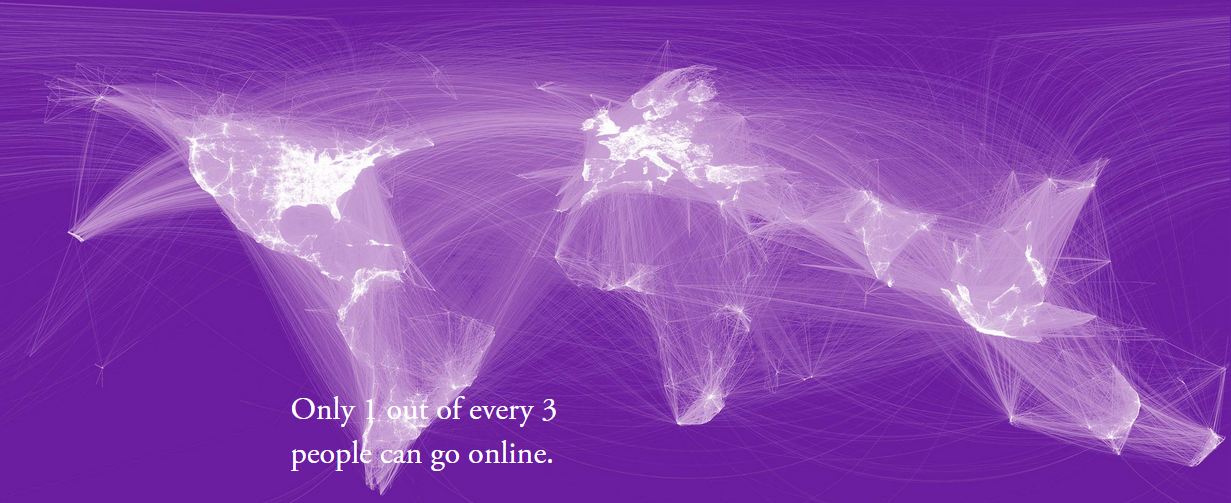
    Today, only 2.7 billion people – just over one-third of the world’s population — have access to the internet. Internet adoption is growing by less than 9% each year, which is slow considering how early we are in its development.

    The goal of Internet.org is to make internet access available to the two-thirds of the world who are not yet connected, and to bring the same opportunities to everyone that the connected third of the world has today.

    The founding members of internet.org — Facebook, Ericsson, MediaTek, Nokia, Opera, Qualcomm and Samsung — will develop joint projects, share knowledge, and mobilize industry and governments to bring the world online. These founding companies have a long history of working closely with mobile operators and expect them to play leading roles within the initiative, which over time will also include NGOs, academics and experts as well. Internet.org is influenced by the successful Open Compute Project, an industry-wide initiative that has lowered the costs of cloud computing by making hardware designs more efficient and innovative.

    In order to achieve its goal of connecting the two-thirds of the world who are not yet online, internet.org will focus on three key challenges in developing countries:

    Making access affordable: Partners will collaborate to develop and adopt technologies that make mobile connectivity more affordable and decrease the cost of delivering data to people worldwide. Potential projects include collaborations to develop lower-cost, higher-quality smartphones and partnerships to more broadly deploy internet access in underserved communities. Mobile operators will play a central role in this effort by driving initiatives that benefit the entire ecosystem.

    Using data more efficiently: Partners will invest in tools that dramatically reduce the amount of data required to use most apps and internet experiences. Potential projects include developing data compression tools, enhancing network capabilities to more efficiently handle data, building systems to cache data efficiently and creating frameworks for apps to reduce data usage.

    Helping businesses drive access: Partners will support development of sustainable new business models and services that make it easier for people to access the internet. This includes testing new models that align incentives for mobile operators, device manufacturers, developers and other businesses to provide more affordable access than has previously been possible. Other efforts will focus on localizing services – working with operating system providers and other partners to enable more languages on mobile devices.

    By reducing the cost and amount of data required for most apps and enabling new business models, Internet.org is focused on enabling the next 5 billion people to come online.

    Facebook, Ericsson, MediaTek, Nokia, Opera, Qualcomm, Samsung and other partners will build on existing partnerships while exploring new ways to collaborate to solve these problems.

    “For more than 100 years, Ericsson has been enabling communications for all and today more than 6 billion people in the world have access to mobile communications,” said Hans Vestberg, President and CEO of Ericsson. “We are committed to shaping the Networked Society – where everyone and everything will be connected in real time; creating the freedom, empowerment and opportunity to transform society. We believe affordable connectivity and internet access improves people’s lives and helps build a more sustainable planet and therefore we are excited to participate in the internet.org initiative.”

    “As a world leader in mobile solutions for emerging markets having powered more than 300 million smart devices within 2 years, MediaTek whole heartedly supports the internet.org initiative.” said MK Tsai, Chairman of MediaTek. “Global Internet and social media access represent the biggest shift since the industrial revolution, and we want to make it all-inclusive.”

    “Nokia is deeply passionate about connecting people – to one another and the world around them,” said Nokia President and CEO Stephen Elop. “Over the years, Nokia has connected well over a billion people. Our industry is now at an exciting inflection point where Internet connectivity is becoming more affordable and efficient for consumers while still offering them great experiences. Universal internet access will be the next great industrial revolution.”

    “Today, more than 300 million people use Opera every month to access the Internet. Tomorrow, we have a chance to serve the next 5 billion people connecting on mobile devices in developing countries. It’s in Opera’s DNA to save people time, money and data, and through internet.org we think we can help advance these goals.” — Lars Boilesen, CEO Opera Software.

    “Mobile has helped to transform many people’s lives in the emerging regions where often a computing device will be the first and only mobile experience they’ll ever have” said Paul Jacobs, chairman of the board and CEO of Qualcomm Incorporated. “Having shipped more than 11 billion chips, Qualcomm is a market leader that is committed to the goal of bridging the digital divide. We’re pleased to be a part of internet.org and to be working with key ecosystem players to drive this initiative forward.”

    “This new initiative has big potential to help accelerate access to the Internet for everyone,” said JK Shin, CEO and President of the IT & Mobile Communications Division at Samsung Electronics. “We’re focused on delivering high quality mobile devices to ensure that the next five billion people have great mobile Internet experiences.”

    The Internet.org website launches today and provides an overview of the mission and goals, as well as a full list of the partners. In the coming weeks, it will feature interviews with technology leaders and experts, along with the latest news on Internet.org activities.[/toggle]

iGyaan Network
Privacy Overview

This website uses cookies so that we can provide you with the best user experience possible. Cookie information is stored in your browser and performs functions such as recognising you when you return to our website and helping our team to understand which sections of the website you find most interesting and useful.