Tag: malware

  • Apple issues Second Java Update to Fix Flashback Trojan Venerability

    Apple issues Second Java Update to Fix Flashback Trojan Venerability

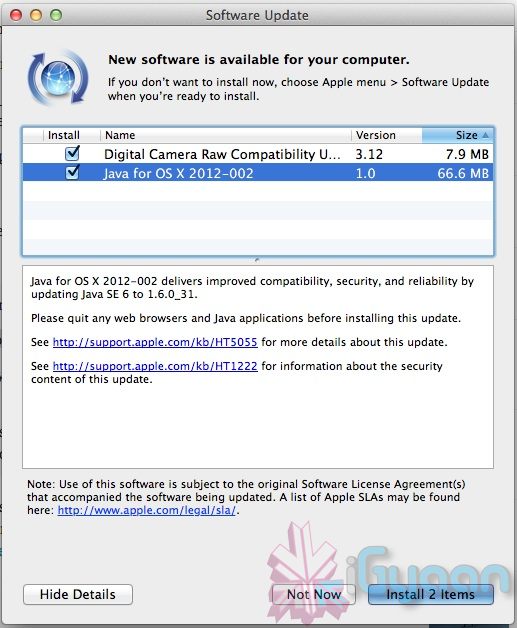
    Apple has not hesitated to close the loophole that allowed to Flashback trojan to penetrate the Apple OS X system. The Update which is 66.6 MB patches the venerability and fixes those computers that have already been affected.

    As reported earlier, the Flashback Trojan managed to infect hundreds of thousands of Macs worldwide. The majority of the infected machines – 350,000 are in US; about 125,000 are in Canada and 75,000 in the United Kingdom

    So if you are feeling insecure , go – ahead and hit the software update app and download the update. 

  • Google removes 22 apps from Android Market due to fraudulent charging

    Google removes 22 apps from Android Market due to fraudulent charging

    Google has reportedly removed 22 malicious applications from the Android Market after security vendors tipped off the company about apps attempting to trick users into accepting fraudulent charges via SMS. The devices get infected by a trojan that charges your phone bill with premium rate SMS charges.

     [quote]Trojan horse for Android devices that sends SMS messages to premium-rate phone numbers,[/quote]  Said Symantec

    [quote]The initial application activity presents the user with a single option to continue, which is presumed to be an agreement to premium charges that are buried within layers of less than clear links. The Premium Short Codes used could affect users in Russia, Azerbaijan, Armenia, Georgia, Czech Republic, Poland, Kazakhstan, Belarus, Latvia, Kyrgyzstan, Tajikistan, Ukraine, Estonia as well as Great Britain, Italy, India, Israel, France, and Germany.[/quote]

    The applications were dressed as copies of the popular apps like Angry birds and Cut the rope, but were actually malicious. Google has not named the apps and has not remotely deleted the apps from users phones. So if your phone bill has been racing high and you think your SMS bills are higher than usual, factory reset your phone and carefully select your apps.

  • McAfee Shares Vision for Bringing Mobile Devices into the Security Infrastructure (PR)

    McAfee Shares Vision for Bringing Mobile Devices into the Security Infrastructure (PR)

    McAfee has developed a three sided plan to ensure the future of mobile devices in the corporate environment. This plan was developed to help users secure their devices as the mobile malware market has seen an exponential growth in the last quarter. Read the Press Release for more details.


    [toggle title_open=”Collapse Press Release” title_closed=”Expand Press Release” hide=”yes” border=”yes” style=”default” excerpt_length=”0″ read_more_text=”Read More” read_less_text=”Read Less” include_excerpt_html=”no”]

    McAfee, today shared its vision for securing mobile devices in corporate environments. The three-pronged approach for protecting mobile devices, mobile data, and mobile applications, is designed to help businesses and consumers manage their devices securely, as the threat environment quickly evolves.

     Attacks on smartphones are becoming more common, and according to McAfee Labs, new malware targeting Android devices jumped 76 percent in the last quarter. The need to secure mobile devices from attacks has never been more important. IT security operations that were once smooth-running have recently come under intense pressure to adopt new technologies and fully support completely new platforms, operating systems, and architectures.  McAfee is developing products and strategies to allow businesses to bring these consumer devices securely into the IT infrastructure.

     “Mobile device adoption is exploding, and unfortunately, so are the threats targeting mobile platforms. If McAfee’s historical experience analyzing threats on numerous platforms is any indication, we believe that the emerging mobile malware we are seeing today is just the beginning,” said John Dasher, senior director, mobile security for McAfee. “It’s a whole new world, and a challenge for IT to craft security policies that make sense while updating their infrastructure. At McAfee, we’re working hard to create new technology to help enterprises address the challenge of securely incorporating these new mobile platforms into their environment.”

    New Endpoints, New Challenges

    Traditional endpoints relied mostly on email and web for application framework. Mobile has a whole new freedom in custom applications. But each new application – either public or private – introduces new threats and risks to corporate IT. Today, challenges include the consumerization of IT, mobile platform diversity that includes iOS, Android, BlackBerry and Windows Phone, and an explosion of applications. Additionally, most Android-based devices have a slightly different implementation of the OS making software development and support that much harder.

    McAfee is unique in being able to bring mobile devices into the security infrastructure. With a broad portfolio of security technologies including anti-malware, data loss prevention, application security, web protection, and more, McAfee has the technology needed to securely welcome these new endpoints. McAfee® ePolicy Orchestrator® security management software, which covers more than 30 million endpoints today, and McAfee Global Threat Intelligence, support and work across these integrations.

    McAfee’s Three-Pronged Approach to Mobile Security

    • Protecting Mobile Devices — With data and device protection for today’s most popular mobile devices, McAfee provides a complete security solution that embraces mobile device diversity. To meet this challenge, McAfee offers the following:
      • Anti-malware protection from the growing number of threats targeted at mobile devices through McAfee® VirusScan® Mobile software.
      • Web protection that alerts mobile devices users when they are accessing malicious sites, such as phishing sites is offered through McAfee SiteAdvisor technology.
    • Protecting Mobile Data — Protecting sensitive corporate data is a requirement. McAfee can ensure that only those devices with encryption access the corporate network and data.  McAfee offers
      • Data protection when using the McAfee EMM product, including the prevention of data leakage from Jailbroken and Rooted devices.
      • Anti-theft and loss features allow for remote backup, lock and wipe to make sure that sensitive data does not get into the wrong hands.
      • Additional data protection technologies are under development including the separation of business and personal data.
    • Protecting Mobile Apps – Beyond traditional email and web, mobile apps are readily available and proliferating by the millions. McAfee sees this as potentially the biggest threat vector of the future.
      • McAfee has released in beta McAfee® App Alert™ software to inform users how apps access their personal data.
      • McAfee is expanding the scope of its Global Threat Intelligence to include mobile app reputation services to identify apps that are malicious or put privacy at risk.
      • McAfee also has app-scanning technologies that have been successfully deployed in app stores, adding a crucial layer of application security that helps vendors provide customers a safe app experience.

    [/toggle]

  • McAfee Report Shows Significant Growths in Mobile Malware (PR)

    McAfee Report Shows Significant Growths in Mobile Malware (PR)

    Today, Mcafee released a report which showed that the number of Malware targeted Android devices has skyrocketed in this quarter to 76%, which makes it the most attacked mobile OS. Read the Press release for more information.


    [toggle title_open=”Collapse Press Release” title_closed=”Expand Press Release” hide=”yes” border=”yes” style=”default” excerpt_length=”0″ read_more_text=”Read More” read_less_text=”Read Less” include_excerpt_html=”no”]

     McAfee today released the McAfee Threats Report: Second Quarter 2011, showing that the amount of malware targeted at Android devices jumped 76 percent since last quarter, to become the most attacked mobile operating system. 2011 has also resulted in the busiest ever first half-year in malware history, including a first-ever appearance of Mac fake AV and a significant uptick in rootkits, suggesting that McAfee’s comprehensive malware “zoo” collection will reach a record 75 million samples by the year’s end.


    “Overall attacks are becoming more stealth and more sophisticated, suggesting that we could see attacks that remain unnoticed for longer periods of time. High-profile hacktivist groups have also changed the landscape by drawing a line between attacks for personal gain and attacks meant to send a message.”

    “This year we’ve seen record-breaking numbers of malware, especially on mobile devices, where the uptick is in direct correlation to popularity,” said Vincent Weafer, senior vice president of McAfee Labs. “Overall attacks are becoming more stealth and more sophisticated, suggesting that we could see attacks that remain unnoticed for longer periods of time. High-profile hacktivist groups have also changed the landscape by drawing a line between attacks for personal gain and attacks meant to send a message.”


    The report also details specific activity shaping the way cybercriminals operate, such as cybercrime “pricebooks” that determine the going rate for large email address lists, and acts of hacktivism and cyberwar.


    2011 On Track to Reach Record “Malware Zoo”


    With an approximate 12 million unique samples for the first half of 2011, a 22 percent increase over 2010, this has been the busiest first half-year in malware history. With the addition of Q2’s numbers, the grand total of total malware samples in McAfee’s database has reached approximately 65 million, and McAfee researchers estimate that this “Malware Zoo” will reach at least 75 million samples by the year’s end.


    Android Nabs Top Spot for Most Mobile Malware


    With the vast amount of personal and business data now found on user’s mobile phones, mobile malware is steadily increasing, often mimicking the same code as PC-based threats. In the second quarter of 2011, Android OS-based malware surpassed Symbian OS for the most popular target for mobile malware developers. While Symbian OS and Java ME remain the most targeted to date, the rapid rise in Android malware in Q2 indicates that the platform could become an increasing target for cybercriminals – affecting everything from calendar apps, to comedy apps to SMS messages to a fake Angry Birds updates.


    Fake Anti-Virus for Apple, Rootkits and Stealth Malware Reach New Terrain


    There are more Mac users than ever before, and as organizations increasingly adopt Macs for business use, Apple now has become more a target for malware authors. Though historically the Apple platform has been unaffected by fake anti-virus (fake AV) software, activity in Q2 indicates that it is now being affected. Although this type of fake AV is the first of its kind, McAfee Labs does expect fake AV in general will drop off over time.


    Another malware category that is demonstrating recent steady growth is stealth malware. The tactic of hiding malware in a rootkit is used by cybercriminals to make malware stealthier and more persistent, and has seen this type of attack gain in prominence over the past year, with high-profile attacks such as Stuxnet. Stealth malware has increased more rapidly in the last six months than in any previous period, up almost 38 percent over 2010.


    Acts of Hacktivism and Cyberwar Make Their Mark


    Acts of hacktivism, primarily from the groups Anonymous and LulzSec, were among some of the most prominent cyber news generators for Q2. The report details hacktivist activity from Q2, with at least 20 global attacks reported in Q2 alone, and with the majority allegedly at the hands of LulzSec. The report also outlines acts of cyberwar that occurred in Q2, including attacks on United States’ Oak Ridge National Laboratory, and an attack on South Korea’s National Agricultural Cooperative Federation.


    Email “Black Market” for Spammers


    Though spam is still at historic low levels, due in part to the Rustock takedown, McAfee Labs still expects to see a sharp rise in activity over the coming months. A common method for cybercriminals to increase their volume of spam activity is to purchase a bulk list of emails in order to flood as much spam as possible to a widespread group of people. Whether it’s a botnet or a rental service, prices vary for such enterprises, often by location. For instance, in the United States, the going rate for 1 million emails is $25, whereas in England 1.5 million emails are worth $100.

    [/toggle]
  • Have an Android Phone, this Trojan will record your Phone Calls!

    Have an Android Phone, this Trojan will record your Phone Calls!

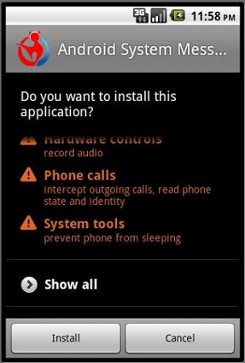
    Are you somebody important, do you work in a big corporation, or even for the government? Do you have an Android Phone? You might consider changing devices after reading this article. A new trojan app / bot that installs itself on any Android device via piggybacking over unknown source apps has found its way into the Android architecture.  Ca Technologies found that this easily built app lookalike trojan records your conversations and installs like any other app.

    There is no solid information weather this trojan has been released into the world, or if devices are already prey to such a menace. It goes to say some developer could easily capture your calls and upload them to a remote server. The brilliant part about it is that while installing you might get a warning stating that the app will record your calls, but who reads the terms page anyway?

    Next time you are installing an App on your Android device , especially via an unknown source, or patched apps, make sure you go through the permissions page with vigilance.

    [CA Technologies]

  • Bogus Angry Birds Apps on the Google Marketplace

    Bogus Angry Birds Apps on the Google Marketplace

    Bogus Angry Birds Apps on the Google Marketplace are being used to distribute Malware. Andrew Brandt, lead threat research analyst at Webroot, had this to say about the code dubbed “Plankton”

    [quote]It has the ability to remotely access a command-and-control [C&C] server for instructions, and upload additional payloads. It uses a very stealthy method to push any malware it wants to phone.[/quote]

    The code was first found by Xuxian Jiang, who is the Assistant Professor in Computer Science at North Carolina State University. Unlike other malicious code found in the Marketplace, Plankton does not rely on getting “root” access to the device. Instead, once installed, Plankton can call in other files from a hacker-controlled server, including ones that would exploit one or more unpatched Android bugs. It also harvests data from the phone, including the bookmarks, bookmark history and home page of the device’s built-in browser.

    All 10 of the apps that Google pulled after Jiang’s report purported to be add-ons or cheats for the popular mobile game “Angry Birds” from Finnish game company Rovio. None of the apps actually provided their promised functionality, however, but were simply the delivery vehicles for Plankton.

    This is not the first attack code removed by Google from its Marketplace.

  • Apple Releases Update to Detect and Delete MacDefender ‘Scareware’: UPDATE

    Apple Releases Update to Detect and Delete MacDefender ‘Scareware’: UPDATE


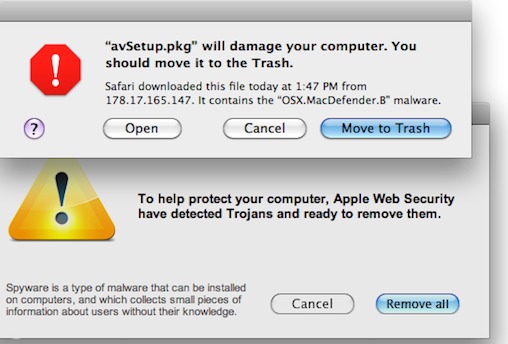
    Yesterday, Apple released an update for Snow Leopard  to detect and warn useres if they have installed a fake Mac security software called MacDefender. The term ‘Scareware’ basically means that the software will plague users with popups and alerts warning them that their computer is infested with trojans, worms and other malware. To get rid of these popups users have to fork over $60 to $80 to purchase the registered version of the useless software.

    The update, labelled 2011-003, adds a new definition to the rudimentary virus detection engine embedded in Snow Leopard, and also increases the requency with which it checks for definition updates to daily. This brings the total tally of antivirus definitions on the Mac AV engine to 6.

    This update was only offered to users running OS X 10.6 aka Snow Leopard. Macs powered by the older 10.5 Leopard OS will not recieve the same anti-MacDefender protection. Users can download the update from the apple website or update their system using the regular ‘Software Update’.


    UPDATE:

    The people responsible for the fake Mac security software has already updated their “scareware” to evade defenses Apple put in place late Tuesday, a French security company Intego confirmed today. “Apple’s [antivirus] did not detect the new sample,” said Peter James, a spokesman for Intego. According to James, the new malware file is identified as “mdinstall.pkg” and if installed, plants the phony MacDefender software on the victim’s Mac.

    Intego confirmed  that the scammers had created a new version that wasn’t detected by Apple’s new defenses. “This isn’t surprising, that there’s a new variant out almost as soon as Apple released its security update Tuesday,” said James. “[The attackers] are following the news, they’re efficient.”

iGyaan Network
Privacy Overview

This website uses cookies so that we can provide you with the best user experience possible. Cookie information is stored in your browser and performs functions such as recognising you when you return to our website and helping our team to understand which sections of the website you find most interesting and useful.