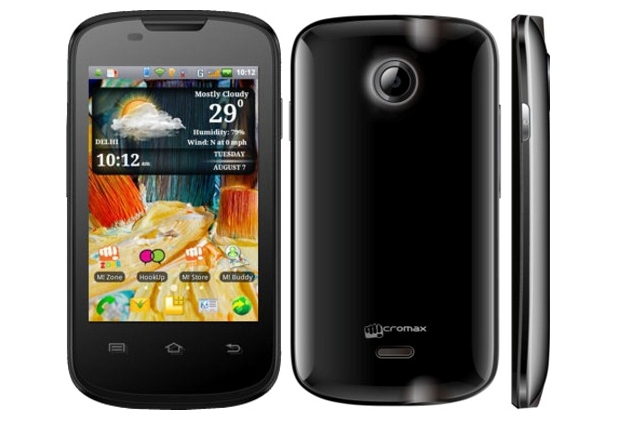
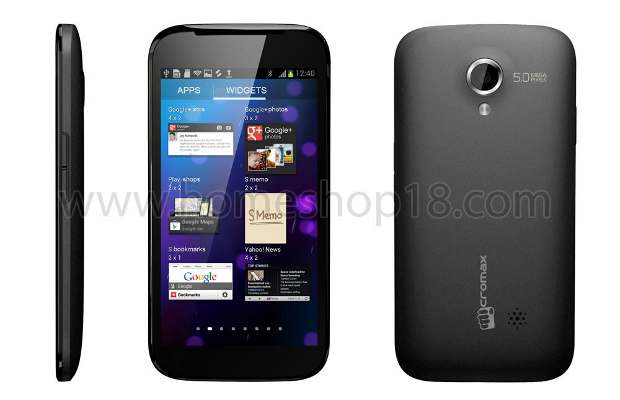
Micromax has been lambasted by consumers in the past for not following up with software updates for their devices. That might change soon.
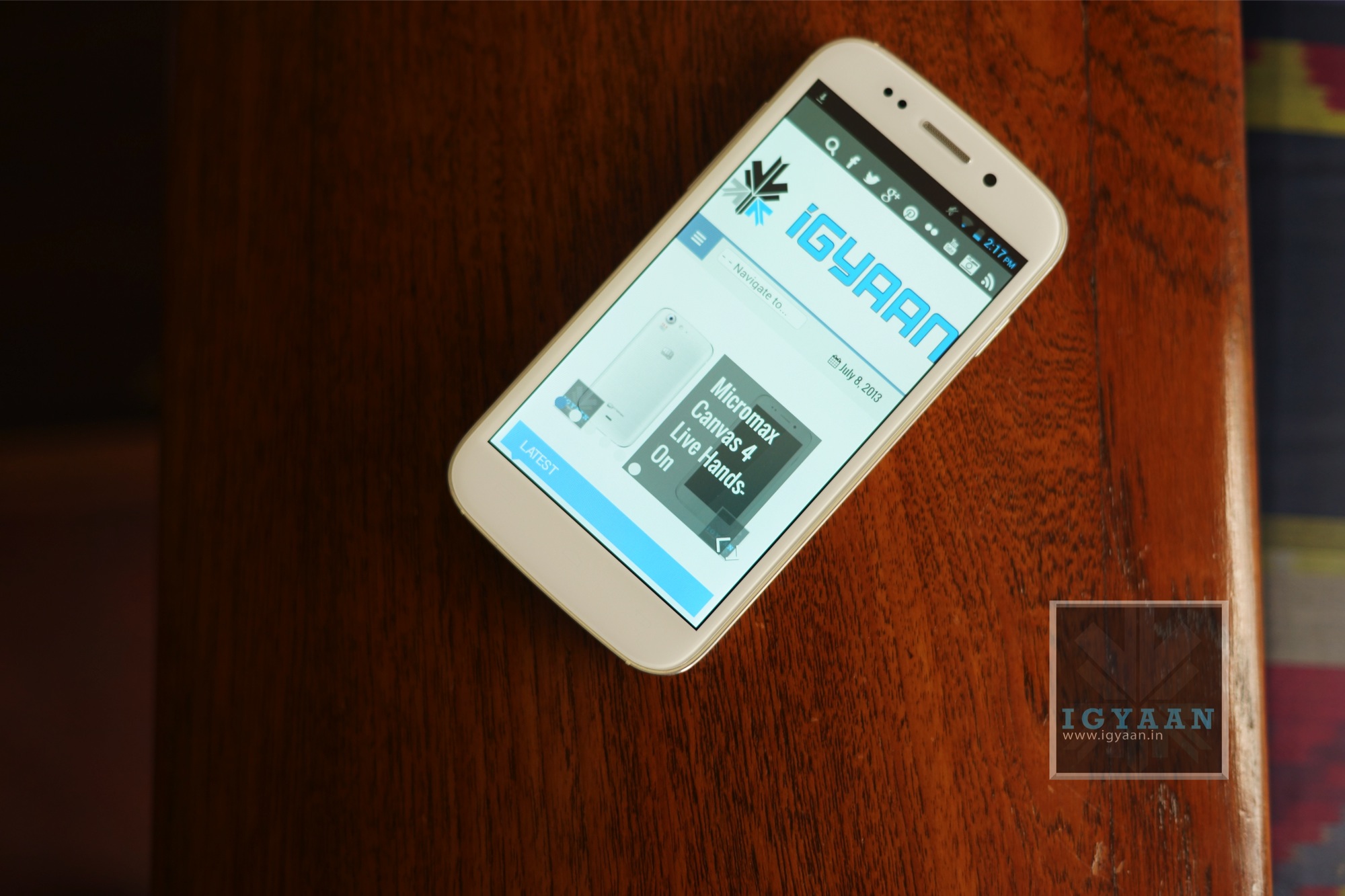
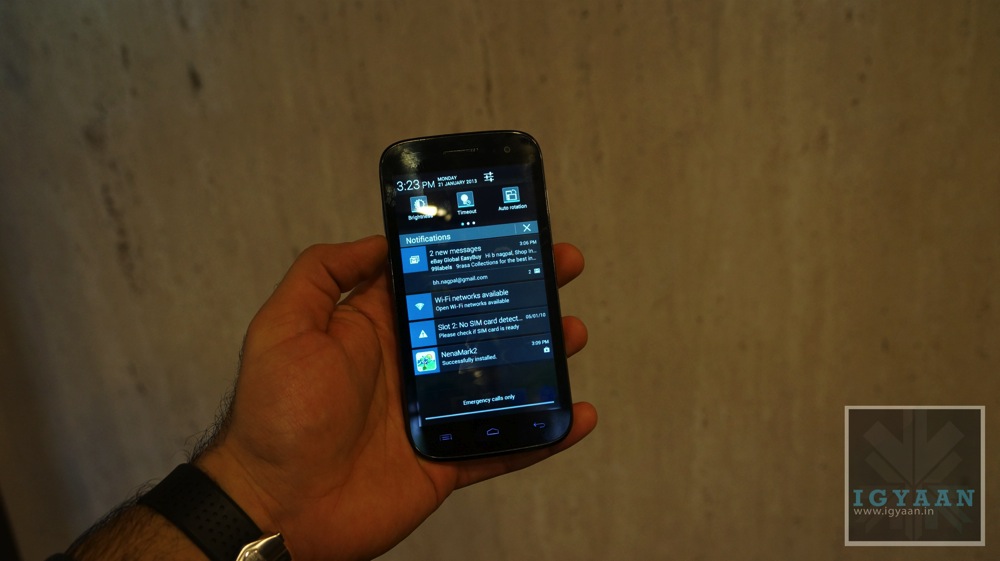
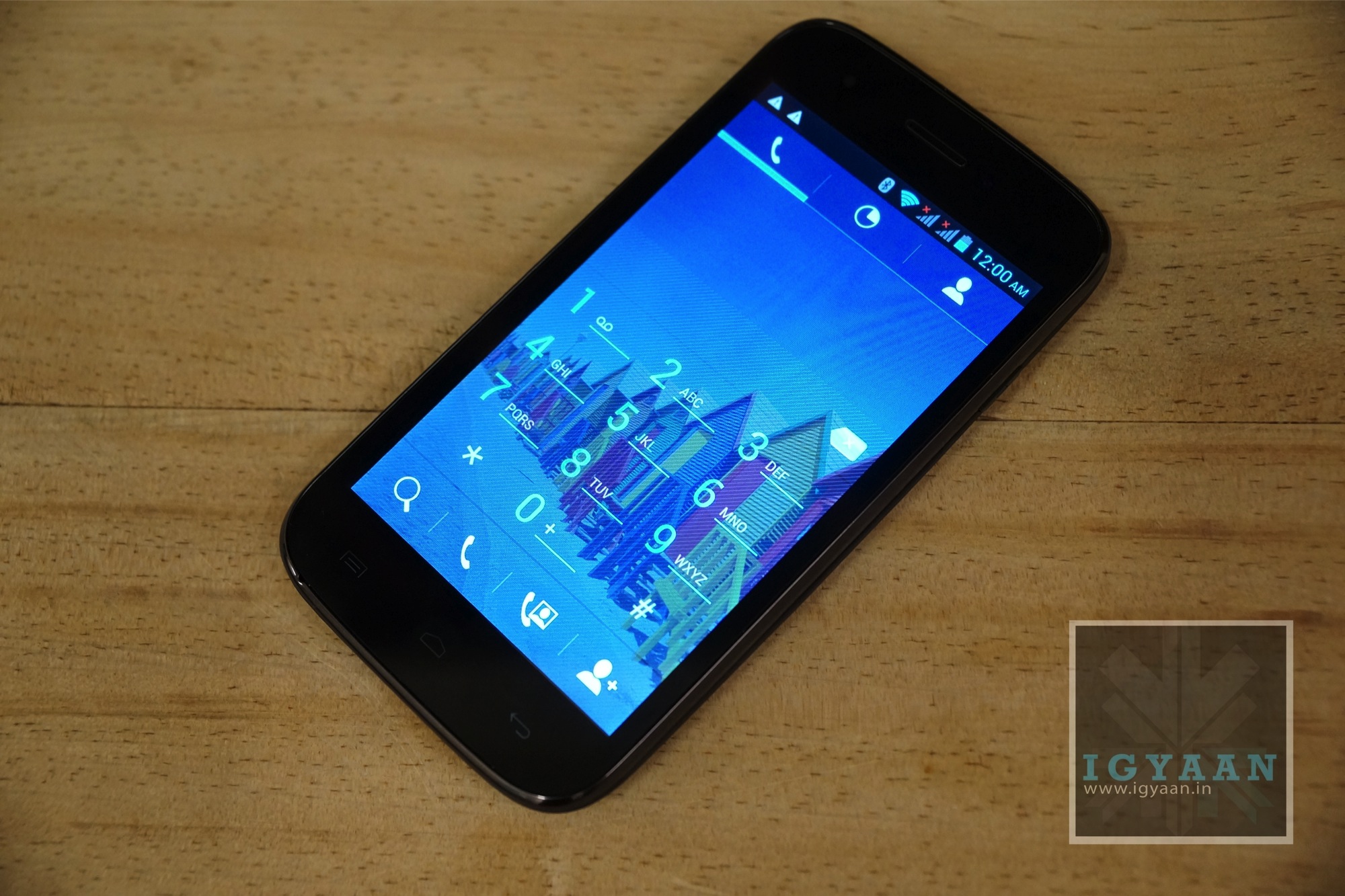
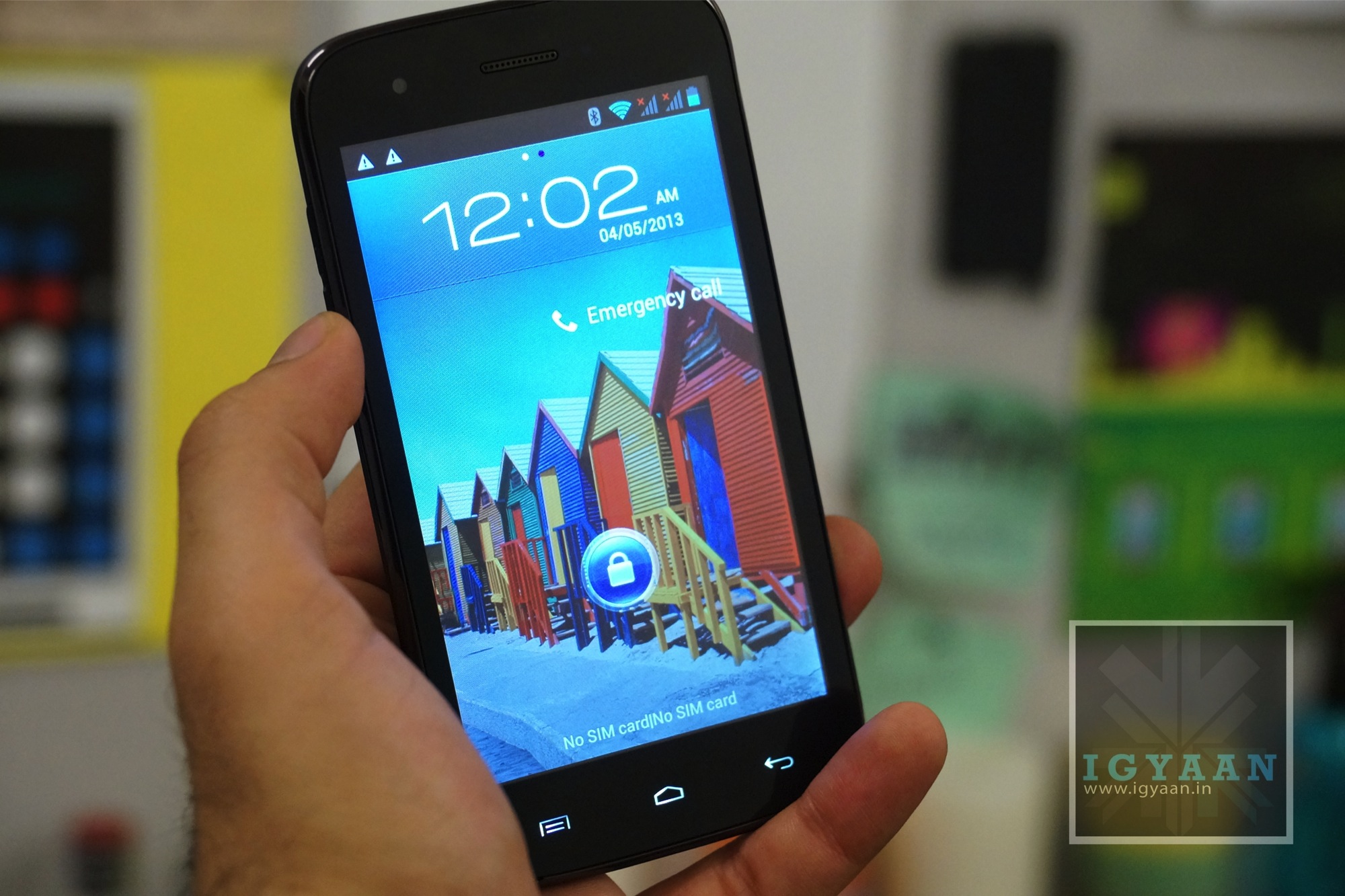
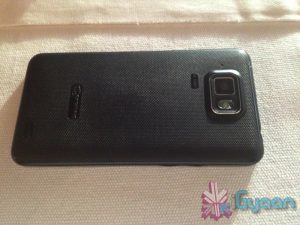
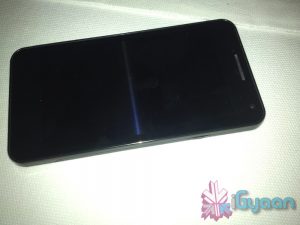
A tweet by regular @MMXNewscaster reveals an image of the Canvas HD A116 running the recently revealed Android 4.3 Jelly Bean. If true, this would please all Micromax consumers.
At its Canvas 4 launch event, Micromax focused on the importance of consumer satisfaction and introduced the 7-day service center policy to improve its service. Providing regular software updates should be the next step forward for the company if it wants to really establish itself as a brand that can compete with the big players. We expect the Android 4.3 update for the Canvas 4 after the Canvas HD update is rolled out.
If we talk about Android 4.3 itself, the new operating system will feature multi-user restricted profiles. This will let users control access to contents and apps per user—so parents, for example, can control which applications their kids can access. When accessed from restricted profiles, applications behave differently. On stage, Hugo Barra demonstrated this by showing a puzzle game whose in-app purchase functionality was automatically disabled when it was accessed on the kid’s restricted profile.
Other features include built-in OpenGL ES 3.0 support, DRM APIs for providing hardware-based encryption for protecting content, which will allow it to provide 1080p video to its tablets. The first partner is Netflix, which supports 1080p HD streaming. The Nexus 7 is the first device to support it.
Android 4.3 also introduces many other features, including support for Bluetooth Smart devices, background Wi-Fi location, more language support and “easier text input.”
The Micromax Canvas HD sports a 5 inch HD display with a screen resolution of 1280 by 720 pixels backed by a MediaTek’s MT6589 Cortex-A7 SoC quad-core processor clocked at 1.2 GHz. The Canvas HD launched with Android Jelly Bean 4.1.2 operating system.
Micromax announced their latest flagship device this week, the Micromax Canvas 4. While they talked about how they received an enormous amount of pre-bookings, we can’t help but feel that most of the pre-bookers would’ve changed their minds after the launch itself.
The Micromax Canvas 4 only boasts of a camera update and a few software tricks over the previous flagship device, the Canvas A116 HD.
Below, we mention 5 devices (in no particular ranking) as alternatives to the Canvas 4, which cost about the same or less than the Micromax.
1. Micromax Canvas A116 HD
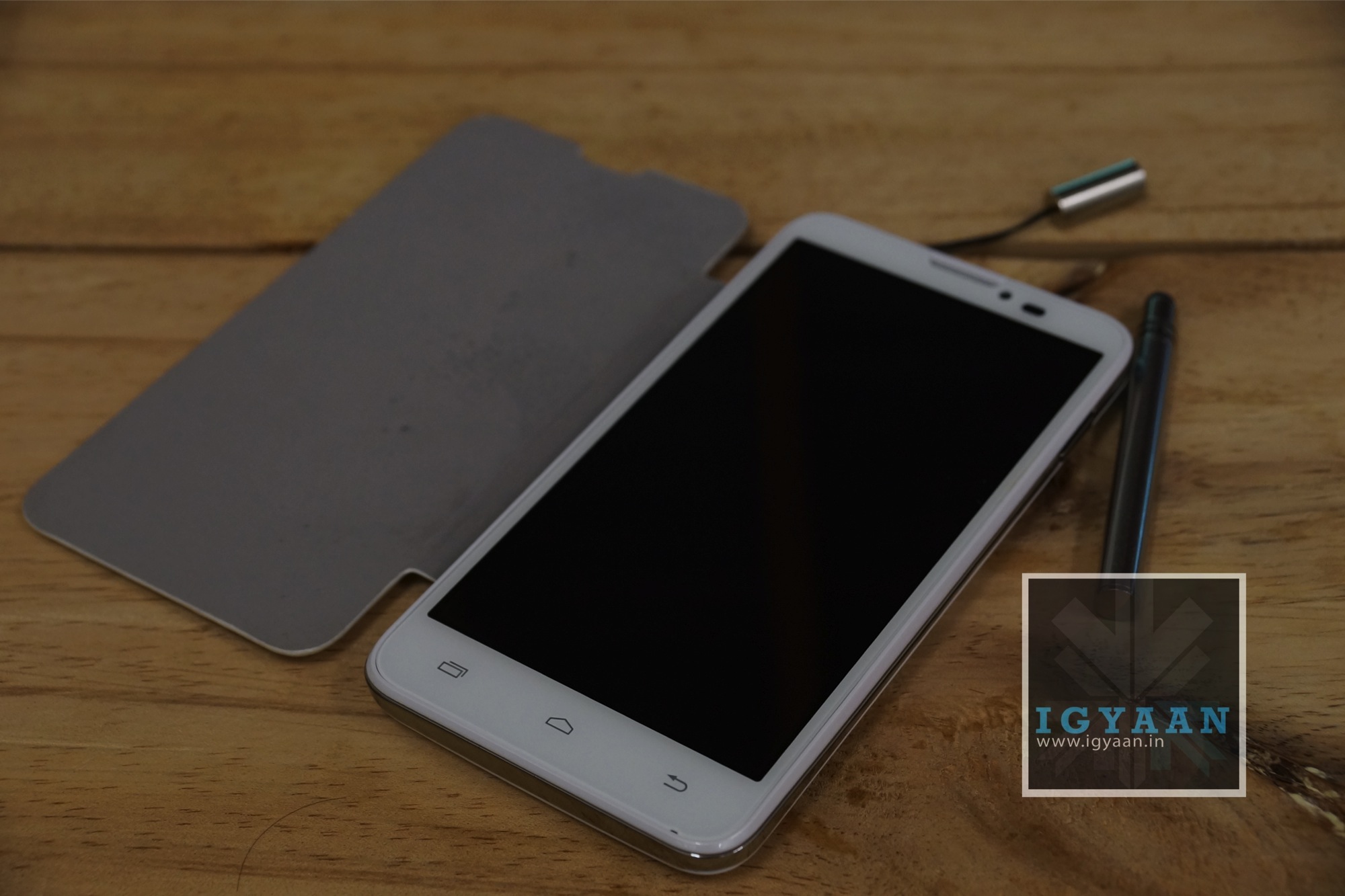
We’ll start with one from Micromax’s stable itself. The Canvas HD has the same 5-inch 720p display, the same quad-core MediaTek processor and Dual SIM capability. The only drawback? It has a 8MP rear camera as opposed to the Canvas 4’s 13, and a 2MP front as compared to the Canvas 4’s 5. And the Canvas HD is about Rs. 4500 cheaper than the Micromax Canvas 4.
So if you can live with the lower resolution camera, then you would be better off choosing the Canvas A116.
Xolo recently stepped up their device portfolio in India with multiple launches and aggressive marketing. One device that stood out was the Xolo Q1000.
Xolo Q1000 is powered by a 1.2GHz quad core processor. It features a 5-inch IPS display that has a resolution of 720×1280 pixels with a pixel density of 295ppi. The screen is made of scratch resistant Dragon Trail glass. The dual-SIM (GSM+GSM) phone runs on the latest Android 4.2 Jelly Bean.
It has 1GB of RAM and PowerVR SGX544 graphics processor. The phone sports an 8-megapixel rear camera with LED flash and BSI sensor and a 1.2-megapixel front facing camera.
The Xolo Q1000 offers 4GB of internal storage expandable up to 32GB via microSD card. The phone features 3G, WiFi 802.11 b/g/n, and Bluetooth 4.0 connectivity options. It has a 2,100mAh battery.
The Lava Iris 504Q has a 5 inch 1280 x 720p screen, 1.2 GHz quad core MediaTek MT6589 (same as that on the Canvas 4) processor, a mix of 8 MP and 2 MP cameras, 1 Gig of RAM and a 4 GB storage. Lava has added various software tweaks to appeal to the market like gestures for the image gallery and clicking pictures. It is essentially a Dual-SIM GSM + CDMA smartphone.
You also get a microSD card slot, Wi-Fi, Bluetooth 3.0, 3G, and 2000 mAh battery.
We were really impressed by this device in our review and feel that it is a really capable alternative to the Canvas 4.
One from the big brand now. The Xperia L is undoubtedly better than the rest as far as the software aspect is concerned. On the specs front the Sony Xperia L sports a 4.3-inch display with 480×854 pixel resolution and is powered by a 1GHz Qualcomm MSM8230 dual-core processor. It runs on Android 4.1.2 Jelly Bean operating system and packs 1GB RAM along with 8GB of internal storage which is expandable up to 32GB via microSD card.
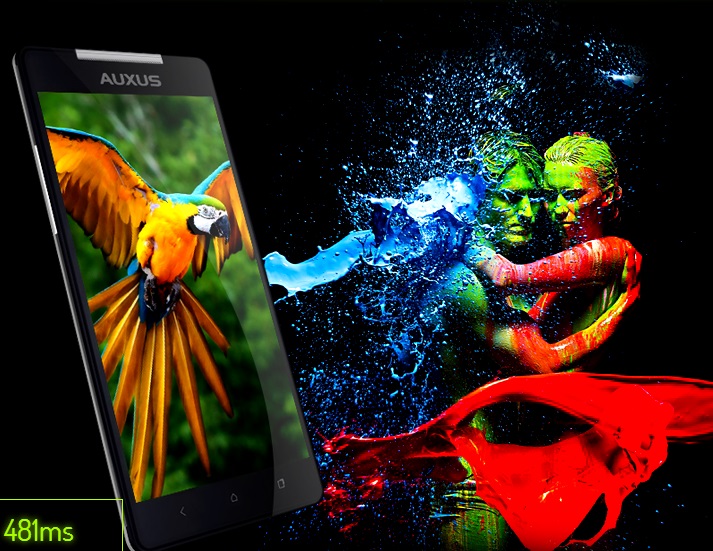
The Auxus Nuclea N1 will have a Full HD 1080p 1920 x 1080 resolution One-Glass Solution display with Active Matrix technology. It will come equipped with a MediaTek MT6589T Quad core Turbo 1.5GHz processor and a PowerVR SGX 544MP GPU clocked at 357MHz for the graphics. The Auxus Nuclea N1 will also come with other features such as Gesture control, Voice Unlock, Magnetic sensors etc. It is a dual Sim phone 3G +2G smartphone.
The Auxus Nuclea N1 will come with a 13MP rear facing camera with a BSI sensor and AutoFocus,along with an impressive 8MP front facing camera and will run on Android 4.2 Jelly Bean. A Li-ion battery measuring 2800mAh will be used in this smartphone.
The internal memory and RAM have not been specified yet. The Auxus Nuclea N1 will go on a 10-day-pre-booking starting from 13 Jul 2013 at a price of Rs.15990 while the regular order price is set at Rs.18000 (same as the Micromax Canvas 4).
Micromax Canvas 4
Related Products
Were you happy with the specifications of the Canvas 4? Have we missed out on any good alternatives? Let us know below!
Micromax attempts yet another handset in the Indian Market with the new A111 Canvas Doodle, trying to grab the attention of budget seekers. The Quad Core smartphone is Micromax’s take on making a budget Note series smartphone. But, does the Micromax A111 Canvas Doodle fulfill that promise? lets find out.
Build Quality, Hardware and Design
The Micromax A111 Canvas Doodle isn’t exceptionally well built, but has just the right mix of elements that make it a fairly durable phone. The plastics and the back panel are solid and do not have any rattle in them what so ever. The included flip cover is a poorly made cover and will not last the users a long time, the fact that the white colored faux-leather material is not coated also makes it a dirt and grime magnet. However, it does do its job of protecting the front screen of the Micromax A111 Canvas Doodle, which thankfully takes a different design approach from the previous Canvas series smartphones.
The insides are laced with a thick layer of Qualcomm grease, in other words a Qualcomm MSM8225Q Snapdragon chipset runs the Canvas Doodle. The RAM is kept at a lowly 512 MB, and storage a mere 4 GB. The good thing however, is that the phone when provided with a class 10 microSD card, converts that into the main storage. This truly expands the capability of the device and makes Micromax’s Canvas series highly desirable (at least the new units). The front of the phone has a large 5.3 inch 480 x 854 px display which will not win any points in the resolution department, but is surely a large display.
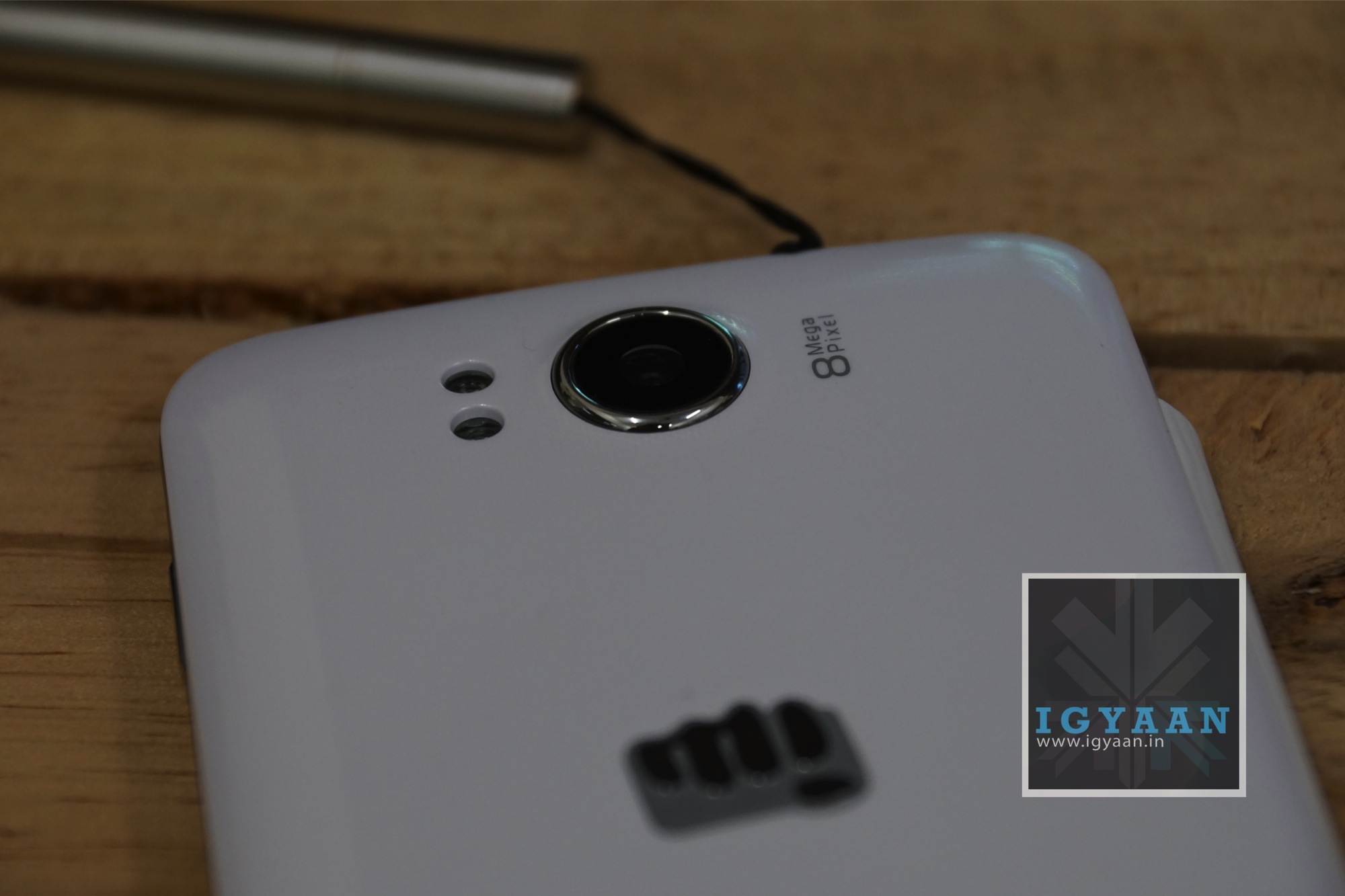
Cameras on the Micromax A111 Canvas Doodle include an 8 MP main shooter and a 2 MP secondary shooter. Both of which are fairly good in their respective capabilities. You will also get video calls over 3G from the front facing camera.
The Micromax A111 Canvas Doodle take a design leap in a new direction, making the phone a lot more squarish and flatter vs the wobbly and curved design of the previous generation of Micromax Canvas phones. The bold new logo on the back, although appreciated by some, is almost like an eyesore on a fairly well finished smart phone, which constantly reminds you that you own a “punch” flavored smart phone.
“Doodle”! Honestly, a year ago if a phone with this name would have appeared in the market, it would have been ridiculed to death. But the market is different today, and we have heard of anything from “dream” to “titanium” to “grand” and even “iris” so nobody really cares if their smart phone is called Doodle. Now, coming to the point, the Micromax A111 Canvas Doodle was named such due to the inclusion of the stylus and the overall appeal of the smartphone as a pen input device. Unfortunately, the Micromax A111 Canvas Doodle comes no where near that, the included stylus is the most horrible stylus you can get for a phone, it is too small to hold, does not extend, and worst of all; does not work properly on the Micromax A111 Canvas Doodle.
Fortunately for Micromax, they do get redeeming points because, the freebies aside, the phone is quite a capable handset. With dual sim and the storage extended the phone manages to run smoothly and will not crash in daily chores. The internet experience is pleasing and the overall usage of the phone will not be a let down.
If you are seriously considering this device for the included stylus and drawing capabilities, investing in a tablet and a Rs. 1000 stylus will get you more than the Jelly Bean Doodle. The Micromax A111 Canvas Doodle is quite capable in other aspects and due to a firly common resolution will support most of the apps from the Google Play store, including high end games, which we tested in the gaming video. See below.
Multimedia, Camera and Gaming
[pullquote_left]The oodles of the Doodle! [/pullquote_left]We have understood, mostly from our readers, that the maximum number of sales happening in these so called “budget phablets” are happening with the youth or the younger crowd. The usage of the phone survives around social media, networking, Multimedia consumption and creation along with leisure activities that include some gaming. The Micromax A111 Canvas Doodle seems to be a good balance in all, while not being premier in either.
Due to the nature of the Android Eco System, the Micromax A111 Canvas Doodle is capable of all forms of social media and networking. You have apps for Facebook, Pinterest, Flipboard (subscribe to iGyaan on Flipboard ) and Instagram, just to name a few. You have all forms of other apps that let you interact between networks and socialize over multiple platforms. The internet experience is good too, the Micromax A111 Canvas Doodle has WiFi and 3G access allowing you to connect to high speed internet (if present) and access all forms of networks. The internet browser is fairly smooth and capable, while many a replacement are available in the Android Google Play store, to improve the online experience.
The Camera on the Micromax A111 Canvas Doodle is an 8 MP autofocus camera capable of capturing good pictures provided light is ample, a little into the darkness and the distortion in the images is clear. See some samples below. The front camera is also quite handy for clicking self portraits for that new Facebook profile picture or even group party shots. Since the Camera app is not custom designed, it will be better if you opt in for a premium app from the Play store.
Sample Images
Gaming on the Canvas Doodle was surprisingly good, it played all forms of games from tennis to NOVA 3 and handled them quite capably. Most high end games will run with reduced graphics, but will play smoothly enough to be able to enjoy the gameplay.
The networks and phone call capability on the Micromax A111 Canvas Doodle is excellent, with little or no network issues, and great connectivity throughout, you will have no complaints with the phone. The dual sim is still standby, so if you are connected on one, the other remains off or out of reach. We also have issue with only one slot being 3G, its high time that companies start adapting the Samsung approach and making phones that let you switch 3G internally vs a sim slot capable of 3G and another for 2G.
The battery is good for one day with average usage, but if you are a heavy user expect to charge it twice.
[tabgroup]
[tab title=”Battery Life with 3G ON” icon=”icon-headphones”]Talk time : 5 Hours Standby : 48 Hours Gaming : 3.5 Hours Online : 6 hours Music 8 hours[/tab]
[tab title=”Battery Life with 3G OFF” icon=”icon-headphones”]Talk time : 6 Hours Standby : 54 Hours Gaming : 3.5 Hours Online : 6 hours (wi-fi) Music 8.5 hours[/tab]
[/tabgroup]
Conclusion
The Micromax A111 Canvas Doodle offers you up with a capability of being a Note-worth competitor, while failing miserably at that, it by itself is quite a satisfying product. A well balanced phone with a new design and decent hardware on the inside. It balances between all the tasks you could expect from a phone while leaving out performance from any. If you are opting in for a well balanced device, the Micromax A111 Canvas Doodle will not disappoint, But, of you are looking for a single important feature, be it pure gaming, Online capabilities or even a great camera, The Micromax Canvas Doodle is not the phone you want to get.
Micromax has recently taken the budget smart phone market with their Canvas Series in India. The Micromax A115 Canvas 3D is another addition to the lineup. Cheaper than the Canvas 2 at launch, the Canvas 3D adds a 3D Stereoscopic Display into the mix. Lets see how it fares out in our full review.
Display in 2D mode
Build Quality and Design
The Canvas series of phones including the Canvas 2 and Canvas HD are nicely built phones from Micromax. The Micromax A115 Canvas 3D takes it one step ahead. The back of the device is now coated with a soft touch material that makes the phone seem more robust and easy to handle. While the whole chassis is made of plastic it is able to withstand a couple of drops and high intensity jerks.
In terms of design the Micromax A115 Canvas 3D will be easily spotted from a distance, the unique build and design will also set it apart for those who want slightly premium looking phones. The ID of the phone resembles more HTC devices vs their previous obsession with Samsung Design. The phone does not appear to be the strongest phone at this time or even price, however it is well-built , looks and feels good in the hand.
The insides are laden with the previous-gen Mediatek 6577 chipset, which in terms of performance lacks behind, in comparison to many of the other devices available at a slightly higher price. Inbuilt storage remains at 4 GB, but the minute you insert a micro SD card the internal storage combines with the card enabling up to 34GB of capacity (32GB card + 2GB onboard). The RAM on the Canvas 3D is lower than required at 512 MB and you will see the grunt of it during gaming and application usage.
The Micromax A115 Canvas 3D’s name comes from the 5 inch 480 x 800 px Glasses-Free Stereoscopic 3D display, which turns on in certain applications including the 3D YouTube videos, certain apps from the 3D HUB and Picture preview. The camera is a 5 MP camera that combines two individually clicked images to make a 3D image, unlike other 3D phones which have dual sensors.
The power source is a 2000 mAh battery pack and is capable enough, read the battery section below.
3D Mode
Micromax A115 Canvas 3D and its Use
[pullquote_left]Economies of Scale vs Economies of Fail[/pullquote_left] So, a 3D display in a budget phone, what does that mean? Essentially, there are only two ways a technology becomes cheaper. One; if a tech has reached its saturation point, and enough development and numbers produced to make the process work for it, to make it cheaper (Economies of Scale). Two; if the technology was not successful to begin with and the stocks and design frameworks liquidate (Economies of Fail?). Well, Glasses Free 3D on mobile phone may as well be a part of the latter, while many companies including LG and HTC tried to make Glasses Free 3D phones. They were just not appreciated by the world, and eventually that technology thrown out. Nintendo used the Glasses Free 3D on their portable gaming console and that just did wonderfully well. The fact remains that the 3D technology is still at far from becoming mainstream, simply because it just does not look that good.
So thanks to the effect of expensive phones with this technology not being successful, the technology became cheaper, cheap enough to get fitted inside an under Rs. 10,000 phone for users to enjoy 3D content. Unfortunately there is no ALL time 3D switch , or any form of 2D to 3D conversion engine.
The content on 3D is also decent enough and enjoyed once in a while, and not all the time. So at the end it only plays to the fact that you have 3D in your phone, but you will not use it a lot.
Camera and Multimedia
The camera on the Micromax A115 Canvas 3D is a Fixed Focus 5 MP camera, that has a software ability to capture 3D images. Unlike standard 3D cameras which have two lenses, the Lens on the Micromax Canvas 3D utilizes time shift and user movement to capture a 3D image. The images are half decent and truly may not pass off as 3D images, unless the user is professionally focusing on the angle and the distance of the shot from the first click. Video shot is also poor quality, and is not shot in 3D mode. You do not have auto focus or tap to focus what so ever, the phone does recalibrate white balance and ISO for every picture taken.
Multimedia performance is good, you can enjoy 3D content on the Micromax Canvas 3D without the need of glasses. The viewing angles improve once in 2D mode, but are not great in 3D mode. The Micromax A115 Canvas 3D also has good sounding audio from the main speaker as well as through headphones.
Basic UI navigation within the interface was fast and fluid, we did face a bit of lag and it seemed that the phone held back when it came to performance. While the Canvas 2 did really well for Micromax, the Canvas 3D has the same performance only reduced by the 3D display’s punch of the graphics card.
In the case of the Micromax A115 Canvas 3D, almost all games are downloadable and installable thanks to the storage on memory card option. But, even though the phone can download, install and run almost all games, only basic games will work perfectly on this phone. The Canvas 3D does not have the capability of performing in games like NOVA 3 and Modern Combat 4, simply because of the lack of power under the hood. See out Gaming Video below.
The UI remains mostly vanilla, with only the addition of basic things like quick toggles in the notification panel, and custom apps and icons. Every other UI element looks and performs vanilla with the Android 4.1.2 Jelly Bean OS, which comes as stock on the Micromax A115 Canvas 3D.
Phone call quality remained good throughout, with little or no dropped calls keeping the network strength in the high range. While the microphone and earpiece are great to use the Speakerphone is not as loud as some would expect.
Switching b/w Sim cards maybe still a problem, since both SIM slots don’t support 3G outright, only one fixed slot will run 3G at a time, creating issues in low or no network areas for that sim. You will get stuck on 2G or no data network on both sim cards.
Battery life
The Micromax A115 Canvas 3D has varied battery life as we demonstrate below, in normal usage the phone lasted a good 5-6 hours on talk time, add any online access etc., the battery life for talk time drops to just 3 hours.
[tabgroup]
[tab title=”Battery Life with 3G ON” icon=”icon-headphones”]Talk time : 5 Hours Standby : 48 Hours Gaming : 2-3 Online : 5 hours Music 7 hours[/tab]
[tab title=”Battery Life with 3G OFF” icon=”icon-headphones”]Talk time : 6 Hours Standby : 54 Hours Gaming : 3 Online : 5 hours Music 7 hours[/tab]
[/tabgroup]
Conclusion
While The Micromax Canvas 3D brings to the market which no other company is offering in the price bracket, one truly needs to understand the give and take for it. Does one really need the 3D feature? why not. If you are getting the same performance like other products in the price bracket and yet you get additional features, why would you refuse. For the sake of the argument, the A115 is as good as the A110 but with 3D powers.
If you want performance and gaming capabilities, you should seriously reconsider your price bracket, No, you cannot get a Samsung Galaxy S4 replacement in Rs. 10,000 not yet anyway.
More than anything the Micromax A115 Canvas 3D gives you yet another option in this wide array of phones in the market. If you were considering the A110 the A115 is another option to consider. In Our opinion Micromax has held back on their hardware capabilities and should have used the newer Mediatek Chipset instead of the outdated underpowered MTK 6577.
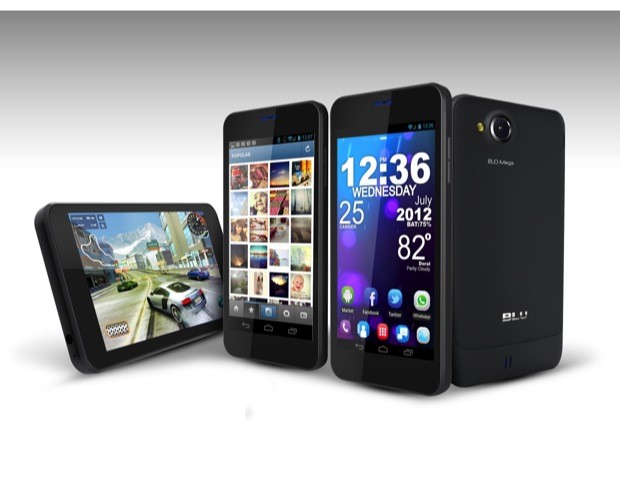
BLU Products, announced the new VIVO 4.65 HD, as a big brother to the VIVO 4.3 which launched earlier this year. Improvements on the VIVO 4.65 HD, include an increased screen size to 4.65″, as opposed to 4.3″ from the previous model, as well as improved display resolution with an HD Super AMOLED display, and increase to 1GB of RAM.
The phone is slated to begin shipping in January, and is priced at $300 in the US and will soon follow through to parts of Asia.
[quote]”We are thrilled as we continue to add to the successful series of VIVO smartphone devices using Super AMOLED Technology displays, resulting in remarkably bright and vivid color reproduction, with the best viewing experience available on a mobile phone today,” said Samuel-Ohev-Zion, CEO of BLU Products. “BLU is determined to continue to bring the best technology and specs available on mobile devices, with several incredible product launches coming in the first half of 2013.”[/quote]
The Vivo 4.65 HD features a MediaTek MT6577 Cortex A9 1.2GHz dual-core processor and 1GB of RAM. The rear camera is 8-megapixels and offers HD video recordering. The handset features 3G and HSPA conenctivity, as well as dual SIM support; the handset is unlocked. There’s no Jelly Bean here, unfortunately, with the device running Ice Cream Sandwich.
Interestingly, we expect the next device in the Micromax A90 line up to have similar specs, as that was the case when the A90 was launched. Its specs were notoriously similar to the VIVO 4.3.
[toggle_box title=”Press Release” width=”Width of toggle box”]
BLU Products, one of the fastest growing mobile phone manufacturers in the world, announced the new VIVO 4.65 HD, as a big brother to the already popular and bestselling VIVO 4.3 which launched earlier this year. Improvements on the VIVO 4.65 HD, include an increased screen size to 4.65″, as opposed to 4.3″ from the previous model, as well as improved display resolution with an HD Super AMOLED display, and increase to 1GB of RAM.
“We are thrilled as we continue to add to the successful series of VIVO smartphone devices using Super AMOLED Technology displays, resulting in remarkably bright and vivid color reproduction, with the best viewing experience available on a mobile phone today,” said Samuel-Ohev-Zion, CEO of BLU Products. “BLU is determined to continue to bring the best technology and specs available on mobile devices, with several incredible product launches coming in the first half of 2013.”
The VIVO 4.65 HD, continues with its predecessor’s design language, which features no physical hardware buttons on the front to ensure a seamless elegant design, and is run by a MediaTek MT6577 dual core 1.2 GHz Cortex™-A9 CPU with 3G/HSPA connectivity, running Android 4.0 Ice Cream Sandwich Operating System. Additionally, the VIVO 4.65 HD is designed to deliver high-end multimedia capability, with an 8MP autofocus camera, and HD video recording and playback. The highlights of the phone include the rich viewing experience of the brilliant HD Super AMOLED 4.65″ Display, along with true dual SIM capability allowing both SIMs to be active and receive calls simultaneously.
The unlocked VIVO 4.65 HD will begin shipping to major US Retailers in January of 2013, with an MSRP of $299.99 and will soon follow through Latin America, and parts of Asia.
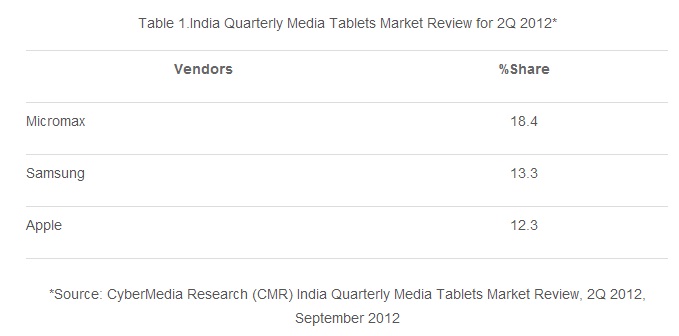
In a CyberMedia Research it has been revealed that Micromax leads the Indian tablets market with 18.4 percent share in the second quarter of 2012. Samsung is in second position with 13.3 percent market share. Apple has a market share of 12.3 percent in terms of unit shipments during the 2Q 2012.
India tablet market sales touched 0.55 million units in 2Q 2012, up 673 percent y-o-y.
Entry of new tablet vendors and introduction of offerings from existing vendors at low to medium price points have contributed to the significant growth.
Though the tablet PC market in India is still at a nascent stage, but at the same time, has become competitive due to entry of new vendors with entry-level offerings, the report said.
Close to 90 vendors launched their tablets till Q2 2012. The average selling value (ASV) in the said period dropped to little above Rs 13,000 from Rs 26,000 in the January-March 2012 period as a majority of vendors launched their products in the Rs 5,000-10,000 price range.
[quote]”During 2Q 2012, 47.4 per cent of tablet sales were from new entrants in the market with a strong focus on addressing application areas in the Education and Entertainment segments,” CMR Lead Analyst (Telecoms Practice) Faisal Kawoosa said.[/quote]
This trend demonstrates clearly that vendors are positioning their devices at India’s youth, he added.
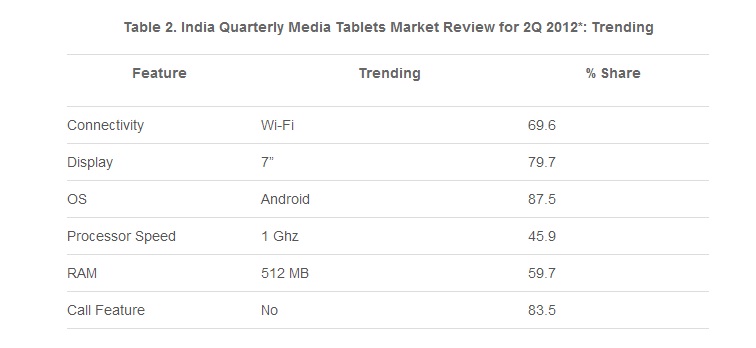
Some of the key trends in terms of specifications of media tablets inIndianoted in 2Q 2012 are listed in the table below.
Android operating system had the lion’s share of the market at 87.5 per cent.
“As Android devices become increasingly popular with users across the world, competition is increasing in the India tablets market with more and more vendors launching devices based on the Android OS,” he said.
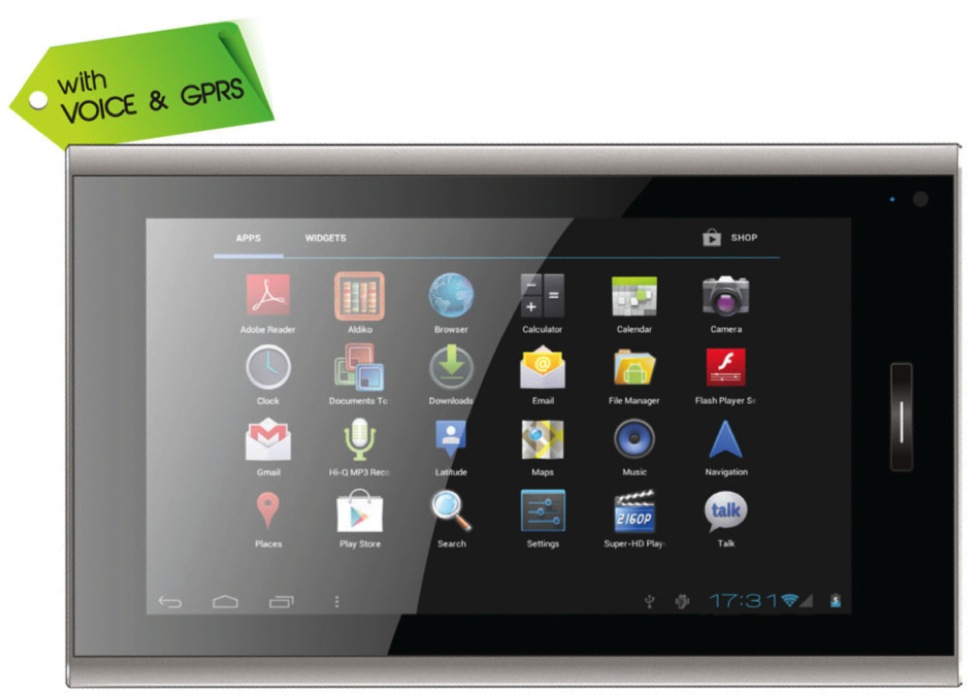
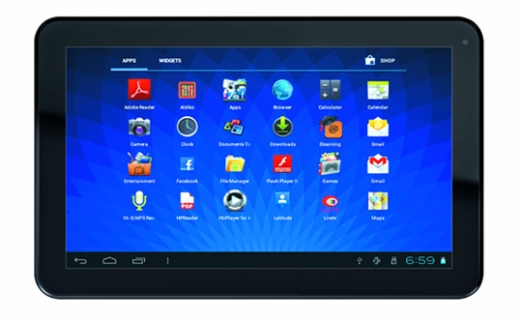
Micromax has just announced plans for a new Funbook Tablet, the P350 Funbook Talk, which features the same specs of the P300 with phone call ability and a dedicated sim card slot for GSM networks.
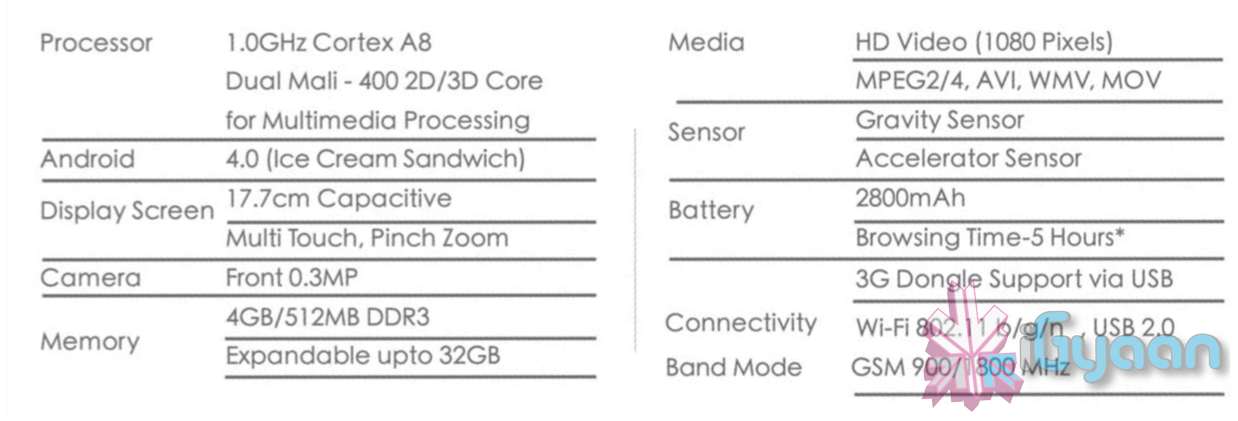
All other features remain the same, with a 1.0 GHz Cortex A8 Dual Mali 400 chipset, Android 4.0.4 and a 7 inch capacitive screen. You do have a front facing 0.3 MP camera and a microSD card slot, along side a 2800 mAh battery and a 3G dongle support.
The Tablet has been announced for a price of Rs. 7250, expect full video soon.
Micromax has announced its third phone in the Ninja lineup. The A57 Ninja 3 smartphone has been priced at Rs. 4,999 and will be available starting this Saturday.
The Micromax Ninja 3 comes with a 3 megapixel rear camera, 1400 mAh battery, 32 GB expandable memory, 256 MB RAM, 512 MB ROM, and a 1 Ghz Qualcomm processor. It runs on Android 2.3 Gingerbread, has dual-SIM, and 3.5-inch HVGA display. Besides, this 3G phone has normal Android features like Bluetooth, WiFi, GPS etc. It has FM radio as well.
Micromax is providing back-panels in two colours with each A57 Ninja 3
The company has launched several phones in the past few months, which include the A90 and the A100 Superfones.
Micromax’s A100 smartphone has popped up on an online shopping website (Homeshop18.com), though it’s listed as out of stock. The device was first reported on our website (read here).
According to the listing, the smartphone will be priced at Rs 9,999 and has a 5-inch display with 480×854 resolution. This dual SIM device runs on Android 4.0.4(ICS) and offers 3G connectivity.
Micromax A100 comes with a 2000 mAh battery, a 5MP camera, and 4 GB of internal storage, which is expandable up to 32 GB.
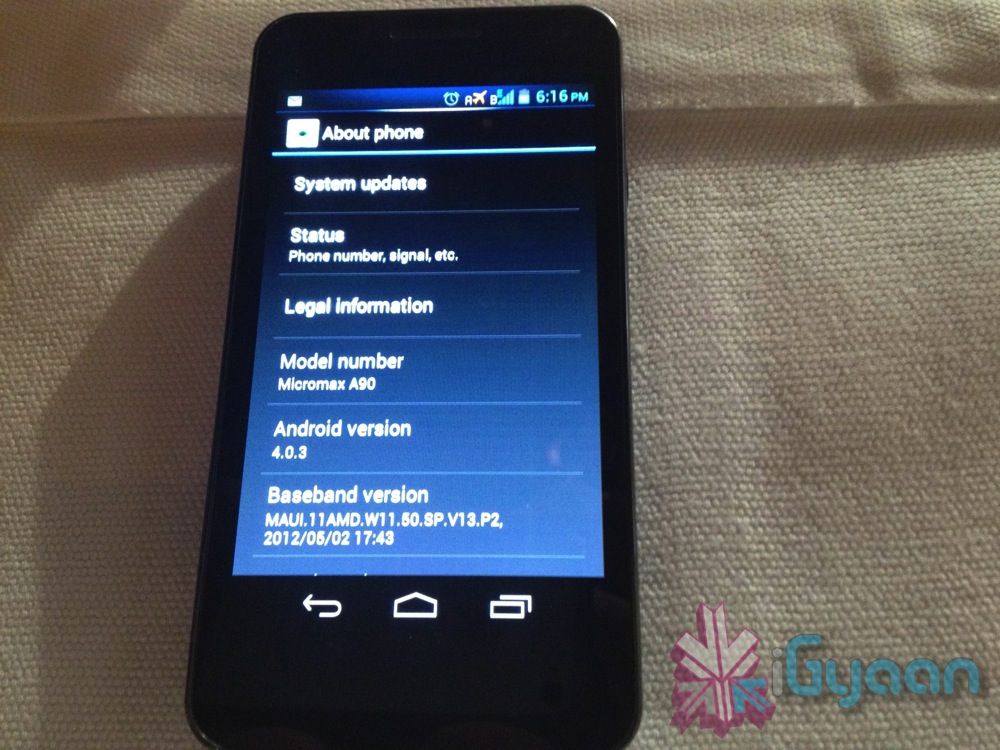
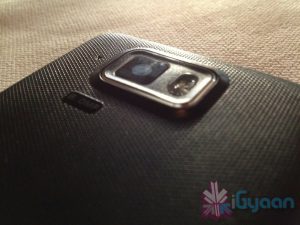
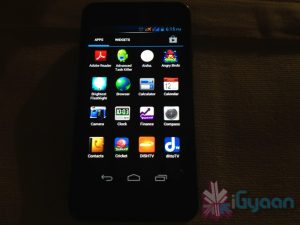
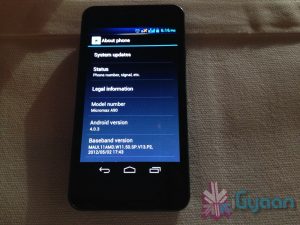
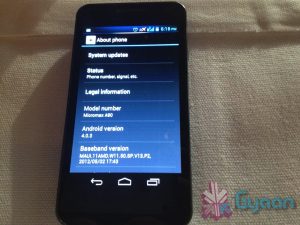
Mr. Blurrycam and shaky hands sent us a set of hands on images and video of the upcoming Micromax A90 Superfone. This comes after iGyaan exclusively reported the phone being leaked a few days back. The details are now clearer than ever, A 4.3 inch Super Amoled screen, Dual Sim Cards and Android 4.0.3 among other UI tweaks and a fast interface.
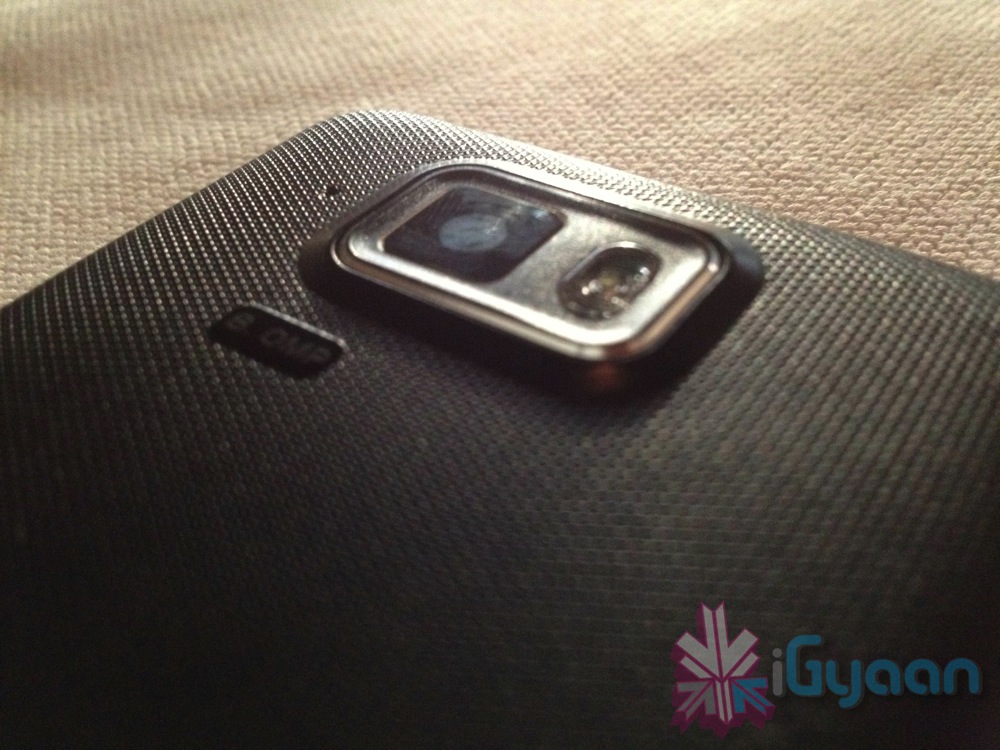
Want more? there is a Full HD, 1080p capture,Video camera that shoots high quality 8 MP stills and has a high sensitivity sensor. There is also a front 1.3 MP camera and guess what – slider door usb port cover, the kinds we like.
The price of the phone you ask? The phone will come into market for around Rs. 12,500 /-, that’s impressive considering a dual core, dual sim, Amoled display with Android 4.0 ICS.
But, the story does not end here, iGyaan Also reported a leaked image of a Micromax upcoming phone, the A100 Superfone, little details of this monster have also surfaced. The phone will sport a 5 inch display with( take this ) “features to rival the Galaxy Note”. Will Micromax really come out with a Pen Input 5 inch Dual Sim phone?
More details of this phone include 8 MP camera, Dual Core chipset ( same as the one in A90) and a price of Indian Rs. 14999/- .
Take it with a pinch of salt. More details to come as soon as we get them , information also points to a Aug 8th or Aug 9th Release date of these two phones. If that happens, we will report from there live.
The new version of Micromax’s popular tablet Funbook, Funbook Pro, has hit the retail online shelves. The tablet, which is yet to be launched officially, is available at online Retailers for Rs 9,999.
The tablet has a 10.1 inch TFT LCD capacitive touch screen display (1,024×600 pixel resolution) and runs on the latest Android 4.0.3 Ice Cream Sandwich (ICS) operating system. It is powered by a 1.2 GHz Cortex A-8 processor (with Dual Mali 400- 2D/3D Graphics processor for multimedia processing) and comes with 1 GB RAM. The internal memory of the device is 8GB, which is expandable up to an additional 32GB with a microSD card.
The device features a front facing VGA camera for video calling. On the connectivity front, the tablet has Wi-Fi and it comes with a microSD port, USB port and a HDMI port, which means it will support HD video playback.
The exact dimensions of the device were not available, but the company has provided a 5,600 mAh battery in the device, which should offer decent battery life.
Micromax Funbook Pro is available in Slate Grey colour and comes with Tata Docomo+ data card for free.
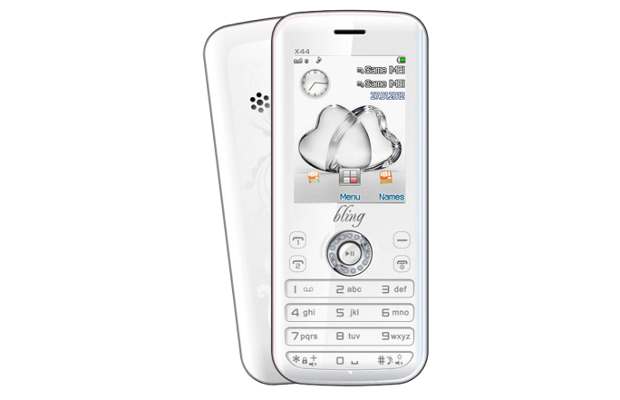
Indian handset manufacturer Micromax has announced the launch of yet another Bling phone today in the form of X44. Featuring Swarovski ‘Zirconia’ diamonds, Micromax X55 Bling has been priced at Rs. 3,000.
It is the third phone in the Bling series that includes a feature phone while the second one was an Android basedsmartphone.
Like the previously launched Bling phones, the new entrant in the Bling family is also studded with Swarovski ‘Zirconia’ diamonds along the navigational D-pad of the phone.
It is a dual-SIM phone with support for two GSM SIM cards, has a 2MP camera, FM Radio, Bluetooth, and access to company app and content stores M! Zone and M! Store. It also sports a 2.2-inch QVGA display.
It is powered by 256MB of RAM and 512 MB of internal storage, which is further expendable to 8GB via microSD card.
Micromax has announced the launch of X259 handset, which comes with a built-in solar panel. Priced at Rs. 2,499, it is the first solar phone from the company.
The built-in solar panel allows the phone to get automatically charged when exposed to sunlight. It is targeted to rural consumers, who constantly grapple with power cuts over long durations. According to the company, three hours of solar charge provides 1.5 hours of talk time on the phone.
It features a 2.4-inch QVGA screen with a resolution of 240x320p, a VGA camera, a 1000mAh Li-ion battery and dual-SIM dual-standby feature. The handset also supports Bluetooth and GPRS connectivity.
[quote]”We have been at the forefront of innovation. We have introduced many categories into this competitive Industry be it long battery life phones or dual SIM phones. With the introduction of this our intent is to get rid of the mobile phone charger by including a solar panel on the device itself,” stated Rahul Sharma, co-founder, Micromax.[/quote]
[toggle_box title=”Press Release” width=”Width of toggle box”]
Go Green with the Micromax X259 SOLAR PHONE
? Micromax X259 comes with solar cells which can be charged through solar energy
? 3 hours of solar charge provides 1.5 hours of talk time
New Delhi, July 12th, 2012: Micromax Informatics Limited (“Micromax”), the 12th largest handset manufacturer in the World (According to Global Handset Vendor Market share report from Strategy Analytics) today announced the launch of X259, with a built-in solar panel.
Micromax has always been recognized for its innovation in its device portfolio and has created categories such as marathon battery life phones, dual SIM Phones, Life Style phone and many more. Micromax adds yet another category to its offering of unique devices. The Micromax X259 Solar Phone priced at Rs. 2499/-, it is the company’s first solar phone which enables the users to charge their phone using solar energy.
Micromax X259 comes with a solar panel technology through which the phone automatically gets charged through solar power on exposure to sunlight. With unpredictable power cuts specifically in the rural areas this handset will be the perfect solution to address the issue of recharging the phone through electricity.
Commenting on the device launch, Mr. Rahul Sharma, Co – Founder, Micromax said, “We have been at the forefront of innovation. We have introduced many categories into this competitive Industry be it long battery life phones or dual SIM phones. With the introduction of this our intent is to get rid of the mobile phone charger by including a solar panel on the device itself”.
Micromax X259 features a 2.4” QVGA screen with a resolution of 240X320. The phone is powered with a 1000mAh Li-ion battery and facilitates dual SIM dual standby feature. The users can share images, videos, music with friends through the phone’s Bluetooth connectivity.
Micromax X259 is available at Rs. 2499/- This model will be available across all leading retail outlets across India.
Micromax is the 12th largest handset manufacturer in the World (According to Global Handset Vendor Market share report from Strategy Analytics). The Indian brand is reaching out to the global frontier with innovative products that challenge the status quo that Innovation comes with a price. Micromax has sales presence across India and global presence in Hong Kong, Bangladesh, Nepal, Sri-Lanka, Maldives, UAE, Kingdom of Saudi Arabia, Kuwait, Qatar, Oman, Afghanistan and Brazil.
* Micromax holds the 3rd position amongst the handset manufacturers in India as pre revenue with a market share of 6.9% for the FY 2011. (Source: V&D report)