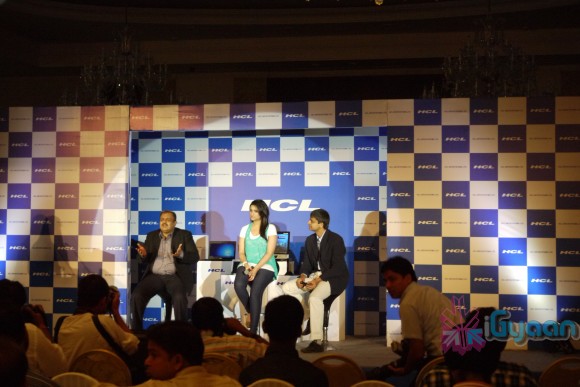
At its press event in Delhi, Mr Gautam, Head of mobility division, HCL, revealed that they are working on a tablet, called the Y2, with a 7″ screen which would have WifI+3G capabilities. Not much details were given but we were told that the device would surely be launched in August. It would be HCL’s third tablet device (all 7″) and would be targeted at the Rs 8000/- price range. It would most probably run on ICS.
Currently HCL have an overall market share of 18% with around 3000 retailers.
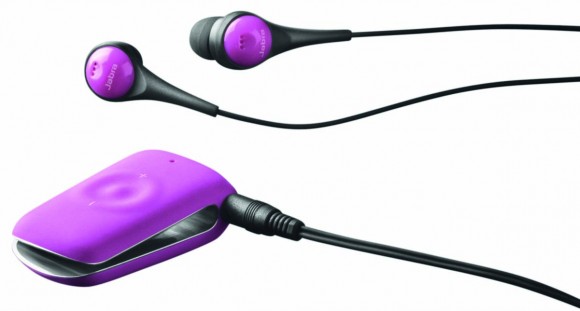
Jabra has launched its stylish summer collection which includes fashionable CLIPPER models in trendy colours. Its the perfect amalgamation of fashion and technology.
The clipper can team up with your favorite set of headphones or earphones
It is compatible with all Bluetooth-enabled devices and equipped with Multiuse™ capability, it can team up with your favorite set of headphones or earphones (any model with standard 3.5mm jack). Stream music wirelessly from portable devices, all without missing a call as incoming phone calls will automatically override the music being played. To carry out a phone conversation, simply slide the CLIPPER onto your collar or closer to your mouth to use its built-in microphone.
The key features of the headset are Bluetooth 2.1, including EDR, A2DP and AVRCP, US Military Grade Rain and Shock protection, Talk/Music time – up to 6 hours; standby time – up to 8 days, Noise-blocking Stereo Ear buds etc.
Check out the press release below –
[toggle_box title=”Press Release” width=”Width of toggle box”]
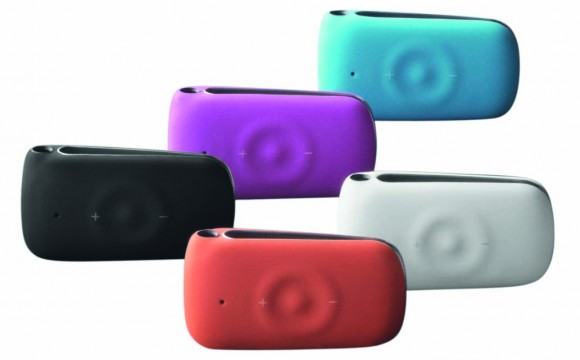
June 15, 2012: Just in time for the season where fashion intersects technology, the Jabra CLIPPER™ bursts forth with new Scandinavian summer colors of Tangerine Tango, Turquoise, New Pink and White. Combining fiercely cool color pops with quality audio output and snazzy design, Bluetooth fans can now mix-and-match mobile music and talk with even greater style and flair.
The nifty, chic Jabra CLIPPER™ with its built-in microphone attaches to clothing or bag-strap and can connect via Bluetooth to a smart phone and a tablet simultaneously. With its Multiuse™ technology, Jabra CLIPPER™ users on the move can enjoy the freedom of listening to their music, multimedia and managing their voice-calls with a single set of headphones or earphones.
Great tunes in vibrant hues
According to Ms. Ann Goh, Head of Sales, South Asia Region, GN Netcom (S) Pte Ltd, responsible for mobile products business in South East Asia, “As mobile music becomes more popular across Southeast Asia markets in tandem with increasing adoption of smart phones, tablets and MP3 players, trend-savvy music lovers look for hands-free audio solutions that match their personal preferences of color, fashion and audio style. Jabra CLIPPER™ in classic black has been a stand-out hit with busy professionals and executives from day one. With latest range of vivid and luxe shades, Jabra CLIPPER™ now offers users a choice of colors to enhance their music experience, individual style and hands-free communications.”
Hands-free simplicity on the fly
Jabra CLIPPER™ is the perfect versatile audio solution: compatible with all Bluetooth-enabled devices and equipped with Multiuse™ capability, it can team up with your favorite set of headphones or earphones (any model with standard 3.5mm jack). Stream music wirelessly from portable devices, all without missing a call as incoming phone calls will automatically override the music being played. To carry out a phone conversation, simply slide the Jabra CLIPPER™ onto your collar or closer to your mouth to use its built-in microphone.
Music and calls for the active user
Weighing just 20g and capable of delivering 6 hours of music/talk time, Jabra CLIPPER™ combines style with high usability. Secured to the clothing, it becomes the mobile accessory for the music-filled, outdoor and active lifestyle, complete with US military grade for rain and shock-resistance. To adjust volume, pause and skip music tracks, the controls on the multi-function button are distinct and easy to use.
Key Specifications of Jabra CLIPPER™:
Bluetooth 2.1, including EDR, A2DP and AVRCP
Clip-on wearing style
Colors: Tangerine Tango, Turquoise, New Pink, White, Black
US Military Grade Rain and Shock protection
Talk/Music time – up to 6 hours; standby time – up to 8 days
Dimensions = 4.8 cm (L) x 1.65 cm (W) x 2.55 cm (H)
Weight = 20 grams
Noise-blocking Stereo Ear buds
AC charger
About Jabra
Jabra is the brand of GN Netcom, a subsidiary of GN Store Nord A/S (GN) – listed on NASDAQ OMX. Jabra employs approximately 850 people worldwide and in 2011 produced annual revenue which amounted to DKK 2,106 million. Jabra is a world leader in the development, manufacturing, and marketing of a broad range of hands-free communications solutions. With a reputation for innovation, reliability, and ease of use that goes back more than two decades, Jabra’s consumer and business divisions produce corded and wireless headsets, plus mobile and in-office speakerphones that empower individuals and businesses through increased freedom of movement, comfort, and functionality.
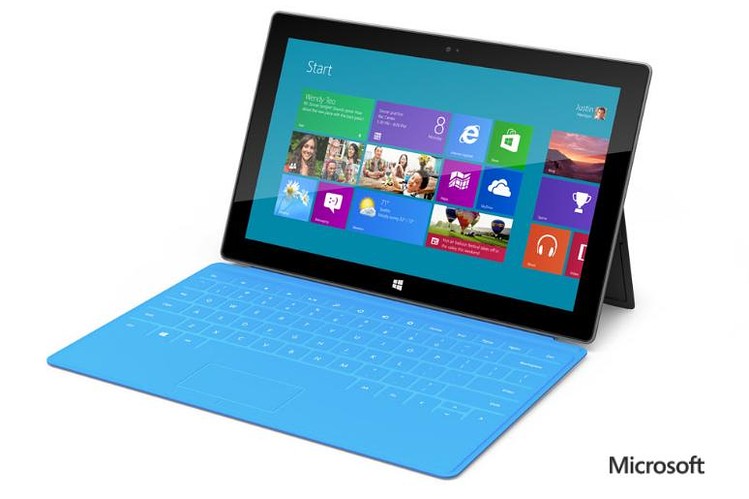
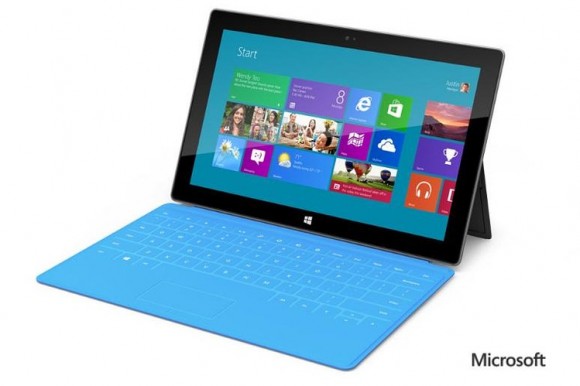
All Surface tablets come with a keyboard that is just 3 millimetres thick.
Microsoft unveiled its first tablet, called the Surface, that comes with a keyboard and other features designed to stand out in a market dominated by Apple Inc.
One version of the device, is about 9.3 millimetres thick and works on the Windows RT operating system. It comes with a kickstand to hold it upright and a touch keyboard cover that snaps on using magnets. The device weighs under 680 grams and will cost about as much as other tablet computers.
Microsoft also emphasized the use of the Surface with a keyboard cover that is just 3 millimetres thick. The kickstand for both tablets was just 0.7 millimetres thick, slimmer than a credit card.
Two versions of the Surface were showcased, the versions running Windows 8 will run chips from Intel Corp., which supplies chips used in most PCs. The versions running Windows RT will be powered by chips from Nvidia Corp. based on designs from ARM Holdings PLC, a variety of chips widely used in cellphones and tablets.
[quote]The Surface is a PC, the Surface is a tablet and the Surface is something new that we think people will really love,”Mr. Ballmer said.[/quote]
The devices are set to be launched alongside Microsoft’s new operating system, the Windows 8 by fall.
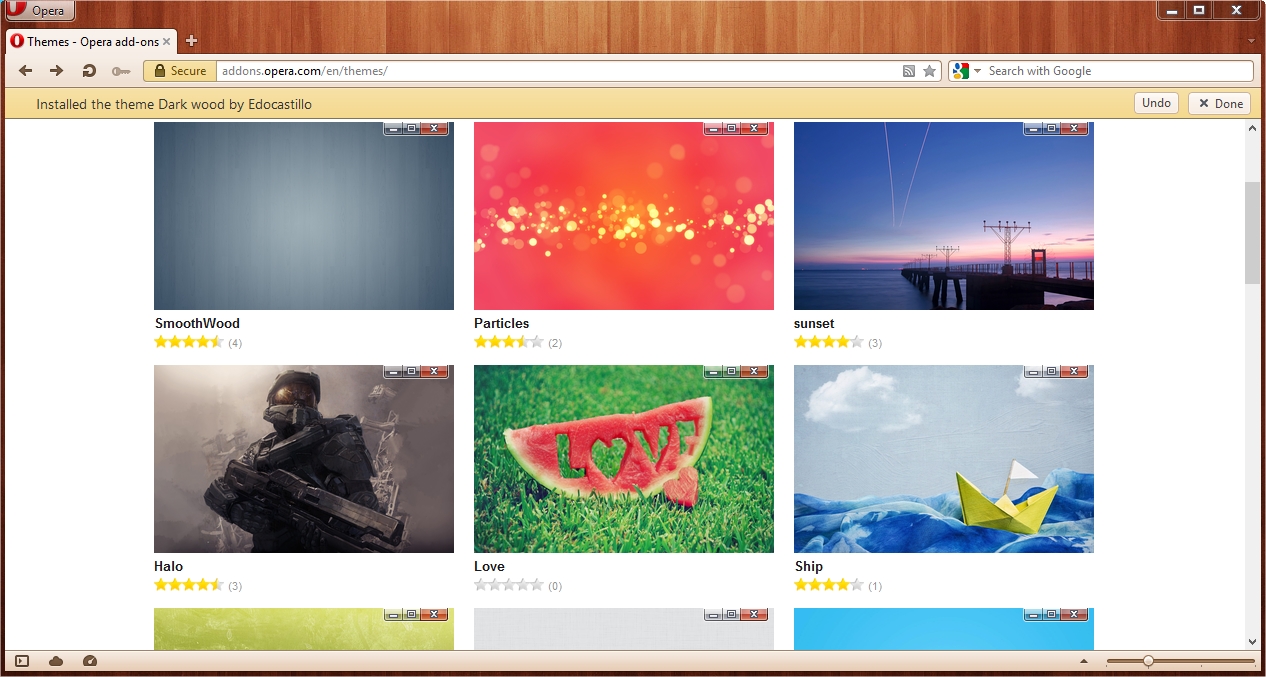
The new version also brings in the option of using themes!
Opera 12 made its public debut today with numerous changes that mostly focus on faster browsing. The browser, whose mobile version is more popular than its PC counterpart, with this update brings in themes capability to dress up your browser, Do Not Track privacy support, and lots of performance enhancements. It also brings a couple of completely new ways to experience the Web involving your webcam and paged layouts, and HTML5 drag-and-drop.
[quote]You spend hours each day in front of a Web browser, said Opera CEO Lars Boilesen. Shouldn’t those hours be as fun and, occasionally, as productive as possible? We think so, so we made Opera 12 the smartest, fastest and most unique browser available.[/quote]
Opera’s hardware acceleration go beyond just web content, using your graphics processor to boost the rendering speed of the browser’s user interface as well, though we feel that the browser lags behind competition due to delayed updates which means that browsers like Chrome and Firefox already have what new versions of Opera have to offer.
Opera released a video to showcase the new version:
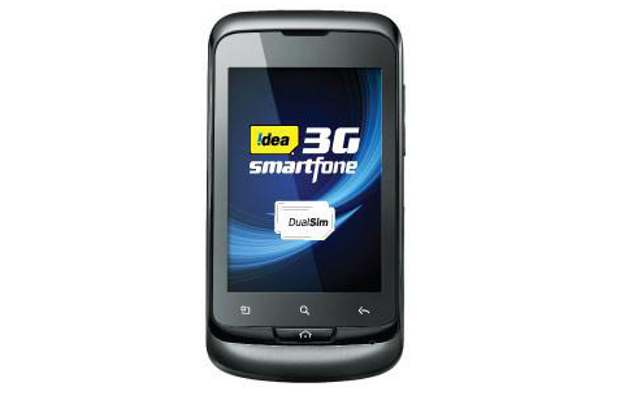
After selling over 1 lakh units of its previous models of 3G phones, from the “What an idea sirji” campaign, Aditya Birla group led Idea launched a new dual-sim (GSM+GSM) 3G device, the ID-918 made by Alcatel in China priced at Rs 5,994.
It runs on Android 2.3 Gingerbread and features include FM Radio, 150 MB internal memory, expandable memory up to 32GB with microSD (2GB card included), 512 MB RAM, 256 MB ROM and a 1300 mAh battery.
Along with the handset, Idea is also offering benefits worth Rs 2,340 apart from a 2 GB data per month for three months after 48-72 hours of recharge.
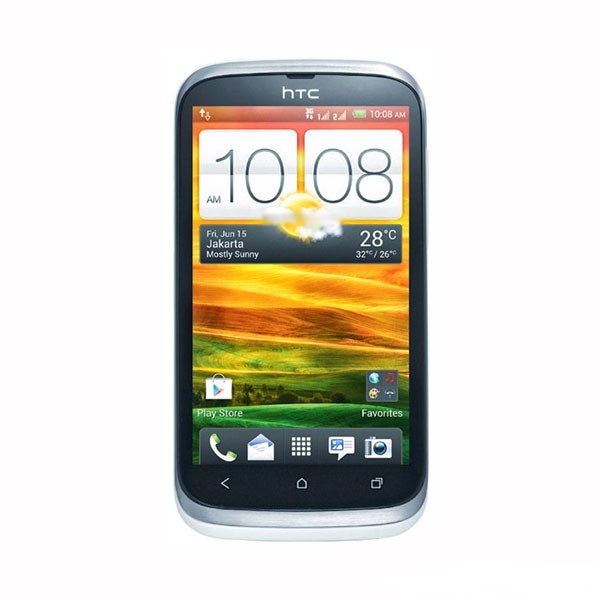
The Desire V is the first Dual-sim smartphone from HTC
After the recent success of their ‘One’ series handsets, HTC has shifted its focus to two new Desire series cellphones, called the Desire C and V.
Both handsets run Android 4.0 Ice Cream Sandwich (ICS) OS and come with Beats Audio technology. These devices come with only 4GB of internal storage (expandable via microSD), along with 25GB of free Dropbox space for two years.
An interesting feature of the Desire V is that it is the first Dual sim phone to come out of HTC’s stable, and is expected to hit indian stores later this year.
The Desire C device sports a 3.5-inch capacitive touchscreen with 320×480 pixels resolution, powered by a Snapdragon S1 600MHz processor, with 512MB RAM, Sense 4.0 UI on top of Ice Cream Sandwich. It is expected to cost somewhere around Rs 14,299.
HTC released an introductory video for the Desire C :
Social networking and microblogging website Twitter revealed their new logo on Wednesday. The new logo was announced on their blog and the new bird has a upturned beak, no hair on top, and higher feathers. Overall it looks like its strutting and and seems a little more confident. Also the lowercase “t” will no longer represent Twitter on various share buttons across the web. The Bird is replacing the t.
[quote]From now on, this bird will be the universally recognizable symbol of Twitter. (Twitter is the bird, the bird is Twitter), said Doug Bowman, the company’s creative director. There’s no longer a need for text, bubbled typefaces, or a lowercase ‘t’ to represent Twitter.[/quote]
The logo is said to have been constructed purely through overlapping circles, similar to how your networks, interests and ideas connect and intersect with peers and friends.
Twitter, which now has 140 million monthly active users producing 400 million tweets daily, has ramped up its revenue-generating efforts since Costolo assumed the top leadership role in late 2010.
The ultra-books are aimed at being slim and lightweight.
The ultra-books are aimed at being slim and lightweight.
The ultra-books are aimed at being slim and lightweight.
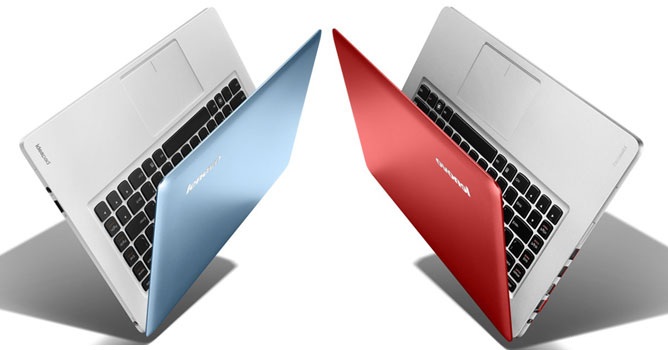
Lenovo on Tuesday launched 2 new ultrabooks, the IdeaPad U310 and U410 priced at Rs 50,000 and Rs 53,000, respectively along with the new IdeaCentre A720 all-in-one PC. The 13-inch U310 and 14-inch U410 weigh 1.7kg and 1.9kg, and measure only 0.7 inch (18mm) and 0.83 inch (21mm) thick, respectively. These laptops are powered by third-generation Intel Core processors and focus on light weight and slimness. Both are available with Ivy Bridge processors up to Core i7, as much as 1TB of storage, plus optional 32GB SSD cache drives and NVIDIA discrete graphics. Pricing of the U310 and U410 ultrabooks start at Rs. 49,990 and Rs. 52,990 respectively.
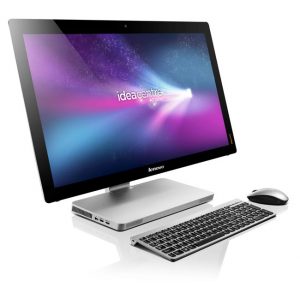
The A720 desktop is just 25 mm thick, which is pretty good for a 27″ frameless display. Like the ultrabooks, this AIO comes with a selection of third-generation Intel Core processors and NVIDIA’s 6-series GPU. The display features a 10-point multi-touch screen that can be adjusted from -5 to 90 degrees for regular and touch-optimised usage. It has been priced at Rs 90,000.
The All-in-one PC is one of the slimmest in the market.
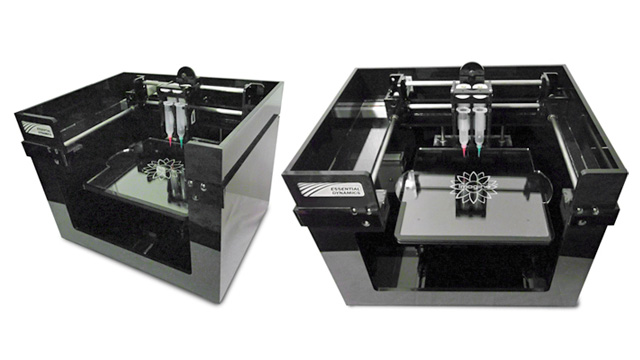
Imagine 3D printer is the first of its kind 3D printer, instead of meted plastic this printer can make 3D objects using molten chocolate in its syringes. 3D printing is the next step in the Industry especially with its advancements every day. Using a 3D printer to make items in chocolate could actually change to way people celebrate functions or festivals. The printer has other capabilities and in addition to chocolate, the syringes can also be filled with cheese, epoxy, silicone, and even concrete for those permanent casts.
[box style=”rounded” border=”full”]
Wiki
3D printing is a phrase used to describe the process of creating three dimensional objects from digital file using a materials printer, in a manner similar to printing images on paper. The term is most closely associated with additive manufacturing technology, where an object is created by laying down successive layers of material. Recently the term is increasingly being used to describe all types of additive manufacturing processes, or even other types of rapid prototyping technology.
Since 2003 there has been large growth in the sale of 3D printers. Additionally, the cost of 3D printers has gone down.The technology also finds use in the fields of jewelry, footwear, industrial design, architecture, engineering and construction (AEC), automotive, aerospace, dental and medical industries, education, geographic information systems, civil engineering, and many others.
Computer games have come a long way since the days of Pacman and Mario. In today’s day, all the cool 3D graphics that you see are made up of polygons. Polygons are nothing but flat images that are joined together to create an object in 3D. The higher the number of polygons, the greater the viewing detail.
Game developers have been trying very hard for a number of years to increase the polygon count in the games they make. However, computers face a problem when it comes to increased polygon counts. The higher the number of polygons, the greater processing power it takes to render all those polygons. Its because of this limitation that you will find games that have superb detail on one side of an object, while the other side is just a plain texturized image. Putting a cap on the number of polygons leads to a lot of compromises: You want a super detailed character? No problem, but then your world will look bland.
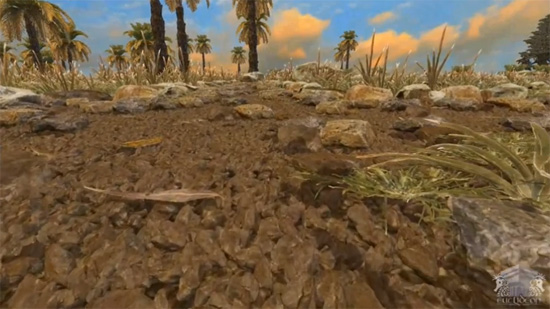
An Australian company called Euclideon has developed a game engine that does away with polygons and instead replaces them with point clouds that are made up of individual ‘atoms’. So doesn’t increasing the number of objects on screen slow down everything? Well you’d think so but the company says that it has made it work and your computer will make it work too. The company has developed a 1 sq km island using their game engine and each speck of dirt on that island is made up of millions of these ‘atoms’ per cubic inch.
The plus side to this is that the graphics are amazing. Simply put, polygons just cant cope with the kind of quality that the Euclideon ‘atoms’ can create. The curves that are generated with the ‘atoms’ are amazingly smooth and the level of detail is through the roof. You can quite literally see each individual grain of sand. In the next few years, computer games are going to make a huge leap forward in terms of graphics and we’re very exited about this technology and can’t wait for the company to deliver this game engine into the hands of game developers. Watch the video below for a demo of the engine in action:
Solar panels have come a long way since the technology was first invented. But the major drawback of using photovoltaics on Earth is that it eventually gets dark. Researchers at MIT have developed a solution to this problem. They’ve come up with a photovoltaic cell which doesn’t need any sunlight and is built into a button sized generator that can run your smart-phone for a week.
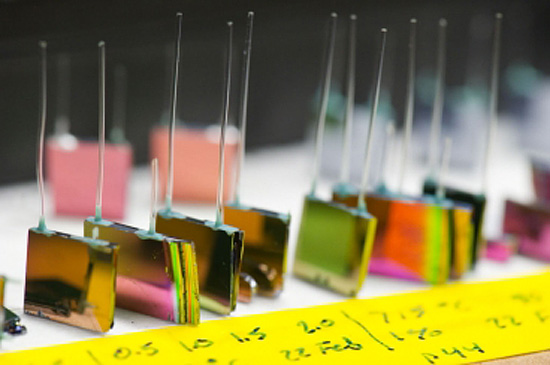
In the image above, you have many of these generators that require a fuel, like butane, from which they generate heat. The material that the generators are made out of are pockmarked with billions of tiny (we’re taking nanometer scale here) holes. When this pockmarked surface heats up, it emits light in a few very specific wavelengths that are then captured by photovoltaic cells that are tuned to those specific wavelengths, and then you get electricity.
The basic principle of the new generators is the same as the one that feeds electricity to your house. A fuel is heated and converted into electricity. With a power plant, the heat is used to boil water to steam, and the steam is used to turn a turbine, which generates electricity. The new generators follow the exact same principle, but with no moving parts and a one step process, they are many times more efficient. Their prototype uses butane as a fuel but you can use anything that burns, coal, wood, uranium, you name it.
So as a consumer, what can you look forward to? Currently, MIT’s generator is about three times more efficient than a lithium ion battery, and since they run on butane, you just need to refill them and they’re good to go. With a little bit of work, MIT researchers say that they can triple their current efficiency, and since all this can be scaled down, you can expect a new smart phone using this technology to run for a solid week without a recharge in the near future.
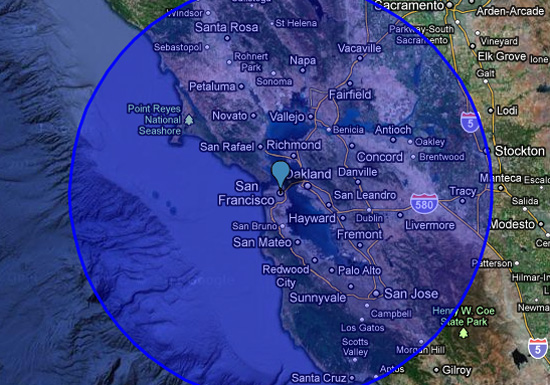
We’ve finally got a new WiFi standard to look forward to. The IEEE has officially released a new standard for 802.22 WiFi which can cover an area of over 31000 square kilometers from a single base station. You’re all probably familiar with the current standard 802.11 a/b/g/n as this is the standard that you use to connect to the Internet everyday.
The exponentially increased range is because the frequency that the WiFi network transmits on has changed. Over the last few years, analog television has seen a dramatic decrease in viewership. Using that very same frequency of 54MHz to 698 MHz the new standard gains increased range as these frequencies are very good for long range transmissions, which is why the range was used for analog TV signals.
The new 802.22 standard is not going to make your current router obsolete just yet. What it will be good for is to provide Internet access in rural areas or to provide municipal WiFi for an entire city. With a single base station having a transmission rate of 22 Mbps and a range of 100 km, it’s only a matter of time before we’re never without WiFi again. Well it’s perhaps time that we said goodbye to 3G.
Google’s latest update to its Android Platform is all set to come to a tablet near you. The new version is an incremental release which adds several new updates for developers as well as users. The new version includes many changes to the Android API.
A few highlights for the new version:
Support for multiple screen sizes which allows developers to create apps for various screen sizes, not just 10.1 inch.
A new compatibility mode which renders applications in a smaller screen area and then stretches the rendered image to fill the screen.
Media files can be directly loaded from the SD Card in apps that use them and a new module that allows applications to use the system media library.
An extended screen support API that allows developers to have precise control over the user interface across the range of Android powered devices. It also allows developers to target specific screens based on their dimensions.
Motorola has already begun to roll out the 3.2 update to its Xoom tablet. Other tablet candidates for the 3.2 update include Samsung’s Galaxy Tab 10.1, Acer’s Iconia Tab 500 and Toshiba’s Thrive. Huawei made an announcement last month for what it claims to be the worlds first 7 inch Android 3.2 Honeycomb Tablet which has a dual-core processor.
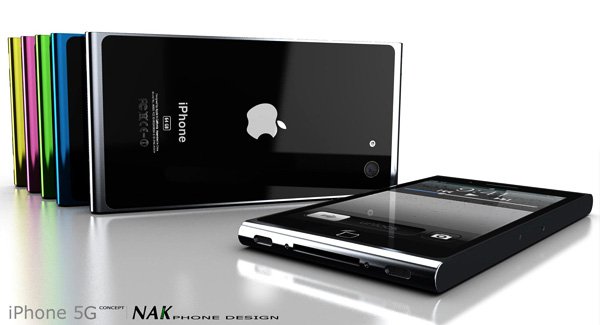
People all the world are waiting anxiously for the next iteration of Apple’s Jesus Phone. There are many rumors going around and speculation is ripe about to the design and specifications of the iPhone 5. Some people believe that the phone will have a larger screen, some believe that it will have a better camera and processor. Whatever the case may be, the iPhone is coming and its coming soon.
Antoine Brieux of NAK Studio recently came up with his own idea of what the iPhone 5 should look like. And he’s come up with a super sleek design. The concept is reminiscent of the iPod Nano due to the coloured aluminium and shape of the bezel. If the new iPhone looks this good, it’s going to have no trouble selling (not that it’s going to have any trouble selling either way). What do you think of this new concept?
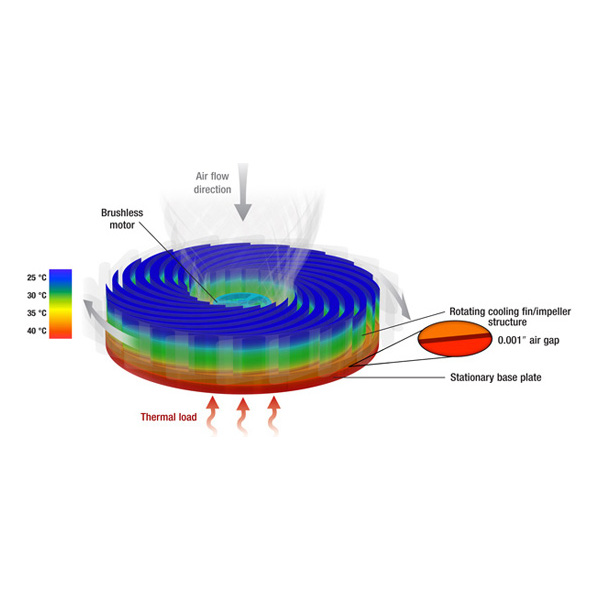
The traditional way with which most computers deal with heat is a heat-sink and a fan assembly over the processor. Of course you have custom solutions like liquid cooling, but they’re out of the budget for most people. Unfortunately, this idea is quite dated and hails from the heydays of computing. New technology requires new solutions and that’s exactly what Jeff Koplow, a researcher at Sandia National Laboratories has developed.
The problem with traditional heat-sinks is that, while the fins provide adequate surface area to cool the processor, a layer of air clings to the fins, which reduces efficiency, acting as an insulator. To compensate, the CPU fan can be cranked up to move more air, but that becomes noisy and uses more energy. As the heat-sink itself doesn’t move, it becomes a great place for dust to settle.
Jeff has come up with an ‘air bearing heat exchanger’, which is just a fancy way of saying that he’s combined the heat-sink and fan into a spinning heat-sink. The heat exchanger is separated from the processor by just 1/1000th of an inch, and as it spins, it forces air out from the center of the exchanger, cooling the fins and eliminating the insulating layer of air. This turns out to be so efficient, that it can be run at much lower and quieter speeds. You can even overclock your CPU a few notches without it being any worse for the wear. As the heat-sink is spinning, it also becomes immune to dust.
A prototype has been developed which doesn’t require any fancy metals or electronics, just good design. This hopefully means that the technology will be easily mass producible and will be available to the market soon.