Tag: personal data

  • Apps On iOS Were Found Sending Large Amounts Of Data To Tracking Companies

    Apps On iOS Were Found Sending Large Amounts Of Data To Tracking Companies

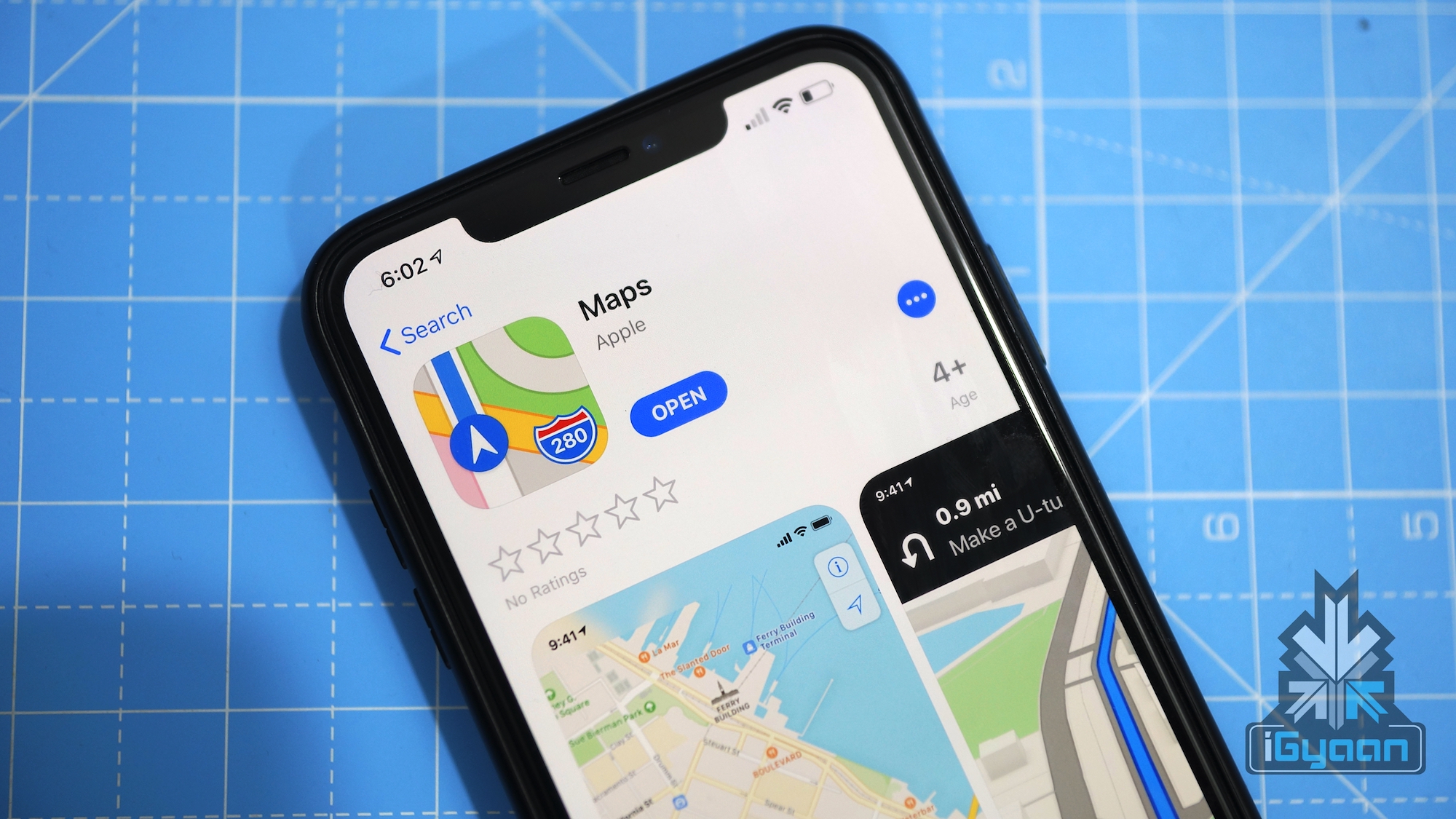
    Apple is one of the few companies that take into account the privacy and autonomy of its customer’s data. The cost of such high levels of user privacy is the tighter regulations by Apple on its own economy (especially in regards to maintenance and repairs). A report, however, has pointed towards various application in iOS sending a huge sum of data to tracking companies.

    Apple

    The Washington Post conducted research over a myriad of applications on iOS that yielded data that caught apps sending personal information of the user data to tracking companies. The research was conducted over a period of one month in conjunction with Disconnect, a privacy-related firm. The results had shown apps sending 1.5GB worth of user information.
    Apple

    The data was apparently sent during late hours when the user was generally asleep. Charging the phone overnight had seemed to activate the service. The trackers showed activity when the interactions with the device’s functions were to be really low. This process only occurs if the user has the “background app refresh” function enabled in the settings. Although this function is enabled by default on any Apple handset.
    2018 Apple iPhone new iphone

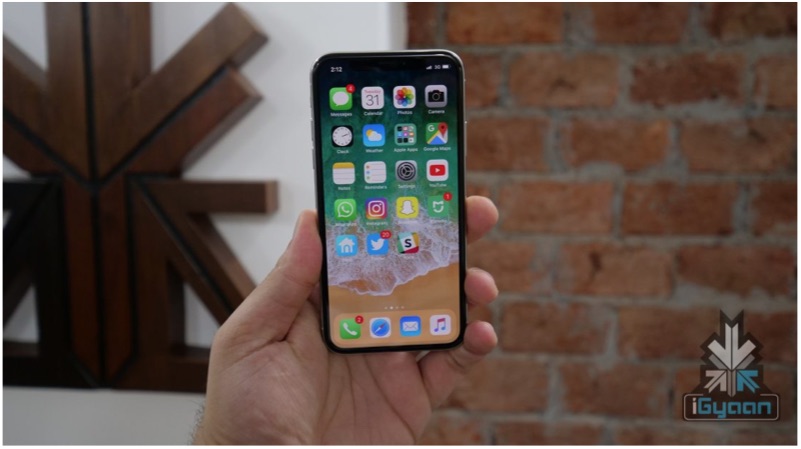
    The apps from Apple store used in the research were from some of the top companies such as Nike, Yelp, Spotify, Microsoft OneDrive, Mint, IBM’s The Weather Channel, DoorDash, Citizen and surprisingly even the Washington Post’s very own application. Data had uncovered over 5,400 trackers in apps within a mere week into the research. Most trackers are said to work seamlessly without the user ever finding out that they were present in the background processes.
    For those unaware, data that is acquired can be used to send ads tailored according to the user’s activities. In other words, after the personal information is received by such companies, users would then start receiving ads for something they looked up or searched for online. Ever since the Facebook-Cambridge Analytica data scandal in 2018 was uncovered, the public has been far more concerned and aware of their private information being traded without their knowledge. The aftermath of the fiasco had tech giants and social media companies have stricter regulations placed around them.
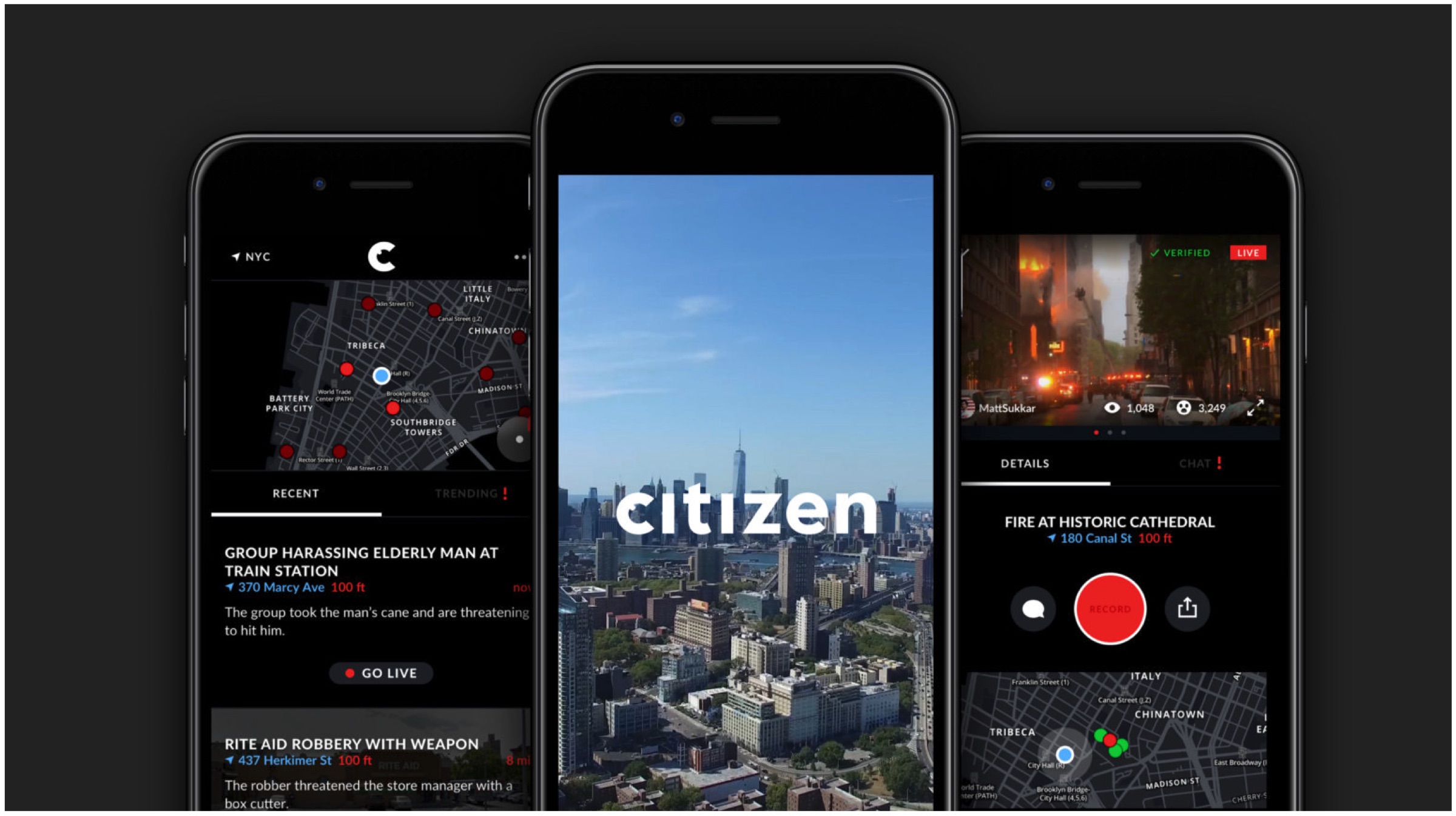
    DoorDash the food delivery service from California was discovered to have sent data to nine 3rd party trackers, while Citizen the app that sends crime-reports for incidents near the user’s location was found sending phone numbers, email addresses and the actual GPS location of the iPhone owners to a tracker called Amplitude. The developers of Citizen had been contacted and an update has since gone online removing the tracker.

    Also ReadAlaka’i Unveiled A Flying Taxi That Runs On Hydrogen Fuel Cells

    Apple in an official statement had addressed applications that do not adhere to the App Stores rules and regulations, that require developers to clearly post privacy policies and ask for user’s permission to collect data, to either abide by the rules or be taken down from the App Store. The report had shown not all data collected was harmful or bad to the user as some data was anonymised and stored. However, some trackers have not made clear what kind of data was collected, for what amount of time, and whom it is sent to there on. 
  • WhatsApp Co-Founder Jan Koum Leaves Facebook Amid Data Privacy Concerns

    WhatsApp Co-Founder Jan Koum Leaves Facebook Amid Data Privacy Concerns

    Facebook has been embroiled in a huge debate about the internet as a whole. As social media has grown to become such an integral part of our lives, it is no secret that users have given more personal information than needed to various social media platforms over the years. Facebook has been under the cosh for allegedly, not using that information in an ethical manner. Now, it appears that the conversation of privacy has trickled down to Facebook-owned properties, mainly WhatsApp. Co-founder and CEO of WhatsApp, Jan Koum has announced that he will be leaving WhatsApp soon.

    https://www.facebook.com/jan.koum/posts/10156227307390011

    Jan took to his Facebook page to announce his departure, making sure he doesn’t give away any reasons that made him quit the company he started. A report by Washington Post claimed that he had a clash with Facebook and the company’s plans of using users’ private data. It also claimed that Jan plans to step down from Facebook’s board of directors.

    In 2014, Facebook bought WhatsApp from Jan for a reported US$ 19 billion. The app has since become the most famous instant messaging service. In July 2017, the company announced that it had reached 1 billion active daily users who were sending 55 billion messages per day, 4.5 billion photos and 1 billion videos.

    Jan Koum

    WhatsApp has always pledged to protect user data and promised to protect that when Facebook bought the messaging service. In 2016, it further solidified its stance by introducing end-to-end encryption. However, Facebook, WhatsApp’s parent company has been accused of letting third parties use sensitive user data to their advantage. His departure will certainly be a blow for Facebook, especially after Brian Acton, co-founder of WhatsApp quit the company in November. Brian Acton, for that matter, has joined the rising voices of people concerned about data protection. The social media campaign, #DeleteFacebook has also gained impetus in the last few months.

    Facebook is yet to respond to reports of Jan quitting due to differences with Facebook about handling user data. However, Mark Zuckerberg, CEO of Facebook did reply to Jan’s post, saying:

    I will miss working so closely with you. I’m grateful for everything you’ve done to help connect the world, and for everything you’ve taught me, including about encryption and its ability to take power from centralized systems and put it back in people’s hands.

    It’ll be interesting to see the repercussions now since both the founders have quit the company. Facebook will be eager to continue building the legacy of its largest-ever acquisition in the wake of questionable times for the parent company.


  • Facebook Could Soon Design Its Own Chipsets

    Facebook Could Soon Design Its Own Chipsets

    It might be an understatement to say that Facebook has had a tumultuous month and a half. Ever since the Cambridge Analatyica data breach controversy broke out, Facebook has been under the cosh for its lackadaisical data privacy guidelines. However, not all is gloomy for the social media giant as the company seeks to build its own chipset designing team.

    According to a job listing on its corporate website, Facebook is looking to hire a manager to build an:

    End-to-end SoC/ASIC, firmware and driver development organization.

    The listing indicates that the process of building this team is still in its early stages. Interestingly, Facebook AI researcher Yann LeCun tweeted about some of the job postings as well.

    Facebook, just like a lot of other tech giants, appears to have taken this step to, in the future, reduce the cost of production and also have greater control over the final product. As Apple has proven time and again, optimisation of software and hardware can do wonders for a product.

    The social media company has joined a long list of companies moving away from outsourcing chipmaking tasks. According to a few people close to the matter, Facebook is building a team to design its own semiconductors to lower their dependence on chipmakers such as Intel Corp. and Qualcomm Inc. Apple started making its own chipsets in 2010 and now uses them across many of its major product lines like iPhones, iPads etc. Google as well, has developed its own artificial intelligence chip.

    Facebook has long been rumoured to be working on a bunch of smart speakers. The company will also launch the Oculus Go, a standalone VR headset which will run on a Qualcomm chipset. Building a team to design its own chipsets could be for the future of its hardware business.

  • Mark Zuckerberg Testified For 5 Hours And Won It For Facebook

    Mark Zuckerberg Testified For 5 Hours And Won It For Facebook

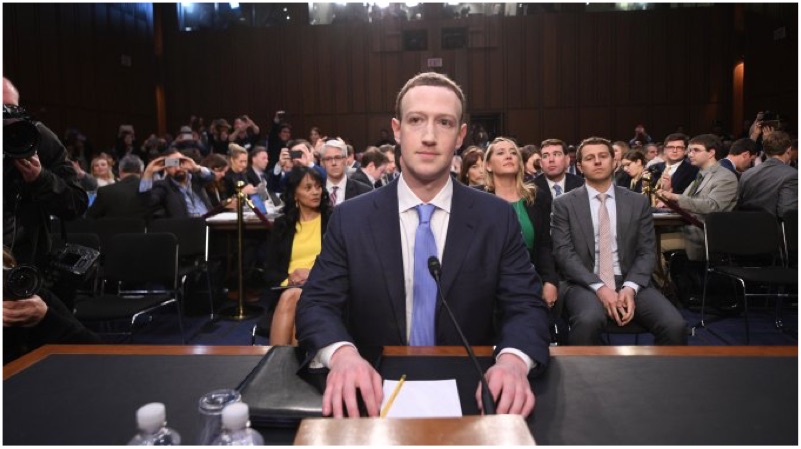
    Mark Zuckerberg didn’t reveal the hotel he stayed in during the testimony while Facebook users share their travel plans to everyone. This pretty much sums up the entire deposition of the Facebook co-founder Mark Zuckerberg. The CEO of the largest social media company, Zuckerberg sat in front of the Congressmen and tried to clarify the role of Facebook in the whole Cambridge Analytica data breach scandal. Leading up to the testimony, it was reported that Facebook had arranged training with DC Consultants for Mark Zuckerberg.

    The testimony, or more so the idea of putting Mark Zuckerberg through his paces, even though exciting for its mere existence, was anything but. All the Senators present at the testimony were inept of the working of social media and the business model of Facebook. And that clearly showed in the five-hour long testimony which was a huge win for Facebook and Mark Zuckerberg. The testimony meant that Facebook was prepared to go under the cosh to prove its innocence or remorse, and it did so and came out pretty much unscathed.

    Mark Zuckerberg clearly knew what was to be done as he dodged any questions that could have had further implications. He repeated a lot of the answers, most of them coming from his own Facebook post from a few weeks ago. That goes on to prove how surfaced the questions were from the Senators. It is worth noting that every Senator had only five minutes with Zuckerberg, which meant that very few asked tough questions and even fewer had the opportunity to follow that up with another query.

    After the testimony, important questions like did Facebook cover up the Cambridge Analytica scandal? Or decide against adding privacy protections earlier to protect its developer platform? Another rising question is whether it is a breach of trust on Facebook’s part to delete Zuckerberg’s Facebook messages out of recipients’ inboxes? Unfortunately, nobody even began to scratch the surface that could have further led to answers to these questions. Whether Zuckerberg would have complied and answered to those questions is a different kettle of fish altogether.

    Facebook’s homework for this testimony also shone through during the questioning. The most common questions asked Zuckerberg were a few things that Facebook had taken care of well in advance. For example, Mark  Zuckerberg was asked about Facebook’s ineptness during the 2016 Election campaign. On 9th of April, Facebook had announced that it had deleted the accounts of Russian GRU intelligence operatives in June 2016.

    Another question that was asked, was “Is Facebook Sorry?” To which Zuckerberg replied:

    We didn’t take a broad enough view of what our responsibility is and that was a huge mistake. That was my mistake.

    The five-hour long testimony ended with Zuckerberg unmoved and calm while many viewers felt let down by the lack of knowledge behind the questions directed at him. The testimony might have left a lot of questions unanswered but, it appears to be a win for Facebook. The social media giant has pretty much laid the facts in front of the world. To prove that the testimony was a success for Facebook, investors rewarded Facebook with a 4.5% share price boost.

  • Mark Zuckerberg Apologises For Facebook Data Scandal In Full-Page Newspaper Advertisements

    Mark Zuckerberg Apologises For Facebook Data Scandal In Full-Page Newspaper Advertisements

    Facebook, over the past few days, has been under tremendous scrutiny. Mark Zuckerberg first posted on Facebook addressing the whole issue. However, the Facebook post looked more like a recap of the controversy and less of an apology. He talked about steps that Facebook will take in order to curb this problem. But, never once said that he or the company was sorry for what had happened.

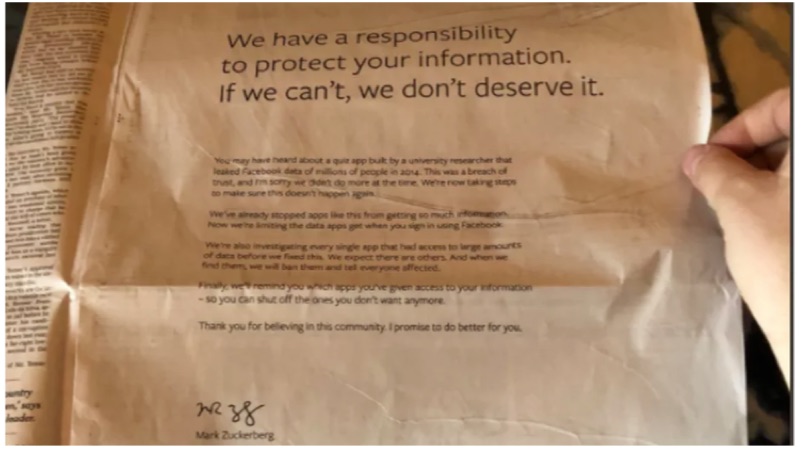
    Now, the social media and giant has taken to print media to issue an apology. Facebook took out several full-page advertisements in newspapers like the New York Times, Wall Street Journal, The Washington Post and several UK papers. The ads take the form of an apology written by Mark Zuckerberg, co-founder and CEO of Facebook Inc.

    The apology, again, talks a lot about the steps Facebook is taking or has taken already to curb data breaching. The apology reiterates that the company has limited the amount of data an app gets when a user signs up through their Facebook account. However, the tone of the ad certainly is a bit more remorseful than the Facebook post from last week. Zuckerberg writes, “This was a breach of trust and I’m sorry we didn’t do more at the time. I promise to do better for you.”.

    A few days ago, a story broke out, exposing a British data analytics firm and its illegal acquisition of private data of about 50 million users. Cambridge Analytica, the firm in question performed work for the campaign of President Donald Trump and made ads for the Defeat Crooked Hillary page. Worth noting that that the page was run by the Make America Number One super PAC (Political Action Committee). Co-incidentally, both the Cambridge Analytica and Make America Number One financed by Robert and Rebekah Mercer, who backed Donald Trump in the general election.

    POTUS Donal Trump

    Ever since the story went public, the repercussions have been severe for the social media giant. Apart from a massive dent in its reputation, the company has been hit with several lawsuits. The hashtag #DeleteFacebook has been trending on social media as well. Moreover, the company has lost over US$ 60 billion in market cap since the controversy began.

  • Facebook CEO Zuckerberg Promises To Protect Personal Data

    Facebook CEO Zuckerberg Promises To Protect Personal Data

    Facebook has been under the scanner for the past few days. The controversy of Cambridge Analytica has sparked a huge debate about Facebook and its data sharing practices. Apparently, Cambridge Analytica performed work for the campaign of President Donald Trump. It made ads for the Defeat Crooked Hillary Facebook page. Co-incidentally, both the Cambridge Analytica and Make America Number One financed by Robert and Rebekah Mercer, who backed Donald Trump in the general election.

    Mark Zuckerberg’s Statement

    Now, Facebook co-founder and CEO, Mark Zuckerberg has come out and addressed the issue. This post comes in a few hours after the #DeleteFacebook started trending across social media. The long post, in a nutshell, talks about the controversy and Facebook’s stance. While talking about the issue in hand, he also outlined a few steps Facebook will take.

    • Facebook will investigate all apps that had access to user data before 2014. This is because it was in 2015 when Facebook changed its Privacy Policy to reduce data access. The company plans on banning any user that had misused the data. Every “thisisyourdigitallife” user will be informed about their data breach. Every user of an app will be informed about it when Facebook bans that app.
    • If someone hasn’t used an app within the last three months, Facebook will turn off the app’s access to their information.
    • From now on, every app that requires a Facebook Login will only have access to name, profile photo and email address.

    The rest of the press release tells us what we have known already. While the steps mentioned by Zuckerberg do make a lot of sense, their implementation is what will matter. Facebook has already lost over US$ 60 million in market cap. Astonishingly, that is more than the entire market capitalisation of Tesla Inc.


  • How To Delete Personal Data On Facebook Without Deleting Your Account

    How To Delete Personal Data On Facebook Without Deleting Your Account

    Facebook is getting a lot of undesired attention. The company is accused of harvesting millions of Facebook user’s personal information to Cambridge Analytica. Even WhatsApp co-founder has tweeted with a hashtag #DeleteFacebook, asking people to delete their Facebook accounts. However, deleting a Facebook account once in for all might not be a feasible solution, as most of the day to day activities are directly connected with it. Instead, remove the private data stored on Facebook.

    Methods to delete personal data

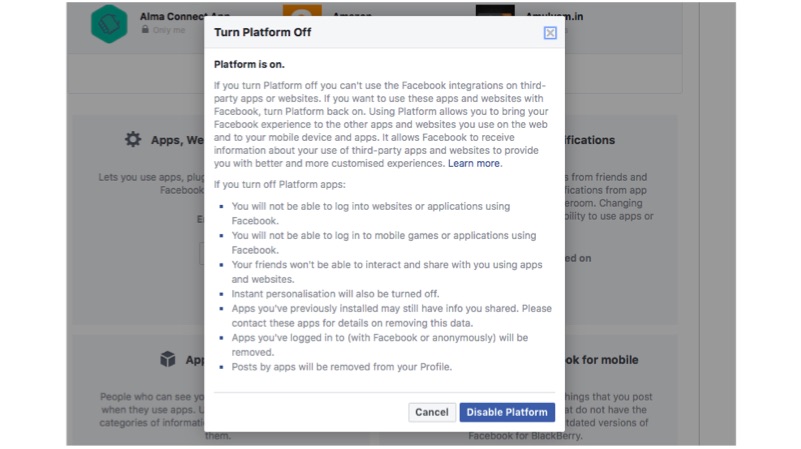
    There are two methods to remove already existing data on Facebook. The first method helps to prevent Facebook from collecting additional data from other platforms like Instagram. Go to Settings>Apps>Websites and plugins then click on disable platform. This action will prevent you from signing-in to other applications or platforms that use your Facebook details. After doing this, you might not be able to play games or access applications. However, the already signed-in applications will still collect your data, until you sign-out of that application individually.

    Facebook

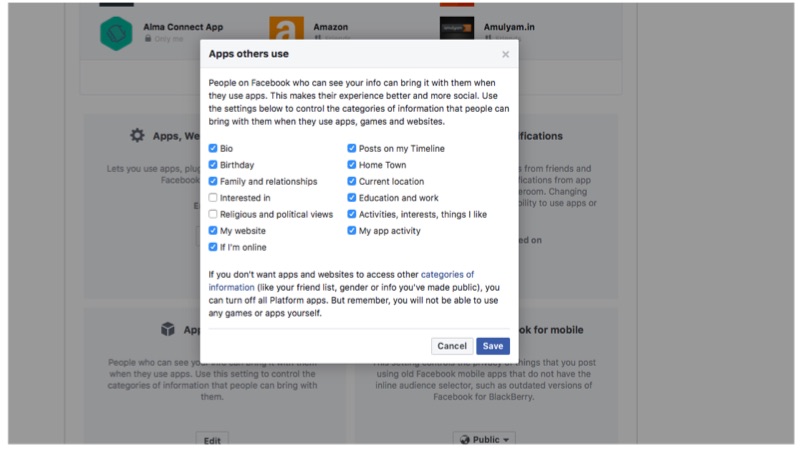
    The second method gives a more refined control over the information that you can share with other platforms. Go to Websites and plugins>Apps Others Use and undo the required checkboxes. The list includes options like your birthday, relation status, interests etc. However, this method might kill some of the app functionality to the third-party apps, which need this information. The page also lists the apps, that you have shared your information with. Remove the apps, that you feel insecure to share your personal data.

    Facebook

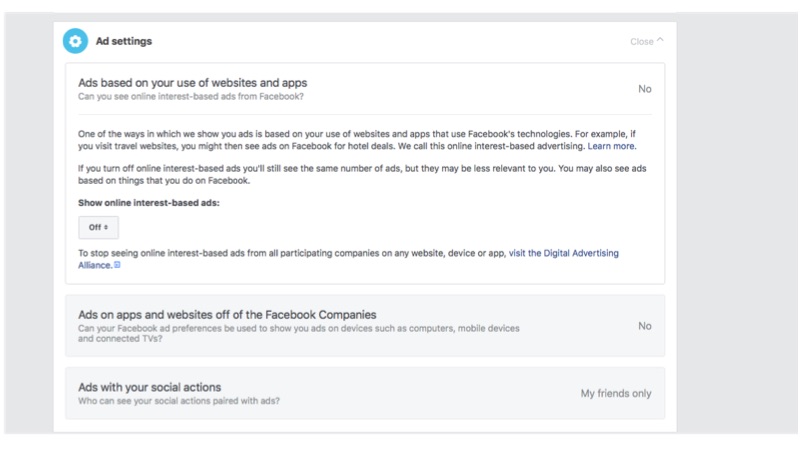
    The last option is to go to Ads section in settings to turn-off data collection from other websites, that you visit on a daily basis. Edit your information section from to not to share your personal information with advertisers. If you want to be a pro-private person on Facebook, use a virtual proxy network (VPN) with an add-on which can block cookies.

    Facebook

  • WhatsApp Ordered To Stop Sharing User Data With Facebook

    WhatsApp Ordered To Stop Sharing User Data With Facebook

    Back in 2014, Facebook bought one of the most famous instant messaging apps in the world, WhatsApp. Over the course of three years, there have been many Facebook features which have trickled down to WhatsApp as well, WhatsApp Status being one of them. Being the parent company, Facebook started using the user data from WhatsApp to develop targeted advertising, security measures, and to gather business intelligence.

    To tackle the free-sharing of personal user data among the two firms, France’s ultra-strict privacy watchdog CNIL has ordered WhatsApp to stop sharing user data with parent company Facebook. WhatsApp has a month to comply with the order, according to a public notice posted to the French website. CNIL ruled that while WhatsApp’s intention of improving security measures was valid, the sharing of data for business intelligence purpose was not acceptable.

    CNIL believes that since WhatsApp never told its users that it was collecting data for business intelligence and there’s no way to opt out without uninstalling the app, it violates the fundamental freedom of users.

    This is a yet another step from European regulators to crack down on the freewheeling data sharing between the two social networking entities. Germany ordered Facebook to stop collecting data from WhatsApp users in September 2016, and in the UK, Facebook agreed to stop collecting WhatsApp user data in November 2016.

    Do you find it uncomfortable that Facebook can use your data to create specific advertisements for you while it claims that the data-sharing is for security purposes only? Let us know in the comments below!

  • OnePlus Found Recording Personal Data Of Users

    OnePlus Found Recording Personal Data Of Users

    In a yet another case of a Chinese smartphone maker recording sensitive data of its users, OnePlus has been found to do something similar. Normally, there is a certain level of information sent to the company like crashes, bugs and general issues that could be fixed by a software update. However, OnePlus was found to collect data that includes IMEI numbers, MAC addresses, mobile network names and IMSI prefixes, serial numbers, and more.

    Christopher Moore, a software engineer, made a post on his personal blog showing his discoveries. During a Hack Challenge, Moore began proxying the internet traffic from his OnePlus 2 using OWASP ZAP. What this means is that it essentially allowed him to view all incoming and outgoing internet traffic from his phone. Among the usual network activity, he noticed a large amount of requests to open.oneplus.net. Through deeper inspection, he found the domain name to be an Amazon AWS instance owned by OnePlus. He was able to decrypt the data (using the authentication key on the phone) which revealed that his OnePlus 2 was sending time-stamped information about locks, unlocks, and unexpected reboots.

    It is quite usual for a phone to log OS crashes as it allows developers to find a fix for such bugs. But, as Moore notes in his blog, sending the data of every time the phone is locked or unlocked seems a bit intrusive. Moore discovered that some of the data being sent to OnePlus’ servers included the phone’s IMEI number, the phone number, MAC addresses, mobile network names and IMSI prefixes, Wi-Fi connection info, and the phone’s serial number. He later found out that the data included every time an app was opened.

    OnePlus had this to say in response:

    We securely transmit analytics in two different streams over HTTPS to an Amazon server. The first stream is usage analytics, which we collect in order for us to more precisely fine tune our software according to user behavior. This transmission of usage activity can be turned off by navigating to ‘Settings’ -> ‘Advanced’ -> ‘Join user experience program’. The second stream is device information, which we collect to provide better after-sales support.

    There are rumours that OnePlus is working on the OnePlus 5T which might be launched in November and it is to be seen if this information of sensitive data recording will have any repercussions on the company’s plans.

iGyaan Network
Privacy Overview

This website uses cookies so that we can provide you with the best user experience possible. Cookie information is stored in your browser and performs functions such as recognising you when you return to our website and helping our team to understand which sections of the website you find most interesting and useful.