Tag: social media

  • Death of Orkut and The End of The Previous Generation of Social Media

    Death of Orkut and The End of The Previous Generation of Social Media

    Google recently announced the shutting down of its Orkut service. After seeing a huge user base in Brazil and India, the social network just couldn’t keep up with the rapidly innovating competition. The social network service will officially shut down on September 30th.
    Google will close the curtains on Orkut on September 30th
    Google will close the curtains on Orkut on September 30th

    Orkut was the first social network that I laid my hands on and even on a 56000 bps connection; it was pure fun. Back in 2005, this was a better medium of interaction with friends with whom we could spend every waking moment with. It was a more interactive service than the dull telephone call,even though it did take 15 minutes to post a single ‘scrap’ (equivalent to fb’s wall post) on a friend’s profile. It was more interactive than Yahoo or MSN messengers which were staples of all internet connected computers of that era. Uploading or even viewing a single image was a night long affair which would skyrocket the phone bill and hence was meant to be avoided.

    Social media has come a long way from my first encounter with it. The giants, Facebook and Twitter, have made their mark and cleared their competition while increasing their user base exponentially. Now one out of every seven human being has a Facebook account, and there are about six hundred forty five million users of Twitter worldwide. If Facebook were a country, it would have been the third most populous country in the world.
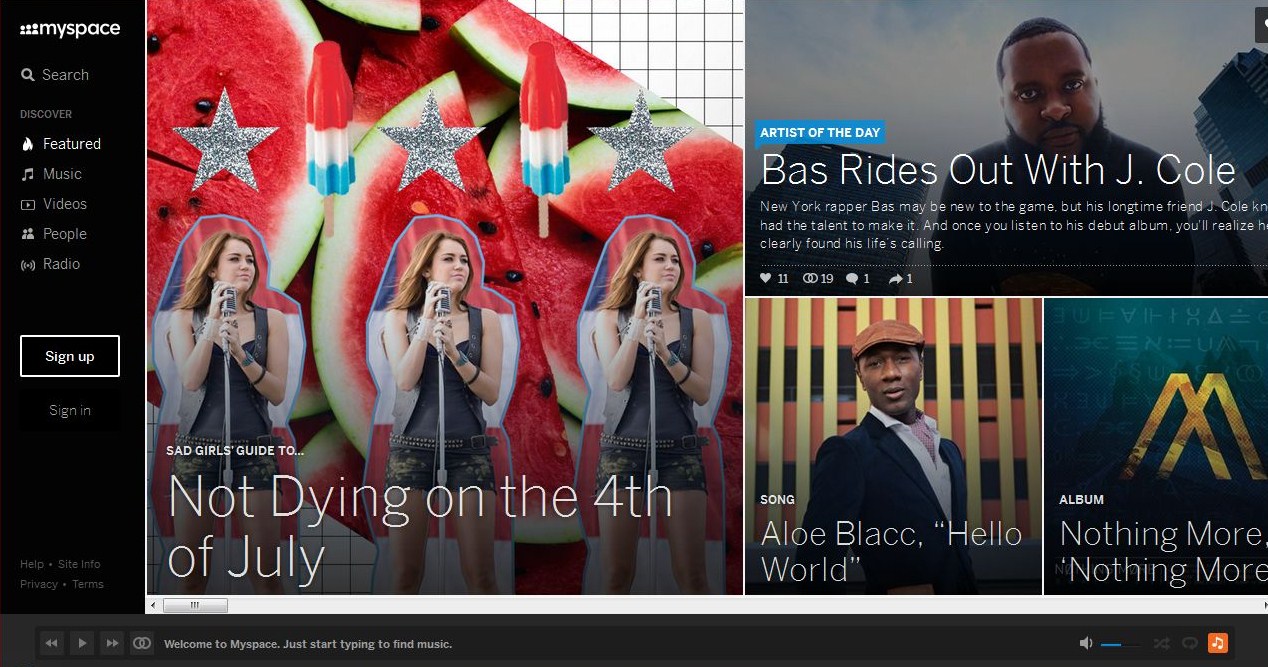
    The Grand Daddy of Social networks has reinvented itself into a music heavy platform
    The Grand Daddy of Social networks has reinvented itself into a music heavy platform

    The social media evolution began in 2003 with the inception of Myspace. Myspace created the foundation on which thousands of startups tried their luck on and Facebook ultimately won the game. Myspace has since had a new owner in Justin Timberlake, who has reinvented it in a music heavy flair.

    Even social broadcast mediums like Blogger faced intense competition from micro-blogging revolution which came with Twitter. It took social interactions to a whole new level. With almost first person interaction with the who’s who of the world, it somehow brought an egalitarian aspect to the society.

    The news media has also seen a major shift in information dissemination with the advent of social media. Now you don’t have to go find the news, the news finds you. Almost all major newspapers and media houses have their social media pages, and there is a predatory race to who could gather the most reach and most subscribers.

    Erik Qualman in Socialnomics states that “Social Media is the biggest shift since Industrial Revolution.” He says that the four P’s of Marketing; Product, Place, Price, Promotion are now replaced by the 4 C’s of Digital; Creating, Curating, Connecting, Culture. Within our social media profiles, it’s clearly evident that digital marketing is now a major priority for companies around the world. An economy of “likes” is taking shape.
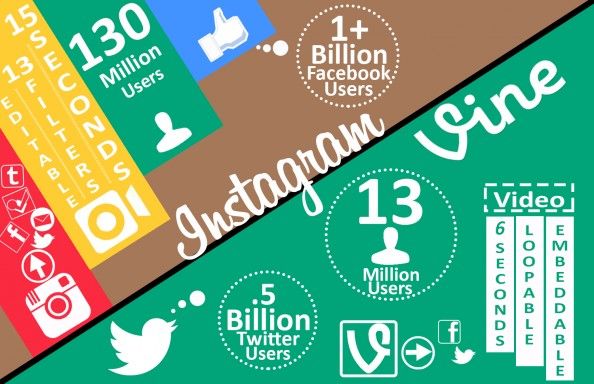
    Instagram and Vine have grown because of their simplistic and swift approach
    Instagram and Vine have grown because of their simplistic and swift approach

    But this has also had some drawbacks. Because of the massive overload of information, the average human attention span is at seven seconds, in comparison, a Goldfish has 8 seconds of attention span. This is the reason why services like Instagram which are swift and efficient have been able to consolidate a faithful following. Apart from these, unscrupulous elements have found a whole new ecosystem to exploit naïve and unsuspecting victims. Fortunately lot many nations around the world have started talking about regulations for social media. These laws should be directed towards upholding freedom of speech while protecting privacy concerns to be efficient.

    The death of Orkut does raise some questions on longevity of the social media ecosystems. The companies that have constantly read the user demands and have innovated with it have succeeded. It is this reason that we see Mark Zuckerberg signing up multi-billion dollar acquisitions. Mobile is where the game is to be played in the future and Whatsapp, Snapchat have fast become interaction medium between friends and acquaintances.
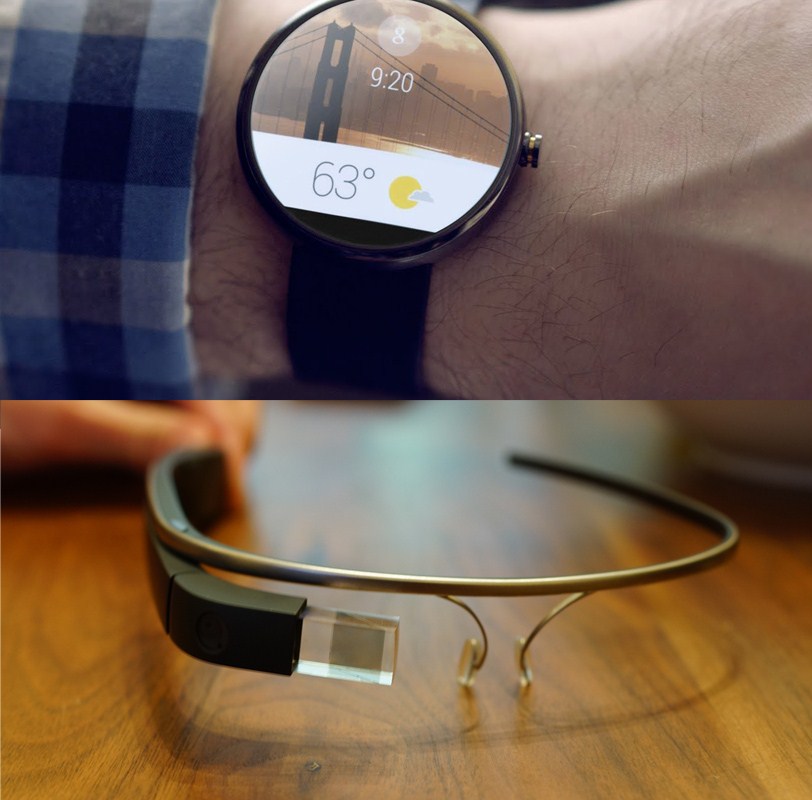
    Google can create a new revolution with its wearable technology.
    Google can create a new revolution with its wearable technology.

    For Google, which has struggled to offer a winsome social network experience, this is an opportunity to either start afresh or start anew. Google is at an advantage to take some risks right now considering it is the leader in the mobile OS business. Its hardware platforms like Android Wear, and Google Glass provide it an opportunity to experiment and innovate. In the era of portables and identical looking operating systems, the world is looking constantly looking for the next big thing. It is for the future to see if it emerges from a giant as the iPod did from Apple or from an unknown garage workshop like in the case of Facebook.
  • 10 Things You Don’t Know About Twitter (But Should)

    10 Things You Don’t Know About Twitter (But Should)

    Recently, we’ve been paying quite a bit of attention to this powerful social media forum. Why shouldn’t we? It is used by millions everyday, and we especially love the way it helps us stay connected. Twitter needs to be given credit for being one of the first sites which helped us communicate with famous names. Everyone starting from Barack Obama to Shah Rukh Khan use this microblogging service. Companies also use this service to keep in contact with their customers.

    Yesterday, we explained the 10 easy steps you can use to become a Twitter Pro. Carrying on the series, here are 10 things you probably didn’t know about Twitter:

    1. Narendra Modi’s Tweet Created History

    On 16th May 2014, the Indian election results confirmed a huge victory for the Bhartiya Janata Party. On the same day, @NarendraModi’s victory tweet, created record history by becoming the most retweeted and favourited tweet from India.

    2. You Can Use Twitter to Share Files

    Log onto Filesocial.com with your Twitter ID, upload a file and it will automatically be shared on your twitter account.  You can upload PDFs and documents, as well. It’ll appear as a regular post on your feed; anyone can see, comment and even download that file.

    3. Get Your Entire Twitter History Emailed to You

    At the bottom of your Account Settings page, there is a tab labeled ‘Request Your Archive’. Click on it to request a file containing all your information, which goes back to your first Tweet. Twitter emails you a link from where you can download the file that includes a detailed document with timestamps, tweets, retweets and URLS.

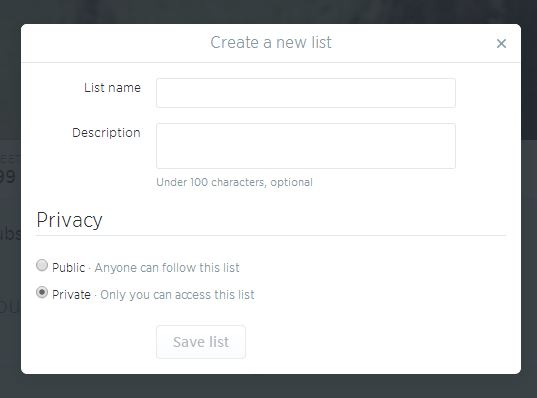
    4. You Can Create Secret Lists

    Twitter list

    It’s fairly simple, when you click on the tab to create a new list, click on the option of making the list private. Now no one other than you would be able to view that list. Twitter lists can be used de-clutter your account. Once you have a large number of followers or if you’re following too many people, you can sort out the  by organising them into lists which are only visible to you. Lists can be organized on the basis of location, topics being discussed, job profiles, or your closest friends. 

    5. The Blue Bird Has a Name

    twitter-bird-

    Twitter’s famous mascot is named “Larry”. Larry the Bird has been reportedly named after Larry Bird, a former professional basketball player who played for the Boston Celtics.

    6. People Buy Followers on Twitter

    Okay, most of you might already know this. Similar to buying ‘likes’ on Facebook, you can buy followers on Twitter. There are a ton of sites available which claim to give you cheap rates to increase your followers. This might be a good idea if you’re building a brand and promoting it through Twitter, however you should know that these followers will not be an active audience. They’re not going to be interested in your brand or tweets, they’re only an added number.

    7. The Most Followed Person on Twitter is..

    katy perry

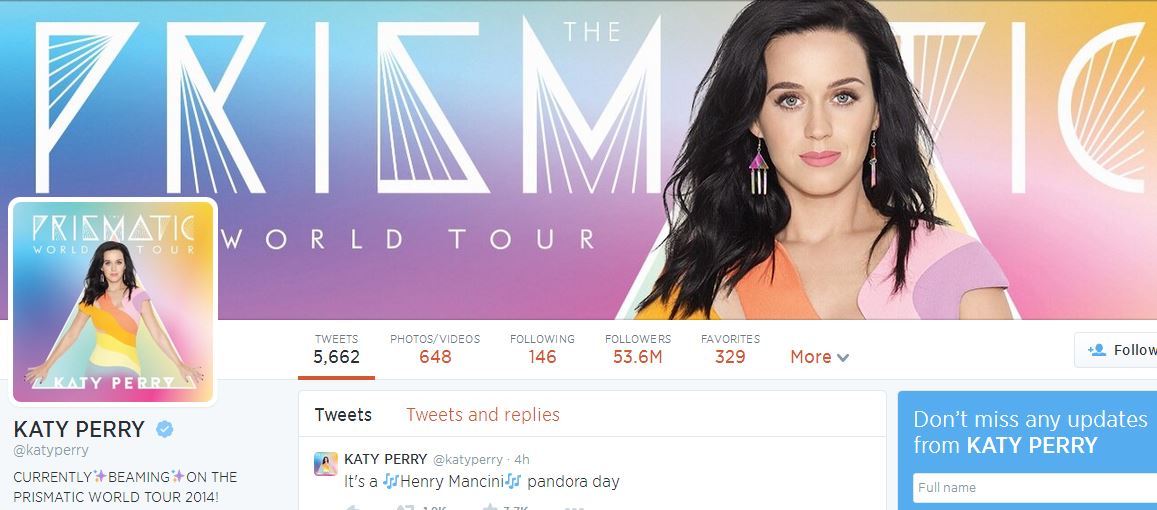
    With more than 53 million followers, Katy Perry has been reigning on top since November 2013. She is followed closely by Justin Bieber (52.2 million) and then President Barack Obama (43.5 million). Says a lot about where the world’s priorities lie. The most followed Indian is Amitabh Bachchan, with more than 9 million followers.

    8. Twitter’s Current CEO Was a Professional Comedian.

    Their previous COO and current CEO Dick Costolo, in an interview revealed that he tried his hand at stand-up comedy and failed. According to Business Insider, his stakes at Twitter are now worth $430 Million. We’re pretty sure he has no regrets.

    9. You Can Send Tweets Via Text Messages

    In fact, this is the site’s foundation stone. Twitter’s co-founder Jack Dorsey had initially pictured it as an SMS-based communication platform. Though Twitter is a free service, your mobile carrier service might charge you according to your chosen messaging plan. If you have an unlimited texting plan you won’t get charged, if you have a pay-per-message then the regular charges will apply.

    10. Facebook Almost Bought Twitter

    -facebook-twitter-

    According to the tech grapevine, sometime around October 2008 Mark Zuckerberg offered to pay $500 million to buy out Twitter. He was dealing directly with Jack Dorsey. The deal came to a crashing halt when Dorsey was yanked from his position as CEO, and assigned the position of a Chairman with zero operational control. 

  • How Social Media Helped Narendra Modi Win

    How Social Media Helped Narendra Modi Win

    Narendra Modi, leader of the Bhartiya Janata Party, won the 16th Lok Sabha elections on Friday. The stocks rose above the 25,000 mark for the first time, and the Rupee is finally getting stronger. As promised, the economic growth is moving forward in full force, but will this win deter and stunt us an independent inclusive state? Will the new ruling party ensure that the needs of the minorities are catered to? The nation is abuzz with questions about what Narendra Modi’s first big move as the Prime Minister of India may be.

    While the country debates about the pros and cons of Modi’s victory. We decided to take a step back and take a look at the party’s strategic online campaign which subsequently led to their smooth win.

    Futuristic Campaigning

    Modi3D

    There is no debate about the fact that political campaigns can be no longer constrained to traditional rallying.  We’ve got something bigger and better connecting the voters and the potential leaders – the World Wide Web. The Bhartiya Janata Party ensured they had a strong online presence across each of the social media platforms – Facebook, Twitter, Google+ and YouTube.

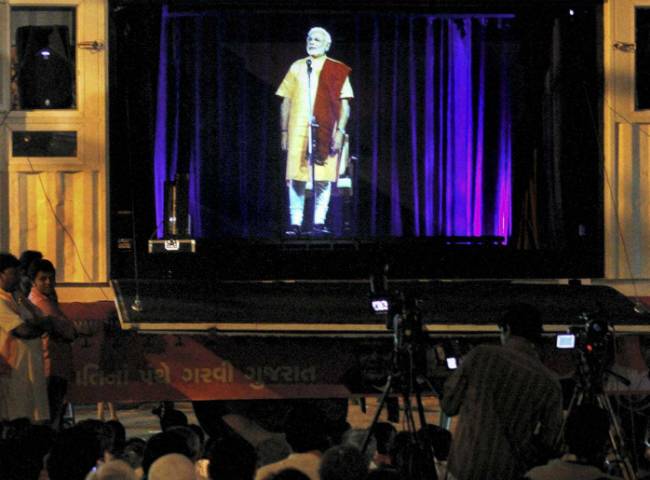
    While the BJP party campaigned extensively across the country, conducting rally’s in every village, town and city; they did something clever. They went a step ahead and used various methods of technology to keep their voters feeling included. Many rural areas which were hard to reach and had no access to the internet, screens were staged and recorded speeches were played. Through Facebook, the 14 million followers could track Narendra Modi’s every move during the campaign. Meetings with dignitaries, selfies with celebrities, were shared. It was used as a mini blog, giving an impression that we are directly receiving messages from the Narendra Modi himself. His YouTube channel, has an extensive collection of speeches and interviews. The speeches were available is several regional languages.

    #ModifiedIndia

    On Twitter, @NarendraModi’s victory tweet, “India has won” created record history by becoming the most retweeted and favourited tweet from India. After Barack and Michelle Obama, he is now the most followed politician on Twitter. #Tsunamo, #Modiheadto2RCR, #Mission272 and #ModifiedIndia were some of the top trends on Twitter for days.

    Capture

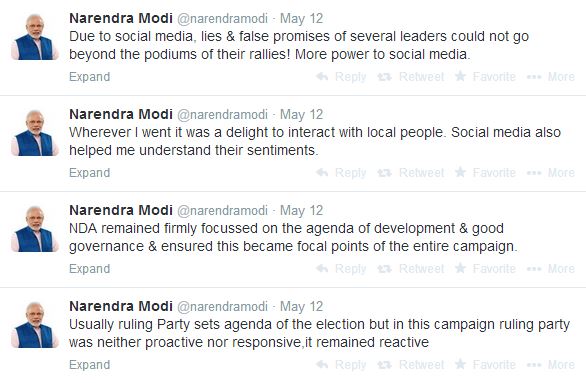
    While Narendra Modi has more than 4million followers on Twitter, Rahul Gandhi doesn’t even have a verified Twitter account. The second most followed contestant on Twitter was Arvind Kejriwal, leader of the Aam Aadmi Party. It could be considered as an attempt to keep his following informed, however his tweets were mostly overconfident grumbling and blatant false promises. Much like most of Kejriwal’s campaign, his rants were ill-focused and misguided. On the other hand, Modi’s team used the platform what its meant for, connecting and building a sense of community through short eloquent messages.

    Brand Modi

    mugs

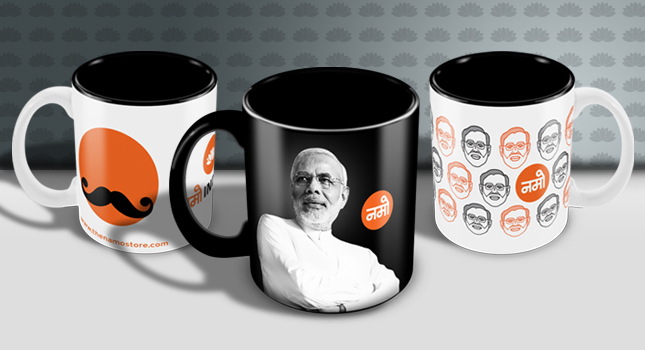
    Social Media Marketing works on one key concept – the appearance of underlying messages coming from a trusted source. The smartest move by BJP, was having a clear cut face for each of the platforms. More than promoting Bhartiya Janta Party, Narendra Modi’s name and face was everywhere.  It is a classic case of branding – they have a focus group (the entire population of India), a client brief (their election manifesto) and a product (Mr Modi).

    Overall, they used social media exactly like every major enterprise in the world is now using. Why shouldn’t they? A campaign is synonymous to a sales pitch. One that BJP mastered to the notch.

    While many attributes may have contributed to BJP’s win, one has to give the credit to the party’s attempt to plan ahead and use the strongest connectivity tool existent today. The outcome of the five years is yet to be seem, but the party needs to be given respect for smartly using social media to mobilize and include the masses. This also helped them promote an image of complete transparency.

    The slant and leaning of each of the political parties campaign’s were entirely reflected through their social media campaigns. Arvind Kejrival’s feeble attempt, Narendra Modi’s strong hold on the medium and Rahul Gandhi’s presence was entirely non-existent.


  • Snapchat Update: Video Chat and Texting Features Added

    Snapchat Update: Video Chat and Texting Features Added

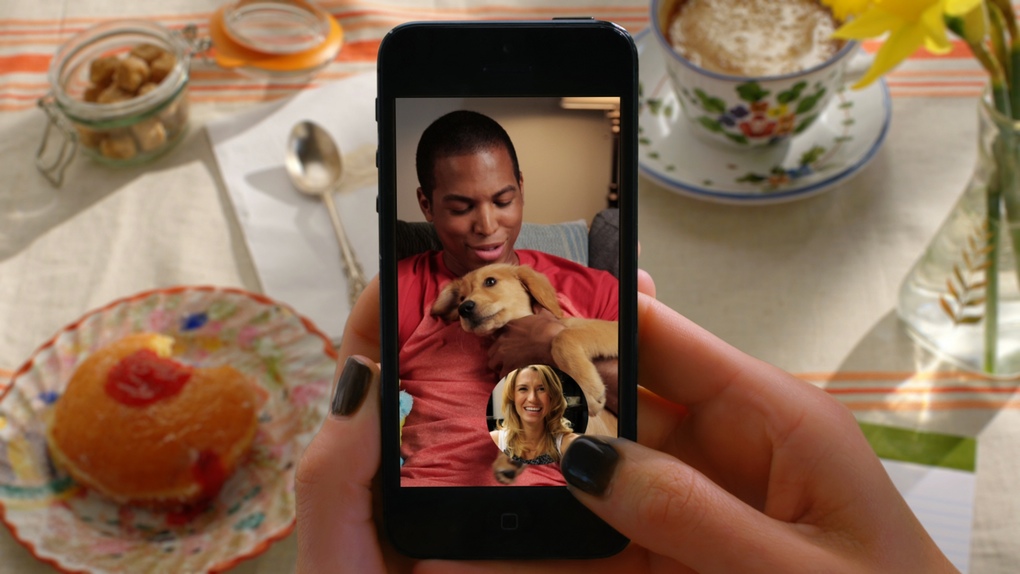
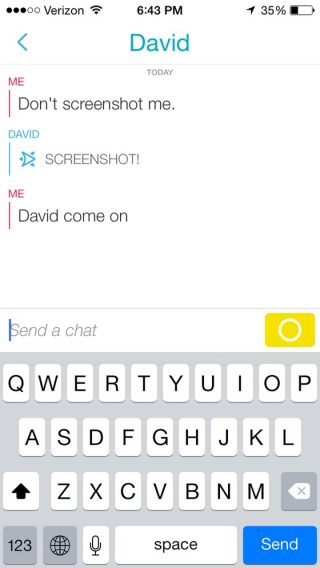
    Snapchat claims that over 700 million pictures are shared everyday on their service, which would make it the most-used photo-sharing app — compared to Facebook, WhatsApp, and others. And now they have come up with new feature by which you can text and video chat as well. Staying true to their philosophy the text messages disappear as soon as the conversation is over. They hope to make video chats feel unforeseen, attempting to reproduce momentary meets on a street corner. Unlike Skype calls, which always prove to be tedious to plan out with friends.

    snapchat23-year-old CEO, Evan Spiegel in an interview with ‘The Verge’ said that the reason none of his friends video call each other on a daily basis is because “calling” was born of an era where software needed to imitate real-world tools. “What does a phone look like without a ringer?” he asks. He sums up his idea more neatly. “For Snapchat, the closer we can get to ‘I want to talk to you’ — that emotion of wanting to see you and then seeing you — the better and better our product and our view of the world will be.” To Spiegel, the future of communication isn’t about rethinking or upgrading phone calls as Skype, FaceTime, and Hangouts have done. It’s about imagining a future that leaves the phone metaphor behind entirely.

    Snapchat stripped out conventional texting-app features like read receipts, typing indicators, online statuses, and photo attachments. “Typing and read receipts make a lot of sense for messaging,” says Spiegel. “You write a letter, you put it in an envelope, you send it to a friend, and you want to know when they get it.” According to Spiegel, a modern chat app should feel like you’re really in the same room as the person you’re talking to.

    It started with sharing short-lived pictures, but Spiegel’s vision is faraway from just photos. You can call it anything — social network, utility, future-phone — Snapchat has managed to stick around, though it’s addictive features are still not so easy to classify. He’s trying to produce digital spaces with the identical closeness and immediateness we get in actual world conversations. Smartphones have altered the way we all commune with one another. But if Spiegel can achieve his vision, Snapchat could be the app that changes it back.

iGyaan Network
Privacy Overview

This website uses cookies so that we can provide you with the best user experience possible. Cookie information is stored in your browser and performs functions such as recognising you when you return to our website and helping our team to understand which sections of the website you find most interesting and useful.