Tag: SpaceX

  • SpaceX Successfully Launches 60 Satellites In The Starlink Project For Global Internet

    SpaceX Successfully Launches 60 Satellites In The Starlink Project For Global Internet

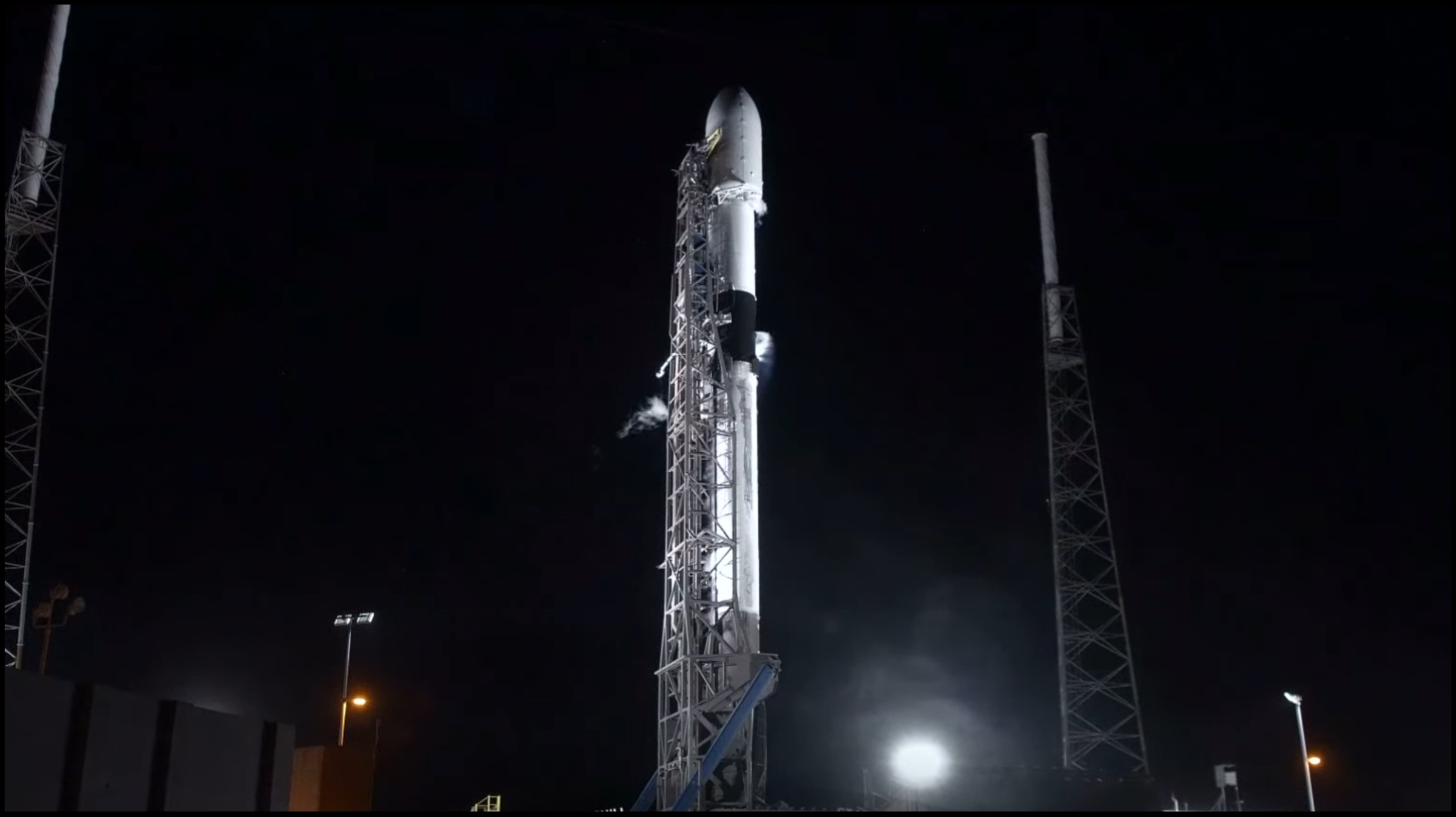
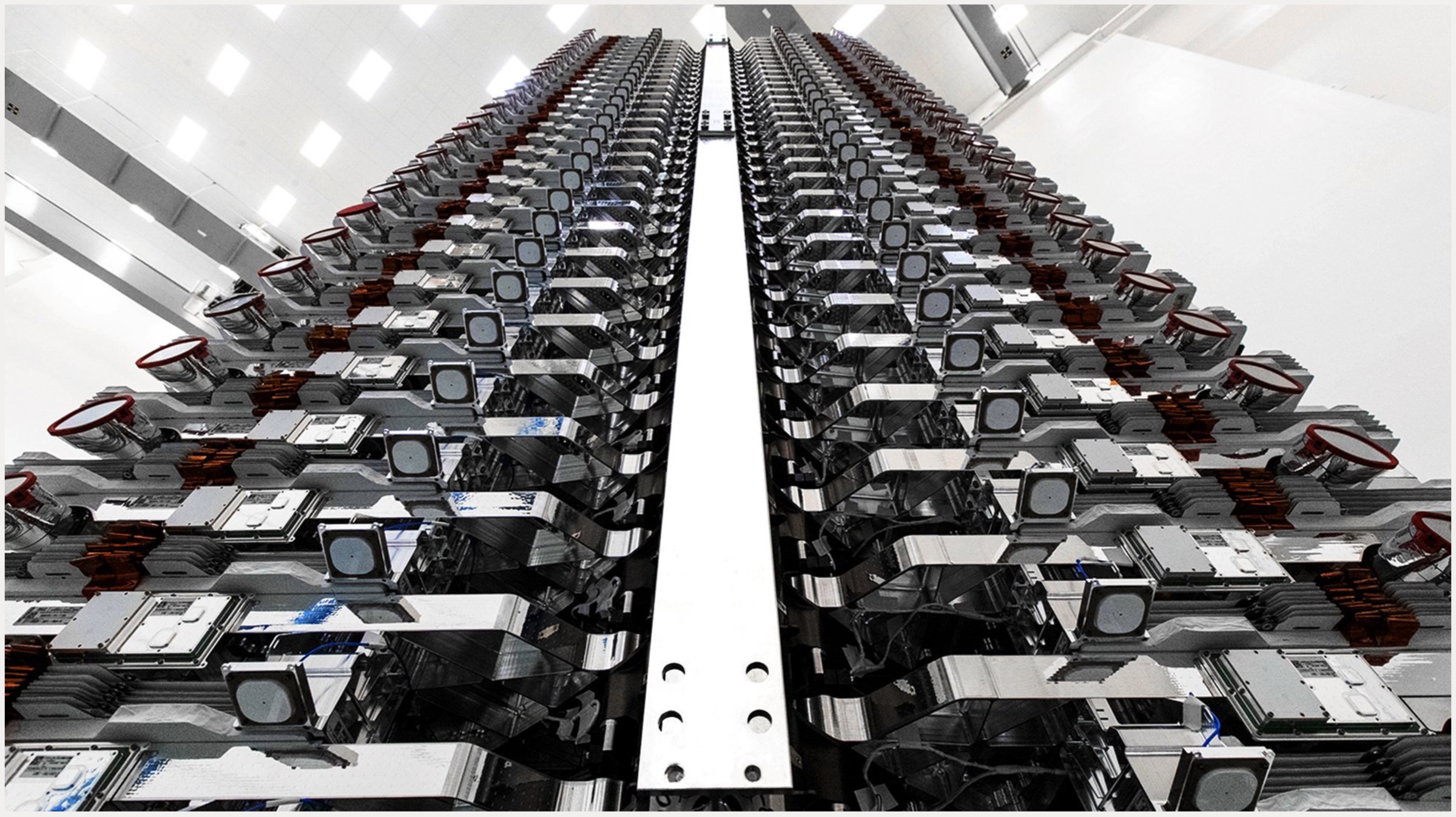
    American aerospace manufacturer and space transportation services company SpaceX has successfully launched 60 satellites in the Starlink project on the 23rd of May. This initiative aims at installing almost twelve thousand satellites to deliver latency free, fast internet anywhere in the world. The latest mission was the first in the many launches that are scheduled for the better part of the next six years.

    What Is Starlink?
    SpaceX Starlink

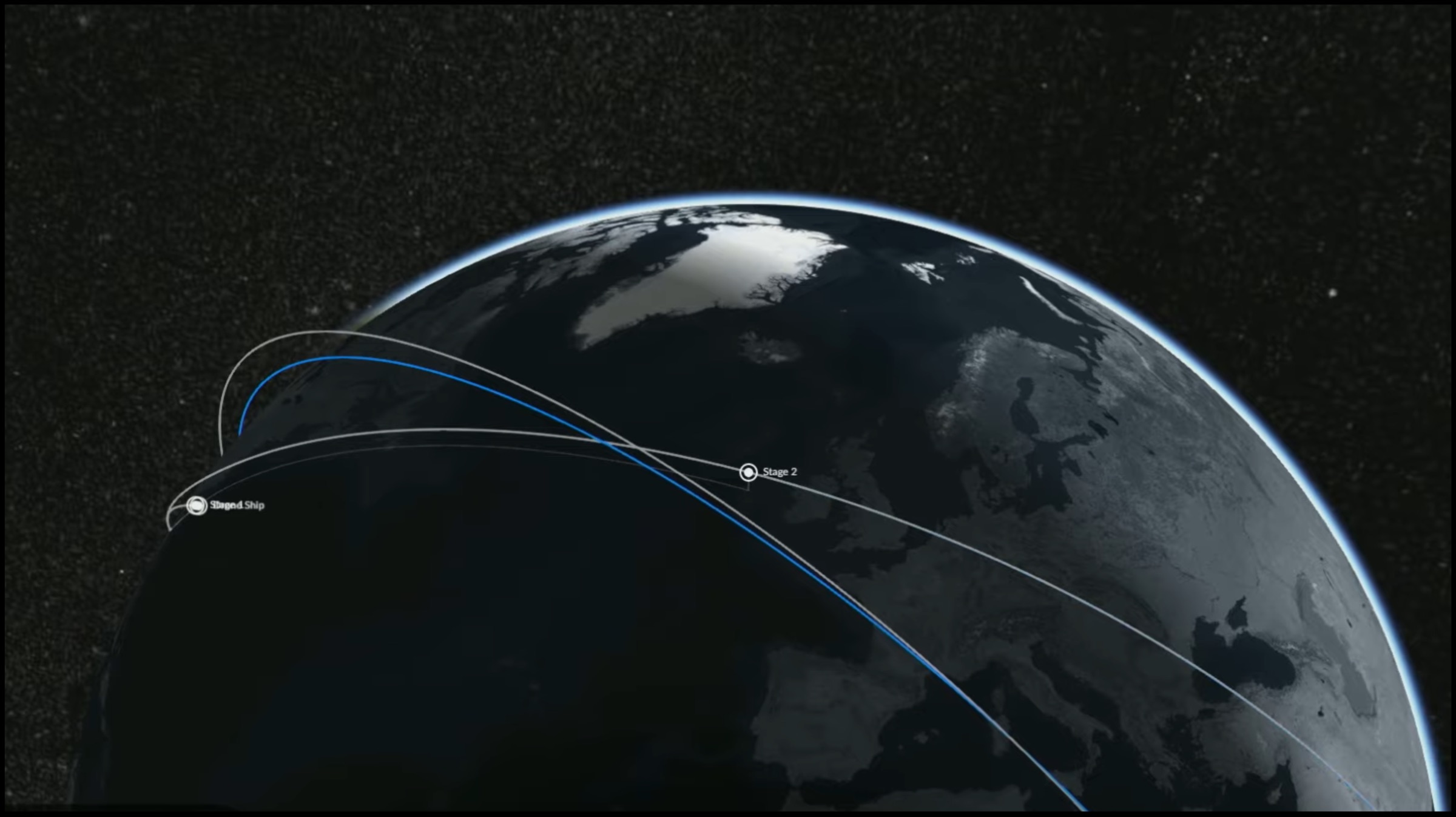
    As mentioned above, the ultimate goal of the Starlink project by SpaceX is to launch and install twelve thousand satellites into the lower orbit of the earth; in an attempt to deliver fast internet to even the most remote places in the world. In this initiative, one batch of 4,409 satellites will be placed between 550kms and 1,325 km from Earth’s surface; while the second batch of 7,518 satellites will orbit the planet at a height between 335km to 346km from the surface. When taking a count, that amounts to a total of 11,927 satellites orbiting the Earth in an attempt to deliver fast internet. The company plans to launch the aforementioned satellites by the year 2024.
    SpaceX Starlink
    The sixty satellites stacked together

    The Federal Communications Commission (FCC) of the United States; a certification body has granted SpaceX the necessary permission to launch the Satellite constellation into space. Notably, the company launched two test satellites in the mission in the year 2018. These were called TinTin A and TinTin B and laid the foundation for the current mission.

    Also read: Google Is Reimbursing Pixel 1 Owners In The US, But What About India?

    While the idea behind Starlink; a global coverage of the Internet to even the remotest areas seems philanthropic, the truth is more easy on the eyes. SpaceX CEO Elon Musk has said the mission is important because Starlink will be a revenue generator for the company. With the money made from the project, the company claims it will be able to fund and develop more advanced space exploration project. This may include SpaceX’s plan to send a human to Mars within a decade.
  • SpaceX Launches and Lands Three Falcon Heavy Rocket Boosters Successfully

    SpaceX Launches and Lands Three Falcon Heavy Rocket Boosters Successfully

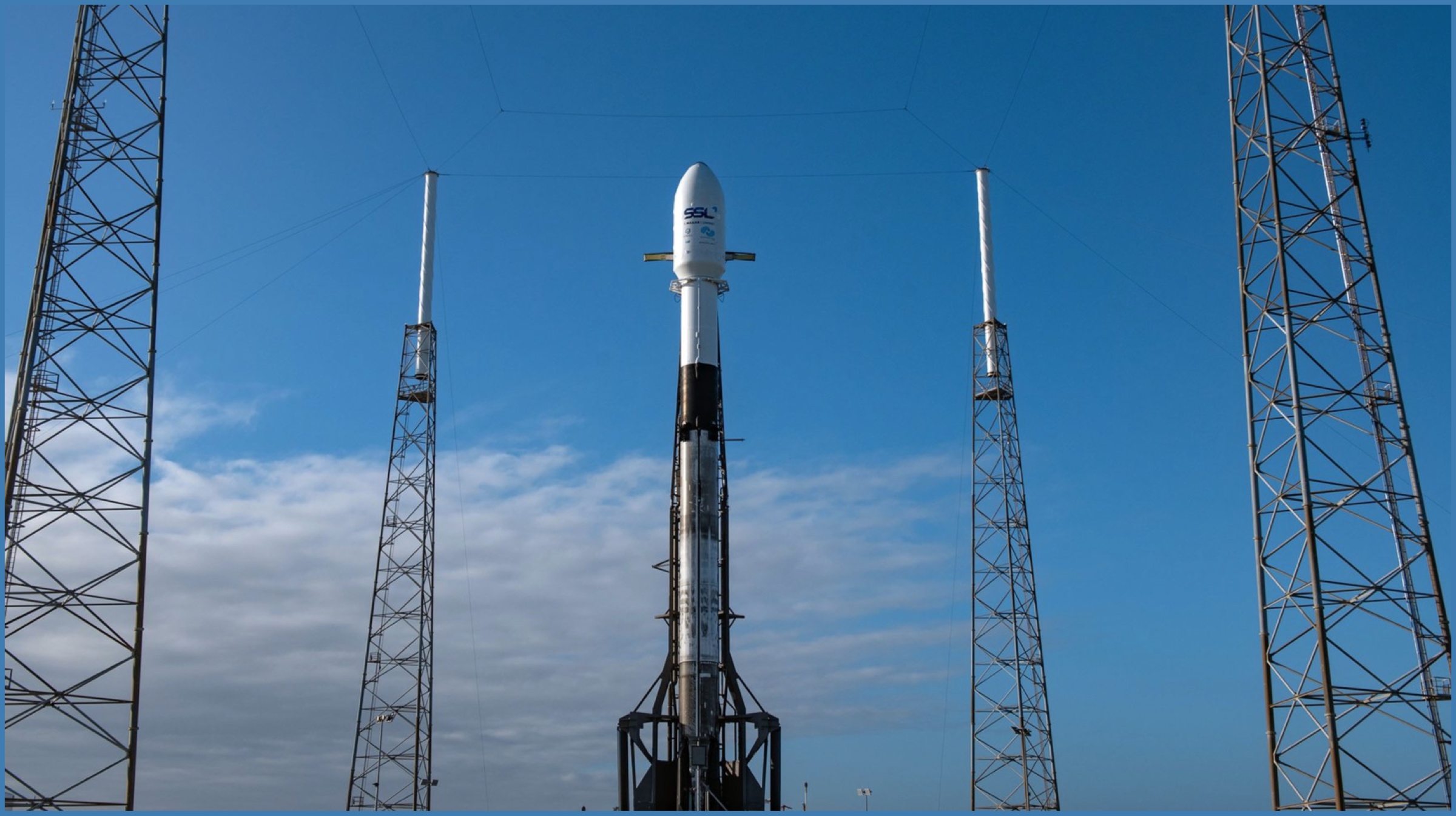
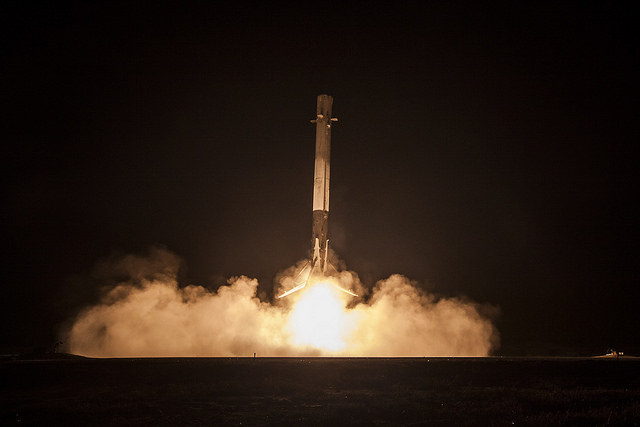
    SpaceX short for Space Exploration Technologies Corp is a privately held American aerospace manufacturer which was founded in the year 2002. The company has been rigorously working towards driving down the costs of space transportation by developing reusable space crafts and spacecraft parts. On 11th of April, 2019, the company achieved a noteworthy milestone which is the successful landing of three rocket cores on Earth.

    What Is A Rocket Core?


    A booster rocket is the first stage engine of a multistage launch vehicle which is used to drive the whole rocket unit out of earth’s orbit. Once the whole unit crosses the orbit, the booster separates itself from the main rocket body that carries the payload. Once separated, the rocket core enters the earth’s orbit once again which may or may not be reused depending on its landing.

    Why Is The SpaceX Achievement Significant?

    As previously mentioned, the company was able to successfully land all three rocket cores from the Falcon Heavy rocket. It is the first time that the company is able to achieve this feat. Last year in the month of February, the company tried to accomplish the same landing which failed due to one Rocket core running out of fuel. Consequently, the rocket core slammed into the ocean thereby rendering unusable.

    Also Read: Apple To Start Manufacturing iPhone X In India July Onwards

    As per reports, SpaceX was able to achieve this successful landing due to the fact that all three boosters used for this flight were upgraded versions of the company’s rockets known as Block 5. The new versions are tweaked in a manner which optimises their reusability. Therefore, the company can quickly and easily turn them around for future flights.

  • SpaceX’s Crew Dragon Marks Yet Another Significant Achievement

    SpaceX’s Crew Dragon Marks Yet Another Significant Achievement

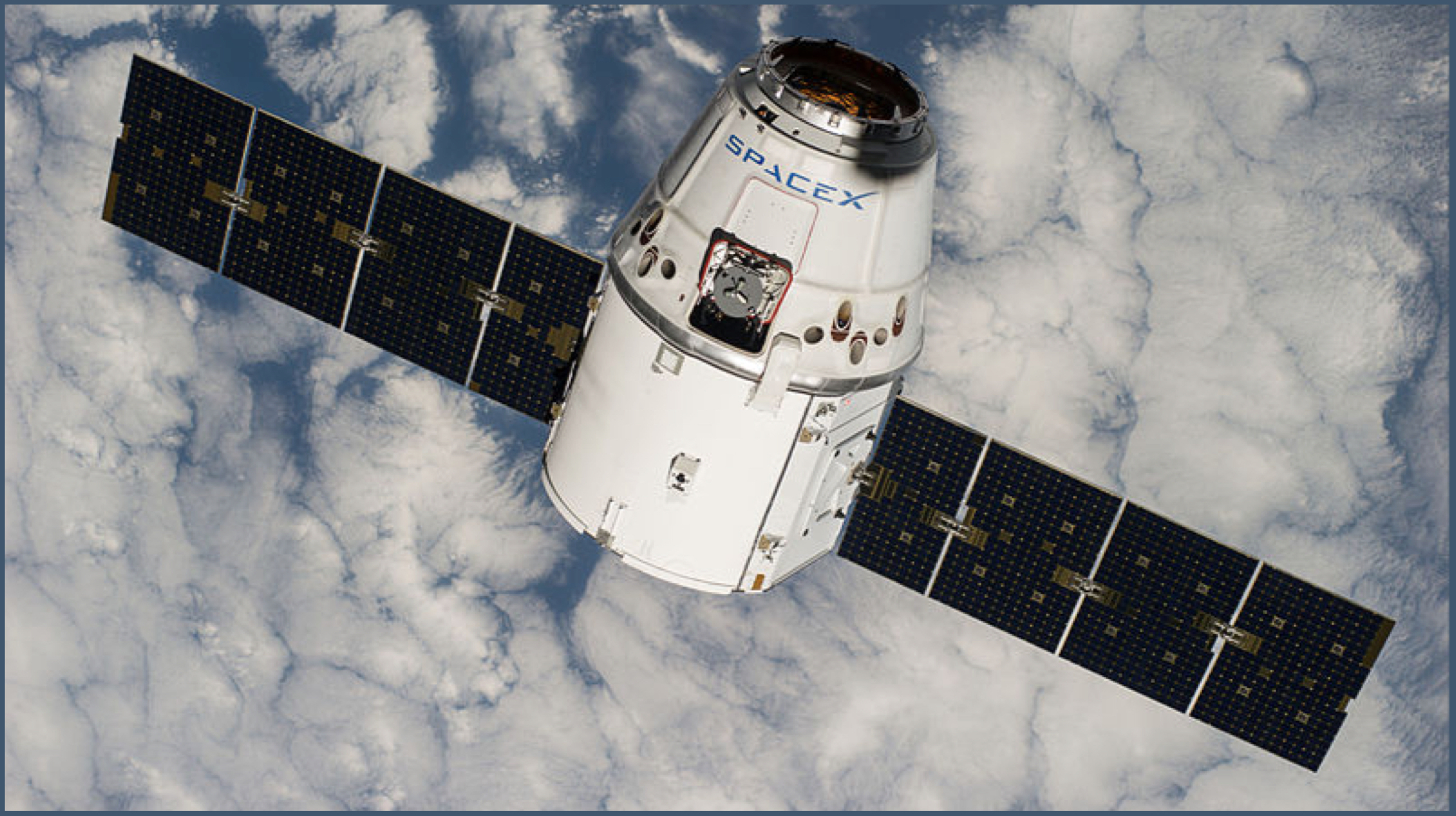
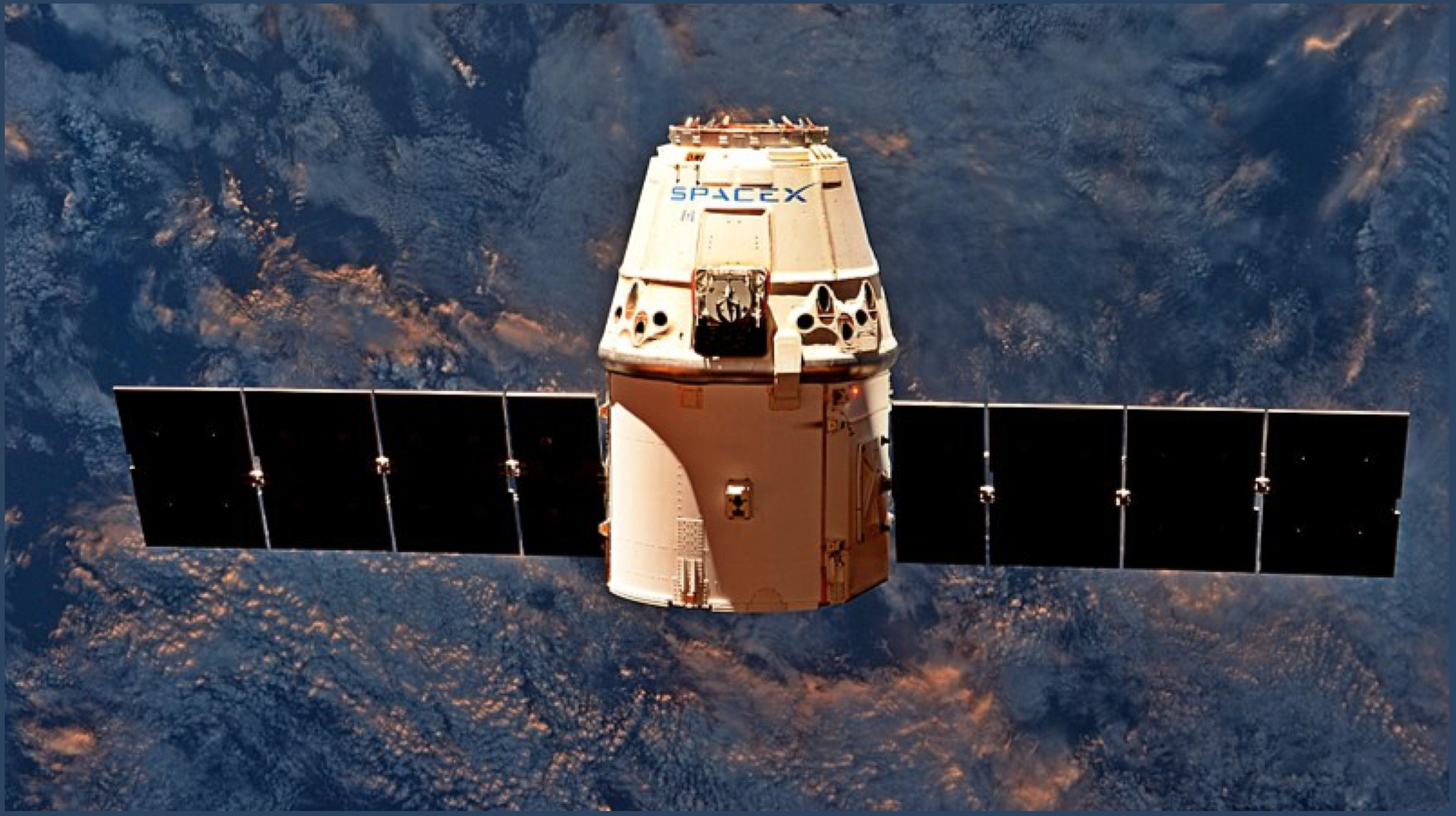
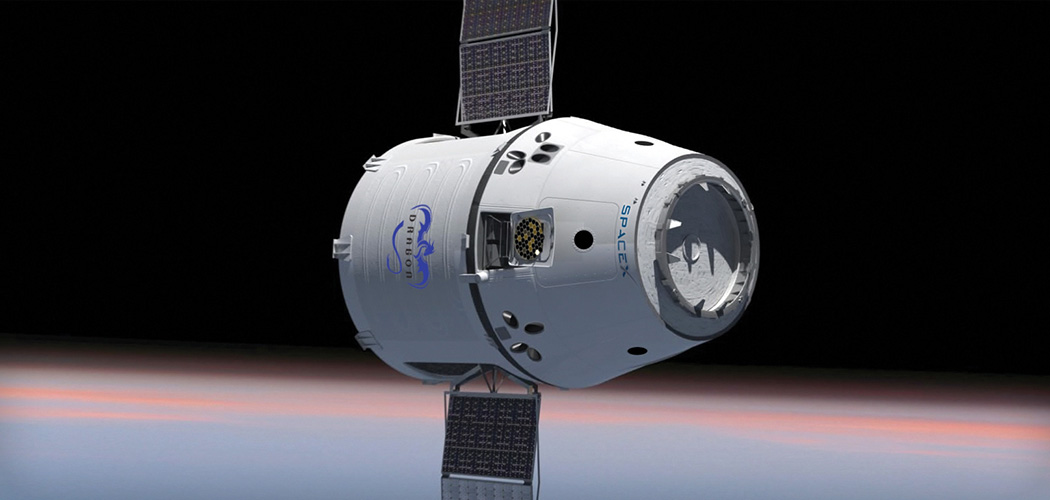
    SpaceX’s “test crew” aboard the Dragon Capsule splashed down in the Atlantic Ocean on March 8, 7:15 pm IST (8:45 am EST) after spending almost a week at the ISS (International Space Station). The company has proven that its “Dragon” capsule can survive a full-fledged trip to space and back. The next step on the list is to send astronauts to space now that the capsule has proven its worth, the company states.

    The touchdown of the Dragon capsule was the last part of SpaceX’s Demonstration – 1 mission. The reason why the mission was of utmost importance is NASA’s upcoming Commercial Crew Program, under which the agency is planning to send NASA astronauts to a USA owned spacecraft. So, the SpaceX DM1 was basically a test run to prove that it is capable of space travel, and it struck off as “better than expected” as per SpaceX and NASA representatives.
    Liftoff And Docking

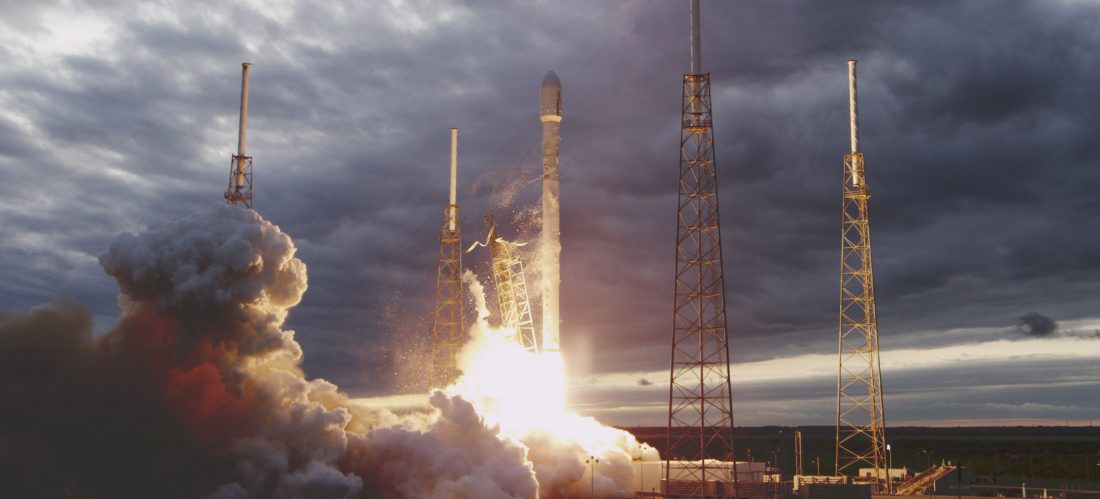
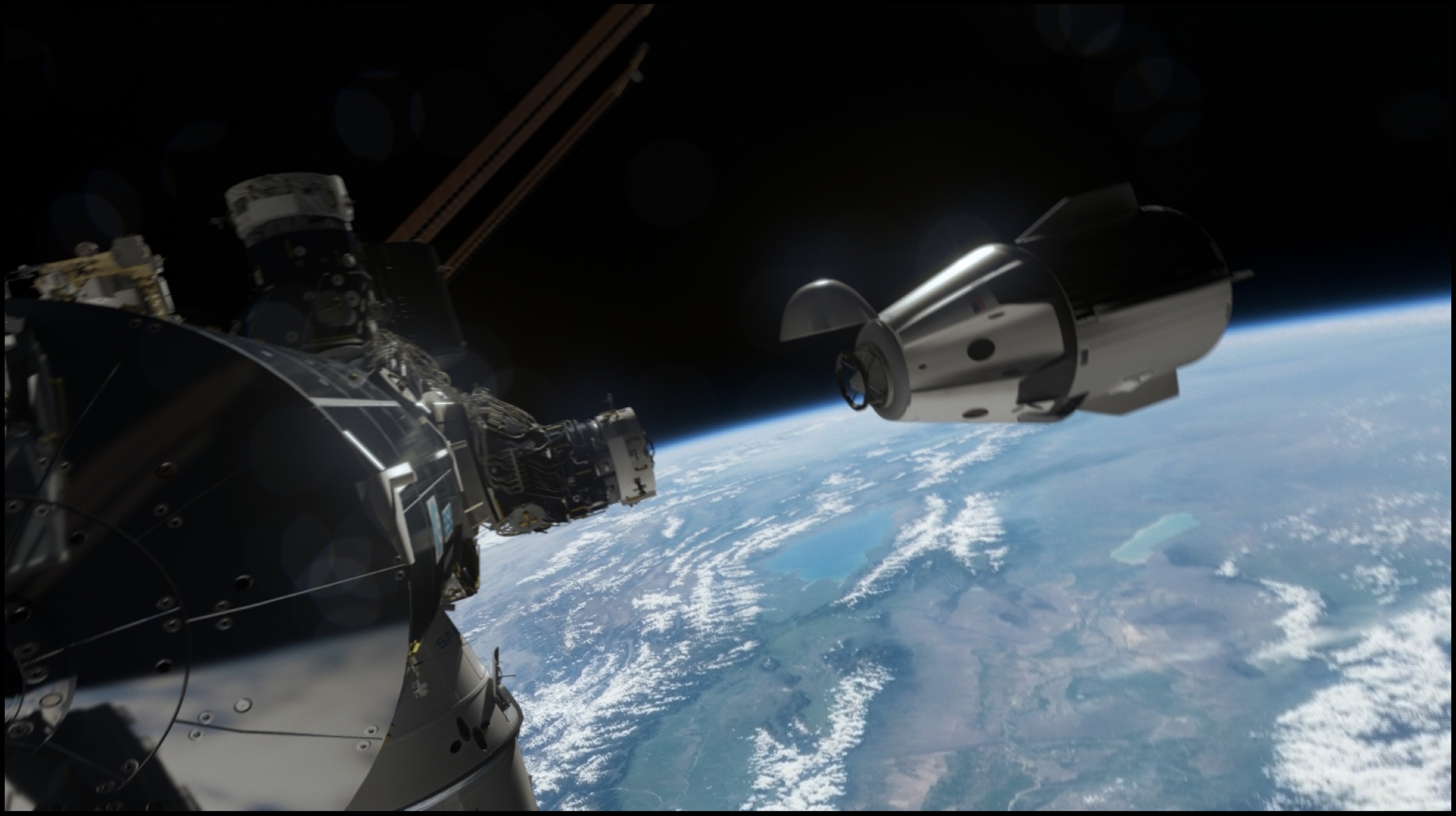
    The demonstration’s first step took place at the Kennedy Space Center, Florida, where the capsule was placed on SpaceX’s very own Falcon 9 rocket. At 1:19 pm IST (2:49 am EST) on March 2, liftoff happened, and the  DM1 made its way towards the International Space Station. The Crew Dragon then auto-docked with a port on the station, something that had never been achieved by SpaceX previously.
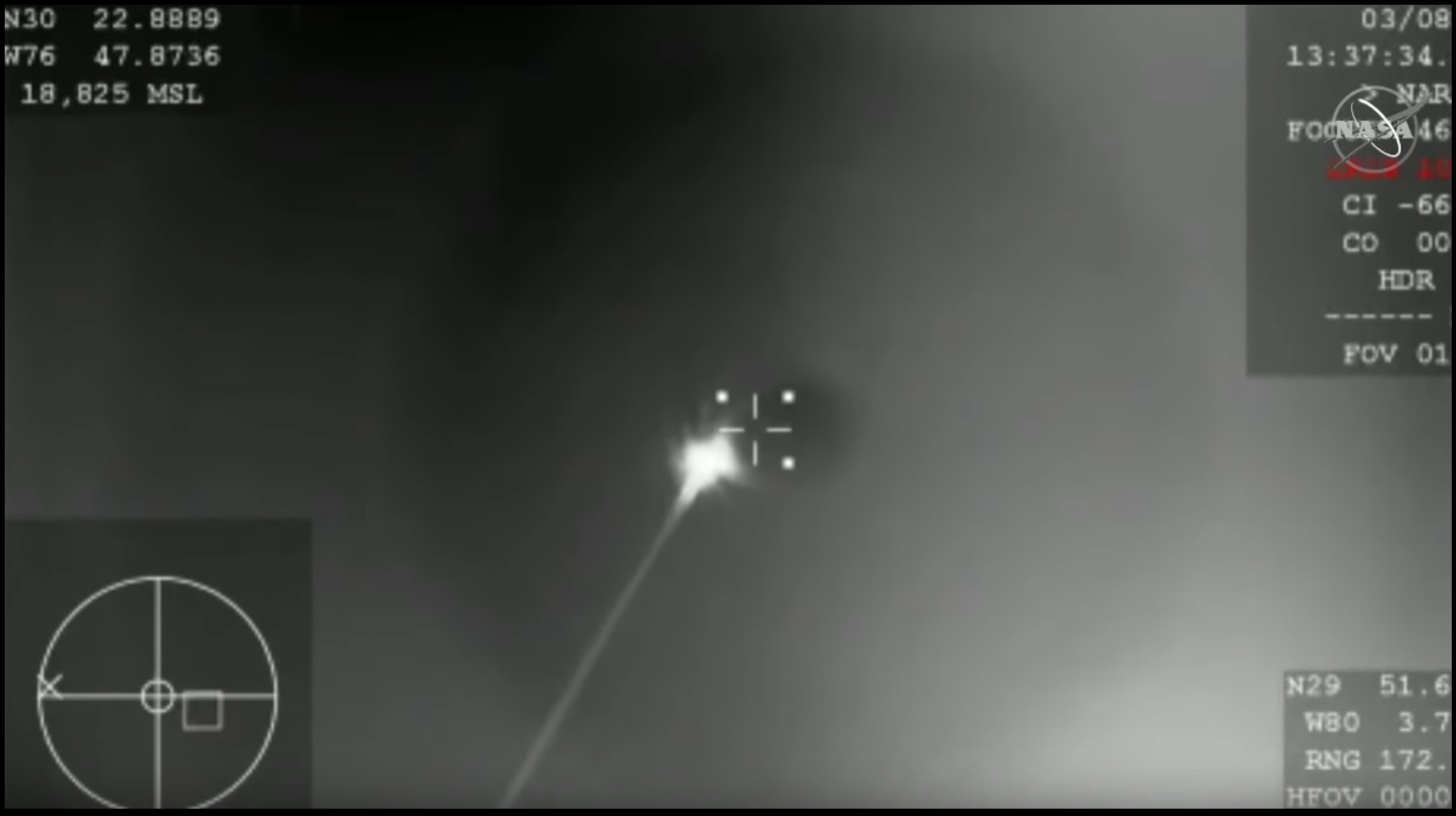
    Undocking And Reentry

    Out of the three main stages of the mission, two were a complete success, which included the liftoff and the docking. The biggest challenge of the DM1 mission was the splashdown, which had to demonstrate that the capsule carrying cargo (and humans, in the future) can safely penetrate the earth’s atmosphere and land safely where it was intended to. At 1:02 pm IST (2:32 am EST), the Crew Dragon undocked from the ISS and started preparations for its descent to earth. The Crew Dragon ignited its thrusters for a period of 15 minutes to leave its orbit and began its descent to earth.
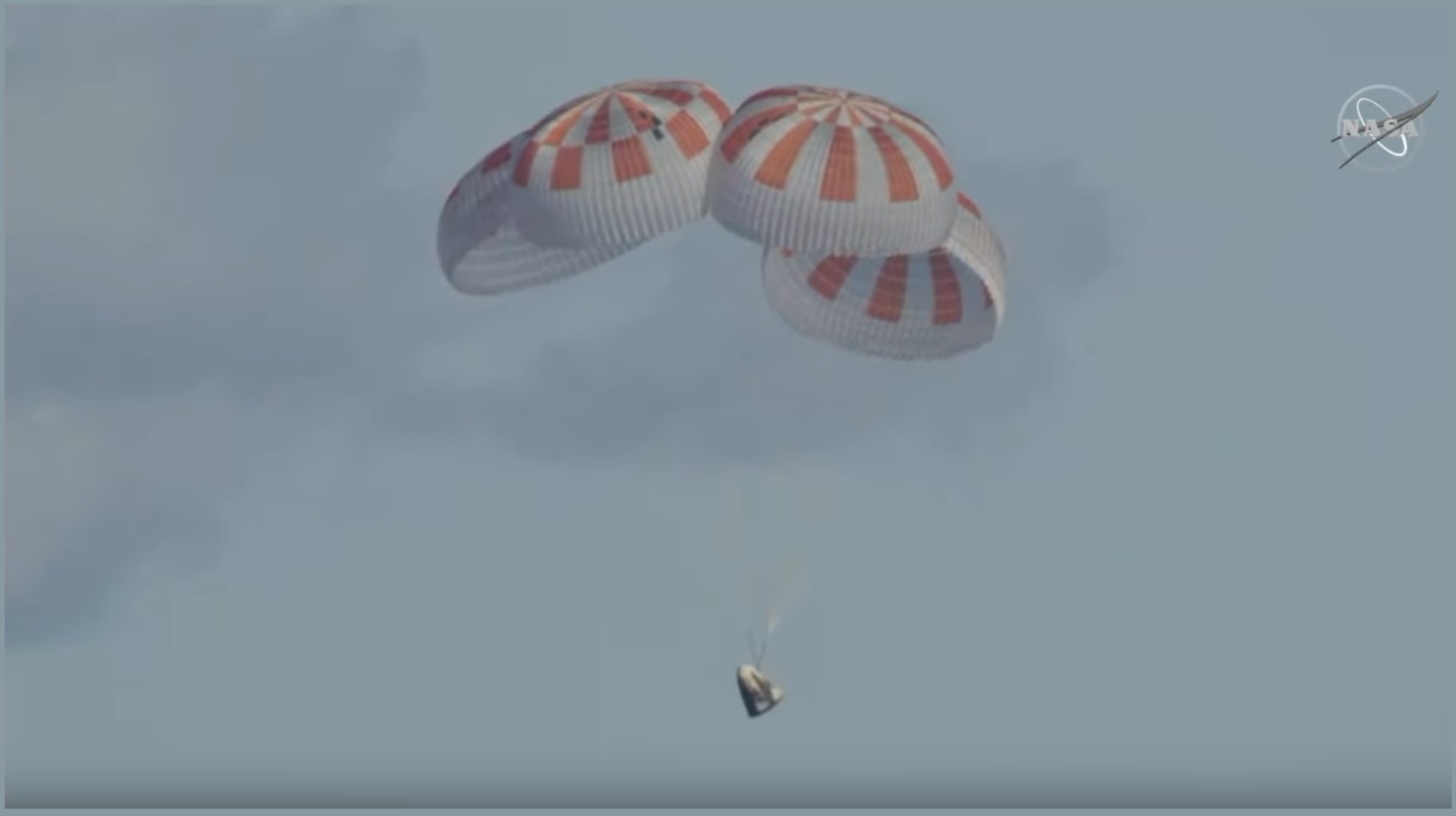
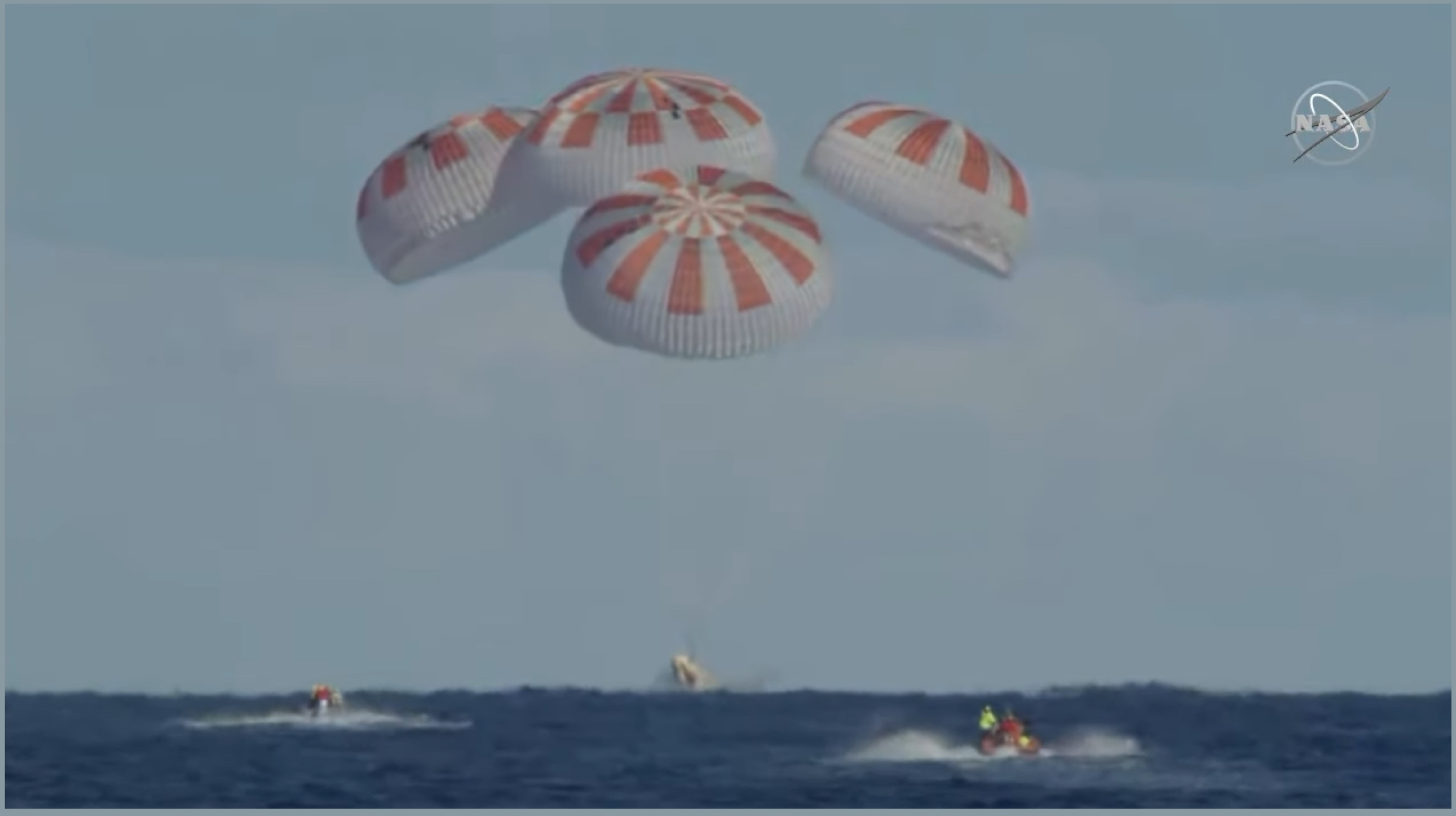
    The capsule exceeded the speed of sound while falling to the earth’s surface. After minutes of intense heating, the Crew dragon deployed four parachutes and gently “splashed down” in the Atlantic ocean, 200+ nautical miles away from the coast of Florida. SpaceX’s recovery boat, Go Searcher collected the capsule and will bring it back to the shore for further tests.
    Also Read: SpaceX Test Fires A Huge New Engine For Their Next Rocket

    The company will also perform another “Emergency Abort System” test, which is supposed to help save the onboard crew if anything goes wrong. The capsule would be fitted with external engines that can fire as soon as a failure is detected, taking the capsule away from the disintegrating rocket. As per reports, the Crew Dragon capsule will again be used for this mission, which is scheduled for April 2019. If everything goes as per expectations, a manned mission can be planned in 2019 itself, the company representatives stated. 


  • Beresheet, Israel’s First Lunar Lander Launched From Florida

    Beresheet, Israel’s First Lunar Lander Launched From Florida

    Israel’s first lunar lander took flight on 7:15 am IST aboard SpaceX’s Falcon 9 rocket, which was launched from Cape Canaveral, Florida on February 22. This mission (called the Nusantara Satu mission), if deemed successful, will place Israel at the fourth place amongst nations which have already attained controlled touchdown on the moon. The list already includes countries like the United States, USSR and China. The unmanned robotic lander has been named ‘Beresheet’, which is a Hebrew translation for “in the beginning”.

    About The Rockets And Payloads

    The 23-storey-tall rocket disappeared into the sky as it made its way towards the moon. There were three sets of cargo on the Falcon 9, which is one of the most famous rockets in the arsenal of Elon Musk’s aerospace research organization, SpaceX. As mentioned before, one of the payloads was the 585 kg Beresheet lunar lander, whereas the other two payloads were intended for different purposes. One of them was Indonesia’s telecommunications satellite and the other was an experimental satellite for the US Air Force. It was also reported that the lunar lander took its place in earth’s orbit almost 34 minutes after its launch. 15 minutes later, two satellites separated from the Beresheet. The complete launch was broadcasted on SpaceX live webcast.

    SpaceX Recycles Falcon 9’s Engine

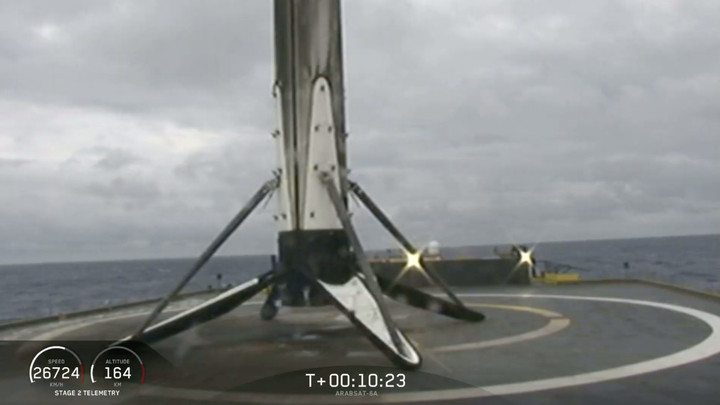
    The Falcon 9 and the lunar lander launch was not the only highlight of the launch. SpaceX added another milestone in its book of innovating technology by recycling its rockets. Mission control engineers and other people cheered from the launch site as the Falcon 9’s main-stage booster separated from the rest of the payload, shuttled back to Earth and had a safe landing on the “Of Course I Still Love You” droneship.

    Bearing the name of legendary Sci-Fi author Iain M. Banks’ “fictional starships”, the drone-pad was positioned almost 500 km off Florida’s coast. The distant glow of the returning booster was clearly visible against the sky as the moon appeared. Noteworthy, this marked the booster’s third launch and landing after delivering Iridium-7 and SAOCOM 1A payloads to space.

    Plans For Landing

    Beresheet is expected to land on the near-side of the moon by mid-April. In doing so, it will travel through almost 6.5 million kilometres in space. Agreed, the direct path from the earth to the moon would be much shorter, but the lunar lander will travel via a more circular orbit. As per SpaceX plans, the gradually widening Earth orbit will help the probe to eventually reach the moon’s gravitational pull, leading to a controlled ‘soft’ landing.

    Also Read: Elon Musk Promises Tesla Will Release Full Autonomous Driving Feature This Year

    As of now, there is no plan to get the spacecraft back to earth. It will spend 2-3 days on the moon, photographing landing sites and measuring the moon’s magnetic field. Then the lunar probe will be shut down and it will remain on the lunar landscape for all eternity. The complete broadcast of the Nusantara Satu Mission can be found below.


  • SpaceX Test Fires A Huge New Engine For Their Next Rocket

    SpaceX Test Fires A Huge New Engine For Their Next Rocket

    SpaceX recently completed its first test fire of its Raptor Engine. This is reportedly going to power SpaceX’s next rocket, which will be brought to light very soon. It was announced by Elon Musk, CEO of SpaceX. He posted a couple of videos which showed the engine blasting off in all its glory. One video lacked sound, whereas the other one was pretty feature rich. The test took place at SpaceX’s test site in McGregor, Texas.

    The Raptor engine is the latest successor to the company’s previous Merlin 1D engine. They will power SpaceX’s upcoming mission to Mars and beyond, so they are actually pretty powerful. It’s actually suggested to turn down the volume before you watch the second video though, because yes, it’s VERY loud. SpaceX is now supposed to perform ‘hop tests’ of altitudes between 1,640 and 16,400 feet.

    These are the videos of the blast test, straight from Elon Musk’s Twitter.

    This test used a full-scale engine that was ‘radically redesigned’. It uses methane as it’s primary fuel, just because it performs better. The current Merlin engines provide almost 190,000 pounds of liftoff. Instead, the Raptor will give around 440,000 pounds of liftoff. The test flights of the Starship can begin soon, probably by the next two months. Still, Elon Musk believes that an unmanned mission to mars may happen anytime before 2022. It could be followed up by a manned flight to Mars in 2024.

  • SpaceX’s Test Rocket Topples Over In The Wind

    SpaceX’s Test Rocket Topples Over In The Wind

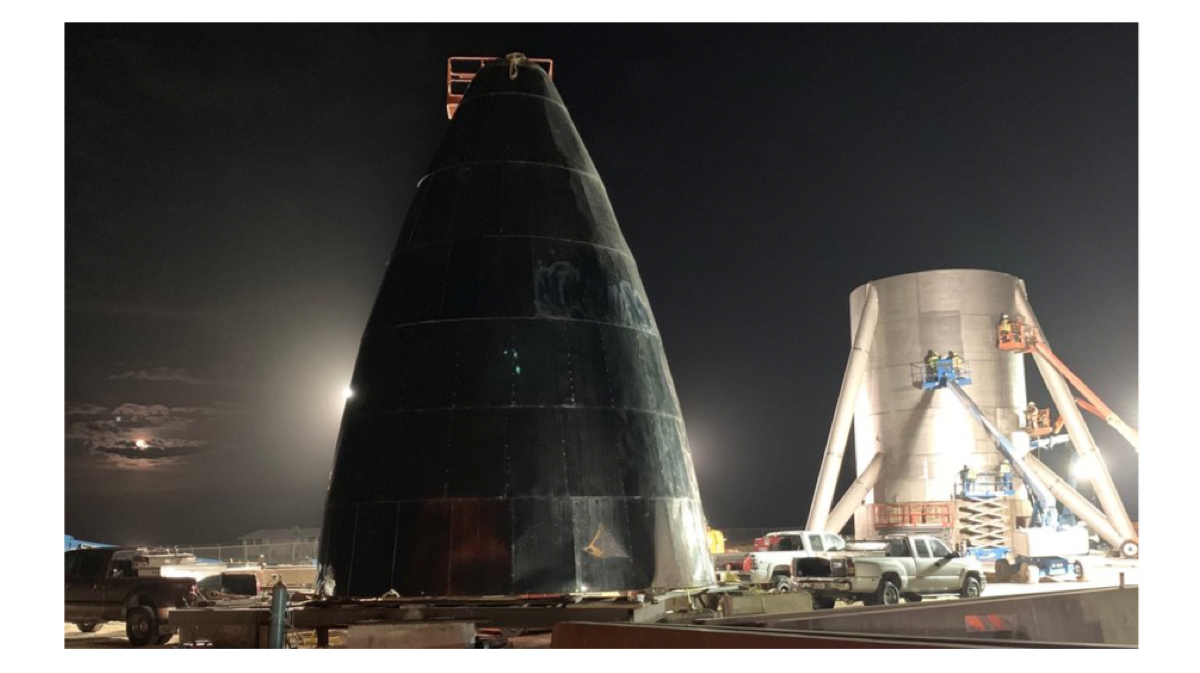
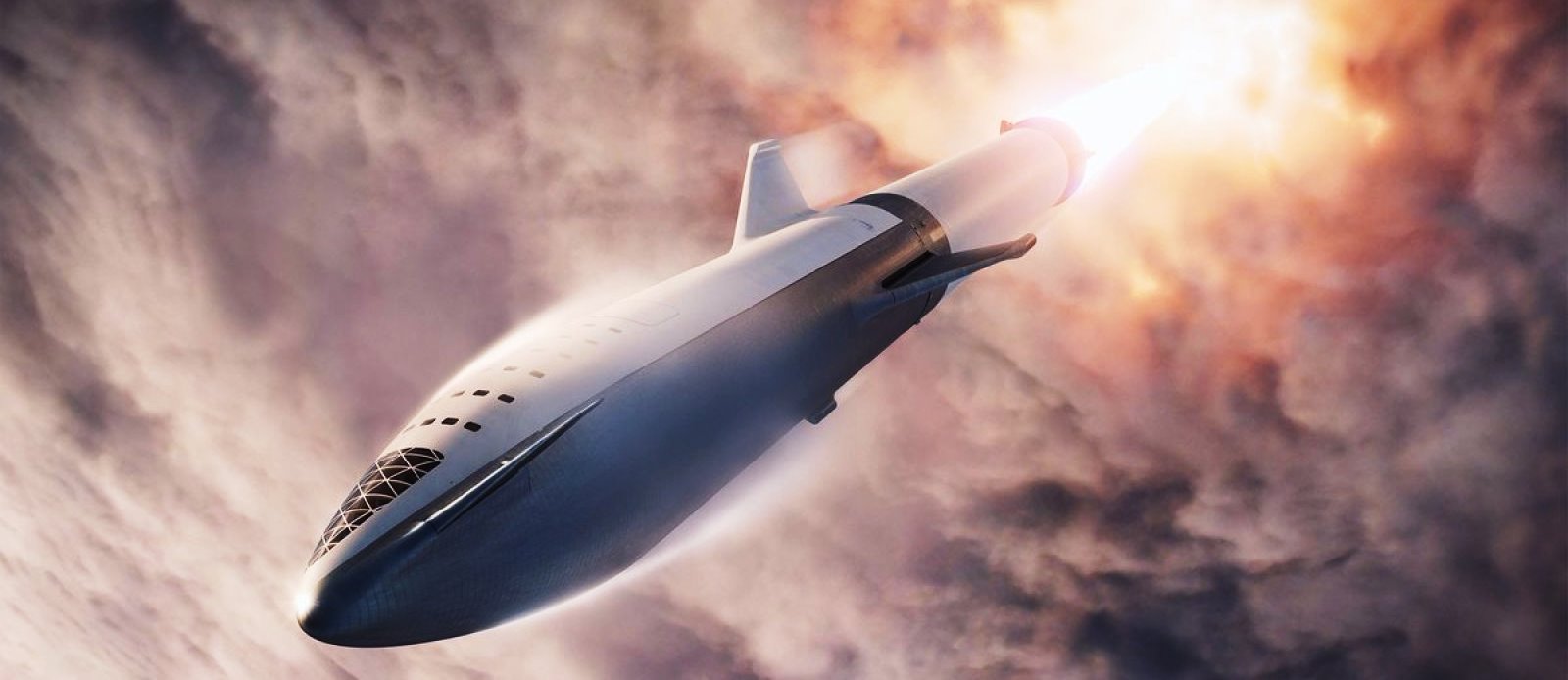
    SpaceX has been working on their BFR rocket for quite some time now. The company was getting ready to perform a test rocket launch soon from their facility in Boca Chica, Texas. Starship, formerly known as BFR, is Elon Musk’s dream to carry people and cargo into the orbit. It may even travel to the Moon, Mars and beyond at some point in the future. But, for now, it seems that the Texas wind is taking a toll on the rocket. 

    Photos suggest that the test rocket that was being prepared for a launch test has toppled over in the strong 50 miles per hour wind. According to Elon Musk, the mishap will take a few weeks to repair. According to Musk, the rocket was being prepared for a test launch in a few week’s time but the strong winds broke the Starship’s Mooring Blocks. These mooring blocks are responsible in keeping the rocket secured to the ground. This reportedly caused the Starship’s upper fairing to topple over. 

    The rocket is being made from stainless steel. Elon Musk says that 310S stainless is better for the high temperature outer skin, as it can bear  approximately 1450 Kelvin heat, so active cooling with cryogenic fuel only has to mitigate 300 degrees of delta temperature. The stainless steel fairing on the top seemed to have been damaged by the fall. Elon also reported that the bottom part of the rocket that houses the propellant tanks are fine.

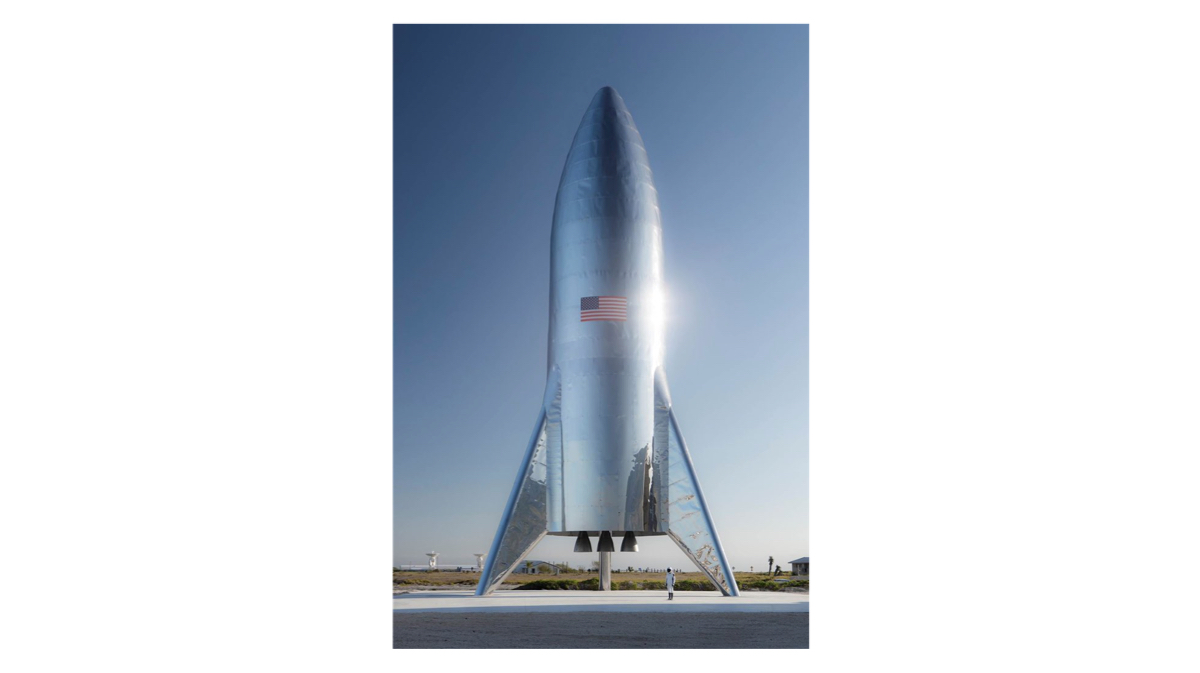
    SpaceX wishes to do hop tests with this rocket. The speciality of the rocket is its reusability which according to the company will make space travel economical and accessible. The hop tests involve igniting the vehicle’s engines and sending the rocket to low altitudes and getting them back to Earth upright. The final design of the rocket however, will differ from the test rocket that has toppled over. The Raptor engines of the rocket are said to be going through a radical redesign. The test vehicle is slightly shorter than the Starship’s final design. The Starship will also boast of seven engines while the test vehicle has only three. 

    Development and manufacturing of the Starship will reportedly be done from Hawthorne, California but the company is planning to shift some of it’s Starship prototype production to Boca Chica, Texas. The reason for that, given by Musk, is that the prototypes were too big to move across the country easily.

  • SpaceX Successfully Launches Its First Mission Of 2019

    SpaceX Successfully Launches Its First Mission Of 2019

    SpaceX, short for Space Exploration Technologies Corp is a privately owned American company that manufactures aerospace vehicles and offers space transportation services. The company was founded in 2002 and has since developed two lineups of aerospace vehicles which are Falcon and Dragon. SpaceX has successfully developed orbital rockets that are capable of being reused. This feature allows SpaceX rockets to drastically reduce the costs of launching satellites in and around earth’s orbit. On 11 January 2019, the company successfully launched its first rocket of the year. 

    Falcon 9 Successfully Launches The Last Batch Of Iridium Satellites

    SpaceX previously signed a contract with Iridium Communications to launch 75 in-orbit satellites that will update Iridium’s aging space fleet. The new fleet of satellites is called Iridium NEXT constellation and it will replace the original fleet of the company that was launched between the year 1997 and 2002. 

    The satellites owned by Iridium Communications are used for worldwide voice and data communication from hand-held satellite phones and other transceiver units. The satellite network owned by Iridium Communications is unique in its own manner as it is able to provide coverage anywhere on Earth, including oceans, airways and poles. 

    SpaceX rockets have been launching these satellites in batches of 10 except for one flight that launched 5 satellites. The latest launch will be carried out in 10 minutes after which the company plans to touch down the Falcon 9 rocket on a drone ship in the middle of the ocean. 

    Previously a Falcon 9 rocket that was supposed to land back was botched. The rocket was intended to land on a concrete pad on the Florida coast but instead, it ended up in the ocean. According to the live stream provided by the company, the Falcon 9 has indeed launched the Iridium Satellites and successfully landed unharmed. This landing marks the 33rd successful landing of a SpaceX Falcon 9 rocket core.

    Meanwhile Checkout the Falcon9 Landing on a Ship 


  • SpaceX’s Starship Prototype Being Built At Breakneck Speeds

    SpaceX’s Starship Prototype Being Built At Breakneck Speeds

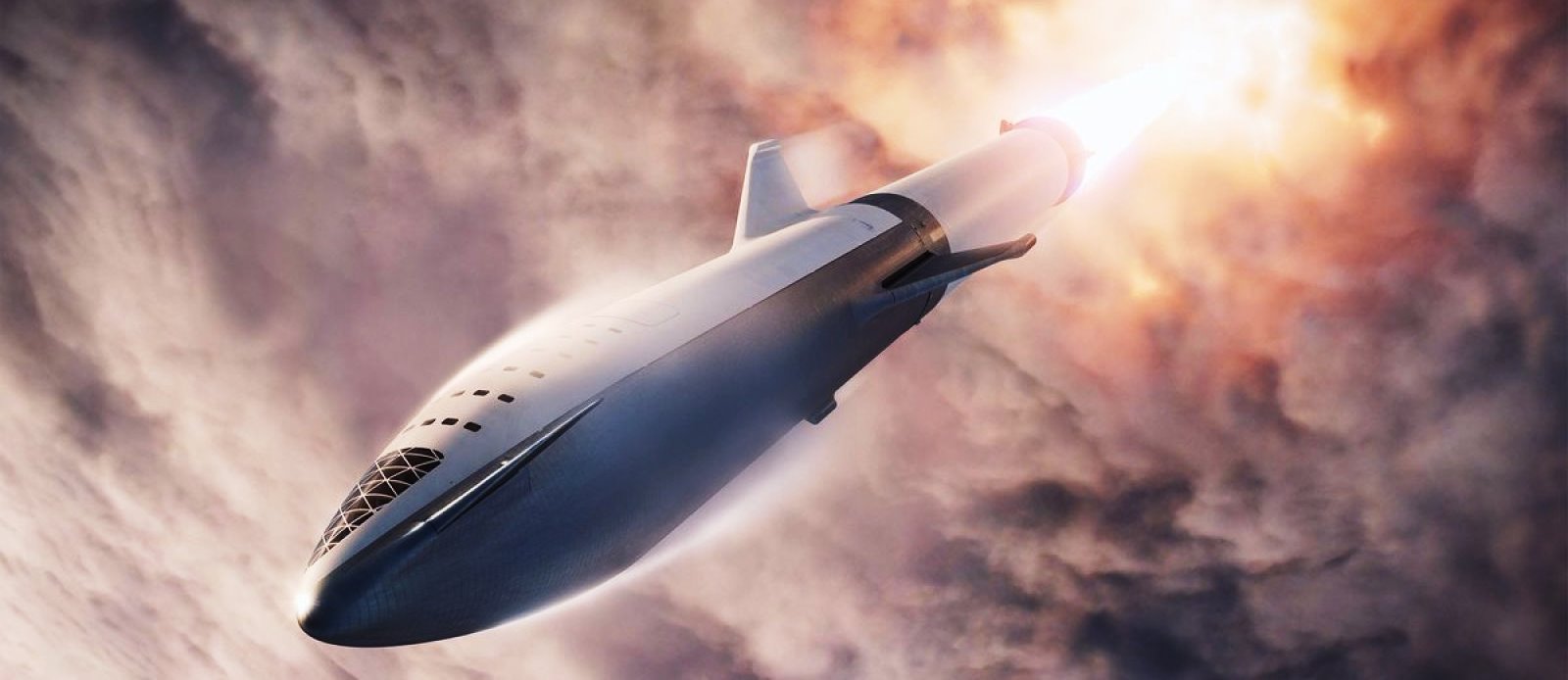
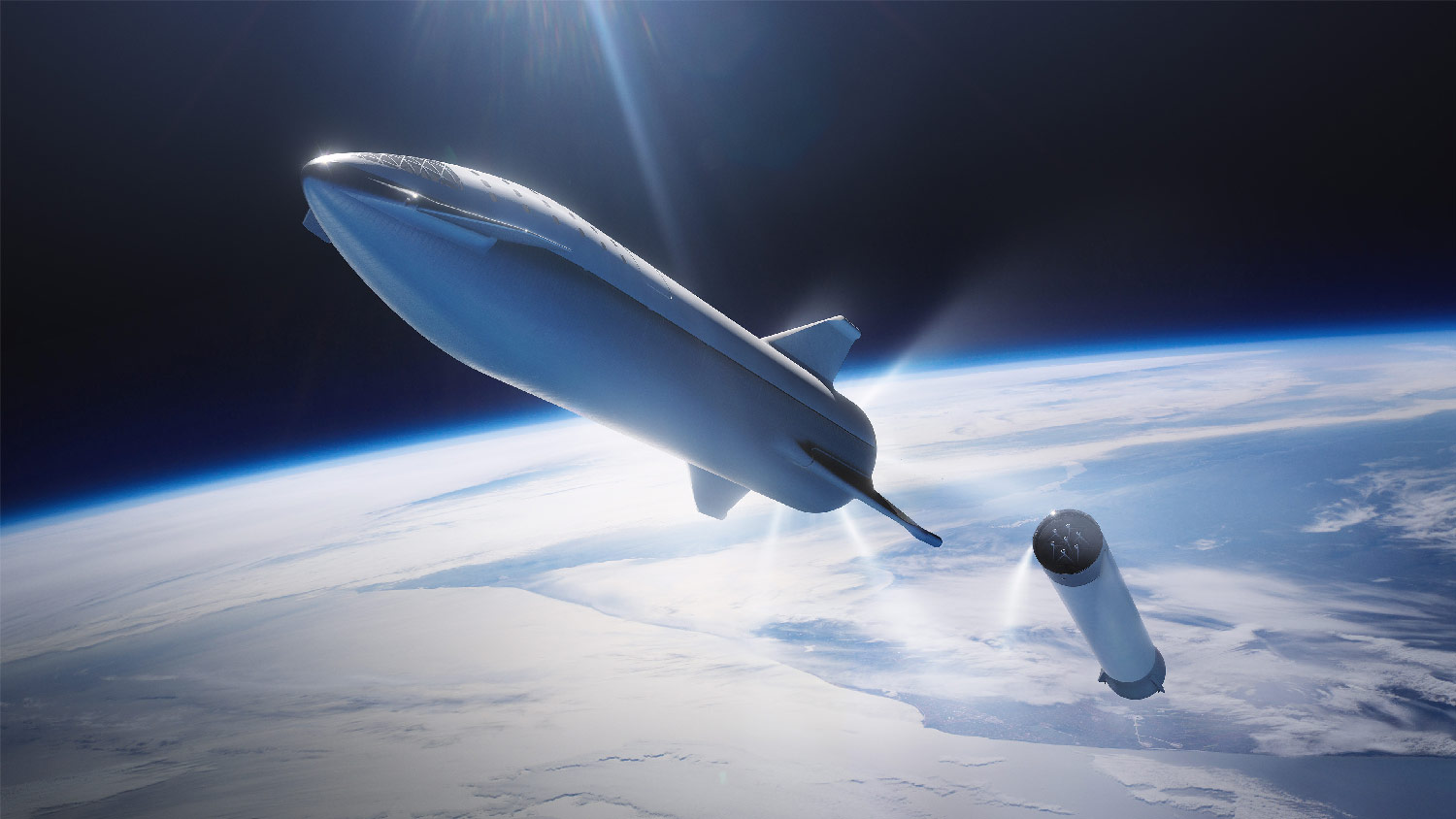
    In September 2016, Elon Musk had revealed his plans to build a super-heavy launch vehicle that could transport people in space. It was called the Interplanetary Transport System (ITS). Then in 2017, Musk showed the world an updated design of that space ship. He also renamed it to Big Falcon Rocket (BFR) and the Big Falcon Spacecraft (BFS). Now the name has changed again. The new name of the craft is Starship and the work is already in progress.

    What has changed?

    The rocket will be made out of polished stainless steel. Elon Musk has already shown off that rockets can be reused upon re-entry to earth, thus reducing the cost of space travel. According to Musk, a smaller version of the Starship will also be built for testing. The ship is being built at their South Texas launch site. This is also where the first hop test will be conducted in June 2019.

    The hull of the ship was originally supposed to be built with carbon composites (CCs) but a recent image shared by Elon Musk on Twitter suggests that it is being built with stainless steel alloy. The company is using 300 Series Stainless steel for the hull.

    On being questioned if stainless steel would make the ship heavier, Elon Musk stated that the alloy is heavier compared to carbon composites at room temperature. However it is lighter and stronger at cryogenic temperatures ranging from –150 °C (-238 °F) to absolute zero (-273 °C; -460 °F).

    Why Stainless Steel?

    Stainless steel’s natural reflectivity also has it’s positives since it will require less heat shielding. The steel is coldformed at cryogenic temperatures. This process allows for the end product to be lighter and tougher than traditional hot-rolled steel.

    SpaceX is also working on a staged combustion, methane fuelled rocket engine called Raptor. On being asked of be Raptor will be powered by electric turbo pumps, Elon further tweeted that the Raptor will not feature the electric pump fed engine. According to Musk, the Raptor turbopumps need 100,000 horsepower per engine.

    The image shared by Elon looks like it is directly out of a Sci-fi movie and we hope Space X achieves what it has set out to achieve. 2019 will be a very important year for the company as it has set various goals in this year. 

  • Elon Musk Reveals The Roadster He Is Planning To Send Off To Space

    Elon Musk Reveals The Roadster He Is Planning To Send Off To Space

    A few weeks ago, Elon Musk revealed plans of sending a Teal Roadster inside the Falcon Heavy next year. Now, Elon Musk took to Instagram to show off a few images that is being prepped for the iconic launch into space.

    Musk said that test flights are usually boring and contain mass in the form of concrete or steel blocks to test load capacity.

    https://www.instagram.com/p/BdA94kVgQhU/?taken-by=elonmusk

    Falcon Heavy is the successor to SpaceX’s Falcon 9. It is supposed to be a more powerful rocket that the SpaceX plans to use for missions to the Moon and Mars. The first flight for Falcon Heavy was scheduled to take off in 2013 or 2014 but, it has been confirmed that the highly anticipated flight will take off in January 2018.

    Falcon Heavy is three Falcon 9 rockets strapped together. Therefore, the Falcon Heavy will be capable of creating around three times the thrust of a single Falcon 9 rocket, allowing SpaceX to perform missions beyond low Earth orbit.

  • SpaceX Will Send A Tesla Roadster To Mars In The Falcon Heavy

    SpaceX Will Send A Tesla Roadster To Mars In The Falcon Heavy

    Elon Musk has said that the first flight of SpaceX’s Falcon Heavy rocket will be used to send a Tesla Roadster into space.

    Elon Musk took Twitter to share this idea and later confirmed in an interview that it his plan to send a Tesla Roadster to Mars in the Falcon Heavy. The tweet has reference to the famous David Bowie song, Space Oddity. It is yet to be seen if the company has taken all the necessary permissions required to launch a car into the space.

    Falcon Heavy is the successor to SpaceX’s Falcon 9. It is supposed to be a more powerful rocket that the SpaceX plans to use for missions to the Moon and Mars. The first flight for Falcon Heavy was scheduled to take off in 2013 or 2014 but, it has been confirmed that the highly anticipated flight will take off in January 2018.

    Falcon Heavy is three Falcon 9 rockets strapped together. Therefore, the Falcon Heavy will be capable of creating around three times the thrust of a single Falcon 9 rocket, allowing SpaceX to perform missions beyond low Earth orbit.

    14th Falcon 9 Take Off

    Elon Musk has also expressed his desire to launch an even bigger rocket in the future. Earlier this year, at the International Astronautical Congress, Musk said that he plans to pour all of SpaceX’s resources into an even bigger rocket architecture, known as the Interplanetary Transport System.

    The Interplanetary Transport System will ultimately take over the Falcon Heavy and make it redundant. It will be capable of taking on the same duties, while adding new capabilities like planting a colony on Mars to making 30-minute transcontinental travel possible on Earth.

  • Elon Musk Shows Off First Photo Of SpaceX Space Suit

    Elon Musk Shows Off First Photo Of SpaceX Space Suit

    After SpaceX’s successful Falcon 9 rocket launch, Elon Musk posted a picture of  his SpaceX space suit on Instagram. The image was shared via his official Instagram handle, confirming that the picture was not a mockup, but an actual shot of a fully functional suit.

    https://www.instagram.com/p/BYIPmEFAIIn/

    According to SpaceX’s CEO the suit actually works, and can withstand double the pressure of the vacuum of space. Taking cue from Boeing’s new spacesuit for its first commercial crewed space missions, the Space X space suit is designed to look svelte and tight to the body. As compared to other spacesuits, Elon Musk has emphasised on style with spacey white accents and lines on the suit.

    Musk acknowledged that it was “incredibly hard” to get the right balance between the suit’s look and its function. Although, not specified, SpaceX suits are obviously meant to be worn by astronauts for safe travels inside the company’s Dragon Capsule. The pressure suits aren’t meant for space walks. Instead, are worn by astronauts during transport in case the capsule depressurizes. Once the SpaceX starts launching people to and from the International Space Station, these suits will be worn by NASA astronauts for the commercial crew program.

    Not much have been divulged in terms of spacesuit detail, but Musk has promised follow up details including a full-body view reveal and many more images.

  • Google Reportedly Launching its Own Wireless Carrier Service This Year

    Google Reportedly Launching its Own Wireless Carrier Service This Year

    Google is the front runner in the Internet search business and from the recent announcement, it is clear that it has plans to conquer space as well. The company has partnered with Elon Musk to connect the world through space-based internet. Now, recent reports have surfaced which say that Google will penetrate deep into the telecom sector by launching its own wireless service.

    According to the report, Google plans to directly sell the mobile phone plans to the end customers. The company will be handling calls and mobile data. Google is in talks with Sprint and T-Mobile to buy wholesale access of these carriers. If sources are to be believed then users can see the Google network later this year.

    rural-internet-nepal

    Codenamed ‘Nova’, the project is led by the Executive of Google Nick Fox. The firm wants to offer creative plan pricing, says a leading publishing daily. By bringing out a carrier service, Google would be able to have a better control on the devices manufactured by them.

    It’s still under wraps that where the company will launch its services, what will be the charges and what all manufacturers are involved. As the internet giant is dealing with Sprint and T-Mobile (available in the US), it will affect the US market and the carriers in the regions will be pressurised to cut down the price in order to sustain their user base.

  • Google Partners With Elon to Make Space-Based Internet a Reality

    Google Partners With Elon to Make Space-Based Internet a Reality

    Just a few days back, SpaceX chief, Elon Musk was in the news again when he talked about his audacious plan to connect the world through space-based internet. He said that this would not just benefit the internet users around the world; it will also help connect those last 3 Billion people who still don’t have access to the internet. The plan as anyone can expect would be expensive, but seems like Elon may now have a partner with one of the deepest pockets in the business; the search giant Google.

    Elon has stated that the cost of setting up the constellation of satellites would be above $10 Billion. He claims that this system of providing internet would be speedier and more convenient to spread around. The satellites are expected to be connected through a laser based system as Elon doesn’t have rights to use radio waves.

    Google will be investing $1Billion in Satellite Internet initiative of SpaceX
    Google will be investing $1Billion in Satellite Internet initiative of SpaceX

    According to the Wall Street Journal, Google is interested in investing $1 Billion into the project to kick off the initial stages of the development of the constellation. This deal would be beneficial for Google too as the internet behemoth would find a massive new user base. Google has been known for investmenting in multiple areas to spread the reach of the internet around the world. Previously the company has invested in Project Loon that is an initiative to provide internet through giant helium balloons circling the globe that are equipped to beam Wi-Fi signals down below. Along with that the company was also planning a massive investment in undersea cables to bring 60 Tbps Internet connectivity for Asia.

    The main competion to SpaceX initiative is Greg Wyler's OneWeb project .
    The main competition to the SpaceX initiative is Greg Wyler’s OneWeb project backed by Qualcomm and Virgin .

    Google was also working with Greg Wyler whose project is almost similar to SpaceX’s plan. Greg left Google last year to form his own satellite company called OneWeb. The company is now backed by Virgin founder Richard Branson and chip maker Qualcomm. Richard had earlier said that Elon doesn’t have the spectrum license, and there isn’t a space for a competing company, so SpaceX should join OneWeb’s initiative. But it seems now that with Google’s blessings on their side, SpaceX can make their plans, a reality. It will also be interesting to see how the company manages to provide the service without access to radio waves. Get ready for some big corporate fights on this issue.

    For Google, the initiative, to bring the internet through satellites, will also be cheaper than laying those expensive submarine cables. And the rest of humanity will benefit from the access to the internet. This sounds like a win-win for all. The icing on the cake is Elon’s hopes of setting up a human station on Mars from the revenue of the satellite based internet.

  • Elon Musk Plans to Connect Everyone with Space-Based Internet

    Elon Musk Plans to Connect Everyone with Space-Based Internet

    If you ever hear an audacious, game-changing technology initiative, there is a high possibility it’s the brainchild of Elon Musk. After taking on spaceships and electric cars, Elon plans to create a vast network of satellites which will provide high-speed internet, that will benefit the rural folks untouched by the internet.

    Elon spoke of his plans at a SpaceX conference in Seattle where the company is starting a new office. He said that he wants to establish his space internet system as a rival to fibre optics. Light waves travel 40% faster in the vacuum of space than through optical fibre cables. Musk will be opening a new office in Seattle and he plans to go on a hiring spree for space and aeronautics professionals to boost his efforts.

    Elon's Space X is the most successful private space enterprise.
    Elon’s Space X is the most successful private space enterprise.

    These internet beaming satellites will be placed in an orbit 750 miles (1207 km) above the Earth’s surface. The traditional communication satellites are placed in a geosynchronous orbit at an altitude of up to 22000 miles (35400 km). Elon says that by placing the satellites closer to the earth’s surface, the electromagnetic waves would have to travel a smaller distance and hence provide faster internet. He adds that with his technique, instead of sending data packets over long terrestrial networks like undersea cables, they can be bounced off various satellites. The data packets would be sent directly to satellites where they will bounce off multiple satellites before reaching the one closest to the destination.

    There are many efforts, currently being undertaken to connect the last three billion who are still oblivious to the internet. Facebook founder, Mark Zuckerberg’s Internet.org and Google’s Project Loon are some of those initiatives. The Internet is making us globally connected and will help boost global cooperation.

    The plan is to create a vast network of satellites which beam internet directly to the consumers
    The plan is to create a vast network of satellites which beam internet directly to the consumers

    As of now, this project sounds too audacious, even for Elon Musk. He says that this initiative will cost about $10 Billion, but once established, his company will use it as a revenue source to build a city on Mars. He also doesn’t have the rights to the spectrum to build the service as of yet. So it remains to be seen how he takes this plan forward.

    Elon’s bold connectivity plans doesn’t end at connecting everyone on Earth. He wants to set up a communications infrastructure on Mars too. His company is actively working on prospects of establishing a Martian colony in the coming future. You have to give credit to Elon Musk; he wants to make sure that even though people would be living in a settlement on Mars, they would not be devoid of their favorite websites.

  • SpaceX F9R Rocket Fails, Blows Up Mid-Air

    SpaceX F9R Rocket Fails, Blows Up Mid-Air

    Ever since its inception, SpaceX has taken space travel to great heights. It’s the only private company responsible for taking cargo to and fro from the International Space Station. Its rockets have been appreciated for their safety features; something that came handy yesterday.

    A test rocket which was launched yesterday has a snag that would have made it veer off course. Fortunately, the emergency systems on board automatically stepped in and destructed the rocket mid-air. This is the first major failure in SpaceX’s history. There were no injuries. Well, apart from the injury to SpaceX’s finances; they just lost a really expensive rocket. A second F9R rocket is in its building stage.

    SpaceX’s rocket, the F9R, is a reusable rocket and a successor to the Grasshopper rocket. It is capable of launching and landing back on the launch pad, thereby increasing efficiency and bringing down costs. The rocket has just one stage, and it has three engines to propel it to the skies.

    The company’s founder Elon Musk says he plans for human colonization of Mars and other planets, and that it is an important step in human evolution. Reusable rockets will surely help in organizing resources ensuring faster and efficient delivery of cargo to a future Mars Colony. Musk’s response to the incident was a tweet that said, “Rockets are tricky.”

    SpaceX says that the rocket has been tested previously, but this time they wanted to push its limits harder, and that led to the technical snag.

    It is important to understand that rocket science is hard, ergo the saying, it’s as tough as rocket science. Considering the fact that rocket technology is still in its basic stages, re-usability will surely take it forward. There have been malfunctions that have led to the loss of valuable human life. Space travel is the next frontier, and reaching new frontiers involves sacrifices, sometimes monetary and unfortunately sometimes, human life. Setbacks do happen but it’s necessary to learn from them and move on. Hopefully SpaceX team learns from its mistake and gives us our ride to Mars as soon as possible.

iGyaan Network
Privacy Overview

This website uses cookies so that we can provide you with the best user experience possible. Cookie information is stored in your browser and performs functions such as recognising you when you return to our website and helping our team to understand which sections of the website you find most interesting and useful.