Tag: Spec Comparison

  • Motorola Moto X4 Vs Moto G5s Plus

    Motorola Moto X4 Vs Moto G5s Plus

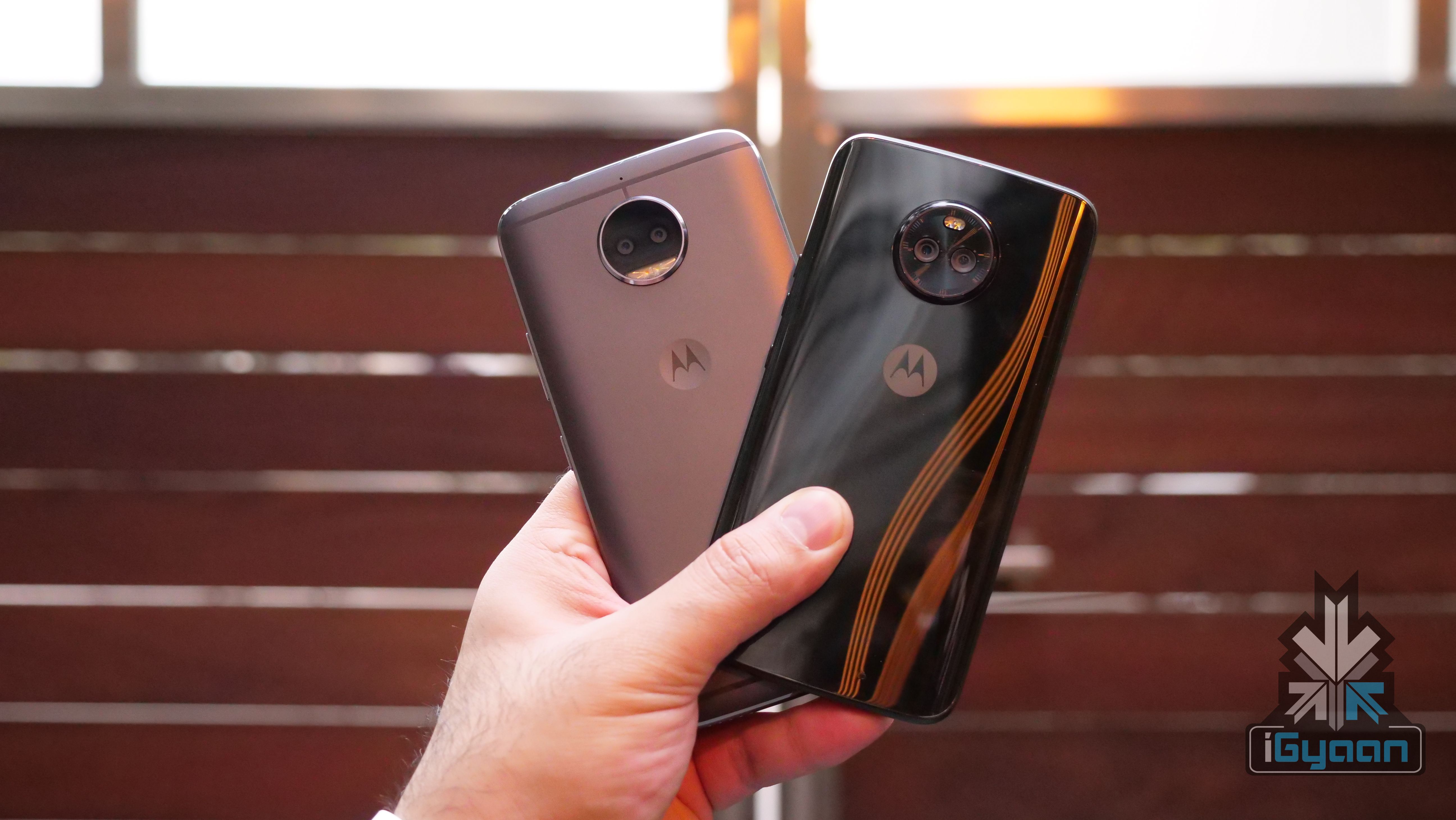
    After launching the Moto X4, Lenovo-owned Motorola now has two strong offerings in the sub-20K category and the sub-25K category. The two phones are the Moto G5s Plus and the Moto X4. Both the phones offer a dual camera setup at the back, a Full HD display and run pure Android 7.1 Nougat OS.

    Let’s pit these two phones together and see which phone comes out on top:

    Specifications Moto G5s Plus Moto X4
    Price Rs 15999

    Click here for latest price

    Rs 20999 (3GB RAM variant)

    Rs 22999 (4GB RAM variant)

    Click here for latest price

    Display 5.5 inch IPS LCD 5.2 inch LTPS IPS LCD
    Display protection Corning Gorilla Glass 3 Corning Gorilla Glass 3
    Resolution 1920 x 1080 px

    401ppi

    1920 x 1080 px

    424ppi

    Protection Water repellent nano-coating IP68 rating for water and dust resistance
    Design Aluminium unibody with glass in front Aluminium frame with glass on front and back
    Battery 3000 mAh 3000 mAh
    Chipset Qualcomm Snapdragon 625 Qualcomm Snapdragon 630
    GPU Adreno 506 Adreno 508
    RAM 4GB 3GB

    4GB

    Storage 64GB

    Expandable up to 256GB via microSD card

    32GB

    64GB

    Expandable up to 256GB via microSD card

    Primary Camera 13MP f/2.0 aperture + 13MP f/2.0 aperture

    PDAF
    DUAL LED

    12MP Dual Pixel senor with f/2.0 aperture +
    8MP Ultra-wide sensor with f/2.2 aperturePDAF
    DUAL LED
    Primary Camera Video 4K at 30 FPS
    1080p at 60fps
    4K at 30 FPS
    1080p at 60fps
    Secondary Camera 8MP f/2.0 aperture
    wide angle lens
    16MP f/2.0 aperture
    LED flash
    Other Features Fingerprint sensor Fingerprint sensor
    Colours Lunar Grey
    Fine Gold
    Super Black
    Sterling Blue
  • Moto X4 Vs The Competition

    Moto X4 Vs The Competition

    Motorola recently launched the Moto X4 in India at a price of Rs 20999 for the base variant. At this price, there aren’t many phones that offer IP68 water and dust resistance, and a dual-camera setup at the back. So, how does the Moto X4 stack up against other phones with a similar price? Let’s find out:

    Specifications Moto X4 Samsung Galaxy A9 Pro Samsung Galaxy C7 Pro
    Price Rs 20999 (3GB RAM)

    22999 (4GB RAM)

    <a href=”http://fkrt.it/1ILGO!NNNN”>Click here for latest pricing</a>

    Rs 24990

    <a href=”http://fkrt.it/GF~2bTuuuN”>Click here for latest pricing</a>

    Rs 24900

    <a href=”http://fkrt.it/GFnSzTuuuN”>Click here for latest pricing</a>

    Display 5.2 inch LTPS IPS LCD 6 inch sAMOLED 5.7-inch sAMOLED
    Resolution 1920 x 1080 px 1920 x 1080 px  1920 x 1080 px
    Chipset Qualcomm Snapdragon 630 Qualcomm Snapdragon 652 Qualcomm Snapdragon 626
    RAM 3GB/4GB 4GB 4GB
    Storage 64GB, expandable up to 2TB 32GB, expandable up to 256GB 64GB, expandable up to 256GB
    Battery 3000 mAh, TurboCharge 5000 mAh 3400 mAh
    Operating System Android 7.1 Nougat, Android 8.0 Oreo Update awaited Android 6 Marshmallow Android 6 Marshmallow
    Primary Camera 12MP f/2.0 aperture +
    8MP f/2.2 aperture
    16MP f/1.9 aperture 16MP f/1.9 aperture
    Primary Camera video 4K @ 30fps

    1080P @ 60fps

    1080P @ 30fps 1080P @ 30fps
    Front Camera  16MP f/2.0 aperture 8MP f/1.9 aperture 16MP f/1.9 aperture
    IP Rating IP68 None None
    Additional features Connect 4 bluetooth devices at once,

    Fingerprint sensor

    Amazon Alexa support

    Fingerprint sensor Fingerprint sensor

    The Moto X4 is ahead of its competition in terms of primary, software and price to performance ratio. With the added advantage of IP68 rating, the Moto X4 looks like a clear choice over the Samsung Galaxy A9 Pro and Galaxy C7 Pro. However, if you are a fan of big displays and a big battery as well, then the Samsung Galaxy A9 Pro has that albeit, higher price than the Moto X4.


  • Xiaomi Redmi Y1 Vs Moto G5 Vs Micromax Infinity Vs Lenovo K8 Plus – Battle Of The Budget Phones

    Xiaomi Redmi Y1 Vs Moto G5 Vs Micromax Infinity Vs Lenovo K8 Plus – Battle Of The Budget Phones

    Smartphones in today’s day and age have become accessible to everyone because of their cheap price tag without compromising a lot on features. A few years ago what was only available on a premium smartphone has now made its way into the ‘budget category’. As Xiaomi launched the Redmi Y1 at a starting price of Rs 8999, it entered that segment of the market which is already overflowing with different phones from different companies. Let’s stack up four of the best offerings, Redmi Y1, Moto G5, Lenovo K8 Plus and Micromax Infinity from this price range and see which one comes out on top:

    Xiaomi Redmi Y1

    The Xiaomi Redmi Y1 was launched in India as a part of a new lineup that focuses on selfies. The Redmi Y1 has a 5.5 inch IPS LCD display with a 1280 x 720 px resolution. In a lot of ways, it is an updated variant of the Redmi 4, which is also priced at Rs 8999 with the same chipset and RAM/storage configuration.
    Where the Xiaomi Redmi Y1 supposedly excels is the camera department and specifically, the front camera. On the front of the phone is a 16MP camera with an f/2.0 aperture. Xiaomi claims that the software processing and beautify mode will result “in your best selfie ever.” The rear-mounted 13MP camera with PDAF and LED flash.

    Moto G5

    Lenovo-owned Motorola launched the Moto G5 along with the Moto G5 Plus in India in February 2017. Even though in August, Moto G5s and Moto G5s Plus were launched as an incremental upgrade, the Moto G5 at a price of Rs 10500 is a great option. With stock Android OS, and a more than capable Snapdragon 425 chipset, the Moto G5 fits the bill for a lot of consumers.

    For the Moto G5 as well, the camera has been the highlight. The Moto G5 has a 13MP f/2.0 camera with phase detect autofocus with a 5 MP front camera.

    Micromax Infinity

    A phone made for people who prefer design over everything else, the Micromax Infinity offers a display with an 18:9 aspect ratio. The Micromax Infinity has a 5.7 inch IPS LCD display with a 1440 x 720 px display. Similar to the Moto G5, the Micromax Infinity also has the Qualcomm Snapdragon 425 chipset, 3GB RAM and 32GB onboard storage which can be expanded via microSD card.

    It has a 16MP front camera and a 13MP rear camera with auto scene detection, bokeh effect, super pixel and panorama.

    Lenovo K8 Plus

    The Lenovo K8 Plus is the only phone in this list that has a dual-camera setup at the back. It has a 5.2 inch IPS LCD display with a 1920 x 1080 px resolution. The Lenovo K8 Plus runs stock Android 7.1 Nougat and Lenovo has promised an update to Android 8.0 Oreo by early 2018.

    The Lenovo K8 Plus sports a vertically placed dual-camera setup at the back. It has a primary 13MP Pure cell sensor mated with a 5MP Samsung BSI sensor dual camera with an f/2.0 aperture and dual LED flash. The smartphone is capable of depth effect shots, bokeh effect shots, and dual ISP images. On the front is an 8MP wide angle lens with an f/2.0 and an LED flash.

    Specifications Xiaomi Redmi Y1 Moto G5 Micromax Infinity Lenovo K8 Plus
    Price Starting at Rs 8999   Rs 10500  Rs 9999   Rs 10999 (Click here to buy)
    Display 5.5 inch IPS LCD  5.5 inch IPS LCD  5.7 inch IPS LCD 5.2 inch IPS LCD
    Resolution 1280 x 720 px  1920 x 1080 px  1440 x 720 px 1920 x 1080 px
    Chipset Qualcomm Snapdragon 435  Qualcomm Snapdragon 425  Qualcomm Snapdragon 425 MediaTek Helio P25
    RAM 3GB/4GB  3GB  3GB  3GB
    Storage 32GB/64GB (expandable via microSD card) 16GB (expandable via microSD card)  32GB (expandable via microSD card) 32GB (expandable via microSD card)
    Battery  3080 mAh 2800 mAh 2900 mAh  4000 mAh
    Rear Camera 13MP with PDAF  13MP with an f/2.0 aperture 13MP with bokeh effect, super pixel mode 13MP Pure cell sensor + a 5MP Samsung BSI sensor
    Front Camera 16MP with an f/2.0 aperture
    Pro Beauty mode
    5MP with an f/2.2 aperture 16MP 8MP wide-angle with an f/2.0 aperture
    Other features Fingerprint sensor Fingerprint sensor Fingerprint sensor  Fingerprint sensor

    Remappable ‘Music Key’

  • Apple iPhone X Vs Samsung Galaxy S8 Feat. Samsung Galaxy Note8

    Apple iPhone X Vs Samsung Galaxy S8 Feat. Samsung Galaxy Note8

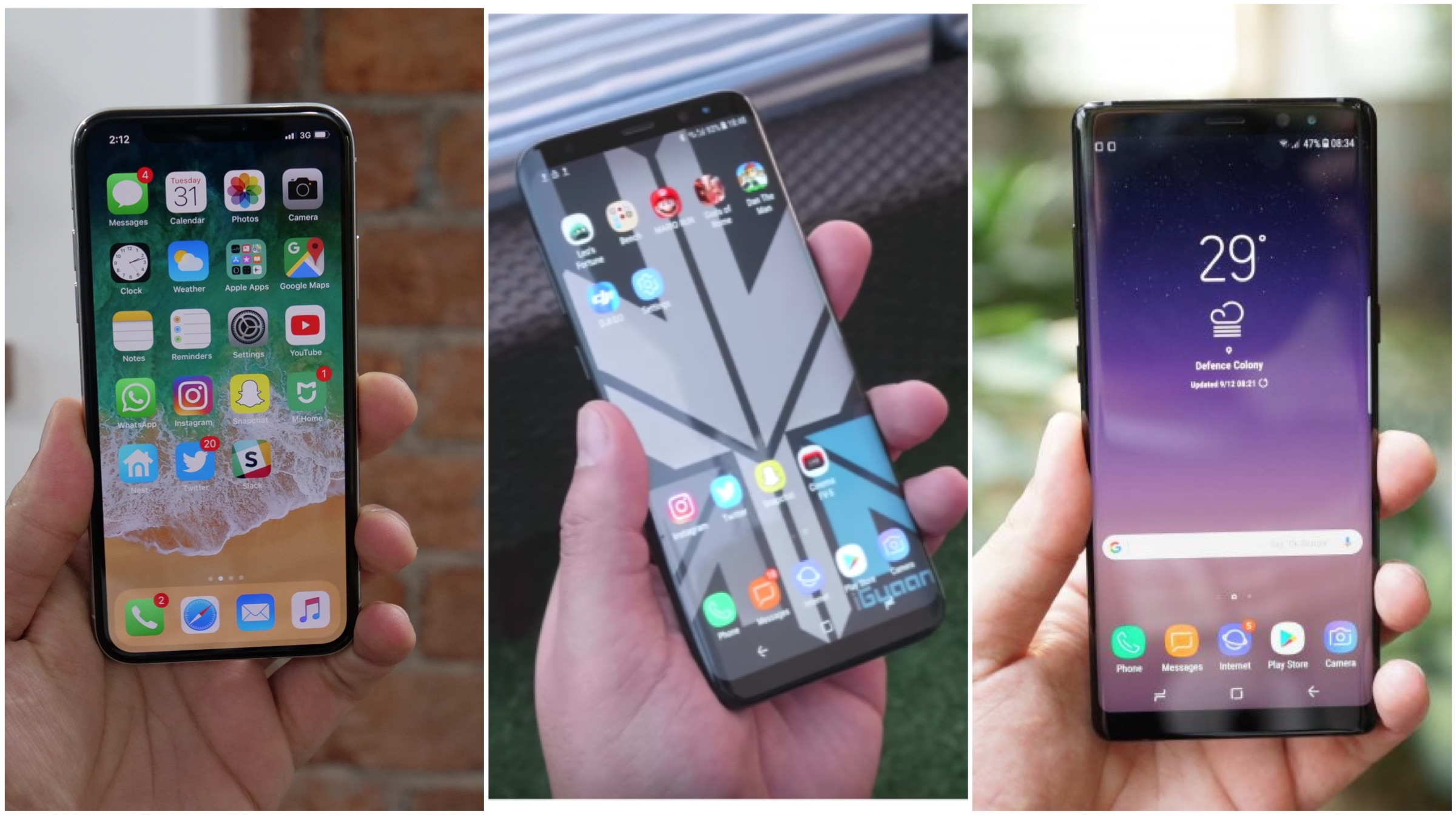
    2017 saw the rise of ‘bezel-less” smartphones which was ignited by the 2016 Xiaomi Mi Mix. In March 2017, the Samsung Galaxy S8 with a zero side bezels and thin forehead and chin was launched. The trickle down effect was noticeable as more and more smartphones came out with thin bezels. The Samsung Galaxy Note8 was launched in August as the successor to the ill-fated Galaxy Note7 with a design similar to the Galaxy S8 albeit, a more square-ish build which is iconic to the ‘Note’ series. After months of speculations and leaks, Apple launched the highly anticipated iPhone X on the 12th of September.

    Display

    All the three smartphones have excellent displays with great clarity and viewing angles. All three phones have an OLED panel manufactured by Samsung and while the 5.8 inch inch display on the iPhone X has a resolution of 2436 x 1125 px, the Galaxy S8’s 5.8 inch and Galaxy Note8’s 6.3 inch display have a resolution of 2960 x 1440 px.

    Performance

    Every flagship smartphone in this day and age has to be fast. You can’t pay over Rs 60,000 for a phone and experience lags and jitteriness just a few days into using it. For a phone launched back in March, the Samsung Galaxy S8 holds up very well. Both the Galaxy S8 and the Galaxy Note8 have the Exynos 8895 chipset, and while the Galaxy S8 has 4GB of RAM, the Galaxy Note8 has 6GB of RAM. The Apple iPhone X on the other hand has the A11 Bionic chipset with a neural engine and 3GB of RAM. All three phones are fast and day-to-day usage as well as heavy gaming is a breeze.

    Camera

    The Apple iPhone X and the Samsung Galaxy Note8 have dual camera setup at the back while the Samsung Galaxy S8 has a single camera. Despite a single camera, the Galaxy S8 is still one of the best camera smartphones out there. However, the flexibility of a dual camera setup trumps the single one on the Galaxy S8 and with dual OIS, the iPhone X and the Galaxy Note8 perform better than the Galaxy S8. If you are a content creator then look no further than the iPhone X as it records 4K videos at 60 fps, something that no other smartphone does right now.

    Watch our full comparison here:

  • Google Pixel 2 XL Vs The Competition

    Google Pixel 2 XL Vs The Competition

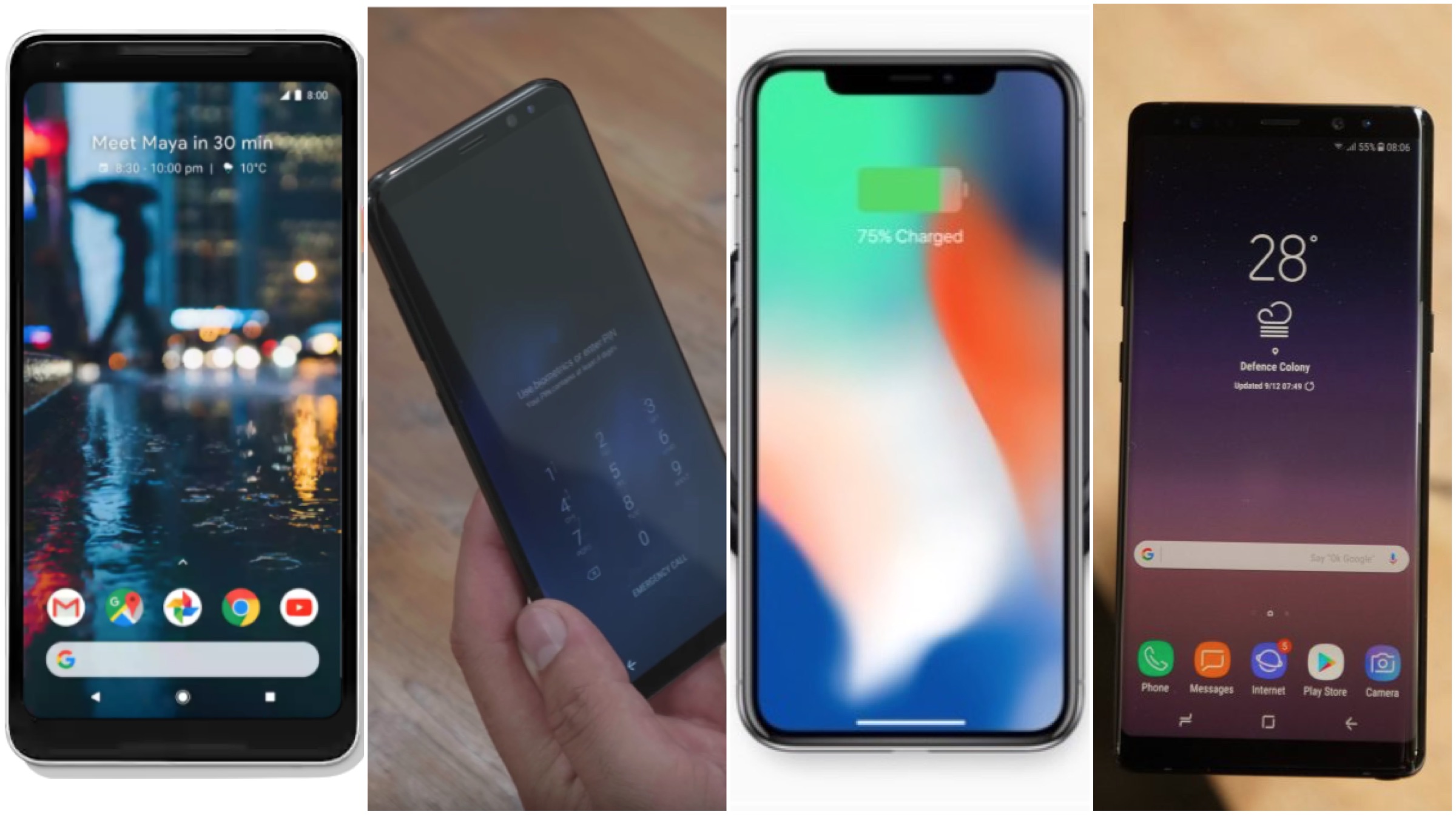
    The Google Pixel 2 was launched on October 4th as the marquee Pixel device for 2017. It strays away a little from the thick bezels that the Pixel 2 has but, still incorporates the front-firing speakers in relatively thinner bezels. Just like the Pixel 2, there is a tight integration with Google Assistant in Google’s attempt to harmonise AI, software and hardware. So, how does the bigger Google flagship stack up against the competition? let’s find out:

    Google Pixel 2 XL
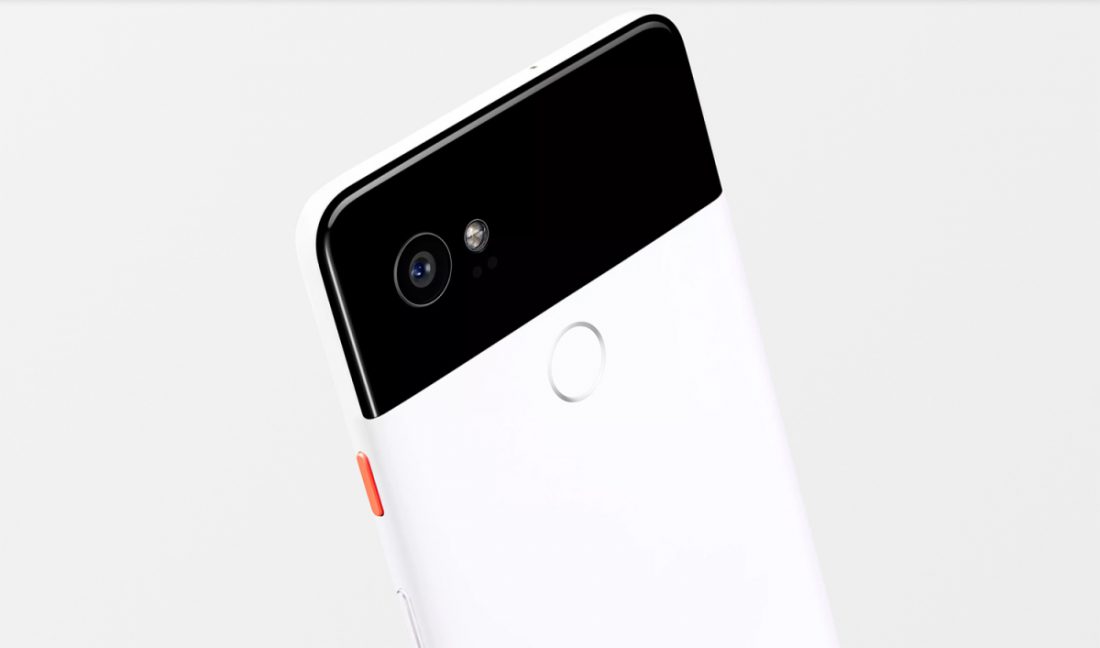
    The smartphone has a 6 inch 2880 x 1440 px POLED display which translates into an 18:9 aspect ratio. Protecting the display is Corning Gorilla Glass 5. Just like the Pixel 2, the device runs Android 8.0 Oreo out of the box and will receive the Android P update in 2018. Powering the device is a 3520 mAh battery which is larger than the one found in the Pixel 2. Under the hood, the Pixel 2 XL has the Qualcomm Snapdragon 835 chipset, 2.4GHz octa core processor, Adreno 540, 4GB RAM and 64GB/128GB onboard storage. The fingerprint sensor sits at the back of the device but, this time around the “glass window” is smaller.

    On the camera front, Google has decided to go for a single camera setup similar to last year’s Pixel phones. The rear-facing camera is a 12.2 MP sensor with an f/1.8 aperture and 1.4 micron pixel size. On the front is an 8MP camera with an f/2.4 aperture. Google has introduced new features in the camera department like the addition of AR. Google says Pixel 2 XL has greater high dynamic range, optical image stabilisation, and a portrait mode that doesn’t use a second camera but dual-sensor image technology. The Pixel 2 XL uses both OIS and EIS simultaneously for better clarity and stable images and videos.

    Samsung Galaxy S8+
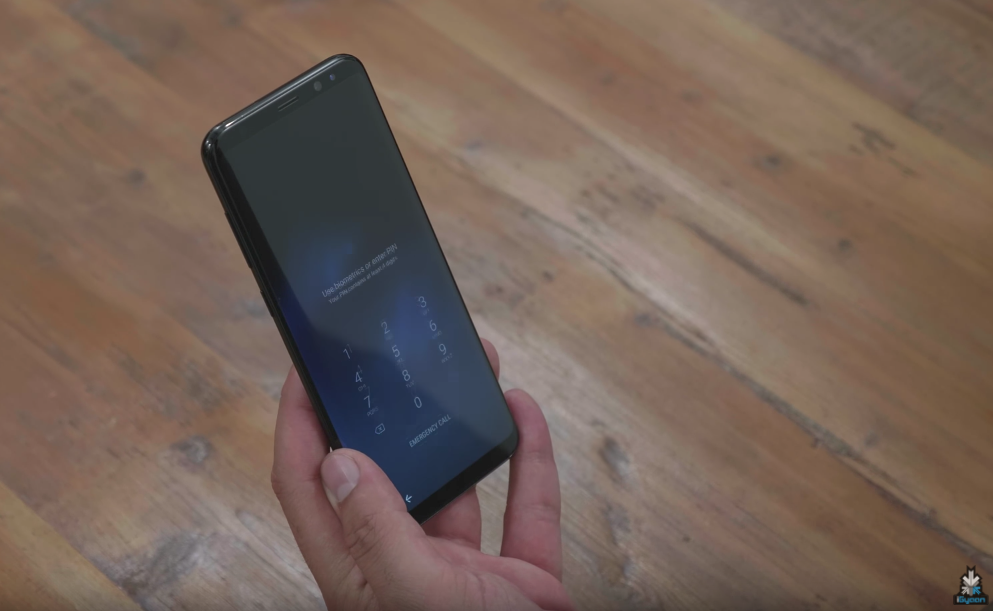
    The Samsung Galaxy S8+ has a 6.2 inch 2960×1440 px Super AMOLED display with a 570ppi. Powering the device is a 3000 mAh battery and it runs Android 7.1 Nougat out of the box. Under the hood, the smartphone has Exynos 8895 chipset, 64GB or 128GB onboard storage options which is expandable up to 256GB via microSD card and 4GB RAM or 6GB RAM variants. The Galaxy S8+ is also water and dust resistant. The Galaxy S8 has a glass  black which means it is wireless charging compatible. The smartphone has an awkwardly placed fingerprint sensor right next to the camera.

    For cameras, both phones get a main Dual Pixel 12MP OIS (F1.7), Front: 8MP AF (F1.7). While the battery on the Galaxy S8 is 3000 man, the S8plus has a 3500 mAh battery. Both support fast charging and wireless charging as well.

    Apple iPhone X
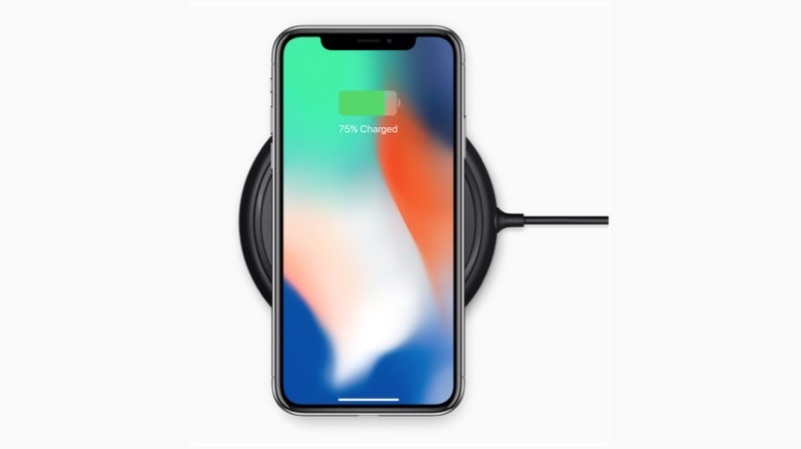
    The iPhone X has a 5.8-inch 2436 x 1125 px OLED True Tone Super Retina display with minimal bezels around it. The phone runs iOS 11 and is powered by a 3,000 mAh battery which charges through the Apple signature lightning port placed at the bottom of the phone. Because of the all-glass design, the iPhone 8 also has wireless charging. Under the hood, the smartphone has the Apple A11 Bionic chipset with a neural engine, a hexacore processor, 3GB of RAM and storage options of 64GB, and 256GB. Apple has also gotten rid of TouchID and replaced it with facial recognition called FaceID which Apple claims has a security breach chances of 1 in a million.

    On the optics front, the iPhone X has dual 12-megapixel rear cameras, and it’s equipped with dual optical image stabilization. The main camera is equipped with a wide angle lens and has an f/1.8 aperture while the secondary telephoto lens has an f/2.4 aperture.

    Samsung Galaxy Note8
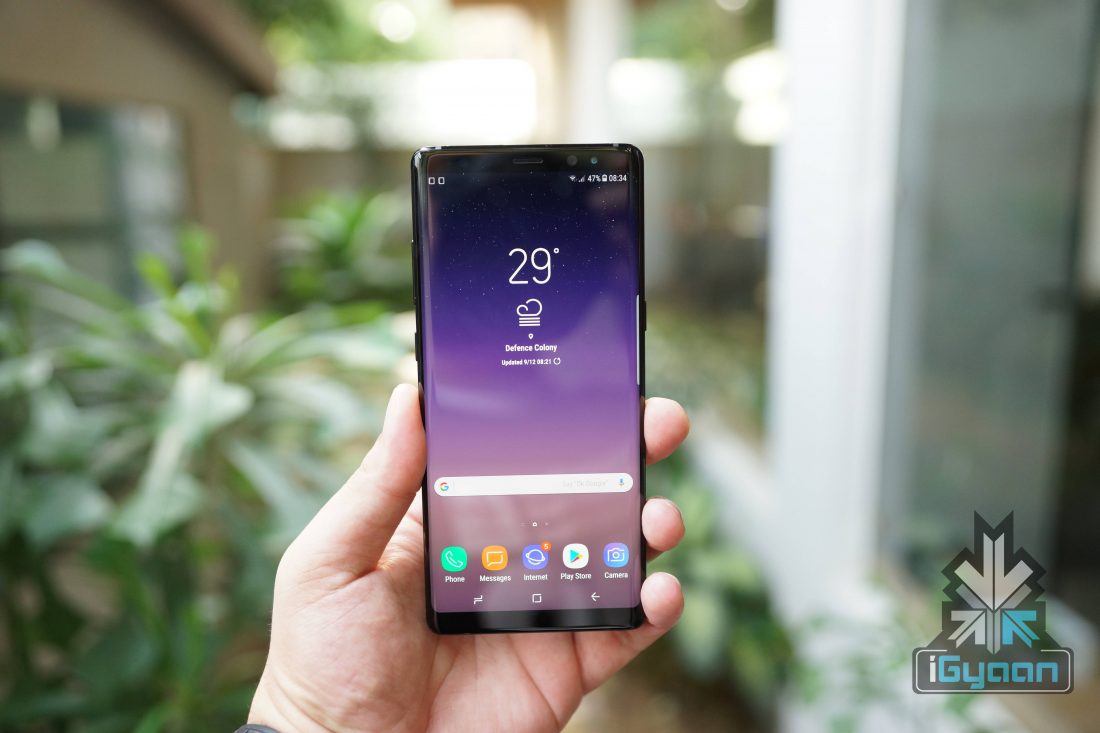
    The Galaxy Note8 has a 6.3 inch 2960 x 1440 px Super AMOLED display with an 18.5:9 aspect ratio, which is the same aspect ratio found on the Galaxy S8 and S8+. Powering the device is a 3300 mAh battery which is smaller than the 3500 mAh battery found on the Galaxy Note7 with wireless charging capabilities, and runs Android Nougat 7.1.1 with Samsung’s custom skin on top. The device has the Exynos 8895 chipset, 2.3GHz Quad-Core (Custom CPU) + 1.7GHz Quad-Core (Cortex-A53) processor, 6GB of RAM and 128GB onboard storage, which is expandable up to 256GB via microSD card. The graphics are handled by the Mali-G71 MP20 GPU.

    The new Note8 has a 12MP dual-camera setup, one of which has a wide lens and the other a telephoto. The telephoto lens allows a user to zoom in losslessly for an up to 2x magnification. The use of dual camera allows for the ability to blur out the background for professional looking bokeh effect shots, something that seems to be common in smartphones in 2017. The Galaxy Note8, Samsung claims, is the first smartphone to feature OIS in both the cameras at the back.

    Specifications Google Pixel 2 XL Samsung Galaxy S8+ Apple iPhone X Samsung Galaxy Note8
    Price Rs 73000 for the 64GB variant Rs 64900 for the 64GB variant

    Rs 89000 for the 64GB variant Rs 67900

    Display Size and Type 6 inch POLED display 6.2 inch Super AMOLED 5.8 inch Super Retina Display 6.3 inch Super AMOLED
    Display Resolution 2880 x 1440 px 2960 x 1440 px 2436 x 1125 px OLED True Tone 2960 x 1440 px
    Dimension 157.9 x 76.7 x 7.9 mm 159.5 x 73.4 x 8.1 mm 143.6 x 70.9 x 7.7 mm 162.5 x 74.8 x 8.6 mm
    Weight 175 grams 173 grams 174 grams 195 grams
    Chipset Qualcomm Snapdragon 835 Exynos 8895 A11 Bionic Chipset Exynos 8895
    Processor 2.4GHz
    8x Qualcomm Kryo 280
    Octa core (2.3GHz Quad + 1.7GHz Quad), 64 bit, 10 nm process Hexacore processor with 2 high performing and 4 low cores Octa core (2.3GHz Quad + 1.7GHz Quad), 64 bit, 10 nm process
    RAM 4GB 4GB or 6GB 3GB 6GB
    Storage 64GB

    128GB

    64GB

    128GB

    64GB

    256GB

    64GB
    Storage Expandability No Yes up to 256GB No Yes up to 256GB
    Primary Camera 12.2MP with an f/1.8 aperture

    Dual pixel technology

    Dual Pixel 12MP with an f/1.7 aperture 12MP wide-angle and telephoto cameras
    Wide-angle: ƒ/1.8 aperture
    Telephoto: ƒ/2.4 aperture
    Dual 12MP camera
    Wide-angle: ƒ/1.7 aperture
    Telephoto: ƒ/2.4 aperture
    Primary Camera Features Simultaneous OIS and EISPortrait mode OIS

    PDAF

    Portrait mode
    Portrait Lighting (beta)
    Dual optical image stabilization
    Six?element lens
    Quad-LED True Tone flash with Slow Sync
    PDAF
    2X lossless optical zoom
    Bokeh Effect
    Dual OIS
    Secondary Camera 8MP with an f/2.4 aperture 8MP AF (F1.7) 7MP camera
    f/2.2 aperture
    8MP with an f/1.7 aperture
    Colours  Black and White, All Black Midnight Black, Maple Gold, Orchid Grey  Space Gray, Silver Midnight Black, Maple Gold


  • Google Pixel 2 Vs The Competition

    Google Pixel 2 Vs The Competition

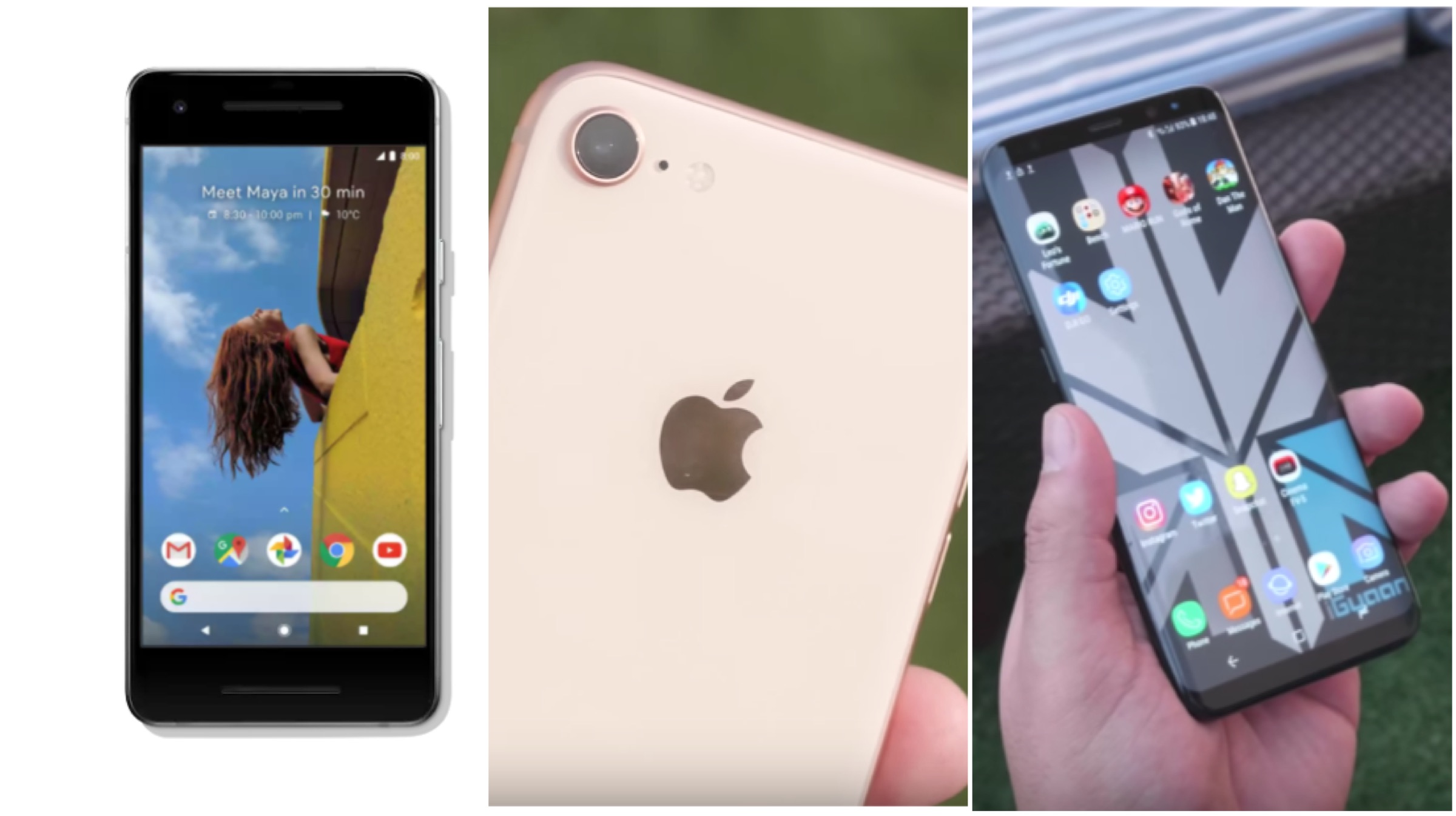
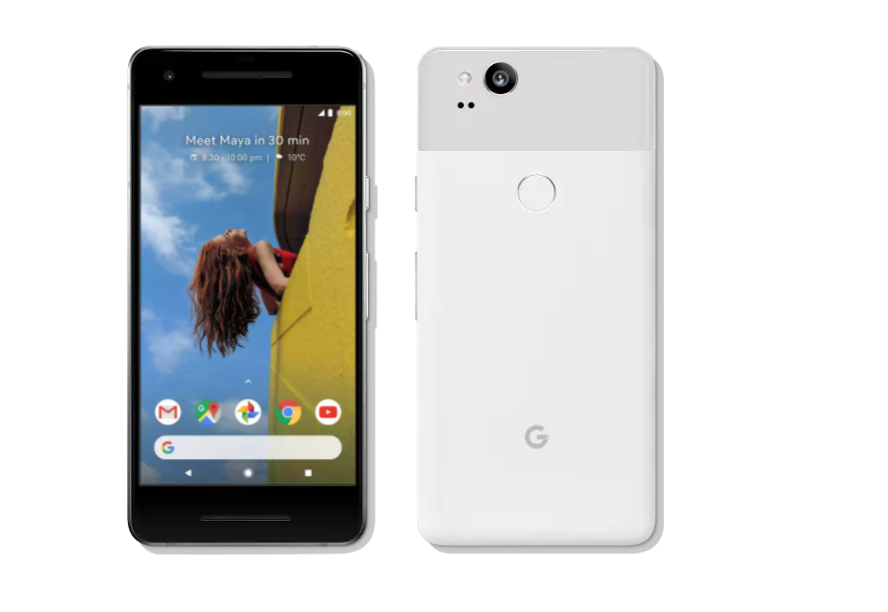
    On October 4th, Google announced the next iteration of its Android smartphones, the Pixel 2 and Pixel 2 XL. Smaller of the two siblings, the Pixel 2 has a tight integration with Google Assistant. With the Google Pixel 2 arriving in India on November 1st, let’s take a look at how it stacks up against the competition.

    Google Pixel 2

    The Google Pixel 2 has a 5 inch 1920 x 1080 px OLED display with Corning Gorilla Glass 5 on top for protection. Powering the device is a 2700 mAh battery and it runs Android 8.0 Oreo out of the box. As is with with every Google phone, the new Pixel 2 will be first in line to receive Android P update in 2018. Under the hood, the device has typical 2017 flagship specifications. It has the Qualcomm Snapdragon 835 chipset, 2.4GHz octa core processor, Adreno 540, 4GB RAM and 64GB/128GB onboard storage. The fingerprint sensor sits at the back of the device but, this time around the “glass window” is smaller. The two-tone colour of the phone is also reminiscent of the original Pixel from 2016. Google claims that the fingerprint sensor is the fastest on a smartphone. The Pixel 2 is water resistant as well.

    On the camera front, Google has decided to go for a single camera setup similar to last year’s Pixel phones. The rear-facing camera is a 12.2 MP sensor with an f/1.8 aperture and 1.4 micron pixel size. On the front is an 8MP camera with an f/2.4 aperture. Google has introduced new features in the camera department like the addition of AR. The Pixel 2 XL uses both OIS and EIS simultaneously for better clarity and stable images and videos. The portrait mode works on both rear and font facing cameras, just like the new iPhones.

    Samsung Galaxy S8

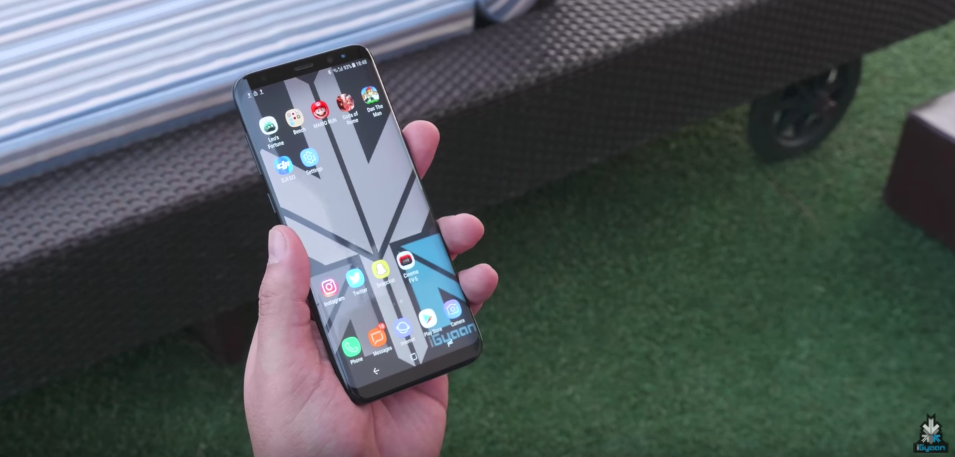
    The Samsung Galaxy S8 has a 5.8” 2960×1440 px Super AMOLED display with a 570ppi. Powering the device is a 3000 mAh battery and it runs Android 7.1 Nougat out of the box. Under the hood, both the smartphone has Exynos 8895 chipset, 64GB onboard storage options which is expandable up to 256GB via microSD card and 4GB RAM. The Galaxy S8 is also water and dust resistant. The Galaxy S8 has a glass  black which means it is wireless charging compatible. The smartphone has an awkwardly placed fingerprint sensor right next to the camera.

    For cameras, both phones get a main Dual Pixel 12MP OIS (F1.7), Front: 8MP AF (F1.7). While the battery on the Galaxy S8 is 3000 man, the S8plus has a 3500 mAh battery. Both support fast charging and wireless charging as well.

    Apple iPhone 8

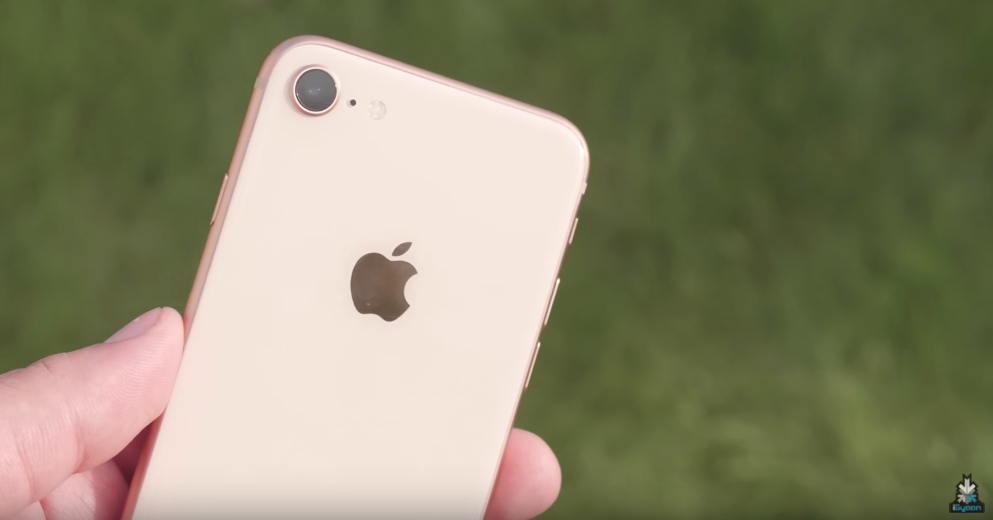
    The Apple iPhone 8 has a 4.7 inch 1334 x 750 px IPS LCD True Tone display. Under the hood, the iPhone 8 has the A11 Bionic chipset with a hexacore processor and the new Apple GPU. Because of the glass back, the iPhone 8 is now wireless charging capable. The iPhone 8 runs iOS 11 and the battery of the iPhone 8 is identical to the iPhone 7. The iPhone 8 is available in two storage variants, 64GB and 256GB.

    On the camera front, there’s a 12-megapixel sensor on the iPhone 8 that is larger, faster and has optical image stabilisation. The iPhone 8 Plus also has new 12 MP sensors. The main camera is equipped with a wide angle lens and has an f/1.8 aperture while the secondary telephoto lens has an f/2.8 aperture. The dual cameras on the iPhone 8 Plus also have a new “Portrait Lighting” feature to adjust the lighting for portrait shots.


    Specifications Google Pixel 2 Samsung Galaxy S8 Apple iPhone 8
    Price Rs 61000 for 64GB variant Rs 55900

    Rs 59,999 for 64GB variant

    Display size and type 5 inch OLED 5.8 inch Super AMOLED 4.7 inch IPS LCD True Tone Display
    Display resolution 1920 x 1080 px 2960 x 1440 px 1334 x 750 px
    Dimensions 145.7 x 69.7 x 7.8 mm 148.9 x 68.1 x 8.0 mm 138.4 x 67.3 x 7.3 mm
    Weight 143 grams 155 grams 148 grams
    Chipset Qualcomm Snapdragon 835 Exynos 8895 A11 Bionic Chipset
    Processor 2.4GHz
    8x Qualcomm Kryo 280
    Octa core (2.3GHz Quad + 1.7GHz Quad), 64 bit, 10 nm process Hexacore processor
    RAM 4GB 4GB 3GB
    Storage 64GB

    128GB

    64GB 64GB

    256GB

    Storage Expandability No Yes

    Up to 256GB

    No
    Primary Camera 12.2MP with an f/1.8 aperture

    Dual pixel technology

    Dual Pixel 12MP with an f/1.7 aperture 12MP with an f/1.8 aperture
    Primary Camera Features Simultaneous OIS and EIS

    Portrait mode

    OIS and EIS

    PDAF

    OIS

    Six element lens

    Secondary Camera 8MP with an f/2.4 aperture

    Portrait mode

    8MP AF (F1.7) 7MP camera
    f/2.2 aperture
    Colours White, Blue, Black Midnight Black, Maple Gold, Orchid Grey Gold, Silver, Space Gray
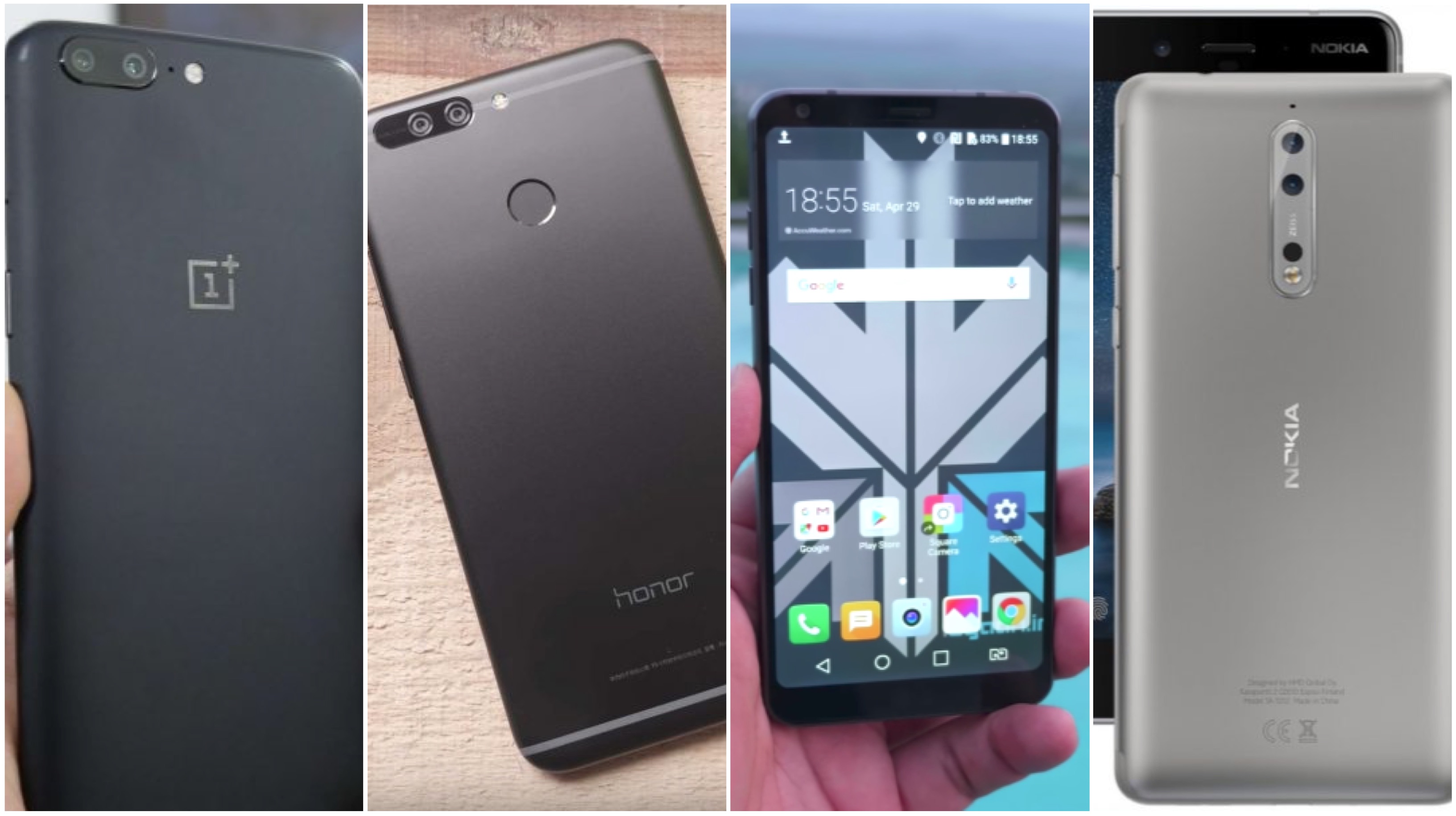
  • Battle Of The Flagships Under Rs 40,000: OnePlus 5 Vs Nokia 8 Vs Honor 8 Pro Vs LG G6

    Battle Of The Flagships Under Rs 40,000: OnePlus 5 Vs Nokia 8 Vs Honor 8 Pro Vs LG G6

    Gone are the days when you couldn’t expect premium performance from smartphones that didn’t come with a premium price tag. Nowadays, good phones are getting cheaper, and cheap phones are getting better. Flagship devices from the likes of Samsung and Apple continue to cost over Rs 50,000 in India but, there smartphone makers who bring in high quality at a sort of affordable price. Rs 40,000 is not “affordable” by any means, but if you can get a phone as fast and smooth as a Rs 60,000 phone by almost half of it, you don’t have much to complain.

    OnePlus 5, Nokia 8, Honor 8 Pro and the LG G6 offer flagship performance and features at a price under Rs 40,000. Each phone has its own USP and areas of performance where it excels. So, if you have a budget of around Rs 40,000 and you want a phone with flagship performance, which one would fit the bill? Let’s find out.

    Specifications OnePlus 5 Honor 8 Pro LG G6 Nokia 8
    Price Starting at Rs 32,999

    Click Here To Buy

    Rs 29999

    Click Here To Buy

    Rs 36,900

    Click Here To Buy

    Rs 36,999

    Click Here For Pre-Orders

    Display 5.5 inch 5.7 inch 5.7 inch 5.5 inch
    Resolution 1920 x 1080 px 2560 x 1440 px 2880 x 1440 2560 x 1440 px
    OS Android 7.1 Nougat

    Stock Android

    Android 7.1 Nougat

    EMUI 5.1

    Android 7.1 Nougat

    LG UX

    Android 7.1 Nougat

    Stock Android

    Chipset Qualcomm Snapdragon 835 Kirin 960 Qualcomm Snapdragon 821 Qualcomm Snapdragon 835
    RAM 6GB/8GB 6GB 4GB 4GB
    Storage 64GB/128GB 128GB 64GB 64GB
    Expandability No Yes Yes Yes
    Water and Dust Resistance  No No IP67 Rating IP54 Rating
    Primary Camera Sony IMX 398
    Megapixels: 16
    Telephoto Sensor: Sony IMX 350
    Megapixels: 20
    12MP RGB sensor + 12MP Monochrome (black and white) sensor Dual 13 MP (f/1.8, OIS, 3-axis) + 13 MP (f/2.4) wide-angle lens 13MP + 13MP with an f/2.0 aperture
    RGB (colour) primary sensor and monochrome (black and white) secondary sensor Carl Zeiss Optics
    Battery  3300 mAh 4000 mAh 3300 mAh 3090 mAh
    Video 3840 × 2160p @ 30fps

    1920 x 1080p @ 30fps

    3840 × 2160p @ 30fps

    1920 x 1080p @ 30fps

    3840 × 2160p @ 30fps

    1920 x 1080p @ 30fps

    3840 × 2160p @ 30fps

    1920 x 1080p @ 30fps

    Front Camera  16MP with an f/2.0 aperture  8MP with an f/2.0 aperture 5MP with an f/2.2 13MP with an f/2.0 aperture
    Extra Features  Smooth stock Android with subtle OxygenOS tweaks  VR Capabilities Due to QHD display Bezel Less Display Bothie

    OZO Audio

    All these phones have their own pros and cons.

    OnePlus 5

    What we like:

    • Qualcomm Snapdragon 835
    • Stock Android OS experience
    • Portrait mode in camera.

    What we don’t like:

    • Battery size
    • No expandable storage
    • No OIS
    • No water resistance.

    Honor 8 Pro

    What we like:

    • Display
    • Battery
    • VR capabilities
    • Storage expansion via microSD card
    • Price.

    What we don’t like:

    • Chipset is more comparable to the older Snapdragon 821
    • No water resistance
    • EMUI might not hold itself for a long time.

    LG G6

    What we like:

    • Display
    • Design
    • Camera
    • Water resistance
    • Storage expansion via microSD card
    • Price
    • Professional video features.

    What we don’t like:

    Older Snapdragon 821

    Front camera is only 5MP with an f/2.2 aperture.

    Nokia 8  

    What we like:

    • Snapdragon 835
    • Display
    • Stock Android OS
    • Nokia’s build quality
    • Carl Zeiss optics
    • Bothie will be practical for people who live stream content
    • Storage expansion via microSD card.

    What we don’t like:

    • The most expensive of the four.
    • Nokia’s software is untested as of now.

    Buying a smartphone is a big decision and all these phones have their advantages. Choose wisely and let us know if you own any of these phones or are planning to get one.


  • YU Yureka vs The Rest : Quick Comparison

    YU Yureka vs The Rest : Quick Comparison

    Newly launched brand YU unveiled its first smartphone, Yureka, a few days back. The new company has been born from a collaboration between Micromax’s Founder Rahul Sharma and custom ROM maker CyanogenMod. The arrival of the high-speced low-budget smartphone has created quite a stir. From day one it was off to a rocky start; it began by banning OnePlus from selling their popular handset in India.

    Hence, we decided to check out how the Yureka fares when compared with the rest of the competition. So, away from the court, let the real battle begin.

    Specs

    Micromax Yu Yureka

    Xiaomi Redmi Note

    XOLO Omega 5.0

    Asus ZenPhone 5

    Moto-G (2nd Gen)

    Display 5.5-inch HD 5.5-inch HD 5.0-inch HD 5-inch HD 5-inch HD
    Processor 1.5GHz  Octa-core Qualcomm Snapdragon 615 1.7GHz  Octa-core MediaTek MT6592 Octa-core 1.4 GHz Cortex-A7 Intel Atom Dual-core 2.0 GHz Qualcomm Snapdragon 400 at 1.2 GHz
    RAM 2 GB 2 GB  1 GB 2 GB 1 GB
    Storage 16 GB internal microSD upto 32 GB 8GB internal, microSD upto 32 GB 8 GB internal memory, microSD upto 32 GB 8 GB internal, expandable upto 64GB 8GB internal, expandable upto 32GB
    Primary Camera 13MP 13MP 8MP 8MP 8MP
    Front Camera 5MP 5MP 2MP 2 MP 2MP
    Battery 2,500 mAh  3,100 mAh 2,100 mAh Non-removable Li-Po 2110 mAh battery Non-removable Li-Ion 2070 mAh battery
    Operating System Cyanogen OS 11 based on Android v4.4.4 Android OS, v4.3 (Jelly Bean), upgradable to v4.4.2 (KitKat) Android v4.4 KitKat OS with Hive UI Android OS, v4.3 (Jelly Bean), upgradable to v4.4.2 (KitKat) Android v4.4.4 (KitKat)
    Price Rs. 8,999 Rs. 8,999 Rs. 8,499 Rs. 9,999 Rs. 12,999

    Barring the hype about Yureka’s deal with Cyanogen, it seems like it even packs some punch under the hood. The smartphone is going to be available via the infamous flash sale system popularized by Xiaomi, the registrations for which have already begun.

    We’d advise you not to get too carried away by the hype. Wait for our full review before investing in the handset!

  • Epic Flagship Spec Battle: Note 4 vs Xperia Z3 vs HTC One M8 vs OnePlus One vs Xiaomi Mi3

    Epic Flagship Spec Battle: Note 4 vs Xperia Z3 vs HTC One M8 vs OnePlus One vs Xiaomi Mi3

    Samsung pulled off a big show yesterday and introduced its star flagship, the Note 4. The device comes with an updated design with a metal frame and sleeker design. It also brings the device in the 2K display race. Along with Samsung came Sony, who brought the Xperia Z3 along with some innovative devices.

    So we decided to check out how these new flagships standup against the best flagship performers of this year. We are pitching the Note 4 and the Xperia Z3 against Oneplus One, Xiaomi Mi 3 and the metal-bodied awesomeness of the HTC One M8. Let’s see how they stand up against each other.

    Specs

    Samsung Note 4

    Sony Xperia Z3

    HTC One M8

    OnePlus One

    Xiaomi Mi 3

    Display 5.7 inch QHD 5.2 inch HD 5.0 inch HD 5.5 inch HD 5.0 inch  HD
    Processor Exynos Octa-core 5433/ 2.7GHz Quad-core Snapdragon 805 2.5 GHz Quad-core 2.3 GHz Quad-core 2.5 Quad-core 2.3 GHz Quad-core
    RAM 3 GB 3 GB RAM 2 GB 3 GB 2 GB
    Storage 32 GB 16/32 GB 16/32 GB 16/64 GB 16/64 GB
    Expandable Upto 64 GB 128 GB 128 GB
    Main Camera 16 MP 20.7 MP Dual 4 MP 13 MP  13 MP
    Front Camera 3.7 MP 2.2 5 MP 5 MP  2 MP
    Battery Removable 3220 mAh Non-removable 3100 mAh Non-removable 2600mAh Non-removable 3100 mAh Non-removable3050 mAh
    Operating System Android 4.4.4 Android 4.4.4 Android 4.4.2 Android 4.4.2 upgradable to v4.4.4 Android 4.3 upgradable to 4.4.2 (KitKat)
    Miscellaneous S-Pen High Res Audio, Water proof Metal Body Cynogen Price

    Looking at the specs, Note 4 shows the might to take on its competition. It is one mammoth of a device in terms of functionality and is unmatched by any other device in the market. Coming out with just one storage variant of 32 GB is an advantage for the Note 4. It makes no secret that it is a premium device and will be priced as such.

    It is expected to come around the first week of October and we can’t wait to get our hands on this package of goodness.

iGyaan Network
Privacy Overview

This website uses cookies so that we can provide you with the best user experience possible. Cookie information is stored in your browser and performs functions such as recognising you when you return to our website and helping our team to understand which sections of the website you find most interesting and useful.