Author: Parul Ritvik Sood

  • 5 Cool Messaging Apps You Could Use Other Than Whatsapp

    5 Cool Messaging Apps You Could Use Other Than Whatsapp

    Staying connected in a meaningful way makes us happy and sharing our thoughts, emotions and stories is what makes these connections rich and real. In a world where everything is moving too fast, messaging services offer you a way to connect and express yourself instantaneously.

    We are listing 5 messaging apps that might change the way you stay connected with your loved ones:

    1. Path Talk

    The new app includes a handful of features that are not available on most of the popular messaging apps, including one called ‘Ambient Status’ that automatically detects what you’re doing and shares that with others in your network. For example, the app uses geo-location on your phone to determine when you’re nearby another friend, in transit, or even working out. The app will also alert friends if you’re listening to music and what song you’re playing. All of these Ambient Status updates happen automatically, and can be altered in settings if users don’t feel comfortable with the app sharing on their behalf.

    2. Telegram

    unnamed

    Telegram is a messaging service combining the speed of WhatsApp with Snapchat’s ephemerality and advanced new security measures. Telegram feels in many ways like a straight-up clone of WhatsApp, from its green double-checkmark read receipts to its cartoonish wallpapers. There’s also the usual gamut of messaging app features including the ability to see a friend’s online status and attach photos, videos, your location, contacts, and documents to messages. But where it lacks in originality, Telegram makes up for it in speed and security features.

    3. MessageMe

    MessageMeLogo

    Message Me is a mobile free messaging app with a lot of visual features and personalization. It allows people to send SMS text messages and make voice calls to their friends for free, same as most instant messaging apps. One of its more popular features is the ability to draw or “doodle” on photos, making it easy to annotate and share images. When someone shares an image with you, you can draw right on top of it, dashing off a hand-scrawled comment or caption before passing it along to your own pals. That feature, plus the ability to grab images and other media from the Web and quickly share them in an SMS message to your friends and family, has made MessageMe a popular download since its launch.

    4. Mezy

    Mezy-Icon

     Mezy is a new social messaging app where friends post messages (photos/videos/text) to a location on a map. When a user’s followers go to the location chosen by the user, the message is unlocked and able to be seen and commented on by others who have discovered it.  Users can post a mezy anywhere in the world – not just their current location. When a follower enters the geographic location, the mezy then appears in their feed. No one else can see a mezy unless they have been granted access.

    5. Voxer

    Voxer-logo

    Voxer is commonly known as a “walkie-talkie” or “push-to-talk” app because when you click on its little talk button, you can send an instant voice message or multimedia message to a pal. The message is either instantly played through your friend’s phone speakers if their phone is turned on and the app is running, or it is received as a recorded message like voicemail. Voxer also enables text and photo messaging, like most mobile messaging apps do. It also enables VOIP voice calling like Skype does, and group messaging. Voxer is free for individuals and works with Android and iOS devices. A business version also is available with extra features for a fee.
  • Rumor : Motorola is Working on a New Nexus Device

    Rumor : Motorola is Working on a New Nexus Device

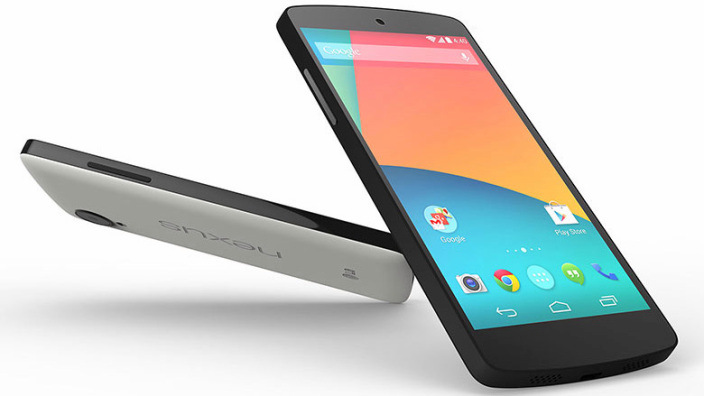
    Motorola and Google parted ways last January, but if rumors are to be believed, Motorola is working on a new Nexus device, codenamed “Shamu”, that is set to launch sometime this fall. A number of other reports have indicated that HTC has also been working on an 8.9 inch Nexus tablet for Google. It’s code-named “Volantis,” and probably has an NVIDIA Tegra K1 processor and a high-resolution display, among other things.


    Now it looks like a new Nexus smartphone by Motorola is also on the way, although it is said to have a near tablet-sized screen.

    54910-nexus5

    The reports leaked by Android Police hint that the Nexus device is a 5.9-inch device with a fingerprint sensor.

    Android Police seem confident that the rumor is true. “Point are deducted simply because hardware plans can change very quickly, even when a prototype device already exists,” Android Police writes. “We are confident that Shamu is a real device under active development, and fairly confident that it is a contender for the Nexus program.”

    Moto-G-featured

    Being that it’s a Nexus contender doesn’t mean it’ll be the device consumers will be able to buy later this year. But Motorola is apparently working on a device, which is supposed to be “targeted at major U.S. carriers, and unspecified carriers in other parts of the world,” Android Police said.

    It seems unlikely that a new Nexus device would appear before this fall, which is far enough away for the plans to change. But this report somewhere takes the sword off the Nexus program, which seems to be doomed. Not only is it still in play, looks like it may have a few great devices coming down the line.

  • Xiaomi Mi3 vs Moto G : Lets Fight!

    Xiaomi Mi3 vs Moto G : Lets Fight!

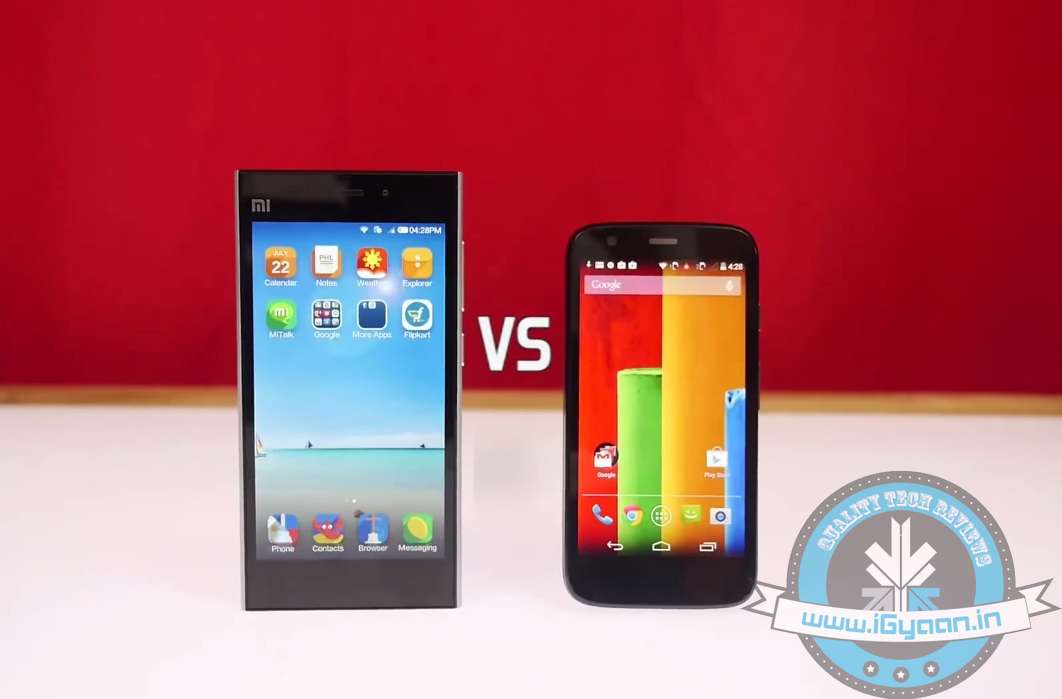
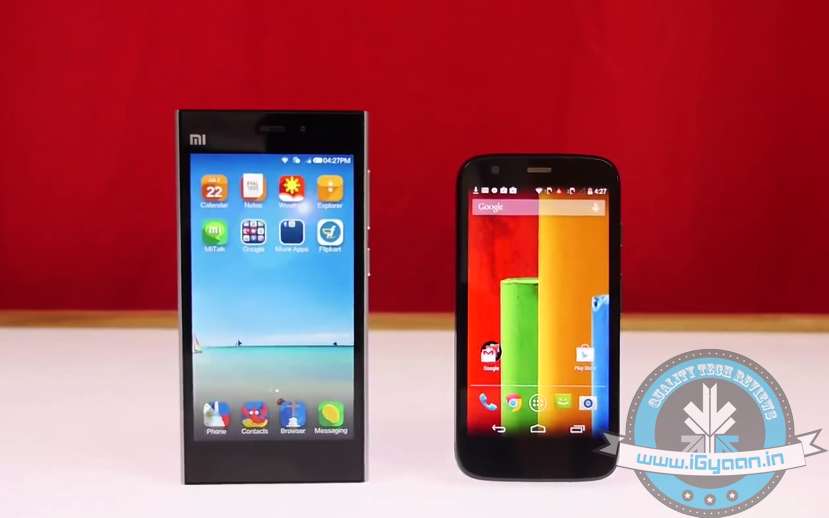
    Both Motorola and Xiaomi aimed big with the launch of these amazing devices. Xiaomi Mi3 is elegant with amazing specs and attractive pricing, while Motorola provided a great deal with the Moto G, which broke all sales records when it launched. We understand that Xiaomi Mi3 offers way betters specs, but since both the devices come within the same price range, we thought it was important for them to battle it out.

    Xiaomi is expected to take on most of the market with the launch of Mi3 because of the simple fact that the newly launched flagship device runs Snapdragon 800 and available at the price Rs. 13,999.

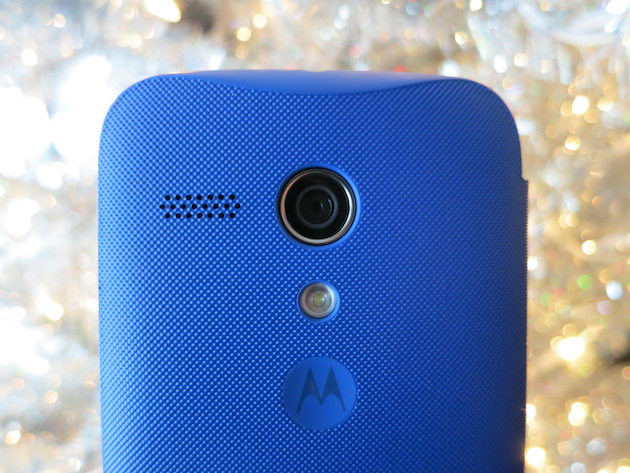
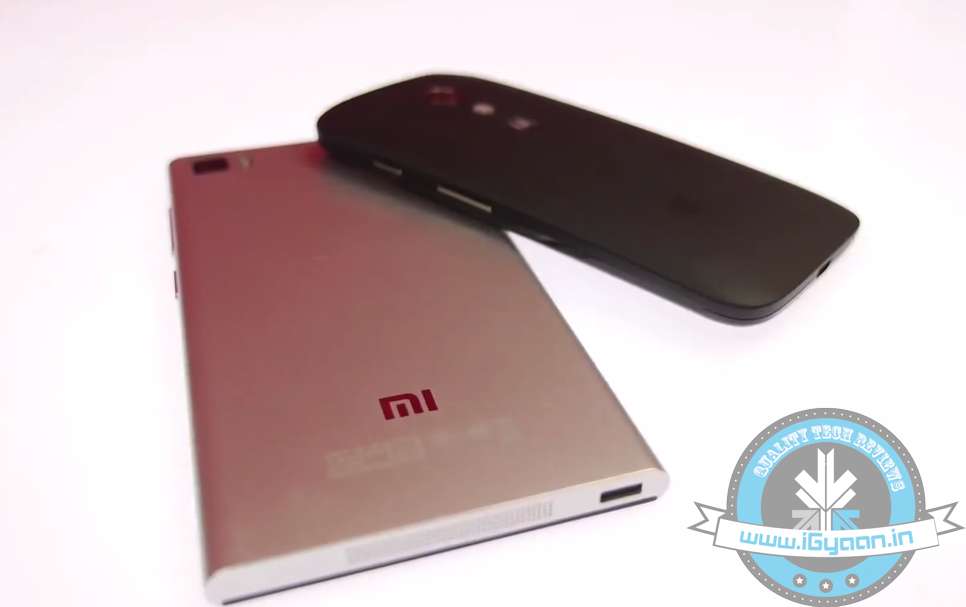
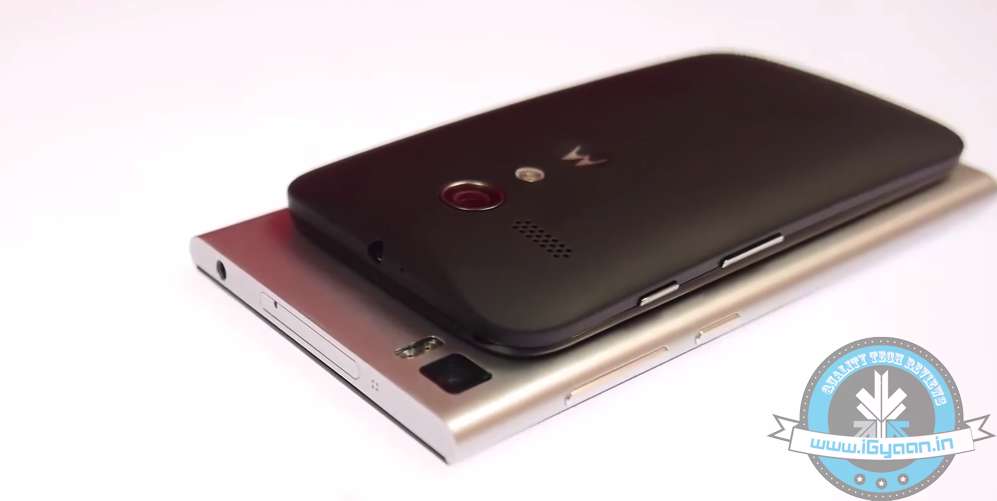
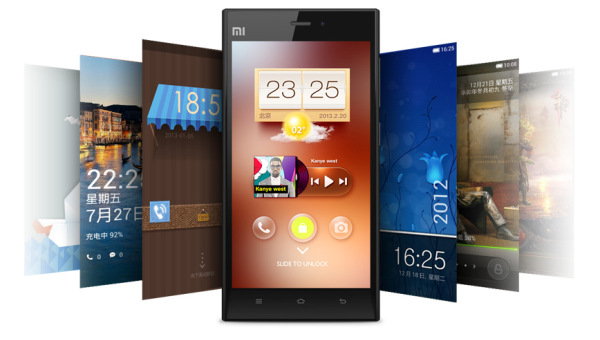
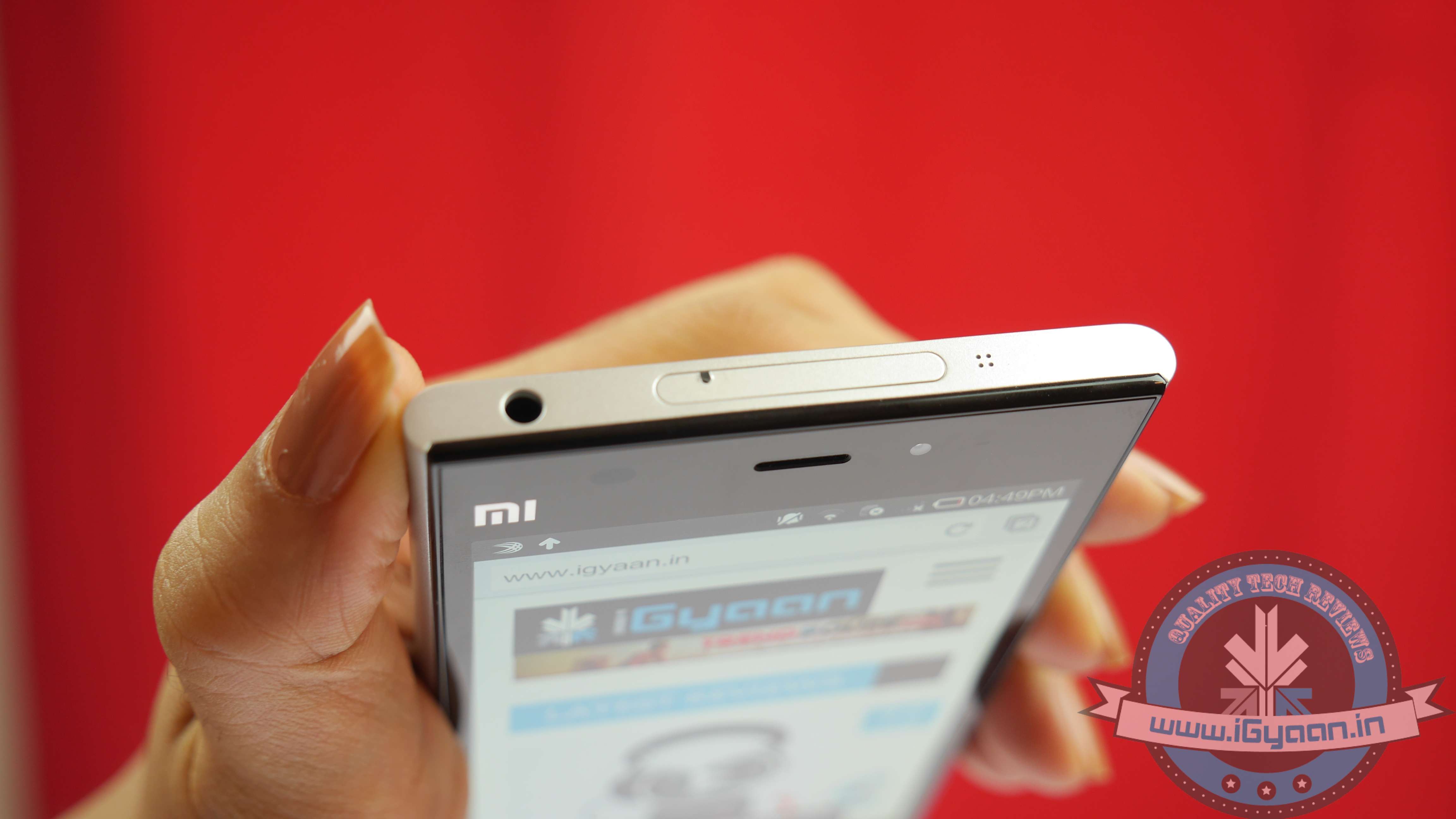
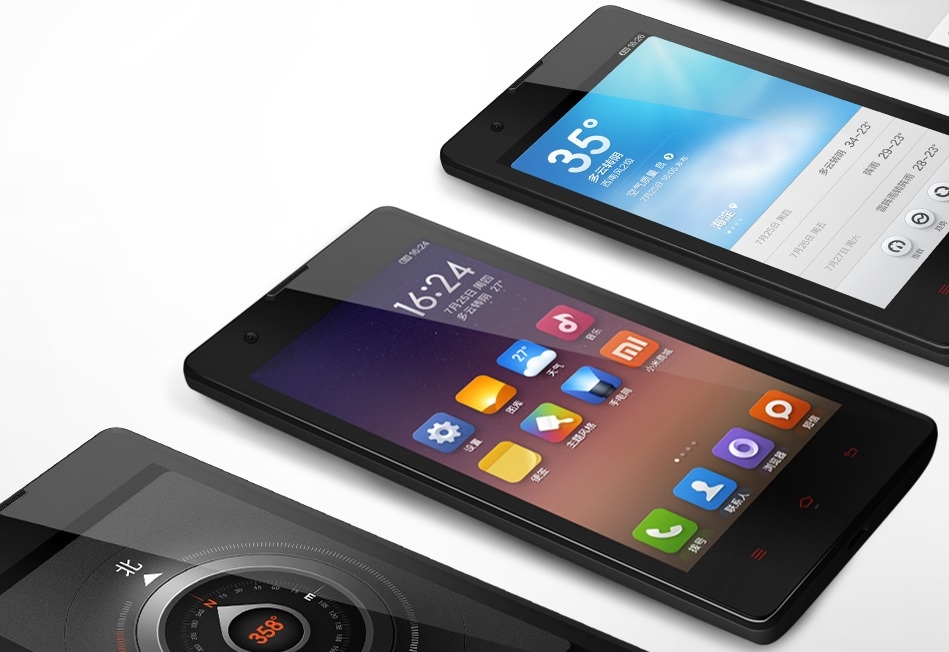
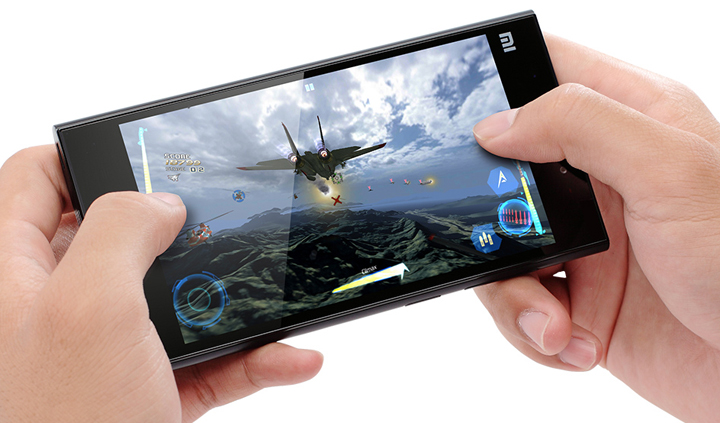
    Xiaomi Mi3, as a solid unibody product looks fantastic and the built quality is admittedly amazing. Overall feeling of the device is great. On the other hand we have the Moto G with its replaceable back panel and an array of color options for back panels.

    Xiaomi Mi3 India3

    Talking about specifications, Mi3 is equipped with a 1920X1080 px 5.0 inch display. While, the Moto G has a 720X1280 px which is at 4.5 inches. On the inside of Xiaomi Mi3 Qualcomm Snapdragon 800 quad-core chipset at 2.3 GHz. It also get Adreno 330 GPU where as with the Moto G, from the same price bracket, you get a quite a different set of specification. You get a Qualcomm Snapdragon 400 at 1.2 GHz with the Adreno 305 GPU, which is comparatively a disappointment.

    In terms of RAM, the device comes with 2 GB, where as the Moto G has a 1 GB. While the internal storage of both the devices is  16 GB. What’s interesting in Mi3 is the powerful 3050 mAh battery while the Moto G sports a 2070 mAh one. We know Moto G has a phenomenal battery life, but we are yet to test out the Mi3 battery life which is expected to be pretty impressive as well.

    Xiaomi Mi3 India1

    In terms of camera, the rear of Xiaomi Mi3 fashions a 13MP camera with a 28mm lens which also a wide-agle lens camera. It has dual LED flash and 1080p recording capability. Whereas Moto G is again dwarfed with its 5MP camera and its 720p video recording capabilities with no fancy camera features.

    The game changer is the OS both of the devices run on. The Mi3 runs on Android 4.4.2 which has been customized with MiUi5 which actually very different from what you see in Moto G. Moto G’s Android version is almost a stock Android interface with a couple of things added by Motorola. Motorola will also be fast enough to give you updates. It comes with Android KitKat out-of-the-box, nowadays. It is a possibility that it will get the Android L update as soon as Google launches it.

    Xiaomi Mi3 India2

    The Mi3 is 8.1mm in thickness, where as Moto G is a little hefty at 11.6mm. Moto G weighs 140 g where as the Mi3 comes at 145 g. The look, the feel, impressive specs and of course the attractive pricing, definitely puts Xiaomi a step above Moto G. If you were planning on  getting the Moto G, you might want to reconsider.

  • Lava Rolls Out Android 4.4.2 KitKat Update for Iris 504Q+

    Lava Rolls Out Android 4.4.2 KitKat Update for Iris 504Q+

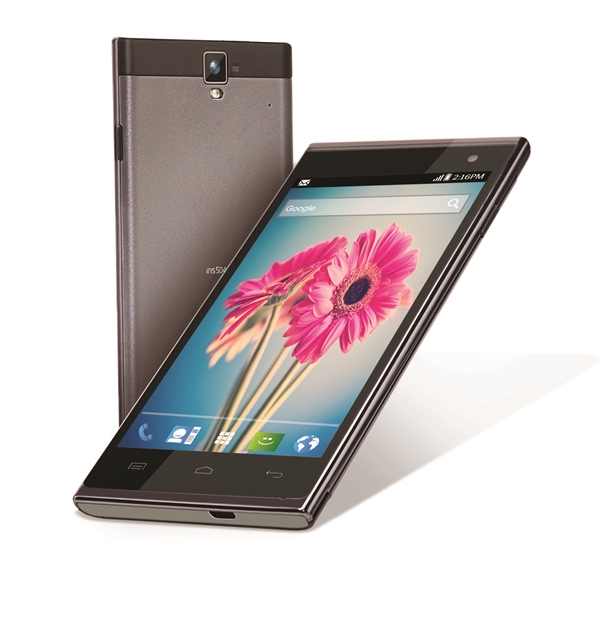
    Domestic smartphone maker, Lava International Limited, has just announced an Android 4.4.2 Kitkat update for LAVA Iris 504Q+.

    The new update, as company said , will improve user experience through an enhanced user interface, superior battery life and software performance. The update also comes with new dialer app which will automatically prioritize contacts according to the most frequently dialed numbers in the phone book. Also the dialer will offer a true-caller like service which will match unknown number from businesses with a local listing on Google Maps.

    The users of Lava Iris 504Q+ will soon get the upgrade notification; on tapping the notification, the user will be guided through the upgrade download and installation process.  Alternatively, the users can download and install manually through “Check Update” functionality that can be found in Settings.

    The update will be downloaded on the memory card only and the user needs to have the memory card inserted in the smartphone while installing. After installation, the Android KitKat software can run with or without memory card in smartphone.

    unnamed

    The new upgrade is said to increase the performance of the device. The Lava Iris 504Q+ packs in 1GB RAM and an internal memory of 8GB, which is expandable up to 32GB via micro-SD card, giving users enough space for applications and multimedia content. It is powered by a 1.3 GHz quad-core processor and Mali 400 MP2 at 500MHz Graphics Unit.

    Another noteworthy feature of the devices is its 10 MP rear auto-focus camera that is powered by Sony Exmor RS Sensor having sensor size of 1/3.2 inch allowing enhanced lowlight performance. Through its unique gesture control and voice command functionality, a user can click a picture by saying just “Cheese” or “Capture” or with a swipe of the hand in air. Lava Iris is available in Grey and Silver colors at the price of  Rs. 11,900.

  • Samsung Galaxy Tab S 10.5 inch : Benchmarks and Hardware

    Samsung Galaxy Tab S 10.5 inch : Benchmarks and Hardware

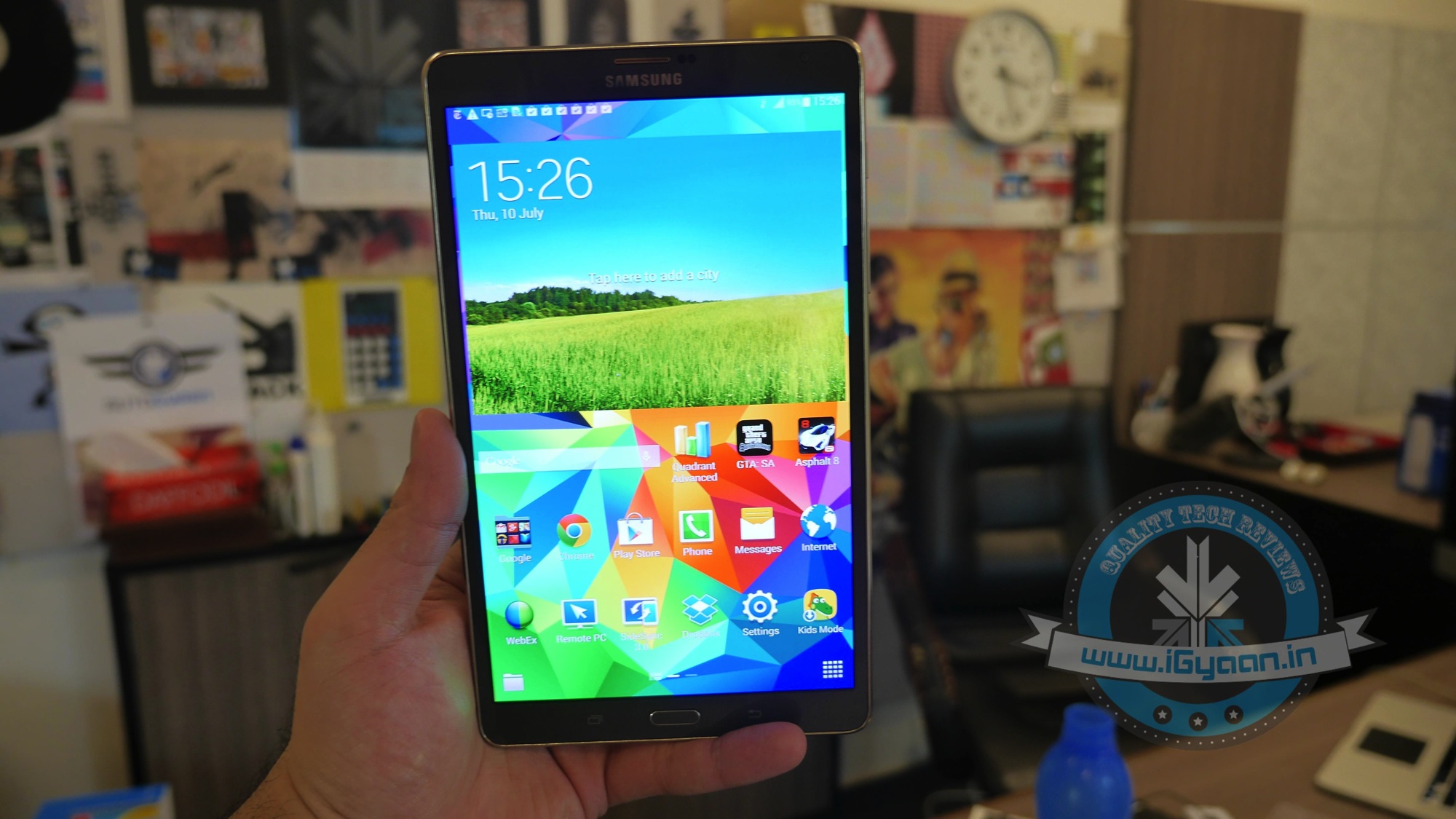
    Samsung reincarnated Galaxy Tab Series with two powerful devices variants: Galaxy Tab S 10.5 and 8.4. Samsung has beefed up the processor, improved the screen and managed to make it even thinner. We tested Samsung Galaxy Tab S 10.5’s performance and hardware muscles and here’s what we found:

    Galaxy Tab S 10.5 has an impressive line-up of core components. At the heart of this ultra-thin tablet lies a Samsung Exynos 5 Octa SoC, which has eight cores (four running at 1.9GHz, four at 1.3GHz), 3GB of RAM, a base storage allocation of 16GB and Mali-T628 MP6 graphics.

    To test benchmarks, we started by running Quadrant Standard on the device. The device performed well up to its hype and got an impressive score of 25,553. The score is quite higher than Galaxy Note PRO 12.2, which stands at 17,396.

    Following up, we ran AnTuTu Benchmarks on the Samsung Galaxy Tab S 10.5. The device scored 34,270, which is again pretty impressive. While the 8.4 inch variant of Galaxy Tab S lags slightly behind its bigger brother. Also, we ran the device through NinaMark 2 and the tab scored 59.8fps. The number is a little low as compared to other devices available in market such as Asus Nexus 7 and Sony Xperia Tablet Z. The multitouch score of the device was 10 which makes it a wonderful device for QWERTY typing.

    Check out our full benchmark  and hardware test video of  Samsung Galaxy Tab S 10.5 above.

  • Samsung Galaxy Tab S 8.4 : Benchmarks and Hardware

    Samsung Galaxy Tab S 8.4 : Benchmarks and Hardware

    Following up the Samsung Galaxy Tab S 10.5, we tested the smaller variant:  The Samsung Galaxy Tab S 8.4. One thing that we appreciate a lot is that the Tab S 8.4 is a true little brother of the Tab S 10.5. Both slates have identical specifications, from processor to display resolution and even the internal RAM and storage. What differs is the size of the screen and the battery capacity which are both reduced.

    Same as its bigger brother, the 8.4 Tab S variant has a phenomenal display. Running through the Quadrant Benchmark, the device scored 18,362 which little low from its big brother’s score that is  23,553. Anyhow, 8.4 Tab S scores much better that many of the devices  in the same price bracket.

    Next up is Antutu benchmark, the device scored 29,559 in this test, again lagging behind the 10.5 variant which scored 34,270. Along with that we also ran the device through NinaMark 2 Test scoring 59.1 fps which is quite similar to the 10.5 Tab S which scored a 59.8 fps. Same as the bigger variant, 8.4 variant is also 10 finger multi-touch.

    Check out our full benchmark video of Samsung Galaxy Tab S 8.4 above.

  • Images of the Upcoming Moto X+1 Leaked

    Images of the Upcoming Moto X+1 Leaked

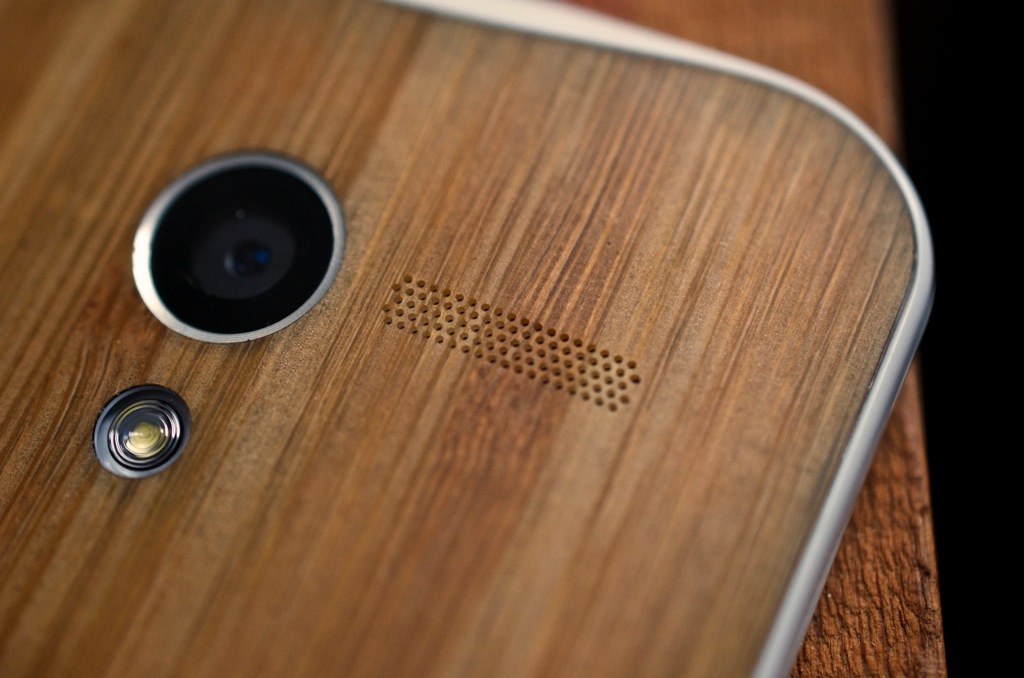
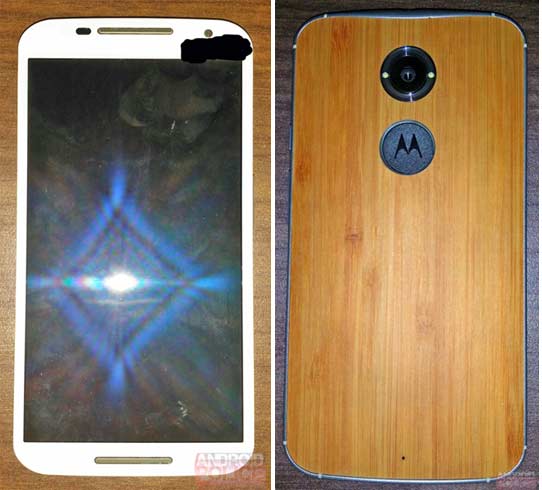
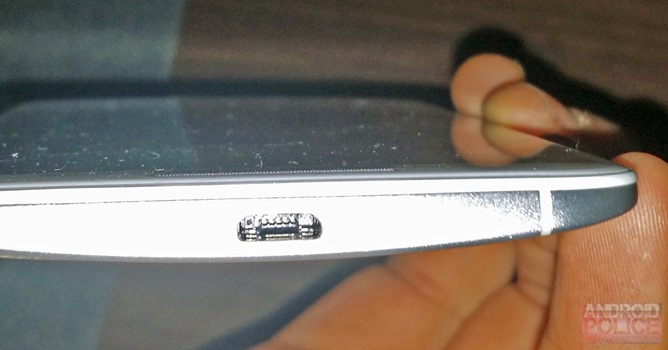
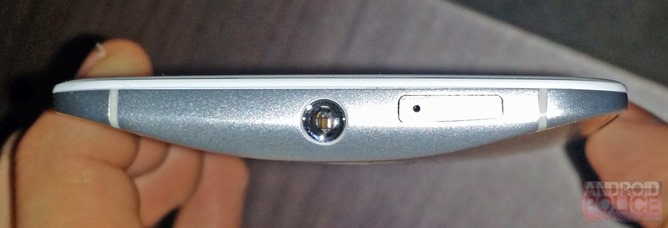
    The coming up flagship device of Motorola seems be to their worst kept secret. Earlier the phones specifications and some photos were revealed and now once again, Android Police has leaked photos of what they claim is a pre-production model of the Moto X+1.

    However, the device in the picture has one distinct factor  and that is the aluminum frame around the device. It is said that the silver-colored segmented ring around the phone’s sides is made of aluminum, like the HTC One family, though the metal build doesn’t extend to the front or back.

    motorola-moto-x-plus-1-photo-leaked

    This device seems to have bigger screen than its predecessor (5.1-inch screen) with no capacitive buttons, which roughly matches various reports, along with a loudspeaker beneath the screen. The back has a Motorola logo set into the wood, in what appears to be plastic, which differs from the wood backs on the Moto X. The two white dots on either side of the circular camera module are said to be dual LED flashes. Like the Moto X, there is no MicroSD card slot.

    moto x+1

    moto

    The wooden finish rear confirms the earlier report that the flagship device will offer more than 25 customization options, including wood and leather finishes. Furthermore, earlier rumors suggest the Moto X+1 will sport bumped up specs in every respect starting with a new 5.2-inch, 1920 x 1080 resolution screen. The phone could also have a faster Snapdragon 800 processor, 2GB of RAM, and 24GB of storage. A higher spec 64GB model has also been rumored to come with a microSD card slot not found on the regular model. Camera-wise the Moto X+1 said is to feature a 12MP rear sensor coupled with a 5MP front snapper.

    moto x+1

    motorola-moto

    In general, the hardware seems to be a reasonable upgrade from the Moto X, although the leaks so far have failed to mention whether or not the device will include a natural language processor. This is the chip that enables the Moto X’s touchless voice controls, which allow you to access Google Now without even touching the phone while the screen is turned off. It was billed as one of the major features to launch with the Moto X, but it’s unclear if we’ll see the same type of functionality in the Moto X+1. Motorola is rumored to unveil the Moto X+1 in August as it did with the Moto X in 2013.

  • Bose and Beats Make Noise Over Patent Infringement

    Bose and Beats Make Noise Over Patent Infringement

    Beats, the headphone maker bought by Apple for $3.2billion in May this year, is being sued by rival Bose over claims it has infinged patents on noise-cancellation technology. US audio giant Bose claims that it has lost out on sales and profits because Beats has breached five of its patents connected to blocking out background noise when listening to music on its headphones.

    Bose is also attempting to stop Beats’ headphones, which sells over hundreds of pounds each, from being imported into the US from China, where they are made by Fugang Electronic. Bose alleges Beats is undermining its 50 years of research into how to block out background noise when listening to music through ear pieces. It claims Beats’ high end headphones, which can sell for $400 or more, use technology developed by Bose.

    bose-noise-canceling-technology-

    In the filing, Bose describes how Amar Bose, a professor at the Massachusetts Institute of Technology, founded a research programme to work on the problem of background noise after a particularly noisy flight in 1978. For almost 50 years, Bose has made significant investment in the research, development, engineering, and design of proprietary technologies now implemented in its products, such as noise cancelling headphones,” it stated.

    Bose has been a long-time player in the high-end headphone market, focusing on quality over style. Beats grew as quite the opposite — with flashy, stylized and equally expensive products with a sound that had not been particularly well-received. Despite the sound issues, Beats took less than six years to become the dominant player in the premium headphone industry with 64% of the market.

  • 10 Reasons That Will Help You Decide Whether Or Not To Buy Xiaomi Mi3

    10 Reasons That Will Help You Decide Whether Or Not To Buy Xiaomi Mi3

    Xiaomi has entered the market in India with a bang, everyone is talking about the ‘Apple of China’ that gives you amazing features at just 15k. But before buying any gadget, you need to make sure you know it well. Well, there is a certain taboo in India about things with the “Made in China” tag. Although Xiaomi is a Chinese company, we have to admit, they’re offering an amazing device.

    Anyhow, here are our list of pros and cons, that’ll should help you decide:

    1. Price

    When Xiaomi was rumored to launch Mi3 in India, it was expected to be priced at Rs.14,999 and which was already pretty impressive, enough to give tough competition to the big players in the market. Surprisingly, Xiaomi reduced the price of the Mi3 further by Rs. 1000 at the Official press event held in Delhi and finally the 16Gb version Xiaomi Mi3 was priced at Rs.13,999. With all the hardware this smartphone has in it, the price of Rs 13,999 is a steal.

    Xiaomi MI 3 India 3

    2. Hardware and Performance

    The first thing that you will notice about the Xiaomi Mi3 is its impressive hardware specifications. The Xiaomi Mi3 is powered by a 2.3 GHz Snapdragon 800 quad core processor which is coupled with an ample 2GB of Ram and a Adreno 330 GPU . As for the display, the smartphone has a 5 inch IPS LCD display with a resolution of 1080p (441 ppi pixel density). No other Android device in its price range offers a Snapdragon 800 processor and this is a major reason why the device stands out in the crowd.

    3. Camera

    The Xiaomi Mi3 has rear facing 13 MP camera with f/2.2 aperture and Dual led flash. Again, the best camera in its price range. Thanks to the F/2.2 aperture, the smartphone is able to capture impressive low light photography and adding to that the Dual led flash is a also a useful feature.

    Xiaomi

    4. Android 4.4

    Well, as we all know the retail units of Xiaomi Mi3 in India come loaded with Android 4.4.2 KitKat and this makes the Xiaomi Mi3 an amazing deal.

    5. Non Removable Battery

    The Xiaomi Mi3 has a non detachable/removable battery. In case the battery dies out, you won’t able to replace the battery yourself. You’d be required to make a tedious visit to the service centre.

    6. Memory

    With all the things that we would want to store on our smartphones, the option of expandable storage always comes in handy. However, the Xiaomi Mi3 has no option for expandable storage which is a major let down for a phone with such impressive specifications.

    xiaomi-mi3-pic-2

    7. Tendency to Heat Up

    While all phones tend to heat up while performing resource intensive tasks, but since the Mi3 has got an aluminum body, you get to feel more heat.

    8. Warranty

    A total of 36 service centers were announced by Xiaomi at the press event held in Delhi. Among these 32 service centers, two service centers located in Delhi and Bangalore will be exclusively operated by Xioami itself and will have a maximum turnaround time of 2 Hours.

    flipkart

    9. Slippery build

    The Xiaomi Mi3 body is made of brushed aluminum and this makes it extremely slippery. If you are planning to buy this smartphone, you should also consider investing in a good case and mind your clumsy habits.

    10. Flipkart Angle

    While the company has made a smart choice of cutting its retail costs by partnering with Flipkart. It is also one of the reasons we’re vary of the Mi3. The anonymity of suppliers is an issue. When there is a problem discovered in the delivered device, there is that possibility of Flipkart refusing to claim responsibility or help out.

     So there you have it – the 10 pros and cons of the device. If these weren’t adequate, wait a while. We’ll be reviewing the phone soon.

  • Google Voice’s Website Gets Hangouts Integration

    Google Voice’s Website Gets Hangouts Integration

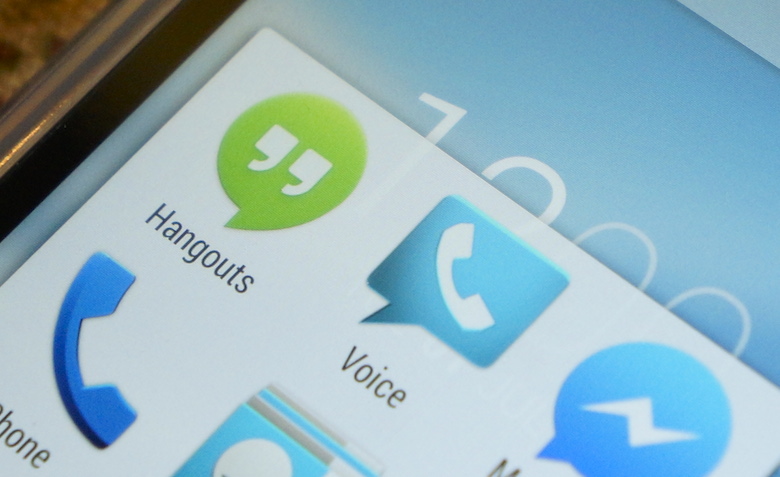
    If you use Google Voice to manage your phone calls and text message, then you must be waiting to see if Google will eventually merge Google Voice with Hangouts for Android and iOS. Well, Google went ahead and did it for PCs, integrating Hangouts into the Google Voice website.

    hangouts

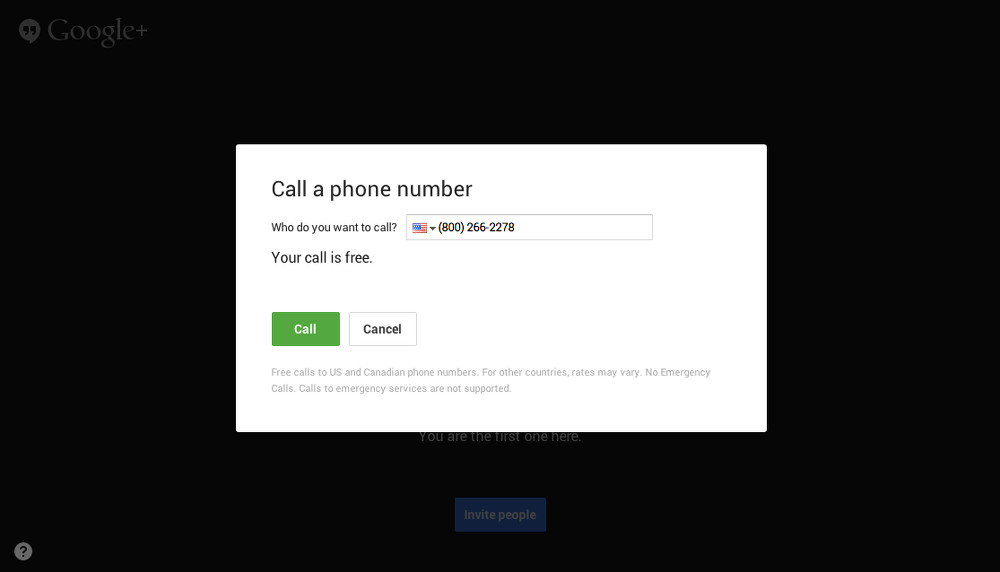
    In a Wednesday post, Google Voice developer Alex Wiesen announced the addition of Hangouts as an option when making calls from the Web. The feature can be accessed selecting Hangouts from a drop-down menu labeled “Phone to call with.” The website will then launch a separate Hangouts window, allowing the conversation to take place as normal. Hangouts is seen as Google’s’ solution to its fractured messaging systems, and even offers the ability to place phone calls.

    But while the new platform has been heralded as “the future of Google Voice,” little has been done to merge the two services. Nonetheless, the decision to integrate Hangouts in Google Voice shows the company is still actively developing the latter.

    google-voice-hangouts

    To use the new option, visit the Google Voice website and enter the number you’d like to call. Then, in the drop-down menu under Phone to call with, you’ll see an option for Hangouts. This will open a separate Hangouts window and you can carry on your voice conversation via Hangouts as you normally would.

    In May 2013, Google began work on allowing outbound Google Voice calls within the new Hangouts experience; it arrived two months later. Earlier this month, the Google Operating System blog spotted a feature that migrates Google Voice numbers to Hangouts—a sign that the Web giant may be moving forward with the plan to integrate the two features, then shutter the separate Voice tool.

  • Rumor : Apple To Launch an iWallet With The iPhone 6

    Rumor : Apple To Launch an iWallet With The iPhone 6

    We have been waiting to get our hands on the Apple’s new iPhone 6 with its new design. But while we wait, there are many other rumours flying high. Most recently, the rumors are that along with the launch of the highly anticipated iPhone 6, Apple will also launch a Google Wallet rival.

    According to these rumors, Apple is in talks with major credit card company Visa to collaborate and create an iWallet technology that could revolutionize the way consumers pay for goods. As noted by the publication, a direct partnership with Visa — or  any similar company — would be a huge step in bypassing the payment processing chain, saving both merchants and customers money.

    Apple is aiming to proceed with its payment system without handing over any control to wireless carriers, which may allow it to avoid difficulties that its competitors have faced. It has been expected for some time now that Apple would step into the mobile wallet sector and use the millions of shoppers who already store their card information with its iTunes Store and App Store. The iPhone maker has had to be cautious after seeing Google Inc. and others fail to rally users to make payments using their phones.

    iPhone-4S-E-Wallet

    With partnership talks ongoing, Apple is also working out the technology behind a mobile payment system. The reports illustrate that the company at one point planned to integrate Near Field Communication (NFC) modules in its iPhone lineup, though other rumors claim the system will rely on Bluetooth and Wi-Fi.

    In either case, sensitive customer information is likely to be stored in the iPhone’s secure enclave or alternatively in the cloud.

  • Airtel Rolls Out 4G Services In Nagpur

    Airtel Rolls Out 4G Services In Nagpur

    Even though the customers are still not satisfied with the 3G services in our country, Airtel and Aircel are rolling out 4G services with wild speed. Airtel today announced that it will now provide their 4G services in Nagpur. Nagpur will the second city in Maharashtra and 14th city in India to get Airtel 4G services.

    Announcing the launch, Ashok Ganapathy, Hub CEO –Maharashtra, Goa & Gujrat, Bharti Airtel (India) said, “We are proud to announce the launch of Airtel 4G services in Nagpur enabling customers to access the most advanced wireless broadband experience available across the globe. As a brand, we are committed to enriching the lives of our customers and invite all the data savvy customers in the city to enjoy this world class data experience which we are offering at unbeatable prices.”

    The company says that 4G services user  can use this service anytime on either dongles or on Wi-Fi with the home broadband solution of CPEs (Customer Premise Equipment/ routers). Customers can leverage advanced 4G technology capabilities like high definition video streaming with zero buffering, download 10 movies in less than 30 minutes, upload full holiday albums in less than 5 minutes by uploading 2 high quality photos per second and also connect multiple devices without any experience constraint.

    Airtel provide 4G dongles at the price of Rs. 1500 and CPE (Customer Premise Equipment) at the cost of Rs. 2500 with array of postpaid and prepaid options. A special plan for heavy Data users  is also announced 40 GB of 4g data at the price of Rs. 2000. Company is spreading the word with special demos and kiosks around the city.

  • Images of the Upcoming Sony Xperia Z3 Leaked Online

    Images of the Upcoming Sony Xperia Z3 Leaked Online

    As per the company traditions, Sony is expected to launch Z3 at the IFA in Berlin this September. The new handset in the Xperia Z series is supposed to be a mere upgrade of its predecessor. Sony is known for releasing one high-end flagship phone every half-yearly instead of annually like most smartphone companies.

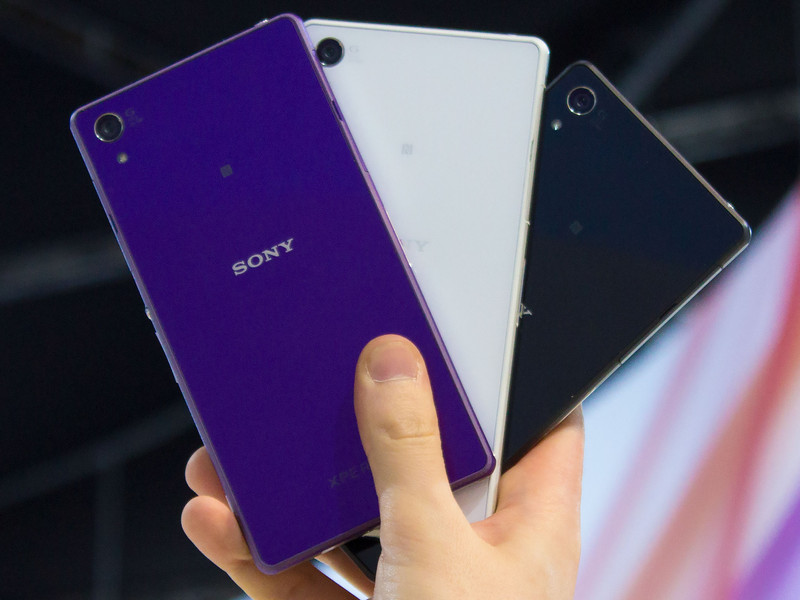
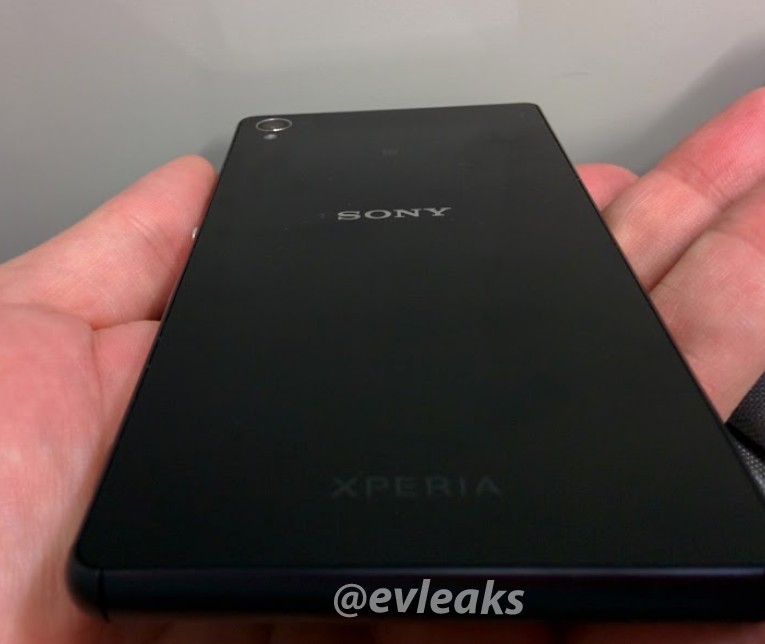
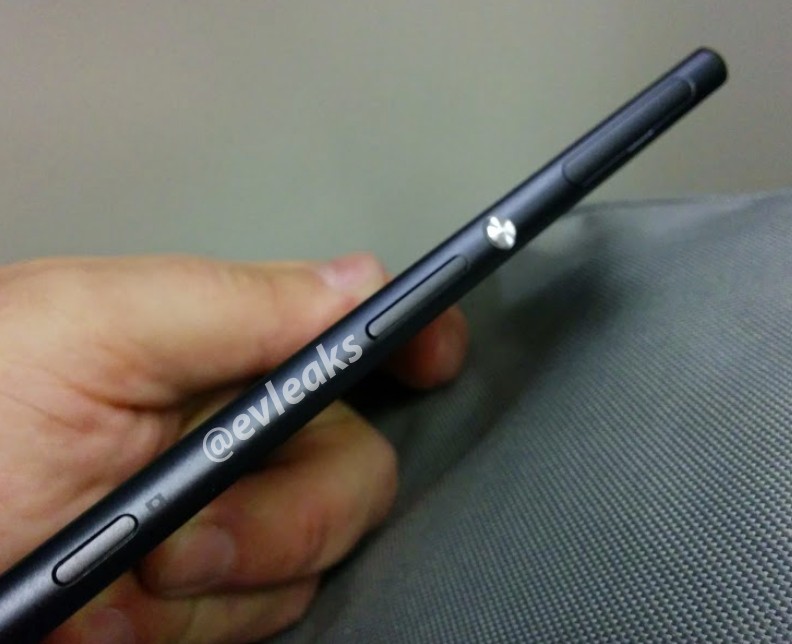
    One benefit of releasing a new phone every six months is that Sony can stay ahead of the technological curve. Two new images have leaked showing the alleged Sony Xperia Z3. While the images don’t reveal much about the phone’s innards, they show the exterior, and it looks the same, if referred to earlier leaks.

    sony z3 leak

    The similarities run through the design and show the  rounded edges – unlike the Xperia Z2, which has flatter, sharper edges. Other than a slightly larger screen, a faster processor, and what seems like a less powerful front camera, the Xperia Z3 hardly differs from the Xperia Z2.

    z3 leak

    The Sony Xperia Z3 is expected to retain the Snapdragon 801 processor and 3GB of RAM of the Xperia Z2, as well as its 20.7MP camera and probably the 1080p 5.2″ display. The water resistance is also a sure thing and perhaps only the design will be different.

    If in fact these are the Xperia Z3’s real specs, they’re very similar to the hardware offered by Sony’s current flagship phone, however it wouldn’t be the first time that a company released a follow up device with minimal improvements.

    Rumored Specs

    • 5.15-inch 1080p
    • Qualcomm Snapdragon 801 quad-core 2.4Ghz
    • Adreno 330
    • 3GB RAM
    • Storage: 16GB
    • 20.7-megapixel rear camera; 2.1-megapixel front camera
    • Android 4.4.4 KitKat
  • 5 Ways Technology Can Change The Way We Shop

    5 Ways Technology Can Change The Way We Shop

    Guilty pleasure shopping sprees have turned into couch surfing with the increasing popularity of e-commerce websites. Some latest surveys show that the by 2020 sales in shopping centers and on the high street will have shrunk by 27%.

    However, these real life retailers are prepared to fight back with the very same technology that threatened it in the first place. Retailers have only just started to explore the potential uses new technology could have. By mimicking and adapting how technology has been used in online retail, real-life retailers could combine all the advantages of online shopping with the benefits of shopping in-store.

    Here are 5 ways real-world retail is using new technology to adapt to changing consumer habits.

    1. Virtual Reality

    vurtual reality

    With virtual reality being the next big thing in technology ecosystem, it is no doubt that it will be one of integral part of the new-age shopping. However, we have to wait till virtual reality breaks through the developer mode and comes to commercial market to explore full potential of the technology. Leading fashion brand Burberry has virtual reality mirrors in its flagship store on London’s Regent Street. The mirrors read chips hidden in each item and change instantly into a screen displaying information about the product. In a world where an item’s provenance is becoming increasingly important to the modern consumer, Burberry is providing the backstory of their products in store.

    2. Google Glass

    shopping-glass3

    Google Glass, Google’s biggest bet on wearable technology, opens up a huge number of possibilities for retailers and a guaranteed improved customer experience. In stores, Google Glass and iBeacon technology could be used to recognise frequent customers and transmit the information to employees. Virgin Atlantic, Tesco and Waitrose in USA have already begun experimenting with the technology.

    3. Personalised purchases

    safeway

    Instead of having set prices, a number of stores are experimenting with personalised ones. US supermarket Safeway’s Just For U scheme alters prices based on the customer’s purchasing habits. Offers are loaded onto a customer’s club card that can then be used in store.

    4. iBeacons

    53397-beacon_teaser1

    iBeacons are Apple’s low-power transmitters that are already being installed in shops. iBeacons can recognise iOS devices in their vicinity and send them specific notifications. For example, customers could enter a shop and receive messages about new products and even localised offers on their Apple devices.

    5. Visual Light Communication

    vlc

    Emart, a South Korean megastore, has introduced a new technology to their stores that enables customers to find their way to specific offers.  Called VLC (Visual Light Communication) technology was installed into the store’s lighting fixtures, which gives real-time location information to customers with the correct app on their phone. Users just have to put their smartphone in a special holder on their trolley and follow directions to the nearest deals. When they get close enough to an offer item a discount coupon appears on their phone.

  • Blackberry Slashes the Price on its QWERTY Smartphones

    Blackberry Slashes the Price on its QWERTY Smartphones

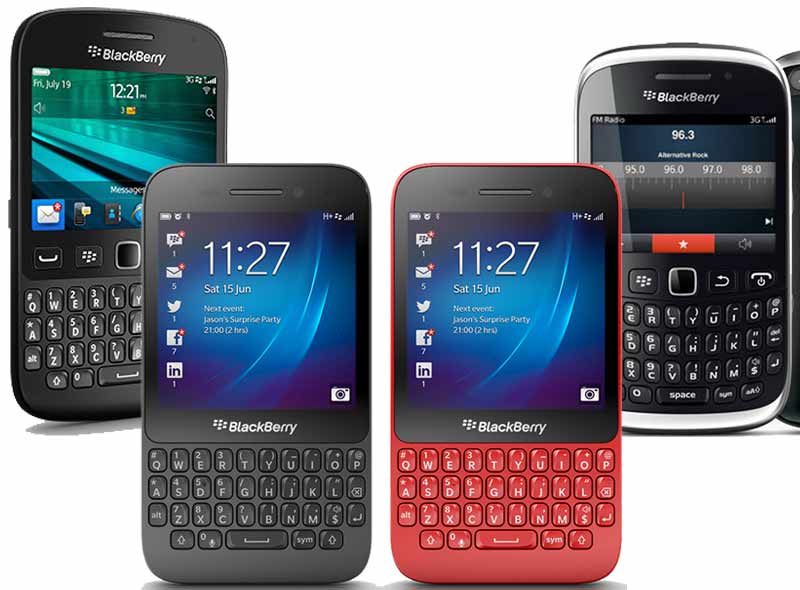
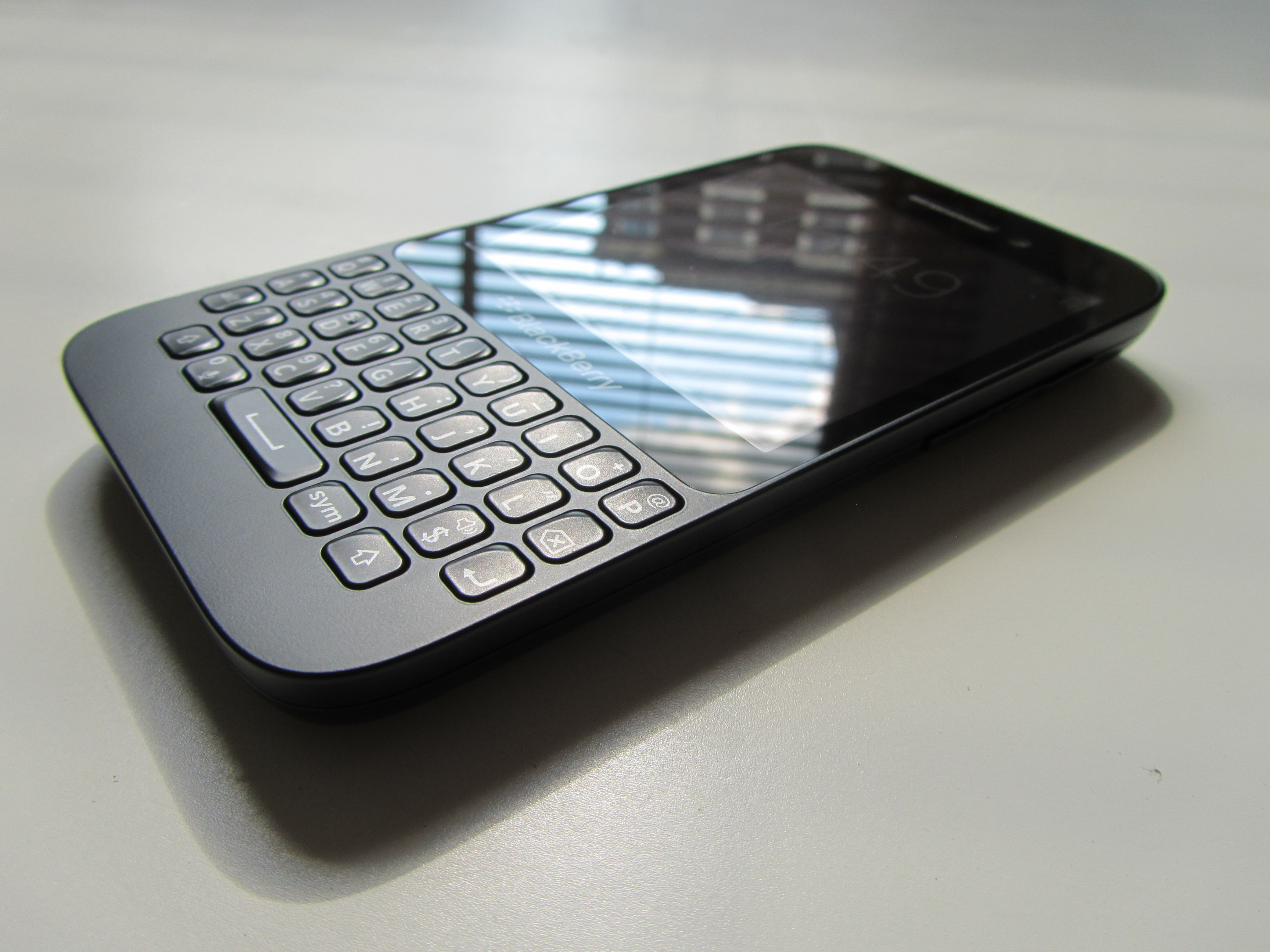
    The Canadian handset maker, Blackberry’s numbers have been tumbling since the last few year. The company is going through rough patch these days, which can be further sensed with the recent drop of the prices of their QWERTY devices – 9320, 9720 and Q5 – by as much as Rs 6,000.

    blackberry q5
    Blackberry Q5

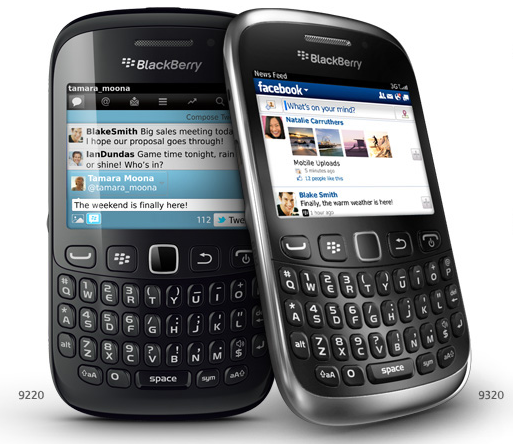
    The BlackBerry 9320 is essentially a 3G variant of the 9220, and was launched for Rs 15,499. With this price cut, the BlackBerry 9320 becomes the cheapest 3G-enabled QWERTY device in BlackBerry’s portfolio.

    Sameer Bhatia, Director, Distribution, BlackBerry, India, said, “The classic BlackBerry Keyboard, re-engineered for the fast efficient navigation and one-handed use, has huge fan base who swear by the distinct typing experience that BlackBerry offers. These compelling price-points will enable QWERTY fans to experience the latest technology and ease of use in one device.

    bb-curve-9320-2
    Blackberry 9320

    The BlackBerry 9720 was launched last year for Rs 15,990 and after the price slash will retail at Rs 11,990. The Q5, on the other hand, was launched for Rs 24,990 last year. It got a 20 percent price cut at the beginning of the year, which brought the price down to Rs 19,990, and with the latest cut, the price tag is down to Rs 13,990.

    These compelling price-points will enable QWERTY fans to experience the latest technology and ease of use in one device. BlackBerry’s special offer comes shortly after the company launched its Z3 smartphone for Rs. 15,990. The company has previously used price drop model to push sales of its devices.

    Earlier when the company slashed prices of its devices like Z30 and Z10 under special offers, the response they got was phenomenal, often resulting in stocks running out.

iGyaan Network
Privacy Overview

This website uses cookies so that we can provide you with the best user experience possible. Cookie information is stored in your browser and performs functions such as recognising you when you return to our website and helping our team to understand which sections of the website you find most interesting and useful.