Author: Happy Nagashetti

  • WhatsApp Announces ‘Free Lifetime Subscription’ for Indians

    WhatsApp Announces ‘Free Lifetime Subscription’ for Indians

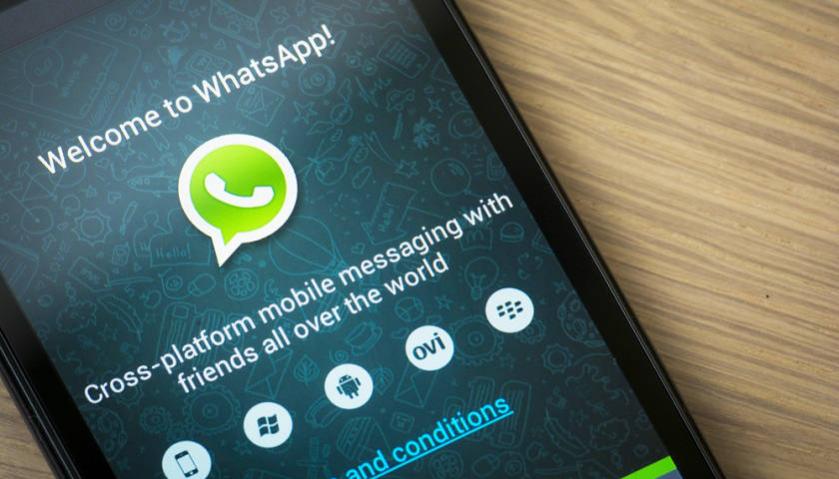
    WhatsApp is the most popular messaging app on smartphones today. The multiplatform app has caused a serious dent in the SMS revenue of mobile companies. It is beloved by many for its convenience and features and is a kind of mini social network. The company has a good news in store for Indians; it won’t be charging any sum for renewal of subscription of services.

    Vice President of WhatsApp, Neeraj Arora, said that the company understands the low concentration of credit cards in the country, and paying for a service won’t be an option for many. The company usually charges $1 every year to renew the subscription, which is a fairly cheap price. But for Indians, WhatsApp said the magic word – Free!

    Mr. Arora was speaking at his alma mater Indian School of Business, where he conversed on a lot of topics. He recalled that the founders of WhatsApp were crazy, and he got into the company by forcing his way in. He took up the bits that the founders were not interested in, like the business aspect of things. The company was recently acquired by Facebook for a gargantuan price of $19 billion.

    The future of WhatsApp was also discussed, and he said that the company will remain the same even after the acquisition. The company will not be allowing ads in the app as they believe that it will not be a pleasant experience for the users. Considering the massive seven crore (70 million) users that it has in this country, WhatsApp may not want to give them an opportunity to consider its competitors.

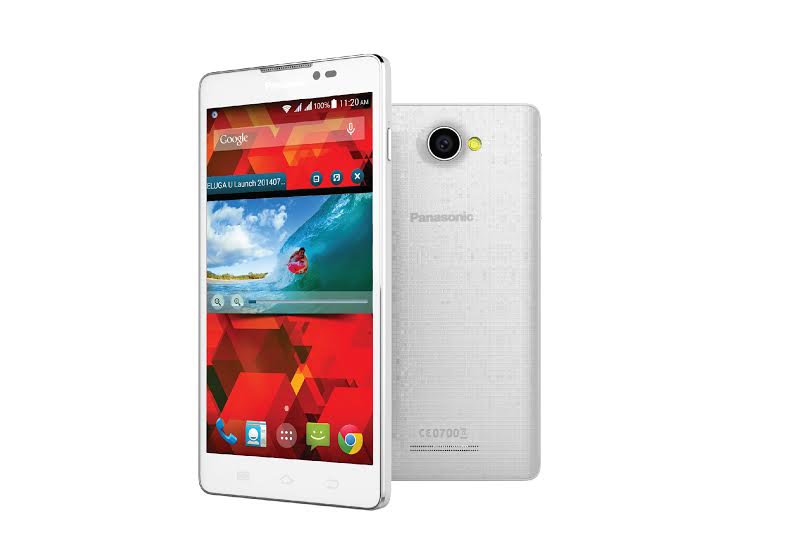
  • Panasonic’s P55 To Take On The Moto G

    Panasonic’s P55 To Take On The Moto G

    The most brutal brand wars are fought at the lower end of the smartphone market. It’s not just the name brands who try their luck here, but it’s the home ground for Indian smartphone makers. Every once a while a device shows up that changes the dynamics of the market. First there was Motorola and then came Xiaomi, who disrupted the balances in this fragile market space. The devices offered by these two brands have led everyone else to play catch-up. Panasonic is trying its hands at dethroning the current king of the 10,000-15,000 market space, the Moto G.

    Panasonic has launched the P55, a phone which will compete again the unanimously loved Moto G. The phone packs in a 5.5 inch IPS LCD screen, a rarity at this price point apart from the cheaper Chinese models. This will attract the multimedia loving crowd who want portable entertainment on a budget.

    P55

    On the specs end, the P55 comes with a 1.2 GHz quad-core processor along with 1GB of RAM. The phone has 4GB of internal storage that is expandable up to 32GB. Not a lot in comparison to other phones in this price point. The SD card is a must with a device like this, if you want to make use of the big screen for multimedia purposes.

    The device runs on Android Kitkat 4.4.2 while the Moto G will be getting the Android Lollipop update soon. This seriously tips scales towards the G. The main camera on the device is an 8 MP shooter capable of Full HD capture. To the phone employs a 2500 mAh battery to power its big screen.

    There are some useful gesture features on the device. Using P55’s “Tap Play” you can double tap on the screen of your phone to wake it up from sleep mode. You can also put it back to sleep by double tapping on the display. The phone also features “Gesture Play” through which you can use gestures to launch apps directly from the home screen.

    Using the “Pop-i Player” you can work while simultaneously watching a video, and end up with severe ADHD. The phones unique “Music café” player lets you access it using just one hand, almost paying tribute to Apple’s reachability feature.

    The device will sell at a price of Rs. 10,290. It’s a fairly decent price for the spec sheet, but the low internal memory might dissuade customers to consider this device. It is though an affordable phablet and considering the price and the screen size, it looks like a good device. But it is nowhere near the Moto G, it still stands strong.

  • Pioneer’s new HDJ-500 Headphones add Sexy to the DJ

    Pioneer’s new HDJ-500 Headphones add Sexy to the DJ

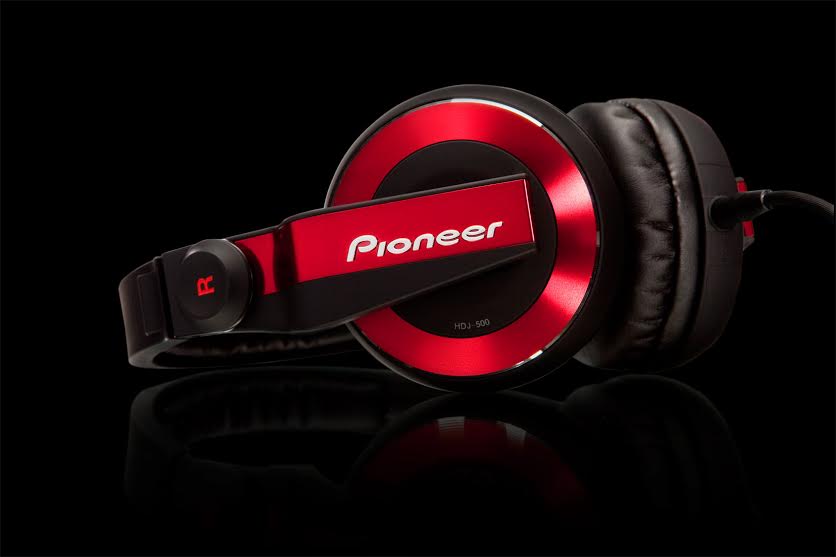
    Audio equipment giant, Pioneer, introduced the sleek and sexy HDJ-500 headphones in India. The headphones look attractive and are targeted towards professionals such as DJs and folks who just want great headphones for their tunes.

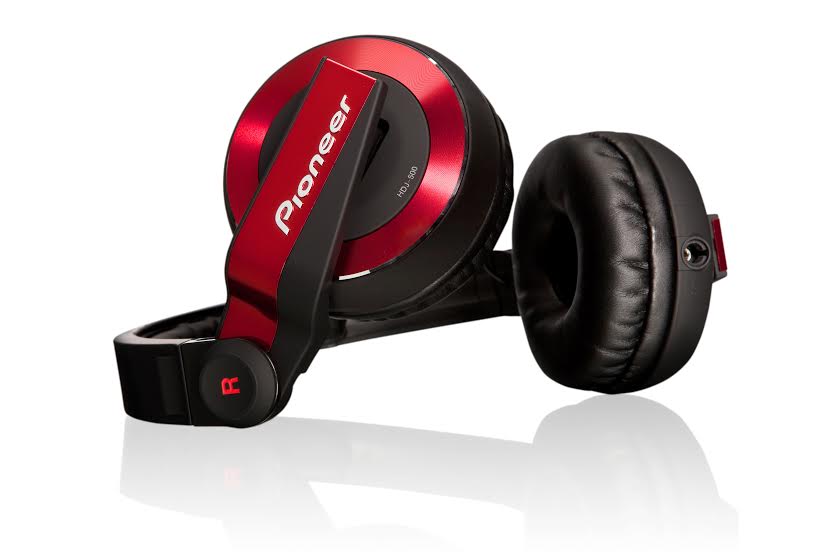
    The right ear housing of the HDJ-500 can swivel by 60 degrees. This, along with the flexible headbands, will make it easy for the DJs to check on the monitors with ease. The company claims that even for an everyday user, the headphones can recreate the club experience, minus the unwanted second-hand smoke of course.

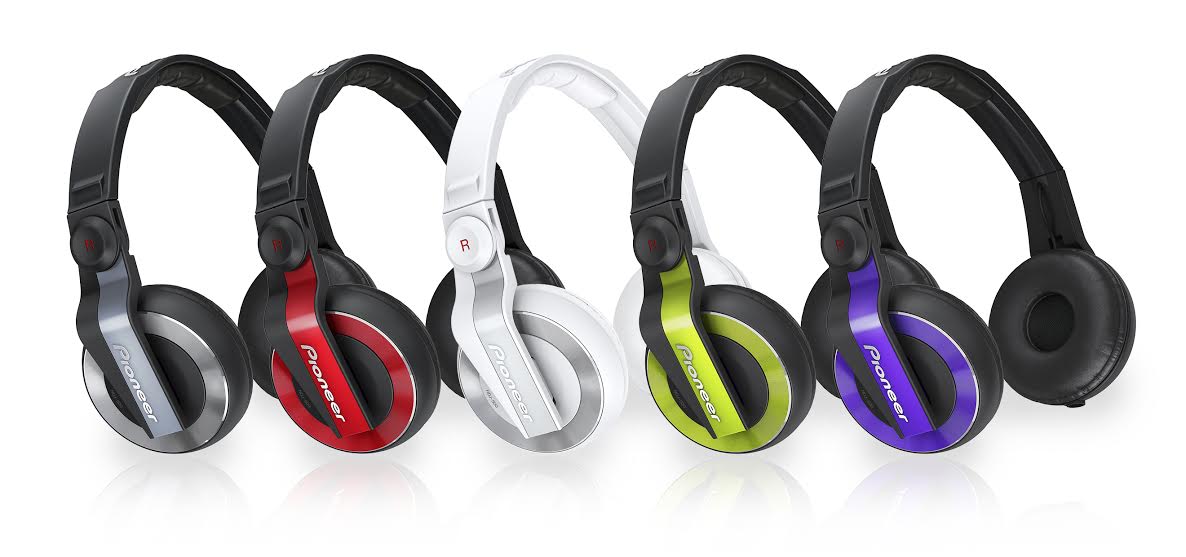
    The headphones are available in multiple fashionable color options.
    The headphones are available in multiple fashionable colour options.

    For the sound aspect of the headphones, the cans increase the effective sound pressure by utilising Pioneer’s newly developed 40 mm (diameter) driver unit. The HDJ-500 are sound engineered to reproduce a rich low-range. Pioneer has also narrowed the ear pad opening, to reproduce clear sound.

    The headphones come with a single-sided replaceable cord that plugs into the left side. The cans are available with two types of cords, a 1.2 meter coiled cord which can be extended up to 3 metres for DJ’ing and a 1 metre straight cord for personal listening.

    Pioneer HDJ-500 2

    The Pioneer HDJ-500 are available at a price tag of Rs. 8,590. They look like a good option for people who want a professional pair of headphones or someone who just wants the best out of their music.

  • Lava becomes Number 2 Indian Mobile Brand, While Micromax Leads

    Lava becomes Number 2 Indian Mobile Brand, While Micromax Leads

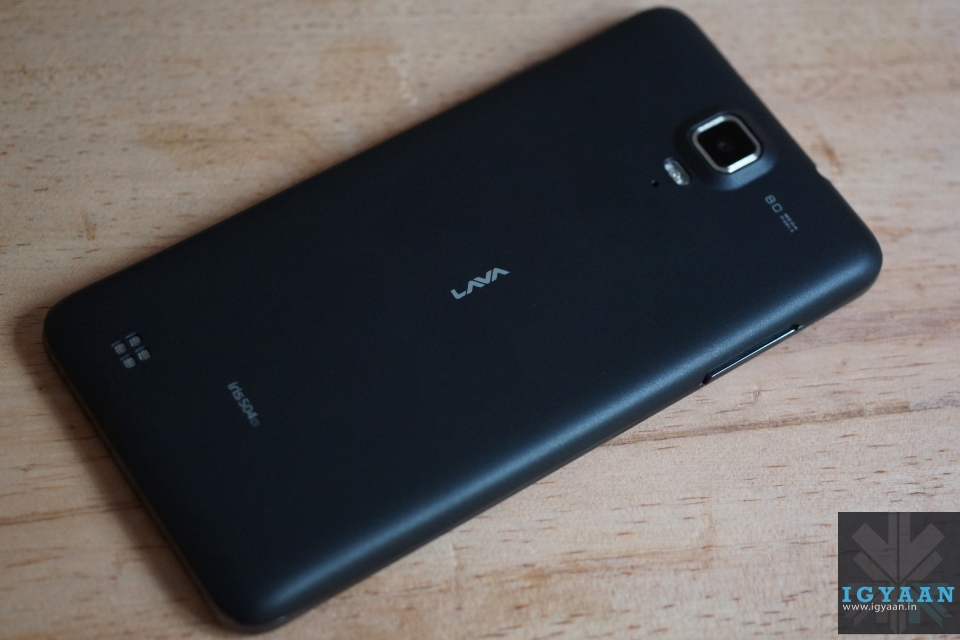
    The emergence of Chinese companies into the Indian market has taken most of the sheen off the Indian phone makers. Even Motorola’s high specification, low priced devices have taken customers away from the Indian handset manufacturers. But with the combined strengths of feature phones and smartphones, the Indian brands have continued to grow. The companies have benefitted from the shift to smartphones in the lower segment, and their offerings are perceived as affordable. These factors have helped Lava reach the second spot on the podium amongst the Indian handset model.

    The report was published by market research venture called Cybex Exim. The company took into consideration the following handset manufacturers: Micromax, Lava, Motorola, Karbonn, Gionee, Lenovo, Spice, Intex, XOLO, Panasonic, Zen, Maxx, Videocon, Xiaomi and Lemon.

    To elaborate on their findings, Mr. Amit Gupta, Cybex Exim said, “To understand the market dynamics, we track the import shipments of various players on a daily basis. Domestic players have shown remarkable growth over the last two quarters; majorly credited to the success of Indian brands like Micromax, Lava and Karbonn. With local vendors reducing the price gap between the entry level smartphones and feature phones, usage for mid-price phones is expected to increase at a high rate. At the same time, the recent launch of Android One devices is expected to drive more volumes in the price sensitive market with many other local players geared up to introduce their devices in the coming quarter.”

    Cybex Exim’s findings is as follows:

    Volume data of Top 5 Indian players (in Mn)  July – September’14 – Cybex Exim Solutions Pvt Ltd

    Company Feature Phones Smart Phones Total Volume % Volume Share
    MICROMAX 5,058,002 3,723,445 8,781,447 31.2%
    LAVA 5,307,184 1,968,575 7,275,759 25.8%
    KARBONN 4,591,947 1,803,583 6,395,530 22.7%
    INTEX 2,542,483 965,627 3,508,110 12.5%
    SPICE 1,764,181 426,992 2,191,173 7.8%

    This has been a good year for Micromax. According to a study by Counterpoint Research, Micromax outsold Samsung in Q2 of 2014 to become India’s biggest smartphone supplier. Also, Micromax finished on the pole position of Cyber Exim’s report. The company is also taking some risks like introducing a Cyanogen-powered smartphone in the coming future.

    Lava has said that the company will be investing about 500 crores in a phased manner to set up its own manufacturing unit in India over the next couple of years. This would be a positive step towards increasing tech-based manufacturing workforce in the country.

    It’s great to see these Indian companies on a growth track. But looking at the competition they are facing against the Chinese companies, its time the companies up-ed their game. The phones need to get better in terms of specs and overall quality. The Indian companies may also want to take a leap into the flagship business and challenge the name brands.

  • ASUS ZenWatch: The Best Smartwatch is Yet to Arrive!

    ASUS ZenWatch: The Best Smartwatch is Yet to Arrive!

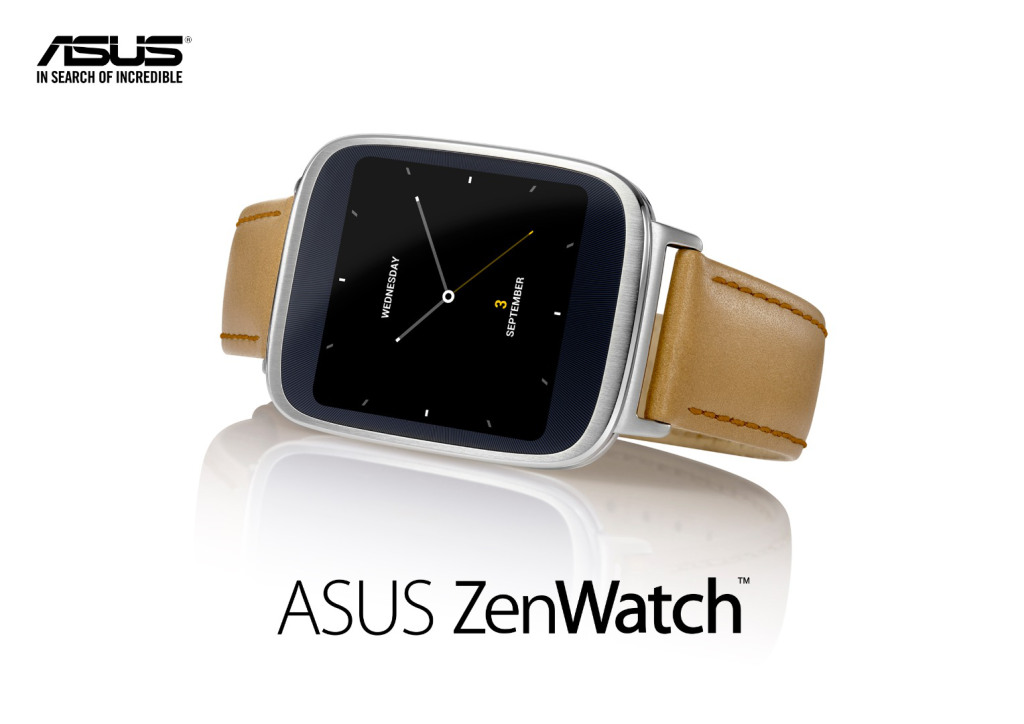
    India’s smartwatch shelves are filling up while major companies are releasing their models in the country. ASUS surprised everyone with its latest smartwatch at IFA Berlin this year. The ASUS ZenWatch is touted as the best Android Wear smartwatch in the market currently and it has received some rave reviews. The smartwatch looks real classy and has options for user-replaceable 22 mm watchband. The ZenWatch is expected to arrive soon to the Indian stores.

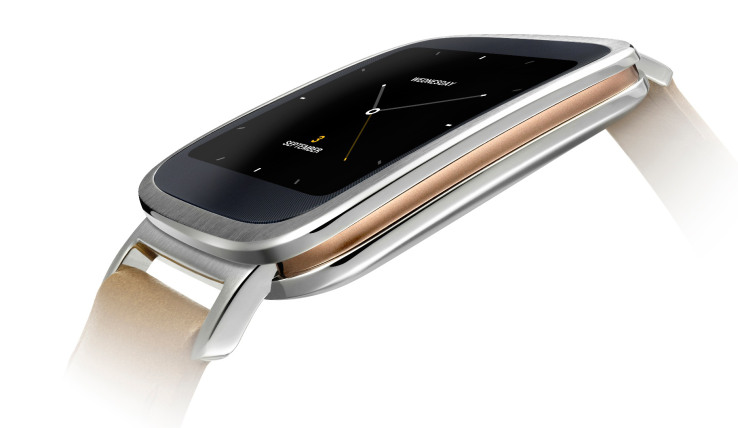
    ASUS ZenWatch comes with a 1.63-inch 320×320 AMOLED display. The screen is curved to give off a 2.5D effect and the watch is powered by a 1.2GHz Qualcomm Snapdragon 400 processor, along with a 512MB RAM.

    The Zenwatch is stylish,classy and slim.
    The ZenWatch is stylish, classy and slim.


    The feature that makes it desirable is the user removable 22 mm watchband. You can adjust its size according to your convenience. It is rated IP55 for water and dust-proofing, so it can tolerate accidental splashes. The ZenWatch also has a 9-axis sensor for tracking activities and movements like step counts, heart rate and relaxation levels. In short, it’s a personal wellness manager that helps users keep a close watch at their fitness goals.

    ASUS has inducted several gesture controls and pre-loaded features on the device, and they set it apart from its competition. It provides features like unlocking your phone or tablet by tapping on the face of the ZenWatch, auto-opening a function you set with a double-tap. To mute the watch, you can just cover it. The device also helps you to find your phone and operate the camera remotely. However, for these feature to work, you are required to install a separate, ASUS-created Watch Manager app in addition to Android Wear on your companion device. But that won’t be too much trouble, and you’ll get used to its convenience really soon.

    Overall, this is one heck of a device that you simply cannot miss. If you were still making up your mind on which smartwatch to buy, then the ZenWatch can be your no-second-thought-needed purchase.

  • Skype Introduces the Preview of its Real-Time Language Translator

    Skype Introduces the Preview of its Real-Time Language Translator

    It had been in people’s imagination for a long while. An instrument through which you can translate the other person’s language has always been desired. Human translators are great, but you cannot call a person every time you want to have a conversation with another person from a new country. In the global interconnectivity age, when people can connect to each other from any part of the world, the only hindrance has been the language. The solution to this problem may lie in the Skype’s new real-time translation feature called Skype Translator.

    The translator’s preview is only for Windows 8.1 devices. This feature can give a great boost to the operating system as most translation needs are required in the government and corporate sectors, where Windows is still a dominant power.

    The real-time translation feature listens to the conversation and converts it into the native language on the other side. There is a short delay in this process as the engine has to convert what’s been said, but you get to hear both the speaker and the translation. There is also an on-screen transcript of what’s being said by the person for added convenience. The software can take care of the instant messaging translations in 45 languages currently.

    This will also be a great feature if you want to date people on the other side of the planet. The language barrier can be beaten through features like these, and they will keep both the languages valid and usable. If you have a Windows 8.1 device, go ahead and communicate with the world.

  • Xiaomi Set to Bring Out a Massive 16000 mAh Power Bank

    Xiaomi Set to Bring Out a Massive 16000 mAh Power Bank

    Xiaomi knows how to create an impression and gain public attention. The company has created waves in country after country with minimum marketing budgets. You really need to have a unique product to gather that much attention and they sure do have that. The company is bringing out a power bank which can take care of a week’s worth of charging needs.

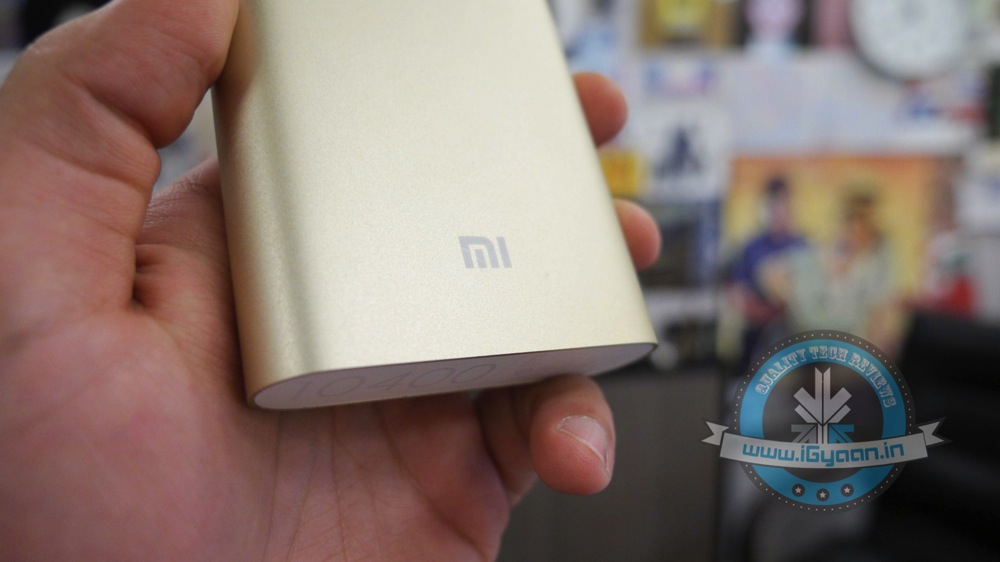
    xiaomi_powerbankWith the advent of Quad HD display and other power-hungry elements on smart devices, the burden has never been greater on the battery. Even with great programming tweaks, the batteries still require a shot of juice at the end of every day. If you are always on the move, a power-bank can be a great solution for you and Xiaomi’s new 16000 mAh battery pack will keep you tension-free for a good long time. It may still have enough power left to take care of your weekend.

    Previously, the Chinese electronics giant had launched 5200 mAh and 10400 mAh power bank variants. This is a whole new step for the company. The 16000 mAh power bank variant looks like an elongated version of the 5200 mAh battery pack. The size is similar to a smartphone, so you can even carry it around in your pocket with ease.

    Keeping in mind that this is Xiaomi, you can expect the price to be dirt cheap. The power bank is expected to be priced at 129 yuan (Rs. 1300), but it can get slightly higher by the time it makes to India. Even at that price, it still wins over all the other alternatives in the market. Xiaomi seriously is a typhoon in the tech world.

  • China Develops a Laser That Can Shoot Down Low Flying Drones

    China Develops a Laser That Can Shoot Down Low Flying Drones

    In the history of weaponry, every new lethal weapon has led to the creation of a weapon that can take the lethal weapon down or at least diminish its effects. Even the most destructive of them all; the nuclear weapons can be defended from by using missile defense systems. One of the pieces of weaponry choice of countries like US is drones. The drones or unmanned aerial vehicles are capable of getting the desired result without putting the pilot’s life in danger. China though seems to have created the counter-measure for a drone offensive and their answer is lasers.

    China’s new anti-drone laser weapon has a range of two kilometers and is capable of taking down low-altitude threats in five seconds of locating the target. The state media said that the technology will be used against “various small aircrafts.” The technology has been developed at the China Academy of Engineering Physics (CAEP).

    Chinese government has been known for taking aggressive stands against almost every country that it sees as a threat. The nation’s President, Xi Jinping, had recently asked the country to be prepared for regional wars. China is already the 2nd biggest spender on defense in the world. It regularly finds itself at odds with its neighbours, especially India and the countries in the South China Sea.

    The anti-drone weapon is one the steps taken by the country as a preventive measure and also to assert its military might. According to Xinhua, the weapon is effective up to a maximum altitude of 500 metres and against an aircraft flying at up to 50 metres per second (112 mph).

    The drone technology has gained tremendous leap in just the recent times. Consumer models are available in departmental stores for really affordable prices. One of the officials has said that terrorists can make use of this easily available technology for their activities, and hence a deterrence is required.

    A statement by CAEP says that shot down more than 30 drones in a recent test with a 100 percent success rate. The academy is also developing the next generation of laser security systems which will be capable of greater power and longer range.

  • Flipkart Launches the First Indian E-Commerce Android Wear App

    Flipkart Launches the First Indian E-Commerce Android Wear App

    All the industry giants are pointing towards wearable technology as the next leap in consumer electronics. But the market has given the segment a lukewarm response. It must have to do with the technology being relatively new and in its beginning stages. But Flipkart seems to be confident of the success of this form factor and so, they have launched the first Indian e-commerce app on Google Android Wear.

    To get the app on your device; you need to update the latest version of the Flipkart app. Once you have paired the device with your wearable, the app will be available automatically on it.

    The Android Wear app can assist you in your shopping by giving you tracking information, one-touch wishlist, notifications about price drop and personalized offers’ notifications. It has also got support for voice-based searches.

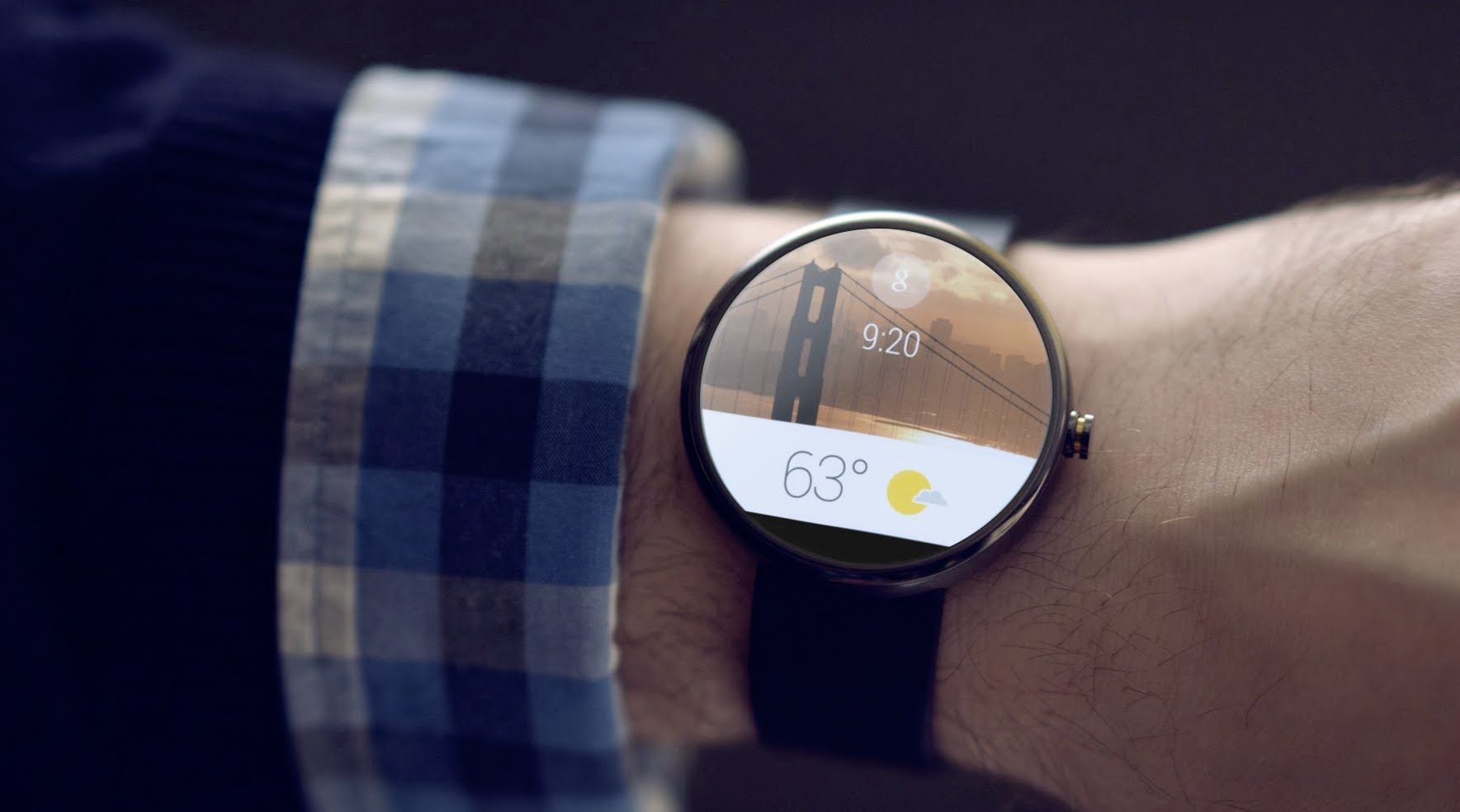
    Flipkart is the exclusive address for the Moto 360, which has been the best smartwatch yet. It will surely try to target the segment in the future. Introducing an app in a new operating system environment will give Flipkart some first-mover advantages. We’ll wait and see how it works out for this e-commerce giant.

  • Google Launches an Initiative to Promote Indian Languages

    Google Launches an Initiative to Promote Indian Languages

    India has a vast and diverse population. This population exists with multiple languages, customs and cultures, under one roof. In such a country, internet can be a great tool for the development of people from different languages to come and share their ideas. But for this to happen, it is essential that there is a language support system to assist people with the use of this information superhighway. Google has now formed an alliance that will work towards promoting Indian regional languages.

    The alliance will work towards providing support to Indian language users to create and receive content in their languages with ease. Google intends to involve over 300 million users from India using the language initiative by 2017.

    It is estimated that India will have about 500 million internet users by the end of 2017, up from 200 million users at present. It will surpass the whole internet population of the US. Creating content and accessibility options for regional language speakers will create a healthy future market for the internet giant. India also has a robust smartphone market, and Google can make heavy gains by providing language assistance to the people of India.

    The company did a demonstration of its Hindi voice search capabilities on an Android phone. They also launched an aggregation website called hindiweb.com where people can find access to most sites that provide content in Hindi.

    This alliance is, in fact, an appreciable initiative from the Silicon Valley giant. It is of course going to benefit Google by bringing in new users for its services, but it will be greatly beneficial to a whole new population of the country that has still not gained access to this essential utility. Google’s alliance will include companies like Times Internet, C-Dac, Reverie Language Technologies, LinguaNext Technologies, and Amar Ujala Publications and some others.

  • 64GB OnePlus One to be Priced Under Rs. 25,000 in India

    64GB OnePlus One to be Priced Under Rs. 25,000 in India

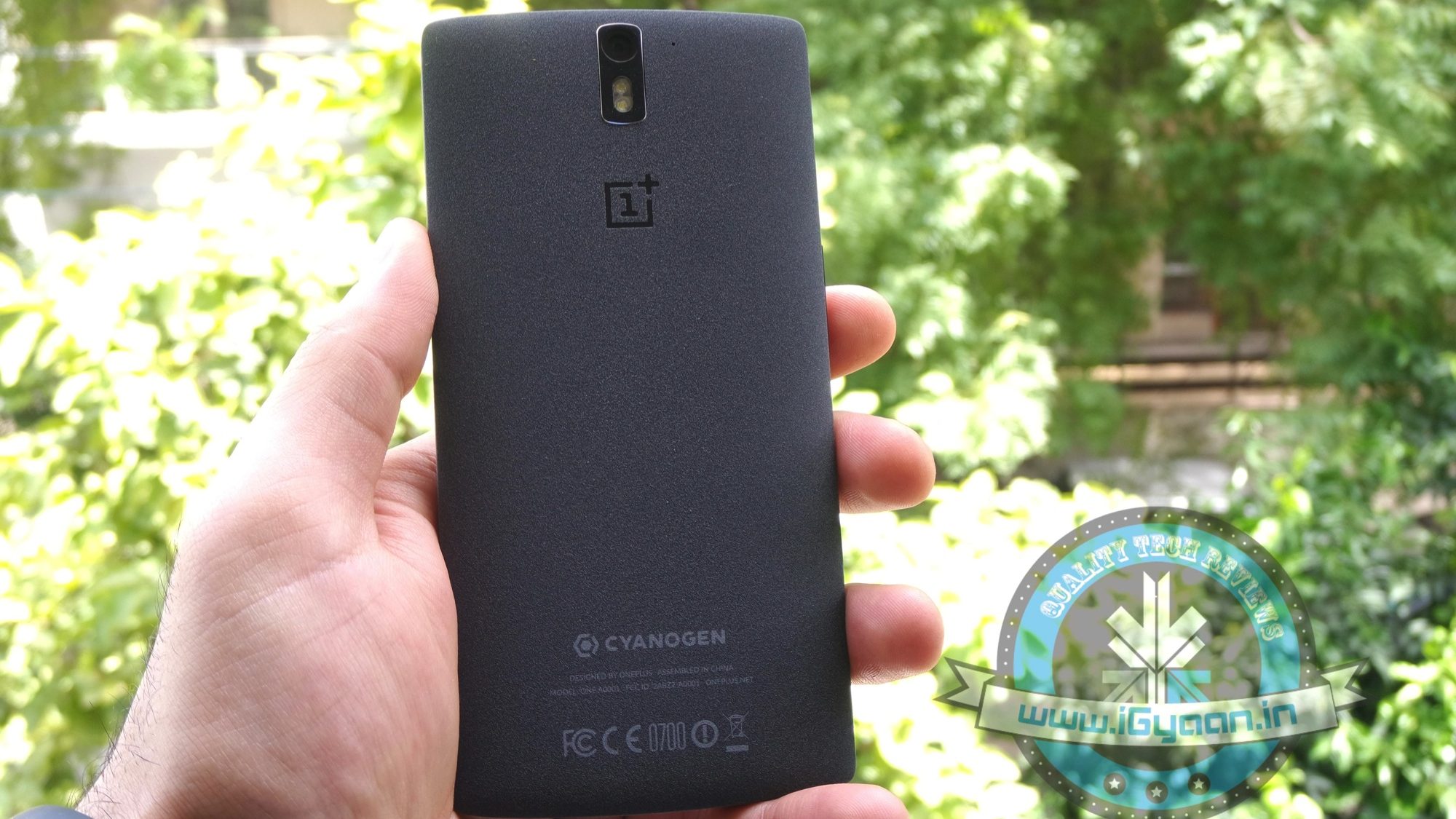
    One of the long-awaited phones in India has been the OnePlus One. This one of a kind phone has created waves all over the world. Its youthful design coupled with high specs and low price has made the device a darling of technology enthusiasts. The added value of exclusivity has made OnePlus One even more desirable. Lately, the company has opened up on what all Indians were till now waiting for, its price.

    The Chinese company will be selling its blockbuster phone through its India-specific invite system. In an interaction with The Indian Express, the company claims that this will prevent shortage of device for potential customers. The invite process is also much fair and transparent then the flash sale model.

    The company has mentioned the price of the 64 GB variant for less than Rs. 25,000 ($407 approx), which is a bit above the expected price range, but still is a great offering if its specs are taken into account. OnePlus One’s Cyanogen-based user experience has been appreciated for its customisability and regular updates. The phone will also be available in its 16 GB avatar, but its price isn’t known as yet.

    The phone doesn’t have much of a competition in its mid-segment price. It will compete with Nexus 5, Elife E7, Desire 820 and their likes. Considering the demand for the device, it is surely expected to repeat a Xiaomi act in India. Whatever may be the case, the winner will still be the consumer who will get this fantastic piece of gadgetry at an enviable price.

  • Google Makes Bookmarks Interactive With New ‘Bookmark Manager’

    Google Makes Bookmarks Interactive With New ‘Bookmark Manager’

    With the sheer amount of things on the internet, you might find it hard to keep track of everything. To make your work feasible, you create bookmarks, but now the shortage of time to catch up on these bookmarks has led to the never-ending list that just stays there never to be caught back. Google seems to have stepped in the way to make bookmarks more accessible and useful.

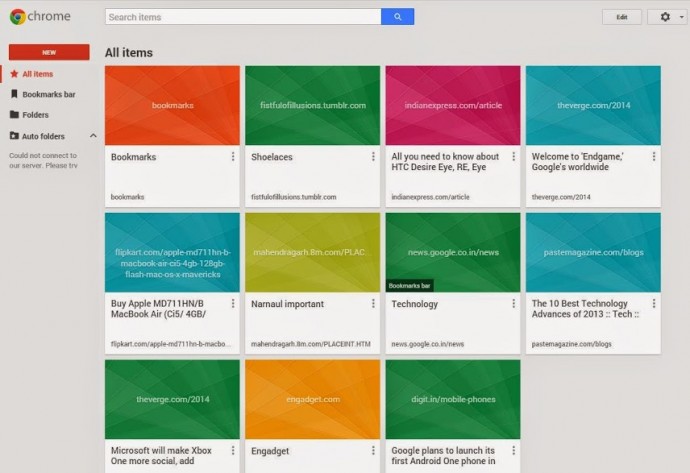
    The company has introduced an extension for Chrome called Google Bookmark Manager. The extension will bring all your bookmarks in a grid view. The bookmarks will all be pooled together in various folders. During the creation of a new bookmark, Google will prompt you with some folder suggestions. To make things even easier, you can add photos or notes to folders you desire to access quickly.

    bookmark manager

    This new extension will also get a boost from ‘Power Searching with Google’. The extension will be able to scan into the content of bookmarked pages to let you find out what you were looking for. It does seem like Google has got some inspiration from the new Safari bookmarks that are available in Yosemite.

    The bookmark manager will come really handy for folks who want immense convenience to access their references. The bookmarks have been around since the inception of consumer web browser, but it’s good to see it finally getting attention from browser manufacturers. Guess Safari and Chrome have new bookmark managers, Firefox may join soon, but the users of Internet Explorer should anticipate their upgrade by the end of the decade.

  • Google Nexus 6 ‘Coming Soon’ to a Flipkart Near You

    Google Nexus 6 ‘Coming Soon’ to a Flipkart Near You

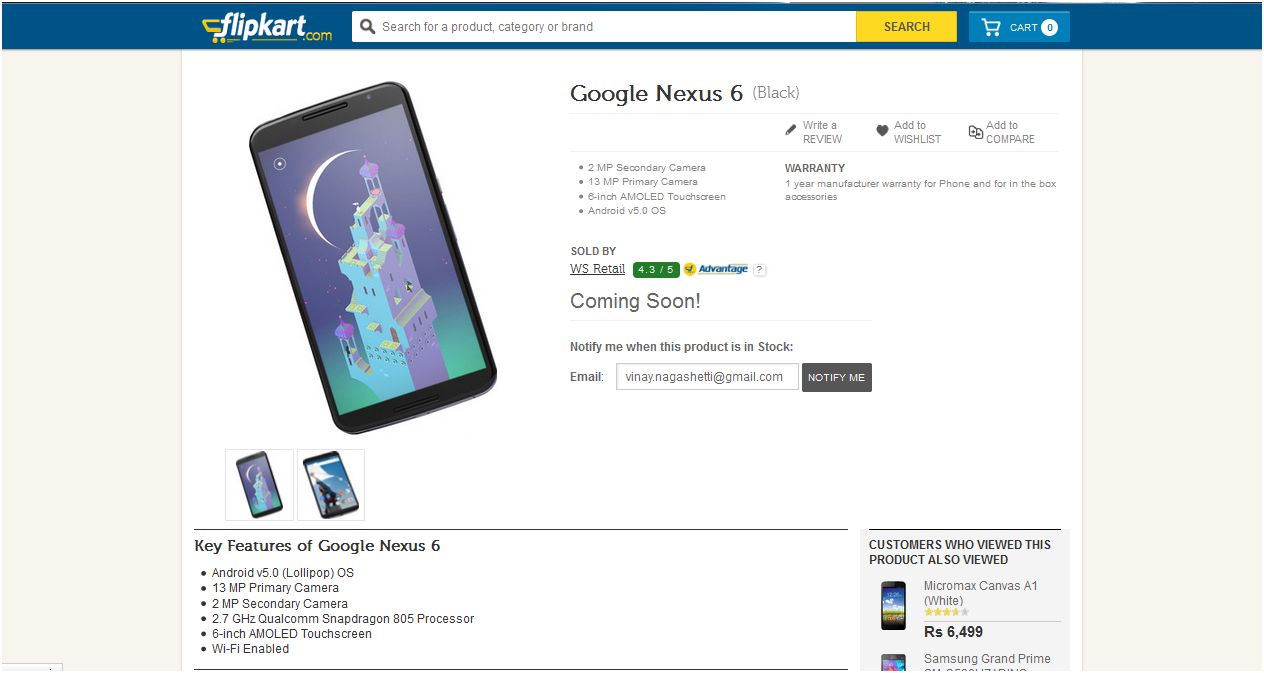
    Google’s latest collaborative flagship device is the best Android phone out there. The phone sits on a pedestal and sets a standard for other phones to achieve. It is one of the highly sought-after phones in the market and will be available soon. But Indians were surprised and elated this morning to find the phone listed on Flipkart.

    Nexus 6 was listed with a ‘Coming Soon’ tag on the e-tailers website. The price hasn’t been listed yet, but it is expected to cost top rupees, considering its high specs. In the US, the phone is available on the Google Play Store. The 32 GB variant is available for $649 (about Rs. 40,000) and the 64 GB variant costs $699 (about Rs. 43,000). You can expect the phone to come in the Rs. 45,000-55,000 price bracket in India.

    Nexus 6

    The listing though should not be seen as an indication of its availability anytime soon. The phone might take a good couple of weeks before it is finally available for purchase in the country. In some countries, the phone was expected to be introduced for pre-orders today, but it is being reported that the pre-orders will be delayed till 18th of this month.

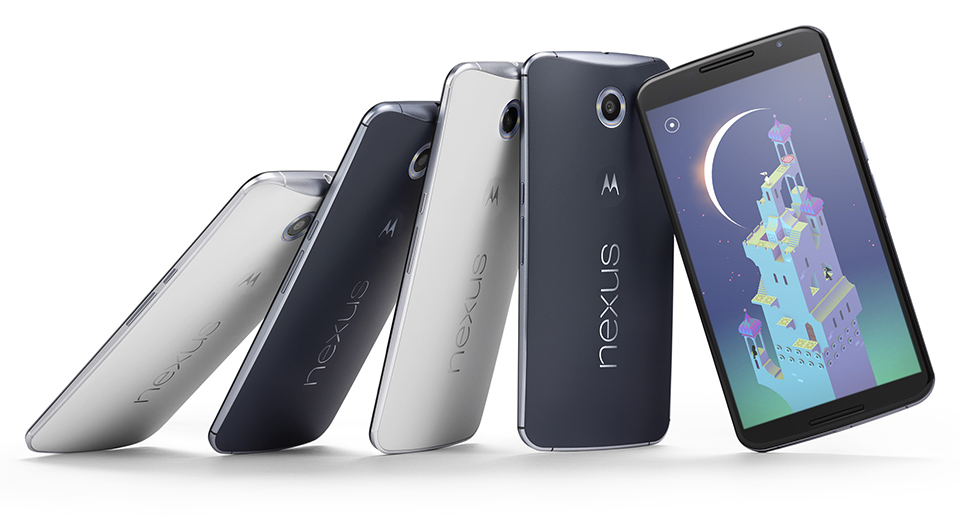
    Google Nexus 6 is in-demand for its top of the line features. It comes with a 5.96-inch QHD (1440×2560 pixels) display with a pixel density of 493ppi. It is powered by a 2.7GHz quad-core Qualcomm Snapdragon 805 processor and supported by 3 GB of RAM. This Google flagship is available in 32 GB and 64 GB internal storage variants. The device will run on the Android 5.0 Lollipop operating system. It will get its juice from a 3220mAh battery and with the Lollipop, it is expected to give a better battery backup. For imaging, Nexus 6 has a 13-megapixel rear camera and a 2-megapixel front camera.

    So, if you want to be one of the first ones to get hold of this phenomenal phone, then you just have to be patient for some more weeks. You will appreciate it and looking at the spec-sheet, it surely looks worth the wait.

  • Collapsible and Wearable Smartphone Kyocera Proteus Sets a Benchmark

    Collapsible and Wearable Smartphone Kyocera Proteus Sets a Benchmark

    No smartphone calls for as many speculative rumors as much as the iPhone. Before every iPhone release, there is one render that keeps making a comeback. It shows a flexible device that can collapse and become a wearable. Well, Apple won’t be making any such device anytime soon, but a Japanese company Kyocera has beaten the brand name to bring such a device for the world to drool over.

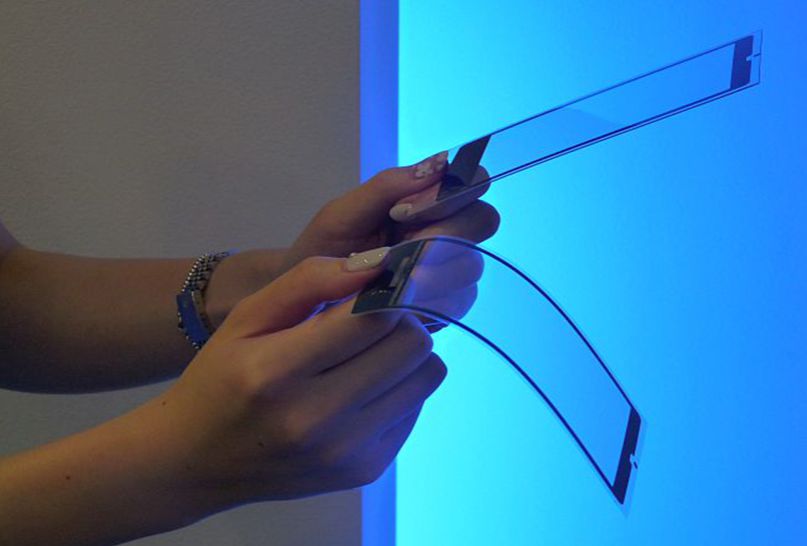
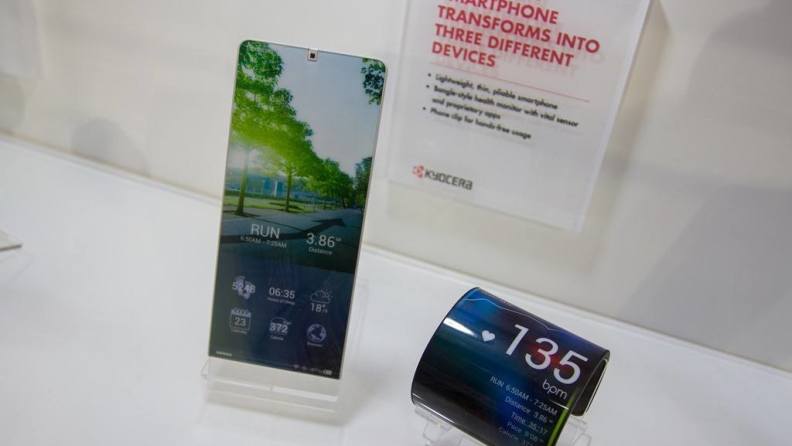
    Meet the Kyocera Proteus, a device with unmatched innovation. It can transform from a flat, bar-shaped phone into a bracelet and can be draped or wrapped around a thin rail, like a cycle handlebar. This device when mass-produced can make all of the present mobile technologies obsolete.

    The Proteus concept was presented at CEATEC, which is Japan’s largest consumer electronics show. The concept is ultrathin, almost see-through, and superlight.

    When folded from the bar mode to a wearable mode, the phone turns on its sensors and you can start your health tracking on the device. When riding a bike, the device can become your GPS guide. The possibilities of this device are endless.

    The Proteus is expected to have AMOLED display. The concept looks great in its initial stages, and it’s a great one-device solution that everyone was looking for. The company is currently in the process of figuring out the battery technology to be utilized to make the device fully functional. There are multiple suggestions being given. According to a source, one of the most innovative suggestion is the inclusion of piezoelectric generators that will convert kinetic energy into electric charge. Hence, the battery can be completely avoided and the device can be charged even on the move.

    Kyocera deserves credit for bringing the fantastic product to reality. We just hope they get rid of all the glitches and take us into the future as soon as possible. Now who is working on those damn jetpacks?

  • BBM Brings Snapchat-Like Multiple Features With its New Update

    BBM Brings Snapchat-Like Multiple Features With its New Update

    BlackBerry’s propriety messaging system BBM (BlackBerry Messenger) has been one of the most successful messaging apps. The company has even introduced versions for other operating systems. At this time, when the company is struggling to hold back its position in the market, it’s natural that they are bringing new features to their most visible product.

    BlackBerry has added several features to the new version of BBM. This includes Snapchat-like time-limited messaging attribute. It allows you to send an image or message, and set the amount of time you want it to be visible to the other person. The application will even send you notifications if the other person takes a snapshot of that picture or the message.

    Other upgrades include message retraction, timed messages, HD image transfer, and many more. The message retraction will come really handy for folks who compulsively and erroneously hit the send key, and also for drunk texters who can swiftly act when they gain some senses and get rid of that embarrassing message or pic they have previously sent.

    It seems like BlackBerry went into a full ‘get-inspired’ mode, and it borrowed features from several major apps and made one unified app. It also has a Skype-like feature where you can see what your contacts are listening to or watching.

    The app will be available for download for BlackBerry, iPhone and Android users. But all these awesomeness come at a price. The features like timed messages and message retraction will be free only for the first three months, after which you’d have to pay for them. This will be a major challenge for the company as users already have free access to all these features through other apps. BlackBerry wants to eventually provide a BBM subscription service that comes bundled with all the multiple features it has introduced with this update.

    So, this seems like a great app to have which gives almost all the features of all the messaging apps combined. You can either keep using all the free apps that crowd your phone or you can just pay a premium for one unified app. That is for you to decide.

iGyaan Network
Privacy Overview

This website uses cookies so that we can provide you with the best user experience possible. Cookie information is stored in your browser and performs functions such as recognising you when you return to our website and helping our team to understand which sections of the website you find most interesting and useful.